<?xml version="1.0" encoding="UTF-8"?>
<feed xmlns="http://www.w3.org/2005/Atom">
  <title type="text">Intermountain Histories</title>
  <updated>2026-04-17T19:32:21+00:00</updated>
  <generator uri="http://framework.zend.com" version="1.12.20">Zend_Feed_Writer</generator>
  <link rel="alternate" type="text/html" href="https://www.intermountainhistories.org/"/>
  <link rel="self" type="application/atom+xml" href="https://www.intermountainhistories.org/items/browse?output=rss2"/>
  <id>https://www.intermountainhistories.org/</id>
  <author>
    <name>Intermountain Histories</name>
    <uri>https://www.intermountainhistories.org</uri>
  </author>
  <link rel="hub" href="https://pubsubhubbub.appspot.com/"/>
  <entry>
    <title type="html"><![CDATA[Fort Bridger and the Donner Party]]></title>
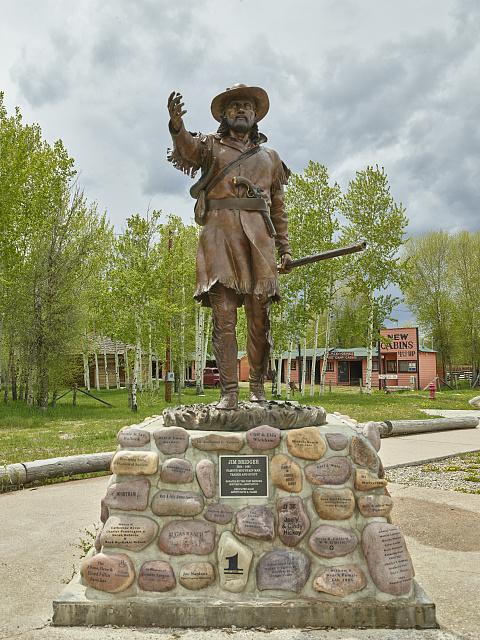
    <summary type="html"><![CDATA[<p><strong><em>On July 20th, 1846, a group of families on an emigrant train in present-day Wyoming separated from the main party to take a supposed shortcut that would expedite their journey to the Mexican territory of Alta California. This group known as the Donner Party started their journey on the cutoff with the goal of reaching Fort Bridger, which would be the point of no return on their ill-fated journey. </em></strong></p><img src="https://www.intermountainhistories.org/files/fullsize/e6c5db8e3d5e018d3b0a52d9335af3ff.jpg" alt="Statue of Jim Bridger at the Fort Bridger Historic Site" /><br/><p>Mountain men and adventurers Jim Bridger and Louis Vasquez established this fort in modern-day southwest Wyoming in 1842. Originally built as a trading post to service and profit off the rush of the trappers heading West, it found purpose as a resupply point for emigrant parties heading to California. While the word “fort” brings to mind high stone walls, a California-bound party led by Edwin Bryant in early 1846 described Fort Bridger as <i>“two or three miserable log cabins, rudely constructed, and bearing but a faint resemblance to habitable houses.”</i> The Donner Party reached Fort Bridger on July 27th, 1846. Earlier on the trail, the party had received letters from Lansford Hastings, the author of the cutoff. He advertised it as an alternative and shorter route, and said that if they met him at Fort Bridger, he would guide them through it. Despite James Clyman’s warnings of the cutoff to James Reed, a father of 6 and leader of the party, the allure of time and distance saved proved seductive. According to survivor reports, James Reed believed that the route would save them <i>“350 or 400 miles” </i>and relayed that Bridger had described it as ”<i>a fine, level road with plenty of water and grass.”</i> It is theorized that Bridger, a seasoned mountain man, knew of the danger of the cutoff but goaded them on regardless to increase emigrant traffic through his fort. After repairs, restocking, and rest, the Donner party left Fort Bridger on July 31st. Growing from around 60 members to 74 because of the addition of the McCutchen family and several teamsters. They proceeded towards the Wasatch Mountains in modern-day Utah. Emigrant parties continued to utilize Fort Bridger for the following decade, but the Donner party remains one of the most influential to do so. The fort remained operational until Bridger's run-ins with the law caught up to him, including an arrest warrant issued from Salt Lake City, Utah for <i>“furnishing the Indians with powder and lead to kill Mormons.”</i> The fort was sold to the Church of Jesus Christ of Latter-Day Saints (or Mormons) in 1855, with the church having documents of its sale from Vasquez representing both him and Bridger. The Saints held onto this fort until November of 1857. President James Buchanan sent an army commanded by General Albert S. Johnston to suppress a supposed Mormon rebellion. In preparation the saints burned several buildings before retreating to Echo Pass in Utah. Following its abandonment by the Saints, the fort was seized by the United States military, where it saw its commanders switch hands for decades. It found use as a staging area for military exercises against Native Americans and general military travel during the mid 19th century. As the years passed, the land under Fort Bridger’s jurisdiction became smaller as the threat of attacks from Native Americans subsided. It was abandoned on October 1st, 1890. This trading post, fort, and military depot served as a landmark for Western history as emigrants, natives, and mountain men all crossed its path. For the Donners, it served as their final resupply point, and for many the last semblance of civilization they would ever see. For the next 760 miles, the Donners would travel through rough mountain passes and barren salt deserts with minimal rest and resupply. The ill-intentioned words of Hastings and Bridger would prove to be a death sentence.</p><p><em><strong><a href="https://www.intermountainhistories.org/items/show/940">For more (including 6 images) view the original article</a></strong></em></p>]]></summary>
    <published>2026-02-02T17:23:00+00:00</published>
    <updated>2026-04-17T19:32:21+00:00</updated>
    <link rel="alternate" type="text/html" href="https://www.intermountainhistories.org/items/show/940"/>
    <id>https://www.intermountainhistories.org/items/show/940</id>
    <author>
      <name>Samuel Watson, Brigham Young University</name>
    </author>
  </entry>
  <entry>
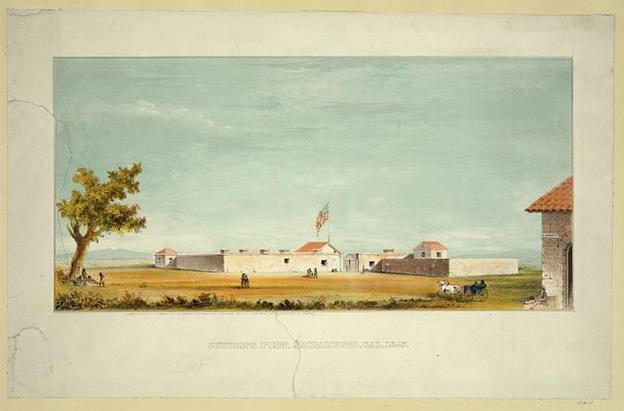
    <title type="html"><![CDATA[Sutter&#039;s Fort: The Donner Party&#039;s Last Chapter]]></title>
    <summary type="html"><![CDATA[<p><strong><em>This fort, which began construction in 1840, served as one of the last stops for emigrant trains bound for Alta-California, and marks the end of the Donner Party’s expedition. Slave labor, the gold rush, and the rescue of the Donner Party all contribute to the legacy of both the fort and its creator.</em></strong></p><img src="https://www.intermountainhistories.org/files/fullsize/ceb063cfc2de1ed51df924710d33fc04.jpg" alt="Artist rendition of Sutter’s Fort" /><br/><p>John Sutter constructed this fort, which is located in modern-day Sacramento, California. Originally from Switzerland, Sutter left his wife and children under the threat of arrest for unpaid debts, and after traveling the United States and Mexico settled in the Mexican province of Alta-California in 1839. An aspiring businessman, he constructed his fort to serve trappers, migrants, and mountain men representing the Swiss, American, and Russian citizens prevalent in the region. One of the most controversial aspects of Sutter’s character became apparent as construction of the fort began: slavery. Sutter, having purchased a Native slave boy in 1838, was keen to implement the labor of enslaved Native Americans at his fort, using it to his advantage in constructing and maintaining the fort. It is even theorized that a pair of Native guides he sent to the Donner Party were originally his slaves.
Sutter first came into contact with the Donner party in early Autumn of 1846, when Charles Stanton and William McCutchen reached the fort to retrieve supplies for the ailing party. McCutchen stayed at the fort due to ill health, and Stanton returned to the Donner party along the Humboldt River with supplies and the two aforementioned Native American guides, Luis and Salvador. An emaciated and freshly banished James Reed, a principal leader of the Donner Party, arrived soon thereafter on October 28th. Two days later, Reed and a recuperated McCutchen left to attempt to reach the party, but like their families on the other side of the mountain, deep snow blocked their way. For the next 4 months, Reed and McCutchen had to wait knowing that their families were snowed-in on the other side of the mountain, unable to do anything. In early February of 1847, Sutter offered $3 a day to any man willing to join a rescue party into the mountains, which some accepted and formed the first relief party which left on February 7th. Daniel Rhoads, one of the men in the first relief party to reach Truckee Lake on February 19th said that when they arrived Mrs. Murphy popped up from the deep snow and hoarsely said, “<em>Are you men from California or do you come from heaven?</em>” Over the next months, the relief parties employed and sent by John Sutter would be instrumental in saving lives. He even employed several rescued members of the party after their recuperation.
Sutter attempted to profit off the gold rush after his assistance to the Donner Party but again ran into problems with paying his debts. Eventually losing his land grant, he attempted to receive restitution from the United States with little success. Sutter later moved east to Pennsylvania, and died of kidney failure on June 18th, 1880. His history is complicated. He enslaved and abused Native Americans in the pursuit of wealth and was seen as a swindler by some who did business with him. At the same time, without his aid towards the Donners, many more lives would have been lost in the Sierra Nevadas.
Lewis Keseberg was the last survivor of the Donner Party to arrive at Sutter’s Fort in late April of 1847. The survivors attempted to settle in California with varying levels of success. Some made a fortune in the gold rush, others remarried or were taken in by other families, or some carried their burdens for the rest of their lives, suffering rejection and disgust if they admitted to or were rumored to have engaged in cannibalism. Their journey may have ended at Sutter’s Fort, but their stories and legacies have endured for much longer. They remain the most infamous emigrant group of westward migration, showcasing the dangers of crossing the untamed West.</p><p><em><strong><a href="https://www.intermountainhistories.org/items/show/937">For more (including 5 images) view the original article</a></strong></em></p>]]></summary>
    <published>2026-02-02T17:22:17+00:00</published>
    <updated>2026-04-17T19:32:21+00:00</updated>
    <link rel="alternate" type="text/html" href="https://www.intermountainhistories.org/items/show/937"/>
    <id>https://www.intermountainhistories.org/items/show/937</id>
    <author>
      <name>Samuel Watson, Brigham Young University</name>
    </author>
  </entry>
  <entry>
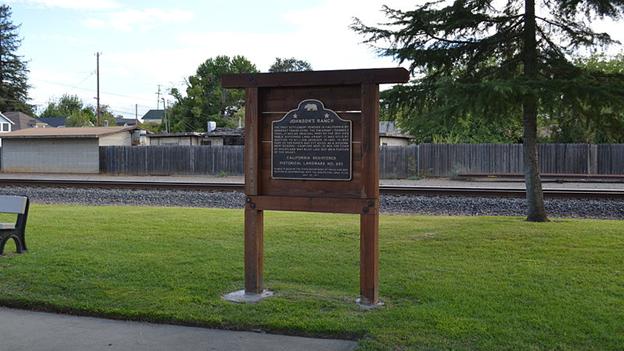
    <title type="html"><![CDATA[Johnson’s Ranch and the Donner Party’s Forlorn Hope]]></title>
    <summary type="html"><![CDATA[<p><strong><em>This ranch on the Western slope of the Sierra Nevada Mountain Range in modern-day California was owned by trader William Johnson. In early 1847, its inhabitants first witnessed the horrible state of the Donner Party, sounding the alarm of the plight of the trapped emigrant party.</em></strong></p><img src="https://www.intermountainhistories.org/files/fullsize/363f9cc274dbaab6d01390452739c6a4.jpg" alt="California State Parks Johnson’s Ranch Historical Marker" /><br/><p>In January, two Native Americans brought in a straggler from the Donner Party, William Eddy. He was frostbitten, emaciated, and delirious from over a month-long trek through the snow-capped mountains. He and others were sent off by the desperate Donner Party who were entrapped at Truckee Lake on the other side of the mountains. This group, known as the “Forlorn Hope”, featured fourteen of the strongest survivors from the Donner Party. On December 16th, 1846, they fashioned themselves snowshoes and moseyed up the mountains to reach the nearest settlement. Snow blindness and starvation quickly slowed their progress. Charles Stanton, the man who had already been to Sutter’s Fort to retrieve supplies in 1846 and only returned to help his family, was too exhausted to move and was left by the group after several days of hiking.
Snow impeded their progress further and desperation quickly set in. Some suggested drawing lots or a fight to the death to decide who should be cannibalized for survival. They chose instead to eat whoever perished first. On Christmas Eve, a Mexican named Antonio perished first. On Christmas Day, he was followed by Franklin Graves, then Patrick Dolan, and finally Lemuel Murphy, all dying from hypothermia induced delirium. These deaths all occurred in a violent blizzard where it was impossible to light a fire. When the storm broke, they lit a fire and began the process of cutting and eating their dead, <em>“averting their faces from each other, and weeping” </em>as they ate. They refrained from eating their kin, and William Eddy only ate when he could go no further.
The gauntly starved and frostbitten emigrants trekked on, their tracks stained red with blood. Within a few days the human flesh they had preserved was gone. Eddy stopped William Foster from killing the two Native guides previously sent by Sutter, Luis and Salvador. Fearing for their lives, the duo left the camp. The white emigrants followed their bloodied tracks the next day. The group found the exhausted hobbles of Luis and Salvador several days later, laid out in a creek. William Foster shot and cannibalized them both. The group stumbled along, hobbling into Indian villages but not able to recuperate off the natives' skimpy diet of nuts and cooked acorns. Eventually Eddy pressed on while the women sat at the side of the trail, unable to continue. For miles Eddy walked with the assistance of a Native American guide. For the last few miles, he was hoisted along, his energy completely spent. Reaching Johnson’s Ranch, 150 miles away from Truckee Lake, he only asked for bread as he collapsed. As he recuperated, riders were sent up the trail to retrieve the women and Foster. Of the 14 who left Truckee Lake, only 7 arrived at Johnson’s Ranch, all deaths being male.
The Forlorn Hope succeeded, at great cost. The alarm sounded as supplies and relief parties were organized at Sutter’s Fort, the main staging area for relief efforts. The first relief party reached the entrapped Donner Party on February 19th, and the parties that followed would save countless lives. Johnson’s Ranch did not have the facilities to stage the relief effort, but it did bring the Forlorn Hope back from the dead. The group recuperated with the settlers’ assistance, and they settled in California in the Summer of 1847. Unfortunately, many family members, including William Eddy’s wife and children died back at the camp. Eddy even threatened to kill Lewis Keseberg, a German immigrant who cannibalized his three-year-old son. The Forlorn Hope is a story that encapsulates the moral highs and lows of westward migration. To reach Johnson’s Ranch they endured blizzards, walked for days on end, and cannibalized each other on the chance that their families would survive. Johnson’s Ranch and the trail they foraged may be houses and recreational land now, but it remains the site of one of the most infamous and intriguing stories of westward migration.</p><p><em><strong><a href="https://www.intermountainhistories.org/items/show/936">For more (including 4 images) view the original article</a></strong></em></p>]]></summary>
    <published>2026-02-02T17:22:16+00:00</published>
    <updated>2026-04-17T19:32:21+00:00</updated>
    <link rel="alternate" type="text/html" href="https://www.intermountainhistories.org/items/show/936"/>
    <id>https://www.intermountainhistories.org/items/show/936</id>
    <author>
      <name>Samuel Watson, Brigham Young University</name>
    </author>
  </entry>
  <entry>
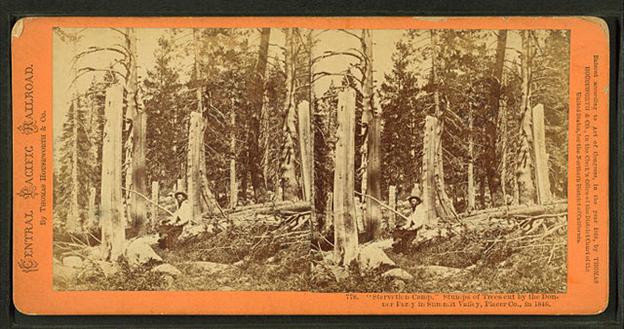
    <title type="html"><![CDATA[Truckee Lake: The Infamous Demise of the Donner Party]]></title>
    <summary type="html"><![CDATA[<p><strong><em>Truckee Lake (now known as Donner Lake) is nestled on the eastern slope of the Sierra Nevada Mountains of modern-day California. On the western side of the Lake there is an opening in the mountains where the Stephens-Townsend-Murphy party passed through in 1844 and set the primary route that westward emigrants would use to enter the Sierra Nevadas. For the Donners, this pass would become an unsurpassable wall of snow that stopped them from reaching salvation at Sutter’s Fort.</em></strong></p><img src="https://www.intermountainhistories.org/files/fullsize/643f19dc38f76998d08475484f96c8e5.jpg" alt="Trees that were cut by the Donner Party at Truckee Lake" /><br/><p>When the Donner Party arrived at Truckee Lake on October 31, 1846, they hoped to push through the mountains and descend into California before winter. However, due to their delayed arrival and an early mountain storm the day prior, the now snowed-in passes repelled their multiple attempts to do so. Though only 150 miles away from their planned destination, Sutter’s Fort, they were forced to establish an unplanned winter encampment at the lake, nearly 6,000 ft. above sea level. The best recounting of the Donner Party’s winter encampment at Truckee Lake comes from Patrick Breen, one of the only migrants to keep a consistent journal throughout their ordeal there. Ominously, Breen recorded that during their first week at camp <em>“it snowed during the space of eight days with little intermission.” </em>Having already killed most of their cattle, prospects of survival were grim.
They established two camps. Most of the party was at Truckee Lake, with the Donner families and a few others having been stopped by a broken wagon six miles before reaching the lake and camping at Alder Creek. However unprepared, the party planned to wait until relief parties arrived when snows let up or later in the Winter. Such hopes were dashed by abnormally heavy and continuous snow storms. The current Donner Memorial State Park Monument commemorates the snow depth that stranded them that winter, standing at 22 feet. As time passed, Breen cataloged the diminishing resources and hope of rescue.<em> “November 9th… took in Augustus Spitzer yesterday so weak that he cannot live without help caused by starvation.”</em>
The families at the lake had run out of meat and were eating animal hides for sustenance by January of 1847. In the face of starvation, social bonds and group cooperation further deteriorated. Earlier debts unpaid or trespasses unpunished from the trail were used as grounds to hoard supplies. For example, Mrs. Graves reneged on a promise to Mrs. Reed and took back borrowed animal hides which Mrs. Reed had received to feed her family. On February 9th Breen states, <em>“pikes child all but dead… Murphys not able to get out of bed Keyburg </em>[Keseburg]<em> never gets up says he is not able. John went down to day </em>[today] <em>to bury Mrs. Eddy & child…”</em> The first relief group sent from Sutter’s Fort in California arrived on February 19, 1847, and the scene they described testifies to the horrific conditions the families had suffered through for months at Truckee Lake and Alder Creek. Most shocking was the evidence of cannibalism: the mutilated corpses of two children, Isaac Donner and Franklin Graves, and the remains of Elizabeth Graves with several organs removed, presumably eaten. The relief party gave what provisions they could and took some emigrants with them, but the situation remained dire for those left behind. On February 26, Breen wrote, <em>“The Donnos </em>[Donners]<em> told the California </em>[Californians]<em> that they </em>[would] <em>Commence to eat the dead people… if they did not succeed that day or next in finding their cattle.”</em> Those left behind at Truckee Lake and Alder Creek continued to suffer, facing imminent death and potential desecration of their corpses by fellow starving party members. Numbers dwindled up until the last emigrant trapped on the Eastern side of the mountains, Lewis Keseberg, was rescued in April of 1847.
Although not a complete representation of the overland emigrant experience, the Donner Party’s demise is a cautionary tale in the frontier histories of the American West. Many others suffered from delays, poor decision-making, Native conflicts, and inclement weather, but few ended in such horrific circumstances as those at Truckee Lake and Alder Creek over the winter of 1846-47. The survivors would go on to live their lives in California, but their ordeal and rescue would be a constant reminder of the worst-case scenario for future emigrants on the overland trail.</p><p><em><strong><a href="https://www.intermountainhistories.org/items/show/935">For more (including 5 images) view the original article</a></strong></em></p>]]></summary>
    <published>2026-02-02T17:22:16+00:00</published>
    <updated>2026-04-17T19:32:21+00:00</updated>
    <link rel="alternate" type="text/html" href="https://www.intermountainhistories.org/items/show/935"/>
    <id>https://www.intermountainhistories.org/items/show/935</id>
    <author>
      <name>Samuel Watson, Brigham Young University</name>
    </author>
  </entry>
  <entry>
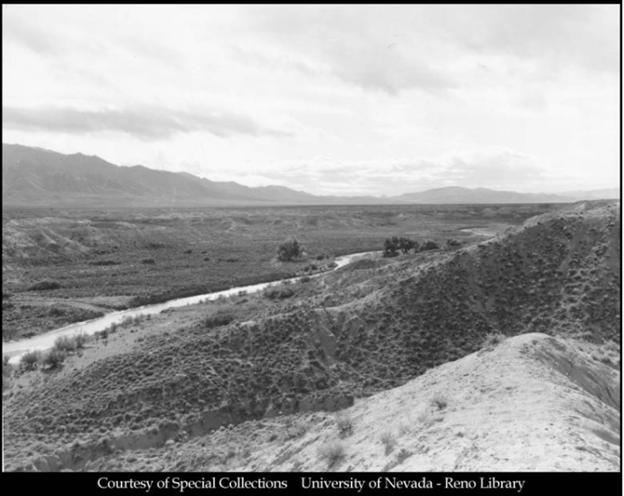
    <title type="html"><![CDATA[The Donners along the Humboldt River]]></title>
    <summary type="html"><![CDATA[<p><strong><em>The Humboldt River resides in modern-day central Nevada and marks the spot where the Hastings Cutoff reunites with the traditional California trail. It was along this river that distrust overcame the Donner Party, with its party members being attacked, banished, and murdered.</em></strong></p><img src="https://www.intermountainhistories.org/files/fullsize/cd9914b416dc039e95030e789f0a9067.jpg" alt="The Humboldt River" /><br/><p>The Humboldt River was named after German intellectual and explorer Alexander von Humboldt. His name can be found on things such as the Humboldt Ocean Current off the Western coast of South America and Humboldt County in present-day California. The river was used for centuries by Native Americans and became known to non-indigenous populations when Peter Ogden of the British owned Hudson’s Bay Company discovered it on one of his expeditions in 1829. Trappers and mountain men utilized it extensively, and it became a major navigational tool and watering spot for westward migrants in the 1840s. When the late-season and already weakened Donner Party reached the river in mid-September, 1846, drought had lowered the water level and withered adjacent greenery. Their travel along the Hastings Cutoff, which diverged south to skirt around the Ruby Mountains before returning north to the Humboldt River trail intersection, had added 100 miles to what they would have traveled had they stayed on the traditional trail.
Their troubles after the Great Salt Lake Desert were far from over. As they began their journey down the river, progress and supplies were stressed by Paiute depredations on their livestock. Then, on October 5th, as the Murphy family’s wagon led by teamster John Snyder attempted to pass James Reed’s wagon, the two trains became entangled and Snyder whipped Reed’s oxen in anger. Reed retaliated, and in the ensuing scuffle Snyder struck Reed’s wife and Reed stabbed Snyder, killing him. The Graves and Murphy families banished Reed from the group, sending him to the party’s desired destination of Sutter's Fort in California on his horse and promised to care for Mrs. Reed and their young children. Paiute altercations and interpersonal conflicts further escalated problems. An elderly Belgian emigrant, known only as Hardkoop, repeatedly went missing after being kicked out of Lewis Keseberg’s wagon.  An eyewitness said they had seen him sitting alone on the side of the trail unable to continue as <em>“his feet had swollen until the skin had split.”</em> William Eddy attempted to spend resources that night to find him, but was refused by other members of the party. As they progressed alongside the Humboldt River as many as 18 oxen were stolen, one wounded, and 21 killed by Paiutes. Making good progress regardless, they reached Humboldt Sink close to the end of the river, on October 13th. On this day a German emigrant, known only as Wolfinger, stayed behind with two other Germans to cache, or store, his wagon. The two Germans rejoined the party several days later, but Wolfinger was absent. The other Germans claimed Natives had killed him, but one later confessed to murdering Wolfinger, leaving his body to be devoured by vultures and coyotes in the Humboldt Sink.
The party reached the Truckee River which led up into the Sierra Nevada Mountains in eastern California, on the 16th of October. The roughly three week journey along the Humboldt River had strained their relationships and caused them to lose trust in each other. Hardkoop’s abandonment, Reed’s banishment, and Wolfinger’s murder reveal unraveling social cohesion. Losing Reed as a steady leader was especially damaging. The Humboldt served as a refuge from the Great Basin Desert for most emigrant groups heading towards California, but for the Donners it marked exponentially increasing troubles which would remain with them for the rest of their journey. The culmination of all their mistakes, from Forts Laramie and Bridger, the Wasatch Mountain range, the Great Salt Lake Desert, and the Humboldt River, would lead to great suffering for the party in the Sierra Nevadas.</p><p><em><strong><a href="https://www.intermountainhistories.org/items/show/934">For more (including 5 images) view the original article</a></strong></em></p>]]></summary>
    <published>2026-02-02T17:22:15+00:00</published>
    <updated>2026-04-17T19:32:21+00:00</updated>
    <link rel="alternate" type="text/html" href="https://www.intermountainhistories.org/items/show/934"/>
    <id>https://www.intermountainhistories.org/items/show/934</id>
    <author>
      <name>Samuel Watson, Brigham Young University</name>
    </author>
  </entry>
  <entry>
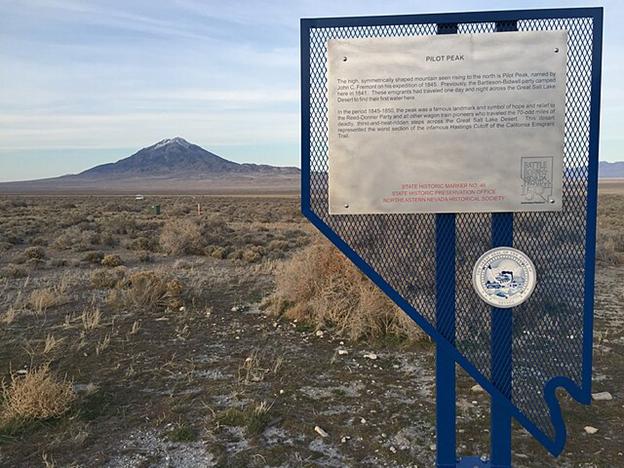
    <title type="html"><![CDATA[Pilot Peak: Looking back at the Great Salt Lake Desert]]></title>
    <summary type="html"><![CDATA[<p><strong><em>Emigrant parties and explorers used this mountain peak on the southern end of Pilot Mountain Range, which straddles the modern Utah-Nevada border west of the Bonneville Salt Flats, as a landmark to track their progress out of the Great Salt Lake Desert. For the Donner Party, the most infamous group of pioneers in American history, it was a place where fatal lost time and resources became realized, and an aura of frantic urgency imbued the party.</em></strong></p><img src="https://www.intermountainhistories.org/files/fullsize/2130a6174f419bcc9a9374aa16511896.jpg" alt="State Historic Marker, Pilot Peak" /><br/><p>By the time the Donners reached Pilot Peak on September 8th, 1846, they had just endured a disastrous eight days of travel from Redlum Spring in Western Utah. It was the last source of freshwater before crossing the salt flats. Lansford Hastings’ directions had insisted it was only <em>“thirty-five miles, or of forty at most”</em> from Redlum Springs to water sources near Pilot Peak. It was, in fact, 80 miles, and Hastings’ promised 2-day itinerary across the parched landscape took the Donner Party eight days in hot, arid conditions.
As they began their trek, Luke Hallaron died of Tuberculosis on August 25th, followed by Franklin Graves having a <em>“fine mare”</em> stolen by the Native Americans, a threat that persisted for the rest of their journey. After cresting an early hill they were greeted by <em>“a perfectly flat plain unbroken even by sage, and dazzling white, like frost, with the glitter of salt.” </em>The hellish landscape’s oppressive heat and lack of shelter drove party members to heat exhaustion. On the second day the hard salt eventually turned into a slushy marshland, where <em>“the wagons broke through the thin crust and sank several inches into sandy slush oozing with salt water”. </em>With the party’s condition quickly deteriorating from dehydration, James Reed rode ahead on the third day and located the springs at the base of Pilot Peak 30 miles away, and returned with what water he could carry. Nine oxen went missing while Reed was gone, having stampeded into the desert at night in search of water, <em>“frenzied and half-blind with thirst.”</em> After returning to his family farther down the trail, they spent a frigid night’s encampment before being awakened by a frenzied ox that charged Reed’s family. Startled, the family pressed forward along Reed’s path in the middle of the night, pushing towards Pilot Peak for the next five days, meeting up with the rest of the party on September 8th.
Like their delay in the Wasatch Mountains, the importance of this slowed pace cannot be understated. The arid desert turned salt marsh entrapped wagons, slowed oxen, and exhausted the already frustrated and delayed emigrants. In addition to adding five days to their planned itinerary, they lost 36 cattle, four wagons, and incalculable energy they crucially needed later. The trail was so difficult that research expeditions in 1929 and 1986 had difficulty and got stuck while re-tracing the party's steps. The delays from crossing the Wasatch Mountains and Great Salt Lake Desert, and the subsequent week-long recuperation at Pilot Peak, put the group over a month behind schedule. Many emigrant parties heading West saw Pilot Peak as a landmark on which to base their progress and pace, but for the Donners’ it represented the beginning of the end. They desperately needed to make up time from their disastrous navigation through the Wasatch Mountains, but the time and resources lost on the Great Salt Lake Desert would prove fatal for almost half of the group.</p><p><em><strong><a href="https://www.intermountainhistories.org/items/show/933">For more (including 6 images) view the original article</a></strong></em></p>]]></summary>
    <published>2026-02-02T17:22:15+00:00</published>
    <updated>2026-04-17T19:32:21+00:00</updated>
    <link rel="alternate" type="text/html" href="https://www.intermountainhistories.org/items/show/933"/>
    <id>https://www.intermountainhistories.org/items/show/933</id>
    <author>
      <name>Samuel Watson, Brigham Young University</name>
    </author>
  </entry>
  <entry>
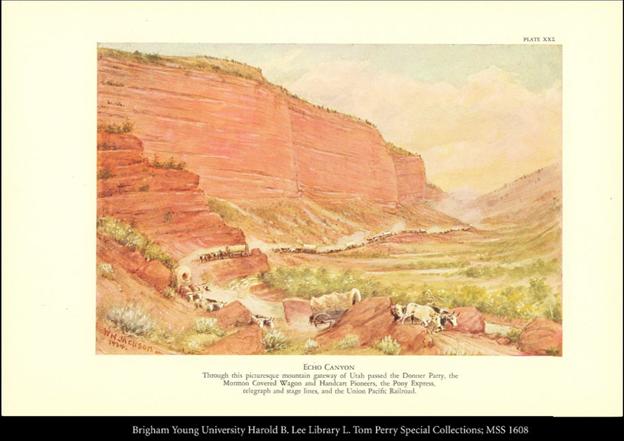
    <title type="html"><![CDATA[The Donners in Echo Pass and Weber Canyon]]></title>
    <summary type="html"><![CDATA[<p><strong><em>Having separated from the main Oregon/California trail after the Continental Divide, the Donner Party reached the mouth of Echo Canyon in Eastern Utah in early August, 1846. This marked the beginning of uncharted territory and an arduous journey through the Wasatch mountain range in present-day Utah. Invaluable time was wasted cutting brush and trees, passing through thin crevices, or crossing mountain rivers and streams.</em></strong></p><img src="https://www.intermountainhistories.org/files/fullsize/ed935523348f738fe9a49853a294f593.jpg" alt="Pioneer Wagons in Echo Canyon" /><br/><p>Traveling through the narrow ravines and steep peaks was not a challenge for the traditional route to California or Oregon Country. Lansford Hastings, a frontier explorer and creator of this cutoff through the Wasatch Mountains and Great Basin desert, had taken smaller groups of emigrants through the cutoff earlier in the season, but their smaller size required less assistance than the Donner Party needed. One arduous landmark in Weber Canyon featured a creek with jagged boulders enclosed by steep canyon walls as the only passable route. The party had to hoist wagons over each individual boulder to continue. Aware of these challenges, Hastings had left the party a note instructing them to send someone ahead to get alternate route directions from him once they reached the Weber River. Leader James Reed and others left on August 6th, and returned August 10th with Hiram Miller’s diary recording<em>“Reed having examined the new rout </em>[route]<em> entirely an </em>[and]<em> reported in favour, which induced the company to proceed.”</em>
Pace slowed as the party wound its way through the mountain range. The trail was rocky and overgrown, necessitating bushwhacking and the clearing of trees and other debris. Virginia Reed said, <em>“There was absolutely no road, not even a trail. The cañon </em>[canyon]<em> wound around among the hills. Heavy underbrush had to be cut away and used for making a roadbed.” </em>They might criss-cross a stream up to 13 times in a single day just to proceed, or spend multiple days clearing debris only to make no forward progress. In a cruel twist of irony, the large migration of Latter-Day Saints from Nauvoo, Illinois used the same path the Donners had blazed to swiftly reach the Salt Lake Valley one year later in 1847. The Saints advance party recorded that they <em>“followed the gouges of the Donner wheels to the top”</em> of what is known as Donner Hill, which is <em>“as near vertical as wagons have ever managed.”</em> The Donners only summited this steep hill because they failed to clear the last gorge of debris after several days of trying. The Saints cleared the gorge in the span of a day. The gorge is now the proud ‘Emigration Canyon’, from which the migration of Latter-day Saints made their main path to reach the Salt Lake Valley.
Three weeks after their arrival at Echo Pass, the party looked back from the floor of the Salt Lake Valley and saw they had traveled only 35 miles. At the same time, parties who had left earlier in the year were already leaving the Great Salt Lake Desert, moseying along the Humboldt River in modern-day Northern Nevada, and descending into Sacramento. Compounded by a markedly late-season start to begin with, the Donner Party’s delay threatened their ability to reach and cross the Sierra Nevada Mountains before Winter. It was well-known that this last mountain range before central-California would be impassable once snow began to fall. If they could not make up for lost time, it would certainly result in the parties entrapment in the mountains.</p><p><em><strong><a href="https://www.intermountainhistories.org/items/show/932">For more (including 4 images) view the original article</a></strong></em></p>]]></summary>
    <published>2026-02-02T17:22:14+00:00</published>
    <updated>2026-04-17T19:32:21+00:00</updated>
    <link rel="alternate" type="text/html" href="https://www.intermountainhistories.org/items/show/932"/>
    <id>https://www.intermountainhistories.org/items/show/932</id>
    <author>
      <name>Samuel Watson, Brigham Young University</name>
    </author>
  </entry>
  <entry>
    <title type="html"><![CDATA[The Donner Party at Fort Laramie]]></title>
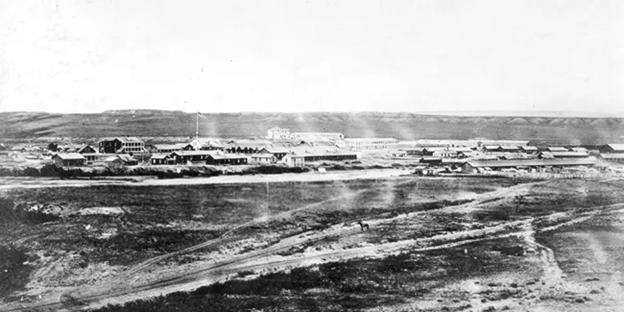
    <summary type="html"><![CDATA[<p><strong><em>	On June 27th, 1846, George Donner led a group of westward-bound emigrants from Illinois into Fort Laramie in what is now eastern Wyoming, but then unorganized territory. Fort Laramie was considered the doorway to the Intermountain West for travelers on the Overland Trail. For the Donners it would be considered the doorway to the first of many errors which made them the most infamous pioneers in American history.</em></strong></p><img src="https://www.intermountainhistories.org/files/fullsize/ff3f6be2d77dcfcaf49158dc57b9c4cc.jpg" alt="The Fort Laramie property photographed in 1877" /><br/><p>Fur trapper and trader William Sublette originally constructed the Fort in 1834. Emigrant trains and trappers used it as a stopping point and resupply station between the West and the East. It was here that the Donner party made a disastrous route decision to take an untested trail which would lead to their downfall and infamy.
The Donner family was from Illinois, and like other emigrant parties, knew little of the Western terrain outside of maps and journals. Before the Donners’ arrival, mountain men, fur trappers, and explorers had been devising routes westward out of Fort Laramie for emigrants to quickly and ‘safely’ travel to Oregon Country (which the U.S. co-managed with Great Britain) or the present-day areas of California that were then part of the larger Mexican territory of Alta California. The decision to stray from the traditional route was based on Lanford Hastings’ 1845 <em>The Emigrants guide to Oregon and California. </em>An explorer and eventual confederate soldier, Hastings described a westward route variation that would become known as the “Hastings Cutoff.” He wrote that the traditional route to get to central California could be hastened if one were to cut through the deserts of present-day western Utah and Nevada (then part of Mexican Alta California) instead of going north through present-day Idaho (then part of Oregon Country). They relied on the words of explorers like Hastings while planning their journey, even if the validity of these claims were yet untested.
Fearing the viability of Hastings Cutoff, famed mountain man James Clyman told one of the leaders of the party at Fort Laramie, James Reed, to “<em>take the regular wagon track and never leave it–it is barely possible to get through if you follow it–and it may be impossible if you don’t.</em>” Clyman’s warning fell on deaf ears. After leaving Fort Laramie in early July, many families decided to take the Hastings Cutoff. This decision proved fatal, eventually resulting in the death of 40 emigrants by the Spring of 1847. With George Donner chosen as the group’s captain, the collection of families that followed his lead to the Hastings Cutoff bear his name. The families that chose to take the Hastings Cutoff elected George Donner as its leader, with the group bearing his name. At Fort Bridger, in present-day southwestern Wyoming, they diverted southwest on the cutoff whereas the main company led by Lilburn W. Boggs continued on the traditional route which turned northwest from Fort Bridger towards Fort Hall in present-day southeastern Idaho. The Boggs party arrived safely in California in November 1846. The Donner Party did not.
The fort continued to play a role in migration, trading, and military activities in the years to come. Notable groups to pass through were the Latter-Day Saint migration of 1847, the gold rush of 1849, and the establishment of a military post in July of 1849. It became the site of several treaties signed between the federal government and Native Americans designed to reduce violence against emigrant trains. The Donner Party had not had conflicts with Native Americans on the plains, even though it was a concern for emigrants leading up to Fort Laramie. The Donners didn’t know it yet, but the decisions made here would lead to massive time loss, conflicts with Native Americans, and a heavy toll on their emotional health.</p><p><em><strong><a href="https://www.intermountainhistories.org/items/show/931">For more (including 7 images) view the original article</a></strong></em></p>]]></summary>
    <published>2026-02-02T17:19:19+00:00</published>
    <updated>2026-04-17T19:32:21+00:00</updated>
    <link rel="alternate" type="text/html" href="https://www.intermountainhistories.org/items/show/931"/>
    <id>https://www.intermountainhistories.org/items/show/931</id>
    <author>
      <name>Samuel Watson, Brigham Young University</name>
    </author>
  </entry>
  <entry>
    <title type="html"><![CDATA[The Donner Party in Utah: Challenges and Set-Backs at Emigration Canyon ]]></title>
    <summary type="html"><![CDATA[<p><strong><em>While the Donner Party traveled on the Hastings Cut-Off in 1846, they entered Utah  and encountered many obstacles. In the Wasatch Mountains the Party had to excavate  Emigration Canyon. This proved to be extremely difficult and the Donner Party decided  instead to climb over the steep hill. This resulted in the death of many of their oxen, forcing  the Party to leave many of their wagons behind. </em></strong></p><img src="https://www.intermountainhistories.org/files/fullsize/b55ba76354d688144ac6d672edcd8eed.jpg" alt="Donner Hill Monument at Emigration Canyon " /><br/><p>While the Donner Party was not the first nor the last group to travel the Hastings  Cut-Off, they were undoubtedly the most afflicted and grief-stricken group to ever travel this  route. The Hastings Cutoff was a new route that the Donner Party followed in the summer of  1846. Taking this path was ultimately the beginning of their tragedy. The Hastings Cutoff  was a branch off of the Oregon trail starting in Wyoming that went through Utah (instead of Idaho like the Oregon Trail) then through Nevada, eventually joining with the  California trail. Lansford Hastings was the man who suggested the idea of the new route,  claiming that it would save them 250 miles of travel, although Hastings himself had never  traveled the route. </p><p>There were multiple factors that attributed to the unfortunate events experienced by the Donner Party, many of them in Utah. While traveling through Utah on the Hastings Cut-Off, the Party was negatively affected by having to clear out Emigration  Canyon, cross the muddy areas of the Great Salt Lake Desert, and travel for extended amounts  of time in the desert without water. While the party was going through Utah on the Hastings Cutoff route, they spent 16 days hacking out a 36-mile road through the Wasatch Mountains.  Upon arriving at what would later be known as Emigration Canyon, they encountered brush  and trees that were impenetrable. Instead of continuing hacking through the canyon, they  attempted to climb over the hill in hopes that they would save time. Unfortunately the hill  was too steep and the excursion left them more exhausted than if they had continued through the canyon. With no time to rest after climbing the hill, many of the oxen gave out and died, leaving the party to move on without them. Their trip was delayed further because of this  excursion which led to the well-publicized disaster in the Sierra Mountains where about half of their party died and many of the rest turned to cannibalism. Despite this well-known disaster,  Brigham Young’s party of pioneers took advantage of this path that the Donner party created in Emigration Canyon the following summer in 1847. This allowed the pioneers to save time on their own journey and plant crops in time for the next harvest. To honor the Donner Party’s legacy, the members of The Church of Jesus Christ of Latter-Day Saints erected a  monument in 1958 at the mouth of Emigration Canyon. </p><p><em><strong><a href="https://www.intermountainhistories.org/items/show/433">For more (including 6 images) view the original article</a></strong></em></p>]]></summary>
    <published>2020-10-14T04:58:40+00:00</published>
    <updated>2026-04-17T19:32:08+00:00</updated>
    <link rel="alternate" type="text/html" href="https://www.intermountainhistories.org/items/show/433"/>
    <id>https://www.intermountainhistories.org/items/show/433</id>
    <author>
      <name>Emme Corbett, Brigham Young University </name>
    </author>
  </entry>
  <entry>
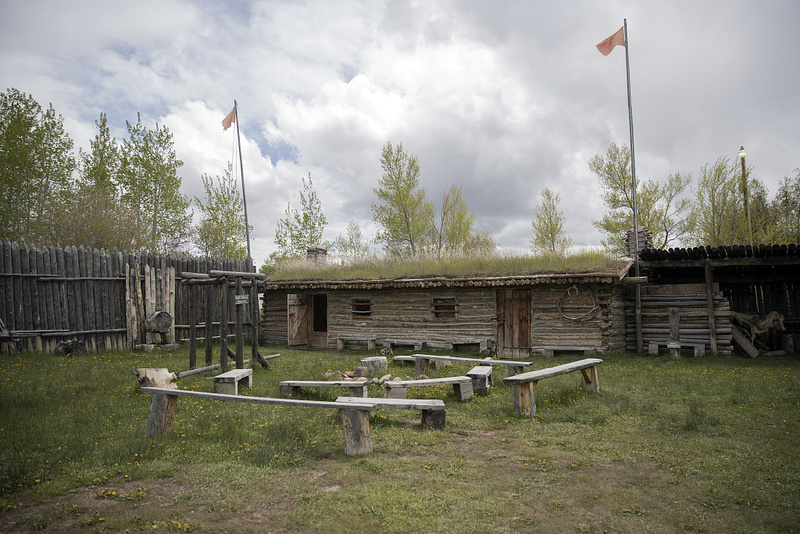
    <title type="html"><![CDATA[Fort Bridger the Crossroads of the West]]></title>
    <summary type="html"><![CDATA[<p><strong><em>“‘Fort Bridger’, as it is called, is a small trading-post, established and now occupied by Messrs. Bridger and Vasquez. The buildings are two or three miserable log-cabins, rudely constructed, and bearing but a faint resemblance to habitable houses.” – Edwin Bryant, American frontiersman and guide along the Overland trail</p></strong></p><img src="https://www.intermountainhistories.org/files/fullsize/4dbe8c195526e7485744bea72f784b0d.jpg" alt="Inside Stockade at Fort Bridger" /><br/><p>Located just off I-80, thirty miles from Evanston, Wyoming, lies the historic site of Fort Bridger. Fort Bridger has a long history of being involved with the American fur trade, western overland migration, and military involvement against the Mormons and Native Americans. It sits on the historic crossroads of the Oregon/California trail and the Mormon trail, and later the Pony Express Route, the Transcontinental Railroad, and the Lincoln Highway.</p><p>Fort Bridger was built by Jim Bridger in 1843. Bridger was a mountain man and frontiersman and heavily involved during the rendezvous fur trade period. He built his trading post close to popular rendezvous areas, as well as near the Oregon/California trail, hoping to gain business from the early emigrants heading towards Oregon and California. The original fort comprised of two log houses, about 40 feet long, with a corral for livestock. The fort also had a blacksmith shop, which was valuable for emigrants on the trail. While it was not as luxurious as Fort Laramie, Fort Bridger was still a welcome sight for travelers used to wandering in the wilderness. </p><p>In 1847, the first of the Mormon pioneers passed through the area. Jim Bridger and the Mormons initially maintained a good relationship, but quickly dissipated when the Mormons, feeling that the prices were too inflated at the fort, built their own fort nearby. After a series of raids on the fort, Bridger and his business partner, Louis Vasquez, abandoned the fort and the Mormons moved in. Eventually Bridger sold the fort to the Mormons, although he later disputes that claim. Adding additional fortifications to the fort, such as stone walls, the Mormons continued to use the fort as a supply station for emigrants heading west. However, in 1857, the Mormons abandoned and burned the fort down when rumors that federal troops were marching towards Salt Lake City with orders to bring Brigham Young in line. The US army subsequently occupied the area, deeming it a good proximity for a military presence over the Mormons. </p><p>The 1859 military reservation boundaries stretched 20 miles east to west, and 25 miles north to south, creating a buffer between the fort and the Mormon settlements. The army rebuilt the stone structures, and added a large parade ground, barracks, and supply buildings. Like most military forts in the west, Fort Bridger did not have walls that surrounded the entire fort, instead, the buildings faced inward towards each other with the open parade grounds serving as the center of the fort. The US army operated the fort from 1857 to 1890, dealing with disputes between the Mormons and the local Native American tribes. In the early 1860’s, Fort Bridger became the home to the Fort Bridger Indian Agency, which served the Eastern Shoshone, and parts of the mixed Bannock and Shoshone tribes. After the end of the Indian Wars in 1890, the military officially closed and abandoned the fort. Jim Bridger’s dream of a trading post became much more; Fort Bridger became the crossroad in the west, bridging the gap between the east and the west, political disputes, and white settlers and Native Americans. </p><p><em><strong><a href="https://www.intermountainhistories.org/items/show/243">For more (including 5 images) view the original article</a></strong></em></p>]]></summary>
    <published>2019-01-11T23:43:53+00:00</published>
    <updated>2026-04-17T19:32:03+00:00</updated>
    <link rel="alternate" type="text/html" href="https://www.intermountainhistories.org/items/show/243"/>
    <id>https://www.intermountainhistories.org/items/show/243</id>
    <author>
      <name>Rachel Hendrickson, Brigham Young University </name>
    </author>
  </entry>
  <entry>
    <title type="html"><![CDATA[Death at Mountain Meadows ]]></title>
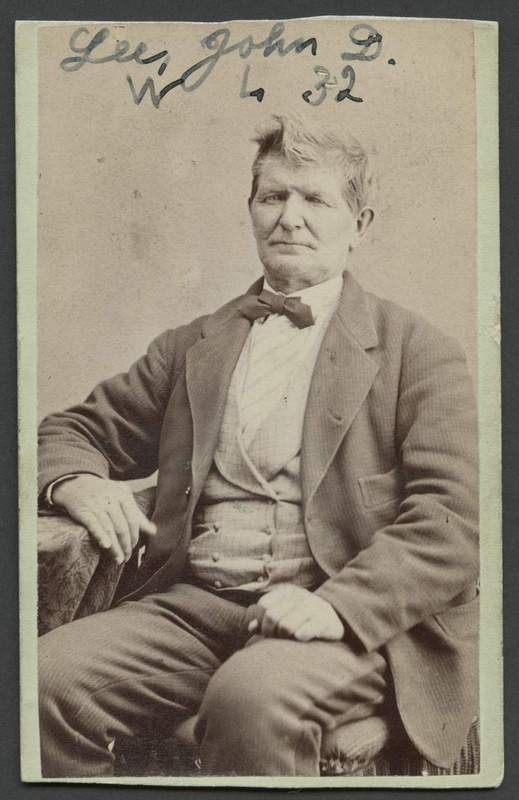
    <summary type="html"><![CDATA[<p><strong><em>The Fancher Party set out from Arkansas in April 1857, determined to reach the fertile fields of California- but they never reached their destination. Instead, they met their deaths at the hands of Mormon settlers and Paiute Indians near Mountain Meadows, an area just south of present day Cedar City, Utah on September 11, 1857. </em></strong></p><img src="https://www.intermountainhistories.org/files/fullsize/7681cb75268f4cde17eeec5e1d4a5372.jpg" alt="John D. Lee " /><br/><p>The mid-1850s relationship between Latter-day Saints (or Mormons) and the United States government, who felt that they were growing too powerful, was tense. In response to the growing power of the leaders of the LDS Church in Utah, the federal government sent a large Army to Utah in 1857 to assess the situation and suppress any potential rebellions against the United States. With the army's approach, fear and anxiety spread among Mormon settlers in Utah Territory.</p><p>It was in this atmosphere that the Fancher party crossed Utah Territory on their way to California. Contention abounded between the Fancher Party and the Mormon communities through which they passed on their journey west. The emigrants chided Mormon settlers that the army was coming to suppress the religious group, and boasted that members in their group had persecuted Joseph Smith, the Church’s first leader. Their threats to steal from Mormon communities further enraged the Saints, creating a climate that resulted in extra-legal vigilantism.</p><p>In response to the perceived threats, LDS leaders in Cedar City and Parowan took matters into their own hands. Isaac C. Haight, William Dame, and John D. Lee solicited the aid of local Paiute Indians to steal the settlers’ stock while the local community plotted to attack the emigrant train encamped at ‘the Meadows.’ Under the ruse of a white flag, Lee led the Indians in the raid.  Then, the local men disarmed the wagon train and killed around 120 emigrants on September 11, 1857. Only seventeen members of the party survived, all children too young to remember the attack. After the massacre, word came from Brigham Young in Salt Lake City for the Saints and the Paiutes to let the emigrant train pass unmolested.  Unfortunately, his letter came too late to save the emigrant party from disaster. Some debate Young's knowledge and timing of the letter.</p><p>A series of cover-up stories allowed those responsible for the massacre to escape prosecution for years. John D. Lee faced trial in 1875, though the court did little to address the situation. A second trial commenced in 1878.  This time the court attributed full responsibility for the massacre to Lee, ruling that his actions qualified as murder. The jury sentenced Lee to death and the federal representatives executed Lee on March 23, 1877.  The involvement and role of Paiute auxiliaries is still debated to the present. The other men responsible for the massacre escaped legal punishment. Most of the massacre survivors eventually rejoined relatives in Arkansas and California.  Representatives of the participants dedicated a memorial commemorating the tragedy and honoring the families who died at Mountain Meadows in 1999.</p><p><em><strong><a href="https://www.intermountainhistories.org/items/show/22">For more (including 5 images) view the original article</a></strong></em></p>]]></summary>
    <published>2017-02-15T17:21:51+00:00</published>
    <updated>2026-04-17T19:31:58+00:00</updated>
    <link rel="alternate" type="text/html" href="https://www.intermountainhistories.org/items/show/22"/>
    <id>https://www.intermountainhistories.org/items/show/22</id>
    <author>
      <name>Rachel Hendrickson, Brigham Young University </name>
    </author>
  </entry>
  <entry>
    <title type="html"><![CDATA[Echo, Utah: Gateway to the West]]></title>
    <summary type="html"><![CDATA[<p><strong><em>Echo, Utah, once a town of significant geographical and social importance in territorial Utah has become a virtual ghost town, physically isolated from the interstates that run a short distance from its once bustling main street.  In its history, it was a key location along the Hastings Cutoff Trail, the Donner Party passed by in 1846 as well as some 75,000 Latter-day Saint emigrants between 1847 and 1869.  The Pony Express, various stage and mail lines, the Overland Telegraph, the Transcontinental Railroad, and the Lincoln Highway all utilized Echo’s location for their routes.</em></strong></p><img src="https://www.intermountainhistories.org/files/fullsize/d77510f3151bbfb69069140fd8469d07.jpg" alt="James Bromely&#039;s Stage Station" /><br/><p>Echo is located at the mouth of the steep sided Echo Canyon,, the bottleneck that directed overland travelers toward the Ogden and Salt Lake valleys.  While the Donner Party was the first major American overland group since the mountain men to pass through, the Latter-day Saints or Mormons were the first to make note of its geographical significance when their first wagon train encamp there for almost a week in July 1847. They viewed the spot as an ideal resting spot for overland travelers--a long, broad valley covered in grass and trees. James Bromely noted the location’s desirability and established a large stage station there in 1854, forming the first permanent vestige of a town.</p><p>Echo became a strategic location during the Utah War in 1857-1858 as a base of operations for the Mormon Nauvoo Legion defending the Utah Territory from the invading US Army.  U.S. military leaders recorded that the narrow canyon and dramatic geological formations made the location perfect for both fortified defense and ambush. Travelers, having heard of Echo’s militant reputation, feared passing through the town for decades.</p><p>The Transcontinental Railroad entered Echo in 1868, building its own Hell-on-wheels style town to the northwest of the existing Mormon settlement. Echo became an important junction connecting the coal mines of Summit County and the gold and silver mines in Park City with the Union Pacific Main Line until the railroad consolidated its locomotive facilities in Ogden during World War II.  After the construction of Interstate-80 in 1986, the town did not receive an interstate exit.  Cut off from easy access, and with the railroad abandonment of its branch lines in 1988, the town withered and died.</p><p><em><strong><a href="https://www.intermountainhistories.org/items/show/18">For more (including 3 images) view the original article</a></strong></em></p>]]></summary>
    <published>2017-02-13T18:43:52+00:00</published>
    <updated>2026-04-17T19:31:58+00:00</updated>
    <link rel="alternate" type="text/html" href="https://www.intermountainhistories.org/items/show/18"/>
    <id>https://www.intermountainhistories.org/items/show/18</id>
    <author>
      <name>Joshua Bernhard, Brigham Young University  </name>
    </author>
  </entry>
  <entry>
    <title type="html"><![CDATA[Memorializing Mountain Meadows]]></title>
    <summary type="html"><![CDATA[<p><strong><em>This monument honoring the victims of the Mountain Meadows Massacre is a sober one. It tells a story of fear, radicalism, and tragedy. </em></strong></p><img src="https://www.intermountainhistories.org/files/fullsize/52f1afbf2035519af22f18d37ca1543e.jpg" alt="Mountain Meadows Massacre Monument" /><br/><p>In the mid-1850s, the Mormons of Utah were not on friendly terms with the United States of America. Previous persecutions from the government caused Mormons to be distrustful of the United States. The United States saw the Mormon theocracy that existed in Utah and feared its disloyalty. This caused the Utah War, a cold war between the territorial and federal governments. Droughts and pestilence in the mid-1850s caused an extremist movement in Utah called the Mormon Reformation with powerful rhetoric, including a religious capital punishment. The atmosphere of Utah at the time was hostile. </p><p>The Baker-Fancher party of emigrant families was passing through the Southern end of Utah and rumors went with them. Local Mormons feared their intentions and assembled militia and local Paiutes to attack. In a series of attacks from September 7-11, 1857, 120 men, women, and children were killed, leaving only 17 small children alive. After much controversy over who was at fault for the massacre and the extensive efforts to cover up and understand, John D. Lee, one of the men who led the assault, was ultimately convicted and sentenced to death. </p><p>The first monument was built by James H. Carleton in 1859 when he was investigating the massacre for the United States. In shock of what he had seen, he felt the need to build a monument by stacking stones atop one another with a cross at the top. The monument was repeatedly destroyed and rebuilt over the years. Calls for a more honorable and permanent monument were made by the descendants of the Baker-Fancher party and Mormon President Gordon B. Hinckley. While the permanent monument was being built in August 1999, a backhoe dug up the bones of 28 massacre victims. Much controversy went behind whether to study them or to honor them through reburial in time for the dedication. Utah Governor Mike Lee made the decision to not spoil the commemoration of the dead with controversy. The decision was made to honor the dead and allow for the healing of old wounds. </p><p>Historian Levi Peterson likens learning about the massacre to a Greek tragedy. Tragedies tell a story of an honorable hero who falls under a gross misunderstanding. When we view another in the midst of a tragedy, we are capable of escaping our own tragic emotions and seek for healing through catharsis. As one views this monument, one may come seeking healing of their own mistakes.</p><p><em><strong><a href="https://www.intermountainhistories.org/items/show/9">For more (including 4 images) view the original article</a></strong></em></p>]]></summary>
    <published>2017-01-11T00:17:39+00:00</published>
    <updated>2026-04-17T19:31:58+00:00</updated>
    <link rel="alternate" type="text/html" href="https://www.intermountainhistories.org/items/show/9"/>
    <id>https://www.intermountainhistories.org/items/show/9</id>
    <author>
      <name>Jason Colver, Brigham Young University</name>
    </author>
  </entry>
</feed>