Pilot Peak: Looking back at the Great Salt Lake Desert
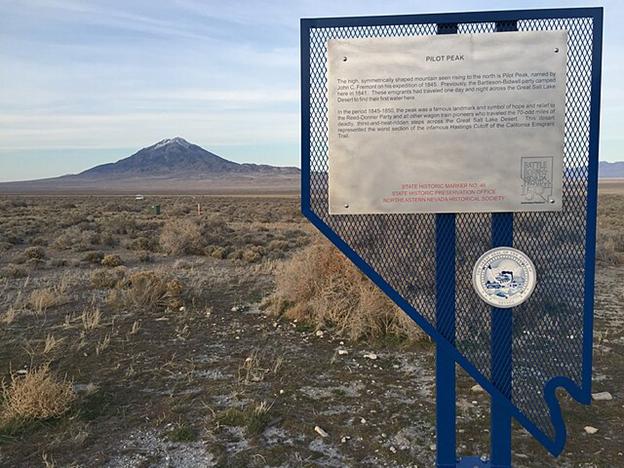
Photo retrieved from Wikimedia Commons, the free media repository, 19 March 2016.
_in_Elko_County,_Nevada,_with_Pilot_Peak_visible_in_the_background.jpg)
Emigrant parties and explorers used this mountain peak on the southern end of Pilot Mountain Range, which straddles the modern Utah-Nevada border west of the Bonneville Salt Flats, as a landmark to track their progress out of the Great Salt Lake Desert. For the Donner Party, the most infamous group of pioneers in American history, it was a place where fatal lost time and resources became realized, and an aura of frantic urgency imbued the party.
By the time the Donners reached Pilot Peak on September 8th, 1846, they had just endured a disastrous eight days of travel from Redlum Spring in Western Utah. It was the last source of freshwater before crossing the salt flats. Lansford Hastings’ directions had insisted it was only “thirty-five miles, or of forty at most” from Redlum Springs to water sources near Pilot Peak. It was, in fact, 80 miles, and Hastings’ promised 2-day itinerary across the parched landscape took the Donner Party eight days in hot, arid conditions.
As they began their trek, Luke Hallaron died of Tuberculosis on August 25th, followed by Franklin Graves having a “fine mare” stolen by the Native Americans, a threat that persisted for the rest of their journey. After cresting an early hill they were greeted by “a perfectly flat plain unbroken even by sage, and dazzling white, like frost, with the glitter of salt.” The hellish landscape’s oppressive heat and lack of shelter drove party members to heat exhaustion. On the second day the hard salt eventually turned into a slushy marshland, where “the wagons broke through the thin crust and sank several inches into sandy slush oozing with salt water”. With the party’s condition quickly deteriorating from dehydration, James Reed rode ahead on the third day and located the springs at the base of Pilot Peak 30 miles away, and returned with what water he could carry. Nine oxen went missing while Reed was gone, having stampeded into the desert at night in search of water, “frenzied and half-blind with thirst.” After returning to his family farther down the trail, they spent a frigid night’s encampment before being awakened by a frenzied ox that charged Reed’s family. Startled, the family pressed forward along Reed’s path in the middle of the night, pushing towards Pilot Peak for the next five days, meeting up with the rest of the party on September 8th.
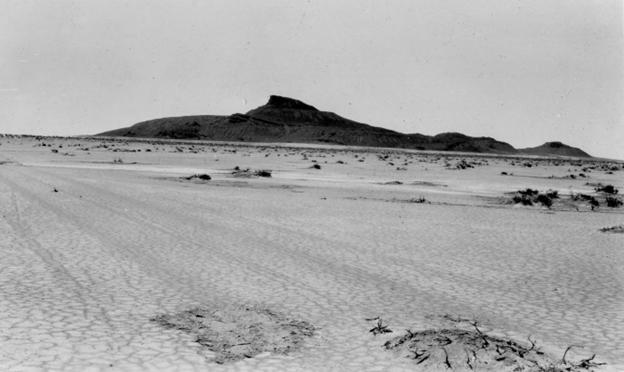
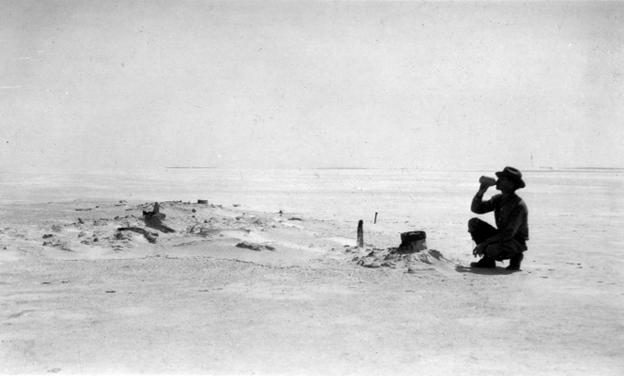
Like their delay in the Wasatch Mountains, the importance of this slowed pace cannot be understated. The arid desert turned salt marsh entrapped wagons, slowed oxen, and exhausted the already frustrated and delayed emigrants. In addition to adding five days to their planned itinerary, they lost 36 cattle, four wagons, and incalculable energy they crucially needed later. The trail was so difficult that research expeditions in 1929 and 1986 had difficulty and got stuck while re-tracing the party's steps. The delays from crossing the Wasatch Mountains and Great Salt Lake Desert, and the subsequent week-long recuperation at Pilot Peak, put the group over a month behind schedule. Many emigrant parties heading West saw Pilot Peak as a landmark on which to base their progress and pace, but for the Donners’ it represented the beginning of the end. They desperately needed to make up time from their disastrous navigation through the Wasatch Mountains, but the time and resources lost on the Great Salt Lake Desert would prove fatal for almost half of the group.
Images
Photo retrieved from Wikimedia Commons, the free media repository, 19 March 2016.
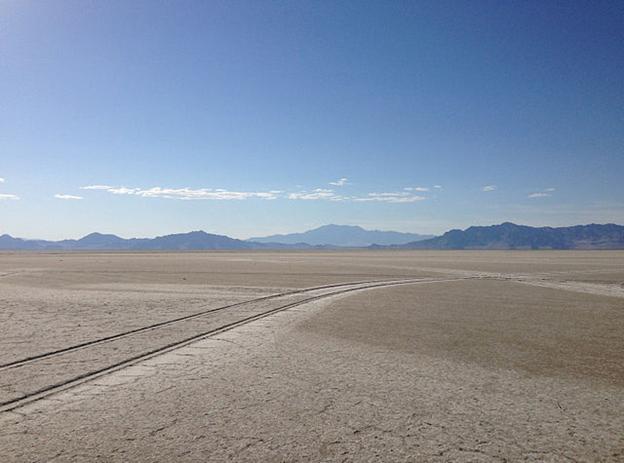
Photo retrieved from Wikimedia Commons, the free media repository, 5 July 2014.

Kelly, Charles, Digitized by J. Willard Marriott Library, University of Utah, Utah State Historical Society, 1929.
Kelly, Charles, Digitized by J. Willard Marriott Library, University of Utah, Utah State Historical Society, 1929.
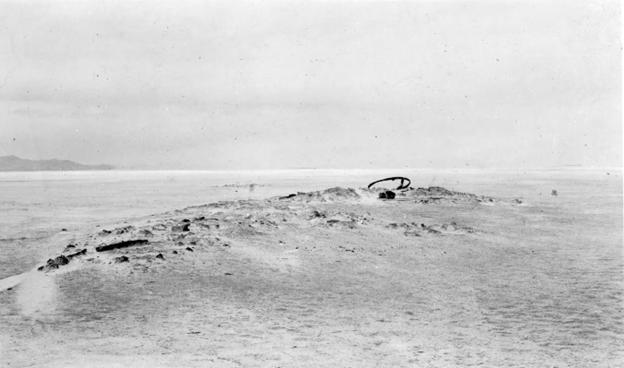
Kelly, Charles, Digitized by J. Willard Marriott Library, University of Utah, Utah State Historical Society, 1929.
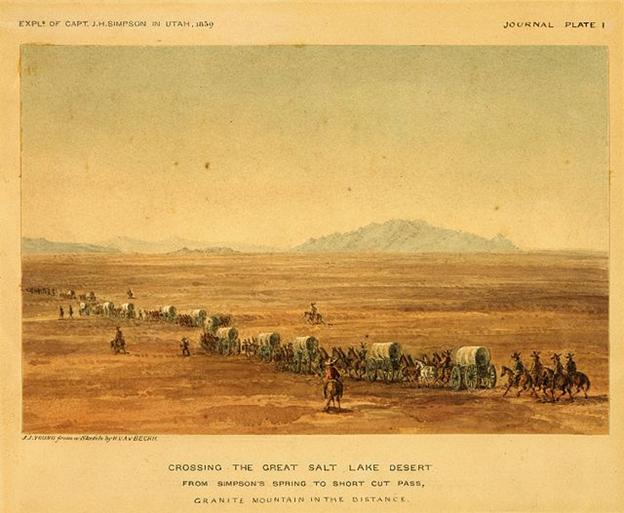
John J. Young, Photo retrieved from Wikimedia Commons, the free media repository, 1859.
