The Donners along the Humboldt River
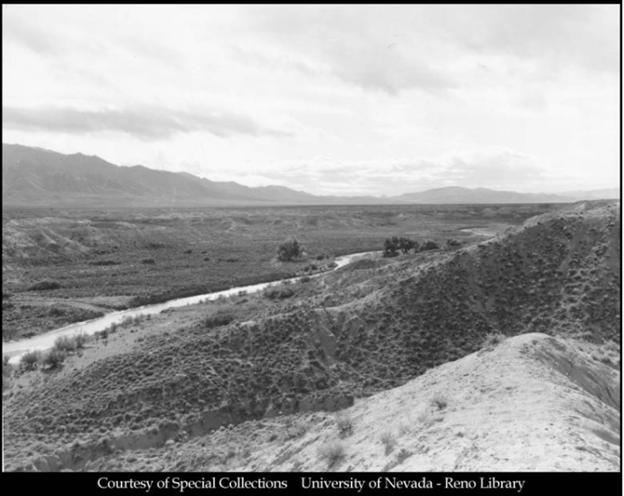
https://contentdm.lib.byu.edu/digital/collection/OTImages/id/34
The Humboldt River resides in modern-day central Nevada and marks the spot where the Hastings Cutoff reunites with the traditional California trail. It was along this river that distrust overcame the Donner Party, with its party members being attacked, banished, and murdered.
The Humboldt River was named after German intellectual and explorer Alexander von Humboldt. His name can be found on things such as the Humboldt Ocean Current off the Western coast of South America and Humboldt County in present-day California. The river was used for centuries by Native Americans and became known to non-indigenous populations when Peter Ogden of the British owned Hudson’s Bay Company discovered it on one of his expeditions in 1829. Trappers and mountain men utilized it extensively, and it became a major navigational tool and watering spot for westward migrants in the 1840s. When the late-season and already weakened Donner Party reached the river in mid-September, 1846, drought had lowered the water level and withered adjacent greenery. Their travel along the Hastings Cutoff, which diverged south to skirt around the Ruby Mountains before returning north to the Humboldt River trail intersection, had added 100 miles to what they would have traveled had they stayed on the traditional trail.
Their troubles after the Great Salt Lake Desert were far from over. As they began their journey down the river, progress and supplies were stressed by Paiute depredations on their livestock. Then, on October 5th, as the Murphy family’s wagon led by teamster John Snyder attempted to pass James Reed’s wagon, the two trains became entangled and Snyder whipped Reed’s oxen in anger. Reed retaliated, and in the ensuing scuffle Snyder struck Reed’s wife and Reed stabbed Snyder, killing him. The Graves and Murphy families banished Reed from the group, sending him to the party’s desired destination of Sutter's Fort in California on his horse and promised to care for Mrs. Reed and their young children. Paiute altercations and interpersonal conflicts further escalated problems. An elderly Belgian emigrant, known only as Hardkoop, repeatedly went missing after being kicked out of Lewis Keseberg’s wagon. An eyewitness said they had seen him sitting alone on the side of the trail unable to continue as “his feet had swollen until the skin had split.” William Eddy attempted to spend resources that night to find him, but was refused by other members of the party. As they progressed alongside the Humboldt River as many as 18 oxen were stolen, one wounded, and 21 killed by Paiutes. Making good progress regardless, they reached Humboldt Sink close to the end of the river, on October 13th. On this day a German emigrant, known only as Wolfinger, stayed behind with two other Germans to cache, or store, his wagon. The two Germans rejoined the party several days later, but Wolfinger was absent. The other Germans claimed Natives had killed him, but one later confessed to murdering Wolfinger, leaving his body to be devoured by vultures and coyotes in the Humboldt Sink.
The party reached the Truckee River which led up into the Sierra Nevada Mountains in eastern California, on the 16th of October. The roughly three week journey along the Humboldt River had strained their relationships and caused them to lose trust in each other. Hardkoop’s abandonment, Reed’s banishment, and Wolfinger’s murder reveal unraveling social cohesion. Losing Reed as a steady leader was especially damaging. The Humboldt served as a refuge from the Great Basin Desert for most emigrant groups heading towards California, but for the Donners it marked exponentially increasing troubles which would remain with them for the rest of their journey. The culmination of all their mistakes, from Forts Laramie and Bridger, the Wasatch Mountain range, the Great Salt Lake Desert, and the Humboldt River, would lead to great suffering for the party in the Sierra Nevadas.
Images
https://contentdm.lib.byu.edu/digital/collection/OTImages/id/34
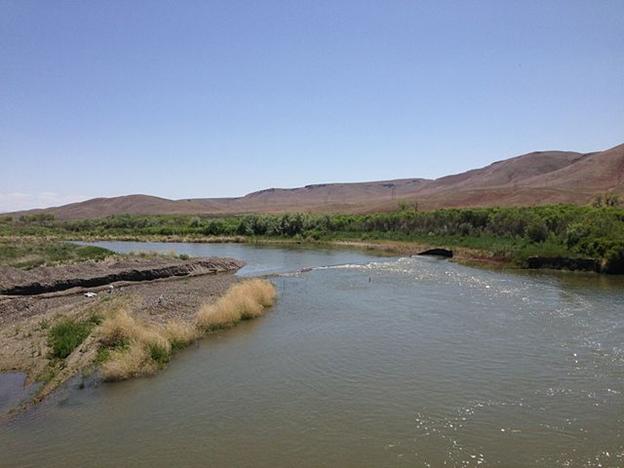
Photo retrieved from Wikimedia Commons, the free media repository, 31 May 2014.

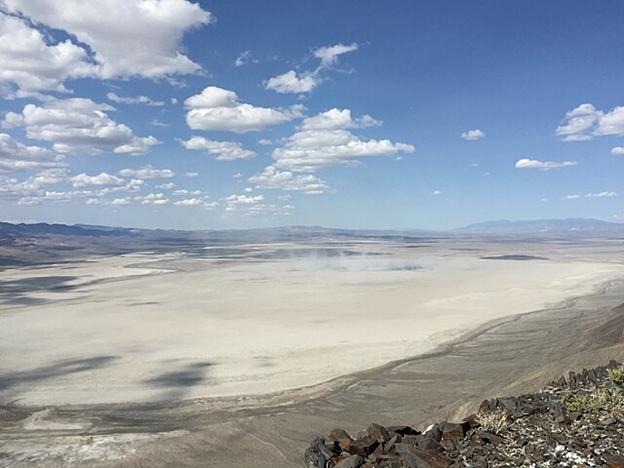
Photo retrieved from Wikimedia Commons, the free media repository, 18 April 2015.

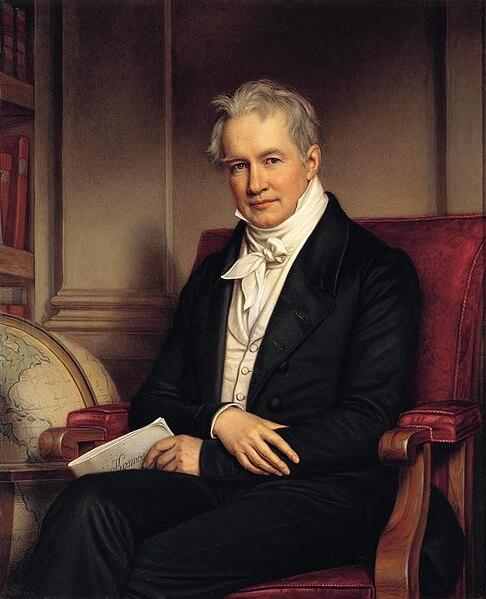
Joseph Karl Stieler, Photo retrieved from Wikimedia Commons, the free media repository, 1843.
https://commons.wikimedia.org/wiki/File:Stieler,_Joseph_Karl_-_Alexander_von_Humboldt_-_1843.jpg

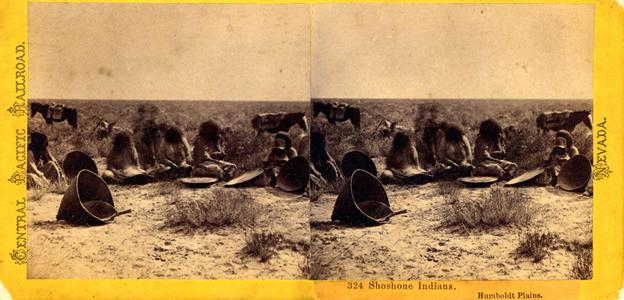
Hart, Alfred A. University of Nevada-Reno, Special Collections and University Archives Collections, Central Pacific Railroad, number 324, 1869.