Truckee Lake: The Infamous Demise of the Donner Party
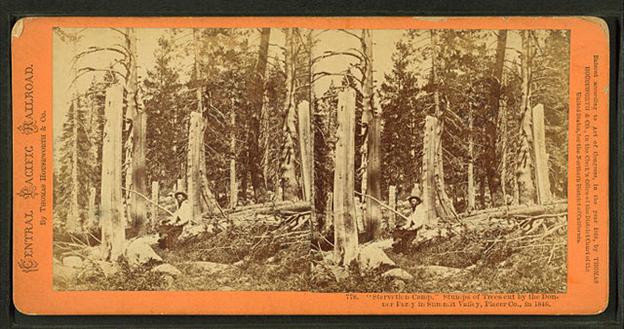
Thomas Houseworth & Co., Photo retrieved from Wikimedia Commons, the free media repository, 1846.

Truckee Lake (now known as Donner Lake) is nestled on the eastern slope of the Sierra Nevada Mountains of modern-day California. On the western side of the Lake there is an opening in the mountains where the Stephens-Townsend-Murphy party passed through in 1844 and set the primary route that westward emigrants would use to enter the Sierra Nevadas. For the Donners, this pass would become an unsurpassable wall of snow that stopped them from reaching salvation at Sutter’s Fort.
When the Donner Party arrived at Truckee Lake on October 31, 1846, they hoped to push through the mountains and descend into California before winter. However, due to their delayed arrival and an early mountain storm the day prior, the now snowed-in passes repelled their multiple attempts to do so. Though only 150 miles away from their planned destination, Sutter’s Fort, they were forced to establish an unplanned winter encampment at the lake, nearly 6,000 ft. above sea level. The best recounting of the Donner Party’s winter encampment at Truckee Lake comes from Patrick Breen, one of the only migrants to keep a consistent journal throughout their ordeal there. Ominously, Breen recorded that during their first week at camp “it snowed during the space of eight days with little intermission.” Having already killed most of their cattle, prospects of survival were grim.
They established two camps. Most of the party was at Truckee Lake, with the Donner families and a few others having been stopped by a broken wagon six miles before reaching the lake and camping at Alder Creek. However unprepared, the party planned to wait until relief parties arrived when snows let up or later in the Winter. Such hopes were dashed by abnormally heavy and continuous snow storms. The current Donner Memorial State Park Monument commemorates the snow depth that stranded them that winter, standing at 22 feet. As time passed, Breen cataloged the diminishing resources and hope of rescue. “November 9th… took in Augustus Spitzer yesterday so weak that he cannot live without help caused by starvation.”
The families at the lake had run out of meat and were eating animal hides for sustenance by January of 1847. In the face of starvation, social bonds and group cooperation further deteriorated. Earlier debts unpaid or trespasses unpunished from the trail were used as grounds to hoard supplies. For example, Mrs. Graves reneged on a promise to Mrs. Reed and took back borrowed animal hides which Mrs. Reed had received to feed her family. On February 9th Breen states, “pikes child all but dead… Murphys not able to get out of bed Keyburg [Keseburg] never gets up says he is not able. John went down to day [today] to bury Mrs. Eddy & child…” The first relief group sent from Sutter’s Fort in California arrived on February 19, 1847, and the scene they described testifies to the horrific conditions the families had suffered through for months at Truckee Lake and Alder Creek. Most shocking was the evidence of cannibalism: the mutilated corpses of two children, Isaac Donner and Franklin Graves, and the remains of Elizabeth Graves with several organs removed, presumably eaten. The relief party gave what provisions they could and took some emigrants with them, but the situation remained dire for those left behind. On February 26, Breen wrote, “The Donnos [Donners] told the California [Californians] that they [would] Commence to eat the dead people… if they did not succeed that day or next in finding their cattle.” Those left behind at Truckee Lake and Alder Creek continued to suffer, facing imminent death and potential desecration of their corpses by fellow starving party members. Numbers dwindled up until the last emigrant trapped on the Eastern side of the mountains, Lewis Keseberg, was rescued in April of 1847.
Although not a complete representation of the overland emigrant experience, the Donner Party’s demise is a cautionary tale in the frontier histories of the American West. Many others suffered from delays, poor decision-making, Native conflicts, and inclement weather, but few ended in such horrific circumstances as those at Truckee Lake and Alder Creek over the winter of 1846-47. The survivors would go on to live their lives in California, but their ordeal and rescue would be a constant reminder of the worst-case scenario for future emigrants on the overland trail.
Images
Thomas Houseworth & Co., Photo retrieved from Wikimedia Commons, the free media repository, 1846.
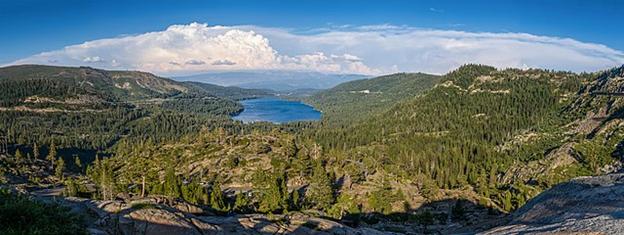
Frank Schulenburg, Photo retrieved from Wikimedia Commons, the free media repository, 4 July 2013.
https://commons.wikimedia.org/wiki/File:Donner_Lake_as_seen_from_Donner_Pass.jpg

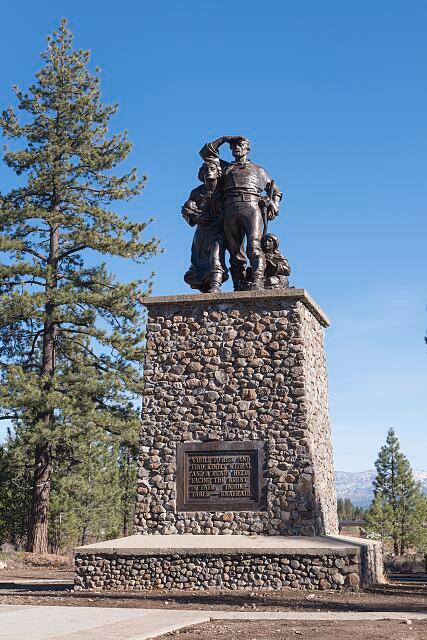
Highsmith, Carol M., Photograph courtesy of and used with permission by the Library of Congress, 2012.
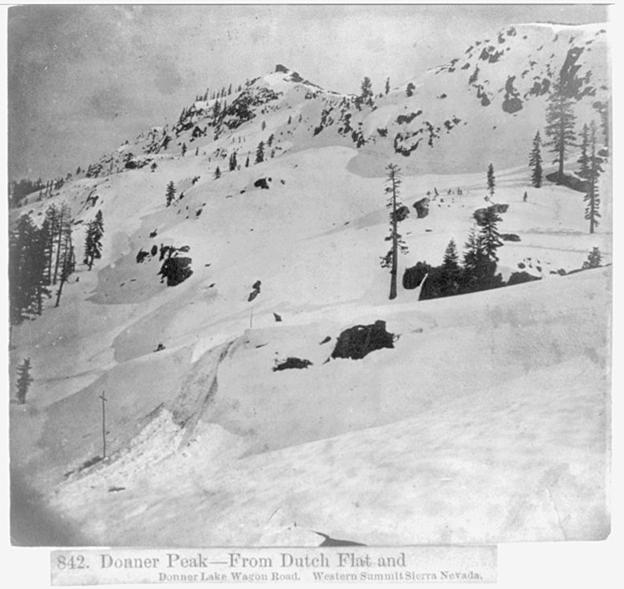
Lawrence & Houseworth, Photo retrieved from Wikimedia Commons, the free media repository, 1866.

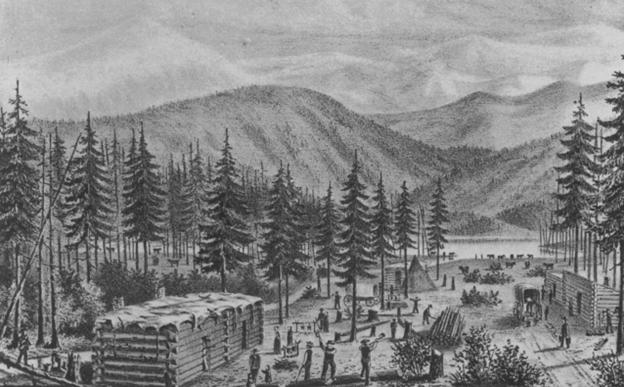
Thompson and West, Photo retrieved from Wikimedia Commons, the free media repository, 1880.
https://commons.wikimedia.org/wiki/File:Truckee_Lake_camp.jpg
