The Rockwood Speakeasy – Butte, Montana
When Montana lawmakers passed alcohol bans in 1918, Butte’s nightlife went underground. Business owners concealed their speakeasies, brothels, and gambling halls in basements under the city’s sidewalks. During Prohibition, Rockwood (Rookwood) Speakeasy earned its fame hidden behind coats and code words.
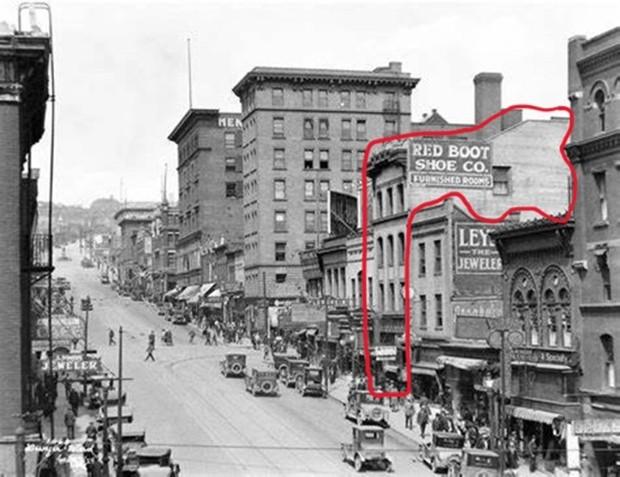
Ward, Frank. Uptown Butte. Photographed 1920-1930. https://mtstandard.com/lifestyles/butte-s-story-told-through-photographer-s-eyes/article_c6a7f3c8-73c7-5c73-abfe-3f5e4a75d466.html.
James Pratt, proprietor of the Red Boot and Shoe Company, built the Rockwood (also called the Rookwood), in Butte, Montana in 1912. The ground level housed the shoe company’s shop, and the floors above functioned as a hotel. Pratt designed the building to attract attention and business with décor like Tudor-arching, green tile, a copper-clad cornice, a wrought iron staircase, and marble wainscoting and floors. The Rockwood’s unique ambiance and railroad access attracted elite and traveling patrons alike.
Before Prohibition, Butte, Montana, boomed as a mining town and gained notoriety for its lively bar and entertainment scene. When the Montana government banned alcohol distribution and consumption in December of 1918, Butte bars moved underground—into basements and tunnels beneath storefronts—and continued to sell alcohol. During this time, over one hundred underground speakeasies, including the Rockwood, operated in the city. In 1918, Pratt converted the building’s basement into a speakeasy. This underground area matched the hotel’s elegance above, attracted numerous clients, and became one of Butte’s more famous drinking spots.
In 1923, one of Rockwood’s moonshine clients, Mae Holberg, died by suicide after overconsuming alcohol. The 29 January 1923 issue of The Butte Daily Post describes the harrowing story. Holberg attended an all-night party at the Rockwood. Witnesses and police confirmed this party involved large quantities of illegal liquor. Around 7:00 A.M., Holberg drank one and a half ounces of Lysol, a fatal dose that ended her life within hours. A friend at the party told officers he believed Holberg took her own life because “she was despondent,” he said, “one or two drinks always made her despondent and downhearted.” Tragic stories like this made the Rockwood notorious in the illegal drinking world.
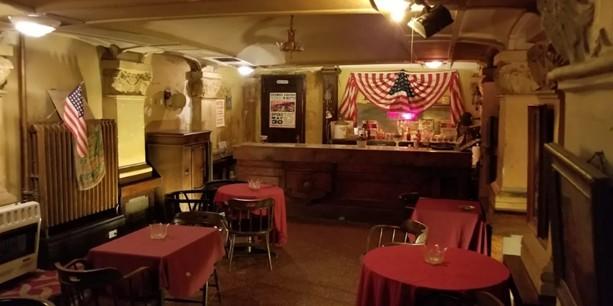
After Prohibition ended, Butte’s underground scene lost its appeal. Shop owners no longer needed to hide their liquor, so they moved alcohol sales to street levels, and many permanently sealed off their speakeasies. Rockwood’s basement became one of these buried speakeasies, while the rest operated as a hotel and retail space. In 2004, workers renovating the Rockwood Hotel discovered a closet filled with untouched coats from decades past. Behind the coats, they uncovered a two-way mirror which concealed a hole that opened into the Rockwood Speakeasy—frozen in time since the Prohibition era.
This discovery highlights the secretive and exclusive nature of the Rockwood Speakeasy and explains how it remained hidden and operational throughout Prohibition. It is a modern-day time capsule, offering visitors a glimpse into the past. Visitors can imagine stepping into the shoes of a 1920s client—looking into the mirror, giving the bouncer the code, and feeling the thrill of defying Montana’s dry laws.Images
Ward, Frank. Uptown Butte. Photographed 1920-1930. https://mtstandard.com/lifestyles/butte-s-story-told-through-photographer-s-eyes/article_c6a7f3c8-73c7-5c73-abfe-3f5e4a75d466.html.
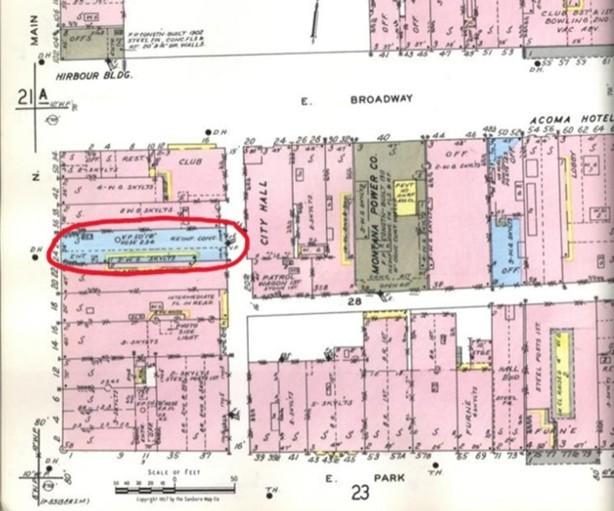
Sanborn Map, Image 29 of Sanborn Fire Insurance Map from Butte, Silver Bow County, Montana. 1916, Library of Congress, Washington, DC https://www.loc.gov/resource/g4254bm.g4254bm_g04950195701/?sp=29.
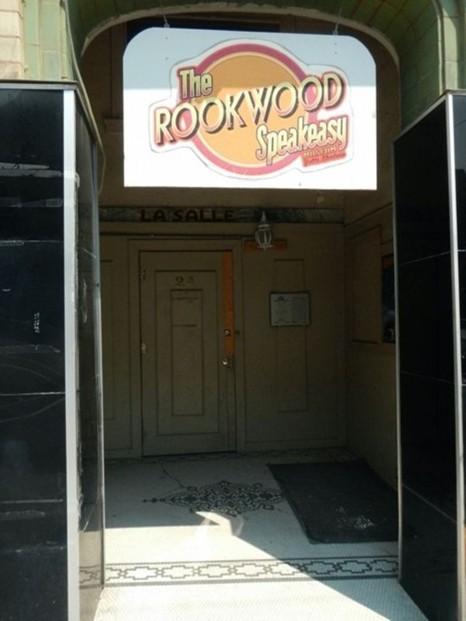
Swackhamer, Barry, from Rookwood Hotel Historical Marker. Rookwood Hotel Marker, inside the recessed entrance, photographed on July 12, 2021, available at https://www.hmdb.org/m.asp?m=185115.
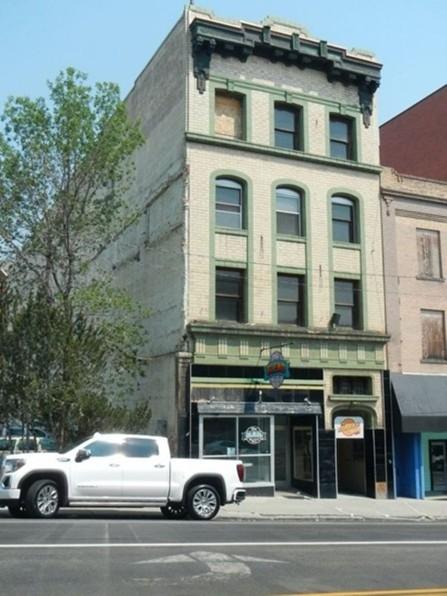
Swackhamer, Barry, from Rookwood Hotel Historical Marker. Rookwood Hotel, photographed on July 12, 2021, available at https://www.hmdb.org/m.asp?m=185115.
Old Butte Historical Adventures, from Old Butte Historical Adventures. Old Butte Historical Adventures, available at https://buttetour.info.