<?xml version="1.0" encoding="UTF-8"?>
<feed xmlns="http://www.w3.org/2005/Atom">
  <title type="text">Intermountain Histories</title>
  <updated>2026-04-17T19:32:19+00:00</updated>
  <generator uri="http://framework.zend.com" version="1.12.20">Zend_Feed_Writer</generator>
  <link rel="alternate" type="text/html" href="https://www.intermountainhistories.org/"/>
  <link rel="self" type="application/atom+xml" href="https://www.intermountainhistories.org/items/browse?output=rss2"/>
  <id>https://www.intermountainhistories.org/</id>
  <author>
    <name>Intermountain Histories</name>
    <uri>https://www.intermountainhistories.org</uri>
  </author>
  <link rel="hub" href="https://pubsubhubbub.appspot.com/"/>
  <entry>
    <title type="html"><![CDATA[The Plane of the People]]></title>
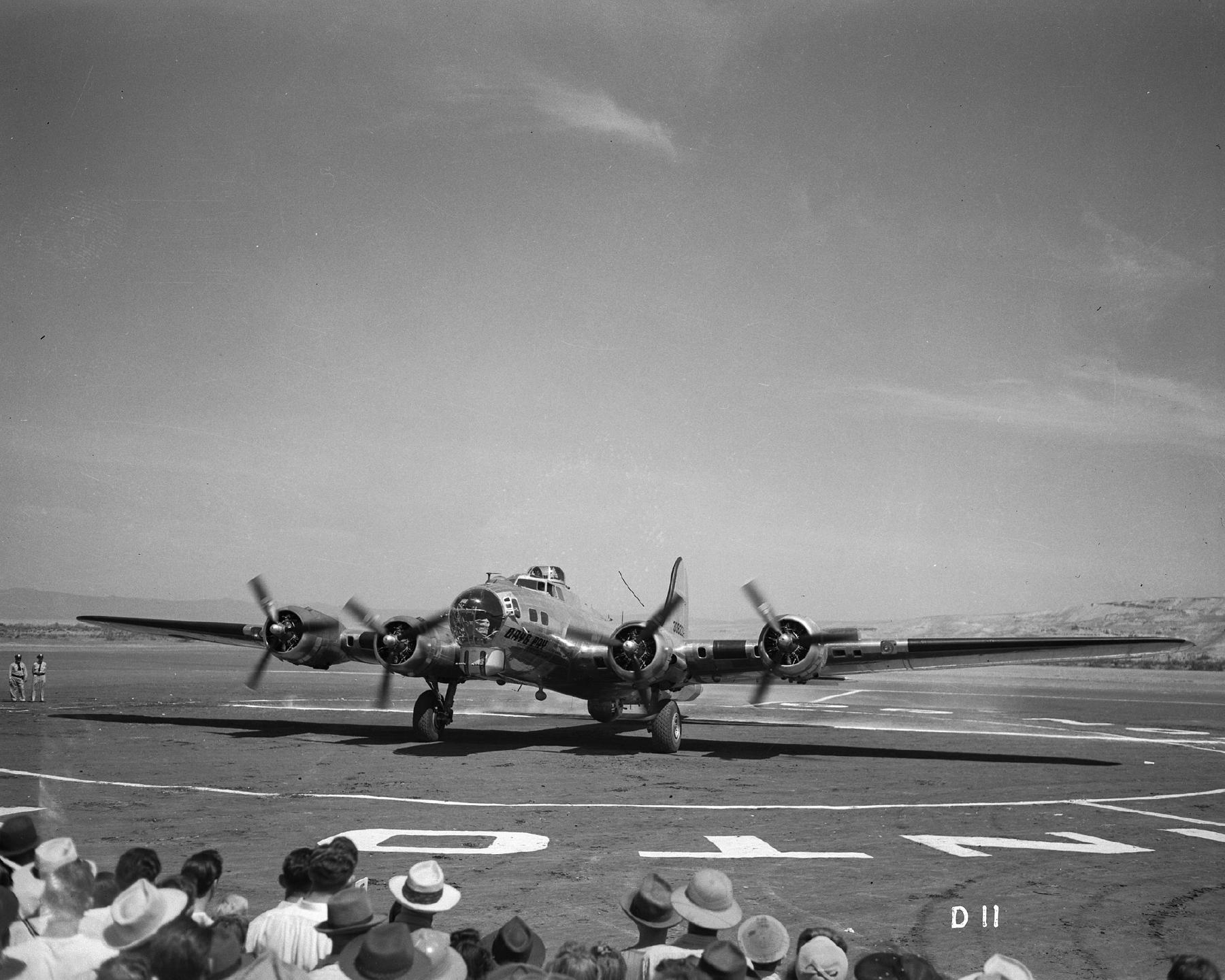
    <summary type="html"><![CDATA[<p><strong><em>During World War II the people of the Hanford Site came together to buy a bomber to support the war effort. The “Give a Bomber” campaign created a legacy that continues to bind a town together.</em></strong></p><img src="https://www.intermountainhistories.org/files/fullsize/5cc1c2fd94c0b5b7485b37b7f3d037e9.jpg" alt="The Day’s Pay B-17 Bomber at the celebration" /><br/><p><span style="font-weight:400;">Would you give up a day's pay to help your country? The workers of Hanford, Washington, where the plutonium was made for the Manhattan Project, decided to contribute their wages to buy a bomber to send overseas. Demonstrating their enthusiasm, 51,000 employees gave up a day’s pay for a certificate acknowledging their “share” of the bomber. The campaign’s slogan “Give a day’s pay and send a bomber on its way,” influenced the name of the plane as “Days Pay” was the overwhelming winner when the “Give a Bomber” committee held a contest to pick a name for th</span><span style="font-weight:400;">e plane. The workers asked the Army Air Force what type of plane it needed. The answer came back asking for the B-17 Flying Fortress, with the cost of the bomber being approximately $300,000 in 1944 (costing $5,257,107.95 in 2024).</span>
<span style="font-weight:400;">On July 23, 1944, workers christened the new plane and dedicated it to Colonel David Wade, along with Mrs. Katie Belle Harris, whose son had been lost in action. The Day’s Pay then became a part of the 8th Army Air Force in England, where it flew more than 60 missions in Germany. The plane was hit to the point of critical condition multiple times, but, what was very rare for the time was that every man on that bomber returned home safely and unharmed, which made the Day’s Pay a lucky plane.</span>
<span style="font-weight:400;">The employees who bought Day’s Pay continued to keep track of it as it flew missions, with the employee newspaper, the </span><i><span style="font-weight:400;">Sage Sentinel,</span></i><span style="font-weight:400;"> reporting on its mission progress. The paper also published a list of the plane’s crew, which allowed the employees to send Christmas cards and care packages to “their” boys overseas as well as check in on “our” plane. Unfortunately after the war, on December 4, 1947, it was taken to Kingman Field, Arizona, and reduced to scrap. </span>
<span style="font-weight:400;">But the legacy of the Day’s Pay lives on in the Richland police department’s badge, the name of a local microbrewery, and other businesses. The largest showing of the Day’s Pay comes from Richland High School, where a mural of the Day’s Pay covers one side of the gymnasium and the football team wears a simplified B-17 bomber sticker on the backs of their helmets. The Richland High School class of 2021 raised money to have a B-17 bomber fly over for graduation, demonstrating that the Day’s Pay is alive and instills community pride to this day.</span></p><p><em><strong><a href="https://www.intermountainhistories.org/items/show/870">For more (including 5 images) view the original article</a></strong></em></p>]]></summary>
    <published>2024-10-22T21:07:24+00:00</published>
    <updated>2026-04-17T19:32:19+00:00</updated>
    <link rel="alternate" type="text/html" href="https://www.intermountainhistories.org/items/show/870"/>
    <id>https://www.intermountainhistories.org/items/show/870</id>
    <author>
      <name>Mason Williamson, Rocky Mountain College</name>
    </author>
  </entry>
  <entry>
    <title type="html"><![CDATA[The Atomic Legacy of Hanford]]></title>
    <summary type="html"><![CDATA[<p><strong><em>Rural farming towns in Eastern Washington were transformed into the backbone of the Manhattan Project. Hanford and Richland were bought by the government to aid in the project. The Hanford site, while being talked about the least, was crucial for the successes of the Manhattan Project, and changed the trajectory of the area.</em></strong></p><img src="https://www.intermountainhistories.org/files/fullsize/d3448cee385cf3b26312497fc10886dc.jpg" alt="The Hanford Construction Camp in Richland" /><br/><p>Hanford, a rural area in the Columbia Basin and Benton County in Washington, was once a farming town before the involvement of the United States Government and the Manhattan Project during World War II. Hanford and the neighboring towns were chosen by Brigadier General Leslie R. Groves to be the area that would produce plutonium for the Manhattan Project to build an atomic bomb. Hanford Engineer Works (later known as the Hanford site) was born in March 1943 with the government contracting the DuPont Corporation along with the U.S. Army Corps of Engineers. Before construction could begin the government had to relocate the local residents, evicting 1,500 people from their homes, taking sacred fishing grounds of the local Native tribe Wanapum, disinterring 177 bodies from the White Bluffs cemetery, and relocating the bodies to Prosser. The displaced residents either moved away or stayed to work on the project. The residents, mostly farmers, were given 30 days to evacuate and were compensated for their homes and businesses. The government also bought the neighboring towns of Richland to house the white workers and the town of Pasco to house the black and ethnic workers.</p><p>The Hanford Construction Camp provided temporary housing to house the builders and their families while building the facility and new Richland that would house the site’s employees. The government contracted Gustav Albin Pehrson, a Swedish-born architect from Spokane to see that Richland was made into a town for the arriving 16,000 employees and their families. Construction took 18 months, assisted by Pehrson’s assembly line style of prefabrication techniques. The cookie cutter houses he had created were called “letter houses,” “ABC houses,” or “alphabet houses” due to Pehrson assigning each style of house a letter of the alphabet. Many of these houses are still standing to this day.</p><p>Once construction was completed in 1944, Hanford began creating the plutonium. Due to the secrecy of the project the workers had no idea what they were making until they learned of the nuclear bombs that were dropped on Japan. They soon realized what they had helped create at Hanford and embraced their contribution, with their new city slogan, "Richland: The Atom-Bustin' Village of the West." After the war, the military turned over control of the site to General Electric and the nuclear program to the Atomic Energy Commission (AEC). The town of Richland was bought back by the residents from the government on July 15, 1958, becoming the eleventh largest town in the state. During the Cold War, Hanford was again producing weapons-grade plutonium, and the AEC was commissioned to research, develop, produce, and regulate nuclear power, which has led to a multitude of health and environmental consequences that are still being dealt with today.</p><p><em><strong><a href="https://www.intermountainhistories.org/items/show/869">For more (including 5 images) view the original article</a></strong></em></p>]]></summary>
    <published>2024-10-22T03:35:21+00:00</published>
    <updated>2026-04-17T19:32:19+00:00</updated>
    <link rel="alternate" type="text/html" href="https://www.intermountainhistories.org/items/show/869"/>
    <id>https://www.intermountainhistories.org/items/show/869</id>
    <author>
      <name>Mason Williamson, Rocky Mountain College</name>
    </author>
  </entry>
  <entry>
    <title type="html"><![CDATA[The 509th Composite Group at Wendover Air Force Base<br />
]]></title>
    <summary type="html"><![CDATA[<p><strong><em>In the words of historian Roger D. Launius, “America in the early 1940s was a nation on the move as never before. The exigencies of war reoriented virtually every aspect of the culture, economy, demographics, and politics of aviation in the United States.” The 509th Composite Group at Wendover Air Force Base played an integral role in this transformation by training new pilots, testing new aviation technologies, and successfully executing the Manhattan Project, bringing an end to the bloodiest war the world has ever seen.</em></strong></p><img src="https://www.intermountainhistories.org/files/fullsize/670f71176dece6eb09d290a00396650a.jpg" alt="[Untitled]" /><br/><p><span style="font-weight:400;">One of Utah’s most significant contributions to the American effort during WWII was the creation and training of the 509th Composite Group, “the only unit ever to drop an atomic bomb in combat.” Originally the 393rd Bombardment Squadron, the 509th was created by General Henry “Hap” Arnold, who selected Lt. Colonel Paul W. Tibbets to head the group. Lt. Col Tibbets was given the options of Mountain Home, ID; Fairmont, NE; and Wendover, UT to host his group, as “all three had acceptable facilities and runways for B-29 operations.” Lt. Col Tibbets ultimately chose the site in Utah based on its extensive bombing and gunnery range facilities, as well as the history of heavy bomber training in Utah. The required facilities were already in place in Wendover. The Utah site was also desirable because of its relative proximity to Los Alamos, NM; the site responsible for developing the nuclear payload Tibbets’ team would be delivering. Additionally, since Wendover was so isolated, the project could be kept secret from prying eyes, both foreign and domestic.  </span>
<span style="font-weight:400;">The 509th Composite Group trained from 1944-1945, dropping 5,000 to 10,000 pound dummy bombs, conducting rapid turns to avoid the nuclear blowback (though the crews weren’t told the reason for these maneuvers), and increasing accuracy to within 200 meters of their targets. On May 29, 1945 the group was relocated to Tinian in the Mariana Island chain. Afew months later they dropped two atomic bombs on Japan, effectively ending the world’s largest and bloodiest conflict. From the “History of the 509th Composite Group” written in 1945, there was an interview with Lt. Colonel Tibbets where he was asked about the success and contributions of the 509th Composite Group. When asked whether the group “measured up to expectations” regarding its contributions and fulfillment of the Manhattan Project, Lt. Colonel Tibbets replied:  </span>
<span style="font-weight:400;">The mission of the 509th was accomplished. Its success is now a matter of world history. In all probability this success surpasses the expectations of those intimately connected with the early phases of the project. It is safe to say that the 509th never held up the work of the project. Many times the 509th caused the project to speed up their efforts because the unit shaped up faster than expected and was committed to the theater ahead of schedule. The success of this organization is due to teamwork by all people in the outfit and the willingness with which they cooperated with the project people to accomplish our assigned mission.</span>
<span style="font-weight:400;">Following the successful conclusion of World War II, thanks in large part to the efforts of the 509th Composite Group, Wendover Air Force Base continued to train new generations of pilots, develop new technologies, and build the fledgling Army Air Corps into the most dominant Air Force the world has ever seen.  </span></p><p><em><strong><a href="https://www.intermountainhistories.org/items/show/794">For more (including 4 images) view the original article</a></strong></em></p>]]></summary>
    <published>2024-03-19T01:53:40+00:00</published>
    <updated>2026-04-17T19:32:17+00:00</updated>
    <link rel="alternate" type="text/html" href="https://www.intermountainhistories.org/items/show/794"/>
    <id>https://www.intermountainhistories.org/items/show/794</id>
    <author>
      <name>Joshua W. Sturgill, Brigham Young University</name>
    </author>
  </entry>
  <entry>
    <title type="html"><![CDATA[Yukio Shimomura: Topaz Internment Camp<br />
]]></title>
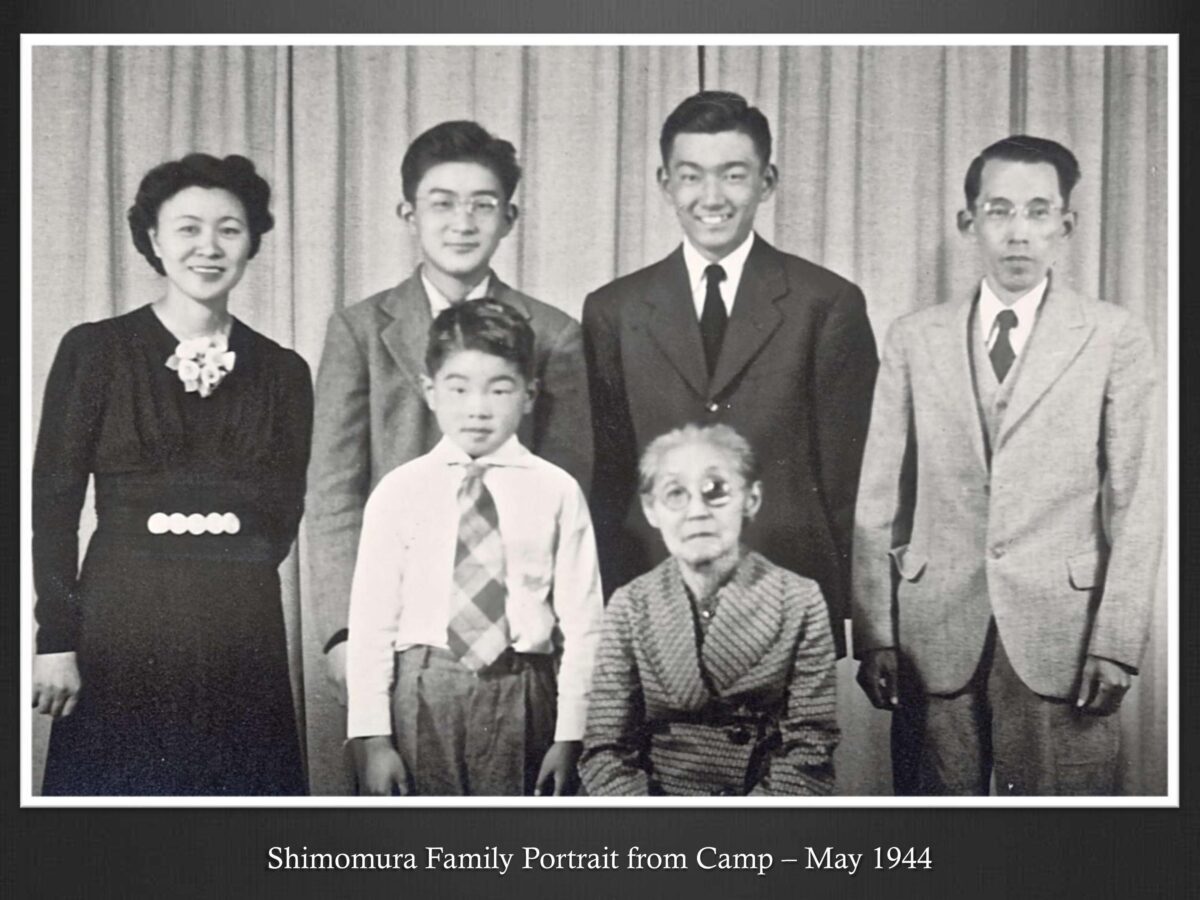
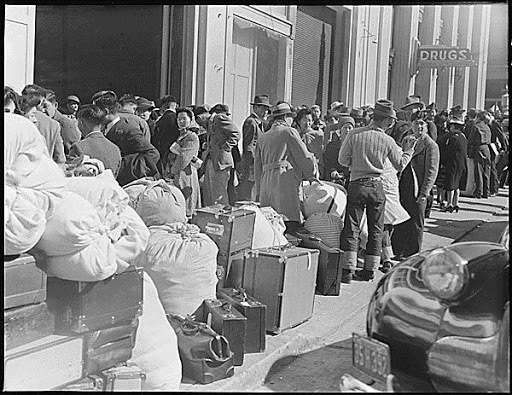
    <summary type="html"><![CDATA[<p><strong><em><span style="font-weight:400;">Following the attack on Pearl Harbor, President Franklin Roosevelt issued Executive Order 9066 on February 19, 1942. This order authorized the forced evacuation of all Japanese descendents into internment camps. Families were forced to leave everything behind to go to an unfamiliar location for an unknown length of time. Yukio Shimomura was a young boy who was sent to Topaz and in 2023 still remembers his experiences. </span></em></strong></p><img src="https://www.intermountainhistories.org/files/fullsize/d39b15a82bd920eefe950be6ed920dde.jpg" alt="Shimomura Family Portrait from Camp - May 1944" /><br/><p><span style="font-weight:400;">On December 7th, 1941, the Japanese military bombed Pearl Harbor bringing the United States into the Second World War. On February 19th, 1942, President Franklin Roosevelt issued Executive Order 9066, forcing all people of Japanese descent living on the West Coast to relocate to internment camps. They took only what they could carry and left their homes in May 1942, having no idea where they were going or whether they would ever return. Yukio Shimomura was one of the victims of this order.</span>
<span style="font-weight:400;">Prior to arriving in Topaz, Utah, many of the Japanese Americans were held in the Tanforan Race Track in San Bruno, California, where they lived in washed-out horse stables lined with linoleum. Yukio Shimomura explained the experience: “All you had was one lightbulb…. Using scrap wood, many made nightstands and other shelves to hold their stuff. Beds were bags filled with hay, and if you couldn’t sleep on that, you slept on the floor… Lots of lines. Lines, lines, lines for everything. We were only there a short time, but it was traumatic… For those living in the horse stalls, they had it bad; they stunk when they came out… you could separate them from those living in the barracks [by their smell]… we were lucky.” Shimomura and his family stayed at Tanforan for a short time before being relocated to the Topaz Internment Camp near Delta, Utah. They remained there for three years behind barbed wire and armed guards. </span>
<span style="font-weight:400;">In Topaz, the Japanese “internees” were separated into blocks and barracks. Each block had twelve barracks, a recreation hall, latrines for men and for women, and a mess hall. The barracks were sectioned into six apartments of different sizes to accommodate families of two, four, or more people. Larger families were given two or more rooms. The six rooms came in three sizes, 20’ by 14’, 20’, or 26’.</span> <span style="font-weight:400;">Shimomura later explained that the walls separating the rooms did not reach the ceiling so that you could hear everything from everyone all the time. He remembered, “there were 300 children born in the camp, so you figure couples realized they had to do what they needed to do.” Privacy was absent in the camp, as there were no doors or stalls in any of the bathrooms or showers. </span>
<span style="font-weight:400;">At the camp, many tried to make life as normal as possible. This included working at different jobs around the camp for roughly $14 to $19 a month, depending on the job. Children went to school, played around the camp, and all lent a helping hand in whatever needed to be done. No matter how hard they tried to make life as normal as possible, the internees understood they were not free. “Topaz was chaotic,” Shimomura summarized as he explained the death of an elderly man who did not understand the order given to turn around when approaching the barbed wire fence. After a third confusing warning, he was shot and killed. While this was the only shooting to occur at Topaz, it scarred all who were there. </span>
<span style="font-weight:400;">In January 1943, President Roosevelt asked for volunteers at Topaz to serve in the United States Army. Shimomura remembers that all who were at the camp were given a questionnaire to determine their loyalty to the United States, with question 28 asking, “Will you swear unqualified allegiance to the United States of America and faithfully defend the United States from any or all attack by foreign or domestic forces and forswear any form of allegiance or obedience to the Japanese emperor or any other foreign government, power or organization?” If the answer was yes, internees could leave the camp for military service. One hundred and five young men, including some young fathers, signed up to fight and were allowed to leave the camp for the first time. The loyalty of Japanese American soldiers who served in the war raised questions about the purposes of the internment camps. In 1943, many others gained sponsors and were allowed to leave the camp to attend universities or enter employment.</p><span style="font-weight:400;">The Topaz Internment camp closed its doors in October 1945, and the barracks were moved by the end of 1947. The Japanese American Citizen League erected a monument in 1976 to commemorate those who had stayed there. In August of 1988, President Ronald Reagan signed the Civil Liberties Act that was later enforced by President George H.W. Bush. It issued a formal apology and gave $20,000 to all those who were still alive, like Shimomura, a small compensation for all they had lost and suffered as a result of internment. </span></p><p><em><strong><a href="https://www.intermountainhistories.org/items/show/793">For more (including 4 images) view the original article</a></strong></em></p>]]></summary>
    <published>2024-03-18T19:58:54+00:00</published>
    <updated>2026-04-17T19:32:17+00:00</updated>
    <link rel="alternate" type="text/html" href="https://www.intermountainhistories.org/items/show/793"/>
    <id>https://www.intermountainhistories.org/items/show/793</id>
    <author>
      <name>Abby Tribe, Brigham Young University </name>
    </author>
  </entry>
  <entry>
    <title type="html"><![CDATA[Times in Topaz: Daily Life in Utah&#039;s Japanese Internment Camp]]></title>
    <summary type="html"><![CDATA[<p><strong><em>Utah's only internment camp, Topaz, housed approximately 9,000 Japanese Americans for three years during World War II. People in Topaz attempted to maintain normalcy in their daily lives by having schools, recreational activities, a newspaper, and cultural associations.</em></strong></p><img src="https://www.intermountainhistories.org/files/fullsize/4bc10125afe0cd9d4aa8e8a7b72774dd.jpg" alt="Topaz Times Collection" /><br/><p><span style="font-weight:400;">Located behind a frail barbed wire fence fifteen miles out from the remote town of Delta, Utah, the Topaz internment camp is utterly isolated from the rest of the state. Topaz was an American concentration camp where approximately 9,000 Japanese and Japanese Americans primarily from California’s Bay Area were held during World War II. Open from September 1942 until October 1945, daily life in the Topaz internment camp was characterized by an attempt to maintain some sense of normalcy despite severe restrictions and unfair treatment. </span>
<span style="font-weight:400;">The main living area of Topaz was a 640-acre compound with rows of barracks that contained living quarters, communal bathrooms, and recreational areas. Topaz also had two elementary schools, a high school, and a library. Teachers were often camp residents or local adults. Students who graduated from Topaz High were sometimes allowed to leave Topaz to attend colleges in the East. The efforts to promote education despite incarceration reflect the attempts to maintain normalcy for Japanese people living in Topaz. </span>
<span style="font-weight:400;">Recreational activities in Topaz included participating in cultural associations, sports teams such as basketball and baseball, sumo wrestling, arts and crafts, and even the making of the traditional Japanese dessert mochi to celebrate the Japanese New Year. Many people in Topaz exhibited their creative work in art and hobby shows, which displayed traditional calligraphy, sculptures, painting, and jewelry. Many pieces of art from Topaz are still around today, showing the lasting impact and endurance of those who were in Japanese internment camps. </span>
<span style="font-weight:400;">Life in Topaz was recorded in the newspaper </span><i><span style="font-weight:400;">Topaz Times. </span></i><span style="font-weight:400;">Written by people in the camp, the paper documented news in Topaz including weather, events within the camp, new constructions and developments, new arrivals of people, sporting events, school, and recreational activities. This newspaper, with frequent updates about life and events within Topaz, is an excellent source of information about daily life behind the barbed wire. </span>
<span style="font-weight:400;">The lives of those forced into internment at Topaz were drastically altered, but many tried to maintain some sense of normalcy for those three years in order to survive. Today Topaz is gone, with only the foundations of barracks and some fencing indicating it was once an internment camp. It is important to remember the stories of those who were in Topaz to commemorate a darker side of Utah’s and the United States' history, to honor the resilience of those incarcerated, and to give a voice and identity to those who were once silenced. </span></p><p><em><strong><a href="https://www.intermountainhistories.org/items/show/782">For more (including 3 images) view the original article</a></strong></em></p>]]></summary>
    <published>2024-02-26T19:11:24+00:00</published>
    <updated>2026-04-17T19:32:17+00:00</updated>
    <link rel="alternate" type="text/html" href="https://www.intermountainhistories.org/items/show/782"/>
    <id>https://www.intermountainhistories.org/items/show/782</id>
    <author>
      <name>Kimball Yeates, Brigham Young University</name>
    </author>
  </entry>
  <entry>
    <title type="html"><![CDATA[ Women in Los Alamos during the Manhattan Project <br />
]]></title>
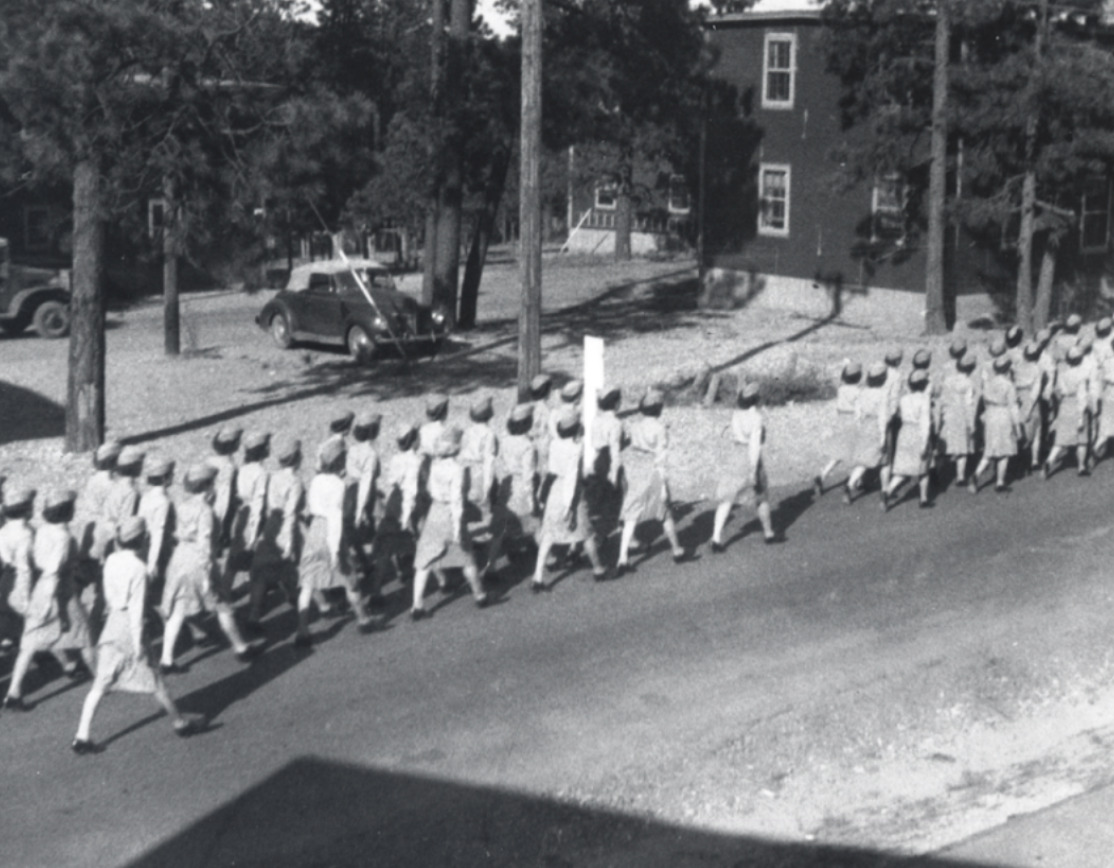
    <summary type="html"><![CDATA[<p><strong><em>With the war effort withdrawing men from the domestic labor force, women became an increasingly important part of the Manhattan Project in Los Alamos. </p></strong></p><img src="https://www.intermountainhistories.org/files/fullsize/c8f195c81db8f6804378056bc75c3f0b.jpg" alt="WAC March in Los Alamos" /><br/><p><span style="font-weight:400;">Wartime labor shortages were a constant struggle for the United States during World War II. They needed to send troops overseas, develop weaponry, spy on their enemies, strategically plan, and mobilize the entire nation as quickly as possible. By 1943, the United States Army was 200,000 men short for their invasion on D-Day, they were in need of 315 more physicists for their defense projects, and the Manhattan Project was desperately in search of all kinds of labor from scientists and engineers to machinists and pipefitters. In response, President Franklin D. Roosevelt signed into existence the Women’s Army Auxiliary Corps established “for the purpose of making available to the national defense the knowledge, skill, and special training of women of the nation” on May 15, 1942. Still facing discrimination, unequal pay, and fewer opportunities than their male counterparts, women played an essential role in World War II, especially in Los Alamos. </p>
<span style="font-weight:400;">Because Los Alamos was such a restricted town and the directors wanted to limit the number of outsiders, General Leslie Groves encouraged wives of scientists to work on the project in whatever capacity they could. As an incentive, they provided nursery schools for their young children to aid with childcare. Despite the government’s encouragement, some women were still hesitant to work on the project over concerns for their family’s well-being. Many had not expected to work at all, and quite a few were dissatisfied with the living conditions in which they now were expected to raise their children. Charlotte Serber, the only female group leader at the laboratory, wrote, “For the potential working wife, there was one chief worry. Could she manage her home here on the mesa and work too?” These were fair concerns. The conditions under which they were expected to work were difficult. They were isolated from extended family, were allowed only one day off of work per month for shopping in Santa Fe, were expected to work forty-eight hours in a week, and had almost no bargaining power to shift their rules or salary. They were also far less likely to gain security clearance than their male counterparts, so it was unlikely that they knew what they were helping create. </p>
<span style="font-weight:400;">Despite these stringent circumstances, many women in Los Alamos did work on the secretive atomic gadget. By October 1944, women constituted about 30% of the labor force in the Tech Area, hospital, and schools. It is also notable that although they did employ some women in clerical positions, the vast majority were scientists or technicians. They were metallurgists, engineers, physicists, chemists, and teachers, involved in every aspect of the atomic effort until the very end. The exception for this participation was in Project Alberta. This was the very last phase of the project; the physical delivery of the bomb to the Pacific island Tinian where the nuclear components were assembled before being dropped on Japan. Women who had spent years contributing to this moment were left behind in the United States to learn about the bombingsfrom the same newspapers as everyone else. However, the atomic bomb could not have been built as quickly or efficiently as it was without the contribution of women. They faced gender discrimination, suboptimal conditions, and unfair pay to contribute to the atomic effort in Los Alamos. </span>

</p><p><em><strong><a href="https://www.intermountainhistories.org/items/show/756">For more (including 3 images) view the original article</a></strong></em></p>]]></summary>
    <published>2023-09-24T18:36:48+00:00</published>
    <updated>2026-04-17T19:32:16+00:00</updated>
    <link rel="alternate" type="text/html" href="https://www.intermountainhistories.org/items/show/756"/>
    <id>https://www.intermountainhistories.org/items/show/756</id>
    <author>
      <name>Abigail Beus, Brigham Young University</name>
    </author>
  </entry>
  <entry>
    <title type="html"><![CDATA[The Trinity Site and the First Atomic Bomb<br />
]]></title>
    <summary type="html"><![CDATA[<p><strong><em>The first successful detonation of an atomic weapon on July 16, 1945 in a remote New Mexican desert had global and historic consequences. “A new thing had been born; a new control; a new understanding of man, which man had acquired over nature” (Isidore I. Rabi). </p></strong></p><img src="https://www.intermountainhistories.org/files/fullsize/bde97f62bde69872a28b0c4c3d01417d.jpg" alt="The Gadget Aerial View" /><br/><p><span style="font-weight:400;">Even after the United States and its World War II allies accepted Germany’s surrender on May 8, 1945, the conflict still raged in the Pacific with Japan. Japanese resistance was fierce as the United States painstakingly advanced toward Tokyo. As the allied forces moved island by island, fighting in sweltering jungle, both sides suffered heavy losses. It was at this crucial moment that the scientists of the secret American Manhattan Project began planning for a test that would not only change the course of the war, but also the future of international relations. </p>
<span style="font-weight:400;">The United States, in collaboration with allied Great Britain, had been developing an experimental master weapon since August 1942. Code-named “The Manhattan Project,” this highly secret endeavor largely took place in Los Alamos, New Mexico although there were participating teams at Oak Ridge, Tennessee and Hanford, Washington. In this inaccessible New Mexican desert, hundreds of physicists, chemists, engineers, and military personnel gathered in secret to theorize and create the deadliest weapon known to man. </p>
<span style="font-weight:400;">By the end of 1944, there were two designs and two bombs, Little Boy and Fat Man. Little Boy used a gun-type fission design which shot uranium 235 at itself to reach supercritical mass, resulting in the single largest explosion of its time. The Los Alamos scientists were confident that this design would work and did not want to waste any precious material on a test. Little Boy had used all available U235, so any test would deplete the United States’ supply and would require too much time for the project to regenerate at its Oak Ridge site. Little Boy would go on to be dropped on Hiroshima on August 6th, 1945 and become the first nuclear bomb used in warfare.  </p>
<span style="font-weight:400;">On the other hand, Fat Man utilized an implosion design with explosives surrounding the highly reactive plutonium core. The idea was that the inward-facing explosives would trigger an explosive reaction of the plutonium and result in a larger blast than its Little Boy uranium counterpart. The scientists were less confident in this design. Plutonium had only been discovered at the end of 1940, and the implosion method was difficult to master. If each explosive was not uniform in strength and distance, the correct reaction would not begin, and the overall impact would decrease. Due to these doubts and the easier access to plutonium, the Los Alamos scientists decided to test “The Gadget.” </p>
<span style="font-weight:400;">The first step was finding somewhere to detonate a 10,000 ton bomb without alerting the international community. They decided on a stretch of high desert between New Mexico and Texas called Jornada del Muerto, translated as “Journey of Death.” It was later named the Trinity Site, likely inspired by Robert J. Oppenheimer’s interest in the Hindu concept of the three gods of preservation, destruction, and creation. On May 31, 1945, the requisite shipment of plutonium arrived in Los Alamos from the Hanford facility and scientists began to assemble Fat Man. Up to this point, Los Alamos had not housed a significant supply of plutonium, so all work on Fat Man was done speculatively or at miniscule scales. Working at a harried pace, scientists and engineers readied and transported a plutonium core to Trinity by July 13. Harry Truman, newly inaugurated President of the United States, wanted the test completed before the Potsdam conference with Churchill and Stalin on July 17, but weather conditions made it difficult for the scientists to comply. Finally, at 5:30 am on July 16, “The Gadget” detonated. </p>
<span style="font-weight:400;">Many reactions have been recorded describing the physical experience as well as moral and philosophical implications of the detonation. The light was so powerful that Georgia Green, a blind student miles away at the University of New Mexico asked “What’s that?” Physicist Isidore I. Rabi, who observed from ten miles away at base camp wrote, “Suddenly, there was an enormous flash of light, the brightest light I have ever seen or that I think anyone has ever seen. It blasted; it pounced; it bored its way right through you. It was a vision which was seen with more than the eye. It was seen to last forever.” Rabi also acknowledged the historic and philosophical weight of the moment, “A new thing had been born; a new control; a new understanding of man, which man had acquired over nature.” Alongside confusion and fear expressed by some locals and trepidation expressed by some Los Alamos scientists, there was also great enthusiasm and excitement. Project officials immediately sent a coded telegram announcing the “satisfactory operation” to Truman, just before his meeting with Churchill and Stalin.</p>
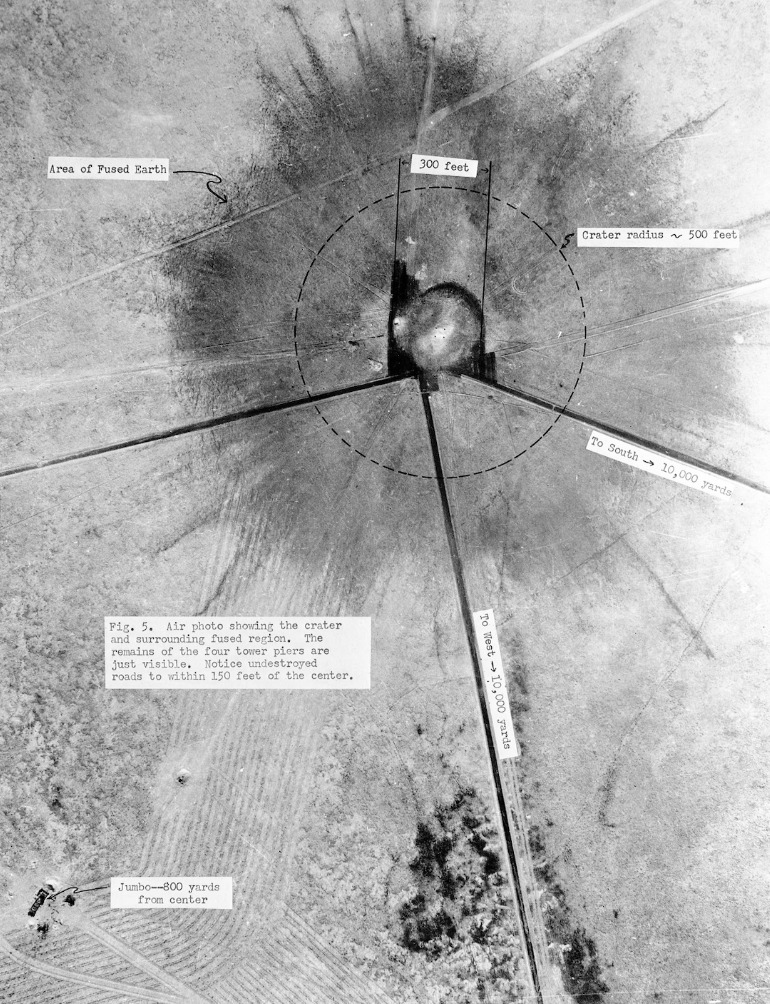
<span style="font-weight:400;">Back at the Trinity site, the scientists emerged from their safe havens and inspected the damage. The Gadget had destroyed every living thing within 1,200 feet of ground zero and disintegrated the steel tower on top of which it had been placed. It was, in the words of General Groves, “successful beyond the most optimistic expectations of anyone” and even larger than Little Boy. Because of its success at the Trinity Site, the Fat Man model would later be dropped on Nagasaki on August 9th, three days after Little Boy obliterated Hiroshima. </p>
<span style="font-weight:400;">Today, Trinity remains a highly radioactive site. Visitors are only allowed to visit two days a year. There are replicas of the bomb casing and the tower. Part of the original crater remains and reveals pockets of Trinitite, a green residue of highly radioactive sand particles melted by incredible temperatures into a glass-like substance. It can only be found at the Trinity Site and is illegal to collect for health concerns. Here, the first man-made atomic weapon detonated which aided in ending WWII and ushering in the age of atomic weaponry and mutually assured destruction. This continues to define international relations today. </span>


</p><p><em><strong><a href="https://www.intermountainhistories.org/items/show/755">For more (including 10 images) view the original article</a></strong></em></p>]]></summary>
    <published>2023-09-20T20:26:47+00:00</published>
    <updated>2026-04-17T19:32:16+00:00</updated>
    <link rel="alternate" type="text/html" href="https://www.intermountainhistories.org/items/show/755"/>
    <id>https://www.intermountainhistories.org/items/show/755</id>
    <author>
      <name>Abigail Beus, Brigham Young University</name>
    </author>
  </entry>
  <entry>
    <title type="html"><![CDATA[Life in Los Alamos: Linking the Past and Present <br />
]]></title>
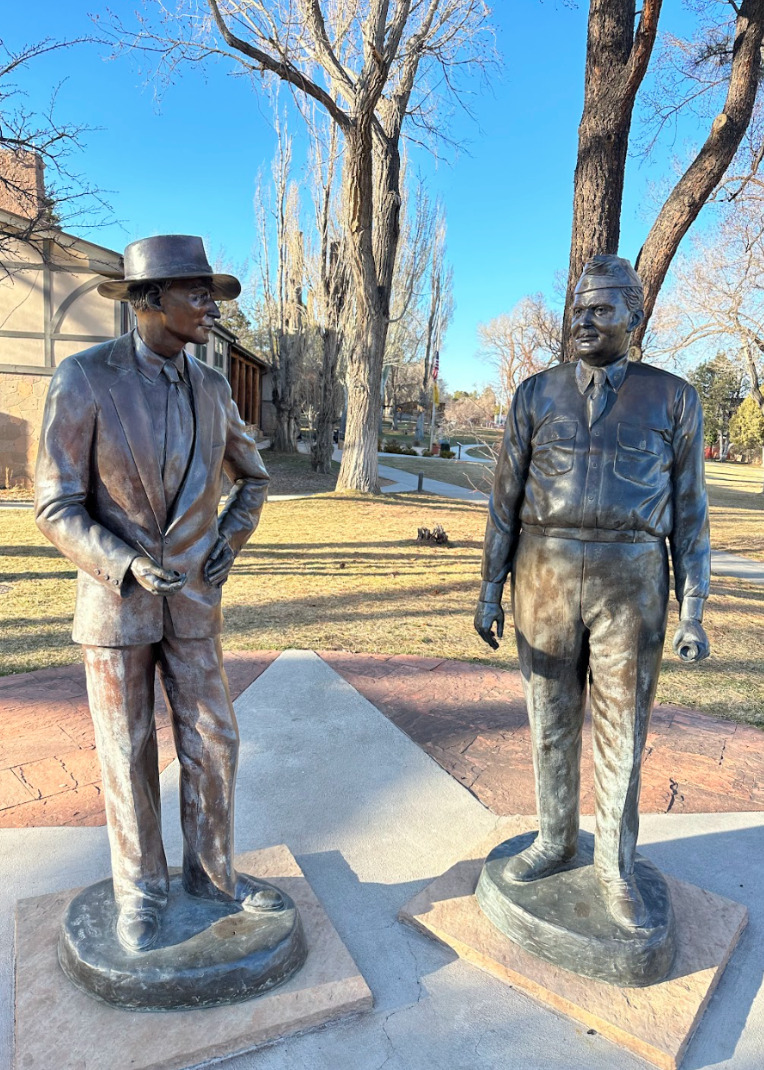
    <summary type="html"><![CDATA[<p><strong><em>Los Alamos residents in the 1940s found themselves in unusual circumstances. John von Neumann explained that, “At great expense we have gathered on this mesa the largest collection of crackpots ever seen.” Yet these people continued life under the cover of secrecy and created a community which has lasted until this day. 	</p></strong></p><img src="https://www.intermountainhistories.org/files/fullsize/a56ce2e0f40dcd7d1a6e2fe9af1ddcf0.jpg" alt="Statue of Oppenheimer and Groves" /><br/><p><span style="font-weight:400;">As the scientists and military personnel worked furiously to create an atomic weapon during the latter years of WWII, many moved to the classified town of Los Alamos, New Mexico. Because their project was shrouded in such secrecy, they were required to move themselves and their family without knowing many of the details of their new job or location. Although the civilian and academic director, J. Robert Oppenheimer, tried to make it as much of a collaborative and normal operation as possible, the nature of their assignment meant that living in Los Alamos was unique. </p>
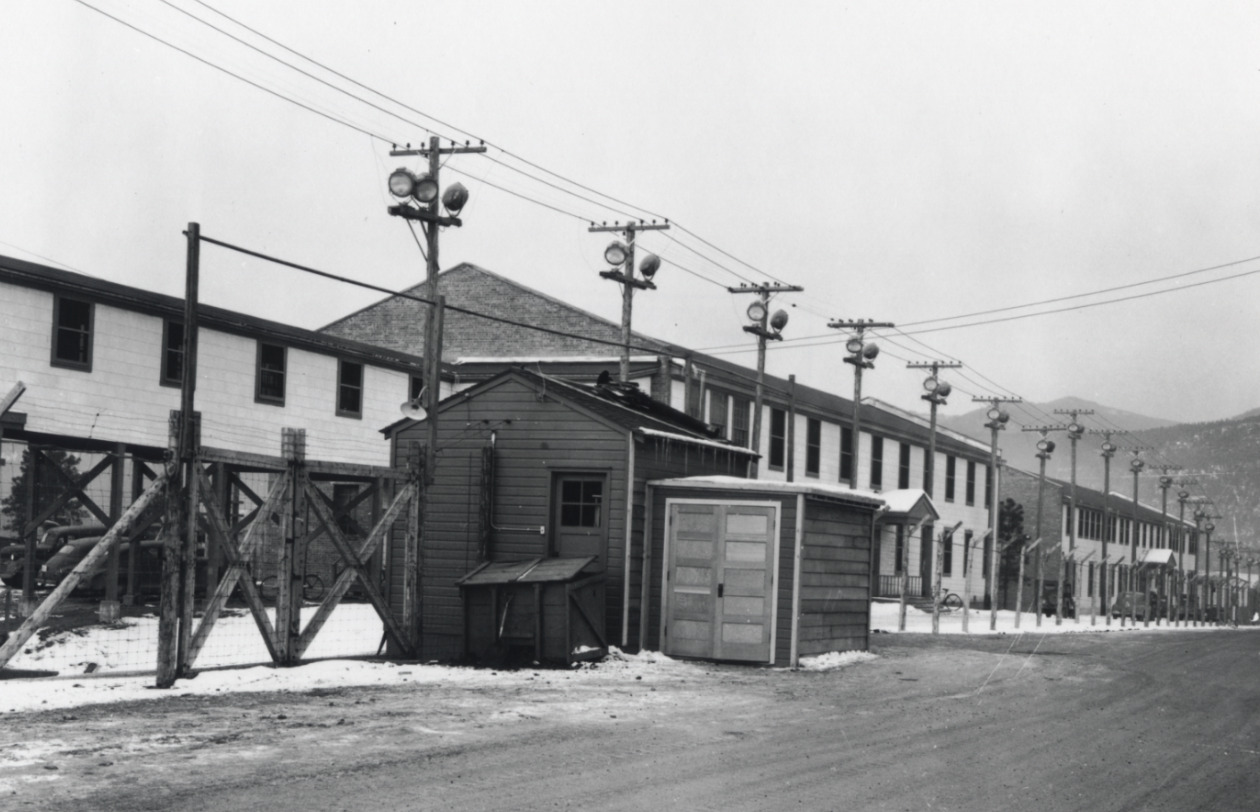
<span style="font-weight:400;">Many scientists arrived without knowing exactly where they would be working or what they would be doing. They were not even allowed to tell their spouses what their work in the restricted laboratories entailed. Secrecy was of the utmost importance. Oppenheimer spread disinformation to nearby cities, such as Santa Fe, that they were working on an electric rocket. Mail for all scientists was addressed to Box 1663, Sandoval County, Rural. It was liable to searches and some outgoing mail was redacted for security concerns. Even phone calls were monitored—army intelligence agents were obvious in listening in on people’s private conversations. Barbed wire covered the scenic landscape and made some workers feel as though they were the ones imprisoned rather than the liberators of those in European prison camps. </p>
<span style="font-weight:400;">Despite the secrecy and sometimes oppressive security, many familiar aspects of daily life continued in Los Alamos. Many women were given clerical jobs such as secretaries or computer operators to keep them occupied while their husbands worked. Children continued to attend school and babies continued to be born. In regards to the baby boom, the military official General Leslie Groves grumbled that they were simply taking advantage of the free healthcare awarded to those in the army effort. The few movies which were allowed to play were quite popular. In a move for additional entertainment, engineers and scientists threw amateur theatricals which even featured the eminent Oppenheimer in the role of “corpse.” </p>
<span style="font-weight:400;">The setting of Los Alamos itself served as a diversion for employees and their families. Oppenheimer had picked the site of Los Alamos for its beauty and openness. He thought that it could give the scientists a sense of freedom amidst all of their restrictions. Placed on top of towering mesas flanked by green mountains and overlooking fantastic natural features, there were many opportunities for outdoor recreation. During the winter, avid skiers trekked up the nearby Jemez Mountains and skied back down to their homes. The outdoor ice rink, built in 1936, became an unofficial youth center for local children to spend their winters with friends. The warmer months brought camping, horseback riding, fishing, and hiking. Curious children and adults also explored the many nearby Ancestral Puebloan archaeological sites and ruins. </p>
<span style="font-weight:400;">Even though Los Alamos was a unique environment of brilliant scientists sequestered in the wilderness, life found a way to continue in relative normalcy. It grew out of a wartime necessity into a long-lasting community with unusual origins. Today, Los Alamos is home to around 13,000 people and a National Laboratory specializing in weapon-making for the United States government. The community maintains their engagement in many of the recreational activities that their predecessors did. The Pajarito Ski Hill and the ice rink continue to gather youth and adults during the winter months. Warmer times of the year bring outdoor sports, especially running and hiking, among the abundant natural landscape. Summer is also the ideal time for weapons testing. For seasoned Los Alamos citizens, a large explosion miles away that rattles windows and door frames is unsurprising—rarely do they suspect an earthquake.  The work and life of Los Alamos persists nearly a century after it was settled. </span>


</p><p><em><strong><a href="https://www.intermountainhistories.org/items/show/754">For more (including 5 images) view the original article</a></strong></em></p>]]></summary>
    <published>2023-09-20T19:36:59+00:00</published>
    <updated>2026-04-17T19:32:16+00:00</updated>
    <link rel="alternate" type="text/html" href="https://www.intermountainhistories.org/items/show/754"/>
    <id>https://www.intermountainhistories.org/items/show/754</id>
    <author>
      <name>Abigail Beus, Brigham Young University</name>
    </author>
  </entry>
  <entry>
    <title type="html"><![CDATA[Jewish Contribution to the Manhattan Project ]]></title>
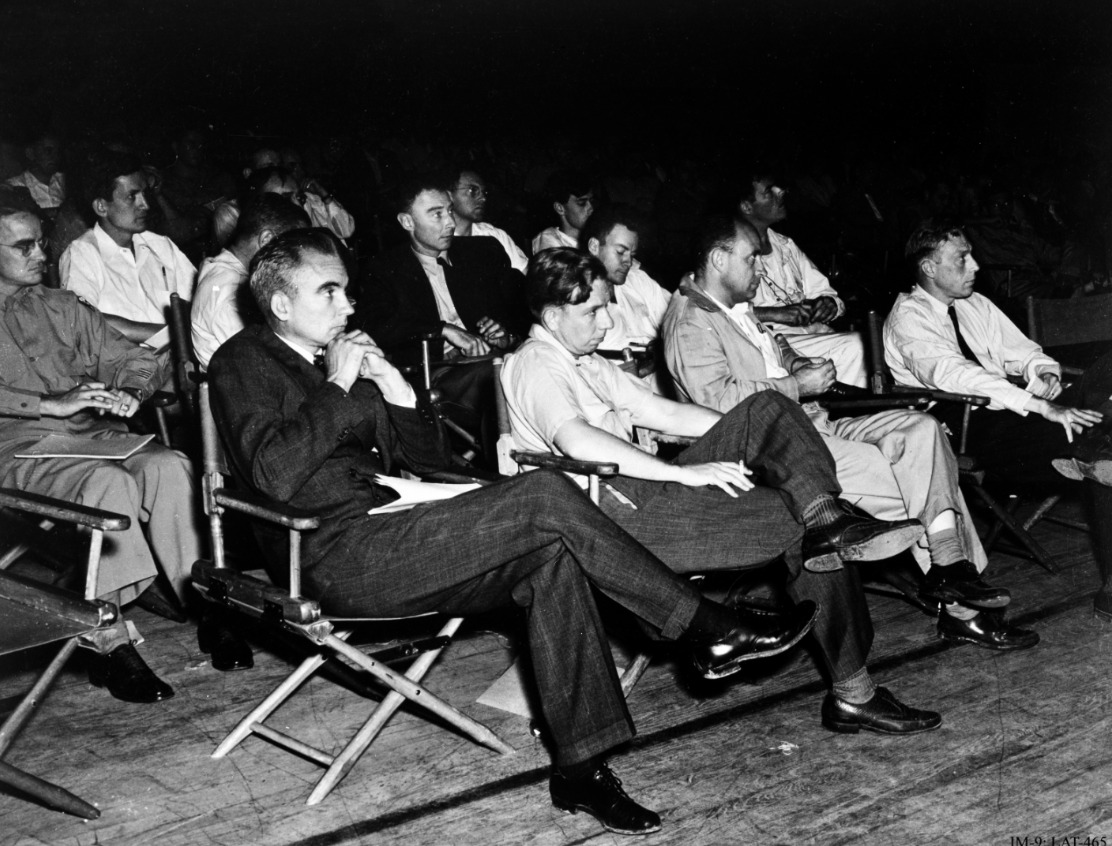
    <summary type="html"><![CDATA[<p><strong><em>Jewish participation in the Manhattan Project, particularly in Los Alamos, was an essential part of the operation's success. They continued to support their country despite local discrimination and the tragedy of World War II occurring abroad. </em></strong></p><img src="https://www.intermountainhistories.org/files/fullsize/89d79d7a997cf1681e9e7681568b097e.jpg" alt="Manhattan Project Scientists" /><br/><p>The United States’ development of the first atomic bomb would not have been possible without the contribution of Jewish Americans and Jewish refugees who fled Nazi Germany and war-torn Europe throughout the Manhattan Project. In August of 1939, Albert Einstein, Leo Szilard, and Enrico Fermi drafted and sent a letter to President Roosevelt via Alexander Sachs, warning the President of the potential use of atomic power in weaponry. This, in addition to another letter sent by British-Jewish scientists, led Roosevelt to form an advisory committee on uranium and, eventually, create the Manhattan Project.</p><p>Significantly, every person involved in the drafting and deliverance of this letter were Jewish or had close Jewish family members. Of the four involved, three were European refugees. Einstein was from a family of German Ashkenazi Jews and fled to the United States in 1933. Szilard was from a Hungarian Jewish family and fled to England in 1933 and then the United States in 1938. Fermi, while himself not Jewish nor German, was married to a Jewish woman which required him and his family to flee his home of Italy in 1938. Sachs was American-Jewish and an important advisor to President Roosevelt. All were impacted by the anti-Semitism of Germany and were respected and prominent enough to sway the President of the United States into forming a committee. Subsequent letters and information, much of which was provided by Jewish scientists, followed and increased the breadth of the project. </p><p>Jewish involvement in the Manhattan Project burgeoned as the war continued. J. Robert Oppenheimer, a young American Jew, was placed as the head of the Los Alamos branch of the Manhattan Project. He created four divisions in the Los Alamos lab, with the T-division, the theoretical division, being the most important. Of the 86 members in this division, 18 were Jewish—almost 21%. Even more impressive, of the eight groups in 1945, five were led by Jewish scientists such as Richard Feynman, Hans Bethe, and John von Neumann. Although Jews only constituted around .05% of the US population at the time, they made up a significant portion of the scientists at Los Alamos National Laboratory. </p><p>Jewish involvement in the Manhattan Project, as well as the project itself, were not known by the American public, and antisemitic prejudice was commonplace. In the 1920s, before J. Robert Oppenheimer attended, the president of Harvard, A. Lawrence Lowell, called for a quota of Jews to keep their presence sparse in the university. Even in Los Alamos, where Jewish scientists were important pioneers of the Manhattan Project, General Leslie Groves, the project’s military leader, stated, “I don’t like certain Jews, and I don’t like certain well-known characteristics of theirs.” Some Jewish scientists, such as Leo Szilard, were tailed by the FBI and noted for their “Jewish extraction” and “foreign tongue.”</p><p>At the same time, Los Alamos was a relative haven for these Jews. They were allowed in the upper echelons of decision-making and they were not stripped of titles or rewards because of their background. Ellen Bradbury Reid, an Anglo child in Los Alamos recalled, “I would not say [it was] a utopian situation, but. . . now I realize there were a lot of Jewish people, the European Jewish community who were there. I had no idea. . . [we] were all sort of in the same soup.” Despite prejudice, Jewish scientists were largely able to find footing in Los Alamos and thrive in the project. Jewish scientists in the Manhattan Project made a substantial and powerful impact in crafting the bombs which would end the war that, in total, killed over six million Jews. </p><p><em><strong><a href="https://www.intermountainhistories.org/items/show/753">For more (including 7 images) view the original article</a></strong></em></p>]]></summary>
    <published>2023-09-13T00:46:14+00:00</published>
    <updated>2026-04-17T19:32:16+00:00</updated>
    <link rel="alternate" type="text/html" href="https://www.intermountainhistories.org/items/show/753"/>
    <id>https://www.intermountainhistories.org/items/show/753</id>
    <author>
      <name>Abigail Beus, Brigham Young University</name>
    </author>
  </entry>
  <entry>
    <title type="html"><![CDATA[Dorothy McKibbins: The Gatekeeper of Los Alamos ]]></title>
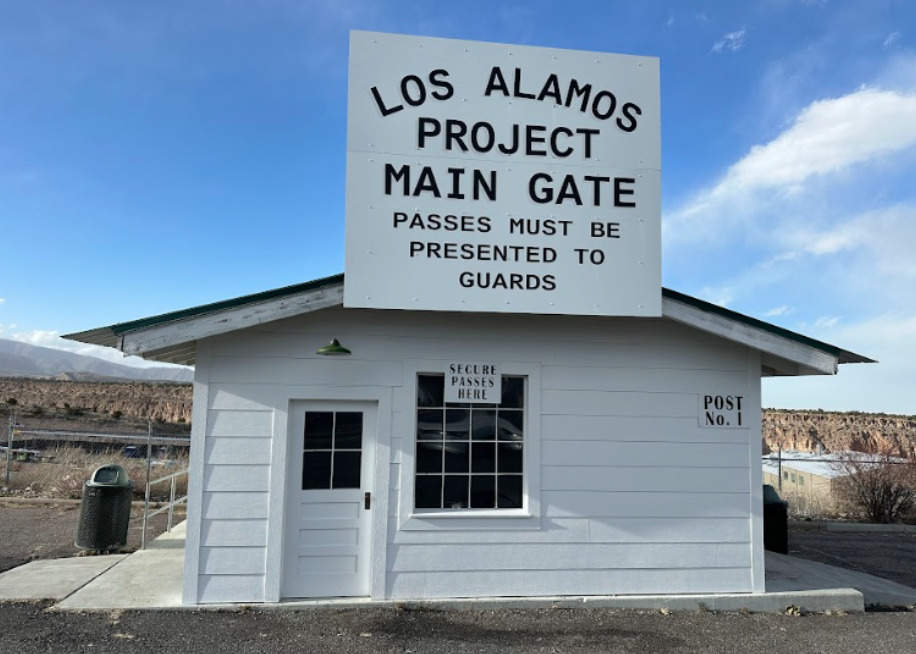
    <summary type="html"><![CDATA[<p><strong><em>The Manhattan Project would not have been possible without the efforts of Dorothy McKibbin, the Gatekeeper of Los Alamos. From attaining marriage licenses to transferring phone calls, Dorothy McKibbin was an integral and diversely skilled cog in the large machine of building the first nuclear weapons. </p></strong></p><img src="https://www.intermountainhistories.org/files/fullsize/5c401996b7cfdc416ba17d96a788fbec.jpg" alt="Los Alamos Project Main Gate Replica" /><br/><p><span style="font-weight:400;">Once General Leslie Groves and Dr. J. Robert Oppenheimer chose Los Alamos, New Mexico as the place to build the atomic bomb; hundreds of bewildered employees streamed into the nearby town of Santa Fe. Due to the confidentiality of the Manhattan Project, recruitment was difficult and details provided to the new hires were vague because of the classified nature of their work. They were told that their work would helpe war effort and be located in the scenic mesas of New Mexico, but little else. After a long train ride to the nearby town of Lamy, scientists and their families hauled their luggage through the winding streets of Santa Fe, looking for 109 East Palace Avenue—the only address they had been given. There, they were met by a simple red and blue sign reading “United States Engineer Office No. 3” and the welcoming presence of Dorothy McKibbin. </p>
<span style="font-weight:400;">In 1932, recently-widowed Dorothy McKibbin moved to Santa Fe from Kansas with her son, hoping for a new life. When she met Dr. J. Robert Oppenheimer in 1943, she found one. Oppenheimer recognized her comforting, calming, and competent presence and asked her to be a War Department secretary with unspecified duties. Like the other personnel, she only knew that her job concerned an essential war project. As she discovered after accepting the position, duties encompassed everything from disciplining Nobel laureates, receiving classified mail, enforcing security, helping lost families find the way to their new homes, and more. She was there for some of the most important moments of the project, even observing the Trinity Test from a car parked near Albuquerque. To Dorothy McKibbin, “Working at 109 was more than just a job. It was an exciting experience. Our office served as the entrance to one of the most significant undertakings of the war or, indeed, of the twentieth century.” </p>
<span style="font-weight:400;">For the entirety of the Manhattan Project she was the point of contact between the secret city and the rest of the world, earning herself the nickname of  the “Gatekeeper of Los Alamos.” After the Manhattan Project concluded, the site was renamed the Los Alamos National Laboratory, and McKibbin continued to work there until her retirement in 1963. She spent her retirement organizing community programs in Los Alamos and Santa Fe until her death in 1985. Today, a room in the Los Alamos History Museum is named in her honor, and although her office at 109 East Palace currently houses a gift shop, its original iron gate which once welcomed thousands to the secret city is on display at the Los Alamos History Museum. </span>
</p><p><em><strong><a href="https://www.intermountainhistories.org/items/show/752">For more (including 4 images) view the original article</a></strong></em></p>]]></summary>
    <published>2023-09-08T01:24:19+00:00</published>
    <updated>2026-04-17T19:32:16+00:00</updated>
    <link rel="alternate" type="text/html" href="https://www.intermountainhistories.org/items/show/752"/>
    <id>https://www.intermountainhistories.org/items/show/752</id>
    <author>
      <name>Abigail Beus, Brigham Young University</name>
    </author>
  </entry>
  <entry>
    <title type="html"><![CDATA[Bathtub Row ]]></title>
    <summary type="html"><![CDATA[<p><strong><em>As scientists raced to build the first atomic weapon during WWII, they were required to sacrifice their time, academic careers, energy, bathtubs, and more in the remote desert highlands of New Mexico. </p></strong></p><img src="https://www.intermountainhistories.org/files/fullsize/81238fa6d58203850c43f89b67708cda.jpg" alt="Los Alamos Infrastructure " /><br/><p>As World War II raged into the 1940s, each country in the war was an avid participant in the race for scientific advancement. With such high stakes, the United States invested two billion dollars—over $33 billion today—in the creation of the atomic bomb. This massive project was dubbed the Manhattan Project, after its headquarters in New York, despite largely taking place in the remote highlands of New Mexico.</p><p><span style="font-weight:400;">While the United States had fiscal resources to invest in the project, they did not have much time. Both the Germans and the Soviets were developing their own nuclear weapons, and it seemed that whoever discovered how to harness the power of the atom first would win the war. The speed and urgency of the venture inevitably meant that some details were overlooked. Construction teams were tasked with building housing for thousands of men, women, and children in the remote deserts of New Mexico in total secrecy. The workmanship of many of these early houses was shoddy at best. Project builders were not only short on time, but materials. In particular, iron was a scarce resource and largely reserved for the war effort. Understandably, it could hardly be used for iron bathtubs. Due to these factors, the majority of scientists, military personnel, and their families lived in small, relatively iron-less, hastily built homes with only a few variations of bathroom fixtures—none of which included bathtubs. </span>
<span style="font-weight:400;">Only a single row of houses had the luxury of bathtubs because they were built before the war and had originally belonged to teachers of a secondary boys’ ranch school. These “master cottages” were some of the only buildings already built when the government bought the land and were a coveted luxury. Reserved for men such as Nobel-Prize winning Englishman Sir James Chadwick, explosives expert George Kistiakowsky, bomb designer Max Roy, ordnance director William S. “Deak” Parsons, and head scientist Robert J. Oppenheimer, bathtubs were a sign of prestige in this secret New Mexico town. According to local legend, Alice Kimball Smith, wife of scientist Cyril Smith, coined the term “bathtub row.” This effectively differentiated between the comfortable ranch school homes with bathtubs and those of government construction with showers.</p>
<span style="font-weight:400;">Despite the obvious disparity, many on Bathtub Row were willing to share their good fortune. Robert Oppenheimer was reportedly a generous host who invited many in the community into his home for classified discussions, drinks, and dinner parties. Ordnance director William S. Parsons’ home was fortunate enough to have two bathtubs. He often allowed military men to use them if they were injured and unable to stand for long periods of time under a shower. These bathtubs were also used to entice babysitters who would be rewarded with a relaxing soak in their neighbor’s home in exchange for an afternoon taking care of the owners’ children.</p>
<span style="font-weight:400;">Today, these houses are privately owned, but remain part of the Los Alamos National Historical Landmark District. In 2007, the Los Alamos population petitioned to change the street name from 20th to Bathtub Row. The community has continued to embrace this humorous anecdote from WWII through naming the local brewing co-op after the iconic row of houses. It stands as a reminder of the simple luxuries many relinquished in favor of supporting the American effort during WWII. </span>

</p><p><em><strong><a href="https://www.intermountainhistories.org/items/show/751">For more (including 10 images) view the original article</a></strong></em></p>]]></summary>
    <published>2023-09-08T00:39:58+00:00</published>
    <updated>2026-04-17T19:32:16+00:00</updated>
    <link rel="alternate" type="text/html" href="https://www.intermountainhistories.org/items/show/751"/>
    <id>https://www.intermountainhistories.org/items/show/751</id>
    <author>
      <name>Abigail Beus, Brigham Young University</name>
    </author>
  </entry>
  <entry>
    <title type="html"><![CDATA[Sports in the Topaz Internment Camp]]></title>
    <summary type="html"><![CDATA[<p><strong><em>To alleviate boredom while interred in the Topaz Relocation Center, the residents organized recreational activities. Some of the most popular pastimes were sports including baseball, golf, and football. </em></strong></p><img src="https://www.intermountainhistories.org/files/fullsize/db63feff62a2b3b0c02f2f9da947aa52.jpg" alt="The Baseball Field at Topaz" /><br/><p><span style="font-weight:400;">The Topaz Internment Camp was organized in October of 1942 in a desert area near Delta, Utah. The Camp was created to house Japanese Americans, formerly living on the coast of California, after being forcefully relocated during World War II.</span><span style="font-weight:400;"> Japanese Americans were compelled to sell or abandon their homes, cars, and any belongings they could not carry on their person. They first were placed in </span><span style="font-weight:400;">Tanforan and Santa Anita Racetracks in </span><span style="font-weight:400;">California in converted horse stables until they were moved again to a more permanent location in Topaz, Utah. Topaz was in operation </span><span style="font-weight:400;">from September 11, 1942, until October 31, 1945. During that time, the Japanese Americans who lived there struggled to create</span><span style="font-weight:400;"> lives for themselves in this new, remote desert environment.</span>
<span style="font-weight:400;">To help alleviate the boredom, Japanese Americans developed several pastimes. Schools were opened, artists taught their crafts, and sports teams were created. Fans followed their favorite teams. Sports and outdoor recreation became very popular, particularly baseball. Topaz was divided </span><span style="font-weight:400;">into 42 blocks </span><span style="font-weight:400;">and each block created its own baseball team. Teams would compete against each other, drawing dozens of spectators. </span>
<span style="font-weight:400;">The daily sports section in the </span><span style="font-weight:400;">Topaz Times</span><span style="font-weight:400;">, the local newspaper, revealed the importance of sporting events at the camp. The </span><span style="font-weight:400;">Topaz Times</span><span style="font-weight:400;"> included articles about the results of golf tournaments, baseball games, and the high school football team. In addition to local games, the </span><span style="font-weight:400;">Topaz Times</span><span style="font-weight:400;"> reported on the National Baseball League and other national sporting events. </span>
<span style="font-weight:400;">Sporting events in Topaz created strong rivalries between blocks in the camp. The most notable rivalry was between the softball teams. Like the baseball teams, the softball teams were organized by blocks and run by managers elected by each block’s players. Softball games were highly anticipated, and each team would practice for several weeks before the competitions. Unfortunately, with young people constantly leaving for the army, school, or work, fully manning each team was a continual struggle. </span>
<span style="font-weight:400;">The High School fielded many teams that students would compete on. The high school football team traveled and played against other local Utah high schools. Players would also compete against their peers, with a senior football team challenging the juniors and sophomores. The high school also had a track team. In the 1944 season, the track team got off to a late start, but was in full swing by May of that year, competing against students at other Utah high schools.</span>
<span style="font-weight:400;">The time in Topaz was difficult in the lives of the people sent to live there. But they found ways to go on living. To help make the most of a difficult situation, the residents of Topaz showed their resilience by promoting their love of sports and participating in a variety of recreational activities. Something that started as a way to alleviate boredom became a favorite pastime in Topaz, Utah during WWII.</span></p><p><em><strong><a href="https://www.intermountainhistories.org/items/show/660">For more (including 3 images) view the original article</a></strong></em></p>]]></summary>
    <published>2022-09-19T21:10:31+00:00</published>
    <updated>2026-04-17T19:32:14+00:00</updated>
    <link rel="alternate" type="text/html" href="https://www.intermountainhistories.org/items/show/660"/>
    <id>https://www.intermountainhistories.org/items/show/660</id>
    <author>
      <name>Anna Tenney, Brigham Young University</name>
    </author>
  </entry>
  <entry>
    <title type="html"><![CDATA[Topaz Museum: A Jewel Amidst the Desert]]></title>
    <summary type="html"><![CDATA[<p><strong><em>The Topaz Museum is located a short drive from the Topaz internment site and boasts an impressive collection of artifacts and first-hand accounts of Japanese Americans interned at the camp during World War II.</em></strong></p><img src="https://www.intermountainhistories.org/files/fullsize/d3903425eda7df4d660c63793d9b7d64.jpg" alt="Topaz Museum" /><br/><p><span style="font-weight:400;">One of Utah’s best kept secrets about one of America’s darkest decisions is located in Delta, Utah. The Topaz Museum is a short drive from the Topaz internment camp site and boasts an impressive collection of artifacts and first-hand accounts of Japanese Americans interned at the camp during World War II. The Topaz Museum opened in 2017 and, thanks to generous local and national donations, is maintained so that all who visit can study and explore what life was like for those who lived at Camp Topaz. Many of the artifacts and accounts have been donated by families and descendants of the Japanese Americans who lived there. The museum is operated by Delta locals who have a passion for sharing one of the tragic lessons in American history. </span>
<span style="font-weight:400;">After the surprise attack at Pearl Harbor, the United States government, led by President Franklin D. Roosevelt, passed Executive Order 9066 which effectively ordered all people of Japanese descent to be evacuated from the Pacific coast. This led to the forced removal of nearly 112,000 Japanese Americans. Initially, these people were relocated into temporary holding facilities while the government constructed 10 permanent relocation camps. These temporary holding centers were converted horse stalls at the Tanfran racetrack in San Bruno, California. They were transported in train cars under armed guard to Delta in early 1942. For many of these people, Topaz would remain their home for the next three years. </span>
<span style="font-weight:400;">The Topaz Museum uses photographs, personal accounts, newspapers, and visual reconstructions to help visitors sense what the Japanese Americans at Topaz experienced while they were interned. The museum’s curators have organized immersive exhibits to help patrons experience facets of this history. As visitors walk into the exhibit area they are confronted with scenes and accounts from Japanese Americans who were forcibly removed from their homes, lands, and businesses on the west coast and relocated to Topaz. The museum also depicts life in Topaz, using interactve exhibits to give visual representation of life for those interned. Patrons see vintage furniture, equipment, and bedding donated by families of internees. Exhibits give accounts of how the Japanese Americans interned in Topaz made the best of their difficult situation. The museum gives accounts of the local government that was formed, the schools and children educated in Topaz, the many different talents that were cultivated such as art and music, and the young men and women who answered the call to serve in the military of the same country responsible for their internment. The museum concludes its exhibits by reviewing the attempts at restitution by the American government and the safeguards created to prevent this violation of civil rights from happening again. </span></p><p><em><strong><a href="https://www.intermountainhistories.org/items/show/658">For more (including 3 images) view the original article</a></strong></em></p>]]></summary>
    <published>2022-09-19T18:22:35+00:00</published>
    <updated>2026-04-17T19:32:14+00:00</updated>
    <link rel="alternate" type="text/html" href="https://www.intermountainhistories.org/items/show/658"/>
    <id>https://www.intermountainhistories.org/items/show/658</id>
    <author>
      <name>Michael Pouliot, Brigham Young University</name>
    </author>
  </entry>
  <entry>
    <title type="html"><![CDATA[Navajo Code Talker Monument]]></title>
    <summary type="html"><![CDATA[<p><strong><em>This monument honors the Navajo young men who used their Native language on behalf of the United States of America to transmit coded messages during World War II. Their contributions proved to many the importance and value of preserving native culture.</em></strong></p><img src="https://www.intermountainhistories.org/files/fullsize/c32297ab11f821ec3c0e513dc1a57bfe.jpg" alt="Navajo Code Talker Memorial" /><br/><p>Early in World War II, the Japanese managed to break every military code transmitted throughout the Pacific Ocean. As a result, U.S. military officials wrestled with the problem of creating an unbreakable code. After the failure of many pilot programs featuring various native tongues, Philip Johnston suggested the Navajo language. Johnston grew up on the Navajo reservation with his missionary family and was one of the few non-Navajos to fluently speak the language. Johnston encouraged the United States Marine Corps to involve the Navajos and supported the development of the Navajo Code Talker program.</p><p>The pronunciation and specific use of words in the Navajo language is fundamentally impossible to master as an adult. Many descriptive words sound the same and are only differentiated by an exchange of tone; this aspect of the Navajo language ensured a protected transference and translation of a message to its target. In 1940, fewer than thirty people outside the Navajo tribe knew the language, and the isolation of the Navajo reservation helped preserve its exclusivity. </p><p>Prior to World War II and directed by government treaties, many Navajo children attended boarding schools near the reservation, learned English, and were forbidden to use the Navajo language. Although an unplanned benefit, minimizing the use of this native language meant that very few people knew or spoke it, an effect that persuaded the Marine Corps to recruit young Navajos to serve in areas throughout the Pacific Ocean during the war. These young men learned how to use their language as a code for use in combat procedures. As the first 29 Navajo recruits completed bootcamp, they began developing the combat code at Camp Elliot. The unique nature of this descriptive yet ambiguous language made it unbreakable. The Navajo Code Talkers succeeded so well at transmitting and interpreting messages that even U.S. cryptographers could not understand the code, successfully frustrating Japanese translation efforts. The United States accomplished a favorable victory during World War II with the help of the Navajo Code Talkers.   </p><p>The young men who participated as Navajo Code Talkers honored the Navajo Nation by responding to the need of the United States and completing the required responsibility. The account of their achievements remained secret for decades after World War II due to the government’s confidential policies. In the late 1960s, the United States declassified the topic of the Navajo Code, which allowed Navajo Code Talkers to share their experiences with their families and the nation. In 2010, famous Navajo Ute sculptor Oreland Joe designed and erected the Navajo Code Talker Monument near Window Rock, Arizona. It serves as a tribute to the Navajo Code Talkers who sacrificed and secured victory for the United States. </p><p><em><strong><a href="https://www.intermountainhistories.org/items/show/405">For more (including 3 images) view the original article</a></strong></em></p>]]></summary>
    <published>2020-03-11T23:49:29+00:00</published>
    <updated>2026-04-17T19:32:08+00:00</updated>
    <link rel="alternate" type="text/html" href="https://www.intermountainhistories.org/items/show/405"/>
    <id>https://www.intermountainhistories.org/items/show/405</id>
    <author>
      <name>Crystal Stewart, Brigham Young University</name>
    </author>
  </entry>
  <entry>
    <title type="html"><![CDATA[Provo and Orem WWII Labor Camps: Japanese-American Internees<br />
]]></title>
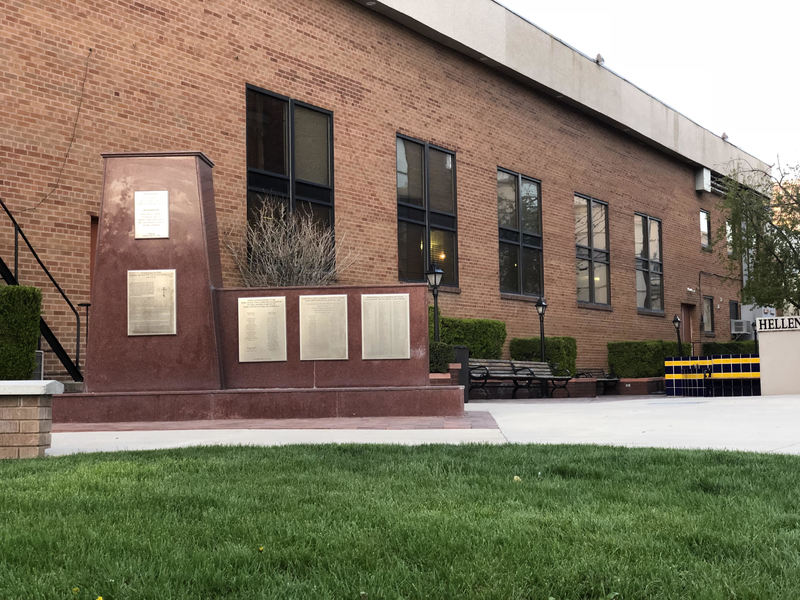
    <summary type="html"><![CDATA[<p><strong><em>Due to war-time labor shortages, prisoners from the Topaz Internment Camp helped Orem and Provo farmers harvest fruit, amid discrimination. </p></strong></p><img src="https://www.intermountainhistories.org/files/fullsize/2cf7dddc066089ac665145de8968404b.jpg" alt="Plaque located at 950 North and 800 East Orem, Utah" /><br/><p>After the Japanese military bombed Pearl Harbor in 1941, some Americans feared that US citizens of Japanese descent might engage in espionage for Japan. This racially charged wartime hysteria led President Roosevelt to sign Executive Order 9066, which forced those of Japanese descent into prison camps across the country. One such camp was in Delta, Utah. It was known as the Topaz Relocation Center.  </p><p>World War II labor shortages increased as more Utah men joined military efforts, and state officials and Utah farmers sought workers to fill their places in designated labor camps to harvest various crops. Seeking work opportunities outside of the prison camp, many of Topaz’s  internees volunteered to work at these labor camps in the surrounding town of Delta and in the northern Utah towns of Provo and Orem. The Provo camp, located at Ninth South and Fourth East, housed 400 persons and consisted of a temporary tent city where local farmers hired Japanese workers to work on beet farms. The Orem labor camp, located at 950 North and 800 East, was a more permanent site with large barracks and cabins, administrative offices, a kitchen and mess hall, and outhouses. The internees worked in orchards of various kinds. In May of 1943, the first seventeen young men arrived in Utah County to work as farmhands. The Utah Farm Association eventually relocated these hired Japanese American workers to the permanent Orem site shortly after.  </p><p>Though farmers hired Japanese workers willingly, anti-Japanese sentiments continued among many Utah residents. In 1943, these sentiments culminated in a violent incident involving Japanese-American workers and some white Provo residents. On October 3rd, five white youth, with shotguns and .30 caliber rifles, gathered and opened fire on the Provo labor camp and on local Japanese homes. Three people were struck by pellets, but no one was seriously injured. The attack had been the third of the week, with two previous reports of white youth throwing stones at Japanese workers and quickly escaping in cars. The War Relocation board threatened to remove the workers, and thereby their desperately needed labor, if Provo residents could not tolerate and protect Japanese workers. The residents chose to protect the workers and keep their labor. The five youth were later arrested for their attack.</p><p>In the fall of 1944, German and Italian prisoners of war replaced Japanese American and immigrant workers at the Orem labor camp, ending the Topaz prisoners’ connections at the Orem labor camp. But today the Topaz prisoners’ important role in Utah farm labor is memorialized at the Orem Heritage Museum. Though a school now stands on the actual Orem camp site, a sign commemorates Japanese workers and the labor contributions they made to WWII-era agricultural efforts. Residents can visit these sites and see Topaz’s influence far beyond the internment camp in central Utah.</p><p><em><strong><a href="https://www.intermountainhistories.org/items/show/300">For more (including 3 images) view the original article</a></strong></em></p>]]></summary>
    <published>2019-02-13T10:52:38+00:00</published>
    <updated>2026-04-17T19:32:05+00:00</updated>
    <link rel="alternate" type="text/html" href="https://www.intermountainhistories.org/items/show/300"/>
    <id>https://www.intermountainhistories.org/items/show/300</id>
    <author>
      <name>Hannah Lee, Melodie Jackson, and Sarah AdamsBrigham Young University</name>
    </author>
  </entry>
  <entry>
    <title type="html"><![CDATA[Willie Ito: From Topaz to Disney]]></title>
    <summary type="html"><![CDATA[<p><strong><em>Internees at Topaz went to school and participated in all kinds of classes, including art. One art student at Topaz went on to illustrate one of the most iconic Disney animation scenes of all time.</p></strong></p><img src="https://www.intermountainhistories.org/files/fullsize/1cc7d8583516881c7661310b76cbf7b9.jpg" alt="Preparing to Leave San Francisco" /><br/><p>The devastation of Pearl Harbor and the hysteria of the Second World War set the stage for white Americans to indulge their racist attitudes. Despite Japanese Americans showing no verifiable signs of sedition, many American citizens saw them as enemies who could not be trusted. Those of Japanese ancestry who lived along the Pacific coast were forced to enter inland internment camps like Topaz, Utah, for the duration of the war. Despite having had their rights disregarded, many of these prisoners continued to develop their talents. One such prisoner was a boy named Willie Ito, who went on to create a piece of art that would be seen by millions of Americans for years to come. </p><p>Willie was born in 1934 and grew up in San Francisco California. One of the most influential experiences in young Willie’s life was going to a movie theater in San Francisco and seeing the film Snow White and the Seven Dwarfs (1937). It was then that he knew that he wanted to be an animation cartoonist. After President Roosevelt signed Executive Order 9066 in February 1942, Willie and his family were interned at Tanforan racetrack in San Francisco. A few months later the government relocated the Tanforan prisoners to a permanent camp in Topaz, Utah. In Topaz Willie went to school and took art classes. While many of the kids liked to play games and baseball after school, Willie liked to go back to his family’s assigned barrack and draw. Willie would draw on the Sears Roebuck catalogs that were delivered every three months, making flipbooks in the margins of the expired catalogs.</p><p>Willie and his family left Topaz in early 1945. While studying at Chouinard Art Institute in Los Angeles, Willie landed the dream job of working at Walt Disney Studios. One of his first projects was animating the famous spaghetti scene in the film Lady and the Tramp. Willie also worked at Warner Bros and Hannah-Barbera Studios before returning to Walt Disney to work on consumer products. More recently Willie has illustrated two children's books, Hello Maggie (2007) and Boy of Heart Mountain (2010). These books detail some of the experiences of the people of Japanese descent who were incarcerated during World War II. Willie has chosen to use his artistic skill to educate others on the great injustices done to him and many other Americans of Japanese descent who were here at Topaz as well as the other internment camps across the country.</p><p><em><strong><a href="https://www.intermountainhistories.org/items/show/299">For more (including 3 images) view the original article</a></strong></em></p>]]></summary>
    <published>2019-02-13T10:34:59+00:00</published>
    <updated>2026-04-17T19:32:05+00:00</updated>
    <link rel="alternate" type="text/html" href="https://www.intermountainhistories.org/items/show/299"/>
    <id>https://www.intermountainhistories.org/items/show/299</id>
    <author>
      <name>Marcus Vanderholm and Jillian Manley, Brigham Young University</name>
    </author>
  </entry>
  <entry>
    <title type="html"><![CDATA[Arrival at Topaz: The Gate and Its Meaning<br />
]]></title>
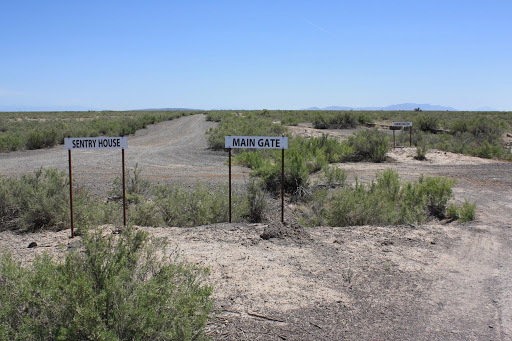
    <summary type="html"><![CDATA[<p><strong><em>The Topaz experience was prefaced by a mixture of welcoming residents and military presence at the camp’s main gate. </p></strong></p><img src="https://www.intermountainhistories.org/files/fullsize/855d8154dd98f7485c8e99a537b65695.jpg" alt="Main Gate" /><br/><p>On September 11, 1942, the first group arrived at Topaz War Relocation Center. That day, over 500 people of Japanese descent entered in Delta by train and were loaded onto buses that brought them to the internment site. There were more arrivals throughout the three-year period Topaz operated, all of whom passed through this main gate. It was here they were met with symbols of patriotism and signs of welcome. The residents of the internment camp tried to ease the new arrivals’ worries with these attempts; however, the barbed wire fences and guard towers framing the gate in the black desert-scape sent a contradicting message.</p><p>The people interned had been brought from homes on the Pacific coast that were exchanged for Topaz’s desert. It was a bleak sight amidst devastating circumstances. One woman, Yoshiko Uchida, noted her appreciation for the Boy Scouts’ effort to soften the arrival experience: “it was such a touching sight to see them standing in the burning sun, covered with dust and making such a determined effort to lessen the shock of our arrival at this bleak desert camp.” Windswept sand from the barren earth scattered about the Boy Scouts bearing instruments. The interned residents had organized a Boy Scout band to welcome new arrivals by song. The Boy Scouts symbolized patriotism to those arriving at the hand of policies that did not live up to American ideals of justice. Eventually, some men within the camp would volunteer for the war effort, enlisting in the segregated 442nd infantry. As the Boy Scout band played, the U.S. military guards stood nearby, holding rifles and kindling fear in the new arrivals.</p><p>Beyond the music of the Boy Scout band, those arriving at the camp were also greeted by signs welcoming them into Topaz. These signs had welcoming phrases such as “Welcome to Topaz: Jewel of the Desert” or “Welcome to Topaz—Your Camp.” However, these signs, whether intentionally or not, covered the truth of the internment experience. For example, one sign describes the camp as a “Jewel,” yet residents were forced to live in close quarters, surrounded by armed guards and barbed wire. Describing it as a “Jewel” hides the reality of what it was really like to live there. Another sign, recounted by Uchida, describes Topaz as “[their] camp.” However, the camp was run by the War Relocation Authority, not the residents. It was surrounded by the military and had strict rules and procedures. As one resident described, “rifles were pointed at us, not outward” (Stone). Although the sign claimed that the camp belonged to them, their surroundings told a different story. The desert landscape and military presence sent a message of fear that overcame the tokens of welcome.</p><p><em><strong><a href="https://www.intermountainhistories.org/items/show/298">For more (including 3 images) view the original article</a></strong></em></p>]]></summary>
    <published>2019-02-13T10:17:11+00:00</published>
    <updated>2026-04-17T19:32:05+00:00</updated>
    <link rel="alternate" type="text/html" href="https://www.intermountainhistories.org/items/show/298"/>
    <id>https://www.intermountainhistories.org/items/show/298</id>
    <author>
      <name>Elizabeth Young and Ann Johnston, Brigham Young University</name>
    </author>
  </entry>
  <entry>
    <title type="html"><![CDATA[Ogden Defense Depot<br />
]]></title>
    <summary type="html"><![CDATA[<p><strong><em>Built as part of World War II efforts, the Ogden Defense Depot became a significant contributor  to the economic growth of Weber County. Ogden Defense Depot was one of seven warehousing and distribution depots operated nationwide by the Defense Logistics Agency (DLA).</p></strong></p><img src="https://www.intermountainhistories.org/files/fullsize/dbb0c8dd09e40c8a0e41e3107066a0e1.jpg" alt="Early construction of the Defense Depot Ogden" /><br/><p>The Depot was originally activated as Utah General Depot on September 15, 1941, built on 1, 679 acres of farmland in the community of Marriott, Utah. Overseen by the Department of Defense (DOD), its mission was to provide logistical support which encompassed the following responsibilities: supply, storage, maintenance, contract administration, other services to military agencies. </p><p>By the end of World War II, the depot’s eight original warehouses increased to twenty-eight and nineteen sheds. At its peak, the facility employed 4,000 civilians and 5,000 prisoners of war and was the largest wartime quartermaster depot in the country.</p><p>The Utah General Depot was also a prisoner-of-war camp. During those years, some 7,000 Italian and 8,000 German POWs were held there. Some prisoners were allowed to do non-sensitive work. Socializing activities with the populace were held; where many friendships developed, and led to some prisoners returning to America after the war and marrying their sweethearts. Other services for the prisoners included: healthcare, food, clothing and many other essentials, that would be required by the Geneva Conference.</p><p>During the Korean War the activities at the Utah General Depot picked up again after a decline during the interwar years. Peak shipping of supplies came in 1953 when 37,000 tons per month were shipped, an amount greater than the heaviest shipping done in World War II. By February 1951, there were 4,282 civilian employees. </p><p>In 1964, the facility was renamed the Defense Distribution Depot Ogden, Utah (DDOU). It served as one of the largest supply depots in the nation, with 6,189,000 square feet of covered storage space available in sixty-nine warehouses of various types. The Depot became host to other government facilities, including some functions of the Ogden Arsenal and a service center of the Internal Revenue Service.</p><p>In 1995, the DDO was selected for closure listed in the Base Realignment and Closure Act (BRAC). Base functions would operate until September 30, 1997, when ownership was transferred to Hill Air Force Base, who later sold the property to the City and its partners. Many residents and former employees were sad to see the end. </p><p>The City of Ogden and its partner the Boyer Company are currently transforming  the Depot into modern warehouses which host multimillion dollar companies that contribute to the city’s economy.  </p><p><em><strong><a href="https://www.intermountainhistories.org/items/show/272">For more (including 6 images) view the original article</a></strong></em></p>]]></summary>
    <published>2019-02-07T00:44:01+00:00</published>
    <updated>2026-04-17T19:32:04+00:00</updated>
    <link rel="alternate" type="text/html" href="https://www.intermountainhistories.org/items/show/272"/>
    <id>https://www.intermountainhistories.org/items/show/272</id>
    <author>
      <name>Tyrome Heath, Weber State University</name>
    </author>
  </entry>
  <entry>
    <title type="html"><![CDATA[Farragut Naval Training Station]]></title>
    <summary type="html"><![CDATA[<p><strong><em>In its time, the Farragut Naval Training Station was the largest city in Idaho  and the second largest naval training center in the world. </em></strong></p><img src="https://www.intermountainhistories.org/files/fullsize/157f3a87b27c896c2480a88f7a04e6d5.jpg" alt="U.S. Naval Training Station, (Lake Pend Oreille) Farragut, Idaho" /><br/><p>Located between Sandpoint and Coeur d’Alene, Idaho on the southern end of Lake Pend Oreille, the historic Farragut Naval Training Station was a first stop for many fresh recruits during World War II. During its thirty months of existence, more than 293,000 sailors received basic training at Farragut. As the base grew, a city emerged from the land and permanently impacted the environment. The inland naval training location, the unique land attraction, a short but eventful life, and the park that remains all celebrate Farraguts rare and complex history. </p><p>Farragut added jobs, houses, and people to lands that were once used by early tribal affiliation and pioneer explorations. In 1941, the U.S. government purchased the 4,160 acres from two private owners: Kootenai County and a small railway company.  The unique inland naval base is 300 miles away from the western coastlines. Walter Butler Construction Co. employed approximately 22,000 men to build libraries, living quarters, mess halls, chapels, recreation facilities, and other buildings for the base. Neighboring communities, including Sandpoint and Coeur d’Alene, still struggled from the Great Depression. Farragut provided jobs, higher wages, and more opportunities to these communities. </p><p>The groundbreaking for Farragut took place in March 1942. By September 1942, the base population reached 55,000, making it the largest city in Idaho at the time. Farragut was also the second largest naval training center in the world. Recruits left home for the first time, came to Farragut, and learned how to march, row, swim, and use firearms before either heading to the Mediterranean Sea or the South Pacific. The base also contained nearly 900 German prisoners of war who worked beside American soldiers as gardeners and maintenance men.</p><p>The land was attractive to the navy for many reasons. Lake Pend Oreille provided natural aesthetics and raw functionality. The lake’s deep waters, large size, and cool temperatures, along with the steep, tree-lined shores and quiet conditions all created an attractive land-locked location that could closely mimic the ocean without the risks. The base allowed for ground and water training and effectively taught sailors how to take care of themselves in war. The base supplied economic benefits and a textbook location for training; however, the rapid urbanization created pollution and habitat loss to the land and water. </p><p>The once naval training station is now Farragut State Park and remains a tribute to the base. It now caters to tourists with outdoor activities. Bikers, runners, horseback riders, and swimmers can enjoy the land traveled by World War II naval trainers and trainees. Although the land has been transformed and the environment has changed, the natural beauty of the land is protected and maintained by the state. </p><p><em><strong><a href="https://www.intermountainhistories.org/items/show/173">For more (including 3 images) view the original article</a></strong></em></p>]]></summary>
    <published>2018-05-16T23:16:49+00:00</published>
    <updated>2026-04-17T19:32:02+00:00</updated>
    <link rel="alternate" type="text/html" href="https://www.intermountainhistories.org/items/show/173"/>
    <id>https://www.intermountainhistories.org/items/show/173</id>
    <author>
      <name>Darby Pierce, University of Idaho</name>
    </author>
  </entry>
  <entry>
    <title type="html"><![CDATA[The Hellenic Historic Monument]]></title>
    <summary type="html"><![CDATA[<p><strong><em>A significant number of Greek Utahns served in the United States military. Their sacrifice to protect the nation is honored at the Hellenic Historic Monument in Salt Lake City. How can this monument impact our appreciation for United States service men and women?</em></strong></p><img src="https://www.intermountainhistories.org/files/fullsize/5b2ad5dcbfae1cdfc8fca342a54518b0.jpg" alt="Hellenic Historic Monument" /><br/><p>America experienced heightened nationalist ideology during World Wars I and II. As hysteria over the broader conflicts in Europe increased, xenophobia in the United States created strong inter-ethnic stress. In Utah, tension already existed in the industrial labor forces between Greeks, Americans, and other Eastern European immigrants at the start of the century. Lynchings were not widely publicized but nevertheless occurred in response to immigrant culture in the Salt Lake Valley. Greek immigrants were particularly targeted as un-American because they did not immediately desert their language and customs (often due to foundational religious beliefs), were involved in domestic labor strikes, and sent large amounts of money home. However, many Greeks were at the forefront of purchasing Liberty Bonds. Though criticized for not knowing English, Greek Newspapers (like O Ergatis) provided a resource to Greek-speaking immigrants to stay updated on war efforts in the United States.</p><p>Greek-Americans held an invested interest in World War I and II, regardless of their position on the conflict. Not only was America involved in the war, but so was their expatriate country – Greece. While many Greek Utahns joined the military by choice, others were drafted. The fairness of the draft was called into question when 221 of the 801 people in the Carbon County draft were Greek. Other members of the Greek community wanted to enlist, but were unable because they did not speak English. While many enlisted in the military to show their support for the war, others supported it through the Greek Orthodox Church. A parade was held from Price to the Holy Trinity Greek Orthodox church where speeches of patriotism were given and loyalty was pledged to the United States. </p><p>The wars significantly impacted Greek communities in Salt Lake City. Economically, the wars pushed copper miners and other industrial workers toward the city and into the middle class. This was partially due to the smaller number of more highly educated immigrants that came to Utah to be with family or friends who had already immigrated. Marriages decreased during the war (though they increased once the war had ended), and the Greek school located in the basement of the Holy Trinity Orthodox Church became less important than Orthodoxy itself. </p><p>To honor the history of Greek Utahns that fought in World Wars I, II, and the Korean Conflict, as well as the resulting effects of the war, the Hellenic Cultural Association (HCA) erected the Hellenic Historic Monument. The monument names the thirty-eight Greek Utahns that lost their lives in World Wars I, II, and the Korean Conflict, including Private First Class Theodore C. Dimas. Dimas was honored both in the community and by the Holy Trinity Orthodox church after his death. The HCA continues to hold Memorial Services for Greek servicemen and women at the monument each year.</p><p><em><strong><a href="https://www.intermountainhistories.org/items/show/157">For more (including 3 images) view the original article</a></strong></em></p>]]></summary>
    <published>2018-05-06T01:22:42+00:00</published>
    <updated>2026-04-17T19:32:01+00:00</updated>
    <link rel="alternate" type="text/html" href="https://www.intermountainhistories.org/items/show/157"/>
    <id>https://www.intermountainhistories.org/items/show/157</id>
    <author>
      <name>Katie Calton, Brigham Young University</name>
    </author>
  </entry>
  <entry>
    <title type="html"><![CDATA[The Unique Kooskia Internment Camp]]></title>
    <summary type="html"><![CDATA[<p><strong><em>In use during the years 1942-1945, the Kooskia Internment Camp held 265 Japanese men. During these years they worked in the camp as well as a labor force building the Lewis-Clark Highway that is still in use today. Here, they lived, slept, and worked far away from their families.</em></strong></p><img src="https://www.intermountainhistories.org/files/fullsize/c4116af5774546b8b324775deccd9ae9.jpg" alt="Kooskia picnic" /><br/><p>Executive Order 9066 placed over 100,000 people of Japanese ancestry into internment camps like the one at Kooskia. Signed by President Franklin Delano Roosevelt on February 19, 1942, it went into immediate effect. Along with internment and work camps like Kooskia, there were concentration, isolation, and prison camps where the government kept Japanese people from the rest of the U.S. population. The camp of Kooskia, however, was different from other interment camps.</p><p>Whereas other camps contained both Isei (first generation Japenese immigrants) and Nisei (second generation Japanese-Americans), the internees of Kooskia were not American citizens but all resident aliens. Therefore, the United States government treated them as prisoners of war and their conditions and treatment were governed by the Geneva Convention. The internees also displayed a healthy amount of knowledge concerning their rights under the Geneva Convention, surprising the administrators at Kooskia. The internees there had more freedoms and privileges than any of the other internees in the other camps. For instance, there were no barbwire fences or guard towers because the location was quite remote, allowing the workers to walk about freely. </p><p>The Kooskia Scrapbook held at the University of Idaho documents these men working and building a life for themselves. The men not only worked, but they also played, relaxed and had plenty of leisure time and activities to fill that time. They could participate in several different sports available to them. There was softball, wrestling, foot racing, and table tennis. Other non-physical competitive activities were board games like checkers and go, a Japanese version of chess. Other recreational activities included boating, fishing, hiking, and more cultural activities like drawing, woodworking, stonecrafting, and weaving. They also read books and magazines, wrote letters and poetry to their families and each other, and they had access to movies. A last part of recreational living was the mixture of musical instruments available to the internees to play. These activities attest to the internees ability to make the best of a bad situation. What is not pictured in the scrapbook, however, are the pain, suffering, and inherent injustice that these and other internees faced. </p><p><em><strong><a href="https://www.intermountainhistories.org/items/show/108">For more (including 4 images) view the original article</a></strong></em></p>]]></summary>
    <published>2018-01-23T21:34:56+00:00</published>
    <updated>2026-04-17T19:32:00+00:00</updated>
    <link rel="alternate" type="text/html" href="https://www.intermountainhistories.org/items/show/108"/>
    <id>https://www.intermountainhistories.org/items/show/108</id>
    <author>
      <name>Keven R. Mack, University of Idaho</name>
    </author>
  </entry>
  <entry>
    <title type="html"><![CDATA[Japanese American Internment in the Minidoka Camp]]></title>
    <summary type="html"><![CDATA[<p><strong><em>During the Second World War, thousands of Japanese Americans were imprisoned in camps, suspected of forming a fifth column of Japanese soldiers within the US. The vast majority of these people were completely innocent and loyal citizens of the country, but were interned in these camps regardless. This camp housed thousands of people during its 3 years of existence, and illustrates a painful moment of US history.</em></strong></p><img src="https://www.intermountainhistories.org/files/fullsize/88711a1f7d97d92e9c22fa861459c1fc.jpg" alt="Aerial View of Camp" /><br/><p>On February 19, 1942, in response to Pearl Harbor and rising anti-Japanese sentiments in the United States, US President Franklin D. Roosevelt signed Executive Order 9066, which allowed the creation of military exclusion zones and to relocate all persons who were to be excluded from such zones. This meant that all Japanese Americans living in places like California were to be forcibly removed from their homes and sent to special camps created throughout the United States. One such camp was created in the middle of Idaho. Named the Minidoka Relocation Center, this camp housed approximately 10,000 people throughout the course of the war.  It cost over $5 million to construct.</p><p>Before being relocated, each family had to report and register themselves.  Tags identified families and luggage alike. Suitcases stretched, filled with entire family histories and traditions. Tarpapered barracks and a landscape of dust and sagebrush welcomed the first arrivals to Minidoka, remembered one internee at Minidoka. The executive order only required the most basic essentials be provided. </p><p>The camp itself was kept in better condition than many other camps of the sort. It served as a pseudo-town, with a small governing body (comprised of military personnel), two elementary schools, a high school, a gym, a skating rink, many baseball diamonds, farms, livestock, stores, a hospital, salons, a library, a fire station, and various other types of employment. Internees generally got along well with their captors, though as the war continued, tensions rose as the reintroduction of the draft troubled many residents. Sports were popular to help relieve stress, especially baseball and basketball. While not as luxurious as their previous homes, the Minidoka camp provided for most of the basic needs and the camp administration attempted to create an environment that still felt like a normal town.</p><p>Suspicions festered and discouraged “enemy language” journalism. Paranoia surrounded any individual with Japanese heritage without regard to their civil liberties. To attempt a semblance of normalcy, the camp produced a weekly newsletter, the Minidoka Irrigator, to inform and update detainees on camp activities. Detainees performed weddings, graduation ceremonies and created their own sports teams inside barricaded walls topped with barbed-wire. War hysteria played a dominant role in the actions of camp authorities in charge of producing camp newsletters. </p><p>Baseball provided a popular distraction, and helped to maintain a sense of normalcy in the unusual circumstance. Children attended school, often taught by people who had attended college, and teenagers graduated from high school. Adults worked and farmed, though almost always for much lower pay than the accepted minimum wage of the time. The internees farmed and tried to help end the agriculture shortage. Coupled with Mexican braceros, they comprised the majority of the labor force in the state of Idaho during the war. Most of the people living there were US citizens and had lived most of their lives in the U.S.  This contrasted to the older generation, called the Issei, who felt betrayed and humiliated by the country that they had grown to love.  However, the Nisei, the first-generation Americans, felt obligated to prove their loyalty by joining the armed forces when called to fight against the land of the fathers.  Thus, in 1944, the War Department began the draft and allowed interned Japanese Americans to serve.  Many of them would form the 442nd Regiment, which would become an “all Nisei unit.”  1,000 people from this camp served in the World War and 87 died in combat, representing one of the highest rates of service in the various internment camps and the highest number of casualties from all the internment camps. These soldiers generally served exceptionally, and were valuable assets to the US military corps. </p><p>The end of the war eliminated the need for the camp, and it was closed on October 23, 1945. The government removed most of the buildings in the camp quickly, and the land was granted to returning veterans in a post war lottery. In 1952, the Soil Conservation District organized a “Farm-in-a-Day” experiment, designed to demonstrate the most efficient farming techniques and to create more interest by homesteaders in the surrounding farmland. The land was used mainly for agriculture for the next few decades before being remade into a historical site, recognizing the poor treatment of Japanese-Americans. Today, only a few remade buildings and some signs commemorate this episode in Idaho’s history.</p><p><em><strong><a href="https://www.intermountainhistories.org/items/show/91">For more (including 5 images&#32;&amp;&#32;1 video) view the original article</a></strong></em></p>]]></summary>
    <published>2017-09-06T02:18:10+00:00</published>
    <updated>2026-04-17T19:31:59+00:00</updated>
    <link rel="alternate" type="text/html" href="https://www.intermountainhistories.org/items/show/91"/>
    <id>https://www.intermountainhistories.org/items/show/91</id>
    <author>
      <name>Josh Franzen, Brigham Young UniversityKelsey Lavelle, Brigham Young University</name>
    </author>
  </entry>
  <entry>
    <title type="html"><![CDATA[Bushnell Military Hospital]]></title>
    <summary type="html"><![CDATA[<p><strong><em>From a hospital to a school, to nothing—the Bushnell Military Hospital wasn’t in operation for long, but it had a lasting impact. </em></strong></p><img src="https://www.intermountainhistories.org/files/fullsize/fd74574b5e34696aec898ecd1a809b0e.jpg" alt="Bushnell Military Hospital Aerial View" /><br/><p>World War II took the lives of approximately 3% of the entire world’s population in the 1940s—so it’s no surprise that life-saving efforts became a top priority at the time. Military hospitals were built throughout the war front as well as the home front. Brigham City, UT became home to one: Bushnell General Military Hospital. The hospital impacted Brigham City in various ways, including the lives of many individuals who served and were served there.</p><p>Many employees at the facility were locals, which boosted Brigham City’s economy. They needed the skills that varying individuals possessed because Bushnell was innovative in their patient care. Just one of many examples is their developing a new type of prosthetic limb that used plastic instead of metal, which soon spread to other amputation centers and became more commonplace in the medical field.</p><p>They were also innovative in their treatment procedures. Bushnell had a significantly low death rate, which is accredited in part to their experimental use of penicillin. Penicillin was new to the medical world and proved effective for many patients, allowing doctors at Bushnell to save many more lives and limbs than they would have been permitted under other circumstances. </p><p>Once soldiers were healed, the focus shifted to rehabilitation. They had band performances by amputees, visits from celebrities such as Helen Keller to boost morale, and a general sense of community involvement to aid in all steps of this process. </p><p>The hospital also provided facilities for mental health treatment. The psychiatrists were well-trained and used the best and newest treatments they had at the time. However, many patients had already suffered from mental and emotional illness before the war, and seeing combat brought them to severe extremes. The psychological knowledge of the time was not sufficient to help many of them, and they ended up in hospitals for extended periods of time. However, due to many experimental treatments, they made advancements in psychiatric treatment that continued to be implemented afterward.</p><p>After the war, the hospital was closed in 1946. The buildings were remodeled and turned into the Intermountain Indian School: a boarding school for Native American children. It was successful for several years but was closed in 1984 and the land was given back to the city. The buildings have mostly been demolished now, but Brigham City has experienced the long-lasting effects of the hospital’s influence. Bushnell brought the community together in a way nothing else could—it was a chance for a small town to band together for a good cause in a troubling time. </p><p><em><strong><a href="https://www.intermountainhistories.org/items/show/86">For more (including 5 images) view the original article</a></strong></em></p>]]></summary>
    <published>2017-08-18T20:26:36+00:00</published>
    <updated>2026-04-17T19:31:59+00:00</updated>
    <link rel="alternate" type="text/html" href="https://www.intermountainhistories.org/items/show/86"/>
    <id>https://www.intermountainhistories.org/items/show/86</id>
    <author>
      <name>Aubrey Glazier, Brigham Young University</name>
    </author>
  </entry>
  <entry>
    <title type="html"><![CDATA[Manti Parachute Plant]]></title>
    <summary type="html"><![CDATA[<img src="https://www.intermountainhistories.org/files/fullsize/428b82833cf91f3bd017e1f392fcf453.jpg" alt="Sewing a Parachute" /><br/><p>Between the years 1940-1944, the percentage of Utah’s workforce made up of women more than doubled—but where did all those women find employment? Many inhabitants of Sanpete county and surrounding areas worked at the Manti parachute plant, which was built exclusively for World War II and employed hundreds of women. </p><p>The plant was created by the Standard Parachute Company of San Diego in 1942, and was converted into a factory from an old armory. Workers at the plant sewed and packaged parachutes for American soldiers overseas, carefully inspecting each one to ensure its reliability.</p><p>Whether it was to support their families financially, assert female independence, or support the war effort, many Utah women were employed for the first time at this factory. Some workers came straight out of high school; others came from homes where they were raising children. </p><p>One woman who worked there, Maurine Braithwaite Draper, lived on a farm with her husband. Her main reason for working there was “to have something to do.” Aside from a newfound pastime, Maurine left her factory job with increased confidence and independence as a woman. This was helpful when she later found herself divorced and caring for children on her own. </p><p>Another worker, Zola Anderson Ruesch, had a different reason for taking a job at the plant. She had previously been working for a family in Ephraim, UT, and discovered she could make better wages sewing parachutes. Aside from financial compensation, Zola felt a sense of patriotism through her contributions to the war effort. “I felt like I was doing some good for the men in the war. This way, we could help out too.” </p><p>Zola wasn’t the only one who was financially motivated to begin work at the factory—the Great Depression had left many families destitute, and jobs were so scarce that many Utah inhabitants jumped at the new employment opportunities provided by the war. Alice Frederickson Clark, who hadn’t finished her high school education, was excited at the opportunity for work. She recalled, “I needed the money. We didn’t have lights, water, a bathroom, or anything. I was anxious to get to work.” </p><p>Alice didn’t just do the minimum to get a little extra cash—she would spend time on weekends repairing parachutes that hadn’t been sent out due to minor defects. She remembered, “I’d go in on my own time [on Saturday] and catch up on those repairs because it made me sick to see them all piled up.”</p><p>In addition to financial benefits and sense of patriotism, these women also enjoyed strong friendships with their coworkers. Alice stated, “I never worked at a place where people got along as well. It just was kind of a happy family.” While most of the young men were off at war, the young women working at the plant would spend weekends and evenings socializing together. Many of them remained friends throughout their lives. </p><p>Whether they worked somewhere else after the war ended and the factory closed, or whether they opted to be stay-home mothers, these working women and this factory made an important contribution to the USA’s involvement in World War II. </p><p><em><strong><a href="https://www.intermountainhistories.org/items/show/84">For more view the original article</a></strong></em></p>]]></summary>
    <published>2017-08-16T21:13:07+00:00</published>
    <updated>2026-04-17T19:31:59+00:00</updated>
    <link rel="alternate" type="text/html" href="https://www.intermountainhistories.org/items/show/84"/>
    <id>https://www.intermountainhistories.org/items/show/84</id>
    <author>
      <name>Aubrey Glazier, Brigham Young University</name>
    </author>
  </entry>
</feed>