Chico Hot Springs — Montana
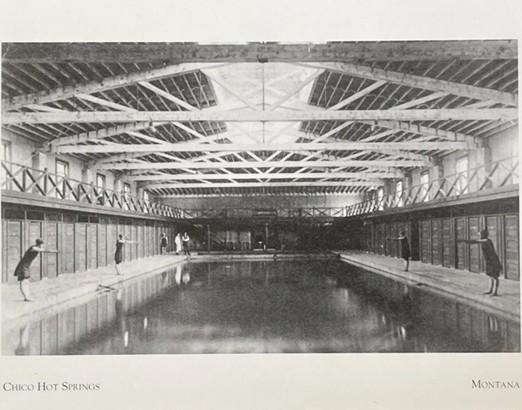
Montana’s Hot Springs - Chico Hot Springs. Montana Historical Society Research Center Photograph Archives, Montana Vintage Postcards Collection.
Euro-American settlers converted these natural hot springs into a resort in the early 20th century, inviting travelers en route to Yellowstone National Park for a comfortable rest stop. After WWII, the site's ownership changed hands and converted Chico Hot Springs into a dude ranch, but the site's historic value and entertainment opportunities remained.
Chico Hot Springs sits within the Paradise Valley, where gold prospectors began mining in the 1860s. A gold miner wrote “went out to the hot springs and washed my dirty ‘duds” in a diary entry he dated to January 16, 1865, marking the first written record of these hot springs. As the Chico settlement developed in the 1880s, an investor named Walter Matheson announced his plans to construct a bathhouse in which locals and tourists could plunge into the spring’s steamy mineral waters. Matheson recognized that the Northern Pacific Railway’s completion would bring larger crowds through Montana, especially with the newly constructed Park Branch that ran through Paradise Valley and connected Livingston to Yellowstone National Park in 1883. He capitalized on this increased traffic by advertising to locals and railroad travelers of the relaxing and healthy qualities that dipping into the Chico Hot Springs offered. An 1893 article in The Daily Enterprise, Livingston, MT, noted that the facility became a popular tourist attraction, with visitors camping overnight near the springs.
Matheson passed his ownership of Chico Hot Springs down to his daughter, Percie, and her husband, William Knowles, before his death in 1893. With increasing patronage at the hot springs, Knowles recognized a lucrative opportunity in adding lodging and a dining room to the facility. Locals celebrated Chico Warm Springs Hotel’s grand opening in 1900, which unveiled the addition of hotel rooms, a hot plunge pool, gender-separated bathhouses, and a dance hall and saloon for evening social gatherings. Following Knowles’ death in 1910, Percie continued to manage Chico Hot Springs. She promoted the site’s medical services by closing the saloon and hiring an on-site physician to prescribe warm plunges in the springs to patients suffering from various ailments.
In 1948, Percie sold the Chico Warm Springs Hotel to Oneita Behnke, shifted the business’ focus toward entertainment in the following twenty years. Alongside swimming, visitors could participate in gambling, barbecues, rodeos, and square dancing. With the addition of livestock barns and corrals, Behnke renamed the business to “Chico Ranch” and began advertising the site as a dude ranch. The tourist appeal of Chico Hot Springs shifted once more when investors Mike Art and his wife Eve bought Chico Ranch in 1967 with intentions of restoring the business to its former purpose as a site of relaxation and recreation. He and his wife achieved this by remodeling the hotel, dining room, and pools, and renaming the business to “Chico Hot Springs Resort.” As a result, Chico Hot Springs became a modern, high-class getaway while retaining its historic architectural elements.
Chico Hot Springs Resort continues to be a popular Montana vacation site, offering hiking, horseback trail rides, outdoor garden walks, swimming, and a restorative plunge in the site’s natural hot springs. Its convenient location along Highway 89 continually draws automobile tourists to the site year-round.
Images
Montana’s Hot Springs - Chico Hot Springs. Montana Historical Society Research Center Photograph Archives, Montana Vintage Postcards Collection.
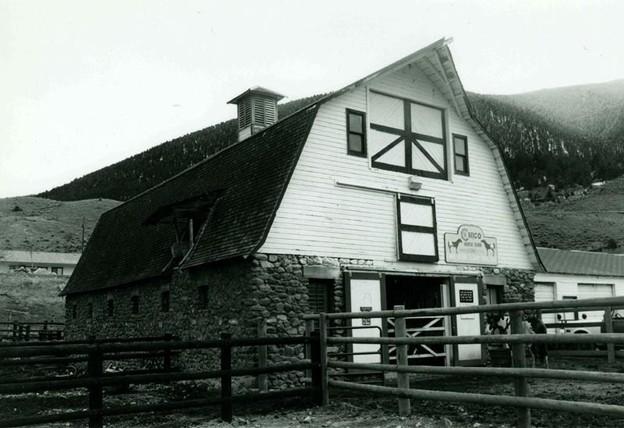
Chico Hot Springs: Front View of the Horse Barn, View from the West. Montana State Historic Preservation Office. Available at https://historicmt.org/files/show/4206.

Chico Hot Springs: View of the Pool, Shower House, and Snack Bar. Montana State Historic Preservation Office. Available at https://historicmt.org/files/show/4200.
