Cameron Trading Post — Arizona

Josef Muench. Ariz. - Bridge at Cameron. Cline Library, Special Collections & Archives. Northern Arizona University, Flagstaff, AZ. https://cdm16748.contentdm.oclc.org/digital/collection/cpa/id/16264/rec/16.
Two businessmen founded this motel and curio shop in 1916 with tourists in mind, aiming to provide travelers with an “authentic” Southwestern experience. The trading post invited tourists to rest, indulge in a Southwestern-style cuisine, and browse a selection of authentic Navajo and Hopi arts and crafts. For these novelties, it remained a popular tourist attraction throughout the 20th century.
The Kansas City Midland Bridge Company constructed the steel suspension bridge over the Little Colorado River in 1911, making travel across the gorge more convenient. Brothers C.D. and Hubert Richardson saw an opportunity as they anticipated that this road would see more traffic following the bridge’s completion. In 1916, the Richardson brothers purchased 112 acres south of the bridge and built a wooden cabin as the center of their trading business. They served local Navajo and Hopi communities by trading livestock, rugs, skins, and wool in the company’s early years. As a public business in a remote area, increasing numbers of long-distance travelers visited Cameron Trading Post looking for a place to rest.
Cameron Trading Post became a convenient rest stop for travelers within the Four Corners region. As the site saw more patronage in the 1920s, the Richardson brothers constructed fuel pumps, a hotel, and a dining room adjacent to the trading post. Toward the mid-century, the Richardson family reported an influx of wealthy automobile tourists making stops at the Cameron Trading Post when traveling to and from the Grand Canyon. This adventurous class of automobile tourists traversing the Southwest sought the “authentic” regional experience at the trading post. Recognizing this site’s popularity, the Fred Harvey Company began including Cameron Trading Post as a stop along their Indian Detours, where guides drove tourists along rugged dirt roads to visit sights like the Painted Desert and the Grand Canyon. Cameron Trading Post was a routine stop along these tours. To cater to these travelers’ interests, the Richardson brothers filled the gift shop with cowboy hats and Native American arts and crafts. Tourists could browse from various Navajo and Hopi baskets, blankets, concho belts, pottery, and turquoise and silver jewelry.
Cameron Trading Post’s convenient location near the Little Colorado Bridge continued to attract droves of tourists when the federal government began regulating highways in 1925. The U.S. Bureau of Public Roads established the first stretch of Highway 89 that year, a route between Thistle, Utah, and Flagstaff, Arizona. This route provided travelers with convenient access to multiple national parks, including the Grand Canyon, Zion, and Bryce Canyon. Cameron Trading Post became a popular secondary tourist attraction along this route, offering travelers lodging, dining, and shopping with a uniquely Southwestern flair.
The Cameron Trading Post changed hands in 1966 when Hubert Richardson sold the business’s lease to Standard Oil and subleased the hotel, restaurant, and gift shop to the Fred Harvey Company. The trading post remained an international hub for trading Native American arts and crafts. Toward the end of the 20th century, Cameron Trading Post continued to add uniquely Southwestern elements to their business, including a fine art gallery displaying works of local artists, Navajo weavers demonstrating their craft while seated in the gift shop, and the option of ordering a Navajo taco in the dining room. Cameron Trading Post continues to offer an entertaining rest stop experience for travelers along Highway 89.
Images
Josef Muench. Ariz. - Bridge at Cameron. Cline Library, Special Collections & Archives. Northern Arizona University, Flagstaff, AZ. https://cdm16748.contentdm.oclc.org/digital/collection/cpa/id/16264/rec/16.
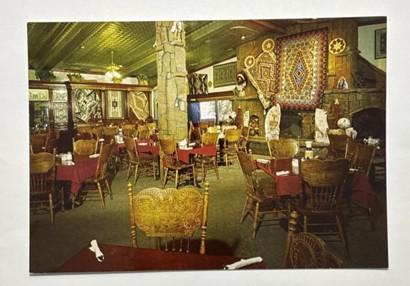
Adams, Mitch. Smith-Southwestern Inc. Cameron Trading Post Restaurant. The Postcards Store.
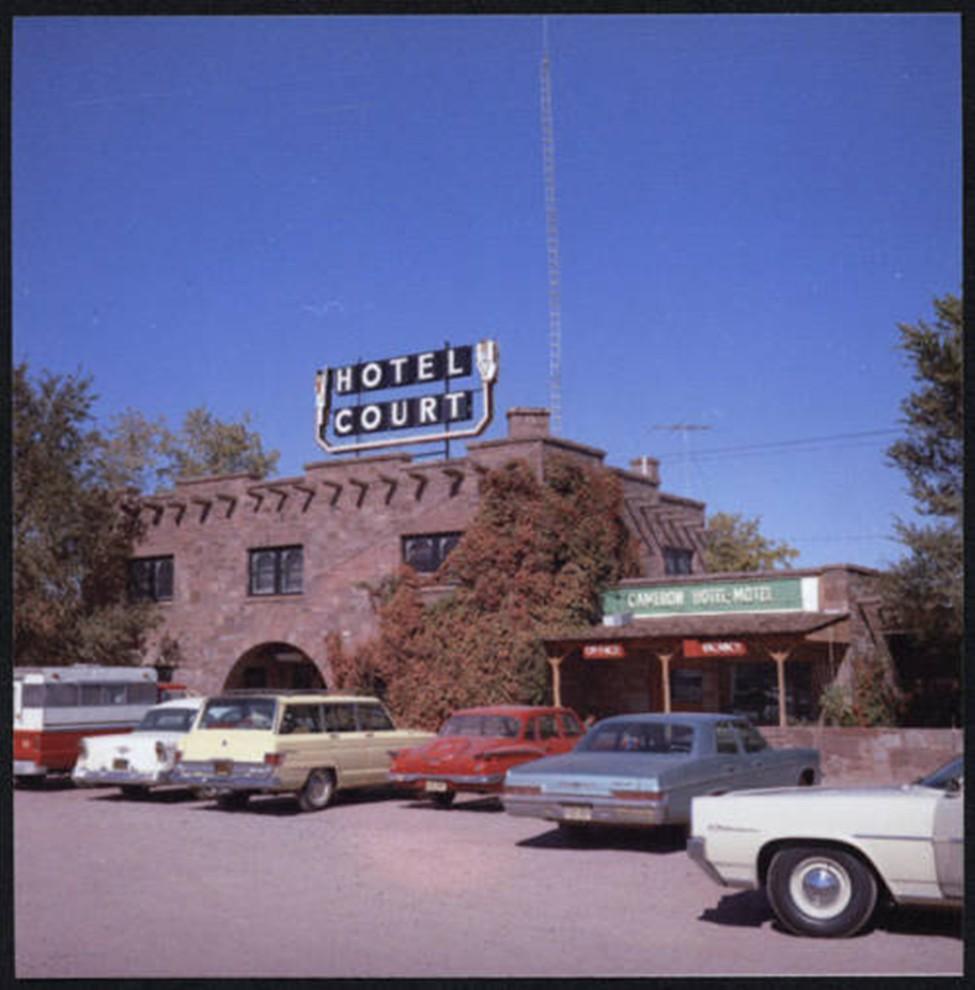
Fronske Studio. Standard Oil Company, 11-66 [Cameron Motor Hotel]. Cline Library, Special Collections & Archives, Northern Arizona University, Flagstaff, AZ. https://cdm16748.contentdm.oclc.org/digital/collection/cpa/id/8454/rec/15.

Fred Harvey (Firm). Cameron Trading Post. Cline Library, Special Collections & Archives, Northern Arizona University, Flagstaff, AZ. https://cdm16748.contentdm.oclc.org/digital/collection/cpa/id/115920/rec/1.