Boom and Bust in Bodie, CA

Old buildings in Bodie, California. Photograph courtesy of and used with permission by the Library of Congress. https://www.loc.gov/pictures/resource/highsm.22439/
Once among the largest and most prosperous towns in California, Bodie is now defined by the ghost of its past in the form of abandoned objects, peeling wallpaper, and half-destroyed buildings.
In the summer of 1859, W. Bodey found rich gold deposits in California, seven miles west of the Nevada border. He had traveled from Poughkeepsie, New York, in pursuit of an adventure, and his discovery would lead to the town of Bodie and surrounding hills being named in his honor. His name is something of a mystery today; there are reports that refer to him as William, Waterman, and Wakeman, his second initial as either “T” or “S,” and his last name occasionally spelled as Body rather than Bodey. As for the spelling of the town’s name, the “ie” ending was initially the result of a confused sign painter, and it just stuck.
Bodey’s ambition to find more for himself in life fueled both his success and his downfall. He was one of the first to discover gold in eastern California and managed to survive the dire circumstances of early prospecting life through the first change of seasons. It wasn't the work in the mines during the summer that killed him, but the harsh winter that followed. In November 1859 Bodey and his traveling companion left camp to get supplies. They were caught in a blizzard, and Bodey–unable to keep up with his companion–was left to die. His remains were recovered and now lie beneath two headstones: one that reads “Waterman S. Bodey” with an engraved image of miners panning gold from a stream against a backdrop of mountains; and another, much smaller with the name “William S. Bodey.”
In the years following his death, the town of Bodie was brought to life by other ambitious miners and their families, bringing the town’s population to 10,000 in 1879. With so many people arriving in such a short period of time, most of them lived in tents–even after the town became more established. In 1881 the Bodie and Benton Railway was built and used to haul lumber and other goods from the Bodie mines to the saw mill by Mono Lake. Bodie was becoming a prosperous center for work. It served some twenty-two gold and silver mines in the region with a stamp mill for processing ore and plenty of businesses in town. Saloons dominated, but there was also a mercantile, several general stores, motels, gambling and dancing halls, schools, stables, and both a Catholic and a Methodist church.
Like its namesake, the town is no stranger to tragedy and risk. Two accidental fires–one from a kitchen in 1892 and another started by a child in 1932–caused the destruction of several main street buildings, and led to economic hardship. Combined with the sundry difficulties of the Great Depression, the town failed to recover. It joined the arid region’s long list of ghost towns. Weather conditions in the mountains are still just as treacherous as they were in W. Bodey’s fateful last days. Travel to Bodie during winter months is only possible by way of skis, snowshoes, or snowmobiles.
In an attempt to preserve the historic elements of the town, Bodie was made an official California State Park in 1962. Only five percent of what once made up the booming town of Bodie is thought to have survived, and today its ghost-like remains sit virtually untouched in tattered buildings and houses.
Images
Old buildings in Bodie, California. Photograph courtesy of and used with permission by the Library of Congress. https://www.loc.gov/pictures/resource/highsm.22439/
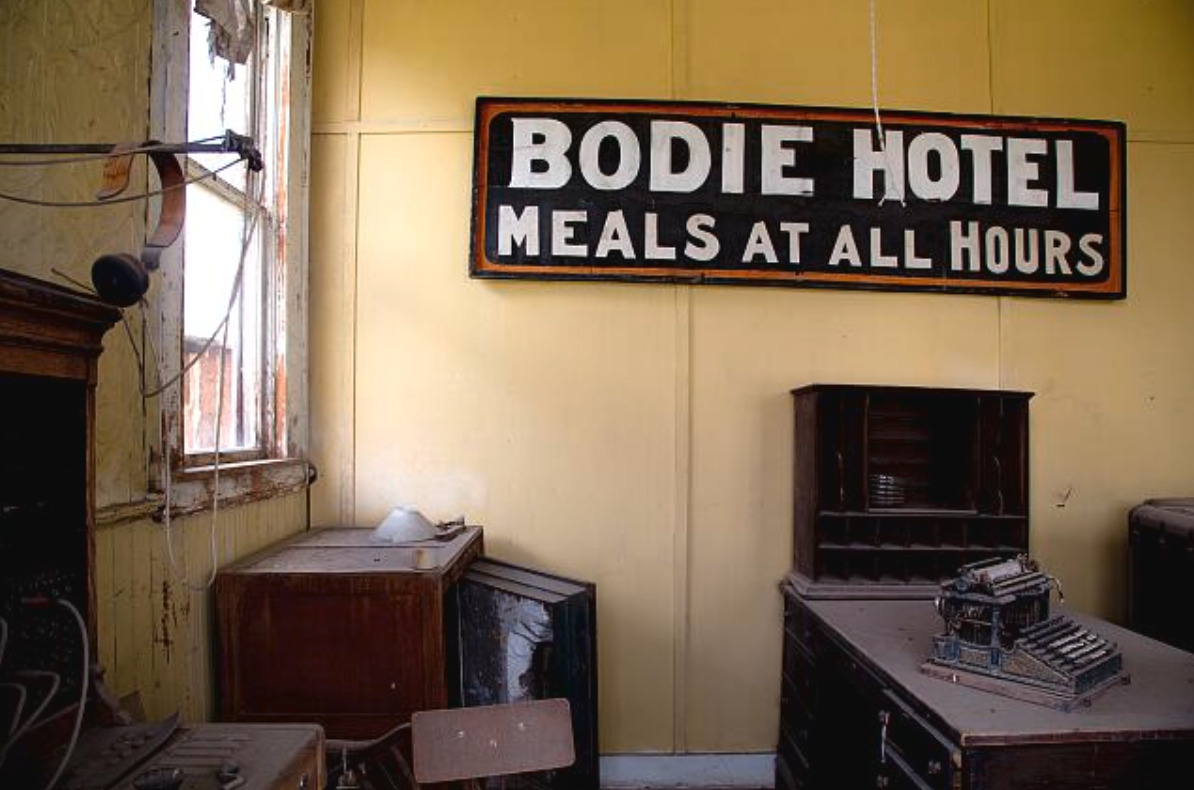
Interior of the Bodie Hotel. Photograph courtesy of and used with permission by the Library of Congress. https://www.loc.gov/pictures/resource/highsm.22496/
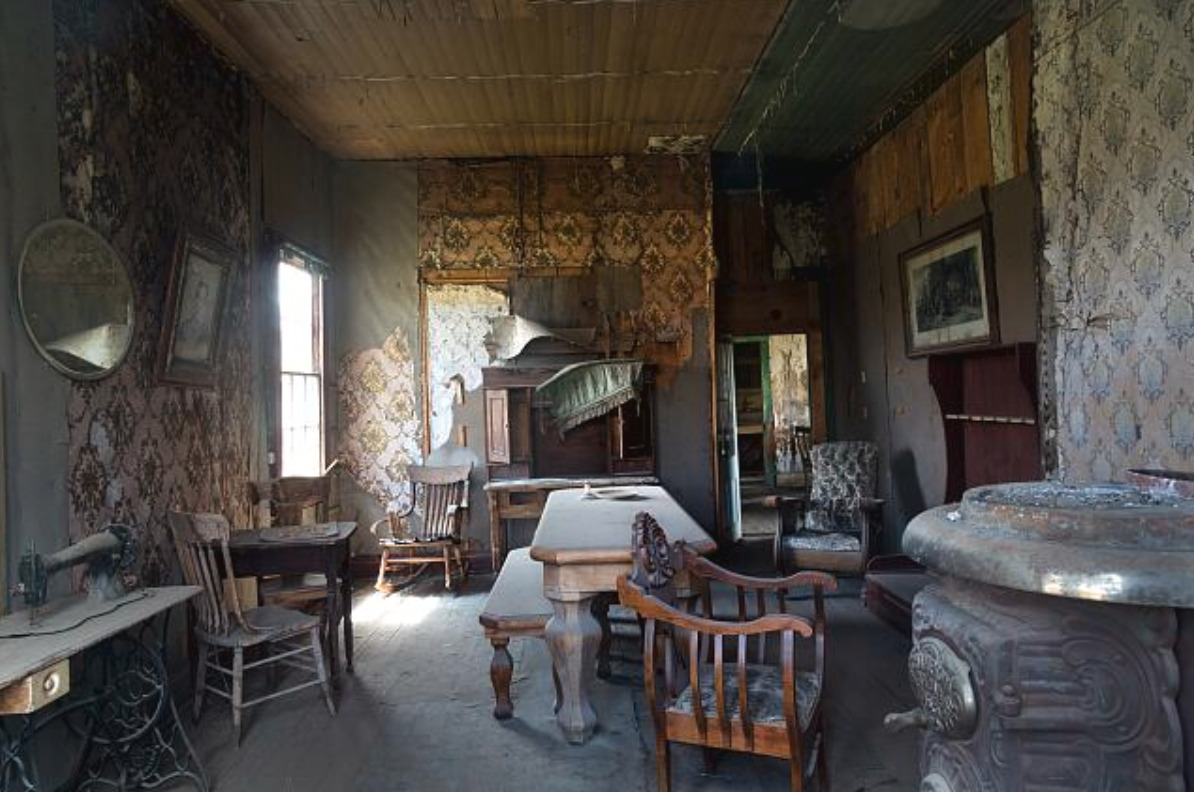
Interior of an abandoned house in Bodie, California. Photograph courtesy of and used with permission by the Library of Congress. https://www.loc.gov/pictures/resource/highsm.22498/
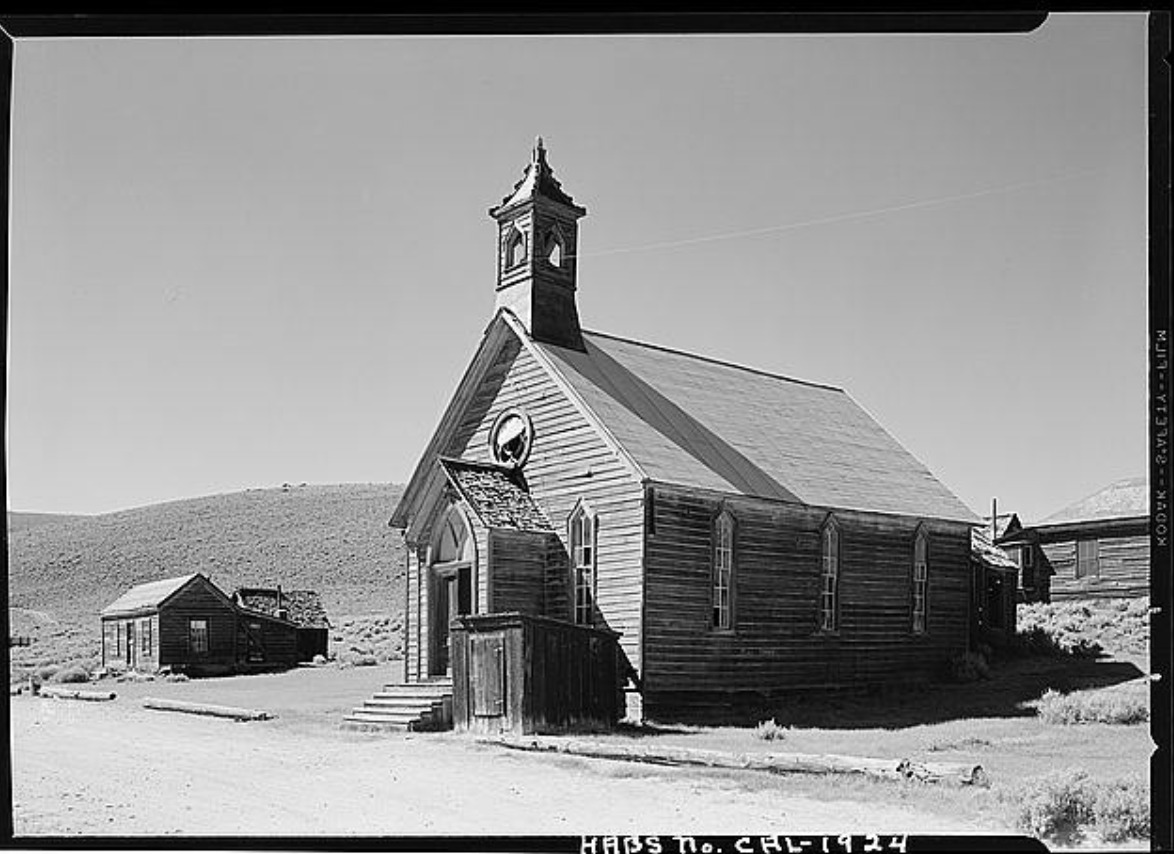
Methodist church in Bodie, California. Photograph courtesy of and used with permission by the Library of Congress. https://www.loc.gov/pictures/item/ca0355.photos.013485p/resource/

Interior of the Methodist Church in Bodie, California. Photograph courtesy of and used with permission by the Library of Congress. https://www.loc.gov/pictures/item/ca0355.photos.013487p/resource/
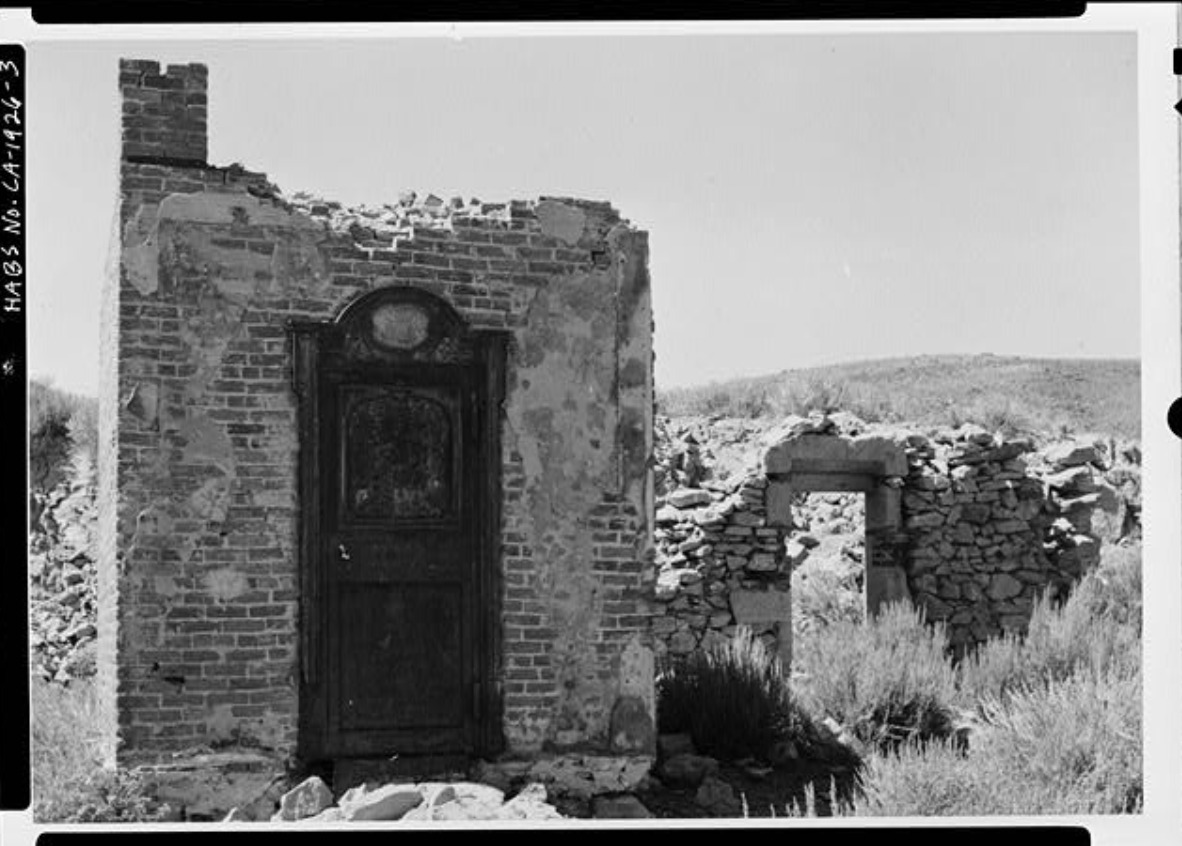
Remnants of a building in Bodie, California. Photograph courtesy of and used with permission by the Library of Congress. https://www.loc.gov/pictures/resource/hhh.ca0347.photos.013490p/