The Yankee Fork Mining District

Yankee Fork Gold Dredge. Photograph courtesy of and used with permission by Wikimedia Commons. https://commons.wikimedia.org/wiki/File:Yankeeforkdredge.JPG

Custer County, Idaho is home to one of the best preserved gold dredges in the country–and a rich mining history that ushered in new life and opportunity.
Placer gold, extractable by hand with little equipment, was discovered in Idaho in 1860 by E. D. Pierce. Pierce became fixated with the idea of mining on the Nez Perce territory in Northern Idaho and corners of Washington and Oregon. He eventually disregarded the law which prohibited mining on Native American lands and chose to proceed with his plans, launching the region into a new era of exploration, excavation, and the boomtowns that sprouted up in response.
Previous to the discovery of gold, settlements in the region were largely made up of various Christian missionary enterprises and Mormon communities. Congregationalist-Presbyterians and Catholics were among the first to travel to Idaho in the 1830s, introducing christianity to the Nez Perce and establishing settlements in the area. Groups of Mormon settlers traveled north from the Salt Lake Valley into what would become Idaho, first in 1855, and progressively more in the following years.
Idaho became a U.S. territory in 1863, and there was growing interest in the land for more than just religious reasons. As gold speculators made their way through the territory they found vast riches around Yankee Fork, a river in central Idaho’s Custer County. It wasn’t long until a mining district–a section of rural land designated for mining–was established around the river. By 1882, annual gold and silver production in Idaho had reached 3.5 million dollars, and one-third of that profit came from placer deposits in the rivers of Custer County. Additionally, there was an abundance of ore, another source of wealth for hardrock mining in Idaho. However, many of these spoils were in the riverbed which made them difficult to extract without the proper equipment.
The Yankee Fork Mining District is most famous for its dredge, designed to extract gold and silver from riverbeds. The use of industrial machines, rather than physical labor, was first introduced in the late nineteenth century–but it wasn’t until 1940 that the construction of the Yankee Fork Gold Dredge was complete. It was no small enterprise at 112.5 feet long and 64 feet high, with a bucket system and sluice boxes to collect and sift through elements. Even though mining stopped during World War II due to the nationwide ban on non-essential mining, work at the dredge picked up again in 1946. The second stint didn’t last long; the dredge was shut down for good in 1952 when the once abundant minerals ran dry. Although it operated for less than ten years, the Yankee Fork dredge managed to produce over 1 million dollars. Today it is a site for summer tourists and one of the best preserved dredges in the U.S. Although a relic of the past, Custer County is still host to 952 mines for the extraction of silver, gold, lead, zinc, and copper.
Images
Yankee Fork Gold Dredge. Photograph courtesy of and used with permission by Wikimedia Commons. https://commons.wikimedia.org/wiki/File:Yankeeforkdredge.JPG
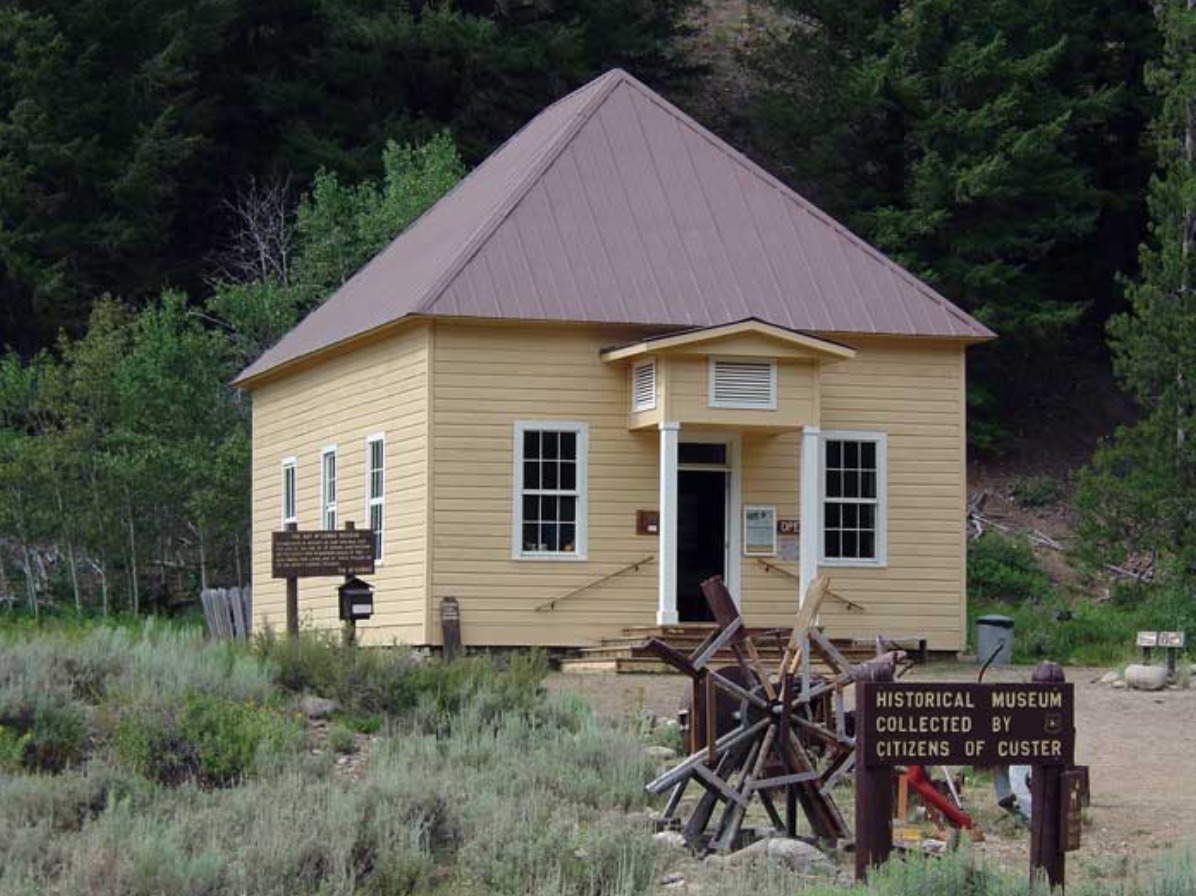
A school house turned museum in the ghost town of Custer. Photograph courtesy of and used with permission by Wikimedia Commons. https://commons.wikimedia.org/wiki/File:Custer-Museum.jpg

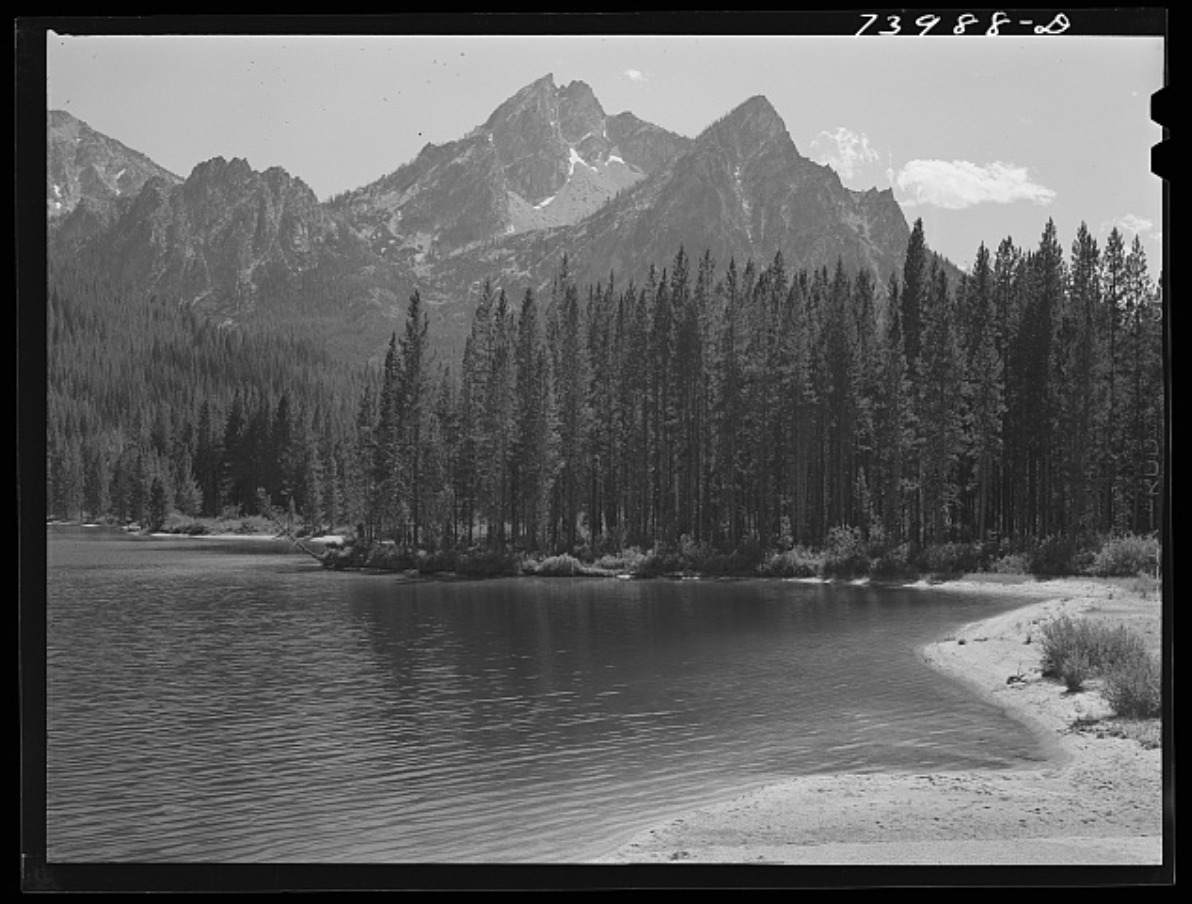
Stanley Lake and Sawtooth Mountains in Custer County, Idaho. Photograph courtesy of and used with permission by the Library of Congress. https://www.loc.gov/pictures/resource/fsa.8c25491/
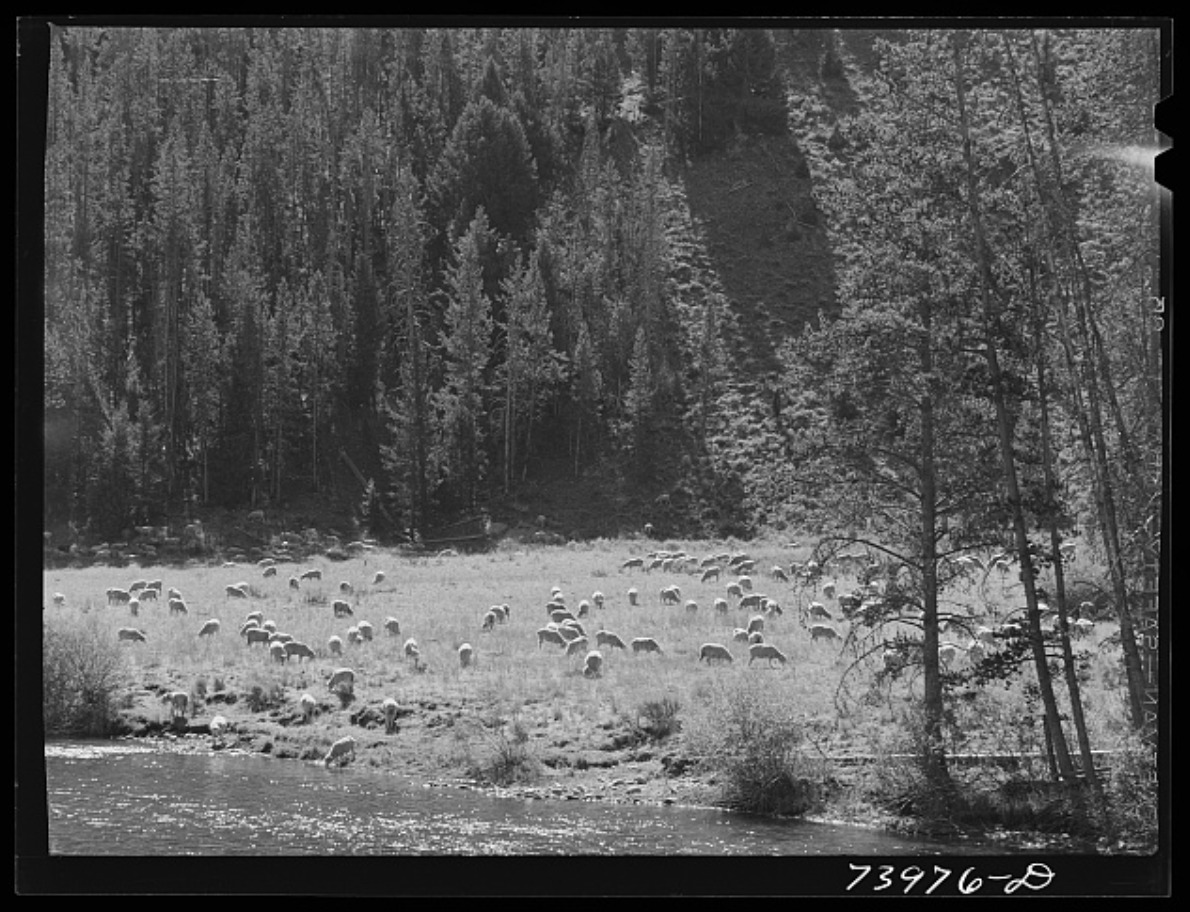
Herd of sheep in a field by the Salmon River in Custer County, Idaho. Photograph courtesy of and used with permission by the Library of Congress. https://www.loc.gov/pictures/resource/fsa.8c25479/
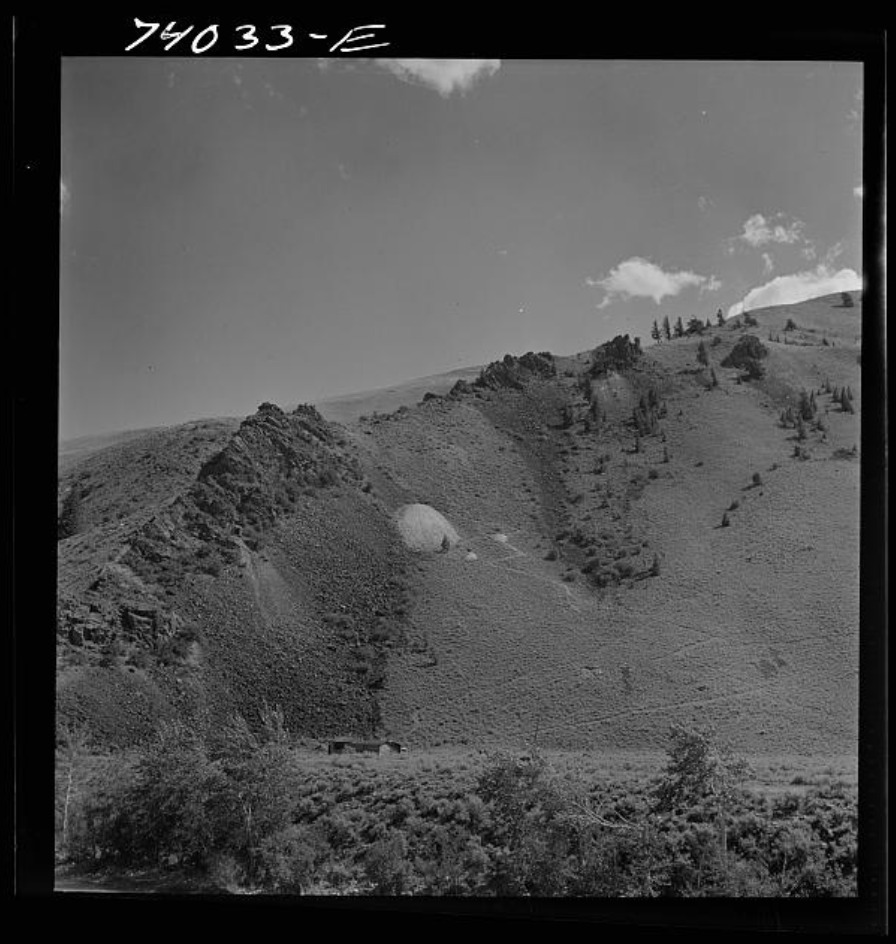
Miner’s cabin in Custer County, Idaho. Photograph courtesy of and used with permission by the Library of Congress. https://www.loc.gov/pictures/resource/fsa.8c32612/