<?xml version="1.0" encoding="UTF-8"?>
<feed xmlns="http://www.w3.org/2005/Atom">
  <title type="text">Intermountain Histories</title>
  <updated>2026-04-17T19:32:21+00:00</updated>
  <generator uri="http://framework.zend.com" version="1.12.20">Zend_Feed_Writer</generator>
  <link rel="alternate" type="text/html" href="https://www.intermountainhistories.org/"/>
  <link rel="self" type="application/atom+xml" href="https://www.intermountainhistories.org/items/browse?output=rss2"/>
  <id>https://www.intermountainhistories.org/</id>
  <author>
    <name>Intermountain Histories</name>
    <uri>https://www.intermountainhistories.org</uri>
  </author>
  <link rel="hub" href="https://pubsubhubbub.appspot.com/"/>
  <entry>
    <title type="html"><![CDATA[Queen of Heaven Orphanage]]></title>
    <summary type="html"><![CDATA[<p><strong><em>In the aftermath of her traumatic childhood, Mother Cabrini devoted her life to bettering the lives of young girls and orphans, especially in immigrant communities. Golden, Colorado is home to an orphanage and summer camp she built entirely from local donations and volunteer work. </em></strong></p><img src="https://www.intermountainhistories.org/files/fullsize/a7c79f026746a5cd893f7140b702d5fd.jpg" alt="Golden, Colorado 1868" /><br/><p><span style="font-weight:400;">In the aftermath of the Mexican American War, the Southern Rocky mountains became a new frontier of U.S. westward expansion. The region gained lots of traction during the Pike’s Peak gold rush, beginning in 1859. By 1861 Colorado was organized as an official U.S. territory. In the following decade the first Italian immigrants arrived in the territory. </span>
<span style="font-weight:400;"></span><span style="font-weight:400;">Living for the hope of a better life, immigrants who arrived in Colorado were subject to dangerous and unfair work conditions, discrimination, and little opportunity to rise above their station. As adults worked tirelessly up until their premature deaths either in the mines or railroad construction, their children were often left orphaned and utterly alone. With a language barrier and lack of education opportunities, the future did not look bright for the children of immigrants.</span>
<span style="font-weight:400;"></span><span style="font-weight:400;">Maria Francesca Cabrini, born just outside of Milan, Italy in 1850, would spend the latter part of her life in America where she came to be known as the patron saint of immigration. Her childhood was fraught with illness and a near death experience, giving her the conviction that she had been preserved by God for a special purpose. After graduating with cum laude for her religious education, Mother Cabrini devoted her life to serving underprivileged communities and children. Her first major project was the revitalization of a run-down orphanage in Northern Italy. In 1889 she came to America where she founded several orphanages that pushed the boundaries for a typical institution of the era. Mother Cabrini was renowned for her compassion. While other orphanages kicked children out onto the streets as young as fourteen, she extended the age of asylum by several years. </span>
<span style="font-weight:400;"></span><span style="font-weight:400;">In 1904 Mother Cabrini, who had taken on the name Frances Xavier Cabrini, established the Queen of Heaven Orphanage in Golden, Colorado. The project was funded from bits of spare change donated from children and adults throughout the state. After purchasing the land, Mother Cabrini recruited sisters from the Missionary Sisters of the Sacred Heart of Jesus to help both in constructing the buildings and caring for the children. The Queen of Heaven Orphanage served as a temporary home to primarily immigrants and first-generation children, who had been orphaned or abandoned due to the gruelling conditions of life on the frontier. </span>
<span style="font-weight:400;"></span><span style="font-weight:400;">In the summer months the orphanage doubled as a camp for all of the children in the community. The small dairy farm on the property, run by both the nuns and the children, provided an abundance of ice cream for their consumption. The orphanage and summer camp were closed down in the late 1960s. In 2000 the Queen of Heaven Orphanage was added to the National Register of Historic Places. </span>
<span style="font-weight:400;"></span><span style="font-weight:400;">Mother Cabrini continued her mission in devotion until her death in 1917. She was canonized as a saint by Pope Pius XII. Her legacy is well reflected in her statement, “What we as women cannot do on a large scale to help solve grave social ills is being done in our small sphere of influence in every state and city where we have opened houses. In them we shelter and care for orphans, the sick and the poor.”</span></p><p><em><strong><a href="https://www.intermountainhistories.org/items/show/930">For more (including 4 images) view the original article</a></strong></em></p>]]></summary>
    <published>2025-12-09T17:24:33+00:00</published>
    <updated>2026-04-17T19:32:21+00:00</updated>
    <link rel="alternate" type="text/html" href="https://www.intermountainhistories.org/items/show/930"/>
    <id>https://www.intermountainhistories.org/items/show/930</id>
    <author>
      <name>Megan Bailey, Brigham Young University</name>
    </author>
  </entry>
  <entry>
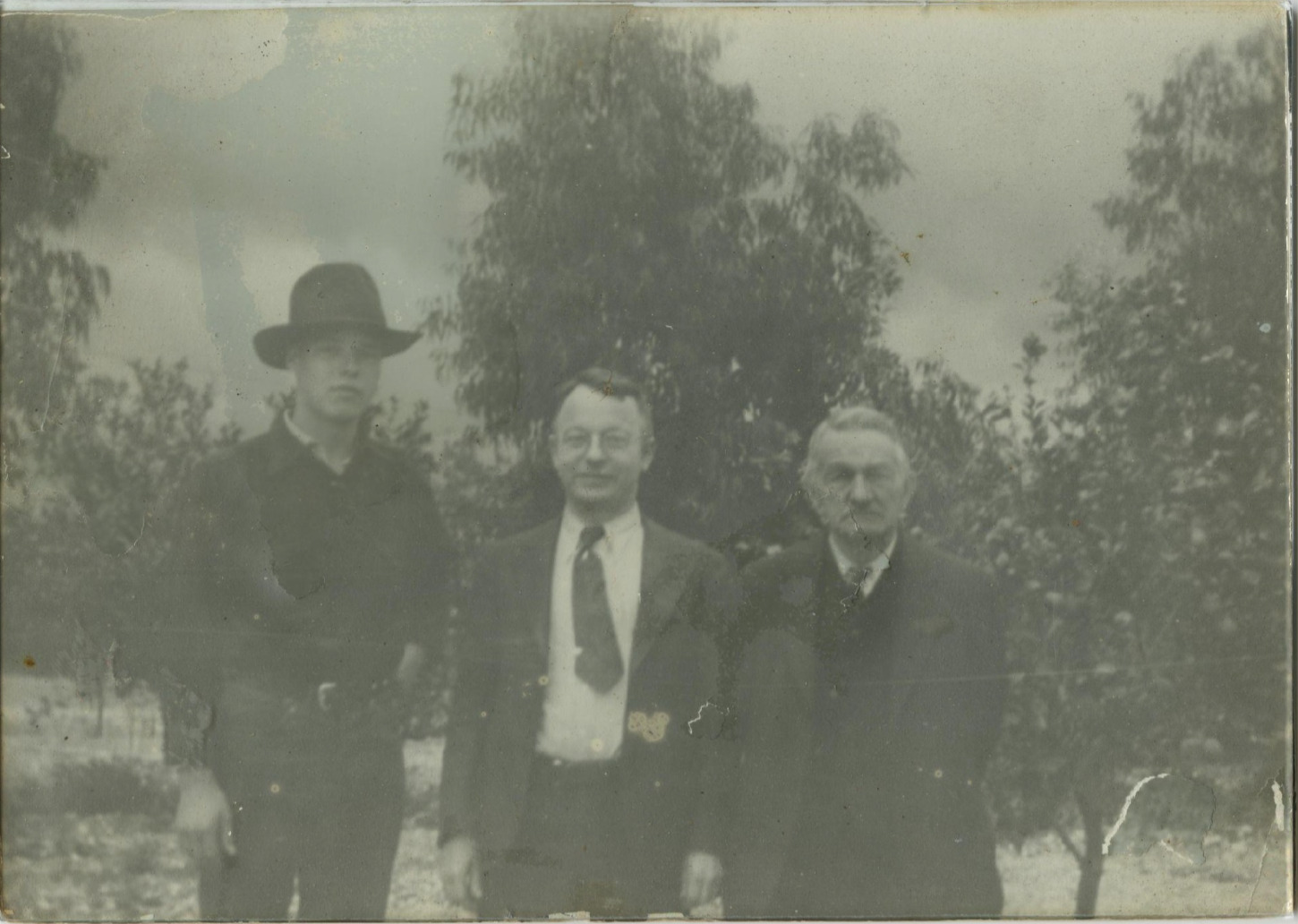
    <title type="html"><![CDATA[Everett Ruess at Veit Springs near Flagstaff, Arizona]]></title>
    <summary type="html"><![CDATA[<p><strong><em>Serving as a homestead and a later rest stop for Everett Ruess' introduction to the Intermountain West as a solo traveler, Veit Springs rests on the side of Arizona's highest mountain, the San Francisco Peaks.</em></strong></p><img src="https://www.intermountainhistories.org/files/fullsize/010f42c0309f906e6329d5c5d348784e.jpg" alt="Everett Ruess with his father and grandfather" /><br/><p>Just north of Flagstaff, Arizona sits in the San Francisco Peaks, or "Dook'o'oosłííd," <em>The Summit that Never Melts</em>, to the Navajo Nationa. In the year 1891, German immigrant Ludwig Veit received a patent for a 160-acre homestead where he and his family constructed a cabin and other structures at what came to be called Veit Springs. Randolph (Pat) Jenks, a student at the Evans Ranch School, a boys preparatory school in Mesa, Arizona, purchased the property from Veit’s relatives in 1930. Jenks, and his classmate Tad Nichols, enjoyed their summers in Flagstaff when the school summered up North. In 1931 the two boys encountered Everett Ruess on his journey through northern Arizona, inviting him to join them back on the homestead. </p><p>Everett Ruess was seventeen when he was picked up near Cameron, Arizona, by Jenks and Nichols. Everett was in bad shape, suffering from his history of anemia and other physical degradation from the desert environment. Tad Nichols, famous photographer of the Colorado Plateau, snapped a photo of Everett and Pat loading his gear, his dog Curly, and Burro Pegasus, into Jenks’ truck before they all set on their way to Jenks’ Deerwater Ranch on the San Francisco Peaks. While Everett was at Veit Springs, he bonded with Jenks over his love for ornithology, the study of birds, and their mutual love for art and the Southwest. Everett created a block print painting and described Jenks’ fascination with his art in a letter home. In fact, Jenks was intrigued enough to purchase one of Everett’s block prints of some native Cliff Dwellings. He enjoyed his new friends and wrote a letter about his “idyllic days” at Deerwater Ranch. Here, Everett escaped the traditional aridness of the Intermountain West and described the environment of the ranch as “cool and bracing” in a letter to his family on June 8th, 1931. Among Everett’s belongings in Davis Gulch was an unsent letter that expressed his “true spirit of delight, exaltation, [and] sense of being more than a man” that he experienced at Veit Springs. </p><p>Everett later traversed the Grand Canyon and resided throughout northeast Arizona, returning home later that year. He set off again to the region in 1932, one of the only years his journey was successfully documented. </p><p>In the 1970s, The United States Forest Service aimed to demolish the cabin Veit hand-built, but the Flagstaff community successfully advocated for its relocation just west of the city's downtown. The Veit Cabin relocation by the Arizona National Guard moved the cabin to its current position within Thorpe Park in Flagstaff, Arizona, just South of Francis Short Pond. Since 1988, the new cabin location has facilitated educational events regarding natural and cultural studies of the landscape. Meanwhile, the cabin’s former site at Veit Springs remains a beautiful spot among the tall aspens on the Veit Springs Hiking Trail where tourists can experience the bracing environment that Everett described, as well as Indigenous petroglyphs and abandoned pumphouses from its early days in history.</p><p><em><strong><a href="https://www.intermountainhistories.org/items/show/829">For more (including 5 images) view the original article</a></strong></em></p>]]></summary>
    <published>2024-05-24T22:33:19+00:00</published>
    <updated>2026-04-17T19:32:18+00:00</updated>
    <link rel="alternate" type="text/html" href="https://www.intermountainhistories.org/items/show/829"/>
    <id>https://www.intermountainhistories.org/items/show/829</id>
    <author>
      <name>Matthew T. Lankton, Northern Arizona University</name>
    </author>
  </entry>
  <entry>
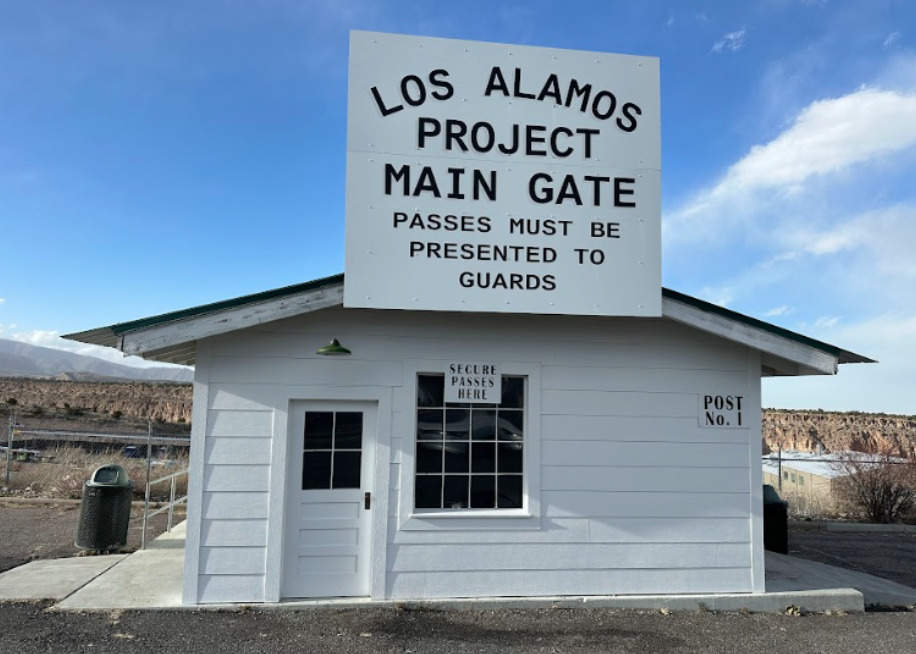
    <title type="html"><![CDATA[Dorothy McKibbins: The Gatekeeper of Los Alamos ]]></title>
    <summary type="html"><![CDATA[<p><strong><em>The Manhattan Project would not have been possible without the efforts of Dorothy McKibbin, the Gatekeeper of Los Alamos. From attaining marriage licenses to transferring phone calls, Dorothy McKibbin was an integral and diversely skilled cog in the large machine of building the first nuclear weapons. </p></strong></p><img src="https://www.intermountainhistories.org/files/fullsize/5c401996b7cfdc416ba17d96a788fbec.jpg" alt="Los Alamos Project Main Gate Replica" /><br/><p><span style="font-weight:400;">Once General Leslie Groves and Dr. J. Robert Oppenheimer chose Los Alamos, New Mexico as the place to build the atomic bomb; hundreds of bewildered employees streamed into the nearby town of Santa Fe. Due to the confidentiality of the Manhattan Project, recruitment was difficult and details provided to the new hires were vague because of the classified nature of their work. They were told that their work would helpe war effort and be located in the scenic mesas of New Mexico, but little else. After a long train ride to the nearby town of Lamy, scientists and their families hauled their luggage through the winding streets of Santa Fe, looking for 109 East Palace Avenue—the only address they had been given. There, they were met by a simple red and blue sign reading “United States Engineer Office No. 3” and the welcoming presence of Dorothy McKibbin. </p>
<span style="font-weight:400;">In 1932, recently-widowed Dorothy McKibbin moved to Santa Fe from Kansas with her son, hoping for a new life. When she met Dr. J. Robert Oppenheimer in 1943, she found one. Oppenheimer recognized her comforting, calming, and competent presence and asked her to be a War Department secretary with unspecified duties. Like the other personnel, she only knew that her job concerned an essential war project. As she discovered after accepting the position, duties encompassed everything from disciplining Nobel laureates, receiving classified mail, enforcing security, helping lost families find the way to their new homes, and more. She was there for some of the most important moments of the project, even observing the Trinity Test from a car parked near Albuquerque. To Dorothy McKibbin, “Working at 109 was more than just a job. It was an exciting experience. Our office served as the entrance to one of the most significant undertakings of the war or, indeed, of the twentieth century.” </p>
<span style="font-weight:400;">For the entirety of the Manhattan Project she was the point of contact between the secret city and the rest of the world, earning herself the nickname of  the “Gatekeeper of Los Alamos.” After the Manhattan Project concluded, the site was renamed the Los Alamos National Laboratory, and McKibbin continued to work there until her retirement in 1963. She spent her retirement organizing community programs in Los Alamos and Santa Fe until her death in 1985. Today, a room in the Los Alamos History Museum is named in her honor, and although her office at 109 East Palace currently houses a gift shop, its original iron gate which once welcomed thousands to the secret city is on display at the Los Alamos History Museum. </span>
</p><p><em><strong><a href="https://www.intermountainhistories.org/items/show/752">For more (including 4 images) view the original article</a></strong></em></p>]]></summary>
    <published>2023-09-08T01:24:19+00:00</published>
    <updated>2026-04-17T19:32:16+00:00</updated>
    <link rel="alternate" type="text/html" href="https://www.intermountainhistories.org/items/show/752"/>
    <id>https://www.intermountainhistories.org/items/show/752</id>
    <author>
      <name>Abigail Beus, Brigham Young University</name>
    </author>
  </entry>
  <entry>
    <title type="html"><![CDATA[Anti-Chinese Riot in Tonopah, Nevada]]></title>
    <summary type="html"><![CDATA[<p><strong><em>Because of anti-Chinese attitudes in central Nevada, a mob of white union workers attacked Tonopah’s Chinatown in September of 1903. One Chinese man was killed and several others were injured, and Chinatown was destroyed. </em></strong></p><img src="https://www.intermountainhistories.org/files/fullsize/5db119f1bcc036387ec509da0fea5311.jpg" alt="Laundromat in Tonopah " /><br/><p><span style="font-weight:400;">Tonopah, Nevada is a small town in central Nevada that popped up in 1900 when silver was discovered in the area. Within a few years, the mining town was booming, and many Chinese immigrants, mainly men, moved to Tonopah seeking opportunity. The Chinese, however, were not actually allowed to mine in this part of Nevada, so they took up jobs as laundrymen and cooks. Although their labor was needed, white miners were still apprehensive about Chinese immigrants in town, and national anti-Chinese laws and broad anti-Chinese sentiment in the Western United States fomented resistance to their presence. Whereas many other outbursts of anti-Chinese violence in the west began when Chinese miners were hired to undercut unionized white miners, the Chinese population targeted in Tonopah were not hired to undercut potential strikes.</span>
<span style="font-weight:400;">On September 15, 1903, a group of about 30-50 white labor union members marched into Tonopah’s Chinatown and demanded the Chinese immigrants living there to leave in the next 24 hours. Later that day, a second, larger group of men came to Chinatown and began destroying the homes and businesses of the Chinese people. The mob burned down over 100 Chinese establishments and was responsible for the death of 66-year-old Chong Bing Long, who owned a laundromat in town and had lived in the United States for over 30 years. Long was not fast enough to escape the men in the mob, who robbed and beat him. They then drove him outside of town to the desert, where they beat him again and left him to die. Though this was the only death, several Chinese people received serious injuries from being beaten, with little being done by local police to protect them. </span>
<span style="font-weight:400;">In the aftermath, the Chinese returned to town to assess the damage. Fifteen white men were initially arrested for their involvement in the riot, but nine were immediately released and the other six were acquitted of all charges. The Chinese pulled all of their resources together to pay to convict members in the mob, but eventually ran out of money and had to stop pursuing the case.  The Chinese embassy tried to help, but was largely powerless. Many of the Chinese chose to stay in Tonopah, and several white locals told the Chinese they would, “work out a plan to provide protection” for them. Others left for nearby cities like Reno, and resentment for the Chinese gradually died down in Nevada over the next few years.</span></p><p><em><strong><a href="https://www.intermountainhistories.org/items/show/730">For more (including 6 images) view the original article</a></strong></em></p>]]></summary>
    <published>2023-03-06T22:40:44+00:00</published>
    <updated>2026-04-17T19:32:16+00:00</updated>
    <link rel="alternate" type="text/html" href="https://www.intermountainhistories.org/items/show/730"/>
    <id>https://www.intermountainhistories.org/items/show/730</id>
    <author>
      <name>Sydney Wilson, Brigham Young University</name>
    </author>
  </entry>
  <entry>
    <title type="html"><![CDATA[Anti-Chinese Riot near Virginia City, Nevada]]></title>
    <summary type="html"><![CDATA[<p><strong><em>In 1869, with anti-Chinese sentiment growing in the west, a mob in Virginia City, Nevada attempted to expel the Chinese immigrants from town. They raided the railroad where the Chinese were laying tracks, demanded their departure, and destroyed all of their property. </em></strong></p><img src="https://www.intermountainhistories.org/files/fullsize/b8f3b7605935f2ffe65447f76de43fe6.jpg" alt="Three Chinese Women and a Chinese Boy in Virginia City" /><br/><p><span style="font-weight:400;">In the latter half of the nineteenth century, thousands of people, including many immigrants, flocked to the Intermountain West region in search of economic opportunity. Virginia City, Nevada was a popular destination for these laborers due to its booming silver mining industry. The city sprung up in the late 1850s, and by the late 1860s, it was the largest mining town in Nevada. Most who migrated to Virginia City were of European descent, but the town also attracted many Chinese laborers. As was common in other parts of the country, the Chinese in Virginia City were willing to work for lower wages than other ethnic groups. This increased the competitiveness of the labor market in Virginia City and turned other groups against the Chinese community. </span>
<span style="font-weight:400;">In 1869, anti-Chinese sentiment was running high in Virginia City, and the unionized miners in the city decided to act against the Chinese laborers working on grading the Virginia and Truckee Railroad. On September 29th, a mob of nearly 400 men marched on the Chinese. Sensing trouble, Sheriff W. J. Cummings followed the mob and tried to stop them, but he was powerless against the mass of angered miners. When the mob arrived at the tracks, they demanded that the Chinese depart within thirty minutes and began destroying their property and makeshift residences. Luckily, no Chinese people were injured by the mob, but the property destruction was extensive. </span>
<span style="font-weight:400;">A week later, William Sharon, a railroad official, met with the leaders of the mob and came to an agreement with two provisions: first, the railroad would stop employing Chinese workers; and second, the mob would stop harassing the Chinese. Sharon was reluctant to enter into this agreement because he could employ Chinese laborers at a better rate than white laborers, but the mob could not be reasoned with. They simply wanted the Chinese gone. </span>
<span style="font-weight:400;">Local newspapers condemned the actions of the mob and called for those involved to be arrested; however, they knew it would be extremely difficult to find a jury who would convict the mob members. Indeed, no action was taken against any of the mob participants. By October 21st, the railroad only employed workers of European descent. Many of the Chinese people did leave town, but others found various forms of employment in the city. Chinese people faced continual discrimination in Virginia City, but they continued to find work and ways to send money back to their families in China and make a life in the country.</span></p><p><em><strong><a href="https://www.intermountainhistories.org/items/show/729">For more (including 6 images) view the original article</a></strong></em></p>]]></summary>
    <published>2023-03-06T22:17:52+00:00</published>
    <updated>2026-04-17T19:32:16+00:00</updated>
    <link rel="alternate" type="text/html" href="https://www.intermountainhistories.org/items/show/729"/>
    <id>https://www.intermountainhistories.org/items/show/729</id>
    <author>
      <name>Sydney Wilson, Brigham Young University</name>
    </author>
  </entry>
  <entry>
    <title type="html"><![CDATA[Denver Race Riot of 1880]]></title>
    <summary type="html"><![CDATA[<p><strong><em>General anti-Chinese sentiment in the nineteenth century was rapidly growing. This was particularly true in western cities like Denver. A saloon fight between several Chinese and white men led to the destruction of Denver’s Chinatown and to one of Colorado’s worst race riots in its history.</em></strong></p><img src="https://www.intermountainhistories.org/files/fullsize/6869a1e762d9d490541313b1f3600ab6.jpg" alt="Riot in Denver" /><br/><p><span style="font-weight:400;">Chinese immigration was a heavily discussed issue during the 1880 election cycle, especially in western states and territories where Chinese labor and communities were prevalent. Although Democrats and Republicans took an anti-Chinese labor stance in the election, many Democrats accused Republican presidential candidate, James A. Garfield, of favoring cheap Chinese labor over American or European immigrant labor. Denver, Colorado, which hosted a large Chinese population, provides a striking example of how these national anti-Chinese politics inflamed local tensions to the point of violence in the west. On October 30, 1880, a crowd of three thousand attended a Democratic Party anti-Chinese demonstration. As demonstrators held anti-Chinese signs, prominent Denver Democrats gave speeches outlining the supposed danger of continual Chinese immigration to the United States. </span>
<span style="font-weight:400;">Conflict broke out the following day. Two Chinese men were playing pool in a local saloon when a group of white men entered and started harassing them. John Asmussen, the saloon’s owner, advised the Chinese men to leave through the back door to avoid a fight, and the men complied. The white men, however, followed them out, and one of them struck one of the Chinese men with a board. A crowd gathered and soon the white men began attacking the Chinese people working in the laundromat next door. More and more people joined the growing white mob, and by the day’s end, three to five thousand people had stormed Chinatown. The mayor, Richard Sopris, and the fire department attempted to disperse the mob with a firehose, but this and the eight policemen on duty were largely powerless. The mob engaged in arson, robbery, destruction of property, rape, and violence. At some point, the mob forced a Chinese man named Look Young from his house, dragged through the town by a rope wrapped around his neck, beat him, and finally lynched him.</span>
<span style="font-weight:400;">It is likely the mob would have killed more, but citizens sympathetic to the Chinese plight prevented more deaths. A group of prostitutes from a nearby brothel protected about 30 Chinese people, while others opened their homes and businesses to the fleeing Chinese. The mayor helped establish safehouses in hotels, saloons, residences, and the jail. The riot died down by the next morning. That day, the Republican party held a rally condemning the actions of the mob. Due to the sheer size of the mob and chaos of the scene, few rioters were convicted of any crimes. The Chinese residents of Denver were not paid any sort of reparations. Around 100 Chinese residents chose to leave for other cities within the U.S. or return to China. The remaining Chinese residents chose to stay in Denver and rebuild Chinatown.</span></p><p><em><strong><a href="https://www.intermountainhistories.org/items/show/728">For more (including 4 images) view the original article</a></strong></em></p>]]></summary>
    <published>2023-03-06T22:02:22+00:00</published>
    <updated>2026-04-17T19:32:16+00:00</updated>
    <link rel="alternate" type="text/html" href="https://www.intermountainhistories.org/items/show/728"/>
    <id>https://www.intermountainhistories.org/items/show/728</id>
    <author>
      <name>Sydney Wilson, Brigham Young University </name>
    </author>
  </entry>
  <entry>
    <title type="html"><![CDATA[Fish Creek Massacre]]></title>
    <summary type="html"><![CDATA[<p><strong><em>In the summer of 1869, Italian immigrants in Eureka, Nevada decided to go on strike to protest low wages. Local tensions escalated the situation to the point of violence, and, on August 18, 1879, five protesting Italian immigrants were killed. </p></strong></p><img src="https://www.intermountainhistories.org/files/fullsize/ecef27111ebdf406b0daf3a633e5fe8b.jpg" alt="Ore Shutes in Eureka" /><br/><p><span style="font-weight:400;">In the 1870s, Eureka was the second largest mining town in Nevada. Eureka produced primarily charcoal, and many flocked there as new smelters increased labor demands. As was the case in many other booming western mining towns, immigrants made up a large portion of the population. Italians were by far the largest immigrant group in Eureka. Racial and cultural prejudice against Italians that was prevalent throughout the United States was mirrored in Eureka and other western mining towns. As a result, they were paid less than half of what the average miner made. On July 6, 1879, a large group of mainly Italian coal burners gathered at a local saloon to unionize. They formed the Eureka Charcoal Burners Protective Association with the goal of increasing wages. Since Italians made up the majority of Eureka’s cheap labor force, the group's resulting labor strike halted charcoal production. </span>
<span style="font-weight:400;">With a dwindling charcoal supply, tensions in town grew. Eventually, Sheriff Matthew Kyle began arresting some of the strike’s ringleaders. Further, because he did not want to involve state militia, he created a “fighting posse” to go to the charcoal camps and arrest the strike leaders.  They did so over the next month, but on August 18, 1879, the posse turned violent.</span>
<span style="font-weight:400;">The posse of about 20 men set out for Fish Creek, where a large group of strikers was rumored to be camped.  Despite being extremely outnumbered by the striking laborers, deputies attempted to arrest the strike leader. When strikers resisted and the posse was unable to make their arrest, tempers flared. Marshall Rich, one of the head deputies, started insulting the Italian leader, who pulled out his gun and fired at Rich. The posse then opened fire on the mostly unarmed coal burners. Five Italians were killed in the massacre, six were seriously injured, and fourteen were sent to prison. Those who died were all Italian and included: Giovanni Pedroni, Marcellus Locatelli, Todoro Zesta, Pompeo Pattini, and Anotonio Canonica.  </span>
<span style="font-weight:400;">Other accounts of the massacre vary, with some placing all of the blame on the posse and others claiming that the Italians were seeking violence. Regardless, the posse ceased making arrests after this and no one in the posse was charged. The strike eventually ended, and tensions between the Italians and other groups lessened in the following years. </span></p><p><em><strong><a href="https://www.intermountainhistories.org/items/show/727">For more (including 6 images) view the original article</a></strong></em></p>]]></summary>
    <published>2023-03-06T21:27:00+00:00</published>
    <updated>2026-04-17T19:32:16+00:00</updated>
    <link rel="alternate" type="text/html" href="https://www.intermountainhistories.org/items/show/727"/>
    <id>https://www.intermountainhistories.org/items/show/727</id>
    <author>
      <name>Sydney Wilson, Brigham Young University </name>
    </author>
  </entry>
  <entry>
    <title type="html"><![CDATA[The Shooting of Mexican Immigrants in Rifle, Colorado]]></title>
    <summary type="html"><![CDATA[<p><strong><em>In 2001, a man named William Stagner shot and killed four Mexicans in Rifle, Colorado. This incident demonstrates how violence is still inflicted on immigrant groups in the twenty-first century in the American west. </em></strong></p><img src="https://www.intermountainhistories.org/files/fullsize/20df5428537459fc2ada78aa26e086a8.jpg" alt="Rifle, Colorado" /><br/><p><span style="font-weight:400;">Rifle, Colorado is a small town nestled on the western slope of the Rocky Mountains. Since the end of the 19</span><span style="font-weight:400;">th</span><span style="font-weight:400;"> century, the town’s population has steadily increased due to its successful cattle ranching industry. By the late-20th century, the surrounding ski and tourism industries had attracted a sizable Latino immigrant labor population to Rifle as well.</span>
<span style="font-weight:400;">On July 3, 2001, at around 11:45 p.m, a white man named Steven Michael Stagner went to the City Market grocery store in Rifle and opened fire at those he suspected to be immigrants. He first shot Juan Hernandez-Carillo, a botanist who was speaking on a pay phone outside of the store. From there, he crossed the parking lot and shot 19-year-old Anjelica Toscono, who had entered the United States only 22 days earlier while she was  speaking on a payphone with her mother in Mexico. He then headed to the nearby RV park, where many Latinos lived, to continue his rampage. Two brothers, Fernando and Carlos Medrano, were sitting outside their trailer under a tree drinking beer when Stagner approached and shot them both. He shot three more Mexican men before he was apprehended by law enforcement. In the end, Hernandez-Carillo, Toscono, and the Medrano brothers were all killed.</span>
<span style="font-weight:400;">In the aftermath, the local 4</span><span style="font-weight:400;">th</span><span style="font-weight:400;"> of July celebration was canceled, and many people attended memorials in honor of the four victims and public demonstrations protesting Stagner’s actions. Stagner was charged with first-degree murder; however, he was found not guilty by reason of insanity. Stagner was sent to the Colorado Mental Health Institute for an undetermined amount of time. This outraged many in the community, especially those in the immigrant community. They tried to challenge the court’s decision on the grounds that Stagner’s known hatred for immigrants proved that the shootings were not random, but rather race-based, but were unsuccessful. The community continues to grieve these deaths, and Stagner has remained in a mental hospital. </span></p><p><em><strong><a href="https://www.intermountainhistories.org/items/show/726">For more (including 5 images) view the original article</a></strong></em></p>]]></summary>
    <published>2023-03-06T21:05:59+00:00</published>
    <updated>2026-04-17T19:32:16+00:00</updated>
    <link rel="alternate" type="text/html" href="https://www.intermountainhistories.org/items/show/726"/>
    <id>https://www.intermountainhistories.org/items/show/726</id>
    <author>
      <name>Sydney Wilson, Brigham Young University</name>
    </author>
  </entry>
  <entry>
    <title type="html"><![CDATA[The Chinese-Italian &quot;War&quot;]]></title>
    <summary type="html"><![CDATA[<p><strong><em>Mounting tensions between competing Italian and Chinese mining groups in Como, Colorado climaxed on November 9, 1879 when Italian miners forced the Chinese out of their mining shaft and demanded their departure from Como. </em></strong></p><img src="https://www.intermountainhistories.org/files/fullsize/9d1cf2145afd4c047c062d1977e73ab1.jpg" alt="Today in Como" /><br/><p><span style="font-weight:400;">As immigrants flocked to the Mountain West for job opportunities throughout the latter half of the nineteenth century, they often faced multifold economic difficulties—low wages, lack of job availability, and the boom-and-bust nature of western industries, like mining. These conditions made for fierce competition between immigrants, who usually stuck to and watched out for their own ethnic groups. The mining town Como, Colorado provides a stark example of these dynamics. Como was founded in 1859 by mining prospectors, and became an important stop along the Denver, South Park, and Pacific Railroad in 1879 with the construction of a depot. That same year, the South Park Mining Company set up a mine in Como, and many flocked to the area. Italian immigrants were some of the first miners to move to Como, soon followed by Chinese immigrants.  While many Americans and Coloradoans viewed both Italians and Chinese as racially inferior, treatment of Chinese immigrants was usually worse. The Chinese were also willing to work for less money, so other Como miners viewed them as a threat to their jobs. </span>
<span style="font-weight:400;">Hoping to minimize conflict between the Chinese and Italian miners, the South Park Coal Company divided them into two different mining shafts.  However, as the number of Chinese miners began to eclipse the Italians, Italian workers began to panic that they might be altogether replaced.  Italians felt these fears were substantiated on November 9, 1879, when the company fired two Italian workers and hired two Chinese workers in their stead. Later that day, a group of around 30 Italians entered the Chinese mining shaft and demanded their departure. The Chinese persuaded the Italians to wait and talk with the mine manager, Edward Thayer, before doing anything drastic. When Thayer refused to fire the Chinese, the Italians beat him nearly to death, disarmed all the Chinese workers, and marched them out of the mine and into town, where they instructed them to leave Como. </span>
<span style="font-weight:400;">The South Park Coal Company reacted by firing all of the Italians involved. In the following weeks, Sheriff D. J. Cook was sent to protect the Chinese while they worked, which largely ended any physical threat. However, the violence had scared away many freight trains needed by the local businesses. Businessmen in the area were angered by the Italian’s action. Newspapers like the Rocky Mountain News leveraged this and other events to continually fan the flames of anti-Chinese sentiments in Colorado. These forms of anti-Chinese rhetoric added to the violent atmosphere that later culminated in the Denver Race Riot of 1880 and national anti-Chinese legislation.</span></p><p><em><strong><a href="https://www.intermountainhistories.org/items/show/725">For more (including 5 images) view the original article</a></strong></em></p>]]></summary>
    <published>2023-03-06T19:18:45+00:00</published>
    <updated>2026-04-17T19:32:16+00:00</updated>
    <link rel="alternate" type="text/html" href="https://www.intermountainhistories.org/items/show/725"/>
    <id>https://www.intermountainhistories.org/items/show/725</id>
    <author>
      <name>Sydney Wilson, Brigham Young University </name>
    </author>
  </entry>
  <entry>
    <title type="html"><![CDATA[The Pierce City Massacre: Violence Against Immigration Laborers]]></title>
    <summary type="html"><![CDATA[<p><strong><em>In 1885, one of Pierce, Idaho’s most popular residents was brutally murdered, and five Chinese men were charged with the crime. Furious about the murder, a group of vigilantes took custody of the Chinese men and lynched them a few miles outside of town.</em></strong></p><img src="https://www.intermountainhistories.org/files/fullsize/ef6d8ea863046d1bc8793f88bf3fb5bb.jpg" alt="Pierce, Idaho" /><br/><p><span style="font-weight:400;"> Pierce was a mining town located in northern Idaho that came to be dominated by a large Chinese population in 1885. Though the Chinese were legally banned from mining in Idaho when Pierce was settled, they were eventually given the right to mine if they paid a $4 monthly tax to the county government. With this adjustment, many Chinese migrated to the area. However, like in other western cities, Chinese presence was not particularly welcome, as others worried that their jobs would be taken by Chinese laborers who were willing to work for less money. They also saw the Chinese as dirty and incapable of assimilation. </span>
<span style="font-weight:400;">In 1885, an American merchant named D.M. Fraser was murdered, supposedly by a competing Chinese merchant, Lee Kee Nam. Fraser was a prominent man in the community, and the town was horrified and outraged when they found his body, which had been cut into pieces, in his own store. A group of vengeful vigilantes assembled, and they captured Lee Kee Nam and his business partner. The vigilantes threatened to hang the two men which led Lee Kee Nam and his partner to incriminate one another. After this, they rounded up three more Chinese men, who the mob claimed had actually committed the crime, and turned all five men over to the sheriff. The group was charged for Fraser’s murder and sent to trial. </span>
<span style="font-weight:400;">However, the five men were not given the chance to appear in court. While the sheriff and some of his men were transporting Lee Kee Nam and the other men to the court in the nearby town of Murray on September 18, 1885, they were confronted by a large group of armed men just a few miles outside of Pierce. The men overtook the sheriff’s posse, took the five Chinese men into custody, and lynched them. According to a newspaper report from the next day, a reporter “found the five Chinamen hanging by the necks on a pole lashed to two pine trees.” </span>
<span style="font-weight:400;">The Chinese government found the lynchings extremely upsetting and demanded reparations. The new territorial governor, Edward A. Stevenson, went to investigate the events, and it was found that Lee Kee Nam and his associate really had committed the crime. He used this as an excuse for the vigilantes’ behavior, and no one involved in the mob was ever prosecuted for their involvement. Stevenson did, however, urge Idahoans to stop harassing the Chinese, and there were few anti-Chinese incidents in Idaho following this lynching. </span></p><p><em><strong><a href="https://www.intermountainhistories.org/items/show/724">For more (including 6 images) view the original article</a></strong></em></p>]]></summary>
    <published>2023-03-06T18:24:51+00:00</published>
    <updated>2026-04-17T19:32:16+00:00</updated>
    <link rel="alternate" type="text/html" href="https://www.intermountainhistories.org/items/show/724"/>
    <id>https://www.intermountainhistories.org/items/show/724</id>
    <author>
      <name>Sydney Wilson, Brigham Young University</name>
    </author>
  </entry>
  <entry>
    <title type="html"><![CDATA[The Walsenburg Massacre: Violence Against Immigrant Laborers]]></title>
    <summary type="html"><![CDATA[<p><strong><em>When five Italian men were convicted of the murder of a saloonkeeper in Walsenburg, Colorado, a quest for revenge led to the murder of six men. </p></strong></p><img src="https://www.intermountainhistories.org/files/fullsize/93299e48c331ffc454b6bed58b662ab5.jpg" alt="Walsenburg, Colorado" /><br/><p><span style="font-weight:400;">In 1895, a saloonkeeper named Abner Hixon was murdered in Walsenburg, Colorado. Five Italian miners were convicted in the case. 24-year-old Antonio Lorenzo was identified by the coroner's jury as the murderer, and Stanislaso Vittani, Francisco Ronchetto, Pietro Giacabino, and Antonio Zapetto were charged as accessories to murder. Community anger towards Lorenzo and his accomplices quickly built.</span>
<span style="font-weight:400;">On March 12, 1895, Vittani, Ronchetto, Giacabino, and Zapetto appeared in court in the nearby town of Rouse. That evening, they began their return to the jail in Walsenburg accompanied by Sheriff Earl Danford and Marshal Charles Harriman in a wagon driven by Joseph Welsby. Six to eight masked men intercepted them en route. The vigilantes told Welsby to stop the wagon and demanded that Harriman get off of his horse. As Harriman attempted to flee, the men opened fire on the group. First, they hit and killed the wagon driver Joseph Welsby. A bullet grazed Ronchetto. The others escaped and Sheriff Danford was left with the injured Ronchetto, who he returned to the jail in Walsenburg. </span>
<span style="font-weight:400;">The vigilantes eventually followed, intent to finish their act of revenge. When the two guards heard a rap at the prison door, followed by a voice stating that it was the sheriff, they promptly opened the door, only to find masked men with guns drawn. While two of the men watched the guards, two others made their way towards the back of the building where the already-injured Ronchetto had been returned by Sheriff Danford and where Lorenzo had been imprisoned throughout the night. They opened fire on the prisoners, killing Lorenzo first with a shot to the head. Ronchetto was shot multiple times and died twenty minutes later. The bodies of the escaped Vittani, Giacabino, and Zapetto were found in the following days filled with bullets. It is unclear whether the vigilantes had tracked and killed them before or after the shootings at the Walsenburg jail, but the result was the same. All five of the Italian immigrant miners were dead.</span>
<span style="font-weight:400;">Many in the town believed that the masked vigilantes were, in fact, a known group of the murdered saloonkeeper Abner Hixon’s close friends. Nevertheless, a convened grand jury failed to indict anyone for the vigilante killings. The Italian ambassador to the United States, Marquis Imperiali, was furious about the incident. He demanded reparations for the dependent families of the Italians, as both Vittani and Zapetto had wives and children who still lived in Italy. The massacre received national attention, and President Grover Cleveland addressed the issue in 1896, urging Congress to grant these reparations, which they eventually did.</span></p><p><em><strong><a href="https://www.intermountainhistories.org/items/show/723">For more (including 5 images) view the original article</a></strong></em></p>]]></summary>
    <published>2023-03-06T17:56:53+00:00</published>
    <updated>2026-04-17T19:32:15+00:00</updated>
    <link rel="alternate" type="text/html" href="https://www.intermountainhistories.org/items/show/723"/>
    <id>https://www.intermountainhistories.org/items/show/723</id>
    <author>
      <name>Sydney Wilson, Brigham Young University </name>
    </author>
  </entry>
  <entry>
    <title type="html"><![CDATA[Spanish Speaking Saints and La Rama Mexicana]]></title>
    <summary type="html"><![CDATA[<p><strong><em>When immigrants from Mexico and other Latin American countries began settling in Utah in the early 20th century, many of them converted to the Church of Jesus Christ of Latter-Day Saints. Eventually, La Rama Mexicana—The Mexican Branch—was formed in the early 1920’s.</em></strong></p><img src="https://www.intermountainhistories.org/files/fullsize/931d18be56d3a7b42375f62d3021becb.jpg" alt="&quot;Mexicans Await New Church&quot;" /><br/><p><span style="font-weight:400;">At the end of the 19</span><span style="font-weight:400;">th</span><span style="font-weight:400;"> century, Utah was in an economic boom that would change the course of its history. With the completion of the transcontinental railroad in 1869, thousands of immigrants flooded the state to work in mines that sprung up across Utah. Although initially very few of these immigrants were from Mexico, the start of the Mexican Revolution in 1910 resulted in Mexicans fleeing north to escape conflict. Although the Immigration Acts of 1917 and 1924 had placed quotas on the number of people that could immigrate from each country, the need for laborers allowed a large number of Mexicans to obtain a permit to temporarily enter the country. The number of Spanish-speaking immigrants in Utah continued to grow throughout the following decades as they sought work on railroads, on farms, and in mines. While the 1890 census only recorded 19</span> <span style="font-weight:400;">Mexican people living in Utah, by 1920 there were 1,083. These immigrants created a thriving hub of Hispanic culture in Salt Lake City’s west side. </span>
<span style="font-weight:400;">After their arrival in Salt Lake City, many of these immigrants were converted and baptized as members of The Church of Jesus Christ of Latter-Day Saints. However, very few of them spoke English, the predominant language of the Church in Utah. Noticing a problem, Juan Ramon Martinez, Margarito Buatista, and Francisco Solano sought permission from church leadership to hold meetings in Spanish. In April of 1921, the first Spanish meeting was held in a rented restaurant. The meeting was attended by 19 Latter-Day Saints and 33 non-members being taught by missionaries. On May 15, 1923, the members of this congregation were made into an official branch called La Rama Mexicana. </span>
<span style="font-weight:400;">Two years later the branch began meeting in available rooms in the 6th Stake meetinghouse. In 1950, La Rama Mexicana received their own meetinghouse after three years of construction. Just a decade later, the brach became the Lucero Ward. The population of Spanish-speakers continued to grow and, as of 2019, there were 58 Spanish-speaking wards and branches in Utah.</span></p><p><em><strong><a href="https://www.intermountainhistories.org/items/show/643">For more (including 3 images) view the original article</a></strong></em></p>]]></summary>
    <published>2022-09-09T18:27:12+00:00</published>
    <updated>2026-04-17T19:32:14+00:00</updated>
    <link rel="alternate" type="text/html" href="https://www.intermountainhistories.org/items/show/643"/>
    <id>https://www.intermountainhistories.org/items/show/643</id>
    <author>
      <name>Maggie Allen, Brigham Young University</name>
    </author>
  </entry>
  <entry>
    <title type="html"><![CDATA[The Guadalupe Center: A Haven for Hispanics]]></title>
    <summary type="html"><![CDATA[<p><strong><em>In 1966, on 346 West 100 South in Salt Lake City, UT, the Guadalupe Center opened its doors to the public. Started by Father Jerald H. Merrill, this center was a haven for the Hispanic population of Salt Lake.</em></strong></p><img src="https://www.intermountainhistories.org/files/fullsize/2c2175e6d7758e3defd53960ca070a96.jpg" alt="The Guadalupe Center" /><br/><p><span style="font-weight:400;">In 1961, Father Jerald Merrill, a Catholic priest, was assigned to the “Our Lady of Guadalupe” Mission on the West side of Salt Lake City, Utah. With the mission having recently received a new building, all adults of the parish were invited to monthly meetings of the Guadalupana Society—a group which met to discuss problems pertaining to their mission. A few months after his arrival, Father Merrill created a branch of the Guadalupana Society that focused on social programs meant to solve the Hispanic community’s problems. In a rented room underneath the Rio Grande Hotel, Merrill and other members founded the precursor to the Guadalupe Center. Later, in 1966 and under the direction of Manuel G. Martinez and Oliver Ulibarri, volunteers helped to open a larger version of the center on 346 West 100 South with faith that the center would become a focal point for local Hispanics. </span>
<span style="font-weight:400;">After its opening, the center focused on projects for the economic and professional development and well-being of the Hispanic community. The Westside Catholic Credit Union focused on helping local members of the community to build capital. The Voluntary Improvement Program taught English and other valuable skills. A cooperative store was opened to serve poorer families in the area. Additionally, the Utah Nonprofit Housing Corporation collaborated with multiple churches and cooperative associations in the area to rehabilitate houses in the inner city region. The Guadalupe Center served as a clearinghouse for information on these and other services and coordinated support for the city’s Hispanic population. The center was also the birthplace for Hispanic activist group SOCIO, which helped pave the way for Latino civil rights throughout Utah. </span>
<span style="font-weight:400;">To create capital that could be reinvested into these programs, leaders decided to open La Morena Café as part of the center. Started just six months after the opening of the Guadalupe Center, La Morena proved immensely valuable. In addition to the profit it eventually generated, enough to support many of the Center’s programs, it also unified a diverse set of people—both hispanic and non-hispanic—in the community through its warm atmosphere and authentic Mexican cuisine. La Morena became a welcoming place for all and encapsulated the vision of  Father Merrill through its ability to unify the community. </span>
<span style="font-weight:400;">In 1986, after their rented lot was bought to build the Triad center, the original Guadalupe Center closed its doors. However, the center’s aims extended into the Guadalupe School which continues to operate today. The school provides personalized education for children with a focus on those in the Latinx community. For Latinx adults the center provides English classes, citizenship classes, and career planning. Since its inception, the spirit of the Guadalupe Center and those who founded it continue to better the lives and welfare of members of the Utah Latinx community. </span></p><p><em><strong><a href="https://www.intermountainhistories.org/items/show/642">For more (including 2 images) view the original article</a></strong></em></p>]]></summary>
    <published>2022-09-09T16:01:16+00:00</published>
    <updated>2026-04-17T19:32:14+00:00</updated>
    <link rel="alternate" type="text/html" href="https://www.intermountainhistories.org/items/show/642"/>
    <id>https://www.intermountainhistories.org/items/show/642</id>
    <author>
      <name>Lindsey Meza, Brigham Young University </name>
    </author>
  </entry>
  <entry>
    <title type="html"><![CDATA[Railroads and Miners: Hispanic Migrant Labor in Utah]]></title>
    <summary type="html"><![CDATA[<p><strong><em>As both the mining and railroad industries began to develop in Utah, they depended upon the migrant labor of Hispanics. Despite this dependence, Hispanic migrant workers were often underpaid and living in conditions with no running water and little opportunity for education.</em></strong></p><img src="https://www.intermountainhistories.org/files/fullsize/08f4eeb0a222f4e2f824f1f0e6e898f8.jpg" alt="Jesus Arinaz: A Utah Copper Co. miner, Jesus Arinaz. " /><br/><p>Mining, railroads, and agriculture were the primary industries which attracted migrant Hispanic laborers (mostly Mexicans and Mexican-Americans) to Utah during the early-twentieth century to Utah. Beginning in 1910, the Mexican Revolution caused a large influx of Mexicans to flee to Utah to avoid violence and economic strain. In the ten years between the 1910 census to the 1920 census, the population of Hispanics in Utah grew from 166 to 1,666. This developing sector of the population was integral to the development of Utah as a whole by mining the state’s resources and building its railways. </p><p>Despite how much employers relied on their labor, Mexicans faced serious dicrimination. Often mining labor leaders held deep prejudices against Spanish-speakers, despite being fellow laborers. Anglos considered migrant miners a threat to labor strikes, and when Mexicans were hired to break a massive strike in Bingham Canyon, mining leaders blamed the migrant workers instead of the employers who underpaid them both. This prejudice, along with dismal living conditions, led many Hispanic workers to leave the state or work at the railroad during the Great Depression. However, after World War II some previous workers returned to the mines with their families and a desire to stay in Utah. The majority of Hispanic miners who worked in Bingham Canyon lived in Dinkeyville, a subsection of nearby Copperton. Mexican miners and their families were barred from living in the main city of Copperton and instead had to deal with the scarcity of water in Dinkeyville. However, Hispanic miners who had accumulated more experience in Bingham Canyon were eventually able to buy real estate in Copperton, which they often rented out to other Hispanic workers. </p><p>The railroad industry also relied on the labor of Mexican workers, in addition to other migrant workers. Mexicans were among the many immigrant laborers of various ethnicities who built the first transcontinental railroad in 1869. For most of the first half of the twentieth century, railroad workers consisted mainly of young, single men. While Bingham Canyon's Anglo American miners had been hostile to Mexicans, Vincent Mayer Sr., a migrant from Mexico, recalled living alongside Greek immigrants simply as fellow railroad workers out a life amid their shared poverty. His Greek neighbors, he remembered even 45 years later, had figured out how to make even weeds taste good. In regards to living conditions for railroad workers, Mayer remembered always being seated in the back of the theater and not being able to eat in many of the nicer restaurants due to his race. As more railroad workers brought their families to live with them, some utilized discarded railroad cars as their homes. These railroad cars had no running water and were often covered in soot from the railroad. </p><p>As early as 1910, Hispanics created different organizations to alleviate some of the issues facing migrant Hispanic workers. The Mexican Cruz Azul (Mexican Blue Cross) in Bingham City provided monetary support to individuals and families. In addition, they sponsored cultural and social events for the Hispanic community. This led to a unification among Hispanics of different countries, although many migrant workers originated from Mexico. The Mexican Consulate, created in 1912 and centered in Salt Lake City, also worked to solve unfair treatment for Mexicans, and it often worked on behalf of all Hispanics.</p><p><em><strong><a href="https://www.intermountainhistories.org/items/show/635">For more (including 5 images) view the original article</a></strong></em></p>]]></summary>
    <published>2022-09-07T16:03:14+00:00</published>
    <updated>2026-04-17T19:32:14+00:00</updated>
    <link rel="alternate" type="text/html" href="https://www.intermountainhistories.org/items/show/635"/>
    <id>https://www.intermountainhistories.org/items/show/635</id>
    <author>
      <name>Lindsey Meza, Brigham Young University</name>
    </author>
  </entry>
  <entry>
    <title type="html"><![CDATA[Long Valley Finnish Church]]></title>
    <summary type="html"><![CDATA[<p><strong><em>The Long Valley Finnish Church was a crucial meeting place for Finnish Lutherans. The building continues to serve and educate the people of the area to this day.</em></strong></p><img src="https://www.intermountainhistories.org/files/fullsize/fe4390b086e8d75b5c5f75d81466c973.jpg" alt="Lasting legacy" /><br/><p><span>Following decades of struggle for independence from the Russian government and its anti-Finnish policies, numerous Finns left their homeland to migrate to the United States in search of religious and political freedom. Between 1900 and 1930, about 85 Finnish families traveled to Idaho and settled in Long Valley, southwest of Clear Creek and southeast of Hurday Creek. The Long Valley Finnish settlement became the largest Finnish community in the state of Idaho, centered around the Lutheran Church and celebrating Finnish culture. </span>
<span>These Finnish settlers took advantage of the 1862 Homestead Act, which allowed any adult citizen or intended citizen who had never fought against the United States government to claim 160 acres of land surveyed by the government. Contrary to popular perception, this land was not empty but had long been occupied by the Shoshone and Nimíipuu. The Homestead Act required the new property owners to live on and cultivate the land, leading most of the Long Valley Finns to become farmers or loggers.</span>
<span>The Lutheran Church was the foundation of the Long Valley Finnish community.  This community of worship established a physical location in 1917, when they built the Long Valley Finnish Church on an acre plot in Lake Fork, Idaho. The main hall of the church is forty-eight feet long and twenty-six feet wide, supplying ample space to worship and gather. The Long Valley Finnish Church was a cornerstone for the Finns as a place for the people to worship according to their Lutheran faith and come together as a community. People living in the area still use the chapel to this day for select worship services, funerals, and more.</span>
<span>Long Valley Finnish Church stands approximately 350 feet southwest of the Finnish cemetery where the majority of Finnish immigrants were laid to rest. Finnish Ladies Aid Society maintains and preserves the building, which today is one of the only remaining artifacts in Idaho representing the Finnish migration to the state.</span></p><p><em><strong><a href="https://www.intermountainhistories.org/items/show/626">For more (including 3 images) view the original article</a></strong></em></p>]]></summary>
    <published>2022-06-26T02:56:16+00:00</published>
    <updated>2026-04-17T19:32:13+00:00</updated>
    <link rel="alternate" type="text/html" href="https://www.intermountainhistories.org/items/show/626"/>
    <id>https://www.intermountainhistories.org/items/show/626</id>
    <author>
      <name>Cooper Leaf, College of Idaho</name>
    </author>
  </entry>
  <entry>
    <title type="html"><![CDATA[Rose Cottage and the Blue Tea]]></title>
    <summary type="html"><![CDATA[<p><strong><em>Clubs provided women a means to promote sisterhood, education, and empowerment. The Blue Tea club, which met at Rose Cottage in Salt Lake City, embodied these ideals.</em></strong></p><img src="https://www.intermountainhistories.org/files/fullsize/ceda601cbf3aba27f4eb042ff150dbd0.jpg" alt="Froiseth family and Rose Cottage" /><br/><p>In the nineteenth century, Utah territory was principally populated by members of The Church of Jesus Christ of Latter-day Saints (often nicknamed “Mormons”), and the Church maintained considerable influence over social and political affairs. Consequently, the small population of non-Mormons struggled with limited opportunities for political representation and social engagement; there were few easy ways to meet non-Mormon women when so much of Utah society fell within Latter-day Saint community life. Controversy over the practice of religious polygamy, then endorsed by the Church (though now prohibited by the Church) further contributed to the barrier between practicing Mormons and objecting non-Mormons. Irish immigrant Jennie Froiseth was among this group of anti-polygamists, and she struggled with isolation and loneliness after following her husband, an army surveyor assigned to Utah territory, to Salt Lake City in 1871.
Craving socialization and a sense of culture outside the Church most of her neighbors attended, Jennie established an exclusively non-Mormon organization in 1875. Her home, Rose Cottage, became the site of Utah’s first women’s literary club. Jennie named it Blue Tea in honor of a long social and cultural tradition of tea drinking as well as in commemoration of the Blue Stocking Society, an educational movement for women in mid-eighteenth-century England. On September 21 of the same year, members formalized the club with the purpose to “organize exclusively for women… to promote mental culture.” Like Jennie, members were also looking for a social outlet and an opportunity for self-education, as few had direct access to formal education.
Members met every Thursday afternoon in Rose Cottage to share and discuss research ideas. The first topics focused on London and its history, including the English Parliament, British banking, the architecture of London Tower and Westminster Abbey, the royal family, and London museums, churches, and royal gardens. Through their time together, members of Blue Tea formed bonds of sisterhood, and they celebrated birthdays, anniversaries, and holidays together each year. Sorority, greater confidence, and stronger literary and writing skills led to more participation in political activity.
Blue Tea also provided what historian Lola van Wagenen called an “organizational basis for the anti-polygamy movement” in Utah. By November 12, 1878, several Blue Tea members, including Jennie Froiseth, helped found the Anti-Polygamy Society, an association of Utah residents that petitioned for “special legislation from… Congress to compel a cessation of plural marriages” in the territory. The women of the Anti-Polygamy Society, led by Blue Tea members including Jennie, helped produce <i>The</i> <i>Anti-Polygamy Standard</i> newspaper and a book reprinting some of the <i>Standard</i>’s articles entitled <i>The Women of Mormonism, Or the Stories of Polygamy</i>.
Nevertheless, Blue Tea was primarily a cultural and social club. They focused on the pursuit of mental culture outlined in their mission. Rose Cottage provided a space for non-Mormon women in Salt Lake City to join in self-improvement. Members taught each other about American history, politics, government, and economics as well as European culture, art, literature, and music. They gained self-confidence, created networks, empowered each other, and formed lasting friendships.
Blue Tea functioned for eight years, from 1875 to 1883. The last recorded meeting in the Blue Tea minute book was held on May 2, 1883, and the club disbanded sometime thereafter. Several years later, in 1915, Jennie reflected that on recognizing “the larger scope of the [Ladies] Literary Club, [Blue Tea] discontinued [its] organization.” About twenty percent of former Blue Tea members joined the new Ladies Literary Club, although Jennie did not.</p><p><em><strong><a href="https://www.intermountainhistories.org/items/show/604">For more (including 3 images) view the original article</a></strong></em></p>]]></summary>
    <published>2022-06-10T04:54:37+00:00</published>
    <updated>2026-04-17T19:32:13+00:00</updated>
    <link rel="alternate" type="text/html" href="https://www.intermountainhistories.org/items/show/604"/>
    <id>https://www.intermountainhistories.org/items/show/604</id>
    <author>
      <name>Amy Megowan, Northern Arizona University</name>
    </author>
  </entry>
  <entry>
    <title type="html"><![CDATA[Hansen Dairy Farm: And the United (dis)Order]]></title>
    <summary type="html"><![CDATA[<p><strong><em>The Hansen dairy farm represents the contributions immigrants made to territorial Utah history</em></strong></p><img src="https://www.intermountainhistories.org/files/fullsize/e4e73e34c09b32aece6be8466d9fed87.jpg" alt="Hansen Dairy" /><br/><p>Christian Hansen was born January 15, 1820, in Skuldelove, Frederiksborg, Denmark. He served in the Danish military. Upon his return, he married Elizabeth Ericksen. In the year 1852, he was contacted by missionaries from The Church of Jesus Christ of Latter-day Saints and he and Elizabeth were baptized and emigrated to Utah. While living in Brigham City, Utah, Church leaders asked Christian and Elizabeth to participate in a cooperative economic endeavor, the Brigham City Mercantile and Manufacturing Association. They accepted and, with Elizabeth’s knowledge of dairy farming, commenced a dairy operation.
Their dairy farm officially began operating in 1871, and a large stone building was constructed to house the farm. For the next ten years, the farm grew to employ over twenty-five local “milkmaids,” and by 1877 the Hansens produced over 50,000 lbs. of cheese a year. It formed one part of a larger, more significant whole, and was part of one of the only moderately successful Latter-day Saint community cooperatives of its time. By the year 1879, however, the cooperative system collapsed, and farm continued running in private hands for only a few years before it also fell into disarray. Thereafter, the Brigham City area transitioned to shepherding as the major local livelihood.
The Hansen’s farm remains important historically for the technology incorporated into the stone dairy building, the economic impact it had on Box Elder County, and the example it sets of the larger United Order movement in Utah. The building sported unique architecture which used a mountain stream to cool the floor of the building, making it possible to store milk while it was due for processing. The economic impact included employing many young people in the area, extra income for the cattle owners, and a strong department in the Brigham United Order.</p><p><em><strong><a href="https://www.intermountainhistories.org/items/show/583">For more (including 3 images) view the original article</a></strong></em></p>]]></summary>
    <published>2022-04-08T03:57:47+00:00</published>
    <updated>2026-04-17T19:32:12+00:00</updated>
    <link rel="alternate" type="text/html" href="https://www.intermountainhistories.org/items/show/583"/>
    <id>https://www.intermountainhistories.org/items/show/583</id>
    <author>
      <name>Ethan Leiter, Brigham Young University</name>
    </author>
  </entry>
  <entry>
    <title type="html"><![CDATA[Thomas L. Martin Classroom Building (MARB)]]></title>
    <summary type="html"><![CDATA[<p><strong><em>Although today it is notorious for its windowless walls and congested design, the MARB was once part of a commodious two-building complex for BYU’s life sciences. Its namesake is Thomas L. Martin, dean of BYU’s College of Applied Sciences in the early twentieth century.</em></strong></p><img src="https://www.intermountainhistories.org/files/fullsize/79cd9a96474fd910eae5833e94dbf3da.jpg" alt="The MARB" /><br/><p><span style="font-weight:400;">As enrollment for programs in BYU’s College of Biological and Agricultural Sciences swelled in the mid-1960s, the college was strapped for classrooms. Dean Rudger H. Walker called on the university to provide a new building designed with life science in mind, and the Board of Trustees drew up plans during the 1966 to 1967 academic year.</span>
<span style="font-weight:400;">Around the same time, six BYU stakes reached out to the First Presidency of The Church of Jesus Christ of Latter-day Saints requesting that BYU design the new building to accommodate eight wards (original plans made the building large enough for four). In order to meet this request, BYU administration decided to split the planned building into two: one for laboratories and faculty offices, the other for lecture halls suitable for both classroom instruction and Sunday worship. Walkways at multiple levels connected the buildings. The laboratory building became the </span><a href="https://www.intermountainhistories.org/items/show/571"><span style="font-weight:400;">Widtsoe Building</span></a><span style="font-weight:400;">, and the other was named the Thomas L. Martin Classroom Building.</span>
<span style="font-weight:400;">The name was a happy triumph for Walker. Thomas L. Martin was an English immigrant and internationally-renowned agronomist, and he was an agricultural science professor at BYU from 1921 to 1958. During that period he also served for a time as dean of the College of Applied Sciences, later renamed the College of Agricultural and Biological Sciences, making him a predecessor to Walker. However, their connection was even more personal: Martin had taught Walker while at BYU, and Walker was Martin’s first student to enroll in a PhD program. In total, about 110 of Martin’s students went on to earn PhDs, for which the American Society of Agronomy cited him as “teacher of the year” in 1950.</span>
<span style="font-weight:400;">Central Utah Architects designed the edifice, and BYU contracted Tolboe Construction for building. Tolboe began construction in July 1968 and finished in 1969.</span>
<span style="font-weight:400;">Throughout the Martin Classroom Building’s three stories (one underground, two aboveground), there are about 40,000 square feet of floor, twenty-four lecture rooms, and enough seating for over 2,000 students. Because the university planned to use the building for science lectures with slide projections, the classrooms have no windows, ensuring sunlight never interferes with projection visibility.</span>
<span style="font-weight:400;">BYU remodeled the Martin Building in 2000, and in 2014 it added an elevator. (Previously, the only elevator access was through the Widtsoe, which BYU razed in 2015.)</span>
<span style="font-weight:400;">In the twenty-first century, the Martin Classroom Building—typically nicknamed the MARB for its building code—hosts classes in many subjects, not just life science. Unfortunately, the MARB is not as beloved as its namesake was. Students often lament the windowless rooms, originally designed as a feature, for being dispiriting. And without the old walkways into the Widtsoe Building, the MARB’s single stairwell is frequently crowded. A satirical website declared the MARB one of the “BYU buildings no one cares about” and suggested “the highest priority” for any campus improvement should “be to fix the MARB so it is not absolutely terrible to get in and out” by adding “entrances for each level,” unwittingly hearkening back to the days when the Martin Classroom Building </span><i><span style="font-weight:400;">did</span></i><span style="font-weight:400;"> have exits at multiple levels into the Widtsoe Building.</span>
<span style="font-weight:400;">Students may not appreciate the MARB as much as their forebears admired Dr. Martin, but with so many lectures assigned to his Classroom Building, it will continue affecting their lives.</span></p><p><em><strong><a href="https://www.intermountainhistories.org/items/show/572">For more (including 10 images) view the original article</a></strong></em></p>]]></summary>
    <published>2022-02-27T09:50:40+00:00</published>
    <updated>2026-04-17T19:32:12+00:00</updated>
    <link rel="alternate" type="text/html" href="https://www.intermountainhistories.org/items/show/572"/>
    <id>https://www.intermountainhistories.org/items/show/572</id>
    <author>
      <name>Makoto Hunter, Brigham Young University</name>
    </author>
  </entry>
  <entry>
    <title type="html"><![CDATA[John A. Widtsoe Life Sciences Laboratory Building (WIDB)]]></title>
    <summary type="html"><![CDATA[<p><strong><em>Named for the famous apostle-scientist, the John A. Widtsoe Building provided much-needed laboratory and office space for BYU’s life science programs for forty years.</em></strong></p><img src="https://www.intermountainhistories.org/files/fullsize/c7140dc1efc9eba0e61ff169ec35ed99.jpg" alt="The Widtsoe Building" /><br/><p><span style="font-weight:400;">In the 1960s, BYU’s life sciences were flourishing as enrollment rose. However, with so many students, the College of Biological and Agricultural Sciences was hard-pressed for sufficient classroom space. Life science coursework required both lectures and hands-on labs, but most BYU classrooms at the time had not been designed with laboratory use in mind. As Ephraim Hatch explains in his </span><i><span style="font-weight:400;">Brigham Young University: A Pictorial History</span></i><span style="font-weight:400;">, “practically all [BYU] laboratories [at the time] were remodeled spaces originally built for other purposes.” Students and faculty called for a new building to accommodate the growing program, and Dean Rudger H. Walker was especially vocal. After deliberations, BYU administrators decided to build two new buildings: <a href="https://www.intermountainhistories.org/items/show/572">one for classrooms</a> and another for laboratories and faculty offices.</span>
<span style="font-weight:400;">Administration dubbed the latter the John A. Widtsoe Life Sciences Laboratory Building, naming it after the Norwegian immigrant, agricultural scientist, and apostle of The Church of Jesus Christ of Latter-day Saints. As a scientist, Widtsoe had been famous for innovations in dry farming; the International Dry-Farming Congress elected him as their president in 1912. Among Latter-day Saints and BYU’s community, Elder Widtsoe was beloved for his conviction in the harmony of science and religion as complementary means for learning truth. Widtsoe was also a BYU educator, having founded the agricultural science program in the early 1900s.</span>
<span style="font-weight:400;">Building the Widtsoe Life Sciences Laboratory Building (later called the Widtsoe Building) was a significant endeavor. Sam Brewster and Ephraim Hatch of BYU’s Physical Plant Department prepared a building program describing every room needed for the building, and members of a building committee traveled to study laboratory buildings at twelve different universities, compiling their findings in a trip report. BYU hired Utah Central Architects to design the building and contracted Tolboe Construction Company to build it.</span>
<span style="font-weight:400;">Tolboe began construction in 1968 and finished in 1970. The resulting building was a nine-story tower (two floors underground; the rest above) spanning over 180,000 square feet of floor. Faculty offices and general laboratories filled much of the structure, but it also housed an electron microscope, animals for experimentation and study, and aquaria (both fresh and saltwater) in the basement.</span>
<span style="font-weight:400;">The Widtsoe Building became, in the words of BYU’s </span><i><span style="font-weight:400;">University Communications</span></i><span style="font-weight:400;">, a “campus icon.” However, as time passed, the building aged and societal safety standards expanded. In 2011, BYU announced plans to replace the Widtsoe with a new Life Science Building and raze the Widtsoe following the new structure’s completion. Administrators considered the Widtsoe Building too old: walls contained asbestos, old lights had mercury, and the building lacked modern earthquake-proofing. At a deeper level, despite Widtsoe’s life as an educator, the building did not suit modern pedagogies emphasizing mentorship and collaboration. Dean James Porter of the College of Life Sciences (successor to the College of Biological and Agricultural Sciences) said, </span>
<span style="font-weight:400;">The Widtsoe Building was not designed with a lot of space for student interactions or collaborations… [in] the new Life Sciences Building, there’s lots of couches, chairs and whiteboards and you’ll see students sitting around doing homework, studying, talking together—there’s nothing like that in the Widtsoe Building.</span>
<span style="font-weight:400;">The Life Sciences Building was completed in 2014, and the Widtsoe came down in 2015. During the spring, Oakland Construction spent over a month removing hazardous substances like asbestos and mercury. Then, starting on May 21, Okland spent two weeks tearing down the Widtsoe and gathering its scrap for sorting, since they estimated about 70% could be recycled.</span>
<span style="font-weight:400;">The Widtsoe’s former place has been landscaped to provide a clear line of sight to the new Life Sciences Building, the College of Life Sciences’ home ever since.</span></p><p><em><strong><a href="https://www.intermountainhistories.org/items/show/571">For more (including 9 images) view the original article</a></strong></em></p>]]></summary>
    <published>2022-02-27T09:17:16+00:00</published>
    <updated>2026-04-17T19:32:12+00:00</updated>
    <link rel="alternate" type="text/html" href="https://www.intermountainhistories.org/items/show/571"/>
    <id>https://www.intermountainhistories.org/items/show/571</id>
    <author>
      <name>Makoto Hunter, Brigham Young University</name>
    </author>
  </entry>
  <entry>
    <title type="html"><![CDATA[Clarion’s Jewish Utopian Colony ]]></title>
    <summary type="html"><![CDATA[<p><strong><em>In 1911, 12 Jewish immigrants all under the age of 30 started a colony in Utah. Three miles west of Centerfield and 135 miles south of Salt Lake City, the Clarion Jewish Colony was built on dreams and a lack of water. Although the colony lasted a meager 5 years, the ideas on which it was built still inspire many Jews today. </p></strong></p><img src="https://www.intermountainhistories.org/files/fullsize/40a37f08293220976a3f8bac306f5eab.jpg" alt="Kiosk in Gunnison, Utah describing the Clarion Colony." /><br/><p>The group moving west consisted of Russian Jews, all under 30, who had lived in the United States for less than five years. Poor, but not poor in spirit, these immigrants wanted to leave their economic situation behind and build a life that would bring them stability and also inspire other Jews. Led by Benjamin Brown, Clarion, Utah was part of the Jewish “Back to the Soil Movement” that founded over 40 agricultural settlements in America, Argentina, Canada, and Israel. </p><p>The “Back to the Soil Movement” was created in an effort to convince the world to move away from anti-Semitic views, build Jew’s confidence in themselves, and facilitate acceptance between Jews and Christians by establishing themselves as an agrarian society. Because of these visionary beliefs and the overt call to action for Jewish people, Utah’s settlement was named “Clarion.” </p><p>After 12 men went early to begin work on their 6,000 acre piece of land, the rest of the colony came over in waves of about fifty people. Peak population for Clarion reached about 155 residents within the first few years. But, despite the rising population, the colony faced years of continually failing crops.. Lack of water, bad weather, and no previous farming experience combined to create fruitless growing seasons and failed crops. Ultimately, only 1,500 of the 6,000 purchased acres were developed. Even today, much of the soil near Clarion is undependable and unused because of the lack of access to water. Despite these challenges, the Jewish colony’s vision pushed them on. It wasn’t until 1916 that the Clarion Colony finally fell apart. The Salt Lake City Jewish community helped stranded Jews from the colony by purchasing train tickets for those who wanted to return to the East Coast. </p><p>Clarion today is a ghost town. All that remains of Jewish utopia are some crumbling foundation stones and the headstone of Aaron Binder on whose tomb both Hebrew and English is inscribed. Benjamin Brown, the leader of the migrant party, was one of the few people that stayed in Clarion even after it’s collapse. He continued to farm and later organized the Utah Poultry Association. Although the colony failed, many of the descendants of colony members look back to those memories, journals, and stories with respect and reverence. The sacrifice of the Clarion colony members proved to many Jews that getting closer to soil helped them get closer to God. </p><p>The Clarion colony was just a small part of the Jewish history of Utah. Utah is now home to over 3,500 Jews. The Jewish legacy in Utah is over 200 years old and is widely varied. A Jewish daguerreotypist traveled with John C. Fremont in 1820 and was one of the first recorded explorers to enter Utah. Later, Simon Bamberger became the fourth governor of Utah in 1917. Clarion, despite its short life compared to the stable history of Jews in Utah, deserves to have it’s story told and it’s people celebrated for their sacrifice, faith, and vision. </p><p><em><strong><a href="https://www.intermountainhistories.org/items/show/449">For more (including 4 images) view the original article</a></strong></em></p>]]></summary>
    <published>2020-10-31T09:14:25+00:00</published>
    <updated>2026-04-17T19:32:09+00:00</updated>
    <link rel="alternate" type="text/html" href="https://www.intermountainhistories.org/items/show/449"/>
    <id>https://www.intermountainhistories.org/items/show/449</id>
    <author>
      <name>Josie Manwill, Brigham Young University</name>
    </author>
  </entry>
  <entry>
    <title type="html"><![CDATA[Finnish Headstones and Saunas in Scofield<br />
]]></title>
    <summary type="html"><![CDATA[<p><strong><em>Like many other mining districts, the town of Scofield went through a boom and bust cycle that effectively created a living ghost town. Despite the town’s current state, the Finnish immigrant community in Scofield left a lasting impact. Headstones and saunas are Scofield’s two most prominent visual features that tell the story of Utah’s immigrants from Finland. </p></strong></p><img src="https://www.intermountainhistories.org/files/fullsize/db01e37dc27f40411c5412b29a62a9f4.jpg" alt="The Town of Scofield, Utah at a South West Angle." /><br/><p>Although Scofield, Utah is not a booming community anymore, the town still retains remnants of immigrant life. According to the 2010 US Census, Scofield housed only 24 people. However, 120 years ago, Carbon County boasted a booming mining community. 	While most of Utah’s Scandinavian population came in the late nineteenth and early twentieth century as Mormon converts, Finland contributed only 14 people to those early groups of Mormon migrants. Instead, the year 1890 brought most of Utah’s Finnish immigrants to Utah as miners and railway workers. By the year 1900, there were over 200 Finns in Carbon County with most of them living in a small community in Winter Quarters, a suburb just outside Scofield.    </p><p>The Finns brought with them to America a desire to preserve their Finnish culture. This resulted in the building of many public and private saunas throughout Scofield. Saunas work by running water over hot stones to create steam. The saunas helped the Finns to teach their culture to the young in their company. The principle of “sisu” or internal fortitude was taught through the sauna as the Finns used the steam baths to provide both physical and spiritual cleansing. </p><p>Disaster struck Scofield’s Finnish community on May 1, 1900. An explosion in the WInter Quarters Number Four mine marked the largest mine explosion in the United States up to that point. Over 200 were numbered among the dead and many others lost that remained unaccounted for. The Finnish lost 62 of their fathers, sons, and brothers. Hit specifically hard was the Luoma family. Abe Luoma lost six sons and three grandsons in the destruction of the mine. Most of the Finns who died in the explosion were buried in the Scofield cemetery and Reverend A. Granholm, a Finnish Lutheran minister from Wyoming, came down to Scofield to dedicate the graves of the fallen Finns. </p><p>After the explosion, a majority of the Finns stayed in Scofield until the area’s mines began to cease operation in the 1920s. Even after the decline of the Scofield Finnish community, the Finns in Utah were some of the frontline advocates for greater safety for mine workers. The strikes of 1903, 1922, and 1933 featured Finns who desired to keep the period of unions alive. Despite the hardship that Finnish immigrants faced, their hearty spirit left a legacy of preserved culture and a new culture of defending and protecting their families and other immigrant workers. </p><p><em><strong><a href="https://www.intermountainhistories.org/items/show/448">For more (including 3 images) view the original article</a></strong></em></p>]]></summary>
    <published>2020-10-31T08:56:17+00:00</published>
    <updated>2026-04-17T19:32:09+00:00</updated>
    <link rel="alternate" type="text/html" href="https://www.intermountainhistories.org/items/show/448"/>
    <id>https://www.intermountainhistories.org/items/show/448</id>
    <author>
      <name>Josie Manwill, Brigham Young University </name>
    </author>
  </entry>
  <entry>
    <title type="html"><![CDATA[Isolation Led to Basque Hotels in Ogden <br />
]]></title>
    <summary type="html"><![CDATA[<p><strong><em>Many Basques roamed the American West on their own. Basque hotels were built to house wintering sheep herders, Basque students, and retired herders as well as preserve Basque culture. Ogden, Utah became a hub for hotels that created a Basque community that ebbed and flowed according to each day’s tenants. </p></strong></p><img src="https://www.intermountainhistories.org/files/fullsize/b30f43129e3b78800160f2c44e71c8fc.jpg" alt="Basque sheepherder." /><br/><p>Ogden, Utah was a crossroads community for Basques that brought tradition and social activities to otherwise lonely Basques in Utah and throughout the Intermountain West. Proud of their heritage and slow to assimilate, Basque peoples thrived at hotels and boarding houses built in Ogden that gave sheepherders and Basque students a place to live. Basque immigrants come from the Pyrenees Mountains on the southern border of France and the north west border of Spain. The Basque people are fiercely patriotic to their country, the Republic of Euskadi, that remained a separate entity until 1839. A hard-working group, the Basques roamed the French and Spanish coast and countryside while fishing or herding sheep. They brought their talents to America and quickly became known as the best ranch hands around.</p><p>Although Basque history in America goes back to Christopher Columbus and his crew, it was the nineteenth that originally brought a significant number Basque immigrants to the Americas. The settlement of Basque peoples in the Intermountain West was a wave of secondary migration from Basques who lived in Argentina and California mixed with a few immigrants directly from Europe. Basque peoples in Utah first began settling in the state around 1870. Because census records showed Basque individuals as either Latino, Spanish, or French, it is difficult to put a number on Utah’s Basque community. Today, however, the Basque Club of Utah claims over 50 families of Basque descent.</p><p>To be a Basque immigrant living in the Intermountain West meant isolation. Sheep herding jobs kept Basque men in the wilderness with no one but their dog to talk to. This isolation prevented the creation of many large ethnic enclaves, although a few were formed in Idaho, California, and Arizona. Instead of a major community, a tree carving phenomenon left the Basque’s mark on the west. Over 27,000 documented tree carvings are attributed to bored and lonely Basque herders. These arborglyphs were scratched into aspens and were often mini autobiographies by Basques who felt alone and unheard. </p><p>It wasn’t until the 1960s and 70s, about the time when Basque immigration slowed, that the Basque community became more visible in America. Through clubs and hotels Basque tradition was preserved and taught to others. Although sheep herding is still a trade practiced by some Basques, many Basques in Utah work various trades and gather a few times a year to dance, play traditional games, and eat traditional foods such as blood sausages or sheep milk cheese. </p><p>Despite the isolation that defined early Basque immigrant life, Basque community was created wherever there was a crossroad of travel. Ogden’s railroads presented just such an opportunity. Thousands of Basques found themselves gathering in hotels such as the Pyrenees French Basque Hotel built in 1910 or the Allies Hotel run by a Basque family for generations. So, despite the lack of a community more permanent than a few hotels, Ogden became a sustained hub that bridged the worlds of newly come immigrants, elderly sheepherders, Basque students, and isolated herders who needed winter boarding.</p><p><em><strong><a href="https://www.intermountainhistories.org/items/show/447">For more (including 3 images) view the original article</a></strong></em></p>]]></summary>
    <published>2020-10-31T08:22:30+00:00</published>
    <updated>2026-04-17T19:32:09+00:00</updated>
    <link rel="alternate" type="text/html" href="https://www.intermountainhistories.org/items/show/447"/>
    <id>https://www.intermountainhistories.org/items/show/447</id>
    <author>
      <name>Josie Manwill, Brigham Young University </name>
    </author>
  </entry>
  <entry>
    <title type="html"><![CDATA[Japantown, Salt Lake City  <br />
]]></title>
    <summary type="html"><![CDATA[<p><strong><em>  	Over 2,000 Japanese people lived in the heart of Salt Lake for almost a century. From the community’s beginning in the late 1800s to Japanese assimilation in the late 1900s, Japanese people created a space where they could thrive despite living in a foreign land. Only a few landmarks provide visual confirmation of the Japanese community’s existence. </em></strong></p><img src="https://www.intermountainhistories.org/files/fullsize/bc049a70531fb2214da045f73a7e488b.jpg" alt="Japanese Businessmen in front of a Japantown Business." /><br/><p>In 1969, the Salt Palace Convention Center was built. While the Salt Palace is now a historic building in Salt Lake, its creation destroyed the Japanese community that once stretched across 100 South in Salt Lake City. Now, only  a small section of 100 South, west of the Salt Palace, claims the honorary title “Japantown Street.” Annexed and quiet, the Salt Lake Buddhist Temple and the Japanese Church of Christ are the last remaining landmarks to survive the community that lasted for a century. </p><p>Japanese immigrants came to Utah in the late-19th Century. First as Mormon converts, and later, as railroad, agricultural, and mine workers, the immigrants settled in Salt Lake City. In response to the growing Japanese community, Edward Daigoro established the E.D. Hashimoto Company near 100 South and supplied Japanese immigrants with imported food items and clothing. Additionally, the E.D. Hashimoto Company connected workers with new job opportunities as gang workers to the Denver, Rio Grande, and Western Pacific Railroads.</p><p>For easier access to Daigoro’s company, many Japanese immigrants moved and settled near or on 100 South in Salt Lake. The community’s popularity grew and by 1910 there were over 2,000 Japanese people in the area. Like many immigrant-labor populations, the community’s gender balance initially skewed heavily male. Slowly, Japanese men brought their wives to Salt Lake from Japan as they decided to make Salt Lake their permanent home. As more Japanese settled in the area, more community buildings began to be built. By 1918 both the Japanese Church of Christ and the Salt Lake City Buddhist Temple had been established. In addition to those still-standing remnants of the community, a Japanese school, a marketplace, a studio for Obon dance and kendo lessons, and two successful newspapers helped ground the growing Japanese community and give them a place they could call home. </p><p>As early as September 1942 after the attack on Pearl Harbor in December 1941, over  11,000 Japanese-Americans were relocated from San Francisco and other places in the Western United States to the Topaz Internment Camp near Delta Utah. Although the relocation camp in Topaz wasn’t officially closed until late 1945, Japanese residents were encouraged to leave Topaz and move farther inland. Many of these Japanese-Americans followed that direction and moved to Salt Lake City. Despite the displacement of Japanese-Americans from the West Coast during World War II, the Japanese in Salt Lake were not relocated, though most lost their jobs. Thus, the movement from Japanese in Topaz to Salt Lake ultimately tripled the population in Salt Lake City’s Japantown. </p><p>The Japantown Street community not only survived, but grew during World War II. So, how did a community of thousands of people become lost to Utah’s history? It wasn’t until two decades later. When plans were made to construct the Salt Palace in 1969, several members of the Japanese community assimilated into the wider Utah population with most of them choosing to stay in Salt Lake. The beginning of the Salt Palace’s construction forced the final members of Japantown out, leaving the street and the two religious buildings to tell the story of a once vibrant community.  </p><p><em><strong><a href="https://www.intermountainhistories.org/items/show/446">For more (including 4 images) view the original article</a></strong></em></p>]]></summary>
    <published>2020-10-31T07:59:47+00:00</published>
    <updated>2026-04-17T19:32:09+00:00</updated>
    <link rel="alternate" type="text/html" href="https://www.intermountainhistories.org/items/show/446"/>
    <id>https://www.intermountainhistories.org/items/show/446</id>
    <author>
      <name>Josie Manwill, Brigham Young University. </name>
    </author>
  </entry>
  <entry>
    <title type="html"><![CDATA[Layton&#039;s Thai Community<br />
]]></title>
    <summary type="html"><![CDATA[<p><strong><em>The Thai community in Layton, Utah was started in the 1960s and 70s. The Thai community has been able to retain their cultural identity while simultaneously integrating into the community. Through this process, Layton’s Thai community is leaving a legacy that will not be forgotten.  </em></strong></p><img src="https://www.intermountainhistories.org/files/fullsize/08f71a09f41a574ccdd352812c7e09fc.jpg" alt="The Wat Temple in Layton, Utah
" /><br/><p>Thais in America are often mistaken as Chinese, Japanese, or as another Asian ethnicity. This often makes their presence less visible to American communities. Such is the case with the Thai community of Layton, Utah. Although many Utahns enjoy eating Thai food, they would not be able to tell you where Utah’s Thai population is most prevalent. Like many other Thai communities in the United States, Utah’s largest Thai community is found near a military base. Just south of Hill Air Force Base in Layton, Thais have been living and thriving for over fifty years.    </p><p>Between 1960 and 1970, a wave of Thai immigrants came to the United States and some settled in Utah. Most of the first immigrants were women and many were wives of American servicemen who had been stationed in Thailand during the Vietnam War. When their husbands returned to Hill Air Force Base in Northern Utah, Thai women followed. This small group of Thai women opened the path for growth in their community that caused many Thai immigrants to become aware of Utah as a potential relocation spot with a pre-established Thai community. According to the 2000 Census, the Thai population in Utah reached over 1,200 people with most of those immigrants living in Davis County (Perlich, 17).</p><p>The Thai community in Utah is different from other Asian enclaves. Unlike many other Southeast Asian immigrants at the time, most of the Thai did not come as refugees. Many groups like the Hmong, Loatians, Cambodians, and Vietnamese came to the United States in an effort to escape the atrocities of war. Thais, on the other hand, came of their own free will. Many came for the purpose of pursuing a higher education or to move closer to loved ones who were already here. Across the United States the story is similar as most members of Thai communities are teachers, doctors or other medical practitioners, or entrepreneurs that own private businesses. Thais and Thai-Americans pride themselves in being citizens who contribute to their local economies and help build their local communities. </p><p>Over ninety percent of all Thai immigrants are Buddhist. To serve the Buddhist members of the Thais in Layton, a Thai Buddhist Temple graces Gordon Avenue. The uniquely shaped building is home to several monks who came here from Thailand for the purpose of ministering to worshippers in Utah. The monks are supported solely by donations from the temple’s weekly attendees. The Wat Dhammagunaram Temple was first established in 1975 and moved to its current location in 1995. The temple follows the tradition of Theravada Buddhism with services offered in Thai and the traditional Pali language of Theravada Buddhism. In an effort to maintain their Thai culture and share it with the surrounding community, the Thai Temple also offers meditation classes and holds food festivals with traditional Thai recipes. While not many have known about Utah’s Thai community in Layton, it is still thriving and continues to share the highlights of their culture with anyone who is interested. </p><p><em><strong><a href="https://www.intermountainhistories.org/items/show/445">For more (including 3 images) view the original article</a></strong></em></p>]]></summary>
    <published>2020-10-31T07:39:48+00:00</published>
    <updated>2026-04-17T19:32:09+00:00</updated>
    <link rel="alternate" type="text/html" href="https://www.intermountainhistories.org/items/show/445"/>
    <id>https://www.intermountainhistories.org/items/show/445</id>
    <author>
      <name>Josie Manwill, Brigham Young University </name>
    </author>
  </entry>
</feed>