<?xml version="1.0" encoding="UTF-8"?>
<feed xmlns="http://www.w3.org/2005/Atom">
  <title type="text">Intermountain Histories</title>
  <updated>2026-04-17T19:32:20+00:00</updated>
  <generator uri="http://framework.zend.com" version="1.12.20">Zend_Feed_Writer</generator>
  <link rel="alternate" type="text/html" href="https://www.intermountainhistories.org/"/>
  <link rel="self" type="application/atom+xml" href="https://www.intermountainhistories.org/items/browse?output=rss2"/>
  <id>https://www.intermountainhistories.org/</id>
  <author>
    <name>Intermountain Histories</name>
    <uri>https://www.intermountainhistories.org</uri>
  </author>
  <link rel="hub" href="https://pubsubhubbub.appspot.com/"/>
  <entry>
    <title type="html"><![CDATA[Two-Bit Street – Ogden, Utah]]></title>
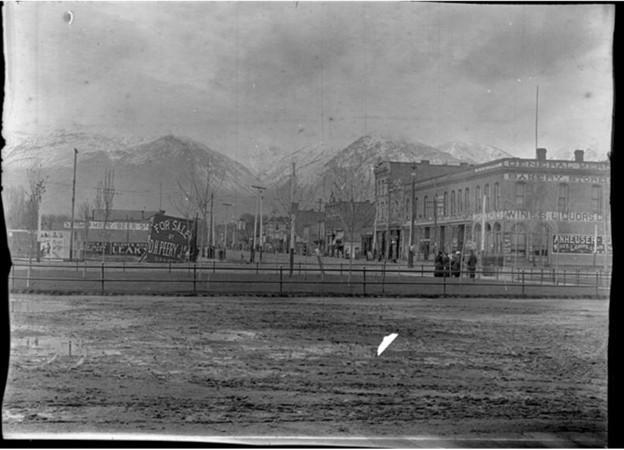
    <summary type="html"><![CDATA[<p><strong><em>Over the years, Ogden, Utah built its reputation as a countercultural hub, steadfastly resisting religious and political authority and conformity. During Prohibition, the city’s infamous Two-Bit Street flirted with illegality by housing speakeasies, stills, and brothels hidden behind innocent storefronts.</em></strong></p><img src="https://www.intermountainhistories.org/files/fullsize/6ab53cfbcdd11113ac6b62738af2d528.jpg" alt="A photo taken of Ogden’s 25th Street sometime between 1892-1904 shows the area before Prohibition began in 1917" /><br/><p>In early twentieth-century Utah, temperance was popular among many members of the Church of Jesus Christ of Latter-day Saints (LDS). The church’s temperance beliefs stemmed from an 1833 doctrine called the “Word of Wisdom,” which church leaders initially treated as guidance for moderate alcohol use. In 1902, Joseph Fielding Smith urged members to view the doctrine instead as a strong suggestion against alcohol. In 1909, this position began influencing state law when Governor William Spry and the legislature passed a local option bill allowing towns to vote on banning alcohol. Many smaller towns voted in favor, while more diverse cities like Ogden and Salt Lake City did not. Despite urban opposition, Utah ratified statewide Prohibition in 1917. In 1921, church president Heber J. Grant aligned church doctrine with state law by declaring alcohol abstinence a requirement. While many LDS members adopted the policy and supported enforcement, an underground drinking culture emerged among other Utahns, especially in Ogden’s 25th Street, also known as Two-Bit Street.
In the late nineteenth century, the completion of the continental railroad brought Chinese and Irish rail workers to Utah. By the turn of the century, LDS members still owned most businesses in smaller towns, but Italian, Chinese, Jewish, and Japanese immigrants owned much of Ogden’s commercial district. This demographic shift made Ogden a culturally distinct city, less influenced by the church’s temperance stance. When Prohibition began, Two-Bit Street became known for alcohol stills, speakeasies, and brothels. Business owners often ran legal operations on the ground floor—ice cream, clothing, and soda shops—while concealing illegal activities on the floors above. A notable example of this was the Davenport Saloon, which was located above various short-lived legal businesses like the Night Hawk Café.
On 03 January 1922, the <em>Ogden Standard-Examiner</em> reported that police raided an ice cream parlor at 170 25th Street. They found two quarter-full bottles of moonshine whisky and arrested the owner, William Pranthel, who pleaded guilty to possession. He claimed the liquor was for personal use, not for sale, but could not explain why it was at the parlor instead of home. He received a sentence of a $299 fine or 180 days in jail. A month later, the same paper reported that police discovered remnants of a recently abandoned still in the same neighborhood, along with several bottles of homemade wine—but no bootleggers.
Prohibition in Utah was more than a legal change—it was a struggle between religious authority and cultural resistance. In Ogden, immigrant families turned Two-Bit Street into a quiet act of defiance, building their own economy behind legal storefronts. It was as much about autonomy as alcohol. While the LDS Church shaped much of the state, Ogden pushed back. Today, Two-Bit Street remains a space where Utah residents challenge law and societal norms.</p><p><em><strong><a href="https://www.intermountainhistories.org/items/show/897">For more (including 4 images) view the original article</a></strong></em></p>]]></summary>
    <published>2025-09-23T15:34:48+00:00</published>
    <updated>2026-04-17T19:32:20+00:00</updated>
    <link rel="alternate" type="text/html" href="https://www.intermountainhistories.org/items/show/897"/>
    <id>https://www.intermountainhistories.org/items/show/897</id>
    <author>
      <name>Scarlett Kluge, Northern Arizona University </name>
    </author>
  </entry>
  <entry>
    <title type="html"><![CDATA[The Rockwood Speakeasy – Butte, Montana: When Montana lawmakers passed alcohol bans in 1918, Butte’s nightlife went underground. Business owners concealed their speakeasies, brothels, and gambling halls in basements under the city’s sidewalks. During Prohibition, Rockwood (Rookwood) Speakeasy earned its fame hidden behind coats and code words.]]></title>
    <summary type="html"><![CDATA[<img src="https://www.intermountainhistories.org/files/fullsize/51321426bb9e095b46c0551d1ba7b90f.jpg" alt="The cross section of Butte’s Broadway and Main Street in the 1920s" /><br/><p>James Pratt, proprietor of the Red Boot and Shoe Company, built the Rockwood (also called the Rookwood), in Butte, Montana in 1912. The ground level housed the shoe company’s shop, and the floors above functioned as a hotel. Pratt designed the building to attract attention and business with décor like Tudor-arching, green tile, a copper-clad cornice, a wrought iron staircase, and marble wainscoting and floors. The Rockwood’s unique ambiance and railroad access attracted elite and traveling patrons alike.
Before Prohibition, Butte, Montana, boomed as a mining town and gained notoriety for its lively bar and entertainment scene. When the Montana government banned alcohol distribution and consumption in December of 1918, Butte bars moved underground—into basements and tunnels beneath storefronts—and continued to sell alcohol. During this time, over one hundred underground speakeasies, including the Rockwood, operated in the city. In 1918, Pratt converted the building’s basement into a speakeasy. This underground area matched the hotel’s elegance above, attracted numerous clients, and became one of Butte’s more famous drinking spots.
In 1923, one of Rockwood’s moonshine clients, Mae Holberg, died by suicide after overconsuming alcohol. The 29 January 1923 issue of <em>The Butte Daily Post </em>describes the harrowing story. Holberg attended an all-night party at the Rockwood. Witnesses and police confirmed this party involved large quantities of illegal liquor. Around 7:00 A.M., Holberg drank one and a half ounces of Lysol, a fatal dose that ended her life within hours. A friend at the party told officers he believed Holberg took her own life because “she was despondent,” he said, “one or two drinks always made her despondent and downhearted.” Tragic stories like this made the Rockwood notorious in the illegal drinking world.
After Prohibition ended, Butte’s underground scene lost its appeal. Shop owners no longer needed to hide their liquor, so they moved alcohol sales to street levels, and many permanently sealed off their speakeasies. Rockwood’s basement became one of these buried speakeasies, while the rest operated as a hotel and retail space. In 2004, workers renovating the Rockwood Hotel discovered a closet filled with untouched coats from decades past. Behind the coats, they uncovered a two-way mirror which concealed a hole that opened into the Rockwood Speakeasy—frozen in time since the Prohibition era.
This discovery highlights the secretive and exclusive nature of the Rockwood Speakeasy and explains how it remained hidden and operational throughout Prohibition. It is a modern-day time capsule, offering visitors a glimpse into the past. Visitors can imagine stepping into the shoes of a 1920s client—looking into the mirror, giving the bouncer the code, and feeling the thrill of defying Montana’s dry laws.</p><p><em><strong><a href="https://www.intermountainhistories.org/items/show/896">For more (including 5 images) view the original article</a></strong></em></p>]]></summary>
    <published>2025-09-23T15:34:47+00:00</published>
    <updated>2026-04-17T19:32:20+00:00</updated>
    <link rel="alternate" type="text/html" href="https://www.intermountainhistories.org/items/show/896"/>
    <id>https://www.intermountainhistories.org/items/show/896</id>
    <author>
      <name>Scarlett Kluge, Northern Arizona University </name>
    </author>
  </entry>
  <entry>
    <title type="html"><![CDATA[Kemmerer, Wyoming Alcohol Culture during Prohibition]]></title>
    <summary type="html"><![CDATA[<p><strong><em>Kemmerer, Wyoming emerged in the late nineteenth century when Patrick J. Quealy founded a coal company and a town to go with it. Kemmerer was popular among immigrant business owners who set up shops seeking financial and personal freedom. Their diverse cultures contributed to Kemmerer becoming a bootlegger’s haven when Prohibition began a few decades later.</em></strong></p><img src="https://www.intermountainhistories.org/files/fullsize/bc57fb9731bf760db28ae4ec4796ab05.jpg" alt="The original Southern Hotel building" /><br/><p>In 1897, Patrick J. Quealy founded a town and coal company, naming them “Kemmerer” after his financial backer, Mahlon S. Kemmerer of Pennsylvania. Quealy made Kemmerer an “independent town,” meaning that the coal company sold land to businesses and residents. This attracted immigrant miners and business owners, including those from southern and eastern Europe. Drinking was integral to many of the immigrants’ cultures, which included Italian, Polish, Slovak, and Scottish. This influenced Kemmerer’s freedom-focused Prohibition culture. In 1919, Wyoming passed laws banning alcohol. Kemmerer and its neighboring communities of Diamondville and Frontier formed a triangle network for illegal bootlegging and drinking.
During Prohibition, many Kemmerer residents made little effort to hide their drinking, as it was a southern and eastern European cultural norm and popular with the white men who worked the area’s mines. Isabel Burns migrated to Kemmerer in the 1880s and later established the brothel she named the Southern Hotel, which catered to illegal activities like prostitution and drinking. Burns and her successors operated the Southern Hotel for seven decades, throughout all of Prohibition, and continuously offered drinking and prostitution, regardless of legality. For its size, Kemmerer hosted a disproportionately large number of saloons and brothels like the Southern Hotel, which testified to local positive sentiment toward alcohol and cultural autonomy.
In addition to establishments like the Southern Hotel, well-documented arrests for alcohol possession and public intoxication highlight the prominence of drinking in Kemmerer during Prohibition. While police were generally tolerant of illegal alcohol consumption—acknowledging the town’s large immigrant population—the widespread nature of drinking still led to arrests, often for disrupting the peace. The <em>Kemmerer Gazette</em> reports indicate that authorities arrested people on alcohol-related charges, typically for public intoxication, operating stills, or alcohol distribution.
For example, the 20 April 1927 issue of the paper reported two separate intoxication cases from earlier that month. Both men paid $25 in fines (around $450 today). According to the paper, the first man, E. L. Mitchell, “made his rounds, proceeding to hit the high spots,” and caused a “rucus” at the Kemmerer hotel, thanks to “the potency of Kemmerer’s supply of moonshine, which will give a jackrabbit enough nerve to defy a bulldog.” The second man, a railroad worker from Mexico, “got all corned up on moonshine [then] ran a muck on the streets of Kemmerer.” Authorities incarcerated both men not merely for drinking, but for disorderly public conduct.
Kemmerer’s Prohibition history tells not a story of law, but a tale of western mining culture. As immigrants arrived for railroad and mining jobs, they brought customs wherein drinking was a way of life. When Prohibition criminalized that lifestyle, the law did not erase people’s culture. Places like the Southern Hotel thrived not because people wanted to rebel, but because they wanted to keep living as they always had. Kemmerer’s Prohibition history is one of colliding international and mining cultures withstanding the force of national reform.</p><p><em><strong><a href="https://www.intermountainhistories.org/items/show/895">For more (including 3 images) view the original article</a></strong></em></p>]]></summary>
    <published>2025-09-23T15:34:47+00:00</published>
    <updated>2026-04-17T19:32:20+00:00</updated>
    <link rel="alternate" type="text/html" href="https://www.intermountainhistories.org/items/show/895"/>
    <id>https://www.intermountainhistories.org/items/show/895</id>
    <author>
      <name>Scarlett Kluge, Northern Arizona University </name>
    </author>
  </entry>
  <entry>
    <title type="html"><![CDATA[The Mint Bar – Sheridan, Wyoming]]></title>
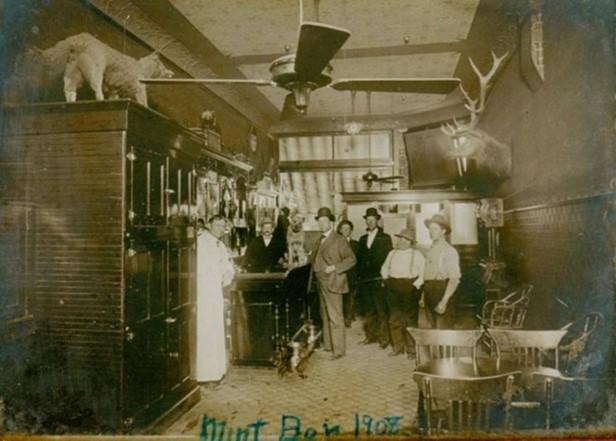
    <summary type="html"><![CDATA[<p><strong><em>In 1907 Charles “Dick” Marlow founded the Mint Saloon in Sheridan, WY. When Wyoming Prohibition laws banned alcohol in 1919, Marlow rebranded “the Mint” as legal storefronts but continued illegal alcohol sales. In 1935, post-Prohibition, the Mint Bar reopened its storefront as a bar. Today, the Mint Bar is still a staple of entertainment in Sheridan, Wyoming.</em></strong></p><img src="https://www.intermountainhistories.org/files/fullsize/634d0740f89c76472de8ecde2b526e01.jpg" alt="The Mint Bar in 1907, shortly after opening. " /><br/><p>In 1907 Charles “Dick” Marlow bought the building that would later become the Mint Bar from a barber and transformed it into the “Mint Saloon,” which locals often referred to as “the Mint.” In 1919, Wyoming passed laws banning the sale and consumption of alcohol unless for prescribed medicinal purposes. At this time, Marlow changed the Mint’s front into a dress shop, then a real estate office, while continuing alcohol sales in the back. In 1923, Oran Moore purchased the Mint, turning it into the “Mint Cigar Company and Soda Shop.” Between 1923 and 1930, Moore operated the Mint’s legal front while maintaining one of Sheridan’s more notorious speakeasies and gambling halls in the back.
During this time, law enforcement suspected the Mint of alcohol sales and conducted multiple raids on the location. On 23 June 1925, the <em>Sheridan Post Enterprise</em> published an article describing a moonshine bust at the Mint. Sheridan town sheriffs and a Wyoming state officer raided the Mint at four o’clock in the afternoon. Police discovered one gallon of moonshine whiskey hidden in a coffee pot by employees. The officers arrested Moore and several other employees. The court fined Moore $500.
On Tuesday, 23 June 1925, an article appeared in the <em>Sheridan Post Enterprise</em> about the officer’s raid at the Mint. A month later, the paper published a follow-up article on Tuesday, 07 July 1925, which mentioned that the court judge postponed the Mint employees’ trial. Lax police and judicial enforcement meant that raids, arrests, and trials like this never prevented the Mint from selling illegal alcohol. The establishment continued its bootlegging and alcohol sales until the stock market crash of 1929 forced Moore to close its doors. In 1933, the United States’ Twenty-first Amendment ended Prohibition, and Wyoming dissolved its alcohol ban.
In 1934, Archie Milson and Robert Thirlwell purchased the establishment and reopened the space as “the Mint Bar.” In 1948, the owner at the time, Lauren L. McVean, renovated the Mint Bar, giving the location its warm rustic style and now iconic bucking horse and cowboy neon sign. Cowboys, locals, travelers, and even celebrities like Ernest Hemingway once again made the bar a popular stop because of its historic charm, great beer, and gambling.
The Mint Bar’s story shows how Prohibition reshaped Sheridan without breaking its spirit. The hidden bar was a gathering place for cowboys and townsfolk alike. Raids and fines were a constant threat, but the establishment’s patrons remained loyal. After Prohibition, the Mint Bar never lost its notoriety. Today, “Meet me at the Mint” is now a signature phrase shared between Sheridan locals. The Mint Bar’s history is a nod to Western independence and resilience.</p><p><em><strong><a href="https://www.intermountainhistories.org/items/show/894">For more (including 4 images) view the original article</a></strong></em></p>]]></summary>
    <published>2025-09-23T15:34:46+00:00</published>
    <updated>2026-04-17T19:32:20+00:00</updated>
    <link rel="alternate" type="text/html" href="https://www.intermountainhistories.org/items/show/894"/>
    <id>https://www.intermountainhistories.org/items/show/894</id>
    <author>
      <name>Scarlett Kluge, Northern Arizona University </name>
    </author>
  </entry>
  <entry>
    <title type="html"><![CDATA[First National Bank of Joseph]]></title>
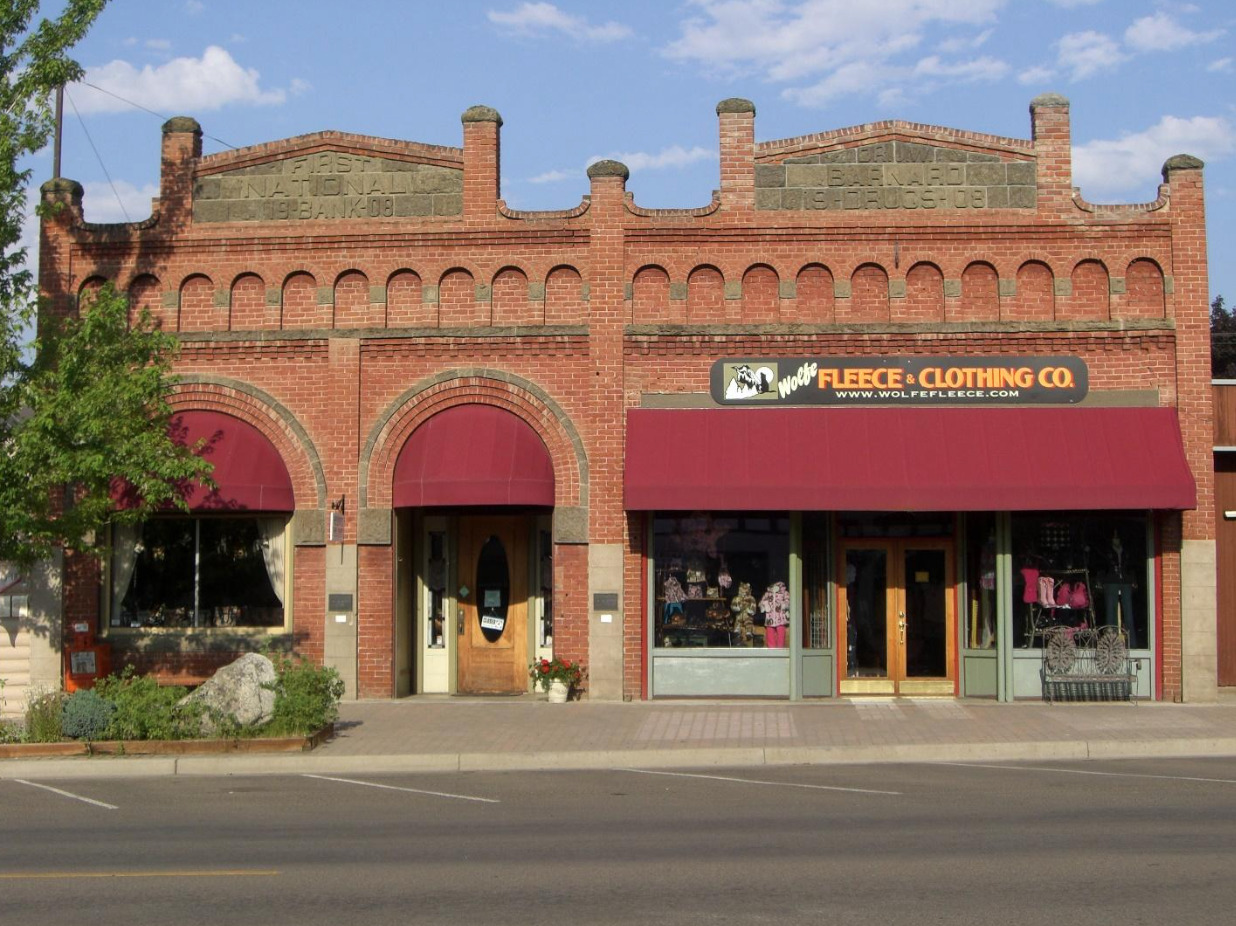
    <summary type="html"><![CDATA[<p><strong><em>The First National Bank of Joseph, established in 1905, served as a vital source for its small but growing population, closing in 1923 in the wake of the economic downturn of 1920-21.</em></strong></p><img src="https://www.intermountainhistories.org/files/fullsize/9fa7e711d5d032c02ee4c62d782180bc.jpg" alt="Exterior view of the First National Bank of Joseph building, 2013" /><br/><p><span style="font-weight:400;">Despite Joseph’s isolated northeastern location in Oregon, retaining a small population of 250 people, it accrued wealth through its farming and ranching industries. In response to this economic growth, a consortium of entrepreneurs established the First National Bank of Joseph in 1905 with $25,000 of capital, offering competition to the First Bank of Joseph, previously the town’s only financial institution. In 1908, profitability proved healthy as assets increased to over $52,000, causing First National’s directors to construct a new building for their operations.</span>
<span style="font-weight:400;">Designed by J.A. Flesch & Sons of Chicago and built by local contractor Frank Marr, Dr. Jerome William Barnard, a local physician, partnered with First National by funding a single building for their businesses, sharing a common interior wall, and saving on construction costs. Around the opening of the new bank building, Joseph experienced a population boom of 206% from 1908-10, after the Oregon-Washington Railroad & Navigation Company connected the town through a branch line linking it to Enterprise, Oregon, located in the state’s northeastern sector, connecting Joseph to a larger economy.</span>
<span style="font-weight:400;">First National’s inaugural president, farmer Ludwig Knapper, one of Wallowa County’s wealthiest entrepreneurs, utilized the bank, along with associates Aaron M. Wade, Charles Leslie Hartshorn, and Joseph Pearne Averill, to pool their wealth and expand Joseph’s economic resources into its growing timber market, the town’s largest commodity. From 1909 to 1919, this syndicate’s investments also included land acquisitions for cattle and sheep raising, a light and power company, a warehouse corporation, as storage for farm products, a woolgrower’s cooperative for sheep raising, and an irrigation organization, which supported farming around the Little Sheep Creek in Wallowa County.</span>
<span style="font-weight:400;">Through these and other enterprises, chiefly through supplying capital or loans to new businesses, First National’s assets considerably increased, reaching $370,000 in 1919, capitalizing on the burgeoning wartime economy. Its influence attracted attention from Frederick Wesley Falconer, one of Wallowa County’s largest sheep farmers and operator of the Enterprise State Bank in Enterprise, Oregon who purchased a controlling interest in First National and became its new president. After Falconer became interested in other financial ventures, he handed the presidency to director Daniel Welbaum Warnock, a notable rancher and blacksmith, in 1921.</span>
<span style="font-weight:400;">Despite the bank’s profitability, the economic downturn of 1920-1 facilitated First National's decline. While it retained a healthy surplus, its creditors consisted primarily of farmers and ranchers, who because of rising inflation and declining wartime demands, became unable to pay interest on their loans, freezing repayments and eliminating most of First National’s income. While the national economy quickly rebounded in 1922, Joseph’s conditions stagnated. First National’s directors ceased operation in June 1923 in the interest of their clients, redistributing any remaining deposits.</span>
<span style="font-weight:400;">In 1925, the bank building became the Joseph Post Office, serving in this capacity until 1960, and housed commercial businesses into the 1980s. By this period, the facility fell into disrepair and underwent restoration to its original appearance and accommodated an art gallery. Currently, it accommodates Heidi’s Towne Shop, a local boutique and clothing store.</span></p><p><em><strong><a href="https://www.intermountainhistories.org/items/show/810">For more (including 6 images) view the original article</a></strong></em></p>]]></summary>
    <published>2024-05-20T23:14:19+00:00</published>
    <updated>2026-04-17T19:32:18+00:00</updated>
    <link rel="alternate" type="text/html" href="https://www.intermountainhistories.org/items/show/810"/>
    <id>https://www.intermountainhistories.org/items/show/810</id>
    <author>
      <name>William R. Batson, Northern Arizona University</name>
    </author>
  </entry>
  <entry>
    <title type="html"><![CDATA[First National Bank of Utah: Also known as the Bamberger Building, Masonic Hall, and Wells Fargo Building.]]></title>
    <summary type="html"><![CDATA[<p><strong><em>The First National Bank of Utah, once the Territory’s most publicized financial institution, failed because of the shady operations of its president, Warren Hussey, closing only five years after its incorporation.</em></strong></p><img src="https://www.intermountainhistories.org/files/fullsize/3d811606a4f71a89ee1b5030426bbffe.jpg" alt="First National Bank Building, Salt Lake City" /><br/><p><span style="font-weight:400;">In the 1860s, Utah Territory began relying more on mining over agriculture, with eventually hundreds of claims dotting its landscape. Salt Lake City, serving as Utah Territory’s capital, benefitted most from this economic expansion, attracting miners and investors alike. Warren G. Hussey, a gold broker operating across the Intermountain West, expanded into the financial realm by purchasing the Miners’ National Bank of Salt Lake in 1869, notably the year of the Transcontinental Railroad’s completion, reorganizing it into the First National Bank of Utah.</span>
<span style="font-weight:400;">Hussey quickly established this new bank as Utah’s most important financial house, with total assets in 1871 amounting to $582,000. Hussey appeared so adept in banking that dividends, or returns to shareholders on investments, amounted to one hundred percent in 1871-2. In 1872, Hussey bought out any remaining stock in circulation, becoming First National’s sole owner, and decided to construct a new banking facility. </span>
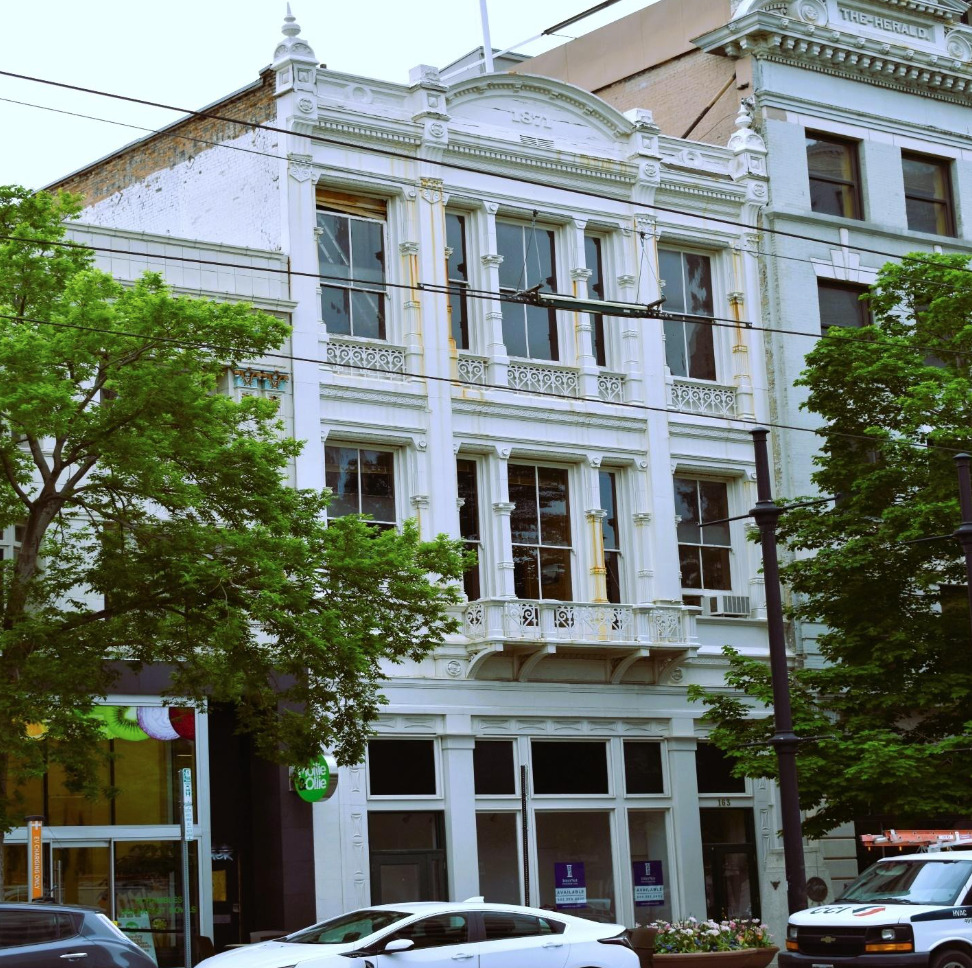
<span style="font-weight:400;">Commenced in early 1871, First National’s new building opened in September 1873. Designed by Thomas J. Johnson, a San Francisco-based builder, and Richard M. Upjohn, one of the United States’s foremost architects. No expense was spared, with total cost ballooning to $140,000, far higher than initial estimates. Its opening also aligned with the Panic of 1873, an economic recession causing bank runs across the United States. In response, Hussey suspended deposit payouts the month the new building opened. He also held interests in Utah’s Emma Mine, an operation riddled with fraudulent activity, losing tens of thousands of dollars upon its closure in 1873 after reports of its rich silver deposits being falsified.</span>
<span style="font-weight:400;">However, First National’s economic condition appeared sound. The U.S. Comptroller, the monitoring office for financial activities, reopened the bank in October 1873 after reporting that the bank’s resources were four times higher than deposits. Within fourteen months, however, the Comptroller shut down First National in December 1874, citing incompetent management. After its liquidation was finalized in 1878, only twenty-five percent of clients received compensation. </span>
<span style="font-weight:400;">Hussey embezzled First National’s remaining assets into a personal account and continued opening banks across the Intermountain West. Notably, Hussey opened the Spokane National Bank in Washington in 1888, again investing considerable sums into a lavish headquarters. This bank failed in 1891, attributed to risky mining investments and negligible financial practices. Hussey, aged eighty-three, died in his Spokane home in 1920.</span>
<span style="font-weight:400;">In 1875, First National’s building suffered from a city-wide fire, losing its fourth story, never to be rebuilt. However, the structure continued serving as office spaces, and the Deseret National Bank (now Zion Bancorporation) occupied the first floor into the 1880s. Utah’s territorial archives lodged the second level, and the Oddfellows, a fraternal society, filled the third story until 1896, with their private library located on the second floor.</span>
<span style="font-weight:400;">Around 1885, Simon Bamberger, a Utah financier, purchased the building to house his business offices. Eventually, Bamberger became Utah’s governor in 1917 and the building served as a movie theater for several decades. Since the 1990s, the First National Bank Building has housed multiple commercial businesses, remaining one of Salt Lake City's most recognizable nineteenth-century structures.</span></p><p><em><strong><a href="https://www.intermountainhistories.org/items/show/809">For more (including 6 images) view the original article</a></strong></em></p>]]></summary>
    <published>2024-05-19T19:21:51+00:00</published>
    <updated>2026-04-17T19:32:18+00:00</updated>
    <link rel="alternate" type="text/html" href="https://www.intermountainhistories.org/items/show/809"/>
    <id>https://www.intermountainhistories.org/items/show/809</id>
    <author>
      <name>William R. Batson, Northern Arizona University</name>
    </author>
  </entry>
  <entry>
    <title type="html"><![CDATA[First National Bank of Denver: Also known as the American National Bank.]]></title>
    <summary type="html"><![CDATA[<p><strong><em>The First National Bank of Denver, founded in 1865, was the first national bank in the Intermountain West, and was once one of the United States’s largest financial institutions.</em></strong></p><img src="https://www.intermountainhistories.org/files/fullsize/a566e544819b7c4bda6f61ae85108525.jpg" alt="1910 Exterior Photograph" /><br/><p><span style="font-weight:400;">Attracting attention during the 1858-62 Pike’s Peak gold rush, by 1865 Denver was a small town of about 5,000 in the Colorado Territory. Jerome B. Chaffee, who settled in Denver in 1860, sought to grow Colorado’s economic potential and established the First National Bank of Denver in 1865, the first of its kind in the Intermountain region. Chaffee, considered a leading organizer of the Colorado Territory, used his mining interests to establish First National as one of the American West’s premier financial houses.</span>
<span style="font-weight:400;">Originally located on Denver’s first financial district, Fifteenth Street, First National’s initial directors included Walter S. Cheeseman, owner of the Denver City Water Company, and H. A. W. Tabor, one of Colorado’s chief mining barons. David H. Moffat, financier turned railroad magnate, and elected as the bank’s cashier in 1866, became its foremost financial mind, embarking on dozens of speculative prospects to expand First National's portfolio. This strategy paid off. First National held $1.25 million in assets by 1872.</span>
<span style="font-weight:400;">By the mid-1870s, Moffat operated multiple rail lines, notably the Denver Pacific Railway, linking it to the Transcontinental Railway in Cheyenne. This achievement led Denver to become the economic center of the Rocky Mountains, causing its population to explode by 675% from 1870-80. Moffat, and Tabor also owned dozens of mining claims, further enriching First National’s assets, and bolstered by Colorado’s newfound population growth.</span>
<span style="font-weight:400;">By 1880, First National’s assets doubled to $2.4 million. Moffat, taking over from Chaffee in 1880, directly tied his financial interests to the bank’s development and served as First National’s president until he died in 1911. Its location moved twice under Moffat’s tenure, first to the Tabor Building, off Sixteenth and Larimer Streets, (not to be confused with the newer Tabor Center) and later to the Equitable Building. By 1910, First National became one of the United States’s largest banks, and with $21.4 million in assets decided to construct a new building at Seventeenth and Stout Streets, across from their previous headquarters at the Equitable Building.</span>
<span style="font-weight:400;">Designed by Harry Edbrooke and completed in 1911, the new building became one of Denver’s first skyscrapers, reaching thirteen stories high and costing $900,000. First National, occupying the first floor and basement, with the other twelve stories rentable, made Seventeenth Street Denver’s new economic center, nicknamed the “Wall Street of the West” for its concentration of financial establishments. By 1915, H. J. Alexander, another Colorado banker, served as First National's president until 1928. The bank’s board of directors represented multiple industries, including the Midwest Refining Company, Pagosa Lumber Company, and the Colorado Development Foundation. It survived the Great Depression with little difficulty.</span>
<span style="font-weight:400;">John Evans, H. J. Alexander’s successor, continued First National’s financial dominance, holding $186.3 million in assets by 1950. In 1958, Evans, who owned the International Trust Company, merged both institutions, ending First National’s independence. International Trust moved to a new property, and the American National Bank occupied First National’s old headquarters until 1981, serving as First Interstate Bank until 1984. The First National Bank Building, occupied since 2008 by Magnolia Hotels, continues serving as Seventeenth Street’s focal point.</span></p><p><em><strong><a href="https://www.intermountainhistories.org/items/show/808">For more (including 7 images) view the original article</a></strong></em></p>]]></summary>
    <published>2024-05-19T18:42:13+00:00</published>
    <updated>2026-04-17T19:32:18+00:00</updated>
    <link rel="alternate" type="text/html" href="https://www.intermountainhistories.org/items/show/808"/>
    <id>https://www.intermountainhistories.org/items/show/808</id>
    <author>
      <name>William R. Batson, Northern Arizona University </name>
    </author>
  </entry>
  <entry>
    <title type="html"><![CDATA[City National Bank of Boise]]></title>
    <summary type="html"><![CDATA[<p><strong><em>Opened in 1886, the Boise City National Bank quickly became one of the largest financial houses in Idaho and the Pacific Northwest, operating for a total of forty-six years.</em></strong></p><img src="https://www.intermountainhistories.org/files/fullsize/b717659bdc02604d2951ecfeaba1dac4.jpg" alt="Boise City National Bank" /><br/><p><span style="font-weight:400;">In 1886 Boise had a single national bank and Idaho’s growing mining and agricultural production offered conditions for another financial house. Alfred Eoff, a freelance economic agent operating across the American West since the 1860s, took advantage of this opportunity. Encouraged by Wells Fargo & Company treasurer Henry Wadsworth to seize the opportunity, Eoff established Boise City National Bank in 1886. Situated near Main Street and Capitol Boulevard, it was established as a competitor to the First National Bank of Idaho. Wadsworth acted as City National’s president while Eoff became its cashier, becoming part of Wells Fargo’s growing presence in the American West.</span>
<span style="font-weight:400;">Wadsworth’s recommendations proved sound. By 1890, City National Bank’s portfolio included over $620,000 in financial assets, with $65,000 held in securities alone. Idaho’s population boom increased City National’s business, requiring a larger building as the initial bank became too small to house its customers and resources, including cash, deeds, or precious metals. This led City National Bank’s board to construct a three-story building designed by local architect James King that could house both the bank and rentable commercial and office space. This new structure housed not only the bank but also the United States Marshals’ and Surveyor’s Offices as well as Idaho’s federal district court after its completion in 1892.</span>
<span style="font-weight:400;">Despite the 1890s economic downturn, City National’s portfolio continually increased, with total assets totaling $870,000 by 1900. Continued growth led to the addition of a fourth story commercial club in 1904 and renovations in 1913, all designed by John Tourtellotte & Company who also planned Idaho’s State Capitol. The commercial club catered to its patrons, who likely consisted of influential stockmen, farmers, and investors, offering amenities such as a dining district, billiards parlor, cardroom, lounge, writing room, and a library. </span>
<span style="font-weight:400;">By 1905, Wadsworth retired and Frank R. Coffin became City National’s new president. Coffin, previously lured west from Indiana, first settled in California as a tinsmith and later became a gold miner in Idaho’s 1860 gold strike. He served as Idaho’s first state treasurer from 1891-93, treasurer of the Artesian Hot and Cold Power Company, one of the state's leading utility corporations, and president of the Boise Clearinghouse Association, a local financial institution. Serving as president until he died in 1920, Coffin further expanded City National’s reach until it became Idaho's second-largest national bank, with $1.6 million in total assets.</span>
<span style="font-weight:400;">By 1932, during the strain of the Great Depression, City National voluntarily closed, citing depleted reserves. It argued that closure was the best option for depositors, with the remaining $2.5 million in accounts distributed among its clients. After its closure, various owners occupied the bank building, including the Idaho Building and Loan Association and the J. R. Simplot Company, one of Idaho’s largest corporations. Today it is owned by Rocky Mountain Management, and houses many offices and commercial businesses.</span></p><p><em><strong><a href="https://www.intermountainhistories.org/items/show/796">For more (including 7 images) view the original article</a></strong></em></p>]]></summary>
    <published>2024-03-20T19:44:45+00:00</published>
    <updated>2026-04-17T19:32:17+00:00</updated>
    <link rel="alternate" type="text/html" href="https://www.intermountainhistories.org/items/show/796"/>
    <id>https://www.intermountainhistories.org/items/show/796</id>
    <author>
      <name>William R. Batson, Northern Arizona University</name>
    </author>
  </entry>
  <entry>
    <title type="html"><![CDATA[First National Bank of Layton]]></title>
    <summary type="html"><![CDATA[<p><strong><em>Established in 1905, the First National Bank of Layton was one of only six banks in Utah to be in business for over 100 years. It operated as First National Bank of Layton until 2019, when it merged with Glacier Bank. </em></strong></p><img src="https://www.intermountainhistories.org/files/fullsize/6e0bd0aba6258621d2d507ced518396d.jpg" alt="Farmer&#039;s Union Building " /><br/><p><span style="font-weight:400;">The First National Bank of Layton was founded in 1905 by nine farmers and local businessmen in response to rapid economic expansion and what scholars refer to as the “Americanization” of the state, a period of increased entrepreneurial spirit which took place from 1890 to 1920. Initially funded with a starting investment of only $25,000 the bank’s focus was on small businesses and local families. The bank has tried to retain the same feeling of intimacy and personability since then. Describing itself as a community bank, it remained locally owned and active in a wide variety of community service initiatives. When the bank celebrated its centennial anniversary in 2005, having survived many wars and economic crises, it was praised by the Utah Bankers Association as “an amazing accomplishment.”</span>
<span style="font-weight:400;">The bank was initially established in a building designed by the prominent Utah architect William Allen, who is noted for also designing the Davis County Courthouse and the Kaysville Tabernacle. William Allen, an eccentric London-born man, learned architecture via a correspondence course and often infused his buildings with personal style. Many of the buildings he designed mixed different staples of architecture like Victorian spires and Greek columns. The original building that housed the First National Bank of Layton is no longer in use. The bank is currently housed in the Farmer’s Union Building, another of Allen’s designs.</span>
<span style="font-weight:400;">The Farmer's Union Building is significant for housing the Farmers’ Union Mercantile Institution, the first commercial enterprise in Layton, Utah, incorporated in 1909. The building was built in three sections, the first being erected in 1890, the second shortly thereafter, and the third in 1930. </span><span style="font-weight:400;">It was the first prominent business structure erected in Layton and served as the community's primary meeting hall, social center, and recreational facility. Various events were hosted in the building including, church events, sports games, town meetings, and others. Later, the second floor was used as apartments. The Farmer's Union business closed in 1956 and various businesses filled the vacancy until the First National Bank of Layton gained ownership.</span><span style="font-weight:400;"> The bank merged with Glacier Bank out of Kalispell, Montana in 2019.</span></p><p><em><strong><a href="https://www.intermountainhistories.org/items/show/664">For more (including 3 images) view the original article</a></strong></em></p>]]></summary>
    <published>2022-10-12T16:55:14+00:00</published>
    <updated>2026-04-17T19:32:14+00:00</updated>
    <link rel="alternate" type="text/html" href="https://www.intermountainhistories.org/items/show/664"/>
    <id>https://www.intermountainhistories.org/items/show/664</id>
    <author>
      <name>Zach Baker, Weber State University</name>
    </author>
  </entry>
  <entry>
    <title type="html"><![CDATA[Lehi Sugar Factory: Development of the Sugar Beet Industry in Utah]]></title>
    <summary type="html"><![CDATA[<p><strong><em>Built following a direct revelation from the prophet Wilford Woodruff, the Lehi Sugar factory marked the fulfillment of a multi decade struggle to bring the beet sugar industry to Utah. With its completion came a great economic opportunity for Lehi and its neighboring cities. </em></strong></p><img src="https://www.intermountainhistories.org/files/fullsize/e1ae95f87c9d1611f8c85086382bcddb.jpg" alt="Sugar Cos. Mill, Lehi Utah, 1890" /><br/><p><span style="font-weight:400;">Since the Mormon pioneers arrived in Utah in 1847, Brigham Young, the prophet of the Church of Jesus Christ of Latter-day Saints at the time, was determined to help them become a self-sufficient people and bring industry to Utah. Sugar production was one of the industries at the forefront of church leaders’ minds, because of the vast amount of sugar that had to be imported into the area otherwise. Growing sugar cane was not a viable option because of the arid climate. However, around this time, a method was developed in France allowing sugar to be isolated from beets. Leaders of the church, including John Taylor, were assigned to purchase and move beet sugar processing machinery to the West. Once the machinery arrived, church members tested it to see if it would indeed be able to isolate sugar from beets. The project was a massive failure and the church lost a fortune. </span>
<span style="font-weight:400;">No further attempts were made to produce sugar locally until 1889, when sugar beet production was becoming widespread throughout the United States, and the method of producing sugar from beets was more widely understood. Wilford Woodruff, as current president of the church, received a revelation that the will of the Lord was to have a sugar beet factory built in Utah. In order to raise enough capital for the factory, the church used a large sum of tithing money and borrowed from multiple banks. The Lehi Sugar Factory was built, and Wilford Woodruff opened the ceremony that dedicated the factory to the Lord, a common practice in the Church. </span>
<span style="font-weight:400;">The sugar factory played a large role in the community, contributing greatly to the financial wellbeing of those living in Lehi and others close by. It provided  many jobs working in the factory and an opportunity for farmers to grow crops. The factory continued to operate from 1891 until 1924, when sugar production was relocated to other factories around the state. The factory lot, formerly owned by the Utah and Idaho Sugar Company, was sold in 1979 to a trucking company where it remains in their possession. The smokestack for the factory has since been converted to a cell phone tower, a symbol of the change that has taken place in Utah’s economy over the years.</span></p><p><em><strong><a href="https://www.intermountainhistories.org/items/show/656">For more (including 2 images) view the original article</a></strong></em></p>]]></summary>
    <published>2022-09-16T19:12:33+00:00</published>
    <updated>2026-04-17T19:32:14+00:00</updated>
    <link rel="alternate" type="text/html" href="https://www.intermountainhistories.org/items/show/656"/>
    <id>https://www.intermountainhistories.org/items/show/656</id>
    <author>
      <name>Caleb J. Nokes, Brigham Young University</name>
    </author>
  </entry>
  <entry>
    <title type="html"><![CDATA[First Zions Bank]]></title>
    <summary type="html"><![CDATA[<img src="https://www.intermountainhistories.org/files/fullsize/ef9008287dbad34b0b647d4a80b6f211.jpg" alt="Original Eagle Emporium Building and Clock" /><br/><p><span style="font-weight:400;">Zion’s Savings Bank and Trust Company was incorporated under the laws of the Utah Territory under the direction of Brigham Young. On July 10, 1873, it became Utah's first chartered savings bank and trust company. Zion’s Savings Bank and Trust Company grew over the decades, enduring the economic booms and busts including the Great Depression.</span>
</p><p><span style="font-weight:400;">On Dec. 31, 1957, Zion’s Savings Bank and Trust Company, Utah Savings and Trust Company, and First National Bank of Salt Lake City merged to form Zions First National Bank. This merger brought each of these institutions under the management of the LDS church and brought an end to the apostrophe in its name. In early 1960, authorities of The Church of Jesus Christ of Latter-day Saints decided to relieve itself of its banking interests, and on April 22, 1960, the church sold majority control of Zions First National Bank</span>
</p><p><span style="font-weight:400;">The Salt Lake City office on Main Street and the iconic clock just outside are both historically significant. They represent original architecture from early LDS settlements. The building is called the “Eagle Emporium Building” and is the oldest existing commercial building in downtown Salt Lake City. It is the city’s only remaining commercial structure built prior to the completion of the transcontinental railroad. The Eagle Emporium Building was constructed for William Jennings, Utah’s first millionaire, and was originally used to house his mercantile business. Originally powered by a water wheel, the clock was erected on the building in 1873. The clock is one of the few remaining pieces of 19th-century street furniture in downtown Salt Lake. At the request of Brigham Young, the building became the first home of Zion’s Savings Bank and Trust Company. </span>
</p><p><span style="font-weight:400;">Zions Bank continues to bring value to individuals, small-to middle-market businesses, nonprofits, corporations and institutions through a wide range of traditional banking and innovative technology services. It currently has a network of 122 full-service financial centers across Utah, Idaho, and Wyoming. </span></p><p><em><strong><a href="https://www.intermountainhistories.org/items/show/653">For more (including 4 images) view the original article</a></strong></em></p>]]></summary>
    <published>2022-09-16T16:53:09+00:00</published>
    <updated>2026-04-17T19:32:14+00:00</updated>
    <link rel="alternate" type="text/html" href="https://www.intermountainhistories.org/items/show/653"/>
    <id>https://www.intermountainhistories.org/items/show/653</id>
    <author>
      <name>Michael M. Heaton, Brigham Young University</name>
    </author>
  </entry>
</feed>