<?xml version="1.0" encoding="UTF-8"?>
<feed xmlns="http://www.w3.org/2005/Atom">
  <title type="text">Intermountain Histories</title>
  <updated>2026-08-18T15:52:06+00:00</updated>
  <generator uri="http://framework.zend.com" version="1.12.20">Zend_Feed_Writer</generator>
  <link rel="alternate" type="text/html" href="https://www.intermountainhistories.org/"/>
  <link rel="self" type="application/atom+xml" href="https://www.intermountainhistories.org/items/browse?output=rss2"/>
  <id>https://www.intermountainhistories.org/</id>
  <author>
    <name>Intermountain Histories</name>
    <uri>https://www.intermountainhistories.org</uri>
  </author>
  <link rel="hub" href="https://pubsubhubbub.appspot.com/"/>
  <entry>
    <title type="html"><![CDATA[Sutter&#039;s Fort: The Donner Party&#039;s Last Chapter]]></title>
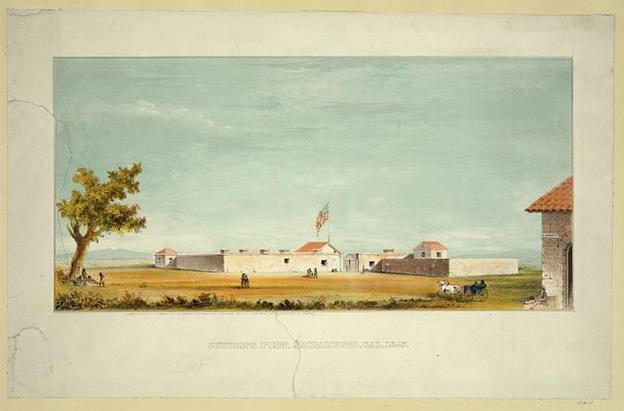
    <summary type="html"><![CDATA[<p><strong><em>This fort, which began construction in 1840, served as one of the last stops for emigrant trains bound for Alta-California, and marks the end of the Donner Party’s expedition. Slave labor, the gold rush, and the rescue of the Donner Party all contribute to the legacy of both the fort and its creator.</em></strong></p><img src="https://www.intermountainhistories.org/files/fullsize/ceb063cfc2de1ed51df924710d33fc04.jpg" alt="Artist rendition of Sutter’s Fort" /><br/><p>John Sutter constructed this fort, which is located in modern-day Sacramento, California. Originally from Switzerland, Sutter left his wife and children under the threat of arrest for unpaid debts, and after traveling the United States and Mexico settled in the Mexican province of Alta-California in 1839. An aspiring businessman, he constructed his fort to serve trappers, migrants, and mountain men representing the Swiss, American, and Russian citizens prevalent in the region. One of the most controversial aspects of Sutter’s character became apparent as construction of the fort began: slavery. Sutter, having purchased a Native slave boy in 1838, was keen to implement the labor of enslaved Native Americans at his fort, using it to his advantage in constructing and maintaining the fort. It is even theorized that a pair of Native guides he sent to the Donner Party were originally his slaves.
Sutter first came into contact with the Donner party in early Autumn of 1846, when Charles Stanton and William McCutchen reached the fort to retrieve supplies for the ailing party. McCutchen stayed at the fort due to ill health, and Stanton returned to the Donner party along the Humboldt River with supplies and the two aforementioned Native American guides, Luis and Salvador. An emaciated and freshly banished James Reed, a principal leader of the Donner Party, arrived soon thereafter on October 28th. Two days later, Reed and a recuperated McCutchen left to attempt to reach the party, but like their families on the other side of the mountain, deep snow blocked their way. For the next 4 months, Reed and McCutchen had to wait knowing that their families were snowed-in on the other side of the mountain, unable to do anything. In early February of 1847, Sutter offered $3 a day to any man willing to join a rescue party into the mountains, which some accepted and formed the first relief party which left on February 7th. Daniel Rhoads, one of the men in the first relief party to reach Truckee Lake on February 19th said that when they arrived Mrs. Murphy popped up from the deep snow and hoarsely said, “<em>Are you men from California or do you come from heaven?</em>” Over the next months, the relief parties employed and sent by John Sutter would be instrumental in saving lives. He even employed several rescued members of the party after their recuperation.
Sutter attempted to profit off the gold rush after his assistance to the Donner Party but again ran into problems with paying his debts. Eventually losing his land grant, he attempted to receive restitution from the United States with little success. Sutter later moved east to Pennsylvania, and died of kidney failure on June 18th, 1880. His history is complicated. He enslaved and abused Native Americans in the pursuit of wealth and was seen as a swindler by some who did business with him. At the same time, without his aid towards the Donners, many more lives would have been lost in the Sierra Nevadas.
Lewis Keseberg was the last survivor of the Donner Party to arrive at Sutter’s Fort in late April of 1847. The survivors attempted to settle in California with varying levels of success. Some made a fortune in the gold rush, others remarried or were taken in by other families, or some carried their burdens for the rest of their lives, suffering rejection and disgust if they admitted to or were rumored to have engaged in cannibalism. Their journey may have ended at Sutter’s Fort, but their stories and legacies have endured for much longer. They remain the most infamous emigrant group of westward migration, showcasing the dangers of crossing the untamed West.</p><p><em><strong><a href="https://www.intermountainhistories.org/items/show/937">For more (including 5 images) view the original article</a></strong></em></p>]]></summary>
    <published>2026-02-02T17:22:17+00:00</published>
    <updated>2026-04-17T19:32:21+00:00</updated>
    <link rel="alternate" type="text/html" href="https://www.intermountainhistories.org/items/show/937"/>
    <id>https://www.intermountainhistories.org/items/show/937</id>
    <author>
      <name>Samuel Watson, Brigham Young University</name>
    </author>
  </entry>
  <entry>
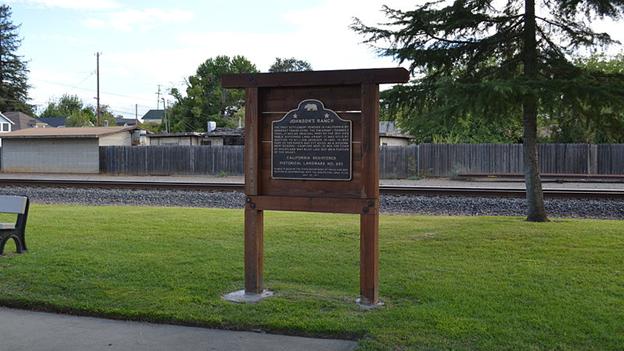
    <title type="html"><![CDATA[Johnson’s Ranch and the Donner Party’s Forlorn Hope]]></title>
    <summary type="html"><![CDATA[<p><strong><em>This ranch on the Western slope of the Sierra Nevada Mountain Range in modern-day California was owned by trader William Johnson. In early 1847, its inhabitants first witnessed the horrible state of the Donner Party, sounding the alarm of the plight of the trapped emigrant party.</em></strong></p><img src="https://www.intermountainhistories.org/files/fullsize/363f9cc274dbaab6d01390452739c6a4.jpg" alt="California State Parks Johnson’s Ranch Historical Marker" /><br/><p>In January, two Native Americans brought in a straggler from the Donner Party, William Eddy. He was frostbitten, emaciated, and delirious from over a month-long trek through the snow-capped mountains. He and others were sent off by the desperate Donner Party who were entrapped at Truckee Lake on the other side of the mountains. This group, known as the “Forlorn Hope”, featured fourteen of the strongest survivors from the Donner Party. On December 16th, 1846, they fashioned themselves snowshoes and moseyed up the mountains to reach the nearest settlement. Snow blindness and starvation quickly slowed their progress. Charles Stanton, the man who had already been to Sutter’s Fort to retrieve supplies in 1846 and only returned to help his family, was too exhausted to move and was left by the group after several days of hiking.
Snow impeded their progress further and desperation quickly set in. Some suggested drawing lots or a fight to the death to decide who should be cannibalized for survival. They chose instead to eat whoever perished first. On Christmas Eve, a Mexican named Antonio perished first. On Christmas Day, he was followed by Franklin Graves, then Patrick Dolan, and finally Lemuel Murphy, all dying from hypothermia induced delirium. These deaths all occurred in a violent blizzard where it was impossible to light a fire. When the storm broke, they lit a fire and began the process of cutting and eating their dead, <em>“averting their faces from each other, and weeping” </em>as they ate. They refrained from eating their kin, and William Eddy only ate when he could go no further.
The gauntly starved and frostbitten emigrants trekked on, their tracks stained red with blood. Within a few days the human flesh they had preserved was gone. Eddy stopped William Foster from killing the two Native guides previously sent by Sutter, Luis and Salvador. Fearing for their lives, the duo left the camp. The white emigrants followed their bloodied tracks the next day. The group found the exhausted hobbles of Luis and Salvador several days later, laid out in a creek. William Foster shot and cannibalized them both. The group stumbled along, hobbling into Indian villages but not able to recuperate off the natives' skimpy diet of nuts and cooked acorns. Eventually Eddy pressed on while the women sat at the side of the trail, unable to continue. For miles Eddy walked with the assistance of a Native American guide. For the last few miles, he was hoisted along, his energy completely spent. Reaching Johnson’s Ranch, 150 miles away from Truckee Lake, he only asked for bread as he collapsed. As he recuperated, riders were sent up the trail to retrieve the women and Foster. Of the 14 who left Truckee Lake, only 7 arrived at Johnson’s Ranch, all deaths being male.
The Forlorn Hope succeeded, at great cost. The alarm sounded as supplies and relief parties were organized at Sutter’s Fort, the main staging area for relief efforts. The first relief party reached the entrapped Donner Party on February 19th, and the parties that followed would save countless lives. Johnson’s Ranch did not have the facilities to stage the relief effort, but it did bring the Forlorn Hope back from the dead. The group recuperated with the settlers’ assistance, and they settled in California in the Summer of 1847. Unfortunately, many family members, including William Eddy’s wife and children died back at the camp. Eddy even threatened to kill Lewis Keseberg, a German immigrant who cannibalized his three-year-old son. The Forlorn Hope is a story that encapsulates the moral highs and lows of westward migration. To reach Johnson’s Ranch they endured blizzards, walked for days on end, and cannibalized each other on the chance that their families would survive. Johnson’s Ranch and the trail they foraged may be houses and recreational land now, but it remains the site of one of the most infamous and intriguing stories of westward migration.</p><p><em><strong><a href="https://www.intermountainhistories.org/items/show/936">For more (including 4 images) view the original article</a></strong></em></p>]]></summary>
    <published>2026-02-02T17:22:16+00:00</published>
    <updated>2026-04-17T19:32:21+00:00</updated>
    <link rel="alternate" type="text/html" href="https://www.intermountainhistories.org/items/show/936"/>
    <id>https://www.intermountainhistories.org/items/show/936</id>
    <author>
      <name>Samuel Watson, Brigham Young University</name>
    </author>
  </entry>
  <entry>
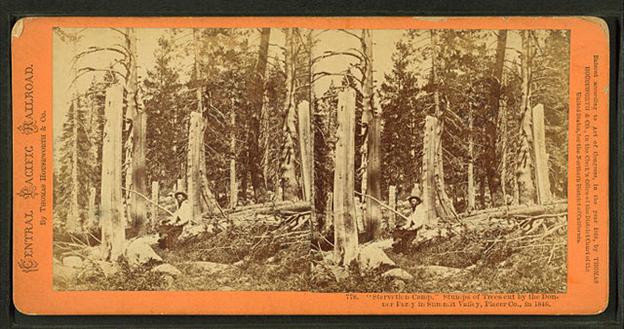
    <title type="html"><![CDATA[Truckee Lake: The Infamous Demise of the Donner Party]]></title>
    <summary type="html"><![CDATA[<p><strong><em>Truckee Lake (now known as Donner Lake) is nestled on the eastern slope of the Sierra Nevada Mountains of modern-day California. On the western side of the Lake there is an opening in the mountains where the Stephens-Townsend-Murphy party passed through in 1844 and set the primary route that westward emigrants would use to enter the Sierra Nevadas. For the Donners, this pass would become an unsurpassable wall of snow that stopped them from reaching salvation at Sutter’s Fort.</em></strong></p><img src="https://www.intermountainhistories.org/files/fullsize/643f19dc38f76998d08475484f96c8e5.jpg" alt="Trees that were cut by the Donner Party at Truckee Lake" /><br/><p>When the Donner Party arrived at Truckee Lake on October 31, 1846, they hoped to push through the mountains and descend into California before winter. However, due to their delayed arrival and an early mountain storm the day prior, the now snowed-in passes repelled their multiple attempts to do so. Though only 150 miles away from their planned destination, Sutter’s Fort, they were forced to establish an unplanned winter encampment at the lake, nearly 6,000 ft. above sea level. The best recounting of the Donner Party’s winter encampment at Truckee Lake comes from Patrick Breen, one of the only migrants to keep a consistent journal throughout their ordeal there. Ominously, Breen recorded that during their first week at camp <em>“it snowed during the space of eight days with little intermission.” </em>Having already killed most of their cattle, prospects of survival were grim.
They established two camps. Most of the party was at Truckee Lake, with the Donner families and a few others having been stopped by a broken wagon six miles before reaching the lake and camping at Alder Creek. However unprepared, the party planned to wait until relief parties arrived when snows let up or later in the Winter. Such hopes were dashed by abnormally heavy and continuous snow storms. The current Donner Memorial State Park Monument commemorates the snow depth that stranded them that winter, standing at 22 feet. As time passed, Breen cataloged the diminishing resources and hope of rescue.<em> “November 9th… took in Augustus Spitzer yesterday so weak that he cannot live without help caused by starvation.”</em>
The families at the lake had run out of meat and were eating animal hides for sustenance by January of 1847. In the face of starvation, social bonds and group cooperation further deteriorated. Earlier debts unpaid or trespasses unpunished from the trail were used as grounds to hoard supplies. For example, Mrs. Graves reneged on a promise to Mrs. Reed and took back borrowed animal hides which Mrs. Reed had received to feed her family. On February 9th Breen states, <em>“pikes child all but dead… Murphys not able to get out of bed Keyburg </em>[Keseburg]<em> never gets up says he is not able. John went down to day </em>[today] <em>to bury Mrs. Eddy & child…”</em> The first relief group sent from Sutter’s Fort in California arrived on February 19, 1847, and the scene they described testifies to the horrific conditions the families had suffered through for months at Truckee Lake and Alder Creek. Most shocking was the evidence of cannibalism: the mutilated corpses of two children, Isaac Donner and Franklin Graves, and the remains of Elizabeth Graves with several organs removed, presumably eaten. The relief party gave what provisions they could and took some emigrants with them, but the situation remained dire for those left behind. On February 26, Breen wrote, <em>“The Donnos </em>[Donners]<em> told the California </em>[Californians]<em> that they </em>[would] <em>Commence to eat the dead people… if they did not succeed that day or next in finding their cattle.”</em> Those left behind at Truckee Lake and Alder Creek continued to suffer, facing imminent death and potential desecration of their corpses by fellow starving party members. Numbers dwindled up until the last emigrant trapped on the Eastern side of the mountains, Lewis Keseberg, was rescued in April of 1847.
Although not a complete representation of the overland emigrant experience, the Donner Party’s demise is a cautionary tale in the frontier histories of the American West. Many others suffered from delays, poor decision-making, Native conflicts, and inclement weather, but few ended in such horrific circumstances as those at Truckee Lake and Alder Creek over the winter of 1846-47. The survivors would go on to live their lives in California, but their ordeal and rescue would be a constant reminder of the worst-case scenario for future emigrants on the overland trail.</p><p><em><strong><a href="https://www.intermountainhistories.org/items/show/935">For more (including 5 images) view the original article</a></strong></em></p>]]></summary>
    <published>2026-02-02T17:22:16+00:00</published>
    <updated>2026-04-17T19:32:21+00:00</updated>
    <link rel="alternate" type="text/html" href="https://www.intermountainhistories.org/items/show/935"/>
    <id>https://www.intermountainhistories.org/items/show/935</id>
    <author>
      <name>Samuel Watson, Brigham Young University</name>
    </author>
  </entry>
  <entry>
    <title type="html"><![CDATA[Teddy Roosevelt and John Muir Adventures in Yosemite: Story 3 of 8 of the President Theodore Roosevelt in the West Tour]]></title>
    <summary type="html"><![CDATA[<p><strong><em>President Theodore Roosevelt and his guide John Muir explored California’s beautiful National Park, Yellowstone, resulting in a nationwide conservation effort. </em></strong></p><img src="https://www.intermountainhistories.org/files/fullsize/091739d27efed8fc403fa07e54012ffd.jpg" alt="Theodore Roosevelt and John Muir pose in front of Glacier Point at Yosemite" /><br/><p>With a fondness for adventure, the outdoors, and the American West, President Theodore Roosevelt itched to experience the natural landscapes in California he’d heard so much about. Yosemite was one of only two national parks at the turn of the century, and he felt it fitting to include that stop in his 1903 Western tour. Roosevelt wrote a letter to John Muir, a Scottish botanist and conservationist who caught the President’s attention with his non-fiction novel “Our National Parks,” and asked him to be his guide. “I do not want anyone with me but you, and I want to drop politics absolutely for four days and just be out in the open with you.” Muir had an overseas journey planned in Europe and Asia at that time that he didn’t think he could cancel. After explaining the situation to the President of the University of California, Benjamin Ide Wheeler, he got an appeal and joined Roosevelt in the mountains, “I might be able to do some forest good in freely talking around the campfire,” Muir mused. As per Roosevelt’s request, politics were not discussed, but Muir’s agenda was nonetheless accomplished: to advocate for the land in the American West.
Roosevelt and his contingent arrived at Yosemite’s Wawona Hotel on May 15, 1903. With others remaining there, Muir, Roosevelt, a cook, two packers, and four mules left for the trees. They traveled through the giant sequoias, wandered through Mariposa Grove in the valley, and one night after camping at Glacier Point, they woke up to a blanket of snow, five inches atop them. If Roosevelt didn’t have forty wool blankets his men laid down for him and a warm fire by his side, he would have froze! Nonetheless, the men had great conversations. Charles Leidig was the cook and documented that “they talked a great deal about the conservation of forests in general and Yosemite in particular.” He also said, “he heard them discussing the setting aside of other areas in the United States for park purposes.” Muir had, indeed, done the “forest good.”
This trip jump-started Roosevelt's efforts to preserve public lands and natural resources across the nation. He was impressed to immediately go to Congress when returning to Washington and implement some of Muir’s ideas. He pushed for wildlife reserves, and on June 8, 1906, he signed the Antiquities Act which allowed the President to “declare by public proclamation historic landmarks” to be “national monuments, and may reserve as a part thereof parcels of land, the limits of which in all cases shall be confined to the smallest area compatible with proper care and management of the objects to be protected.” Roosevelt famously said in a speech in Sacramento after his experience in Yosemite, “We are not building this country for a day. It is to last through the ages.” Yosemite laid the groundwork for protecting other national forests in California and across the nation.</p><p><em><strong><a href="https://www.intermountainhistories.org/items/show/921">For more (including 3 images) view the original article</a></strong></em></p>]]></summary>
    <published>2025-10-24T15:03:18+00:00</published>
    <updated>2026-08-18T15:52:06+00:00</updated>
    <link rel="alternate" type="text/html" href="https://www.intermountainhistories.org/items/show/921"/>
    <id>https://www.intermountainhistories.org/items/show/921</id>
    <author>
      <name>Jessika Cole, Brigham Young University</name>
    </author>
  </entry>
  <entry>
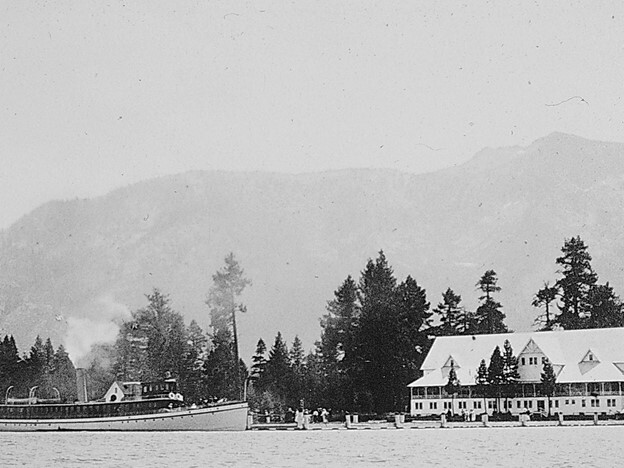
    <title type="html"><![CDATA[Kiva Beach: The Hidden Jewel of Lake Tahoe]]></title>
    <summary type="html"><![CDATA[<p><strong><em>Home to the Washoe Tribe, Kiva Beach on Lake Tahoe once had a luxurious beach resort along its shores which is now known as the Tallac Historic Site.</em></strong></p><img src="https://www.intermountainhistories.org/files/fullsize/18ccb87d120320af49769ab379cf98f4.jpg" alt="Tallac Resort and Casino with SS Tahoe on the lefthand side of the photo, ca. 1899-1920" /><br/><p>Kiva Beach on the southern shore of Lake Tahoe attracts thousands of visitors annually who seek a beach vacation and historic interpretation provided by the Tallac Historic Site.</p><p>Visitors enjoy swimming and sunbathing, and although there is no boat launch, people are welcome to bring their personal kayaks or paddle boards. Parking is free and the beach is also accessible by the Pope Baldwin Bike Path. The forest trail to the beach offers historical interpretation, including signs along the path that describe vegetation and local history. This beach is often less crowded than others around Lake Tahoe and provides picnic tables for people to sit at and enjoy the view of Maggie’s South Peaks in the distance.</p><p>The Washoe Tribe calls the region of Lake Tahoe their home, and Kiva Beach got its name after the traditional Indigenous kiva, which is a ceremonial structure. The lake provided life-sustaining water for the Washoe and each family had its own fishing grounds along the shorelines. While the tribe is still around today, they no longer reside near Lake Tahoe due to European settlement in the 19th century and contemporary tourism. The Washoe people continue to lobby for their rights to their homeland in the Lake Tahoe Basin.</p><p>The first settler at Lake Tahoe was John C. Fremont, explorer and politician, in 1844. However, it was not until 1859 that other European settlers started to pay attention to the area for its mining potential. Silver mining opportunities and the completion of the Central Pacific Railroad in 1869 brought people to settle around Lake Tahoe. One settler, Ephraim Clement, built the Tallac Point House located on Kiva Beach in the early 1870s. In 1880, Elias Baldwin bought the property and began to turn it into a luxurious beach resort complete with steamboat rides for guests. Baldwin added a second building called the Tallac Hotel, revered as “the grandest in all the world,” in 1899. These hotels allowed for high-end beach living on Lake Tahoe as only wealthy guests could afford to stay at Tallac Point. After the outbreak of World War I, tourism slowed in 1914 the Tallac House burned down, and the Tallac Hotel was razed in the 1920s.  The land went through multiple family owners until the Baldwin descendants sold the land to the Forest Service in 1969. The interpretive museum opened in 1990 where they give guided tours of the remaining buildings.</p><p>In 2011, Kiva Beach became a popular place for spiritual yoga practice. Attendees can participate in a yoga class on the sandy shores and then take an optional “cold plunge” in the lake. Beachgoers recommend this beach for dog owners since it is one of the few dog-friendly beaches on the lake. Kiva Beach is also family-friendly due to its secluded nature and the prohibition of alcohol on its shores. People continue to visit peaceful Kiva Beach as it allows guests to experience the best of both worlds, with both snowy mountains and a sandy beach.</p><p><em><strong><a href="https://www.intermountainhistories.org/items/show/846">For more (including 3 images) view the original article</a></strong></em></p>]]></summary>
    <published>2024-09-03T19:42:25+00:00</published>
    <updated>2026-04-17T19:32:19+00:00</updated>
    <link rel="alternate" type="text/html" href="https://www.intermountainhistories.org/items/show/846"/>
    <id>https://www.intermountainhistories.org/items/show/846</id>
    <author>
      <name>Olivia Hall, Northern Arizona University</name>
    </author>
  </entry>
  <entry>
    <title type="html"><![CDATA[Boom and Bust in Bodie, CA]]></title>
    <summary type="html"><![CDATA[<p><strong><em><span style="font-weight:400;">Once among the largest and most prosperous towns in California, Bodie is now defined by the ghost of its past in the form of abandoned objects, peeling wallpaper, and half-destroyed buildings. </span></em></strong></p><img src="https://www.intermountainhistories.org/files/fullsize/24dc4420a11bbf404db7f58bf5daf143.jpg" alt="Old buildings in Bodie, California" /><br/><p><span style="font-weight:400;">In the summer of 1859, W. Bodey found rich gold deposits in California, seven miles west of the Nevada border. He had traveled from Poughkeepsie, New York, in pursuit of an adventure, and his discovery would lead to the town of Bodie and surrounding hills being named in his honor. His name is something of a mystery today; there are reports that refer to him as William, Waterman, and Wakeman, his second initial as either “T” or “S,” and his last name occasionally spelled as Body rather than Bodey. As for the spelling of the town’s name, the “ie” ending was initially the result of a confused sign painter, and it just stuck. </span>
<span style="font-weight:400;">Bodey’s ambition to find more for himself in life fueled both his success and his downfall. He was one of the first to discover gold in eastern California and managed to survive the dire circumstances of early prospecting life through the first change of seasons. It wasn't the work in the mines during the summer that killed him, but the harsh winter that followed. In November 1859 Bodey and his traveling companion left camp to get supplies. They were caught in a blizzard, and Bodey–unable to keep up with his companion–was left to die. His remains were recovered and now lie beneath two headstones: one that reads “Waterman S. Bodey” with an engraved image of miners panning gold from a stream against a backdrop of mountains; and another, much smaller with the name “William S. Bodey.”</span>
<span style="font-weight:400;">In the years following his death, the town of Bodie was brought to life by other ambitious miners and their families, bringing the town’s population to 10,000 in 1879. With so many people arriving in such a short period of time, most of them lived in tents–even after the town became more established. In 1881 the Bodie and Benton Railway was built and used to haul lumber and other goods from the Bodie mines to the saw mill by Mono Lake. Bodie was becoming a prosperous center for work. It served some twenty-two gold and silver mines in the region with a stamp mill for processing ore and plenty of businesses in town. Saloons dominated, but there was also a mercantile, several general stores, motels, gambling and dancing halls, schools, stables, and both a Catholic and a Methodist church. </span>
<span style="font-weight:400;">Like its namesake, the town is no stranger to tragedy and risk. Two accidental fires–one from a kitchen in 1892 and another started by a child in 1932–caused the destruction of several main street buildings, and led to economic hardship. Combined with the sundry difficulties of the Great Depression, the town failed to recover. It joined the arid region’s long list of ghost towns. Weather conditions in the mountains are still just as treacherous as they were in W. Bodey’s fateful last days. Travel to Bodie during winter months is only possible by way of skis, snowshoes, or snowmobiles. </span>
<span style="font-weight:400;">In an attempt to preserve the historic elements of the town, Bodie was made an official California State Park in 1962. Only five percent of what once made up the booming town of Bodie is thought to have survived, and today its ghost-like remains sit virtually untouched in tattered buildings and houses. </span></p><p><em><strong><a href="https://www.intermountainhistories.org/items/show/806">For more (including 6 images) view the original article</a></strong></em></p>]]></summary>
    <published>2024-05-16T02:01:48+00:00</published>
    <updated>2026-04-17T19:32:18+00:00</updated>
    <link rel="alternate" type="text/html" href="https://www.intermountainhistories.org/items/show/806"/>
    <id>https://www.intermountainhistories.org/items/show/806</id>
    <author>
      <name>Megan Bailey, Brigham Young University</name>
    </author>
  </entry>
  <entry>
    <title type="html"><![CDATA[Iona House]]></title>
    <summary type="html"><![CDATA[<p><strong><em>Named after the philanthropic Knights’ youngest daughter, Iona House had a colorful half-century life as a dormitory, missionary training home, therapy clinic, and Spanish laboratory.</em></strong></p><img src="https://www.intermountainhistories.org/files/fullsize/0ed394d7efbad5e4dd4dc97203bc7632.jpg" alt="Addie Iona Knight Jordan" /><br/><p><span style="font-weight:400;">Born December 18, 1891 in Provo, Addie Iona Knight was the youngest daughter of Latter-day Saint philanthropists </span><a href="https://www.intermountainhistories.org/items/show/569"><span style="font-weight:400;">Amanda McEwan Knight</span></a><span style="font-weight:400;"> and </span><a href="https://www.intermountainhistories.org/items/show/140"><span style="font-weight:400;">Jesse Knight</span></a><span style="font-weight:400;">. Her older brother, J. William, recalled that Iona had “a keen intellect, a generous heart, and an unusually intelligent sense of humor.” Always eager to learn, Iona enjoyed discovering the world beyond Utah, and in 1907 she traveled throughout Europe (with a BYU professor chaperone).</span>
<span style="font-weight:400;">Iona was well-educated; she studied first at Brigham Young University, then West Lake School for Girls in Los Angeles, and finally Stanford University in Palo Alto. While at Stanford, Iona befriended Professor David Starr Jordan—a renowned ichthyologist whose controversial legacy includes both democratizing education and propounding racist eugenics—and his wife Jessie Knight.</span>
<span style="font-weight:400;">Iona moved back and forth between Provo and California, and she had a brief stint teaching in BYU’s English Department. She remained close to David and Jessie throughout her life and even moved back to Palo Alto to live with them during David’s final, ailing years. Iona remained in California, and she also died there after a long illness on May 7, 1937. She was buried with the rest of the Knight family in Provo.</span>
<span style="font-weight:400;">The building’s story has its roots in 1942, when World War II defense workers flooded Provo, creating a housing shortage for students. To alleviate this, 1940s BYU bought houses and turned them into “co-op” student residences. </span><a href="https://www.intermountainhistories.org/items/show/619"><span style="font-weight:400;">Warnick House</span></a><span style="font-weight:400;"> was the first, bought in 1942, and BYU considered it such a success they purchased and renovated a second in 1943, which they named Iona House, after the late English teacher.</span>
<span style="font-weight:400;">Like Warnick, Iona was a “co-op.” Student residents shared bedrooms, restrooms, a kitchen, and communal spaces, and they bore responsibility for working together to manage the home. Cooperative living had its pluses; residents always had a group to hold activities with, whether potlucks or sled parties, and they knew how to work together. For example, in a 1945 Women’s Athletic Association softball tournament with several other dormitories plus PEMM (the Physical Education Majors club), Iona’s residents lost only one game and overall tied with PEMM. Three years later, the 1948 residents won the Homecoming parade’s best humor award for their float, which “portrayed college life in the dormitories and completed the task so well.”</span>
<span style="font-weight:400;">In 1959, the need for men’s housing increased such that Iona House switched from a women’s residence to a male graduate student residence. For the next three decades, Iona served numerous purposes. In the 1960s or 1970s, Church missionaries learning to speak Navajo lived in Iona, and from sometime in the 1970s until 1976, sister missionaries learning Italian lived there. From 1976 to at least 1979, BYU Marriage and Family Counseling held its clinic in Iona. Finally, in the 1980s, Iona was the “Spanish House” for students in the intensive Spanish language program.</span>
<span style="font-weight:400;">In the early 1990s, BYU decided Iona had run its course. It demolished the building and apparently sold the lot; today, townhouses fill the property.</span></p><p><em><strong><a href="https://www.intermountainhistories.org/items/show/634">For more (including 12 images) view the original article</a></strong></em></p>]]></summary>
    <published>2022-07-01T16:44:38+00:00</published>
    <updated>2026-04-17T19:32:14+00:00</updated>
    <link rel="alternate" type="text/html" href="https://www.intermountainhistories.org/items/show/634"/>
    <id>https://www.intermountainhistories.org/items/show/634</id>
    <author>
      <name>Makoto Hunter, Brigham Young University</name>
    </author>
  </entry>
  <entry>
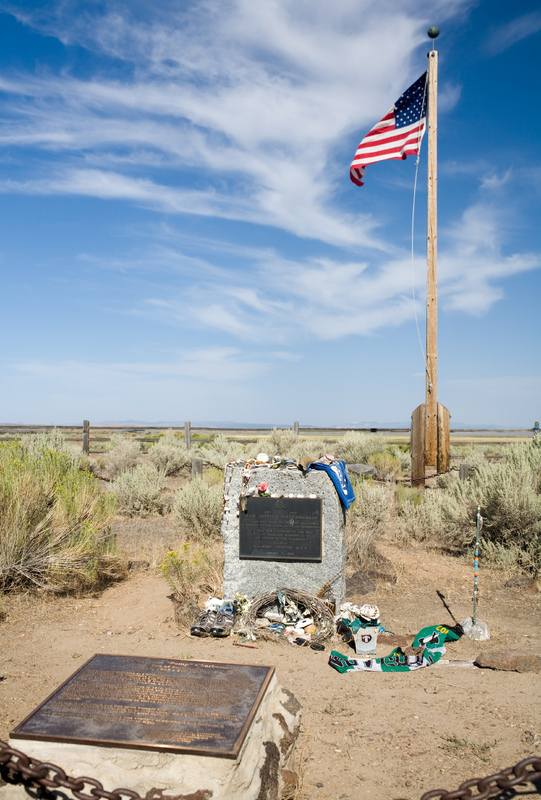
    <title type="html"><![CDATA[Jean-Baptiste Charbonneau’s Grave]]></title>
    <summary type="html"><![CDATA[<p><strong><em>Born in February 1805, Jean-Baptiste Charbonneau accompanied the Lewis and Clark Expedition as an infant before becoming a fur trader, guide, alcalde, and then a hotel manager in California.</em></strong></p><img src="https://www.intermountainhistories.org/files/fullsize/01db17a0c012fd0f8a8d4751a3066439.jpg" alt="Charbonneau gravesite" /><br/><p>Jean-Baptiste Charbonneau, son of Sacagawea and Toussaint Charbonneau, accompanied his parents on Meriwether Lewis and William Clark’s expedition for the Corps of Discovery. Although a small infant, he made the entire trek from North Dakota to the Pacific Coast and back to the Mandan Villages on the Knife River. After Sacagawea’s death in December 1812, William Clark legally adopted Jean-Baptiste and his little sister Lisette. Clark provided an education for the two children at a Catholic boarding school in St. Louis. This education opened up numerous opportunities for Jean-Baptiste throughout his life.
As an adult, Jean-Baptiste spent a substantial amount of time in Europe where he learned additional languages and skills. Returning to America, he joined the fur trade, working as a trapper with the Rocky Mountain Fur Company. His extensive knowledge of the terrain enabled him to serve as a guide for explorers, as well as for the Mormon Battalion on their route from Leavenworth to San Diego in 1846 during the Mexican–American War.
While in California, Charbonneau worked as an alcalde (mayor), panned for gold, provided interpretation services, and operated a hotel in Auburn, California. After the American Civil War and toward the end of his life, Charbonneau worked odd jobs until he learned about gold and silver strikes in Idaho and Montana. On his way to the mining rushes he traveled through Danner, Oregon, but shortly after crossing the Jordan Creek and the Owyhee River, he fell ill (likely of pneumonia) and died at sixty-one years old. Oregonians memorialized Charbonneau by erecting and dedicating a plaque to him in Danner. His place of death is located just over the border of Oregon and is close to the Lemhi Shoshone Nation of Idaho, the likely birthplace of his mother, Sacagawea.</p><p><em><strong><a href="https://www.intermountainhistories.org/items/show/585">For more (including 3 images) view the original article</a></strong></em></p>]]></summary>
    <published>2022-04-09T07:02:41+00:00</published>
    <updated>2026-04-17T19:32:12+00:00</updated>
    <link rel="alternate" type="text/html" href="https://www.intermountainhistories.org/items/show/585"/>
    <id>https://www.intermountainhistories.org/items/show/585</id>
    <author>
      <name>Taylor Mansfield, Brigham Young University</name>
    </author>
  </entry>
  <entry>
    <title type="html"><![CDATA[Indian Removal from Yosemite National Park]]></title>
    <summary type="html"><![CDATA[<p><strong><em>Unlike in other National Parks, the American Indians living in Yosemite Valley were allowed to remain in the park after its creation. They worked as laborers and facilitated the tourist trade. In the 20th century, park officials slowly pushed them out of the valley and destroyed their homes in an attempt to ‘purify’ the park. </em></strong></p><img src="https://www.intermountainhistories.org/files/fullsize/92d5aa09457af5ab760d2d0afd4c3d08.jpg" alt="“Bridgeport Tom, a Mono Lake Paiute, and his family lived
 in the Valley during the early 1900s. Here, the family 
poses in front of their home at the base of Yosemite Falls.”" /><br/><p>The Southern Sierra Band of Miwok Indians, also known as the Ahwahnechee, lived in Yosemite Valley beginning in the 14th century. The Sierra Miwoks interacted with other Miwok bands and nearby Paiutes, some of whom also settled in the valley. </p><p>Miners came to Yosemite in the 1850s following the California Gold Rush. Tourism to the valley increased in the late 1800s as John Muir advocated for the area’s preservation. The Yosemite Indians had been largely ignored by government officials in the past and had no official relationship with the federal government. As more people camped in or visited the valley, the resources of the Yosemite Indians diminished. In the 1880s, Yosemite leaders sent a petition to Congress, claiming that the “destruction of every means of support for ourselves and our families by the rapacious acts of whites will shortly result in the total exclusion of the remaining remnants of our tribes from this beloved valley.” They asked for $1 million for the “future support of ourselves and our descendants,” but received no reply. </p><p>Yosemite National Park was created in 1890. The Natives were not removed, but their way of life was restricted, and they depended on money from tourism. They sold baskets, charged tourists for photographs, and participated in the Indian Field Days, a showcase of Native American skills, crafts, and games beginning in 1916. Soon after the Field Days began, the Yosemite Indians merged their camps into one village.</p><p>In the 1930s, Park Superintendent Thomson planned to build a medical clinic in the place of the Indian village. There was no talk of expelling the Indians, as park officials valued their contribution to the tourist trade and needed them as laborers. Instead, the park decided to build a new ‘Indian Village,’ starting construction on cabin houses in 1933. Thomson wanted to use the new village as a means of controlling the Indian population in the park. Residents were charged rent and utilities, a difficulty when park officials refused to hire them. David Parker wrote to the Commissioner of Indian Affairs in 1933 saying, “I don’t see why we are not getting any chance, we are dependable as any men.” Once a resident lost employment in the park or retired, Thomson would end their lease and they would be forced to leave the valley. By the 1940s, the park’s Native population had been cut in half. </p><p>In 1953, the park service instituted the Yosemite Indian Village Housing Policy, allowing only permanent government employees to remain in the village. Park officials destroyed the homes of those who left in order to stop newcomers from taking their place, gradually pushing every Native family out of the park. By the 1960s the park service had burned all of the cabins except one, which they converted into a management office. Any remaining Indian workers were moved to park employee housing. Jay Johnson, the final Native employee to retire, left the park in 1996. </p><p><em><strong><a href="https://www.intermountainhistories.org/items/show/339">For more (including 4 images) view the original article</a></strong></em></p>]]></summary>
    <published>2019-09-21T02:50:19+00:00</published>
    <updated>2026-04-17T19:32:06+00:00</updated>
    <link rel="alternate" type="text/html" href="https://www.intermountainhistories.org/items/show/339"/>
    <id>https://www.intermountainhistories.org/items/show/339</id>
    <author>
      <name>Allie Patterson, Brigham Young University</name>
    </author>
  </entry>
  <entry>
    <title type="html"><![CDATA[Forced Relocation and The Owens Valley: Numu (Paiutes) and Japanese-Americans and Forced Relocations to and from the Owens Valley]]></title>
    <summary type="html"><![CDATA[<p><strong><em>The Japanese-American workers pictured in the featured image are standing, stooping, and kneeling in the shadows of the eastern Sierra Nevada mountains in Owens Valley, California - and their presence on the land highlights colonial and capitalist themes that underpin the history of the valley itself. Their forced removal and internment during World War II to this isolated rural area is not a unique history to the Owens Valley. Nor is it the only local story of removal. </em></strong></p><img src="https://www.intermountainhistories.org/files/fullsize/00219c688b8f7ec61b8ac671978dba96.jpg" alt="Farming by Mt. Williamson" /><br/><p>Adjacent to the Manzanar Relocation Center is the site of a colonial military project in the valley called Fort Independence. The creation of the fort in 1862 focused on quelling violent skirmishes between Numu (Owens Valley Paiute) and ranchers and farmers who invaded Numu homelands and devastated their food resources. The destruction of seed bearing plants, the deforestation of pine nuts for timber, and the Anglo settlements on Numu irrigated lands and agricultural fields created the atmosphere of violence that Civil War California Volunteers then exacerbated. The colonial focus on terminating Numu land rights and removing them from the valley only temporarily kept them from their homeland, they returned months after their removal in 1863 to salvage their property and enter wage-work on farms, ranches, and within the growing mining industry.          </p><p>While the Numu had been removed from the valley in 1863, Japanese-American citizens were forcibly relocated to the valley in 1942. The ethnocentric experiences are similar: confined to a block of land away from their homes, a military presence policing their lives, the use of labor to create a self-sufficient federal reservation, and the incorporation of their labor into U.S. capitalist production. These colonial policies, like Native reservation life throughout the U.S., brought diverse families together to build a community through work and non-work activities. The mixed memories of internees toward their lives in the camp highlight the connection to place created within Manzanars two-year lifespan.          </p><p>Jeanne Wakatsuki Houston, a co-author of the memoir "Farewell to Manzanar," documented her families experiences there. She remembered her brother Woody declare, “If we’re gonna live in this place, we better get to work,” and she described in detail her family plugging the holes of their barracks, and community creations of bathroom dividers for privacy, public parks, gardens, farms, schools, and churches for recreational and spiritual socializing. However, she also contested positive memories taking place under guard towers and beside barbed wire, “you could measure your liberty by how far they’d let you go.” The creation of community at Manzanar focused on labor and non-labor activities, which Jeanne Houston’s quotes embody. </p><p>Other residents such as Nob Kamibayashi remembered, “We met new friends from throughout the camp. To this day I have friends who were in the same class as me;” Victor Muraoka added, “My job was washing dishes, sweeping, mopping, and helping the cooks. I worked there the longest and hated to leave,” and Saburo Sasaki and Chiyeko “Chickie” Hiraoka Matoba respectively stated, “[We went to the co-op] for ice cream and soda pop, a haircut, or buy a new pair of shoes,” and “School was sort of [the] center of my activities; and so was sports. There were a lot of sports.” These memories concern work and non-work practices, and the positive memories of life and community under civil and military rule. The differences between reservation, concentration, and internment camps consist of the actual mobility of people confined in each place. However, a similarity of all three focus on aspects of family creation and communal work, which for Japanese-citizens at Manzanar created community outside of their California, Oregon, and Washington homes. </p><p><em><strong><a href="https://www.intermountainhistories.org/items/show/28">For more (including 11 images) view the original article</a></strong></em></p>]]></summary>
    <published>2017-02-17T19:31:19+00:00</published>
    <updated>2026-04-17T19:31:58+00:00</updated>
    <link rel="alternate" type="text/html" href="https://www.intermountainhistories.org/items/show/28"/>
    <id>https://www.intermountainhistories.org/items/show/28</id>
    <author>
      <name>Lee Hanover, University of Nevada, Las Vegas </name>
    </author>
  </entry>
</feed>