Pearl Hart: The Bandit Queen

Best remembered for committing a stagecoach robbery, and her rare identity as a “Lady Outlaw” of the Wild West, the life of Pearl Hart might not have been as adventurous or romantic as it appears on the surface.
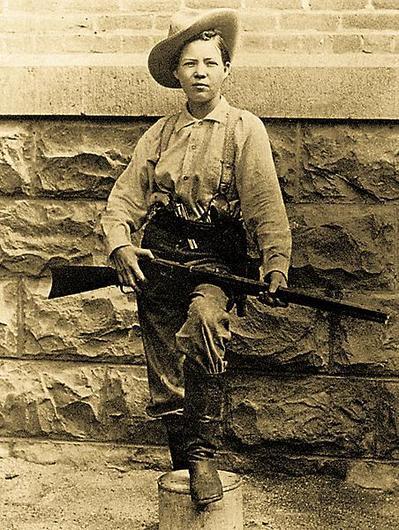
Lillie Naomi Davy, later known as “Pearl Hart,” was born into a violence that she would spend the rest of her life attempting to escape. Born in 1871, she was the third of at least eight children and spent most of her childhood in rural Lindsay, Ontario. Her father was relentlessly abusive, and her mother had little power over the situation. Lillie and her siblings were often left to fend for themselves, turning to mischief and even crime. In her youth she was described as, “livesome, blythe, and witty.” At eleven-years-old Lillie and her thirteen-year-old brother William stole a cow from a neighboring farm and re-sold it before they were caught. Lillie and her sisters Catherine and Saphronia frequently ran away from home, usually to the western United States. They cut their hair short and dressed in men's clothes, which helped them fly under the radar. Once they’d been discovered, which they always were, the sisters were usually sent back to New York, where their mother had moved prior to their father’s imprisonment for violent crime.
Lillie was only fifteen when she started seeing Charles Dean, who became her first husband only a year later, although he was thirty-five and had been married to another woman when they had initially met. When he grew increasingly violent towards her, Lillie ran away with her sister Catherine once again. In the next several years Lillie remarried, or at least claimed to be re-married, for there was no legal documentation of divorce from Charles, to a man named Dan Bandman. She admired him for his college education and musical talents, though it did not take long for his charm to wear thin and the violence that so haunted young Lillie’s life to once again threaten her.
The western frontier beckoned hope to anyone looking for an escape. There was a promise of freedom, opportunity, and prosperity for those who had the guts and grit to make it on their own. Work in the west was mostly limited to hard labor for men in fields such as mining, logging, and construction. Women, especially the unmarried, had far fewer options. The most profitable by far being prostitution. Lillie and Catherine worked for a time in a brothel run by the mistress Pearl Hart, someone they both likely admired, for Catherine began referring to herself as “Minnie Hart,” and in the following years Lillie took on the alias of “Pearl Hart” herself. Like her contemporaries “Butch Cassidy” and “Billy the Kid,” this new title was more than just a new name, it was an attempt to reinvent her persona and conceal her past identity.
From late adolescence to early adulthood, Pearl never stayed anywhere long and did whatever she could to survive––which often meant working in dangerous conditions or returning to an equally dangerous life with an abusive husband.
In 1899 Pearl became desperate to make a decent sum of money, and quick, presumably because she had just discovered her mother was dying and wanted to get back east to say goodbye. After a brief, and fruitless, stint working in the mines of Globe, Arizona Pearl teamed up with a man known as “Joe Boot.” It is unclear what kind of relationship they had, or who the mastermind behind the operation was, but most signs point to Pearl as the instigator. After they had been taken into custody, Pearl described Joe as cowardly, stating that his hands were “shaking like leaves” the whole time. Although they had been somewhat kind to the victims of their heist, giving them back half of the money so that the travelers would not be left completely destitute, Pearl was sentenced to five years at Yuma Territorial Prison.
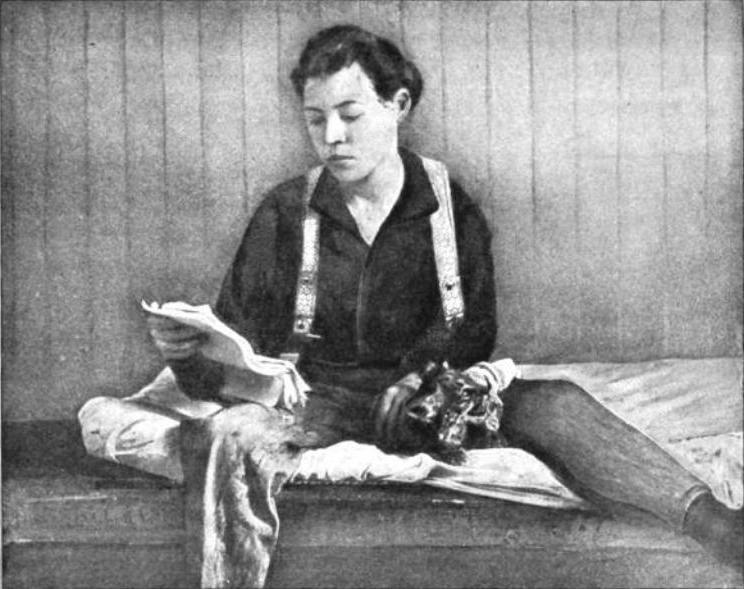
Following her stint in prison, Pearl became more elusive and there are not many records of her exploits––criminal or otherwise. While her incarceration kept her from ever reuniting with her mother, she did reconnect with some of her siblings. One of her sisters wrote a play based on the exploits of “Pearl Hart,” the legendary character she had become. She acted in the play as herself, fulfilling a dream she had once had of becoming an actress.
Pearl spent much of her life in seemingly hopeless and tumultuous circumstances, but she might have found joy in stage performance. Or in time spent reminiscing with her sisters about their adolescent larks––dressing in boys clothes and hopping trains to unexplored cities––before they had to face the reality of their stations in life.
Images