Yellowstone Lake’s Steamships and the Legacy of E.C. Waters

Park Map – Yellowstone National Park. Map. Originally created February 1, 2023. Modified by Anaëlle DePoint. National Park Service. Accessed April 28, 2025. https://www.nps.gov/media/photo/collection-item.htm?pg=7323739&cid=305fb7af-a71b-469b-941e-a98b439c882f&id=dc30085e-3713-4a8f-856b-19ac1c566066&sid=a4e6a581-87cd-48b5-bb71-597876409532&p=1&sort=relevance.
Yellowstone Lake, in Yellowstone National Park, is the largest high-elevation lake in North America. Visitors arrive eager to take in the mountains, glacial waters, and wildlife that surround it. Concessionaire E.C. Waters ran a lucrative steamship operation transporting guests across its waters for two decades, but his business practices and violations of park regulations led to its downfall.
Congress established Yellowstone in 1872 as the country’s first and largest national park. Soon after, potential concessionaires flocked to build visitor services within park boundaries. In choosing leaseholders, early administrators strove to balance conservation and tourist accessibility. Increased transportation options would bring more people to the area, companies argued, and encourage the government to allocate funds to protect Yellowstone from vandalism and poaching. In 1886, following a decade of haphazard operations, the Yellowstone Park Association (YPA) took advantage of the park’s rise in popularity. The Northern Pacific Railroad-financed company took over property leases from the previous bankrupt concessionaire. The sites spanned across the park, including one at Yellowstone Lake.
E.C. Waters began as the general manager of the YPA’s hotels in 1887. Aiming to improve the quality of park-wide accommodations, the company planned a sophisticated hotel located on Yellowstone Lake. The site’s remoteness called for boat transportation, as stagecoach travel could be uncomfortable and slow. In 1889, the YPA named Waters president of its Yellowstone Lake Boat Company to meet this demand.
The entrepreneur, though, was already making enemies across the company and the Interior Department. In 1890, the YPA fired him for extortion, poaching, and a geyser’s eruption by throwing soap into it. Yellowstone officials barred him from the park, but his connection with President Benjamin Harrison’s son got him reinstated that same year. In 1892, the Interior Department granted him a permit to transport visitors on his steamship, the Zillah, from Thumb Bay to the Lake Hotel area. The 125-passenger vessel was sent piece-by-piece from Minnesota and reassembled at the lake. By 1896, the Zillah was making stops at E.C. Waters' “zoo” on Dot Island. It was a little more than some corralled bison and elk, which he shipped in from outside the park. Passengers were unknowingly charged extra by Waters for the quick stop. To make matters worse, the bison and elk starved as his finances declined and operations fell into disrepair. Park administrators and visitors questioned the Zillah’s lakeworthiness, Waters’ concession license, and his overall moral character.
Regardless, Waters built another steamship, the E.C. Waters, in 1905. It could carry 500 passengers, a violation of the park’s capacity limits. Fed up with his antics, park administrators refused to reinstate his lease and booted Waters from Yellowstone in 1907. A 1921 storm berthed the E.C. Waters on an island close to the hotel without ever transporting a single visitor. Park officials salvaged its parts over the next decades, most notably its boiler, which heated the Lake Hotel until the mid-twentieth century. What exactly became of the Zillah is unknown. Boat concessions continued after E.C. Waters sold his company in 1907, but the days of steamships and zoos were gone. Now, officials restrict lake operations to a tour boat, some motorboats, and paddle sports like kayaks. Visitors can still spot the skeleton of the E.C. Waters where it was shipwrecked years before, a testament to the hubris and ambition of its namesake.
Images
Park Map – Yellowstone National Park. Map. Originally created February 1, 2023. Modified by Anaëlle DePoint. National Park Service. Accessed April 28, 2025. https://www.nps.gov/media/photo/collection-item.htm?pg=7323739&cid=305fb7af-a71b-469b-941e-a98b439c882f&id=dc30085e-3713-4a8f-856b-19ac1c566066&sid=a4e6a581-87cd-48b5-bb71-597876409532&p=1&sort=relevance.
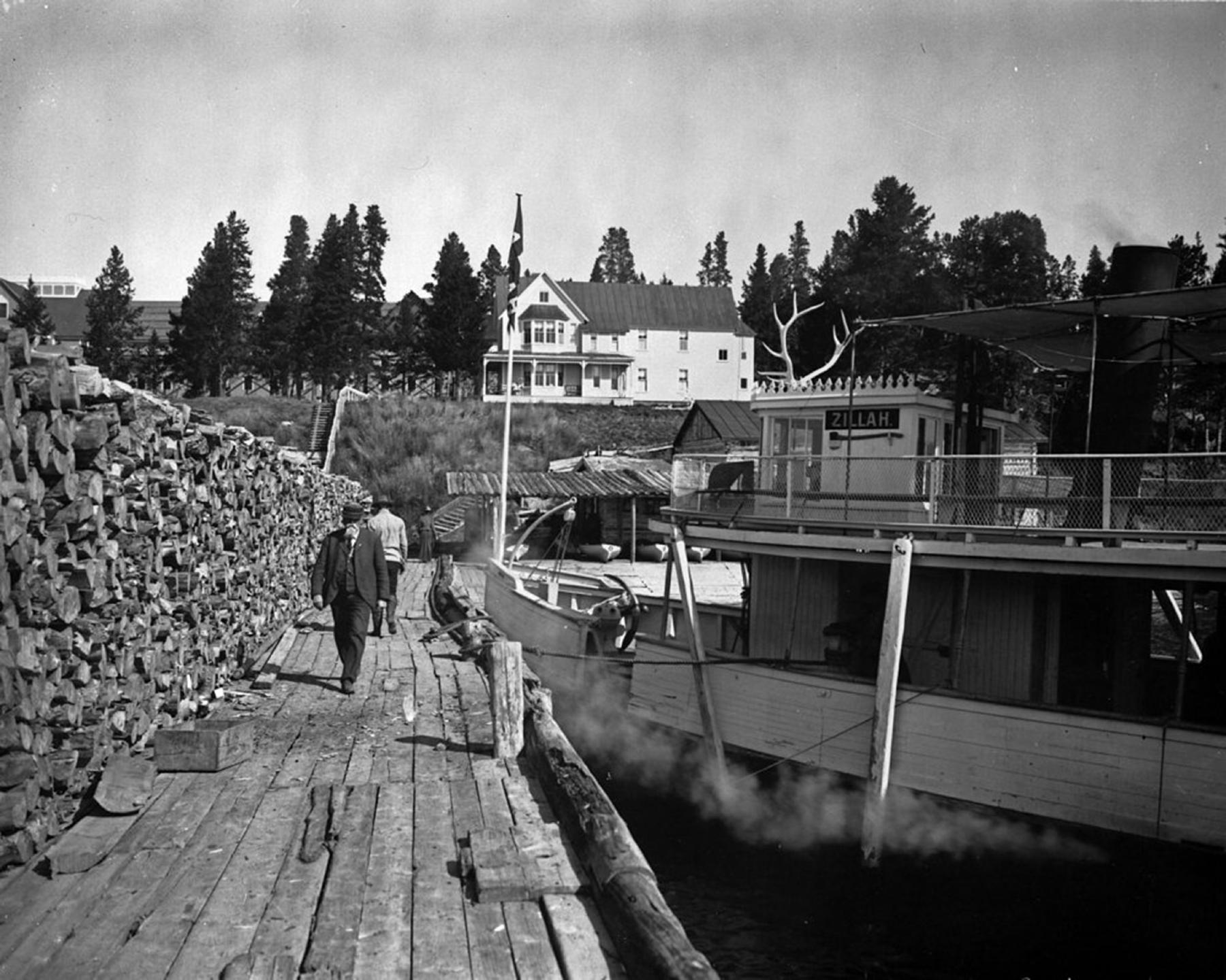
Haynes, F. Jay (Frank Jay), 1853-1921, Yellowstone Lake, Steamer 'Zillah' at dock. E.C. Waters on dock. E.C. Waters house in background. Postcard, 1904. Yellowstone National Park. Montana History Portal. Accessed May 5, 2025, https://www.mtmemory.org/nodes/view/79348
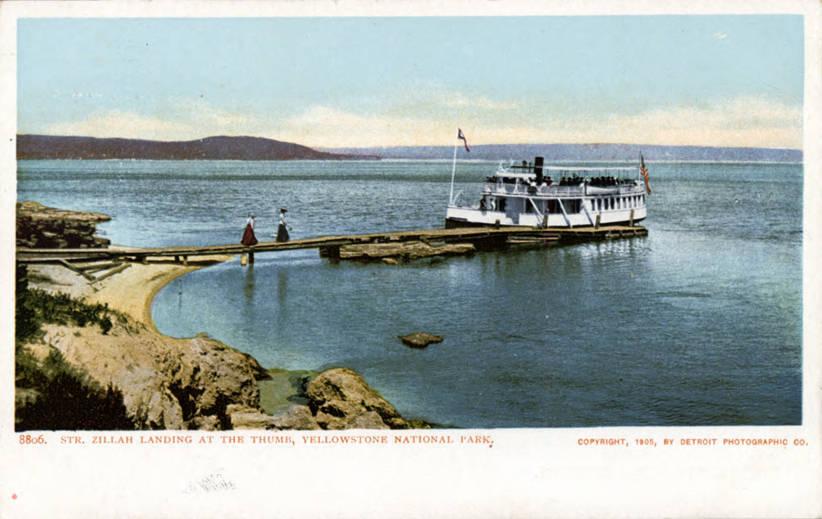
Steamer Zillah Landing at the Thumb. Postcard, c.a. 1905. Curt Teich Postcard Archives Digital Collection. Newberry Library. Accessed April 28, 2025. https://collections.carli.illinois.edu/digital/collection/nby_teich/id/432221/.
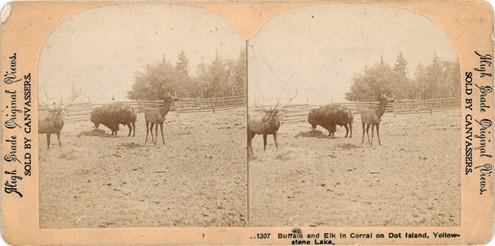
ST.21.0076 – Buffalo & Elk in Corral on Dot Island, Folder MS21.17.07, Box: MS21.17, Folder: MS21.17.07. MS 021. Stereograph, c.a. 1896-1907. Yellowstone National Park Collection, MS 021. McCracken Research Library. Accessed April 18, 2025. https://mccrackenatcenterofthewest.libraryhost.com/repositories/2/archival_objects/60056
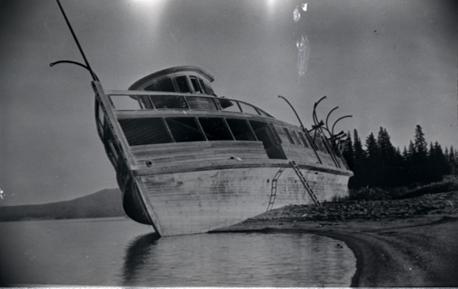
Wreck of the "SS E.C. Waters". Photograph. ca. 1926. Yellowstone National Park, YELL 36370. National Park Service Museum Collection. Accessed April 28, 2025. https://npgallery.nps.gov/MUSEUM/AssetDetail/4ecb531c-9f16-4036-9914-d9d5c7dbbd25.
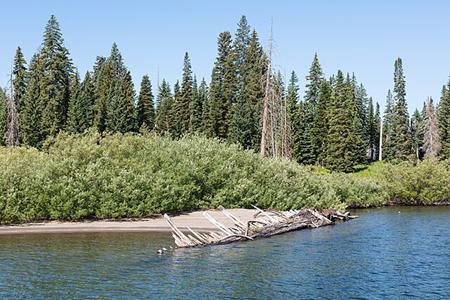
Frank, Jacob W. The Remnants of E.C. Waters on Stevenson Island. Photograph, July 26, 2018. Yellowstone National Park. National Park Service. Accessed April 17, 2025. https://commons.wikimedia.org/wiki/File:The_remnants_of_E.C._Waters_on_Stevenson_Island_(42867188895).jpg.
.jpg)