Mining in Madrid, NM
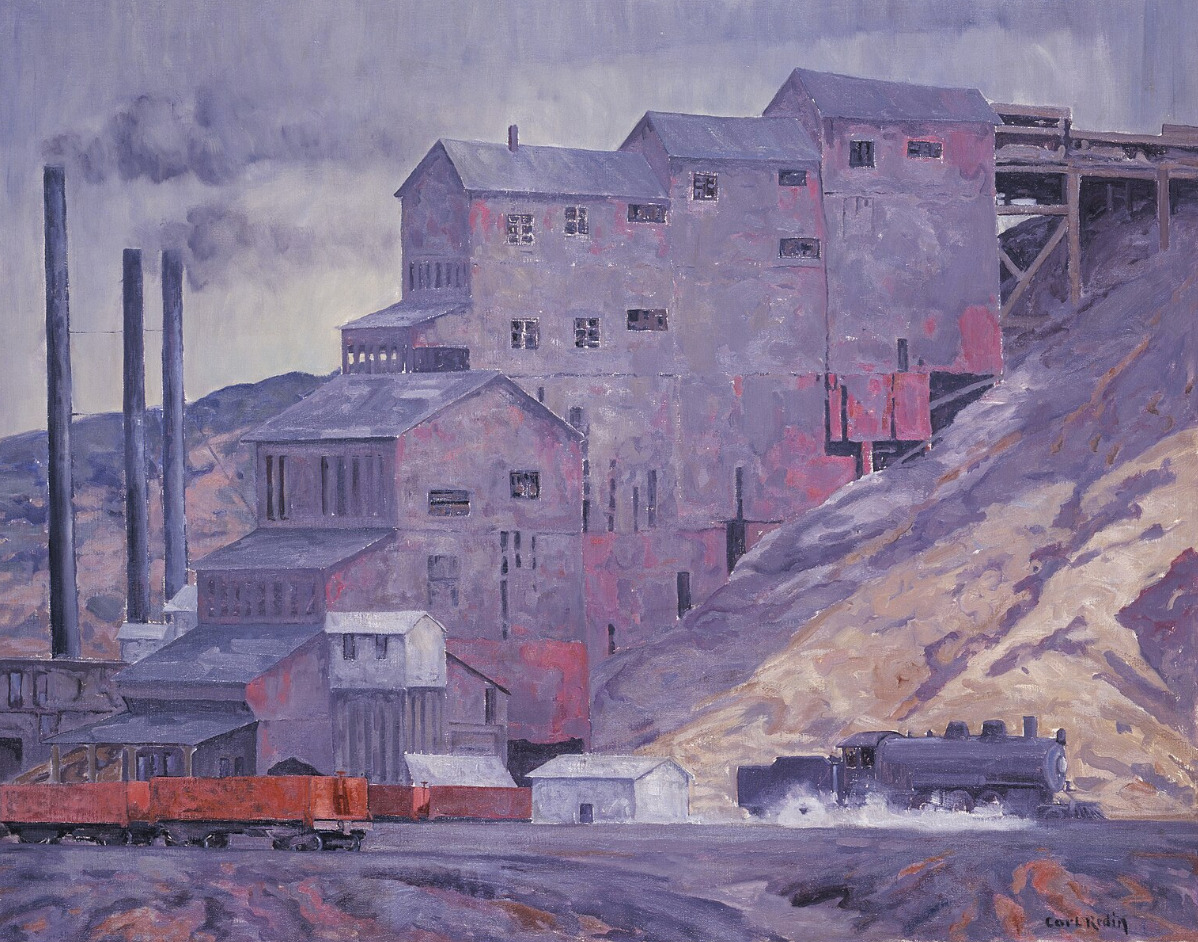
At Madrid Coal Mine, New Mexico, an oil on canvas painting by Carl Redin in 1934. Currently held at the Smithsonian American Art Museum. Photograph courtesy of and used with permission by Wikimedia Commons. https://commons.wikimedia.org/wiki/File:Carl_Redin_At_Madrid_Coal_Mine,_New_Mexico_1934.jpg

Once a coal mining town with mandated celebratory traditions, Madrid is kept alive today by a community of artists.
There is a community in the mountains of Santa Fe County, New Mexico that has redeemed itself from “ghost town” status–though they still claim the title. Madrid was best known for its wealth of coal during the mining boom in the late nineteenth and early twentieth century. The town was first founded in 1869, attracting attention from its location along the Santa Fe Railroad. Traveling journalist Charles Fletcher Lummis said that there was no other railroad that “penetrated such a wonderland of the pictorial in geography and in humanity.” Trains used Madrid to refuel and stock up on coal. The prosperity of the land brought in a large enough community for businesses like the trading post, stores, schools, a diner, and a boarding house to be built and well-used in the early twentieth century.
Life in mining towns is sometimes thought of as exciting–newfound wealth and communities brought together in the wake of the gilded age–but the reality was far grittier. Men, women, and children who worked in coal mines were subject to the dangers of collapsing shafts, explosions, and machinery malfunctions, as well as gas poisoning and other illnesses brought on by poor air quality. However, the corporations running the town had several initiatives that attempted to make life more enjoyable for the residents.
The free electricity they provided to each home was certainly the most valuable perk, but there were also annual festivities that were required in an attempt to boost the community’s morale. As Christmas approached each year, every resident had to ornament their house with string lights, buy a Christmas tree, and make sure their house was as much of a spectacle as possible. With 3,000 residents by the 1930s, Madrid did become quite a spectacle, drawing in crowds from Albuquerque and other nearby communities in awe of the light displays. When blackouts for World War II started, the Christmas lights were put out, and shortly after the war ended, the mines were closed for good.
As steam locomotives were replaced with diesel engines, coal lost its value and the mines in Madrid were shut down not long after the war ended. The population rapidly declined, and Madrid sat among other former mining towns in Santa Fe county, with the threat of complete abandonment. Yet, Madrid never quite lost its charm. It went on to be featured in several movies, from 1970 to the early 2000s, and now it is home to artists, quirky landmarks, and converted historic buildings.
Images
At Madrid Coal Mine, New Mexico, an oil on canvas painting by Carl Redin in 1934. Currently held at the Smithsonian American Art Museum. Photograph courtesy of and used with permission by Wikimedia Commons. https://commons.wikimedia.org/wiki/File:Carl_Redin_At_Madrid_Coal_Mine,_New_Mexico_1934.jpg
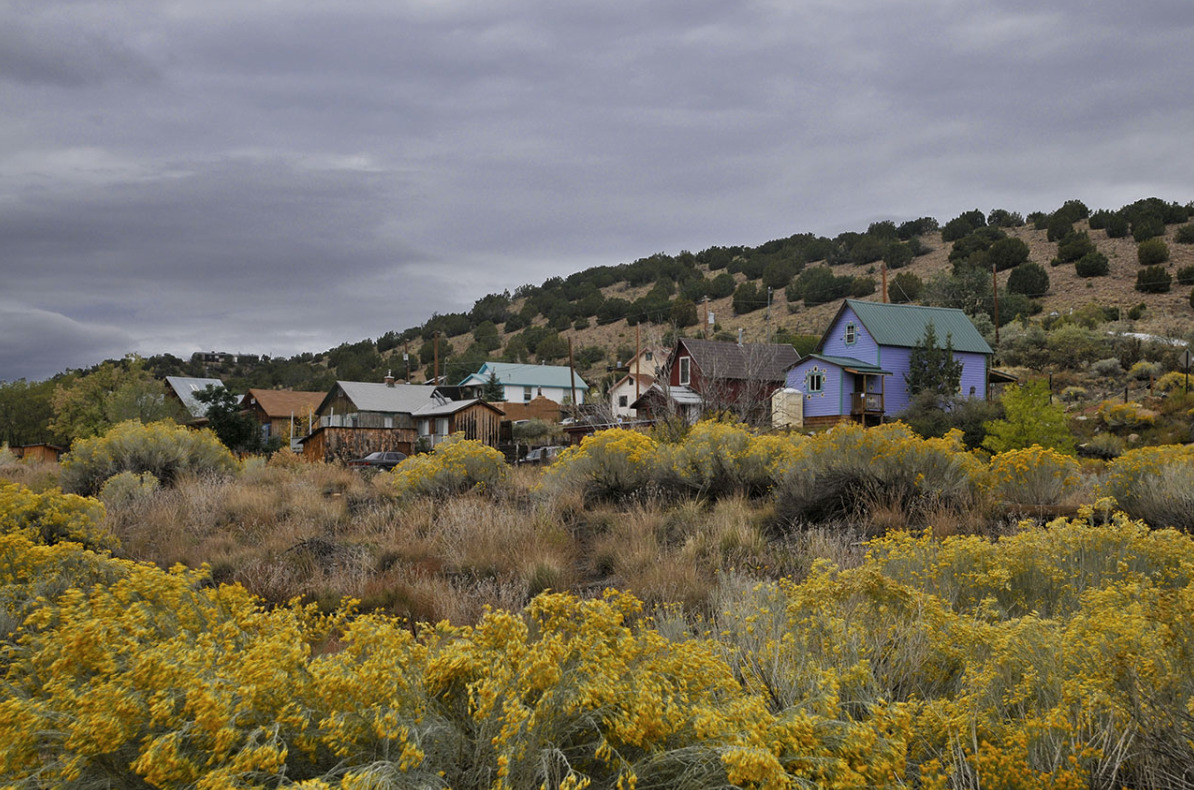
The “Painted Ladies of Madrid.” Photographed by Mike Fisher. Photograph courtesy of and used with permission by Wikimedia Commons. https://commons.wikimedia.org/wiki/File:Houses_of_Madrid,NM_(4917943043).jpg
.jpg)

Map of the Santa Fe Railroad route. Photograph courtesy of and used with permission by Wikimedia Commons. https://commons.wikimedia.org/wiki/File:Atchison,_Topeka,_and_Sata_Fe_Railroad,_from_Ft_Larned_to_the_Arkansas_River_-_NARA_-_102256608.jpg
