<?xml version="1.0" encoding="UTF-8"?>
<feed xmlns="http://www.w3.org/2005/Atom">
  <title type="text">Intermountain Histories</title>
  <updated>2026-04-17T19:32:16+00:00</updated>
  <generator uri="http://framework.zend.com" version="1.12.20">Zend_Feed_Writer</generator>
  <link rel="alternate" type="text/html" href="https://www.intermountainhistories.org/"/>
  <link rel="self" type="application/atom+xml" href="https://www.intermountainhistories.org/items/browse?output=rss2"/>
  <id>https://www.intermountainhistories.org/</id>
  <author>
    <name>Intermountain Histories</name>
    <uri>https://www.intermountainhistories.org</uri>
  </author>
  <link rel="hub" href="https://pubsubhubbub.appspot.com/"/>
  <entry>
    <title type="html"><![CDATA[ Women in Los Alamos during the Manhattan Project <br />
]]></title>
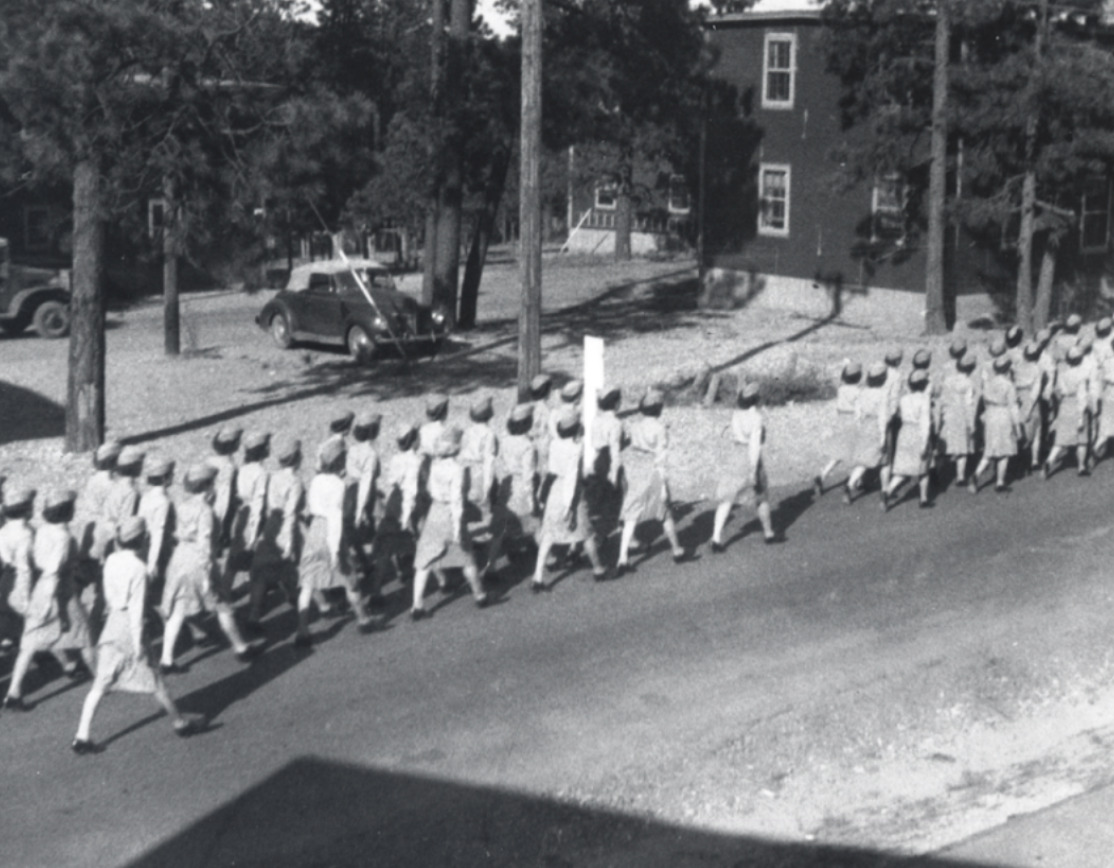
    <summary type="html"><![CDATA[<p><strong><em>With the war effort withdrawing men from the domestic labor force, women became an increasingly important part of the Manhattan Project in Los Alamos. </p></strong></p><img src="https://www.intermountainhistories.org/files/fullsize/c8f195c81db8f6804378056bc75c3f0b.jpg" alt="WAC March in Los Alamos" /><br/><p><span style="font-weight:400;">Wartime labor shortages were a constant struggle for the United States during World War II. They needed to send troops overseas, develop weaponry, spy on their enemies, strategically plan, and mobilize the entire nation as quickly as possible. By 1943, the United States Army was 200,000 men short for their invasion on D-Day, they were in need of 315 more physicists for their defense projects, and the Manhattan Project was desperately in search of all kinds of labor from scientists and engineers to machinists and pipefitters. In response, President Franklin D. Roosevelt signed into existence the Women’s Army Auxiliary Corps established “for the purpose of making available to the national defense the knowledge, skill, and special training of women of the nation” on May 15, 1942. Still facing discrimination, unequal pay, and fewer opportunities than their male counterparts, women played an essential role in World War II, especially in Los Alamos. </p>
<span style="font-weight:400;">Because Los Alamos was such a restricted town and the directors wanted to limit the number of outsiders, General Leslie Groves encouraged wives of scientists to work on the project in whatever capacity they could. As an incentive, they provided nursery schools for their young children to aid with childcare. Despite the government’s encouragement, some women were still hesitant to work on the project over concerns for their family’s well-being. Many had not expected to work at all, and quite a few were dissatisfied with the living conditions in which they now were expected to raise their children. Charlotte Serber, the only female group leader at the laboratory, wrote, “For the potential working wife, there was one chief worry. Could she manage her home here on the mesa and work too?” These were fair concerns. The conditions under which they were expected to work were difficult. They were isolated from extended family, were allowed only one day off of work per month for shopping in Santa Fe, were expected to work forty-eight hours in a week, and had almost no bargaining power to shift their rules or salary. They were also far less likely to gain security clearance than their male counterparts, so it was unlikely that they knew what they were helping create. </p>
<span style="font-weight:400;">Despite these stringent circumstances, many women in Los Alamos did work on the secretive atomic gadget. By October 1944, women constituted about 30% of the labor force in the Tech Area, hospital, and schools. It is also notable that although they did employ some women in clerical positions, the vast majority were scientists or technicians. They were metallurgists, engineers, physicists, chemists, and teachers, involved in every aspect of the atomic effort until the very end. The exception for this participation was in Project Alberta. This was the very last phase of the project; the physical delivery of the bomb to the Pacific island Tinian where the nuclear components were assembled before being dropped on Japan. Women who had spent years contributing to this moment were left behind in the United States to learn about the bombingsfrom the same newspapers as everyone else. However, the atomic bomb could not have been built as quickly or efficiently as it was without the contribution of women. They faced gender discrimination, suboptimal conditions, and unfair pay to contribute to the atomic effort in Los Alamos. </span>

</p><p><em><strong><a href="https://www.intermountainhistories.org/items/show/756">For more (including 3 images) view the original article</a></strong></em></p>]]></summary>
    <published>2023-09-24T18:36:48+00:00</published>
    <updated>2026-04-17T19:32:16+00:00</updated>
    <link rel="alternate" type="text/html" href="https://www.intermountainhistories.org/items/show/756"/>
    <id>https://www.intermountainhistories.org/items/show/756</id>
    <author>
      <name>Abigail Beus, Brigham Young University</name>
    </author>
  </entry>
  <entry>
    <title type="html"><![CDATA[The Trinity Site and the First Atomic Bomb<br />
]]></title>
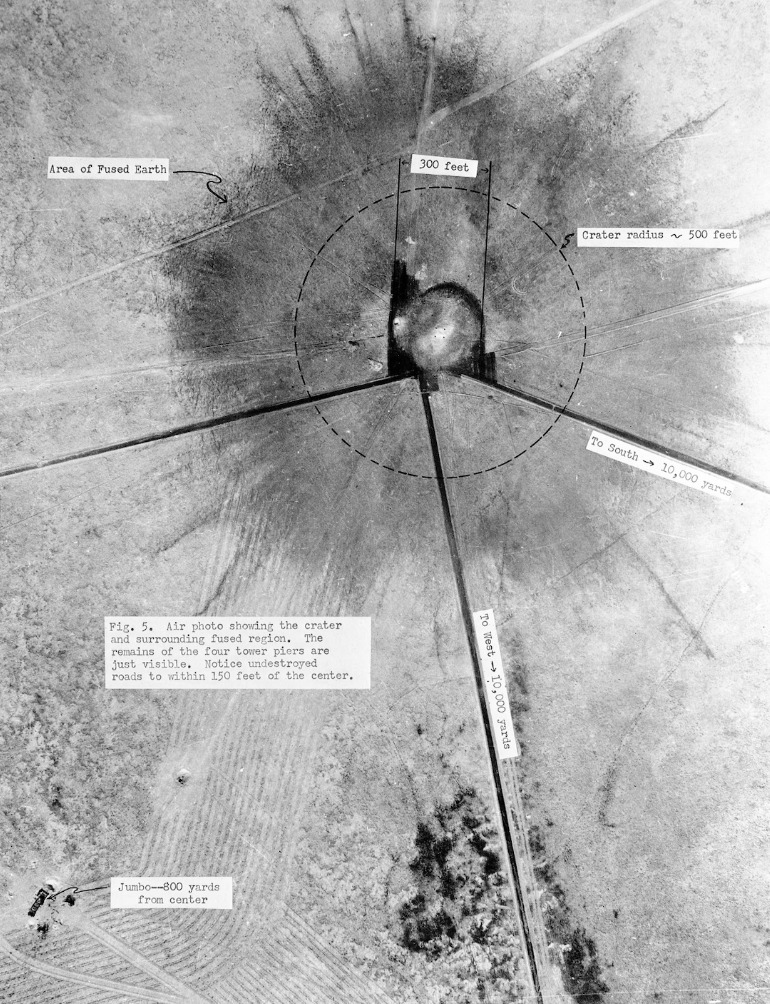
    <summary type="html"><![CDATA[<p><strong><em>The first successful detonation of an atomic weapon on July 16, 1945 in a remote New Mexican desert had global and historic consequences. “A new thing had been born; a new control; a new understanding of man, which man had acquired over nature” (Isidore I. Rabi). </p></strong></p><img src="https://www.intermountainhistories.org/files/fullsize/bde97f62bde69872a28b0c4c3d01417d.jpg" alt="The Gadget Aerial View" /><br/><p><span style="font-weight:400;">Even after the United States and its World War II allies accepted Germany’s surrender on May 8, 1945, the conflict still raged in the Pacific with Japan. Japanese resistance was fierce as the United States painstakingly advanced toward Tokyo. As the allied forces moved island by island, fighting in sweltering jungle, both sides suffered heavy losses. It was at this crucial moment that the scientists of the secret American Manhattan Project began planning for a test that would not only change the course of the war, but also the future of international relations. </p>
<span style="font-weight:400;">The United States, in collaboration with allied Great Britain, had been developing an experimental master weapon since August 1942. Code-named “The Manhattan Project,” this highly secret endeavor largely took place in Los Alamos, New Mexico although there were participating teams at Oak Ridge, Tennessee and Hanford, Washington. In this inaccessible New Mexican desert, hundreds of physicists, chemists, engineers, and military personnel gathered in secret to theorize and create the deadliest weapon known to man. </p>
<span style="font-weight:400;">By the end of 1944, there were two designs and two bombs, Little Boy and Fat Man. Little Boy used a gun-type fission design which shot uranium 235 at itself to reach supercritical mass, resulting in the single largest explosion of its time. The Los Alamos scientists were confident that this design would work and did not want to waste any precious material on a test. Little Boy had used all available U235, so any test would deplete the United States’ supply and would require too much time for the project to regenerate at its Oak Ridge site. Little Boy would go on to be dropped on Hiroshima on August 6th, 1945 and become the first nuclear bomb used in warfare.  </p>
<span style="font-weight:400;">On the other hand, Fat Man utilized an implosion design with explosives surrounding the highly reactive plutonium core. The idea was that the inward-facing explosives would trigger an explosive reaction of the plutonium and result in a larger blast than its Little Boy uranium counterpart. The scientists were less confident in this design. Plutonium had only been discovered at the end of 1940, and the implosion method was difficult to master. If each explosive was not uniform in strength and distance, the correct reaction would not begin, and the overall impact would decrease. Due to these doubts and the easier access to plutonium, the Los Alamos scientists decided to test “The Gadget.” </p>
<span style="font-weight:400;">The first step was finding somewhere to detonate a 10,000 ton bomb without alerting the international community. They decided on a stretch of high desert between New Mexico and Texas called Jornada del Muerto, translated as “Journey of Death.” It was later named the Trinity Site, likely inspired by Robert J. Oppenheimer’s interest in the Hindu concept of the three gods of preservation, destruction, and creation. On May 31, 1945, the requisite shipment of plutonium arrived in Los Alamos from the Hanford facility and scientists began to assemble Fat Man. Up to this point, Los Alamos had not housed a significant supply of plutonium, so all work on Fat Man was done speculatively or at miniscule scales. Working at a harried pace, scientists and engineers readied and transported a plutonium core to Trinity by July 13. Harry Truman, newly inaugurated President of the United States, wanted the test completed before the Potsdam conference with Churchill and Stalin on July 17, but weather conditions made it difficult for the scientists to comply. Finally, at 5:30 am on July 16, “The Gadget” detonated. </p>
<span style="font-weight:400;">Many reactions have been recorded describing the physical experience as well as moral and philosophical implications of the detonation. The light was so powerful that Georgia Green, a blind student miles away at the University of New Mexico asked “What’s that?” Physicist Isidore I. Rabi, who observed from ten miles away at base camp wrote, “Suddenly, there was an enormous flash of light, the brightest light I have ever seen or that I think anyone has ever seen. It blasted; it pounced; it bored its way right through you. It was a vision which was seen with more than the eye. It was seen to last forever.” Rabi also acknowledged the historic and philosophical weight of the moment, “A new thing had been born; a new control; a new understanding of man, which man had acquired over nature.” Alongside confusion and fear expressed by some locals and trepidation expressed by some Los Alamos scientists, there was also great enthusiasm and excitement. Project officials immediately sent a coded telegram announcing the “satisfactory operation” to Truman, just before his meeting with Churchill and Stalin.</p>
<span style="font-weight:400;">Back at the Trinity site, the scientists emerged from their safe havens and inspected the damage. The Gadget had destroyed every living thing within 1,200 feet of ground zero and disintegrated the steel tower on top of which it had been placed. It was, in the words of General Groves, “successful beyond the most optimistic expectations of anyone” and even larger than Little Boy. Because of its success at the Trinity Site, the Fat Man model would later be dropped on Nagasaki on August 9th, three days after Little Boy obliterated Hiroshima. </p>
<span style="font-weight:400;">Today, Trinity remains a highly radioactive site. Visitors are only allowed to visit two days a year. There are replicas of the bomb casing and the tower. Part of the original crater remains and reveals pockets of Trinitite, a green residue of highly radioactive sand particles melted by incredible temperatures into a glass-like substance. It can only be found at the Trinity Site and is illegal to collect for health concerns. Here, the first man-made atomic weapon detonated which aided in ending WWII and ushering in the age of atomic weaponry and mutually assured destruction. This continues to define international relations today. </span>


</p><p><em><strong><a href="https://www.intermountainhistories.org/items/show/755">For more (including 10 images) view the original article</a></strong></em></p>]]></summary>
    <published>2023-09-20T20:26:47+00:00</published>
    <updated>2026-04-17T19:32:16+00:00</updated>
    <link rel="alternate" type="text/html" href="https://www.intermountainhistories.org/items/show/755"/>
    <id>https://www.intermountainhistories.org/items/show/755</id>
    <author>
      <name>Abigail Beus, Brigham Young University</name>
    </author>
  </entry>
  <entry>
    <title type="html"><![CDATA[Life in Los Alamos: Linking the Past and Present <br />
]]></title>
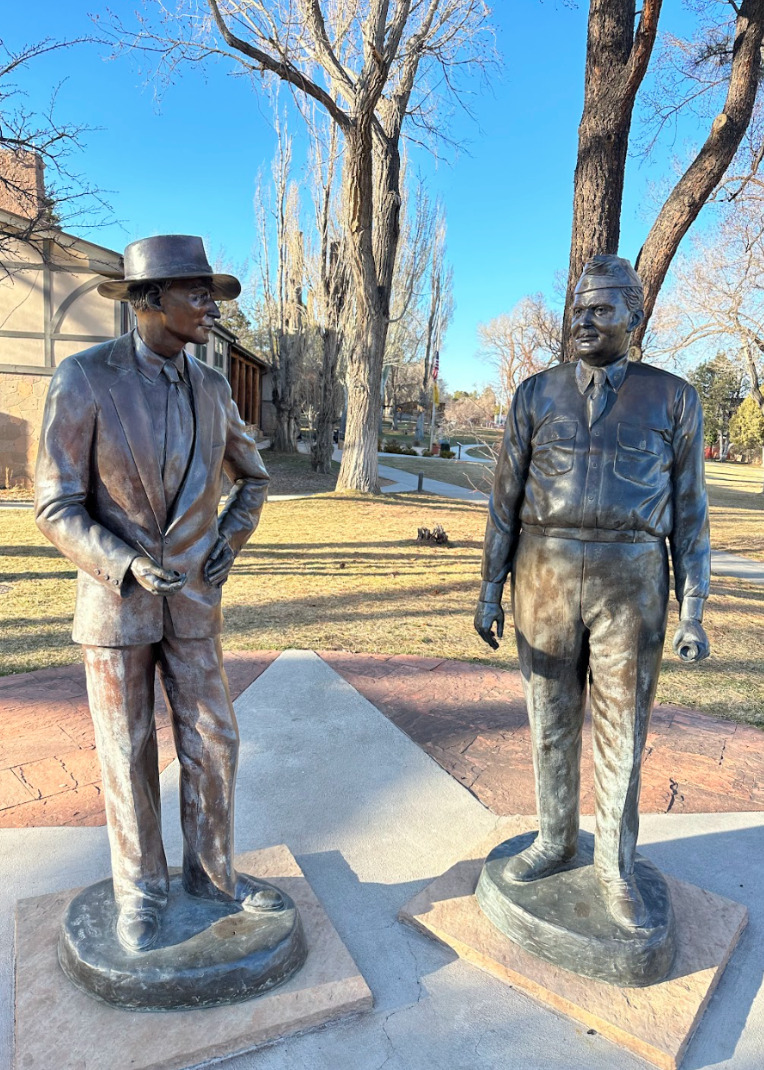
    <summary type="html"><![CDATA[<p><strong><em>Los Alamos residents in the 1940s found themselves in unusual circumstances. John von Neumann explained that, “At great expense we have gathered on this mesa the largest collection of crackpots ever seen.” Yet these people continued life under the cover of secrecy and created a community which has lasted until this day. 	</p></strong></p><img src="https://www.intermountainhistories.org/files/fullsize/a56ce2e0f40dcd7d1a6e2fe9af1ddcf0.jpg" alt="Statue of Oppenheimer and Groves" /><br/><p><span style="font-weight:400;">As the scientists and military personnel worked furiously to create an atomic weapon during the latter years of WWII, many moved to the classified town of Los Alamos, New Mexico. Because their project was shrouded in such secrecy, they were required to move themselves and their family without knowing many of the details of their new job or location. Although the civilian and academic director, J. Robert Oppenheimer, tried to make it as much of a collaborative and normal operation as possible, the nature of their assignment meant that living in Los Alamos was unique. </p>
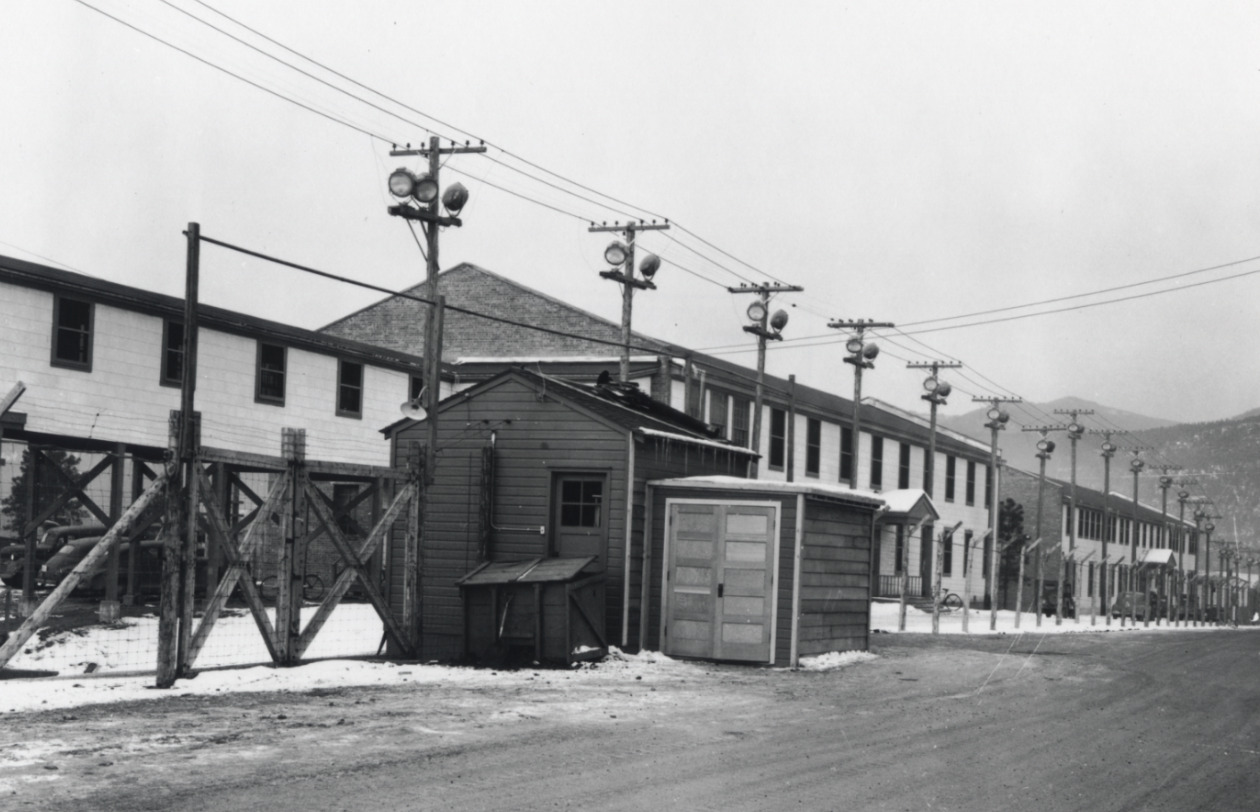
<span style="font-weight:400;">Many scientists arrived without knowing exactly where they would be working or what they would be doing. They were not even allowed to tell their spouses what their work in the restricted laboratories entailed. Secrecy was of the utmost importance. Oppenheimer spread disinformation to nearby cities, such as Santa Fe, that they were working on an electric rocket. Mail for all scientists was addressed to Box 1663, Sandoval County, Rural. It was liable to searches and some outgoing mail was redacted for security concerns. Even phone calls were monitored—army intelligence agents were obvious in listening in on people’s private conversations. Barbed wire covered the scenic landscape and made some workers feel as though they were the ones imprisoned rather than the liberators of those in European prison camps. </p>
<span style="font-weight:400;">Despite the secrecy and sometimes oppressive security, many familiar aspects of daily life continued in Los Alamos. Many women were given clerical jobs such as secretaries or computer operators to keep them occupied while their husbands worked. Children continued to attend school and babies continued to be born. In regards to the baby boom, the military official General Leslie Groves grumbled that they were simply taking advantage of the free healthcare awarded to those in the army effort. The few movies which were allowed to play were quite popular. In a move for additional entertainment, engineers and scientists threw amateur theatricals which even featured the eminent Oppenheimer in the role of “corpse.” </p>
<span style="font-weight:400;">The setting of Los Alamos itself served as a diversion for employees and their families. Oppenheimer had picked the site of Los Alamos for its beauty and openness. He thought that it could give the scientists a sense of freedom amidst all of their restrictions. Placed on top of towering mesas flanked by green mountains and overlooking fantastic natural features, there were many opportunities for outdoor recreation. During the winter, avid skiers trekked up the nearby Jemez Mountains and skied back down to their homes. The outdoor ice rink, built in 1936, became an unofficial youth center for local children to spend their winters with friends. The warmer months brought camping, horseback riding, fishing, and hiking. Curious children and adults also explored the many nearby Ancestral Puebloan archaeological sites and ruins. </p>
<span style="font-weight:400;">Even though Los Alamos was a unique environment of brilliant scientists sequestered in the wilderness, life found a way to continue in relative normalcy. It grew out of a wartime necessity into a long-lasting community with unusual origins. Today, Los Alamos is home to around 13,000 people and a National Laboratory specializing in weapon-making for the United States government. The community maintains their engagement in many of the recreational activities that their predecessors did. The Pajarito Ski Hill and the ice rink continue to gather youth and adults during the winter months. Warmer times of the year bring outdoor sports, especially running and hiking, among the abundant natural landscape. Summer is also the ideal time for weapons testing. For seasoned Los Alamos citizens, a large explosion miles away that rattles windows and door frames is unsurprising—rarely do they suspect an earthquake.  The work and life of Los Alamos persists nearly a century after it was settled. </span>


</p><p><em><strong><a href="https://www.intermountainhistories.org/items/show/754">For more (including 5 images) view the original article</a></strong></em></p>]]></summary>
    <published>2023-09-20T19:36:59+00:00</published>
    <updated>2026-04-17T19:32:16+00:00</updated>
    <link rel="alternate" type="text/html" href="https://www.intermountainhistories.org/items/show/754"/>
    <id>https://www.intermountainhistories.org/items/show/754</id>
    <author>
      <name>Abigail Beus, Brigham Young University</name>
    </author>
  </entry>
  <entry>
    <title type="html"><![CDATA[Jewish Contribution to the Manhattan Project ]]></title>
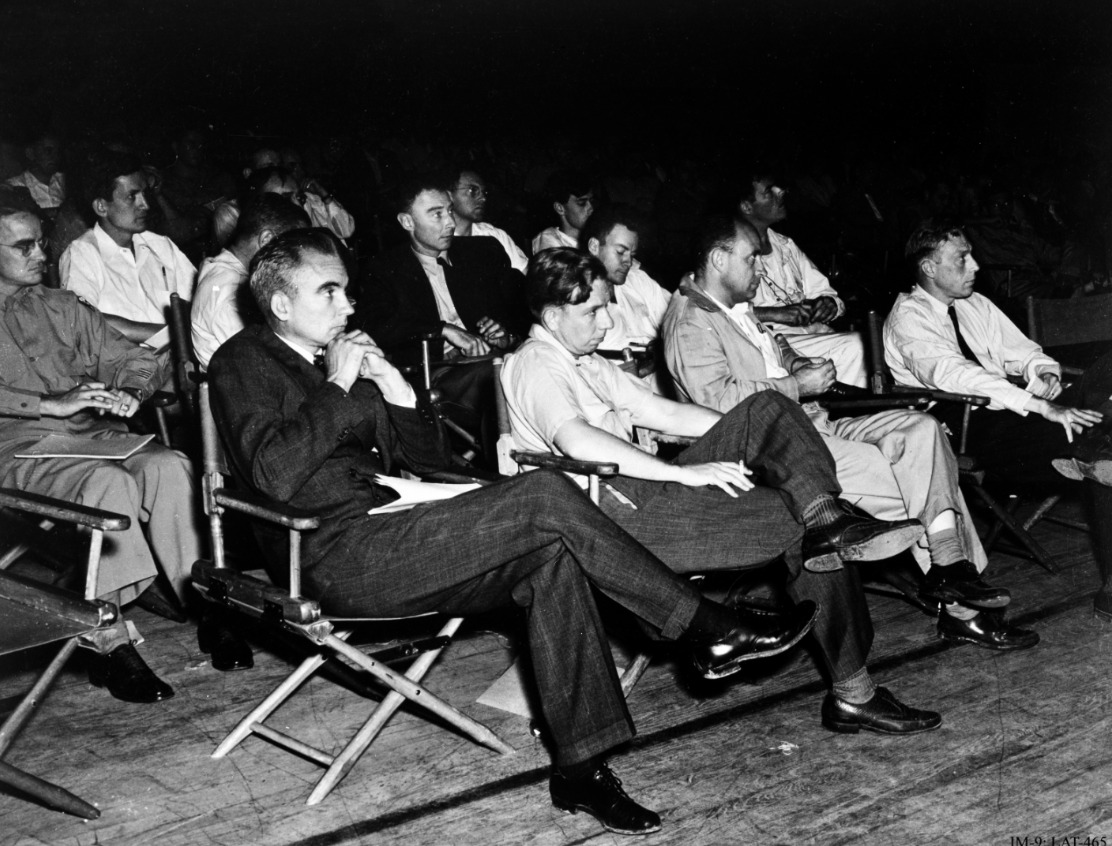
    <summary type="html"><![CDATA[<p><strong><em>Jewish participation in the Manhattan Project, particularly in Los Alamos, was an essential part of the operation's success. They continued to support their country despite local discrimination and the tragedy of World War II occurring abroad. </em></strong></p><img src="https://www.intermountainhistories.org/files/fullsize/89d79d7a997cf1681e9e7681568b097e.jpg" alt="Manhattan Project Scientists" /><br/><p>The United States’ development of the first atomic bomb would not have been possible without the contribution of Jewish Americans and Jewish refugees who fled Nazi Germany and war-torn Europe throughout the Manhattan Project. In August of 1939, Albert Einstein, Leo Szilard, and Enrico Fermi drafted and sent a letter to President Roosevelt via Alexander Sachs, warning the President of the potential use of atomic power in weaponry. This, in addition to another letter sent by British-Jewish scientists, led Roosevelt to form an advisory committee on uranium and, eventually, create the Manhattan Project.</p><p>Significantly, every person involved in the drafting and deliverance of this letter were Jewish or had close Jewish family members. Of the four involved, three were European refugees. Einstein was from a family of German Ashkenazi Jews and fled to the United States in 1933. Szilard was from a Hungarian Jewish family and fled to England in 1933 and then the United States in 1938. Fermi, while himself not Jewish nor German, was married to a Jewish woman which required him and his family to flee his home of Italy in 1938. Sachs was American-Jewish and an important advisor to President Roosevelt. All were impacted by the anti-Semitism of Germany and were respected and prominent enough to sway the President of the United States into forming a committee. Subsequent letters and information, much of which was provided by Jewish scientists, followed and increased the breadth of the project. </p><p>Jewish involvement in the Manhattan Project burgeoned as the war continued. J. Robert Oppenheimer, a young American Jew, was placed as the head of the Los Alamos branch of the Manhattan Project. He created four divisions in the Los Alamos lab, with the T-division, the theoretical division, being the most important. Of the 86 members in this division, 18 were Jewish—almost 21%. Even more impressive, of the eight groups in 1945, five were led by Jewish scientists such as Richard Feynman, Hans Bethe, and John von Neumann. Although Jews only constituted around .05% of the US population at the time, they made up a significant portion of the scientists at Los Alamos National Laboratory. </p><p>Jewish involvement in the Manhattan Project, as well as the project itself, were not known by the American public, and antisemitic prejudice was commonplace. In the 1920s, before J. Robert Oppenheimer attended, the president of Harvard, A. Lawrence Lowell, called for a quota of Jews to keep their presence sparse in the university. Even in Los Alamos, where Jewish scientists were important pioneers of the Manhattan Project, General Leslie Groves, the project’s military leader, stated, “I don’t like certain Jews, and I don’t like certain well-known characteristics of theirs.” Some Jewish scientists, such as Leo Szilard, were tailed by the FBI and noted for their “Jewish extraction” and “foreign tongue.”</p><p>At the same time, Los Alamos was a relative haven for these Jews. They were allowed in the upper echelons of decision-making and they were not stripped of titles or rewards because of their background. Ellen Bradbury Reid, an Anglo child in Los Alamos recalled, “I would not say [it was] a utopian situation, but. . . now I realize there were a lot of Jewish people, the European Jewish community who were there. I had no idea. . . [we] were all sort of in the same soup.” Despite prejudice, Jewish scientists were largely able to find footing in Los Alamos and thrive in the project. Jewish scientists in the Manhattan Project made a substantial and powerful impact in crafting the bombs which would end the war that, in total, killed over six million Jews. </p><p><em><strong><a href="https://www.intermountainhistories.org/items/show/753">For more (including 7 images) view the original article</a></strong></em></p>]]></summary>
    <published>2023-09-13T00:46:14+00:00</published>
    <updated>2026-04-17T19:32:16+00:00</updated>
    <link rel="alternate" type="text/html" href="https://www.intermountainhistories.org/items/show/753"/>
    <id>https://www.intermountainhistories.org/items/show/753</id>
    <author>
      <name>Abigail Beus, Brigham Young University</name>
    </author>
  </entry>
  <entry>
    <title type="html"><![CDATA[Dorothy McKibbins: The Gatekeeper of Los Alamos ]]></title>
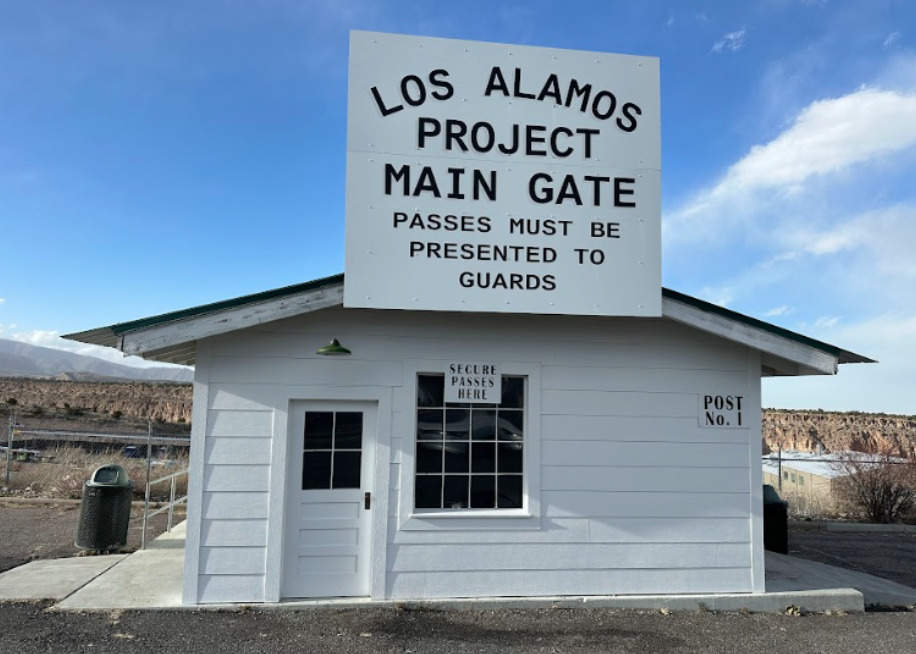
    <summary type="html"><![CDATA[<p><strong><em>The Manhattan Project would not have been possible without the efforts of Dorothy McKibbin, the Gatekeeper of Los Alamos. From attaining marriage licenses to transferring phone calls, Dorothy McKibbin was an integral and diversely skilled cog in the large machine of building the first nuclear weapons. </p></strong></p><img src="https://www.intermountainhistories.org/files/fullsize/5c401996b7cfdc416ba17d96a788fbec.jpg" alt="Los Alamos Project Main Gate Replica" /><br/><p><span style="font-weight:400;">Once General Leslie Groves and Dr. J. Robert Oppenheimer chose Los Alamos, New Mexico as the place to build the atomic bomb; hundreds of bewildered employees streamed into the nearby town of Santa Fe. Due to the confidentiality of the Manhattan Project, recruitment was difficult and details provided to the new hires were vague because of the classified nature of their work. They were told that their work would helpe war effort and be located in the scenic mesas of New Mexico, but little else. After a long train ride to the nearby town of Lamy, scientists and their families hauled their luggage through the winding streets of Santa Fe, looking for 109 East Palace Avenue—the only address they had been given. There, they were met by a simple red and blue sign reading “United States Engineer Office No. 3” and the welcoming presence of Dorothy McKibbin. </p>
<span style="font-weight:400;">In 1932, recently-widowed Dorothy McKibbin moved to Santa Fe from Kansas with her son, hoping for a new life. When she met Dr. J. Robert Oppenheimer in 1943, she found one. Oppenheimer recognized her comforting, calming, and competent presence and asked her to be a War Department secretary with unspecified duties. Like the other personnel, she only knew that her job concerned an essential war project. As she discovered after accepting the position, duties encompassed everything from disciplining Nobel laureates, receiving classified mail, enforcing security, helping lost families find the way to their new homes, and more. She was there for some of the most important moments of the project, even observing the Trinity Test from a car parked near Albuquerque. To Dorothy McKibbin, “Working at 109 was more than just a job. It was an exciting experience. Our office served as the entrance to one of the most significant undertakings of the war or, indeed, of the twentieth century.” </p>
<span style="font-weight:400;">For the entirety of the Manhattan Project she was the point of contact between the secret city and the rest of the world, earning herself the nickname of  the “Gatekeeper of Los Alamos.” After the Manhattan Project concluded, the site was renamed the Los Alamos National Laboratory, and McKibbin continued to work there until her retirement in 1963. She spent her retirement organizing community programs in Los Alamos and Santa Fe until her death in 1985. Today, a room in the Los Alamos History Museum is named in her honor, and although her office at 109 East Palace currently houses a gift shop, its original iron gate which once welcomed thousands to the secret city is on display at the Los Alamos History Museum. </span>
</p><p><em><strong><a href="https://www.intermountainhistories.org/items/show/752">For more (including 4 images) view the original article</a></strong></em></p>]]></summary>
    <published>2023-09-08T01:24:19+00:00</published>
    <updated>2026-04-17T19:32:16+00:00</updated>
    <link rel="alternate" type="text/html" href="https://www.intermountainhistories.org/items/show/752"/>
    <id>https://www.intermountainhistories.org/items/show/752</id>
    <author>
      <name>Abigail Beus, Brigham Young University</name>
    </author>
  </entry>
  <entry>
    <title type="html"><![CDATA[Bathtub Row ]]></title>
    <summary type="html"><![CDATA[<p><strong><em>As scientists raced to build the first atomic weapon during WWII, they were required to sacrifice their time, academic careers, energy, bathtubs, and more in the remote desert highlands of New Mexico. </p></strong></p><img src="https://www.intermountainhistories.org/files/fullsize/81238fa6d58203850c43f89b67708cda.jpg" alt="Los Alamos Infrastructure " /><br/><p>As World War II raged into the 1940s, each country in the war was an avid participant in the race for scientific advancement. With such high stakes, the United States invested two billion dollars—over $33 billion today—in the creation of the atomic bomb. This massive project was dubbed the Manhattan Project, after its headquarters in New York, despite largely taking place in the remote highlands of New Mexico.</p><p><span style="font-weight:400;">While the United States had fiscal resources to invest in the project, they did not have much time. Both the Germans and the Soviets were developing their own nuclear weapons, and it seemed that whoever discovered how to harness the power of the atom first would win the war. The speed and urgency of the venture inevitably meant that some details were overlooked. Construction teams were tasked with building housing for thousands of men, women, and children in the remote deserts of New Mexico in total secrecy. The workmanship of many of these early houses was shoddy at best. Project builders were not only short on time, but materials. In particular, iron was a scarce resource and largely reserved for the war effort. Understandably, it could hardly be used for iron bathtubs. Due to these factors, the majority of scientists, military personnel, and their families lived in small, relatively iron-less, hastily built homes with only a few variations of bathroom fixtures—none of which included bathtubs. </span>
<span style="font-weight:400;">Only a single row of houses had the luxury of bathtubs because they were built before the war and had originally belonged to teachers of a secondary boys’ ranch school. These “master cottages” were some of the only buildings already built when the government bought the land and were a coveted luxury. Reserved for men such as Nobel-Prize winning Englishman Sir James Chadwick, explosives expert George Kistiakowsky, bomb designer Max Roy, ordnance director William S. “Deak” Parsons, and head scientist Robert J. Oppenheimer, bathtubs were a sign of prestige in this secret New Mexico town. According to local legend, Alice Kimball Smith, wife of scientist Cyril Smith, coined the term “bathtub row.” This effectively differentiated between the comfortable ranch school homes with bathtubs and those of government construction with showers.</p>
<span style="font-weight:400;">Despite the obvious disparity, many on Bathtub Row were willing to share their good fortune. Robert Oppenheimer was reportedly a generous host who invited many in the community into his home for classified discussions, drinks, and dinner parties. Ordnance director William S. Parsons’ home was fortunate enough to have two bathtubs. He often allowed military men to use them if they were injured and unable to stand for long periods of time under a shower. These bathtubs were also used to entice babysitters who would be rewarded with a relaxing soak in their neighbor’s home in exchange for an afternoon taking care of the owners’ children.</p>
<span style="font-weight:400;">Today, these houses are privately owned, but remain part of the Los Alamos National Historical Landmark District. In 2007, the Los Alamos population petitioned to change the street name from 20th to Bathtub Row. The community has continued to embrace this humorous anecdote from WWII through naming the local brewing co-op after the iconic row of houses. It stands as a reminder of the simple luxuries many relinquished in favor of supporting the American effort during WWII. </span>

</p><p><em><strong><a href="https://www.intermountainhistories.org/items/show/751">For more (including 10 images) view the original article</a></strong></em></p>]]></summary>
    <published>2023-09-08T00:39:58+00:00</published>
    <updated>2026-04-17T19:32:16+00:00</updated>
    <link rel="alternate" type="text/html" href="https://www.intermountainhistories.org/items/show/751"/>
    <id>https://www.intermountainhistories.org/items/show/751</id>
    <author>
      <name>Abigail Beus, Brigham Young University</name>
    </author>
  </entry>
  <entry>
    <title type="html"><![CDATA[The Rocky Mountain Biological Laboratory]]></title>
    <summary type="html"><![CDATA[<p><strong><em>Transformed from the abandoned ruins of a silver boomtown, the Rocky Mountain Biological Laboratory is internationally known for its research in high-altitude ecology.</em></strong></p><img src="https://www.intermountainhistories.org/files/fullsize/1008e06045b644f886c16b31b9bd793e.jpg" alt="[Untitled]" /><br/><p>The home of the Rocky Mountain Laboratory lies in the abandoned silver mining town of Gothic in the Elk Mountains of the Colorado Rockies. John C. Johnson, a founding member of the Colorado State Normal School (later known as Western State College) discovered the town when he first visited the area in 1911. He was struck by the beauty of the untouched scenery, the diversity of biological life there, and its potential as an educational resource for a research field station. In 1922, Johnson leased 160 acres of land from the Forest Service, where he and his students conducted research on the high-altitude ecosystem for six years and established the Rocky Mountain Biological Station there. After Western State College decided to no longer finance the project, Johnson used his own capital to move the station to land purchased in Gothic, where it became the Rocky Mountain Biological Laboratory in 1928. </p><p>Johnson and his team repaired and rebuilt the town over the next twenty-five years to fit the needs of the Laboratory and its members as abandoned cabins became living quarters and they converted the historic Gothic Hotel into a laboratory, library, and office space. However, it would not be until the end of the century that the Laboratory modernized with hot and cold running water in resident cabins, community shower facilities, electricity, telephones, and insulation. It also built a new community center, complete with a dining hall and seminar room.</p><p>Finances were limited during the first few decades. Johnson and his colleagues often worked without payment, but summer courses were very successful, progressive, and attendance continued to grow. The laboratory notably offered women more opportunities than most institutions at that time by actively encouraging them to research, publish, and teach courses. Through the 1930s and 1940s, it focused on recording and observing the environmental conditions of Gothic while collecting and cataloging plant and animal specimens. However, by the mid-1950s, the scientific field began changing as the next generation of scientists moved more towards methods of hypothesis and experimentation. The laboratory responded by recruiting more young scientists from elite schools and invested in long term studies in genetic adaptations, and the behavior characteristics of animals, plants, and insects, such as marmots, salamanders, and butterflies. </p><p>Since the 1980s, the laboratory has centered its core research on climate change and its impact on the region’s wildlife. Scientists monitor changes in snow and rain falls while analyzing how acidity in the precipitation affects nutrients in the soil, pH in ponds, and salamander populations. In fact, Congress consulted this research during its revision of the 1990 Clean Air Act. Laboratory scientists also focus on pollination patterns by studying changes to wildflower blooming schedules and the behavior and lifespans of bees, hummingbirds, and butterflies. Undergraduate and graduate students of botany and zoology still come to Gothic to study the characteristics of Rocky Mountain wildlife every summer, contributing to make the Rocky Mountain Biological Laboratory one of the top high-altitude research and education institutions in the world.</p><p><em><strong><a href="https://www.intermountainhistories.org/items/show/323">For more (including 5 images) view the original article</a></strong></em></p>]]></summary>
    <published>2019-09-11T19:55:13+00:00</published>
    <updated>2026-04-17T19:32:05+00:00</updated>
    <link rel="alternate" type="text/html" href="https://www.intermountainhistories.org/items/show/323"/>
    <id>https://www.intermountainhistories.org/items/show/323</id>
    <author>
      <name>Abbey Buckham, Northern Arizona University</name>
    </author>
  </entry>
  <entry>
    <title type="html"><![CDATA[Manitou Experimental Forest]]></title>
    <summary type="html"><![CDATA[<p><strong><em>Expanding from forest, range, and watershed studies, the Manitou Experimental Forest in Colorado continues its research in meteorology, ecology, and biology, spreading the importance of renewable resources and forest lands to the public.</em></strong></p><img src="https://www.intermountainhistories.org/files/fullsize/48f7d53902ba825a3208861c124bbe73.jpg" alt="[Untitled]" /><br/><p>Located northwest of Colorado Springs in Manitou, Colorado, the Forest Service established the Manitou Experimental Forest (MEF) in 1936 to study land use and forest management of the ponderosa pines in the Colorado Front Range. Spanning from northern New Mexico to southern Wyoming, the Front Range includes a unique diversity of vegetation including not just ponderosa pines but also Douglas firs, aspens, willows, shrubs, brushes, and native grasses. The Forest’s research station, the Rocky Mountain Research Station, is one of five of the Forest Service’s regional stations in the Rocky Mountains, which help monitor the health and sustainable use of our country’s valuable forests. </p><p>Fur traders originally used much of the land in the area in the early 1800s, but as the availability of furs declined in the later part of the century, mining and logging became prevalent along with farming and raising of livestock. Consequentially, the culmination of grazing and logging resulted in the near devastation of the forest by 1900, and erosion caused by poor farming techniques left the soil nearly depleted by the mid-1930s. Thus, MEF began forest, range, and watershed research to find ways to restore the land’s natural resources, while also allowing for long-term productivity. In the early years, it focused on how to use the region’s watershed to revegetate the area and to minimize flooding and sedimentation deterioration caused by storms, which included studying the area’s precipitation, pollution, streamflow, and runoff. From the late 1940s to the late 1950s, the MEF  invested in pasture studies that addressed the quality of cattle diets to allow maximum livestock production, without causing erosion or depleting the watershed and native grasses. </p><p>The natural and artificial regeneration of ponderosa pine became one of  its long-term studies in 1980. Throughout the 1980s, foresters worked in cooperation with Colorado State University to evaluate performance and patterns of growth and survival of ponderosa pines with seeds collected from seventy-five different zones in Colorado. They recorded measurements of height, diameter, and when growth would stop or resume with the seasons. This research also included monitoring the progress of natural seedlings, methods of cutting seed-trees, how seeds germinate and spread, how far to space trees when planting, and the prevalence of the invasive plant species to discover the most effective forest management practices for ponderosa pines, while also improving water yields. Other projects during this period included evaluating habitat requirements for the region’s Flammulated Owl population, and monitoring the health of Manitou’s lakes, streams, and domestic water supply by studying its fish diversity and levels of pollution, bacteria, and algae.</p><p>In 1998, the National Park Service added the MEF's experimental station and six of its buildings to the National Register of Historic Places. Currently, its research focuses on studies in meteorology, ecology, and biology. It also often partners with various universities and museums in Colorado in order to continue research and expand public awareness on the importance of renewable resources and forest lands.</p><p><em><strong><a href="https://www.intermountainhistories.org/items/show/322">For more (including 5 images) view the original article</a></strong></em></p>]]></summary>
    <published>2019-09-11T18:46:33+00:00</published>
    <updated>2026-04-17T19:32:05+00:00</updated>
    <link rel="alternate" type="text/html" href="https://www.intermountainhistories.org/items/show/322"/>
    <id>https://www.intermountainhistories.org/items/show/322</id>
    <author>
      <name>Abbey Buckham, Northern Arizona University</name>
    </author>
  </entry>
  <entry>
    <title type="html"><![CDATA[Fort Valley Experimental Forest Station]]></title>
    <summary type="html"><![CDATA[<p><strong><em>The study of ponderosa pine regeneration in northern Arizona’s Fort Valley Experimental Forest Station helps us preserve the nation’s unique forests after damage and depletion caused by excessive logging and livestock grazing.</em></strong></p><img src="https://www.intermountainhistories.org/files/fullsize/52e2e5d5f1bdf9332fe80b674b26b53b.jpg" alt="[Untitled]" /><br/><p>Fort Valley, in northern Arizona near Flagstaff, is unique in its abundance of native grasses, water from the Leroux Springs, and plethora of ponderosa pines. The demand for timber from logging and railroad companies as well as livestock grazing began to threaten the region's isolated vegetation during the late 1880s, as loggers noticed that the ponderosa pines were not regenerating after cutting. To address this issue, Arizona Lumber and Timber Company owners Timothy and Michael Riordan invited the Chief of the Forest Service, Gifford Pinchot, to visit the area in 1891. The Riordans also hosted biologist C. Hart Merriam and the chief of the Division of Forestry, Bernhard E. Fernow in 1896. Fernow and Pinchot worked with foresters Raphael Zon and Gustaf Pearson to urge the federal government to set aside the area as part of the Forest Reserves, now known as National Forests. The Forest Service granted their request, and established the Fort Valley Experimental Forest Station in 1908 to study high-altitude ponderosa pine regeneration, with Pearson serving as the station’s first director until his retirement in 1944. </p><p>The station started a summer training school for rangers in 1909, and through the 1910s and 1920s, its workers focused on researching the effects of cattle grazing and ways to improve range production through water development, fence building, removal of poisonous plants, and growth of supplemental pasture grass to aid the regeneration of natural vegetation. During this time, it also began keeping weather records and constructed six meteorological observation locations to detect how elevation changes affected seed regeneration of ponderosa pines. Foresters also developed long-term studies to explore natural and artificial regeneration, how disease and pests distressed growth, and began attaching identification tags to help scientists monitor the lives of individual trees.</p><p>The Civilian Conservation Corps assisted by providing water access to Leroux Springs, a greenhouse, and electricity during the 1930s, and a 1931 Forester’s Order from the federal government established the station as part of Coconino National Forest lands, which protected it from logging, hunting, and cutting. Throughout the 1940s, the Forest Service expanded the land holdings of the Fort Valley Experimental Forest, and began working with the Arizona State College’s (now Northern Arizona University) new School of Forestry by using the station as a field site for its research facilities in 1958. In 1960, the U.S. Geological Survey used some of its   structures to record and measure the earth’s magnetic forces and underground movements, research which later helped establish plate tectonics theory. </p><p>Through the 1950s to the 2000s, research shifted to include long-term studies on watershed management, wildlife habitats, and how wildfires and prescribed burning affect the regeneration and diversity of native and invasive plants. Fort Valley still collaborates with NAU’s School of Forestry and the U.S. Forest Service. In 2001, it was added to the National Register of Historic Places and continues to research best forest management techniques in order to preserve the region’s unique ponderosa pines. </p><p><em><strong><a href="https://www.intermountainhistories.org/items/show/321">For more (including 4 images) view the original article</a></strong></em></p>]]></summary>
    <published>2019-09-11T07:23:41+00:00</published>
    <updated>2026-04-17T19:32:05+00:00</updated>
    <link rel="alternate" type="text/html" href="https://www.intermountainhistories.org/items/show/321"/>
    <id>https://www.intermountainhistories.org/items/show/321</id>
    <author>
      <name>Abbey Buckham, Northern Arizona University</name>
    </author>
  </entry>
  <entry>
    <title type="html"><![CDATA[Flathead Lake Biological Station]]></title>
    <summary type="html"><![CDATA[<p><strong><em>As the largest natural freshwater lake west of the Mississippi River, Flathead Lake is the jewel of the “Crown of the Continent” ecosystem of northwest Montana. Scientists have studied the botany and zoology of this lake at the Flathead Lake Biological Station since 1899, making it the second oldest active station in the nation.</em></strong></p><img src="https://www.intermountainhistories.org/files/fullsize/07217cea0b8d10b3ec904aa3883c79ba.jpg" alt="[Untitled]" /><br/><p>Flathead Lake Biological Station, established in 1899, is the second oldest active biological field and research station in the United States. Its research centers on the freshwater ecology of the Triple Divide Peak area, now known as Glacier National Park. However, the station’s base is Flathead Lake, which is the largest natural freshwater lake west of the Mississippi River.  After beginning in 1893, the University of Montana began its science department a few years later in 1897 by hiring biologist Dr. Morton John Elrod. Elrod discovered the seclusion of Flathead Lake that year while on a collecting trip on the Flathead Indian Reservation, and recognized its potential as an educational and research site. The State Board of Education established the station with Elrod as the director two years later, locating it on the mouth of the Swan River, near the town of Bigfork. The station began offering summer courses for Montana’s public-school teachers and college professors interested in teaching courses in biology, botany, zoology, and ornithology. It also began researching the ecology of Flathead Lake by collecting and preserving plant and aquatic specimens. In 1909, the University of Montana moved it   from reservation land to the Yellow Bay Peninsula of Flathead Lake, and full summer sessions began again in 1911. </p><p>Financial instability caused the station to be relatively inactive for much of the 1920s and 30s, and summer sessions were irregular during these years. However, its work did continue through collaborating with the Montana Fish and Game Commission to study why the lake had a scarcity of food and game fish, and if it was capable of maintaining a larger supply of them. Class visits began to pick up again in the 1940s, and after the end of WWII, the federal government fully reactivated the station through sending grant funds to restart operations and by approving requests for new laboratory buildings. Botany and zoology research and teaching remained its focus, but in the 1950s, it expanded studies into mammal research, primarily weasel populations of Glacier National Park.</p><p>The station continued to grow and by 1968, year-round operations began. The influx of people in the area in the 1960s led to new studies into wastewater treatment in the 1970s. With funding from the Environmental Protection Agency, it  built the Yellow Bay Wastewater Treatment Facility in 1974. During this period, it also focused on monitoring the water quality of the Flathead River Basin in response to the development of new coal mining districts in the region. Advancements continued in the 1980s as the Station gained new buildings and new landholdings, particularly the Schoonover Freshwater Research Laboratory to further advance its water quality and limnology research. Today, the Station continues to hold summer sessions every year and expanded its mission to include programs for undergraduate internships and educational outreach for local K-12 schools.</p><p><em><strong><a href="https://www.intermountainhistories.org/items/show/320">For more (including 4 images) view the original article</a></strong></em></p>]]></summary>
    <published>2019-09-11T07:06:16+00:00</published>
    <updated>2026-04-17T19:32:05+00:00</updated>
    <link rel="alternate" type="text/html" href="https://www.intermountainhistories.org/items/show/320"/>
    <id>https://www.intermountainhistories.org/items/show/320</id>
    <author>
      <name>Abbey Buckham, Northern Arizona University</name>
    </author>
  </entry>
  <entry>
    <title type="html"><![CDATA[Capitol Reef Field Station]]></title>
    <summary type="html"><![CDATA[<p><strong><em>Committed to conservation and limiting human impact on the environment, Capitol Reef Field Station works in tandem with Utah Valley University and the Capitol Reef National Park to teach students and visitors about the importance of preserving exceptional ecosystems in the Colorado Plateau.</em></strong></p><img src="https://www.intermountainhistories.org/files/fullsize/ba954af040cb46b4affac5c9d0bc8769.jpg" alt="[Untitled]" /><br/><p>The banks of Pleasant Creek, where the Capitol Reef Field Station operates, has a long history as an aquatic sanctuary in the otherwise dry desert climate of south-central Utah. Over millennia, Native American groups used the waters of Pleasant Creek, and the site still contains evidence of native basket making, pictographs, and ruins. A Mormon pioneer established Floral Ranch in 1882 after diverting creek water to irrigate his fields and orchards. For several decades, his descendants maintained the farm until Lurt and Margaret Knee purchased the property in 1940 and built Sleeping Rainbow Ranch in the early 1970s. The Knees transferred the ranch and its properties to the National Park Service in 1995, who incorporated them into Capitol Reef National Park. A few years later, the Park Service partnered with professors at Utah Valley University (UVU) to use the land to develop a biological station. The Capitol Reef Field Station opened in 2008, and it continues to work with UVU and Capitol Reef National Park to promote environmental learning and scholarly research through exploring the richness of Capitol Reef and the Colorado Plateau.</p><p>Research at the station focuses on teaching the importance of conserving energy and natural resources while understanding human impact on soil, plants, and animals. Since its beginning, the station consistently invests in recycling and composting, minimizing waste and light pollution, erosion control, water conservation and on-site water treatment, efficient heating and cooling systems, and by using 100% solar electricity for its facilities. Students often explore how regional flora and fauna adapt to desert environments, such as how the pinyon pine’s irregular seed production protects it from predators like birds, deer, and elk or by researching different lichen types, since the plant has properties which can detect pollution in the atmosphere. Other long-term projects include exposing how water flows affect the transportation and distribution of sediments, and optics research. Making use of Capitol Reef’s dark and clear skies, researchers at the station identify meteors, airglow emissions in the atmosphere, and build sensors to analyze levels of air pollution.</p><p>The Capitol Reef Station also provides non-scientific studies that one may not expect of a science laboratory. For example, it works with UVU’s English Language Learning Department to help English as a Second Language (ESL) students study the language in immersive situations while gaining knowledge about the Colorado Plateau. It also holds composition courses where students write about what they observe and research land use and wildlife in the area. Math students learn how to develop logarithms to date artifacts, use GPS to calculate hiking rates, and algebra to build parabolic ovens, which use solar energy for cooking. Dancers, choreographers, and photography students also use Capitol Reef’s unique geological landscape as a background and inspiration for their art. More recently, the station also hosts students of parks, recreation, and tourism to learn more about how national parks serve visitor and public needs.</p><p><em><strong><a href="https://www.intermountainhistories.org/items/show/319">For more (including 4 images) view the original article</a></strong></em></p>]]></summary>
    <published>2019-09-11T05:27:40+00:00</published>
    <updated>2026-04-17T19:32:05+00:00</updated>
    <link rel="alternate" type="text/html" href="https://www.intermountainhistories.org/items/show/319"/>
    <id>https://www.intermountainhistories.org/items/show/319</id>
    <author>
      <name>Abbey Buckham, Northern Arizona University</name>
    </author>
  </entry>
  <entry>
    <title type="html"><![CDATA[Mars Desert Research Station: Another World in Southern Utah]]></title>
    <summary type="html"><![CDATA[<p><strong><em>Southern Utah’s dry, reddish, and rocky landscape can look like something otherworldly. For those who dream of a future colony on Mars, it’s the perfect place to simulate the hardships and challenges that await the pioneers who are brave enough to create mankind’s second home on a neighboring planet.</em></strong></p><img src="https://www.intermountainhistories.org/files/fullsize/1d3136202adaff9454ff6e2568d9d46e.jpg" alt="1-70 through Spotted Wolf Canyon" /><br/><p>Buzz Aldrin, the second man to set foot on the moon during the Apollo 11 mission, hopes that humanity will now set its sight on Mars. “Mars is there,” Aldrin has said, “waiting to be reached.” Currently, Elon Musk’s SpaceX is working to decrease the “risk of human extinction” by establishing a human colony on the red planet. Musk is hoping for unmanned and manned Mars landings in the 2020s. Mars One, a private Dutch organization, plans to permanently colonize Mars by 2032. Nevertheless, scientists need to work in simulated colonies on Earth before installing real colonies on Mars. Seven miles northwest of Hanksville, Utah, at the Mars Desert Research Station (MDRS), scientists are preparing for humanity’s next giant leap.</p><p>The Mars Desert Research Station (MDRS) was built in 2001 on southern Utah’s San Rafael Swell, a geologic feature that was used as the setting of the fictional planet Vulcan in J. J. Abrams’s 2009 film Star Trek. MDRS is the second Mars habitat, built shortly after the Flashline Mars Arctic Research Station was established in Canada’s Arctic territory in 2000. The Mars Society, which owns and operates the stations, has plans to build two subsequent stations: one in Iceland (EuroMARS) and one in Australia (MARS-Oz). MDRS’s goals include training researchers how to work in spacesuits, test habitat design features, and follow protocol. More than 181 crews of six-person teams have “lived in two-week field visits at MDRS to simulate life on the Martian surface.” In September 2016, crewmembers from France, Japan, Russia, India, Australia, and Canada began an eighty-day mission at MDRS. Although southern Utah can seem like an uninhabited place, some of the brightest minds in the world travel to the region in the name of science and progress.</p><p>In March 2017, President Trump signed a bill that reiterated NASA's plan to send people to orbit Mars in the 2030s. The United States government wants to keep up with the private sector to prepare Mars as “a necessary Plan B—a place to go if, or when, Earth is no longer habitable.” Although the Mars Society is not affiliated with NASA, humanity might need all the help it can get. MDRS continues to train young scientists and engineers who might actually visit the Red Planet one day soon. According to the Mars Society’s website, MDRS annual field seasons run from October to May. Anyone can apply to be on a crew, and volunteers are needed to help with the project. </p><p><em><strong><a href="https://www.intermountainhistories.org/items/show/208">For more (including 3 images) view the original article</a></strong></em></p>]]></summary>
    <published>2018-06-08T16:15:15+00:00</published>
    <updated>2026-04-17T19:32:03+00:00</updated>
    <link rel="alternate" type="text/html" href="https://www.intermountainhistories.org/items/show/208"/>
    <id>https://www.intermountainhistories.org/items/show/208</id>
    <author>
      <name>Marc Jonathan Wein, Brigham Young University</name>
    </author>
  </entry>
</feed>