<?xml version="1.0" encoding="UTF-8"?>
<feed xmlns="http://www.w3.org/2005/Atom">
  <title type="text">Intermountain Histories</title>
  <updated>2026-04-17T19:32:21+00:00</updated>
  <generator uri="http://framework.zend.com" version="1.12.20">Zend_Feed_Writer</generator>
  <link rel="alternate" type="text/html" href="https://www.intermountainhistories.org/"/>
  <link rel="self" type="application/atom+xml" href="https://www.intermountainhistories.org/items/browse?output=rss2"/>
  <id>https://www.intermountainhistories.org/</id>
  <author>
    <name>Intermountain Histories</name>
    <uri>https://www.intermountainhistories.org</uri>
  </author>
  <link rel="hub" href="https://pubsubhubbub.appspot.com/"/>
  <entry>
    <title type="html"><![CDATA[The Standoff at Ruby Ridge]]></title>
    <summary type="html"><![CDATA[<p><strong><em>On August 21, 1992, Randy Weaver entered into a 10-day standoff with federal authorities in remote northern Idaho. By the time he surrendered himself into custody, his wife, son, and Deputy U.S. Marshall W. F. Degan had been killed. This conflict changed the way which federal authorities responded to domestic crises and ignited controversies in the American militia movement.</em></strong></p><img src="https://www.intermountainhistories.org/files/fullsize/6284097f050e49b0fccf37ce0438262b.jpg" alt="Anti-Government activists supporting the Weavers at Ruby Ridge" /><br/><p>The Weavers lived in Ruby Ridge, an area in Northern Idaho which featured a prominent “militia culture.” Randy, a military veteran, had connections with militias and extremist groups in the area which brought the attention of federal authorities. In 1989, at the prompting of an undercover Bureau of Alcohol, Tobacco, Firearms and Explosives (ATF) agent, Randy began selling shotguns with illegally shortened barrels, a felony. Randy was summoned to appear in court the following year on February 19, but having been told the incorrect date, never showed up. Now with the added charge of failure to appear in court, U.S. Marshals prepared to arrest Randy Weaver on his property.
            Randy, his wife Vicki, and their 3 children were deeply religious. They believed in certain survivalist and doomsday principles taught by right-wing Christian extremist groups. They lived alone on their rural Idaho property, paranoid of outsiders and liable to engage in any means of self defense. Believing Randy to be dangerous and working off an exaggerated file they had built on him, U.S. Marshals began surveillance on his property to ascertain how to arrest him.
Having found hidden cameras placed by the Marshals, the Weavers grew increasingly paranoid and carried guns with them at all times leading up to August 21, 1992. A team of Marshals was conducting surveillance when the Weavers’ dog, Striker, ran out barking.  Randy followed with his son Samuel and family friend Kevin Harris. One Marshal shot Striker and Kevin returned fire, killing Deputy U.S. Marshal W. F. Degan. As the Weavers retreated, the Marshals returned fire, injuring Kevin and killing Samuel.
The death of a federal official meant the FBI would take over the Weaver case. The most controversial aspect of this takeover was the rules of engagement of the FBI. Using its Hostage Rescue Team, the agents were instructed that any armed male standing outside of the family’s cabin “could and should” be shot. On August 22, FBI sniper Lori Horiuchi followed these rules of engagement and fired at Randy as he walked outside. Randy retreated into the cabin as Horiuchi took a second shot. Unknown to federal authorities, this bullet flew through the open door and killed Vicki Weaver inside.
Thereafter the Weavers dared not go outside of the house and crawled on their hands and knees inside to avoid walking past windows. Government protestors formed outside of the property as the FBI sought to de-escalate. On August 30, military veteran and celebrity Bo Gritz walked up to the surrounded cabin and convinced Randy to surrender quietly. The FBI did not know that Vicki and Samuel had died and protestors outside were enraged at the announcement of the deaths. Randy and Kevin were apprehended and received medical care, and the surviving children went to their grandparents as the standoff ended.
The FBI and ATF were heavily scrutinized once details of the standoff were released. The Department of Justice created the “Ruby Ridge Taskforce” to investigate federal agents in the standoff. The FBI dropped their rules of engagement and expanded the capabilities and training of SWAT and hostage-retrieval units. Randy and Kevin were awarded for damages and cleared of all charges, except one. Randy was still sentenced for his failure to appear in court for the charge of illegally selling short-barreled shotguns.
Further, the public support for the Weavers and anti-government sentiment propped up a country-wide “militia culture”. The perpetrator of the Oklahoma City bombing listed Ruby Ridge and the massacre of the Branch Davidians in Waco, Texas as reasons for carrying out his atrocity. Militias cited <em>“Waco and Ruby Ridge-style Government attacks on Christian Americans”</em> as grievances which warranted their existence. Extremist groups like the local Aryan Nations of Northern Idaho were galvanized in anti-government sentiment. The Weavers were endorsed by white supremacists who had previous run-ins with federal authorities. The intensity of militia culture would dwindle following the OKC bombing, but this era of American vigilante culture would see its roots based on the events of Ruby Ridge.</p><p><em><strong><a href="https://www.intermountainhistories.org/items/show/938">For more (including 5 images) view the original article</a></strong></em></p>]]></summary>
    <published>2026-02-02T17:22:17+00:00</published>
    <updated>2026-04-17T19:32:21+00:00</updated>
    <link rel="alternate" type="text/html" href="https://www.intermountainhistories.org/items/show/938"/>
    <id>https://www.intermountainhistories.org/items/show/938</id>
    <author>
      <name>Samuel Watson, Brigham Young University</name>
    </author>
  </entry>
  <entry>
    <title type="html"><![CDATA[The Johnson County Cattle War]]></title>
    <summary type="html"><![CDATA[<p><strong><em><span style="font-weight:400;">After assembling an armed expedition of wealthy cattlemen and hired Texas gunmen, members of the Wyoming Stock Growers Association rode on horseback to the small ranch of their first suspected cattle rustling target, Nate Champion. After gunning both Champion and his brother Nick Ray down at the K.C. Ranch, the Invaders continued North where they became involved in yet another hours-long standoff with a posse consisting of around two hundred Johnson County residents who had been warned of the invasion.</span></em></strong></p><img src="https://www.intermountainhistories.org/files/fullsize/2b084641e34d158b100ac1b672c9b922.jpg" alt="The T.A. Ranch barn where the invaders took cover from the gunfire of the Johnson County posse for hours before being taken into custody by the U.S. Army." /><br/><p><span style="font-weight:400;">Following the organization of an armed expedition by the Wyoming Stock Growers Association, the “Invaders” rode for 68 miles to K.C., the home of small-time rancher Nate Champion. Reaching the ranch, the Invaders planned to capture Champion and get a confession of rustling out of him before hanging him. It wasn’t until after the cabin was surrounded that the Invaders discovered that two trappers and Champion’s brother Nick Ray were also at the cabin. Taking the two trappers captive, the Invaders shot down Ray when he stepped out of the cabin. </span>
<span style="font-weight:400;">While the shooting between Champion and the Invaders continued from noon to 3 o’clock, two people passing by witnessed the shootout and fled while being fired upon by some of the Invaders. In their escape, the people left their hay-filled wagon behind which the Invaders then used to burn down the cabin with Champion inside. Knowing his flaming fate was at hand, Champion chose his own way out and ran out of the cabin with a rifle in one hand and revolver in the other, firing on the Invaders as he was shot down beside the burning cabin. After disposing of Champion’s body, the Invaders found that their plan for assassinating the officials of Johnson County was spoiled by people alerting Sheriff Red Angus of Buffalo. Hearing that armed Johnson County citizens were attempting to head them off, the Invaders decided to reach the T.A. Ranch where they fortified against the posse.</span>
<span style="font-weight:400;">After reaching the T.A. Ranch, the Invaders took apart many of the wagons they brought with them and reinforced the barn and other structures to protect them against gunfire. As Sherriff Red Angus organized his deputies to confront the Invaders, he deputized any able-bodied men who they came across on their way to the T.A. ranch. With his posse now totaling over 200 men, Angus surrounded the T.A. ranch and the two sides hunkered down for a two day standoff with near constant gunfire from both sides.</span>
<span style="font-weight:400;">During those two days the posse built a mobile bunker to approach the Invader’s defenses and burn them down while being protected from gunfire. While the posse was constructing the “go-devil” from the Invader’s salvaged wagons, allies of the Invaders in Cheyenne alerted the acting governor of Wyoming Amos Barber of their besiegement by the residents of Johnson County. Governor Barber, being associated with the WSGA, immediately telegraphed a request for the federal troops stationed near Buffalo in Fort McKinney to put a peaceful end to the insurrection and put the Invaders safely into their custody. When the troops arrived, the shootout ended with no fatalities. The Invaders were apprehended by federal troops and returned to Cheyenne, where they faced a series of inconclusive trials.</span></p><p><em><strong><a href="https://www.intermountainhistories.org/items/show/868">For more (including 3 images) view the original article</a></strong></em></p>]]></summary>
    <published>2024-10-21T20:57:49+00:00</published>
    <updated>2026-04-17T19:32:19+00:00</updated>
    <link rel="alternate" type="text/html" href="https://www.intermountainhistories.org/items/show/868"/>
    <id>https://www.intermountainhistories.org/items/show/868</id>
    <author>
      <name>Cooper Smith, Rocky Mountain College</name>
    </author>
  </entry>
  <entry>
    <title type="html"><![CDATA[Outside Invaders and the Johnson County Cattle War]]></title>
    <summary type="html"><![CDATA[<p><strong><em><span style="font-weight:400;">With violence and vigilantism on the rise in the late 1800s cattle industry, Wyoming had been booming with the success of both large thousand-head outfits and smaller family or individual-owned outfits. Within years the competition for both grazing land and the heads of cattle sparked cattle rustling and vigilante violence from both kinds of operators. To end this, the wealthy Stockgrowers made a hit list of rustlers and associates in Johnson County and hired over twenty Texas gunmen to kill or coerce the people of Johnson County.</span></em></strong></p><img src="https://www.intermountainhistories.org/files/fullsize/99d595cea52803cc73bd2e751eb8dd24.jpg" alt="Invaders on horseback in Casper before departing to the K.C. Ranch in Johnson County." /><br/><p><span style="font-weight:400;">In 1892, after years of economic and political competition between smaller ranches and the larger mostly foreign-owned cattle companies, a series of vigilante lynchings took place across Wyoming, particularly in the Northeastern portion of the state where Johnson County is located. The Wyoming Stock Growers Association (WSGA), representing the large cattle companies, accused many smaller cattle operations of stock theft, but local juries refused to convict because of lack of evidence or sympathy for the smaller operators. With seemingly no quick legal action able to stop any alleged rustlers, the WSGA devised a plan for an expedition to northeastern Wyoming to capture, coerce, or kill the rustlers and their associates.</span>
<span style="font-weight:400;">The network of stock growers and their associates was deeply entrenched in both state politics and economics. Judges, politicians, and bankers worked with ranchers to plan this expedition into rustler territory to root out the suspected rustlers. The scale of the operation was astonishing with the amount of sourcing of supplies, transportation, weapons & ammunition, and number of men involved. The crew of the expedition to Johnson County included multiple WSGA members, stock inspectors, and around twenty gunslingers brought by train from Texas. Using Cheyenne as their base of operations and calling themselves the Invaders, this 50-man group confidently had their photograph taken before at Fort D.A. Russell in Cheyenne before they left for Johnson County.</span>
<span style="font-weight:400;">Meanwhile in Cheyenne, the inner circles of the stock growers worked to establish their legal justifications for their violent actions against the suspected rustlers and their associates. Dozens of the expedition members, including the Texas gunmen, partied throughout both the day and night at many of the wealthier association members’ estates. When the Invaders regrouped in the morning, they boarded a privately booked train to Casper further north. While riding the train, some stops included a photo shoot of the train passing through Platte Canyon on its way to Casper. The expedition rode onward to the K.C. Ranch where they planned to kill one of their primary rustler targets, Nate Champion. Once again taking the opportunity to document their actions, the Invaders had the mounted expedition photographed before leaving to kill Nate Champion and move on to the town of Buffalo.</span></p><p><em><strong><a href="https://www.intermountainhistories.org/items/show/867">For more (including 3 images) view the original article</a></strong></em></p>]]></summary>
    <published>2024-10-21T18:53:43+00:00</published>
    <updated>2026-04-17T19:32:19+00:00</updated>
    <link rel="alternate" type="text/html" href="https://www.intermountainhistories.org/items/show/867"/>
    <id>https://www.intermountainhistories.org/items/show/867</id>
    <author>
      <name>Cooper Smith, Rocky Mountain College</name>
    </author>
  </entry>
  <entry>
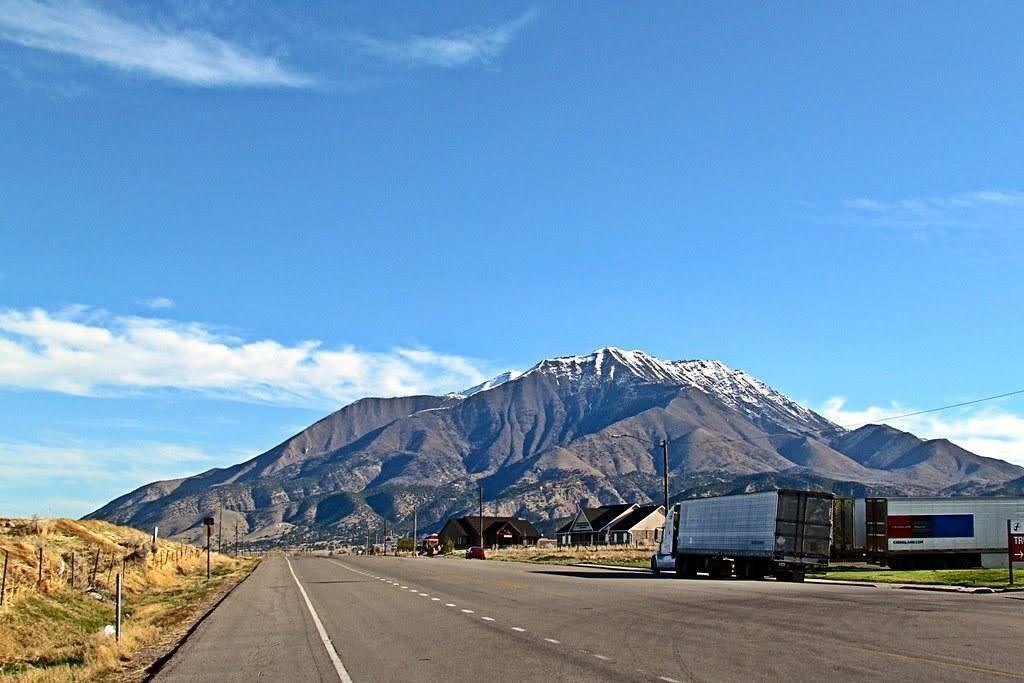
    <title type="html"><![CDATA[The Nephi Massacre during Wakara’s War<br />
]]></title>
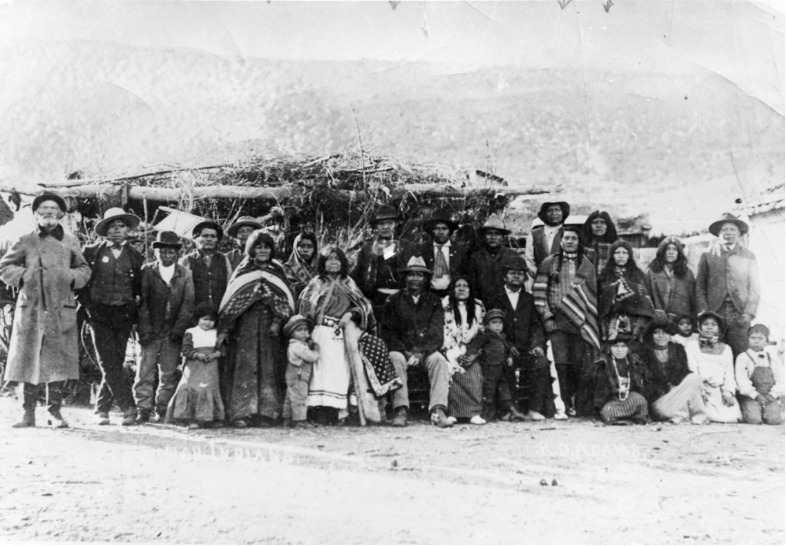
    <summary type="html"><![CDATA[<p><strong><em>During Wakara’s War in 1853-54 a group of Utes killed four Mormons at Fountain Green.  The next day, Mormons killed eight Utes or Goshutes seeking peace with LDS settlers in Nephi, Utah. The discovery of their remains in Nephi’s Old Hallow in 2006 highlighted the brutality of Wakara’s War, a series of conflicts during 1853 between settlers and Indigenous residents in central Utah Territory.</em></strong></p><img src="https://www.intermountainhistories.org/files/fullsize/fafd241883d271d8b9793e3097ca8da1.jpg" alt="Nephi, Utah" /><br/><p>In 2006, an archaeological discovery in Nephi, Utah, shed light on a tragic event that occurred in 1853 during the Walker War, also known as the Wakara War. The excavation revealed a mass grave containing the remains of seven Goshutes, including a young boy. The bodies were found piled on top of each other. Forensic analysis discovered gunshot wounds, shattered bones, and evidence of blunt force trauma.</p><p>The Wakara War between settlers and Utes was infuriated by the encroachment of additional LDS settlements in Utah and Sanpete counties in Utah Territory. The incident in Nephi occurred on October 2, 1853, when a group of Utes or Goshutes came to the fort. The account reported in the Deseret News portrayed the Natives as aggressors in a tussle they initiated with the militia. Recent research, including the discovery of journals of witnesses Adelia Wilcox and Martha Spence Heywood, however, contradict this narrative.</p><p>The forensic evidence from the mass grave suggests that the Native men, ranging in ages from 16 to 25, were not killed in a skirmish but were executed. Gunshot wounds in the back of the head and traumatic injuries indicate a cold-blooded killing, challenging the original historical account. The discovery of the mass grave by construction workers laying a foundation for a home in 2006 provided an opportunity to combine scientific discovery, archaeology and forensic analysis, and historical records to correct and update the historical narrative and include the perspectives of those killed. The story of the Nephi mass grave is a significant reminder of the complexities surrounding historical narratives and how archaeological revelations can amend those stories.</p><p><em><strong><a href="https://www.intermountainhistories.org/items/show/856">For more (including 3 images) view the original article</a></strong></em></p>]]></summary>
    <published>2024-09-25T15:00:26+00:00</published>
    <updated>2026-04-17T19:32:19+00:00</updated>
    <link rel="alternate" type="text/html" href="https://www.intermountainhistories.org/items/show/856"/>
    <id>https://www.intermountainhistories.org/items/show/856</id>
    <author>
      <name>Chelsea Woodruff, Brigham Young University</name>
    </author>
  </entry>
  <entry>
    <title type="html"><![CDATA[Geronimo Surrender Monument]]></title>
    <summary type="html"><![CDATA[<p><strong><em>For many years, the ferocity and war tactics of the Chiricahua Apaches deterred the American military from taking their land in Arizona. General William T. Sherman became so frustrated by the Apache that he suggested Arizona should be abandoned to the American Indians. Despite these resilient efforts in maintaining their land, the Chiricahua surrendered to preserve their people from a “bitter end.” The Geronimo Surrender Monument stands as a stark reminder in Skeleton Canyon of southern Arizona. </em></strong></p><img src="https://www.intermountainhistories.org/files/fullsize/ab99b990d9a8de68c67dae2ffd6fa20b.jpg" alt="Apache Gaan dancers " /><br/><p>The Chiricahua Apaches settled in southeastern Arizona, southwestern New Mexico, and northern Mexico in the Sonoran and Chihuahuan Deserts. They fielded fierce warriors with agile, athletic builds that proved a formidable fighting force in the desert Southwest. Apaches constructed easily built dome-shaped wickiup dwellings made of thatch and poles and covered with animal skins.</p><p>Few Americans entered Chiricahua territory before the gold rush. The 1851 discovery of gold in the Pinos Altos region of New Mexico, which lay at the Southern end of the Black Mountains, homeland of the Warm Springs Band of Chiricahua, was an early source of conflict. Apaches did not understand the allure of this metal to Americans. The endeavor to mine for gold was purposeless and sacrilegious to their nation. Nonetheless, miners were determined to invade their territory and take its resources and the Chiricahua successfully resisted those efforts for several decades. The federal government attempted to create peace through several treaties, but both sides had difficulty adhering to the terms.</p><p>Many battles ensued between the Chiricahua, settlers, and American troops. While the Americans had better developed equipment and weapons, the Apache knew the land better and had more experience fighting to defend their homeland. They evaded and defeated military forces hundreds of times their size. Despite their best efforts to protect their sovereignty, the Chiricahuas knew they could not continue to thwart the efforts of the American militia indefinitely. The Apache wars brought great hardships to their people, so Apache leaders Geronimo and Nachiz, met with Lieutenant Gatewood to discuss the future of their people. The Lieutenant explained that if they surrendered, their families would be sent to Florida to await the final decision of the President. If they did not surrender, they would have to fight to the bitter end. After some discussion, Nachiz and Geronimo decided to surrender in order to preserve their people. Despite many years of successfully resisting American encroachment, the Chiricahua Apaches capitulated to the government’s demands in Skeleton Canyon on September 4, 1886, a location now known as the Last Stand of the Chiricahua Apaches. The Chiricahua Apaches were evicted from their ancestral homeland, temporarily assigned to Florida and Alabama, before being the last Indigenous nation the U.S. Congress relocated into present-day Oklahoma in 1894.</p><p><em><strong><a href="https://www.intermountainhistories.org/items/show/848">For more (including 4 images) view the original article</a></strong></em></p>]]></summary>
    <published>2024-09-24T04:49:59+00:00</published>
    <updated>2026-04-17T19:32:19+00:00</updated>
    <link rel="alternate" type="text/html" href="https://www.intermountainhistories.org/items/show/848"/>
    <id>https://www.intermountainhistories.org/items/show/848</id>
    <author>
      <name>Leah T. Smith, Brigham Young University</name>
    </author>
  </entry>
  <entry>
    <title type="html"><![CDATA[The Captivity of Olive Oatman]]></title>
    <summary type="html"><![CDATA[<p><strong><em><span style="font-weight:400;">In the wake of a massacre, an orphaned girl is taken captive and raised by Native Americans on the Western Frontier. She returns to Euro-American society in adulthood, becoming a shrouded mystery through each conflicting narrative she spins.</span></em></strong></p><img src="https://www.intermountainhistories.org/files/fullsize/3ed4a32f7a4e886223523110e2babe43.jpg" alt="Portrait of Olive Oatman, 1863." /><br/><p><span style="font-weight:400;">A town in the Black Mountains of Mohave County formerly called “Vivian” after a mining company was renamed “Oatman” in 1909 to honor Olive Oatman, the victim of an infamous kidnapping. The Oatmans were Mormon pioneers who left their home in Illinois to build a new life in the Salt Lake Valley of what is now Utah. They were traveling through Arizona in February 1851 when they were ambushed by a tribe, believed to have been Western Yavapai. They killed Royce Oatman and his pregnant wife as well as four of their seven children. One son, Lorenzo, was able to escape. Sisters Olive and Mary Ann, who were about thirteen and eight-years-old, were taken captive. Neither of them had shoes and Olive was terrified that they would kill her little sister because she had a hard time keeping up with the pace of their travel. They were kept as slaves for about a year until they were sold to Mojaves for an assortment of horses, blankets, vegetables, and beads.</span>
<span style="font-weight:400;">Life with the Mojaves was more comfortable for Olive and Mary Ann as they were adopted by a tribe leader and his wife and were treated as members of the family rather than servants. In Olive’s earliest interview post-captivity she recalls that the Mojaves treated her and her sister “very well.” Members of their tribe made shoes for the girls and did their best to protect them–which included giving them tribal chin tattoos which were believed to grant access to the afterlife. Despite their best efforts, Mary Ann and several members of the tribe died of starvation during a drought in 1858. White settlers in surrounding communities began to notice Olive’s presence in the Mojave tribe, and they grew increasingly concerned. She became something of a legend before she was willfully released by the tribe to re-enter American society in 1856. </span>
<span style="font-weight:400;">Now nineteen-years-old, this transition was jarring for Olive. She had lived with the Yavapais and Mojaves for five years and was a stranger to her old way of life. She struggled to overcome culture shock and grew increasingly homesick for her Mojave family. One bright spot for Olive during these years was reuniting with her brother Lorenzo, who had been searching for her and Mary Ann for years. As she worked to readapt and relearn to dress, speak, and behave–her accounts of her time with the Western Yavapai and Mojave tribes blurred together and turned sour. A reverend, R. B. Stratton, quickly took interest in Olive’s story. He wrote a book, published a year after her return, called </span><i><span style="font-weight:400;">Captivity of the Oatman Girls</span></i><span style="font-weight:400;">. It was riddled with misinformation and prejudice, and the twisted narrative seemed to become a story Olive herself believed. Stratton arranged speaking tours for Olive all over the country, where she shocked people with this crafted version of her life. </span>
<span style="font-weight:400;">At a lecture she gave in Michigan, Olive met a man named John Fairchild, and he seemed to give her the peace she yearned for after so many years of trauma. When they married in 1865 Olive retired from touring and everything to do with Stratton, refusing to perform ever again. John never spoke publicly about her past, and they did their best to live a quiet life in Sherman, Texas. Still she was plagued by her past and mental illnesses, likely PTSD and depression, for the rest of her life. She died in 1903, at the age of 65, leaving behind John and their daughter, Mary Elizabeth. </span>
<span style="font-weight:400;">The scraps of information we have from Olive’s fateful childhood could never do her story justice. Regardless of all the hearsay and sensationalism that grew with her fame, even her earliest interviews are difficult to make sense out of. She was solemn and even glum in nearly every account we have of her, yet she laughed in that first interview while talking about her time with the Mojaves. Olive’s story is as compelling today as it was to those who once gathered in crowds around the country to hear her speak, and the true circumstances of her life remain largely as mysterious.</span></p><p><em><strong><a href="https://www.intermountainhistories.org/items/show/803">For more (including 4 images) view the original article</a></strong></em></p>]]></summary>
    <published>2024-05-16T01:11:43+00:00</published>
    <updated>2026-04-17T19:32:17+00:00</updated>
    <link rel="alternate" type="text/html" href="https://www.intermountainhistories.org/items/show/803"/>
    <id>https://www.intermountainhistories.org/items/show/803</id>
    <author>
      <name>Megan Bailey, Brigham Young University</name>
    </author>
  </entry>
  <entry>
    <title type="html"><![CDATA[Anti-Chinese Riot in Tonopah, Nevada]]></title>
    <summary type="html"><![CDATA[<p><strong><em>Because of anti-Chinese attitudes in central Nevada, a mob of white union workers attacked Tonopah’s Chinatown in September of 1903. One Chinese man was killed and several others were injured, and Chinatown was destroyed. </em></strong></p><img src="https://www.intermountainhistories.org/files/fullsize/5db119f1bcc036387ec509da0fea5311.jpg" alt="Laundromat in Tonopah " /><br/><p><span style="font-weight:400;">Tonopah, Nevada is a small town in central Nevada that popped up in 1900 when silver was discovered in the area. Within a few years, the mining town was booming, and many Chinese immigrants, mainly men, moved to Tonopah seeking opportunity. The Chinese, however, were not actually allowed to mine in this part of Nevada, so they took up jobs as laundrymen and cooks. Although their labor was needed, white miners were still apprehensive about Chinese immigrants in town, and national anti-Chinese laws and broad anti-Chinese sentiment in the Western United States fomented resistance to their presence. Whereas many other outbursts of anti-Chinese violence in the west began when Chinese miners were hired to undercut unionized white miners, the Chinese population targeted in Tonopah were not hired to undercut potential strikes.</span>
<span style="font-weight:400;">On September 15, 1903, a group of about 30-50 white labor union members marched into Tonopah’s Chinatown and demanded the Chinese immigrants living there to leave in the next 24 hours. Later that day, a second, larger group of men came to Chinatown and began destroying the homes and businesses of the Chinese people. The mob burned down over 100 Chinese establishments and was responsible for the death of 66-year-old Chong Bing Long, who owned a laundromat in town and had lived in the United States for over 30 years. Long was not fast enough to escape the men in the mob, who robbed and beat him. They then drove him outside of town to the desert, where they beat him again and left him to die. Though this was the only death, several Chinese people received serious injuries from being beaten, with little being done by local police to protect them. </span>
<span style="font-weight:400;">In the aftermath, the Chinese returned to town to assess the damage. Fifteen white men were initially arrested for their involvement in the riot, but nine were immediately released and the other six were acquitted of all charges. The Chinese pulled all of their resources together to pay to convict members in the mob, but eventually ran out of money and had to stop pursuing the case.  The Chinese embassy tried to help, but was largely powerless. Many of the Chinese chose to stay in Tonopah, and several white locals told the Chinese they would, “work out a plan to provide protection” for them. Others left for nearby cities like Reno, and resentment for the Chinese gradually died down in Nevada over the next few years.</span></p><p><em><strong><a href="https://www.intermountainhistories.org/items/show/730">For more (including 6 images) view the original article</a></strong></em></p>]]></summary>
    <published>2023-03-06T22:40:44+00:00</published>
    <updated>2026-04-17T19:32:16+00:00</updated>
    <link rel="alternate" type="text/html" href="https://www.intermountainhistories.org/items/show/730"/>
    <id>https://www.intermountainhistories.org/items/show/730</id>
    <author>
      <name>Sydney Wilson, Brigham Young University</name>
    </author>
  </entry>
  <entry>
    <title type="html"><![CDATA[Anti-Chinese Riot near Virginia City, Nevada]]></title>
    <summary type="html"><![CDATA[<p><strong><em>In 1869, with anti-Chinese sentiment growing in the west, a mob in Virginia City, Nevada attempted to expel the Chinese immigrants from town. They raided the railroad where the Chinese were laying tracks, demanded their departure, and destroyed all of their property. </em></strong></p><img src="https://www.intermountainhistories.org/files/fullsize/b8f3b7605935f2ffe65447f76de43fe6.jpg" alt="Three Chinese Women and a Chinese Boy in Virginia City" /><br/><p><span style="font-weight:400;">In the latter half of the nineteenth century, thousands of people, including many immigrants, flocked to the Intermountain West region in search of economic opportunity. Virginia City, Nevada was a popular destination for these laborers due to its booming silver mining industry. The city sprung up in the late 1850s, and by the late 1860s, it was the largest mining town in Nevada. Most who migrated to Virginia City were of European descent, but the town also attracted many Chinese laborers. As was common in other parts of the country, the Chinese in Virginia City were willing to work for lower wages than other ethnic groups. This increased the competitiveness of the labor market in Virginia City and turned other groups against the Chinese community. </span>
<span style="font-weight:400;">In 1869, anti-Chinese sentiment was running high in Virginia City, and the unionized miners in the city decided to act against the Chinese laborers working on grading the Virginia and Truckee Railroad. On September 29th, a mob of nearly 400 men marched on the Chinese. Sensing trouble, Sheriff W. J. Cummings followed the mob and tried to stop them, but he was powerless against the mass of angered miners. When the mob arrived at the tracks, they demanded that the Chinese depart within thirty minutes and began destroying their property and makeshift residences. Luckily, no Chinese people were injured by the mob, but the property destruction was extensive. </span>
<span style="font-weight:400;">A week later, William Sharon, a railroad official, met with the leaders of the mob and came to an agreement with two provisions: first, the railroad would stop employing Chinese workers; and second, the mob would stop harassing the Chinese. Sharon was reluctant to enter into this agreement because he could employ Chinese laborers at a better rate than white laborers, but the mob could not be reasoned with. They simply wanted the Chinese gone. </span>
<span style="font-weight:400;">Local newspapers condemned the actions of the mob and called for those involved to be arrested; however, they knew it would be extremely difficult to find a jury who would convict the mob members. Indeed, no action was taken against any of the mob participants. By October 21st, the railroad only employed workers of European descent. Many of the Chinese people did leave town, but others found various forms of employment in the city. Chinese people faced continual discrimination in Virginia City, but they continued to find work and ways to send money back to their families in China and make a life in the country.</span></p><p><em><strong><a href="https://www.intermountainhistories.org/items/show/729">For more (including 6 images) view the original article</a></strong></em></p>]]></summary>
    <published>2023-03-06T22:17:52+00:00</published>
    <updated>2026-04-17T19:32:16+00:00</updated>
    <link rel="alternate" type="text/html" href="https://www.intermountainhistories.org/items/show/729"/>
    <id>https://www.intermountainhistories.org/items/show/729</id>
    <author>
      <name>Sydney Wilson, Brigham Young University</name>
    </author>
  </entry>
  <entry>
    <title type="html"><![CDATA[Denver Race Riot of 1880]]></title>
    <summary type="html"><![CDATA[<p><strong><em>General anti-Chinese sentiment in the nineteenth century was rapidly growing. This was particularly true in western cities like Denver. A saloon fight between several Chinese and white men led to the destruction of Denver’s Chinatown and to one of Colorado’s worst race riots in its history.</em></strong></p><img src="https://www.intermountainhistories.org/files/fullsize/6869a1e762d9d490541313b1f3600ab6.jpg" alt="Riot in Denver" /><br/><p><span style="font-weight:400;">Chinese immigration was a heavily discussed issue during the 1880 election cycle, especially in western states and territories where Chinese labor and communities were prevalent. Although Democrats and Republicans took an anti-Chinese labor stance in the election, many Democrats accused Republican presidential candidate, James A. Garfield, of favoring cheap Chinese labor over American or European immigrant labor. Denver, Colorado, which hosted a large Chinese population, provides a striking example of how these national anti-Chinese politics inflamed local tensions to the point of violence in the west. On October 30, 1880, a crowd of three thousand attended a Democratic Party anti-Chinese demonstration. As demonstrators held anti-Chinese signs, prominent Denver Democrats gave speeches outlining the supposed danger of continual Chinese immigration to the United States. </span>
<span style="font-weight:400;">Conflict broke out the following day. Two Chinese men were playing pool in a local saloon when a group of white men entered and started harassing them. John Asmussen, the saloon’s owner, advised the Chinese men to leave through the back door to avoid a fight, and the men complied. The white men, however, followed them out, and one of them struck one of the Chinese men with a board. A crowd gathered and soon the white men began attacking the Chinese people working in the laundromat next door. More and more people joined the growing white mob, and by the day’s end, three to five thousand people had stormed Chinatown. The mayor, Richard Sopris, and the fire department attempted to disperse the mob with a firehose, but this and the eight policemen on duty were largely powerless. The mob engaged in arson, robbery, destruction of property, rape, and violence. At some point, the mob forced a Chinese man named Look Young from his house, dragged through the town by a rope wrapped around his neck, beat him, and finally lynched him.</span>
<span style="font-weight:400;">It is likely the mob would have killed more, but citizens sympathetic to the Chinese plight prevented more deaths. A group of prostitutes from a nearby brothel protected about 30 Chinese people, while others opened their homes and businesses to the fleeing Chinese. The mayor helped establish safehouses in hotels, saloons, residences, and the jail. The riot died down by the next morning. That day, the Republican party held a rally condemning the actions of the mob. Due to the sheer size of the mob and chaos of the scene, few rioters were convicted of any crimes. The Chinese residents of Denver were not paid any sort of reparations. Around 100 Chinese residents chose to leave for other cities within the U.S. or return to China. The remaining Chinese residents chose to stay in Denver and rebuild Chinatown.</span></p><p><em><strong><a href="https://www.intermountainhistories.org/items/show/728">For more (including 4 images) view the original article</a></strong></em></p>]]></summary>
    <published>2023-03-06T22:02:22+00:00</published>
    <updated>2026-04-17T19:32:16+00:00</updated>
    <link rel="alternate" type="text/html" href="https://www.intermountainhistories.org/items/show/728"/>
    <id>https://www.intermountainhistories.org/items/show/728</id>
    <author>
      <name>Sydney Wilson, Brigham Young University </name>
    </author>
  </entry>
  <entry>
    <title type="html"><![CDATA[Fish Creek Massacre]]></title>
    <summary type="html"><![CDATA[<p><strong><em>In the summer of 1869, Italian immigrants in Eureka, Nevada decided to go on strike to protest low wages. Local tensions escalated the situation to the point of violence, and, on August 18, 1879, five protesting Italian immigrants were killed. </p></strong></p><img src="https://www.intermountainhistories.org/files/fullsize/ecef27111ebdf406b0daf3a633e5fe8b.jpg" alt="Ore Shutes in Eureka" /><br/><p><span style="font-weight:400;">In the 1870s, Eureka was the second largest mining town in Nevada. Eureka produced primarily charcoal, and many flocked there as new smelters increased labor demands. As was the case in many other booming western mining towns, immigrants made up a large portion of the population. Italians were by far the largest immigrant group in Eureka. Racial and cultural prejudice against Italians that was prevalent throughout the United States was mirrored in Eureka and other western mining towns. As a result, they were paid less than half of what the average miner made. On July 6, 1879, a large group of mainly Italian coal burners gathered at a local saloon to unionize. They formed the Eureka Charcoal Burners Protective Association with the goal of increasing wages. Since Italians made up the majority of Eureka’s cheap labor force, the group's resulting labor strike halted charcoal production. </span>
<span style="font-weight:400;">With a dwindling charcoal supply, tensions in town grew. Eventually, Sheriff Matthew Kyle began arresting some of the strike’s ringleaders. Further, because he did not want to involve state militia, he created a “fighting posse” to go to the charcoal camps and arrest the strike leaders.  They did so over the next month, but on August 18, 1879, the posse turned violent.</span>
<span style="font-weight:400;">The posse of about 20 men set out for Fish Creek, where a large group of strikers was rumored to be camped.  Despite being extremely outnumbered by the striking laborers, deputies attempted to arrest the strike leader. When strikers resisted and the posse was unable to make their arrest, tempers flared. Marshall Rich, one of the head deputies, started insulting the Italian leader, who pulled out his gun and fired at Rich. The posse then opened fire on the mostly unarmed coal burners. Five Italians were killed in the massacre, six were seriously injured, and fourteen were sent to prison. Those who died were all Italian and included: Giovanni Pedroni, Marcellus Locatelli, Todoro Zesta, Pompeo Pattini, and Anotonio Canonica.  </span>
<span style="font-weight:400;">Other accounts of the massacre vary, with some placing all of the blame on the posse and others claiming that the Italians were seeking violence. Regardless, the posse ceased making arrests after this and no one in the posse was charged. The strike eventually ended, and tensions between the Italians and other groups lessened in the following years. </span></p><p><em><strong><a href="https://www.intermountainhistories.org/items/show/727">For more (including 6 images) view the original article</a></strong></em></p>]]></summary>
    <published>2023-03-06T21:27:00+00:00</published>
    <updated>2026-04-17T19:32:16+00:00</updated>
    <link rel="alternate" type="text/html" href="https://www.intermountainhistories.org/items/show/727"/>
    <id>https://www.intermountainhistories.org/items/show/727</id>
    <author>
      <name>Sydney Wilson, Brigham Young University </name>
    </author>
  </entry>
  <entry>
    <title type="html"><![CDATA[The Shooting of Mexican Immigrants in Rifle, Colorado]]></title>
    <summary type="html"><![CDATA[<p><strong><em>In 2001, a man named William Stagner shot and killed four Mexicans in Rifle, Colorado. This incident demonstrates how violence is still inflicted on immigrant groups in the twenty-first century in the American west. </em></strong></p><img src="https://www.intermountainhistories.org/files/fullsize/20df5428537459fc2ada78aa26e086a8.jpg" alt="Rifle, Colorado" /><br/><p><span style="font-weight:400;">Rifle, Colorado is a small town nestled on the western slope of the Rocky Mountains. Since the end of the 19</span><span style="font-weight:400;">th</span><span style="font-weight:400;"> century, the town’s population has steadily increased due to its successful cattle ranching industry. By the late-20th century, the surrounding ski and tourism industries had attracted a sizable Latino immigrant labor population to Rifle as well.</span>
<span style="font-weight:400;">On July 3, 2001, at around 11:45 p.m, a white man named Steven Michael Stagner went to the City Market grocery store in Rifle and opened fire at those he suspected to be immigrants. He first shot Juan Hernandez-Carillo, a botanist who was speaking on a pay phone outside of the store. From there, he crossed the parking lot and shot 19-year-old Anjelica Toscono, who had entered the United States only 22 days earlier while she was  speaking on a payphone with her mother in Mexico. He then headed to the nearby RV park, where many Latinos lived, to continue his rampage. Two brothers, Fernando and Carlos Medrano, were sitting outside their trailer under a tree drinking beer when Stagner approached and shot them both. He shot three more Mexican men before he was apprehended by law enforcement. In the end, Hernandez-Carillo, Toscono, and the Medrano brothers were all killed.</span>
<span style="font-weight:400;">In the aftermath, the local 4</span><span style="font-weight:400;">th</span><span style="font-weight:400;"> of July celebration was canceled, and many people attended memorials in honor of the four victims and public demonstrations protesting Stagner’s actions. Stagner was charged with first-degree murder; however, he was found not guilty by reason of insanity. Stagner was sent to the Colorado Mental Health Institute for an undetermined amount of time. This outraged many in the community, especially those in the immigrant community. They tried to challenge the court’s decision on the grounds that Stagner’s known hatred for immigrants proved that the shootings were not random, but rather race-based, but were unsuccessful. The community continues to grieve these deaths, and Stagner has remained in a mental hospital. </span></p><p><em><strong><a href="https://www.intermountainhistories.org/items/show/726">For more (including 5 images) view the original article</a></strong></em></p>]]></summary>
    <published>2023-03-06T21:05:59+00:00</published>
    <updated>2026-04-17T19:32:16+00:00</updated>
    <link rel="alternate" type="text/html" href="https://www.intermountainhistories.org/items/show/726"/>
    <id>https://www.intermountainhistories.org/items/show/726</id>
    <author>
      <name>Sydney Wilson, Brigham Young University</name>
    </author>
  </entry>
  <entry>
    <title type="html"><![CDATA[The Chinese-Italian &quot;War&quot;]]></title>
    <summary type="html"><![CDATA[<p><strong><em>Mounting tensions between competing Italian and Chinese mining groups in Como, Colorado climaxed on November 9, 1879 when Italian miners forced the Chinese out of their mining shaft and demanded their departure from Como. </em></strong></p><img src="https://www.intermountainhistories.org/files/fullsize/9d1cf2145afd4c047c062d1977e73ab1.jpg" alt="Today in Como" /><br/><p><span style="font-weight:400;">As immigrants flocked to the Mountain West for job opportunities throughout the latter half of the nineteenth century, they often faced multifold economic difficulties—low wages, lack of job availability, and the boom-and-bust nature of western industries, like mining. These conditions made for fierce competition between immigrants, who usually stuck to and watched out for their own ethnic groups. The mining town Como, Colorado provides a stark example of these dynamics. Como was founded in 1859 by mining prospectors, and became an important stop along the Denver, South Park, and Pacific Railroad in 1879 with the construction of a depot. That same year, the South Park Mining Company set up a mine in Como, and many flocked to the area. Italian immigrants were some of the first miners to move to Como, soon followed by Chinese immigrants.  While many Americans and Coloradoans viewed both Italians and Chinese as racially inferior, treatment of Chinese immigrants was usually worse. The Chinese were also willing to work for less money, so other Como miners viewed them as a threat to their jobs. </span>
<span style="font-weight:400;">Hoping to minimize conflict between the Chinese and Italian miners, the South Park Coal Company divided them into two different mining shafts.  However, as the number of Chinese miners began to eclipse the Italians, Italian workers began to panic that they might be altogether replaced.  Italians felt these fears were substantiated on November 9, 1879, when the company fired two Italian workers and hired two Chinese workers in their stead. Later that day, a group of around 30 Italians entered the Chinese mining shaft and demanded their departure. The Chinese persuaded the Italians to wait and talk with the mine manager, Edward Thayer, before doing anything drastic. When Thayer refused to fire the Chinese, the Italians beat him nearly to death, disarmed all the Chinese workers, and marched them out of the mine and into town, where they instructed them to leave Como. </span>
<span style="font-weight:400;">The South Park Coal Company reacted by firing all of the Italians involved. In the following weeks, Sheriff D. J. Cook was sent to protect the Chinese while they worked, which largely ended any physical threat. However, the violence had scared away many freight trains needed by the local businesses. Businessmen in the area were angered by the Italian’s action. Newspapers like the Rocky Mountain News leveraged this and other events to continually fan the flames of anti-Chinese sentiments in Colorado. These forms of anti-Chinese rhetoric added to the violent atmosphere that later culminated in the Denver Race Riot of 1880 and national anti-Chinese legislation.</span></p><p><em><strong><a href="https://www.intermountainhistories.org/items/show/725">For more (including 5 images) view the original article</a></strong></em></p>]]></summary>
    <published>2023-03-06T19:18:45+00:00</published>
    <updated>2026-04-17T19:32:16+00:00</updated>
    <link rel="alternate" type="text/html" href="https://www.intermountainhistories.org/items/show/725"/>
    <id>https://www.intermountainhistories.org/items/show/725</id>
    <author>
      <name>Sydney Wilson, Brigham Young University </name>
    </author>
  </entry>
  <entry>
    <title type="html"><![CDATA[The Pierce City Massacre: Violence Against Immigration Laborers]]></title>
    <summary type="html"><![CDATA[<p><strong><em>In 1885, one of Pierce, Idaho’s most popular residents was brutally murdered, and five Chinese men were charged with the crime. Furious about the murder, a group of vigilantes took custody of the Chinese men and lynched them a few miles outside of town.</em></strong></p><img src="https://www.intermountainhistories.org/files/fullsize/ef6d8ea863046d1bc8793f88bf3fb5bb.jpg" alt="Pierce, Idaho" /><br/><p><span style="font-weight:400;"> Pierce was a mining town located in northern Idaho that came to be dominated by a large Chinese population in 1885. Though the Chinese were legally banned from mining in Idaho when Pierce was settled, they were eventually given the right to mine if they paid a $4 monthly tax to the county government. With this adjustment, many Chinese migrated to the area. However, like in other western cities, Chinese presence was not particularly welcome, as others worried that their jobs would be taken by Chinese laborers who were willing to work for less money. They also saw the Chinese as dirty and incapable of assimilation. </span>
<span style="font-weight:400;">In 1885, an American merchant named D.M. Fraser was murdered, supposedly by a competing Chinese merchant, Lee Kee Nam. Fraser was a prominent man in the community, and the town was horrified and outraged when they found his body, which had been cut into pieces, in his own store. A group of vengeful vigilantes assembled, and they captured Lee Kee Nam and his business partner. The vigilantes threatened to hang the two men which led Lee Kee Nam and his partner to incriminate one another. After this, they rounded up three more Chinese men, who the mob claimed had actually committed the crime, and turned all five men over to the sheriff. The group was charged for Fraser’s murder and sent to trial. </span>
<span style="font-weight:400;">However, the five men were not given the chance to appear in court. While the sheriff and some of his men were transporting Lee Kee Nam and the other men to the court in the nearby town of Murray on September 18, 1885, they were confronted by a large group of armed men just a few miles outside of Pierce. The men overtook the sheriff’s posse, took the five Chinese men into custody, and lynched them. According to a newspaper report from the next day, a reporter “found the five Chinamen hanging by the necks on a pole lashed to two pine trees.” </span>
<span style="font-weight:400;">The Chinese government found the lynchings extremely upsetting and demanded reparations. The new territorial governor, Edward A. Stevenson, went to investigate the events, and it was found that Lee Kee Nam and his associate really had committed the crime. He used this as an excuse for the vigilantes’ behavior, and no one involved in the mob was ever prosecuted for their involvement. Stevenson did, however, urge Idahoans to stop harassing the Chinese, and there were few anti-Chinese incidents in Idaho following this lynching. </span></p><p><em><strong><a href="https://www.intermountainhistories.org/items/show/724">For more (including 6 images) view the original article</a></strong></em></p>]]></summary>
    <published>2023-03-06T18:24:51+00:00</published>
    <updated>2026-04-17T19:32:16+00:00</updated>
    <link rel="alternate" type="text/html" href="https://www.intermountainhistories.org/items/show/724"/>
    <id>https://www.intermountainhistories.org/items/show/724</id>
    <author>
      <name>Sydney Wilson, Brigham Young University</name>
    </author>
  </entry>
  <entry>
    <title type="html"><![CDATA[The Walsenburg Massacre: Violence Against Immigrant Laborers]]></title>
    <summary type="html"><![CDATA[<p><strong><em>When five Italian men were convicted of the murder of a saloonkeeper in Walsenburg, Colorado, a quest for revenge led to the murder of six men. </p></strong></p><img src="https://www.intermountainhistories.org/files/fullsize/93299e48c331ffc454b6bed58b662ab5.jpg" alt="Walsenburg, Colorado" /><br/><p><span style="font-weight:400;">In 1895, a saloonkeeper named Abner Hixon was murdered in Walsenburg, Colorado. Five Italian miners were convicted in the case. 24-year-old Antonio Lorenzo was identified by the coroner's jury as the murderer, and Stanislaso Vittani, Francisco Ronchetto, Pietro Giacabino, and Antonio Zapetto were charged as accessories to murder. Community anger towards Lorenzo and his accomplices quickly built.</span>
<span style="font-weight:400;">On March 12, 1895, Vittani, Ronchetto, Giacabino, and Zapetto appeared in court in the nearby town of Rouse. That evening, they began their return to the jail in Walsenburg accompanied by Sheriff Earl Danford and Marshal Charles Harriman in a wagon driven by Joseph Welsby. Six to eight masked men intercepted them en route. The vigilantes told Welsby to stop the wagon and demanded that Harriman get off of his horse. As Harriman attempted to flee, the men opened fire on the group. First, they hit and killed the wagon driver Joseph Welsby. A bullet grazed Ronchetto. The others escaped and Sheriff Danford was left with the injured Ronchetto, who he returned to the jail in Walsenburg. </span>
<span style="font-weight:400;">The vigilantes eventually followed, intent to finish their act of revenge. When the two guards heard a rap at the prison door, followed by a voice stating that it was the sheriff, they promptly opened the door, only to find masked men with guns drawn. While two of the men watched the guards, two others made their way towards the back of the building where the already-injured Ronchetto had been returned by Sheriff Danford and where Lorenzo had been imprisoned throughout the night. They opened fire on the prisoners, killing Lorenzo first with a shot to the head. Ronchetto was shot multiple times and died twenty minutes later. The bodies of the escaped Vittani, Giacabino, and Zapetto were found in the following days filled with bullets. It is unclear whether the vigilantes had tracked and killed them before or after the shootings at the Walsenburg jail, but the result was the same. All five of the Italian immigrant miners were dead.</span>
<span style="font-weight:400;">Many in the town believed that the masked vigilantes were, in fact, a known group of the murdered saloonkeeper Abner Hixon’s close friends. Nevertheless, a convened grand jury failed to indict anyone for the vigilante killings. The Italian ambassador to the United States, Marquis Imperiali, was furious about the incident. He demanded reparations for the dependent families of the Italians, as both Vittani and Zapetto had wives and children who still lived in Italy. The massacre received national attention, and President Grover Cleveland addressed the issue in 1896, urging Congress to grant these reparations, which they eventually did.</span></p><p><em><strong><a href="https://www.intermountainhistories.org/items/show/723">For more (including 5 images) view the original article</a></strong></em></p>]]></summary>
    <published>2023-03-06T17:56:53+00:00</published>
    <updated>2026-04-17T19:32:15+00:00</updated>
    <link rel="alternate" type="text/html" href="https://www.intermountainhistories.org/items/show/723"/>
    <id>https://www.intermountainhistories.org/items/show/723</id>
    <author>
      <name>Sydney Wilson, Brigham Young University </name>
    </author>
  </entry>
  <entry>
    <title type="html"><![CDATA[Battle of Diamond Fork]]></title>
    <summary type="html"><![CDATA[<p><strong><em>A raid in Maple Canyon turned into a short battle. This battle, leaving eight dead, is representative of the character of the Black Hawk War in Utah County.</em></strong></p><img src="https://www.intermountainhistories.org/files/fullsize/85c8e01e353c7e050a8d9157aa8ffb59.jpg" alt="Battlefield" /><br/><p>Before daybreak on June 26, 1866, a party of Timpanogos and Utes—led by Mountain, a Colorado Ute chief—seized around fifty animals, a mix of cattle and horses, from Mapleton, Utah. It was in the middle of Black Hawk’s War, and the Native American party hoped they had achieved a meaningful victory. After driving the animals through a canyon to Little Diamond Creek and feeling they had made a clean getaway, the Native American group took a break in a clear, open field near the convergence of the Little Diamond and Diamond Fork rivers to graze their horses.
However, while the horses were grazing, militiamen roused from Springville surprised the indigenous group and cut off their escape route. Knowing they had no other way to escape, the Timpanogos retaliated, and the militiamen took cover in a grove of trees and fired on the Timpanogos. Both sides fired on each other to little avail for a few hours, and Mountain taunted the militiamen, calling out Albert Dimmick specifically as a “coward and a squaw.” Dimmick furiously stood up, out of his cover, and a Native American immediately got a hit on him. Injured, Dimmick died a few hours later.
Reinforcements from Spanish Fork came to support the Springville militiamen, further pinning the Timpanogos raiders in the brush. Both the Native Americans and the militiamen tried to spread out and surround the other, but only the settlers succeeded. Pinned between two groups of enemies, the Native Americans stopped fighting—until a leader, most likely Mountain, raised a crest above them and urged them to fight on. At his appearance, the militiamen fired until he slumped in his horse and rode away. As their leader retreated, so did the rest of the Timpanogos and Utes, heading up the steep sides of the canyon and abandoning the captured animals to save their lives.
Later, the militiamen found out from Native American contacts that they had killed five or six Utes in the battle. A second militiaman, this one from Spanish Fork, a hotheaded youth of eighteen years, Jonathan Edmiston, had also been killed when he rushed into the middle of the Timpanogos to try to reach the Springville militia’s captain. His fellow soldiers had lost track of him in the brush, and after the raiding party retreated with their wounded and dead, they searched unsuccessfully for his body. The following day, a search party returned to the battleground and found Edmiston’s scalped corpse. This exchange is demonstrative of the scattered battles of the Black Hawk War in Utah.</p><p><em><strong><a href="https://www.intermountainhistories.org/items/show/630">For more (including 3 images) view the original article</a></strong></em></p>]]></summary>
    <published>2022-06-30T23:20:52+00:00</published>
    <updated>2026-04-17T19:32:13+00:00</updated>
    <link rel="alternate" type="text/html" href="https://www.intermountainhistories.org/items/show/630"/>
    <id>https://www.intermountainhistories.org/items/show/630</id>
    <author>
      <name>Will Anderson, Brigham Young University</name>
    </author>
  </entry>
  <entry>
    <title type="html"><![CDATA[Pierre’s Hole Rendezvous of 1832]]></title>
    <summary type="html"><![CDATA[<p><strong><em>The 1832 rendezvous was one of the largest in the span of the fur trade. It made its place in history for the famous Battle of Pierre’s Hole.</em></strong></p><img src="https://www.intermountainhistories.org/files/fullsize/585628b2f434f3a47ea18780b5a0af33.jpg" alt="History of Pierre’s Hole" /><br/><p>Pierre’s Hole is a valley in Eastern Idaho, located on the west slope of the Teton Mountain Range at an elevation of 6,109 feet. Today, the valley is officially known as Teton Valley, and the Teton River flows through it. The Rocky Mountain Fur Company selected Pierre’s Hole in 1832 as a “pleasant place” for a rendezvous, with streams ideal for trapping beaver.
The Rocky Mountain Fur Company contracted William Sublette to supply the rendezvous and remove beaver pelts, and Sublette arrived on July 8, 1832, with 100 merchandise-carrying mules. Pierre’s Hole was one of the largest rendezvous yet: over 1,000 white and Native American trappers attended, and horses and mules numbered between 2,000 and 3,000.
Signs that the rendezvous could go wrong started when Thomas Fitzpatrick, an Irish American mountain man and trapper, reached the rendezvous late after a party of Gros Ventre Native Americans attacked him, prompting him to hide in the mountains for five days. Despite Fitzpatrick’s uneasy encounter, the rendezvous carried on and concluded trading on July 17. The fur company collected 168 packs of furs that contained around 60 pelts per pack, worth a total of $58,305.
Milton Sublette, a new owner in the company, led out a party of men out of the rendezvous. They travelled six to eight miles before camping for the night. The following day, a party of Gros Ventre and Blackfeet approached the encampment. However, indigenous party soon realized they were outnumbered by the trappers, and they waved a white flag of peace. Antoine Godin and a Flathead chief were sent to meet the Blackfoot chief for peace talks, but both men already hated the Blackfeet. Godin’s father had been killed by members of the Blackfeet, and the Flathead Nation also had disputes with the Blackfeet. Acting on a previously coordinated plan, when Godin grasped the Blackfeet chief’s hand to shake, the Flathead chief shot him.
Upon seeing their chief attacked, the Blackfeet retreated into the nearby timber and immediately began building a makeshift fort. William Sublette soon received news of the outbreak of violence, and he arrived with a large group of reinforcements. Seeing they were greatly outnumbered, the Blackfeet further retreated while the traders pressed on and fired into the woods. The traders made little progress against the fort as the day progressed, but the battle eventually ended due to a miscommunication between a trapper and a member of the opposing Blackfoot party. The trapper mistakenly believed that 600–800 Blackfeet were headed for the unprotected rendezvous site, so the fur trapping party hurried back to Pierre’s Hole to protect it. The traders soon realized the error, but by then the Blackfeet party had already abandoned their makeshift fort. On the fur trappers’ side, five whites and seven Native Americans had died; the trappers and traders killed an estimated twenty-six Blackfoot.
Historians added the Pierre’s Hole battle site to the National Register of Historic Places in 1984. A historic marker in Driggs, Idaho, located along Highway 33, describes the significance of Pierre’s Hole as a center for the fur trade. It is now a small town with a primarily agricultural focus, appreciated for its beautiful natural scenery.</p><p><em><strong><a href="https://www.intermountainhistories.org/items/show/612">For more (including 4 images) view the original article</a></strong></em></p>]]></summary>
    <published>2022-06-11T01:11:42+00:00</published>
    <updated>2026-04-17T19:32:13+00:00</updated>
    <link rel="alternate" type="text/html" href="https://www.intermountainhistories.org/items/show/612"/>
    <id>https://www.intermountainhistories.org/items/show/612</id>
    <author>
      <name>Emily Roth, Northern Arizona University</name>
    </author>
  </entry>
  <entry>
    <title type="html"><![CDATA[The Circleville Massacre]]></title>
    <summary type="html"><![CDATA[<p><strong><em>In the midst of Utah’s Black Hawk War between the Latter-day Saints and local Indian tribes, a brutal massacre happened in the settlement of Circleville, resulting in the tragic deaths of men, women, and children of the Koosharem Band of Paiutes.</em></strong></p><img src="https://www.intermountainhistories.org/files/fullsize/82b7857c58d88b127610d63f624be8a3.jpg" alt="Local Koosharem Band several decades after the massacre" /><br/><p>In 1864, Brigham Young called fifty families to move into Paiute territory in Circle Valley, southern Utah. Initially, the settlement of Circleville boomed, and by 1865, nearly 100 families lived in Circleville. One inhabitant, Oluf Larsen, described relations with neighboring Paiutes as friendly. “There was a small tribe of friendly Indians living in the valley which we furnished with bread stuff and treated kindly. They in turn brought us venison and beaver meat.” Despite the seemingly mutually beneficial relationship, Larsen added, “we dared not attach too much confidence to them and watched their every move with suspicion.”
The settlers’ suspicions of the local Paiutes grew after one of Chief Black Hawk’s lieutenants, Tamartiz, led a raid on Circleville on November 25<sup>th</sup>, 1865. Although the Paiutes had nothing to do with the attack, the settlers were afraid of being attacked again and began acting more aggressively toward all American Indians. Violence increased in the area, with nearby settlements being raided and settlers killing Indians even suspected to be guilty of any crime against the settlers.
Growing tensions between local Indians and settlers increased and reached a climax in April of 1866. On April 22, Paiutes formerly viewed as friendly were spotted, allegedly behaving suspiciously, near Fort Sanford, 15 miles away from Circleville. A skirmish broke out between soldiers at the fort and the Indians, leaving one of the Paiutes dead and a soldier wounded.
When the Circleville settlers heard that previously peaceful Paiutes were involved in the skirmish, they grew suspicious that the Paiutes near them were involved with Black Hawk and were planning to attack the settlement. To prevent any potential attacks, the militia of Circleville, led by Major James T.S. Allred, went to the local Koosharem Band of Paiutes and convinced them to gather their people together and come to Circleville for a meeting, promising peace between the groups. A group of roughly 20 Paiutes gathered, and the men were led to the meetinghouse and tied together while the women and children were placed in a nearby cellar.      </p><p>The Circleville settlers then sent a message to Colonel W.H. Dame and hoped to receive instructions on what to do with the imprisoned Paiutes. Erastus Snow, religious leader over Southern Utah, was with Colonel Dame when he received the message, and Snow told Dame to ensure the prisoners were treated kindly. </p><p>Unfortunately, the message was not received in time. When several Paiute men attempted to escape, they, along with all the other male prisoners, were immediately shot. Fearing survivors would report the violence to Black Hawk and return with reinforcements, the Circleville guards proceeded to slit the throats of all the Paiute women and children who were old enough to remember the horrific event, sparing only a few children. A total of 15 to 18 Paiutes were killed.
Although the Circleville inhabitants claimed they acted in self-defense, today the event is remembered as a tragic massacre of innocent Paiutes. In honor of those murdered, on April 22, 2016, a monument with inscriptions written by the Paiute Tribe was dedicated in Circleville and includes the Paiute oral history of the event. The Tribe wrote: “None of us can ever hope to describe the emotions that these people might have felt. All we can do is honor their existence as human beings.”</p><p><em><strong><a href="https://www.intermountainhistories.org/items/show/477">For more (including 3 images) view the original article</a></strong></em></p>]]></summary>
    <published>2021-09-11T07:51:15+00:00</published>
    <updated>2026-04-17T19:32:10+00:00</updated>
    <link rel="alternate" type="text/html" href="https://www.intermountainhistories.org/items/show/477"/>
    <id>https://www.intermountainhistories.org/items/show/477</id>
    <author>
      <name>Bethany Erickson, Brigham Young University</name>
    </author>
  </entry>
  <entry>
    <title type="html"><![CDATA[The Paiute War of 1860]]></title>
    <summary type="html"><![CDATA[<p><strong><em>The silver and gold rush in the mid-1800s brought many settlers into Nevada, specifically the Pyramid Lake area in western Nevada. With miners encroaching on the land, the availability of natural resources caused tensions between the Paiutes and the newcomers. At the same time, the Pony Express built several stations along Paiute territory causing more conflicts with the natives. The Williams Station Massacre sparked the Paiute War of 1860, also known as the Pyramid Lake War.</em></strong></p><img src="https://www.intermountainhistories.org/files/fullsize/9f8b564d49f8cead9ca7d8cb45477029.jpg" alt="Sarah Winnemucca (daughter), Chief Winnemucca, Natchez (son), and Captain Jim." /><br/><p>In 1859, several prospectors struck it rich when they found silver at the head of Gold Canyon in western Nevada. Hundreds of people soon came to mine for these minerals. As the population rapidly increased, they established Silver City, Virginia City, and Gold Hill. The following year, thousands more arrived, transforming the area into a hub for underground mining. Though many consider this discovery the beginning of civilization in the western United States, the indigenous people experienced a degrading impact on their lifestyle. </p><p>With a growing settler population came a significant loss of resources for the Paiute Indians. Many settlers brought their own livestock but would feed their animals on Paiute territory, which led to range wars, overgrazing, and exploiting the land of its mineral wealth. These conflicts stimulated further tension among the settlers and Paiutes. Additionally, the Pony Express gained physical traction and interrupted Paiute land with numerous stations along the trail between California and Missouri.</p><p>In a series of disagreements, some Paiutes murdered two white men, resulting in a response of blackmail and fraud from the settlers. A tribal chief named Winnemucca counseled with his people whether or not they should fight. What further spurred this decision was the kidnapping of two Paiute girls who were later found alive at the Williams Station near Carson River. When the two girls told their people of the abuses the Williams’ brothers had enacted on them, several Paiute warriors went to the station, captured two of the brothers and a traveler, and burned the building, killing those inside. The nephew of Winnemucca, named Young Winnemucca or Numaga, heard of the retaliation and knew the settlers would come back. He thereby created a plan to prepare his people for their arrival.</p><p>After hearing of the so-called Williams Station Massacre, nearby settler towns took up arms and assembled an attack force. Low in numbers and weapons, men from different towns gathered together and proceeded to the ruins of Williams Station. On May 9, 1860, the volunteer group spotted a few Paiute men and began to chase them into a nearby ravine in the Truckee River banks. As they approached the ravine, about one hundred Paiute warriors attacked in an ambush. The Paiutes then chased the survivors twenty miles south of their original entry point. Almost eighty men died from the volunteer group in comparison to a few Paiute casualties.</p><p>A month later, Colonel John Hays led a battalion of five hundred men to Pyramid Lake after hearing rumors concerning the result of the ambush. This time the attack did not end well for the Paiutes; about 160 Paiutes died. Small skirmishes and raids continued for the next few months until August, when both sides called for a ceasefire. The site of this battle has been preserved and is located on the Pyramid Lake Indian Reservation.</p><p><em><strong><a href="https://www.intermountainhistories.org/items/show/406">For more (including 3 images) view the original article</a></strong></em></p>]]></summary>
    <published>2020-03-15T06:05:37+00:00</published>
    <updated>2026-04-17T19:32:08+00:00</updated>
    <link rel="alternate" type="text/html" href="https://www.intermountainhistories.org/items/show/406"/>
    <id>https://www.intermountainhistories.org/items/show/406</id>
    <author>
      <name>Dion Tapahe, Brigham Young University</name>
    </author>
  </entry>
  <entry>
    <title type="html"><![CDATA[Nelson Nevada Ghost Town and Eldorado Canyon]]></title>
    <summary type="html"><![CDATA[<p><strong><em>The mineral mines near Nelson, Nevada provided an increase in both wealth and violence among the people near the Colorado River. The mines’ final use occurred during World War II and it has since ceased mineral excavation.</em></strong></p><img src="https://www.intermountainhistories.org/files/fullsize/63c3336c6f34781f8f1ae90c8614743d.jpg" alt="Eldorado Canyon" /><br/><p>In what is now Clark County Nevada, Spanish surveyors in 1775 discovered a canyon along the Colorado River teaming with gold, silver, and lead. Many years after the Spaniards left, United States soldiers from Fort Mojave found placer gold (loose, displaced gold such as those found in riverbeds) almost a century later in 1858. They appropriately named this area along the Colorado River the Eldorado Canyon, or the Golden Canyon. Mining efforts in the region exploded with the attempt to extract all mineral wealth.</p><p>In 1861, Mojave Chief Irataba directed a man named John Moss to a silver vein in Eldorado Canyon, who then quickly opened a mine 55 miles north of Fort Mojave near Nelson, Nevada. News spread across the Pacific coast, and the town’s population grew. This mining boom was one of the largest and most successful in Nevada’s history, with mineral wealth valuing tens of millions of dollars extracted in just the first few years.</p><p>The Eldorado Canyon quickly gained a reputation for lawlessness and villainy. Disputes over ownership of the mines, management, and hours of labor often turned bloody. A significant journey from major coastal cities in California, the relative isolation of the town further compounded the crime rate by attracting outlaws. A flat bottom river boat occasionally resupplied the town with necessary materials and manufactured goods from southern Arizona, but shipments were sporadic and unreliable. In addition, the nearest sheriffs stationed themselves in Pioche and Hiko, almost 220 miles away. The treacherous route to Eldorado Canyon, prone to Indian and robber attacks, dissuaded sheriffs from patrolling that region, causing locals to form their own posses to enforce justice.</p><p>These violent tendencies turned the canyon territory into a hub of disorder with a reputation for crime. The most prominent murder occurred in 1897 when the future namesake of the town, Charles Nelson, was killed by a Paiute Indian named Ahvote after he learned that “a couple of Nelson teamsters were after his squaw.” </p><p>In 1905, Nelson, Nevada became the center of mining operations in the canyon. With the construction of a 50-ton smelter, mining boomed more than ever. After lagging for a few decades, mining reemerged in the late 1930s to provide ore for the U.S. military during World War II. By the war’s end, increased labor costs resulted in large layoffs and the eventual closing of the mines. Today, only 35 people live in Nelson.</p><p><em><strong><a href="https://www.intermountainhistories.org/items/show/400">For more (including 3 images) view the original article</a></strong></em></p>]]></summary>
    <published>2020-03-07T03:55:37+00:00</published>
    <updated>2026-04-17T19:32:08+00:00</updated>
    <link rel="alternate" type="text/html" href="https://www.intermountainhistories.org/items/show/400"/>
    <id>https://www.intermountainhistories.org/items/show/400</id>
    <author>
      <name>Preston Keeler, Brigham Young University</name>
    </author>
  </entry>
  <entry>
    <title type="html"><![CDATA[Sand Creek Massacre of 1864]]></title>
    <summary type="html"><![CDATA[<p><strong><em>Trying to choose peace over conflict, the Cheyenne and Arapaho groups surrendered outside Fort Lyon, Colorado in 1864. A Colorado militia attacked them, killing hundreds.</em></strong></p><img src="https://www.intermountainhistories.org/files/fullsize/2a49aee7fffe146c430e5d1ceb690b15.jpg" alt="Depiction of the Sand Creek Massacre" /><br/><p>In response to the influx of white settlers traveling west throughout the nineteenth century, Cheyennes and Arapahos in Colorado tried to find a stable location to support their people. They had previously raided white settlements to survive but soon concluded that they should attempt peaceful coexistence. These groups traveled to Denver in September 1864 to discuss these goals but were redirected to Fort Lyon, a small fort near the Big Sandy Creek River. Those in Denver told the Cheyenne and Arapahos that as long as they waved a white flag as they approached Fort Lyon, no one would harm them.</p><p>Meanwhile, the American Civil War solicited the service of many men across the country, leaving western settlements largely unprotected from Indian raids. Military leader John Chivington organized a militia unit of six hundred men to defend the state of Colorado from Native American advances for a period of one hundred days. However, the militia experienced very little action in those three months. As the deadline of one hundred days came to a close, people mocked the militia for their lack of combat. </p><p>In November 1864, with the American flag and the white flag of surrender raised, the Cheyenne and Arapaho tribes settled down around Fort Lyon. The militia, wanting to fight before the end of the one hundred days, saw the large mass of Indians outside Fort Lyon and waited. On Chivington’s order, a cavalry unit attacked the native settlements at dawn on November 29, 1864. He told the militia not to take prisoners, resulting in the massacre of around 150-250 Cheyenne and Arapahos. They killed men, women, and children, sparing none. The militia also scalped heads, cut off genitalia, and mutilated the bodies of those they killed. Some even tied parts of the dead Indians onto their belts as symbols of pride and victory. One account of a survivor states, “I saw one squaw cut open, with an unborn child lying by her side.” Additional witnesses mentioned many other horrific scenes from the massacre. Since this was a militia group and not an official U.S. military troop, John Chivington resigned from his position, thereby freeing him from any formal charges of his actions.</p><p>The tragic events that occurred here taint Colorado and U.S. history. A National Historic site now stands near the field, paying homage to the silenced voices of the native men, women, and children who desired peace.</p><p><em><strong><a href="https://www.intermountainhistories.org/items/show/396">For more (including 3 images) view the original article</a></strong></em></p>]]></summary>
    <published>2020-03-04T23:32:01+00:00</published>
    <updated>2026-04-17T19:32:08+00:00</updated>
    <link rel="alternate" type="text/html" href="https://www.intermountainhistories.org/items/show/396"/>
    <id>https://www.intermountainhistories.org/items/show/396</id>
    <author>
      <name>Hannah Fowler, Brigham Young University</name>
    </author>
  </entry>
  <entry>
    <title type="html"><![CDATA[Kit Carson’s 1864 Interactions with Navajos]]></title>
    <summary type="html"><![CDATA[<p><strong><em>Kit Carson’s siege of Canyon de Chelly led to the Long Walk relocation of the Navajo peoples. Having since returned to their homeland, the Navajos have proved their endurance through conquest and cultural genocide.</em></strong></p><img src="https://www.intermountainhistories.org/files/fullsize/8a4e53e9ca09e9d130768a68addeb683.jpg" alt="Navajo on Long Walk" /><br/><p>The natural fortress of Canyon de Chelly in modern-day Arizona housed was one of the largest gatherings of Navajo, or Diné, people. The area supported many family communities and contained plentiful resources. Early explorers even considered Canyon de Chelly a dangerous area because of the enormous Navajo population. However, as immigrants moved west in the early nineteenth century, the Navajos faced oppression from settlers and United States military forces. By the 1860s, the Navajos had encountered these groups on multiple occasions and frequently negotiated trade, land inquiry, and intertribal relations. </p><p>Indian agent Christopher “Kit” Carson primarily handled dealings between the federal government and Navajo people. The U.S. government authorized a campaign of total warfare against the Navajos to limit their independence and force their removal from the territory. Kit Carson was instructed to lead attacks against various communities of Navajo families and, in 1864, accomplished this goal by cutting off natural resources, exterminating food and shelter, gathering the Navajos together and communally leading them away from their traditional homelands, and incarcerating opposing forces. </p><p>Skirmishes and confrontations between the two parties led to the largest tribal surrender in American history. After a month of conflict, Kit Carson and his armies initiated the Navajo Long Walk, a 250-450-mile journey from their homeland to internment camps at Bosque Redondo in New Mexico.  </p><p>The Long Walk remains a defining moment in Diné history. Navajo war leaders and federal government authorities such as William T. Sherman convened to negotiate the future of the relocated Navajo people. The Navajo Treaty of 1868 allowed survivors to return to their traditional homelands and start over. The destruction at Canyon de Chelly and the subsequent removal caused permanent damage to Navajo family structures and instigated a gradual cultural genocide. Despite their significant losses of population, the Navajo people have managed to withstand the legacy of conquest by preserving their culture and homeland. The Navajos are the largest group of American Indians today.</p><p><em><strong><a href="https://www.intermountainhistories.org/items/show/394">For more (including 4 images) view the original article</a></strong></em></p>]]></summary>
    <published>2020-03-02T22:52:45+00:00</published>
    <updated>2026-04-17T19:32:07+00:00</updated>
    <link rel="alternate" type="text/html" href="https://www.intermountainhistories.org/items/show/394"/>
    <id>https://www.intermountainhistories.org/items/show/394</id>
    <author>
      <name>Sheiyenne Baloo, Brigham Young University</name>
    </author>
  </entry>
  <entry>
    <title type="html"><![CDATA[Nez Perce and Bannock Flight Through Yellowstone National Park]]></title>
    <summary type="html"><![CDATA[<p><strong><em>The Nez Perce and Bannock Wars were sparked by increasing federal involvement in Indian affairs and Native rejection of reservation life and its implications. During both wars, groups traveled through the newly created Yellowstone National Park, hoping to find refuge in familiar territory as they tried to reach Canada.</em></strong></p><img src="https://www.intermountainhistories.org/files/fullsize/5518ac3fda9f6bef77651017d5de6dfb.jpg" alt="Chief Joseph" /><br/><p>By the late 1870s, the United States government was fully engaged in the process of forcing American Indians in the West onto reservations. In 1855, Nez Perce in Oregon, Idaho, and Washington signed a treaty in which they accepted a 5,000-square-mile reservation. Later, in 1869, their reservation was reduced in size following the discovery of gold on their land. A division grew between some converted Christian Nez Perce who supported treaties and traditional Nez Perce who refused to live on the reservation. One traditional Nez Perce leader argued, “I belong to the land out of which I came.” Groups led by White Bird, Looking Glass, and Chief Joseph separated from the treaty group. In June of 1877, a violent outburst from White Bird’s group left four white settlers dead. The anti-treaty Nez Perce feared retaliation and fled in an effort to join Sitting Bull in Canada.</p><p>The Nez Perce headed through Yellowstone National Park in late August. Yellow Wolf recalled that Nez Perce scouts “knew that country well before passing through there in 1877. The hot springs and high-shooting water were nothing new to us.” On their second day in the park, scouts found a group of tourists and held the party captive for two days. Following a skirmish that left one of the tourists severely wounded, they were released. Some anxious scouts would attack other groups and kill two tourists. The Nez Perce were able to outmaneuver the army as they exited the park, and almost reached Canada before being forced to surrender in October at the Battle of Bear Paw. Around sixty Nez Perce were able to escape during the battle, including White Bird and Chief Joseph’s daughter, who successfully joined the Lakota in Canada. Between 1878 and 1880, many of them returned to Idaho. </p><p>Similarly, in 1878, Bannocks faced starvation at Fort Hall. Ranchers had destroyed important camas bulb pastures, their main source of food, and the government neglected to supplement with sufficient rations. Many Bannocks left the reservation and clashed with white farmers and federal troops. A small band headed north, following the Nez Perce route through Yellowstone National Park, hoping to reach Canada. They were ambushed east of the park in September, and the uprising was eventually quelled by federal troops. Restrictions were placed on the Fort Hall Reservation and most of the insurgents were split up between allotments and other forts.  </p><p>These conflicts damaged Yellowstone’s public relations image and park officials would work hard to assuage tourist fears of an Indian threat. Some tourists found the battles exciting, and in efforts to live out fantasies about the ‘wild west’ joined expeditions following the path used by the Nez Perce and Bannock. Others feared continued Indian contact and avoided the area altogether. The wars also caused a shift in military management of the park; officials would use the conflict to justify military necessity to the park’s success and took a firm stance against Indian presence in the park. </p><p><em><strong><a href="https://www.intermountainhistories.org/items/show/345">For more (including 4 images) view the original article</a></strong></em></p>]]></summary>
    <published>2019-09-26T01:22:58+00:00</published>
    <updated>2026-04-17T19:32:06+00:00</updated>
    <link rel="alternate" type="text/html" href="https://www.intermountainhistories.org/items/show/345"/>
    <id>https://www.intermountainhistories.org/items/show/345</id>
    <author>
      <name>Allie Patterson, Brigham Young University</name>
    </author>
  </entry>
  <entry>
    <title type="html"><![CDATA[Rosebud Battlefield State Park and General Crook]]></title>
    <summary type="html"><![CDATA[<p><strong><em>At Rosebud Creek, Montana, Northern Cheyenne and Sioux warriors attacked Brigadier General George R. Crook's forces in June 1876. Crook's complex philosophical differences with General Philip Sheridan, and his sympathetic sentiments toward the plight of his Indian adversaries, influenced his cautious, tactical decisions in the days following the battle.</em></strong></p><img src="https://www.intermountainhistories.org/files/fullsize/baff63751c5ff6ce3544c63a1971fbcd.jpg" alt="General Crook&#039;s Army before the Battle of Rosebud" /><br/><p>In January, 1876, the Sioux failed to report to the reservation at Standing Rock, Dakota Territory, after being driven off their homeland by the United States' attempt to accommodate the Black Hills gold rush.  General George Crook's forces deployed from Fort Fetterman in May 1876 in pursuit of the Sioux and their Northern Cheyenne allies. The expedition consisted of over 1,000 soldiers and civilians. Among the latter were teamsters, packers, and five journalists. On June 17, 1876, Sioux and Northern Cheyenne warriors, led by Crazy Horse and Two Moon attacked Crook's first Yellowstone Expedition.       </p><p>In response, Crook deployed his cavalry to control high ground to the North and East of Rosebud Creek. “They were from two or three miles distant, coming at full speed towards us, cheering,” Captain Anson Mills recounted. The infantry formed an inner defensive perimeter, while the packers remained in a fracas behind a rocky outcropping known today as 'Packers Rocks'. The following six hours consisted of a cacophony of gunfire, yelling, dust, smoke, stench, and screams. During the melee, a Cheyenne warrior, Comes In Sight, had his horse shot out from under him. A young Cheyenne woman rode out to his rescue. The Northern Cheyenne say she was Buffalo Calf Road Woman, the sister of Comes In Sight. The Cheyenne remember the conflict as 'Where the girl saved her brother'. At approximately 2pm, Crook ordered his men to disengage, fearing a greater ambush from the North.                                             </p><p>The Army's official casualty report was ten killed in action with thirty wounded.  The Department of Interior revised the number to include fifty seven wounded.  Crazy Horse and Two Moon had reported their losses at twenty seven killed and sixty three wounded.. General Anson Mills recalled, “We then all realized for the first time that while we were lucky not to have been entirely vanquished, we had been most humiliatingly defeated.”  After the battle, a dejected General Crook responded to counter attack orders from General Philip Sheridan, “I wish Sheridan would come here himself and show us how to do it. It is rather difficult to surround three Indians with one soldier.” </p><p>Eight days following the engagement at Rosebud Creek, the Sioux and Northern Cheyenne annihilated five companies of the 7th Cavalry under the command of Lieutenant Colonel George A. Custer, less than fifty miles north at Little Big Horn Creek. This fact has led many historians to criticize Crook's decision to withdraw from the battle and return the Yellowstone Expedition to Fort Fetterman and Camp Cloud Peak to re-supply and rest.  They have also critiqued Crook's reluctance to counter attack as being a contributing factor to the defeat at the Battle of the Little Bighorn.</p><p>The secluded 3,052 acres of Rosebud Battlefield State Park were in ranch lands until acquired by the state of Montana in 1978. Thirty years later, the National Park Service designated this scenic valley as a National Historic Landmark.</p><p><em><strong><a href="https://www.intermountainhistories.org/items/show/338">For more (including 4 images) view the original article</a></strong></em></p>]]></summary>
    <published>2019-09-18T04:05:54+00:00</published>
    <updated>2026-04-17T19:32:06+00:00</updated>
    <link rel="alternate" type="text/html" href="https://www.intermountainhistories.org/items/show/338"/>
    <id>https://www.intermountainhistories.org/items/show/338</id>
    <author>
      <name>Robert M. Estrada, Northern Arizona University</name>
    </author>
  </entry>
  <entry>
    <title type="html"><![CDATA[The Black Hawk War]]></title>
    <summary type="html"><![CDATA[<p><strong><em>The Black Hawk War pitted the Mormon settlers against Native Americans in Utah Territory. Many raids took place, in which many lives were lost. As the war escalated, the relationship between the Mormon settlers and the Native Americans increased in separation. Finally, the war came to an end with a treaty that would start to mend the relationship between the Mormon settlers and the Native Americans.</p></strong></p><img src="https://www.intermountainhistories.org/files/fullsize/df1041ef2dbd946b88cdda14d537c2a6.jpg" alt="James Russell Ivie" /><br/><p>The Black Hawk War grew from severe tension between the Mormon settlers and the Native Americans in the Utah Territory. When the settlers arrived in the Utah Territory many drove the wild animals that the Natives hunted into the mountains, and allowed their cattle, horses and sheep to eat the grass, which was a major food source for the Native Americans. The Natives viewed the settlers as the cause for their lose of resources, and often took domesticated livestock in return.</p><p>These interactions resulted in violence, with both sides making declarations of war for many reasons, such as protecting their families and avenging the loss of their brethren. The Black Hawk War officially started the day the Civil War ended in 1865. During this war many raids took place, in which many lives were lost, with the majority of fatalities being Native Americans. </p><p>At the end of the war in the year 1868, Black Hawk offered a peace treaty to the Mormon settlers, which to some Native Americans was not welcomed, but in the end was accepted by both sides. However, the battles and the raids that took place during the Black Hawk War only made the relationship between the settlers and the Native Americans worse. This treaty seemed to be the first step that was accepted by both sides, which led to the start of the healing process of their relationship. Many saw this treaty as the official ending of the Black Hawk War, while others believed that the war ended when Black Hawk left to go to live in another part of the Utah Territory. </p><p><em><strong><a href="https://www.intermountainhistories.org/items/show/307">For more (including 2 images) view the original article</a></strong></em></p>]]></summary>
    <published>2019-02-22T07:03:57+00:00</published>
    <updated>2026-04-17T19:32:05+00:00</updated>
    <link rel="alternate" type="text/html" href="https://www.intermountainhistories.org/items/show/307"/>
    <id>https://www.intermountainhistories.org/items/show/307</id>
    <author>
      <name>Rachel Lee, Brigham Young University</name>
    </author>
  </entry>
</feed>