<?xml version="1.0" encoding="UTF-8"?>
<feed xmlns="http://www.w3.org/2005/Atom">
  <title type="text">Intermountain Histories</title>
  <updated>2026-04-17T19:32:16+00:00</updated>
  <generator uri="http://framework.zend.com" version="1.12.20">Zend_Feed_Writer</generator>
  <link rel="alternate" type="text/html" href="https://www.intermountainhistories.org/"/>
  <link rel="self" type="application/atom+xml" href="https://www.intermountainhistories.org/items/browse?output=rss2"/>
  <id>https://www.intermountainhistories.org/</id>
  <author>
    <name>Intermountain Histories</name>
    <uri>https://www.intermountainhistories.org</uri>
  </author>
  <link rel="hub" href="https://pubsubhubbub.appspot.com/"/>
  <entry>
    <title type="html"><![CDATA[The Trinity Site and the First Atomic Bomb<br />
]]></title>
    <summary type="html"><![CDATA[<p><strong><em>The first successful detonation of an atomic weapon on July 16, 1945 in a remote New Mexican desert had global and historic consequences. “A new thing had been born; a new control; a new understanding of man, which man had acquired over nature” (Isidore I. Rabi). </p></strong></p><img src="https://www.intermountainhistories.org/files/fullsize/bde97f62bde69872a28b0c4c3d01417d.jpg" alt="The Gadget Aerial View" /><br/><p><span style="font-weight:400;">Even after the United States and its World War II allies accepted Germany’s surrender on May 8, 1945, the conflict still raged in the Pacific with Japan. Japanese resistance was fierce as the United States painstakingly advanced toward Tokyo. As the allied forces moved island by island, fighting in sweltering jungle, both sides suffered heavy losses. It was at this crucial moment that the scientists of the secret American Manhattan Project began planning for a test that would not only change the course of the war, but also the future of international relations. </p>
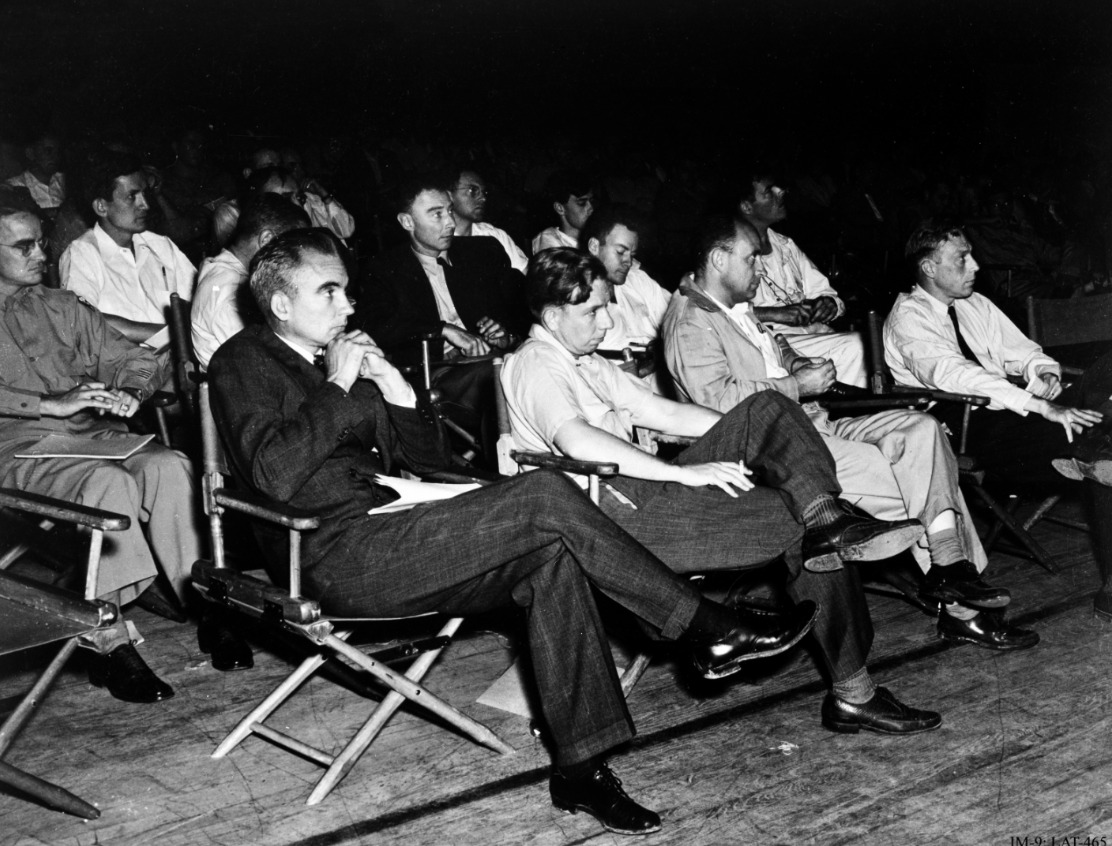
<span style="font-weight:400;">The United States, in collaboration with allied Great Britain, had been developing an experimental master weapon since August 1942. Code-named “The Manhattan Project,” this highly secret endeavor largely took place in Los Alamos, New Mexico although there were participating teams at Oak Ridge, Tennessee and Hanford, Washington. In this inaccessible New Mexican desert, hundreds of physicists, chemists, engineers, and military personnel gathered in secret to theorize and create the deadliest weapon known to man. </p>
<span style="font-weight:400;">By the end of 1944, there were two designs and two bombs, Little Boy and Fat Man. Little Boy used a gun-type fission design which shot uranium 235 at itself to reach supercritical mass, resulting in the single largest explosion of its time. The Los Alamos scientists were confident that this design would work and did not want to waste any precious material on a test. Little Boy had used all available U235, so any test would deplete the United States’ supply and would require too much time for the project to regenerate at its Oak Ridge site. Little Boy would go on to be dropped on Hiroshima on August 6th, 1945 and become the first nuclear bomb used in warfare.  </p>
<span style="font-weight:400;">On the other hand, Fat Man utilized an implosion design with explosives surrounding the highly reactive plutonium core. The idea was that the inward-facing explosives would trigger an explosive reaction of the plutonium and result in a larger blast than its Little Boy uranium counterpart. The scientists were less confident in this design. Plutonium had only been discovered at the end of 1940, and the implosion method was difficult to master. If each explosive was not uniform in strength and distance, the correct reaction would not begin, and the overall impact would decrease. Due to these doubts and the easier access to plutonium, the Los Alamos scientists decided to test “The Gadget.” </p>
<span style="font-weight:400;">The first step was finding somewhere to detonate a 10,000 ton bomb without alerting the international community. They decided on a stretch of high desert between New Mexico and Texas called Jornada del Muerto, translated as “Journey of Death.” It was later named the Trinity Site, likely inspired by Robert J. Oppenheimer’s interest in the Hindu concept of the three gods of preservation, destruction, and creation. On May 31, 1945, the requisite shipment of plutonium arrived in Los Alamos from the Hanford facility and scientists began to assemble Fat Man. Up to this point, Los Alamos had not housed a significant supply of plutonium, so all work on Fat Man was done speculatively or at miniscule scales. Working at a harried pace, scientists and engineers readied and transported a plutonium core to Trinity by July 13. Harry Truman, newly inaugurated President of the United States, wanted the test completed before the Potsdam conference with Churchill and Stalin on July 17, but weather conditions made it difficult for the scientists to comply. Finally, at 5:30 am on July 16, “The Gadget” detonated. </p>
<span style="font-weight:400;">Many reactions have been recorded describing the physical experience as well as moral and philosophical implications of the detonation. The light was so powerful that Georgia Green, a blind student miles away at the University of New Mexico asked “What’s that?” Physicist Isidore I. Rabi, who observed from ten miles away at base camp wrote, “Suddenly, there was an enormous flash of light, the brightest light I have ever seen or that I think anyone has ever seen. It blasted; it pounced; it bored its way right through you. It was a vision which was seen with more than the eye. It was seen to last forever.” Rabi also acknowledged the historic and philosophical weight of the moment, “A new thing had been born; a new control; a new understanding of man, which man had acquired over nature.” Alongside confusion and fear expressed by some locals and trepidation expressed by some Los Alamos scientists, there was also great enthusiasm and excitement. Project officials immediately sent a coded telegram announcing the “satisfactory operation” to Truman, just before his meeting with Churchill and Stalin.</p>
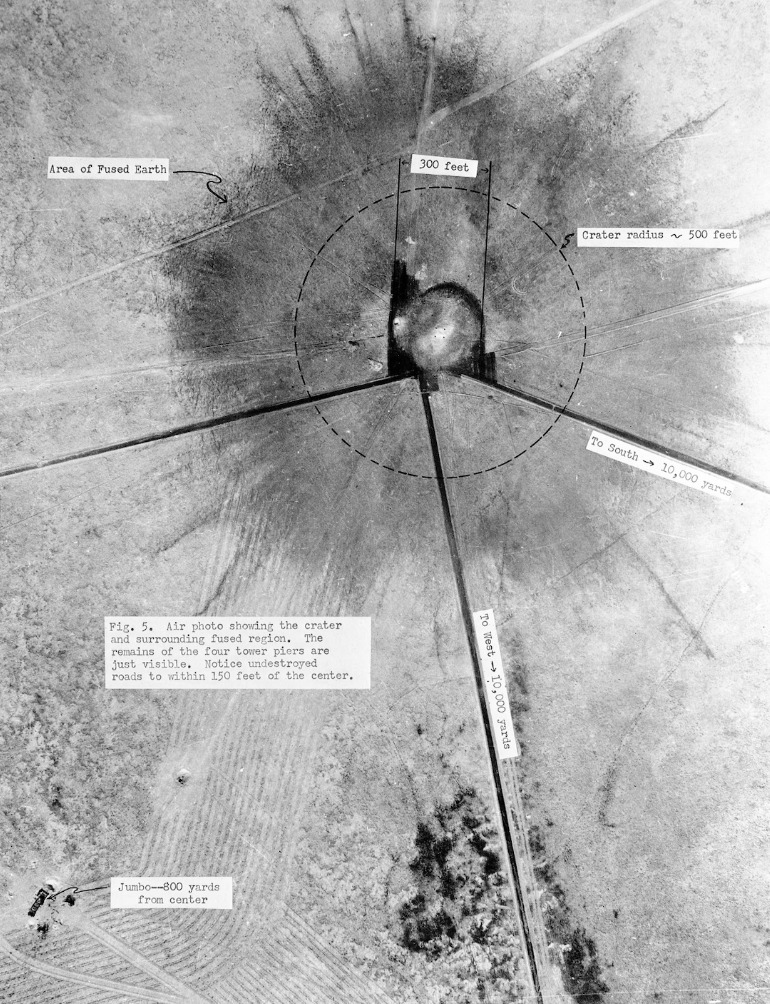
<span style="font-weight:400;">Back at the Trinity site, the scientists emerged from their safe havens and inspected the damage. The Gadget had destroyed every living thing within 1,200 feet of ground zero and disintegrated the steel tower on top of which it had been placed. It was, in the words of General Groves, “successful beyond the most optimistic expectations of anyone” and even larger than Little Boy. Because of its success at the Trinity Site, the Fat Man model would later be dropped on Nagasaki on August 9th, three days after Little Boy obliterated Hiroshima. </p>
<span style="font-weight:400;">Today, Trinity remains a highly radioactive site. Visitors are only allowed to visit two days a year. There are replicas of the bomb casing and the tower. Part of the original crater remains and reveals pockets of Trinitite, a green residue of highly radioactive sand particles melted by incredible temperatures into a glass-like substance. It can only be found at the Trinity Site and is illegal to collect for health concerns. Here, the first man-made atomic weapon detonated which aided in ending WWII and ushering in the age of atomic weaponry and mutually assured destruction. This continues to define international relations today. </span>


</p><p><em><strong><a href="https://www.intermountainhistories.org/items/show/755">For more (including 10 images) view the original article</a></strong></em></p>]]></summary>
    <published>2023-09-20T20:26:47+00:00</published>
    <updated>2026-04-17T19:32:16+00:00</updated>
    <link rel="alternate" type="text/html" href="https://www.intermountainhistories.org/items/show/755"/>
    <id>https://www.intermountainhistories.org/items/show/755</id>
    <author>
      <name>Abigail Beus, Brigham Young University</name>
    </author>
  </entry>
  <entry>
    <title type="html"><![CDATA[Jewish Contribution to the Manhattan Project ]]></title>
    <summary type="html"><![CDATA[<p><strong><em>Jewish participation in the Manhattan Project, particularly in Los Alamos, was an essential part of the operation's success. They continued to support their country despite local discrimination and the tragedy of World War II occurring abroad. </em></strong></p><img src="https://www.intermountainhistories.org/files/fullsize/89d79d7a997cf1681e9e7681568b097e.jpg" alt="Manhattan Project Scientists" /><br/><p>The United States’ development of the first atomic bomb would not have been possible without the contribution of Jewish Americans and Jewish refugees who fled Nazi Germany and war-torn Europe throughout the Manhattan Project. In August of 1939, Albert Einstein, Leo Szilard, and Enrico Fermi drafted and sent a letter to President Roosevelt via Alexander Sachs, warning the President of the potential use of atomic power in weaponry. This, in addition to another letter sent by British-Jewish scientists, led Roosevelt to form an advisory committee on uranium and, eventually, create the Manhattan Project.</p><p>Significantly, every person involved in the drafting and deliverance of this letter were Jewish or had close Jewish family members. Of the four involved, three were European refugees. Einstein was from a family of German Ashkenazi Jews and fled to the United States in 1933. Szilard was from a Hungarian Jewish family and fled to England in 1933 and then the United States in 1938. Fermi, while himself not Jewish nor German, was married to a Jewish woman which required him and his family to flee his home of Italy in 1938. Sachs was American-Jewish and an important advisor to President Roosevelt. All were impacted by the anti-Semitism of Germany and were respected and prominent enough to sway the President of the United States into forming a committee. Subsequent letters and information, much of which was provided by Jewish scientists, followed and increased the breadth of the project. </p><p>Jewish involvement in the Manhattan Project burgeoned as the war continued. J. Robert Oppenheimer, a young American Jew, was placed as the head of the Los Alamos branch of the Manhattan Project. He created four divisions in the Los Alamos lab, with the T-division, the theoretical division, being the most important. Of the 86 members in this division, 18 were Jewish—almost 21%. Even more impressive, of the eight groups in 1945, five were led by Jewish scientists such as Richard Feynman, Hans Bethe, and John von Neumann. Although Jews only constituted around .05% of the US population at the time, they made up a significant portion of the scientists at Los Alamos National Laboratory. </p><p>Jewish involvement in the Manhattan Project, as well as the project itself, were not known by the American public, and antisemitic prejudice was commonplace. In the 1920s, before J. Robert Oppenheimer attended, the president of Harvard, A. Lawrence Lowell, called for a quota of Jews to keep their presence sparse in the university. Even in Los Alamos, where Jewish scientists were important pioneers of the Manhattan Project, General Leslie Groves, the project’s military leader, stated, “I don’t like certain Jews, and I don’t like certain well-known characteristics of theirs.” Some Jewish scientists, such as Leo Szilard, were tailed by the FBI and noted for their “Jewish extraction” and “foreign tongue.”</p><p>At the same time, Los Alamos was a relative haven for these Jews. They were allowed in the upper echelons of decision-making and they were not stripped of titles or rewards because of their background. Ellen Bradbury Reid, an Anglo child in Los Alamos recalled, “I would not say [it was] a utopian situation, but. . . now I realize there were a lot of Jewish people, the European Jewish community who were there. I had no idea. . . [we] were all sort of in the same soup.” Despite prejudice, Jewish scientists were largely able to find footing in Los Alamos and thrive in the project. Jewish scientists in the Manhattan Project made a substantial and powerful impact in crafting the bombs which would end the war that, in total, killed over six million Jews. </p><p><em><strong><a href="https://www.intermountainhistories.org/items/show/753">For more (including 7 images) view the original article</a></strong></em></p>]]></summary>
    <published>2023-09-13T00:46:14+00:00</published>
    <updated>2026-04-17T19:32:16+00:00</updated>
    <link rel="alternate" type="text/html" href="https://www.intermountainhistories.org/items/show/753"/>
    <id>https://www.intermountainhistories.org/items/show/753</id>
    <author>
      <name>Abigail Beus, Brigham Young University</name>
    </author>
  </entry>
  <entry>
    <title type="html"><![CDATA[Utah: the Uranium Capital of the World]]></title>
    <summary type="html"><![CDATA[<p><strong><em>Uranium mining in Utah boomed as the United States began their nuclear build up following World War II. Although Utah’s uranium boom was short lived, it had long lasting consequences.</em></strong></p><img src="https://www.intermountainhistories.org/files/fullsize/b558090454af8e077dc39fc14f92f561.jpg" alt="Uranium Tailings Cleanup" /><br/><p>Before World War II, uranium was considered an unlucrative resource to mine. However, the United States' dropping of the atomic bombs changed the worth of the element. Nuclear weapons, such as the atomic bomb, are made from uranium: a heavy element which, when split, causes extreme heat and pressure, and thus, astonishing damage. Shortly after World War II, the United States engaged in a cold, non-combatant conflict with their former ally, the Soviet Union. These superpowers engaged in competition on all fronts, including in sports, space, and nuclear build up. Four years after the United States dropped the atomic bombs, the Soviet Union successfully tested atomic bombs of their own, thus igniting an arms race. </p><p>During this time of nuclear build up, the value of uranium surged. The U.S. Atomic Energy Commission began offering huge sums of money for miners. In 1952, Charles Steen, an unemployed and unsuccessful geologist, moved his family into a trailer in the middle of the desert as he began the search for uranium near Moab. He discovered an ore bed worth more than $60 million dollars. His discovery drew many miners to Moab in search of uranium. Soon Utah was dubbed “The Uranium Capitol of the World.” Between the years of 1946 and 1959, there were 309,380 claims of uranium found in Utah, and by 1955, there were about 800 operating mines. The uranium boom brought other businesses to Moab and the city began to grow exponentially. Other uranium rich mining towns in Utah enjoyed similar growth. However, the uranium boom was short lived, peaking in 1958 and declining in the 1960s. </p><p>Today, Moab and other uranium mining towns are tourist destinations where people can hike, mountain bike, and rock climb. Nevertheless, Uranium mining has had long lasting implications for its communities. Many of these communities are affected by poverty, natural resource dependence for economic growth, and great social inequalities and divisions. Longtime residents have experienced serious illnesses such as cancer due to their exposure to Uranium. Despite these impacts, residents of the uranium regions continue to support the industry because of their tie to its history, their patriotism, and their ongoing hope for a booming economy.</p><p><em><strong><a href="https://www.intermountainhistories.org/items/show/646">For more (including 3 images) view the original article</a></strong></em></p>]]></summary>
    <published>2022-09-12T19:17:52+00:00</published>
    <updated>2026-04-17T19:32:14+00:00</updated>
    <link rel="alternate" type="text/html" href="https://www.intermountainhistories.org/items/show/646"/>
    <id>https://www.intermountainhistories.org/items/show/646</id>
    <author>
      <name>Lexi Bradshaw, Brigham Young University</name>
    </author>
  </entry>
  <entry>
    <title type="html"><![CDATA[Uranium Mining on the Navajo Reservation]]></title>
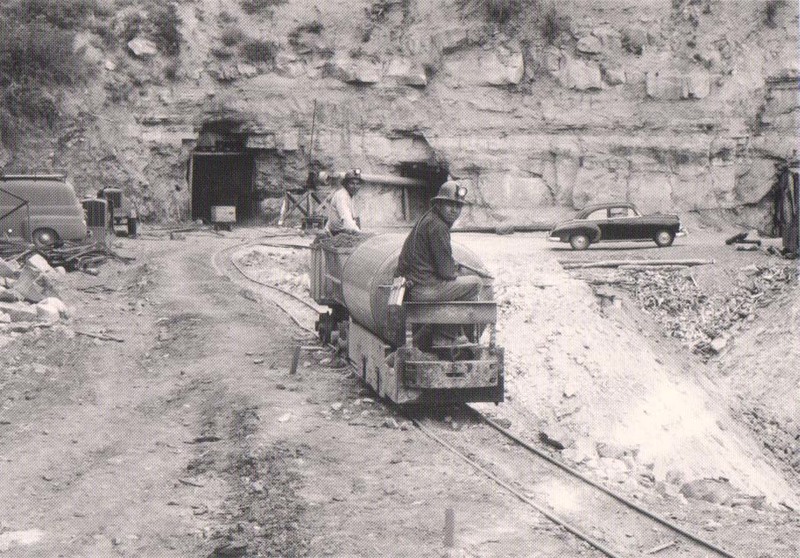
    <summary type="html"><![CDATA[<p><strong><em>The mining of uranium on the Navajo Reservation at the numerous Kerr-McGee mines aided weapon development during the Cold War. For many Navajo miners, this mining also exposed them to harmful radiation.</em></strong></p><img src="https://www.intermountainhistories.org/files/fullsize/1b04369a7d813bd703c61eb424a5f89d.jpg" alt="Navajo miners near Cove, Arizona in 1952" /><br/><p>After the conclusion of World War II, uranium ore was discovered in Northeast Arizona in the Lukachukai Mountains near the towns of Cove and Red Valley , Arizona. The Kerr-McGee Corporation started mining operations in 1952 in the Red Valley area by opening the Cove and Mesa mines on the Navajo Reservation. These uranium digs helped fuel the nuclear Arms Race between the United States and the Soviet Union during the 1950s and 1960s. Unlike other mines in Arizona, however, mining here proved more difficult since this uranium ore had formed in irregular and thin layers. The corporation used manual labor, employing mostly Navajo people, instead of machines to crush the stone. This crushed ore resembled a yellow chalk that could then undergo a refining process to extract the uranium. </p><p>This type of mining produced critically contaminated air, filling the mine shafts with radioactive uranium dust, radon gas, and superfine silica. Smaller mines in particular lacked proper ventilation systems to remove or filter air, and as a result, workers inhaled these chemicals constantly. Many miners developed health complications ranging from damaged lungs to cancer due to lack of knowledge about the long-term effects of radiation as well as inadequate protective equipment. </p><p>Mining operations peaked in 1955 and 1956 with the fervor of the Cold War, but two decades later in 1967, all uranium mining ceased. The fatalities that occurred from mining efforts, in addition to lingering health problems, left their mark on the history of uranium mining; its legacy of damaged lives and environmental landscapes eventually resulted in government action. Congress passed the Radiation Exposure Compensation Act (RECA) in 1990 to compensate those affected by nuclear or radioactive exposure. Uranium miners and ore transporters, among them many Navajos, received the largest compensation of $100,000. While monetary compensation cannot reverse the consequences of uranium mining, RECA demonstrates the cooperation between the U.S. government and the Navajo Reservation.</p><p><em><strong><a href="https://www.intermountainhistories.org/items/show/402">For more (including 3 images) view the original article</a></strong></em></p>]]></summary>
    <published>2020-03-08T05:33:53+00:00</published>
    <updated>2026-04-17T19:32:08+00:00</updated>
    <link rel="alternate" type="text/html" href="https://www.intermountainhistories.org/items/show/402"/>
    <id>https://www.intermountainhistories.org/items/show/402</id>
    <author>
      <name>Kee Ranger, Brigham Young University</name>
    </author>
  </entry>
  <entry>
    <title type="html"><![CDATA[Moab’s Uranium Mill Tailings Pile<br />
]]></title>
    <summary type="html"><![CDATA[<p><strong><em>Moab, known in the 1950s as the “Uranium Capital of the World,” is now better known as the home of Arches and Canyonlands National Parks. However, hikers, campers, rock climbers, and mountain bikers who visit Moab ought to be aware of the town’s connections to uranium mining. Every day, 136 containers of radioactive waste are transported alongside the highway that visitors take to get to either park. Furthermore, those who visit Lake Powell or Mead, the Grand Canyon, or any section of the Colorado River south of Moab ought to be aware of the 10.8 million tonnes of radioactive tailings that are being transported to a safer site but currently sit a few hundred feet away from the river.</p></strong></p><img src="https://www.intermountainhistories.org/files/fullsize/3646cbeb4873f2970c61de3905c3825d.jpg" alt="The Uranium Reduction Company Mill" /><br/><p>Outdoor enthusiasts are drawn to Moab because of its location along the Colorado River and its proximity to both Arches and Canyonlands National Park. The federal government has taken an active role in the conservation of land and wildlife in the area, but it has also partnered with entrepreneurs in the private sector who mined for uranium ore, a radioactive mineral that exists in abundance in parts of the southwest. Moab is a town where opposites meet—clean soil meets radioactive dust. The air, while fresh, could be dangerous to visitors who camp or kayak downwind from its massive uranium mill tailings pile.</p><p>During the Cold War, the U.S. military encouraged prospectors to search for uranium ore to create stockpiles of atomic and hydrogen bombs to defend against the Soviets. In 1952, thirty-two-year-old prospector Charles Steen discovered the country’s largest uranium deposit in Moab. Ore was extracted at the Mi Vida Mine and processed at the nearby Uranium Reduction Company. After it was processed, the hazardous waste was deposited in an unlined pond adjacent to the Colorado River. In 1962, Steen sold the processing company, which continued as the Atlas Uranium Mill. In 1984, the mill was permanently closed and the pond was covered. However, given the site’s proximity to the Colorado, pollutants from the waste began to leech into the river—one of America’s most important rivers, which is a source of drinking water for more than 40 million people and flows through Las Vegas’s Lake Mead.</p><p>In 2001, management of the site was transferred to the U.S. Department of Energy. In 2005, it announced that 10.8 million tonnes of the radioactive tailings would be moved from along the Colorado River, mostly by rail, and buried in a lined hole in Crescent Junction, twenty-eight miles north of Moab. The first relocation occurred in 2008 and might take more than twenty years to complete. Although a radiological survey has verified that the containers have no radioactive material on the outside, Dr. Gene Cole, a retired BYU professor and an environmental health specialist, has argued that it is impossible to completely prevent harmful tailings from spreading along the route, which passes alongside and under U.S. Route 191. Inconveniently, this state highway is the one that most drivers take when visiting Arches and Canyonlands National Parks, as well as iconic Monument Valley. In July 2014, the 7 millionth ton of tailing was placed in the Crescent Junction holding cell, where it should be secured. Nevertheless, who really knows how much radioactive dust blows off along the way?</p><p><em><strong><a href="https://www.intermountainhistories.org/items/show/216">For more (including 3 images) view the original article</a></strong></em></p>]]></summary>
    <published>2018-06-12T01:26:29+00:00</published>
    <updated>2026-04-17T19:32:03+00:00</updated>
    <link rel="alternate" type="text/html" href="https://www.intermountainhistories.org/items/show/216"/>
    <id>https://www.intermountainhistories.org/items/show/216</id>
    <author>
      <name>Marc Jonathan Wein, Brigham Young University</name>
    </author>
  </entry>
  <entry>
    <title type="html"><![CDATA[Charles Steen’s Former Hilltop Mansion<br />
]]></title>
    <summary type="html"><![CDATA[<p><strong><em>After climbing, camping in, or hiking through the National Parks that surround Moab, visitors might want to eat at a family-owned restaurant—The Sunset Grill. Before its transformation into a restaurant, this complex was the mansion of multi-millionaire uranium miner Charles Steen, a visionary prospector whose rags to riches (and back to rags) story still resonates with those who have seen the best and worst of times.</p></strong></p><img src="https://www.intermountainhistories.org/files/fullsize/1c696df5a134bb4118b5bc82e7ea351f.jpg" alt="The Steen family, from left to right: M.L., Butch, Charles, Jr., Mark, Charlie, Andy, and Johnny.
" /><br/><p>Each year, over 1.5 million outdoor enthusiasts visit Arches National Park, a mountain biker, hiker, and rock climber paradise, located outside of Moab. One popular restaurant where adrenaline junkies and nature lovers can refill is Sunset Grill, currently owned by a former aerospace engineer and a nightclub manager from Pennsylvania who moved to Moab in 1993. But before it was a restaurant, the site was the hilltop mansion built and owned by Charles Steen, a “rags to riches uranium boom king” who made his fortune in the 1950s.</p><p>In the early 1940s, Steen studied geology at the Texas College of Mines and Metallurgy (today the University of Texas at El Paso). After working in South America as a petroleum geologist and then in Texas for Standard Oil Company, Steen was fired for insubordination and blacklisted by the industry. In the December 1949 issue of the The Engineering and Mining Journal, he learned that the Atomic Energy Commission, desperate to supply uranium for the government’s nuclear weapons program, “established minimum prices, guaranteed the rates for ten years, and added a $10,000 bonus for each separate discovery . . . of high-grade uranium from new deposits.” Steen headed west. He, his wife, and four sons moved around in trailers and backcountry, tarpaper shacks for almost two years. Finally, on 6 July 1952, Steen struck big at Mi Visa Mine near Moab, which shipped a million dollars’ worth of ore in its first six months. Before then, he had been sustaining his family on a “diet of potato chips and bananas.” His son recalls that they had been “living in a $15 a month shack, unencumbered with running water or electricity.” But Steen’s willpower paid off. Moab, a sleepy town, became home to a millionaire.</p><p>He quickly built a $250,000 hilltop mansion in Moab, replete with a swimming pool, greenhouse, and even servants’ quarters. Steen also lived lavishly by purchasing a private plane, which he flew to Salt Lake City for weekly dancing lessons. Although he spent much of his money lavishly, Steen was known as a friendly man who gave to the community. Every year, he invited the entire population of Moab to annual parties and donated $50,000 toward a local hospital. His discovery put Moab on the map as the “Uranium Capital of the World” and created hundreds of jobs. He was elected to the Utah State Senate in 1958, but when the country had obtained enough ore and stopped supporting his prices, he suffered heavy financial losses. After he declared bankruptcy in 1968, the IRS seized his assets. Although he went from rags to riches, then lost his riches, Steen’s mansion, now a restaurant, is still open for business, overlooking the town like he once did.</p><p><em><strong><a href="https://www.intermountainhistories.org/items/show/214">For more (including 3 images) view the original article</a></strong></em></p>]]></summary>
    <published>2018-06-11T22:31:24+00:00</published>
    <updated>2026-04-17T19:32:03+00:00</updated>
    <link rel="alternate" type="text/html" href="https://www.intermountainhistories.org/items/show/214"/>
    <id>https://www.intermountainhistories.org/items/show/214</id>
    <author>
      <name>Marc Jonathan Wein, Brigham Young University</name>
    </author>
  </entry>
  <entry>
    <title type="html"><![CDATA[The Orphan Lode Uranium Mine in the Grand Canyon]]></title>
    <summary type="html"><![CDATA[<p><strong><em>The Lost Orphan Uranium Mine sat on the south rim of the Grand Canyon. In the 1960s Congress approved plans to extend the mine into Grand Canyon National Park. </em></strong></p><img src="https://www.intermountainhistories.org/files/fullsize/ebce618a9a71827de049d920e948b978.jpg" alt="Orphan Mine headframe " /><br/><p>The Lost Orphan Mine started as a copper claim by Daniel Hogan in 1906. The mine, on the southern rim of the Grand Canyon, found itself within the Grand Canyon National Park upon the latter’s creation in 1919. Hogan invested in an inn called the Kachina Lodge in 1936 as he realized the potential for tourists was far greater than the mining prospects. However, World War Two led to a decline in interest. Hogan sold the mine in 1946 and the property went through multiple owners until in 1951 prospectors discovered uranium at the site.  The Golden Crown Mining Company bought the mine as it was willing to invest to make the location profitable. Golden Crown’s parent company, Western Gold, took over, and until 1969 shipped uranium through the park to a uranium mill in Tuba City, Arizona. </p><p>In 1958 the Atomic Energy Commission (AEC) issued a new policy limiting purchased ore to only previously developed mines. Western Gold argued that its claim, which extended into the national park, was protected by apex rights, the miner’s right to follow a claim into other’s property. The AEC disagreed and the issue went to Congress. Nether the AEC nor Western Gold wanted to lose in court. Both believed that a congressional compromise was the best way to achieve a solution. </p><p>The debate centered on a number of issues. The United States valued uranium as important during the Cold War for protection, but likewise the Grand Canyon represented the American values being defended. Northern Arizona business leaders and the Navajo Tribal Council had an economic interest in the extension of the mine as it provided jobs. Proponents of the mine also used classic conservationist arguments in stating that the uranium was useless if left in the ground.</p><p>By May 1961 the issue was unresolved, so the Western Gold chairman announced that instead of a mine the company was going to build a 400 room hotel that descended the southern rim of the Grand Canyon. Western Gold then stirred public disapproval for the hotel through an advertising campaign. The gargantuan concrete hotel was considered to be far more of an eyesore than a bigger uranium mine. A year later, and after much debate, the House passed a bill detailing the compromise and Western Gold expanded its mining operation into the Grand Canyon. By 1967 the Westec Corporation owned the mine. Westec went bankrupt in 1967, and the Cotter Corporation took over mining but could not make it profitable due to rising production costs.</p><p>The Orphan Mine closed in 1969. It had produced 495,107 tons of ore which was processed into 4,257,571 pounds of uranium oxide. In June 2016 the Sierra Club and Native American tribal leaders pushed for a 1.7 million acre national monument around the Grand Canyon in order to protect it from further mining or logging in the area. Opponents of the proposal have expressed concerns over the economic impact of the restrictive monument. However, the Orphan Mine has already cost U.S. tax payers an estimated $15 million to clean up.</p><p><em><strong><a href="https://www.intermountainhistories.org/items/show/62">For more (including 4 images) view the original article</a></strong></em></p>]]></summary>
    <published>2017-06-06T19:17:20+00:00</published>
    <updated>2026-04-17T19:31:59+00:00</updated>
    <link rel="alternate" type="text/html" href="https://www.intermountainhistories.org/items/show/62"/>
    <id>https://www.intermountainhistories.org/items/show/62</id>
    <author>
      <name>George Mumford, Northern Arizona University</name>
    </author>
  </entry>
  <entry>
    <title type="html"><![CDATA[Uranium Mining in Uravan, Colorado]]></title>
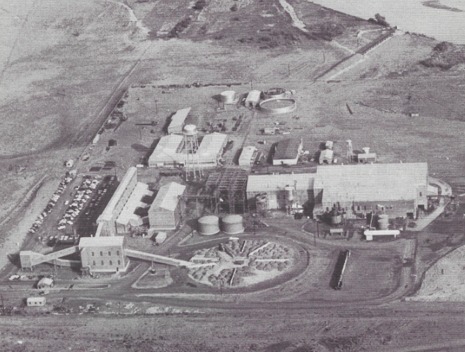
    <summary type="html"><![CDATA[<p><strong><em>The Colorado Plateau holds the richest uranium deposits in the United States. During World War II, the small uranium mining town of Uravan, Colorado helped to provide the Manhattan Project with uranium for the construction of the first atomic bombs.</em></strong></p><img src="https://www.intermountainhistories.org/files/fullsize/57eb547504641f0a8262e75aacb9e276.jpg" alt="Uranium Mill at Uravan" /><br/><p>Mining for uranium in Colorado started in the late-nineteenth century with the search for radium. Uravan started as a Standard Chemical Company mining camp named after the company chairman’s son, Joe Junior. From 1914-1923, miners at the Joe Junior Camp mined carnotite. Carnotite was a source of radium, although it required 300 tons to create a gram of radium. This material was an important ingredient in creating luminescent paint used for watches and instruments. In 1923, production of radium slowed in the United States with the discovery of rich deposits of radioactive pitchblende in the Belgian Congo. This material, pitchblende, proved much richer in radium than American carnotite. This allowed the Belgian mining companies to corner the radium market and end the American carnonite boom.</p><p>Between 1923 and 1936, the United States Vanadium (USV) Company operated the camp. In 1936, USV renamed the site after the two principle elements it intended to mine: uranium and vanadium. The company expanded the camp to house the 250 workers who moved there, many from the USV refinery at Rifle, Colorado. USV built frame houses, a mill, three power plants, along with amenities such as a swimming pool and a community hall that included a pharmacy and theater.  Men sometimes worked sixteen hours a day in the mines and mill. The residents had great pride in their town and felt appreciative of the company’s efforts to make life livable.</p><p>World War II proved a major boom to the mining of uranium and vanadium. With the outbreak of war, the United States Government started to increase purchasing of vanadium and uranium for alloy production as hardening agents in steel. During the 1940s, much of the uranium came either from the Belgian Congo or the Northwest Territories of Canada. While both of these regions proved richer than the Colorado Plateau, both were located outside of American control. The location of a uranium region in the continental United States meant that the area became vital to the war effort. With the work brought by the war, the community expanded, with the population growing to over 400 workers and their families. Under the control of the top-secret Manhattan Engineering District, the project used the uranium from Uravan in the creation of the atomic bomb, making the town a key provider. The mill at the town produced three tons of uranium sludge per day to help fuel the creation of the atomic bomb. </p><p>After the war, Uravan continued as a small mining town. Until the 1970s, the town prospered as demand for uranium remained high for Cold War defense and the growing nuclear power industry. However, changes in public attitudes to nuclear power and acceptable radiation levels affected production.  Eventually, the State of Colorado closed the town for safety reasons, residents moved away, and the town died.  In 1986, reclamation efforts began to reduce the radioactivity of the region. Today none of the buildings remain standing as reclamation efforts continue. </p><p><em><strong><a href="https://www.intermountainhistories.org/items/show/54">For more (including 4 images) view the original article</a></strong></em></p>]]></summary>
    <published>2017-06-03T15:34:16+00:00</published>
    <updated>2026-04-17T19:31:58+00:00</updated>
    <link rel="alternate" type="text/html" href="https://www.intermountainhistories.org/items/show/54"/>
    <id>https://www.intermountainhistories.org/items/show/54</id>
    <author>
      <name>Christian Flanders, Northern Arizona University</name>
    </author>
  </entry>
</feed>