<?xml version="1.0" encoding="UTF-8"?>
<feed xmlns="http://www.w3.org/2005/Atom">
  <title type="text">Intermountain Histories</title>
  <updated>2026-08-18T15:52:41+00:00</updated>
  <generator uri="http://framework.zend.com" version="1.12.20">Zend_Feed_Writer</generator>
  <link rel="alternate" type="text/html" href="https://www.intermountainhistories.org/"/>
  <link rel="self" type="application/atom+xml" href="https://www.intermountainhistories.org/items/browse?output=rss2"/>
  <id>https://www.intermountainhistories.org/</id>
  <author>
    <name>Intermountain Histories</name>
    <uri>https://www.intermountainhistories.org</uri>
  </author>
  <link rel="hub" href="https://pubsubhubbub.appspot.com/"/>
  <entry>
    <title type="html"><![CDATA[The Boone and Crockett Club&#039;s Connection with Theodore Roosevelt: Story 8 of 8 of the President Theodore Roosevelt in the West Tour]]></title>
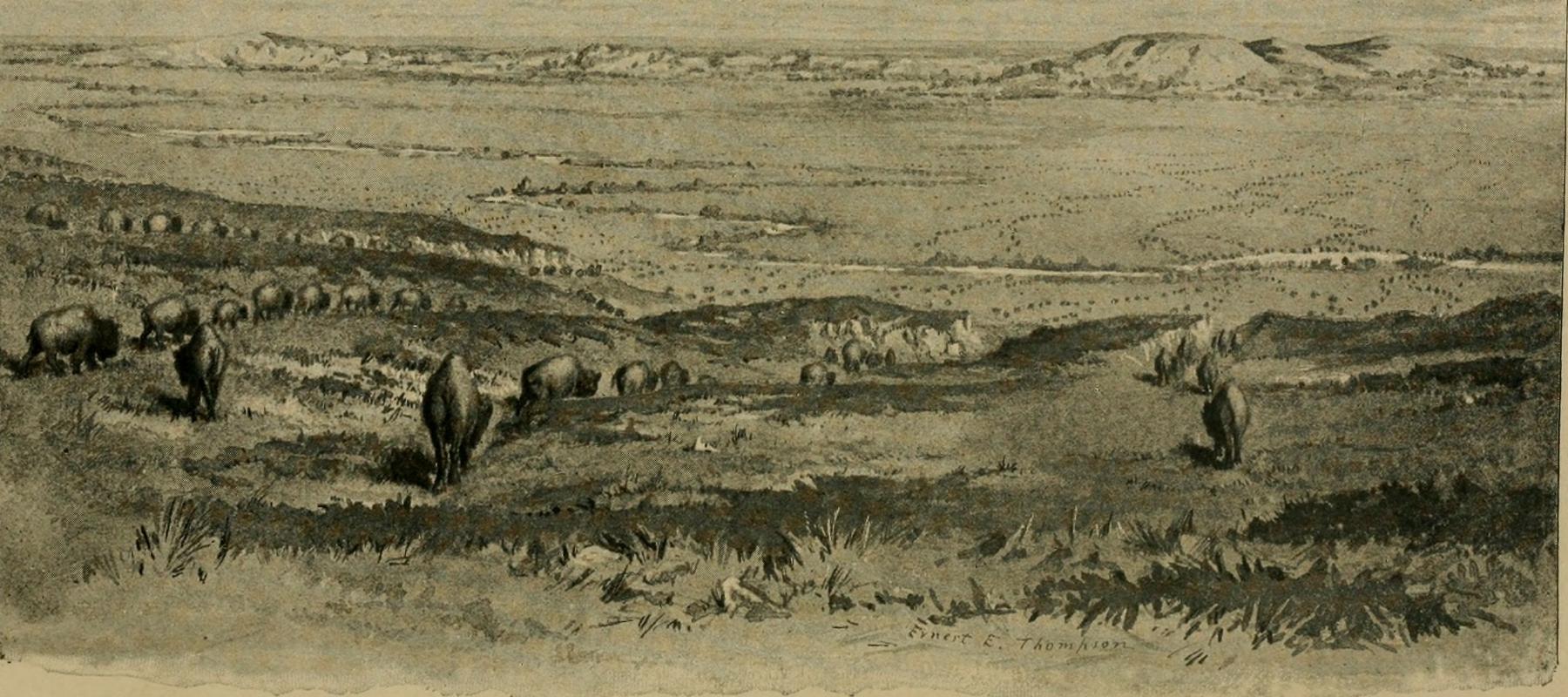
    <summary type="html"><![CDATA[<p><strong><em>By the late 1800s, Western sportsmen and settlers were hunting wildlife at such a rapid pace that many species risked extinction. Theodore Roosevelt recognized this and founded a club dedicated to conserving the land, resources, and wildlife for future generations.  </em></strong></p><img src="https://www.intermountainhistories.org/files/fullsize/31a977bb0a49566874be31d932edb7f7.jpg" alt="Artist’s depiction of big game in the American West in the late 19th century" /><br/><p>At the end of the 19th century, big game hunting became so popular that many wildlife populations faced extinction. Western railways increased access to previously remote regions, accelerating settlement. This Westward expansion also created a surge of irresponsible hunting for food, trophies, and improper land use. In 1883, on a trip to Little Cannonball Creek in Montana, Roosevelt enthusiastically hunted his first buffalo. Amid the thrill of this first-time accomplishment, he also reflected on the animal’s scarcity in his journal, “I watched the great beasts as they grazed...mixed with the eager excitement of the hunter was a certain half-melancholy feeling as I gazed on these bison, themselves part of the last remnant of a doomed and nearly vanished race.”
Like Roosevelt, many other sportsmen noticed how quickly wildlife in the West was disappearing. Determined to preserve his hobby and the land he loved, Roosevelt gathered fellow hunters to form the Boone and Crockett Club. Named after Daniel Boone and Davy Crockett, two famous frontiersmen and heroes of American expansion, the club advocated for the conservation and management of wildlife and habitat in the nation’s newest territories.
Founded on December 7, 1887, with the help of visionaries like George Bird Grinnell, Madison Grant, Gifford Pinchot, and 20 others, the club helped enact many legislative acts to protect and manage public lands. With their great influence, they initiated management regulations in the nation's first National Parks like Yellowstone, Glacier, and the Grand Canyon. They lobbied for federal laws that passed, including the 1891 General Revision Act (also known as the Forest Reserve Act), which enabled the President to withdraw forested lands from the public domain and offer them protections not guaranteed under previous legislation like the 1873 Timber Culture Act. This led to millions of acres being designated as “forest reserves” in the following two decades.
Roosevelt continued his efforts and spoke out about conservation when he was president with his annual address to Congress in 1907, saying, "Optimism is a good characteristic, but if carried to an excess, it becomes foolishness. We are prone to speak of the resources of this country as inexhaustible; this is not so." Educating the public, one of the club's biggest successes was the “Fair Chase” hunting ethic. This philosophy influenced game laws in the United States and created a system of data collection to monitor North American habitat health and big game populations today. Dedicated hunters and naturalists in the Boone and Crockett Club continually play a key role in balancing the well-being of the wild and the enjoyment of future generations. Roosevelt emphasized the importance in his book, My Life as a Naturalist, in 1918, “While my interest in natural history has added very little to my sum of achievement, it has added immeasurably to my sum of enjoyment of life.” He speaks for the wildlife as it cannot speak for itself.</p><p><em><strong><a href="https://www.intermountainhistories.org/items/show/925">For more (including 3 images) view the original article</a></strong></em></p>]]></summary>
    <published>2025-10-24T15:03:20+00:00</published>
    <updated>2026-08-18T15:52:41+00:00</updated>
    <link rel="alternate" type="text/html" href="https://www.intermountainhistories.org/items/show/925"/>
    <id>https://www.intermountainhistories.org/items/show/925</id>
    <author>
      <name>Jessika Cole, Brigham Young University</name>
    </author>
  </entry>
  <entry>
    <title type="html"><![CDATA[Yellowstone’s Favorite President’s Monument: Roosevelt Arch: Story 1 of 8 of the President Theodore Roosevelt in the West Tour]]></title>
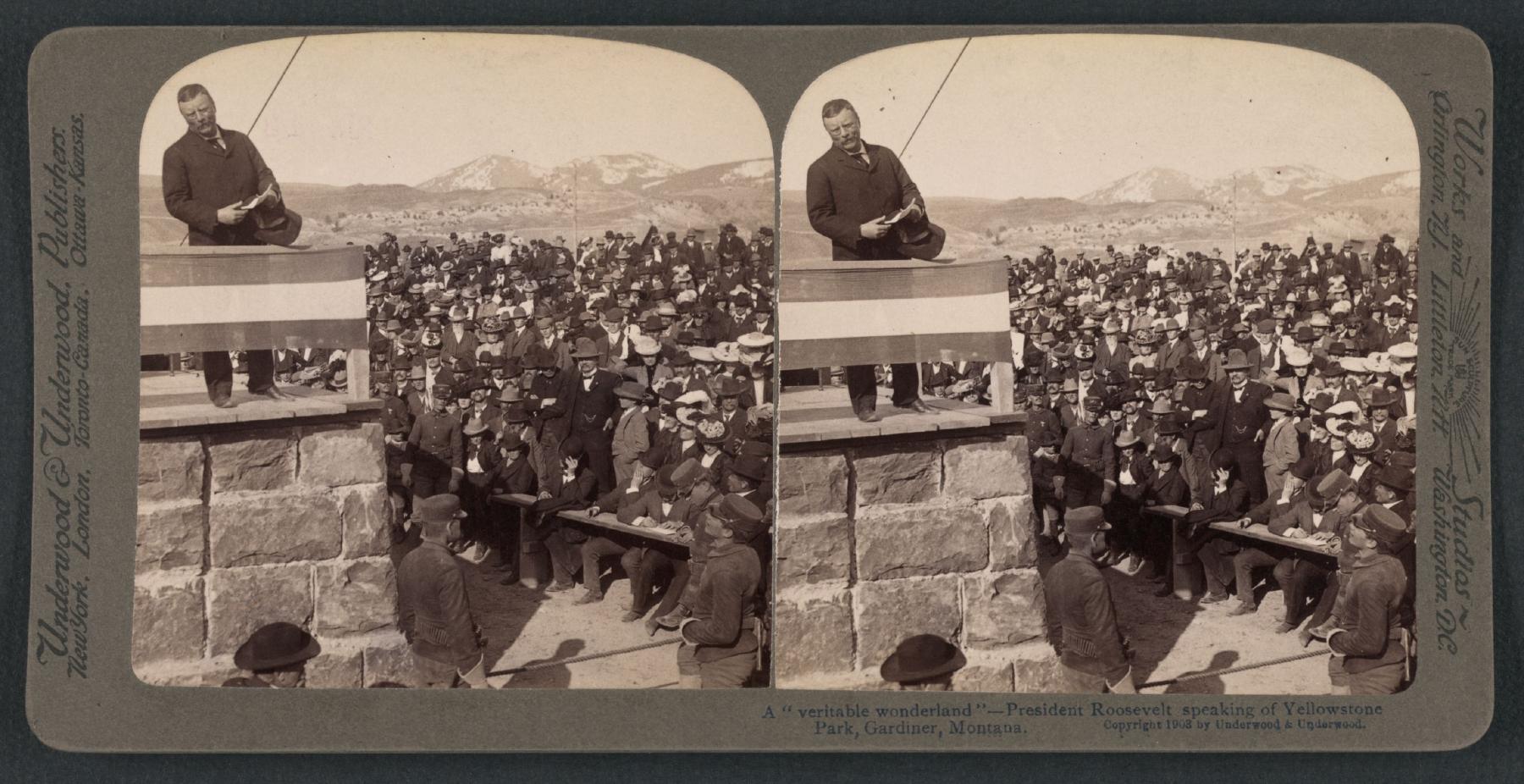
    <summary type="html"><![CDATA[<p><strong><em>Yellowstone receives an upgraded welcome with the Roosevelt Arch and gets a surprise visitor, Theodore Roosevelt, to dedicate it. </em></strong></p><img src="https://www.intermountainhistories.org/files/fullsize/f5ae52940338461ed18d1b83497abbb0.jpg" alt="President Roosevelt addresses a crowd at the dedication of Roosevelt Arch" /><br/><p>“Dedicated and set apart as a public park or pleasuring-ground for the benefit and enjoyment of the people.” Roosevelt Arch is a hearty welcome on the North entrance side of Yellowstone National Park. Standing at 52 feet, this monument is a symbol ofthe cultural and natural significance of the Park. Erected in 1903, the arch spanned what was at the time the park’s only entrance. Visitors passed under the arch from Gardiner, Montana, taking stagecoaches into Yellowstone. Army Co Engineer, Hiram M. Chittenden, the idea man, said, “...the natural features of the country at this portion of the boundary are about the least interesting of any part of the Park, and the first impression of visitors upon entering the Park was very unfavorable.” Accordingly, he proposed the arch as a beautiful park entry. Construction began on February 19, 1903 and a dedication ceremony was planned for April 24, 1903 to coincide with Roosevelt's planned visit to the park.</p><p>Yellowstone Park officials asked Roosevelt to participate in the event. This was a perfect opportunity for his conservation efforts and love for the park. With great fanfare, Roosevelt shared, “The geysers, the extraordinary hot springs, the lakes, the mountains, the canyons, and cataracts unite to make this region something not wholly to be paralleled elsewhere on the globe.” His love for the land was shared with the visitors there. They added a time capsule in the arch containing local newspapers, a bible, Masonic documents, a picture of President Roosevelt, and U.S. coins, among other items.
Roosevelt Arch still stands as a ceremonial welcoming committee to Yellowstone. Although not as popular as it was in the 20th century because of changing traffic patterns, automobiles couldn’t take the route like stagecoaches had, it is still a valuable spot to visit when exploring the park. Multiple entrances being added make this an out-of-the-way stop for those accessing the park from the more popular southern and western entrances. Yellowstone is visited by approximately 4 million people annually, and the arch continues to be a popular destination, especially for those visiting the Mammoth area or arriving from points north. It was added to the National Register of Historic Places in 2002 and is a potent symbol and reminder that National parks are “For the benefit and enjoyment of the people” as Theodore Roosevelt referenced the Act Congress passed in 1872 making Yellowstone a public park in his speech, and is not engraved on a place at the top of the arch itself.</p><p><em><strong><a href="https://www.intermountainhistories.org/items/show/919">For more (including 4 images) view the original article</a></strong></em></p>]]></summary>
    <published>2025-10-24T15:03:17+00:00</published>
    <updated>2026-08-18T15:51:51+00:00</updated>
    <link rel="alternate" type="text/html" href="https://www.intermountainhistories.org/items/show/919"/>
    <id>https://www.intermountainhistories.org/items/show/919</id>
    <author>
      <name>Jessika Cole, Brigham Young University</name>
    </author>
  </entry>
  <entry>
    <title type="html"><![CDATA[1967 Fire Season, Glacier National Park]]></title>
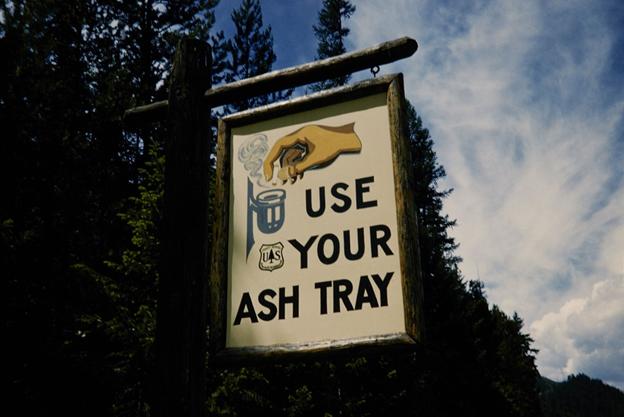
    <summary type="html"><![CDATA[<p><strong><em>Glacier National Park burned more frequently throughout its history than almost any other national park in the United States. Starting in 1910, the National Park Service persistently extinguished all wildfires that occurred within parks, but Glacier’s severe fire season in 1967 helped to end this suppression policy.</em></strong></p><img src="https://www.intermountainhistories.org/files/fullsize/75678ebbab988382ceaac098ab81df69.jpg" alt="Fire Safety Sign" /><br/><p>Throughout the early twentieth century, Glacier National Park in Montana utilized suppression, which required federal land management agencies to extinguish all forest fires. This approach gained national support after millions of acres of land burned in Idaho and Montana in 1910, including about 60,000 acres in Glacier. When 50,000 acres of Glacier burned in 1926, the National Park Service began to formulate official firefighting in the park. By 1929, Chief Forester John D. Coffman drafted the first national park fire management plan to organize firefighters and their equipment at Glacier. During the same year, the Half Moon Fire burned 50,000 acres in Glacier and destroyed numerous buildings. Coffman used analyses of Half Moon to revise and expand his initial strategy, making suppression an integral part of park policy.
In the 1960s, NPS developed a scientific approach to park management that changed the way it approached wildfires, but individual parks rarely aligned their management procedures with these ideas. In 1963, the Advisory Board on Wildlife Management, created by Interior Secretary Stuart Udall, published the Leopold Report. It stated that flames played a key role in maintaining healthy forests, advising administrators to contain wildfires and allow them to burn. Without routine burning, plant materials accumulated on the forest floor, fueling more destructive blazes. However, decades of fighting fires pushed park managers to fear the damage they caused. For decades, NPS managed forests to create attractive landscapes for visitors, and burned forests challenged this idealized image. As such, Glacier’s revised 1965 management plan upheld suppression.
In 1967, a significant drought and hot, windy weather created optimal conditions for flames to spread in Glacier. On August 11, 1967, lightning sparked approximately twenty-one fires throughout the park, including the Glacier Wall and Flathead blazes. They continued burning for a month despite containment efforts. The Office of Emergency Preparedness declared Glacier and the national forests surrounding it a national disaster area, contributing federal funding and labor to put out the flames. 1967 became the most destructive fire season Glacier had seen since 1929, and about 90,000 acres in the park burned.
The 1967 season quickly sparked a debate between the Park Service and the public over suppression. NPS officials contrasted it with the 1910 season  it to display the effectiveness of the policy, noting that less acres burned and less people died in the 1967 fires. However, inholders, who owned cabins, ranches, and hotels in Glacier, blamed the Park Service for mismanaging burns that damaged their properties. One vocal inholder, Montana Senator Burton Wheeler, brought these criticisms to national attention, prompting NPS to reassess its firefighting policies. In 1968, the Park Service acknowledged the ecological benefits of fire in the Green Book, a policy document that established budgets and dictated management policies for the entire park system. Revising this document made changing the suppression policy an issue of national importance. By 1977, Glacier’s management plan allowed natural fires to burn.</p><p><em><strong><a href="https://www.intermountainhistories.org/items/show/913">For more (including 5 images) view the original article</a></strong></em></p>]]></summary>
    <published>2025-09-23T15:39:29+00:00</published>
    <updated>2026-04-17T19:32:21+00:00</updated>
    <link rel="alternate" type="text/html" href="https://www.intermountainhistories.org/items/show/913"/>
    <id>https://www.intermountainhistories.org/items/show/913</id>
    <author>
      <name>Kaylen Wilson, Northern Arizona University </name>
    </author>
  </entry>
  <entry>
    <title type="html"><![CDATA[Chico Hot Springs — Montana]]></title>
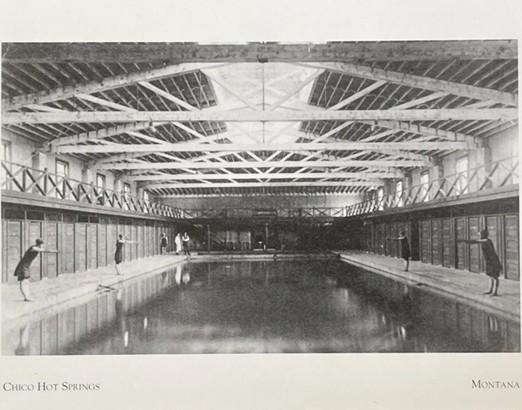
    <summary type="html"><![CDATA[<p><strong><em>Euro-American settlers converted these natural hot springs into a resort in the early 20th century, inviting travelers en route to Yellowstone National Park for a comfortable rest stop. After WWII, the site's ownership changed hands and converted Chico Hot Springs into a dude ranch, but the site's historic value and entertainment opportunities remained. </em></strong></p><img src="https://www.intermountainhistories.org/files/fullsize/35eaa6dfe7334e9b11c96e81dc2119ec.jpg" alt="Montana’s Hot Springs - Chico Hot Springs" /><br/><p><span>Chico Hot Springs sits within the Paradise Valley, where gold prospectors began mining in the 1860s. A gold miner wrote “went out to the hot springs and washed my dirty ‘duds” in a diary entry he dated to January 16, 1865, marking the first written record of these hot springs. As the Chico settlement developed in the 1880s, an investor named Walter Matheson announced his plans to construct a bathhouse in which locals and tourists could plunge into the spring’s steamy mineral waters. Matheson recognized that the Northern Pacific Railway’s completion would bring larger crowds through Montana, especially with the newly constructed Park Branch that ran through Paradise Valley and connected Livingston to Yellowstone National Park in 1883. He capitalized on this increased traffic by advertising to locals and railroad travelers of the relaxing and healthy qualities that dipping into the Chico Hot Springs offered. An 1893 article in <em>The Daily Enterprise, </em>Livingston, MT, noted that the facility became a popular tourist attraction, with visitors camping overnight near the springs. </span>
<span>Matheson passed his ownership of Chico Hot Springs down to his daughter, Percie, and her husband, William Knowles, before his death in 1893. With increasing patronage at the hot springs, Knowles recognized a lucrative opportunity in adding lodging and a dining room to the facility. Locals celebrated Chico Warm Springs Hotel’s grand opening in 1900, which unveiled the addition of hotel rooms, a hot plunge pool, gender-separated bathhouses, and a dance hall and saloon for evening social gatherings. Following Knowles’ death in 1910, Percie continued to manage Chico Hot Springs. She promoted the site’s medical services by closing the saloon and hiring an on-site physician to prescribe warm plunges in the springs to patients suffering from various ailments.</span>
<span>In 1948, Percie sold the Chico Warm Springs Hotel to Oneita Behnke, shifted the business’ focus toward entertainment in the following twenty years. Alongside swimming, visitors could participate in gambling, barbecues, rodeos, and square dancing. With the addition of livestock barns and corrals, Behnke renamed the business to “Chico Ranch” and began advertising the site as a dude ranch. The tourist appeal of Chico Hot Springs shifted once more when investors Mike Art and his wife Eve bought Chico Ranch in 1967 with intentions of restoring the business to its former purpose as a site of relaxation and recreation. He and his wife achieved this by remodeling the hotel, dining room, and pools, and renaming the business to “Chico Hot Springs Resort.” As a result, Chico Hot Springs became a modern, high-class getaway while retaining its historic architectural elements. </span>
<span>Chico Hot Springs Resort continues to be a popular Montana vacation site, offering hiking, horseback trail rides, outdoor garden walks, swimming, and a restorative plunge in the site’s natural hot springs. Its convenient location along Highway 89 continually draws automobile tourists to the site year-round. </span></p><p><em><strong><a href="https://www.intermountainhistories.org/items/show/912">For more (including 4 images) view the original article</a></strong></em></p>]]></summary>
    <published>2025-09-23T15:38:25+00:00</published>
    <updated>2026-04-17T19:32:21+00:00</updated>
    <link rel="alternate" type="text/html" href="https://www.intermountainhistories.org/items/show/912"/>
    <id>https://www.intermountainhistories.org/items/show/912</id>
    <author>
      <name>Alexandra Williams, Northern Arizona University</name>
    </author>
  </entry>
  <entry>
    <title type="html"><![CDATA[The Rockwood Speakeasy – Butte, Montana: When Montana lawmakers passed alcohol bans in 1918, Butte’s nightlife went underground. Business owners concealed their speakeasies, brothels, and gambling halls in basements under the city’s sidewalks. During Prohibition, Rockwood (Rookwood) Speakeasy earned its fame hidden behind coats and code words.]]></title>
    <summary type="html"><![CDATA[<img src="https://www.intermountainhistories.org/files/fullsize/51321426bb9e095b46c0551d1ba7b90f.jpg" alt="The cross section of Butte’s Broadway and Main Street in the 1920s" /><br/><p>James Pratt, proprietor of the Red Boot and Shoe Company, built the Rockwood (also called the Rookwood), in Butte, Montana in 1912. The ground level housed the shoe company’s shop, and the floors above functioned as a hotel. Pratt designed the building to attract attention and business with décor like Tudor-arching, green tile, a copper-clad cornice, a wrought iron staircase, and marble wainscoting and floors. The Rockwood’s unique ambiance and railroad access attracted elite and traveling patrons alike.
Before Prohibition, Butte, Montana, boomed as a mining town and gained notoriety for its lively bar and entertainment scene. When the Montana government banned alcohol distribution and consumption in December of 1918, Butte bars moved underground—into basements and tunnels beneath storefronts—and continued to sell alcohol. During this time, over one hundred underground speakeasies, including the Rockwood, operated in the city. In 1918, Pratt converted the building’s basement into a speakeasy. This underground area matched the hotel’s elegance above, attracted numerous clients, and became one of Butte’s more famous drinking spots.
In 1923, one of Rockwood’s moonshine clients, Mae Holberg, died by suicide after overconsuming alcohol. The 29 January 1923 issue of <em>The Butte Daily Post </em>describes the harrowing story. Holberg attended an all-night party at the Rockwood. Witnesses and police confirmed this party involved large quantities of illegal liquor. Around 7:00 A.M., Holberg drank one and a half ounces of Lysol, a fatal dose that ended her life within hours. A friend at the party told officers he believed Holberg took her own life because “she was despondent,” he said, “one or two drinks always made her despondent and downhearted.” Tragic stories like this made the Rockwood notorious in the illegal drinking world.
After Prohibition ended, Butte’s underground scene lost its appeal. Shop owners no longer needed to hide their liquor, so they moved alcohol sales to street levels, and many permanently sealed off their speakeasies. Rockwood’s basement became one of these buried speakeasies, while the rest operated as a hotel and retail space. In 2004, workers renovating the Rockwood Hotel discovered a closet filled with untouched coats from decades past. Behind the coats, they uncovered a two-way mirror which concealed a hole that opened into the Rockwood Speakeasy—frozen in time since the Prohibition era.
This discovery highlights the secretive and exclusive nature of the Rockwood Speakeasy and explains how it remained hidden and operational throughout Prohibition. It is a modern-day time capsule, offering visitors a glimpse into the past. Visitors can imagine stepping into the shoes of a 1920s client—looking into the mirror, giving the bouncer the code, and feeling the thrill of defying Montana’s dry laws.</p><p><em><strong><a href="https://www.intermountainhistories.org/items/show/896">For more (including 5 images) view the original article</a></strong></em></p>]]></summary>
    <published>2025-09-23T15:34:47+00:00</published>
    <updated>2026-04-17T19:32:20+00:00</updated>
    <link rel="alternate" type="text/html" href="https://www.intermountainhistories.org/items/show/896"/>
    <id>https://www.intermountainhistories.org/items/show/896</id>
    <author>
      <name>Scarlett Kluge, Northern Arizona University </name>
    </author>
  </entry>
  <entry>
    <title type="html"><![CDATA[Hornaday Bison Exhibit]]></title>
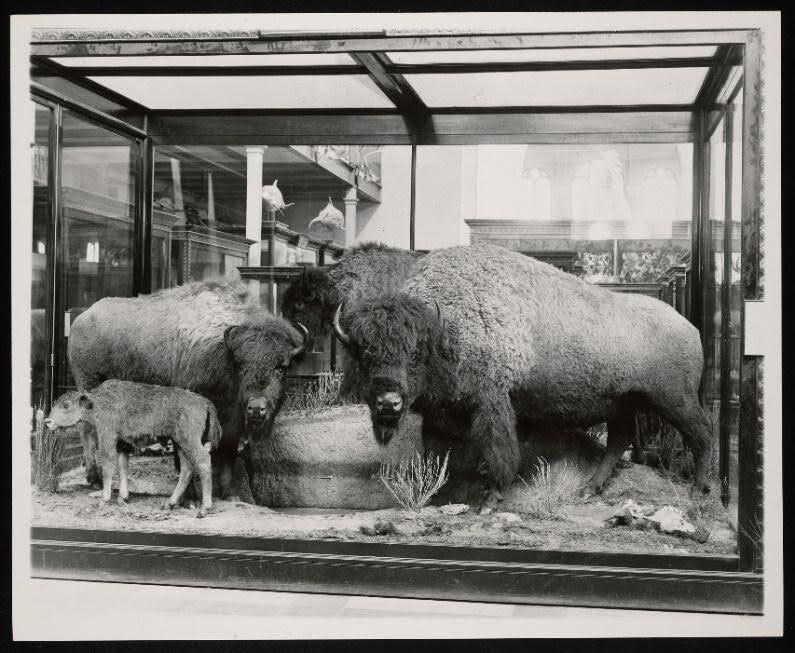
    <summary type="html"><![CDATA[<p><strong><em><span style="font-weight:400;">In 1886, there was genuine concern that the American bison (</span><i><span style="font-weight:400;">Bison bison</span></i><span style="font-weight:400;">) was on the brink of extinction. William Hornaday set out to gather a group of these animals to ensure the preservation of this iconic and once-abundant species. This effort resulted in a collection of six bison, forming one of the most significant representations of this American symbol in the United States.</span></em></strong></p><img src="https://www.intermountainhistories.org/files/fullsize/a329348b27c8e30eb86e7c0d3cd6bf29.jpg" alt="Mammals Exhibit, South Hall, United States National Museum" /><br/><p><span style="font-weight:400;">William Temple Hornaday (1854-1937) was among the first and most notable individuals in the fight to protect the American bison. In his </span><i><span style="font-weight:400;">The Extermination of the American Bison, </span></i><span style="font-weight:400;">Hornaday noted the decimation of the bison and called for the animals’ protection by state and national governments. By 1886, concerns about the potential extinction of the bison loomed, so Hornaday, as Chief Taxidermist at the Smithsonian Institution, traveled to Montana to collect specimens. These bison were some of the last from the wild herds found between the Yellowstone and the Missouri rivers, an area that had witnessed the last Blackfeet buffalo hunt in 1879. </span>
<span style="font-weight:400;">Hornaday killed and conducted the taxidermy on these six bison specimens and exhibited them at the Smithsonian in 1887. They remained there on permanent exhibit until 1955. The Smithsonian decided to dismantle the display and returned them to Montana. The group of bison were split up and put into storage, lost for years. Eventually, Doug Coffman (who studied the history of the bison at the Smithsonian) set out to find them in the 1980s. After being found and restored, the bison were put back on public display in 1996. Today, these six bison can be seen at the Hornaday Smithsonian Buffalo and Dean & Donna Strand Western Art Gallery, located within the Fort Benton Museum & Heritage Complex in Fort Benton, Montana. </span>
<span style="font-weight:400;">The bison are exhibited in the same arrangement in which they originally appeared at the Smithsonian. Notably, the large bull in the collection has served as a model for various national symbols and government designs, including coins, paper currency, postage stamps, and the Great Seal of the Department of the Interior, cementing its place as a symbol of American heritage. In 2016, President Barack Obama signed a bill into law naming the bison as America’s mammal.</span></p><p><em><strong><a href="https://www.intermountainhistories.org/items/show/879">For more (including 3 images) view the original article</a></strong></em></p>]]></summary>
    <published>2025-01-27T03:52:17+00:00</published>
    <updated>2026-04-17T19:32:20+00:00</updated>
    <link rel="alternate" type="text/html" href="https://www.intermountainhistories.org/items/show/879"/>
    <id>https://www.intermountainhistories.org/items/show/879</id>
    <author>
      <name>Dawson Muranaka, Brigham Young University</name>
    </author>
  </entry>
  <entry>
    <title type="html"><![CDATA[The Short and Storied History of The Colored Citizen]]></title>
    <summary type="html"><![CDATA[<p><strong><em>In 1884, the <em>Colored Citizen</em> became the first African American newspaper to be published in Montana. This newspaper is credited with helping Helena become the capital city of Montana. Additionally, while this newspaper was short-lived, it set the foundations for the other African American newspapers that followed.</em></strong></p><img src="https://www.intermountainhistories.org/files/fullsize/768f6a0faac6043afd8ad289535d1d70.jpg" alt="[Untitled]" /><br/><p><span style="font-weight:400;">In the early 1880s, a fight erupted in Montana over the location of the state capital. William Andrews Clark and Marcus Daly, the biggest names in the Montana copper industry, each wanted their local city to become the capital. While Daly preferred his beloved Anaconda, Clark fought to make the upstart mining city of Helena the capital. As part of the campaign to persuade voters to select Helena, he created and funded </span><i><span style="font-weight:400;">The</span></i> <i><span style="font-weight:400;">Colored Citizen</span></i><span style="font-weight:400;">. Clark was known as a famous entrepreneur, the “Copper King of Montana,” and as one of the wealthiest men in the United States during the late nineteenth century. He spent over $200,000 supporting the newspaper during its short run from September-November 1894, which was during the campaign season. James Presley Ball Jr. was named editor of the newspaper. Ball Jr. was also a photographer, and he represented a variety of African Americans who migrated to Helena in the 1880s in search of better treatment. He published the newspaper at 137 N. Main St, which is in the downtown area of the city. </span>
<span style="font-weight:400;">The </span><i><span style="font-weight:400;">Colored Citizen</span></i><span style="font-weight:400;">’s opening issue discussed the purpose of the paper. According to the Library of Congress, “Its reason for being was the intense interest among the city’s 279 ‘Colored’ Citizens in the upcoming election to decide the site of the state capital: Helena or Anaconda.” This issue also stated that Montana should be immensely proud of all of its “Colored Citizens.” During 1884, African Americans represented around 1% of the total state population with about 1,500 citizens. Additionally, the </span><i><span style="font-weight:400;">Colored Citizen </span></i><span style="font-weight:400;">had stories and articles about news on the local and state level. The newspaper was four pages long, with six columns. </span>
<span style="font-weight:400;">In the final issue of the newspaper on November 5th, 1894, a full-page endorsement filled the front page. It stated, “The Anaconda Mining Company Does Not Employ a solitary Colored man. Dagoes and Foreigners are preferred to Native Colored Americans. Helena has 500 Prosperous Colored Citizens. They own Thousands of Dollars of Real Estate and are Engaged in every kind of Business. Colored Men of Montana stand by your Helena Brethren. Vote for HELENA for the CAPITAL.” Unfortunately, the newspaper was shut down shortly before the vote, which ended up coming down to the wire. With a narrow gap of less than 2,000 votes out of the 50,00 votes cast, Helana won. The </span><i><span style="font-weight:400;">Colored Citizen</span></i><span style="font-weight:400;">’s influence on the vote is immeasurable, and its work to make Helena the capital has impacted Montana to this day. The newspaper also laid the groundwork and foundation for the African American newspapers that followed. </span><span style="font-weight:400;"> </span></p><p><em><strong><a href="https://www.intermountainhistories.org/items/show/871">For more (including 4 images) view the original article</a></strong></em></p>]]></summary>
    <published>2024-10-22T21:23:11+00:00</published>
    <updated>2026-04-17T19:32:19+00:00</updated>
    <link rel="alternate" type="text/html" href="https://www.intermountainhistories.org/items/show/871"/>
    <id>https://www.intermountainhistories.org/items/show/871</id>
    <author>
      <name>Morgan Baird, Rocky Mountain College  </name>
    </author>
  </entry>
  <entry>
    <title type="html"><![CDATA[Hazel Hunkins-Hallinan: Silent Sentinel Suffragist ]]></title>
    <summary type="html"><![CDATA[<p><strong><em>Billings native Hazel Hunkins-Hallinan, alongside other members of the National Women’s Party, peacefully picketed the White House fence from 1917-1919 to advocate for a federal amendment for women’s right to vote. Known as the “Silent Sentinels,” they proved to be a continual reminder to President Woodrow Wilson of the issue of suffrage.</em></strong></p><img src="https://www.intermountainhistories.org/files/fullsize/bffa4510a4cca3ac68232b815d975d58.jpg" alt="[Untitled]" /><br/><p><span style="font-weight:400;">Hazel Hunkins grew up in Billings, Montana, and as a young girl, she was seen as “different” because she wanted to do what boys could do from climbing trees to becoming a doctor. After graduating valedictorian from Billings High School, Hunkins obtained her chemistry degree from Vassar College. However, when she applied to chemistry labs across the country they all replied that although she was qualified, they “don’t hire women.” </span>
<span style="font-weight:400;">This response sparked a fire in her, and when she met Anne Louise Rowe of the National Women’s Party (NWP), Hunkins realized that she “was one of millions who had been shoved aside because of my sex” and she had to do something about the exclusion of women. Within six months of joining the NWP, she became the Montana State Chairman. When the NWP began their constant picketing of the White House in 1917, Hunkins participated in the demonstrations. The pickets were peaceful—holding purple, gold, and white suffrage banners and signs like “Mr. President, how long must women wait for liberty?” </span>
<span style="font-weight:400;">Hunkins led a protest at Lafayette Square, carrying the American flag and leading the way to the Park. Once at the statue, she made the simple statement: “Here, at the statue of Lafayette, who fought for the liberty of this country, and under the American flag, I am asking for the enfranchisement of American Women.” She was immediately arrested. Other women followed Hunkins’ lead, each suffragist making her own statement until 47 women were arrested.</span>
<span style="font-weight:400;">Lafayette Square confirmed the NWP efforts were unpopular; however, once World War started, they were scrutinized even more, as people thought the women needed to support the war effort rather than picket a wartime president. The NWP, instead of wavering in their resolve, started new demonstrations like the watchfires of freedom—where President Wilson’s speeches about democracy in Europe were read aloud and burned because American women did not have democracy at home.</span>
<span style="font-weight:400;">The arrests of NWP women continued, often being charged with newly fabricated crimes like “obstruction of a public sidewalk.” Rather than paying fines, they chose jail because as Hunkins stated, “Women cannot be law-breakers until they are law-makers.” The prison conditions were awful—cold, damp areas, without proper clothing, blankets, and food—so the suffragists would often go on hunger strikes to protest these conditions, and in some cases, they would be force-fed. After one such hunger strike, Hunkins left the prison hardly able to walk. </span>
<span style="font-weight:400;">Despite all of the challenges they faced fighting public opinion and police officers’ efforts to stop their protests, in 1920 the 19th Amendment was finally ratified, giving American women the right to vote. After this triumph, Hazel Hunkins continued to push for women’s rights. When she moved to London with her husband, Charles Thomas Hallinan, she joined the British feminist Six Point Group. At age 87, Hunkins-Hallinan returned to America to participate in the March for Equal Rights. There she stated what she fought her whole life for, “Equal Rights is so clear cut; it’s fundamental—a basic change… For half a cent I would stay here and campaign.” </span></p><p><em><strong><a href="https://www.intermountainhistories.org/items/show/866">For more (including 4 images) view the original article</a></strong></em></p>]]></summary>
    <published>2024-10-21T17:33:32+00:00</published>
    <updated>2026-04-17T19:32:19+00:00</updated>
    <link rel="alternate" type="text/html" href="https://www.intermountainhistories.org/items/show/866"/>
    <id>https://www.intermountainhistories.org/items/show/866</id>
    <author>
      <name>Rosalyn Visser, Rocky Mountain College</name>
    </author>
  </entry>
  <entry>
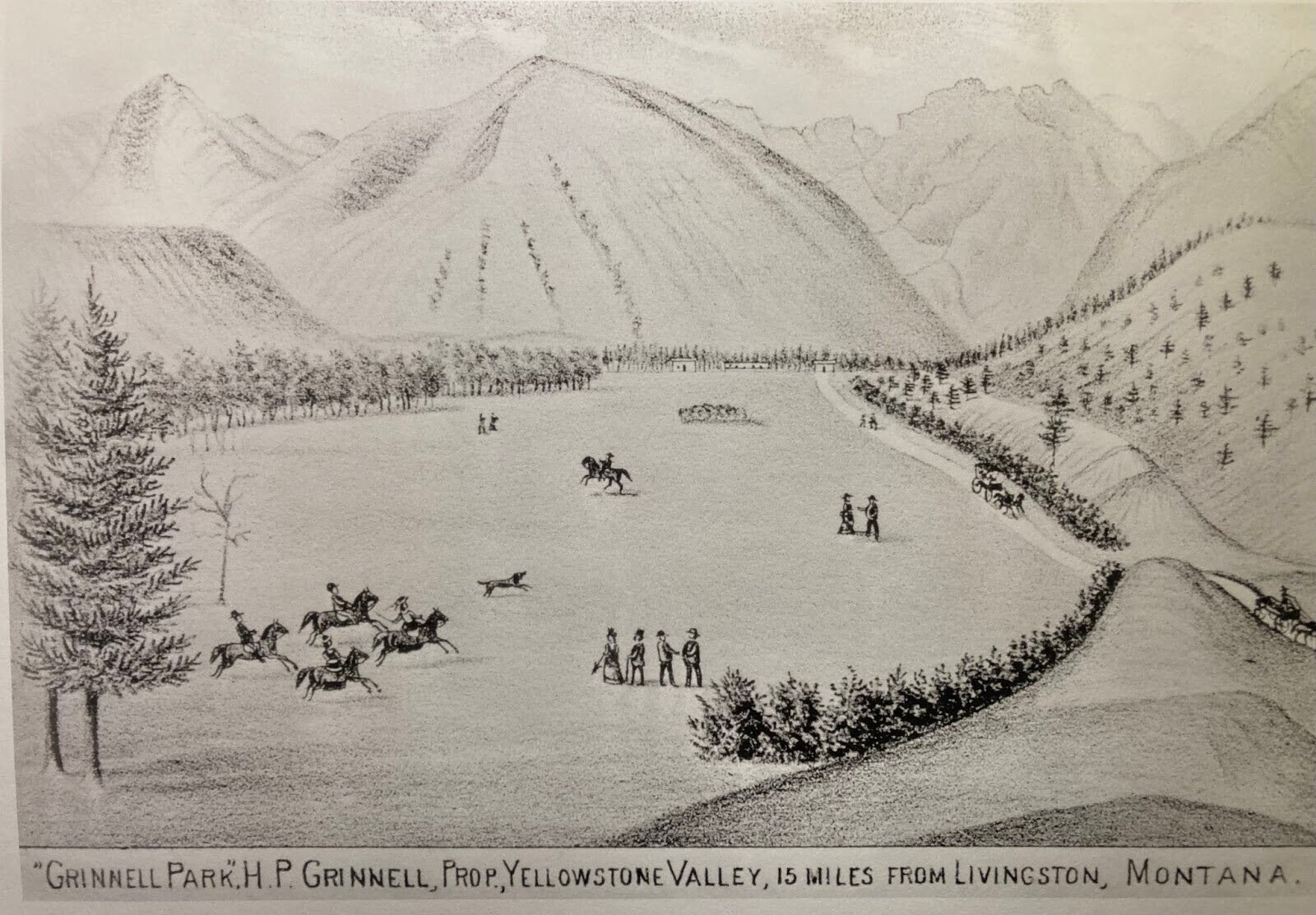
    <title type="html"><![CDATA[The Founding of Luccock Park Camp]]></title>
    <summary type="html"><![CDATA[<p><strong><em>After World War 1, a group of Methodists in Livingston, Montana planned to build a summer camp near Yellowstone Park. They travelled 15 miles outside Livingston in buckboard wagons through 2-3 feet of snow to a potential location for this camp, Grinnell Park. Arriving at Grinnell Park, the Methodists knew that they had found the perfect place for a summer camp.</em></strong></p><img src="https://www.intermountainhistories.org/files/fullsize/3cf3158003ddbe0be98bbbc2cb654fab.jpg" alt="Sketch of Grinnell Park" /><br/><p>In the summer of 1919, the Methodist Epworth League in Montana wanted to join the growing trend of church camps that started after World War I. At a conference in Billings, they decided to create a camp about 30 miles north of Helena at Wolf Creek. The Wolf Creek camp was a hit, so the Epworth League decided to build more camps in Montana. Four years later on, a district missionary conference convened in Livingston to build a camp near Yellowstone Park. They decided to investigate Grinnell Park, a glacially-formed valley about 15 miles south of Livingston near Pine Creek as a potential site for this camp. </p><p>On March 11, 1923, a group consisting of Epworth League members, conference members, and Albert Alan, the owner of the land, traveled to Grinnell Park in 3-seated buckboard wagons, fighting against 2-3 feet of snow. The Methodists fell in love with the area and swiftly authorized the Livingston conference to “proceed with all necessary arrangements” to use Grinnell Park as the location for a church camp. Alan sold the land, which was about 25 acres “more or less” for $2,500. Pastor Otto G. Ponath of the local Pine Creek Church helped to build a road up to the camp that was determined to be about a $6,000 job by the highway department. With this road, a Model-T Ford was “driven, pushed, and pulled up to the camp” and both guests and staff were able to travel to the camp. Using old Ringling Circus tents from Billings, members of the state convention were able to make important decisions while being protected from an oncoming storm. One of these decisions was naming the camp “Luccock Park” after the first resident Bishop of Helena, Naphtali Luccock. They also decided to name the mountains that surround the camp from left to right, Faith, Hope, and Charity. </p><p>One hundred years later, Luccock Park still stands as a place for people to gather. It has survived extreme weather, a wildfire that almost burned down the camp, and a global pandemic. There are now permanent buildings on site: the main lodge, an old ranger’s station, a chapel, multiple bathhouses, and dozens of cabins. The camp is open from mid-May to mid-September, hosting a number of Methodist camps, weddings, group getaways, and so much more. In the summer of 2023, a celebration was held to celebrate the last 100 years of Luccock Park. People from all over the country came together at Luccock Park to celebrate and talk about the past and their hopes for the future of the camp.</p><p><em><strong><a href="https://www.intermountainhistories.org/items/show/865">For more (including 4 images) view the original article</a></strong></em></p>]]></summary>
    <published>2024-10-19T00:58:26+00:00</published>
    <updated>2026-04-17T19:32:19+00:00</updated>
    <link rel="alternate" type="text/html" href="https://www.intermountainhistories.org/items/show/865"/>
    <id>https://www.intermountainhistories.org/items/show/865</id>
    <author>
      <name>Alyssa Ulrickson, Rocky Mountain College</name>
    </author>
  </entry>
  <entry>
    <title type="html"><![CDATA[The Legacy of Helena’s Montana Plaindealer Newspaper ]]></title>
    <summary type="html"><![CDATA[<p><strong><em>Published from March 1906 to September 1911, Helena's M<em>ontana Plaindealer</em> was one of the most popular African American newspapers in the state. This newspaper represented a small but vibrant African American community in early Montana.</em></strong></p><img src="https://www.intermountainhistories.org/files/fullsize/82c4822381690566ee87726d08b9622d.jpg" alt="The April 20th, 1906 edition of the Montana Plaindealer" /><br/><p>In the early 1900’s, Helena was the home of Montana’s largest African American population with over 400 individuals, which was about 3% of the city’s population. In the entire state of Montana there were about 2,000 African American residents. Joseph B. Bass, founder and editor of the Montana Plaindealer, was an active member of the African Methodist Episcopal Church and a strong believer in the “hard work and self-improvement" doctrine of Booker T. Washington. He was previously employed at the Topeka Plaindealer in Kansas. He worked on the paper with the help of Joseph Tucker, an African American man who had lived in Helena for over a decade and worked as a printer. </p><p>Four pages long and printed weekly, The Montana Plaindealer was a trusted news source in the community. The newspaper was strongly Republican and one of their taglines stated, “We unhesitatingly subscribe to the principles of Republicanism.” It preached the goal of “racial uplift” through entrepreneurship and civic work and supported Progressive political reform. The inaugural edition stated, “This enterprise shall at all times strive for a greater Helena, and for mutual progress of all people in the community, and for a greater activity of our people in the business world.” These sentiments were expressed in the stories, editorials, and information conveyed in the newspaper. </p><p>Additionally, Bass wrote about community news, such as church information, and other national interest stories. An example of a national story was the 1907 Brownsville Incident. An important column in every edition was the “Race News” column that published stories about racial discrimination, economic opportunities, and Civil Rights news. The newspaper also included results of political battles. An example of these battles is seen in local primaries and elections on the state and national levels. Additionally, the newspaper also protested discriminatory legislative action. This is illustrated in their protest of an anti-miscegenation bill passed in Montana in 1909. </p><p>The newspaper’s impact and reach are difficult to explain with statistics, but Bass stated that over 3⁄4 of all African Americans in Helena subscribed to the paper. The paper also had a number of white subscribers as well, a number that tripled the amount of African American subscribers. The paper was partially funded by fundraising social events, like dinners, that were thrown by White Republicans. Unfortunately, these fundraising events were not enough as The Montana Plaindealer underwent financial difficulties and had to suspend publication due to a lack of money in September 1911.</p><p><em><strong><a href="https://www.intermountainhistories.org/items/show/863">For more (including 6 images) view the original article</a></strong></em></p>]]></summary>
    <published>2024-10-18T13:32:50+00:00</published>
    <updated>2026-04-17T19:32:19+00:00</updated>
    <link rel="alternate" type="text/html" href="https://www.intermountainhistories.org/items/show/863"/>
    <id>https://www.intermountainhistories.org/items/show/863</id>
    <author>
      <name>Morgan Baird, Rocky Mountain College  </name>
    </author>
  </entry>
  <entry>
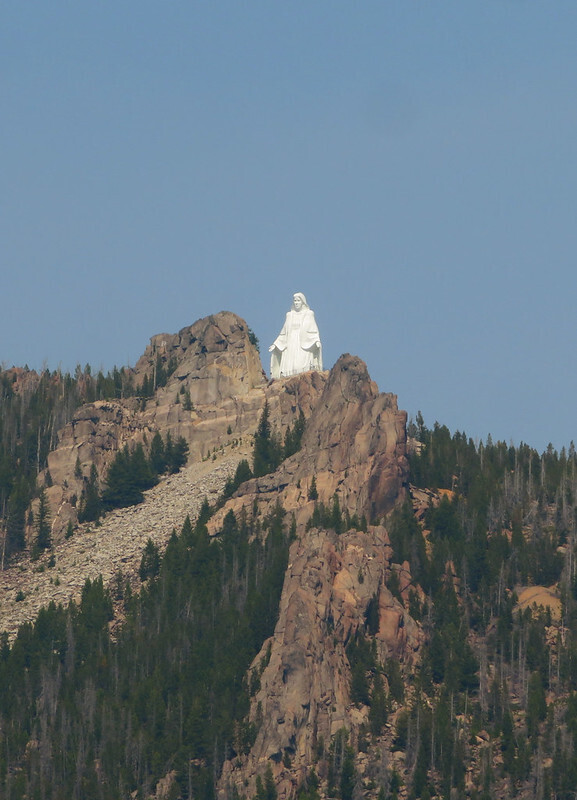
    <title type="html"><![CDATA[Our Lady of the Rockies]]></title>
    <summary type="html"><![CDATA[<p><strong><em><em>Our Lady of the Rockies </em>looks out across the city of Butte, Montana with arms stretched wide from a vantage of some 3,500 feet above the city, and weighing over 50 tons.</em></strong></p><img src="https://www.intermountainhistories.org/files/fullsize/c4ae7467ddb2ea3d296e2b06e342e9ae.jpg" alt="Our Lady of the Rockies. " /><br/><p>The statue project began with Bob O’Bill, who, in 1979 made a plea with God in hopes that his bed-ridden wife Joyce would make a full recovery. When she did, O’Bill began to discuss with his peers the logistics of building the statue. As word spread about the building project, an overwhelming amount of support arose, making the statue a community project. The initial plan for the six-foot statue with community support soon grew to a project that would be over 90 feet tall. Though some thought that the project was strictly Catholic, project sponsors took care to present it as a community effort which symbolized “the dignity of motherhood and the sacrificial love a mother has for her child.” Community pride has always been strong in Butte, extending back in Butte's mining history in the 19th century. Whenever the future was uncertain, the community of Butte banded together and cared for each other. This bond and the meaning behind the statue are both driving factors in what makes Butte’s community so special. </p><p>Supplies including paint, food for workers, and enough iron and steel to build the statue, were all gifted to the project by donors. A major contributor to the project, Joe Roberts, was connected to O’Bill through Ann Nettles, who knew Joe to be a guy whot took up outlandish projects. Once he familiarized himself with the project and got over how crazy he thought it to be, Robert’s Rocky Mountain Equipment Co. discussed a plan to put up the statue, ensuring that it was done safely with high stability. Roberts grew to have a major role in the project, raising funds, donating the use of his equipment, and even providing one thousand dollars to start off the construction fund. From there the community took care of the rest. </p><p>After six years of trouble-shooting technical difficulties, the statue was finally ready to assemble on the mountain top. On December 17, 1985, the statue was lifted in four sections by the Nevada Air National Guard Team and assisted by the Army Reserve stationed in Butte, as well as the Montana National Guard. Today Our Lady of the Rockies continues to show civic generosity through the volunteers that keep the statue up and running so that it may be able to show hope and optimism to inspire generations to come.</p><p><em><strong><a href="https://www.intermountainhistories.org/items/show/862">For more (including 4 images) view the original article</a></strong></em></p>]]></summary>
    <published>2024-10-18T13:00:52+00:00</published>
    <updated>2026-04-17T19:32:19+00:00</updated>
    <link rel="alternate" type="text/html" href="https://www.intermountainhistories.org/items/show/862"/>
    <id>https://www.intermountainhistories.org/items/show/862</id>
    <author>
      <name>Logyn J. Klebe, Rocky Mountain College</name>
    </author>
  </entry>
  <entry>
    <title type="html"><![CDATA[St. Mary’s Mission in the Pacific Northwest]]></title>
    <summary type="html"><![CDATA[<p><strong><em>Father Pierre-Jean De Smet brought Christianity to Native peoples in Idaho and Montana through the construction of St. Mary’s Mission. With it came Catholic conversion among some Salish (Flatheads) and Nez Perce, and conflict with the Blackfeet.</em></strong></p><img src="https://www.intermountainhistories.org/files/fullsize/439956b4dff81e2ade29e5724487f46c.jpg" alt="[Untitled]" /><br/><p>A few members of Salish speaking tribes, also referred to as “Flatheads,” traveled to St. Louis in the 1830s and requested the Catholic Church send missionaries to construct a mission to teach them about Christianity and the Bible. Father Pierre-Jean De Smet, Society of Jesus, was a Flemish Jesuit priest who answered the call, traveling west with fur traders and Catholic Mohawks. He founded the Catholic mission of St. Mary’s in 1841 to provide schools, storehouses, farms, workhouses, and religious instruction. </p><p>De Smet and the St. Mary’s Mission abided by four overarching rules. First: respect the Catholic Church with submission and a desire to learn about the gospel. Second: respect your neighbors and obey those in positions of authority. Third: develop attributes such as humility, charity, and temperance for self-improvement. Fourth: limit contact between Natives and settlers who may not help cultivate Christian values.</p><p>The presence of St. Mary’s had a profound effect on many Natives. Some Salish were baptized and the mission counted converts as a sign of the mission’s success. Others, such as the Blackfeet, loathed the mission and waged war upon it, destroying the mission in 1850.</p><p>Pierre-Jean De Smet, as the mission’s supervisor, played a large role not only in spreading the gospel message, but also as a community leader. He presided over marriages, baptisms, and other ecclesiastical functions as well as social issues relating to farming, government, and interactions with outsiders. The community looked up to him as a protector and he often counseled Native leaders on matters concerning war and policy. Other Salish rejected De Smet and the Catholic intrusion in their lives and adhered to traditional teachings and practices.</p><p>Located near Stevensville, Montana, Historic St. Mary’s Mission is on the National Register of Historic Places. Buildings include the chapel, Father Ravalli’s cabin, Chief Victor’s Cabin, Ox Cart barn, Dove Cote, Smoke House, Diorama, Salish encampment, and apple orchard. A visitor center houses a museum, gift shop, office, art gallery, and research library. Volunteers serve as tour guides, grounds keepers, clerical workers, and operate a museum and gift shop.</p><p><em><strong><a href="https://www.intermountainhistories.org/items/show/853">For more (including 4 images) view the original article</a></strong></em></p>]]></summary>
    <published>2024-09-25T03:24:33+00:00</published>
    <updated>2026-04-17T19:32:19+00:00</updated>
    <link rel="alternate" type="text/html" href="https://www.intermountainhistories.org/items/show/853"/>
    <id>https://www.intermountainhistories.org/items/show/853</id>
    <author>
      <name>Samuel G. Dunn, Brigham Young University</name>
    </author>
  </entry>
  <entry>
    <title type="html"><![CDATA[Many Glacier Hotel: Glacier National Park ]]></title>
    <summary type="html"><![CDATA[<p><strong><em>After Congress created Glacier National Park in 1910, the Great Northern Railway constructed a complex network of hotels, chalets, roads, trails, and tent camps in the region. The railroad modeled this system after luxury resorts in Europe, and Many Glacier Hotel served as one of its crown jewels.</em></strong></p><img src="https://www.intermountainhistories.org/files/fullsize/2eecb9d891c46a783d81ec6dcc049230.jpg" alt="Many Glacier Hotel, c. 1921" /><br/><p><span style="font-weight:400;">Constructed at the edge of what is now Swiftcurrent Lake, Many Glacier Hotel provided the Great Northern Railway’s second grand hotel at Glacier National Park. It served as the center of the Great Northern’s network of chalets and tent camps alongside the 1910 Glacier Park Hotel. From the grand hotels, tourists could access chalets and tent camps in Glacier’s backcountry. Visitors accessed these locations on horseback, but automobiles later drew tourists away from them. The Great Northern brought an unprecedented level of development into Glacier, and it spent approximately $1.5 million on hotels, chalets, campsites, trails, and roads by 1917. Many Glacier Hotel cost $400,000. </span>
<span style="font-weight:400;">Designed by Great Northern architect Thomas D. McMahon, the hotel comprises three separate buildings connected by covered walkways. The central portion opened in 1915, but the railroad did not complete the hotels’ north and south ends until 1917. Its rough stone siding and foundations resemble the rustic architecture that was becoming increasingly common in national parks. The architect further emphasized this feature in the lobby, which included a grand fireplace and tall wooden support pillars. This imitated the “forest” lobby at Glacier Park Hotel, which uses massive Douglas fir trees as pillars and includes an open fire pit. Many Glacier briefly featured an indoor pool, but the Great Northern removed it due to sanitary issues. </span>
<span style="font-weight:400;">The railroad also intended Many Glacier to match the Great Northern’s other buildings in the park, which imitate Swiss chalets. The hotel’s three sections look like individual Swiss chalets from a distance. Wooden pieces called moldings adorn their windows and balconies, and these pieces feature cutout patterns inspired by the Swiss chalet style. This created a unified sense of place in the region and emulated Glacier’s status as the “Switzerland of North America.” Early advertisements capitalized on this idea during World War I, encouraging guests to “see America first” instead of spending their vacation money to visit foreign locales. The Great Northern hired numerous artists to paint Glacier National Park, and their work hung in train depots and ticket offices. The railroad displayed a variety of paintings from the See America First in Many Glacier Hotel, but only a few remain today. </span>
<span style="font-weight:400;">While Glacier National Park quickly became a popular tourist attraction, the Great Northern’s vast building network became increasingly expensive to maintain. Initially, the railroad kept its resort system to draw train passengers into the park, but it made numerous attempts to sell the hotels as more visitors began to arrive by car. In 1957, the Great Northern hired the Knutson Hotel Company to prepare Glacier’s hotels for sale, and Glacier Park Inc. purchased them in 1960. In 2001, the National Park Service funded a $42 million restoration project that replaced the lodge’s roof and siding, restored original architectural features like balconies, and reinstalled an original circular staircase that the Knutson Hotel Company removed from the hotel lobby in 1957. Xanterra Parks and Resorts currently manages Many Glacier Hotel.</span></p><p><em><strong><a href="https://www.intermountainhistories.org/items/show/842">For more (including 5 images) view the original article</a></strong></em></p>]]></summary>
    <published>2024-05-29T21:10:56+00:00</published>
    <updated>2026-04-17T19:32:19+00:00</updated>
    <link rel="alternate" type="text/html" href="https://www.intermountainhistories.org/items/show/842"/>
    <id>https://www.intermountainhistories.org/items/show/842</id>
    <author>
      <name>Kaylen Wilson, Northern Arizona University</name>
    </author>
  </entry>
  <entry>
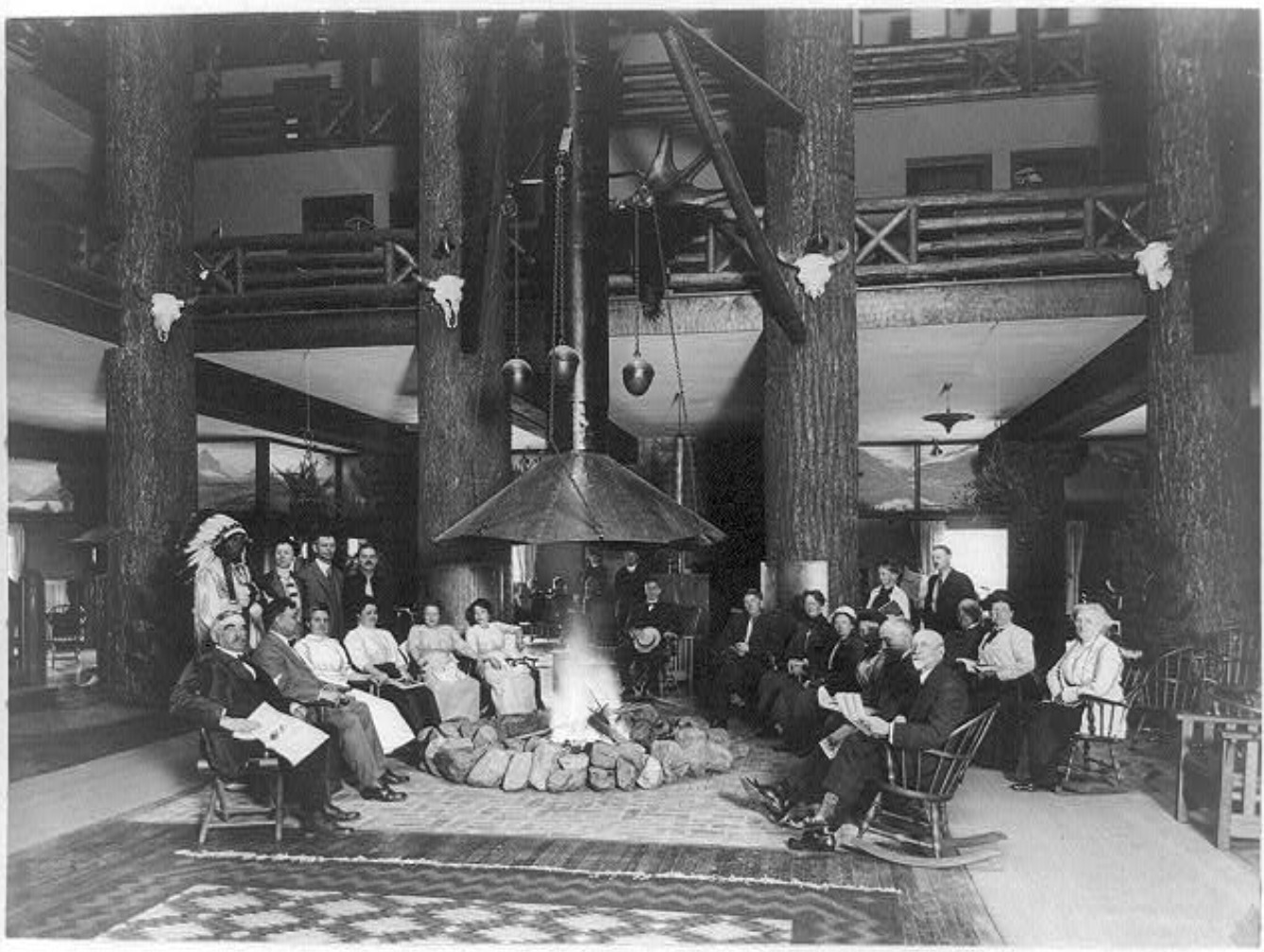
    <title type="html"><![CDATA[Glacier Park Hotel - Glacier National Park]]></title>
    <summary type="html"><![CDATA[<p><strong><em>In 1911, the Great Northern Railway began constructing a complex network of hotels and chalets in the fledgling Glacier National Park. Originally nicknamed the “Entrance hotel,” Glacier Park Hotel provided a gateway to this unique resort system.</em></strong></p><img src="https://www.intermountainhistories.org/files/fullsize/06a86c061b2ec07ad3f9f6d5b187daae.jpg" alt="Glacier Park Hotel lobby, c. 1910-20" /><br/><p><span style="font-weight:400;">The Great Northern Railway constructed Glacier Park Hotel in 1913 to provide visitors touring Glacier National Park with a starting point along the railroad. From Glacier Park Hotel, these tourists entered a complex system of smaller chalets and tent camps. Each hotel and chalet included a guide operation that provided saddle horses to visitors, who entered the area from a train depot connected to the Glacier Park complex. Resorts in Europe inspired this system, and an American national park had never utilized it. The resort brought an unprecedented level of development into Glacier, and the Great Northern spent about $1.5 million dollars (about $36 million today) on hotels, chalets, campsites, trails, and roads by 1917. </span>
<span style="font-weight:400;">The Great Northern Railroad executive F.I. Whitney encouraged the railroad to seek out tourist attractions in the Glacier region as soon as it reached the park’s southern end. Famous conservationists like George Bird Grinnell and John Muir, who brought Glacier to the attention of railroad founder James J. Hill and his son Louis, reinvigorated Whitney’s efforts. The failure of local oil and copper and oil industries provided a political opening for conservationists, and James J. Hill soon began to advocate for the area’s protection. However, Hill opposed the conservationists’ idea of a vast forest reserve at Glacier, and this ultimately shaped the park’s development. President William Howard Taft signed the bill that protected Glacier National Park in 1910. </span>
<span style="font-weight:400;">Luxurious chalets in Switzerland inspired the architecture of Glacier Park Hotel and the Great Northern’s other buildings, which catered to the tastes of wealthy travelers. Louis Hill, who served as president of the Great Northern during construction, chose this style. It connected the system visually and advertised Glacier’s reputation as the “Switzerland of North America.” Glacier Park Hotel, designed by Samuel Bartlett, is particularly famous for its massive log pillars, which support the hotel’s vast roof. These logs vary in size, with the largest being over forty feet tall and three to four feet wide, and they are most prevalent in the hotel’s lobby. Advertised as a “forest,” these log posts retain their bark, emphasizing their organic nature and contributing to the idea of an indoor forest. The lobby even includes a fire pit in its center. These features emphasized the hotel’s environment and emulated the rough, handcrafted style popularly defined as rustic architecture. The luxurious complex included a</span> <span style="font-weight:400;">music room, writing room, a sun parlor, and a hospital in case of emergencies. </span>
<span style="font-weight:400;">In 1957, the Great Northern hired Knutson Hotel Company to renovate its hotels for sale. The $3 million project expanded the hotel gift shop, installed bathrooms in all the guest rooms, added a swimming pool to the hotel complex, and renamed the hotel Glacier Park Lodge. In 1960, Glacier Park Inc. purchased the Glacier resort system from the Great Northern. The National Park Service granted Xanterra Parks and Resorts concession rights in Glacier in 2013, but Glacier Park Inc. retained Glacier Park Lodge and several other properties.</span></p><p><em><strong><a href="https://www.intermountainhistories.org/items/show/841">For more (including 4 images) view the original article</a></strong></em></p>]]></summary>
    <published>2024-05-29T20:53:22+00:00</published>
    <updated>2026-04-17T19:32:19+00:00</updated>
    <link rel="alternate" type="text/html" href="https://www.intermountainhistories.org/items/show/841"/>
    <id>https://www.intermountainhistories.org/items/show/841</id>
    <author>
      <name>Kaylen Wilson, Northern Arizona University</name>
    </author>
  </entry>
  <entry>
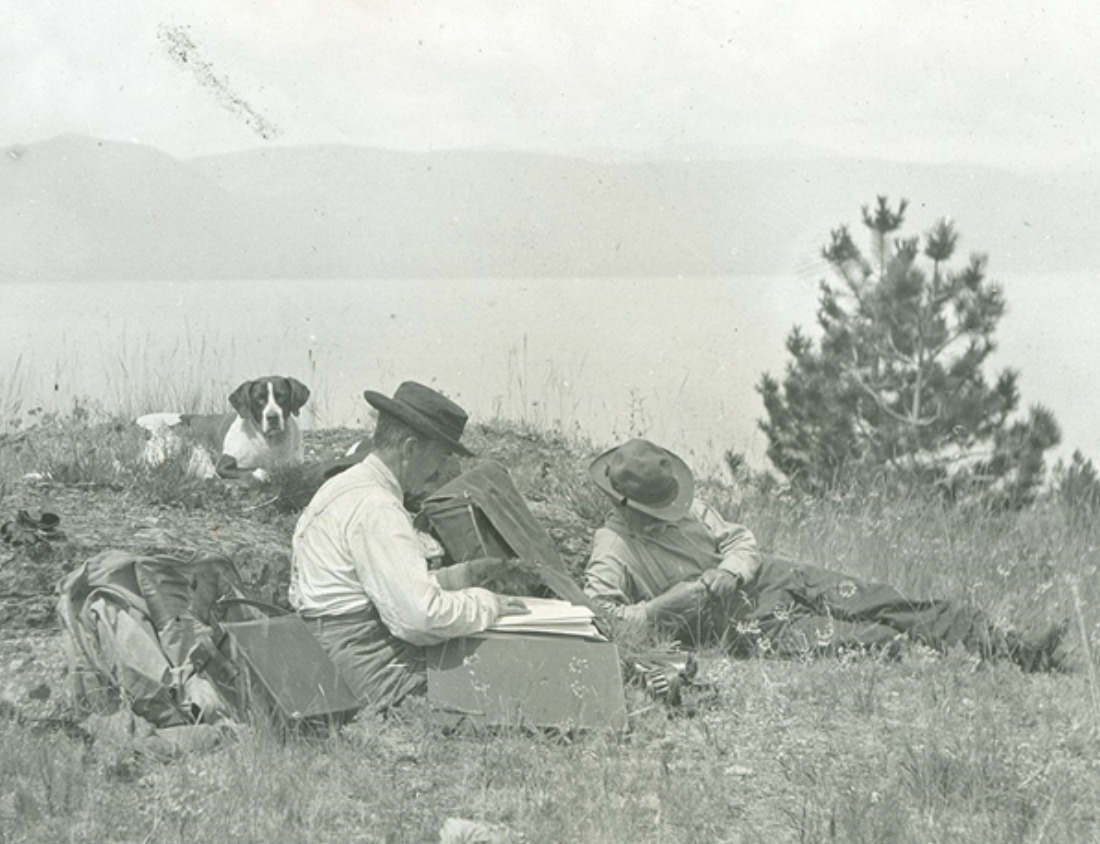
    <title type="html"><![CDATA[MONTU Herbarium]]></title>
    <summary type="html"><![CDATA[<p><strong><em>        The University of Montana Herbarium has faced challenges since Dr. Morton Elrod created it in 1897. They confronted the consequences of the draining effects of World War II and fought to maintain their space. It overcame these problems and became the largest collection in Montana, with over 136,000 vegetation samples.</em></strong></p><img src="https://www.intermountainhistories.org/files/fullsize/5c40edf93fd8d4344ab1b4458e671ca5.jpg" alt="Dr. Morton Elrod in 1911 on a trip to Wildhorse Island State Park in Kalispell, Montan" /><br/><p><span style="font-weight:400;">The University of Montana Herbarium (MONTU) in Missoula, Montana, traces its origins back to 1897 when the university hired its first Professor of Biology, Dr. Morton Elrod. His employment marked the establishment of the herbarium, as Dr. Elrod brought a personal collection of local plants, providing precise details for each sample discovery. This collection laid the foundation for the first University of Montana Herbarium collection. Upon Dr. Elrod's retirement in 1928, the herbarium experienced a series of curator changes over the next sixty years. The first of these curators was Charles Leo Hitchcock, who gained the responsibility in 1932. Under Hitchcock's leadership, the herbarium underwent significant developments. He relocated the collection to the second floor of the Natural Science building and initiated a program to create multiple copies of all plant specimens for exchange with other universities. By the mid-1930s, Hitchcock's efforts had expanded the herbarium to tens of thousands of specimens.</p>In 1937, Hitchcock left, and Dr. Fred Barkley succeeded him as the curator and became the botany instructor. During his first three years, Barkley acquired 4,000 sheets of pressed plant specimens for the herbarium and sent out 6,000 specimens to exchange with other herbariums. He resigned in 1945, leading to the selection of Dr. LeRoy Harvey as a Professor of Botany and the herbarium curator in 1946. World War II disturbed the early years of Harvey's tenure due to the university’s resources and time going towards the war, which temporarily slowed the herbarium's growth. With limited resources for research, Harvey focused on maintaining the herbarium space. Over his thirty-year tenure, Harvey made notable advancements, including replacing old wooden cabinets with steel storage to protect samples from insects better. He also discarded specimens that had  incomplete labeling and added 10,000 to 12,000 new specimens, many of which were from Glacier National Park. </p><p><span style="font-weight:400;">Following Harvey's resignation in 1977, the herbarium underwent various short-term caretakers until 1981, when Dr. Kathleen Peterson assumed the role of a long-term curator. During her seven-year leadership, the herbarium reached a milestone by gaining its 100,000th specimen.</span> <span style="font-weight:400;">After Peterson left in 1988, the university merged the herbarium with the Division of Biological Sciences in 1990, and collection managers took on curatorial responsibilities. Then, in 1994, a group of scientists received a grant and sought to use the herbarium space for their research, but there was limited faculty support in saving it. A group of individuals outside of the herbarium recognized its value and led a campaign to protect it. They wrote to the university's president in support and raised $10,000 to purchase additional cabinets, ultimately saving the herbarium from being displaced. The gathering of individuals led to the formation of the Friends of the UM Herbarium group in 1996. They played a vital role in maintaining the herbarium's attraction and supporting its growth. Since its founding, the herbarium has transformed Elrod's original collection into an archive housing over 136,000 plant specimens.</span></p><p><em><strong><a href="https://www.intermountainhistories.org/items/show/822">For more (including 4 images) view the original article</a></strong></em></p>]]></summary>
    <published>2024-05-22T18:17:32+00:00</published>
    <updated>2026-04-17T19:32:18+00:00</updated>
    <link rel="alternate" type="text/html" href="https://www.intermountainhistories.org/items/show/822"/>
    <id>https://www.intermountainhistories.org/items/show/822</id>
    <author>
      <name>Cristal A. DeSantiago, Northern Arizona University</name>
    </author>
  </entry>
  <entry>
    <title type="html"><![CDATA[The Trolley Barn at Fort Missoula, Montana]]></title>
    <summary type="html"><![CDATA[<p><strong><em><span style="font-weight:400;">The Historical Museum of Fort Missoula’s Trolley Barn hosts Streetcar #50, which once ran on Missoula’s interurban trolley line.</span></em></strong></p><img src="https://www.intermountainhistories.org/files/fullsize/41b31ef6e535bb9ab1e992eba6b7c6fd.jpg" alt="Higgins Ave. Bridge Postcard, ca. 1910-1915." /><br/><p><span style="font-weight:400;">The Fort Missoula museum sits at the outskirts of Montana’s second largest city, also named Missoula. Among this repository of historical buildings and artifacts is a reconstructed streetcar holding facility. This trolley barn houses Streetcar #50, a decommissioned trolley car that once operated on the interurban line from Missoula to the nearby sawmill company town of Bonner.</span>
<span style="font-weight:400;">Missoula’s streetcar history began in 1890 with horse-drawn carriages on steel rails. Electric streetcars came to Missoula in 1893, operating alongside the horse-drawn lines. Many people, including university students, came to rely on the streetcar, so when this early attempt ended in 1897 after the Missoula city council removed the streetcar tracks, they were left without a means of mass transit.</span>
<span style="font-weight:400;">In the 1900s, the debate over bringing a new street railway to Missoula captured public attention. Publications like the </span><i><span style="font-weight:400;">Daily Missoulian </span></i><span style="font-weight:400;">enthusiastically expressed their optimism that Missoula would see an electric trolley again soon. All the city needed to get construction underway was money, which ex-Senator William Clark, an eccentric entrepreneur making enormous profits in copper mining in Butte, was more than happy to provide. Clark’s Missoula Street Railway Company incorporated in February 1909, beginning construction shortly thereafter. The </span><i><span style="font-weight:400;">Daily Missoulian </span></i><span style="font-weight:400;">issued frequent reports on the Company’s incremental progress. Finally, on May 12, 1910, the streetcars were ready for service.</span>
<span style="font-weight:400;">Missoula’s streetcar was a technically accomplished system. In 1921, the Street Railway Company installed an automated signaling system, the first of its kind in Montana. In addition to the intra-city network, the interurban line was also novel - Streetcar #50 and its counterparts required only one operator at the helm. Within their first two years of operation, Missoula’s trolleys ferried two and a half million passengers over an accumulated distance of one million miles; at their peak, the trolley system operated ten cars over twenty-one miles of track spanning from destinations within Missoula to nearby cities like Bonner, around seven miles away. </span>
<span style="font-weight:400;">Despite its efficiency and public adoration, however, Missoula’s trolleys soon faced an insurmountable challenge. Since Montana first started licensing them in 1913, the production and purchase of automobiles had increased dramatically. As more people started driving, the streets became crowded, and passenger numbers fell to financially unsustainable levels. On January 24, 1932, the city decommissioned the last trolley car in Missoula. Bus service began the following day. They sold Streetcar #50 to various buyers, often used as temporary housing. In 1974, it was donated to the Historical Museum of Fort Missoula. A grassroots campaign saved it from being sold off in 1993, allowing it to be refurbished and exhibited. Today, Streetcar #50 and its car barn are all that remains of Missoula’s streetcar system.</span></p><p><em><strong><a href="https://www.intermountainhistories.org/items/show/816">For more (including 5 images) view the original article</a></strong></em></p>]]></summary>
    <published>2024-05-21T02:04:21+00:00</published>
    <updated>2026-04-17T19:32:18+00:00</updated>
    <link rel="alternate" type="text/html" href="https://www.intermountainhistories.org/items/show/816"/>
    <id>https://www.intermountainhistories.org/items/show/816</id>
    <author>
      <name>Liam Craddock, Northern Arizona University</name>
    </author>
  </entry>
  <entry>
    <title type="html"><![CDATA[The KKK in Butte, Montana]]></title>
    <summary type="html"><![CDATA[<p><strong><em><span style="font-weight:400;">Taking advantage of existing tensions between Protestants and Irish Catholics in Butte, Montana, the Ku Klux Klan sought to penetrate the community and hoped to stoke discourse.</span></em></strong></p><img src="https://www.intermountainhistories.org/files/fullsize/23f3a64865731d1aad110432024680ba.jpg" alt="Undated photograph of Elm Orlu mine" /><br/><p><span style="font-weight:400;">Before the arrival of the Ku Klux Klan in 1923, tension between Protestants and Catholics existed in the mining communities of Butte, Montana. The so-called “War of the Copper Kings” was a feud between mine owners Marcus Daly and William A. Clark during an 1888 campaign for territorial representation of the companies. Although both were Irish, Clark was a Protestant while Daly was a fervent Catholic. Many of the miners were migrant Irish-Catholics and Daly won the election. Clark never forgot the loss and battled for control until he died in 1900. It was also during this period that a group known as The American Protective Association (APA) gained popularity in Butte. The APA was an organization that was extremely anti-Catholic and members frequently got into violent altercations with Catholics at local bars.   </span></p><p><span style="font-weight:400;">Furthermore, due to issues such as decreased copper demand following the end of the First World War, many in Montana felt economically unstable and wary of foreigners. When the Ku Klux Klan arrived in Butte in the 1920s, it hoped to exacerbate the existing religious tensions and economic fears by using Irish Catholic workers as scapegoats. </span>
<span style="font-weight:400;">Originally gaining popularity in Billings, the Klan sought to move into Butte. However, as Butte historian Christine Erikson notes, “Catholic Immigrants cared little for an organization that referred to the Pope as an ‘impatient, meddling individual controlled by a Jesuitical lot of assaassainous villains.’” The Klan notably chose to act in an especially clandestine manner while conducting operations in Butte. Local Klansmen moved from town to town and conducted meetings under various aliases such as the “Protestant Men’s Welfare Council” and “Butte Men’s Literary Club.” Klan officers also urged other chapters in Montana to avoid exposing Butte Klansmen by ensuring that any mail to members in Butte didn’t indicate anything that suggested a Klan association. It is estimated that at least 181 residents of Butte joined the organization during 1923-1929, including 39 who worked as miners and on rail lines for Clark. </span>
<span style="font-weight:400;">The reasons for their especially secretive nature are not completely clear. The Butte Klan could have been worried about backlash from other Protestant organizations that operated in the area such as Masonic groups. It is also possible that other Butte clandestine organizations were not eager to associate with a group that was gaining a national reputation for terrorism. Another reason could be that in a town with a sizable Irish-Catholic population, the Klan worried about community backlash. Butte’s </span><i><span style="font-weight:400;">Labor Bulletin </span></i><span style="font-weight:400;">heavily criticized the Klan in Butte and proclaimed, “Their Invisible Empire Should Have No Place in These United States.”</span>
<span style="font-weight:400;">The Klan's larger efforts in Butte eventually proved to be fruitless—the membership and public activity essentially became dormant by the 1930s. Instead, the Klansmen opted to do smaller acts such as “guarding” voting booths and writing opinion pieces in editorials about unfavorable politicians. However, most of their Butte activities seemed to be brooding in their meeting places and discussing inter-Klan politics. </span></p><p><em><strong><a href="https://www.intermountainhistories.org/items/show/811">For more (including 3 images) view the original article</a></strong></em></p>]]></summary>
    <published>2024-05-21T00:10:52+00:00</published>
    <updated>2026-04-17T19:32:18+00:00</updated>
    <link rel="alternate" type="text/html" href="https://www.intermountainhistories.org/items/show/811"/>
    <id>https://www.intermountainhistories.org/items/show/811</id>
    <author>
      <name>Aidan Capristo, Northern Arizona University</name>
    </author>
  </entry>
  <entry>
    <title type="html"><![CDATA[Temple Emanu-El in Helena Montana]]></title>
    <summary type="html"><![CDATA[<p><strong><em>Recently reclaimed by the Jewish community, Temple Emanu-El (Hebrew for “God be with us”) was the first synagogue constructed between St. Paul and Portland and the oldest Jewish house of worship in Montana. </em></strong></p><img src="https://www.intermountainhistories.org/files/fullsize/9701bba588f6e7d1077e0d6bdeb71978.jpg" alt="Temple Emanu-El" /><br/><p><p style="font-weight:400;">Montana’s Jewish community was flourishing by the 1870s. In 1867, Helena directories reported that out of twenty dry goods stores, Jews owned seventeen. By 1877, a quarter of the Board of Trade was Jewish. The Jewish community also helped the city recover from fire damage, a frequent hassle. Many Jewish migrants came to Montana for the gold rushes from places like Germany and Poland. In 1866, they organized the United Hebrew Benevolent Society, the forerunner to Congregation Emanu-El. As the railroad brought more migrants in the 1880s, they hired a rabbi and made plans for a synagogue. In 1890, the governor J.K. Toole laid the cornerstone of Temple Emanu-El, highlighting the already prominent status of the Jewish community.
<p style="font-weight:400;">Helena architects Heinlein and Mathias worked with the congregation to design Temple Emanu-El, which they built close to Christian churches and not far from the state capitol. Moorish Revival is in the distinctive architecture of the building, reflected in the pointed arch entry, keyhole windows, and copper onion-shaped domes studded with golden Stars of David. Romanesque features can also be identified in arched windows and heavy stonework. Both styles were popular in synagogues of late nineteenth century America. The builders used locally quarried granite as well as gray and red sandstone for the base and sides. The interior originally contained a thirty-foot ceiling sanctuary that sat 300 people. Distinguished and founding members held a dedication ceremony in 1891, where the local papers touted it as helping Helena to become “Queen City of the Rockies.”
<p style="font-weight:400;">The building is also notable as an example of adaptive reuse. The Jewish population dwindled by the 1930s, partly due to the Great Depression. Congregation Emanu-El looked to sell, and after unsuccessful attempts, the state of Montana bought it in 1937 for a token price of $1.00. The state promised to use it for a “social purpose” and fulfilled this aim by installing in it the Department of Public Welfare, which distributed relief during the Great Depression. The state renovated the temple by sand-blasting religious inscriptions and symbols off the building, as well as removing the onion-shaped domes. It then repurposed these materials elsewhere. It also added a second floor, but left the keyhole windows and front facade otherwise undisturbed. After the department was abolished in the 1970s, the building again fell into disuse. The small Jewish population feared that it would be demolished until the Catholic Diocese of Helena bought it in 1981.
<p style="font-weight:400;">Jerry Klinger, founding president of the Jewish American Society for Historic Preservation, brought renewed interest to the synagogue when he organized a ceremony recognizing its 110th anniversary in 2001. Historians placed it on the National Register of Historic Places soon after in 2002.
<p style="font-weight:400;">Recently, in August 2022, Temple Emanu-El returned to the Jewish community when the Montana Jewish Project purchased it from the Catholic Diocese. Prior to the reacquisition, Helena was one of only four state capitals without a synagogue. It will now become a statewide center for Jewish life in Montana.</p><p><em><strong><a href="https://www.intermountainhistories.org/items/show/722">For more (including 5 images) view the original article</a></strong></em></p>]]></summary>
    <published>2023-03-03T17:39:25+00:00</published>
    <updated>2026-04-17T19:32:15+00:00</updated>
    <link rel="alternate" type="text/html" href="https://www.intermountainhistories.org/items/show/722"/>
    <id>https://www.intermountainhistories.org/items/show/722</id>
    <author>
      <name>Katie Scholler, Northern Arizona University </name>
    </author>
  </entry>
  <entry>
    <title type="html"><![CDATA[The Big Burn of 1910]]></title>
    <summary type="html"><![CDATA[<p><strong><em>The summer of 1910 was very dry in the northwest United States, with absolutely no precipitation May through July. The resulting fire was so destructive that Americans named it “the Big Burn.”</em></strong></p><img src="https://www.intermountainhistories.org/files/fullsize/1aac363c55b106acdcbdfdad043cc9a0.jpg" alt="Scars of Wallace, ID" /><br/><p>In the summer of 1910, every step through the forests in the Bitterroot Mountains between Idaho and Montana could meet with a resounding <em>crunch</em> from the arid twigs and leaves. The season had been extremely dry, with no rain at all from May through July.
On the night of July 26, a lightning storm swept across the Bitterroots. Thunder roared through the valleys, but there was no rainfall. By the following morning, nearly a thousand fires had sprung up around the region, sparked by the lightning. In the following weeks, even more blazes emerged. Sparks, thrown by trains rumbling through the dense forest had no trouble lighting the desiccant woodland, adding to the crisis. By the middle of August, there were 2,500 separate fires burning in Idaho and Montana.
On the morning of August 20, a breeze picked up through the Coeur d’Alene National Forest and the St. Joe Mountains. The wind gradually intensified throughout the day. Before the firefighters knew it, they were dealing with gusts of up to 70 mph. Hurricane-like winds pushed together hundreds of fires. By this point, there was virtually no hope of containing the fire. The Big Burn had started.
The dry wilderness was like an endless source of fuel, and he giant blaze devoured everything in its path. Flaming trees were pulled from the ground and tossed like mere sticks while dry timber caught fire and instantly exploded into a ball of sparks. Firefighters that survived reported that it was near impossible to outrun the heat because the inferno moved at the speed of a charging horse. Those with a head start had a chance of survival; most others did not. Over the course of two days, the Big Burn torched three million acres of land. A third of Wallace, Idaho—a town of three thousand people—burned to the ground. The fire almost completely leveled the mining towns of Grand Forks, Idaho and Taft, Montana. Eighty-six people died, seventy-eight of whom were firefighters.
It was soon clear that the Big Burn was the most destructive fire the United States Forest Service had ever seen. The fire would also be recognized as the most significant wildfire emergency because of its deep impact on future forest policies. The disaster inspired a wave of priority and policy concerning national land. The incredible loss of life and forest showed the Forest Service needed serious recognition from the people. Donations poured in, and Congress doubled the organization’s budget. Parks and forest stations hired more staff and established resources in preparation of another wildfire catastrophe. The disaster of 1910 imprinted on the nation how dangerous fire could be; it was a lesson learned at incredible human cost.</p><p><em><strong><a href="https://www.intermountainhistories.org/items/show/623">For more (including 5 images) view the original article</a></strong></em></p>]]></summary>
    <published>2022-06-25T06:54:15+00:00</published>
    <updated>2026-04-17T19:32:13+00:00</updated>
    <link rel="alternate" type="text/html" href="https://www.intermountainhistories.org/items/show/623"/>
    <id>https://www.intermountainhistories.org/items/show/623</id>
    <author>
      <name>Brennen Donahue, College of Idaho</name>
    </author>
  </entry>
  <entry>
    <title type="html"><![CDATA[Hearst Free Library’s Women’s Club]]></title>
    <summary type="html"><![CDATA[<p><strong><em>The Hearst Free Library is an important cultural and education site to residents of Anaconda, Montana. During the early nineteenth century, the Women’s Club used this space to expand both their knowledge and social circle.</em></strong></p><img src="https://www.intermountainhistories.org/files/fullsize/b9c81b873f13e51ea61cd12ee03f9990.jpg" alt="Hearst Free Library" /><br/><p>Phoebe Appersom Hearst, mother of successful newspaper mogul William Randolph Hearst, established the Phoebe Hearst Foundation in 1901. Her foundation built and ran some of the first public libraries in western mining towns, including the Hearst Free Library in Anaconda, Montana. Phoebe’s husband, George Hearst, cofounded Anaconda and invested in the nearby copper mines. After he died, Phoebe decided to build and finance libraries in Anaconda and other mining towns George had invested in to show her affection and gratitude to local communities.
Construction of the Anaconda Free Library began in 1894 with San Francisco architect F. S. Van Trees as the designer. Local builder J. C. Twohy completed it four years later, and the library opened on June 1, 1898. The building resembles grand classical architecture and features a red brick exterior, granite columns, arched windows, copper molding, chandeliers, craftsmen woodwork, and a brick fireplace. Among the library’s best features are pieces of valuable and original artwork Phoebe selected for display.
Phoebe Hearst hoped the library would provide a public space where locals could achieve self-improvement through reading and self-fulfillment through culture and community. That dream found fulfillment in 1903 when wives of Anaconda miners founded the Women’s Club, a community of women who shared similar anxieties about their partners working in dangerous mining conditions and hardships integrating into a new town. The club met in the women’s reading room just off the second-floor hall of the library. Records of early library board minutes show that the Women’s Book Club was infamous for brewing coffee, talking loudly, playing piano music, and dancing, but they also discussed books and research subjects like mining, politics, economics, American and European history, art, and culture. In this room, members cultivated and empowered themselves. They finetuned their public speaking, critical thinking, and writing, and they created a strong sense of belonging, culture, and identity.
Hearst Free Library and the Women’s Club continue to actively operate. Phoebe Hearst managed the library until 1903 when she transferred ownership to the town of Anaconda, which has maintained its original physical and symbolic character for over 100 years. This landmark is now a focal point of Anaconda’s historic district, and in 1973, librarians procured funding for restoration efforts and a spot for the building on the National Register of Historic Places. The Women’s Club made a plaque in honor of that listing.</p><p><em><strong><a href="https://www.intermountainhistories.org/items/show/606">For more (including 3 images) view the original article</a></strong></em></p>]]></summary>
    <published>2022-06-10T08:32:01+00:00</published>
    <updated>2026-04-17T19:32:13+00:00</updated>
    <link rel="alternate" type="text/html" href="https://www.intermountainhistories.org/items/show/606"/>
    <id>https://www.intermountainhistories.org/items/show/606</id>
    <author>
      <name>Amy Megowan, Northern Arizona University</name>
    </author>
  </entry>
  <entry>
    <title type="html"><![CDATA[Christmas Gift Evans House]]></title>
    <summary type="html"><![CDATA[<p><strong><em>A building with an unusual name, the Christmas Gift Evans House is one of the oldest homes in Helena and one of the few examples of Second Empire architecture in Montana.</em></strong></p><img src="https://www.intermountainhistories.org/files/fullsize/58d3e82a62374753444f7b7535c74862.jpg" alt="Porch remodeled" /><br/><p>In 1864, the year of Helena’s founding, John B. Sanford and Christmas Gift Evans (named after his birth date) arrived in Montana from the East Coast, beginning a friendship on their cross-country journey. In 1865, they formed a business partnership, establishing Helena’s first water-powered sawmill, and they later founded the Sanford and Evans Feed Store, where they sold animal feed, lumber, coal, and heavy-duty farming equipment. When Sanford married in 1877, to celebrate he designed and built a new home, though he later sold it to Evans in 1883. The Christmas Gift Evans House, built at the height of the Second Empire period, embodies the style through its symmetry and ornate exterior.
Second Empire architecture emphasizes symmetry because of its necessary mansard roof, which curves downward from a rectangular top, resting evenly above the walls. Mansard roofs, besides standing out visually, also make practical sense, as they allow more living space upstairs, unlike sloping roofs, which form a triangle, providing minimal room.
The Christmas Gift Evans House replicates this design: a mansard roof tops the residence with elegant supportive bracketing below, all alongside arched windows, inlaid on each side. The inclusion of cresting on the roof—the ornamental cast-iron fencing—further confirms the home’s Second Empire design. The cresting, with its curves and free-flowing lines, while ornamental, exists to break up the proportional façade below it, providing variation in the symmetrical exterior. Another notable element is the presence of three stone-carved floral friezes on the side tower. Friezes, often found in Second Empire, are decorative horizontal carvings intended to provide more ornamentation and depth to buildings.
Like most Second Empire homes, the Christmas Gift Evans House is quite large at 3,500 square feet, containing three bedrooms and two-and-a-half bathrooms within its walls. The whole property rests on 12,600 square feet with spacious front and backyards, including a rear carport, added decades after the original construction. The old landscape did not contain trees, providing an unobstructed street view, unlike now, when trees cover most of the house’s exterior. Requiring little restoration, the Christmas Gift Evans House remains well-preserved, though two notable alterations occurred over time. Originally, a bracketed porch topped with a miniature mansard roof occupied the entrance, lining up with the covered doorway on the side of the house. At some point, the Evans family decided to remove this feature, instead opting for a humbler entrance with minimal decoration. The subsequent owner, Eric Myhre, restored the porch to its initial condition in the 1980s. The domed tower also is not original.
Christmas Gift Evans lived in the house until his sudden death in 1915, caused by complications from a leg amputation. The Evans family, however, continued residing there, and his daughter and son-in-law inhabited the home until the late 1970s. The Christmas Gift Evans House, listed on the National Register of Historic Places in 1980, continues serving as a private residence and is not open to the public for visitors.</p><p><em><strong><a href="https://www.intermountainhistories.org/items/show/596">For more (including 6 images) view the original article</a></strong></em></p>]]></summary>
    <published>2022-04-16T05:06:27+00:00</published>
    <updated>2026-04-17T19:32:13+00:00</updated>
    <link rel="alternate" type="text/html" href="https://www.intermountainhistories.org/items/show/596"/>
    <id>https://www.intermountainhistories.org/items/show/596</id>
    <author>
      <name>William R. Batson, Northern Arizona University</name>
    </author>
  </entry>
  <entry>
    <title type="html"><![CDATA[Grand Lodge of Montana]]></title>
    <summary type="html"><![CDATA[<p><strong><em>The Grand Lodge of Montana is a nexus of Freemason history. Both a museum and active Freemason meeting place, the Grand Lodge of Montana in Helena, Montana, hosts a collection of Freemason artifacts including Meriwether Lewis’s masonic apron, O. C. Seltzer’s painting of Montana’s first Freemason meeting, and a hand-written manuscript of Paris Pfouts, the first mayor of Virginia City.</em></strong></p><img src="https://www.intermountainhistories.org/files/fullsize/1924df9fce1df17eaa5523622e003f16.jpg" alt="Masonic apron of Meriwether Lewis" /><br/><p>The Grand Lodge of Montana, headquarters for Montana Freemasons, was built in Helena in 1868. Freemasonry affected Montana’s history from its earliest beginnings, as Masonic lodges were among the first social organizations in the first Montana mining camps. The Grand Lodge is a home to this history, acting as a library and museum full of historical artifacts, including, most famously, Meriwether Lewis’s masonic apron.
Lewis considered his masonic apron one of his most prized possessions, a remarkable feeling for a man who had collected so many valuable artifacts during his legendary expedition with William Clark. When Lewis perished from mysterious gunshot wounds while traveling the Natchez Trace in October 1809, his masonic apron may have been in his pocket. Lewis’s masonic apron is an important artifact, as Lewis was likely the first Freemason to travel through the land that became Montana, and the Montana freemasons went to great lengths to acquire it. Grand Master Joseph Hopper of Billings purchased Lewis’ apron in 1960, and it became the crown jewel of the Grand Lodge’s collection.
Another famous masonic artifact housed in the Grand Lodge of Montana is O. C. Seltzer’s painting of the first masonic meeting in Montana at Mullan Pass. The painting depicts three Freemasons camping together high in the Rocky Mountains on September 23, 1862. Those who visit the Grand Lodge of Montana today may view this original freemason meeting painted by Seltzer. From 1868 until the present, Freemasons have actively held meetings in this impressive Art Deco structure.</p><p><em><strong><a href="https://www.intermountainhistories.org/items/show/586">For more (including 3 images) view the original article</a></strong></em></p>]]></summary>
    <published>2022-04-09T07:34:26+00:00</published>
    <updated>2026-04-17T19:32:12+00:00</updated>
    <link rel="alternate" type="text/html" href="https://www.intermountainhistories.org/items/show/586"/>
    <id>https://www.intermountainhistories.org/items/show/586</id>
    <author>
      <name>Benjamin Nielsen, Brigham Young University</name>
    </author>
  </entry>
  <entry>
    <title type="html"><![CDATA[Jean-Baptiste Charbonneau’s Grave]]></title>
    <summary type="html"><![CDATA[<p><strong><em>Born in February 1805, Jean-Baptiste Charbonneau accompanied the Lewis and Clark Expedition as an infant before becoming a fur trader, guide, alcalde, and then a hotel manager in California.</em></strong></p><img src="https://www.intermountainhistories.org/files/fullsize/01db17a0c012fd0f8a8d4751a3066439.jpg" alt="Charbonneau gravesite" /><br/><p>Jean-Baptiste Charbonneau, son of Sacagawea and Toussaint Charbonneau, accompanied his parents on Meriwether Lewis and William Clark’s expedition for the Corps of Discovery. Although a small infant, he made the entire trek from North Dakota to the Pacific Coast and back to the Mandan Villages on the Knife River. After Sacagawea’s death in December 1812, William Clark legally adopted Jean-Baptiste and his little sister Lisette. Clark provided an education for the two children at a Catholic boarding school in St. Louis. This education opened up numerous opportunities for Jean-Baptiste throughout his life.
As an adult, Jean-Baptiste spent a substantial amount of time in Europe where he learned additional languages and skills. Returning to America, he joined the fur trade, working as a trapper with the Rocky Mountain Fur Company. His extensive knowledge of the terrain enabled him to serve as a guide for explorers, as well as for the Mormon Battalion on their route from Leavenworth to San Diego in 1846 during the Mexican–American War.
While in California, Charbonneau worked as an alcalde (mayor), panned for gold, provided interpretation services, and operated a hotel in Auburn, California. After the American Civil War and toward the end of his life, Charbonneau worked odd jobs until he learned about gold and silver strikes in Idaho and Montana. On his way to the mining rushes he traveled through Danner, Oregon, but shortly after crossing the Jordan Creek and the Owyhee River, he fell ill (likely of pneumonia) and died at sixty-one years old. Oregonians memorialized Charbonneau by erecting and dedicating a plaque to him in Danner. His place of death is located just over the border of Oregon and is close to the Lemhi Shoshone Nation of Idaho, the likely birthplace of his mother, Sacagawea.</p><p><em><strong><a href="https://www.intermountainhistories.org/items/show/585">For more (including 3 images) view the original article</a></strong></em></p>]]></summary>
    <published>2022-04-09T07:02:41+00:00</published>
    <updated>2026-04-17T19:32:12+00:00</updated>
    <link rel="alternate" type="text/html" href="https://www.intermountainhistories.org/items/show/585"/>
    <id>https://www.intermountainhistories.org/items/show/585</id>
    <author>
      <name>Taylor Mansfield, Brigham Young University</name>
    </author>
  </entry>
  <entry>
    <title type="html"><![CDATA[Big Horn Medicine Wheel]]></title>
    <summary type="html"><![CDATA[<p><strong><em>In a picturesque and seemingly significant location, the Big Horn Medicine Wheel may reveal indigenous knowledge of astronomy.</em></strong></p><img src="https://www.intermountainhistories.org/files/fullsize/e3c611b4ff4e6359f87c4c7f5dede281.jpg" alt="Big Horn Medicine Wheel" /><br/><p>At the top of the Big Horn Mountains, 9,642 feet above sea level, on the west ridge of Medicine Mountain, lies the Big Horn Medicine Wheel. The wheel sits about twenty yards away from a limestone cliff face, where visitors can look down upon the Big Horn Basin, the Wind River, and the Pryor Mountains of Montana. Using a piece of wood found built into the structure, archaeologists dated the Medicine Wheel itself to around 1760 AD. Other archaeological research carbon-dated charcoal and wood fragments found near the Medicine Wheel to 4,529 BCE.
The wheel is made of hundreds of white limestone rocks arranged in roughly in the circular shape of a wheel. Spanning eighty feet in diameter, the wheel is a true marvel, as most rocks used as material for the massive wheel originate from the bottom of the mountain, meaning the builders carried them to the top. At the center of the wheel lies another smaller circle, and 28 “spokes” radiate from this smaller center circle, connecting the center to the perimeter of the wheel. Small hollow cairns surround the wheel.
Although much research has been done on the wheel, archaeologists, astronomers, and other scholars have been unable to determine its origin and function. One astronomer suggests the indigenous builders might have designed the wheel to track celestial bodies, having found the cairns are in astronomical alignment with the summer solstice sunset and sunrise as well as the rise of the stars Alderbaran, Serius, and Rigel. Another astronomer disagrees, saying that had the medicine wheel’s purpose been to track the solstice and stars, the structure’s design would have been more precise and astronomical alignments with the wheel would be more obvious and practical. An archaeologist suggests that the cairns could have been small shelters for vision quest participants while another archaeologist believes the wheel is a model of a Cheyenne medicine lodge. A Crow legend tells the story of a boy that was able to find healing and tribal acceptance through the power connected to the wheel. The Cheyenne believe that the Legend of Sweet Medicine inspired the Big Horn Medicine Wheel. Many theories have been proposed and disputed, but no theory has provided irrefutable evidence for a single explanation.
The Big Horn Medicine Wheel is a national historical landmark and is still used by tribes for religious purposes. Visitors are allowed to view the Big Horn Medicine Wheel but are asked to respect the ancient site as it holds both religious and historical significance to many Native Americans.</p><p><em><strong><a href="https://www.intermountainhistories.org/items/show/582">For more (including 5 images) view the original article</a></strong></em></p>]]></summary>
    <published>2022-03-19T10:04:39+00:00</published>
    <updated>2026-04-17T19:32:12+00:00</updated>
    <link rel="alternate" type="text/html" href="https://www.intermountainhistories.org/items/show/582"/>
    <id>https://www.intermountainhistories.org/items/show/582</id>
    <author>
      <name>Kelli Holiday, Brigham Young University</name>
    </author>
  </entry>
</feed>