<?xml version="1.0" encoding="UTF-8"?>
<feed xmlns="http://www.w3.org/2005/Atom">
  <title type="text">Intermountain Histories</title>
  <updated>2026-04-17T19:32:20+00:00</updated>
  <generator uri="http://framework.zend.com" version="1.12.20">Zend_Feed_Writer</generator>
  <link rel="alternate" type="text/html" href="https://www.intermountainhistories.org/"/>
  <link rel="self" type="application/atom+xml" href="https://www.intermountainhistories.org/items/browse?output=rss2"/>
  <id>https://www.intermountainhistories.org/</id>
  <author>
    <name>Intermountain Histories</name>
    <uri>https://www.intermountainhistories.org</uri>
  </author>
  <link rel="hub" href="https://pubsubhubbub.appspot.com/"/>
  <entry>
    <title type="html"><![CDATA[The Brown Palace Hotel – Denver, Colorado]]></title>
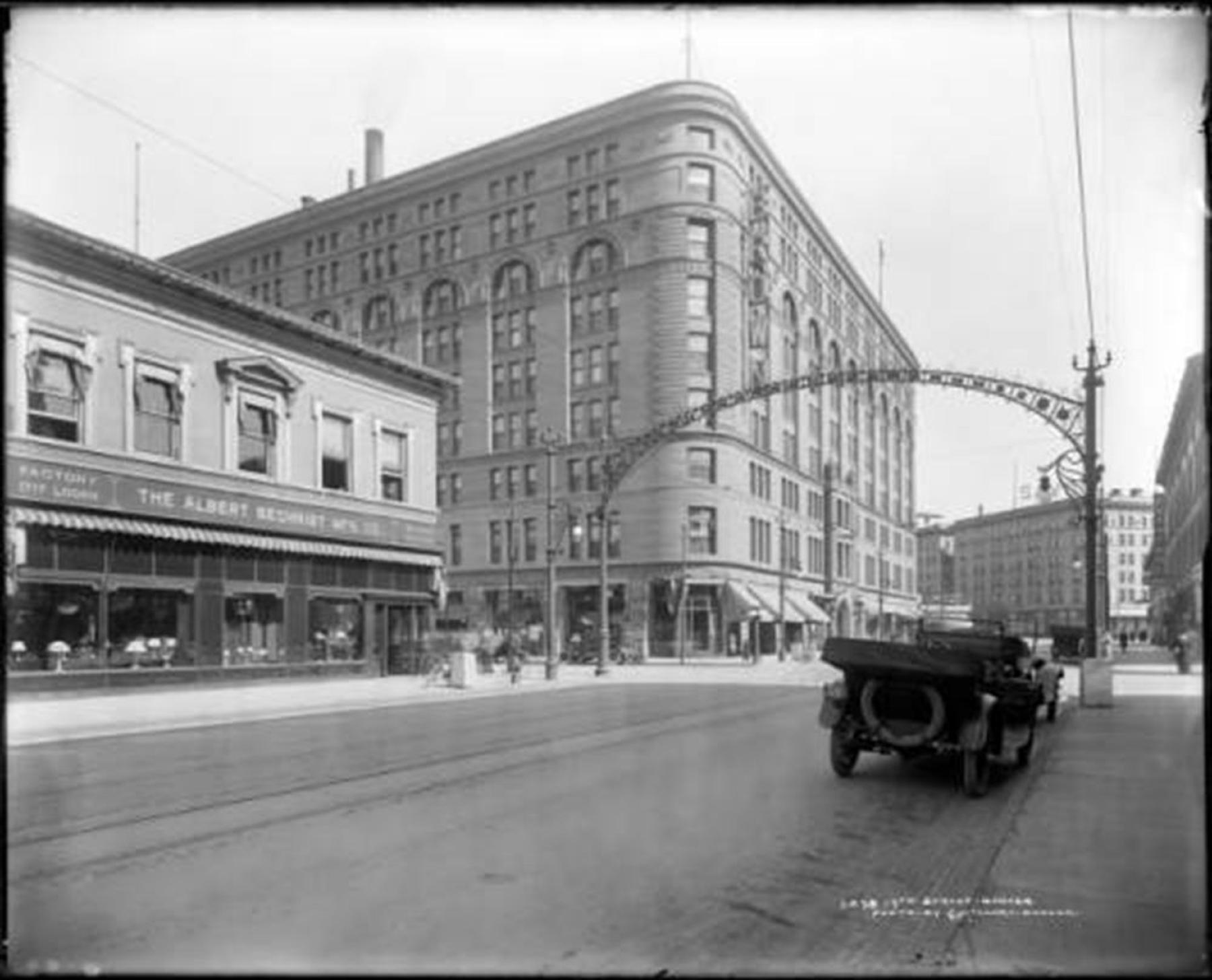
    <summary type="html"><![CDATA[<p><strong><em>When Colorado enacted Prohibition in 1916, the Brown Palace Hotel quickly revealed how wealth evades discipline. Behind its European elegance, the hotel hosted bootleggers, celebrities, and politicians who drank with impunity. Its story offers a glimpse into how the elite can often sidestep laws supported and followed by the broader public.</em></strong></p><img src="https://www.intermountainhistories.org/files/fullsize/72d73fe3024bb85dbf7955365a8a338b.jpg" alt="The Brown Palace Hotel in 1916, the year Colorado passed its Prohibition laws" /><br/><p>In 1860, Henry Cordes Brown arrived in Denver and purchased several plots of land. In 1888, Brown began constructing the Brown Palace Hotel. He was determined to make it one of the best hotels in Colorado and spared no expense. Its central atrium, fireproof blocks of terracotta, and gold and European import detailing make the building stand out. The construction cost about $1.6 million, $50 million today, and featured Arizona sandstone.
In 1916, Colorado became one of the first states to pass Prohibition laws. Temperance was popular among the large population of progressive residents. The general population here did not desire or accept alcohol as readily as people in other Intermountain West states. This is one of the reasons the Brown Palace Hotel felt no need to cater to the middle class. The hotel’s prominence made it a prime location for celebrities, politicians, and social leaders to grab an illegal drink. Due to its prestigious reputation and clientele, authorities never shut the establishment down, despite raiding it multiple times for alcohol.
The 18 February 1930 issue of the <em>Rocky Mountain News (Daily) </em>described a large-scale raid conducted by police on the Brown Palace Hotel. Officers stormed room 929 on a tip about liquor distribution at a war veterans' convention. Law enforcement found approximately 116 cases of beer and fifty pints of whisky in the hotel room and arrested five hotel employees for conspiracy to violate Prohibition laws. With a bust this large, the courts threatened to padlock room 929, meaning it would be a “forbidden room,” a place “which none should enter.”
The 22 April 1930 issue of the same paper updated the room 929 story. Authorities indicted those arrested during the raid and fined them $300 ($5,700 today). While those associated with the Brown Palace Hotel typically earned higher salaries, this fine was no slap on the wrist. Intense repercussions like these aligned with Colorado’s strong temperance attitude and deterred Prohibition violations.
This story also shows how the elite used the Brown Palace Hotel to escape prosecution for alcohol-related crimes. The article indicates that the volume of alcohol found in room 929 suggests someone “higher up” knew about the stash. A key witness testified that former state senator and convention chairman Rice Means rented room 929 and knew “what this room was to be used for.” Despite this, officials never arrested Means. This case shows that large-scale alcohol consumption occurred at the Brown Palace Hotel and how those in power hid behind the establishment’s high-end reputation to evade Prohibition laws.
The Brown Palace Hotel’s Prohibition-era history highlights the intersection of wealth, power, and privilege. Despite multiple raids, its prestigious reputation and elite clientele allowed it to maintain alcohol sales. Its role during Prohibition demonstrates how the powerful navigated around the law. Today, the Brown Palace Hotel remains a cornerstone of Denver’s heritage and a symbol of the city’s transnational significance as a hub of influence.</p><p><em><strong><a href="https://www.intermountainhistories.org/items/show/898">For more (including 3 images) view the original article</a></strong></em></p>]]></summary>
    <published>2025-09-23T15:34:53+00:00</published>
    <updated>2026-04-17T19:32:20+00:00</updated>
    <link rel="alternate" type="text/html" href="https://www.intermountainhistories.org/items/show/898"/>
    <id>https://www.intermountainhistories.org/items/show/898</id>
    <author>
      <name>Scarlett Kluge, Northern Arizona University </name>
    </author>
  </entry>
  <entry>
    <title type="html"><![CDATA[Two-Bit Street – Ogden, Utah]]></title>
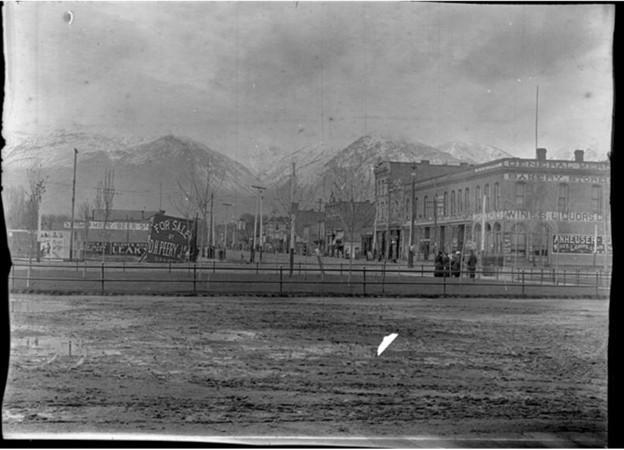
    <summary type="html"><![CDATA[<p><strong><em>Over the years, Ogden, Utah built its reputation as a countercultural hub, steadfastly resisting religious and political authority and conformity. During Prohibition, the city’s infamous Two-Bit Street flirted with illegality by housing speakeasies, stills, and brothels hidden behind innocent storefronts.</em></strong></p><img src="https://www.intermountainhistories.org/files/fullsize/6ab53cfbcdd11113ac6b62738af2d528.jpg" alt="A photo taken of Ogden’s 25th Street sometime between 1892-1904 shows the area before Prohibition began in 1917" /><br/><p>In early twentieth-century Utah, temperance was popular among many members of the Church of Jesus Christ of Latter-day Saints (LDS). The church’s temperance beliefs stemmed from an 1833 doctrine called the “Word of Wisdom,” which church leaders initially treated as guidance for moderate alcohol use. In 1902, Joseph Fielding Smith urged members to view the doctrine instead as a strong suggestion against alcohol. In 1909, this position began influencing state law when Governor William Spry and the legislature passed a local option bill allowing towns to vote on banning alcohol. Many smaller towns voted in favor, while more diverse cities like Ogden and Salt Lake City did not. Despite urban opposition, Utah ratified statewide Prohibition in 1917. In 1921, church president Heber J. Grant aligned church doctrine with state law by declaring alcohol abstinence a requirement. While many LDS members adopted the policy and supported enforcement, an underground drinking culture emerged among other Utahns, especially in Ogden’s 25th Street, also known as Two-Bit Street.
In the late nineteenth century, the completion of the continental railroad brought Chinese and Irish rail workers to Utah. By the turn of the century, LDS members still owned most businesses in smaller towns, but Italian, Chinese, Jewish, and Japanese immigrants owned much of Ogden’s commercial district. This demographic shift made Ogden a culturally distinct city, less influenced by the church’s temperance stance. When Prohibition began, Two-Bit Street became known for alcohol stills, speakeasies, and brothels. Business owners often ran legal operations on the ground floor—ice cream, clothing, and soda shops—while concealing illegal activities on the floors above. A notable example of this was the Davenport Saloon, which was located above various short-lived legal businesses like the Night Hawk Café.
On 03 January 1922, the <em>Ogden Standard-Examiner</em> reported that police raided an ice cream parlor at 170 25th Street. They found two quarter-full bottles of moonshine whisky and arrested the owner, William Pranthel, who pleaded guilty to possession. He claimed the liquor was for personal use, not for sale, but could not explain why it was at the parlor instead of home. He received a sentence of a $299 fine or 180 days in jail. A month later, the same paper reported that police discovered remnants of a recently abandoned still in the same neighborhood, along with several bottles of homemade wine—but no bootleggers.
Prohibition in Utah was more than a legal change—it was a struggle between religious authority and cultural resistance. In Ogden, immigrant families turned Two-Bit Street into a quiet act of defiance, building their own economy behind legal storefronts. It was as much about autonomy as alcohol. While the LDS Church shaped much of the state, Ogden pushed back. Today, Two-Bit Street remains a space where Utah residents challenge law and societal norms.</p><p><em><strong><a href="https://www.intermountainhistories.org/items/show/897">For more (including 4 images) view the original article</a></strong></em></p>]]></summary>
    <published>2025-09-23T15:34:48+00:00</published>
    <updated>2026-04-17T19:32:20+00:00</updated>
    <link rel="alternate" type="text/html" href="https://www.intermountainhistories.org/items/show/897"/>
    <id>https://www.intermountainhistories.org/items/show/897</id>
    <author>
      <name>Scarlett Kluge, Northern Arizona University </name>
    </author>
  </entry>
  <entry>
    <title type="html"><![CDATA[The Rockwood Speakeasy – Butte, Montana: When Montana lawmakers passed alcohol bans in 1918, Butte’s nightlife went underground. Business owners concealed their speakeasies, brothels, and gambling halls in basements under the city’s sidewalks. During Prohibition, Rockwood (Rookwood) Speakeasy earned its fame hidden behind coats and code words.]]></title>
    <summary type="html"><![CDATA[<img src="https://www.intermountainhistories.org/files/fullsize/51321426bb9e095b46c0551d1ba7b90f.jpg" alt="The cross section of Butte’s Broadway and Main Street in the 1920s" /><br/><p>James Pratt, proprietor of the Red Boot and Shoe Company, built the Rockwood (also called the Rookwood), in Butte, Montana in 1912. The ground level housed the shoe company’s shop, and the floors above functioned as a hotel. Pratt designed the building to attract attention and business with décor like Tudor-arching, green tile, a copper-clad cornice, a wrought iron staircase, and marble wainscoting and floors. The Rockwood’s unique ambiance and railroad access attracted elite and traveling patrons alike.
Before Prohibition, Butte, Montana, boomed as a mining town and gained notoriety for its lively bar and entertainment scene. When the Montana government banned alcohol distribution and consumption in December of 1918, Butte bars moved underground—into basements and tunnels beneath storefronts—and continued to sell alcohol. During this time, over one hundred underground speakeasies, including the Rockwood, operated in the city. In 1918, Pratt converted the building’s basement into a speakeasy. This underground area matched the hotel’s elegance above, attracted numerous clients, and became one of Butte’s more famous drinking spots.
In 1923, one of Rockwood’s moonshine clients, Mae Holberg, died by suicide after overconsuming alcohol. The 29 January 1923 issue of <em>The Butte Daily Post </em>describes the harrowing story. Holberg attended an all-night party at the Rockwood. Witnesses and police confirmed this party involved large quantities of illegal liquor. Around 7:00 A.M., Holberg drank one and a half ounces of Lysol, a fatal dose that ended her life within hours. A friend at the party told officers he believed Holberg took her own life because “she was despondent,” he said, “one or two drinks always made her despondent and downhearted.” Tragic stories like this made the Rockwood notorious in the illegal drinking world.
After Prohibition ended, Butte’s underground scene lost its appeal. Shop owners no longer needed to hide their liquor, so they moved alcohol sales to street levels, and many permanently sealed off their speakeasies. Rockwood’s basement became one of these buried speakeasies, while the rest operated as a hotel and retail space. In 2004, workers renovating the Rockwood Hotel discovered a closet filled with untouched coats from decades past. Behind the coats, they uncovered a two-way mirror which concealed a hole that opened into the Rockwood Speakeasy—frozen in time since the Prohibition era.
This discovery highlights the secretive and exclusive nature of the Rockwood Speakeasy and explains how it remained hidden and operational throughout Prohibition. It is a modern-day time capsule, offering visitors a glimpse into the past. Visitors can imagine stepping into the shoes of a 1920s client—looking into the mirror, giving the bouncer the code, and feeling the thrill of defying Montana’s dry laws.</p><p><em><strong><a href="https://www.intermountainhistories.org/items/show/896">For more (including 5 images) view the original article</a></strong></em></p>]]></summary>
    <published>2025-09-23T15:34:47+00:00</published>
    <updated>2026-04-17T19:32:20+00:00</updated>
    <link rel="alternate" type="text/html" href="https://www.intermountainhistories.org/items/show/896"/>
    <id>https://www.intermountainhistories.org/items/show/896</id>
    <author>
      <name>Scarlett Kluge, Northern Arizona University </name>
    </author>
  </entry>
  <entry>
    <title type="html"><![CDATA[Kemmerer, Wyoming Alcohol Culture during Prohibition]]></title>
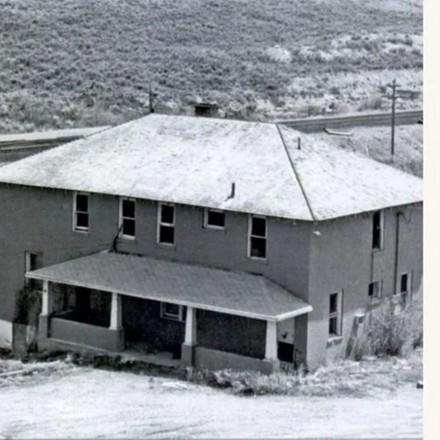
    <summary type="html"><![CDATA[<p><strong><em>Kemmerer, Wyoming emerged in the late nineteenth century when Patrick J. Quealy founded a coal company and a town to go with it. Kemmerer was popular among immigrant business owners who set up shops seeking financial and personal freedom. Their diverse cultures contributed to Kemmerer becoming a bootlegger’s haven when Prohibition began a few decades later.</em></strong></p><img src="https://www.intermountainhistories.org/files/fullsize/bc57fb9731bf760db28ae4ec4796ab05.jpg" alt="The original Southern Hotel building" /><br/><p>In 1897, Patrick J. Quealy founded a town and coal company, naming them “Kemmerer” after his financial backer, Mahlon S. Kemmerer of Pennsylvania. Quealy made Kemmerer an “independent town,” meaning that the coal company sold land to businesses and residents. This attracted immigrant miners and business owners, including those from southern and eastern Europe. Drinking was integral to many of the immigrants’ cultures, which included Italian, Polish, Slovak, and Scottish. This influenced Kemmerer’s freedom-focused Prohibition culture. In 1919, Wyoming passed laws banning alcohol. Kemmerer and its neighboring communities of Diamondville and Frontier formed a triangle network for illegal bootlegging and drinking.
During Prohibition, many Kemmerer residents made little effort to hide their drinking, as it was a southern and eastern European cultural norm and popular with the white men who worked the area’s mines. Isabel Burns migrated to Kemmerer in the 1880s and later established the brothel she named the Southern Hotel, which catered to illegal activities like prostitution and drinking. Burns and her successors operated the Southern Hotel for seven decades, throughout all of Prohibition, and continuously offered drinking and prostitution, regardless of legality. For its size, Kemmerer hosted a disproportionately large number of saloons and brothels like the Southern Hotel, which testified to local positive sentiment toward alcohol and cultural autonomy.
In addition to establishments like the Southern Hotel, well-documented arrests for alcohol possession and public intoxication highlight the prominence of drinking in Kemmerer during Prohibition. While police were generally tolerant of illegal alcohol consumption—acknowledging the town’s large immigrant population—the widespread nature of drinking still led to arrests, often for disrupting the peace. The <em>Kemmerer Gazette</em> reports indicate that authorities arrested people on alcohol-related charges, typically for public intoxication, operating stills, or alcohol distribution.
For example, the 20 April 1927 issue of the paper reported two separate intoxication cases from earlier that month. Both men paid $25 in fines (around $450 today). According to the paper, the first man, E. L. Mitchell, “made his rounds, proceeding to hit the high spots,” and caused a “rucus” at the Kemmerer hotel, thanks to “the potency of Kemmerer’s supply of moonshine, which will give a jackrabbit enough nerve to defy a bulldog.” The second man, a railroad worker from Mexico, “got all corned up on moonshine [then] ran a muck on the streets of Kemmerer.” Authorities incarcerated both men not merely for drinking, but for disorderly public conduct.
Kemmerer’s Prohibition history tells not a story of law, but a tale of western mining culture. As immigrants arrived for railroad and mining jobs, they brought customs wherein drinking was a way of life. When Prohibition criminalized that lifestyle, the law did not erase people’s culture. Places like the Southern Hotel thrived not because people wanted to rebel, but because they wanted to keep living as they always had. Kemmerer’s Prohibition history is one of colliding international and mining cultures withstanding the force of national reform.</p><p><em><strong><a href="https://www.intermountainhistories.org/items/show/895">For more (including 3 images) view the original article</a></strong></em></p>]]></summary>
    <published>2025-09-23T15:34:47+00:00</published>
    <updated>2026-04-17T19:32:20+00:00</updated>
    <link rel="alternate" type="text/html" href="https://www.intermountainhistories.org/items/show/895"/>
    <id>https://www.intermountainhistories.org/items/show/895</id>
    <author>
      <name>Scarlett Kluge, Northern Arizona University </name>
    </author>
  </entry>
  <entry>
    <title type="html"><![CDATA[The Mint Bar – Sheridan, Wyoming]]></title>
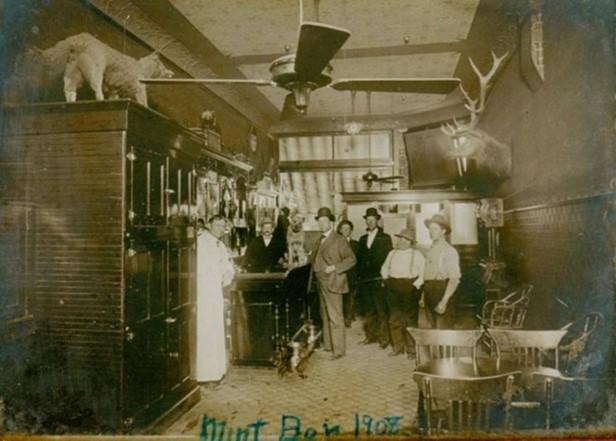
    <summary type="html"><![CDATA[<p><strong><em>In 1907 Charles “Dick” Marlow founded the Mint Saloon in Sheridan, WY. When Wyoming Prohibition laws banned alcohol in 1919, Marlow rebranded “the Mint” as legal storefronts but continued illegal alcohol sales. In 1935, post-Prohibition, the Mint Bar reopened its storefront as a bar. Today, the Mint Bar is still a staple of entertainment in Sheridan, Wyoming.</em></strong></p><img src="https://www.intermountainhistories.org/files/fullsize/634d0740f89c76472de8ecde2b526e01.jpg" alt="The Mint Bar in 1907, shortly after opening. " /><br/><p>In 1907 Charles “Dick” Marlow bought the building that would later become the Mint Bar from a barber and transformed it into the “Mint Saloon,” which locals often referred to as “the Mint.” In 1919, Wyoming passed laws banning the sale and consumption of alcohol unless for prescribed medicinal purposes. At this time, Marlow changed the Mint’s front into a dress shop, then a real estate office, while continuing alcohol sales in the back. In 1923, Oran Moore purchased the Mint, turning it into the “Mint Cigar Company and Soda Shop.” Between 1923 and 1930, Moore operated the Mint’s legal front while maintaining one of Sheridan’s more notorious speakeasies and gambling halls in the back.
During this time, law enforcement suspected the Mint of alcohol sales and conducted multiple raids on the location. On 23 June 1925, the <em>Sheridan Post Enterprise</em> published an article describing a moonshine bust at the Mint. Sheridan town sheriffs and a Wyoming state officer raided the Mint at four o’clock in the afternoon. Police discovered one gallon of moonshine whiskey hidden in a coffee pot by employees. The officers arrested Moore and several other employees. The court fined Moore $500.
On Tuesday, 23 June 1925, an article appeared in the <em>Sheridan Post Enterprise</em> about the officer’s raid at the Mint. A month later, the paper published a follow-up article on Tuesday, 07 July 1925, which mentioned that the court judge postponed the Mint employees’ trial. Lax police and judicial enforcement meant that raids, arrests, and trials like this never prevented the Mint from selling illegal alcohol. The establishment continued its bootlegging and alcohol sales until the stock market crash of 1929 forced Moore to close its doors. In 1933, the United States’ Twenty-first Amendment ended Prohibition, and Wyoming dissolved its alcohol ban.
In 1934, Archie Milson and Robert Thirlwell purchased the establishment and reopened the space as “the Mint Bar.” In 1948, the owner at the time, Lauren L. McVean, renovated the Mint Bar, giving the location its warm rustic style and now iconic bucking horse and cowboy neon sign. Cowboys, locals, travelers, and even celebrities like Ernest Hemingway once again made the bar a popular stop because of its historic charm, great beer, and gambling.
The Mint Bar’s story shows how Prohibition reshaped Sheridan without breaking its spirit. The hidden bar was a gathering place for cowboys and townsfolk alike. Raids and fines were a constant threat, but the establishment’s patrons remained loyal. After Prohibition, the Mint Bar never lost its notoriety. Today, “Meet me at the Mint” is now a signature phrase shared between Sheridan locals. The Mint Bar’s history is a nod to Western independence and resilience.</p><p><em><strong><a href="https://www.intermountainhistories.org/items/show/894">For more (including 4 images) view the original article</a></strong></em></p>]]></summary>
    <published>2025-09-23T15:34:46+00:00</published>
    <updated>2026-04-17T19:32:20+00:00</updated>
    <link rel="alternate" type="text/html" href="https://www.intermountainhistories.org/items/show/894"/>
    <id>https://www.intermountainhistories.org/items/show/894</id>
    <author>
      <name>Scarlett Kluge, Northern Arizona University </name>
    </author>
  </entry>
  <entry>
    <title type="html"><![CDATA[Polygamists in the Sugar House Pen]]></title>
    <summary type="html"><![CDATA[<p><strong><em>In the 1880s, Latter-day Saints convicted for polygamy filled Western prisons. One of these was “the Pen,” or Utah Territorial Penitentiary.</em></strong></p><img src="https://www.intermountainhistories.org/files/fullsize/98499b6cc99aca4386a3f83d7a5c4484.jpg" alt="Cannon and the Brethren" /><br/><p><span style="font-weight:400;">In 1857, Latter-day Saints in Britain could buy the fourth volume of the </span><i><span style="font-weight:400;">Journal of Discourses</span></i><span style="font-weight:400;"> and find a stirring declaration attributed to Brigham Young. The prophet-president of The Church of Jesus Christ of Latter-day Saints (sometimes nicknamed “Mormons” at the time) decried the United States Congress’ agitations against polygamy, saying, “True we have more wives than one, and what of that?” Young questioned if Congress could even enforce the law. He hyperbolically supposed a prison large enough to contain every polygamist lawbreaker in Utah would eventually have to encompass the entire Great Basin, “roofed… over from the summit of the Rocky Mountains to the summit of the Sierra Nevada.” When federal prosecution of polygamy cases escalated in the 1870s and 1880s, officials instead relied on western prisons like the Utah Territorial Penitentiary—sometimes nicknamed “the Pen.”</span>
<span style="font-weight:400;">Completed in 1854, the Territorial Penitentiary was southeast of Salt Lake City in Sugar House, Utah. Just two years previous, the territorial Legislative Assembly had requested federal money for building a prison in order “to prevent crime, but also to reform the offenders.” Decades later, federal officials were now trying to use the penitentiary to prevent polygamy and reform the Mormons.</span>
<span style="font-weight:400;">This included Mormons such as George Q. Cannon, who lived in hiding “underground” from 1885 to 1888. Cannon was the First Counselor in the First Presidency of the Church—a high office held only by apostles—and with five wives and thirty-two children, he was an easy target for federal marshals. Despite the dangers, though, hiding grated on Cannon. In his journal, he wrote he was “not anxious to become a martyr,” yet also “always felt to urge our people to stand up courageously to their principles” and wanted to live up to the same standard. When a prosecutor and marshal tried to extort the Church—money in exchange for not prosecuting Cannon—Cannon resolved to turn himself in, deciding, “I had much rather go to the penitentiary and serve the full term” than have the Church pay blackmail money to do him a special favor other Latter-day Saint polygamists could not afford.</span>
<span style="font-weight:400;">Cannon entered the Territorial Penitentiary in Sugar House in September 1888, and he found himself in good company. Fifty other Mormon polygamists were also in the Pen “for living with their wives,” as Cannon wrote, and they even took a few photographs together when they had visitors. Perhaps with some irony, Cannon observed in his journal that he and “the brethren”—as he liked to call his fellow Latter-day Saint incarcerees—resided in the same prison as twenty-two men either accused or convicted of murder. </span>
<span style="font-weight:400;">Conditions in the Pen were scant. Winters were cold, but fires were prohibited for fear of arson. One inmate remembered waking up on winter mornings with his beard frozen solid. The prison provided spoons but no other utensils, so “the brethren have improvised knives out of spoon handles and other scraps of metal they have got hold of and made wooden forks,” Cannon wrote. Meals themselves were mostly coffee, bread, meat, gravy, and “mush.” Cannon did not drink coffee, and he often forewent meat. He substituted milk and butter when he could.</span>
<span style="font-weight:400;">Unlike some other prisons in the Western territories, the Pen did not make labor part of the sentence, leaving inmates with copious free time. Cannon filled the extra time by researching and writing a history he called </span><i><span style="font-weight:400;">The Life of Joseph Smith the Prophet</span></i><span style="font-weight:400;">, a project he and his sons had been writing for the last six years.</span>
<span style="font-weight:400;">On Sundays, Cannon and the other imprisoned Latter-day Saints held Sunday School together, reading the Bible and singing hymns. In October 1888, they even procured an organ from the Church’s Sunday School Union for musical accompaniment. Other ministers came to the Pen to give sermons in the afternoon, and Cannon sometimes assessed them. One Episcopal preacher’s “discourse was a very weak effort,” Cannon thought, but a few months later a Methodist “preached the best Methodist sermon” Cannon had ever heard.</span>
<span style="font-weight:400;">Cannon’s prison sentence was short—only five months—and he left the Pen in February, 1889. In his journal, he was optimistic. He wrote, “The Lord manifested to me in a very plain manner, before I came in, that I ought to go, and that if I did, it would be easier for the brethren who should follow.” Now, five months later, Cannon noticed polygamists receiving shorter sentences, prison officials granting more privileges to inmates, and even the quality of the food improving. “Our lot was far from being a hard one,” Cannon thought. The Latter-day Saints would continue to endure, he was certain.</span></p><p><em><strong><a href="https://www.intermountainhistories.org/items/show/503">For more (including 5 images) view the original article</a></strong></em></p>]]></summary>
    <published>2021-09-24T04:58:21+00:00</published>
    <updated>2026-04-17T19:32:10+00:00</updated>
    <link rel="alternate" type="text/html" href="https://www.intermountainhistories.org/items/show/503"/>
    <id>https://www.intermountainhistories.org/items/show/503</id>
    <author>
      <name>Makoto Hunter, Brigham Young University</name>
    </author>
  </entry>
  <entry>
    <title type="html"><![CDATA[The United States v. Udall Cases and the St. Johns Ring]]></title>
    <summary type="html"><![CDATA[<p><strong><em>In the 1880s, David Udall—bishop of the St. Johns Ward of The Church of Jesus Christ of Latter-day Saints—found himself and his community increasingly at odds with the St. Johns Ring, a group of sheriffs, court officers, and town leaders who brought the power of public opinion and the authority of the courts to bear in their crusade against Mormon polygamy.</em></strong></p><img src="https://www.intermountainhistories.org/files/fullsize/6957fe46c0ddc29d6012b614f16e12bc.jpg" alt="Courthouse in Prescott" /><br/><p><span style="font-weight:400;">When authorities arrested Latter-day Saint bishop David King Udall on perjury charge in May 1884, his second wife Ida Hunt Udall called it a “trumped-up charge, simply got through malice on the part of the ‘ring.’” Though Ida dismissed the case as spiteful and unfounded, within the year David was in court both this perjury charge and two more trials, including a polygamy charge and second perjury case. Ida saw the “St. Johns Ring” operating behind each charge—an anti-polygamy group in St. Johns, Arizona who thoroughly controlled the town.</span>
<span style="font-weight:400;">Solomon Barth, a German Jew who founded St. Johns with Mexican farmers, led the Ring. As the town’s founder, Barth became its de facto leader, and his marriage to Refugio Landavazo y Sanchez, a prominent Spanish-American, extended his influence to the local Hispanic community. Barth regularly served as a grand jury foreman, and his employees often filled grand jury seats. With his intersecting business and political influence, Barth could influence his employees’ votes as grand jurors.</span>
<span style="font-weight:400;">Others in positions of civic authority joined Barth in the St. Johns Ring. Ebenezer S. Stover, Tomas Perez, and John Lorenzo Hubbell all served as sheriff; Charles L. Gutterson was the local United States District Attorney, Alfred Ruiz was district clerk, and George A. McCarter was the local United States Court Commissioner. McCarter’s position was particularly powerful. He determined the priority for pressing charges and often chose cases prosecuting Latter-day Saints.McCarter was also editor of the </span><i><span style="font-weight:400;">Apache Chief</span></i><span style="font-weight:400;"> (renamed </span><i><span style="font-weight:400;">St. Johns Herald</span></i><span style="font-weight:400;"> in 1884), a newspaper regarded as heavily anti-polygamy and anti-Mormon. In an 1884 journal entry, Ida reported the newspaper wrote about her “frequently,” describing her in “glowing colors” as a “prostitute, mistress, etc.” Even after McCarter sold the paper in 1885, it still declared itself “the only exclusively anti-Mormon paper in Arizona.”</span>
<span style="font-weight:400;">Although the St. Johns Ring justified their actions as the duties of elected public office, St. Johns’ Mormons accused Ring members of holding their offices through voter fraud. For example, David reported being barred from voting in November 1882. The election official simply told him, “We have decided that no polygamist should vote today.” David recalled, “There was no redress; I turned and walked away.” With the sheriffs in the Ring, investigations into the voter suppression did not materialize.</span>
<span style="font-weight:400;">By 1882, Mormons faced frequent “nuisance suits,” including larceny, unlawful assembly, and perjury. With Barth serving as grand jury foreman, indictments were frequent.</span>
<span style="font-weight:400;">Under these difficult circumstances, David testified before a grand jury for the perjury complaint filed against him. In David’s June 1884 grand jury, however, an independent St. Johns local named David Campbell served as jury foreman, not Barth. After hearing David’s testimony about the supposed perjury—an error caused by a misunderstanding on district clerk Ruiz’s part—Campbell convinced the grand jury to dismiss the case.</span>
<span style="font-weight:400;">The dismissal was only a temporary respite. By August, David was charged and arrested for unlawful cohabitation, despite his second wife Ida going into hiding two months earlier. All but one of the witnesses signing the indictment were members of the St. Johns Ring, whom Ida in her journal insisted, “knew nothing whatever of our family affairs, except from hearsay.”</span>
<span style="font-weight:400;">In November, David stood trial in Prescott, Arizona. However, the prosecution failed to subpoena Ida and compel her testimony, and without further evidence the court found David not guilty. David was fortunate; three Latter-day Saint neighbors were convicted in the same timespan. By January 1885, Church prophet-president John Taylor was advising members to flee Arizona and migrate to Mexico, beyond the reach of the U.S. government. David stayed in St. Johns, but some forty other families packed up and left town.</span>
<span style="font-weight:400;">David, perhaps, should have also left. In the summer of 1885, a grand jury convened to attempt a second indictment for the previously dismissed perjury charge, and this time the court did not inform David. Without his testimony, the grand jury indicted David for perjury.</span>
<span style="font-weight:400;">At the trial itself, Judge Howard Sumner presided. Sumner was a respected jurist and frequent speaker on the evils of polygamy. In David’s trial, Sumner sustained the prosecution’s objections to defense testimony and evidence, effectively excluding all possible proof that might have exonerated David. The jury returned a guilty verdict after 30 minutes. In response, David wrote this prayer: “Oh God, please deliver me… If I am to suffer imprisonment, let it be for my religion and not for the heinous crime that will be a disgrace to me and my family throughout life.” By September 1885, David was serving his prison sentence in Detroit, Michigan.</span>
<span style="font-weight:400;">This was the St. Johns Ring’s last anti-Mormon victory. Some unknown disagreement between Barth and the others caused him to split from the Ring. Meanwhile, former sheriff Hubbell had begun forming business relationships with Mormons, and district clerk Ruiz had actually tried to testify on David’s behalf before Sumner ruled against the defense. The two of them left the Ring, and they even signed on to a letter to President Grover Cleveland asking him to pardon David. Cleveland did, freeing David in December 1885.</span>
<span style="font-weight:400;">By 1887, the Ring fell apart. McCarter was dismissed as court commissioner due to alcoholism, and Barth went to prison for two years as the territorial court turned against him and found him guilty of destroying county records. Meanwhile, by 1888 David moved to Round Valley, Arizona, where he lived for several years before eventually moving back to St. Johns with his family and going on to <a href="https://www.intermountainhistories.org/items/show/504?tour=39&index=7">build a home there</a> and become a stake president for the Church. After his prison sentence, Barth also returned to St. Johns. Having apparently mellowed out toward Mormons by the time he died in 1928, Barth requested his funeral be held in a Latter-day Saint chapel. Levi Udall, David’s son, conducted the service.</span></p><p><em><strong><a href="https://www.intermountainhistories.org/items/show/500">For more (including 8 images) view the original article</a></strong></em></p>]]></summary>
    <published>2021-09-23T10:37:53+00:00</published>
    <updated>2026-04-17T19:32:10+00:00</updated>
    <link rel="alternate" type="text/html" href="https://www.intermountainhistories.org/items/show/500"/>
    <id>https://www.intermountainhistories.org/items/show/500</id>
    <author>
      <name>Makoto Hunter, Brigham Young University</name>
    </author>
  </entry>
  <entry>
    <title type="html"><![CDATA[George Reynolds’s Polygamy Convictions]]></title>
    <summary type="html"><![CDATA[<p><strong><em><i><span style="font-weight:400;">Reynolds v. United States</span></i><span style="font-weight:400;"> would eventually resolve the dispute over polygamy and religious freedom in favor of the United States government. But before the case could get to the Supreme Court, George Reynolds needed to be convicted—and he wanted to fight the charge. </span></em></strong></p><img src="https://www.intermountainhistories.org/files/fullsize/227143f7e6fb8fc3a97c8b41e9bab676.jpg" alt="George Reynolds and sons" /><br/><p><span style="font-weight:400;">Although Congress passed the Morrill Anti-bigamy Act in 1862, twelve years later in 1874 no court had yet found a single member of The Church of Jesus Christ of Latter-day Saints (sometimes nicknamed “Mormons” in that time) guilty of having multiple wives. While the rest of America condemned Mormon polygamy as a barbaric heresy and theocratic threat to democracy, Church leaders insisted the First Amendment to the Constitution protected their plural marriages under the free exercise of religion. Meanwhile, most Latter-day Saint polygamists lived in remote western U.S. territories. Latter-day Saints held electoral majorities for years, effectively guaranteeing territorial law enforcement, judges, and juries were friendly to Latter-day Saints.</span>
<span style="font-weight:400;">However, in June 1874 Congress passed the Poland Act, granting United States district courts exclusive criminal jurisdiction in the territories, thereby putting judges, juries, and polygamy cases in the hands of the federal government instead of territorial voters. Within a year, federal prosecutors finally had a trial for an anti-polygamy case against George Reynolds, a clerk in the office of the Church’s First Presidency who had married a second wife earlier that year. Reynolds originally agreed to be indicted as a “test case” negotiated between the Church and federal prosecutors to settle the Church’s First Amendment claims, but the agreement fell apart after his October 1874 indictment. By the time of Reynolds’s trial in March 1875, Reynolds was fighting for a not guilty verdict.</span>
<span style="font-weight:400;">Court convened on March 31, 1875 for </span><i><span style="font-weight:400;">United States v. Reynolds</span></i><span style="font-weight:400;">. Although Latter-day Saints were among the jury, they agreed to respect the trial court’s ruling on the Morrill Act’s constitutionality for the sake of deciding the verdict. But Carey, the prosecutor, soon found himself at an impasse anyway. He declared his intent to prove Reynolds lawfully married Mary Ann Tuddenham in 1865 and unlawfully married Amelia Jane Schofield in 1874, but the fourteen witnesses he subpoenaed—including friends and family of Reynolds—had planned ahead of time to give testimonies that would obscure as much as possible Reynolds’s relationship to Schofield. Historian Bruce van Orden observed, “their testimonies bordered not merely on evasion but on lying.” Daniel H. Wells, who had officiated the marriage, testified he could not clearly remember the ceremony. Reynolds’s sister Julia, who shared his home, admitted that a woman besides Reynolds’s first wife did live in the house but insisted she did not know if the second woman and Reynolds were married. In later polygamy cases, other families made similar efforts to dance on the edge of “truth” to avoid implicating husbands and wives.</span>
<span style="font-weight:400;">Before the end of the trial’s first day, the prosecution team privately agreed they were failing to prove the case—but they were not ready to give up. There was one potential witness they had not subpoenaed already: Amelia Jane Schofield, Reynolds’s second wife. Since the government did not recognize their marriage as lawful, they could justify subpoenaing Amelia to testify against her husband. The prosecution quietly obtained a subpoena, and while they waited for a deputy marshal to escort Amelia to the courthouse, Carey asked for and received a brief recess.</span>
<span style="font-weight:400;">Not long after, Amelia arrived. Benjamin R. Cowen (sometimes spelled Cowan), Assistant Secretary of the Interior, was in the courtroom audience and believed “the ghost of Joe Smith would scarcely have produced a more profound sensation.” Now several months into her pregnancy, Amelia was obviously carrying someone’s child, and “she must either have sworn herself the lawful wife of George Reynolds or tacitly confessed to being his concubine,” Cowan thought.</span>
<span style="font-weight:400;">In the end, her cross-examination was even simpler. Because the prosecution had not previously subpoenaed Amelia, she had not been part of the other witnesses’ preparation. Carey asked Amelia who she was married to, and she calmly testified that Reynolds was her husband.</span>
<span style="font-weight:400;">Court reconvened on April 1, 1875, and Carey rested his case. J.G. Sutherland, Reynolds’s defense attorney, pivoted his strategy and admitted Reynolds and Amelia indeed were married, but he asserted the First Amendment protected their marriage as a religious practice. The prosecution objected to the statement as irrelevant, and the judge upheld the objection—establishing grounds for Reynolds to eventually bring his case to the Supreme Court. The jury—Mormons and all—returned a guilty verdict after deliberating for thirty minutes.</span>
<span style="font-weight:400;">Several legal snafus followed the trial, including an appellate court decision to overturn the trial’s verdict for irregularities in the original indictment. But after a second trial in which Reynolds’s defense again insisted the First Amendment protected his practice and a second judge again declared this defense invalid, a second jury again declared Reynolds guilty. On December 21, 1875, Judge Alexander White sentenced Reynolds to serve two years in prison.</span>
<span style="font-weight:400;">Reynolds and the Church immediately appealed the decision, and the government postponed his sentence in the meantime. But when the Supreme Court upheld the Morrill Act as constitutional in 1879, Reynolds’s two-year prison sentence caught up to him. On June 16, 1879, Reynolds handed himself over to federal marshals. Latter-day Saints called him a “living martyr,” “imprisoned for conscience’ sake.”</span></p><p><em><strong><a href="https://www.intermountainhistories.org/items/show/498">For more (including 6 images) view the original article</a></strong></em></p>]]></summary>
    <published>2021-09-23T08:48:23+00:00</published>
    <updated>2026-04-17T19:32:10+00:00</updated>
    <link rel="alternate" type="text/html" href="https://www.intermountainhistories.org/items/show/498"/>
    <id>https://www.intermountainhistories.org/items/show/498</id>
    <author>
      <name>Makoto Hunter, Brigham Young University</name>
    </author>
  </entry>
  <entry>
    <title type="html"><![CDATA[Chief Barboncito and The Treaty of 1868]]></title>
    <summary type="html"><![CDATA[<p><strong><em>After years of displacement and internment, negotiations between Chief Barboncito and the United States government resulted in a treaty that allowed the Navajo to returned to their homeland in the Four Corners region.</em></strong></p><img src="https://www.intermountainhistories.org/files/fullsize/acdbc3e43efc463260bb43435470b6cc.jpg" alt="Treaty marker" /><br/><p>Navajo Chief Barboncito (1821–1871) played an important role in the negotiations that helped the Navajo return to the Four Corners region in 1868. Fluent in Navajo and Spanish, Barboncito communicated with US negotiators, who used translators that were fluent in English and Spanish, to draft a dual language treaty that would allow the Navajo to return home, making them the first American Indian tribe able to do so.
The Navajo had lived in Bosque Redondo from 1864–1868. Arriving by forced relocation that put an end to the Navajo Wars at the command of General James Carleton and carried out by Colonel Christopher “Kit” Carson, the Navajo internment camp refinement period proved to be a failure due to the high cost required to maintain provisions to keep the Navajo alive. Due to poor soil conditions and resource constraints, the United States needed to rethink their role in confining the Navajo.
In addition to negotiating with the United States regarding Navajo internment, Barboncito was also a spiritual leader and medicine man who gained prominence alongside Chief Manulito and Ganado Mucho due to their diplomacy and oratory skills. When it came time to discuss treaty provisions, Barboncito rejected General William Sherman’s offer to relocate the Navajo to Indian Country in Oklahoma. Fearing that Oklahoma would be similar to Bosque Redondo, Barboncito advocated on behalf of himself and the 9,000 other Navajo that they would be a peaceful people upon their return home, declaring that the area between the four sacred mountains was created and given to them by their gods, First Man and First Woman, solely for them.
The treaty was signed and made official on June 1, 1868. After returning home and following the creation of the Navajo reservation system, Barboncito kept his word, and the Navajo no longer engaged in warring behavior against neighboring white settlements. Compared to the initial reservation boundary, the territory has since tripled in size, currently covering an area the size of West Virginia. The Navajo today can enjoy their ancestral land and continue to teach their traditions and cultures thanks to men like Chief Barboncito.</p><p><em><strong><a href="https://www.intermountainhistories.org/items/show/488">For more (including 3 images) view the original article</a></strong></em></p>]]></summary>
    <published>2021-09-16T22:05:02+00:00</published>
    <updated>2026-04-17T19:32:10+00:00</updated>
    <link rel="alternate" type="text/html" href="https://www.intermountainhistories.org/items/show/488"/>
    <id>https://www.intermountainhistories.org/items/show/488</id>
    <author>
      <name>Colin Tompson, Brigham Young University</name>
    </author>
  </entry>
  <entry>
    <title type="html"><![CDATA[The Indian New Deal and the Shoshone-Bannock Constitution]]></title>
    <summary type="html"><![CDATA[<p><strong><em>The Great Depression brought hard times to the Intermountain West but also provided an opportunity for Native Americans to change the existing state of affairs. An “Indian New Deal” brought the Shoshone-Bannock together and gave the opportunity for the establishment of an intertribal constitution on Fort Hall.  </em></strong></p><img src="https://www.intermountainhistories.org/files/fullsize/a08a303044adb45bd1bf80a21b5f3c90.jpg" alt="Appointed Indian Affairs Commissioner" /><br/><p>Two thousand miles away from the rich farmland and pastures of the Fort Hall Indian Reservation, the future of America’s native peoples was decided by politicians and sociologists in Washington, D.C. The new Commissioner of the Bureau of Indian Affairs, John Collier, hoped to implement policies that would strengthen tribal cultures rather than destroy them.  While President Franklin D. Roosevelt and Congress passed laws as part of the “New Deal,” Collier hoped for an “Indian New Deal” that would reverse the assault on Indian lands, rejuvenate tribal governments, preserve native languages, and revive tribal customs.  For the Shoshone-Bannock, these new policies meant a fundamental transformation of their whole reservation system. </p><p>Although Fort Hall may have been one of the more prosperous reservations in the United States, too many of its residents lived in or near poverty.  Tribal leader John Ballard lamented, “The things that [the government has] promised me in the past have not been fulfilled . . . [We] have been placed in a condition that is poor.”  To combat economic deprivation and provide Native Americans with more input into local decisions, John Collier spearheaded the effort to pass the 1934 Indian Reorganization Act (IRA). John Ballard agreed with Collier’s plan, as did eight of the other nine representatives from Fort Hall who met with government agents. Tribal leader Tom Cosgrove agreed, telling other Native Americans, “If we accept this bill we are going to help our Indians.”  Although Congress passed the IRA in June 1934, each tribe had to also separately approve the bill before adhering to its policies. When it came time for the Shoshone-Bannock to vote, 375 voted yes and only 31 voted no.   </p><p>The next great task for the Shoshone-Bannock was the implementation of the IRA. To do so, they needed to create a constitution that would satisfy Shoshone, Bannocks, ranchers, farmers, the federal government, the state government, and other factions on the reservation. On April 30, 1936, they finally succeeded in ratifying a constitution everyone could support. Although small disagreements continued to flare up after its ratification, the 1936 constitution held fast until today.  Among other things, the constitution established laws for the reservation, set requirements for tribal membership, and established a reservation government called the Fort Hall Business Council. This marked a new chapter for the history of Fort Hall.</p><p><em><strong><a href="https://www.intermountainhistories.org/items/show/204">For more (including 3 images) view the original article</a></strong></em></p>]]></summary>
    <published>2018-06-08T02:45:06+00:00</published>
    <updated>2026-04-17T19:32:02+00:00</updated>
    <link rel="alternate" type="text/html" href="https://www.intermountainhistories.org/items/show/204"/>
    <id>https://www.intermountainhistories.org/items/show/204</id>
    <author>
      <name>Natalie Larsen, Brigham Young University</name>
    </author>
  </entry>
  <entry>
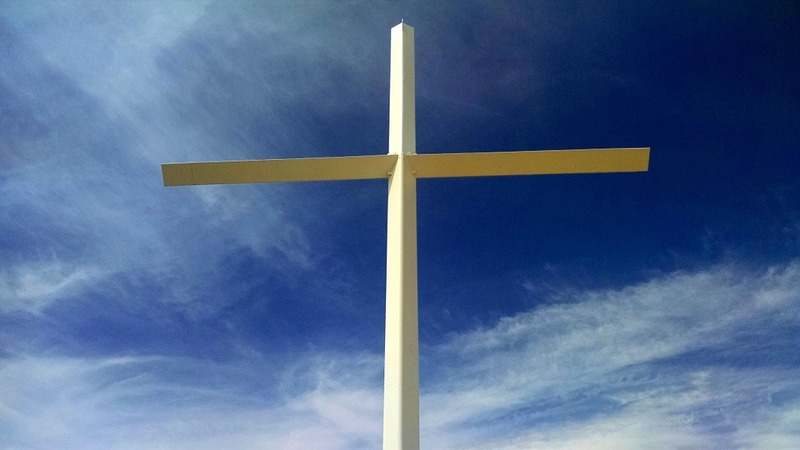
    <title type="html"><![CDATA[Boise’s Table Rock Cross]]></title>
    <summary type="html"><![CDATA[<p><strong><em>The Table Rock Cross has been the center of the longest separation-of-church-and-state debate in Idaho. </em></strong></p><img src="https://www.intermountainhistories.org/files/fullsize/6996d6b0b4fb21cca67d5be525d10eb1.jpg" alt="Cross, Table Rock, Boise" /><br/><p>Table Rock is a popular hiking destination for residents in Boise, Idaho. It is part of a diverse four-mile hiking loop that lets hikers make their own trails without the worry of motorized vehicles running into them. Atop of the hiking trail you will see a 60-foot white cross put up by the Jaycees Club of Boise in 1956. The cross was built on government land, meaning the Jaycees Club did not own the cross or land until 1972. Even then, the cross met with controversy. </p><p>On July 19, 1970, the Jaycees Club asked to buy the land around the cross from the Board of Correction. On June 25, 1971, the Correction Board declared the parcel surplus and gave it to the Idaho Department of Lands. The Idaho Board of Lands feared a lawsuit as a similar cross in Eugene, Oregon was ruled to be violating the separation of church and state in the 1970s. The Land Board declared a public auction to sell the land around the cross and the Jaycees Club bought it for $100 and made it private land.  In 1999, Rob Sherman, a Chicago talk-radio host and atheist, argued that the transaction of land was rigged in favor of the Jaycees Club and wanted the cross to be removed. This led to a march of around 10,000 people on Capitol Boulevard protesting that the cross should stay. Many notable Idaho politicians showed their support for the cross like future Governor Butch Otter who thought it was private property.</p><p>The cross continues to look over the Boise area today. It has become a reminder of the longest separation-of-church-and-state debate in Idaho. Though some have brought up the question whether the cross would even exist if the majority of Boise residents were not Christians, there have also been arguments that the cross brings harm to other non-Christian groups in Boise. For many Boise residents, however, the cross is a symbol of how peaceful and welcoming the Boise community can be.</p><p><em><strong><a href="https://www.intermountainhistories.org/items/show/170">For more (including 3 images) view the original article</a></strong></em></p>]]></summary>
    <published>2018-05-15T01:38:18+00:00</published>
    <updated>2026-04-17T19:32:02+00:00</updated>
    <link rel="alternate" type="text/html" href="https://www.intermountainhistories.org/items/show/170"/>
    <id>https://www.intermountainhistories.org/items/show/170</id>
    <author>
      <name>Tristin Hafer, University of Idaho</name>
    </author>
  </entry>
  <entry>
    <title type="html"><![CDATA[Downwinders in Court: Irene Allen v. United States]]></title>
    <summary type="html"><![CDATA[<p><strong><em>The downwinders of southern Utah have been deeply affected by cancers linked to nuclear radiation. Allen v. United States was a landmark case for holding the government responsible for negligence during nuclear testing. </em></strong></p><img src="https://www.intermountainhistories.org/files/fullsize/231fd1909103d22b25521a953513e3cf.jpg" alt="Suit Filed by Fall-out Victims" /><br/><p>When deciding where to perform nuclear tests, the Atomic Energy Commission (AEC) looked westward. Southern Nevada was close to the Los Alamos Laboratory where the weapons were designed, near the Four Corners region rich with the uranium they needed, and in the desert with low population density. To avoid Las Vegas, they just needed wait until the wind was blowing north-east. The Nevada Nuclear Testing site was built and tests began.</p><p>As large clouds loomed, residents of southern Utah were repeatedly assured by the AEC that they were safe from radiation. After several years, residents could not ignore the growing rates of cancer in their community. Leukemia increased over the national average and death occurred twice as often. Newspaper stories, congressional reports, and executive attention in other areas of the country encouraged the people to action. In 1978 and 1979, local leaders led the community in a lawsuit against the federal government that would become Allen v. United States. </p><p>In 1979, Utah Senator Orrin Hatch held a special town meeting in St. George, Utah to discuss the issue. Locals attended and shared personal stories, including how children interacting with fallout directly. One citizen commented, “You know how little kids love snow. They went out and would eat the snow. They didn’t know it was going to kill them later on.” Gloria Gregerson shared, “We liked to play under the trees and shake this fallout onto our heads and our bodies, thinking that we were playing in the snow. Then I would go home and eat. If my mother caught me as a young child, I would wash my hands; if not, then I would eat with the fallout on my hands.”  At the age of seventeen Gloria developed ovarian, stomach, and skin cancer followed by Leukemia. She died at the age of forty-two in 1983. Few citizens escaped having relatives or friends die of cancer. </p><p>In 1980, a congressional report “The Forgotten Guinea Pigs” would admit the government “failed to give adequate warning to the residents living downwind from the test site regarding the dangers posed by the radioactive fallout emitted during the atmospheric nuclear test operations.” The question that remained was if the government could legally be held responsible for its actions. </p><p>Allen v. United States was a landmark case with over 1,100 plaintiffs represented under 24 representative claims with Stuart Udall as their attorney. In 1984, Bruce Jenkins ruled in favor of the people by holding the government liable for negligence. The U.S. appealed and in 1987 the Tenth Circuit Court of Appeals overturned his decision. Despite the fact that it was overturned, Allen v. United States is a landmark case because the citizens won and paved the way for compensation in the future. </p><p><em><strong><a href="https://www.intermountainhistories.org/items/show/165">For more (including 4 images) view the original article</a></strong></em></p>]]></summary>
    <published>2018-05-09T03:37:17+00:00</published>
    <updated>2026-04-17T19:32:01+00:00</updated>
    <link rel="alternate" type="text/html" href="https://www.intermountainhistories.org/items/show/165"/>
    <id>https://www.intermountainhistories.org/items/show/165</id>
    <author>
      <name>Emily Cook, Brigham Young University</name>
    </author>
  </entry>
  <entry>
    <title type="html"><![CDATA[Mesa Verde and the Evolution of Site Preservation and Protection]]></title>
    <summary type="html"><![CDATA[<p><strong><em>Pot Hunting at Mesa Verde led to several important laws being put into place to protect artifacts from pothunters and the public. These laws are still in place today.</em></strong></p><img src="https://www.intermountainhistories.org/files/fullsize/1c4a0c97b4698f6bd9de9101aa831e6f.jpg" alt="Cliff Dwellings" /><br/><p> President Theodore Roosevelt created Mesa Verde National Monument on June 29, 1906. The monument is located near Cortez and Mancos, Colorado. Ancestral Puebloans inhabited Mesa Verde from 6000 BCE. to about 1300 CE. Their broader cultural group encompassed most of northern Arizona, northern New Mexico, southwestern Colorado and southern Utah. </p><p>Fathers Escalante and Dominguez were the first Europeans to record seeing Mesa Verde on their way to what is now California. The ruins then went unnoticed until geologist Ferdinand V. Hayden led an expedition across southern Colorado in 1874. When he heard about cliff houses nearby, instead of going to the ruins himself, Hayden sent his expedition photographer, William H. Jackson, to photograph them. Stunned by what he saw in the photographs, Hayden returned the next year to document the ruins and the artifacts inside them.</p><p>In 1888, Richard Wetherill and his brothers who lived in the area found the ruins while looking for lost cattle; they explored them and began collecting artifacts. By 1890 Wetherill had built a substantial collection from all over Mesa Verde and began to sell to collectors and museums. Also during this time, Wetherill started taking tourists to Mesa Verde. In 1891, he led a Swedish scientist, Gustav Nordenskiöld, to the ruins. During his time exploring the ruins, Nordenskiöld developed a systematic method for excavating the ruins and how to record artifacts. Afterwards, Nordenskiöld removed the objects from the site. During his excavation, the Swede noticed the pottery went from painted black- on- white, refined pottery to simple and crude pottery. This pattern led Nordenskiöld to notice how the Anasazi changed over time through their pottery. </p><p>When Nordenskiöld tried to return to Sweden with his large collection, customs agents stopped and detained him. Undeterred, Nordenskiöld negotiated his release when he pointed out that the US did not have any laws preventing him from taking the objects out of the country. After Nordenskiöld returned to Sweden, Wetherill stopped taking tourists to Mesa Verde to focus on his excavation at Chaco Canyon. Tourists continued to visit the sites for the next decade until archaeologist and preservationist Edgar Lee Hewitt fought to make Mesa Verde a national monument. Hewett was instrumental in lobbying congress to create  the Antiquities Act of 1906 which led to President Roosevelt’s declaration of Mesa Verde a national monument.</p><p>Although the Antiquities Act was the first step in protecting artifacts in national monuments, pot hunting continued at Mesa Verde as well as at other sites such as Canyon de Chelly and Chaco Canyon. The punishment of taking a pot or artifact from federal lands today is punishable by a year in jail and up $10,000 in fines.</p><p><em><strong><a href="https://www.intermountainhistories.org/items/show/64">For more (including 3 images) view the original article</a></strong></em></p>]]></summary>
    <published>2017-06-06T21:33:44+00:00</published>
    <updated>2026-04-17T19:31:59+00:00</updated>
    <link rel="alternate" type="text/html" href="https://www.intermountainhistories.org/items/show/64"/>
    <id>https://www.intermountainhistories.org/items/show/64</id>
    <author>
      <name>Alexandria O&amp;#039;Hara, Northern Arizona University</name>
    </author>
  </entry>
</feed>