<?xml version="1.0" encoding="UTF-8"?>
<feed xmlns="http://www.w3.org/2005/Atom">
  <title type="text">Intermountain Histories</title>
  <updated>2026-04-17T19:32:17+00:00</updated>
  <generator uri="http://framework.zend.com" version="1.12.20">Zend_Feed_Writer</generator>
  <link rel="alternate" type="text/html" href="https://www.intermountainhistories.org/"/>
  <link rel="self" type="application/atom+xml" href="https://www.intermountainhistories.org/items/browse?output=rss2"/>
  <id>https://www.intermountainhistories.org/</id>
  <author>
    <name>Intermountain Histories</name>
    <uri>https://www.intermountainhistories.org</uri>
  </author>
  <link rel="hub" href="https://pubsubhubbub.appspot.com/"/>
  <entry>
    <title type="html"><![CDATA[Yukio Shimomura: Topaz Internment Camp<br />
]]></title>
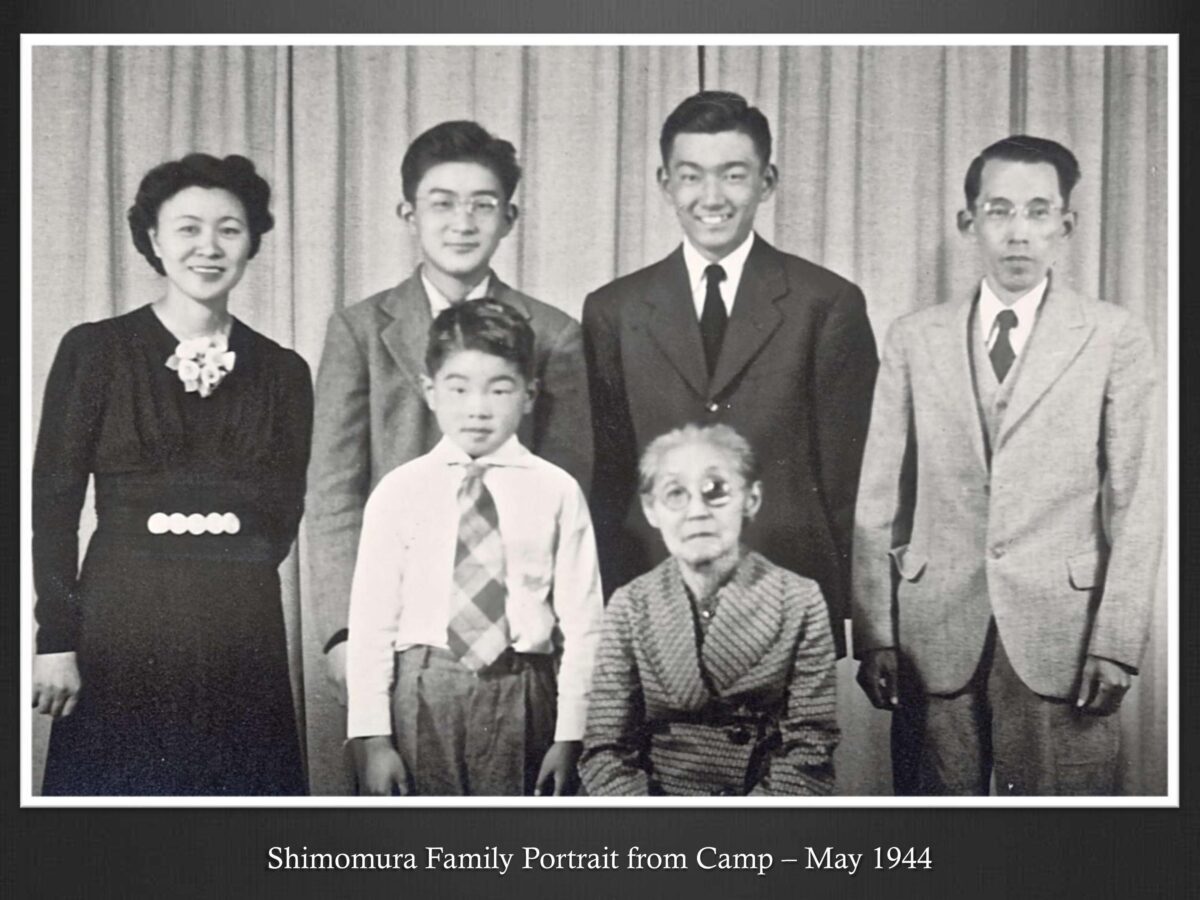
    <summary type="html"><![CDATA[<p><strong><em><span style="font-weight:400;">Following the attack on Pearl Harbor, President Franklin Roosevelt issued Executive Order 9066 on February 19, 1942. This order authorized the forced evacuation of all Japanese descendents into internment camps. Families were forced to leave everything behind to go to an unfamiliar location for an unknown length of time. Yukio Shimomura was a young boy who was sent to Topaz and in 2023 still remembers his experiences. </span></em></strong></p><img src="https://www.intermountainhistories.org/files/fullsize/d39b15a82bd920eefe950be6ed920dde.jpg" alt="Shimomura Family Portrait from Camp - May 1944" /><br/><p><span style="font-weight:400;">On December 7th, 1941, the Japanese military bombed Pearl Harbor bringing the United States into the Second World War. On February 19th, 1942, President Franklin Roosevelt issued Executive Order 9066, forcing all people of Japanese descent living on the West Coast to relocate to internment camps. They took only what they could carry and left their homes in May 1942, having no idea where they were going or whether they would ever return. Yukio Shimomura was one of the victims of this order.</span>
<span style="font-weight:400;">Prior to arriving in Topaz, Utah, many of the Japanese Americans were held in the Tanforan Race Track in San Bruno, California, where they lived in washed-out horse stables lined with linoleum. Yukio Shimomura explained the experience: “All you had was one lightbulb…. Using scrap wood, many made nightstands and other shelves to hold their stuff. Beds were bags filled with hay, and if you couldn’t sleep on that, you slept on the floor… Lots of lines. Lines, lines, lines for everything. We were only there a short time, but it was traumatic… For those living in the horse stalls, they had it bad; they stunk when they came out… you could separate them from those living in the barracks [by their smell]… we were lucky.” Shimomura and his family stayed at Tanforan for a short time before being relocated to the Topaz Internment Camp near Delta, Utah. They remained there for three years behind barbed wire and armed guards. </span>
<span style="font-weight:400;">In Topaz, the Japanese “internees” were separated into blocks and barracks. Each block had twelve barracks, a recreation hall, latrines for men and for women, and a mess hall. The barracks were sectioned into six apartments of different sizes to accommodate families of two, four, or more people. Larger families were given two or more rooms. The six rooms came in three sizes, 20’ by 14’, 20’, or 26’.</span> <span style="font-weight:400;">Shimomura later explained that the walls separating the rooms did not reach the ceiling so that you could hear everything from everyone all the time. He remembered, “there were 300 children born in the camp, so you figure couples realized they had to do what they needed to do.” Privacy was absent in the camp, as there were no doors or stalls in any of the bathrooms or showers. </span>
<span style="font-weight:400;">At the camp, many tried to make life as normal as possible. This included working at different jobs around the camp for roughly $14 to $19 a month, depending on the job. Children went to school, played around the camp, and all lent a helping hand in whatever needed to be done. No matter how hard they tried to make life as normal as possible, the internees understood they were not free. “Topaz was chaotic,” Shimomura summarized as he explained the death of an elderly man who did not understand the order given to turn around when approaching the barbed wire fence. After a third confusing warning, he was shot and killed. While this was the only shooting to occur at Topaz, it scarred all who were there. </span>
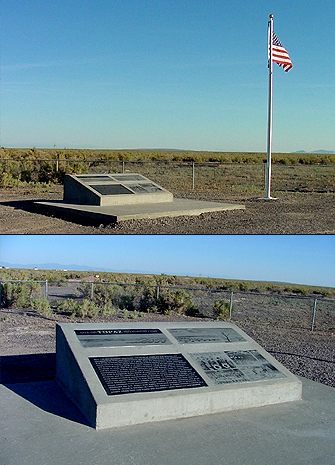
<span style="font-weight:400;">In January 1943, President Roosevelt asked for volunteers at Topaz to serve in the United States Army. Shimomura remembers that all who were at the camp were given a questionnaire to determine their loyalty to the United States, with question 28 asking, “Will you swear unqualified allegiance to the United States of America and faithfully defend the United States from any or all attack by foreign or domestic forces and forswear any form of allegiance or obedience to the Japanese emperor or any other foreign government, power or organization?” If the answer was yes, internees could leave the camp for military service. One hundred and five young men, including some young fathers, signed up to fight and were allowed to leave the camp for the first time. The loyalty of Japanese American soldiers who served in the war raised questions about the purposes of the internment camps. In 1943, many others gained sponsors and were allowed to leave the camp to attend universities or enter employment.</p><span style="font-weight:400;">The Topaz Internment camp closed its doors in October 1945, and the barracks were moved by the end of 1947. The Japanese American Citizen League erected a monument in 1976 to commemorate those who had stayed there. In August of 1988, President Ronald Reagan signed the Civil Liberties Act that was later enforced by President George H.W. Bush. It issued a formal apology and gave $20,000 to all those who were still alive, like Shimomura, a small compensation for all they had lost and suffered as a result of internment. </span></p><p><em><strong><a href="https://www.intermountainhistories.org/items/show/793">For more (including 4 images) view the original article</a></strong></em></p>]]></summary>
    <published>2024-03-18T19:58:54+00:00</published>
    <updated>2026-04-17T19:32:17+00:00</updated>
    <link rel="alternate" type="text/html" href="https://www.intermountainhistories.org/items/show/793"/>
    <id>https://www.intermountainhistories.org/items/show/793</id>
    <author>
      <name>Abby Tribe, Brigham Young University </name>
    </author>
  </entry>
  <entry>
    <title type="html"><![CDATA[Times in Topaz: Daily Life in Utah&#039;s Japanese Internment Camp]]></title>
    <summary type="html"><![CDATA[<p><strong><em>Utah's only internment camp, Topaz, housed approximately 9,000 Japanese Americans for three years during World War II. People in Topaz attempted to maintain normalcy in their daily lives by having schools, recreational activities, a newspaper, and cultural associations.</em></strong></p><img src="https://www.intermountainhistories.org/files/fullsize/4bc10125afe0cd9d4aa8e8a7b72774dd.jpg" alt="Topaz Times Collection" /><br/><p><span style="font-weight:400;">Located behind a frail barbed wire fence fifteen miles out from the remote town of Delta, Utah, the Topaz internment camp is utterly isolated from the rest of the state. Topaz was an American concentration camp where approximately 9,000 Japanese and Japanese Americans primarily from California’s Bay Area were held during World War II. Open from September 1942 until October 1945, daily life in the Topaz internment camp was characterized by an attempt to maintain some sense of normalcy despite severe restrictions and unfair treatment. </span>
<span style="font-weight:400;">The main living area of Topaz was a 640-acre compound with rows of barracks that contained living quarters, communal bathrooms, and recreational areas. Topaz also had two elementary schools, a high school, and a library. Teachers were often camp residents or local adults. Students who graduated from Topaz High were sometimes allowed to leave Topaz to attend colleges in the East. The efforts to promote education despite incarceration reflect the attempts to maintain normalcy for Japanese people living in Topaz. </span>
<span style="font-weight:400;">Recreational activities in Topaz included participating in cultural associations, sports teams such as basketball and baseball, sumo wrestling, arts and crafts, and even the making of the traditional Japanese dessert mochi to celebrate the Japanese New Year. Many people in Topaz exhibited their creative work in art and hobby shows, which displayed traditional calligraphy, sculptures, painting, and jewelry. Many pieces of art from Topaz are still around today, showing the lasting impact and endurance of those who were in Japanese internment camps. </span>
<span style="font-weight:400;">Life in Topaz was recorded in the newspaper </span><i><span style="font-weight:400;">Topaz Times. </span></i><span style="font-weight:400;">Written by people in the camp, the paper documented news in Topaz including weather, events within the camp, new constructions and developments, new arrivals of people, sporting events, school, and recreational activities. This newspaper, with frequent updates about life and events within Topaz, is an excellent source of information about daily life behind the barbed wire. </span>
<span style="font-weight:400;">The lives of those forced into internment at Topaz were drastically altered, but many tried to maintain some sense of normalcy for those three years in order to survive. Today Topaz is gone, with only the foundations of barracks and some fencing indicating it was once an internment camp. It is important to remember the stories of those who were in Topaz to commemorate a darker side of Utah’s and the United States' history, to honor the resilience of those incarcerated, and to give a voice and identity to those who were once silenced. </span></p><p><em><strong><a href="https://www.intermountainhistories.org/items/show/782">For more (including 3 images) view the original article</a></strong></em></p>]]></summary>
    <published>2024-02-26T19:11:24+00:00</published>
    <updated>2026-04-17T19:32:17+00:00</updated>
    <link rel="alternate" type="text/html" href="https://www.intermountainhistories.org/items/show/782"/>
    <id>https://www.intermountainhistories.org/items/show/782</id>
    <author>
      <name>Kimball Yeates, Brigham Young University</name>
    </author>
  </entry>
  <entry>
    <title type="html"><![CDATA[Dave Tatsuno: Film at Topaz Internment Camp]]></title>
    <summary type="html"><![CDATA[<p><strong><em><span style="font-weight:400;">Dave Tatsuno was one of 11,000 Japanese and Japanese-Americans that were held in Topaz Internment Camp in Delta, Utah. His experience was unique in that he recorded some of his family’s experiences through a motion picture camera that he smuggled into camp. While never intended to be a documentary, his compiled film has since been added to the Library of Congress and further brings to light the conditions experienced by the Japanese in Topaz. </span></em></strong></p><img src="https://www.intermountainhistories.org/files/fullsize/152ee8719f930d9151064c1c1657e3d6.jpg" alt="Dave Tatsuno and his father, merchants of Japanese ancestry in San Francisco prior to evacuation " /><br/><p><span style="font-weight:400;">Born Masaharu Tatsuno in Japan in 1913, Tatsuno immigrated to the United States with his parents when he was only a few months old. Upon arrival in the Bay Area, and due to a clerical error that not even his family understands, he was given a U.S. birth certificate. At a young age, his mother abandoned his family and returned to Japan, leading him to become heavily involved in the YMCA. He decided to adopt the name “Dave” while in junior high. He married Alice Okada in 1938, and their first son, Sheldon, was born in 1940. Amateur filmmaking became a passionate hobby of his after the death of a close friend, when he realized that film had the potential to metaphorically “bring someone back to life.” </span>
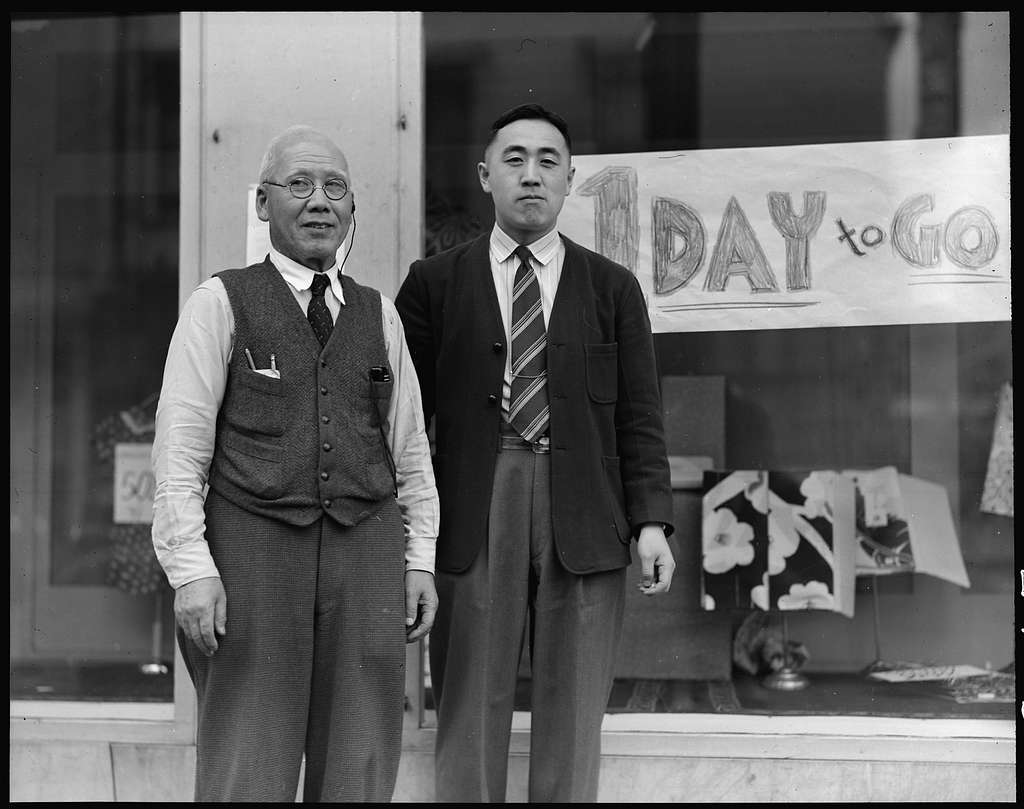
<span style="font-weight:400;">Due to the Japanese attack on Pearl Harbor in 1941 (in addition to other Japanese imperialist activities) and racist attitudes towards the Japanese, President Franklin D. Roosevelt issued Executive Order 9066 in February 1942. This order divided the West Coast into military zones and gave the army authority to relocate civilians further inland. The Japanese were the main group affected by the order. Prior to evacuation and internment, Tatsuno helped his father, Shojiro, operate a dry goods store in the Bay area called “Nichi Bei Bussan.” In order to prepare to move, “Nichi Bei Bussan” had an evacuation day sale, where they were forced to sell their goods at incredibly low prices in order to get rid of inventory quickly. </span>
<span style="font-weight:400;">Tatsuno and his family were first held at Tanforan Racetrack and later relocated to Topaz in 1942. Tatsuno, who was familiar with running a business, became one of the managers of the co-op store in camp. While working, he met Walter Honderick, a War Relocation Authority official who owned a camera himself. Honderick encouraged Tatsuno to send for his camera under Honderick’s name. Tatsuno, while on a trip for supplies for the co-op, purchased film for the camera in Chicago. With camera and film, Tatsuno was able to participate in his old hobby again.</span>
<span style="font-weight:400;">In interviews, Tatsuno was adamant that his film in Topaz was never meant to be a documentary. Its focus was specifically on his family and friends. Despite that, the film does contain significant and telling scenes. One scene depicts several Japanese men digging a trench outside one of the barracks. Tatsuno’s narration (which was added to the film much later) relates that the men were repairing a broken pipe. This scene depicts the labor that the Japanese were expected to contribute in order to keep the camp running. Another scene, perhaps one of the most significant, shows Tatsuno’s brother, Masateru (or “Tut”) visiting the camp as an American soldier on his way to Germany. In later interviews, Tatsuno described that he found great irony and injustice in the fact that his brother, especially with his position as a U.S. soldier, had to visit his family behind barbed wire. </span>
<span style="font-weight:400;">Tatsuno and his family returned to the Bay Area in 1945, where they reopened “Nichi Bei Bussan” and sought to help other Japanese returning from internment camps transition back to everyday life. Tatsuno continued to serve as part of the Japanese American Citizens League (JACL) and the YMCA throughout the rest of his life. His film </span><i><span style="font-weight:400;">Topaz</span></i><span style="font-weight:400;"> was added to the Library of Congress in 1996. Tatsuno passed away in 2006, but his legacy of recording his experience at Topaz remains. </span></p><p><em><strong><a href="https://www.intermountainhistories.org/items/show/775">For more (including 3 images) view the original article</a></strong></em></p>]]></summary>
    <published>2024-01-23T05:03:04+00:00</published>
    <updated>2026-04-17T19:32:17+00:00</updated>
    <link rel="alternate" type="text/html" href="https://www.intermountainhistories.org/items/show/775"/>
    <id>https://www.intermountainhistories.org/items/show/775</id>
    <author>
      <name>Sara Davis, Brigham Young University</name>
    </author>
  </entry>
  <entry>
    <title type="html"><![CDATA[Sports in the Topaz Internment Camp]]></title>
    <summary type="html"><![CDATA[<p><strong><em>To alleviate boredom while interred in the Topaz Relocation Center, the residents organized recreational activities. Some of the most popular pastimes were sports including baseball, golf, and football. </em></strong></p><img src="https://www.intermountainhistories.org/files/fullsize/db63feff62a2b3b0c02f2f9da947aa52.jpg" alt="The Baseball Field at Topaz" /><br/><p><span style="font-weight:400;">The Topaz Internment Camp was organized in October of 1942 in a desert area near Delta, Utah. The Camp was created to house Japanese Americans, formerly living on the coast of California, after being forcefully relocated during World War II.</span><span style="font-weight:400;"> Japanese Americans were compelled to sell or abandon their homes, cars, and any belongings they could not carry on their person. They first were placed in </span><span style="font-weight:400;">Tanforan and Santa Anita Racetracks in </span><span style="font-weight:400;">California in converted horse stables until they were moved again to a more permanent location in Topaz, Utah. Topaz was in operation </span><span style="font-weight:400;">from September 11, 1942, until October 31, 1945. During that time, the Japanese Americans who lived there struggled to create</span><span style="font-weight:400;"> lives for themselves in this new, remote desert environment.</span>
<span style="font-weight:400;">To help alleviate the boredom, Japanese Americans developed several pastimes. Schools were opened, artists taught their crafts, and sports teams were created. Fans followed their favorite teams. Sports and outdoor recreation became very popular, particularly baseball. Topaz was divided </span><span style="font-weight:400;">into 42 blocks </span><span style="font-weight:400;">and each block created its own baseball team. Teams would compete against each other, drawing dozens of spectators. </span>
<span style="font-weight:400;">The daily sports section in the </span><span style="font-weight:400;">Topaz Times</span><span style="font-weight:400;">, the local newspaper, revealed the importance of sporting events at the camp. The </span><span style="font-weight:400;">Topaz Times</span><span style="font-weight:400;"> included articles about the results of golf tournaments, baseball games, and the high school football team. In addition to local games, the </span><span style="font-weight:400;">Topaz Times</span><span style="font-weight:400;"> reported on the National Baseball League and other national sporting events. </span>
<span style="font-weight:400;">Sporting events in Topaz created strong rivalries between blocks in the camp. The most notable rivalry was between the softball teams. Like the baseball teams, the softball teams were organized by blocks and run by managers elected by each block’s players. Softball games were highly anticipated, and each team would practice for several weeks before the competitions. Unfortunately, with young people constantly leaving for the army, school, or work, fully manning each team was a continual struggle. </span>
<span style="font-weight:400;">The High School fielded many teams that students would compete on. The high school football team traveled and played against other local Utah high schools. Players would also compete against their peers, with a senior football team challenging the juniors and sophomores. The high school also had a track team. In the 1944 season, the track team got off to a late start, but was in full swing by May of that year, competing against students at other Utah high schools.</span>
<span style="font-weight:400;">The time in Topaz was difficult in the lives of the people sent to live there. But they found ways to go on living. To help make the most of a difficult situation, the residents of Topaz showed their resilience by promoting their love of sports and participating in a variety of recreational activities. Something that started as a way to alleviate boredom became a favorite pastime in Topaz, Utah during WWII.</span></p><p><em><strong><a href="https://www.intermountainhistories.org/items/show/660">For more (including 3 images) view the original article</a></strong></em></p>]]></summary>
    <published>2022-09-19T21:10:31+00:00</published>
    <updated>2026-04-17T19:32:14+00:00</updated>
    <link rel="alternate" type="text/html" href="https://www.intermountainhistories.org/items/show/660"/>
    <id>https://www.intermountainhistories.org/items/show/660</id>
    <author>
      <name>Anna Tenney, Brigham Young University</name>
    </author>
  </entry>
  <entry>
    <title type="html"><![CDATA[Topaz Museum: A Jewel Amidst the Desert]]></title>
    <summary type="html"><![CDATA[<p><strong><em>The Topaz Museum is located a short drive from the Topaz internment site and boasts an impressive collection of artifacts and first-hand accounts of Japanese Americans interned at the camp during World War II.</em></strong></p><img src="https://www.intermountainhistories.org/files/fullsize/d3903425eda7df4d660c63793d9b7d64.jpg" alt="Topaz Museum" /><br/><p><span style="font-weight:400;">One of Utah’s best kept secrets about one of America’s darkest decisions is located in Delta, Utah. The Topaz Museum is a short drive from the Topaz internment camp site and boasts an impressive collection of artifacts and first-hand accounts of Japanese Americans interned at the camp during World War II. The Topaz Museum opened in 2017 and, thanks to generous local and national donations, is maintained so that all who visit can study and explore what life was like for those who lived at Camp Topaz. Many of the artifacts and accounts have been donated by families and descendants of the Japanese Americans who lived there. The museum is operated by Delta locals who have a passion for sharing one of the tragic lessons in American history. </span>
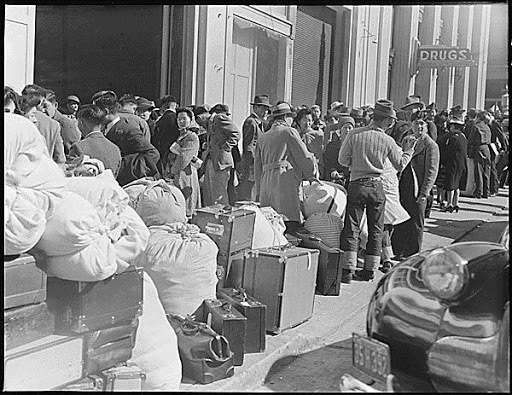
<span style="font-weight:400;">After the surprise attack at Pearl Harbor, the United States government, led by President Franklin D. Roosevelt, passed Executive Order 9066 which effectively ordered all people of Japanese descent to be evacuated from the Pacific coast. This led to the forced removal of nearly 112,000 Japanese Americans. Initially, these people were relocated into temporary holding facilities while the government constructed 10 permanent relocation camps. These temporary holding centers were converted horse stalls at the Tanfran racetrack in San Bruno, California. They were transported in train cars under armed guard to Delta in early 1942. For many of these people, Topaz would remain their home for the next three years. </span>
<span style="font-weight:400;">The Topaz Museum uses photographs, personal accounts, newspapers, and visual reconstructions to help visitors sense what the Japanese Americans at Topaz experienced while they were interned. The museum’s curators have organized immersive exhibits to help patrons experience facets of this history. As visitors walk into the exhibit area they are confronted with scenes and accounts from Japanese Americans who were forcibly removed from their homes, lands, and businesses on the west coast and relocated to Topaz. The museum also depicts life in Topaz, using interactve exhibits to give visual representation of life for those interned. Patrons see vintage furniture, equipment, and bedding donated by families of internees. Exhibits give accounts of how the Japanese Americans interned in Topaz made the best of their difficult situation. The museum gives accounts of the local government that was formed, the schools and children educated in Topaz, the many different talents that were cultivated such as art and music, and the young men and women who answered the call to serve in the military of the same country responsible for their internment. The museum concludes its exhibits by reviewing the attempts at restitution by the American government and the safeguards created to prevent this violation of civil rights from happening again. </span></p><p><em><strong><a href="https://www.intermountainhistories.org/items/show/658">For more (including 3 images) view the original article</a></strong></em></p>]]></summary>
    <published>2022-09-19T18:22:35+00:00</published>
    <updated>2026-04-17T19:32:14+00:00</updated>
    <link rel="alternate" type="text/html" href="https://www.intermountainhistories.org/items/show/658"/>
    <id>https://www.intermountainhistories.org/items/show/658</id>
    <author>
      <name>Michael Pouliot, Brigham Young University</name>
    </author>
  </entry>
  <entry>
    <title type="html"><![CDATA[Fort Douglas WWI German Internment Camp: WWI German Internment Camp]]></title>
    <summary type="html"><![CDATA[<p><strong><em>Though Utah had first been an asylum for members of the Church of Jesus Christ of Latter-day Saints from mobs and an earlier extermination order, Utah detained Germans during WWI under submission to federal order. Fort Douglas operated as a German POW and German enemy alien internment camp from 1917 to 1920. In the eyes of Utah and the larger United States, German enemy aliens were not American and would/should not receive the same rights as such, even though they had been residents of the United States prior to confinement.  </p></strong></p><img src="https://www.intermountainhistories.org/files/fullsize/2c4c2d65b19ade87688752a3c1347ca7.jpg" alt="Internee sleeping quarters" /><br/><p>Fort Douglas operated during WWI as a German internment camp, detaining threats to security. The first civilian enemy aliens arrived in July 1917 and the last did not leave until May 1920. Fort Douglas internee composition consisted of German Prisoners of War (POWs) and a selection of enemy aliens. President Woodrow Wilson defined general enemy aliens as, "All natives, denizens, or subjects of Germany, being males of the age of fourteen years and upwards, who shall be within the United States, and not actually naturalized." Though residents of the United States, it is significant to recognize why these Germans were not citizens. Before WWI, immigration legislation was largely laissez-faire. Living in the United States preceded citizenship; a five-year residency with a declaration of intention after two years was required to qualify for naturalization. If these Germans had not planned to obtain citizenship early after arrival and file declaration, they could not become a citizen—even after a five-year residency. A minor difference of paperwork meant risk of internment. In addition, several "noncombatants" were not intentionally "enemies," either.  Arriving before declaration of war, some immigrants were "trapped behind enemy lines" with wartime policy. These civilians were not American citizens and residency in America granted them no empathy. </p><p>Other German internment camps in the United States were made entirely of POWs or enemy aliens; however, Fort Douglas uniquely detained both. Prejudice towards the civilians, however, began before the camp. For some, "signing one’s name to a piece of paper that acknowledged him as an 'enemy' was offensive and humiliating" (Divjak and Potter, 2019). German residents individually petitioned for exception to classification as enemy aliens and sent requests for naturalization, but many of them would have to yield to registration and then possible internment. At the camp, the German POWs' nationalism and loyalty was recognized as more honorable and acceptable by Americans than the civilian "traitors." "At Fort Douglas those in charge decided to save the government money by dropping the individual food rations from 44 cents to 11 cents per day."  Given the account of one German sailor—found in Raymond Kelly Cunningham, Jr.'s, Internment 1917-1920; A History of the Prison Camp at Fort Douglas, Utah, and the Treatment of Enemy Aliens in the Western United States—"Daily fresh meat, daily fresh bread and very often fresh fruits, quantities as well as qualities, leave nothing to be desired," it would seem that it was the civilians receiving that lowered ration. Though residents of the United States, at Fort Douglas their credentials did not grant them even treatment equal to that of the POWs.</p><p><em><strong><a href="https://www.intermountainhistories.org/items/show/432">For more (including 3 images) view the original article</a></strong></em></p>]]></summary>
    <published>2020-10-13T07:27:57+00:00</published>
    <updated>2026-04-17T19:32:08+00:00</updated>
    <link rel="alternate" type="text/html" href="https://www.intermountainhistories.org/items/show/432"/>
    <id>https://www.intermountainhistories.org/items/show/432</id>
    <author>
      <name>MacKenzie N. DuBois, Brigham Young University</name>
    </author>
  </entry>
  <entry>
    <title type="html"><![CDATA[Provo and Orem WWII Labor Camps: Japanese-American Internees<br />
]]></title>
    <summary type="html"><![CDATA[<p><strong><em>Due to war-time labor shortages, prisoners from the Topaz Internment Camp helped Orem and Provo farmers harvest fruit, amid discrimination. </p></strong></p><img src="https://www.intermountainhistories.org/files/fullsize/2cf7dddc066089ac665145de8968404b.jpg" alt="Plaque located at 950 North and 800 East Orem, Utah" /><br/><p>After the Japanese military bombed Pearl Harbor in 1941, some Americans feared that US citizens of Japanese descent might engage in espionage for Japan. This racially charged wartime hysteria led President Roosevelt to sign Executive Order 9066, which forced those of Japanese descent into prison camps across the country. One such camp was in Delta, Utah. It was known as the Topaz Relocation Center.  </p><p>World War II labor shortages increased as more Utah men joined military efforts, and state officials and Utah farmers sought workers to fill their places in designated labor camps to harvest various crops. Seeking work opportunities outside of the prison camp, many of Topaz’s  internees volunteered to work at these labor camps in the surrounding town of Delta and in the northern Utah towns of Provo and Orem. The Provo camp, located at Ninth South and Fourth East, housed 400 persons and consisted of a temporary tent city where local farmers hired Japanese workers to work on beet farms. The Orem labor camp, located at 950 North and 800 East, was a more permanent site with large barracks and cabins, administrative offices, a kitchen and mess hall, and outhouses. The internees worked in orchards of various kinds. In May of 1943, the first seventeen young men arrived in Utah County to work as farmhands. The Utah Farm Association eventually relocated these hired Japanese American workers to the permanent Orem site shortly after.  </p><p>Though farmers hired Japanese workers willingly, anti-Japanese sentiments continued among many Utah residents. In 1943, these sentiments culminated in a violent incident involving Japanese-American workers and some white Provo residents. On October 3rd, five white youth, with shotguns and .30 caliber rifles, gathered and opened fire on the Provo labor camp and on local Japanese homes. Three people were struck by pellets, but no one was seriously injured. The attack had been the third of the week, with two previous reports of white youth throwing stones at Japanese workers and quickly escaping in cars. The War Relocation board threatened to remove the workers, and thereby their desperately needed labor, if Provo residents could not tolerate and protect Japanese workers. The residents chose to protect the workers and keep their labor. The five youth were later arrested for their attack.</p><p>In the fall of 1944, German and Italian prisoners of war replaced Japanese American and immigrant workers at the Orem labor camp, ending the Topaz prisoners’ connections at the Orem labor camp. But today the Topaz prisoners’ important role in Utah farm labor is memorialized at the Orem Heritage Museum. Though a school now stands on the actual Orem camp site, a sign commemorates Japanese workers and the labor contributions they made to WWII-era agricultural efforts. Residents can visit these sites and see Topaz’s influence far beyond the internment camp in central Utah.</p><p><em><strong><a href="https://www.intermountainhistories.org/items/show/300">For more (including 3 images) view the original article</a></strong></em></p>]]></summary>
    <published>2019-02-13T10:52:38+00:00</published>
    <updated>2026-04-17T19:32:05+00:00</updated>
    <link rel="alternate" type="text/html" href="https://www.intermountainhistories.org/items/show/300"/>
    <id>https://www.intermountainhistories.org/items/show/300</id>
    <author>
      <name>Hannah Lee, Melodie Jackson, and Sarah AdamsBrigham Young University</name>
    </author>
  </entry>
  <entry>
    <title type="html"><![CDATA[Willie Ito: From Topaz to Disney]]></title>
    <summary type="html"><![CDATA[<p><strong><em>Internees at Topaz went to school and participated in all kinds of classes, including art. One art student at Topaz went on to illustrate one of the most iconic Disney animation scenes of all time.</p></strong></p><img src="https://www.intermountainhistories.org/files/fullsize/1cc7d8583516881c7661310b76cbf7b9.jpg" alt="Preparing to Leave San Francisco" /><br/><p>The devastation of Pearl Harbor and the hysteria of the Second World War set the stage for white Americans to indulge their racist attitudes. Despite Japanese Americans showing no verifiable signs of sedition, many American citizens saw them as enemies who could not be trusted. Those of Japanese ancestry who lived along the Pacific coast were forced to enter inland internment camps like Topaz, Utah, for the duration of the war. Despite having had their rights disregarded, many of these prisoners continued to develop their talents. One such prisoner was a boy named Willie Ito, who went on to create a piece of art that would be seen by millions of Americans for years to come. </p><p>Willie was born in 1934 and grew up in San Francisco California. One of the most influential experiences in young Willie’s life was going to a movie theater in San Francisco and seeing the film Snow White and the Seven Dwarfs (1937). It was then that he knew that he wanted to be an animation cartoonist. After President Roosevelt signed Executive Order 9066 in February 1942, Willie and his family were interned at Tanforan racetrack in San Francisco. A few months later the government relocated the Tanforan prisoners to a permanent camp in Topaz, Utah. In Topaz Willie went to school and took art classes. While many of the kids liked to play games and baseball after school, Willie liked to go back to his family’s assigned barrack and draw. Willie would draw on the Sears Roebuck catalogs that were delivered every three months, making flipbooks in the margins of the expired catalogs.</p><p>Willie and his family left Topaz in early 1945. While studying at Chouinard Art Institute in Los Angeles, Willie landed the dream job of working at Walt Disney Studios. One of his first projects was animating the famous spaghetti scene in the film Lady and the Tramp. Willie also worked at Warner Bros and Hannah-Barbera Studios before returning to Walt Disney to work on consumer products. More recently Willie has illustrated two children's books, Hello Maggie (2007) and Boy of Heart Mountain (2010). These books detail some of the experiences of the people of Japanese descent who were incarcerated during World War II. Willie has chosen to use his artistic skill to educate others on the great injustices done to him and many other Americans of Japanese descent who were here at Topaz as well as the other internment camps across the country.</p><p><em><strong><a href="https://www.intermountainhistories.org/items/show/299">For more (including 3 images) view the original article</a></strong></em></p>]]></summary>
    <published>2019-02-13T10:34:59+00:00</published>
    <updated>2026-04-17T19:32:05+00:00</updated>
    <link rel="alternate" type="text/html" href="https://www.intermountainhistories.org/items/show/299"/>
    <id>https://www.intermountainhistories.org/items/show/299</id>
    <author>
      <name>Marcus Vanderholm and Jillian Manley, Brigham Young University</name>
    </author>
  </entry>
  <entry>
    <title type="html"><![CDATA[Arrival at Topaz: The Gate and Its Meaning<br />
]]></title>
    <summary type="html"><![CDATA[<p><strong><em>The Topaz experience was prefaced by a mixture of welcoming residents and military presence at the camp’s main gate. </p></strong></p><img src="https://www.intermountainhistories.org/files/fullsize/855d8154dd98f7485c8e99a537b65695.jpg" alt="Main Gate" /><br/><p>On September 11, 1942, the first group arrived at Topaz War Relocation Center. That day, over 500 people of Japanese descent entered in Delta by train and were loaded onto buses that brought them to the internment site. There were more arrivals throughout the three-year period Topaz operated, all of whom passed through this main gate. It was here they were met with symbols of patriotism and signs of welcome. The residents of the internment camp tried to ease the new arrivals’ worries with these attempts; however, the barbed wire fences and guard towers framing the gate in the black desert-scape sent a contradicting message.</p><p>The people interned had been brought from homes on the Pacific coast that were exchanged for Topaz’s desert. It was a bleak sight amidst devastating circumstances. One woman, Yoshiko Uchida, noted her appreciation for the Boy Scouts’ effort to soften the arrival experience: “it was such a touching sight to see them standing in the burning sun, covered with dust and making such a determined effort to lessen the shock of our arrival at this bleak desert camp.” Windswept sand from the barren earth scattered about the Boy Scouts bearing instruments. The interned residents had organized a Boy Scout band to welcome new arrivals by song. The Boy Scouts symbolized patriotism to those arriving at the hand of policies that did not live up to American ideals of justice. Eventually, some men within the camp would volunteer for the war effort, enlisting in the segregated 442nd infantry. As the Boy Scout band played, the U.S. military guards stood nearby, holding rifles and kindling fear in the new arrivals.</p><p>Beyond the music of the Boy Scout band, those arriving at the camp were also greeted by signs welcoming them into Topaz. These signs had welcoming phrases such as “Welcome to Topaz: Jewel of the Desert” or “Welcome to Topaz—Your Camp.” However, these signs, whether intentionally or not, covered the truth of the internment experience. For example, one sign describes the camp as a “Jewel,” yet residents were forced to live in close quarters, surrounded by armed guards and barbed wire. Describing it as a “Jewel” hides the reality of what it was really like to live there. Another sign, recounted by Uchida, describes Topaz as “[their] camp.” However, the camp was run by the War Relocation Authority, not the residents. It was surrounded by the military and had strict rules and procedures. As one resident described, “rifles were pointed at us, not outward” (Stone). Although the sign claimed that the camp belonged to them, their surroundings told a different story. The desert landscape and military presence sent a message of fear that overcame the tokens of welcome.</p><p><em><strong><a href="https://www.intermountainhistories.org/items/show/298">For more (including 3 images) view the original article</a></strong></em></p>]]></summary>
    <published>2019-02-13T10:17:11+00:00</published>
    <updated>2026-04-17T19:32:05+00:00</updated>
    <link rel="alternate" type="text/html" href="https://www.intermountainhistories.org/items/show/298"/>
    <id>https://www.intermountainhistories.org/items/show/298</id>
    <author>
      <name>Elizabeth Young and Ann Johnston, Brigham Young University</name>
    </author>
  </entry>
  <entry>
    <title type="html"><![CDATA[Japanese Youth at Topaz]]></title>
    <summary type="html"><![CDATA[<img src="https://www.intermountainhistories.org/files/fullsize/f8d2cdcd9325fab8e55f03f687e7b6ad.jpg" alt="WRA Pre-school" /><br/><p>The young, second-generation Japanese immigrants (Nisei) relocated to the Topaz Mountain Internment Camp during World War II faced a unique challenge. Born in American to the children of Japanese immigrants, they were forced to negotiate between being legal citizens and being seen as outsiders. After Pearl Harbor in 1942, President Roosevelt signed Executive Order 9066 creating the Military Exclusion Zones along the Pacific Coast. The order pushed 120,000 Japanese out of their homes and into internment camps, including Topaz. The intention was to protect America against any immigrants whose allegiance was still with Japan. The youth were directly confronted with the issue in the form of the Loyalty Exam. Two of the questions read, “Are you willing to serve in the armed forces of the United States on combat duty, wherever ordered?” and, “Will you swear unqualified allegiance to the United States of America . . . and foreswear any form of allegiance to the Japanese emperor, to any other foreign government, power, or organization?” These questions were the basis of the “Yes-Yes” and “No-No” groups that caused division among their age group and all within the camp. </p><p>The forced relocation led Japanese young people like Miné Okubo and Yoshiko Uchida to turn to art, journals, and letters to compile the effects the movement had on Japanese family structure and their own dreams of education or social advancement. These forms of communication expressed a worry for their people, confusing and hurt over being sent to internment camps, and the desire to still support the America they had been born into. This extended into subsequent post-war Sansei generations as well. <a href="https://www.rasasaki.com/about/" target="_blank" rel="noreferrer noopener">R. A. Sasaki</a>, a third-generation San Franciscan, captured this desire in her short story American Fish. The main character, Mrs. Hayashi, is asked by an old acquaintance, Mrs. Nakamoto, why Mrs. Hayashi’s parents stayed in the United States after Pearl Harbor. Mrs. Hayashi answered simply, “I guess they knew that we, I mean my brothers and sisters and I would never want to go to Japan. I mean we were born here. We belonged here. And they wanted the family to stay together.” </p><p>Despite their circumstances, Japanese-American youth held on to the hope of an America that offered opportunity. They created from scratch, along with teachers and administrators, a successful school with limited resources. In fact, many of the students complained in interviews later in life about the lack of credible teachers and resources. The draw to a world they had grown up in, like Yoshiko Uchida who continually applied to go to college while in Topaz, highlighted the difficult situation these Japanese Americans were in. They believed in a nation who could give them everything, but were left to wonder why they were building their own prison walls when they were more than willing to fight for the nation that they were both “born” to and “belonged” in.</p><p><em><strong><a href="https://www.intermountainhistories.org/items/show/167">For more (including 6 images) view the original article</a></strong></em></p>]]></summary>
    <published>2018-05-11T20:13:25+00:00</published>
    <updated>2026-04-17T19:32:02+00:00</updated>
    <link rel="alternate" type="text/html" href="https://www.intermountainhistories.org/items/show/167"/>
    <id>https://www.intermountainhistories.org/items/show/167</id>
    <author>
      <name>Chad Weight and Alex Hauber, Brigham Young University</name>
    </author>
  </entry>
  <entry>
    <title type="html"><![CDATA[Japanese Internment Experiences in Utah vs. Arkansas]]></title>
    <summary type="html"><![CDATA[<p><strong><em>Japanese internment is an unfortunately an event in America’s history, too often glossed over. Many people are unaware of the unjust imprisonment of many Japanese families in the U.S. during World War II. No matter the location, Japanese families and individuals experienced hardships in internment camps; hardships that differed depending on the location of the camp.</em></strong></p><img src="https://www.intermountainhistories.org/files/fullsize/7bfcd00402922a18478d86d32b05232c.jpg" alt="Mother Knitting" /><br/><p>Following Japan’s attack on Pearl Harbor in December of 1941, President Roosevelt issued executive order 9066, calling for the relocation of Japanese Americans living within the U.S.  Following this order, ten relocation camps were created within the United States; eight located in the western region, two in the south. The differences in conditions of camps in the west versus the south can be effectively illustrate by comparing the Topaz Internment Camp near Delta, Utah, to the the Jerome and Rohwer camps, located in the southern Arkansas delta region. </p><p>Residents of both Topaz and the Arkansas camps experienced great hardship when faced with climates drastically different from the temperate California environment. The extreme desert temperatures at Topaz frequently fluctuated between below freezing at night to over 90 degrees in midday, which inflicted great hardship upon its residents who were exposed to the elements in partially completed barracks. In central Utah desert, internees were required to perform labor essential to cultivate agriculture in their barren, dusty environment. One resident described this when he stated, “They made cowboys out of the Japanese.” </p><p>While Utah internees faced hardships in the form of weather extremities, the plight of Arkansas internees was attributed primarily to their miserable swampy environment; one that was unfamiliar to California natives. The locations of the Jerome and Rohwer camps were outliers to the western location of the other eight camps. These camps were built due to the availability of land that had been abandoned by landowners who were overwhelmed at the prospect and draining and clearing the unrelenting swampland. This feat was left to Japanese internees, who were tasked with the responsibility of draining and clearing the land (Ward). </p><p>Japanese internees in Utah and Arkansas also experienced drastically different experiences concerning interactions with those outside the camps. The presence of internees in Arkansas presented a unique problem to the racially stratified Jim Crow South. The sudden appearance of a new ethnic minority in a society previously separated into primarily black and white races, was the source of confusion and objection among many native residents. Fierce prejudice arose among many Arkansas natives, including Governor Homer Adkins. </p><p>Despite the compliance of states housing the other camps, Adkins staunchly refused to allow Japanese students to enroll in Arkansas universities, and in many cases refused to allow internees to work on projects outside of the camp (Ward). When referring to the prospect of Japanese working outside the camp Adkins once stated, “I don't mind them leaving to work in other states, but as a matter of policy I am not going to recommend that Japanese work in any capacity in this state." Adkins’s commitment to confine internees in their camps  was a prejudiced policy not replicated at Topaz, where students were allowed to attend outside universities, and many workers were granted release to work in areas surrounding the camp in areas as far away as Provo. </p><p><em><strong><a href="https://www.intermountainhistories.org/items/show/145">For more (including 5 images) view the original article</a></strong></em></p>]]></summary>
    <published>2018-03-14T18:23:41+00:00</published>
    <updated>2026-04-17T19:32:01+00:00</updated>
    <link rel="alternate" type="text/html" href="https://www.intermountainhistories.org/items/show/145"/>
    <id>https://www.intermountainhistories.org/items/show/145</id>
    <author>
      <name>Stephanie King, Brigham Young University</name>
    </author>
  </entry>
  <entry>
    <title type="html"><![CDATA[The Unique Kooskia Internment Camp]]></title>
    <summary type="html"><![CDATA[<p><strong><em>In use during the years 1942-1945, the Kooskia Internment Camp held 265 Japanese men. During these years they worked in the camp as well as a labor force building the Lewis-Clark Highway that is still in use today. Here, they lived, slept, and worked far away from their families.</em></strong></p><img src="https://www.intermountainhistories.org/files/fullsize/c4116af5774546b8b324775deccd9ae9.jpg" alt="Kooskia picnic" /><br/><p>Executive Order 9066 placed over 100,000 people of Japanese ancestry into internment camps like the one at Kooskia. Signed by President Franklin Delano Roosevelt on February 19, 1942, it went into immediate effect. Along with internment and work camps like Kooskia, there were concentration, isolation, and prison camps where the government kept Japanese people from the rest of the U.S. population. The camp of Kooskia, however, was different from other interment camps.</p><p>Whereas other camps contained both Isei (first generation Japenese immigrants) and Nisei (second generation Japanese-Americans), the internees of Kooskia were not American citizens but all resident aliens. Therefore, the United States government treated them as prisoners of war and their conditions and treatment were governed by the Geneva Convention. The internees also displayed a healthy amount of knowledge concerning their rights under the Geneva Convention, surprising the administrators at Kooskia. The internees there had more freedoms and privileges than any of the other internees in the other camps. For instance, there were no barbwire fences or guard towers because the location was quite remote, allowing the workers to walk about freely. </p><p>The Kooskia Scrapbook held at the University of Idaho documents these men working and building a life for themselves. The men not only worked, but they also played, relaxed and had plenty of leisure time and activities to fill that time. They could participate in several different sports available to them. There was softball, wrestling, foot racing, and table tennis. Other non-physical competitive activities were board games like checkers and go, a Japanese version of chess. Other recreational activities included boating, fishing, hiking, and more cultural activities like drawing, woodworking, stonecrafting, and weaving. They also read books and magazines, wrote letters and poetry to their families and each other, and they had access to movies. A last part of recreational living was the mixture of musical instruments available to the internees to play. These activities attest to the internees ability to make the best of a bad situation. What is not pictured in the scrapbook, however, are the pain, suffering, and inherent injustice that these and other internees faced. </p><p><em><strong><a href="https://www.intermountainhistories.org/items/show/108">For more (including 4 images) view the original article</a></strong></em></p>]]></summary>
    <published>2018-01-23T21:34:56+00:00</published>
    <updated>2026-04-17T19:32:00+00:00</updated>
    <link rel="alternate" type="text/html" href="https://www.intermountainhistories.org/items/show/108"/>
    <id>https://www.intermountainhistories.org/items/show/108</id>
    <author>
      <name>Keven R. Mack, University of Idaho</name>
    </author>
  </entry>
  <entry>
    <title type="html"><![CDATA[Japanese American Internment in the Minidoka Camp]]></title>
    <summary type="html"><![CDATA[<p><strong><em>During the Second World War, thousands of Japanese Americans were imprisoned in camps, suspected of forming a fifth column of Japanese soldiers within the US. The vast majority of these people were completely innocent and loyal citizens of the country, but were interned in these camps regardless. This camp housed thousands of people during its 3 years of existence, and illustrates a painful moment of US history.</em></strong></p><img src="https://www.intermountainhistories.org/files/fullsize/88711a1f7d97d92e9c22fa861459c1fc.jpg" alt="Aerial View of Camp" /><br/><p>On February 19, 1942, in response to Pearl Harbor and rising anti-Japanese sentiments in the United States, US President Franklin D. Roosevelt signed Executive Order 9066, which allowed the creation of military exclusion zones and to relocate all persons who were to be excluded from such zones. This meant that all Japanese Americans living in places like California were to be forcibly removed from their homes and sent to special camps created throughout the United States. One such camp was created in the middle of Idaho. Named the Minidoka Relocation Center, this camp housed approximately 10,000 people throughout the course of the war.  It cost over $5 million to construct.</p><p>Before being relocated, each family had to report and register themselves.  Tags identified families and luggage alike. Suitcases stretched, filled with entire family histories and traditions. Tarpapered barracks and a landscape of dust and sagebrush welcomed the first arrivals to Minidoka, remembered one internee at Minidoka. The executive order only required the most basic essentials be provided. </p><p>The camp itself was kept in better condition than many other camps of the sort. It served as a pseudo-town, with a small governing body (comprised of military personnel), two elementary schools, a high school, a gym, a skating rink, many baseball diamonds, farms, livestock, stores, a hospital, salons, a library, a fire station, and various other types of employment. Internees generally got along well with their captors, though as the war continued, tensions rose as the reintroduction of the draft troubled many residents. Sports were popular to help relieve stress, especially baseball and basketball. While not as luxurious as their previous homes, the Minidoka camp provided for most of the basic needs and the camp administration attempted to create an environment that still felt like a normal town.</p><p>Suspicions festered and discouraged “enemy language” journalism. Paranoia surrounded any individual with Japanese heritage without regard to their civil liberties. To attempt a semblance of normalcy, the camp produced a weekly newsletter, the Minidoka Irrigator, to inform and update detainees on camp activities. Detainees performed weddings, graduation ceremonies and created their own sports teams inside barricaded walls topped with barbed-wire. War hysteria played a dominant role in the actions of camp authorities in charge of producing camp newsletters. </p><p>Baseball provided a popular distraction, and helped to maintain a sense of normalcy in the unusual circumstance. Children attended school, often taught by people who had attended college, and teenagers graduated from high school. Adults worked and farmed, though almost always for much lower pay than the accepted minimum wage of the time. The internees farmed and tried to help end the agriculture shortage. Coupled with Mexican braceros, they comprised the majority of the labor force in the state of Idaho during the war. Most of the people living there were US citizens and had lived most of their lives in the U.S.  This contrasted to the older generation, called the Issei, who felt betrayed and humiliated by the country that they had grown to love.  However, the Nisei, the first-generation Americans, felt obligated to prove their loyalty by joining the armed forces when called to fight against the land of the fathers.  Thus, in 1944, the War Department began the draft and allowed interned Japanese Americans to serve.  Many of them would form the 442nd Regiment, which would become an “all Nisei unit.”  1,000 people from this camp served in the World War and 87 died in combat, representing one of the highest rates of service in the various internment camps and the highest number of casualties from all the internment camps. These soldiers generally served exceptionally, and were valuable assets to the US military corps. </p><p>The end of the war eliminated the need for the camp, and it was closed on October 23, 1945. The government removed most of the buildings in the camp quickly, and the land was granted to returning veterans in a post war lottery. In 1952, the Soil Conservation District organized a “Farm-in-a-Day” experiment, designed to demonstrate the most efficient farming techniques and to create more interest by homesteaders in the surrounding farmland. The land was used mainly for agriculture for the next few decades before being remade into a historical site, recognizing the poor treatment of Japanese-Americans. Today, only a few remade buildings and some signs commemorate this episode in Idaho’s history.</p><p><em><strong><a href="https://www.intermountainhistories.org/items/show/91">For more (including 5 images&#32;&amp;&#32;1 video) view the original article</a></strong></em></p>]]></summary>
    <published>2017-09-06T02:18:10+00:00</published>
    <updated>2026-04-17T19:31:59+00:00</updated>
    <link rel="alternate" type="text/html" href="https://www.intermountainhistories.org/items/show/91"/>
    <id>https://www.intermountainhistories.org/items/show/91</id>
    <author>
      <name>Josh Franzen, Brigham Young UniversityKelsey Lavelle, Brigham Young University</name>
    </author>
  </entry>
  <entry>
    <title type="html"><![CDATA[Japanese Interment in Camp Leupp]]></title>
    <summary type="html"><![CDATA[<p><strong><em>With the internment of Japanese Americans, it became necessary to create isolation centers for internees deemed “troublemakers.” One such center was in Leupp, Arizona, on the Navajo Nation.</em></strong></p><img src="https://www.intermountainhistories.org/files/fullsize/6d4d049482ed5b81b478f2e269a9c6a3.jpg" alt="Leupp Indian School. " /><br/><p>The Leupp Isolation Center’s creation was the result of events that happened thousands of miles away. On December 7, 1941, the Imperial Japanese Navy attacked the American naval base at Pearl Harbor, beginning a surprise blitz throughout the Pacific. Many in the nation, including government officials, feared a Japanese invasion of the West Coast. In this climate, on February 19, 1942, President Franklin Delano Roosevelt signed Executive Order 9066, which created zones of military exclusions and enforcement of military decrees, including the internment of American citizens of Italian, German or Japanese descent. Federal officials placed 120,000 citizens and residents of Japanese descent from the West Coast into ten camps, located in western states. </p><p>The government created the War Relocation Authority(WRA) to govern the internment camps. Naturally, the uprooting and imprisonment of so many people, including American citizens, resulted in troubles in the new camps. Resentful of the extralegal imprisonment, many of the relocated citizens rebelled against camp authorities. Many of the camps experienced a degree of civil disturbances. In December of 1942, a clash between inmates and guards at Manzanar Camp in California resulted in two deaths and several injuries. Such disturbances led officials to create separate penal camps for such “troublemakers.” Although originally meant to deal with the supposed ringleaders of the riot, the camp’s population expanded as the WRA did not tolerate any opposition from the prisoners. Thus, authorities could send dissenters to a camp for infractions that ranged from organizing inmate protests to calling a white nurse “old maid.” In 1943, the government held such “security risks” in an old Civilian Conservation Corps camp in Moab, Utah. </p><p>However, officials decided to later move the group to Leupp, Arizona, and house them in an abandoned Bureau of Indian Affairs (BIA) boarding school. The BIA named the school after Francis Leupp, Theodore Roosevelt’s head of the BIA. Originally built in the 1920s, the school had housed 500 students, though in 1942 it closed because it sat on a floodplain. Renovated in April of 1943, 150 military policemen staffed the camp, guarding a peak population of around eighty prisoners. </p><p>The camp proved short-lived. In late July 1943 Camp Administrator Paul Robertson replaced Ray Best. Robertson recognized the illegality of the incarceration of the internees. Thus, he immediately began the process to close the camp. By December 1943, the penal camp shut down and the prisoners relocated to Tule Lake Isolation Center, a new isolation center. In 1944, the WRA returned the land to the Department of the Interior. In 1945, authorities eventually released Japanese internees, after the end of the war. Little remains of the camp today beyond the ruins of the school building. The guard towers, fence, and other school buildings no longer stand.</p><p><em><strong><a href="https://www.intermountainhistories.org/items/show/52">For more (including 4 images) view the original article</a></strong></em></p>]]></summary>
    <published>2017-06-01T22:30:42+00:00</published>
    <updated>2026-04-17T19:31:58+00:00</updated>
    <link rel="alternate" type="text/html" href="https://www.intermountainhistories.org/items/show/52"/>
    <id>https://www.intermountainhistories.org/items/show/52</id>
    <author>
      <name>Christian Flanders, Northern Arizona University</name>
    </author>
  </entry>
  <entry>
    <title type="html"><![CDATA[Japanese Internment at Topaz]]></title>
    <summary type="html"><![CDATA[<p><strong><em>The histories told of World War II are often told in tones of patriotism, justice, and progress.  However, popularized narratives often leave out some of the more complicated and messy events of the time. The history of Japanese Internment at Topaz, Utah is one such story.</em></strong></p><img src="https://www.intermountainhistories.org/files/fullsize/70574f207d4f033313c4f992706cf358.jpg" alt="Topaz, Utah. A panorama view of the Central Utah Relocation Center, taken from the water tower" /><br/><p>The broad narratives of American involvement in World War II include often feature the United States as the hero of the Allied powers, men old and young fighting in Pacific and European theaters of war, and the American home-front experiencing an increase in manufacturing, women in the work force, and rations to support the cause of war. America's involvement led to the Axis powers fall and saved the world from Nazis, fascists, villainous Adolf Hitler, and expanding militarized Japanese empire. This simplified plot, however, leaves out much. What great stories have we missed in our past in the name of perpetuating an overwhelmingly positive American narrative? What lessons about humanity have been sacrificed?</p><p>Topaz, Utah is the site of one such lesson. It is here that 11,212 Japanese-Americans were interned over the course of World War II, with a peak population between 8,100 and 8,300. Executive Order 9066 was signed into action by President Franklin D. Roosevelt on February 19, 1942, ten weeks after the Pearl Harbor attack, and was supported by Congress through Public Law 503 and deemed constitutional by the Supreme Court in the context of war. Such actions sanctioned the voluntary evacuation, then the forced removal, of West Coast residents of Japanese ancestry by the U.S. Army to assembly centers and isolated relocation centers—regardless of citizenship. This decision followed a filing of the Munson report, an investigation of Japanese Americans living on the West Coast, on November 7, 1941 which included such conclusions as “[when] interview after interview piled up…the story was all the same. There was no Japanese ‘problem’ on the Coast. There will be no armed uprising of the Japanese.”</p><p>Moving to internment camps required the sacrifice of careers, properties, and constitutionally-protected rights. Those in the camps made efforts to return to some sense of normalcy; children attended school, adults were employed by the War Relocation Authorities inside camps, and some internees were even able to leave the camp for school or work. At Topaz specifically, the headquarters of the Buddhist Church of America was established, the Boy Scout bugle corps met regularly, and baseball leagues developed and grew to occupy two of the forty-two camp blocks. Not to acknowledge the irony of a love for baseball within the camps, a true American sport, in the midst of a whole-scale questioning of American-ness would be a mistake.</p><p>Most historians point to a trifecta of factors allowing the internment of an entire population in “the land of the free”—namely, racial prejudices, wartime hysteria, and ineffective government leadership. Using the sources below, reflect on the federal actions taken against Japanese-Americans. Was internment necessary? How does an event like this can uncover our own human nature? Asking such questions is not simply an attempt to poke holes in treasured American histories, but to more fully understand human experience in American history. The history of Japanese Internment at Topaz and elsewhere invites us to build empathy and understand with past and present human experience.</p><p><em><strong><a href="https://www.intermountainhistories.org/items/show/17">For more (including 8 images) view the original article</a></strong></em></p>]]></summary>
    <published>2017-02-13T18:23:17+00:00</published>
    <updated>2026-04-17T19:31:58+00:00</updated>
    <link rel="alternate" type="text/html" href="https://www.intermountainhistories.org/items/show/17"/>
    <id>https://www.intermountainhistories.org/items/show/17</id>
    <author>
      <name>Carina Whitesides, Brigham Young University </name>
    </author>
  </entry>
  <entry>
    <title type="html"><![CDATA[Escape and Death at Topaz]]></title>
    <summary type="html"><![CDATA[<p><strong><em>A general description of the camp of Topaz and the story of attempted escape and death.</em></strong></p><img src="https://www.intermountainhistories.org/files/fullsize/5214fd4fe0ca6f426e3bd8d3097e073a.jpg" alt="Monument at Topaz Camp Site" /><br/><p>Japanese internment reached its long fingers deep into the interior states of the U.S. not sparing the state of Utah.  Utah's contribution to this program came in the form of Topaz.  Located 15 miles from Delta, Utah, Topaz was created by the War Relocation Agency to house up to 9,000 evacuees.  It would, at its peak, reach a total population 8,232 individuals, and, over the course of its life, Topaz would serve as the home for 11,212 individuals.  These first groups of individuals came mostly from the Tanforan race track that had been converted temporarily into an internment camp.  They were moved into the camp beginning on September 11, 1942.  The camp was constructed in blocks with 34 blocks being devoted to residencies and 8 being administrative, including a hospital built on the site .  Overall, Topaz appeared as a well-developed city with schools, libraries, churches, and other features of a normal community .</p><p>The lack of normalcy in this community was encapsulated by a single event in 1943.  An older gentleman, James Wakasa, was killed while allegedly trying to escape from the camp by crawling under the barbed wire fence.  The local newspaper reported the initial story, that Wakasa had been attempting this escape and was warned four times by the guard before he was fatally shot .  However, a later report by the military showed that he had in fact been standing near the fence when he was shot.  Further investigation revealed that many of the military personnel assigned to guard the camp were combat veterans and this particular guard had seen time in the Pacific, perhaps compromising his objective judgment.  The death of Wakasa brought to the forefront the inherent tensions that existed within the camp between the Japanese American evacuees and the Caucasian administration.  Despite efforts made within the leadership of the camp to eliminate this form of distrust, the fact that the war was still going on and Caucasian Americans were distrustful of most Japanese Americans, citizens or not, was one that could not be passed over lightly.</p><p>In a cruel irony of wartime circumstances, Utah became a place not for refugees as it had been for Mormon Pioneers in the nineteenth century, but one for prisoners of war within their own country.</p><p><em><strong><a href="https://www.intermountainhistories.org/items/show/8">For more (including 3 images) view the original article</a></strong></em></p>]]></summary>
    <published>2017-01-10T23:57:31+00:00</published>
    <updated>2026-04-17T19:31:58+00:00</updated>
    <link rel="alternate" type="text/html" href="https://www.intermountainhistories.org/items/show/8"/>
    <id>https://www.intermountainhistories.org/items/show/8</id>
    <author>
      <name>Benjamin Sowards, Brigham Young University</name>
    </author>
  </entry>
</feed>