<?xml version="1.0" encoding="UTF-8"?>
<feed xmlns="http://www.w3.org/2005/Atom">
  <title type="text">Intermountain Histories</title>
  <updated>2026-04-17T19:32:21+00:00</updated>
  <generator uri="http://framework.zend.com" version="1.12.20">Zend_Feed_Writer</generator>
  <link rel="alternate" type="text/html" href="https://www.intermountainhistories.org/"/>
  <link rel="self" type="application/atom+xml" href="https://www.intermountainhistories.org/items/browse?output=rss2"/>
  <id>https://www.intermountainhistories.org/</id>
  <author>
    <name>Intermountain Histories</name>
    <uri>https://www.intermountainhistories.org</uri>
  </author>
  <link rel="hub" href="https://pubsubhubbub.appspot.com/"/>
  <entry>
    <title type="html"><![CDATA[Queen of Heaven Orphanage]]></title>
    <summary type="html"><![CDATA[<p><strong><em>In the aftermath of her traumatic childhood, Mother Cabrini devoted her life to bettering the lives of young girls and orphans, especially in immigrant communities. Golden, Colorado is home to an orphanage and summer camp she built entirely from local donations and volunteer work. </em></strong></p><img src="https://www.intermountainhistories.org/files/fullsize/a7c79f026746a5cd893f7140b702d5fd.jpg" alt="Golden, Colorado 1868" /><br/><p><span style="font-weight:400;">In the aftermath of the Mexican American War, the Southern Rocky mountains became a new frontier of U.S. westward expansion. The region gained lots of traction during the Pike’s Peak gold rush, beginning in 1859. By 1861 Colorado was organized as an official U.S. territory. In the following decade the first Italian immigrants arrived in the territory. </span>
<span style="font-weight:400;"></span><span style="font-weight:400;">Living for the hope of a better life, immigrants who arrived in Colorado were subject to dangerous and unfair work conditions, discrimination, and little opportunity to rise above their station. As adults worked tirelessly up until their premature deaths either in the mines or railroad construction, their children were often left orphaned and utterly alone. With a language barrier and lack of education opportunities, the future did not look bright for the children of immigrants.</span>
<span style="font-weight:400;"></span><span style="font-weight:400;">Maria Francesca Cabrini, born just outside of Milan, Italy in 1850, would spend the latter part of her life in America where she came to be known as the patron saint of immigration. Her childhood was fraught with illness and a near death experience, giving her the conviction that she had been preserved by God for a special purpose. After graduating with cum laude for her religious education, Mother Cabrini devoted her life to serving underprivileged communities and children. Her first major project was the revitalization of a run-down orphanage in Northern Italy. In 1889 she came to America where she founded several orphanages that pushed the boundaries for a typical institution of the era. Mother Cabrini was renowned for her compassion. While other orphanages kicked children out onto the streets as young as fourteen, she extended the age of asylum by several years. </span>
<span style="font-weight:400;"></span><span style="font-weight:400;">In 1904 Mother Cabrini, who had taken on the name Frances Xavier Cabrini, established the Queen of Heaven Orphanage in Golden, Colorado. The project was funded from bits of spare change donated from children and adults throughout the state. After purchasing the land, Mother Cabrini recruited sisters from the Missionary Sisters of the Sacred Heart of Jesus to help both in constructing the buildings and caring for the children. The Queen of Heaven Orphanage served as a temporary home to primarily immigrants and first-generation children, who had been orphaned or abandoned due to the gruelling conditions of life on the frontier. </span>
<span style="font-weight:400;"></span><span style="font-weight:400;">In the summer months the orphanage doubled as a camp for all of the children in the community. The small dairy farm on the property, run by both the nuns and the children, provided an abundance of ice cream for their consumption. The orphanage and summer camp were closed down in the late 1960s. In 2000 the Queen of Heaven Orphanage was added to the National Register of Historic Places. </span>
<span style="font-weight:400;"></span><span style="font-weight:400;">Mother Cabrini continued her mission in devotion until her death in 1917. She was canonized as a saint by Pope Pius XII. Her legacy is well reflected in her statement, “What we as women cannot do on a large scale to help solve grave social ills is being done in our small sphere of influence in every state and city where we have opened houses. In them we shelter and care for orphans, the sick and the poor.”</span></p><p><em><strong><a href="https://www.intermountainhistories.org/items/show/930">For more (including 4 images) view the original article</a></strong></em></p>]]></summary>
    <published>2025-12-09T17:24:33+00:00</published>
    <updated>2026-04-17T19:32:21+00:00</updated>
    <link rel="alternate" type="text/html" href="https://www.intermountainhistories.org/items/show/930"/>
    <id>https://www.intermountainhistories.org/items/show/930</id>
    <author>
      <name>Megan Bailey, Brigham Young University</name>
    </author>
  </entry>
  <entry>
    <title type="html"><![CDATA[Dave Tatsuno: Film at Topaz Internment Camp]]></title>
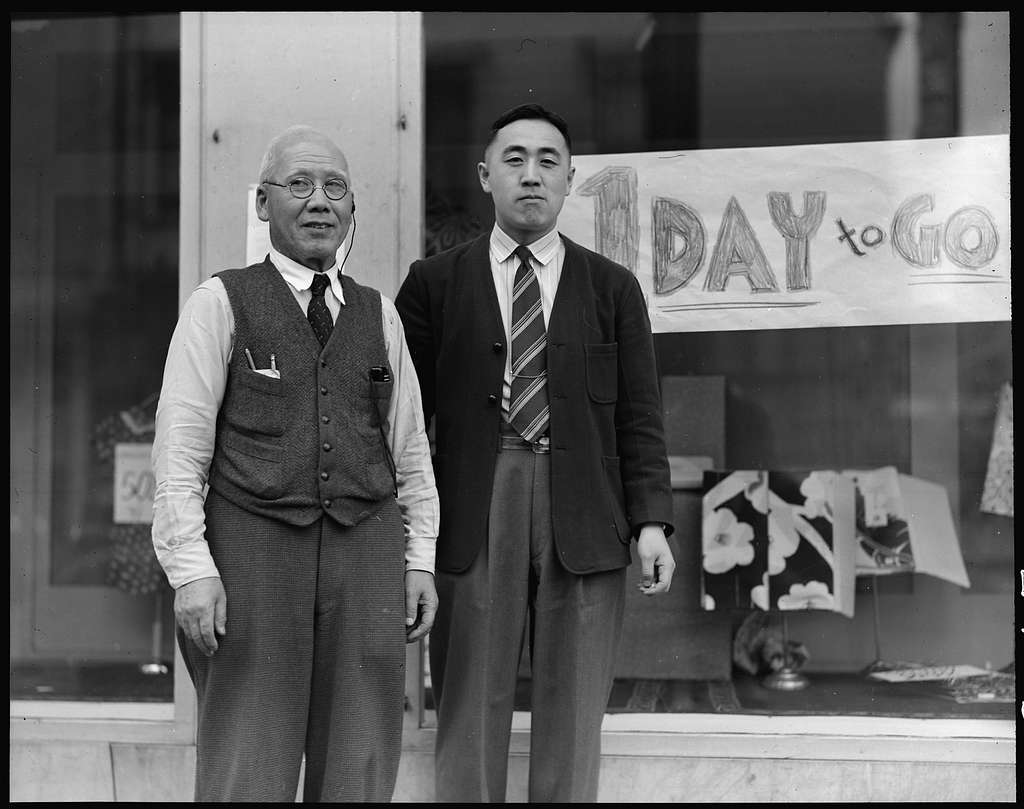
    <summary type="html"><![CDATA[<p><strong><em><span style="font-weight:400;">Dave Tatsuno was one of 11,000 Japanese and Japanese-Americans that were held in Topaz Internment Camp in Delta, Utah. His experience was unique in that he recorded some of his family’s experiences through a motion picture camera that he smuggled into camp. While never intended to be a documentary, his compiled film has since been added to the Library of Congress and further brings to light the conditions experienced by the Japanese in Topaz. </span></em></strong></p><img src="https://www.intermountainhistories.org/files/fullsize/152ee8719f930d9151064c1c1657e3d6.jpg" alt="Dave Tatsuno and his father, merchants of Japanese ancestry in San Francisco prior to evacuation " /><br/><p><span style="font-weight:400;">Born Masaharu Tatsuno in Japan in 1913, Tatsuno immigrated to the United States with his parents when he was only a few months old. Upon arrival in the Bay Area, and due to a clerical error that not even his family understands, he was given a U.S. birth certificate. At a young age, his mother abandoned his family and returned to Japan, leading him to become heavily involved in the YMCA. He decided to adopt the name “Dave” while in junior high. He married Alice Okada in 1938, and their first son, Sheldon, was born in 1940. Amateur filmmaking became a passionate hobby of his after the death of a close friend, when he realized that film had the potential to metaphorically “bring someone back to life.” </span>
<span style="font-weight:400;">Due to the Japanese attack on Pearl Harbor in 1941 (in addition to other Japanese imperialist activities) and racist attitudes towards the Japanese, President Franklin D. Roosevelt issued Executive Order 9066 in February 1942. This order divided the West Coast into military zones and gave the army authority to relocate civilians further inland. The Japanese were the main group affected by the order. Prior to evacuation and internment, Tatsuno helped his father, Shojiro, operate a dry goods store in the Bay area called “Nichi Bei Bussan.” In order to prepare to move, “Nichi Bei Bussan” had an evacuation day sale, where they were forced to sell their goods at incredibly low prices in order to get rid of inventory quickly. </span>
<span style="font-weight:400;">Tatsuno and his family were first held at Tanforan Racetrack and later relocated to Topaz in 1942. Tatsuno, who was familiar with running a business, became one of the managers of the co-op store in camp. While working, he met Walter Honderick, a War Relocation Authority official who owned a camera himself. Honderick encouraged Tatsuno to send for his camera under Honderick’s name. Tatsuno, while on a trip for supplies for the co-op, purchased film for the camera in Chicago. With camera and film, Tatsuno was able to participate in his old hobby again.</span>
<span style="font-weight:400;">In interviews, Tatsuno was adamant that his film in Topaz was never meant to be a documentary. Its focus was specifically on his family and friends. Despite that, the film does contain significant and telling scenes. One scene depicts several Japanese men digging a trench outside one of the barracks. Tatsuno’s narration (which was added to the film much later) relates that the men were repairing a broken pipe. This scene depicts the labor that the Japanese were expected to contribute in order to keep the camp running. Another scene, perhaps one of the most significant, shows Tatsuno’s brother, Masateru (or “Tut”) visiting the camp as an American soldier on his way to Germany. In later interviews, Tatsuno described that he found great irony and injustice in the fact that his brother, especially with his position as a U.S. soldier, had to visit his family behind barbed wire. </span>
<span style="font-weight:400;">Tatsuno and his family returned to the Bay Area in 1945, where they reopened “Nichi Bei Bussan” and sought to help other Japanese returning from internment camps transition back to everyday life. Tatsuno continued to serve as part of the Japanese American Citizens League (JACL) and the YMCA throughout the rest of his life. His film </span><i><span style="font-weight:400;">Topaz</span></i><span style="font-weight:400;"> was added to the Library of Congress in 1996. Tatsuno passed away in 2006, but his legacy of recording his experience at Topaz remains. </span></p><p><em><strong><a href="https://www.intermountainhistories.org/items/show/775">For more (including 3 images) view the original article</a></strong></em></p>]]></summary>
    <published>2024-01-23T05:03:04+00:00</published>
    <updated>2026-04-17T19:32:17+00:00</updated>
    <link rel="alternate" type="text/html" href="https://www.intermountainhistories.org/items/show/775"/>
    <id>https://www.intermountainhistories.org/items/show/775</id>
    <author>
      <name>Sara Davis, Brigham Young University</name>
    </author>
  </entry>
  <entry>
    <title type="html"><![CDATA[Jewish Contribution to the Manhattan Project ]]></title>
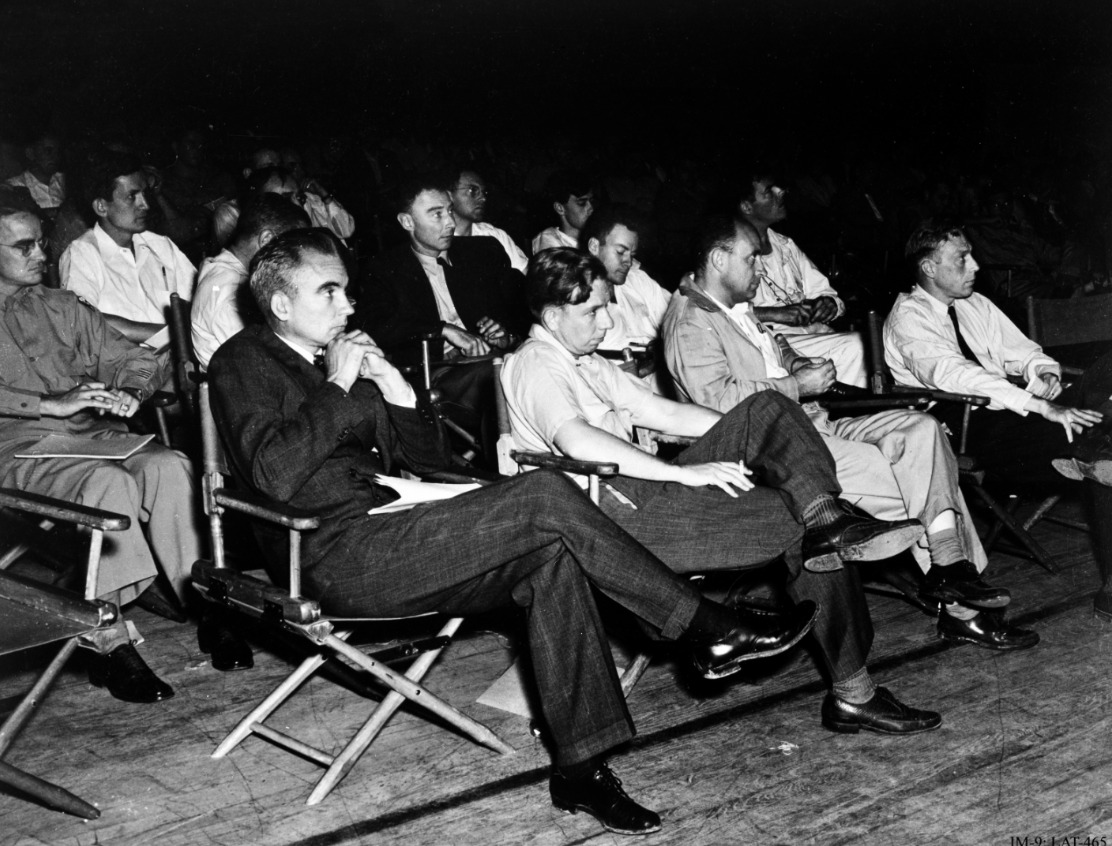
    <summary type="html"><![CDATA[<p><strong><em>Jewish participation in the Manhattan Project, particularly in Los Alamos, was an essential part of the operation's success. They continued to support their country despite local discrimination and the tragedy of World War II occurring abroad. </em></strong></p><img src="https://www.intermountainhistories.org/files/fullsize/89d79d7a997cf1681e9e7681568b097e.jpg" alt="Manhattan Project Scientists" /><br/><p>The United States’ development of the first atomic bomb would not have been possible without the contribution of Jewish Americans and Jewish refugees who fled Nazi Germany and war-torn Europe throughout the Manhattan Project. In August of 1939, Albert Einstein, Leo Szilard, and Enrico Fermi drafted and sent a letter to President Roosevelt via Alexander Sachs, warning the President of the potential use of atomic power in weaponry. This, in addition to another letter sent by British-Jewish scientists, led Roosevelt to form an advisory committee on uranium and, eventually, create the Manhattan Project.</p><p>Significantly, every person involved in the drafting and deliverance of this letter were Jewish or had close Jewish family members. Of the four involved, three were European refugees. Einstein was from a family of German Ashkenazi Jews and fled to the United States in 1933. Szilard was from a Hungarian Jewish family and fled to England in 1933 and then the United States in 1938. Fermi, while himself not Jewish nor German, was married to a Jewish woman which required him and his family to flee his home of Italy in 1938. Sachs was American-Jewish and an important advisor to President Roosevelt. All were impacted by the anti-Semitism of Germany and were respected and prominent enough to sway the President of the United States into forming a committee. Subsequent letters and information, much of which was provided by Jewish scientists, followed and increased the breadth of the project. </p><p>Jewish involvement in the Manhattan Project burgeoned as the war continued. J. Robert Oppenheimer, a young American Jew, was placed as the head of the Los Alamos branch of the Manhattan Project. He created four divisions in the Los Alamos lab, with the T-division, the theoretical division, being the most important. Of the 86 members in this division, 18 were Jewish—almost 21%. Even more impressive, of the eight groups in 1945, five were led by Jewish scientists such as Richard Feynman, Hans Bethe, and John von Neumann. Although Jews only constituted around .05% of the US population at the time, they made up a significant portion of the scientists at Los Alamos National Laboratory. </p><p>Jewish involvement in the Manhattan Project, as well as the project itself, were not known by the American public, and antisemitic prejudice was commonplace. In the 1920s, before J. Robert Oppenheimer attended, the president of Harvard, A. Lawrence Lowell, called for a quota of Jews to keep their presence sparse in the university. Even in Los Alamos, where Jewish scientists were important pioneers of the Manhattan Project, General Leslie Groves, the project’s military leader, stated, “I don’t like certain Jews, and I don’t like certain well-known characteristics of theirs.” Some Jewish scientists, such as Leo Szilard, were tailed by the FBI and noted for their “Jewish extraction” and “foreign tongue.”</p><p>At the same time, Los Alamos was a relative haven for these Jews. They were allowed in the upper echelons of decision-making and they were not stripped of titles or rewards because of their background. Ellen Bradbury Reid, an Anglo child in Los Alamos recalled, “I would not say [it was] a utopian situation, but. . . now I realize there were a lot of Jewish people, the European Jewish community who were there. I had no idea. . . [we] were all sort of in the same soup.” Despite prejudice, Jewish scientists were largely able to find footing in Los Alamos and thrive in the project. Jewish scientists in the Manhattan Project made a substantial and powerful impact in crafting the bombs which would end the war that, in total, killed over six million Jews. </p><p><em><strong><a href="https://www.intermountainhistories.org/items/show/753">For more (including 7 images) view the original article</a></strong></em></p>]]></summary>
    <published>2023-09-13T00:46:14+00:00</published>
    <updated>2026-04-17T19:32:16+00:00</updated>
    <link rel="alternate" type="text/html" href="https://www.intermountainhistories.org/items/show/753"/>
    <id>https://www.intermountainhistories.org/items/show/753</id>
    <author>
      <name>Abigail Beus, Brigham Young University</name>
    </author>
  </entry>
  <entry>
    <title type="html"><![CDATA[Spanish Speaking Saints and La Rama Mexicana]]></title>
    <summary type="html"><![CDATA[<p><strong><em>When immigrants from Mexico and other Latin American countries began settling in Utah in the early 20th century, many of them converted to the Church of Jesus Christ of Latter-Day Saints. Eventually, La Rama Mexicana—The Mexican Branch—was formed in the early 1920’s.</em></strong></p><img src="https://www.intermountainhistories.org/files/fullsize/931d18be56d3a7b42375f62d3021becb.jpg" alt="&quot;Mexicans Await New Church&quot;" /><br/><p><span style="font-weight:400;">At the end of the 19</span><span style="font-weight:400;">th</span><span style="font-weight:400;"> century, Utah was in an economic boom that would change the course of its history. With the completion of the transcontinental railroad in 1869, thousands of immigrants flooded the state to work in mines that sprung up across Utah. Although initially very few of these immigrants were from Mexico, the start of the Mexican Revolution in 1910 resulted in Mexicans fleeing north to escape conflict. Although the Immigration Acts of 1917 and 1924 had placed quotas on the number of people that could immigrate from each country, the need for laborers allowed a large number of Mexicans to obtain a permit to temporarily enter the country. The number of Spanish-speaking immigrants in Utah continued to grow throughout the following decades as they sought work on railroads, on farms, and in mines. While the 1890 census only recorded 19</span> <span style="font-weight:400;">Mexican people living in Utah, by 1920 there were 1,083. These immigrants created a thriving hub of Hispanic culture in Salt Lake City’s west side. </span>
<span style="font-weight:400;">After their arrival in Salt Lake City, many of these immigrants were converted and baptized as members of The Church of Jesus Christ of Latter-Day Saints. However, very few of them spoke English, the predominant language of the Church in Utah. Noticing a problem, Juan Ramon Martinez, Margarito Buatista, and Francisco Solano sought permission from church leadership to hold meetings in Spanish. In April of 1921, the first Spanish meeting was held in a rented restaurant. The meeting was attended by 19 Latter-Day Saints and 33 non-members being taught by missionaries. On May 15, 1923, the members of this congregation were made into an official branch called La Rama Mexicana. </span>
<span style="font-weight:400;">Two years later the branch began meeting in available rooms in the 6th Stake meetinghouse. In 1950, La Rama Mexicana received their own meetinghouse after three years of construction. Just a decade later, the brach became the Lucero Ward. The population of Spanish-speakers continued to grow and, as of 2019, there were 58 Spanish-speaking wards and branches in Utah.</span></p><p><em><strong><a href="https://www.intermountainhistories.org/items/show/643">For more (including 3 images) view the original article</a></strong></em></p>]]></summary>
    <published>2022-09-09T18:27:12+00:00</published>
    <updated>2026-04-17T19:32:14+00:00</updated>
    <link rel="alternate" type="text/html" href="https://www.intermountainhistories.org/items/show/643"/>
    <id>https://www.intermountainhistories.org/items/show/643</id>
    <author>
      <name>Maggie Allen, Brigham Young University</name>
    </author>
  </entry>
  <entry>
    <title type="html"><![CDATA[The Guadalupe Center: A Haven for Hispanics]]></title>
    <summary type="html"><![CDATA[<p><strong><em>In 1966, on 346 West 100 South in Salt Lake City, UT, the Guadalupe Center opened its doors to the public. Started by Father Jerald H. Merrill, this center was a haven for the Hispanic population of Salt Lake.</em></strong></p><img src="https://www.intermountainhistories.org/files/fullsize/2c2175e6d7758e3defd53960ca070a96.jpg" alt="The Guadalupe Center" /><br/><p><span style="font-weight:400;">In 1961, Father Jerald Merrill, a Catholic priest, was assigned to the “Our Lady of Guadalupe” Mission on the West side of Salt Lake City, Utah. With the mission having recently received a new building, all adults of the parish were invited to monthly meetings of the Guadalupana Society—a group which met to discuss problems pertaining to their mission. A few months after his arrival, Father Merrill created a branch of the Guadalupana Society that focused on social programs meant to solve the Hispanic community’s problems. In a rented room underneath the Rio Grande Hotel, Merrill and other members founded the precursor to the Guadalupe Center. Later, in 1966 and under the direction of Manuel G. Martinez and Oliver Ulibarri, volunteers helped to open a larger version of the center on 346 West 100 South with faith that the center would become a focal point for local Hispanics. </span>
<span style="font-weight:400;">After its opening, the center focused on projects for the economic and professional development and well-being of the Hispanic community. The Westside Catholic Credit Union focused on helping local members of the community to build capital. The Voluntary Improvement Program taught English and other valuable skills. A cooperative store was opened to serve poorer families in the area. Additionally, the Utah Nonprofit Housing Corporation collaborated with multiple churches and cooperative associations in the area to rehabilitate houses in the inner city region. The Guadalupe Center served as a clearinghouse for information on these and other services and coordinated support for the city’s Hispanic population. The center was also the birthplace for Hispanic activist group SOCIO, which helped pave the way for Latino civil rights throughout Utah. </span>
<span style="font-weight:400;">To create capital that could be reinvested into these programs, leaders decided to open La Morena Café as part of the center. Started just six months after the opening of the Guadalupe Center, La Morena proved immensely valuable. In addition to the profit it eventually generated, enough to support many of the Center’s programs, it also unified a diverse set of people—both hispanic and non-hispanic—in the community through its warm atmosphere and authentic Mexican cuisine. La Morena became a welcoming place for all and encapsulated the vision of  Father Merrill through its ability to unify the community. </span>
<span style="font-weight:400;">In 1986, after their rented lot was bought to build the Triad center, the original Guadalupe Center closed its doors. However, the center’s aims extended into the Guadalupe School which continues to operate today. The school provides personalized education for children with a focus on those in the Latinx community. For Latinx adults the center provides English classes, citizenship classes, and career planning. Since its inception, the spirit of the Guadalupe Center and those who founded it continue to better the lives and welfare of members of the Utah Latinx community. </span></p><p><em><strong><a href="https://www.intermountainhistories.org/items/show/642">For more (including 2 images) view the original article</a></strong></em></p>]]></summary>
    <published>2022-09-09T16:01:16+00:00</published>
    <updated>2026-04-17T19:32:14+00:00</updated>
    <link rel="alternate" type="text/html" href="https://www.intermountainhistories.org/items/show/642"/>
    <id>https://www.intermountainhistories.org/items/show/642</id>
    <author>
      <name>Lindsey Meza, Brigham Young University </name>
    </author>
  </entry>
  <entry>
    <title type="html"><![CDATA[Railroads and Miners: Hispanic Migrant Labor in Utah]]></title>
    <summary type="html"><![CDATA[<p><strong><em>As both the mining and railroad industries began to develop in Utah, they depended upon the migrant labor of Hispanics. Despite this dependence, Hispanic migrant workers were often underpaid and living in conditions with no running water and little opportunity for education.</em></strong></p><img src="https://www.intermountainhistories.org/files/fullsize/08f4eeb0a222f4e2f824f1f0e6e898f8.jpg" alt="Jesus Arinaz: A Utah Copper Co. miner, Jesus Arinaz. " /><br/><p>Mining, railroads, and agriculture were the primary industries which attracted migrant Hispanic laborers (mostly Mexicans and Mexican-Americans) to Utah during the early-twentieth century to Utah. Beginning in 1910, the Mexican Revolution caused a large influx of Mexicans to flee to Utah to avoid violence and economic strain. In the ten years between the 1910 census to the 1920 census, the population of Hispanics in Utah grew from 166 to 1,666. This developing sector of the population was integral to the development of Utah as a whole by mining the state’s resources and building its railways. </p><p>Despite how much employers relied on their labor, Mexicans faced serious dicrimination. Often mining labor leaders held deep prejudices against Spanish-speakers, despite being fellow laborers. Anglos considered migrant miners a threat to labor strikes, and when Mexicans were hired to break a massive strike in Bingham Canyon, mining leaders blamed the migrant workers instead of the employers who underpaid them both. This prejudice, along with dismal living conditions, led many Hispanic workers to leave the state or work at the railroad during the Great Depression. However, after World War II some previous workers returned to the mines with their families and a desire to stay in Utah. The majority of Hispanic miners who worked in Bingham Canyon lived in Dinkeyville, a subsection of nearby Copperton. Mexican miners and their families were barred from living in the main city of Copperton and instead had to deal with the scarcity of water in Dinkeyville. However, Hispanic miners who had accumulated more experience in Bingham Canyon were eventually able to buy real estate in Copperton, which they often rented out to other Hispanic workers. </p><p>The railroad industry also relied on the labor of Mexican workers, in addition to other migrant workers. Mexicans were among the many immigrant laborers of various ethnicities who built the first transcontinental railroad in 1869. For most of the first half of the twentieth century, railroad workers consisted mainly of young, single men. While Bingham Canyon's Anglo American miners had been hostile to Mexicans, Vincent Mayer Sr., a migrant from Mexico, recalled living alongside Greek immigrants simply as fellow railroad workers out a life amid their shared poverty. His Greek neighbors, he remembered even 45 years later, had figured out how to make even weeds taste good. In regards to living conditions for railroad workers, Mayer remembered always being seated in the back of the theater and not being able to eat in many of the nicer restaurants due to his race. As more railroad workers brought their families to live with them, some utilized discarded railroad cars as their homes. These railroad cars had no running water and were often covered in soot from the railroad. </p><p>As early as 1910, Hispanics created different organizations to alleviate some of the issues facing migrant Hispanic workers. The Mexican Cruz Azul (Mexican Blue Cross) in Bingham City provided monetary support to individuals and families. In addition, they sponsored cultural and social events for the Hispanic community. This led to a unification among Hispanics of different countries, although many migrant workers originated from Mexico. The Mexican Consulate, created in 1912 and centered in Salt Lake City, also worked to solve unfair treatment for Mexicans, and it often worked on behalf of all Hispanics.</p><p><em><strong><a href="https://www.intermountainhistories.org/items/show/635">For more (including 5 images) view the original article</a></strong></em></p>]]></summary>
    <published>2022-09-07T16:03:14+00:00</published>
    <updated>2026-04-17T19:32:14+00:00</updated>
    <link rel="alternate" type="text/html" href="https://www.intermountainhistories.org/items/show/635"/>
    <id>https://www.intermountainhistories.org/items/show/635</id>
    <author>
      <name>Lindsey Meza, Brigham Young University</name>
    </author>
  </entry>
  <entry>
    <title type="html"><![CDATA[Clarion’s Jewish Utopian Colony ]]></title>
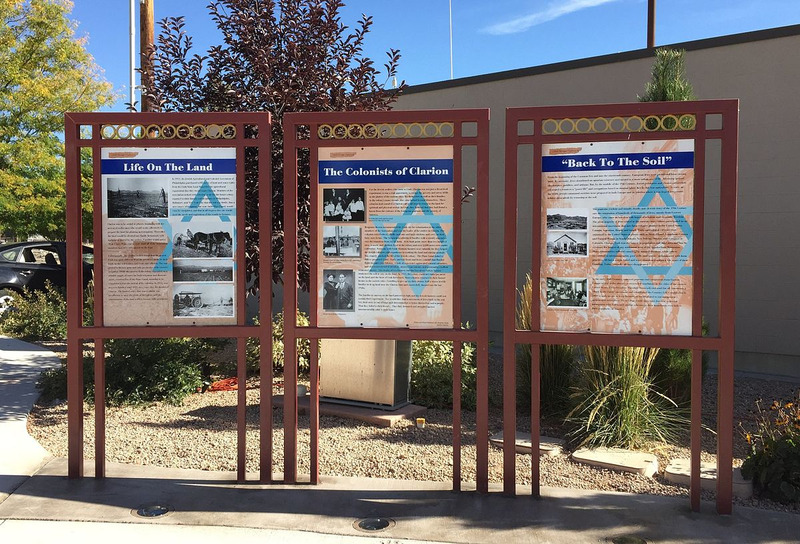
    <summary type="html"><![CDATA[<p><strong><em>In 1911, 12 Jewish immigrants all under the age of 30 started a colony in Utah. Three miles west of Centerfield and 135 miles south of Salt Lake City, the Clarion Jewish Colony was built on dreams and a lack of water. Although the colony lasted a meager 5 years, the ideas on which it was built still inspire many Jews today. </p></strong></p><img src="https://www.intermountainhistories.org/files/fullsize/40a37f08293220976a3f8bac306f5eab.jpg" alt="Kiosk in Gunnison, Utah describing the Clarion Colony." /><br/><p>The group moving west consisted of Russian Jews, all under 30, who had lived in the United States for less than five years. Poor, but not poor in spirit, these immigrants wanted to leave their economic situation behind and build a life that would bring them stability and also inspire other Jews. Led by Benjamin Brown, Clarion, Utah was part of the Jewish “Back to the Soil Movement” that founded over 40 agricultural settlements in America, Argentina, Canada, and Israel. </p><p>The “Back to the Soil Movement” was created in an effort to convince the world to move away from anti-Semitic views, build Jew’s confidence in themselves, and facilitate acceptance between Jews and Christians by establishing themselves as an agrarian society. Because of these visionary beliefs and the overt call to action for Jewish people, Utah’s settlement was named “Clarion.” </p><p>After 12 men went early to begin work on their 6,000 acre piece of land, the rest of the colony came over in waves of about fifty people. Peak population for Clarion reached about 155 residents within the first few years. But, despite the rising population, the colony faced years of continually failing crops.. Lack of water, bad weather, and no previous farming experience combined to create fruitless growing seasons and failed crops. Ultimately, only 1,500 of the 6,000 purchased acres were developed. Even today, much of the soil near Clarion is undependable and unused because of the lack of access to water. Despite these challenges, the Jewish colony’s vision pushed them on. It wasn’t until 1916 that the Clarion Colony finally fell apart. The Salt Lake City Jewish community helped stranded Jews from the colony by purchasing train tickets for those who wanted to return to the East Coast. </p><p>Clarion today is a ghost town. All that remains of Jewish utopia are some crumbling foundation stones and the headstone of Aaron Binder on whose tomb both Hebrew and English is inscribed. Benjamin Brown, the leader of the migrant party, was one of the few people that stayed in Clarion even after it’s collapse. He continued to farm and later organized the Utah Poultry Association. Although the colony failed, many of the descendants of colony members look back to those memories, journals, and stories with respect and reverence. The sacrifice of the Clarion colony members proved to many Jews that getting closer to soil helped them get closer to God. </p><p>The Clarion colony was just a small part of the Jewish history of Utah. Utah is now home to over 3,500 Jews. The Jewish legacy in Utah is over 200 years old and is widely varied. A Jewish daguerreotypist traveled with John C. Fremont in 1820 and was one of the first recorded explorers to enter Utah. Later, Simon Bamberger became the fourth governor of Utah in 1917. Clarion, despite its short life compared to the stable history of Jews in Utah, deserves to have it’s story told and it’s people celebrated for their sacrifice, faith, and vision. </p><p><em><strong><a href="https://www.intermountainhistories.org/items/show/449">For more (including 4 images) view the original article</a></strong></em></p>]]></summary>
    <published>2020-10-31T09:14:25+00:00</published>
    <updated>2026-04-17T19:32:09+00:00</updated>
    <link rel="alternate" type="text/html" href="https://www.intermountainhistories.org/items/show/449"/>
    <id>https://www.intermountainhistories.org/items/show/449</id>
    <author>
      <name>Josie Manwill, Brigham Young University</name>
    </author>
  </entry>
  <entry>
    <title type="html"><![CDATA[Finnish Headstones and Saunas in Scofield<br />
]]></title>
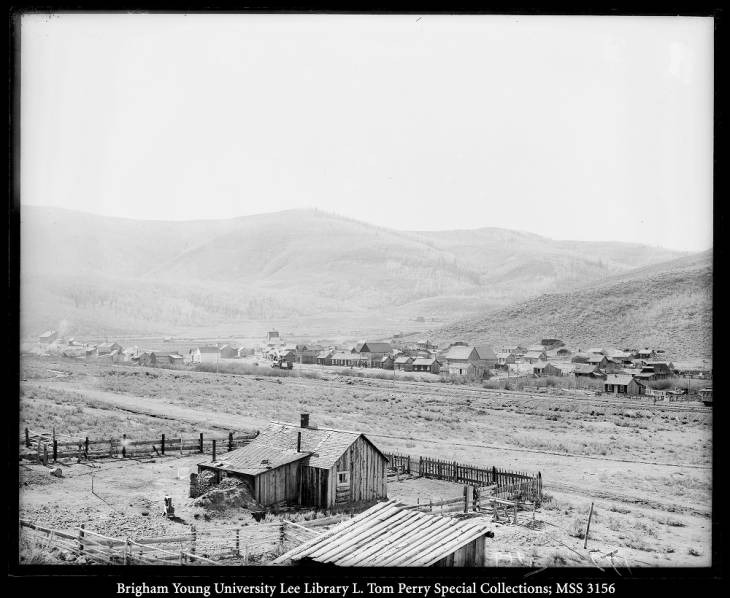
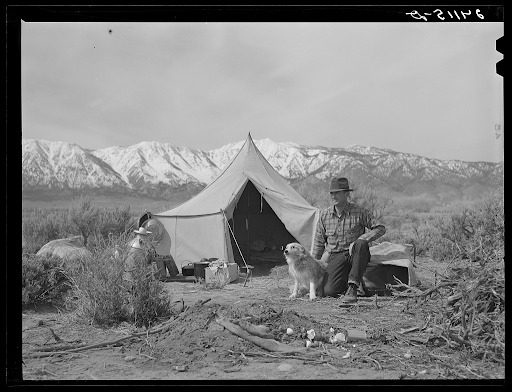
    <summary type="html"><![CDATA[<p><strong><em>Like many other mining districts, the town of Scofield went through a boom and bust cycle that effectively created a living ghost town. Despite the town’s current state, the Finnish immigrant community in Scofield left a lasting impact. Headstones and saunas are Scofield’s two most prominent visual features that tell the story of Utah’s immigrants from Finland. </p></strong></p><img src="https://www.intermountainhistories.org/files/fullsize/db01e37dc27f40411c5412b29a62a9f4.jpg" alt="The Town of Scofield, Utah at a South West Angle." /><br/><p>Although Scofield, Utah is not a booming community anymore, the town still retains remnants of immigrant life. According to the 2010 US Census, Scofield housed only 24 people. However, 120 years ago, Carbon County boasted a booming mining community. 	While most of Utah’s Scandinavian population came in the late nineteenth and early twentieth century as Mormon converts, Finland contributed only 14 people to those early groups of Mormon migrants. Instead, the year 1890 brought most of Utah’s Finnish immigrants to Utah as miners and railway workers. By the year 1900, there were over 200 Finns in Carbon County with most of them living in a small community in Winter Quarters, a suburb just outside Scofield.    </p><p>The Finns brought with them to America a desire to preserve their Finnish culture. This resulted in the building of many public and private saunas throughout Scofield. Saunas work by running water over hot stones to create steam. The saunas helped the Finns to teach their culture to the young in their company. The principle of “sisu” or internal fortitude was taught through the sauna as the Finns used the steam baths to provide both physical and spiritual cleansing. </p><p>Disaster struck Scofield’s Finnish community on May 1, 1900. An explosion in the WInter Quarters Number Four mine marked the largest mine explosion in the United States up to that point. Over 200 were numbered among the dead and many others lost that remained unaccounted for. The Finnish lost 62 of their fathers, sons, and brothers. Hit specifically hard was the Luoma family. Abe Luoma lost six sons and three grandsons in the destruction of the mine. Most of the Finns who died in the explosion were buried in the Scofield cemetery and Reverend A. Granholm, a Finnish Lutheran minister from Wyoming, came down to Scofield to dedicate the graves of the fallen Finns. </p><p>After the explosion, a majority of the Finns stayed in Scofield until the area’s mines began to cease operation in the 1920s. Even after the decline of the Scofield Finnish community, the Finns in Utah were some of the frontline advocates for greater safety for mine workers. The strikes of 1903, 1922, and 1933 featured Finns who desired to keep the period of unions alive. Despite the hardship that Finnish immigrants faced, their hearty spirit left a legacy of preserved culture and a new culture of defending and protecting their families and other immigrant workers. </p><p><em><strong><a href="https://www.intermountainhistories.org/items/show/448">For more (including 3 images) view the original article</a></strong></em></p>]]></summary>
    <published>2020-10-31T08:56:17+00:00</published>
    <updated>2026-04-17T19:32:09+00:00</updated>
    <link rel="alternate" type="text/html" href="https://www.intermountainhistories.org/items/show/448"/>
    <id>https://www.intermountainhistories.org/items/show/448</id>
    <author>
      <name>Josie Manwill, Brigham Young University </name>
    </author>
  </entry>
  <entry>
    <title type="html"><![CDATA[Isolation Led to Basque Hotels in Ogden <br />
]]></title>
    <summary type="html"><![CDATA[<p><strong><em>Many Basques roamed the American West on their own. Basque hotels were built to house wintering sheep herders, Basque students, and retired herders as well as preserve Basque culture. Ogden, Utah became a hub for hotels that created a Basque community that ebbed and flowed according to each day’s tenants. </p></strong></p><img src="https://www.intermountainhistories.org/files/fullsize/b30f43129e3b78800160f2c44e71c8fc.jpg" alt="Basque sheepherder." /><br/><p>Ogden, Utah was a crossroads community for Basques that brought tradition and social activities to otherwise lonely Basques in Utah and throughout the Intermountain West. Proud of their heritage and slow to assimilate, Basque peoples thrived at hotels and boarding houses built in Ogden that gave sheepherders and Basque students a place to live. Basque immigrants come from the Pyrenees Mountains on the southern border of France and the north west border of Spain. The Basque people are fiercely patriotic to their country, the Republic of Euskadi, that remained a separate entity until 1839. A hard-working group, the Basques roamed the French and Spanish coast and countryside while fishing or herding sheep. They brought their talents to America and quickly became known as the best ranch hands around.</p><p>Although Basque history in America goes back to Christopher Columbus and his crew, it was the nineteenth that originally brought a significant number Basque immigrants to the Americas. The settlement of Basque peoples in the Intermountain West was a wave of secondary migration from Basques who lived in Argentina and California mixed with a few immigrants directly from Europe. Basque peoples in Utah first began settling in the state around 1870. Because census records showed Basque individuals as either Latino, Spanish, or French, it is difficult to put a number on Utah’s Basque community. Today, however, the Basque Club of Utah claims over 50 families of Basque descent.</p><p>To be a Basque immigrant living in the Intermountain West meant isolation. Sheep herding jobs kept Basque men in the wilderness with no one but their dog to talk to. This isolation prevented the creation of many large ethnic enclaves, although a few were formed in Idaho, California, and Arizona. Instead of a major community, a tree carving phenomenon left the Basque’s mark on the west. Over 27,000 documented tree carvings are attributed to bored and lonely Basque herders. These arborglyphs were scratched into aspens and were often mini autobiographies by Basques who felt alone and unheard. </p><p>It wasn’t until the 1960s and 70s, about the time when Basque immigration slowed, that the Basque community became more visible in America. Through clubs and hotels Basque tradition was preserved and taught to others. Although sheep herding is still a trade practiced by some Basques, many Basques in Utah work various trades and gather a few times a year to dance, play traditional games, and eat traditional foods such as blood sausages or sheep milk cheese. </p><p>Despite the isolation that defined early Basque immigrant life, Basque community was created wherever there was a crossroad of travel. Ogden’s railroads presented just such an opportunity. Thousands of Basques found themselves gathering in hotels such as the Pyrenees French Basque Hotel built in 1910 or the Allies Hotel run by a Basque family for generations. So, despite the lack of a community more permanent than a few hotels, Ogden became a sustained hub that bridged the worlds of newly come immigrants, elderly sheepherders, Basque students, and isolated herders who needed winter boarding.</p><p><em><strong><a href="https://www.intermountainhistories.org/items/show/447">For more (including 3 images) view the original article</a></strong></em></p>]]></summary>
    <published>2020-10-31T08:22:30+00:00</published>
    <updated>2026-04-17T19:32:09+00:00</updated>
    <link rel="alternate" type="text/html" href="https://www.intermountainhistories.org/items/show/447"/>
    <id>https://www.intermountainhistories.org/items/show/447</id>
    <author>
      <name>Josie Manwill, Brigham Young University </name>
    </author>
  </entry>
  <entry>
    <title type="html"><![CDATA[Japantown, Salt Lake City  <br />
]]></title>
    <summary type="html"><![CDATA[<p><strong><em>  	Over 2,000 Japanese people lived in the heart of Salt Lake for almost a century. From the community’s beginning in the late 1800s to Japanese assimilation in the late 1900s, Japanese people created a space where they could thrive despite living in a foreign land. Only a few landmarks provide visual confirmation of the Japanese community’s existence. </em></strong></p><img src="https://www.intermountainhistories.org/files/fullsize/bc049a70531fb2214da045f73a7e488b.jpg" alt="Japanese Businessmen in front of a Japantown Business." /><br/><p>In 1969, the Salt Palace Convention Center was built. While the Salt Palace is now a historic building in Salt Lake, its creation destroyed the Japanese community that once stretched across 100 South in Salt Lake City. Now, only  a small section of 100 South, west of the Salt Palace, claims the honorary title “Japantown Street.” Annexed and quiet, the Salt Lake Buddhist Temple and the Japanese Church of Christ are the last remaining landmarks to survive the community that lasted for a century. </p><p>Japanese immigrants came to Utah in the late-19th Century. First as Mormon converts, and later, as railroad, agricultural, and mine workers, the immigrants settled in Salt Lake City. In response to the growing Japanese community, Edward Daigoro established the E.D. Hashimoto Company near 100 South and supplied Japanese immigrants with imported food items and clothing. Additionally, the E.D. Hashimoto Company connected workers with new job opportunities as gang workers to the Denver, Rio Grande, and Western Pacific Railroads.</p><p>For easier access to Daigoro’s company, many Japanese immigrants moved and settled near or on 100 South in Salt Lake. The community’s popularity grew and by 1910 there were over 2,000 Japanese people in the area. Like many immigrant-labor populations, the community’s gender balance initially skewed heavily male. Slowly, Japanese men brought their wives to Salt Lake from Japan as they decided to make Salt Lake their permanent home. As more Japanese settled in the area, more community buildings began to be built. By 1918 both the Japanese Church of Christ and the Salt Lake City Buddhist Temple had been established. In addition to those still-standing remnants of the community, a Japanese school, a marketplace, a studio for Obon dance and kendo lessons, and two successful newspapers helped ground the growing Japanese community and give them a place they could call home. </p><p>As early as September 1942 after the attack on Pearl Harbor in December 1941, over  11,000 Japanese-Americans were relocated from San Francisco and other places in the Western United States to the Topaz Internment Camp near Delta Utah. Although the relocation camp in Topaz wasn’t officially closed until late 1945, Japanese residents were encouraged to leave Topaz and move farther inland. Many of these Japanese-Americans followed that direction and moved to Salt Lake City. Despite the displacement of Japanese-Americans from the West Coast during World War II, the Japanese in Salt Lake were not relocated, though most lost their jobs. Thus, the movement from Japanese in Topaz to Salt Lake ultimately tripled the population in Salt Lake City’s Japantown. </p><p>The Japantown Street community not only survived, but grew during World War II. So, how did a community of thousands of people become lost to Utah’s history? It wasn’t until two decades later. When plans were made to construct the Salt Palace in 1969, several members of the Japanese community assimilated into the wider Utah population with most of them choosing to stay in Salt Lake. The beginning of the Salt Palace’s construction forced the final members of Japantown out, leaving the street and the two religious buildings to tell the story of a once vibrant community.  </p><p><em><strong><a href="https://www.intermountainhistories.org/items/show/446">For more (including 4 images) view the original article</a></strong></em></p>]]></summary>
    <published>2020-10-31T07:59:47+00:00</published>
    <updated>2026-04-17T19:32:09+00:00</updated>
    <link rel="alternate" type="text/html" href="https://www.intermountainhistories.org/items/show/446"/>
    <id>https://www.intermountainhistories.org/items/show/446</id>
    <author>
      <name>Josie Manwill, Brigham Young University. </name>
    </author>
  </entry>
  <entry>
    <title type="html"><![CDATA[Layton&#039;s Thai Community<br />
]]></title>
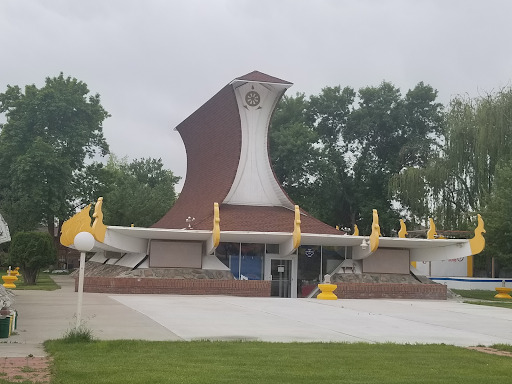
    <summary type="html"><![CDATA[<p><strong><em>The Thai community in Layton, Utah was started in the 1960s and 70s. The Thai community has been able to retain their cultural identity while simultaneously integrating into the community. Through this process, Layton’s Thai community is leaving a legacy that will not be forgotten.  </em></strong></p><img src="https://www.intermountainhistories.org/files/fullsize/08f71a09f41a574ccdd352812c7e09fc.jpg" alt="The Wat Temple in Layton, Utah
" /><br/><p>Thais in America are often mistaken as Chinese, Japanese, or as another Asian ethnicity. This often makes their presence less visible to American communities. Such is the case with the Thai community of Layton, Utah. Although many Utahns enjoy eating Thai food, they would not be able to tell you where Utah’s Thai population is most prevalent. Like many other Thai communities in the United States, Utah’s largest Thai community is found near a military base. Just south of Hill Air Force Base in Layton, Thais have been living and thriving for over fifty years.    </p><p>Between 1960 and 1970, a wave of Thai immigrants came to the United States and some settled in Utah. Most of the first immigrants were women and many were wives of American servicemen who had been stationed in Thailand during the Vietnam War. When their husbands returned to Hill Air Force Base in Northern Utah, Thai women followed. This small group of Thai women opened the path for growth in their community that caused many Thai immigrants to become aware of Utah as a potential relocation spot with a pre-established Thai community. According to the 2000 Census, the Thai population in Utah reached over 1,200 people with most of those immigrants living in Davis County (Perlich, 17).</p><p>The Thai community in Utah is different from other Asian enclaves. Unlike many other Southeast Asian immigrants at the time, most of the Thai did not come as refugees. Many groups like the Hmong, Loatians, Cambodians, and Vietnamese came to the United States in an effort to escape the atrocities of war. Thais, on the other hand, came of their own free will. Many came for the purpose of pursuing a higher education or to move closer to loved ones who were already here. Across the United States the story is similar as most members of Thai communities are teachers, doctors or other medical practitioners, or entrepreneurs that own private businesses. Thais and Thai-Americans pride themselves in being citizens who contribute to their local economies and help build their local communities. </p><p>Over ninety percent of all Thai immigrants are Buddhist. To serve the Buddhist members of the Thais in Layton, a Thai Buddhist Temple graces Gordon Avenue. The uniquely shaped building is home to several monks who came here from Thailand for the purpose of ministering to worshippers in Utah. The monks are supported solely by donations from the temple’s weekly attendees. The Wat Dhammagunaram Temple was first established in 1975 and moved to its current location in 1995. The temple follows the tradition of Theravada Buddhism with services offered in Thai and the traditional Pali language of Theravada Buddhism. In an effort to maintain their Thai culture and share it with the surrounding community, the Thai Temple also offers meditation classes and holds food festivals with traditional Thai recipes. While not many have known about Utah’s Thai community in Layton, it is still thriving and continues to share the highlights of their culture with anyone who is interested. </p><p><em><strong><a href="https://www.intermountainhistories.org/items/show/445">For more (including 3 images) view the original article</a></strong></em></p>]]></summary>
    <published>2020-10-31T07:39:48+00:00</published>
    <updated>2026-04-17T19:32:09+00:00</updated>
    <link rel="alternate" type="text/html" href="https://www.intermountainhistories.org/items/show/445"/>
    <id>https://www.intermountainhistories.org/items/show/445</id>
    <author>
      <name>Josie Manwill, Brigham Young University </name>
    </author>
  </entry>
  <entry>
    <title type="html"><![CDATA[Mantua’s Danish Heritage<br />
]]></title>
    <summary type="html"><![CDATA[<p><strong><em>In a valley with fresh water and mountains that reminded them of home, Danish immigrants in Utah moved forward in establishing a new life. Within their new life, they incorporated their old culture in a way that affected its surrounding communities and still affects the little town of Mantua today. </em></strong></p><img src="https://www.intermountainhistories.org/files/fullsize/087ec349386ade3a69a986b7e850494a.jpg" alt="Danish Architecture in an Old Mantua Church. " /><br/><p>In the spring of 1863, twelve Danish families were sent by Church Leader Lorenzo Snow to settle the little valley of Mantua. Although more than one “Little Denmark” dotted the state of Utah in the late 1800s and early 1900s, “Little Copenhagen” was the only enclave where almost the entirety of the population was born in Denmark. Now known as the City of Mantua, renamed after the Ohio city that was the birthplace of Lorenzo Snow, the small city still retains its rich Danish history. </p><p>Surrounded by mountains, Mantua is about 1 mile wide and 2.25 miles long. Its cool temperatures and access to fresh water springs created the ideal place to grow flax or hemp for cloth, rope, and thread. Spinning was a trade practiced by many Danes, as many of the immigrants came from agricultural or artisan backgrounds, they knew well how to farm flax and spin thread and weave fabric. For this purpose the Church of Jesus Christ of Latter-day Saints selected a group of Danes to settle the area. Some of the first Danish immigrants to Utah were sent to Mantua and helped settle Box Elder and Cache counties. </p><p>The Danes preserved their agricultural talents not just through the production of flax seed. A large fish hatchery, multiple dairies, and wheat fields covered the small valley of Mantua. Other Danish cultural aspects, such as their droll humor as well as news, stories, and fables from home, were preserved throughout the state through the publication of a Danish newspaper, “Bikuben” (or Beehive) from 1876 through 1935. Additionally, Mantua preserved Danish architectural aspects of their culture through their brightly colored doors and buildings and thatched roofed homes. In more than one way, Danish immigrants chose to transplant their culture in their new American home. </p><p>Utah today has the second largest population of people who come from a Danish background with numbers reaching over 145,000. Other than Great Britain, the Danes brought the most immigrants to Utah between the 1850 and 1950 with over 18,000 people. Many Danes were attracted to Mormon missionaries in Denmark during the social and religious upheavals in the mid to late 1800s. Emigration from Denmark peaked in 1900 with 9,132 people leaving their native land for Utah. From then on, more Danes died than immigrated to Utah, although the number of people with Danish ties continued to rise.</p><p>After the first couple of generations, Mantua’s Danish population assimilated with the rest of the state’s inhabitants. They quickly learned English and sent their children to English-speaking schools, moved away from agricultural jobs, and welcomed others into their community. Through this assimilation, Mantua’s nickname, “Little Copenhagen,” became a historic reference to the background of the city’s original settlers. </p><p><em><strong><a href="https://www.intermountainhistories.org/items/show/444">For more (including 3 images) view the original article</a></strong></em></p>]]></summary>
    <published>2020-10-31T07:00:58+00:00</published>
    <updated>2026-04-17T19:32:09+00:00</updated>
    <link rel="alternate" type="text/html" href="https://www.intermountainhistories.org/items/show/444"/>
    <id>https://www.intermountainhistories.org/items/show/444</id>
    <author>
      <name>Josie Manwill, Brigham Young University</name>
    </author>
  </entry>
  <entry>
    <title type="html"><![CDATA[Salt Lake’s Forgotten Chinatown<br />
]]></title>
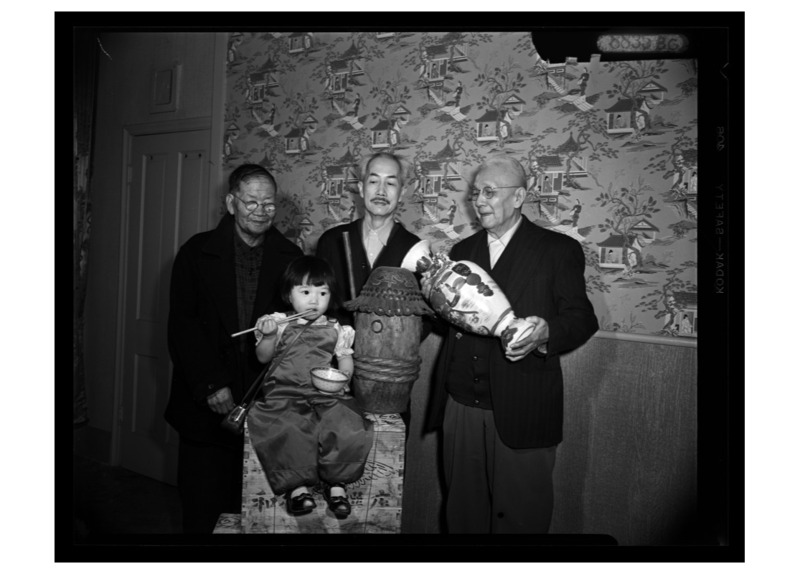
    <summary type="html"><![CDATA[<p><strong><em>In the 1860s, Plum Alley, Utah’s original Chinatown, was founded in the heart of downtown Salt Lake City. It was built near today’s Regent Street in between First and Second South. Due to anti-Chinese sentiment in America and the Chinese immigrant mentality of coming to work in America to gain a fortune then to return to China, most Chinese communities in Utah rose and fell in a single generation. </em></strong></p><img src="https://www.intermountainhistories.org/files/fullsize/a2cbd6f9bd8c2d68992bba10644486f3.jpg" alt="A Chinese family gathers for a picture in a Plum Alley Building.
" /><br/><p>As the transcontinental railroad was being finished in 1869, some Chinese laborers moved south. These railroad workers helped establish the Plum Alley community. Originally just a dirt track, Plum Alley grew to be a narrow road surrounded by a few buildings, mostly tenements. A heavy majority of the Chinese who made up Plum Alley were male. These bachelors came from China to earn money in America through physical labor jobs unwanted by most Americans. Railroad worker, miner, launderer, and household servant were the most commonly held jobs. Rather than start a new life in America, most Chinese immigrants planned on earning money, then taking their fortunes back to China to start a family. Despite the noticeable lack of women, Plum Alley was a tight-knit community that grew and diversified. </p><p>Laundries, Asian grocery stores, Chinese restaurants, and tenements popped up along Plum Alley. The two most frequented buildings were the Joss House and the Bing Kong Tong. The Joss House opened in 1895 as a religious hub where a statue of Quon Kong, a god of war, was worshiped. The most prominent celebration took place on New Years, when food offerings were offered to Quon Kong. The Bing Kong Tong was a social institution that offered physical and psychological security, and helped individuals find jobs and access legal services. It also provided social activities for lonely Chinese immigrants. </p><p>The Plum Alley Chinese enclave survived mostly on its own without social contact with other ethnic groups. Many Utahns viewed Plum Alley and other “Chinatowns” suspiciously as centers for vice and illegal activity. Gambling, opium dens, and occasional brothels caused Utahns to oppose the growth of Chinese communities in Utah even though the Chinese were known to be reliable workers that did the jobs that nobody else wanted to do. Regular anti-Chinese sentiments resulted in restricting Chinese mobility and opportunity, concentrating their lives in the small community. The 1890 Census enumerated only 269 people of Chinese descent in Salt Lake City with most of them living in Plum Alley. After 1890, the Chinese population waned. Only 194 Chinese were in Salt Lake according to the 1930 Census. After the decline of Plum Alley, the Chinese population in Utah drastically jumped about 50 years later. Because of the repealment of federal Chinese exclusion laws in the 1940s, the number of Chinese immigrants in Utah reached over 1,700 in Salt Lake by 1970.</p><p>Despite racial persecution and the Chinese exclusion laws of 1882, Plum Alley’s collapse was caused by the Great Depression. The economic crisis forced Chinese businessmen to close stores and operations and many returned to China without their sought-after fortune. By 1940, many tenements in Plum Alley were vacated and demolished. Then, In 1952, Plum Alley was officially abandoned and razed so that a parking structure could be built in its place. In less than 100 years, Salt Lake City’s first Chinatown was built and destroyed, leaving only the stories of Chinese immigrants in its place. </p><p><em><strong><a href="https://www.intermountainhistories.org/items/show/443">For more (including 4 images) view the original article</a></strong></em></p>]]></summary>
    <published>2020-10-31T06:27:15+00:00</published>
    <updated>2026-04-17T19:32:09+00:00</updated>
    <link rel="alternate" type="text/html" href="https://www.intermountainhistories.org/items/show/443"/>
    <id>https://www.intermountainhistories.org/items/show/443</id>
    <author>
      <name>Josie Manwill, Brigham Young University</name>
    </author>
  </entry>
  <entry>
    <title type="html"><![CDATA[The Russians Who Left Northern Utah <br />
]]></title>
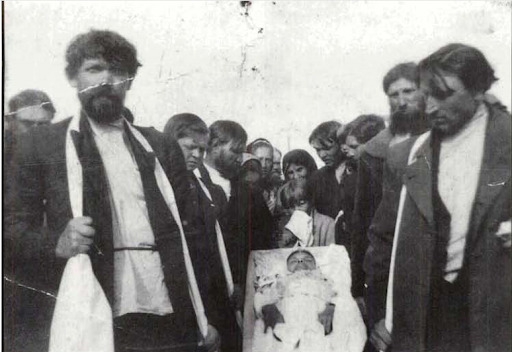
    <summary type="html"><![CDATA[<p><strong><em>In the arid northwest corner of Utah, there is a ghost town with not much left but the road that leads to it, a few decaying foundations, and a cemetery with two Russian gravestones.</em></strong></p><img src="https://www.intermountainhistories.org/files/fullsize/008a9c046a0751c6d2c3fd72ff951583.jpg" alt="Mary Kalpakoff’s family mourns her death. " /><br/><p>While there have been Russians from different religions who have settled in Utah over the years, a settlement of Molokan Russians in Park Valley is one of the only known Russian enclaves in Utah’s history. “Molokan” is a derivative from the Russian word for “milk drinker.” The Molokans inherited their name in the eighteenth century after breaking away from the Russian Orthodox Church over disagreements about the worship of icons, paying clergyman, and dietary distinctions. Specifically, they chose not to stop drinking milk during fasts such as Lent. Their additional aversion to warfare and military service forced the Molokans out of Russia and into California where the Molokans grouped together to establish themselves economically. Although they were able to provide for themselves, many Molokans felt unhappy in San Francisco--they could no longer pasture and farm and were losing vital pieces of their culture and religion. </p><p>Moving to Park Valley was a deliberate choice for this group of Russian migrants. It was their goal to protect their Molokan culture and prevent their children from adopting American habits. Thus, the Molokan Russians chose to migrate from Los Angeles to middle-of-nowhere Utah in 1914. While many stayed in California, a group of over 100 Russians, more than a dozen families, attempted to resume an agrarian way of life in Park Valley. They established a village laid out similarly to a Russian agrarian village and sought to practice their religion in peace. Sadly, after a year of joyful farming and welcoming over eight new babies to the settlement, the Molokan utopian settlement began to crumble.   </p><p>Lack of water access made living in Park Valley difficult. Their crops would not grow and their animals suffered. Then, before their first year in Utah was over, tragedy struck. In an accident during 1914, Andrew Kalpakov, the leader of the Molokan village, accidently shot his wife while cleaning his gun. A year later, the sister of Kalpakov’s wife died in childbirth. The difficult circumstances of drought and death quickly pushed the Molokans to abandon the settlement.	</p><p>Only four years later, tax documents note that there was only one Russian living in Box Elder County. While a few families chose to move east toward Logan in Cache Valley, most of the Molokans moved back to San Francisco. Even though Utah’s Russian settlement did not last very long, the Molokan people left an interesting story behind for Utahns to learn and discover.  </p><p><em><strong><a href="https://www.intermountainhistories.org/items/show/442">For more (including 3 images) view the original article</a></strong></em></p>]]></summary>
    <published>2020-10-31T04:11:17+00:00</published>
    <updated>2026-04-17T19:32:09+00:00</updated>
    <link rel="alternate" type="text/html" href="https://www.intermountainhistories.org/items/show/442"/>
    <id>https://www.intermountainhistories.org/items/show/442</id>
    <author>
      <name>Josie Manwill, Brigham Young University</name>
    </author>
  </entry>
  <entry>
    <title type="html"><![CDATA[The Icelander Lighthouse Monument of Spanish Fork: A Tribute to Icelandic Settlers]]></title>
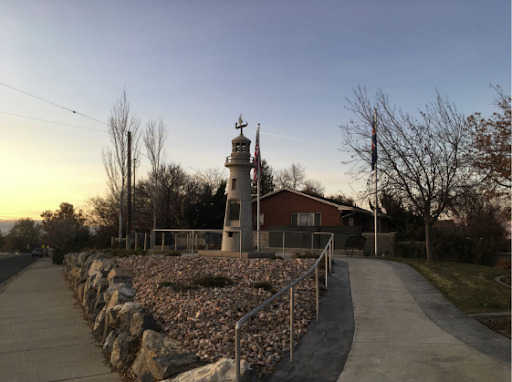
    <summary type="html"><![CDATA[<p><strong><em>A lighthouse monument was erected in Spanish Fork in 1938 to honor the first sixteen permanent Icelandic settlers in the United States. These immigrants came to Utah in 1855 after converting to the Church of Jesus Christ of Latter-day Saints.  </em></strong></p><img src="https://www.intermountainhistories.org/files/fullsize/20df20e0ba5f6d47d3afd8ebd282bad9.jpg" alt="Lighthouse Broad Perspective" /><br/><p>The lighthouse monument in Spanish Fork, Utah, was erected in 1938 to honor the original Icelandic pioneers, the first permanent settlers from that country, who immigrated into the United States in 1855. The monument is a celebration of Icelandic culture and customs. It also celebrates the bravery of those first Icelandic pioneers who crossed the Atlantic in 1854 after their conversion to the Church of Jesus Christ of Latter-day Saints. The structure was unveiled as part of the “Iceland Day” celebrations in 1938. The monument is a miniature lighthouse replica with a Viking ship on the top that references the seafaring for which the Vikings, the Icelanders’ ancestors, were best known. A plaque, which carries the names of the first sixteen Icelandic settlers, accompanies the monument. The first Iceland Day took place in Utah in 1897 to commemorate the settlement of Iceland in 870 CE. Every year from this point on, Iceland Day has been celebrated on the same day as the annual holiday in the Westmann Islands (Vestmannaeyjar), Iceland, from which the first Icelandic pioneers came. </p><p>This monument is a hallmark that has helped foster ever-improving relationships between the Church of Jesus Christ and the Icelandic government. The improving relations made it possible for the Church to renew their missionary efforts in Iceland after not having a permanent presence in the country for over 50 years. In 1975, Bryon T. Geslison and his family would be the first missionaries since 1914 called to serve in Iceland. Because of the missionary efforts initiated by Geslison and his family, the Icelandic government officially recognized the missionary work of the Church in 1983. Ever since then, the relations between the Icelandic government and the Church of Jesus Christ have been very positive and friendly. The importance of the monument has been recognized by local representatives of Utah who, in 2005, started a makeover project to make this monument more similar to one that was erected in the Westmann Islands, Iceland in 2000. The monument in Iceland was erected by the local government to honor the brave men who faced the harsh weather, sea, and other difficulties and emigrated to Utah after “hearing the call to build Zion.” </p><p>Some of the new features of the lighthouse monument in Spanish Fork include a rock brought from the shores of Vestmannaeyjar, where the first pioneers were baptized; bronze plaques that retell the history of Icelanders in Utah; and, a granite monument that lists the names of over 400 Icelanders who settled in Utah between 1855 and World War I. The renewed project was dedicated by President Gordon B. Hinckley, then the president of the Church of Jesus Christ, who commemorated the culture and faith of the Icelandic settlers in his speech</p><p><em><strong><a href="https://www.intermountainhistories.org/items/show/427">For more (including 3 images) view the original article</a></strong></em></p>]]></summary>
    <published>2020-10-07T03:59:58+00:00</published>
    <updated>2026-04-17T19:32:08+00:00</updated>
    <link rel="alternate" type="text/html" href="https://www.intermountainhistories.org/items/show/427"/>
    <id>https://www.intermountainhistories.org/items/show/427</id>
    <author>
      <name>Jessyca K. O. Zanetti, Brigham Young University</name>
    </author>
  </entry>
  <entry>
    <title type="html"><![CDATA[Iosepa: Utah’s Little Hawai&#039;i]]></title>
    <summary type="html"><![CDATA[<p><strong><em>Far from their island home, Hawaiian converts to the Church of Jesus Christ of Latter-day Saints established a short-lived, but unique community in the Utah desert during the late-nineteenth and early-twentieth century.</em></strong></p><img src="https://www.intermountainhistories.org/files/fullsize/d8d3edd3fe52f4ac5a720da7694b3a73.jpg" alt="Iosepa Residents Celebrating Pioneer Day in 1913. " /><br/><p>“Gathering” was an important concept in early Mormon theology. Converts to the church were encouraged to make their way to Utah so they could gather with the saints and participate in ordinances that were only available in the temples in Utah. Though missionaries had first arrived in Hawai'i in 1850, Hawaiian converts were barred by strict emigration laws from emigrating to America until the 1880s. Once Hawaii relaxed their emigration laws, Hawaiian converts began to migrate to Salt Lake City. However, because of a lack of employment opportunities for the Hawaiians, cultural differences, and a growing fear in Salt Lake City of leprosy being brought over from Hawaii, it soon became apparent that the Hawaiians would need a separate settlement. In 1889 the church bought the ranch of John T. Rich in Tooele County’s Skull Valley to use as the site for the Hawaiian settlement. On August 28, fifty-two Hawaiians arrived at their new home in Skull Valley. The settlement was named Iosepa after Joseph F. Smith, a member of the church’s first presidency who had been a missionary in Hawaii.   </p><p>To get around the provision in the Edmunds-Tucker Act that prohibited the Church from owning property valued over $50,000, Iosepa operated as a joint-stock company known as the Iosepa Agricultural and Stock Company, with several white Mormon men as shareholders. Hawaiian settlers began raising livestock and planting crops such as corn and wheat in Iosepa. While living in Iosepa, the residents faced the trials that naturally accompanied settling and farming in the Great Basin such as unexpected weather, crop failure, illness, and having enough water for their crops and daily needs. Despite these difficulties, the Hawaiian settlers managed to create a little Hawai'i in the Utah desert. They raised carp and grew algae as a substitute for seaweed in a nearby reservoir. They used corn husks as a replacement for Hawaiian ti leaves to wrap pork. They spoke Hawaiian and sang Hawaiian hymns in their church meetings. Each year they celebrated their own Pioneer Day on the anniversary of the settlement’s founding with a traditional Hawaiian feast. The Hawaiian converts also helped build the Salt Lake temple and consistently made the journey to Salt Lake City to attend the temple once it was dedicated. While the Tooele desert could not be more different from the tropical island environment of Hawaii, the settlers of Iosepa found ways to adapt to their new surroundings and participate in the religion that was so important to them.</p><p>In 1915 the church announced their plans to build a temple in Hawai'i. Joseph F. Smith encouraged the Hawaiian saints in Utah to return to Hawai'i to help with the temple and promised that the church would help pay the settlers’ traveling expenses. This essentially dissolved the community at Iosepa as almost all the settlers between 1915 and 1917 sold their property and possessions back to the Iosepa Agricultural and Stock Company and returned to the island. Though Iosepa only lasted a little over twenty-five years, it stands out in Utah’s history as being the first place in the state to be settled by non-European emigrants. Iosepa continues to be an important place for Pacific Islanders today, who gather in Iosepa each Memorial Day to commemorate Utah’s first Polynesian community. </p><p><em><strong><a href="https://www.intermountainhistories.org/items/show/388">For more (including 4 images) view the original article</a></strong></em></p>]]></summary>
    <published>2020-02-15T04:34:51+00:00</published>
    <updated>2026-04-17T19:32:07+00:00</updated>
    <link rel="alternate" type="text/html" href="https://www.intermountainhistories.org/items/show/388"/>
    <id>https://www.intermountainhistories.org/items/show/388</id>
    <author>
      <name>Hannah Chapman, Brigham Young University</name>
    </author>
  </entry>
  <entry>
    <title type="html"><![CDATA[Helper, Utah]]></title>
    <summary type="html"><![CDATA[<p><strong><em>This Carbon County hub was one of Utah’s most ethnically diverse towns in the early twentieth century.</em></strong></p><img src="https://www.intermountainhistories.org/files/fullsize/3c8dd110b632fb394c09a83e1b1db99a.jpg" alt="Helper Station" /><br/><p>Helper—situated between Castle Gate and Price in Castle Valley—is the product of the Denver & Rio Grande Western Railroad’s search for coal in the late nineteenth century. Low-grade coal fueled the railroads, but until the 1880s no one had discovered a coal seam of sufficient quality in Utah to produce good “coke” for industrial smelting. This meant that metal mines in other parts of the state could not process low-grade copper and silver at a profitable rate. The D&RGW extended through Castle Valley in the early 1880s in its search for coal, and an engineer for the railroad discovered high quality coal in Castle Gate. The town’s name comes from the railroads; “helper” locomotives waited along that stretch of railway to tow trains up the steep grade.</p><p>The demand for Castle Valley’s coal meant that there was an increased demand for workers. Italians, Slovenians, Croatians, and Serbians immigrated to the area to work in the mines, adding to the mix of cultures where Chinese people had previously worked on the railroad. In 1894, Carbon County split from Emery County. By then, it had an industry and ethnic mix distinct from the Mormon homesteaders to the south. By 1900 there were sixteen different nationalities represented in Helper in a population of only 385 people. This would increase in 1903 and 1904, as a strike at Castle Gate prompted the mine’s owners to bring in Greek and Japanese workers as strikebreakers. </p><p>With its location at the center of several nearby coal mining camps and farms, Helper became a hub for commerce for the many different ethnic groups in the county. Immigrants in Helper worked as merchants and business owners. European and Asian immigrants operated saloons and coffee houses and otherwise provided services for nearby workers. As a steadily growing town—in contrast to the boom towns usually associated with mining in the West—community life for its diverse enclaves became a part of Helper’s story. By the 1910s, there was a Catholic church in Helper and a Greek Orthodox church in nearby Price. There were Italian, Croatian, and Slovenian lodges in the county, and a YMCA in Helper served as a general public meeting place. The influx of immigrants during this pivotal time in Utah’s history has left a lasting imprint on the culture of Helper as well as the state overall. </p><p><em><strong><a href="https://www.intermountainhistories.org/items/show/373">For more (including 3 images) view the original article</a></strong></em></p>]]></summary>
    <published>2019-11-22T03:58:41+00:00</published>
    <updated>2026-04-17T19:32:07+00:00</updated>
    <link rel="alternate" type="text/html" href="https://www.intermountainhistories.org/items/show/373"/>
    <id>https://www.intermountainhistories.org/items/show/373</id>
    <author>
      <name>Nate Housley, University of Utah</name>
    </author>
  </entry>
  <entry>
    <title type="html"><![CDATA[The Rich History of the Anaconda Copper Mine]]></title>
    <summary type="html"><![CDATA[<p><strong><em>The Anaconda Copper Mine was the true epitome of an Irish immigrant’s American dream coming to life. Its creator, Marcus Daly, not only built a copper industry that was incomparable to others at the time, but he also provided the opportunity for thousands of Irish immigrants to come to the West with the promise of a stable job and a strong community. His success created the potential for many American dreams to follow. </p></strong></p><img src="https://www.intermountainhistories.org/files/fullsize/64942ddddffb68a48e273acd7fe99a46.jpg" alt="Anaconda Copper Mining Company in the 1920s" /><br/><p>Within months of its creation, the Anaconda Copper Mine, located near Butte, Montana, was a leading producer of copper across the entire North American continent. And it all began with one Irishman, Marcus Daly. Having advanced in the mining business for over two decades, Daly bought the Anaconda Silver Mine in 1881, with the help of the Haggin-Hearst-Tevin organization. When his workers discovered a rich vein of copper several months later, the other owners weren’t thrilled—there weren’t the resources to easily treat the copper, and no one knew if this discovery could grow to compete with the copper plants in the Midwest. Even so, Daly kept hope. He bought the properties from his partners and switched the mine to focus only on copper; the company quickly became very prosperous. Daly continued to buy mines in the surrounding area of Butte and to incorporate them into the Anaconda Copper Mining Company throughout the 1890s. By 1895, the prosperity had spread; in a report to British investors, mining expert Hamilton Smith stated that the mine could produce more copper than any other company, at a fraction of the cost. </p><p>Much of the surrounding landscape and population of Butte, Montana was shaped by the incredible success of the Anaconda Copper Mining Company in the late 1800s and into the early 1900s. Timber proved critical to the success of the mining business, and Daly bought and utilized the Montana forests in order to run his mine. Furthermore, Daly’s Irish heritage and promise of a stable mining company drew thousands of Irishmen to Butte to work in his mines. Historian David M. Emmons has said, “By 1900, there were approximately 12,000 immigrant and second-generation Irish in a total Silver Bow County (Butte) population of 47,365. Thus, 25 percent of the residents . . . were either Irish-born or the children of Irish-born.” Irishmen came to the Anaconda Copper Mining Company because of the relationships Daly built with his workers there. These relationships started the moment applicants applied directly to him, and they continued as he met workers’ families and would even personally train young men in the work. The mines were incredibly prosperous for both owner and workers, and with the promise of employers who respected their people, the Irish had clear incentives to flood to Butte. </p><p>Although not much remains of the Anaconda Copper Mine beyond abandoned mine shafts and railroad tracks, it is worth the trip through Butte to see the residue of a true American dream that played such a heavy role in shaping Montana economy, environment, and population in the late 1800s. </p><p><em><strong><a href="https://www.intermountainhistories.org/items/show/278">For more (including 3 images) view the original article</a></strong></em></p>]]></summary>
    <published>2019-02-09T05:30:47+00:00</published>
    <updated>2026-04-17T19:32:04+00:00</updated>
    <link rel="alternate" type="text/html" href="https://www.intermountainhistories.org/items/show/278"/>
    <id>https://www.intermountainhistories.org/items/show/278</id>
    <author>
      <name>Makayla Beitler, Brigham Young University</name>
    </author>
  </entry>
</feed>