<?xml version="1.0" encoding="UTF-8"?>
<feed xmlns="http://www.w3.org/2005/Atom">
  <title type="text">Intermountain Histories</title>
  <updated>2026-04-17T19:32:21+00:00</updated>
  <generator uri="http://framework.zend.com" version="1.12.20">Zend_Feed_Writer</generator>
  <link rel="alternate" type="text/html" href="https://www.intermountainhistories.org/"/>
  <link rel="self" type="application/atom+xml" href="https://www.intermountainhistories.org/items/browse?output=rss2"/>
  <id>https://www.intermountainhistories.org/</id>
  <author>
    <name>Intermountain Histories</name>
    <uri>https://www.intermountainhistories.org</uri>
  </author>
  <link rel="hub" href="https://pubsubhubbub.appspot.com/"/>
  <entry>
    <title type="html"><![CDATA[Pearl Hart: The Bandit Queen]]></title>
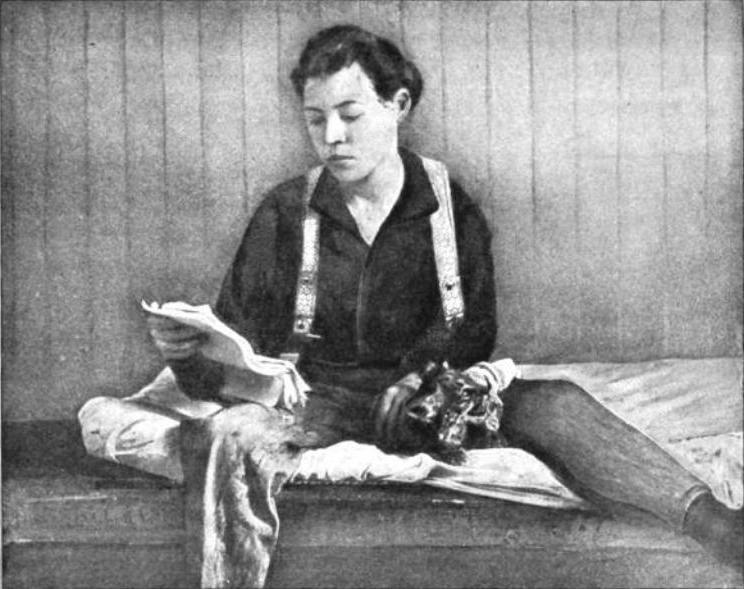
    <summary type="html"><![CDATA[<p><strong><em>Best remembered for committing a stagecoach robbery, and her rare identity as a “Lady Outlaw” of the Wild West, the life of Pearl Hart might not have been as adventurous or romantic as it appears on the surface. </em></strong></p><img src="https://www.intermountainhistories.org/files/fullsize/22b8112b8583aaa5d0d96bbc1c1ccaca.jpg" alt="Pearl Hart reading a paper in her jail cell" /><br/><p><span style="font-weight:400;">Lillie Naomi Davy, later known as “Pearl Hart,” was born into a violence that she would spend the rest of her life attempting to escape. Born in 1871, she was the third of at least eight children and spent most of her childhood in rural Lindsay, Ontario. Her father was relentlessly abusive, and her mother had little power over the situation. Lillie and her siblings were often left to fend for themselves, turning to mischief and even crime. In her youth she was described as, “livesome, blythe, and witty.” At eleven-years-old Lillie and her thirteen-year-old brother William stole a cow from a neighboring farm and re-sold it before they were caught. Lillie and her sisters Catherine and Saphronia frequently ran away from home, usually to the western United States. They cut their hair short and dressed in men's clothes, which helped them fly under the radar. Once they’d been discovered, which they always were, the sisters were usually sent back to New York, where their mother had moved prior to their father’s imprisonment for violent crime. </span>
<span style="font-weight:400;">Lillie was only fifteen when she started seeing Charles Dean, who became her first husband only a year later, although he was thirty-five and had been married to another woman when they had initially met. When he grew increasingly violent towards her, Lillie ran away with her sister Catherine once again. In the next several years Lillie remarried, or at least claimed to be re-married, for there was no legal documentation of divorce from Charles, to a man named Dan Bandman. She admired him for his college education and musical talents, though it did not take long for his charm to wear thin and the violence that so haunted young Lillie’s life to once again threaten her. </span>
<span style="font-weight:400;"></span><span style="font-weight:400;">The western frontier beckoned hope to anyone looking for an escape. There was a promise of freedom, opportunity, and prosperity for those who had the guts and grit to make it on their own. Work in the west was mostly limited to hard labor for men in fields such as mining, logging, and construction. Women, especially the unmarried, had far fewer options. The most profitable by far being prostitution. Lillie and Catherine worked for a time in a brothel run by the mistress Pearl Hart, someone they both likely admired, for Catherine began referring to herself as “Minnie Hart,” and in the following years Lillie took on the alias of “Pearl Hart” herself. Like her contemporaries “Butch Cassidy” and “Billy the Kid,” this new title was more than just a new name, it was an attempt to reinvent her persona and conceal her past identity. </span>
<span style="font-weight:400;">From late adolescence to early adulthood, Pearl never stayed anywhere long and did whatever she could to survive––which often meant working in dangerous conditions or returning to an equally dangerous life with an abusive husband. </span>
<span style="font-weight:400;"></span><span style="font-weight:400;">In 1899 Pearl became desperate to make a decent sum of money, and quick, presumably because she had just discovered her mother was dying and wanted to get back east to say goodbye. After a brief, and fruitless, stint working in the mines of Globe, Arizona Pearl teamed up with a man known as “Joe Boot.” It is unclear what kind of relationship they had, or who the mastermind behind the operation was, but most signs point to Pearl as the instigator. After they had been taken into custody, Pearl described Joe as cowardly, stating that his hands were “shaking like leaves” the whole time. Although they had been somewhat kind to the victims of their heist, giving them back half of the money so that the travelers would not be left completely destitute, Pearl was sentenced to five years at Yuma Territorial Prison. </span>
<span style="font-weight:400;"></span><span style="font-weight:400;">Following her stint in prison, Pearl became more elusive and there are not many records of her exploits––criminal or otherwise. While her incarceration kept her from ever reuniting with her mother, she did reconnect with some of her siblings. One of her sisters wrote a play based on the exploits of “Pearl Hart,” the legendary character she had become. She acted in the play as herself, fulfilling a dream she had once had of becoming an actress. </span>
<span style="font-weight:400;">Pearl spent much of her life in seemingly hopeless and tumultuous circumstances, but she might have found joy in stage performance. Or in time spent reminiscing with her sisters about their adolescent larks––dressing in boys clothes and hopping trains to unexplored cities––before they had to face the reality of their stations in life. </span></p><p><em><strong><a href="https://www.intermountainhistories.org/items/show/929">For more (including 3 images) view the original article</a></strong></em></p>]]></summary>
    <published>2025-12-09T17:24:32+00:00</published>
    <updated>2026-04-17T19:32:21+00:00</updated>
    <link rel="alternate" type="text/html" href="https://www.intermountainhistories.org/items/show/929"/>
    <id>https://www.intermountainhistories.org/items/show/929</id>
    <author>
      <name>Megan Bailey, Brigham Young University</name>
    </author>
  </entry>
  <entry>
    <title type="html"><![CDATA[Girl Scouts of Utah]]></title>
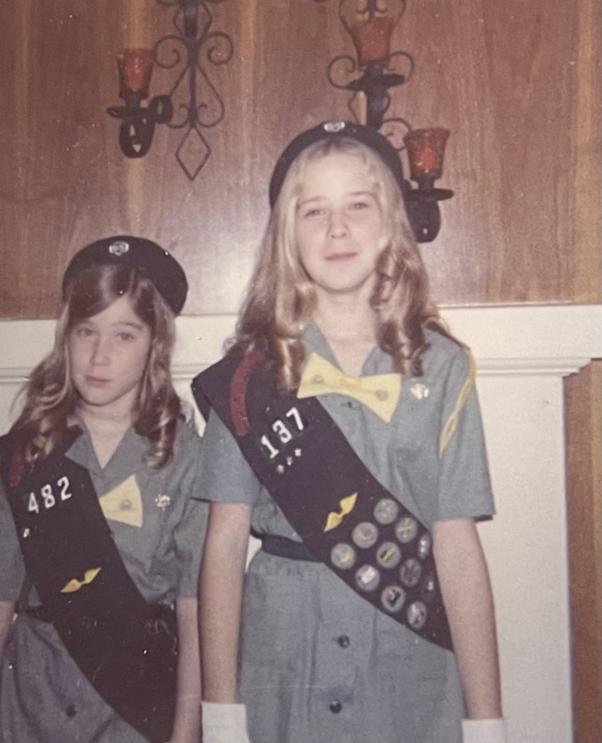
    <summary type="html"><![CDATA[<p><strong><em>Barbara Schmidt, a scout of 65 years, recalls her fondest memories growing up as a girl scout in mid-twentieth century Utah. </em></strong></p><img src="https://www.intermountainhistories.org/files/fullsize/0d86281475893b6bdc8c122102bc6d41.jpg" alt="Sisters posing in their Girl Scout uniforms circa 1970" /><br/><p><span style="font-weight:400;">The first Girl Scout troop was founded in Virginia in 1912, and it wasn’t long before troops sprouted up throughout the nation. Founded by Juliette Gordon Low, the organization was modeled to build “courage, confidence, and character,” as their mission statement declares. Becoming a Girl Scout also provided young girls with leadership opportunities and outdoor experiences, not unlike their male peers in the Boy Scouts program. </span>
<span style="font-weight:400;"></span><span style="font-weight:400;">In 1920, a group of mothers in Ogden, Utah united to find a positive community for their daughters. They initially looked into Campfire Girls, but ultimately discovered that the Girl Scouts were more suited to their needs. Advertising the opportunity in local schools, they soon had enough willing participants to create Utah’s first ever Girl Scout troop. Just a year later, another troop formed in Salt Lake City. </span>
<span style="font-weight:400;"></span><span style="font-weight:400;">In the late 1940s Barbara Schmidt, a student at Hawthorne Elementary School in Salt Lake City, was thrilled at the prospect of becoming a Girl Scout. She saw an announcement at her school for a new local troop and ran home that afternoon excitedly to ask her mom if she could go. Barbara became a Brownie which was, at the time, the group for girls aged eight to ten years old. The troop met at first in the home of the troop leader, a mother of her classmate, but as the troop grew they began meeting in the basement of Zion Lutheran Church.</span>
<span style="font-weight:400;"></span><span style="font-weight:400;">Some of Barbara’s fondest memories are from her summers at camp––and all of the months spent selling cookies in preparation. Each scout who wished to attend a camp had a quota to meet, so they had to be both diligent and creative to meet their goals. In her years of motherhood Barbara always followed her own cookie-selling scouts at a safe distance in her mini van, back in her day Barbara and her fellow scouts were often allowed out on their own––so long as they stuck with a buddy at all times. She spent countless afternoons pulling a red wagon full of cookies, twenty-five cents each, up and down the neighborhoods of Salt Lake. Her troop also received permission from the local Catholic church to sell cookies in the parking lot after mass, which drummed up a fair amount of business. When their work was done, the girls boarded an old rickety school bus that trudged wearily up the mountain to camp. Once they had finally arrived the girls spent their days developing outdoorsmanship skills and making friendships that would last a lifetime. </span>
<span style="font-weight:400;"></span><span style="font-weight:400;">Besides selling cookies and camping, Barbara recalls participating in service projects and feeling that she was “making a real difference in the community.” Though she states that she is not quite “going strong” in her volunteering today as she once did, she continues to volunteer regularly at the Heritage Museum in the Girl Scouts of Utah Council Resource Center. She continues to advocate for the girl scout program because it helps young girls to “embrace a perspective beyond their own.</span></p><p><em><strong><a href="https://www.intermountainhistories.org/items/show/928">For more (including 6 images) view the original article</a></strong></em></p>]]></summary>
    <published>2025-12-09T17:24:32+00:00</published>
    <updated>2026-04-17T19:32:21+00:00</updated>
    <link rel="alternate" type="text/html" href="https://www.intermountainhistories.org/items/show/928"/>
    <id>https://www.intermountainhistories.org/items/show/928</id>
    <author>
      <name>Megan Bailey, Brigham Young University</name>
    </author>
  </entry>
  <entry>
    <title type="html"><![CDATA[Carol Ryrie Brink and the Real Caddie Woodlawn]]></title>
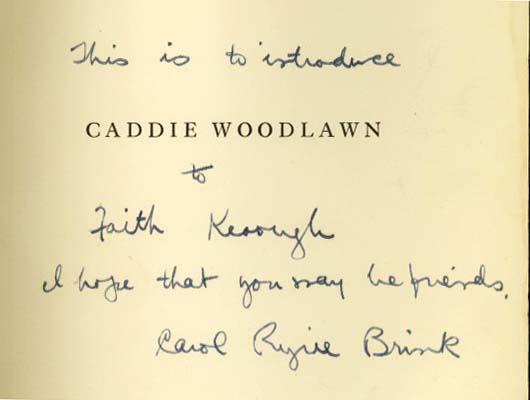
    <summary type="html"><![CDATA[<p><strong><em><span style="font-weight:400;">As an only child in rural Idaho Carol found amusement in her grandmother’s stories of an adventurous childhood in a homestead bustling with children and mischief. Later in life Carol would immortalize her grandmother through the titular character in the beloved children’s novel </span><i><span style="font-weight:400;">Caddie Woodlawn. </span></i></em></strong></p><img src="https://www.intermountainhistories.org/files/fullsize/0410429e7156474d165a3e74fc36171e.jpg" alt="Cover page of Caddie Woodlawn signed by author Carol Ryrie Brink" /><br/><p><span style="font-weight:400;">In 1895 Carol Ryrie Brink was born “Caroline Sybil Ryrie” in Moscow, Idaho. Her father died when she only five-years-old and her mother, stricken with grief and depression, died by suicide four years later. Orphaned, Brink went to live with her widowed grandmother “Gram” and an unmarried aunt who raised her for the remainder of her childhood.</span>
<span style="font-weight:400;"></span><span style="font-weight:400;">In her youth Brink’s favorite activity was listening to Gram's tales of mischief and adventure growing up with six siblings on the Wisconsin frontier. Such a large family was a novelty to Brink, who had no siblings and had only the company of her guardians. She described Gram as “a naturally gifted storyteller” who did not feel “at home with pen and paper.” Of </span><i><span style="font-weight:400;">Caddie Woodlawn</span></i><span style="font-weight:400;">, Brink remarked, “The adventures of Caddie would probably have remained unwritten if I had not been a lonely little girl who adored stories.” </span>
<span style="font-weight:400;">While Brink eventually outgrew her loneliness, she never abandoned her passion for storytelling. In high school and throughout college she dedicated her talent to the school papers. She graduated from University of California, Berkeley in 1917 and was married the following summer Raymond W. Brink, an old friend she had met in Moscow nearly a decade prior. The Brinks had two children, David Ryrie and Nora Caroline, were raised on their mother’s stories and often spent their summers in the Wisconsin woods or the Scottish countryside. </span>
<span style="font-weight:400;"></span><span style="font-weight:400;">Brink wrote several manuscripts before she began the semi-biographical tale of </span><i><span style="font-weight:400;">Caddie Woodlawn</span></i><span style="font-weight:400;">. She dabbled in playwriting for a time, though she was primarily interested in writing novels, often for children. The collection of stories and characters who would eventually come to life in </span><i><span style="font-weight:400;">Caddie Woodlawn </span></i><span style="font-weight:400;">had been in the back of her mind since her childhood declaration, “When I grow up, I am going to write books.”</span><i></i><span style="font-weight:400;">The project took several years, as Brink wanted to make sure she got all of the historical and cultural details right and truly did it justice. </span>
<span style="font-weight:400;">The woman who inspired Caddie was eighty-two-years-old when the book was published in 1935. She was thrilled to read the story and astounded by her granddaughter’s memory, stating “there are things I told her when she was eight years old which are perfectly remembered!” </span>
<i><span style="font-weight:400;">Caddie Woodlawn </span></i><span style="font-weight:400;">received a Newbery Medal in 1936, beloved by both critics and children alike. Young girls living through the Great Depression found escape in the exciting tale of Caddie, just as Brink had during her gloomy childhood. </span></p><p><em><strong><a href="https://www.intermountainhistories.org/items/show/927">For more (including 3 images) view the original article</a></strong></em></p>]]></summary>
    <published>2025-12-09T17:24:31+00:00</published>
    <updated>2026-04-17T19:32:21+00:00</updated>
    <link rel="alternate" type="text/html" href="https://www.intermountainhistories.org/items/show/927"/>
    <id>https://www.intermountainhistories.org/items/show/927</id>
    <author>
      <name>Megan Bailey, Brigham Young University</name>
    </author>
  </entry>
</feed>