<?xml version="1.0" encoding="UTF-8"?>
<feed xmlns="http://www.w3.org/2005/Atom">
  <title type="text">Intermountain Histories</title>
  <updated>2026-04-17T19:32:21+00:00</updated>
  <generator uri="http://framework.zend.com" version="1.12.20">Zend_Feed_Writer</generator>
  <link rel="alternate" type="text/html" href="https://www.intermountainhistories.org/"/>
  <link rel="self" type="application/atom+xml" href="https://www.intermountainhistories.org/items/browse?output=rss2"/>
  <id>https://www.intermountainhistories.org/</id>
  <author>
    <name>Intermountain Histories</name>
    <uri>https://www.intermountainhistories.org</uri>
  </author>
  <link rel="hub" href="https://pubsubhubbub.appspot.com/"/>
  <entry>
    <title type="html"><![CDATA[Pearl Hart: The Bandit Queen]]></title>
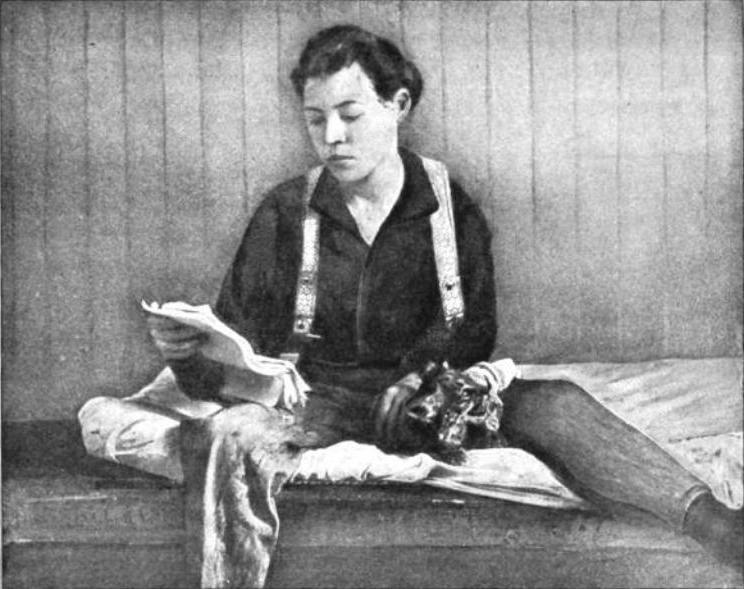
    <summary type="html"><![CDATA[<p><strong><em>Best remembered for committing a stagecoach robbery, and her rare identity as a “Lady Outlaw” of the Wild West, the life of Pearl Hart might not have been as adventurous or romantic as it appears on the surface. </em></strong></p><img src="https://www.intermountainhistories.org/files/fullsize/22b8112b8583aaa5d0d96bbc1c1ccaca.jpg" alt="Pearl Hart reading a paper in her jail cell" /><br/><p><span style="font-weight:400;">Lillie Naomi Davy, later known as “Pearl Hart,” was born into a violence that she would spend the rest of her life attempting to escape. Born in 1871, she was the third of at least eight children and spent most of her childhood in rural Lindsay, Ontario. Her father was relentlessly abusive, and her mother had little power over the situation. Lillie and her siblings were often left to fend for themselves, turning to mischief and even crime. In her youth she was described as, “livesome, blythe, and witty.” At eleven-years-old Lillie and her thirteen-year-old brother William stole a cow from a neighboring farm and re-sold it before they were caught. Lillie and her sisters Catherine and Saphronia frequently ran away from home, usually to the western United States. They cut their hair short and dressed in men's clothes, which helped them fly under the radar. Once they’d been discovered, which they always were, the sisters were usually sent back to New York, where their mother had moved prior to their father’s imprisonment for violent crime. </span>
<span style="font-weight:400;">Lillie was only fifteen when she started seeing Charles Dean, who became her first husband only a year later, although he was thirty-five and had been married to another woman when they had initially met. When he grew increasingly violent towards her, Lillie ran away with her sister Catherine once again. In the next several years Lillie remarried, or at least claimed to be re-married, for there was no legal documentation of divorce from Charles, to a man named Dan Bandman. She admired him for his college education and musical talents, though it did not take long for his charm to wear thin and the violence that so haunted young Lillie’s life to once again threaten her. </span>
<span style="font-weight:400;"></span><span style="font-weight:400;">The western frontier beckoned hope to anyone looking for an escape. There was a promise of freedom, opportunity, and prosperity for those who had the guts and grit to make it on their own. Work in the west was mostly limited to hard labor for men in fields such as mining, logging, and construction. Women, especially the unmarried, had far fewer options. The most profitable by far being prostitution. Lillie and Catherine worked for a time in a brothel run by the mistress Pearl Hart, someone they both likely admired, for Catherine began referring to herself as “Minnie Hart,” and in the following years Lillie took on the alias of “Pearl Hart” herself. Like her contemporaries “Butch Cassidy” and “Billy the Kid,” this new title was more than just a new name, it was an attempt to reinvent her persona and conceal her past identity. </span>
<span style="font-weight:400;">From late adolescence to early adulthood, Pearl never stayed anywhere long and did whatever she could to survive––which often meant working in dangerous conditions or returning to an equally dangerous life with an abusive husband. </span>
<span style="font-weight:400;"></span><span style="font-weight:400;">In 1899 Pearl became desperate to make a decent sum of money, and quick, presumably because she had just discovered her mother was dying and wanted to get back east to say goodbye. After a brief, and fruitless, stint working in the mines of Globe, Arizona Pearl teamed up with a man known as “Joe Boot.” It is unclear what kind of relationship they had, or who the mastermind behind the operation was, but most signs point to Pearl as the instigator. After they had been taken into custody, Pearl described Joe as cowardly, stating that his hands were “shaking like leaves” the whole time. Although they had been somewhat kind to the victims of their heist, giving them back half of the money so that the travelers would not be left completely destitute, Pearl was sentenced to five years at Yuma Territorial Prison. </span>
<span style="font-weight:400;"></span><span style="font-weight:400;">Following her stint in prison, Pearl became more elusive and there are not many records of her exploits––criminal or otherwise. While her incarceration kept her from ever reuniting with her mother, she did reconnect with some of her siblings. One of her sisters wrote a play based on the exploits of “Pearl Hart,” the legendary character she had become. She acted in the play as herself, fulfilling a dream she had once had of becoming an actress. </span>
<span style="font-weight:400;">Pearl spent much of her life in seemingly hopeless and tumultuous circumstances, but she might have found joy in stage performance. Or in time spent reminiscing with her sisters about their adolescent larks––dressing in boys clothes and hopping trains to unexplored cities––before they had to face the reality of their stations in life. </span></p><p><em><strong><a href="https://www.intermountainhistories.org/items/show/929">For more (including 3 images) view the original article</a></strong></em></p>]]></summary>
    <published>2025-12-09T17:24:32+00:00</published>
    <updated>2026-04-17T19:32:21+00:00</updated>
    <link rel="alternate" type="text/html" href="https://www.intermountainhistories.org/items/show/929"/>
    <id>https://www.intermountainhistories.org/items/show/929</id>
    <author>
      <name>Megan Bailey, Brigham Young University</name>
    </author>
  </entry>
  <entry>
    <title type="html"><![CDATA[The Lonetree Mercantile and Post Office]]></title>
    <summary type="html"><![CDATA[<p><strong><em><span style="font-weight:400;">In the center of a ranching town called Lonetree, there is an old building with a white façade and log construction that once functioned as the Post Office and mercantile store for the remote community. From 1897 to 1982, the store served as the nerve center for the community.</span></em></strong></p><img src="https://www.intermountainhistories.org/files/fullsize/de8a2ff11079a55bb74a187bf6522441.jpg" alt="Ranchers pose in front of the Lonetree Mercantile. " /><br/><p><span style="font-weight:400;">Lonetree, Wyoming, is situated just north of the high Uinta Mountains and twenty miles south of Fort Bridger. Henrys Fork River, a tributary of the Green River, first brought fur-trading Europeans to the area. Those who stayed were the descendants of LDS pioneer Captain Isaac Bullock. Bullock was sent to the area by Brigham Young in the early 1850s.</span><span style="font-weight:400;"> The Bullocks were joined by many other families. These homesteaders eventually turned to ranching. </span>
<span style="font-weight:400;">In 1897, an immigrant from Manchester, England, named Herbert Joshua Gregory came to Lonetree. Since the old post office run by R. Handley had burned down, Gregory built his own.</span><span style="font-weight:400;"> Gregory’s store provided necessary supplies and correspondence to the ranchers and townspeople in the area. A visitor to the store could expect news of deaths, births, stolen livestock, grazing permits, events, and even outlaws.</span><span style="font-weight:400;"> Dances, turkey hunts, games, and gatherings of all kinds took place around the Gregory store.</span><span style="font-weight:400;"> It is said that Butch Cassidy and the Sundance Kid were among the outlaws who stopped by Gregory’s store and interacted with members of the community.</span><span style="font-weight:400;"> Gregory was the postmaster until his death in 1952, and the title of postmaster would remain in his family until 1982 when the post office closed.</p><span style="font-weight:400;">Thanksgiving in Lonetree, 1890, made for a popular story. It is said that a Pinkerton agent came to the Gregory store and formed a posse to catch two outlaws who were riding towards Lonetree. One of the outlaws was Harry Alonzo Longabaugh or the Sundance Kid. H. J. Gregory, the town fiddler, and several others rode out to apprehend them. With no fiddler, the Thanksgiving dance could not begin. While people milled around the schoolhouse, Harry Longabaugh and his partner walked into the Gregory store. The story says that the townspeople captured Longabaugh and made him play the fiddle for their dance where he stayed long enough to dance with a woman and escape before the return of the Pinkerton agent.</span><span style="font-weight:400;"> </span>
<span style="font-weight:400;">Lonetree remains a ranching community with a small population that has not forgotten its origins in the Wild West.</span></p><p><em><strong><a href="https://www.intermountainhistories.org/items/show/875">For more (including 4 images) view the original article</a></strong></em></p>]]></summary>
    <published>2025-01-23T00:33:27+00:00</published>
    <updated>2026-04-17T19:32:20+00:00</updated>
    <link rel="alternate" type="text/html" href="https://www.intermountainhistories.org/items/show/875"/>
    <id>https://www.intermountainhistories.org/items/show/875</id>
    <author>
      <name>Landon Wilson, Brigham Young University</name>
    </author>
  </entry>
  <entry>
    <title type="html"><![CDATA[Joe Hill: The Singing Voice of Labor]]></title>
    <summary type="html"><![CDATA[<p><strong><em>This monument was raised in 2013, 108 years after Joe Hill’s execution and built on the very spot where the IWW songwriter was executed, based on circumstantial evidence. </em></strong></p><img src="https://www.intermountainhistories.org/files/fullsize/16274c8b51b488d753e1d34265c74b56.jpg" alt="Joe Hill Memorial Plaque" /><br/><p>Joe Hill was born in Gavle, Sweden in 1879, and immigrated to the USA in 1902 for want of work. After years of itinerant labor, he joined the Industrial Workers of the World (IWW,) commonly known as the "Wobblies," in 1908. The IWW was a radical labor union, which represented not just skilled workers, but any worker, in any job, regardless of age, race, or gender. The union was also not just focused on obtaining improvements in wages, hours, or conditions, but a total overthrow of the capitalist system. </p><p>Hill hid in boxcars and "rode the rails" to where he could find work, and after a couple years he became an organizer in the IWW, writing songs to mobilize the workers during times of strikes. His "Little Red Songbook" spread throughout the IWW and therefore throughout the country, whenever Wobblies went on strike, they would sing his songs, and usually he would be there too. And in 1914, the strikes were in Utah, involving the workers of Utah Construction Company, represented by IWW local 69, cheered on by Joe Hill in person. There had been repeated clashes between the IWW and the Salt Lake City Police that created an atmosphere of tension in the city. </p><p>On January 10, 1914. Hill was shot in the chest and went to visit a doctor friend to have it treated, the same night John and Arling Morrison were killed in a robbery at the grocery store at which they worked. Hill's doctor reported him to the police, and Hill was promptly arrested. Hill, and many others in the IWW or otherwise sympathetic to his cause, believed the arrest and trial would simply be harassment, as it so often had been before. But Hill, after meeting his state-appointed lawyers, felt strongly that his lawyers had been bribed to 'throw' the case, despite the lack of evidence, and he chose to represent himself. He argued that his songs were free and protected speech, and that the work of the IWW in Utah was protected under the right to associate, and that their actions were chiefly against economic inequality. </p><p>Hill's trial lasted less than one month, during which time the state failed to provide any motive, a single piece of evidence, or indeed any possible indication that any of the bandits had been Joe Hill. The only piece of evidence the prosecution submitted was Joe Hill's IWW red card. The IWW were known for being violent and inhumane, claimed the prosecution, and Hill was a member of it. Hill wanted to overthrow capitalism, civilization itself they claimed, and through his songwriting and performances, even if he hadn't done the murders himself, he was equally responsible. Hill's demands that he had been mistried and appeals for a retrial fell upon deaf ears, and against nationwide beliefs that there had been an abrogation of due process, he was found guilty by jury on June 27 and sentenced to death on July 8th. </p><p>Hill appealed the sentence, and a massive letter-writing campaign began, with letters pouring into the office of Utah Governor Spry, both demanding Spry pardon Hill or to permit the execution. President Woodrow Wilson asked Spry to pardon, stating that Hill's trial had not been fair, as had the Swedish ambassador. In the end, Hill was executed by firing squad on November 19, 1915. Many felt then and feel to this day that Hill had been tried for his speech and for his affiliations rather than any possibility of being among the murderers.</p><p><em><strong><a href="https://www.intermountainhistories.org/items/show/872">For more (including 3 images) view the original article</a></strong></em></p>]]></summary>
    <published>2024-10-31T21:23:23+00:00</published>
    <updated>2026-04-17T19:32:19+00:00</updated>
    <link rel="alternate" type="text/html" href="https://www.intermountainhistories.org/items/show/872"/>
    <id>https://www.intermountainhistories.org/items/show/872</id>
    <author>
      <name>Joseph R. McKellar, Utah State University</name>
    </author>
  </entry>
  <entry>
    <title type="html"><![CDATA[The Old Idaho State Penitentiary]]></title>
    <summary type="html"><![CDATA[<p><strong><em>The Old Idaho Penitentiary operated for over 100 years as the first prison in Boise, Idaho. Over the years it has housed over 13,000 inmates, hosted 36 wardens, and was the site of numerous escapes, riots, and executions. Today, it stands as one of only four territorial prisons open to the public and has been converted to a museum detailing the prison’s history.</em></strong></p><img src="https://www.intermountainhistories.org/files/fullsize/a2d30f007de6a7615d40500011f92655.jpg" alt="Women&#039;s Ward" /><br/><p><span style="font-weight:400;">Located between the heart of downtown Boise and the Boise Foothills, the Old Idaho Penitentiary serves as a reminder of Idaho’s territorial past. Inmates quarried the distinctive sandstone that makes up the prison’s buildings and walls from the nearby Table Rock area, a well-known Boise landmark. The penitentiary first opened in 1872 and was originally known as the Territorial Prison. It was later renamed the Idaho State Penitentiary when Idaho achieved statehood in 1890.</span>
<span style="font-weight:400;">The prison was constructed in the Second Empire architectural style with guard turrets and thick walls reminiscent of a castle or fortress. Architects intended the construction to evoke a “somber, dark environment deemed appropriate for prisoners.” Wardens and guards encouraged inmates to work to reduce idleness and the penitentiary became almost entirely self-sufficient. Inmate labor carried the added benefit of reducing construction fees, costs, and wages significantly, saving the state hundreds of thousands of dollars. However, the prison lacked modern amenities, a problem that would cause discontent and riots in later years.</span>
<span style="font-weight:400;">As the number of inmates increased, the compound expanded significantly. The inmates quarried sandstone and constructed most of the buildings themselves. By 1973, the penitentiary’s walls had housed multiple cell blocks, several administrative buildings, the warden’s house, a dining hall, library, commissary, blacksmith and carpenter shop, shirt and license plate factory, women’s ward, an apiary, a garden, and a steam plant. The prison also contained several isolation and punishment cells, known as the “Dungeon,” “Cooler,” and “Siberia,” as well as a gallows that was used to execute ten prisoners. Additionally, the penitentiary owned several ranches and farms that utilized inmate labor to produce the prison’s food.</span>
<span style="font-weight:400;">Harry Orchard was the penitentiary’s most infamous prisoner. He had assassinated Frank Steunenberg, the former governor of Idaho, with a bomb as revenge for the government’s role in the 1890 mining conflicts in Coeur d'Alene. Although he confessed to killing at least 17 men, Orchard remained a model prisoner. Other prisoners were not, and the penitentiary experienced over 500 escape attempts. Prisoners escaped by running away from work assignments, digging tunnels, climbing walls, or lowering themselves down makeshift ropes. Some succeeded, but the majority were caught soon after their escape. </span>
<span style="font-weight:400;">There were also several riots in the later years of the penitentiary's history, reflecting inmate discontent with outdated prison conditions. One of the most notable riots occurred in 1952, when nearly 250 inmates seized the Multipurpose Building and severely damaged it. In 1971, two prisoners were stabbed, inmates set fire to several buildings, and others raided the commissary and hospital. A similar riot occurred in 1973 and caused significant fire damage. </span><span style="font-weight:400;">The riots were all put down, some using tear gas, but the increasing frequency worried prison officials. </span>
<span style="font-weight:400;">The riots, outdated facilities, and lack of space for expansion led to the construction of a new correctional facility in 1972. This facility was built near Kuna, Idaho, and officials gradually transferred inmates there. By 1974, the recently renamed Old Idaho Penitentiary earned a spot in the National Register of Historic Places. Today, it has been converted into a museum run by the Idaho State Historical Society. Boise residents refer to it as the “Old Pen,” and local legend claims it is haunted by the ghosts of former guards and executed inmates.</span></p><p><em><strong><a href="https://www.intermountainhistories.org/items/show/734">For more (including 6 images) view the original article</a></strong></em></p>]]></summary>
    <published>2023-04-05T20:08:12+00:00</published>
    <updated>2026-04-17T19:32:16+00:00</updated>
    <link rel="alternate" type="text/html" href="https://www.intermountainhistories.org/items/show/734"/>
    <id>https://www.intermountainhistories.org/items/show/734</id>
    <author>
      <name>Madison Sommer, Brigham Young University</name>
    </author>
  </entry>
  <entry>
    <title type="html"><![CDATA[Castle Gate Ghost Town]]></title>
    <summary type="html"><![CDATA[<p><strong><em>Castle Gate is a ghost town located in Carbon County, Utah, situated in the eastern part of the state. Although Castle Gate was once a successful mining town, it has now been abandoned, its four mines closed, and the homes dismantled.</em></strong></p><img src="https://www.intermountainhistories.org/files/fullsize/cb6af8df8c5283c63b3b69e94a2cd6ce.jpg" alt="Castle Gate" /><br/><p>Castle Gate received its name for a large rock formation featuring two sandstone walls resembling the gate of a castle, which stands near the town at the mouth of Price Canyon. The first mine opened in 1886 following the discovery of coal, initiating the establishment of a town two years later when the Denver and the Rio Grande Western Railroad built a track over the Wasatch Plateau, traveling right through the town site.
As the town grew, more mines opened, and a diverse group of people began migrating into the area. A large group of Latter-day Saints congregated to work at the mines as well as immigrants from European countries such as Italy, Greece, and Austria. Things were going well for the Castle Gate community. The Utah Fuel Company operated the Castle Gate coal mines until Kaiser Steel bought the company 1950 and built a coal-fired electric generating plant in Castle Gate.
Although Castle Gate had times of prosperity and success, it also experienced its fair share of misfortune, including several mining disasters, a flood, and the payroll robbery of 1897 by infamous outlaws Butch Cassidy and Elza Lay. While the mining payroll was being transported from the train to the town’s bank, Butch and Elza held the transporters at gunpoint and seized about $8,800. To get away, they cut telegraph and phone lines and arranged a series of horses they could relay ride at high speed for hours, enabling them to escape the area before word of the robbery could even spread.
In 1920, a flood swept the town, incurring immense damage to local property and the railroad. Unfortunately for Castle Gate, not long after this disaster an even larger one occurred: at 8:00 AM on March 8, 1924, the first of three violent explosions from coal dust and open flames erupted, causing extensive damage and collapsing tunnels. 173 people died, and it took nine days to recover all the bodies. The website <em>Legends of America</em> calls it the tenth worst mining disaster in United States history. Fiery tragedy returned seventy-six years later, in 2000, when the last mine in operation suffered another explosion, claiming two more lives and leading to the mine closing for good.
By the time this last mine shut down, Castle Gate had already been abandoned. The Kaiser Steel company razed the townsite in 1960 to make room for their electrical plant, forcing inhabitants to relocate. In 2015, the power plant closed due to its inability to meet environmental standards, and the once-productive coal mining settlement became a desolate ghost town.</p><p><em><strong><a href="https://www.intermountainhistories.org/items/show/480">For more (including 8 images) view the original article</a></strong></em></p>]]></summary>
    <published>2021-09-12T04:56:49+00:00</published>
    <updated>2026-04-17T19:32:10+00:00</updated>
    <link rel="alternate" type="text/html" href="https://www.intermountainhistories.org/items/show/480"/>
    <id>https://www.intermountainhistories.org/items/show/480</id>
    <author>
      <name>Taylor Hayden, Brigham Young University</name>
    </author>
  </entry>
  <entry>
    <title type="html"><![CDATA[The Lobauer-Estep Murder at Big Creek, Idaho<br />
]]></title>
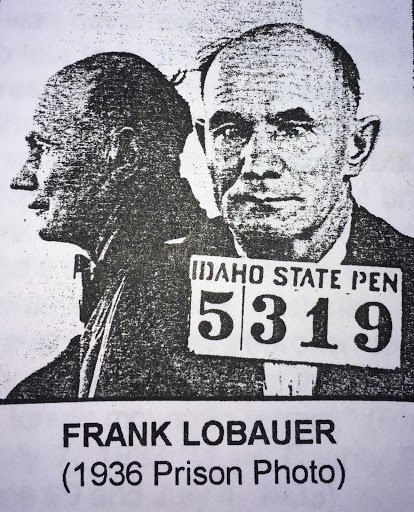
    <summary type="html"><![CDATA[<p><strong><em>Two miners, Walter Estep and Frank Lobauer, on Ramey Ridge in Big Creek became enemies after a faulty deal and an affair. When they failed to resolve their problem after seeking help from officials, Lobauer took matters into his own hands and promptly reported his deeds.</p></strong></p><img src="https://www.intermountainhistories.org/files/fullsize/df20c4d50173f80ad3393e0e0ced767c.jpg" alt="Frank Lobauer 1936
" /><br/><p>Before the paths of Walter Estep and Frank Lobauer fatally crossed, they were neighbors who mined on Ramey Ridge in Big Creek. Previously a forest ranger, Estep, born in 1893, moved to Acorn Creek Ranch on Ramey Ridge in 1930. Born in 1884, Lobauer was a short man, not quite 5’4”, who was cross eyed and balding. Lobauer and his wife, Myrtle Bland Geer, moved to Big Creek in the 1920’s. This area along Big Creek was a popular site for mining with many homesteads used primarily for mining claims. </p><p>The two men became acquainted when Lobauer was contracted to work in one of Estep’s mines in exchange for an interest in the group. However, after finishing the work, Estep changed his mind about paying Lobauer. Meanwhile, Estep also had seduced Lobauer’s wife in what became a three-year affair with two children resulting. These intimate details of the feud were common knowledge among locals. In late 1935, Lobauer finally acted, traveling to the Warren Ranger Station to contact Ranger Gene Briggs. Despite an extensive telephone network in the area, without a phone Lobauer had to travel to contact authorities. Since he was absent at the time, Lobauer related the details to Briggs’s wife, Hiley, and demanded Estep to be placed under a peace bond to stay away from Myrtle. He added that if the sheriff failed to stop the affair, he would kill Estep. The isolation of the area did not provide Lobauer with many ways of taking immediate action. Hiley called the sheriff and relayed message; however, she omitted Lobauer’s threat. </p><p>On December 2, Estep acted as an attorney to help transfer the deed of the Dave Lewis property to Jess Taylor, a hunting ranch three miles downstream from Lobauer’s camp on Big Creek. According to Lobauer, as Estep was returning from the Lewis cabin, he saw Lobauer waiting with a gun and went to grab it. They agreed to talk things over and Lobauer asked Estep for the money he was owed. However, Estep refused to pay. Lobauer replied, “I’ll settle you with a bullet” and shot and killed Estep as he walked out the door. Lobauer visited Lewis and asked him to notify the sheriff. The sheriff sent a local to investigate as he couldn’t reach the remote area until the next day. Lobauer was found sitting inside his tent drunk. Estep’s body was still lying in the doorway with a bullet hole through the back of his neck and out of his mouth with blood spattered all over the snow. </p><p>Lobauer was arrested and sent to the Valley County Jail in Cascade where he admitted to the murder, but later pleaded not guilty in trial. In 1936, Lobauer was convicted of manslaughter and sentenced to 5 to 10 years in the Idaho State Penitentiary in Boise, Idaho. He spent eight years in prison until he was released in 1942. Six years later, Lobauer returned to Big Creek where he was last seen heading out to an old mining claim by foot in the snow. </p><p><em><strong><a href="https://www.intermountainhistories.org/items/show/305">For more (including 5 images) view the original article</a></strong></em></p>]]></summary>
    <published>2019-02-15T01:10:30+00:00</published>
    <updated>2026-04-17T19:32:05+00:00</updated>
    <link rel="alternate" type="text/html" href="https://www.intermountainhistories.org/items/show/305"/>
    <id>https://www.intermountainhistories.org/items/show/305</id>
    <author>
      <name>Madi Thurston, University of Idaho</name>
    </author>
  </entry>
  <entry>
    <title type="html"><![CDATA[Butch Cassidy at Montpelier ]]></title>
    <summary type="html"><![CDATA[<img src="https://www.intermountainhistories.org/files/fullsize/3137570fa383237a80e7af01cf3982ce.jpg" alt="Visitor&#039;s Bureau" /><br/><p>On August 13, 1896 Butch Cassidy robbed the Montpelier bank of gold, silver, and currency worth between $5,000-$15,000. Montpelier, Idaho, had the number one chartered bank in the state at the time. Cassidy rode into town with two accomplices, Elza Ray and Bob Meeks. His party stopped at the saloon for drinks. Afterwards, they headed over to the bank and carried out the robbery. Cassidy and Ray forced the teller, A. N. Mackintosh, to gather all the cash. They then put him up against the wall along with the other customers in the bank. While the robbers proceeded to collect anything of value. Once everything was gathered, Cassidy told his captors to wait ten minutes before they went outside. Mackintosh immediately reported the robbery to the sheriff who managed the local general store as well. The sheriff, however, did not own a horse so he attempted to give chase on a bicycle. As a result, Cassidy and his posse easily escaped on horseback. </p><p>Cassidy may have chosen to rob Montpelier bank because he needed money to pay the court and attorney fees for a former gang member Matt Warner, who was convicted of killing a couple of men in a gunfight. Cassidy also had apparently promised a judge in Wyoming that he wouldn’t commit any crimes within that state. Regardless of the true reasoning behind the robbery the Montpelier bank has been remodeled into a museum to where people can go to see where the famous robbery occurred. </p><p><em><strong><a href="https://www.intermountainhistories.org/items/show/292">For more (including 2 images) view the original article</a></strong></em></p>]]></summary>
    <published>2019-02-13T07:27:20+00:00</published>
    <updated>2026-04-17T19:32:05+00:00</updated>
    <link rel="alternate" type="text/html" href="https://www.intermountainhistories.org/items/show/292"/>
    <id>https://www.intermountainhistories.org/items/show/292</id>
    <author>
      <name> Michael Ross, Brigham Young University</name>
    </author>
  </entry>
  <entry>
    <title type="html"><![CDATA[Bootlegging, Immigrants, and Crime in Prohibition-Era Fort Collins]]></title>
    <summary type="html"><![CDATA[<p><strong><em>By 1896, the Temperance Movement in Fort Collins celebrated the issuance of Ordinance No. 8 prohibiting the purchase, sale, and gifting of alcohol. The ordinance paved the way for years of crime, illicit trade, and legal conflict as bootleggers worked to meet Fort Collin's continuing demand for alcohol.</em></strong></p><img src="https://www.intermountainhistories.org/files/fullsize/3ab0e6698166c5e00fccc4a98c981820.jpg" alt="Moonshiner Still" /><br/><p>As a result of city-wide prohibition starting in 1896, crime rates in Fort Collins increased. Skirmishes between law enforcement and drunken residents were a common sight, and cases of illegal intoxication often resulted in incarceration into the town’s local “Drunk Tank” or “calaboose." Frequent distillery raids led to additional arrests.  According to an account from Larimer County Sheriff’s officer Orville Pollock Kelly, getting rid of the stills was the “main problem.” During the eight years he worked at the sheriff's office (1925-1933) he never witnessed or heard of anyone being shot in the capture of a whiskey still.</p><p>Immigrants of Russian, German, and Histpanic descent had unique experiences during Fort Collins prohibition. Discrimination took many forms. For many, even making purchases at the grocery store was problematic, as only a select few stores would serve immigrants. Economic disparity between immigrants and white Americans in an already tight economy left some immigrant families seeking ways to augment their income. Some turned to the illicit manufacture and sale of alcohol. When asked what he remembered about bootlegging, lifelong Fort Collins resident Walter Salisbury recalled that the moonshining stills up in the foothills were largely operated by Mexican immigrants. Wages for these people were particularly poor, and discrimination allowed for very few advancement opportunities. Thus the “Bootlegger” scene in Fort Collins came to life, with an old race track located by what is now City Park serving as a “hot spot” of bootlegging activity. </p><p>One notable bootlegger, Cleofas Ambriz, held a daytime occupation as a sugar beet factory laborer but constructed his own still to help combat the poor living conditions. Ambriz explicitly made a point not to sell his moonshine to white members of the community for fear of the legal consequences should he be discovered. Eventually he was caught conducting business in Denver, which temporarily stalled his operations. However, Ambriz’s secret business resumed upon his return to Fort Collins. Salisbury recounted another instance when a Mexican moonshiner who lived near him was imprisoned the man’s son continued with running his father's bootlegging business. </p><p>In Fort Collins, alcohol was sometimes transported and sold through tunnels that ran beneath the streets of Old Town. In the early years of prohibition in Fort Collins (1884-1895), these tunnels were sometimes home to “sampling rooms,” defined as a “quiet, calm environment” where alcohol could be traded and purchased. Other cities in the intermountain west have similar stories, including, for example, Ogden Utah, which has legends of a city-wide tunnel network used for all manner of illicit activities.  </p><p>In 1933, federal prohibition was overturned, and 3.2% alcohol beer was legalized with the passage of the Cullen-Harrison Act. For Fort Collins, however, this was not the end of prohibition altogether, but rather a long period during which the community negotiated the degree to which alcohol should be a legal part Fort Collins life.</p><p><em><strong><a href="https://www.intermountainhistories.org/items/show/132">For more (including 5 images) view the original article</a></strong></em></p>]]></summary>
    <published>2018-02-01T19:42:47+00:00</published>
    <updated>2026-04-17T19:32:00+00:00</updated>
    <link rel="alternate" type="text/html" href="https://www.intermountainhistories.org/items/show/132"/>
    <id>https://www.intermountainhistories.org/items/show/132</id>
    <author>
      <name>Caroline Cutshall, Alan Linenburger, Devan Walsh, and Matt Witczak, Colorado State University</name>
    </author>
  </entry>
</feed>