<?xml version="1.0" encoding="UTF-8"?>
<feed xmlns="http://www.w3.org/2005/Atom">
  <title type="text">Intermountain Histories</title>
  <updated>2026-04-17T19:32:20+00:00</updated>
  <generator uri="http://framework.zend.com" version="1.12.20">Zend_Feed_Writer</generator>
  <link rel="alternate" type="text/html" href="https://www.intermountainhistories.org/"/>
  <link rel="self" type="application/atom+xml" href="https://www.intermountainhistories.org/items/browse?output=rss2"/>
  <id>https://www.intermountainhistories.org/</id>
  <author>
    <name>Intermountain Histories</name>
    <uri>https://www.intermountainhistories.org</uri>
  </author>
  <link rel="hub" href="https://pubsubhubbub.appspot.com/"/>
  <entry>
    <title type="html"><![CDATA[The Brown Palace Hotel – Denver, Colorado]]></title>
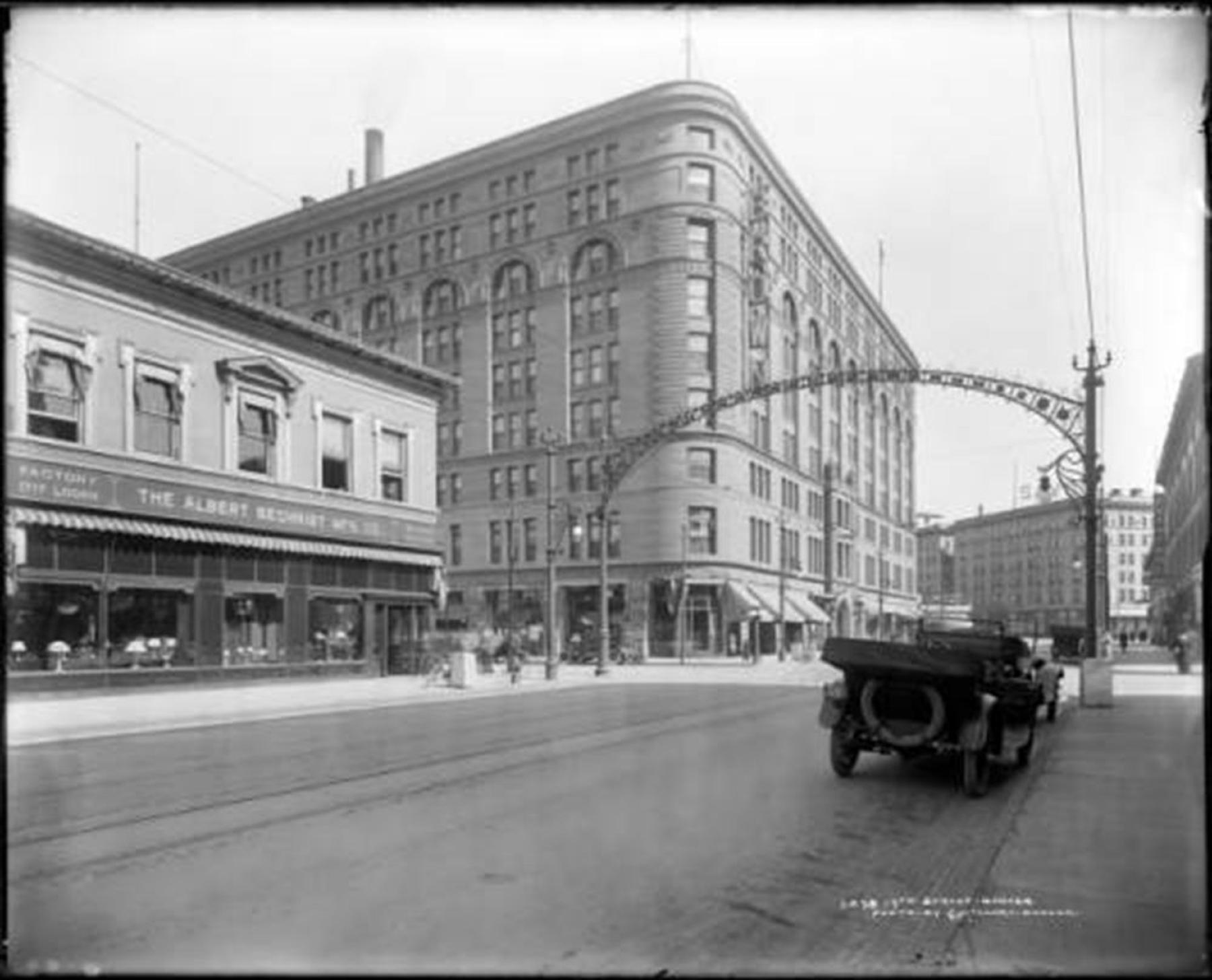
    <summary type="html"><![CDATA[<p><strong><em>When Colorado enacted Prohibition in 1916, the Brown Palace Hotel quickly revealed how wealth evades discipline. Behind its European elegance, the hotel hosted bootleggers, celebrities, and politicians who drank with impunity. Its story offers a glimpse into how the elite can often sidestep laws supported and followed by the broader public.</em></strong></p><img src="https://www.intermountainhistories.org/files/fullsize/72d73fe3024bb85dbf7955365a8a338b.jpg" alt="The Brown Palace Hotel in 1916, the year Colorado passed its Prohibition laws" /><br/><p>In 1860, Henry Cordes Brown arrived in Denver and purchased several plots of land. In 1888, Brown began constructing the Brown Palace Hotel. He was determined to make it one of the best hotels in Colorado and spared no expense. Its central atrium, fireproof blocks of terracotta, and gold and European import detailing make the building stand out. The construction cost about $1.6 million, $50 million today, and featured Arizona sandstone.
In 1916, Colorado became one of the first states to pass Prohibition laws. Temperance was popular among the large population of progressive residents. The general population here did not desire or accept alcohol as readily as people in other Intermountain West states. This is one of the reasons the Brown Palace Hotel felt no need to cater to the middle class. The hotel’s prominence made it a prime location for celebrities, politicians, and social leaders to grab an illegal drink. Due to its prestigious reputation and clientele, authorities never shut the establishment down, despite raiding it multiple times for alcohol.
The 18 February 1930 issue of the <em>Rocky Mountain News (Daily) </em>described a large-scale raid conducted by police on the Brown Palace Hotel. Officers stormed room 929 on a tip about liquor distribution at a war veterans' convention. Law enforcement found approximately 116 cases of beer and fifty pints of whisky in the hotel room and arrested five hotel employees for conspiracy to violate Prohibition laws. With a bust this large, the courts threatened to padlock room 929, meaning it would be a “forbidden room,” a place “which none should enter.”
The 22 April 1930 issue of the same paper updated the room 929 story. Authorities indicted those arrested during the raid and fined them $300 ($5,700 today). While those associated with the Brown Palace Hotel typically earned higher salaries, this fine was no slap on the wrist. Intense repercussions like these aligned with Colorado’s strong temperance attitude and deterred Prohibition violations.
This story also shows how the elite used the Brown Palace Hotel to escape prosecution for alcohol-related crimes. The article indicates that the volume of alcohol found in room 929 suggests someone “higher up” knew about the stash. A key witness testified that former state senator and convention chairman Rice Means rented room 929 and knew “what this room was to be used for.” Despite this, officials never arrested Means. This case shows that large-scale alcohol consumption occurred at the Brown Palace Hotel and how those in power hid behind the establishment’s high-end reputation to evade Prohibition laws.
The Brown Palace Hotel’s Prohibition-era history highlights the intersection of wealth, power, and privilege. Despite multiple raids, its prestigious reputation and elite clientele allowed it to maintain alcohol sales. Its role during Prohibition demonstrates how the powerful navigated around the law. Today, the Brown Palace Hotel remains a cornerstone of Denver’s heritage and a symbol of the city’s transnational significance as a hub of influence.</p><p><em><strong><a href="https://www.intermountainhistories.org/items/show/898">For more (including 3 images) view the original article</a></strong></em></p>]]></summary>
    <published>2025-09-23T15:34:53+00:00</published>
    <updated>2026-04-17T19:32:20+00:00</updated>
    <link rel="alternate" type="text/html" href="https://www.intermountainhistories.org/items/show/898"/>
    <id>https://www.intermountainhistories.org/items/show/898</id>
    <author>
      <name>Scarlett Kluge, Northern Arizona University </name>
    </author>
  </entry>
  <entry>
    <title type="html"><![CDATA[Two-Bit Street – Ogden, Utah]]></title>
    <summary type="html"><![CDATA[<p><strong><em>Over the years, Ogden, Utah built its reputation as a countercultural hub, steadfastly resisting religious and political authority and conformity. During Prohibition, the city’s infamous Two-Bit Street flirted with illegality by housing speakeasies, stills, and brothels hidden behind innocent storefronts.</em></strong></p><img src="https://www.intermountainhistories.org/files/fullsize/6ab53cfbcdd11113ac6b62738af2d528.jpg" alt="A photo taken of Ogden’s 25th Street sometime between 1892-1904 shows the area before Prohibition began in 1917" /><br/><p>In early twentieth-century Utah, temperance was popular among many members of the Church of Jesus Christ of Latter-day Saints (LDS). The church’s temperance beliefs stemmed from an 1833 doctrine called the “Word of Wisdom,” which church leaders initially treated as guidance for moderate alcohol use. In 1902, Joseph Fielding Smith urged members to view the doctrine instead as a strong suggestion against alcohol. In 1909, this position began influencing state law when Governor William Spry and the legislature passed a local option bill allowing towns to vote on banning alcohol. Many smaller towns voted in favor, while more diverse cities like Ogden and Salt Lake City did not. Despite urban opposition, Utah ratified statewide Prohibition in 1917. In 1921, church president Heber J. Grant aligned church doctrine with state law by declaring alcohol abstinence a requirement. While many LDS members adopted the policy and supported enforcement, an underground drinking culture emerged among other Utahns, especially in Ogden’s 25th Street, also known as Two-Bit Street.
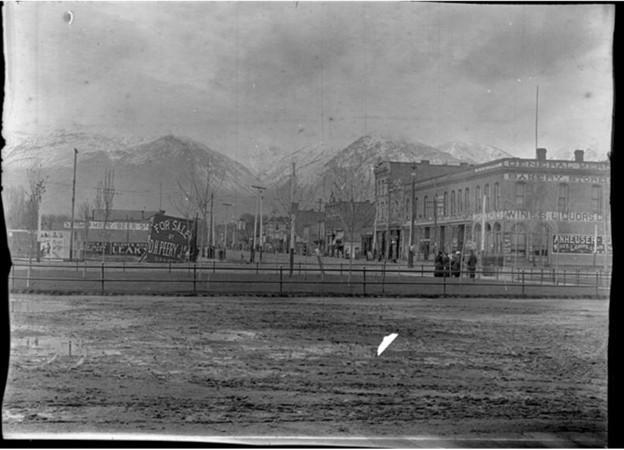
In the late nineteenth century, the completion of the continental railroad brought Chinese and Irish rail workers to Utah. By the turn of the century, LDS members still owned most businesses in smaller towns, but Italian, Chinese, Jewish, and Japanese immigrants owned much of Ogden’s commercial district. This demographic shift made Ogden a culturally distinct city, less influenced by the church’s temperance stance. When Prohibition began, Two-Bit Street became known for alcohol stills, speakeasies, and brothels. Business owners often ran legal operations on the ground floor—ice cream, clothing, and soda shops—while concealing illegal activities on the floors above. A notable example of this was the Davenport Saloon, which was located above various short-lived legal businesses like the Night Hawk Café.
On 03 January 1922, the <em>Ogden Standard-Examiner</em> reported that police raided an ice cream parlor at 170 25th Street. They found two quarter-full bottles of moonshine whisky and arrested the owner, William Pranthel, who pleaded guilty to possession. He claimed the liquor was for personal use, not for sale, but could not explain why it was at the parlor instead of home. He received a sentence of a $299 fine or 180 days in jail. A month later, the same paper reported that police discovered remnants of a recently abandoned still in the same neighborhood, along with several bottles of homemade wine—but no bootleggers.
Prohibition in Utah was more than a legal change—it was a struggle between religious authority and cultural resistance. In Ogden, immigrant families turned Two-Bit Street into a quiet act of defiance, building their own economy behind legal storefronts. It was as much about autonomy as alcohol. While the LDS Church shaped much of the state, Ogden pushed back. Today, Two-Bit Street remains a space where Utah residents challenge law and societal norms.</p><p><em><strong><a href="https://www.intermountainhistories.org/items/show/897">For more (including 4 images) view the original article</a></strong></em></p>]]></summary>
    <published>2025-09-23T15:34:48+00:00</published>
    <updated>2026-04-17T19:32:20+00:00</updated>
    <link rel="alternate" type="text/html" href="https://www.intermountainhistories.org/items/show/897"/>
    <id>https://www.intermountainhistories.org/items/show/897</id>
    <author>
      <name>Scarlett Kluge, Northern Arizona University </name>
    </author>
  </entry>
  <entry>
    <title type="html"><![CDATA[The Rockwood Speakeasy – Butte, Montana: When Montana lawmakers passed alcohol bans in 1918, Butte’s nightlife went underground. Business owners concealed their speakeasies, brothels, and gambling halls in basements under the city’s sidewalks. During Prohibition, Rockwood (Rookwood) Speakeasy earned its fame hidden behind coats and code words.]]></title>
    <summary type="html"><![CDATA[<img src="https://www.intermountainhistories.org/files/fullsize/51321426bb9e095b46c0551d1ba7b90f.jpg" alt="The cross section of Butte’s Broadway and Main Street in the 1920s" /><br/><p>James Pratt, proprietor of the Red Boot and Shoe Company, built the Rockwood (also called the Rookwood), in Butte, Montana in 1912. The ground level housed the shoe company’s shop, and the floors above functioned as a hotel. Pratt designed the building to attract attention and business with décor like Tudor-arching, green tile, a copper-clad cornice, a wrought iron staircase, and marble wainscoting and floors. The Rockwood’s unique ambiance and railroad access attracted elite and traveling patrons alike.
Before Prohibition, Butte, Montana, boomed as a mining town and gained notoriety for its lively bar and entertainment scene. When the Montana government banned alcohol distribution and consumption in December of 1918, Butte bars moved underground—into basements and tunnels beneath storefronts—and continued to sell alcohol. During this time, over one hundred underground speakeasies, including the Rockwood, operated in the city. In 1918, Pratt converted the building’s basement into a speakeasy. This underground area matched the hotel’s elegance above, attracted numerous clients, and became one of Butte’s more famous drinking spots.
In 1923, one of Rockwood’s moonshine clients, Mae Holberg, died by suicide after overconsuming alcohol. The 29 January 1923 issue of <em>The Butte Daily Post </em>describes the harrowing story. Holberg attended an all-night party at the Rockwood. Witnesses and police confirmed this party involved large quantities of illegal liquor. Around 7:00 A.M., Holberg drank one and a half ounces of Lysol, a fatal dose that ended her life within hours. A friend at the party told officers he believed Holberg took her own life because “she was despondent,” he said, “one or two drinks always made her despondent and downhearted.” Tragic stories like this made the Rockwood notorious in the illegal drinking world.
After Prohibition ended, Butte’s underground scene lost its appeal. Shop owners no longer needed to hide their liquor, so they moved alcohol sales to street levels, and many permanently sealed off their speakeasies. Rockwood’s basement became one of these buried speakeasies, while the rest operated as a hotel and retail space. In 2004, workers renovating the Rockwood Hotel discovered a closet filled with untouched coats from decades past. Behind the coats, they uncovered a two-way mirror which concealed a hole that opened into the Rockwood Speakeasy—frozen in time since the Prohibition era.
This discovery highlights the secretive and exclusive nature of the Rockwood Speakeasy and explains how it remained hidden and operational throughout Prohibition. It is a modern-day time capsule, offering visitors a glimpse into the past. Visitors can imagine stepping into the shoes of a 1920s client—looking into the mirror, giving the bouncer the code, and feeling the thrill of defying Montana’s dry laws.</p><p><em><strong><a href="https://www.intermountainhistories.org/items/show/896">For more (including 5 images) view the original article</a></strong></em></p>]]></summary>
    <published>2025-09-23T15:34:47+00:00</published>
    <updated>2026-04-17T19:32:20+00:00</updated>
    <link rel="alternate" type="text/html" href="https://www.intermountainhistories.org/items/show/896"/>
    <id>https://www.intermountainhistories.org/items/show/896</id>
    <author>
      <name>Scarlett Kluge, Northern Arizona University </name>
    </author>
  </entry>
  <entry>
    <title type="html"><![CDATA[Kemmerer, Wyoming Alcohol Culture during Prohibition]]></title>
    <summary type="html"><![CDATA[<p><strong><em>Kemmerer, Wyoming emerged in the late nineteenth century when Patrick J. Quealy founded a coal company and a town to go with it. Kemmerer was popular among immigrant business owners who set up shops seeking financial and personal freedom. Their diverse cultures contributed to Kemmerer becoming a bootlegger’s haven when Prohibition began a few decades later.</em></strong></p><img src="https://www.intermountainhistories.org/files/fullsize/bc57fb9731bf760db28ae4ec4796ab05.jpg" alt="The original Southern Hotel building" /><br/><p>In 1897, Patrick J. Quealy founded a town and coal company, naming them “Kemmerer” after his financial backer, Mahlon S. Kemmerer of Pennsylvania. Quealy made Kemmerer an “independent town,” meaning that the coal company sold land to businesses and residents. This attracted immigrant miners and business owners, including those from southern and eastern Europe. Drinking was integral to many of the immigrants’ cultures, which included Italian, Polish, Slovak, and Scottish. This influenced Kemmerer’s freedom-focused Prohibition culture. In 1919, Wyoming passed laws banning alcohol. Kemmerer and its neighboring communities of Diamondville and Frontier formed a triangle network for illegal bootlegging and drinking.
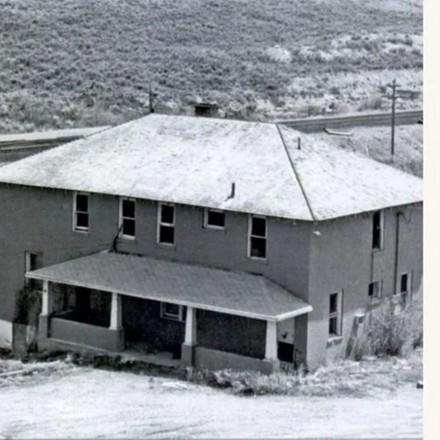
During Prohibition, many Kemmerer residents made little effort to hide their drinking, as it was a southern and eastern European cultural norm and popular with the white men who worked the area’s mines. Isabel Burns migrated to Kemmerer in the 1880s and later established the brothel she named the Southern Hotel, which catered to illegal activities like prostitution and drinking. Burns and her successors operated the Southern Hotel for seven decades, throughout all of Prohibition, and continuously offered drinking and prostitution, regardless of legality. For its size, Kemmerer hosted a disproportionately large number of saloons and brothels like the Southern Hotel, which testified to local positive sentiment toward alcohol and cultural autonomy.
In addition to establishments like the Southern Hotel, well-documented arrests for alcohol possession and public intoxication highlight the prominence of drinking in Kemmerer during Prohibition. While police were generally tolerant of illegal alcohol consumption—acknowledging the town’s large immigrant population—the widespread nature of drinking still led to arrests, often for disrupting the peace. The <em>Kemmerer Gazette</em> reports indicate that authorities arrested people on alcohol-related charges, typically for public intoxication, operating stills, or alcohol distribution.
For example, the 20 April 1927 issue of the paper reported two separate intoxication cases from earlier that month. Both men paid $25 in fines (around $450 today). According to the paper, the first man, E. L. Mitchell, “made his rounds, proceeding to hit the high spots,” and caused a “rucus” at the Kemmerer hotel, thanks to “the potency of Kemmerer’s supply of moonshine, which will give a jackrabbit enough nerve to defy a bulldog.” The second man, a railroad worker from Mexico, “got all corned up on moonshine [then] ran a muck on the streets of Kemmerer.” Authorities incarcerated both men not merely for drinking, but for disorderly public conduct.
Kemmerer’s Prohibition history tells not a story of law, but a tale of western mining culture. As immigrants arrived for railroad and mining jobs, they brought customs wherein drinking was a way of life. When Prohibition criminalized that lifestyle, the law did not erase people’s culture. Places like the Southern Hotel thrived not because people wanted to rebel, but because they wanted to keep living as they always had. Kemmerer’s Prohibition history is one of colliding international and mining cultures withstanding the force of national reform.</p><p><em><strong><a href="https://www.intermountainhistories.org/items/show/895">For more (including 3 images) view the original article</a></strong></em></p>]]></summary>
    <published>2025-09-23T15:34:47+00:00</published>
    <updated>2026-04-17T19:32:20+00:00</updated>
    <link rel="alternate" type="text/html" href="https://www.intermountainhistories.org/items/show/895"/>
    <id>https://www.intermountainhistories.org/items/show/895</id>
    <author>
      <name>Scarlett Kluge, Northern Arizona University </name>
    </author>
  </entry>
  <entry>
    <title type="html"><![CDATA[The Mint Bar – Sheridan, Wyoming]]></title>
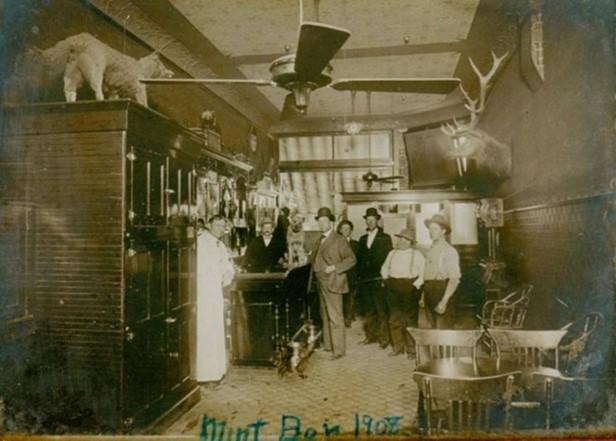
    <summary type="html"><![CDATA[<p><strong><em>In 1907 Charles “Dick” Marlow founded the Mint Saloon in Sheridan, WY. When Wyoming Prohibition laws banned alcohol in 1919, Marlow rebranded “the Mint” as legal storefronts but continued illegal alcohol sales. In 1935, post-Prohibition, the Mint Bar reopened its storefront as a bar. Today, the Mint Bar is still a staple of entertainment in Sheridan, Wyoming.</em></strong></p><img src="https://www.intermountainhistories.org/files/fullsize/634d0740f89c76472de8ecde2b526e01.jpg" alt="The Mint Bar in 1907, shortly after opening. " /><br/><p>In 1907 Charles “Dick” Marlow bought the building that would later become the Mint Bar from a barber and transformed it into the “Mint Saloon,” which locals often referred to as “the Mint.” In 1919, Wyoming passed laws banning the sale and consumption of alcohol unless for prescribed medicinal purposes. At this time, Marlow changed the Mint’s front into a dress shop, then a real estate office, while continuing alcohol sales in the back. In 1923, Oran Moore purchased the Mint, turning it into the “Mint Cigar Company and Soda Shop.” Between 1923 and 1930, Moore operated the Mint’s legal front while maintaining one of Sheridan’s more notorious speakeasies and gambling halls in the back.
During this time, law enforcement suspected the Mint of alcohol sales and conducted multiple raids on the location. On 23 June 1925, the <em>Sheridan Post Enterprise</em> published an article describing a moonshine bust at the Mint. Sheridan town sheriffs and a Wyoming state officer raided the Mint at four o’clock in the afternoon. Police discovered one gallon of moonshine whiskey hidden in a coffee pot by employees. The officers arrested Moore and several other employees. The court fined Moore $500.
On Tuesday, 23 June 1925, an article appeared in the <em>Sheridan Post Enterprise</em> about the officer’s raid at the Mint. A month later, the paper published a follow-up article on Tuesday, 07 July 1925, which mentioned that the court judge postponed the Mint employees’ trial. Lax police and judicial enforcement meant that raids, arrests, and trials like this never prevented the Mint from selling illegal alcohol. The establishment continued its bootlegging and alcohol sales until the stock market crash of 1929 forced Moore to close its doors. In 1933, the United States’ Twenty-first Amendment ended Prohibition, and Wyoming dissolved its alcohol ban.
In 1934, Archie Milson and Robert Thirlwell purchased the establishment and reopened the space as “the Mint Bar.” In 1948, the owner at the time, Lauren L. McVean, renovated the Mint Bar, giving the location its warm rustic style and now iconic bucking horse and cowboy neon sign. Cowboys, locals, travelers, and even celebrities like Ernest Hemingway once again made the bar a popular stop because of its historic charm, great beer, and gambling.
The Mint Bar’s story shows how Prohibition reshaped Sheridan without breaking its spirit. The hidden bar was a gathering place for cowboys and townsfolk alike. Raids and fines were a constant threat, but the establishment’s patrons remained loyal. After Prohibition, the Mint Bar never lost its notoriety. Today, “Meet me at the Mint” is now a signature phrase shared between Sheridan locals. The Mint Bar’s history is a nod to Western independence and resilience.</p><p><em><strong><a href="https://www.intermountainhistories.org/items/show/894">For more (including 4 images) view the original article</a></strong></em></p>]]></summary>
    <published>2025-09-23T15:34:46+00:00</published>
    <updated>2026-04-17T19:32:20+00:00</updated>
    <link rel="alternate" type="text/html" href="https://www.intermountainhistories.org/items/show/894"/>
    <id>https://www.intermountainhistories.org/items/show/894</id>
    <author>
      <name>Scarlett Kluge, Northern Arizona University </name>
    </author>
  </entry>
  <entry>
    <title type="html"><![CDATA[Bootlegging, Immigrants, and Crime in Prohibition-Era Fort Collins]]></title>
    <summary type="html"><![CDATA[<p><strong><em>By 1896, the Temperance Movement in Fort Collins celebrated the issuance of Ordinance No. 8 prohibiting the purchase, sale, and gifting of alcohol. The ordinance paved the way for years of crime, illicit trade, and legal conflict as bootleggers worked to meet Fort Collin's continuing demand for alcohol.</em></strong></p><img src="https://www.intermountainhistories.org/files/fullsize/3ab0e6698166c5e00fccc4a98c981820.jpg" alt="Moonshiner Still" /><br/><p>As a result of city-wide prohibition starting in 1896, crime rates in Fort Collins increased. Skirmishes between law enforcement and drunken residents were a common sight, and cases of illegal intoxication often resulted in incarceration into the town’s local “Drunk Tank” or “calaboose." Frequent distillery raids led to additional arrests.  According to an account from Larimer County Sheriff’s officer Orville Pollock Kelly, getting rid of the stills was the “main problem.” During the eight years he worked at the sheriff's office (1925-1933) he never witnessed or heard of anyone being shot in the capture of a whiskey still.</p><p>Immigrants of Russian, German, and Histpanic descent had unique experiences during Fort Collins prohibition. Discrimination took many forms. For many, even making purchases at the grocery store was problematic, as only a select few stores would serve immigrants. Economic disparity between immigrants and white Americans in an already tight economy left some immigrant families seeking ways to augment their income. Some turned to the illicit manufacture and sale of alcohol. When asked what he remembered about bootlegging, lifelong Fort Collins resident Walter Salisbury recalled that the moonshining stills up in the foothills were largely operated by Mexican immigrants. Wages for these people were particularly poor, and discrimination allowed for very few advancement opportunities. Thus the “Bootlegger” scene in Fort Collins came to life, with an old race track located by what is now City Park serving as a “hot spot” of bootlegging activity. </p><p>One notable bootlegger, Cleofas Ambriz, held a daytime occupation as a sugar beet factory laborer but constructed his own still to help combat the poor living conditions. Ambriz explicitly made a point not to sell his moonshine to white members of the community for fear of the legal consequences should he be discovered. Eventually he was caught conducting business in Denver, which temporarily stalled his operations. However, Ambriz’s secret business resumed upon his return to Fort Collins. Salisbury recounted another instance when a Mexican moonshiner who lived near him was imprisoned the man’s son continued with running his father's bootlegging business. </p><p>In Fort Collins, alcohol was sometimes transported and sold through tunnels that ran beneath the streets of Old Town. In the early years of prohibition in Fort Collins (1884-1895), these tunnels were sometimes home to “sampling rooms,” defined as a “quiet, calm environment” where alcohol could be traded and purchased. Other cities in the intermountain west have similar stories, including, for example, Ogden Utah, which has legends of a city-wide tunnel network used for all manner of illicit activities.  </p><p>In 1933, federal prohibition was overturned, and 3.2% alcohol beer was legalized with the passage of the Cullen-Harrison Act. For Fort Collins, however, this was not the end of prohibition altogether, but rather a long period during which the community negotiated the degree to which alcohol should be a legal part Fort Collins life.</p><p><em><strong><a href="https://www.intermountainhistories.org/items/show/132">For more (including 5 images) view the original article</a></strong></em></p>]]></summary>
    <published>2018-02-01T19:42:47+00:00</published>
    <updated>2026-04-17T19:32:00+00:00</updated>
    <link rel="alternate" type="text/html" href="https://www.intermountainhistories.org/items/show/132"/>
    <id>https://www.intermountainhistories.org/items/show/132</id>
    <author>
      <name>Caroline Cutshall, Alan Linenburger, Devan Walsh, and Matt Witczak, Colorado State University</name>
    </author>
  </entry>
</feed>