Route 66
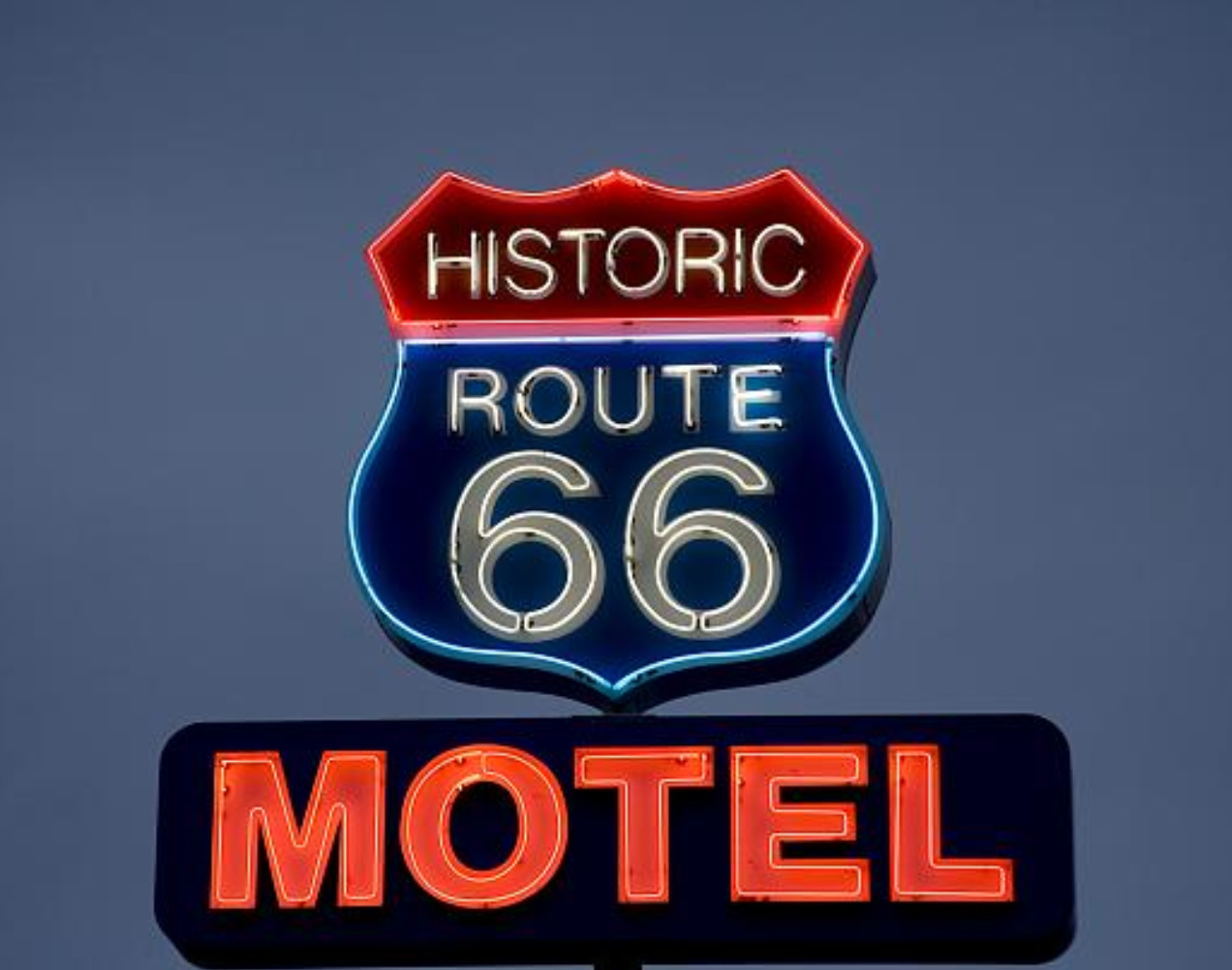
Photograph courtesy of and used with permission by the Library of Congress.
Route 66 is famous for its 1950s era diners and eclectic curio shops, but it was a road traveled long before it was paved and has remained iconic even after it was removed from the highway system.
Route 66 revolutionized cross country travel in America. With mass auto production and transportation accessibility on the rise, the highway’s construction in 1926 was truly a product of its time. Beginning in Chicago, Illinois and ending in Santa Monica, California the new highway gave Americans a convenient way to travel west, a practice that had become increasingly popular the previous century.
Route 66 was planned around several trade routes and old roads. Geographically similar paths had been used by Kiowas, Cheyennes, Comanches, and other Native peoples for centuries. In later years these paths continued to be well traversed by Euro-Americans. Many of the automobiles on the highway were occupied by migrants, but there were plenty of vacationers as well. An exciting new concept, the “road trip,” was born in the 1920s providing Americans with the opportunity to create a grand adventure of their own.
As one of the original U.S. highways Route 66 was often called “America’s Main Street” in its early days, and later, “The Mother Road,” as coined by John Steinbeck. Whole communities and businesses were established along the highway which thrived off of tourism. In the 1930s about 200,000 migrants drove cars, took trains, and even walked along Route 66, hoping for a better chance of survival and solace further west. The end goal was often California, but most of them ended up settling somewhere else along the way. America’s involvement in World War II a decade later called for the rationing of gas. This changed the demographic of highway traffic, but did not diminish it. Transportation of war supplies, military troops, and new job opportunities brought another wave of westward travelers in the mid 1940s. As the war ended, patriotism and an increased emphasis on the nuclear family led to another boom in tourism. A long drive along Route 66, a stop for dinner and photo ops, and a night or two in a roadside motel made for a relatively affordable family vacation.
Beginning in 1957, Route 66 was gradually replaced by Interstate 40, whose gradual construction was mostly completed by the 1970s. Traversing similar east-west latitudes, it became the preferred route designated highway for cross country travel. Much like familiar boom-bust cycles associated with gold and other mining rushes in the West, the sudden shift of traffic away from Route 66 resulted in an abundance of ghost towns. Now, it is the nostalgia of Route 66 and its seemingly permanent existence in the past that attracts tourists. Not everyone picked up and left town when the “rush” was over. Many of the businesses that either stayed open or have since been reopened have made a living off of nostalgia, curiosity, and the prospect of adventure.
Images
Photograph courtesy of and used with permission by the Library of Congress.
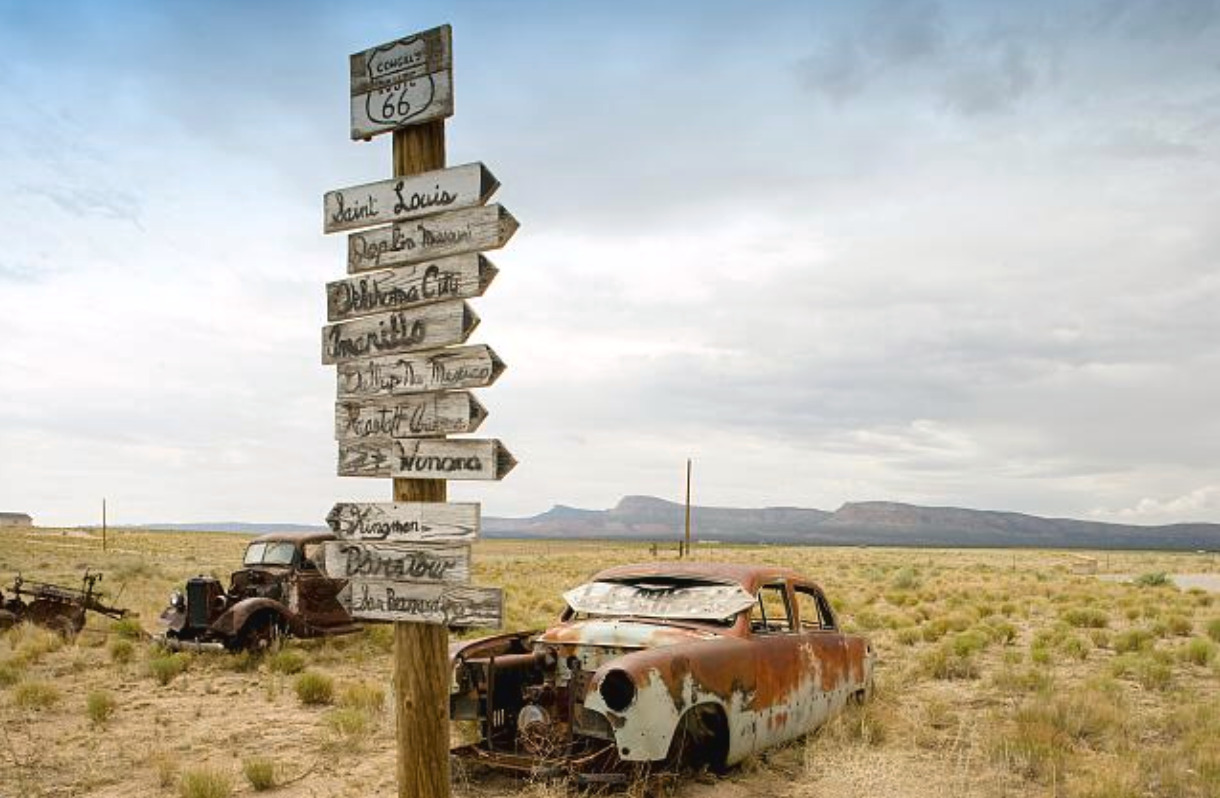
Photograph courtesy of and used with permission by the Library of Congress.
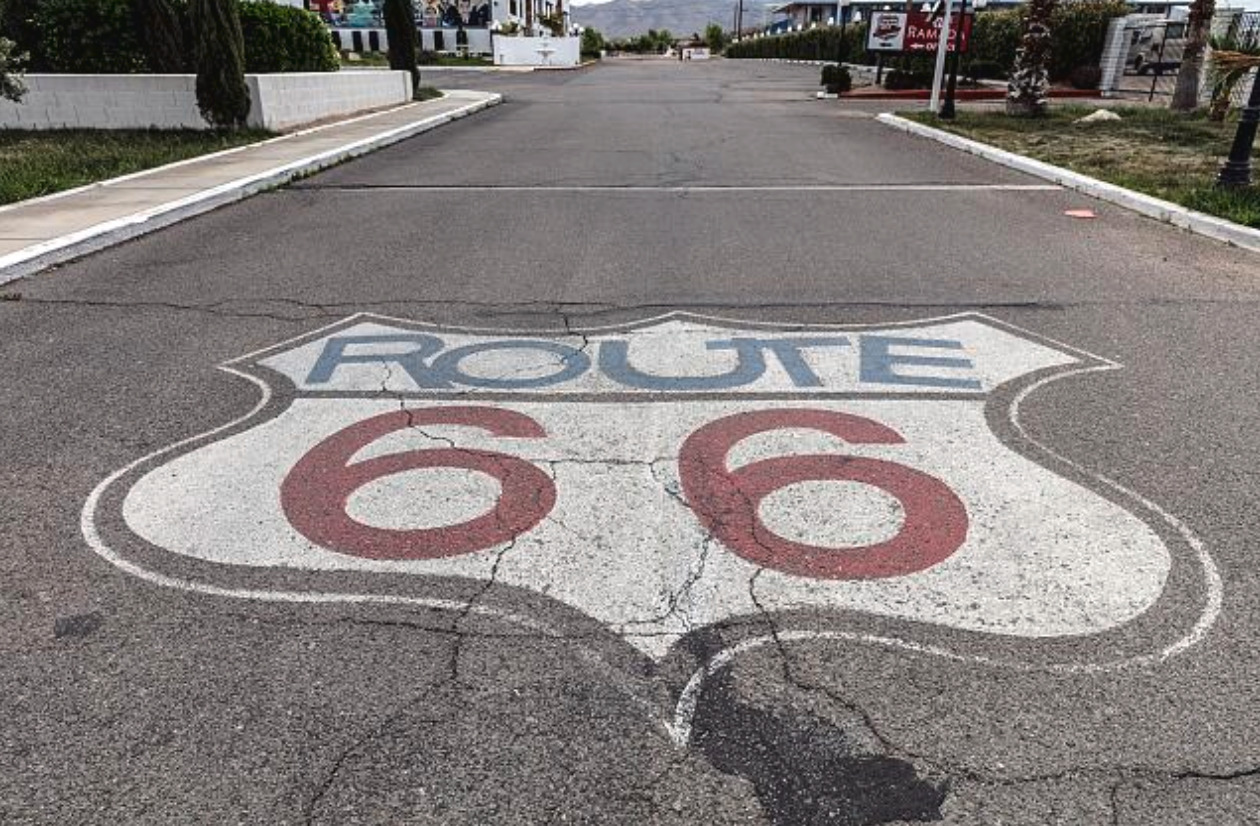
Photograph courtesy of and used with permission by the Library of Congress.

Photograph courtesy of and used with permission by the Library of Congress.