<?xml version="1.0" encoding="UTF-8"?>
<feed xmlns="http://www.w3.org/2005/Atom">
  <title type="text">Intermountain Histories</title>
  <updated>2026-04-17T19:32:16+00:00</updated>
  <generator uri="http://framework.zend.com" version="1.12.20">Zend_Feed_Writer</generator>
  <link rel="alternate" type="text/html" href="https://www.intermountainhistories.org/"/>
  <link rel="self" type="application/atom+xml" href="https://www.intermountainhistories.org/items/browse?output=rss2"/>
  <id>https://www.intermountainhistories.org/</id>
  <author>
    <name>Intermountain Histories</name>
    <uri>https://www.intermountainhistories.org</uri>
  </author>
  <link rel="hub" href="https://pubsubhubbub.appspot.com/"/>
  <entry>
    <title type="html"><![CDATA[The Escalante Cross: A Reminder of Utah&#039;s Past]]></title>
    <summary type="html"><![CDATA[<p><strong><em>The Declaration of Independence was not the only progress to be made in America in the year 1776. Spanish explorers Dominguez and Escalante became known as the first Europeans to document travels in what would become Utah Territory. Their initial intention to convert Natives on their journey towards California made way for future explorers to discover the Utah Territory.</em></strong></p><img src="https://www.intermountainhistories.org/files/fullsize/b81d7023fc173daf29504bcf4bd4178b.jpg" alt="Dominguez Plaque" /><br/><p><span style="font-weight:400;">In 1776, two Spanish friars, </span><span style="font-weight:400;">Silvestre Vélez de</span><span style="font-weight:400;"> Escalante and </span><span style="font-weight:400;">Atanasio</span><span style="font-weight:400;"> Dominguez, chose to traverse the American West in search of a northern route to the missions of California. At the time, both Mexico and Spain claimed ownership of the territory. The journey became known for its historical success thanks to Escalante’s journal, which contains the first map of Utah. Beginning the exploration in Santa Fe,  Dominguez and Escalante observed and recorded landmarks that would help future explorers find their way. These recordings also helped governments know and understand the rich opportunities that lay in these lands. The journey was full of dangers for the small group, and they crossed many western states such as Utah, Colorado, and Arizona, among others. The explorers ventured through modern-day Dinosaur National Monument, down through Strawberry, Utah and eventually made their way through Spanish Fork Canyon. This path directly influenced the erection of Escalante’s Cross in Spanish Fork, Utah. </span>
<span style="font-weight:400;">These two Spanish missionaries paved the way for other explorers such as John C. Fremont to encourage The Church of Jesus Christ of Latter-Day Saints to one day settle in Utah. Escalante’s cross, located in Spanish Fork, was dedicated May 1, 1981, sponsored by The Knights of Columbus Father Escalante Council to honor Dominguez and Escalante’s expedition. It was recently restored on October 31, 2015 thanks to a member of the Woodland Hills Scout Troop’s Eagle project. The cross majestically overlooks the entrance to Spanish Fork Canyon and stands brilliantly white against the mountain range beyond. </span>
<span style="font-weight:400;">Today, the site seems like an almost forgotten piece of history. However, one sign remains in the form of a plaque at the base of the cross. It has become a beloved hike here in Utah because of the landscape’s beautiful greenery and various paths leading from the cross. Escalante Cross stands as a reminder to Utah residents of earlier explorers who literally put Utah on the map. </span></p><p><em><strong><a href="https://www.intermountainhistories.org/items/show/733">For more (including 3 images) view the original article</a></strong></em></p>]]></summary>
    <published>2023-04-05T19:50:24+00:00</published>
    <updated>2026-04-17T19:32:16+00:00</updated>
    <link rel="alternate" type="text/html" href="https://www.intermountainhistories.org/items/show/733"/>
    <id>https://www.intermountainhistories.org/items/show/733</id>
    <author>
      <name>Holly Stirling, Brigham Young University</name>
    </author>
  </entry>
  <entry>
    <title type="html"><![CDATA[Santo Tomas de Abiquiu: A Genízaro Settlement on the Spanish Frontier]]></title>
    <summary type="html"><![CDATA[<p><strong><em>The town of Santo Tomas de Abiquiu, a Genízaro settlement established in 1754, served as a vital defensive settlement and trading post for Colonial New Mexico. The Genízaros who lived there—formerly enslaved detribalized indigenes—experienced the brutal life of the Spanish imperial frontier.</em></strong></p><img src="https://www.intermountainhistories.org/files/fullsize/c051def285f42825c44765693e65a4be.jpg" alt="Abiquiu in the 1910s" /><br/><p>Throughout the second half of the 18th century, detribalized Native Americans known as Genízaros (pronounced heh-NEE-sah-ros) relocated to land bordering colonial New Mexico and Indigenous territory through a series of land grants from imperial Spain. These settlements played an important role in facilitating trade between New Mexico and Indigenous tribes while also providing a form of colonial defense from other indigenous raiding parties by acting as a buffer zone for the villages of the Rio Chama Valley. The Genízaro settlement of Santo Tomas de Abiquiu was formed in 1754 when Governor Tomas Cachupín issued a land grant to a group of thirty-four Genízaro families. The settlement was about 60 miles north of Santa Fe.
The Genízaros were both Indigenous former slaves and the descendents of former slaves. It was often the case that Indigenous slaves who reached an age of maturity, who married, or whose enslavers released them from their <em>rescate </em>(“ransom and redemption”) debt, received their freedom. These former slaves experienced minimal economic and social mobility. Most had to work menial tasks to survive and were often the poorest members of their communities. Some found success in working as scouts and interpreters, or in Spanish auxiliary military forces. Land grants, like the one that established Abiquiu, were one of the few ways Genízaros could obtain their own property and experience greater economic mobility.
As the Spanish imperials had hoped, Abiquiu throughout its existence served as a buffer against Ute, Navajo, and Comanche raids. And like other Genízaro settlements Abiquiu also became an important waypoint for trade with other indigenous peoples, and Abiquiu became an important frontier trading post. Thanks to a treaty of friendship negotiated between Governor Cachupín and the Ute people, Abiquiu became the site of Ute trading fairs, especially in the late autumn months. In 1786, Spain the the Comanche signed a treaty to further trade between the people of Abiquiu and other Indigenous groups.
Despite the important role Genízaro settlements played as a link between Colonial Spain and Indigenous groups, Genízaros and Spanish settlers had a fraught relationship. A series of witch trials, originating in Abiquiu and spreading throughout the region, revealed the tensions that existed both between Spaniards and Genízaros, as well as the tensions that existed between Genízaros of differing beliefs and cultural/tribal backgrounds. Genízaros made up both accused and accusers, and Spanish inquisitorial courts condemned many Genízaros’ traditional spiritual beliefs as satanic. In the end, the Inquisition never executed any accused Genízaro, but inquisitors did torture many and sentence others to perpetual servitude in Spanish Catholic homes, revealing the fragility of Genízaro freedom.
More recently, Abiquiu has been the site of important Indigenous land right battles. While the United States’ Court of Private Land Claims validated the Genízaros’ 16,000 acre land grant in 1894, some disputes over dispossessed Genízaro land remained unresolved for nearly a century. In 1969, the United States returned National Forest lands to Genízaro families, in part thanks to help from the Presbyterian Church. Later, in 2008, New Mexico expanded the land they recognized as part of the historical grant and returned another 32.5 acres to the Genízaro community.</p><p><em><strong><a href="https://www.intermountainhistories.org/items/show/631">For more (including 3 images) view the original article</a></strong></em></p>]]></summary>
    <published>2022-07-01T01:02:07+00:00</published>
    <updated>2026-04-17T19:32:13+00:00</updated>
    <link rel="alternate" type="text/html" href="https://www.intermountainhistories.org/items/show/631"/>
    <id>https://www.intermountainhistories.org/items/show/631</id>
    <author>
      <name>Jacob Morrison, Brigham Young University</name>
    </author>
  </entry>
  <entry>
    <title type="html"><![CDATA[Slave Trade on the Old Spanish Trail]]></title>
    <summary type="html"><![CDATA[<p><strong><em>Indigenous slavery in the United States has deep roots in native societies, and Spanish and Mexican traders took advantage of that in what became Utah Territory. </em></strong></p><img src="https://www.intermountainhistories.org/files/fullsize/db511dc6fc44435eee5a2e980a5d637d.jpg" alt="Old Spanish Trail" /><br/><p>Slavery existed across the precontact North American continent even before the first Europeans set foot within the confines of modern Utah. It was an integral part of indigenous societies; captives were regularly taken as spoils of war and thereafter either kept to demonstrate the captor’s power, traded to establish peaceful relations with other tribes, or incorporated into the captor’s tribe to replace lost family members.
European colonization and expansion introduced a demand for large numbers of indentured servants or enslaved laborers which the indigenous slave trade adapted to meet. Indigenous slavers equipped with European guns and horses preyed upon neighboring tribes, fueling the depopulation of indigenous peoples through slave raiding, warfare, and disease transmission.
Spain officially declared slavery illegal in 1811 but did virtually nothing to eradicate it, and Spanish colonizers sometimes even perpetuated it. Religious fervor from the Reformation further added difficulty: Spanish and other Europeans believed indigenous peoples needed to be “saved” by the “civilizing” influence of Christianity and Western Europe. Claiming charity, colonizers bought and sold their fellow human beings on a grand scale to build new empires.
Although technically illegal under Spanish and Mexican rule, the indigenous slave trade flourished in the Great Basin region that became Utah Territory. Ute enslavers raided far and wide as well as close to home for captives whom they bartered to New Mexican traders plying the Old Spanish Trail. The trade in enslaved persons constituted a significant portion of the region’s economy.
When members of The Church of Jesus Christ of Latter-day Saints (sometimes called Mormon pioneers) arrived in the Great Basin in 1847, they entered a part of the country steeped in the indigenous slave trade. While a few Latter-day Saints themselves claimed ownership of enslaved Black Americans whom they brought to the territory, other Latter-day Saints, sometimes from the American northeast or from Europe, opposed slavery and favored abolition. Euro-American Latter-day Saints initially avoided dealing with slavers, who tortured or killed their captives to excite pity from the settlers. 
After some Latter-day Saints tried rescuing a few children from captivity by trading for them, Church leaders encouraged the strategy, and Latter-day Saints’ involvement in the indigenous slave trade became complicit. Motivated by a paternalistic desire to save indigenous captives from their captors, the need for enslaved labor, and religious zeal, Church leadership urged members to buy as many indigenous slaves as they could.
Mormon efforts to save indigenous slaves from destitution and make them “pure and delightsome” frequently met no success. The mortality rate for child slaves was exceedingly high, and very few of those taken into Mormon households even survived to maturity. It was rare for Latter-day Saint men to marry indigenous women, and only a few indigenous men are known to have married white women.
Under early Utah territorial law, Latter-day Saints could legally acquire indigenous indentures and keep them for up to twenty years as long as they allowed their charges to attend school for three months each year. Slavery in Utah Territory was outlawed on June 19, 1862, when Congress abolished slavery in all federal territories.</p><p><em><strong><a href="https://www.intermountainhistories.org/items/show/587">For more (including 3 images) view the original article</a></strong></em></p>]]></summary>
    <published>2022-04-09T09:19:55+00:00</published>
    <updated>2026-04-17T19:32:12+00:00</updated>
    <link rel="alternate" type="text/html" href="https://www.intermountainhistories.org/items/show/587"/>
    <id>https://www.intermountainhistories.org/items/show/587</id>
    <author>
      <name>Jordan Pueblo, Brigham Young University</name>
    </author>
  </entry>
  <entry>
    <title type="html"><![CDATA[The Kuaua Pueblo Ruins and the Coronado Historic Site]]></title>
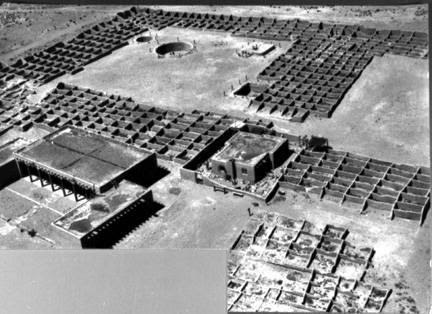
    <summary type="html"><![CDATA[<p><strong><em>During Francisco Vasquez de Coronado’s expedition to New Mexico in the 1540s, he came into contact with the Tiwa people who lived in pueblos near modern-day Albuquerque. In the 1930s, archaeologists excavated the ruins of Kuaua, one of the largest pueblos. These ruins currently constitute a large part of the Coronado Historic Site.</em></strong></p><img src="https://www.intermountainhistories.org/files/fullsize/abc8c5fc50ca9f4f5d8bae95e244cdb1.jpg" alt="Kuaua ruins, Coronado State Monument, 1940" /><br/><p>Archaeologists located the Kuaua Pueblo ruins just north of Albuquerque, New Mexico along the banks of the Rio Grande River. Created as part of the 400th anniversary of Francisco Vasquez de Coronado’s entry into New Mexico, the Coronado History Site references the expedition’s interactions with local Tiwa villages. Kuaua, a name meaning “evergreen” in Tiwa, was one of the largest of these villages and may have been the site of Coronado’s winter headquarters during the expedition. Archaeologists have estimated that the Tiwa settled this village in the fourteenth century and likely contained more than one thousand people when they came into contact with Coronado. However, conflict over the years with Coronado and other Spanish explorers eventually led to the Tiwa’s abandonment of Kuaua Pueblo in the sixteenth century.</p><p>When the archaeological team excavated the Kuaua Ruins in the 1930s, they uncovered more than 1,200 adobe rooms, three ceremonial rooms, and six kivas. Several of the kivas contained a series of murals that many revere today as some of the best examples of Pre-Columbian artwork in the United States. Kuaua religious murals flourished throughout the fourteenth, fifteenth, and sixteenth centuries, reflecting religious and cosmological iconography such as references to rain, rainbows, clouds, lightning, and ritual figures engaging in rain-making rituals. These rituals formed an important part of Pueblo culture and religion due to the region’s general climate of minimal precipitation. </p><p>Thanks to extensive conservation efforts since the 1930s, the murals have been preserved for modern viewing. The Coronado Historic Site includes a Visitor Center, which features fourteen examples of original mural artwork as well as Pueblo Indian and colonial Spanish artifacts. Several trails throughout the ruins of the pueblo and along the Rio Grande River provide exploration opportunities for visitors wishing to more authentically learn about the Tiwa Pueblo culture and lifestyle.</p><p><em><strong><a href="https://www.intermountainhistories.org/items/show/404">For more (including 3 images) view the original article</a></strong></em></p>]]></summary>
    <published>2020-03-11T22:43:42+00:00</published>
    <updated>2026-04-17T19:32:08+00:00</updated>
    <link rel="alternate" type="text/html" href="https://www.intermountainhistories.org/items/show/404"/>
    <id>https://www.intermountainhistories.org/items/show/404</id>
    <author>
      <name>Sarah Rounsville, Brigham Young University</name>
    </author>
  </entry>
  <entry>
    <title type="html"><![CDATA[El Palacio de los Gobernadores: The First American Revolution]]></title>
    <summary type="html"><![CDATA[<p><strong><em>The late 17th century saw drought, increased nomadic raiding, and religious repression for Rio Grande Puebloan peoples. The arrest of forty-seven Pueblo religious leaders was the last straw. After planning his rebellion for five years, Popé and the Rio Grande Pueblo warriors converged around Santa Fe, but not before executing twenty-one of the thirty-three Franciscan missionaries in New Mexico.</em></strong></p><img src="https://www.intermountainhistories.org/files/fullsize/af94482953bc232618fa3f72c9a764ce.jpg" alt="[Untitled]" /><br/><p>        The Palace of the Governors in Santa Fe was built in 1610 with the rest of the early town. It served as the governing seat of New Mexico from 1610 to 1886.  </p><p>The arrest of forty-seven Puebloan spiritual leaders by Governor Juan Francisco Treviño in 1775 exacerbated the deepening rifts between the Pueblo people and the Spanish colonial administration in New Mexico. The Pueblo Revolt, started by one of the forty-seven leaders released at arrowpoint by Governor Treviño, started in 1680 and quickly spread through the countryside. Churches and haciendas were burnt to the ground, and Pueblo armies quickly reached Santa Fe. </p><p>The Pueblo warriors besieged the Palace of the Governors. Governor Antonio de Otermin led a desperate sally out of the Palace which Pueblo forces, under Juan, a Tano man sporting a Spanish leather jacket, arquebus, sword, and dagger, rebuffed. As the Rio Grande Pueblo numbers swelled with reinforcements from the northern pueblos, the situation began to look more and more grim for the Spaniards barricaded in the Palace of the Governors. After five days of siege, running dangerously low on water and food supplies, Otermin ordered another charge, which took the Pueblo warriors by surprise. The previously cornered Spaniards were able to rout enough of the Pueblo force to escape the city the next day. </p><p>Two Spanish groups, one from Santa Fe and another that hid in the Isleta Pueblo (who did not participate in the revolt) headed by the lieutenant governor of New Mexico, met at Socorro, New Mexico, on September 6, 1680. Otermin had Alonso Garcia, his lieutenant governor, arrested for not assisting Santa Fe in its time of need, but released him upon hearing the official’s story, which included being informed that everyone up north was already dead. The defeated Spanish then headed to El Paso and were expelled from New Mexico for the next twelve years, ending the first Spanish occupation of New Mexico.</p><p>Diego de Vargas retook the  Palace of the Governorsduring his reconquest of New Mexico, and served as his government’s seat. Neither the Mexican  nor  early American period saw a new capitol building until 1886. The Palace  served the public as the New Mexico History Museum between 1909 and 2009. The state then built a larger building next to it to house the museum collections, and the Palace of the Governors itself is now only part of the museum. The building saw many iterations of remodeling and change during its later periods. A particularly dramatic episode followed the popularity of the Pueblo Revival style, which resulting in the complete transformation of the historic Santa Fe area.</p><p><em><strong><a href="https://www.intermountainhistories.org/items/show/328">For more (including 3 images) view the original article</a></strong></em></p>]]></summary>
    <published>2019-09-12T06:35:54+00:00</published>
    <updated>2026-04-17T19:32:06+00:00</updated>
    <link rel="alternate" type="text/html" href="https://www.intermountainhistories.org/items/show/328"/>
    <id>https://www.intermountainhistories.org/items/show/328</id>
    <author>
      <name>Edgar I Bernal Sevilla, Northern Arizona University</name>
    </author>
  </entry>
  <entry>
    <title type="html"><![CDATA[Taos Pueblo and the Beginning of a Revolution]]></title>
    <summary type="html"><![CDATA[<p><strong><em>Popé, a religious leader from Ohkay Owingeh Pueblo, retreated to Taos Pueblo after he and his fity fellow Pueblo shamans were released by the Spanish following a tense standoff with a rapidly assembled Pueblo retaliatory force. Once there, he began to hatch a plot to remove the Spanish and their oppressive faith from the Rio Grande Pueblos once and for all.</em></strong></p><img src="https://www.intermountainhistories.org/files/fullsize/d23144a67c92794d3a59b293381ebecd.jpg" alt="[Untitled]" /><br/><p>       Taos Pueblo’s remote location has instilled a fierce independence in its native people. The people of Taos tell that they arrived to the site following an eagle which dropped two feathers on opposite sides of two streams. This was an indication that the people should settle here. </p><p>Since Taos was on the very periphery of Spanish rule, it was more able to defend its customs than other pueblos. Twenty years before the Pueblo Revolt, the Taos people demolished the San Geronimo de Taos mission and executed the resident priest. The Spanish rebuilt the mission  soon after, but then Taos Puebloans demolished it again during the Pueblo Revolt. </p><p>After being imprisoned by the Spanish along with forty-six other Pueblo religious leaders, Popé realized that the Spanish needed to be removed from New Mexico permanently in order for the Puebloan people to have peace and religious freedom. He was set free by armed Puebloan warriors who were furious at the execution of three of Popé’s fellow spiritual leader prisoners. Once free, he moved from his native Ohkay Owingeh pueblo to the more distant Taos Pueblo, where he could operate from a safer position. He spent the next five years organizing the pueblos to rebel against the Spanish. Popé promised his supporters that when the Spanish were sent back to Mexico, the Pueblo deities would reward the Pueblos with peace and prosperity. When he had acquired sufficient support, he handed out knotted cords to the leaders within his network. These came with instructions that the holders of the cords needed to untie a knot every day, and that when the cord was free of knots, it was time to attack. He chose not to send cords to the southern Pueblos; he doubted their loyalty due to their stronger willingness to adopt Spanish customs. </p><p>The Pueblo Revolt ignited on August 11, 1680.  Puebloans burned down missions  as the first targets of the revolt, with twenty-one of the thirty-three Franciscans in New Mexico being killed on the first day. The Spaniards that were able to escape from the hinterlands fled to Santa Fe, where Governor Otermin had barricaded himself within the Palace of the Governors and some fortified parts of the plaza. The siege of Santa Fe started three days later. </p><p>Taos retained its independence from Spanish reconquest a little longer than other pueblos due to its distance from Santa Fe. Once back within the Spanish sphere, it became a prosperous center of trade between the the Hispanosphere and the nomadic peoples of the plains and mountains. Taos was the center of the Taos Revolt against the American occupation of New Mexico, which led to the destruction of their mission church and the slaughter of hundreds of people.</p><p>In the present day, Taos Pueblo has been extremely successful in preserving  its culture. It has  the largest traditional multi-story pueblo left and, through fierce court battles against the United States, has  regained access to its Sacred Blue Lake.</p><p><em><strong><a href="https://www.intermountainhistories.org/items/show/327">For more (including 3 images) view the original article</a></strong></em></p>]]></summary>
    <published>2019-09-12T06:19:37+00:00</published>
    <updated>2026-04-17T19:32:05+00:00</updated>
    <link rel="alternate" type="text/html" href="https://www.intermountainhistories.org/items/show/327"/>
    <id>https://www.intermountainhistories.org/items/show/327</id>
    <author>
      <name>Edgar I Bernal Sevilla, Northern Arizona University</name>
    </author>
  </entry>
  <entry>
    <title type="html"><![CDATA[Santa Fe Plaza and Religious Repression: Cracks in the Spanish Walls]]></title>
    <summary type="html"><![CDATA[<p><strong><em>In 1775, Governor Juan Francisco Treviño’s first year in office, he ordered the arrest of forty-seven Puebloan religious leaders and had them stand trial for witchcraft. Santa Fe was shortly surrounded by a force of angry and armed Puebloan men, forcing the governor to release the Pueblo religious leaders. Among those released was a shaman from Ohkay Owingeh Pueblo named Popé, who later became the architect of the Pueblo Revolt of 1680.</em></strong></p><img src="https://www.intermountainhistories.org/files/fullsize/dc5ae6b131aad86760889e5c60b3c176.jpg" alt="[Untitled]" /><br/><p>        The Santa Fe Plaza is a traditional Spanish colonial style city square built in 1610 by the founders of Santa Fe under the orders of Don Pedro de Peralta, the second governor of New Mexico. Like other Spanish colonial plazas, the Santa Fe plaza served as the central hub of its city. It was flanked by the town church, the Palace of the Governors, and the houses of local notables. </p><p>The late 17th century was a period of drought, nomadic raids, and increased political repression for the Rio Grande Puebloan people. The Spanish Franciscan missionaries increasingly asserted their power over the New Mexican colony, culminating in a showdown with the provincial governor, Diego de Peñalosa. Governor Peñalosa arrived in New Mexico in 1661, and governed until ousted by Franciscan political pressure in 1664. While in office, he banned forced Native American labor and worked to preserve Puebloan cultures. This led to excommunication by a local Catholic clergyman, which Peñalosa had arrested, triggering the series of events that led to his ouster and a Mexican Inquisition jail cell.</p><p>The following governor was also not to the local clergymen’s liking, so he was politically forced to retire as well, leading to installation of Governor Juan Francisco Treviño in 1675. He was dedicated to the supremacy of the Catholic faith and the eradication of Puebloan culture. In the same year that he came to power, he ordered Spanish troops to burn kivas and arrest forty-seven Puebloan religious authorities. He then commanded that they all be tried for witchcraft. After three men were executed and a third that was sentenced to death committed suicide, a large, armed group of Pueblo men surrounded the Santa Fe Plaza and demanded that the shamans be released from prison. With most of the Spanish troops of Santa Fe out fighting nomads, Governor Treviño was forced to release the men. One of the men released was determined to end the Spanish period in New Mexico and safeguard the religious traditions of Puebloan people. Popé, a religious leader from the pueblo Ohkay Owingeh, retreated to the safer and more distant Taos Pueblo after he was released, where he would hatch a plan to remove the Spaniards.</p><p>The Santa Fe Plaza continued being the center of city life after the reconquest of New Mexico by Don Diego de Vargas. To this day, it serves as the city center for many communal events like the annual Fiestas de Santa Fe. After the Civil War, the New Mexican government erected a monument  in the middle of the plaza and dedicated to Union troops and Indian fighters. In 1974, an unidentified man chiseled out the word “savage,” which was used to describe indigenous people by the monument’s creators. </p><p><em><strong><a href="https://www.intermountainhistories.org/items/show/326">For more (including 4 images) view the original article</a></strong></em></p>]]></summary>
    <published>2019-09-12T01:11:35+00:00</published>
    <updated>2026-04-17T19:32:05+00:00</updated>
    <link rel="alternate" type="text/html" href="https://www.intermountainhistories.org/items/show/326"/>
    <id>https://www.intermountainhistories.org/items/show/326</id>
    <author>
      <name>Edgar I Bernal Sevilla, Northern Arizona University</name>
    </author>
  </entry>
  <entry>
    <title type="html"><![CDATA[Jemez Pueblo and Resistance to Spanish Rule: Smoldering Tensions]]></title>
    <summary type="html"><![CDATA[<p><strong><em>The Pueblo Revolt took place in 1680, but Spanish power was questioned  in New Mexico before that date. Jemez Pueblo in particular was a fierce opponent for Spanish hegemony, even during the periods of solid Spanish power in New Mexico.</em></strong></p><img src="https://www.intermountainhistories.org/files/fullsize/11a39f61809fe72b06815ac0ee8a35fb.jpg" alt="[Untitled]" /><br/><p>      Jemez Pueblo, or Walatowa, consists of several villages united by a shared background and their unique usage of the Towa language. These villages sit at the mouth of the Cañon de San Diego.</p><p>The formidable fortified villages of Jemez Pueblo were bastions of anti-Spanish sentiment for much of the first period of Spanish occupation of New Mexico. In 1623, fed up with Franciscan demands for labor and forced conversion, the Jemez people burned down the nearby mission of San Jose and retreated into the mountains. The Jemez then returned to their site once they had avoided Spanish retaliation. The mission was rebuilt, but then abandoned in 1639 as sentiments remained hot and the Jemez people continued their recalcitrance in the face of missionary proselytization.</p><p>One of the three Pueblo religious men executed by Governor Juan Francisco Treviño in 1675 was from Jemez. This was likely a calculated decision by Governor Treviño, as the Jemez people had been among the most successful of the pueblos in reining back the influence of Franciscan missionaries. However, Treviño’s plan backfired as many Jemez warriors were present when a force consisting of several pueblos surrounded Santa Fe and demanded the release of the imprisoned religious men. Jemez Pueblo was also one of the most enthusiastic supporters of the Pueblo Revolt of 1680, and it continued its resistance well into the reconquest of New Spain by Diego de Vargas. Although frequently called a “bloodless reconquest,” the account of Jemez Pueblo during Vargas’ takeover shows that it was anything but. San Diego Mesa, where many Jemez had moved during the Pueblo Revolt for safety, was besieged by Vargas and his Keresan speaking allies from Zia and Santa Ana Pueblos on July 24, 1694. The besieging foce killed eighty four Jemez people and captured another 361 by the end of the day. The remaining Jemez population scattered throughout Apache, Navajo, and Hopi lands. </p><p>Several years later, many Jemez returned and reconstituted the pueblo in a much diminished form. Many pueblos suffered during the early nineteenth century rise of nomadic raiding powers like the Comanche and Apachean people. In 1838, seeking safety from nomadic incursions, the people of the Pueblo of Pecos joined the Jemez in Walatowa and were absorbed into the Jemez population. There is still a position in the Jemez government for a “Governor of Pecos.”</p><p>Tourism on Jemez Pueblo lands today is run through the Walatowa Visitor Center. The Towa language, also called the Jemez language, is spoken only by the Jemez people. With around eighty percent of the tribal population speaking it means that the  language is not currently endangered. Jemez Pueblo has been very successful in preserving its culture, and cultural conservation programs run by the Pueblo government have even revived its pottery styles that were lost during the chaotic Vargas reconquest years.   </p><p><em><strong><a href="https://www.intermountainhistories.org/items/show/325">For more (including 3 images) view the original article</a></strong></em></p>]]></summary>
    <published>2019-09-12T00:59:08+00:00</published>
    <updated>2026-04-17T19:32:05+00:00</updated>
    <link rel="alternate" type="text/html" href="https://www.intermountainhistories.org/items/show/325"/>
    <id>https://www.intermountainhistories.org/items/show/325</id>
    <author>
      <name>Edgar I. Bernal Sevilla, Northern Arizona University</name>
    </author>
  </entry>
  <entry>
    <title type="html"><![CDATA[Acoma Pueblo and the Spanish Arrival to New Mexico]]></title>
    <summary type="html"><![CDATA[<p><strong><em>The Spanish actions at Acoma Pueblo on January 22, 1599, heralded a new era of Spanish hegemony in the New Mexico region. The Acoma Massacre, as it would later be known, brutally established a Spanish presence that remained until the Pueblo Revolt of 1680.</em></strong></p><img src="https://www.intermountainhistories.org/files/fullsize/ed90b9ed3edf1f84f4206aafe48d5af3.jpg" alt="[Untitled]" /><br/><p>The Acoma people have inhabited Acoma Pueblo, now called Sky City or Old Acoma, for at least a millenia. Oral history tells that the pueblo was originally located on the similarly sized mesa directly to the east, but that a tragedy led the Acoma people to move their pueblo to the mesa where it currently stands.</p><p>In 1595, Viceroy of New Spain Luis de Velasco gave Juan de Oñate royal permission to colonize the area that is now New Mexico. Five hundred colonists and 7,000 livestock animals accompanied him north. He declared to indigenous leaders of nearby Pueblos that they were all now subject to the King of Spain and the Catholic religion, and that he would be king’s representative. Acoma Pueblo, which was widely known to be the most defensible pueblo in New Mexico, had no delegates there. Oñate sent a small group under his nephew Juan de Zaldivar to receive Acoma’s submission. Accounts of what happened next differ but the Spanish conquistadors under Juan de Zaldivar quarrelled with the Acoma people and their leader Zutacapan, and most accounts also include the Spaniards attempting to forcefully take Acoma food and blankets. The Acoma refused, a fight ensued, and Acoma warriors killed most of the group, including Oñate’s nephew. Only a few Spaniards that jumped from the mesa survived.</p><p>Oñate arrived in January 21 with his army, and fighting raged all of the next day. Eventually, a concealed party of Spaniards armed with cannons and muskets attacked from another side of the mesa and overwhelmed Acoma’s defenses. The Spanish set the pueblo on fire and at the end of the day, 600-800 Acoman people were slain. As additional punishment, on February 12, Oñate decreed that every man over the age of twenty-five would have his right foot cut off and women and children were forced into slavery. While Oñate’s acts of barbarism won him New Mexico, they would later also be partially responsible for him losing it and being stripped of his titles by the Spanish Crown. </p><p>The first Spanish regime in New Mexico focused heavily on evangelizing the many Puebloan peoples, and Acoma was no exception. The friars forced them to drag ponderosa timbers from forty miles away at Mount Taylor in order to build the San Esteban del Rey Mission.</p><p>After the Pueblo Revolt, Acoma people continued to use the mission grounds for feast days and burials, but the friars never again held the power they once did. Only twenty to fifty people currently  inhabit Sky City, the old Acoma hilltop Pueblo, but over five thousand Acoma people are spread out throughout the surrounding reservation lands. The roughly 250 dwellings of Sky City sit atop a massive sandstone mesa. The old pueblo’s population still fluctuates dramatically on weekends and holidays as Acoma people visit their relatives and return to their cultural heartland, while tourists meander on organized tours coming from the Sky City Cultural Center directly beneath the northern edge of the mesa.  </p><p><em><strong><a href="https://www.intermountainhistories.org/items/show/324">For more (including 3 images) view the original article</a></strong></em></p>]]></summary>
    <published>2019-09-11T20:17:37+00:00</published>
    <updated>2026-04-17T19:32:05+00:00</updated>
    <link rel="alternate" type="text/html" href="https://www.intermountainhistories.org/items/show/324"/>
    <id>https://www.intermountainhistories.org/items/show/324</id>
    <author>
      <name>Edgar I. Bernal Sevilla, Northern Arizona University</name>
    </author>
  </entry>
</feed>