<?xml version="1.0" encoding="UTF-8"?>
<feed xmlns="http://www.w3.org/2005/Atom">
  <title type="text">Intermountain Histories</title>
  <updated>2026-04-17T19:32:19+00:00</updated>
  <generator uri="http://framework.zend.com" version="1.12.20">Zend_Feed_Writer</generator>
  <link rel="alternate" type="text/html" href="https://www.intermountainhistories.org/"/>
  <link rel="self" type="application/atom+xml" href="https://www.intermountainhistories.org/items/browse?output=rss2"/>
  <id>https://www.intermountainhistories.org/</id>
  <author>
    <name>Intermountain Histories</name>
    <uri>https://www.intermountainhistories.org</uri>
  </author>
  <link rel="hub" href="https://pubsubhubbub.appspot.com/"/>
  <entry>
    <title type="html"><![CDATA[The Founding of Luccock Park Camp]]></title>
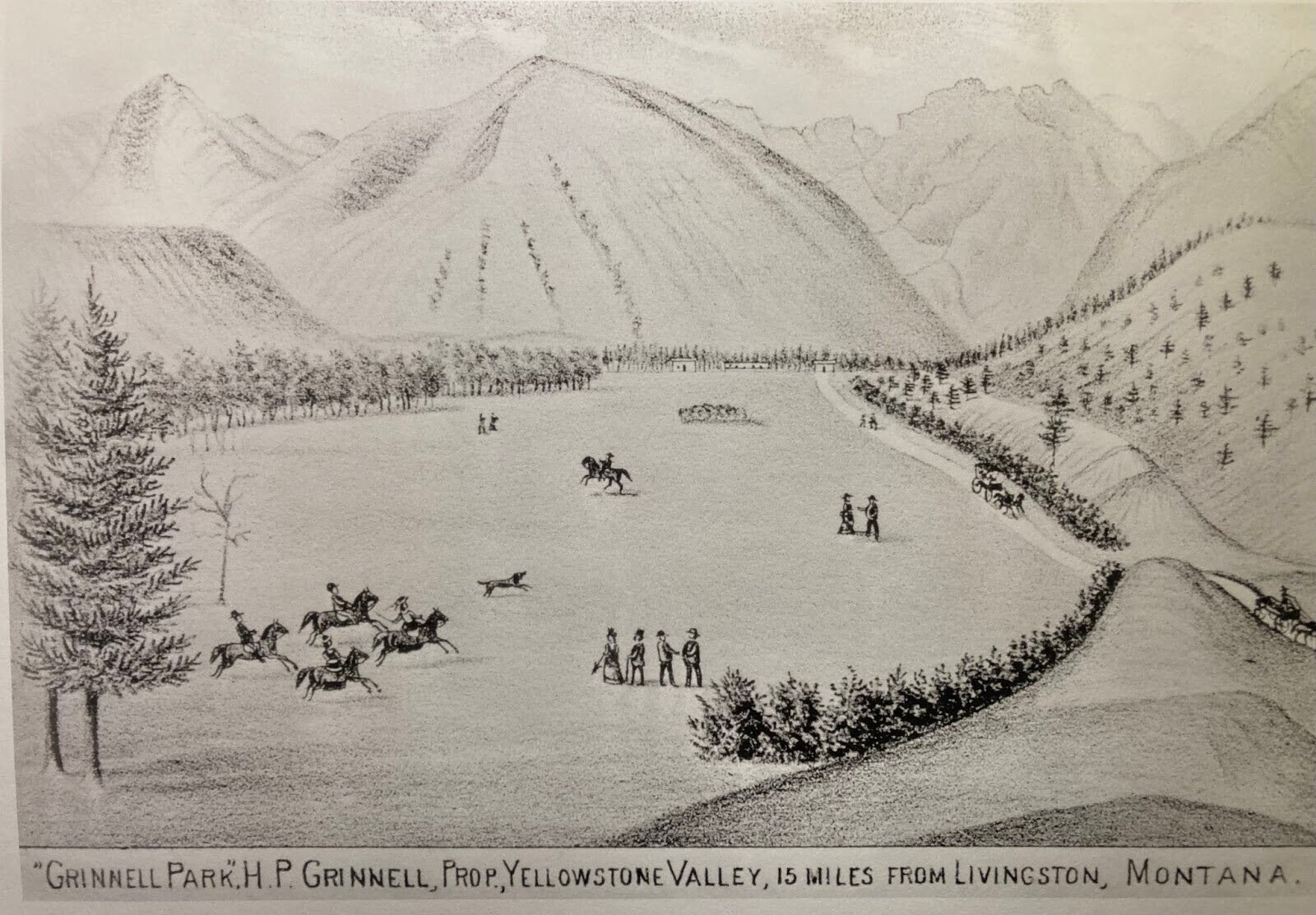
    <summary type="html"><![CDATA[<p><strong><em>After World War 1, a group of Methodists in Livingston, Montana planned to build a summer camp near Yellowstone Park. They travelled 15 miles outside Livingston in buckboard wagons through 2-3 feet of snow to a potential location for this camp, Grinnell Park. Arriving at Grinnell Park, the Methodists knew that they had found the perfect place for a summer camp.</em></strong></p><img src="https://www.intermountainhistories.org/files/fullsize/3cf3158003ddbe0be98bbbc2cb654fab.jpg" alt="Sketch of Grinnell Park" /><br/><p>In the summer of 1919, the Methodist Epworth League in Montana wanted to join the growing trend of church camps that started after World War I. At a conference in Billings, they decided to create a camp about 30 miles north of Helena at Wolf Creek. The Wolf Creek camp was a hit, so the Epworth League decided to build more camps in Montana. Four years later on, a district missionary conference convened in Livingston to build a camp near Yellowstone Park. They decided to investigate Grinnell Park, a glacially-formed valley about 15 miles south of Livingston near Pine Creek as a potential site for this camp. </p><p>On March 11, 1923, a group consisting of Epworth League members, conference members, and Albert Alan, the owner of the land, traveled to Grinnell Park in 3-seated buckboard wagons, fighting against 2-3 feet of snow. The Methodists fell in love with the area and swiftly authorized the Livingston conference to “proceed with all necessary arrangements” to use Grinnell Park as the location for a church camp. Alan sold the land, which was about 25 acres “more or less” for $2,500. Pastor Otto G. Ponath of the local Pine Creek Church helped to build a road up to the camp that was determined to be about a $6,000 job by the highway department. With this road, a Model-T Ford was “driven, pushed, and pulled up to the camp” and both guests and staff were able to travel to the camp. Using old Ringling Circus tents from Billings, members of the state convention were able to make important decisions while being protected from an oncoming storm. One of these decisions was naming the camp “Luccock Park” after the first resident Bishop of Helena, Naphtali Luccock. They also decided to name the mountains that surround the camp from left to right, Faith, Hope, and Charity. </p><p>One hundred years later, Luccock Park still stands as a place for people to gather. It has survived extreme weather, a wildfire that almost burned down the camp, and a global pandemic. There are now permanent buildings on site: the main lodge, an old ranger’s station, a chapel, multiple bathhouses, and dozens of cabins. The camp is open from mid-May to mid-September, hosting a number of Methodist camps, weddings, group getaways, and so much more. In the summer of 2023, a celebration was held to celebrate the last 100 years of Luccock Park. People from all over the country came together at Luccock Park to celebrate and talk about the past and their hopes for the future of the camp.</p><p><em><strong><a href="https://www.intermountainhistories.org/items/show/865">For more (including 4 images) view the original article</a></strong></em></p>]]></summary>
    <published>2024-10-19T00:58:26+00:00</published>
    <updated>2026-04-17T19:32:19+00:00</updated>
    <link rel="alternate" type="text/html" href="https://www.intermountainhistories.org/items/show/865"/>
    <id>https://www.intermountainhistories.org/items/show/865</id>
    <author>
      <name>Alyssa Ulrickson, Rocky Mountain College</name>
    </author>
  </entry>
  <entry>
    <title type="html"><![CDATA[Kiva Beach: The Hidden Jewel of Lake Tahoe]]></title>
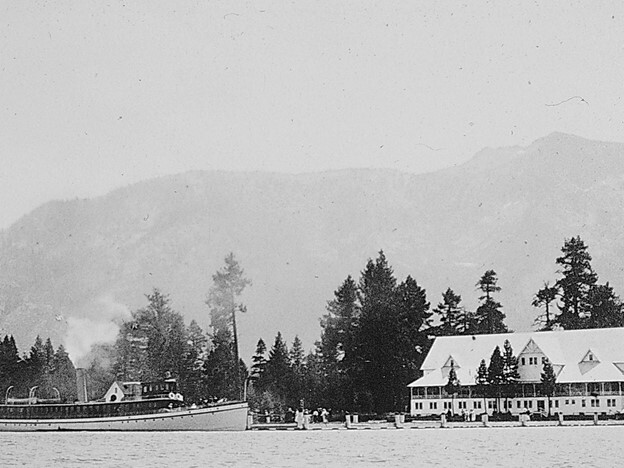
    <summary type="html"><![CDATA[<p><strong><em>Home to the Washoe Tribe, Kiva Beach on Lake Tahoe once had a luxurious beach resort along its shores which is now known as the Tallac Historic Site.</em></strong></p><img src="https://www.intermountainhistories.org/files/fullsize/18ccb87d120320af49769ab379cf98f4.jpg" alt="Tallac Resort and Casino with SS Tahoe on the lefthand side of the photo, ca. 1899-1920" /><br/><p>Kiva Beach on the southern shore of Lake Tahoe attracts thousands of visitors annually who seek a beach vacation and historic interpretation provided by the Tallac Historic Site.</p><p>Visitors enjoy swimming and sunbathing, and although there is no boat launch, people are welcome to bring their personal kayaks or paddle boards. Parking is free and the beach is also accessible by the Pope Baldwin Bike Path. The forest trail to the beach offers historical interpretation, including signs along the path that describe vegetation and local history. This beach is often less crowded than others around Lake Tahoe and provides picnic tables for people to sit at and enjoy the view of Maggie’s South Peaks in the distance.</p><p>The Washoe Tribe calls the region of Lake Tahoe their home, and Kiva Beach got its name after the traditional Indigenous kiva, which is a ceremonial structure. The lake provided life-sustaining water for the Washoe and each family had its own fishing grounds along the shorelines. While the tribe is still around today, they no longer reside near Lake Tahoe due to European settlement in the 19th century and contemporary tourism. The Washoe people continue to lobby for their rights to their homeland in the Lake Tahoe Basin.</p><p>The first settler at Lake Tahoe was John C. Fremont, explorer and politician, in 1844. However, it was not until 1859 that other European settlers started to pay attention to the area for its mining potential. Silver mining opportunities and the completion of the Central Pacific Railroad in 1869 brought people to settle around Lake Tahoe. One settler, Ephraim Clement, built the Tallac Point House located on Kiva Beach in the early 1870s. In 1880, Elias Baldwin bought the property and began to turn it into a luxurious beach resort complete with steamboat rides for guests. Baldwin added a second building called the Tallac Hotel, revered as “the grandest in all the world,” in 1899. These hotels allowed for high-end beach living on Lake Tahoe as only wealthy guests could afford to stay at Tallac Point. After the outbreak of World War I, tourism slowed in 1914 the Tallac House burned down, and the Tallac Hotel was razed in the 1920s.  The land went through multiple family owners until the Baldwin descendants sold the land to the Forest Service in 1969. The interpretive museum opened in 1990 where they give guided tours of the remaining buildings.</p><p>In 2011, Kiva Beach became a popular place for spiritual yoga practice. Attendees can participate in a yoga class on the sandy shores and then take an optional “cold plunge” in the lake. Beachgoers recommend this beach for dog owners since it is one of the few dog-friendly beaches on the lake. Kiva Beach is also family-friendly due to its secluded nature and the prohibition of alcohol on its shores. People continue to visit peaceful Kiva Beach as it allows guests to experience the best of both worlds, with both snowy mountains and a sandy beach.</p><p><em><strong><a href="https://www.intermountainhistories.org/items/show/846">For more (including 3 images) view the original article</a></strong></em></p>]]></summary>
    <published>2024-09-03T19:42:25+00:00</published>
    <updated>2026-04-17T19:32:19+00:00</updated>
    <link rel="alternate" type="text/html" href="https://www.intermountainhistories.org/items/show/846"/>
    <id>https://www.intermountainhistories.org/items/show/846</id>
    <author>
      <name>Olivia Hall, Northern Arizona University</name>
    </author>
  </entry>
  <entry>
    <title type="html"><![CDATA[Keyhole Beach: The Key to Beach Life]]></title>
    <summary type="html"><![CDATA[<p><strong><em>The "key" to beach life in Wyoming can be found at Keyhole Beach. The land originally belonged to the Sioux, however, the U.S. government claimed it in 1877 and the beach was later created by the reservoir behind Keyhole Dam in 1952.</em></strong></p><img src="https://www.intermountainhistories.org/files/fullsize/a1198626791a7dda71da4448f593c7fd.jpg" alt="Keyhole Reservoir, 2008" /><br/><p>Located on the southeast shore of Keyhole Reservoir, Keyhole Beach is hailed for its fishing opportunities and as a “mecca” for bird-watching with about 225 species to see. Along with catching one of Wyoming’s largest fish, a freshwater drum, beachgoers can enjoy swimming, boating, kayaking, paddleboarding, sunbathing, and waterskiing. The closest campground is called Tatanka, after the Lakota word for “buffalo.” Tatanka Campground has the best selection of amenities in the area, including water and electric hookups for RVs and rentable cabins, as well as picnic tables at Tatanka, a marina, and a boat launch on the beach. </p><p>The Sioux inhabited and controlled the area long before the Bureau of Reclamation completed Keyhole Dam in 1952, and they continue to fight for this right today. In the Ft. Laramie Treaty of 1868, the U.S. recognized the tribe's ownership of the Black Hills territory which included the Šahíyela Wakpá River (also known as the Belle Fourche River). Named by French fur traders in the 1780s, Bella Fourche means “beautiful fork.” As miners illegally entered the territory throughout the 1870s, the settlers and the Sioux continued to have disputes about the ownership of the territory, and after the defeat of Custer at Little Bighorn, the U.S. waged war on the Sioux and then confiscated their land in 1877. While offered monetary compensation for the land grab after the 1980 Supreme Court case United States v. Sioux Nation of Indians, the Sioux believed this was an insufficient settlement and declined the money. The dispute over land ownership, and the Sioux’s claim on it, continues today. </p><p>As the gold rush persisted in the Black Hills more settlers moved in and in 1891 the Chicago and Northwestern Railroad entered the town of Belle Fourche, seventy-three miles to the northeast. The community became a livestock shipping hub and the name of Keyhole Reservoir derives from the livestock brand the McKean brothers used at their nearby ranch. The Bureau of Reclamation proposed the dam as a part of the Belle Fourche Project, started in 1904, which irrigated lands in the area. While ranchers protested the dam in 1950 due to their loss of farming land, the benefits of wildlife conservation, flood control, and recreational opportunities outweighed their concerns. </p><p>With the completion of the dam in 1952, beach life started to take off at Keyhole Reservoir with the creation of Keyhole State Park. In 1984, the Keyhole Expo was a county fair on the beach's shores that included hot air balloon racing, windsurfing, and more. In 1989, the State Park expanded upon the fair as a part of Wyoming State Park’s “Summerfest.” This event included boat rides to discover the beauty of Keyhole Reservoir, arts and crafts booths, and food concessions. </p><p>Today, Keyhole Beach hosts events such as a Lantern Fest where beachgoers can release floating lanterns on the reservoir and witness the illumination of the lake. Keyhole Marina also contains a bar and grill where visitors can eat and listen to live music on the beach. The community-oriented marina and campgrounds paired with scenic views make Keyhole Beach a memorable vacation spot.</p><p><em><strong><a href="https://www.intermountainhistories.org/items/show/845">For more (including 3 images) view the original article</a></strong></em></p>]]></summary>
    <published>2024-09-03T19:39:03+00:00</published>
    <updated>2026-04-17T19:32:19+00:00</updated>
    <link rel="alternate" type="text/html" href="https://www.intermountainhistories.org/items/show/845"/>
    <id>https://www.intermountainhistories.org/items/show/845</id>
    <author>
      <name>Olivia Hall, Northern Arizona University</name>
    </author>
  </entry>
  <entry>
    <title type="html"><![CDATA[The History of Sundance]]></title>
    <summary type="html"><![CDATA[<p><strong><em><span style="font-weight:400;">Sundance, Utah is a small resort in the North Fork of Provo Canyon that has a rich history, particularly within its ownership. The area was originally populated by members of the Ute nation. It then passed into the hands of the Stewart family who arrived with the Latter-day Saints. Most recently it has been the site of a ski resort owned and operated by Hollywood actor Robert Redford. </span></em></strong></p><img src="https://www.intermountainhistories.org/files/fullsize/70ba18fee03d691bf08a4bb9fb530537.jpg" alt="Sundance from Stewarts Cascades Trail, Jun 16" /><br/><p><span style="font-weight:400;">Nestled in Provo Canyon, what is known today as Sundance has a rich history that reflects the different eras of Utah settlement. The land was occupied by the Ute nation beginning in 1,400 AD. Sundance was in an area where the Utes would visit in the summer to enjoy the cool mountain temperatures and lush forests filled with game. The arrival of Latter-day Saint pioneers pushed the Utes out of the area, leaving Sundance to be settled by the Stewart family. </span>
<span style="font-weight:400;">The Stewarts were Scottish immigrants that came to Utah in the mid-1800s. Andrew Jackson Stewart Jr. and his sons surveyed land in Provo Canyon and felt particularly drawn to the area. Through the Homestead Act of 1862, the Stewarts were each able to secure 160 acres of land within the canyon. Other families joined them, and by 1911, there were 2,200 acres of settled land in the North Fork of Provo Canyon that were then known as Stewart Flats. </span>
<span style="font-weight:400;">Stewart Flats began to be recognized for its recreational draw in the 1930s and 40s. In 1944, S. Paul Stewart and his brother and sister-in-law Ray and Ava Stewart opened up Timp Haven, a small ski area that operated for 20 years. Timp Haven was greeted by a noteworthy guest in the 1950s when Hollywood actor Robert Redford accidentally stumbled on the area due to a miscalculated turn on a road trip through the West. </span>
<span style="font-weight:400;">Redford purchased a sizable portion of the Stewart family land in 1969 and renamed the area Sundance, after his character in the western film </span><i><span style="font-weight:400;">Butch Cassidy and the Sundance Kid</span></i><span style="font-weight:400;">. According to Redford, one of his major goals for Sundance was “to develop a little and preserve a great deal.” Instead of succumbing to overdevelopment with hotels and condominiums, Redford’s focus at Sundance was environmental conservation and the promotion of the arts. </span>
<span style="font-weight:400;">In 1978 Redford increased his Utah presence by founding the Sundance Film Festival, held annually in Park City, building on his Sundance legacy. In 2020, Redford sold 2,600 acres, including the Sundance Mountain Resort, to Broadreach Capital Partners and Cedar Capital Partners with an agreement that they would continue Sundance’s pursuit of environmental preservation and conscientious development. </span></p><p><em><strong><a href="https://www.intermountainhistories.org/items/show/789">For more (including 4 images) view the original article</a></strong></em></p>]]></summary>
    <published>2024-03-03T03:43:20+00:00</published>
    <updated>2026-04-17T19:32:17+00:00</updated>
    <link rel="alternate" type="text/html" href="https://www.intermountainhistories.org/items/show/789"/>
    <id>https://www.intermountainhistories.org/items/show/789</id>
    <author>
      <name>Britain Schwarz, Brigham Young University</name>
    </author>
  </entry>
  <entry>
    <title type="html"><![CDATA[Lagoon&#039;s Patio Gardens]]></title>
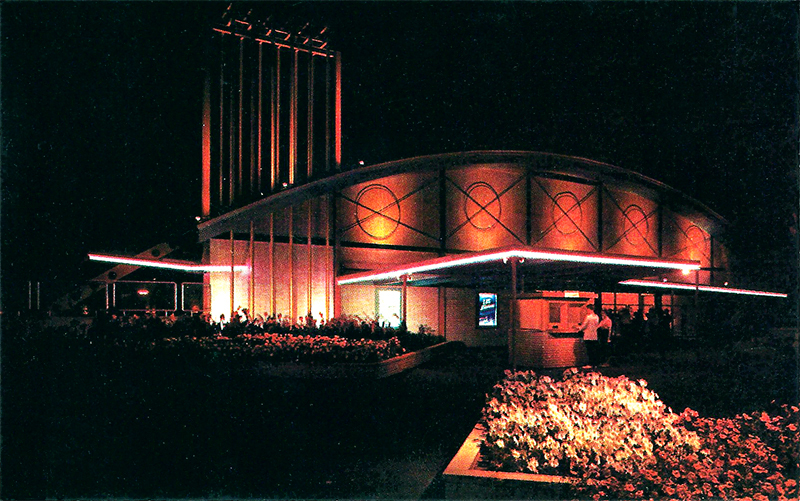
    <summary type="html"><![CDATA[<p><strong><em><span style="font-weight:400;">Utah’s Lagoon used to be more than just an amusement park; it once housed a large concert venue within its gates, hosting many performances by music legends from the 1950s to the early 1970s.</span></em></strong></p><img src="https://www.intermountainhistories.org/files/fullsize/22bf785d177cfc260f8fabc152cf11d6.jpg" alt="Postcard of Patio Gardens" /><br/><p><span style="font-weight:400;">In 1953 a fire tore throughout Lagoon, Utah’s only amusement park, and destroyed many buildings there. Then owner, Robert Freed, saw this as an opportunity to update the architecture of the park to something much more modern–to create the “New Lagoon.” One of the buildings constructed during the renovations was the Patio Gardens, a concert venue to replace an old, ruined Dancing Pavilion. While Lagoon had live performances before the 1950s, Patio Gardens, with its stage and dance floor, became the new house for concerts. The performances in Patio Gardens over the next two decades included some of the most popular national artists and would make Lagoon nationally known, especially within the 1960s counterculture music scene. </span>
<span style="font-weight:400;">One such popular group was the Beach Boys who, on September 7, 1963, thrilled their youthful Utah audience with their song “Salt Lake City,” claiming that Salt Lake City had “the grooviest kids.” The Beach Boys returned to Lagoon again and again with their final performance of fourteen appearances taking place on September 12, 1970.</span>
<span style="font-weight:400;">The Beach Boys were just one of many popular groups that performed at Patio Gardens. Other notable counterculture bands such as The Rolling Stones, The Monkees, The Who, Janis Joplin, and Jefferson Airplane also performed there. Even The Beatles were in discussions to perform at Lagoon, but their high asking price led to their exclusion. Patio Gardens also housed more classic acts, such as Benny Goodman, the Utah Symphony, and Ella Fitzgerald. </span>
<span style="font-weight:400;">Most bands had a good experience, with some even returning to perform again or immortalizing the venue in songs, as the Beach Boys did. However, there were also bands who hated the venue and, more importantly, the crowds. On May 25, 1968, The Doors performed to a crowd of about 3,500, nearing the venue’s 4,000-person capacity limit. Jim Morrison, the band’s lead singer, declared that the crowd was dead for his first performance of the day, hurled vulgar insults to the audience, and after three songs walked off of the stage, never to return. </span>
<span style="font-weight:400;">Regardless of the failure of The Doors concert, Patio Gardens is remembered fondly by many Utahns. Patio Gardens closed in 1973 after operating for twenty years. Where music legends used to perform is now the home of the dark ride Dracula’s Castle and Lagoon’s arcade. The original light fixtures and the top of the stage (the rest of which is hidden by a wall) are the only reminders of what helped make Lagoon so famous.</span></p><p><em><strong><a href="https://www.intermountainhistories.org/items/show/778">For more (including 3 images) view the original article</a></strong></em></p>]]></summary>
    <published>2024-02-22T22:07:05+00:00</published>
    <updated>2026-04-17T19:32:17+00:00</updated>
    <link rel="alternate" type="text/html" href="https://www.intermountainhistories.org/items/show/778"/>
    <id>https://www.intermountainhistories.org/items/show/778</id>
    <author>
      <name>Mikelle Andersen, Brigham Young University</name>
    </author>
  </entry>
  <entry>
    <title type="html"><![CDATA[The White City Ballroom ]]></title>
    <summary type="html"><![CDATA[<p><strong><em>The White City Ballroom in Ogden, Utah was considered Utah’s largest and most beautiful ballroom. Dances, performances, and special events made the space come alive for over half a century. </p></strong></p><img src="https://www.intermountainhistories.org/files/fullsize/5d332d705f867e730591343a3a067daf.jpg" alt="A Picture of the White City Ballroom" /><br/><p><span style="font-weight:400;">Built in 1922, the White City Ballroom was a popular dance hall in Ogden and attracted crowds “from as far south as Salt Lake City, as far east as Evanston, Wyoming, as far north as Idaho Falls, and as far west as the lake in Weber County,” with crowds of over one thousand people. The ballroom was located between Washington Avenue and Adams Avenue. </span>
<span style="font-weight:400;">Before the White City Ballroom was built, in the same location, a dancing hall served the community. However, the building burnt down in 1921. Eventually, the White City Ballroom was built in its place, measuring “150 feet wide by 250 feet long in an oval position.” An open air dance floor was eventually created where dances could be held outside during the warmer months.</span>
<span style="font-weight:400;">To help grow business, White City Ballroom held big drawings where items such as a two-door Chevrolet car would be given away to one lucky person. On these nights, attendance could reach up to 5,000 people. Tickets cost “fifty cents for the dance ticket on the night of the drawing, 35 cents each on the nights that attendance was accumulating toward the giving away of the car.” </p><p>The “King of O-Town,” Joe McQueen, played at the White City Ballroom and recalled a night when famous jazz band leader Duke Ellington performed at the dance hall. Other big band musicians such as Gene Krupa and Jan Garber also performed at the White City Ballroom. Saturday nights were eagerly anticipated by the town, especially youth, for White City's dances. </p>
<span style="font-weight:400;">In the 1970s, the Square Dance Club of Ogden sponsored weekly dances. Part of the space became a bowling alley.  However, the White City Ballroom closed in 1979 and was torn down a few years later. It’s still remembered fondly by older generations of the town who attended dances and events “the largest and most beautiful ballroom” around. </span></p><p><em><strong><a href="https://www.intermountainhistories.org/items/show/689">For more (including 3 images) view the original article</a></strong></em></p>]]></summary>
    <published>2022-11-01T16:54:51+00:00</published>
    <updated>2026-04-17T19:32:15+00:00</updated>
    <link rel="alternate" type="text/html" href="https://www.intermountainhistories.org/items/show/689"/>
    <id>https://www.intermountainhistories.org/items/show/689</id>
    <author>
      <name>Lydia Peterson, Weber State University </name>
    </author>
  </entry>
  <entry>
    <title type="html"><![CDATA[The Berthana in Ogden]]></title>
    <summary type="html"><![CDATA[<p><strong><em><span style="font-weight:400;">Hailed as the “most beautiful ballroom in the West,” the Berthana has been revitalized to serve as a focal point for downtown Ogden.</span></em></strong></p><img src="https://www.intermountainhistories.org/files/fullsize/b48caed8f11703b85abaa384ad2131ef.jpg" alt="The beginning of construction on the Berthana." /><br/><p><span style="font-weight:400;">The Berthana social and dance hall celebrated its public opening on May 26, 1915. The  idea to create a gathering center for the young residents of Ogden is credited to Bertha Eccles and Anna T. Dee whose names became the name of the building. An article published in the </span><i><span style="font-weight:400;">Ogden Standard Examiner</span></i><span style="font-weight:400;"> on the day following the opening night dubbed the social center as the “most beautiful ballroom in the West.”</span>
<span style="font-weight:400;">The 600 guests invited to opening night were greeted with handsome decor, a professional and welcoming staff, and a large, lively orchestra.</span> <span style="font-weight:400;">Part of the opening night festivities included a grand march led by William Spry, Utah’s governor at the time. </span>
<span style="font-weight:400;">The main floor of the Berthana was designed for retail space; the second-floor ballroom was 120 feet long by 80 feet wide, built by the David Eccles Estate and the Thomas D. Dee Co. The Berthana maintained its status as a major gathering place for state conventions of the Utah Federation of Women’s Clubs, concerts, dances, company promotions, beauty pageants, and even boxing matches.</span>
<span style="font-weight:400;">The ballroom was used for such activities until about 1940, when it was converted into a roller-skating rink. With the exception of a brief but unsuccessful attempt to reopen in the 1980s the ballroom has remained largely unused since the 1970s.</span>
<span style="font-weight:400;">In 2012, life was breathed back into the former social hall in the form of a $750,000 renovation that transformed the Berthana into an entertainment venue that hosted businesses such as the Copper Club. </span><span style="font-weight:400;">Lynda Huddleston, the manager of the Copper Club, said, “if you come in here and stay still and just listen, you can almost hear the music that  used to play here. We want to bring that feeling of excitement back to Ogden.” In 2016, The Union Grill left its location in Union Station and opened its doors in the Berthana.</span></p><p><em><strong><a href="https://www.intermountainhistories.org/items/show/682">For more (including 4 images) view the original article</a></strong></em></p>]]></summary>
    <published>2022-10-26T18:38:27+00:00</published>
    <updated>2026-04-17T19:32:15+00:00</updated>
    <link rel="alternate" type="text/html" href="https://www.intermountainhistories.org/items/show/682"/>
    <id>https://www.intermountainhistories.org/items/show/682</id>
    <author>
      <name>Camille Marie Johnson, Weber State University </name>
    </author>
  </entry>
  <entry>
    <title type="html"><![CDATA[Sports in the Topaz Internment Camp]]></title>
    <summary type="html"><![CDATA[<p><strong><em>To alleviate boredom while interred in the Topaz Relocation Center, the residents organized recreational activities. Some of the most popular pastimes were sports including baseball, golf, and football. </em></strong></p><img src="https://www.intermountainhistories.org/files/fullsize/db63feff62a2b3b0c02f2f9da947aa52.jpg" alt="The Baseball Field at Topaz" /><br/><p><span style="font-weight:400;">The Topaz Internment Camp was organized in October of 1942 in a desert area near Delta, Utah. The Camp was created to house Japanese Americans, formerly living on the coast of California, after being forcefully relocated during World War II.</span><span style="font-weight:400;"> Japanese Americans were compelled to sell or abandon their homes, cars, and any belongings they could not carry on their person. They first were placed in </span><span style="font-weight:400;">Tanforan and Santa Anita Racetracks in </span><span style="font-weight:400;">California in converted horse stables until they were moved again to a more permanent location in Topaz, Utah. Topaz was in operation </span><span style="font-weight:400;">from September 11, 1942, until October 31, 1945. During that time, the Japanese Americans who lived there struggled to create</span><span style="font-weight:400;"> lives for themselves in this new, remote desert environment.</span>
<span style="font-weight:400;">To help alleviate the boredom, Japanese Americans developed several pastimes. Schools were opened, artists taught their crafts, and sports teams were created. Fans followed their favorite teams. Sports and outdoor recreation became very popular, particularly baseball. Topaz was divided </span><span style="font-weight:400;">into 42 blocks </span><span style="font-weight:400;">and each block created its own baseball team. Teams would compete against each other, drawing dozens of spectators. </span>
<span style="font-weight:400;">The daily sports section in the </span><span style="font-weight:400;">Topaz Times</span><span style="font-weight:400;">, the local newspaper, revealed the importance of sporting events at the camp. The </span><span style="font-weight:400;">Topaz Times</span><span style="font-weight:400;"> included articles about the results of golf tournaments, baseball games, and the high school football team. In addition to local games, the </span><span style="font-weight:400;">Topaz Times</span><span style="font-weight:400;"> reported on the National Baseball League and other national sporting events. </span>
<span style="font-weight:400;">Sporting events in Topaz created strong rivalries between blocks in the camp. The most notable rivalry was between the softball teams. Like the baseball teams, the softball teams were organized by blocks and run by managers elected by each block’s players. Softball games were highly anticipated, and each team would practice for several weeks before the competitions. Unfortunately, with young people constantly leaving for the army, school, or work, fully manning each team was a continual struggle. </span>
<span style="font-weight:400;">The High School fielded many teams that students would compete on. The high school football team traveled and played against other local Utah high schools. Players would also compete against their peers, with a senior football team challenging the juniors and sophomores. The high school also had a track team. In the 1944 season, the track team got off to a late start, but was in full swing by May of that year, competing against students at other Utah high schools.</span>
<span style="font-weight:400;">The time in Topaz was difficult in the lives of the people sent to live there. But they found ways to go on living. To help make the most of a difficult situation, the residents of Topaz showed their resilience by promoting their love of sports and participating in a variety of recreational activities. Something that started as a way to alleviate boredom became a favorite pastime in Topaz, Utah during WWII.</span></p><p><em><strong><a href="https://www.intermountainhistories.org/items/show/660">For more (including 3 images) view the original article</a></strong></em></p>]]></summary>
    <published>2022-09-19T21:10:31+00:00</published>
    <updated>2026-04-17T19:32:14+00:00</updated>
    <link rel="alternate" type="text/html" href="https://www.intermountainhistories.org/items/show/660"/>
    <id>https://www.intermountainhistories.org/items/show/660</id>
    <author>
      <name>Anna Tenney, Brigham Young University</name>
    </author>
  </entry>
  <entry>
    <title type="html"><![CDATA[El Monte Golf Course Clubhouse<br />
]]></title>
    <summary type="html"><![CDATA[<p><strong><em>The El Monte clubhouse was built with local and federal funds in 1934-1935. It is a fine example of bungalow style architecture used in a recreational setting.</p></strong></p><img src="https://www.intermountainhistories.org/files/fullsize/c765270ee01407d547d566a43a4faa10.jpg" alt="El Monte Clubhouse" /><br/><p>In 1928, with support from the Ogden Golf and Country Club, efforts were begun to secure a municipal golf course for Ogden. Led by florist Fred A. Huish (1866 – 1949) and other sports boosters, the course was to be located near El Monte Springs, at the mouth of Ogden Canyon. The Springs (formerly the Ogden Canyon Resort, 1895-1927) was a local resort which offered swimming, dancing, and picnicking activities. </p><p>El Monte Springs closed in 1932 because of the economic crisis of the Great Depression and the city considered leasing the facilities for use by the municipal golf players. However, the next year, the city opted to seek federal funds to build a clubhouse. Utah was one of the states most severely affected by the Great Depression.  As a consequence, it received substantial federal funding from New Deal programs. Perhaps the most prominent of these were building programs -- 233 public works buildings were constructed in the state of Utah.  Of these, 15 were constructed within Weber County.  The El Monte Golf Course Clubhouse was one of these projects.   </p><p>Funded by the Federal Emergency Relief Administration (FERA), the clubhouse project received $17,000, which was coupled with $5,500 from the city of Ogden.  Eber F. Piers (1889 – 1961) was hired as the architect. Piers came to Utah from Colorado in 1908 to work at an architecture firm.  In 1910, he opened his own firm and became a distinguished practitioner. Over the course of his career he designed over 300 buildings throughout the greater Ogden area.  Many of them, including the El Monte Clubhouse, are still in use today.</p><p>Most of the materials for construction, including the stonework on the exterior of the building, were taken from Ogden Canyon. The Clubhouse is a fairly simple, bungalow style building with a gable roof.  The exterior stonework continues inside to frame the large fireplace.  Most of the original decorations and paintings still adorn the walls.  It is a simple, yet elegant design that adds a certain beauty to the small golf course it accompanies.  Both the course and the clubhouse are still owned by the city of Ogden.</p><p><em><strong><a href="https://www.intermountainhistories.org/items/show/263">For more (including 4 images) view the original article</a></strong></em></p>]]></summary>
    <published>2019-01-26T04:21:27+00:00</published>
    <updated>2026-04-17T19:32:04+00:00</updated>
    <link rel="alternate" type="text/html" href="https://www.intermountainhistories.org/items/show/263"/>
    <id>https://www.intermountainhistories.org/items/show/263</id>
    <author>
      <name>Kiselya Plewe, Weber State University</name>
    </author>
  </entry>
  <entry>
    <title type="html"><![CDATA[Lagoon’s Desegregation]]></title>
    <summary type="html"><![CDATA[<p><strong><em>Lagoon was a place of tradition turned trailblazer when its owner, Robert E. Freed, was one of the first venue owners to invite racial integration.</em></strong></p><img src="https://www.intermountainhistories.org/files/fullsize/86424cbc29d3496eff31b25048b983a3.jpg" alt="Colossus Roller Coaster" /><br/><p>Originally situated on the shores of the Great Salt Lake and later relocating to Farmington, UT, Lagoon was (and still is) a constantly evolving business. It began as Lake Park, offering a mule-drawn carousel, roller skating, and bowling, and today is a large amusement park with record-breaking multi-million-dollar steel roller coasters and over a million visitors every year. While Lagoon has evolved economically, perhaps even more significant is its demonstration of social progress. Lagoon set the stage when it officially desegregated in the 1940s, and many other public venues followed. </p><p>Unlike some of the states where the Civil Rights movement of the mid-20th century was intensely focused, Utah never had Jim Crow laws or other legislation explicitly forcing white and black people to stay separated. However, racial minorities in Utah were victim to de facto segregation (which was often due indirectly to legislation, whether intentional or not). Though Utah wasn’t on the forefront of national civil rights news, the issues were pertinent and pressing in Utah cities as well. Between 1940 and 1950, the Black population in Utah more than doubled, and tensions between the white majority and marginalized minorities continued to rise.</p><p>Without official segregation laws and few cities with more than one school, it was up to business owners to change the public’s mind about who was allowed where. After World War II, some businesses began to desegregate. One of the first was Lagoon. Lagoon had been closed during the war, and was reopened and revamped in 1946-1947. Then, Robert E. Freed, one of the owners, made the attractions at Lagoon, as well as his Rainbow Rendezvous Ballroom in Salt Lake City, available to all races. After this bold move, it didn’t take long for other businesses and city pools to open their doors to minorities as well. </p><p>Appropriately-named Robert Freed made a pivotal move when he integrated his park in the 1940s, and Utah has been working for racial equality ever since.</p><p><em><strong><a href="https://www.intermountainhistories.org/items/show/85">For more (including 5 images) view the original article</a></strong></em></p>]]></summary>
    <published>2017-08-16T21:20:56+00:00</published>
    <updated>2026-04-17T19:31:59+00:00</updated>
    <link rel="alternate" type="text/html" href="https://www.intermountainhistories.org/items/show/85"/>
    <id>https://www.intermountainhistories.org/items/show/85</id>
    <author>
      <name>Aubrey Glazier, Brigham Young University</name>
    </author>
  </entry>
  <entry>
    <title type="html"><![CDATA[The Glen Canyon Dam, Environmentalists, and Recreation]]></title>
    <summary type="html"><![CDATA[<p><strong><em>Since the decision to dam Glen Canyon in 1956, it has become a symbol of loss and sacrifice on the Colorado River to preservationists.</em></strong></p><img src="https://www.intermountainhistories.org/files/fullsize/274cbd373fe29102b3ac5c579702dae7.jpg" alt="Glen Canyon Dam from the Air" /><br/><p>Successful in his fight against Echo Park Dam David Brower came to regret his strategy of supporting a dam at Glen Canyon. In the late 1950s, the Sierra Club took trips to the canyon. In was only then that its members understood the natural beauty and scenery it had to offer. Brower’s friends feared for him as he grew depressed over the loss. Those that knew the canyon, such as pioneer river guide Norman Nevills and ferry operator Art Chaffin, loved the canyon but their voices were few in the crowded political debate. As if to rub salt into David Brower’s wounds, Luna Leopold of the U.S. Geological Survey waited until after construction of the dam had started to write a report which stated that Hoover Dam sufficiently stored water for the Colorado River and that therefore Glen Canyon Dam was unnecessary. Preservationists now consider Glen Canyon a symbol of loss. </p><p>Brower recovered from his initial depression and continued to fight for the preservation of the Colorado Plateau. He helped produce the publication of The Place No One Knew: Glen Canyon on the Colorado River, which brought the canyon to the public in vivid color. It was a piece of nostalgia looking back at Glen Canyon, rather than an attack on dam building. Dams flooded other canyons such as Flaming Gorge, Horseshoe and Kingfisher yet they did not receive the level of attention that Glen Canyon did. During the 1950s environmentalists did not have the political strength to oppose all dam building. Glen Canyon Dam was elevated to notable significance because of the scale of damage it did. </p><p>Lake Powell came into existence in 1966 as construction workers closed the tunnels that had previously rerouted the Colorado River around the unfinished dam. Beautiful in its own way, Lake Powell is a popular tourist destination. It now sits within the 1.25 million-acre Glen Canyon National Recreation Area. Elaborate houseboats accommodate the two million annual visitors who come to relax, drink, and have fun. For the local tourism industry, the lake has been a huge economic boost. The National Park Service reported that in 2011, 2.3 million visitors spent $238 million in nearby communities. This spending supported 2819 jobs. Lake Powell is now a vital part of the local community. </p><p>Many things were lost to the waters of Lake Powell. These include prehistoric ruins, unique geological features that went unstudied, and native fish populations that were unable to cope with the change of habitat, as well as distinctive beauty unknown to the modern day. The rising waters of Lake Powell created a time limit for archaeologists who had to rush to retrieve as much information as possible. To help, inexperienced workers joined the digging but large areas were not reached before they were flooded.  It is unlikely that Lake Powell will ever be drained. Despite this, a lot can be learned from how the attitude of the environmentalist movement facilitated the damming of Glen Canyon to save Dinosaur National Monument. </p><p><em><strong><a href="https://www.intermountainhistories.org/items/show/58">For more (including 6 images) view the original article</a></strong></em></p>]]></summary>
    <published>2017-06-05T17:59:09+00:00</published>
    <updated>2026-04-17T19:31:59+00:00</updated>
    <link rel="alternate" type="text/html" href="https://www.intermountainhistories.org/items/show/58"/>
    <id>https://www.intermountainhistories.org/items/show/58</id>
    <author>
      <name>George Mumford, Northern Arizona University</name>
    </author>
  </entry>
  <entry>
    <title type="html"><![CDATA[Saltair: The Coney Island of the West ]]></title>
    <summary type="html"><![CDATA[<p><strong><em>Though it seems almost inconceivable today, the Great Salt Lake was once a popular vacation and recreational site. It was so popular with many of the early settlers that several resort complexes were constructed in order to satisfy the recreational demand. Of the many resort edifices built during this time, the most famous and lasting is the Saltair palace. While it no longer functions as a lake resort, the Saltair palace has found new life as a popular venue for music acts and other events. </em></strong></p><img src="https://www.intermountainhistories.org/files/fullsize/5206c4ea343c0a6ec7ca3a7a718747f6.jpg" alt="Saltair Beach
" /><br/><p>While early Mormon settlers often talked about building resorts along the Great Salt Lake, recreation along the salty shores wasn’t able to take off until completion of the Utah Central railroad in 1869, which made journeys to the lake much quicker and more convenient.  In 1870 the first two resorts were constructed, one of the east part of the lake and one on the south. Several others were constructed in the 19th century and they became popular destinations for the mostly Mormon community that lived in the area. </p><p>In 1893 the first complex known as the “Saltair Palace” was constructed. It was advertised as the “Coney Island of the West”, and its remarkable architecture was an impressive sight. It was more than 1,100 feet from tip to tip, and the pavilion itself was more than one hundred feet high. Over three hundred tons of steel girders were used in total, and there were four domes (one on each corner of the central complex.) There were picnic and luncheon areas as well as general use rooms for parties and other events. The Saltair palace enjoyed enormous success until 1925, when a fire broke out and destroyed the entire complex. Because of its popularity, a second complex was built in its place. The “Saltair II”, or second pavilion, was finished in 1926. </p><p>Saltair Palace continued to be a popular tourist destination and a local favorite, but a second fire in 1931 caused significant damage to the complex. While the structure wasn’t completely destroyed, attendance at the resort dropped dramatically (the Great Depression and World War II were also factors in Saltair’s decline). The salvageable portions of the structure were still used from time to time to host a variety of smaller shows, but it never regained its status as popular beach resort location. </p><p>An arsonist’s fire in 1970 destroyed what was left of Saltair II. In 1981, local investors pooled their resources to try and build a new resort (named Saltair III), but an extremely wet year caused the lake water levels to rise above their historic limits, flooding the new complex. In the early 2000s new investors (many from the music industry) set out to renovate Saltair III and turn it into the popular music venue, it’s main function to this day.  </p><p><em><strong><a href="https://www.intermountainhistories.org/items/show/38">For more (including 6 images) view the original article</a></strong></em></p>]]></summary>
    <published>2017-04-03T16:54:05+00:00</published>
    <updated>2026-04-17T19:31:58+00:00</updated>
    <link rel="alternate" type="text/html" href="https://www.intermountainhistories.org/items/show/38"/>
    <id>https://www.intermountainhistories.org/items/show/38</id>
    <author>
      <name>Addison Blair, Brigham Young University </name>
    </author>
  </entry>
  <entry>
    <title type="html"><![CDATA[Silver, Snow, and Cinema: Park City, Utah ]]></title>
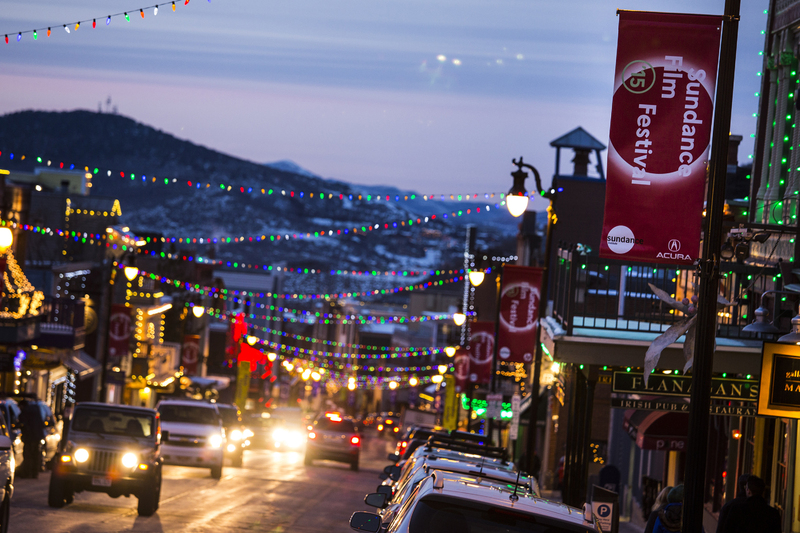
    <summary type="html"><![CDATA[<p><strong><em>High in the Wasatch Mountains sits one of Utah’s true cultural jewels: Park City. Though it started as a simple mining community, Park City experienced explosive growth with the rise of the recreational winter sports industry in the mid 20th century. Currently, Park City is most well-known for hosting the Sundance Film Festival, the largest independent film festival in the United States. </em></strong></p><img src="https://www.intermountainhistories.org/files/fullsize/d8d1e857bfa049169bf789d8c5baa41a.jpg" alt="Park City Street " /><br/><p>The discovery of the Ontario silver deposit is what first put Park City on the map. A joint claim filed in 1872 by Herman Buden, James Kane, Rector Steen, and Augustus Dawell was the beginning of a very productive mining operation that ran up until the mid-20th century. The productivity of the mine attracted the attention of other investors. George Hearst (a mining magnate from San Francisco) purchased control on the mining operation and passed off the day-to-day management to his friend, R.C. Chambers. Under their management the mining operation flourished, and Park City experienced an economic boom as a result. </p><p>The early 20th century saw the decline of the mining industry in Park City. The multiple economic recessions and the Great Depression dealt a deadly blow to operations, and Park City was looking more and more like so many other mining boom towns in the Rocky Mountains. Park City’s savior ended up being its ideal location as a winter sport resort town. It’s unique geographical location made it a gateway to resorts in the west, and skiers and snowboarders flocked to the town. This revitalized the dying community and turned Park City into one of Utah’s premier snow sports destinations. </p><p>Today, Park City remains a staple of the winter sports industry, but its most recent claim to fame is as the host of the Sundance Film Festival. Sterling van Wagenen (a Brigham Young University film graduate) and John Earle (the head of the Utah State Film Commission) collaborated to create the festival in order to attract the film industry to Utah, bring famous filmmakers to the area, and provide a place for smaller films to reach an audience. The first festival took place in 1978, and with the help of Hollywood star Robert Redford spreading the word, its notoriety increased dramatically. Today it remains among the top worldwide film festivals, often placed together with Cannes, Venice, and Toronto in terms of importance. It’s success has significantly changed Park City from its early days as a mining capital to a hub for Hollywood elites and aspiring filmmakers. </p><p><em><strong><a href="https://www.intermountainhistories.org/items/show/36">For more (including 5 images) view the original article</a></strong></em></p>]]></summary>
    <published>2017-03-27T20:17:32+00:00</published>
    <updated>2026-04-17T19:31:58+00:00</updated>
    <link rel="alternate" type="text/html" href="https://www.intermountainhistories.org/items/show/36"/>
    <id>https://www.intermountainhistories.org/items/show/36</id>
    <author>
      <name>Addison Blair, Brigham Young University </name>
    </author>
  </entry>
</feed>