<?xml version="1.0" encoding="UTF-8"?>
<feed xmlns="http://www.w3.org/2005/Atom">
  <title type="text">Intermountain Histories</title>
  <updated>2026-08-18T15:51:59+00:00</updated>
  <generator uri="http://framework.zend.com" version="1.12.20">Zend_Feed_Writer</generator>
  <link rel="alternate" type="text/html" href="https://www.intermountainhistories.org/"/>
  <link rel="self" type="application/atom+xml" href="https://www.intermountainhistories.org/items/browse?output=rss2"/>
  <id>https://www.intermountainhistories.org/</id>
  <author>
    <name>Intermountain Histories</name>
    <uri>https://www.intermountainhistories.org</uri>
  </author>
  <link rel="hub" href="https://pubsubhubbub.appspot.com/"/>
  <entry>
    <title type="html"><![CDATA[Carol Ryrie Brink and the Real Caddie Woodlawn]]></title>
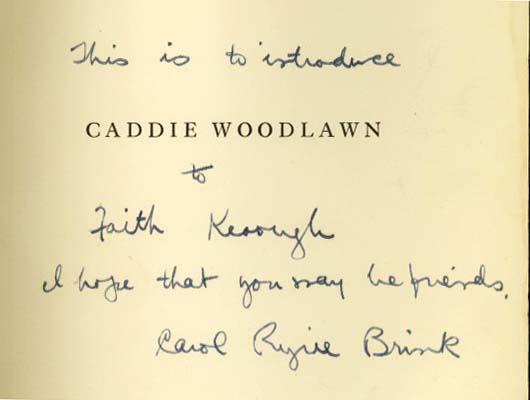
    <summary type="html"><![CDATA[<p><strong><em><span style="font-weight:400;">As an only child in rural Idaho Carol found amusement in her grandmother’s stories of an adventurous childhood in a homestead bustling with children and mischief. Later in life Carol would immortalize her grandmother through the titular character in the beloved children’s novel </span><i><span style="font-weight:400;">Caddie Woodlawn. </span></i></em></strong></p><img src="https://www.intermountainhistories.org/files/fullsize/0410429e7156474d165a3e74fc36171e.jpg" alt="Cover page of Caddie Woodlawn signed by author Carol Ryrie Brink" /><br/><p><span style="font-weight:400;">In 1895 Carol Ryrie Brink was born “Caroline Sybil Ryrie” in Moscow, Idaho. Her father died when she only five-years-old and her mother, stricken with grief and depression, died by suicide four years later. Orphaned, Brink went to live with her widowed grandmother “Gram” and an unmarried aunt who raised her for the remainder of her childhood.</span>
<span style="font-weight:400;"></span><span style="font-weight:400;">In her youth Brink’s favorite activity was listening to Gram's tales of mischief and adventure growing up with six siblings on the Wisconsin frontier. Such a large family was a novelty to Brink, who had no siblings and had only the company of her guardians. She described Gram as “a naturally gifted storyteller” who did not feel “at home with pen and paper.” Of </span><i><span style="font-weight:400;">Caddie Woodlawn</span></i><span style="font-weight:400;">, Brink remarked, “The adventures of Caddie would probably have remained unwritten if I had not been a lonely little girl who adored stories.” </span>
<span style="font-weight:400;">While Brink eventually outgrew her loneliness, she never abandoned her passion for storytelling. In high school and throughout college she dedicated her talent to the school papers. She graduated from University of California, Berkeley in 1917 and was married the following summer Raymond W. Brink, an old friend she had met in Moscow nearly a decade prior. The Brinks had two children, David Ryrie and Nora Caroline, were raised on their mother’s stories and often spent their summers in the Wisconsin woods or the Scottish countryside. </span>
<span style="font-weight:400;"></span><span style="font-weight:400;">Brink wrote several manuscripts before she began the semi-biographical tale of </span><i><span style="font-weight:400;">Caddie Woodlawn</span></i><span style="font-weight:400;">. She dabbled in playwriting for a time, though she was primarily interested in writing novels, often for children. The collection of stories and characters who would eventually come to life in </span><i><span style="font-weight:400;">Caddie Woodlawn </span></i><span style="font-weight:400;">had been in the back of her mind since her childhood declaration, “When I grow up, I am going to write books.”</span><i></i><span style="font-weight:400;">The project took several years, as Brink wanted to make sure she got all of the historical and cultural details right and truly did it justice. </span>
<span style="font-weight:400;">The woman who inspired Caddie was eighty-two-years-old when the book was published in 1935. She was thrilled to read the story and astounded by her granddaughter’s memory, stating “there are things I told her when she was eight years old which are perfectly remembered!” </span>
<i><span style="font-weight:400;">Caddie Woodlawn </span></i><span style="font-weight:400;">received a Newbery Medal in 1936, beloved by both critics and children alike. Young girls living through the Great Depression found escape in the exciting tale of Caddie, just as Brink had during her gloomy childhood. </span></p><p><em><strong><a href="https://www.intermountainhistories.org/items/show/927">For more (including 3 images) view the original article</a></strong></em></p>]]></summary>
    <published>2025-12-09T17:24:31+00:00</published>
    <updated>2026-04-17T19:32:21+00:00</updated>
    <link rel="alternate" type="text/html" href="https://www.intermountainhistories.org/items/show/927"/>
    <id>https://www.intermountainhistories.org/items/show/927</id>
    <author>
      <name>Megan Bailey, Brigham Young University</name>
    </author>
  </entry>
  <entry>
    <title type="html"><![CDATA[The Big Stick: Teddy Roosevelt Speaks at Idaho University: Story 7 of 8 of the President Theodore Roosevelt in the West Tour]]></title>
    <summary type="html"><![CDATA[<p><strong><em>“Ex-President Theodore Roosevelt visits the University of Idaho to give a speech and plant a tree,” read an article from Moscow, Idaho’s Daily Argonaut in anticipation of his April 9, 1911, visit to town.</em></strong></p><img src="https://www.intermountainhistories.org/files/fullsize/c5ffffacc9410315cdef74f37b166af9.jpg" alt="Theodore Roosevelt address Idaho citizens atop a stack of wheat sacks. This is a nod to his time as a Rough Rider and agricultural advancements in Idaho" /><br/><p>Even though he had visited Idaho twice before, President Theodore Roosevelt’s spring 1911 visit to the state was no less elaborate and momentous. His escort through Moscow, Idaho, could barely get to his hotel as the streets were so packed full of excited spectators. After arriving at his hotel and indulging in an informal Sunday dinner with “a small party of political officials,” Roosevelt appeared grandly at the University of Idaho the following morning, April 9, 1911. From breakfast in Ridenbaugh Hall with about 80 of the school’s finest, “university faculty, several prominent citizens and government officials, and the presidents and secretaries of the various classes of the university” Roosevelt was “escorted by the Grand Army Corps, carrying the American flag, and by a company of the University cadets” and saluted by the students until he arrived in front of the administrative building. A crowd Roosevelt estimated to be about 20,000 gathered to hear his address.
The setup for Roosevelt’s speech was unusual. The Administration building’s front doors were stacked with what seemed to be sandbags but were in fact sacks of wheat. This was a nod to northern Idaho’s agricultural industry. It made for a striking image as the adventurous former president climbed and spoke from the top of the pile. His 45-minute speech urged Idaho to “follow the rest of the West in progressive legislation.” Roosevelt was preparing to run for his 3rd term as the Progressive Party (also nicknamed the Bull Moose Party) candidate. He continued that, “true government by the people once obtained and improperly used, would work out for us, not salvation, but damnation.” After concluding, the crowd witnessed Roosevelt planting a tree on the university’s lawn. Still standing today, with a placard label, Roosevelt’s Colorado Blue Spruce is a reminder of Roosevelt’s 1911 visit and his views on forestry, the outdoors, and conservation. Speech and tree-planting concluded, Roosevelt made his way to the train station and departed Moscow by 10:30 AM.
This particular visit to the University of Idaho made a special impact through symbolism and memorabilia. Reflecting on the University’s motto, “For the training of Idaho's future citizens to their highest usefulness in private life and public service” Roosevelt said he admired the ideals that were expressed and that “the pioneer spirit is still the proper spirit, but with it we must prepare to meet new conditions.” His tree planting stunt helped those present remember the importance of the conservation of natural resources. With its presence standing tall on campus today, it serves as a reminder for the current generations to be good farmers and good citizens.
 </p><p><em><strong><a href="https://www.intermountainhistories.org/items/show/920">For more (including 3 images) view the original article</a></strong></em></p>]]></summary>
    <published>2025-10-24T15:03:17+00:00</published>
    <updated>2026-08-18T15:51:59+00:00</updated>
    <link rel="alternate" type="text/html" href="https://www.intermountainhistories.org/items/show/920"/>
    <id>https://www.intermountainhistories.org/items/show/920</id>
    <author>
      <name>Jessika Cole, Brigham Young University</name>
    </author>
  </entry>
  <entry>
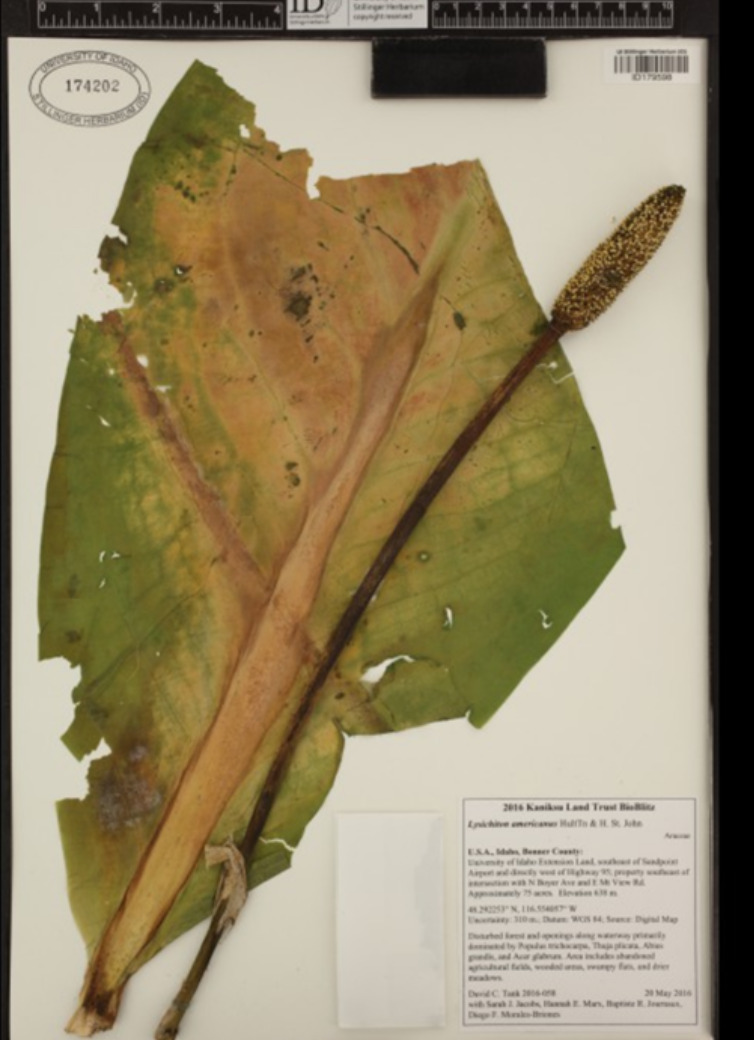
    <title type="html"><![CDATA[Stillinger Herbarium]]></title>
    <summary type="html"><![CDATA[<p><strong><em>Louis F. Henderson established The Stillinger Herbarium at the University of Idaho when he became the school's first botanist. Then, a fire destroyed half of the herbarium collection and slowed the institution's growth. Despite this setback, the herbarium recovered and continued to thrive, becoming the largest herbarium in Idaho and the seventh largest in the Pacific Northwest.</em></strong></p><img src="https://www.intermountainhistories.org/files/fullsize/9963e7472cf392bb249fbc1e385bb4eb.jpg" alt="Lysichiton americanus, also known as a Western Skunk Cabbage" /><br/><p><span style="font-weight:400;">In 1893, the University of Idaho in Moscow hired Louis F. Henderson as its first botanist. Henderson gave the school a collection of local plants he gathered for personal study, and in 1893, it became the foundation of the herbarium. Henderson became the herbarium's first director and retired in 1906. During this time, Henderson accumulated over 10,000 specimens from various locations in Idaho, storing the herbarium archives in the University of Idaho Administration building. However, a fire destroyed 85,000 specimens from the herbarium collection and Henderson's files, such as notebooks and letters, when the Administration building burned down on March 30, 1906. After 1908, when Henderson retired as director, the herbarium's growth was gradual but not forgotten. Botanists William H. Baker and J.H. Christ continued their exploration of the local plants and were significant contributors to the regrowth of the herbarium. By the mid-1900s, the collection had increased to about 50,000 specimens. The herbarium received additional aid to its development when Charles Roy and Nettie May Stillinger created the Stillinger Trust in 1957. Charles was a former university student and afterward became a teacher in botany and science. Charles and his wife dedicated their trust to the University of Idaho, with most of its income to the school herbarium and twenty percent to the Nettie May Stillinger Memorial Scholarship Fund. Their trust funded the development of the herbarium collection for the past sixty-six years and continues to do so to this day.</p>The herbarium saw a range of new directors that aided the collection's growth—starting with Douglass M. Henderson. He was in charge from 1972 to 1996 and doubled the plant archives' size. However, after his sudden death in 1996, Dr. Pamela Brunsfeld took over in 2001 until 2008. Brunsfeld was an Instructor of Systematic Botany at the university. After the resignation of Brunsfeld, the current director, Dr. David Tank, began. Tank is a biologist and leads active collection-based research programs involving students, staff, and professional hobbyists to aid in the growth and development of the Stillinger Herbarium. Tank's program has led to the current collection of 215,000 specimens, making it a major resource for studying the plants of Idaho and the Pacific Northwest.</p><p><em><strong><a href="https://www.intermountainhistories.org/items/show/823">For more (including 4 images) view the original article</a></strong></em></p>]]></summary>
    <published>2024-05-22T18:57:14+00:00</published>
    <updated>2026-04-17T19:32:18+00:00</updated>
    <link rel="alternate" type="text/html" href="https://www.intermountainhistories.org/items/show/823"/>
    <id>https://www.intermountainhistories.org/items/show/823</id>
    <author>
      <name>Cristal A. DeSantiago, Northern Arizona University</name>
    </author>
  </entry>
  <entry>
    <title type="html"><![CDATA[The Story of Moscow’s Idaho Hotel]]></title>
    <summary type="html"><![CDATA[<p><strong><em>Built before 1900, the Idaho Hotel was an iconic landmark brick building that stood at the corner of A Street and Main Street for nearly a century before it was destroyed as a part of a highway rerouting plan to revive Moscow’s downtown.</em></strong></p><img src="https://www.intermountainhistories.org/files/fullsize/5e93bc88304ca4423cf7c6338e1973b0.jpg" alt="Main Street from intersection of A and Main Streets. Moscow, Idaho" /><br/><p>Built in the late nineteenth century, the Idaho Hotel served Moscow’s north-Idaho community for many years. At the time of the brick building’s construction, Idaho had just earned its position as the 42nd state in the United States. The hotel was a necessary piece of Moscow as the community quickly grew around agriculture, timber, and other land-use intensive industries. With a population exceeding 2,000 permanent residents at the time the hotel was built, the Idaho Hotel would be ready to house temporary workers and others passing through. In its early years, the Idaho Hotel saw decent business because of the city’s connectivity in the Northwest, due to Moscow’s two railroads and position as one of the largest agricultural communities in the panhandle. The Idaho Hotel benefited from Moscow’s relatively lively community and even saw gain from having a brewery (now known as the Corner Club) next door. Throughout the early and mid-twentieth century, the hotel served its place in the city. Around 1940, Art Crossler bought the Idaho Hotel. Crossler renovated the building into the “New” Idaho Hotel throughout the mid-1940s, constructing new brick on the south wall, adding annexes, and installing a state-of-the-art elevator. </p><p>Since then, the Idaho Hotel underwent some other name changes and renovations, including briefly being known as the New Motor Hotel. After the construction of Moscow’s Eastside Marketplace and Palouse Mall in the 1970s, business downtown began to slow as it did in many communities. A downtown revitalization project proposed in the late 1970s included a major highway reroute to make downtown more pedestrian friendly, and Crossler sold the hotel to the Idaho Department of Transportation. In an interview with the Spokane Daily Chronicle, Crossler mentioned that it just was not profitable to maintain the old building as small hotels had gone past their prime. The Hotel Idaho was then destroyed in 1977 to make room to reroute US 195’s traffic onto Washington Street to improve traffic safety and pedestrian experiences downtown. </p><p>At the expense of the historic landmark hotel, downtown Moscow now enjoys a family-friendly downtown with plenty of parking, crosswalks, and commerce.</p><p><em><strong><a href="https://www.intermountainhistories.org/items/show/176">For more (including 4 images) view the original article</a></strong></em></p>]]></summary>
    <published>2018-05-21T23:43:50+00:00</published>
    <updated>2026-04-17T19:32:02+00:00</updated>
    <link rel="alternate" type="text/html" href="https://www.intermountainhistories.org/items/show/176"/>
    <id>https://www.intermountainhistories.org/items/show/176</id>
    <author>
      <name>Sandis Simchuk, University of Idaho</name>
    </author>
  </entry>
  <entry>
    <title type="html"><![CDATA[Psychiana: Prophesies from Moscow, Idaho]]></title>
    <summary type="html"><![CDATA[<p><strong><em>International response to the Psychiana movement exceeded the wildest expectations of most anyone in Moscow, Idaho. Even the movement’s founder and prophet, Frank Bruce Robinson, was surprised by the speed with which his new religion swept the globe. However, after decades of astonishing success, Psychiana Inc. would quickly and unexpectedly dissolve. Consequently, the largest religious movement to be born in the Intermountain West maintains a complicated legacy. </em></strong></p><img src="https://www.intermountainhistories.org/files/fullsize/0ab902d91e3a47500cf92fc94a8ec688.jpg" alt=" Packet featuring atom bomb as volcano
" /><br/><p>The Psychiana movement began in 1929 with a simple advertisement in Psychology magazine. Promising to teach anyone to “literally and actually” speak to God, the ad was answered by an overwhelming barrage of letters requesting subscription to the new mail-order religion. Within two decades, Psychiana would be counted as the world’s seventh largest religion. Though largely forgotten today, Psychiana remains one of the largest and most consequential religious movements founded in the Intermountain West. </p><p>The religion’s founder and prophet, Frank Bruce Robinson, settled in Moscow, Idaho in 1928. Having left bible training college unsatisfied, Robinson tired of traditional Christianity and established himself as a druggist. As early as 1925, he began to record thoughts on a new religion that blended elements of Christianity and New Age spiritualism. After a short time in Moscow, Robinson began to host lectures preaching the power of positive thought. Urged by local followers, Robinson placed the fateful Psychology magazine advertisement that catapulted his movement into the international spotlight. </p><p>The lessons of Psychiana were compiled into a series of lessons and mailed individually to the subscriber. In all, Robinson composed more than twenty lessons that could be collectively purchased for roughly twenty to forty dollars. In addition, Robinson offered his autobiography and a variety of self-help pamphlets for purchase. Soon after founding the religion, Robinson left the pharmacy business to manage Psychiana’s mammoth office headquarters. With more than one hundred employees, Robinson became the largest private employer in Latah County. </p><p>Psychiana garnered 36,000 subscribers in sixty-seven countries within its first year of operation. By the early 1930s, the Moscow post office sent and received more than 60,000 pieces of Psychiana correspondence each day. Eventually, they had to construct a larger post office. Robinson’s message of enlightenment and prosperity appealed broadly and worldwide economic misery and political anxiety only served to enlarge Psychiana’s audience. Letters poured in affirming the power of Robinson’s philosophy. Curiously, Benito Mussolini numbered among Robinson’s admirers and the two communicated regularly by telegram.</p><p>Robinson’s business dramatically quickened as uncertainty from the global depression of the 1930s gave way to outright fear of a world war in the 1940s. Robinson went so far as to sell lapel pins that proclaimed Psychiana’s ability to defeat Adolf Hitler. By the end of the Second World War, Psychiana had rapidly and steadily grown for almost two decades. In 1948, Frank Bruce Robinson died of a heart attack at the age of sixty-two. The death of his movement would come soon after. </p><p>Business declined after Robinson’s death, forcing his son to close Psychiana’s doors in 1952. As mysteriously as it had emerged onto the world’s stage, Psychiana disappeared into the void of discarded philosophies. Considered by many to be a passing New Age fad, Psychiana nonetheless altered the lives of countless people and occupies an important position in the history of the Intermountain West.</p><p><em><strong><a href="https://www.intermountainhistories.org/items/show/110">For more (including 5 images) view the original article</a></strong></em></p>]]></summary>
    <published>2018-01-27T05:42:55+00:00</published>
    <updated>2026-04-17T19:32:00+00:00</updated>
    <link rel="alternate" type="text/html" href="https://www.intermountainhistories.org/items/show/110"/>
    <id>https://www.intermountainhistories.org/items/show/110</id>
    <author>
      <name>Samuel Sharp, University of Idaho</name>
    </author>
  </entry>
  <entry>
    <title type="html"><![CDATA[Saving Jazz in Moscow, Idaho]]></title>
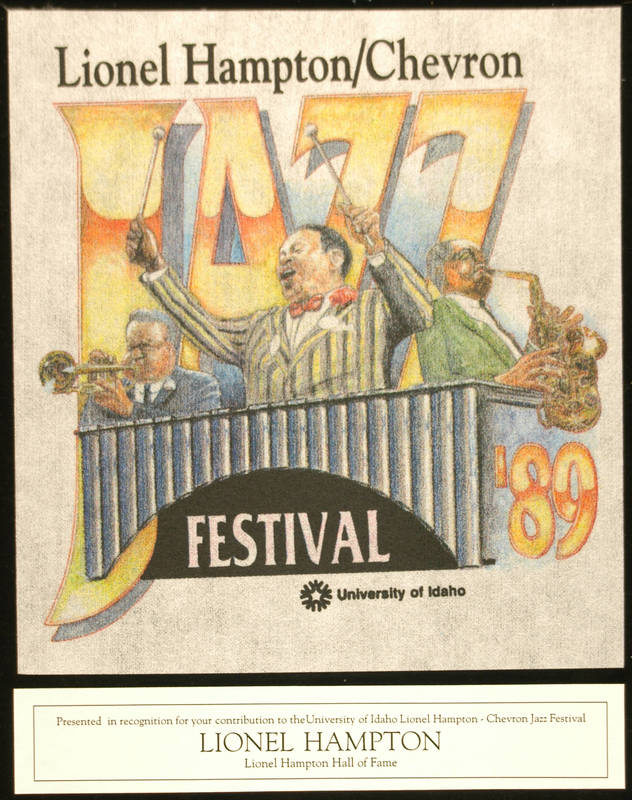
    <summary type="html"><![CDATA[<p><strong><em>Throughout the 1960’s jazz was admired across the nation. In the small college town of Moscow, Idaho, the love for the upbeat New Orleans sound was no different. </em></strong></p><img src="https://www.intermountainhistories.org/files/fullsize/1c996a312d406a7b5865769489bb4ad9.jpg" alt="Award to Lionel Hampton" /><br/><p>In 1968, a small group of students and one guest artist gathered together to perform Jazz music and compete in Moscow, Idaho’s first Jazz Festival. Hosted by David Seiler and Robert Spevack, the festival was embraced by the community. According to University of Idaho graduate, Amanda Nagel, the goal of Seiler and Spevack was to combat the death of Jazz to the rise of Rock-N-Roll through “educating young students and instituting a love for jazz for a new generation.” </p><p>In 1977, Dr. Lynn “Doc” Skinner became the new director for the University of Idaho’s Jazz Festival. It was Doc’s plan to transform the small event into a celebrated festival that would bring big names to the northern Idaho. The intimate, single day event grew into a three-day event that brought renowned artists and thousands of students from all over the country to the University of Idaho. Through workshops, clinics, and concerts, students and faculty have been exposed to a variety of different jazz genres.</p><p>The Jazz Festival was graced with the appearance from the Queen of Jazz herself, Ella Fitzgerald. Her 1982 headlined attendance led to the national recognition of the UI Jazz Festival. Shortly after her visit, the University’s student newspaper, The Argonaut, stated, “The evening was a rare one in Moscow. The appearance of a unique and great talent is something to be appreciated. To use one of the titles, Ella, ‘There Will Never Be Another You.’” It was after the presence of Ms. Fitzgerald that big names became ordinary for the U of I Jazz Festival. </p><p>In 1985, the festival was renamed in the honor of Lionel Hampton. That year his band performed on the intimate stage of the Memorial gym, playing through the night, nearly to sunrise. Charles Gallagher, a writer for the Argonaut, describes the event stating, “The performance reminded one of an old black and white movie depicting a smoky jazz hall in Chicago 50 years ago.” Hampton was so impressed by the enthusiasm from the young musicians that he pledged to be the ambassador for the University of Idaho’s Jazz Festival. According to a 1985 January edition of the Argonaut, Hampton began his commitment by donating $50,000 to establish a foundation for the festival. At his 1985 attendance, the University of Idaho recognized Hampton by formally renaming the event to the Lionel Hampton Jazz Festival. </p><p>To date, the Lionel Hampton Jazz Festival has brought thousands of jazz music enthusiasts together to learn from and listen to artists like Ray Brown, Sarah Vaughn, Doc Severinsen, and Al Jarreau. The international superstar appearing in shows coast-to-coast as the United States’ Ambassador of Jazz, Dizzy Gillespie appeared at the Jazz Festival on multiple occasions. Known for his swollen-like-balloons cheeks while he played the trumpet, Dizzy not only embraced the event as a professional and instructor he dedicated some of his most prized possessions to the Jazz collection at the University. </p><p>It was the appreciation and perseverance of Jazz from people like Lionel Hampton, Ella Fitzgerald, and Dizzy Gillespie that allowed for its endurance throughout musical history. Entering its 50th year anniversary, the Lionel Hampton Jazz Festival has allowed for many diverse artists visit the Northwest region and continues to enable the admiration of jazz for generations.</p><p><em><strong><a href="https://www.intermountainhistories.org/items/show/107">For more (including 4 images) view the original article</a></strong></em></p>]]></summary>
    <published>2018-01-23T21:07:59+00:00</published>
    <updated>2026-04-17T19:32:00+00:00</updated>
    <link rel="alternate" type="text/html" href="https://www.intermountainhistories.org/items/show/107"/>
    <id>https://www.intermountainhistories.org/items/show/107</id>
    <author>
      <name>Annysia Hoffman, University of Idaho</name>
    </author>
  </entry>
</feed>