<?xml version="1.0" encoding="UTF-8"?>
<feed xmlns="http://www.w3.org/2005/Atom">
  <title type="text">Intermountain Histories</title>
  <updated>2026-08-18T15:52:41+00:00</updated>
  <generator uri="http://framework.zend.com" version="1.12.20">Zend_Feed_Writer</generator>
  <link rel="alternate" type="text/html" href="https://www.intermountainhistories.org/"/>
  <link rel="self" type="application/atom+xml" href="https://www.intermountainhistories.org/items/browse?output=rss2"/>
  <id>https://www.intermountainhistories.org/</id>
  <author>
    <name>Intermountain Histories</name>
    <uri>https://www.intermountainhistories.org</uri>
  </author>
  <link rel="hub" href="https://pubsubhubbub.appspot.com/"/>
  <entry>
    <title type="html"><![CDATA[The Boone and Crockett Club&#039;s Connection with Theodore Roosevelt: Story 8 of 8 of the President Theodore Roosevelt in the West Tour]]></title>
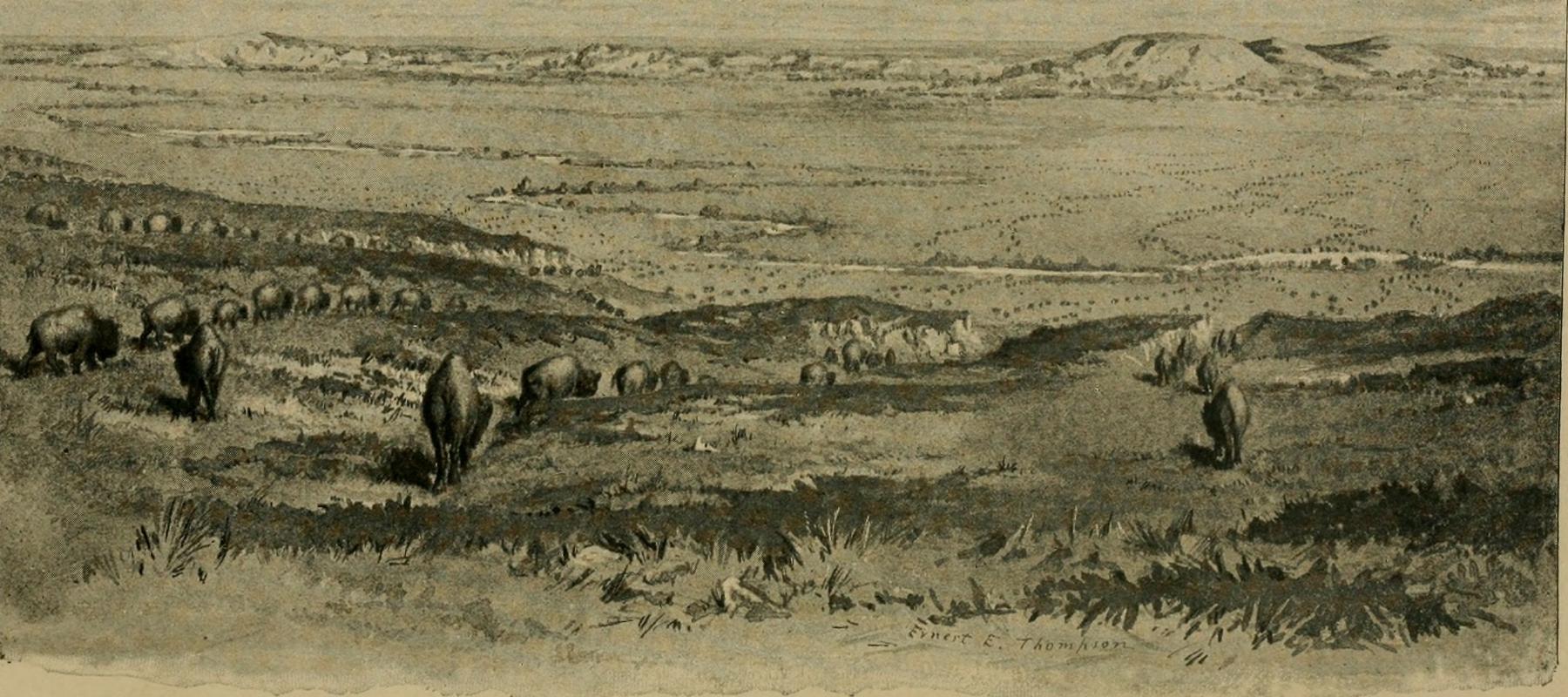
    <summary type="html"><![CDATA[<p><strong><em>By the late 1800s, Western sportsmen and settlers were hunting wildlife at such a rapid pace that many species risked extinction. Theodore Roosevelt recognized this and founded a club dedicated to conserving the land, resources, and wildlife for future generations.  </em></strong></p><img src="https://www.intermountainhistories.org/files/fullsize/31a977bb0a49566874be31d932edb7f7.jpg" alt="Artist’s depiction of big game in the American West in the late 19th century" /><br/><p>At the end of the 19th century, big game hunting became so popular that many wildlife populations faced extinction. Western railways increased access to previously remote regions, accelerating settlement. This Westward expansion also created a surge of irresponsible hunting for food, trophies, and improper land use. In 1883, on a trip to Little Cannonball Creek in Montana, Roosevelt enthusiastically hunted his first buffalo. Amid the thrill of this first-time accomplishment, he also reflected on the animal’s scarcity in his journal, “I watched the great beasts as they grazed...mixed with the eager excitement of the hunter was a certain half-melancholy feeling as I gazed on these bison, themselves part of the last remnant of a doomed and nearly vanished race.”
Like Roosevelt, many other sportsmen noticed how quickly wildlife in the West was disappearing. Determined to preserve his hobby and the land he loved, Roosevelt gathered fellow hunters to form the Boone and Crockett Club. Named after Daniel Boone and Davy Crockett, two famous frontiersmen and heroes of American expansion, the club advocated for the conservation and management of wildlife and habitat in the nation’s newest territories.
Founded on December 7, 1887, with the help of visionaries like George Bird Grinnell, Madison Grant, Gifford Pinchot, and 20 others, the club helped enact many legislative acts to protect and manage public lands. With their great influence, they initiated management regulations in the nation's first National Parks like Yellowstone, Glacier, and the Grand Canyon. They lobbied for federal laws that passed, including the 1891 General Revision Act (also known as the Forest Reserve Act), which enabled the President to withdraw forested lands from the public domain and offer them protections not guaranteed under previous legislation like the 1873 Timber Culture Act. This led to millions of acres being designated as “forest reserves” in the following two decades.
Roosevelt continued his efforts and spoke out about conservation when he was president with his annual address to Congress in 1907, saying, "Optimism is a good characteristic, but if carried to an excess, it becomes foolishness. We are prone to speak of the resources of this country as inexhaustible; this is not so." Educating the public, one of the club's biggest successes was the “Fair Chase” hunting ethic. This philosophy influenced game laws in the United States and created a system of data collection to monitor North American habitat health and big game populations today. Dedicated hunters and naturalists in the Boone and Crockett Club continually play a key role in balancing the well-being of the wild and the enjoyment of future generations. Roosevelt emphasized the importance in his book, My Life as a Naturalist, in 1918, “While my interest in natural history has added very little to my sum of achievement, it has added immeasurably to my sum of enjoyment of life.” He speaks for the wildlife as it cannot speak for itself.</p><p><em><strong><a href="https://www.intermountainhistories.org/items/show/925">For more (including 3 images) view the original article</a></strong></em></p>]]></summary>
    <published>2025-10-24T15:03:20+00:00</published>
    <updated>2026-08-18T15:52:41+00:00</updated>
    <link rel="alternate" type="text/html" href="https://www.intermountainhistories.org/items/show/925"/>
    <id>https://www.intermountainhistories.org/items/show/925</id>
    <author>
      <name>Jessika Cole, Brigham Young University</name>
    </author>
  </entry>
  <entry>
    <title type="html"><![CDATA[MONTU Herbarium]]></title>
    <summary type="html"><![CDATA[<p><strong><em>        The University of Montana Herbarium has faced challenges since Dr. Morton Elrod created it in 1897. They confronted the consequences of the draining effects of World War II and fought to maintain their space. It overcame these problems and became the largest collection in Montana, with over 136,000 vegetation samples.</em></strong></p><img src="https://www.intermountainhistories.org/files/fullsize/5c40edf93fd8d4344ab1b4458e671ca5.jpg" alt="Dr. Morton Elrod in 1911 on a trip to Wildhorse Island State Park in Kalispell, Montan" /><br/><p><span style="font-weight:400;">The University of Montana Herbarium (MONTU) in Missoula, Montana, traces its origins back to 1897 when the university hired its first Professor of Biology, Dr. Morton Elrod. His employment marked the establishment of the herbarium, as Dr. Elrod brought a personal collection of local plants, providing precise details for each sample discovery. This collection laid the foundation for the first University of Montana Herbarium collection. Upon Dr. Elrod's retirement in 1928, the herbarium experienced a series of curator changes over the next sixty years. The first of these curators was Charles Leo Hitchcock, who gained the responsibility in 1932. Under Hitchcock's leadership, the herbarium underwent significant developments. He relocated the collection to the second floor of the Natural Science building and initiated a program to create multiple copies of all plant specimens for exchange with other universities. By the mid-1930s, Hitchcock's efforts had expanded the herbarium to tens of thousands of specimens.</p>In 1937, Hitchcock left, and Dr. Fred Barkley succeeded him as the curator and became the botany instructor. During his first three years, Barkley acquired 4,000 sheets of pressed plant specimens for the herbarium and sent out 6,000 specimens to exchange with other herbariums. He resigned in 1945, leading to the selection of Dr. LeRoy Harvey as a Professor of Botany and the herbarium curator in 1946. World War II disturbed the early years of Harvey's tenure due to the university’s resources and time going towards the war, which temporarily slowed the herbarium's growth. With limited resources for research, Harvey focused on maintaining the herbarium space. Over his thirty-year tenure, Harvey made notable advancements, including replacing old wooden cabinets with steel storage to protect samples from insects better. He also discarded specimens that had  incomplete labeling and added 10,000 to 12,000 new specimens, many of which were from Glacier National Park. </p><p><span style="font-weight:400;">Following Harvey's resignation in 1977, the herbarium underwent various short-term caretakers until 1981, when Dr. Kathleen Peterson assumed the role of a long-term curator. During her seven-year leadership, the herbarium reached a milestone by gaining its 100,000th specimen.</span> <span style="font-weight:400;">After Peterson left in 1988, the university merged the herbarium with the Division of Biological Sciences in 1990, and collection managers took on curatorial responsibilities. Then, in 1994, a group of scientists received a grant and sought to use the herbarium space for their research, but there was limited faculty support in saving it. A group of individuals outside of the herbarium recognized its value and led a campaign to protect it. They wrote to the university's president in support and raised $10,000 to purchase additional cabinets, ultimately saving the herbarium from being displaced. The gathering of individuals led to the formation of the Friends of the UM Herbarium group in 1996. They played a vital role in maintaining the herbarium's attraction and supporting its growth. Since its founding, the herbarium has transformed Elrod's original collection into an archive housing over 136,000 plant specimens.</span></p><p><em><strong><a href="https://www.intermountainhistories.org/items/show/822">For more (including 4 images) view the original article</a></strong></em></p>]]></summary>
    <published>2024-05-22T18:17:32+00:00</published>
    <updated>2026-04-17T19:32:18+00:00</updated>
    <link rel="alternate" type="text/html" href="https://www.intermountainhistories.org/items/show/822"/>
    <id>https://www.intermountainhistories.org/items/show/822</id>
    <author>
      <name>Cristal A. DeSantiago, Northern Arizona University</name>
    </author>
  </entry>
  <entry>
    <title type="html"><![CDATA[The Trolley Barn at Fort Missoula, Montana]]></title>
    <summary type="html"><![CDATA[<p><strong><em><span style="font-weight:400;">The Historical Museum of Fort Missoula’s Trolley Barn hosts Streetcar #50, which once ran on Missoula’s interurban trolley line.</span></em></strong></p><img src="https://www.intermountainhistories.org/files/fullsize/41b31ef6e535bb9ab1e992eba6b7c6fd.jpg" alt="Higgins Ave. Bridge Postcard, ca. 1910-1915." /><br/><p><span style="font-weight:400;">The Fort Missoula museum sits at the outskirts of Montana’s second largest city, also named Missoula. Among this repository of historical buildings and artifacts is a reconstructed streetcar holding facility. This trolley barn houses Streetcar #50, a decommissioned trolley car that once operated on the interurban line from Missoula to the nearby sawmill company town of Bonner.</span>
<span style="font-weight:400;">Missoula’s streetcar history began in 1890 with horse-drawn carriages on steel rails. Electric streetcars came to Missoula in 1893, operating alongside the horse-drawn lines. Many people, including university students, came to rely on the streetcar, so when this early attempt ended in 1897 after the Missoula city council removed the streetcar tracks, they were left without a means of mass transit.</span>
<span style="font-weight:400;">In the 1900s, the debate over bringing a new street railway to Missoula captured public attention. Publications like the </span><i><span style="font-weight:400;">Daily Missoulian </span></i><span style="font-weight:400;">enthusiastically expressed their optimism that Missoula would see an electric trolley again soon. All the city needed to get construction underway was money, which ex-Senator William Clark, an eccentric entrepreneur making enormous profits in copper mining in Butte, was more than happy to provide. Clark’s Missoula Street Railway Company incorporated in February 1909, beginning construction shortly thereafter. The </span><i><span style="font-weight:400;">Daily Missoulian </span></i><span style="font-weight:400;">issued frequent reports on the Company’s incremental progress. Finally, on May 12, 1910, the streetcars were ready for service.</span>
<span style="font-weight:400;">Missoula’s streetcar was a technically accomplished system. In 1921, the Street Railway Company installed an automated signaling system, the first of its kind in Montana. In addition to the intra-city network, the interurban line was also novel - Streetcar #50 and its counterparts required only one operator at the helm. Within their first two years of operation, Missoula’s trolleys ferried two and a half million passengers over an accumulated distance of one million miles; at their peak, the trolley system operated ten cars over twenty-one miles of track spanning from destinations within Missoula to nearby cities like Bonner, around seven miles away. </span>
<span style="font-weight:400;">Despite its efficiency and public adoration, however, Missoula’s trolleys soon faced an insurmountable challenge. Since Montana first started licensing them in 1913, the production and purchase of automobiles had increased dramatically. As more people started driving, the streets became crowded, and passenger numbers fell to financially unsustainable levels. On January 24, 1932, the city decommissioned the last trolley car in Missoula. Bus service began the following day. They sold Streetcar #50 to various buyers, often used as temporary housing. In 1974, it was donated to the Historical Museum of Fort Missoula. A grassroots campaign saved it from being sold off in 1993, allowing it to be refurbished and exhibited. Today, Streetcar #50 and its car barn are all that remains of Missoula’s streetcar system.</span></p><p><em><strong><a href="https://www.intermountainhistories.org/items/show/816">For more (including 5 images) view the original article</a></strong></em></p>]]></summary>
    <published>2024-05-21T02:04:21+00:00</published>
    <updated>2026-04-17T19:32:18+00:00</updated>
    <link rel="alternate" type="text/html" href="https://www.intermountainhistories.org/items/show/816"/>
    <id>https://www.intermountainhistories.org/items/show/816</id>
    <author>
      <name>Liam Craddock, Northern Arizona University</name>
    </author>
  </entry>
  <entry>
    <title type="html"><![CDATA[Camels at Missoula]]></title>
    <summary type="html"><![CDATA[<p><strong><em>Though camels were well adapted to the harsh conditions of little water and extreme temperatures that prevail in the American West, they never became common beasts of burden because they frightened the ubiquitous horses and mules. The advent of railroads also made them obsolete for improving supply lines.</em></strong></p><img src="https://www.intermountainhistories.org/files/fullsize/06e68eff813ad5be0b7024fb0a1f829b.jpg" alt="Mullan Road" /><br/><p>As an instrumental wagon route across the Rocky Mountains, the Mullan Road carried much of the traffic between Fort Benton in what is now Montana to Fort Walla Walla in present-day Washington. With the discovery of placer and quartz mines in places such as Gold Creek, Virginia City, Bear Gulch, and Deer Lodge in Montana from 1862 to 1864, population and the demand for supplies boomed. Along this route plodded horses, mules, and also camels.
The first arrived in Montana in 1865. Some had been bought from Nevada salt delivery trains; others had been acquired from the scattered stock of the US government’s short-lived Camel Corps. Still others may have come from the efforts of businessman Frank Laumeister to employ them in the British Columbia Cariboo Mining Company. These camels carried everything from mail to flour to nail kegs to gold dust, and they worked the routes between mining camps in the west and south of Montana territory before they began plying the Mullan Road across the Rockies. These exotic creatures made for memorable stories, including one in which a hunter shot one down thinking it was a moose, and had to surrender to the camel’s owner his cash, gun, ammunition, watch, and his deed to a claim in Ophir. Though both the camel’s owner and the <em>Montana Post</em> article printing the story ridiculed this hunter for being ignorant of camels, quotidian camel sightings did not remain a feature of western Montana life for long. A settler who moved to the Helena area at the age of nine in 1867 reported that by then camel trains were already the subject of stories only and not firsthand experience.
A major obstacle against widespread adoption of camels, despite their load carrying capacity and remarkable endurance, was that mules and horses could not stand them. The smell and sight of camels instigated many commotions, including one that deprived Missoulans of their Fourth of July shipment of liquor. One Montana settler even claimed he won a bet based on horses’ fear of camels.
Furthermore, camels had to compete not only with other, more common beasts of burden, but also with the railroads advancing across the continent. The establishment of transcontinental rail systems shaped the development of transport, trade, and settlement away from the highway of the Mullan Road that camels traveled and, eventually, away from the need for camels at all. While the 1869 track connection did not pass directly through Montana, merchants and settlers and territorial governments pioneered new southerly transportation routes to link up with the transcontinental railway. Given the opposition of many muleteers and horse handlers, it is not surprising camels were not transplanted to these new trails. Then, 1883 saw the completion of Montana’s own Northern Pacific Railroad, reducing the necessity of the Mullan Road and the camels that plied it. These Montanan camels soon faded into the stuff of legend and colorful history.</p><p><em><strong><a href="https://www.intermountainhistories.org/items/show/528">For more (including 5 images) view the original article</a></strong></em></p>]]></summary>
    <published>2021-10-22T21:54:24+00:00</published>
    <updated>2026-04-17T19:32:11+00:00</updated>
    <link rel="alternate" type="text/html" href="https://www.intermountainhistories.org/items/show/528"/>
    <id>https://www.intermountainhistories.org/items/show/528</id>
    <author>
      <name>Emily Moore, Northern Arizona University</name>
    </author>
  </entry>
</feed>