<?xml version="1.0" encoding="UTF-8"?>
<feed xmlns="http://www.w3.org/2005/Atom">
  <title type="text">Intermountain Histories</title>
  <updated>2026-04-17T19:32:19+00:00</updated>
  <generator uri="http://framework.zend.com" version="1.12.20">Zend_Feed_Writer</generator>
  <link rel="alternate" type="text/html" href="https://www.intermountainhistories.org/"/>
  <link rel="self" type="application/atom+xml" href="https://www.intermountainhistories.org/items/browse?output=rss2"/>
  <id>https://www.intermountainhistories.org/</id>
  <author>
    <name>Intermountain Histories</name>
    <uri>https://www.intermountainhistories.org</uri>
  </author>
  <link rel="hub" href="https://pubsubhubbub.appspot.com/"/>
  <entry>
    <title type="html"><![CDATA[St. Mary’s Mission in the Pacific Northwest]]></title>
    <summary type="html"><![CDATA[<p><strong><em>Father Pierre-Jean De Smet brought Christianity to Native peoples in Idaho and Montana through the construction of St. Mary’s Mission. With it came Catholic conversion among some Salish (Flatheads) and Nez Perce, and conflict with the Blackfeet.</em></strong></p><img src="https://www.intermountainhistories.org/files/fullsize/439956b4dff81e2ade29e5724487f46c.jpg" alt="[Untitled]" /><br/><p>A few members of Salish speaking tribes, also referred to as “Flatheads,” traveled to St. Louis in the 1830s and requested the Catholic Church send missionaries to construct a mission to teach them about Christianity and the Bible. Father Pierre-Jean De Smet, Society of Jesus, was a Flemish Jesuit priest who answered the call, traveling west with fur traders and Catholic Mohawks. He founded the Catholic mission of St. Mary’s in 1841 to provide schools, storehouses, farms, workhouses, and religious instruction. </p><p>De Smet and the St. Mary’s Mission abided by four overarching rules. First: respect the Catholic Church with submission and a desire to learn about the gospel. Second: respect your neighbors and obey those in positions of authority. Third: develop attributes such as humility, charity, and temperance for self-improvement. Fourth: limit contact between Natives and settlers who may not help cultivate Christian values.</p><p>The presence of St. Mary’s had a profound effect on many Natives. Some Salish were baptized and the mission counted converts as a sign of the mission’s success. Others, such as the Blackfeet, loathed the mission and waged war upon it, destroying the mission in 1850.</p><p>Pierre-Jean De Smet, as the mission’s supervisor, played a large role not only in spreading the gospel message, but also as a community leader. He presided over marriages, baptisms, and other ecclesiastical functions as well as social issues relating to farming, government, and interactions with outsiders. The community looked up to him as a protector and he often counseled Native leaders on matters concerning war and policy. Other Salish rejected De Smet and the Catholic intrusion in their lives and adhered to traditional teachings and practices.</p><p>Located near Stevensville, Montana, Historic St. Mary’s Mission is on the National Register of Historic Places. Buildings include the chapel, Father Ravalli’s cabin, Chief Victor’s Cabin, Ox Cart barn, Dove Cote, Smoke House, Diorama, Salish encampment, and apple orchard. A visitor center houses a museum, gift shop, office, art gallery, and research library. Volunteers serve as tour guides, grounds keepers, clerical workers, and operate a museum and gift shop.</p><p><em><strong><a href="https://www.intermountainhistories.org/items/show/853">For more (including 4 images) view the original article</a></strong></em></p>]]></summary>
    <published>2024-09-25T03:24:33+00:00</published>
    <updated>2026-04-17T19:32:19+00:00</updated>
    <link rel="alternate" type="text/html" href="https://www.intermountainhistories.org/items/show/853"/>
    <id>https://www.intermountainhistories.org/items/show/853</id>
    <author>
      <name>Samuel G. Dunn, Brigham Young University</name>
    </author>
  </entry>
  <entry>
    <title type="html"><![CDATA[The Yankee Fork Mining District]]></title>
    <summary type="html"><![CDATA[<p><strong><em><span style="font-weight:400;">Custer County, Idaho is home to one of the best preserved gold dredges in the country–and a rich mining history that ushered in new life and opportunity. </span></em></strong></p><img src="https://www.intermountainhistories.org/files/fullsize/f3100d51405a82a8c2925197e302b71a.jpg" alt="Yankee Fork Gold Dredge" /><br/><p><span style="font-weight:400;">Placer gold, extractable by hand with little equipment, was discovered in Idaho in 1860 by E. D. Pierce. Pierce became fixated with the idea of mining on the Nez Perce territory in Northern Idaho and corners of Washington and Oregon. He eventually disregarded the law which prohibited mining on Native American lands and chose to proceed with his plans, launching the region into a new era of exploration, excavation, and the boomtowns that sprouted up in response.</span>
<span style="font-weight:400;">Previous to the discovery of gold, settlements in the region were largely made up of various Christian missionary enterprises and Mormon communities. Congregationalist-Presbyterians and Catholics were among the first to travel to Idaho in the 1830s, introducing christianity to the Nez Perce and establishing settlements in the area. Groups of Mormon settlers traveled north from the Salt Lake Valley into what would become Idaho, first in 1855, and progressively more in the following years. </span>
<span style="font-weight:400;">Idaho became a U.S. territory in 1863, and there was growing interest in the land for more than just religious reasons. As gold speculators made their way through the territory they found vast riches around Yankee Fork, a river in central Idaho’s Custer County. It wasn’t long until a mining district–a section of rural land designated for mining–was established around the river. By 1882, annual gold and silver production in Idaho had reached 3.5 million dollars, and one-third of that profit came from placer deposits in the rivers of Custer County. Additionally, there was an abundance of ore, another source of wealth for hardrock mining in Idaho. However, many of these spoils were in the riverbed which made them difficult to extract without the proper equipment. </span>
<span style="font-weight:400;">The Yankee Fork Mining District is most famous for its dredge, designed to extract gold and silver from riverbeds. The use of industrial machines, rather than physical labor, was first introduced in the late nineteenth century–but it wasn’t until 1940 that the construction of the Yankee Fork Gold Dredge was complete. It was no small enterprise at 112.5 feet long and 64 feet high, with a bucket system and sluice boxes to collect and sift through elements. Even though mining stopped during World War II due to the nationwide ban on non-essential mining, work at the dredge picked up again in 1946. The second stint didn’t last long; the dredge was shut down for good in 1952 when the once abundant minerals ran dry. Although it operated for less than ten years, the Yankee Fork dredge managed to produce over 1 million dollars. Today it is a site for summer tourists and one of the best preserved dredges in the U.S. Although a relic of the past, Custer County is still host to 952 mines for the extraction of silver, gold, lead, zinc, and copper.  </span></p><p><em><strong><a href="https://www.intermountainhistories.org/items/show/804">For more (including 5 images) view the original article</a></strong></em></p>]]></summary>
    <published>2024-05-16T01:28:14+00:00</published>
    <updated>2026-04-17T19:32:17+00:00</updated>
    <link rel="alternate" type="text/html" href="https://www.intermountainhistories.org/items/show/804"/>
    <id>https://www.intermountainhistories.org/items/show/804</id>
    <author>
      <name>Megan Bailey, Brigham Young University</name>
    </author>
  </entry>
  <entry>
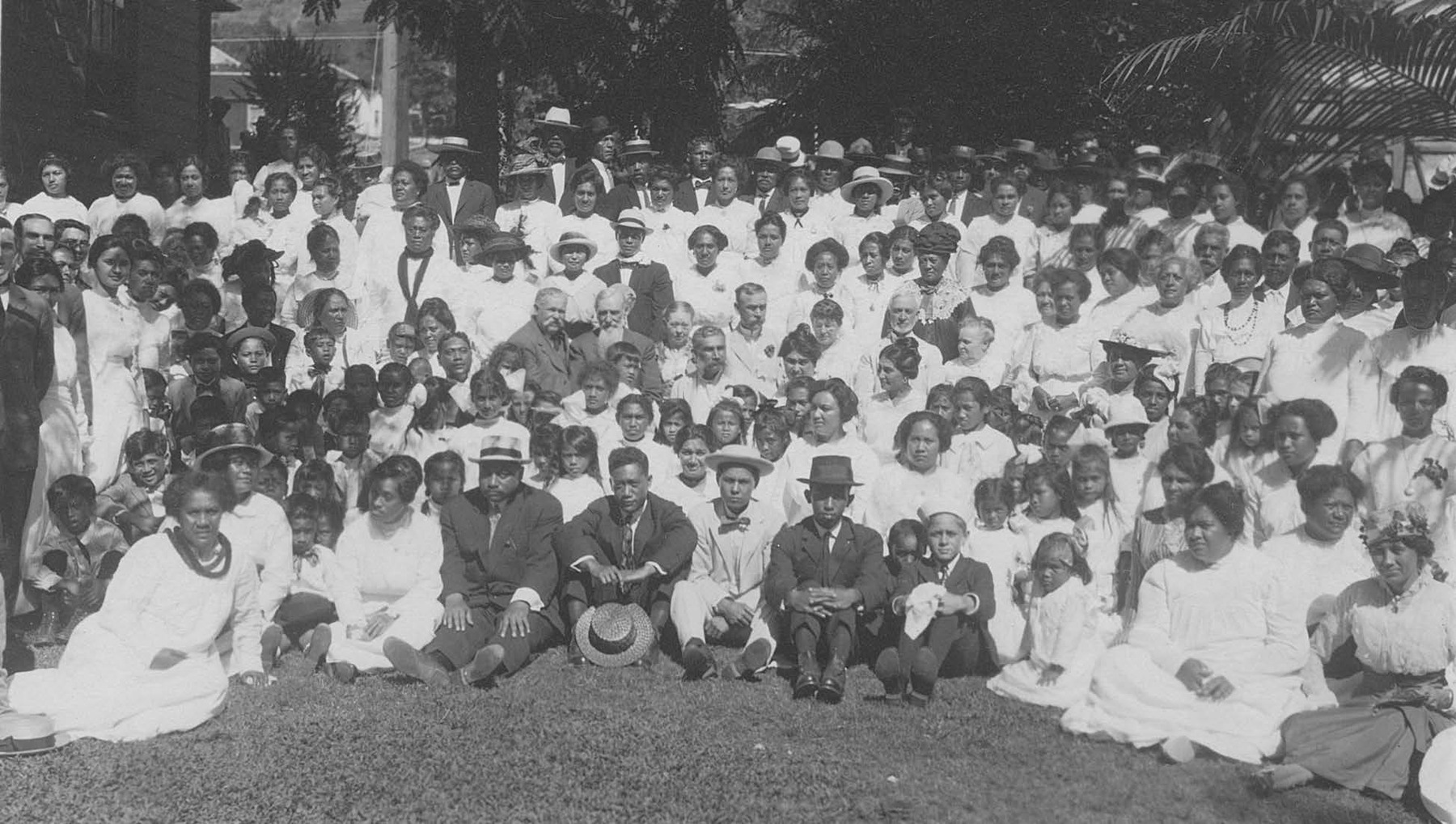
    <title type="html"><![CDATA[Joseph F. Smith and the Islanders of Iosepa]]></title>
    <summary type="html"><![CDATA[<p><strong><em>The Hawaiian members of the Church of Jesus Christ of Latter-day Saints had a very special relationship with the Church’s sixth president, Joseph F. Smith. He was influential in Hawaiian migrations both to and from Utah, including during the time that many of them resided in Iosepa, a Hawaiian colony.</p></strong></p><img src="https://www.intermountainhistories.org/files/fullsize/c4441ee0af02c1fa09ac1230935470cc.jpg" alt="Joseph F. Smith and Hawaiian Saints" /><br/><p><span style="font-weight:400;">At the age of fifteen, Joseph F. Smith served as a missionary for the Church of Jesus Christ of Latter-day Saints in the Hawaiian Islands in the early 1850s. During his several missions, Smith learned the Hawaiian language and developed a loving relationship with the Native Hawaiians. Throughout his life, Smith traveled to Hawaii more often than any other place outside of the western United States. Smith was successful in converting many Hawaiians to the LDS Church. The doctrine of gathering to “Zion” was a central teaching preached by Joseph F. Smith and other missionaries at that time. When immigration laws allowed it, a few hundred Hawaiian Latter-day Saints migrated to Utah to gather with their fellow Saints and to follow the teachings they had received. The Islanders experienced racism, discrimination, job-turnover, and prejudice that led the LDS Church to seek solutions. In 1889, a settlement was established in Tooele County for the Pacific Islanders settling in Utah. It was to be named after Joseph F. Smith, which in the Hawaiian Language is “Iosepa.” At that time, Smith was a member of the Church’s First Presidency and would later become the President of the Church.</span>
<span style="font-weight:400;">In both public and private correspondence, Joseph F. Smith was explicit in expressing his love for the Iosepan Saints. With a letter to S. M. Kinimakalehua of Iosepa, Smith sent “some cloth pants for the cold time that is coming… This is only rags, but take it with my love.” He reported that “Canon [George Q. Cannon] is joining with my family and I in sending a lot of our love to you and Makaweli and all of the Saints in Iosepa.” During a visit to Hawaii in 1915, Smith became convinced of the need for a temple in Hawaii. Upon returning to Utah, he encouraged the Hawaiian Saints to move back to Hawaii and help build a temple in La’ie. Smith also thought that the future Church Presidents would not have the same love for the Hawaiians that he did, which influenced his encouragement of the Islanders to return to their homeland. The Saints trusted in the council of Joseph F. Smith, and most resettled near the temple site in Hawaii. The settlement of Iosepa was fully abandoned by 1917. In November of 1918, Joseph F. Smith passed away and one year later the La’ie Temple was completed. </span></p><p><em><strong><a href="https://www.intermountainhistories.org/items/show/780">For more (including 4 images) view the original article</a></strong></em></p>]]></summary>
    <published>2024-02-24T03:37:50+00:00</published>
    <updated>2026-04-17T19:32:17+00:00</updated>
    <link rel="alternate" type="text/html" href="https://www.intermountainhistories.org/items/show/780"/>
    <id>https://www.intermountainhistories.org/items/show/780</id>
    <author>
      <name>Jordan Castillo, Brigham Young University</name>
    </author>
  </entry>
  <entry>
    <title type="html"><![CDATA[Knight Mangum Building (KMB)]]></title>
    <summary type="html"><![CDATA[<p><strong><em>Eventually named for two sisters-in-law, over the course of its life the Knight Mangum Building hosted a New Deal program, women students of BYU, missionaries-in-training, Latter-day Saint historians, and campus faculty. BYU demolished the building in 2008.</em></strong></p><img src="https://www.intermountainhistories.org/files/fullsize/41d67f3a15de61dde8cac3faf4ab080c.jpg" alt="Knight Mangum Hall" /><br/><p><span style="font-weight:400;">In the mid-twentieth century, Brigham Young University’s student population continued to grow as more students from further afield sought enrollment at the flagship university of The Church of Jesus Christ of Latter-day Saints. In its ongoing efforts to grow the campus, BYU purchased the building which eventually became Knight Mangum Hall in 1943 from the National Youth Administration (NYA), a New Deal program designed to maintain education and employment among young adult men and women.</span>
<span style="font-weight:400;">NYA built the edifice in the mid-1930s as a shop building to teach auto maintenance skills, and BYU initially planned to use the facility for similar purposes in its Industrial Arts program. However, university administrators changed their plans and decided to use the building as a women’s dormitory, renaming it Campus Dormitory. The decision to use the building as housing was so abrupt that few renovations were made to make it suitable for living. The university filled the hall with bunk-beds, and coeds hung sheets from the ceiling to cordon off sleeping spaces and create a semblance of privacy.</span>
<span style="font-weight:400;">BYU began renovating the hall to make it more suitable as a dormitory in 1946 and added a kitchen, dining room, and laundry over eight years. When renovations were completed in 1954, administrators renamed the building Knight Mangum Hall, after Jennie Pearl Knight Mangum and Lucy Jane “Jennie” Brimhall Knight, respectively a daughter and daughter-in-law of </span><a href="https://www.intermountainhistories.org/items/show/140"><span style="font-weight:400;">Jesse Knight</span></a><span style="font-weight:400;"> and Amanda McEwan Knight, a philanthropist couple who supported BYU in the early-twentieth century. Jennie Pearl was active in her religious and civic communities and established a scholarship at Provo High School. Lucy Jennie was the daughter of </span><a href="https://www.intermountainhistories.org/items/show/138"><span style="font-weight:400;">George H. Brimhall</span></a><span style="font-weight:400;">, a former BYU president, and in 1898 she had been one of the first two single women to serve as missionaries for The Church of Jesus Christ of Latter-day Saints, serving alongside </span><a href="https://www.intermountainhistories.org/items/show/568"><span style="font-weight:400;">Inez Knight</span></a><span style="font-weight:400;">, another daughter of the Knights. Both were considered lifelong friends of the university.</span>
<span style="font-weight:400;">By the 1950s, Knight Mangum Hall housed between 280 340 coeds at a time. In the early 1960s, however, huge dormitory complexes like </span><a href="https://www.intermountainhistories.org/items/show/148"><span style="font-weight:400;">Heritage Halls</span></a><span style="font-weight:400;"> and </span><a href="https://www.intermountainhistories.org/items/show/149"><span style="font-weight:400;">Helaman Halls</span></a><span style="font-weight:400;"> took over the heavy lifting in housing BYU students, perhaps diminishing Knight Mangum’s necessity. In June 1963, the Church took over Knight Mangum to use as a headquarters for its Language Training Mission, which taught missionaries foreign languages for ecclesiastical missions abroad.</span>
<span style="font-weight:400;">In 1976, the Language Training Mission moved into a new headquarters, leaving Knight Mangum Hall back in BYU’s hands. Rather than restore it to housing use, BYU maintained it as an office space for faculty.</span>
<span style="font-weight:400;">Since it was no longer used as a dormitory, at some point the campus began calling it the Knight Mangum Building. Eventually, every department of the College of Family, Home, and Social Sciences spent some time in Knight Mangum, as did the Joseph Fielding Smith Institute for Latter-day Saint History.</span>
<span style="font-weight:400;">With the building aging and falling behind modern standards for safety, university administration decided to demolish the building. BYU tore down Knight Mangum in the summer of 2008.</span></p><p><em><strong><a href="https://www.intermountainhistories.org/items/show/570">For more (including 11 images) view the original article</a></strong></em></p>]]></summary>
    <published>2022-02-27T08:54:09+00:00</published>
    <updated>2026-04-17T19:32:12+00:00</updated>
    <link rel="alternate" type="text/html" href="https://www.intermountainhistories.org/items/show/570"/>
    <id>https://www.intermountainhistories.org/items/show/570</id>
    <author>
      <name>Makoto Hunter, Brigham Young University</name>
    </author>
  </entry>
  <entry>
    <title type="html"><![CDATA[Allen Hall (ALLN)]]></title>
    <summary type="html"><![CDATA[<p><strong><em>Named for philanthropic couple R. Eugene Allen and Inez Knight Allen, Allen Hall was established to accommodate growing numbers of students from beyond Utah Valley matriculating at Brigham Young University. BYU demolished the eighty-year-old building in 2018.</em></strong></p><img src="https://www.intermountainhistories.org/files/fullsize/e76dcda921fabedf4001fd384ec9cd90.jpg" alt="Allen Hall" /><br/><p><span style="font-weight:400;">To accommodate the growing student body, in 1937 BYU began constructing its first building meant specifically for use as a student dormitory. Utahn architect Joseph Nelson designed the building in the style of Jacobethan Revival, including gabled parapets and striated brick, and BYU students donated time and labor as construction workers to help building contractor Louis De Young turn Nelson’s vision into reality.</span>
<span style="font-weight:400;">Completed in 1938, the dormitory accommodated up to seventy residents, which BYU set aside for specifically male students. BYU named the building Allen Hall, after Inez Knight Allen and R. Eugene “Gene” Allen. The Allens were the daughter and son-in-law of </span><a href="https://www.intermountainhistories.org/items/show/140"><span style="font-weight:400;">Jesse Knight</span></a><span style="font-weight:400;">, a Latter-day Saint philanthropist who had financially supported BYU (a loan from the Knight Endowment Fund financed Allen Hall itself), and they were accomplished Latter-day Saints in their own right. Inez had been a student at BYU’s predecessor, Brigham Young Academy’s Normal Training School, from 1892 to 1896, where she studied pedagogy and philosophy. Two years after that, Knight became one of the first single sister missionaries for The Church of Jesus Christ of Latter-day Saints, serving for twenty-six months in Great Britain from 1898 to 1900. Gene was also a Brigham Young Academy alumnus; he also studied at Rochester Business College. As an officer of Knight Trust and Savings Bank, Gene managed the Knight Fund. Gene and Inez married in 1902, and they became philanthropists in their communities, following Jesse Knight’s example.</span>
<span style="font-weight:400;">BYU considered Allen Hall such a success as a housing unit that it immediately drew up plans to build another dormitory building, this time for women, which it named <a href="https://www.intermountainhistories.org/items/show/569">Amanda Knight Hall</a> and completed in 1939. BYU Students lived in Allen Hall for the next twenty-four years. Though originally intended only for men, when an influx of female students strained available housing during the mid-1940s, BYU temporarily used Allen Hall to house both men and women, renting first-floor rooms to men and second- and third-floor rooms to women. Eventually, the first floor was converted to women’s housing as well, and men did not fully occupy Allen Hall again until 1953. </span>
<span style="font-weight:400;">In the 1950s, BYU built new dorms to house its increasingly numerous students, perhaps making Allen Hall less significant to BYU’s overall housing needs. Students stopped living in Allen Hall in 1962, and the Church’s Language Training Mission took over the building to house missionaries-in-training. In 1980, BYU took over the building again and used it to host its Museum of Peoples and Cultures for over thirty years. After the museum moved to its present location on Canyon Road in 2014, BYU occasionally used Allen Hall to accommodate university employees when construction created a shortage of office space.</span>
<span style="font-weight:400;">Four years later, in June 2018, BYU announced plans to demolish Allen Hall on the grounds that its age made it unusable for university purposes. Preservation Utah, a historical preservation nonprofit, objected to the planned demolition, arguing that losing Allen Hall would “erase a key part of the university’s story of historical growth and expansion.”</span>
<span style="font-weight:400;">Despite Preservation Utah’s passion, however, its intervention came too late. BYU demolished Allen Hall in August 2018. As of January 2022, BYU maintains the empty lot as a grass field.</span></p><p><em><strong><a href="https://www.intermountainhistories.org/items/show/568">For more (including 13 images&#32;&amp;&#32;1 video) view the original article</a></strong></em></p>]]></summary>
    <published>2022-02-24T12:57:32+00:00</published>
    <updated>2026-04-17T19:32:12+00:00</updated>
    <link rel="alternate" type="text/html" href="https://www.intermountainhistories.org/items/show/568"/>
    <id>https://www.intermountainhistories.org/items/show/568</id>
    <author>
      <name>Makoto Hunter, Brigham Young University</name>
    </author>
  </entry>
  <entry>
    <title type="html"><![CDATA[Charles Walker: St. George Poet]]></title>
    <summary type="html"><![CDATA[<p><strong><em>Charles Walker was called to the Cotton Mission in St. George and made his living there as a blacksmith and stonemason. He helped construct the St. George Temple and was renowned for his poems and songs</em></strong></p><img src="https://www.intermountainhistories.org/files/fullsize/153a43781a51f0e34aef0043afac9d06.jpg" alt="Charles L. Walker" /><br/><p>The scorching temperatures, sparse vegetation, and endless red rock of Saint George, Utah were all that greeted early settlers in the Cotton Mission. Charles Walker, born 1832 in Leek, England, was one of the individuals called by Brigham Young to settle the area and produce cotton to supplement the income for The Church of Jesus Christ of Latter-Day Saints. Upon arriving in 1862, Walker remarked, “St. George is a barren looking place. The soil is red and sandy. On the North ranges a long high red rocky bluff. On the East is a long black ridge of volcanic production. On the west the same. On the south runs the Virgin river, a shallow, rapid stream from which a great portion of the land is irrigated. To look on the country it [is a] dry, parched, barren waste with here and there a green spot on the margins of the streams.” While his observation seemed bleak, Walker exuded optimism with the work that he believed God had called him to do. He wrote in his personal journal, “Well it’s all right; we shall know how to appreciate a good country when we get to it, when the Lord has prepared the way for his people to return and build up… Zion.” Walker’s time in St. George reflected the stalwart nature of those called to settle far Western settlements, and his life in the area would have a significant impact on those around him.
The initial hope that settlers could grow cotton as a cash crop was dashed by poor soil quality. In an attempt to keep the community thriving, Brigham Young ordered the construction of a large public works project to bolster the economy: a new temple. Walker transitioned to stonemasonry and worked on the temple constantly. When the temple was completed, Walker participated in the, and a song he wrote for the occasion was sung at the event. When Walker was not busy with blacksmithing or working on the temple, he spent time with his family and saw to his various church callings. One labor that endeared him to the hearts of his neighbors was his gifted ear for writing hymns, the most famous of which is “Dearest Children, God is Near You.”
Walker later adopted polygamy as practiced by Latter-day Saints in the nineteenth century, marrying his second wife, Sarah Smith. His first wife, Abigail Middlemass, helped him select Sarah, and the trio lived together for the rest of Walker’s life. Each wife gave birth to eight children, sixteen total, with twelve of them reaching adulthood. Walker noted that his peculiar family situation allowed him to labor on the temple and work in his shop more because the burden of running the household was shared between his spouses. Walker also kept himself busy as an assistant marshal for the city and a leader in the local militia. He passed away in 1904, leaving behind a legacy of faithfulness and work ethic on the Utah Frontier.</p><p><em><strong><a href="https://www.intermountainhistories.org/items/show/464">For more (including 3 images) view the original article</a></strong></em></p>]]></summary>
    <published>2021-09-09T22:12:39+00:00</published>
    <updated>2026-04-17T19:32:09+00:00</updated>
    <link rel="alternate" type="text/html" href="https://www.intermountainhistories.org/items/show/464"/>
    <id>https://www.intermountainhistories.org/items/show/464</id>
    <author>
      <name>Dalton Bennett, Brigham Young University</name>
    </author>
  </entry>
  <entry>
    <title type="html"><![CDATA[The Rise and Fall of Fort Limhi]]></title>
    <summary type="html"><![CDATA[<img src="https://www.intermountainhistories.org/files/fullsize/e9a0268dc8d51ac2a31e65259050b175.jpg" alt="Lemhi Valley" /><br/><p>In the mid-nineteenth century members of The Church of Jesus Christ of Latter-day Saints, led by the prophet Brigham Young, settled in the Rocky Mountains. The saints shaped the history of the American West by building missionary outposts and forming proselytizing communities among Native Americans. </p><p>Thomas Sasson Smith led the Salmon River Mission to construct Fort Limhi, a settlement in eastern Idaho on the bank of the east fork of the Salmon River. It’s now called the Lemhi River after a misspelling of “Limhi,” a king in the Book of Mormon. Church members had a strong desire to teach the American Indians the gospel of Jesus Christ because they believed natives had ancestral ties with the Book of Mormon peoples. </p><p>Brigham Young called nearly 30 men to the Salmon River Mission in April, 1855, who left their homes and families in Utah Territory to journey north. When they arrived that summer, members of the Bannock, Shoshone, and other tribes greeted them, and some were baptized in the coming months. </p><p>In the spring of 1857, Brigham Young visited the fort on his farthest journey since arriving in Utah. Pleased by what he saw, he encouraged the missionaries to have their families join them at this outpost. During the summer, tensions between church members and the U.S. government grew, and President Buchanan sent 2,500 troops to install his new appointees for territorial leadership. When Brigham Young heard of the impending conflict, he declared martial law in Utah Territory and urged his followers to prepare for war. Winter weather halted the troops’ advance, giving the church time to plan. In the event of a need for the church community to relocate again, Young planned on taking his people north through modern-day Lemhi Pass, and on as far as Canada if necessary. </p><p>Meanwhile, the settlers at Fort Limhi faced difficulties of their own. News of the impending conflict spread rapidly among the native tribes, who became much less friendly and supportive, not knowing which force would triumph. Not understanding the complex relationships between tribes, the colonists got caught in the middle of tribal disputes over stolen horses. The arrival of more colonists meant taking more native land, building more forts and fences. What had started out as a harmonious relationship became increasingly less cooperative as more colonists arrived and competition for resources increased.</p><p>On February 25, 1858, Fort Limhi fell victim to a surprise attack by 250 Bannock and Shoshone warriors, led by Bannock Chief Le Grand Coquin and mountaineer John W. Powell, the alleged instigator. The saints’ former friends and converts killed two and wounded five before the remaining 69 colonists, including 30  women and children, retreated to the log fort for safety. The warriors proceeded to steal nearly all of the mission’s livestock: over 200 cattle and 30 horses and other animals, perhaps as a reimbursement for resources the colonists used.  </p><p>Baldwin Watts and Ezra Barnard snuck out at night a few days later and began a desperate ride south for help. Local militia in the Lehi area heard the call to arms on March 9 and organized a rescue force. In spite of adverse conditions, the rescue company arrived at Fort Limhi early on March 21 to find everyone still alive. The missionaries packed up and abandoned one of the first white settlements in modern-day Idaho. With his plans for a safe route north frustrated, Brigham Young sought a truce with the U.S. Government, preventing what could have escalated into a larger conflict. </p><p><em><strong><a href="https://www.intermountainhistories.org/items/show/286">For more (including 3 images) view the original article</a></strong></em></p>]]></summary>
    <published>2019-02-12T04:22:39+00:00</published>
    <updated>2026-04-17T19:32:04+00:00</updated>
    <link rel="alternate" type="text/html" href="https://www.intermountainhistories.org/items/show/286"/>
    <id>https://www.intermountainhistories.org/items/show/286</id>
    <author>
      <name>Bridget Garner, Brigham Young University</name>
    </author>
  </entry>
  <entry>
    <title type="html"><![CDATA[The Sacred Heart Mission and “Benign” Cultural Colonization]]></title>
    <summary type="html"><![CDATA[<p><strong><em>Father Pierre De Smet, the Jesuit missionary andexplorer of the American West, described the Coeur d’Alene Indians upon his first encounter with them in 1842 as extremely receptive to his Christian message. De Smet baptized twenty-four adults and many small children among the Coeur D’Alene people during that first visit. De Smet left after a few days, but sent his Jesuit colleagues later that same year to stay with the Indians over the winter and to establish a Catholic mission among them. </em></strong></p><img src="https://www.intermountainhistories.org/files/fullsize/bf0ddf4513ac8914118251c80462fbe1.jpg" alt="Sacred Heart Mission" /><br/><p>Father Anthony Ravalli, a Jesuit missionary and architect from Italy, designed and led the construction of the Church of the Sacred Heart from 1850–53, and the Coeur D’Alene people provided much of the labor necessary to complete the project. Father De Smet’s later writings contain numerous references to the Sacred Heart mission, and he often stayed there during his travels between missions. </p><p>On one occasion in 1863, Father De Smet stayed at the mission for six days and wrote about the changes occurring with the growing presence of white miners and settlers. He referenced a report by a U.S. Army captain that claimed that the only “salvation” for Indians would be “to be removed far, far from [the] presence [of the whites]” and that Indians “can never exist in contact with whites.” Father De Smet himself condemned this suggestion of removal and wrote, “May heaven preserve [the Coeur d’Alene Indians] from contact with the whites!” His advocacy for Indians, however, was predicated mainly on their conversion and faithfulness to Christianity.</p><p>The legacy of Pierre De Smet and his Jesuit missions, including Sacred Heart, is a subject of debate in the current postcolonial era. Traditionalist historians and biographers generally portray Father De Smet as a heroic explorer and a savior to the native peoples of western North America, specifically one who sought to understand and honor native culture. However, as theologian George E. Tinker writes, “Any Euroamerican’s understanding of or appreciation for Indian cultures was subject to severe cultural limitations.” Pierre De Smet may have tried to understand Indian culture, but ultimately the Jesuit approach was to quickly “impose European cultural values.” De Smet himself actively sought to use his missions to reorganize Indian civilization into a sedentary society that could better receive Christianity. So while De Smet himself was not directly involved in the removal and extermination of Indians (in fact he spoke against it), the cultural colonization of which he was a part was aimed at eroding Indian identity and culture. The Mission of the Sacred Heart, like other colonialist European or American religious ventures, should be viewed as a tool of western imperialism. </p><p><em><strong><a href="https://www.intermountainhistories.org/items/show/190">For more (including 3 images) view the original article</a></strong></em></p>]]></summary>
    <published>2018-05-30T20:55:05+00:00</published>
    <updated>2026-04-17T19:32:02+00:00</updated>
    <link rel="alternate" type="text/html" href="https://www.intermountainhistories.org/items/show/190"/>
    <id>https://www.intermountainhistories.org/items/show/190</id>
    <author>
      <name>Sam Utley, Brigham Young University</name>
    </author>
  </entry>
  <entry>
    <title type="html"><![CDATA[The Mission of the Sacred Heart ]]></title>
    <summary type="html"><![CDATA[<p><strong><em>Located in Coeur d’Alene’s Old Mission State Park, the Mission of the Sacred Heart is the oldest building in Idaho. Also known locally as the Cataldo Mission, or Old Mission, the Mission of the Sacred Heart was built between 1850 – 1853 by Catholic missionaries and members of the Coeur d’Alene Tribe. It is listed on the National Register of Historic Places and is the oldest mission building in the Pacific Northwest. </em></strong></p><img src="https://www.intermountainhistories.org/files/fullsize/18aa16b18593eeda0e9dd7d760561341.jpg" alt="FRONT and EAST SIDE ELEVATIONS - Sacred Heart Mission" /><br/><p>In the early nineteenth century, the Coeur d’Alene Indians began to hear rumors of men in black robes who possessed special powers. Curiosity about these alleged powers inspired the tribe to invite the “black robes” to live amongst them. Jesuit missionaries arrived in the St. Joe River area in the early 1840s and built the St. Joe Mission in 1842. Due to seasonal flooding the mission was abandoned and relocated near the Coeur d’Alene River and modern day Cataldo, Idaho.</p><p>Father Antonio Ravalli modeled the mission after the cathedrals of his Italian homeland. Construction began in 1850 and three hundred Coeur d’Alene Indians and two missionaries built the ninety-foot-long, forty-foot-high, and forty-foot-wide building. The construction required creativity due to minimal building supplies. No nails were used, the chandeliers were made from old tin cans, and the walls were built by weaving grass and straw over a framework then solidifying it with river mud, a method known as waddle and daub. </p><p>When completed in 1853, the Mission of the Sacred Heart became an important stop for westward settlers, miners, traders, and religion seekers. The original goal of the mission was to serve as a reduction community, bringing Indians from nearby communities to one gathering place to focus on religion and the adoption of Jesuit agricultural practices. It also provided supplies and hospitality in this remote part of the West. By the 1870s, the mission and surrounding farm had grown to between eighty and one hundred acres and made full use of the Coeur d’Alene valley for grazing and cultivation. </p><p>In 1961 the Mission of the Sacred Heart was designated a National Historic Landmark, and in 1966 was added to the National Register of Historic Places. A mural of the mission can be seen on the walls of the Brumidi Corridors at the U.S. Capitol building and is the only landscape depicted there that shows a building that still exists today. The mission is the oldest building in the state of Idaho and is now a part of Coeur d’Alene’s Old Mission State Park. The park includes the Mission and the restored Parish house (which was burnt down in 1887), along with two cemeteries, nature trails, and a visitor center. </p><p><em><strong><a href="https://www.intermountainhistories.org/items/show/172">For more (including 4 images) view the original article</a></strong></em></p>]]></summary>
    <published>2018-05-16T03:39:31+00:00</published>
    <updated>2026-04-17T19:32:02+00:00</updated>
    <link rel="alternate" type="text/html" href="https://www.intermountainhistories.org/items/show/172"/>
    <id>https://www.intermountainhistories.org/items/show/172</id>
    <author>
      <name>Trevor McEvers, University of Idaho</name>
    </author>
  </entry>
  <entry>
    <title type="html"><![CDATA[The Spalding Mission]]></title>
    <summary type="html"><![CDATA[<p><strong><em>Henry and Eliza Spalding established a mission near the South Bank of the Clearwater River at the mouth of Lapwai Creek for the Nez Perce tribe in 1836 to educate and convert Native Americans to Christianity. </em></strong></p><img src="https://www.intermountainhistories.org/files/fullsize/c07903b50c18b321736451830cb4693a.jpg" alt="Spalding Mission" /><br/><p>During the mid-nineteenth century, missionaries set out to spread Christianity and educate Native American tribes in the Pacific Northwest. Henry and Eliza Spalding set out with Narcissa and Marcus Whitman in February 1836 from New York to preach to Native American tribes. Twelve or fifteen members of the Nez Perce Tribe greeted them in July and “received them gladly,” according to a letter published by Henry Spalding. The Nez Perce tribe gifted them horses and cared for the missionaries until the Spaldings and Whitmans parted ways in October 1836. The Spaldings stayed with the Nez Perce tribe to settle in the Lapwai Valley, becoming the first Christian missionaries among the Nez Perce. </p><p>The Spaldings began educating the Nez Perce in the English language and Christianity in January 1837. The next year they moved their mission to the current site near Lapwai Creek to take advantage of cooler weather. When they moved locations, the Spaldings taught the Nez Perce agricultural practices, requiring the Nez Perce to stay in one place year-round rather than migrating with the changing seasons. They planted potatoes, vegetables, grains, and fruit trees to support humans as well as livestock and fowl. To make life convenient, a sawmill and gristmill was built in 1838 and was in operation for ten years, bringing irrigation to the area and Idaho for the first time with a mill race and canals tied to the mill complex. Unfortunately, this was destroyed in 1879 when Lapwai Creek flooded and washed away the sawmill and gristmill, as well as damaged the mill race, roads, bridges, and farms. The flood also caused Lapwai Creek to be permanently rerouted to its current location. </p><p>While the Spaldings resided in the mission, they expanded the original site from a modest home to include a church, school, printing house, and living space for the Nez Perce. An 1843 letter written by Henry Spalding to Levi Chamberlain in Honolulu described the success of the school and church, stating the missionaries had over 200 people in attendance daily, with half of the school consisting of adults. </p><p>The Spaldings moved from the Lapwai mission in the fall of 1848 to Oregon, but Henry Spalding returned to Lapwai in 1871. During his time in Lapwai, he received 931 Nez Perce and Spokane members into the church, as reported by Spalding in the record book of the church in November 1873. He remained there until his death from sickness in 1874. </p><p>The Spalding house stood until around 1900. Only the fireplaces and irrigation ditches of the original Spalding home remain today. The Spalding site was commemorated in 1923 by the Daughters of the American Revolution with an iron fence erected around the foundation of the Spalding home site in 1935. Today the area is home to Nez Perce Historical Park where visitors may view the Spalding Presbyterian Church, the Northern Idaho Indian Agency’s cabin and agent’s residence, remnants of the Spalding Mission, and Lapwai Mission cemetery where Henry and Eliza Spalding are buried. </p><p><em><strong><a href="https://www.intermountainhistories.org/items/show/169">For more view the original article</a></strong></em></p>]]></summary>
    <published>2018-05-15T00:54:57+00:00</published>
    <updated>2026-04-17T19:32:02+00:00</updated>
    <link rel="alternate" type="text/html" href="https://www.intermountainhistories.org/items/show/169"/>
    <id>https://www.intermountainhistories.org/items/show/169</id>
    <author>
      <name>Saraya Flaig, University of Idaho</name>
    </author>
  </entry>
</feed>