<?xml version="1.0" encoding="UTF-8"?>
<feed xmlns="http://www.w3.org/2005/Atom">
  <title type="text">Intermountain Histories</title>
  <updated>2026-04-17T19:32:17+00:00</updated>
  <generator uri="http://framework.zend.com" version="1.12.20">Zend_Feed_Writer</generator>
  <link rel="alternate" type="text/html" href="https://www.intermountainhistories.org/"/>
  <link rel="self" type="application/atom+xml" href="https://www.intermountainhistories.org/items/browse?output=rss2"/>
  <id>https://www.intermountainhistories.org/</id>
  <author>
    <name>Intermountain Histories</name>
    <uri>https://www.intermountainhistories.org</uri>
  </author>
  <link rel="hub" href="https://pubsubhubbub.appspot.com/"/>
  <entry>
    <title type="html"><![CDATA[The Great Salt Lake Shorelands Preserve]]></title>
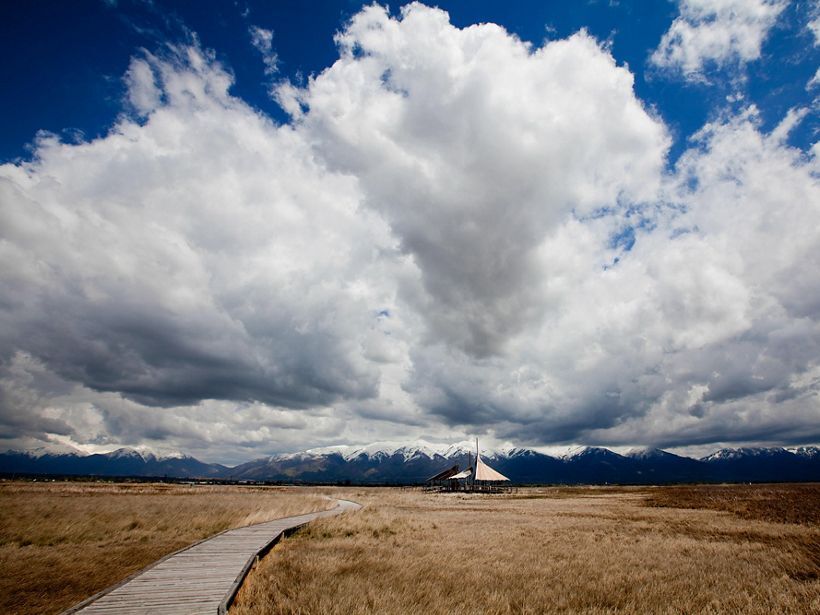
    <summary type="html"><![CDATA[<p><strong><em>Nicknamed “the Bird Refuge,” The Great Salt Lake Shorelands Preserve in Layton, Utah is a rest stop for 4-6 million birds migrating annually. The protected land has also become a recreational spot for tourists and locals to bird watch and enjoy the wetlands of the Great Salt Lake.</em></strong></p><img src="https://www.intermountainhistories.org/files/fullsize/3ea1ff3a8d741ab1d715b39c0db58c87.jpg" alt="Great Salt Lake Pavilion " /><br/><p><span style="font-weight:400;">In 2003, a group called “The Nature Conservancy” gained custody of 4,400 acres of wetlands fed by the waters of the Great Salt Lake. The wetlands lie on the eastern shore of the lake near Farmington Bay and Antelope Island State Park. Nicknamed “the Bird Refuge,” this preserve’s mission is to provide refuge to 4-6 million birds as they make their annual migrations on routes that span from the Arctic to Central and South America. Bird watchers have documented 250 species visiting the Shorelands preserve to feed or rest and 93 species that nest there. The number of birds passing through the area has increased by 25% since 2020, showing the importance of the preserve. </span>
<span style="font-weight:400;">The Shorelands Preserve includes a circular boardwalk spanning about 1 mile. Two wooden structures serve as stops along the boardwalk, one hosting a 30-foot viewing tower for visitors to better observe the surrounding area and to increase their chances of spotting birds. The other is a large wooden pavilion. Informative signs dot the boardwalk, helping visitors identify the birds that frequent the Preserve. They also provide information about the ecosystem of the area. </span>
<span style="font-weight:400;">In May 2020, the Mitigation Commission released a statement turning over ownership of The Nature Conservancy to the federal government. Giving the federal government stewardship over The Nature Conservancy was viewed as a better way to protect the lands from future development. This was crucial at a time when Utah’s Department of Transportation was considering expanding the West Davis Corridor, a road system. The drought-driven shrinking of the Great Salt Lake poses an additional risk to the region. The Nature Conservancy is in the process of developing strategies to divert water to the preserve to help the wetlands and aid the bird species that rely on it.</span></p><p><em><strong><a href="https://www.intermountainhistories.org/items/show/790">For more (including 4 images) view the original article</a></strong></em></p>]]></summary>
    <published>2024-03-03T03:57:53+00:00</published>
    <updated>2026-04-17T19:32:17+00:00</updated>
    <link rel="alternate" type="text/html" href="https://www.intermountainhistories.org/items/show/790"/>
    <id>https://www.intermountainhistories.org/items/show/790</id>
    <author>
      <name>Gabby Segura, Brigham Young University</name>
    </author>
  </entry>
  <entry>
    <title type="html"><![CDATA[First National Bank of Layton]]></title>
    <summary type="html"><![CDATA[<p><strong><em>Established in 1905, the First National Bank of Layton was one of only six banks in Utah to be in business for over 100 years. It operated as First National Bank of Layton until 2019, when it merged with Glacier Bank. </em></strong></p><img src="https://www.intermountainhistories.org/files/fullsize/6e0bd0aba6258621d2d507ced518396d.jpg" alt="Farmer&#039;s Union Building " /><br/><p><span style="font-weight:400;">The First National Bank of Layton was founded in 1905 by nine farmers and local businessmen in response to rapid economic expansion and what scholars refer to as the “Americanization” of the state, a period of increased entrepreneurial spirit which took place from 1890 to 1920. Initially funded with a starting investment of only $25,000 the bank’s focus was on small businesses and local families. The bank has tried to retain the same feeling of intimacy and personability since then. Describing itself as a community bank, it remained locally owned and active in a wide variety of community service initiatives. When the bank celebrated its centennial anniversary in 2005, having survived many wars and economic crises, it was praised by the Utah Bankers Association as “an amazing accomplishment.”</span>
<span style="font-weight:400;">The bank was initially established in a building designed by the prominent Utah architect William Allen, who is noted for also designing the Davis County Courthouse and the Kaysville Tabernacle. William Allen, an eccentric London-born man, learned architecture via a correspondence course and often infused his buildings with personal style. Many of the buildings he designed mixed different staples of architecture like Victorian spires and Greek columns. The original building that housed the First National Bank of Layton is no longer in use. The bank is currently housed in the Farmer’s Union Building, another of Allen’s designs.</span>
<span style="font-weight:400;">The Farmer's Union Building is significant for housing the Farmers’ Union Mercantile Institution, the first commercial enterprise in Layton, Utah, incorporated in 1909. The building was built in three sections, the first being erected in 1890, the second shortly thereafter, and the third in 1930. </span><span style="font-weight:400;">It was the first prominent business structure erected in Layton and served as the community's primary meeting hall, social center, and recreational facility. Various events were hosted in the building including, church events, sports games, town meetings, and others. Later, the second floor was used as apartments. The Farmer's Union business closed in 1956 and various businesses filled the vacancy until the First National Bank of Layton gained ownership.</span><span style="font-weight:400;"> The bank merged with Glacier Bank out of Kalispell, Montana in 2019.</span></p><p><em><strong><a href="https://www.intermountainhistories.org/items/show/664">For more (including 3 images) view the original article</a></strong></em></p>]]></summary>
    <published>2022-10-12T16:55:14+00:00</published>
    <updated>2026-04-17T19:32:14+00:00</updated>
    <link rel="alternate" type="text/html" href="https://www.intermountainhistories.org/items/show/664"/>
    <id>https://www.intermountainhistories.org/items/show/664</id>
    <author>
      <name>Zach Baker, Weber State University</name>
    </author>
  </entry>
  <entry>
    <title type="html"><![CDATA[Layton&#039;s Thai Community<br />
]]></title>
    <summary type="html"><![CDATA[<p><strong><em>The Thai community in Layton, Utah was started in the 1960s and 70s. The Thai community has been able to retain their cultural identity while simultaneously integrating into the community. Through this process, Layton’s Thai community is leaving a legacy that will not be forgotten.  </em></strong></p><img src="https://www.intermountainhistories.org/files/fullsize/08f71a09f41a574ccdd352812c7e09fc.jpg" alt="The Wat Temple in Layton, Utah
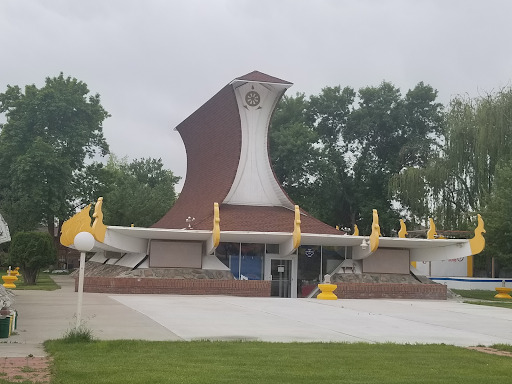
" /><br/><p>Thais in America are often mistaken as Chinese, Japanese, or as another Asian ethnicity. This often makes their presence less visible to American communities. Such is the case with the Thai community of Layton, Utah. Although many Utahns enjoy eating Thai food, they would not be able to tell you where Utah’s Thai population is most prevalent. Like many other Thai communities in the United States, Utah’s largest Thai community is found near a military base. Just south of Hill Air Force Base in Layton, Thais have been living and thriving for over fifty years.    </p><p>Between 1960 and 1970, a wave of Thai immigrants came to the United States and some settled in Utah. Most of the first immigrants were women and many were wives of American servicemen who had been stationed in Thailand during the Vietnam War. When their husbands returned to Hill Air Force Base in Northern Utah, Thai women followed. This small group of Thai women opened the path for growth in their community that caused many Thai immigrants to become aware of Utah as a potential relocation spot with a pre-established Thai community. According to the 2000 Census, the Thai population in Utah reached over 1,200 people with most of those immigrants living in Davis County (Perlich, 17).</p><p>The Thai community in Utah is different from other Asian enclaves. Unlike many other Southeast Asian immigrants at the time, most of the Thai did not come as refugees. Many groups like the Hmong, Loatians, Cambodians, and Vietnamese came to the United States in an effort to escape the atrocities of war. Thais, on the other hand, came of their own free will. Many came for the purpose of pursuing a higher education or to move closer to loved ones who were already here. Across the United States the story is similar as most members of Thai communities are teachers, doctors or other medical practitioners, or entrepreneurs that own private businesses. Thais and Thai-Americans pride themselves in being citizens who contribute to their local economies and help build their local communities. </p><p>Over ninety percent of all Thai immigrants are Buddhist. To serve the Buddhist members of the Thais in Layton, a Thai Buddhist Temple graces Gordon Avenue. The uniquely shaped building is home to several monks who came here from Thailand for the purpose of ministering to worshippers in Utah. The monks are supported solely by donations from the temple’s weekly attendees. The Wat Dhammagunaram Temple was first established in 1975 and moved to its current location in 1995. The temple follows the tradition of Theravada Buddhism with services offered in Thai and the traditional Pali language of Theravada Buddhism. In an effort to maintain their Thai culture and share it with the surrounding community, the Thai Temple also offers meditation classes and holds food festivals with traditional Thai recipes. While not many have known about Utah’s Thai community in Layton, it is still thriving and continues to share the highlights of their culture with anyone who is interested. </p><p><em><strong><a href="https://www.intermountainhistories.org/items/show/445">For more (including 3 images) view the original article</a></strong></em></p>]]></summary>
    <published>2020-10-31T07:39:48+00:00</published>
    <updated>2026-04-17T19:32:09+00:00</updated>
    <link rel="alternate" type="text/html" href="https://www.intermountainhistories.org/items/show/445"/>
    <id>https://www.intermountainhistories.org/items/show/445</id>
    <author>
      <name>Josie Manwill, Brigham Young University </name>
    </author>
  </entry>
</feed>