<?xml version="1.0" encoding="UTF-8"?>
<feed xmlns="http://www.w3.org/2005/Atom">
  <title type="text">Intermountain Histories</title>
  <updated>2026-04-17T19:32:20+00:00</updated>
  <generator uri="http://framework.zend.com" version="1.12.20">Zend_Feed_Writer</generator>
  <link rel="alternate" type="text/html" href="https://www.intermountainhistories.org/"/>
  <link rel="self" type="application/atom+xml" href="https://www.intermountainhistories.org/items/browse?output=rss2"/>
  <id>https://www.intermountainhistories.org/</id>
  <author>
    <name>Intermountain Histories</name>
    <uri>https://www.intermountainhistories.org</uri>
  </author>
  <link rel="hub" href="https://pubsubhubbub.appspot.com/"/>
  <entry>
    <title type="html"><![CDATA[Kemmerer, Wyoming Alcohol Culture during Prohibition]]></title>
    <summary type="html"><![CDATA[<p><strong><em>Kemmerer, Wyoming emerged in the late nineteenth century when Patrick J. Quealy founded a coal company and a town to go with it. Kemmerer was popular among immigrant business owners who set up shops seeking financial and personal freedom. Their diverse cultures contributed to Kemmerer becoming a bootlegger’s haven when Prohibition began a few decades later.</em></strong></p><img src="https://www.intermountainhistories.org/files/fullsize/bc57fb9731bf760db28ae4ec4796ab05.jpg" alt="The original Southern Hotel building" /><br/><p>In 1897, Patrick J. Quealy founded a town and coal company, naming them “Kemmerer” after his financial backer, Mahlon S. Kemmerer of Pennsylvania. Quealy made Kemmerer an “independent town,” meaning that the coal company sold land to businesses and residents. This attracted immigrant miners and business owners, including those from southern and eastern Europe. Drinking was integral to many of the immigrants’ cultures, which included Italian, Polish, Slovak, and Scottish. This influenced Kemmerer’s freedom-focused Prohibition culture. In 1919, Wyoming passed laws banning alcohol. Kemmerer and its neighboring communities of Diamondville and Frontier formed a triangle network for illegal bootlegging and drinking.
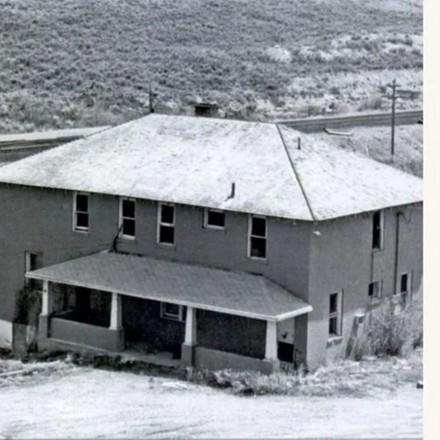
During Prohibition, many Kemmerer residents made little effort to hide their drinking, as it was a southern and eastern European cultural norm and popular with the white men who worked the area’s mines. Isabel Burns migrated to Kemmerer in the 1880s and later established the brothel she named the Southern Hotel, which catered to illegal activities like prostitution and drinking. Burns and her successors operated the Southern Hotel for seven decades, throughout all of Prohibition, and continuously offered drinking and prostitution, regardless of legality. For its size, Kemmerer hosted a disproportionately large number of saloons and brothels like the Southern Hotel, which testified to local positive sentiment toward alcohol and cultural autonomy.
In addition to establishments like the Southern Hotel, well-documented arrests for alcohol possession and public intoxication highlight the prominence of drinking in Kemmerer during Prohibition. While police were generally tolerant of illegal alcohol consumption—acknowledging the town’s large immigrant population—the widespread nature of drinking still led to arrests, often for disrupting the peace. The <em>Kemmerer Gazette</em> reports indicate that authorities arrested people on alcohol-related charges, typically for public intoxication, operating stills, or alcohol distribution.
For example, the 20 April 1927 issue of the paper reported two separate intoxication cases from earlier that month. Both men paid $25 in fines (around $450 today). According to the paper, the first man, E. L. Mitchell, “made his rounds, proceeding to hit the high spots,” and caused a “rucus” at the Kemmerer hotel, thanks to “the potency of Kemmerer’s supply of moonshine, which will give a jackrabbit enough nerve to defy a bulldog.” The second man, a railroad worker from Mexico, “got all corned up on moonshine [then] ran a muck on the streets of Kemmerer.” Authorities incarcerated both men not merely for drinking, but for disorderly public conduct.
Kemmerer’s Prohibition history tells not a story of law, but a tale of western mining culture. As immigrants arrived for railroad and mining jobs, they brought customs wherein drinking was a way of life. When Prohibition criminalized that lifestyle, the law did not erase people’s culture. Places like the Southern Hotel thrived not because people wanted to rebel, but because they wanted to keep living as they always had. Kemmerer’s Prohibition history is one of colliding international and mining cultures withstanding the force of national reform.</p><p><em><strong><a href="https://www.intermountainhistories.org/items/show/895">For more (including 3 images) view the original article</a></strong></em></p>]]></summary>
    <published>2025-09-23T15:34:47+00:00</published>
    <updated>2026-04-17T19:32:20+00:00</updated>
    <link rel="alternate" type="text/html" href="https://www.intermountainhistories.org/items/show/895"/>
    <id>https://www.intermountainhistories.org/items/show/895</id>
    <author>
      <name>Scarlett Kluge, Northern Arizona University </name>
    </author>
  </entry>
  <entry>
    <title type="html"><![CDATA[The Mint Bar – Sheridan, Wyoming]]></title>
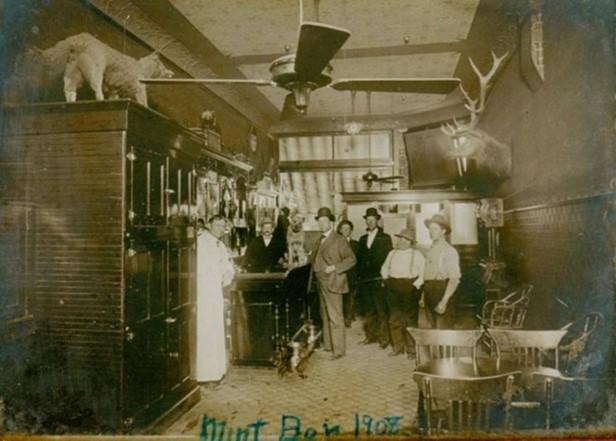
    <summary type="html"><![CDATA[<p><strong><em>In 1907 Charles “Dick” Marlow founded the Mint Saloon in Sheridan, WY. When Wyoming Prohibition laws banned alcohol in 1919, Marlow rebranded “the Mint” as legal storefronts but continued illegal alcohol sales. In 1935, post-Prohibition, the Mint Bar reopened its storefront as a bar. Today, the Mint Bar is still a staple of entertainment in Sheridan, Wyoming.</em></strong></p><img src="https://www.intermountainhistories.org/files/fullsize/634d0740f89c76472de8ecde2b526e01.jpg" alt="The Mint Bar in 1907, shortly after opening. " /><br/><p>In 1907 Charles “Dick” Marlow bought the building that would later become the Mint Bar from a barber and transformed it into the “Mint Saloon,” which locals often referred to as “the Mint.” In 1919, Wyoming passed laws banning the sale and consumption of alcohol unless for prescribed medicinal purposes. At this time, Marlow changed the Mint’s front into a dress shop, then a real estate office, while continuing alcohol sales in the back. In 1923, Oran Moore purchased the Mint, turning it into the “Mint Cigar Company and Soda Shop.” Between 1923 and 1930, Moore operated the Mint’s legal front while maintaining one of Sheridan’s more notorious speakeasies and gambling halls in the back.
During this time, law enforcement suspected the Mint of alcohol sales and conducted multiple raids on the location. On 23 June 1925, the <em>Sheridan Post Enterprise</em> published an article describing a moonshine bust at the Mint. Sheridan town sheriffs and a Wyoming state officer raided the Mint at four o’clock in the afternoon. Police discovered one gallon of moonshine whiskey hidden in a coffee pot by employees. The officers arrested Moore and several other employees. The court fined Moore $500.
On Tuesday, 23 June 1925, an article appeared in the <em>Sheridan Post Enterprise</em> about the officer’s raid at the Mint. A month later, the paper published a follow-up article on Tuesday, 07 July 1925, which mentioned that the court judge postponed the Mint employees’ trial. Lax police and judicial enforcement meant that raids, arrests, and trials like this never prevented the Mint from selling illegal alcohol. The establishment continued its bootlegging and alcohol sales until the stock market crash of 1929 forced Moore to close its doors. In 1933, the United States’ Twenty-first Amendment ended Prohibition, and Wyoming dissolved its alcohol ban.
In 1934, Archie Milson and Robert Thirlwell purchased the establishment and reopened the space as “the Mint Bar.” In 1948, the owner at the time, Lauren L. McVean, renovated the Mint Bar, giving the location its warm rustic style and now iconic bucking horse and cowboy neon sign. Cowboys, locals, travelers, and even celebrities like Ernest Hemingway once again made the bar a popular stop because of its historic charm, great beer, and gambling.
The Mint Bar’s story shows how Prohibition reshaped Sheridan without breaking its spirit. The hidden bar was a gathering place for cowboys and townsfolk alike. Raids and fines were a constant threat, but the establishment’s patrons remained loyal. After Prohibition, the Mint Bar never lost its notoriety. Today, “Meet me at the Mint” is now a signature phrase shared between Sheridan locals. The Mint Bar’s history is a nod to Western independence and resilience.</p><p><em><strong><a href="https://www.intermountainhistories.org/items/show/894">For more (including 4 images) view the original article</a></strong></em></p>]]></summary>
    <published>2025-09-23T15:34:46+00:00</published>
    <updated>2026-04-17T19:32:20+00:00</updated>
    <link rel="alternate" type="text/html" href="https://www.intermountainhistories.org/items/show/894"/>
    <id>https://www.intermountainhistories.org/items/show/894</id>
    <author>
      <name>Scarlett Kluge, Northern Arizona University </name>
    </author>
  </entry>
  <entry>
    <title type="html"><![CDATA[The Klan in Colorado Springs]]></title>
    <summary type="html"><![CDATA[<p><strong><em><span style="font-weight:400;">Following successes in Denver, the Ku Klux Klan formed a new chapter in Colorado Springs. Although this new chapter hoped to gain similar success, it faced many difficulties in accomplishing its goals.</span></em></strong></p><img src="https://www.intermountainhistories.org/files/fullsize/baf2ca0344300dd4d216c34836e78a31.jpg" alt="“KKK members standing in front of a cross at Pikes Peak.” July 4th, 1923." /><br/><p><span style="font-weight:400;">The Klan in Colorado originally began in Denver, but soon spread to nearby towns and cities such as Colorado Springs in hopes of gaining more influence and followers. The 30,605 residents of Colorado Springs were overwhelmingly Protestant, with only 500 Jews and 2,965 Catholics, and thus seemed like an ideal location for the Klan to penetrate. </span></p><p><span style="font-weight:400;">In 1921, the Klan immediately sought to gather support from local organizations— a strategy that worked well for them in Denver. However, many in the community, the police included, were weary of the Klan. After sending a letter to a veteran’s group that was deemed to be a veiled threat, the Klan was met with fervent backlash from local organizations. The leadership of the American Legion condemned the Klan and emphasized its lawbreaking, and Reverend Charles A. Fulton denounced the Klan to his congregation. The Klan’s attempts to gain support in Colorado Springs were deemed a failure and they retreated for the time being</span>
<span style="font-weight:400;">Two years later, on July 4th, 1923, the day following a local screening of </span><i><span style="font-weight:400;">Birth of a Nation,</span></i><span style="font-weight:400;"> Klansmen set ablaze a 30-foot-tall cross on Pikes Peak near Colorado Springs. This marked the creation of a new Klan chapter that sought to renew previous efforts. As before, Klansmen sought connections with local groups but now attempted to invoke fears about the town’s bootlegging Catholics and presented themselves as a lawful solution.</span>
<span style="font-weight:400;">However, the Klan faced multiple problems bringing their goals to fruition. Although anti-Catholicism was no doubt present in the majority Protestant population, many did not view Catholics as an immediate threat. Thus, the Klan offered a violent and militant solution that offered little appeal. Bootlegging, a prominent crime in Colorado Springs that was often used to scapegoat Catholics, was being dealt with by the actual law enforcement, and the Klan’s vigilantism was not seen as needed by the police and citizens. Colorado Springs was a popular tourist destination and residents feared that the Klan’s violent image could negatively affect their commerce and industry.  The Klan’s frequent crises of local leadership also did not help their cause. During their brief presence in Colorado Springs during the 1920s, four different men acted as the local leader or “Exalted Cyclops.” Two of these leaders were deposed before the end of their term.</span>
<span style="font-weight:400;">Although the Klan did not initially vacate the city this time, its unpopularity drove the Klan to operate from the shadows. Klan activities in Colorado Springs during the 1920s mostly consisted of debate and discussion at lodge meetings, and the occasional cross-burning. The Colorado Springs Chapter only appeared once publicly during the 1920s. Not even daring to show themselves in Colorado Springs, they decided to make a donation to a church in the nearby municipality of Fountain resulting in an uproar.</span>
<span style="font-weight:400;">Following their actions in Fountain and the subsequent backlash, the Colorado Springs Klan chapter shrank and eventually dissipated. Although reaching a notable member count of 2,000 during the 1920s, a combination of poor leadership and uninterested potential members resulted in the Colorado Springs chapter of the Klan not having the same amount of success as their Denver neighbors in gaining membership and influence during the 1920s.</span></p><p><em><strong><a href="https://www.intermountainhistories.org/items/show/814">For more (including 3 images) view the original article</a></strong></em></p>]]></summary>
    <published>2024-05-21T01:15:28+00:00</published>
    <updated>2026-04-17T19:32:18+00:00</updated>
    <link rel="alternate" type="text/html" href="https://www.intermountainhistories.org/items/show/814"/>
    <id>https://www.intermountainhistories.org/items/show/814</id>
    <author>
      <name>Aidan Capristo, Northern Arizona University</name>
    </author>
  </entry>
  <entry>
    <title type="html"><![CDATA[The KKK Crash the Funeral of a Salt Lake County Sheriff]]></title>
    <summary type="html"><![CDATA[<p><strong><em><span style="font-weight:400;">On April 19</span><span style="font-weight:400;">th</span><span style="font-weight:400;">, 1922, eight hooded Klansmen crashed the funeral of Salt Lake County Sheriff Gordon Stuart. The motive seems to have been a desire to be associated with law enforcement and to be seen in a grandiose manner.</span></em></strong></p><img src="https://www.intermountainhistories.org/files/fullsize/ec9bbf127f5a04bb8e83b1f74d3b3169.jpg" alt="“Klansmen paying respects to Salt Lake County Sheriff,” Salt Lake Telegram April 20th, 1922, 1." /><br/><p><span style="font-weight:400;">A key difference between the 20</span><span style="font-weight:400;">th</span><span style="font-weight:400;">-century Klan and its 19</span><span style="font-weight:400;">th</span><span style="font-weight:400;">-century counterparts was its decentralized motives as the group expanded from the South. In Salt Lake County, Utah, one of the motivations of the local chapter seemed to be a desire to associate with law enforcement and to make a spectacle.</span></p><p><span style="font-weight:400;">In Sandy, Utah, near Salt Lake City, eight Klansmen in full regalia crashed the funeral of Salt Lake County Deputy Sheriff Gordan Stuart on April 19, 1922. The presence of the Klansmen was a surprise to the funeralgoers and the local paper, the </span><i><span style="font-weight:400;">Salt Lake Telegram, </span></i><span style="font-weight:400;">painted their arrival as sudden and mysterious. The hooded men arrived toward the end of the funeral when the mourners had their heads bowed in prayer, and when they finished the </span><i><span style="font-weight:400;">Telegram </span></i><span style="font-weight:400;">stated, “the mourners lifted their heads only to stare at the ghostlike costume of the little group.”</span>
<span style="font-weight:400;">The Klansmen placed a large floral cross on the grave bearing the inscription “Knights of the Ku Klux Klan Salt Lake Chapter No. 1, April 19, 1922.” They then simultaneously raised their left hand, an action the </span><i><span style="font-weight:400;">Telegram </span></i><span style="font-weight:400;">attributed to a “mark of respect to the deputy sheriff.” Following the salute, the Klansmen made their way to the other side of the cemetery where two vehicles waited to take them away. </span>
<span style="font-weight:400;">The motive behind the uninvited attendance at the funeral is unknown. It could be evidence of the departed deputy sheriff’s involvement in the local chapter of the Klan. However, a more likely explanation for their presence was a desire to be associated with law enforcement. The Klan had been struggling to gain popular support in Utah as the Mormon Church opposed its actions. The appearance allowed them an opportunity to emphasize their grandeur and intrigue as well as to show support for law enforcement. By doing so, it is possible they hoped to dispel negative connotations that were becoming synonymous with Klan activities. When looking at the details of Stuart’s death, as well as the details of the Klan’s procession at the funeral, this theory makes sense.</span>
<span style="font-weight:400;">Deputy Sheriff Gordon Stuart died when attempting to serve civil papers to a farmer, who, mistaking the officer’s motives, opened fire with a shotgun and killed Stuart, who had pushed his partner out of harm's way. The Klan surely would have desired to be associated with the commemoration, either to appeal to the deputy sheriff's law enforcement martyrdom or to simply show respect for his service. </span>
<span style="font-weight:400;">Further evidence of this can be seen in the details of the procession itself. The Klan marched slowly in uniform—until eventually speeding up to reach the position of the funeral while the mourners' heads were bowed. Their organization and precision suggest that they knew they were being viewed and wanted to act accordingly. Furthermore, it seems the Klan wanted to appear in front of the bowing mourners before their heads were lifted. Regardless of their motives, the event shows the Salt Lake County chapter of the KKK desired an association with law enforcement.  </span></p><p><em><strong><a href="https://www.intermountainhistories.org/items/show/812">For more (including 3 images) view the original article</a></strong></em></p>]]></summary>
    <published>2024-05-21T00:26:08+00:00</published>
    <updated>2026-04-17T19:32:18+00:00</updated>
    <link rel="alternate" type="text/html" href="https://www.intermountainhistories.org/items/show/812"/>
    <id>https://www.intermountainhistories.org/items/show/812</id>
    <author>
      <name>Aidan Capristo, Northern Arizona University</name>
    </author>
  </entry>
  <entry>
    <title type="html"><![CDATA[Queen Aggie: Boise’s Black Madam]]></title>
    <summary type="html"><![CDATA[<p><strong><em>Levy’s Alley was Boise’s most notorious restricted district. After Davis Levy’s death, Agnes Bush became one of its most famous proprietors.</em></strong></p><img src="https://www.intermountainhistories.org/files/fullsize/0cad4d80950205d12f20127cfaf8287c.jpg" alt="Parlor" /><br/><p>Named for Davis Levy, the original owner of many of the cribs that lined the alley in the 1880s, Levy’s Alley ran behind the 600 block of Main Street in downtown Boise. While the alley was not the only restricted district in the city, it was the most notorious, and the majority of Boise’s most famous madams and sex workers lived and worked there. One such person was Agnes Bush, also known as “Queen Aggie,” a Black woman who operated multiple cribs and parlor houses in Boise.
Bush was one of Levy’s prior tenants, and after he died, she acquired some of the property for herself and expanded a pleasure business of her own. Bush soon ran multiple rooms in the district, by then nicknamed “Levy’s Alley” after Davis, which she rented out by individual women known as “crib girls.” She was known not only as a successful businesswoman but also as a prominent citizen, and the <em>Idaho Daily Statesman</em> frequently wrote about her charitable acts for the poor and children in need. Bush also made important donations to the city and formed long-standing financial and “friendly” ties with the press and local law enforcement. These relationships were supplemented by expensive gifts such as a diamond-encrusted badge she gave to Boise police chief B. F. Francis and a $250 diamond ring to local journalist C. Miles. These gifts and activities both ensured and announced Bush’s prominent role in Boise, for which she earned the nickname “Queen Aggie.”
Agnes Bush stands out because she was a Black woman. As a prominent figure in the Boise community with ties to law enforcement, as well as significant property holdings and wealth, she stands as a curious anomaly in the history of the Treasure Valley and the broader region. Though there was white supremacist activity in the area given Boise’s proximity to Oregon (which white residents established officially as a white-only state in its 1859 constitution), Bush was a major player in her community. Indeed, local government and law enforcement typically tolerated sex workers in Boise until 1909, when national sentiments turned against the traditional practice of relegating sex workers to restricted districts in favor of completely expelling such para-legal practices in the name of public health. That year, Congress passed the Mann Act, and local Boise officials began targeting their city’s sex workers for fear of federal intervention.
After being run out of the city, Bush moved to Portland, Oregon to live with one of her sons while she suffered from partial paralysis. In 1910, the <em>Statesman</em> reported her death in Portland and revealed her “real name,” Frances Richardson. Despite how her story ended, Bush’s success and her ties to the community suggest the rich tapestry of people that comprised the state of Idaho’s early years and reflect the fascinating and dynamic time in which she lived.</p><p><em><strong><a href="https://www.intermountainhistories.org/items/show/624">For more (including 3 images) view the original article</a></strong></em></p>]]></summary>
    <published>2022-06-25T23:56:23+00:00</published>
    <updated>2026-04-17T19:32:13+00:00</updated>
    <link rel="alternate" type="text/html" href="https://www.intermountainhistories.org/items/show/624"/>
    <id>https://www.intermountainhistories.org/items/show/624</id>
    <author>
      <name>Gabriel Herring, College of Idaho</name>
    </author>
  </entry>
  <entry>
    <title type="html"><![CDATA[Butch Cassidy at Montpelier ]]></title>
    <summary type="html"><![CDATA[<img src="https://www.intermountainhistories.org/files/fullsize/3137570fa383237a80e7af01cf3982ce.jpg" alt="Visitor&#039;s Bureau" /><br/><p>On August 13, 1896 Butch Cassidy robbed the Montpelier bank of gold, silver, and currency worth between $5,000-$15,000. Montpelier, Idaho, had the number one chartered bank in the state at the time. Cassidy rode into town with two accomplices, Elza Ray and Bob Meeks. His party stopped at the saloon for drinks. Afterwards, they headed over to the bank and carried out the robbery. Cassidy and Ray forced the teller, A. N. Mackintosh, to gather all the cash. They then put him up against the wall along with the other customers in the bank. While the robbers proceeded to collect anything of value. Once everything was gathered, Cassidy told his captors to wait ten minutes before they went outside. Mackintosh immediately reported the robbery to the sheriff who managed the local general store as well. The sheriff, however, did not own a horse so he attempted to give chase on a bicycle. As a result, Cassidy and his posse easily escaped on horseback. </p><p>Cassidy may have chosen to rob Montpelier bank because he needed money to pay the court and attorney fees for a former gang member Matt Warner, who was convicted of killing a couple of men in a gunfight. Cassidy also had apparently promised a judge in Wyoming that he wouldn’t commit any crimes within that state. Regardless of the true reasoning behind the robbery the Montpelier bank has been remodeled into a museum to where people can go to see where the famous robbery occurred. </p><p><em><strong><a href="https://www.intermountainhistories.org/items/show/292">For more (including 2 images) view the original article</a></strong></em></p>]]></summary>
    <published>2019-02-13T07:27:20+00:00</published>
    <updated>2026-04-17T19:32:05+00:00</updated>
    <link rel="alternate" type="text/html" href="https://www.intermountainhistories.org/items/show/292"/>
    <id>https://www.intermountainhistories.org/items/show/292</id>
    <author>
      <name> Michael Ross, Brigham Young University</name>
    </author>
  </entry>
  <entry>
    <title type="html"><![CDATA[Women and the Colorado Coalfield Strike<br />
]]></title>
    <summary type="html"><![CDATA[<p><strong><em>While it is true that all miners who participated in the Colorado Coalfield Strike of 1913–14 were men, women were also embroiled in the controversy and consequences of the movement. Wives of miners, sympathetic locals, and even a famous union agitator involved themselves in remarkable ways throughout the strike.</em></strong></p><img src="https://www.intermountainhistories.org/files/fullsize/275364180e69f96a7008fa29fa529432.jpg" alt="Business Section of Trinidad, Colorado" /><br/><p>When the United Mine Workers of America (UMWA) strike was called in September, women enthusiastically joined the cause of their male family members. They harassed strikebreaking miners—“scabs”—and beat one scab, tracklayer John Hale, so badly that some newspapers erroneously reported that he had died. Meanwhile, other women organized their new homes in the various tent colonies throughout the area. The deprivations suffered by the women and children in those colonies were probably no worse than what they faced in company housing, apart from the thin canvas tents. The thin tents could do little to protect them from the cold and a record-breaking four-foot snowfall in December 1913.</p><p>To make matters worse, women were unable to leave the colonies without a male escort because they feared assault by militiamen. Hungry, tired, cold, and scared, women were desperate to see the results of a successful strike. Mother Jones, a seventy-six-year-old famous union agitator, “pepped up” women of the tent colonies several times as she encouraged them to keep up the fight. After the arrest of Mother Jones in January 1914, the UMWA encouraged the women to participate in a peaceful demonstration for the release of the elderly Mother Jones. General John Chase consented to a procession through downtown Trinidad with the expectation that the women would not approach the San Rafael hospital where Mother Jones was being kept prisoner. As the women marched, the militiamen on horseback blocked the way to the hospital. As General Chase shouted at the women to stop, he fell from his horse—much to the delight of the women. Infuriated, he ordered his troops to charge. Women began hurling stones, bottles, and bricks at the soldiers, provoking the frightened cavalrymen to slash at the projectiles and the women with their sabers. Instantly, the parade turned into a full-blown riot as sympathetic townspeople jumped into the fray. Eleven men and eight women were arrested for inciting a riot. Dozens of women and children were injured, but no deaths were reported. </p><p>Troubles persisted after the women’s march, but the militia now included women and children on their enemies list. 	</p><p><em><strong><a href="https://www.intermountainhistories.org/items/show/220">For more (including 5 images) view the original article</a></strong></em></p>]]></summary>
    <published>2018-06-12T22:31:22+00:00</published>
    <updated>2026-04-17T19:32:03+00:00</updated>
    <link rel="alternate" type="text/html" href="https://www.intermountainhistories.org/items/show/220"/>
    <id>https://www.intermountainhistories.org/items/show/220</id>
    <author>
      <name>Natalie Larsen, Brigham Young University</name>
    </author>
  </entry>
  <entry>
    <title type="html"><![CDATA[The Rockwell-Dibble Gunfight : A would-be killer puts Orrin Porter Rockwell, &quot;Samson of Utah,&quot; and his supposed invincibility to the test in Lehi, Utah]]></title>
    <summary type="html"><![CDATA[<p><strong><em>Of the many famous lawmen of the American West, many were controversial figures. Mormon convert and former bodyguard to church founder, prophet, and martyr Joseph Smith, Orrin Porter Rockwell was no exception. Learn of his background and a gunfight when Loren Dibble tried to put the legend of his invincibility to an end.</em></strong></p><img src="https://www.intermountainhistories.org/files/fullsize/4118e5734da42c4c69e0e3fa48692ab0.jpg" alt="Rockwell Portrait " /><br/><p>Porter, as he was called, has been credited with killing more outlaws than Wyatt Earp, Bat Masterson, Doc Holliday, and Tom Horn combined - a reputation which earned him the rather menacing nickname, “Destroying Angel.” Having been one of the very first converts to, and members of the burgeoning Mormon Church in New York State in 1830, he became a bodyguard to the church founder and Prophet Joseph Smith. In this role he faced continued anti-Mormon persecution and violence, leading him to hone his skills of marksmanship and fighting. At one point, his family’s home was attacked and burned to the ground, as they watched. Thereafter, he vowed to never be helpless again. While Rockwell was in his service, Joseph Smith promised him that as long as he stayed faithful ito the Church, and did not cut his hair, he too, like the Biblical figure Samson, could not be killed by any man. Smith said that “no bullet or blade can harm thee.” This promise would make Rockwell known as a miraculous modern-day Samson type of figure, and created a great deal of fame, and mythology surrounding him. After Smith’s martyrdom, Porter Rockwell made the trek out west with the rest of the Mormon Church to what would become Utah Territory.</p><p>In Utah, Rockwell quickly resumed his duties as a bodyguard to the new head of the Mormon Church, Brigham Young. He became a Deputy US Marshal and local territorial lawman, working all throughout the territories of the American West. He was known as an expert marksman who carried multiple weapons with him - most notably, two large black-powder revolvers which he could shoot simultaneously. He gained enormous notoriety, through his many successes in law enforcement. Despite his numerous violent confrontation, he was never struck by a bullet. This prompted gunslingers to come to Utah to see if they could shoot down the “Destroying Angel,”  gain some notoriety of their own, and put to rest the legend of Rockwell’s Samson-like invincibility.</p><p>At this featured location, on the Main Street of Lehi, Utah, one such outlaw tried his hand at defeating Rockwell and his myth. Lehi City court documents recorded the events of June 25, 1873 as an "affray," or the “the fighting of two or more persons in a public place, and to the terror of others.” This affray began as a young outlaw named Loren Dibble approached Porter Rockwell in broad daylight, drew two guns, and emptied them at him. According to onlookers, Rockwell simply stood still, staring directly back at Dibble, without even having his composure ruffled. When Dibble had fired all of twelve shots, Rockwell drew his own two revolvers and shot at Dibble’s feet, making the young outlaw "dance" to avoid being hit by each bullet. When Rockwell had emptied both of his own guns, he walked directly up to Dibble, grabbed him by his collar, and shook him like a rag doll. Rockwell yelled into Loren Dibble’s face “If it wasn’t for the fact that I know who your father really was, I’d have killed you!” Rockwell threw him to the ground, and walked away. This comment about Dibble’s father was not understood at the time, by those present, but has more recently come to be understood through genealogy and DNA tracing that Dibble was the son of Joseph Smith, through one of Smith’s polygamous wives. Few other outlaws were given the benefit of having their lives spared by Porter Rockwell. Rockwell was known to kill too soon, sometimes without sufficient justification for taking a life. </p><p><em><strong><a href="https://www.intermountainhistories.org/items/show/15">For more (including 7 images) view the original article</a></strong></em></p>]]></summary>
    <published>2017-02-13T17:48:53+00:00</published>
    <updated>2026-04-17T19:31:58+00:00</updated>
    <link rel="alternate" type="text/html" href="https://www.intermountainhistories.org/items/show/15"/>
    <id>https://www.intermountainhistories.org/items/show/15</id>
    <author>
      <name>Jeremy Stiborek, Brigham Young University </name>
    </author>
  </entry>
</feed>