<?xml version="1.0" encoding="UTF-8"?>
<feed xmlns="http://www.w3.org/2005/Atom">
  <title type="text">Intermountain Histories</title>
  <updated>2026-04-17T19:32:20+00:00</updated>
  <generator uri="http://framework.zend.com" version="1.12.20">Zend_Feed_Writer</generator>
  <link rel="alternate" type="text/html" href="https://www.intermountainhistories.org/"/>
  <link rel="self" type="application/atom+xml" href="https://www.intermountainhistories.org/items/browse?output=rss2"/>
  <id>https://www.intermountainhistories.org/</id>
  <author>
    <name>Intermountain Histories</name>
    <uri>https://www.intermountainhistories.org</uri>
  </author>
  <link rel="hub" href="https://pubsubhubbub.appspot.com/"/>
  <entry>
    <title type="html"><![CDATA[Mignon Richmond: First Black Woman College Graduate in Utah]]></title>
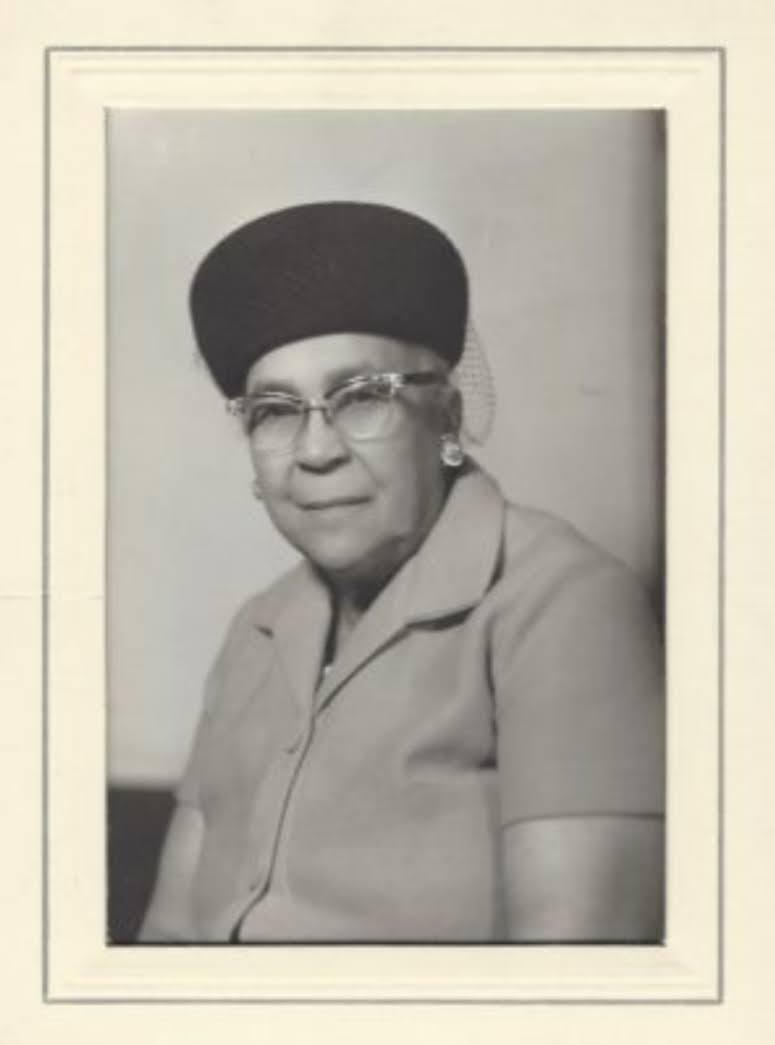
    <summary type="html"><![CDATA[<p><strong><em><span style="font-weight:400;">In 1921 Mignon Barker Richmond became the first African American woman to graduate from college in Utah and went on to become a community organizer and civil rights activist.</span></em></strong></p><img src="https://www.intermountainhistories.org/files/fullsize/8b40389c2ee054bc94fe17722f9e1b3b.jpg" alt="Mignon Barker Richmond" /><br/><p><span style="font-weight:400;">Mignon Barker Richmond was born on April 1, 1897 in Salt Lake City to William Barker and Mary Alice Reagan Barker. She attended Utah Agricultural College, now known as Utah State University, in Logan, Utah, graduating in 1921 with a degree in home economics. She persisted in spite of gross racism from her professors and peers, and participated in the Empyrean Club, a group of women that discussed contemporary problems and events, becoming its secretary-treasurer in her senior year. Following graduation, she faced difficulties finding a job in her field of study due to racial discrimination, and only after 27 years was she able to obtain work in her field of study, working first as a laboratory technician, and later as a school lunch supervisor at the University of Utah Stewart School from 1948 to 1953, and was afterwards hired to start home-living classes for the Utah State Industrial School. </span>
<span style="font-weight:400;">During this period she was active in the National Association for the Advancement of Colored People (NAACP) and the Young Women’s Christian Association (YWCA), and in 1957 she became the YWCA Food Services Director in Salt Lake City, where she stayed until her retirement in 1962 at the age of 65. Later, during president Lyndon Johnson’s administration, she became the head of the Women’s Job Corps and chairwoman of Project Medicare Alert. During her work with the Salt Lake chapter of the NAACP, she co founded the Nettie Gregory Center, a venue for minority youth to be involved in recreation in Salt Lake City, as well as on boards for the Utah Community Service Council and the Women’s Legislative Council, where she helped create legislation to fight poverty. After receiving several awards for her community service and commitment to education and civil rights, she died at the age of 86 on March 10, 1984. Many organizations including the Salt Lake Branch NAACP, Trinity AME Church, and Calvary Baptist Church came together to dedicate Richmond Park in Salt Lake City in 1984, and commissioned a plaque describing Mignon Barker Richmond as an educator, civil leader, and humanitarian.</span></p><p><em><strong><a href="https://www.intermountainhistories.org/items/show/874">For more (including 3 images) view the original article</a></strong></em></p>]]></summary>
    <published>2024-11-02T22:24:37+00:00</published>
    <updated>2026-04-17T19:32:20+00:00</updated>
    <link rel="alternate" type="text/html" href="https://www.intermountainhistories.org/items/show/874"/>
    <id>https://www.intermountainhistories.org/items/show/874</id>
    <author>
      <name>Morgon George, Utah State University</name>
    </author>
  </entry>
  <entry>
    <title type="html"><![CDATA[Joe Hill: The Singing Voice of Labor]]></title>
    <summary type="html"><![CDATA[<p><strong><em>This monument was raised in 2013, 108 years after Joe Hill’s execution and built on the very spot where the IWW songwriter was executed, based on circumstantial evidence. </em></strong></p><img src="https://www.intermountainhistories.org/files/fullsize/16274c8b51b488d753e1d34265c74b56.jpg" alt="Joe Hill Memorial Plaque" /><br/><p>Joe Hill was born in Gavle, Sweden in 1879, and immigrated to the USA in 1902 for want of work. After years of itinerant labor, he joined the Industrial Workers of the World (IWW,) commonly known as the "Wobblies," in 1908. The IWW was a radical labor union, which represented not just skilled workers, but any worker, in any job, regardless of age, race, or gender. The union was also not just focused on obtaining improvements in wages, hours, or conditions, but a total overthrow of the capitalist system. </p><p>Hill hid in boxcars and "rode the rails" to where he could find work, and after a couple years he became an organizer in the IWW, writing songs to mobilize the workers during times of strikes. His "Little Red Songbook" spread throughout the IWW and therefore throughout the country, whenever Wobblies went on strike, they would sing his songs, and usually he would be there too. And in 1914, the strikes were in Utah, involving the workers of Utah Construction Company, represented by IWW local 69, cheered on by Joe Hill in person. There had been repeated clashes between the IWW and the Salt Lake City Police that created an atmosphere of tension in the city. </p><p>On January 10, 1914. Hill was shot in the chest and went to visit a doctor friend to have it treated, the same night John and Arling Morrison were killed in a robbery at the grocery store at which they worked. Hill's doctor reported him to the police, and Hill was promptly arrested. Hill, and many others in the IWW or otherwise sympathetic to his cause, believed the arrest and trial would simply be harassment, as it so often had been before. But Hill, after meeting his state-appointed lawyers, felt strongly that his lawyers had been bribed to 'throw' the case, despite the lack of evidence, and he chose to represent himself. He argued that his songs were free and protected speech, and that the work of the IWW in Utah was protected under the right to associate, and that their actions were chiefly against economic inequality. </p><p>Hill's trial lasted less than one month, during which time the state failed to provide any motive, a single piece of evidence, or indeed any possible indication that any of the bandits had been Joe Hill. The only piece of evidence the prosecution submitted was Joe Hill's IWW red card. The IWW were known for being violent and inhumane, claimed the prosecution, and Hill was a member of it. Hill wanted to overthrow capitalism, civilization itself they claimed, and through his songwriting and performances, even if he hadn't done the murders himself, he was equally responsible. Hill's demands that he had been mistried and appeals for a retrial fell upon deaf ears, and against nationwide beliefs that there had been an abrogation of due process, he was found guilty by jury on June 27 and sentenced to death on July 8th. </p><p>Hill appealed the sentence, and a massive letter-writing campaign began, with letters pouring into the office of Utah Governor Spry, both demanding Spry pardon Hill or to permit the execution. President Woodrow Wilson asked Spry to pardon, stating that Hill's trial had not been fair, as had the Swedish ambassador. In the end, Hill was executed by firing squad on November 19, 1915. Many felt then and feel to this day that Hill had been tried for his speech and for his affiliations rather than any possibility of being among the murderers.</p><p><em><strong><a href="https://www.intermountainhistories.org/items/show/872">For more (including 3 images) view the original article</a></strong></em></p>]]></summary>
    <published>2024-10-31T21:23:23+00:00</published>
    <updated>2026-04-17T19:32:19+00:00</updated>
    <link rel="alternate" type="text/html" href="https://www.intermountainhistories.org/items/show/872"/>
    <id>https://www.intermountainhistories.org/items/show/872</id>
    <author>
      <name>Joseph R. McKellar, Utah State University</name>
    </author>
  </entry>
  <entry>
    <title type="html"><![CDATA[ Women in Los Alamos during the Manhattan Project <br />
]]></title>
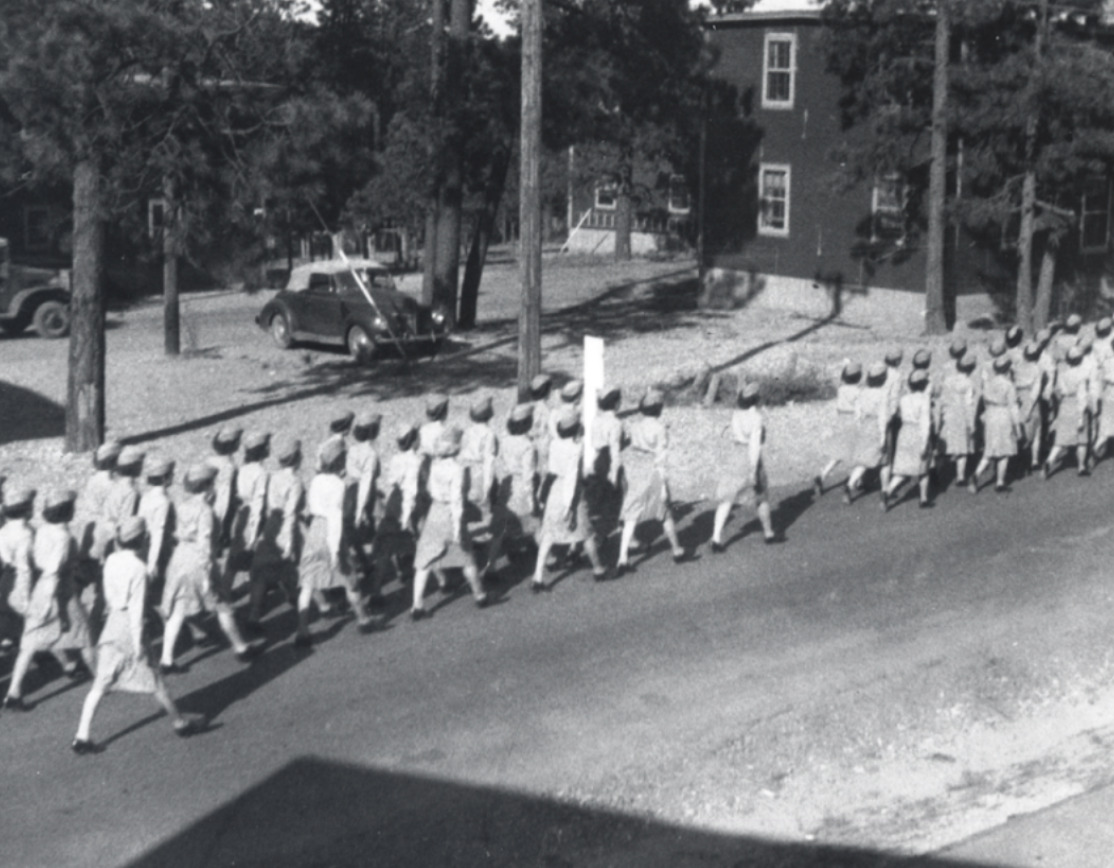
    <summary type="html"><![CDATA[<p><strong><em>With the war effort withdrawing men from the domestic labor force, women became an increasingly important part of the Manhattan Project in Los Alamos. </p></strong></p><img src="https://www.intermountainhistories.org/files/fullsize/c8f195c81db8f6804378056bc75c3f0b.jpg" alt="WAC March in Los Alamos" /><br/><p><span style="font-weight:400;">Wartime labor shortages were a constant struggle for the United States during World War II. They needed to send troops overseas, develop weaponry, spy on their enemies, strategically plan, and mobilize the entire nation as quickly as possible. By 1943, the United States Army was 200,000 men short for their invasion on D-Day, they were in need of 315 more physicists for their defense projects, and the Manhattan Project was desperately in search of all kinds of labor from scientists and engineers to machinists and pipefitters. In response, President Franklin D. Roosevelt signed into existence the Women’s Army Auxiliary Corps established “for the purpose of making available to the national defense the knowledge, skill, and special training of women of the nation” on May 15, 1942. Still facing discrimination, unequal pay, and fewer opportunities than their male counterparts, women played an essential role in World War II, especially in Los Alamos. </p>
<span style="font-weight:400;">Because Los Alamos was such a restricted town and the directors wanted to limit the number of outsiders, General Leslie Groves encouraged wives of scientists to work on the project in whatever capacity they could. As an incentive, they provided nursery schools for their young children to aid with childcare. Despite the government’s encouragement, some women were still hesitant to work on the project over concerns for their family’s well-being. Many had not expected to work at all, and quite a few were dissatisfied with the living conditions in which they now were expected to raise their children. Charlotte Serber, the only female group leader at the laboratory, wrote, “For the potential working wife, there was one chief worry. Could she manage her home here on the mesa and work too?” These were fair concerns. The conditions under which they were expected to work were difficult. They were isolated from extended family, were allowed only one day off of work per month for shopping in Santa Fe, were expected to work forty-eight hours in a week, and had almost no bargaining power to shift their rules or salary. They were also far less likely to gain security clearance than their male counterparts, so it was unlikely that they knew what they were helping create. </p>
<span style="font-weight:400;">Despite these stringent circumstances, many women in Los Alamos did work on the secretive atomic gadget. By October 1944, women constituted about 30% of the labor force in the Tech Area, hospital, and schools. It is also notable that although they did employ some women in clerical positions, the vast majority were scientists or technicians. They were metallurgists, engineers, physicists, chemists, and teachers, involved in every aspect of the atomic effort until the very end. The exception for this participation was in Project Alberta. This was the very last phase of the project; the physical delivery of the bomb to the Pacific island Tinian where the nuclear components were assembled before being dropped on Japan. Women who had spent years contributing to this moment were left behind in the United States to learn about the bombingsfrom the same newspapers as everyone else. However, the atomic bomb could not have been built as quickly or efficiently as it was without the contribution of women. They faced gender discrimination, suboptimal conditions, and unfair pay to contribute to the atomic effort in Los Alamos. </span>

</p><p><em><strong><a href="https://www.intermountainhistories.org/items/show/756">For more (including 3 images) view the original article</a></strong></em></p>]]></summary>
    <published>2023-09-24T18:36:48+00:00</published>
    <updated>2026-04-17T19:32:16+00:00</updated>
    <link rel="alternate" type="text/html" href="https://www.intermountainhistories.org/items/show/756"/>
    <id>https://www.intermountainhistories.org/items/show/756</id>
    <author>
      <name>Abigail Beus, Brigham Young University</name>
    </author>
  </entry>
  <entry>
    <title type="html"><![CDATA[Anti-Chinese Riot in Tonopah, Nevada]]></title>
    <summary type="html"><![CDATA[<p><strong><em>Because of anti-Chinese attitudes in central Nevada, a mob of white union workers attacked Tonopah’s Chinatown in September of 1903. One Chinese man was killed and several others were injured, and Chinatown was destroyed. </em></strong></p><img src="https://www.intermountainhistories.org/files/fullsize/5db119f1bcc036387ec509da0fea5311.jpg" alt="Laundromat in Tonopah " /><br/><p><span style="font-weight:400;">Tonopah, Nevada is a small town in central Nevada that popped up in 1900 when silver was discovered in the area. Within a few years, the mining town was booming, and many Chinese immigrants, mainly men, moved to Tonopah seeking opportunity. The Chinese, however, were not actually allowed to mine in this part of Nevada, so they took up jobs as laundrymen and cooks. Although their labor was needed, white miners were still apprehensive about Chinese immigrants in town, and national anti-Chinese laws and broad anti-Chinese sentiment in the Western United States fomented resistance to their presence. Whereas many other outbursts of anti-Chinese violence in the west began when Chinese miners were hired to undercut unionized white miners, the Chinese population targeted in Tonopah were not hired to undercut potential strikes.</span>
<span style="font-weight:400;">On September 15, 1903, a group of about 30-50 white labor union members marched into Tonopah’s Chinatown and demanded the Chinese immigrants living there to leave in the next 24 hours. Later that day, a second, larger group of men came to Chinatown and began destroying the homes and businesses of the Chinese people. The mob burned down over 100 Chinese establishments and was responsible for the death of 66-year-old Chong Bing Long, who owned a laundromat in town and had lived in the United States for over 30 years. Long was not fast enough to escape the men in the mob, who robbed and beat him. They then drove him outside of town to the desert, where they beat him again and left him to die. Though this was the only death, several Chinese people received serious injuries from being beaten, with little being done by local police to protect them. </span>
<span style="font-weight:400;">In the aftermath, the Chinese returned to town to assess the damage. Fifteen white men were initially arrested for their involvement in the riot, but nine were immediately released and the other six were acquitted of all charges. The Chinese pulled all of their resources together to pay to convict members in the mob, but eventually ran out of money and had to stop pursuing the case.  The Chinese embassy tried to help, but was largely powerless. Many of the Chinese chose to stay in Tonopah, and several white locals told the Chinese they would, “work out a plan to provide protection” for them. Others left for nearby cities like Reno, and resentment for the Chinese gradually died down in Nevada over the next few years.</span></p><p><em><strong><a href="https://www.intermountainhistories.org/items/show/730">For more (including 6 images) view the original article</a></strong></em></p>]]></summary>
    <published>2023-03-06T22:40:44+00:00</published>
    <updated>2026-04-17T19:32:16+00:00</updated>
    <link rel="alternate" type="text/html" href="https://www.intermountainhistories.org/items/show/730"/>
    <id>https://www.intermountainhistories.org/items/show/730</id>
    <author>
      <name>Sydney Wilson, Brigham Young University</name>
    </author>
  </entry>
  <entry>
    <title type="html"><![CDATA[Anti-Chinese Riot near Virginia City, Nevada]]></title>
    <summary type="html"><![CDATA[<p><strong><em>In 1869, with anti-Chinese sentiment growing in the west, a mob in Virginia City, Nevada attempted to expel the Chinese immigrants from town. They raided the railroad where the Chinese were laying tracks, demanded their departure, and destroyed all of their property. </em></strong></p><img src="https://www.intermountainhistories.org/files/fullsize/b8f3b7605935f2ffe65447f76de43fe6.jpg" alt="Three Chinese Women and a Chinese Boy in Virginia City" /><br/><p><span style="font-weight:400;">In the latter half of the nineteenth century, thousands of people, including many immigrants, flocked to the Intermountain West region in search of economic opportunity. Virginia City, Nevada was a popular destination for these laborers due to its booming silver mining industry. The city sprung up in the late 1850s, and by the late 1860s, it was the largest mining town in Nevada. Most who migrated to Virginia City were of European descent, but the town also attracted many Chinese laborers. As was common in other parts of the country, the Chinese in Virginia City were willing to work for lower wages than other ethnic groups. This increased the competitiveness of the labor market in Virginia City and turned other groups against the Chinese community. </span>
<span style="font-weight:400;">In 1869, anti-Chinese sentiment was running high in Virginia City, and the unionized miners in the city decided to act against the Chinese laborers working on grading the Virginia and Truckee Railroad. On September 29th, a mob of nearly 400 men marched on the Chinese. Sensing trouble, Sheriff W. J. Cummings followed the mob and tried to stop them, but he was powerless against the mass of angered miners. When the mob arrived at the tracks, they demanded that the Chinese depart within thirty minutes and began destroying their property and makeshift residences. Luckily, no Chinese people were injured by the mob, but the property destruction was extensive. </span>
<span style="font-weight:400;">A week later, William Sharon, a railroad official, met with the leaders of the mob and came to an agreement with two provisions: first, the railroad would stop employing Chinese workers; and second, the mob would stop harassing the Chinese. Sharon was reluctant to enter into this agreement because he could employ Chinese laborers at a better rate than white laborers, but the mob could not be reasoned with. They simply wanted the Chinese gone. </span>
<span style="font-weight:400;">Local newspapers condemned the actions of the mob and called for those involved to be arrested; however, they knew it would be extremely difficult to find a jury who would convict the mob members. Indeed, no action was taken against any of the mob participants. By October 21st, the railroad only employed workers of European descent. Many of the Chinese people did leave town, but others found various forms of employment in the city. Chinese people faced continual discrimination in Virginia City, but they continued to find work and ways to send money back to their families in China and make a life in the country.</span></p><p><em><strong><a href="https://www.intermountainhistories.org/items/show/729">For more (including 6 images) view the original article</a></strong></em></p>]]></summary>
    <published>2023-03-06T22:17:52+00:00</published>
    <updated>2026-04-17T19:32:16+00:00</updated>
    <link rel="alternate" type="text/html" href="https://www.intermountainhistories.org/items/show/729"/>
    <id>https://www.intermountainhistories.org/items/show/729</id>
    <author>
      <name>Sydney Wilson, Brigham Young University</name>
    </author>
  </entry>
  <entry>
    <title type="html"><![CDATA[Fish Creek Massacre]]></title>
    <summary type="html"><![CDATA[<p><strong><em>In the summer of 1869, Italian immigrants in Eureka, Nevada decided to go on strike to protest low wages. Local tensions escalated the situation to the point of violence, and, on August 18, 1879, five protesting Italian immigrants were killed. </p></strong></p><img src="https://www.intermountainhistories.org/files/fullsize/ecef27111ebdf406b0daf3a633e5fe8b.jpg" alt="Ore Shutes in Eureka" /><br/><p><span style="font-weight:400;">In the 1870s, Eureka was the second largest mining town in Nevada. Eureka produced primarily charcoal, and many flocked there as new smelters increased labor demands. As was the case in many other booming western mining towns, immigrants made up a large portion of the population. Italians were by far the largest immigrant group in Eureka. Racial and cultural prejudice against Italians that was prevalent throughout the United States was mirrored in Eureka and other western mining towns. As a result, they were paid less than half of what the average miner made. On July 6, 1879, a large group of mainly Italian coal burners gathered at a local saloon to unionize. They formed the Eureka Charcoal Burners Protective Association with the goal of increasing wages. Since Italians made up the majority of Eureka’s cheap labor force, the group's resulting labor strike halted charcoal production. </span>
<span style="font-weight:400;">With a dwindling charcoal supply, tensions in town grew. Eventually, Sheriff Matthew Kyle began arresting some of the strike’s ringleaders. Further, because he did not want to involve state militia, he created a “fighting posse” to go to the charcoal camps and arrest the strike leaders.  They did so over the next month, but on August 18, 1879, the posse turned violent.</span>
<span style="font-weight:400;">The posse of about 20 men set out for Fish Creek, where a large group of strikers was rumored to be camped.  Despite being extremely outnumbered by the striking laborers, deputies attempted to arrest the strike leader. When strikers resisted and the posse was unable to make their arrest, tempers flared. Marshall Rich, one of the head deputies, started insulting the Italian leader, who pulled out his gun and fired at Rich. The posse then opened fire on the mostly unarmed coal burners. Five Italians were killed in the massacre, six were seriously injured, and fourteen were sent to prison. Those who died were all Italian and included: Giovanni Pedroni, Marcellus Locatelli, Todoro Zesta, Pompeo Pattini, and Anotonio Canonica.  </span>
<span style="font-weight:400;">Other accounts of the massacre vary, with some placing all of the blame on the posse and others claiming that the Italians were seeking violence. Regardless, the posse ceased making arrests after this and no one in the posse was charged. The strike eventually ended, and tensions between the Italians and other groups lessened in the following years. </span></p><p><em><strong><a href="https://www.intermountainhistories.org/items/show/727">For more (including 6 images) view the original article</a></strong></em></p>]]></summary>
    <published>2023-03-06T21:27:00+00:00</published>
    <updated>2026-04-17T19:32:16+00:00</updated>
    <link rel="alternate" type="text/html" href="https://www.intermountainhistories.org/items/show/727"/>
    <id>https://www.intermountainhistories.org/items/show/727</id>
    <author>
      <name>Sydney Wilson, Brigham Young University </name>
    </author>
  </entry>
  <entry>
    <title type="html"><![CDATA[Sugar Beets and Sheep: Hispanic Migrant Labor in Utah]]></title>
    <summary type="html"><![CDATA[<p><strong><em>The migrant labor of Hispanics has been vital to the economy of Utah since the 20th century, but these workers remain one of the most vulnerable populations within the state, at one point making less than those on welfare. Their history here in Utah provides further context for current discussions on migrant labor and immigration. </em></strong></p><img src="https://www.intermountainhistories.org/files/fullsize/75781beb5df04b5715e2f94497e033ce.jpg" alt="In the Field till Sundown" /><br/><p>In the beginning of the 20th century, Utah became one of the largest domestic American producers of sugar through sugar beet farming. The industry extended into neighboring states as well. The workers who planted and harvested those beets were mainly migrant Mexican and Mexican-American laborers. Migrant Hispanic laborers were also heavily involved with sheep herding and harvesting onions, potatoes, tomatoes, apples, cherries, pears, raspberries, and apricots. They made the backbone of the agricultural and meat industries in the state then and today, Latino workers (mainly of Mexican descent) continue to be vital to these industries. The history of Hispanic migrant labor in Utah demonstrates both their importance and their vulnerability that has persisted since the start of the 1900s. </p><p>Mexican migrant workers became integral to the economy of Utah starting in the early 20th century with the sugar industry, where many of the workers were concentrated in Garland, Utah. In 1918, reports from the Salt Lake Tribune detailed conditions of workers such as lack of running water, stoves, and toilets. Hispanic families nonetheless invested in the community by assisting in the construction of schools in Garland. Additionally, the wives of Hispanic families often worked for families nearby, further contributing to the economy’s function. Many of these migrant workers eventually left due to the lack of economic mobility and low wages, although others at the time incorrectly surmised that the workers’ departure was due to an inability to assimilate their Mexican-Catholic culture into the anglo-Mormon communities. </p><p>Poor conditions and treatment was a trend for migrant workers throughout the state. Accordingly, workers did not highly regard Utah. In the 1950s, Utah began an intense effort to attract more migrant workers. At the same time, the state created strict systems that would require those migrant workers to return to their country when the harvest was over. Despite these efforts to draw more workers to the state, many migrant workers did not return to Utah for a second harvest in response to continually poor conditions including lack of education opportunities for their children, poor housing situations, and no health care services. During that same decade, the Mexican Consulate in Salt Lake City officially reported that violations of the housing codes, unfair wages, and labor abuses were being experienced by migrant workers throughout Utah. In 1957 the state created the “Annual Worker Plan” to oversee migrant labor in Utah and prevent bad treatment. New regulations by the state also lessened the number of children being employed in the fields, a practice that had been prevalent since the 1920s. Hispanic groups formed other programs on behalf of migrant laborers. In 1969, due to internal lobbying by Hispanics in Utah and nationwide labor movements, the Utah government started an official program called the Utah Migrant Council on behalf of migrant laborers of all races and ethnicities. </p><p>Despite these efforts, Utah continues to struggle with attracting enough migrant workers. In 1986 a research team found that disease and illness were most prevalent among migrant workers in Utah. They face low birth weight, high rates of infant mortality, tuberculosis, and measles. In 2010, the Utah Migrant and Seasonal Farm Worker Coalition estimated that workers entering the state earned an annual income of $7,500 per year. Migrant workers constitute the most vulnerable population within the state—the middle men between economic prosperity and economic disparity for Utah and who have little opportunity for educational, economic, or social advancements in the state.</p><p><em><strong><a href="https://www.intermountainhistories.org/items/show/640">For more (including 3 images) view the original article</a></strong></em></p>]]></summary>
    <published>2022-09-08T22:51:01+00:00</published>
    <updated>2026-04-17T19:32:14+00:00</updated>
    <link rel="alternate" type="text/html" href="https://www.intermountainhistories.org/items/show/640"/>
    <id>https://www.intermountainhistories.org/items/show/640</id>
    <author>
      <name>Lindsey Meza, Brigham Young University</name>
    </author>
  </entry>
  <entry>
    <title type="html"><![CDATA[Railroads and Miners: Hispanic Migrant Labor in Utah]]></title>
    <summary type="html"><![CDATA[<p><strong><em>As both the mining and railroad industries began to develop in Utah, they depended upon the migrant labor of Hispanics. Despite this dependence, Hispanic migrant workers were often underpaid and living in conditions with no running water and little opportunity for education.</em></strong></p><img src="https://www.intermountainhistories.org/files/fullsize/08f4eeb0a222f4e2f824f1f0e6e898f8.jpg" alt="Jesus Arinaz: A Utah Copper Co. miner, Jesus Arinaz. " /><br/><p>Mining, railroads, and agriculture were the primary industries which attracted migrant Hispanic laborers (mostly Mexicans and Mexican-Americans) to Utah during the early-twentieth century to Utah. Beginning in 1910, the Mexican Revolution caused a large influx of Mexicans to flee to Utah to avoid violence and economic strain. In the ten years between the 1910 census to the 1920 census, the population of Hispanics in Utah grew from 166 to 1,666. This developing sector of the population was integral to the development of Utah as a whole by mining the state’s resources and building its railways. </p><p>Despite how much employers relied on their labor, Mexicans faced serious dicrimination. Often mining labor leaders held deep prejudices against Spanish-speakers, despite being fellow laborers. Anglos considered migrant miners a threat to labor strikes, and when Mexicans were hired to break a massive strike in Bingham Canyon, mining leaders blamed the migrant workers instead of the employers who underpaid them both. This prejudice, along with dismal living conditions, led many Hispanic workers to leave the state or work at the railroad during the Great Depression. However, after World War II some previous workers returned to the mines with their families and a desire to stay in Utah. The majority of Hispanic miners who worked in Bingham Canyon lived in Dinkeyville, a subsection of nearby Copperton. Mexican miners and their families were barred from living in the main city of Copperton and instead had to deal with the scarcity of water in Dinkeyville. However, Hispanic miners who had accumulated more experience in Bingham Canyon were eventually able to buy real estate in Copperton, which they often rented out to other Hispanic workers. </p><p>The railroad industry also relied on the labor of Mexican workers, in addition to other migrant workers. Mexicans were among the many immigrant laborers of various ethnicities who built the first transcontinental railroad in 1869. For most of the first half of the twentieth century, railroad workers consisted mainly of young, single men. While Bingham Canyon's Anglo American miners had been hostile to Mexicans, Vincent Mayer Sr., a migrant from Mexico, recalled living alongside Greek immigrants simply as fellow railroad workers out a life amid their shared poverty. His Greek neighbors, he remembered even 45 years later, had figured out how to make even weeds taste good. In regards to living conditions for railroad workers, Mayer remembered always being seated in the back of the theater and not being able to eat in many of the nicer restaurants due to his race. As more railroad workers brought their families to live with them, some utilized discarded railroad cars as their homes. These railroad cars had no running water and were often covered in soot from the railroad. </p><p>As early as 1910, Hispanics created different organizations to alleviate some of the issues facing migrant Hispanic workers. The Mexican Cruz Azul (Mexican Blue Cross) in Bingham City provided monetary support to individuals and families. In addition, they sponsored cultural and social events for the Hispanic community. This led to a unification among Hispanics of different countries, although many migrant workers originated from Mexico. The Mexican Consulate, created in 1912 and centered in Salt Lake City, also worked to solve unfair treatment for Mexicans, and it often worked on behalf of all Hispanics.</p><p><em><strong><a href="https://www.intermountainhistories.org/items/show/635">For more (including 5 images) view the original article</a></strong></em></p>]]></summary>
    <published>2022-09-07T16:03:14+00:00</published>
    <updated>2026-04-17T19:32:14+00:00</updated>
    <link rel="alternate" type="text/html" href="https://www.intermountainhistories.org/items/show/635"/>
    <id>https://www.intermountainhistories.org/items/show/635</id>
    <author>
      <name>Lindsey Meza, Brigham Young University</name>
    </author>
  </entry>
  <entry>
    <title type="html"><![CDATA[Daniel, Wyoming Rendezvous of 1837]]></title>
    <summary type="html"><![CDATA[<p><strong><em>Alfred Jacob Miller attended the enormous 1837 rendezvous with Scottish adventurer Sir William Drummond Stewart. His paintings of the gathering have helped in creating a romantic image of the West that persists today.</em></strong></p><img src="https://www.intermountainhistories.org/files/fullsize/fa78dd356f020a8a54f55205fb588986.jpg" alt="Rendezvous in 1837" /><br/><p>Near what is today the small western Wyoming town of Daniel, fur traders held the rendezvous of 1837 along the Green River, in the shadow of the Wind River Range of mountains. Over the years, trappers and traders held eight rendezvous in Green River Valley, out of a total fifteen held between 1825 and 1840.
The 1837 rendezvous was one of the largest ever held. Alfred Jacob Miller, an artist known for his paintings of the American West, attended the rendezvous with Sir William Drummond Stewart, a British military officer and adventurer who was touring the American West. Stewart hired Miller to sketch their trip through the West. When Miller arrived at Green River, he was struck by the sight of hundreds of white lodges stretched out into the distance. He camped out under the Wind Mountains among over 3,000 Native Americans, many of whom were from the Snake tribe. Osborne Russell, a fur trapper, also recorded detailed descriptions of the events.
Fur trappers dedicated the first day to festivities and celebration; men gambled, raced horses, and gathered in small groups to tell their stories. The mountain men used animal skin for clothes and bedding, and their diets consisted mainly of meat from any animals they could catch. The American Fur Company arrived the second day to raise their tents and begin trading, and Thomas Fitzpatrick arrived on July 5 with the supply train: twenty mule-drawn carts. Trappers again complained about the highly inflated costs of goods in the mountains. There was a high demand for alcohol, and a one gallon sold for $64. The St. Louis traders brought newspapers as well as letters from friends and family members for the mountain men.
In addition to the relationships white men made with each other, Miller also observed white–Native American relations at the rendezvous, including gift exchanges and the smoking of a ceremonial pipe. He even observed the marriage between native woman and a half-Native American trapper named Francois. Francois paid the bride’s family in currency and material goods, giving the marriage an economic context. Miller also took frequent trips to a chain of lakes to take sketches of the scenery. Trading lasted a few days, after which traders packed up the furs and shipped them to St. Louis, or “the States” as Russell called them.
Daniel, Wyoming is now a very small town with a population of 150 in Sublette County, which is named after fur trader William Sublette. The Upper Green River Rendezvous Site became a National Historic Landmark in 1963 and was added to the National Register of Historic Places in 1966. Annual rendezvous reenactments are held in the nearby town of Pinedale, seat of Sublette County.</p><p><em><strong><a href="https://www.intermountainhistories.org/items/show/613">For more (including 5 images) view the original article</a></strong></em></p>]]></summary>
    <published>2022-06-11T01:34:37+00:00</published>
    <updated>2026-04-17T19:32:13+00:00</updated>
    <link rel="alternate" type="text/html" href="https://www.intermountainhistories.org/items/show/613"/>
    <id>https://www.intermountainhistories.org/items/show/613</id>
    <author>
      <name>Emily Roth, Northern Arizona University</name>
    </author>
  </entry>
  <entry>
    <title type="html"><![CDATA[Pierre’s Hole Rendezvous of 1832]]></title>
    <summary type="html"><![CDATA[<p><strong><em>The 1832 rendezvous was one of the largest in the span of the fur trade. It made its place in history for the famous Battle of Pierre’s Hole.</em></strong></p><img src="https://www.intermountainhistories.org/files/fullsize/585628b2f434f3a47ea18780b5a0af33.jpg" alt="History of Pierre’s Hole" /><br/><p>Pierre’s Hole is a valley in Eastern Idaho, located on the west slope of the Teton Mountain Range at an elevation of 6,109 feet. Today, the valley is officially known as Teton Valley, and the Teton River flows through it. The Rocky Mountain Fur Company selected Pierre’s Hole in 1832 as a “pleasant place” for a rendezvous, with streams ideal for trapping beaver.
The Rocky Mountain Fur Company contracted William Sublette to supply the rendezvous and remove beaver pelts, and Sublette arrived on July 8, 1832, with 100 merchandise-carrying mules. Pierre’s Hole was one of the largest rendezvous yet: over 1,000 white and Native American trappers attended, and horses and mules numbered between 2,000 and 3,000.
Signs that the rendezvous could go wrong started when Thomas Fitzpatrick, an Irish American mountain man and trapper, reached the rendezvous late after a party of Gros Ventre Native Americans attacked him, prompting him to hide in the mountains for five days. Despite Fitzpatrick’s uneasy encounter, the rendezvous carried on and concluded trading on July 17. The fur company collected 168 packs of furs that contained around 60 pelts per pack, worth a total of $58,305.
Milton Sublette, a new owner in the company, led out a party of men out of the rendezvous. They travelled six to eight miles before camping for the night. The following day, a party of Gros Ventre and Blackfeet approached the encampment. However, indigenous party soon realized they were outnumbered by the trappers, and they waved a white flag of peace. Antoine Godin and a Flathead chief were sent to meet the Blackfoot chief for peace talks, but both men already hated the Blackfeet. Godin’s father had been killed by members of the Blackfeet, and the Flathead Nation also had disputes with the Blackfeet. Acting on a previously coordinated plan, when Godin grasped the Blackfeet chief’s hand to shake, the Flathead chief shot him.
Upon seeing their chief attacked, the Blackfeet retreated into the nearby timber and immediately began building a makeshift fort. William Sublette soon received news of the outbreak of violence, and he arrived with a large group of reinforcements. Seeing they were greatly outnumbered, the Blackfeet further retreated while the traders pressed on and fired into the woods. The traders made little progress against the fort as the day progressed, but the battle eventually ended due to a miscommunication between a trapper and a member of the opposing Blackfoot party. The trapper mistakenly believed that 600–800 Blackfeet were headed for the unprotected rendezvous site, so the fur trapping party hurried back to Pierre’s Hole to protect it. The traders soon realized the error, but by then the Blackfeet party had already abandoned their makeshift fort. On the fur trappers’ side, five whites and seven Native Americans had died; the trappers and traders killed an estimated twenty-six Blackfoot.
Historians added the Pierre’s Hole battle site to the National Register of Historic Places in 1984. A historic marker in Driggs, Idaho, located along Highway 33, describes the significance of Pierre’s Hole as a center for the fur trade. It is now a small town with a primarily agricultural focus, appreciated for its beautiful natural scenery.</p><p><em><strong><a href="https://www.intermountainhistories.org/items/show/612">For more (including 4 images) view the original article</a></strong></em></p>]]></summary>
    <published>2022-06-11T01:11:42+00:00</published>
    <updated>2026-04-17T19:32:13+00:00</updated>
    <link rel="alternate" type="text/html" href="https://www.intermountainhistories.org/items/show/612"/>
    <id>https://www.intermountainhistories.org/items/show/612</id>
    <author>
      <name>Emily Roth, Northern Arizona University</name>
    </author>
  </entry>
  <entry>
    <title type="html"><![CDATA[Bear Lake Rendezvous of 1827]]></title>
    <summary type="html"><![CDATA[<p><strong><em>The Bear Lake rendezvous in 1827 marked the first year under a new company. Inflated supply prices and conflicts with the local Blackfoot tribe stunted the success of this meeting.</em></strong></p><img src="https://www.intermountainhistories.org/files/fullsize/ff202bfc65cacc11854cdf61e40ccfb4.jpg" alt="Bear Lake today" /><br/><p>Bear Lake is a freshwater body on the Utah–Idaho border that is situated within a small valley, at an elevation of 5,923 feet. Eight miles long and twenty miles wide, calcium carbonates suspended in the lake water give it a unique green-blue hue, earning Bear Lake the nickname “Caribbean of the Rockies.” Fur trappers and traders from the 1827 rendezvous also referred to the area as “Sweet Lake.” The newly formed Smith, Jackson, and Sublette firm chose Bear Lake’s south shore for both the 1827 and 1828 Rocky Mountain rendezvous, making the site the new trade system’s first lakeside location. The site would have been a part of Mexico’s territory during that time. Today, the site is located near the city of Laketown, Utah.
William Henry Ashley was not in attendance at the 1827 rendezvous, as he had sold his share in the fur company to Smith, Jackson, and Sublette the previous year. However, he was still contracted to supply merchandise for the rendezvous. Fur trappers in attendance that year complained about “exorbitant” prices of supplies that year, as described by explorer Daniel Trotter Potts in a letter to a friend. He explained the difficulty of making profits in the fur trade due to these high prices, which were inflated and known as “mountain prices.” For trappers, this was one downside of the centralized rendezvous system.
In a lighter moment, when Jedediah Smith arrived at the rendezvous late, traders already present celebrated his arrival by firing a cannon. Some worried he had become lost while making the trip from California. Before he could miss the rendezvous, though, Smith met a Snake Tribe encampment north of the Salt Lake who informed him of the Bear Lake rendezvous twenty-five miles away, and he made it in time for the traders to welcome him.
The Bear Lake rendezvous of 1827 was significant due to a violent skirmish with members of the Blackfeet Nation. Allegedly, the conflict began when Blackeet individuals entered camp to murder a man and woman from the Snake tribe. The white traders already had ongoing conflicts with the Blackfeet, so they allied with Snake tribe trappers in what became a violent battle. A small number of whites were injured in the skirmish, though none died, but multiple Native Americans died. The exact number of fatalities remains unknown, however.
Bear Lake was opened as a Utah State Park in 1862. Rendezvous Beach on the south shore is named in honor of the 1827 and 1828 rendezvous held there. The lake has since become a popular attraction for tourists and sports enthusiasts with many recreational activities available such as fishing, hiking, waterskiing, and swimming. The area is also notable for its raspberries, which thrive in the Bear Lake valley’s climate. During the summer Raspberry Days festival, there are sometimes rendezvous events included where attendees can learn about frontier history and recreate the mountain man lifestyle.</p><p><em><strong><a href="https://www.intermountainhistories.org/items/show/611">For more (including 5 images) view the original article</a></strong></em></p>]]></summary>
    <published>2022-06-11T00:14:11+00:00</published>
    <updated>2026-04-17T19:32:13+00:00</updated>
    <link rel="alternate" type="text/html" href="https://www.intermountainhistories.org/items/show/611"/>
    <id>https://www.intermountainhistories.org/items/show/611</id>
    <author>
      <name>Emily Roth, Northern Arizona University</name>
    </author>
  </entry>
  <entry>
    <title type="html"><![CDATA[Cache Valley Rendezvous of 1826]]></title>
    <summary type="html"><![CDATA[<p><strong><em>Cache Valley was the site of the second rendezvous organized in the Rocky Mountains by white fur traders. This year marked a shift in ownership of fur industry interests, as well as a shift in the atmosphere of the event.</em></strong></p><img src="https://www.intermountainhistories.org/files/fullsize/cba1adc9c85fc22f600d3fcd3d99d81f.jpg" alt="Cache Valley Mountains" /><br/><p>Cache Valley is a high mountain valley in northern Utah, near the border with Idaho. Although there has been historical debate as to whether the 1826 rendezvous was held specifically in Cove or Hyrum, the contemporary consensus is that Hyrum is the accurate location. Cache Valley is named after the caches fur trappers used to store their pelts and supplies. Fur trappers referred to the valley as Willow, for the many willows which grew in the area. William Henry Ashley, founder of the Rocky Mountain Rendezvous, chose the location in part for the abundance of beavers around the banks of the Bear River. The Rocky Mountain Fur company had also held the spring hunt of 1826 in northern Utah, making Cache Valley a convenient place for the summer rendezvous.
Ashley arrived with the supply train at Cache Valley on July 25 along with Jedediah Smith. In contrast to the business-focused atmosphere of the first rendezvous, the 1826 meeting was more a social gathering and celebration. It lasted for at least a month, possibly up to eight weeks. This was the first year that alcohol was present, and later rendezvous also featured spirits. In keeping with the Trade and Intercourse Act of 1790—which required a trading post for legal fur trading—fur traders built Fort Defiance, a settlement of log cabins and brush shelters to use in winter months.
Traders packed the furs and shipped them to St. Louis once trading at the rendezvous concluded. Ashley had decided to leave the fur industry after a profitable winter season, and he sold his interests to Jedediah Smith, David E. Jackson, and William Sublette as they headed to St. Louis along the Bear River. The men purchased surplus supplies at 150%, to be paid over the next five years in either currency or beaver. The new firm also contracted Ashley to purchase and transport supplies for new rendezvous locations in the future. He had managed to make over $80,000 from the last two meetings, clearing his debts and giving him a small fortune. In a speech, he declared “I now wash my hands of the toils of the Rocky Mountains.” At the 1826 rendezvous, the pelts amounted to a worth of $60,000. Jackson and Sublette then took groups of trappers north to Idaho and Wyoming to begin the fall hunt.</p><p><em><strong><a href="https://www.intermountainhistories.org/items/show/610">For more (including 4 images) view the original article</a></strong></em></p>]]></summary>
    <published>2022-06-10T23:25:23+00:00</published>
    <updated>2026-04-17T19:32:13+00:00</updated>
    <link rel="alternate" type="text/html" href="https://www.intermountainhistories.org/items/show/610"/>
    <id>https://www.intermountainhistories.org/items/show/610</id>
    <author>
      <name>Emily Roth, Northern Arizona University</name>
    </author>
  </entry>
  <entry>
    <title type="html"><![CDATA[McKinnon, Wyoming: First Rocky Mountain Fur Trade Rendezvous]]></title>
    <summary type="html"><![CDATA[<p><strong><em>The first annual rendezvous in Wyoming brought traders and trappers together, allowing for an exchange of furs and supplies in a centralized location. </em></strong></p><img src="https://www.intermountainhistories.org/files/fullsize/f8e18f3075d7b772ef7540c3ae6b56d5.jpg" alt="Rendezvous road marker" /><br/><p><p style="line-height:150%;margin:0in 0in 6pt 0in;"><span style="color:#000000;">McKinnon is a small town in southwest Wyoming, near the Utah border. Fur traders held the first Rocky Mountain Rendezvous north of present-day McKinnon, along the Henry’s Fork River. Founder William Ashley chose the site in 1825 for its proximity to a major river and abundance of open space, necessary to host such a large event with thousands of people and their horses. For this first rendezvous, Ashley wrote in his diary that he planned to leave directions for trappers buried underneath a mound of vermillion-painted rocks near the junction of two rivers.</span>

<p style="line-height:150%;margin:0in 0in 6pt 0in;"><span style="color:#000000;">Three years earlier, in 1822, William Henry Ashley and Andrew Henry had partnered to form the Rocky Mountain Fur Company, and they advertised that they sought to hire one hundred “enterprising young men.” This call to adventure drew individuals to the mountains, some of whom later became the stuff of legends. Ashley decided that a movable meeting would be a more efficient way of trading, rather than an established trading post to which trappers would have to travel and return. </span>Merchants journeyed from St. Louis to meet with Euro-American and indigenous trappers in their own environment, exchanging pelts for guns, knives, beads, traps, and other necessary supplies. The rendezvous were to be held annually at locations throughout the interior West in the summer, when beaver pelts were of lower quality. <span style="color:#000000;">The location for the next rendezvous would then be shared before the current meeting adjourned.</span>

<p style="line-height:150%;margin:0in 0in 6pt 0in;"><span style="color:#000000;">Ashley’s first fur trade rendezvous proved a financial success: in all, there were around 120 men in attendance at the first rendezvous, including both white and Native American trappers. Jedediah Smith—a famed mountain man and explorer credited with rediscovering the South Pass—accompanied Ashley on this trip. Other famous mountain men were said to have also attended, including Etienne Provost and a young Jim Bridger. Although the rendezvous system was originally planned as a solely economic exchange, it also became a time of festivities for the mountain men. They gambled, told stories, drank alcohol, and played games. After the 1825 rendezvous ended, William Ashley packed his pelts onto horses, brought them to the Bighorn River, and shipped them off to St. Louis. That year, their load of pelts valued $50,000.</span>

<p style="line-height:150%;margin:0in 0in 6pt 0in;"><span style="color:#000000;">Today, McKinnon is a census-designated place with a population of less than sixty people. Near where the 1825 rendezvous was held, there is a roadside marker commemorating the significance of the event and the rendezvous system as a whole. It describes the rendezvous as a “raucous social event” where “mountain men swapped stories, tested their skills, and shared news of friends.” This event remains an important part of the area’s history, and it marked a significant moment in the history of the American West.</span>
</p><p><em><strong><a href="https://www.intermountainhistories.org/items/show/609">For more (including 5 images) view the original article</a></strong></em></p>]]></summary>
    <published>2022-06-10T22:21:52+00:00</published>
    <updated>2026-04-17T19:32:13+00:00</updated>
    <link rel="alternate" type="text/html" href="https://www.intermountainhistories.org/items/show/609"/>
    <id>https://www.intermountainhistories.org/items/show/609</id>
    <author>
      <name>Emily Roth, Northern Arizona University</name>
    </author>
  </entry>
  <entry>
    <title type="html"><![CDATA[Burr Studio and the Denver Women’s Press Club]]></title>
    <summary type="html"><![CDATA[<p><strong><em>The Denver Women’s Press Club met in Burr Studio beginning in 1924 to organize, socialize, and develop their professional interests. Members discussed writing topics, offered feedback, and provided support and friendship.</em></strong></p><img src="https://www.intermountainhistories.org/files/fullsize/1775257afe5059fb2574db204b9f7d2c.jpg" alt="Studio and Press Club" /><br/><p>In 1906, George Burr, an American artist of natural scenes, decided to settle in Denver, Colorado, and he built Burr Studio as his home. This red brick building’s style resembles that of an English cottage. It has restricted decorative elements and horizontal windows. Inside the entrance hall is a small staircase that leads to a loft overlooking the skylighted studio.
After Burr moved to Phoenix, Arizona, in 1924, the Denver Women’s Press Club (DWPC) purchased the studio. Founded in 1898, DWPC is one of the oldest women’s press clubs in the nation. Members include professional women from various writing occupations such as journalists, editors, essayists, novelists, poets, and historians. Burr Studio was a place where members developed writing and communications skills for publications.
In addition to being a meeting ground for women to organize and socialize, the studio was also a business, and authors could earn a living by working at Burr Studio. President Minnie J. Reynolds was an influential leader for the suffrage movement and one of the first woman political writers for a local newspaper, the <i>Rocky Mountain News</i>. Club members inspired much of Reynolds’s political writings for that paper.
The Denver Women’s Press Club celebrated its 200th anniversary in 1998, and its membership has continued to grow since. In 1980, DWPC expanded its occupational fields to include a wider variety of communication professions, including marketing, electronics, and advertising. Members of DWPC secured Burr Studio a spot on the National Register of Historic Places in 1995. The studio continues to act as a community center and has also grown in functionality to host receptions and other events. Burr Studio has long honored DWPC’s mission by functioning as a gathering place for women pursuing literary endeavors. Above all, it was and remains a haven where members could cultivate friendship, encouragement, and moral support.</p><p><em><strong><a href="https://www.intermountainhistories.org/items/show/608">For more (including 5 images) view the original article</a></strong></em></p>]]></summary>
    <published>2022-06-10T20:57:01+00:00</published>
    <updated>2026-04-17T19:32:13+00:00</updated>
    <link rel="alternate" type="text/html" href="https://www.intermountainhistories.org/items/show/608"/>
    <id>https://www.intermountainhistories.org/items/show/608</id>
    <author>
      <name>Amy Megowan, Northern Arizona University</name>
    </author>
  </entry>
  <entry>
    <title type="html"><![CDATA[Eureka! Mining and Settlement in the Tintic Mountains]]></title>
    <summary type="html"><![CDATA[<p><strong><em>Eureka, Utah rests within the East Tintic Mountains in northern Juab county. Established in 1870, within the first twenty years of its existence, the Eureka population increased by 1,320.5%. It was the ninth-largest city in Utah in 1910. Though it was a bustling metropolis in the 1920s, Eureka is now one of Utah’s semi-ghost towns.</em></strong></p><img src="https://www.intermountainhistories.org/files/fullsize/c208bab5d88c9df7c90549eb004d8552.jpg" alt="Abandoned building on main street" /><br/><p><p class="Default"><span style="font-weight:400;">Eureka, Utah is a semi-ghost town located within the East Tintic Mountains in northern Juab County. Originally named Ruby Hollow, the town was renamed “Eureka” in 1870 after one of the “Big Four” mines in the area: Bullion Beck and Champion, Gemini, Centennial Eureka, and Eureka Hill. The largest town among a cluster of mining settlements, by 1910 Eureka was the ninth-largest city in Utah with a population of about 3,500 people. About a decade later, in 1922, Eureka’s Chief Consolidated Mining Company became the largest silver producer in the United States. Around the turn of the 20th century, a newspaper described it as “one of the most progressive and prosperous mining towns in this western country.” Despite its economic prosperity through World War I, the mines near Eureka became less productive during the Great Depression. Mining nearly came to an end by the 1950s. In 2019, the US Census Bureau reported that only about 107 people still lived in Eureka.</span>
<p class="Default"><span style="font-weight:400;">Eureka has connections with several illustrious figures in Utah’s history. Eureka was home to the second “Golden Rule” store built in 1909 by James Cash Penney. Expanding his business from this location, Penney developed the J.C. Penney chain of department stores. Jesse Knight, known for financially contributing to Brigham Young University where a campus building bears his name, also has ties to Eureka. Knight invested in the Humbug mine in 1886, and using the profits of his investment, Knight acquired several additional mines in the Tintic Mountains. He built a company town near Eureka called Knightsville, where he built a meetinghouse, school, and amusement building, though the settlement has since become a ghost town. Eureka is also the birthplace of Frank J. Zamboni, the inventor of the Zamboni, a vehicle used to clean and resurface the ice in ice rinks. A building which locals say was the original summer cabin of Porter Rockwell is also found along Eureka’s Main street. Eureka celebrates this history with a western diner named Porter’s Place.</span>
<p class="Default"><span style="font-weight:400;">Although people still live in Eureka, residents maintain its historic, mining town feel. In 1979, Eureka was added to the National Register of Historic Places, and several place markers provide insight into the town’s history. Main Street is full of historic, repurposed, or abandoned buildings. For example, the post office built in 1894 was purchased by the “Everybody’s” merchandising company in 1926. It currently serves as a shop today with products and souvenirs linked to Eureka’s rich history. Multiple historic churches are scattered along Eureka’s Main Street, most built in the Gothic Revival Style. The former Miner’s Union Hall has been repurposed as the Tintic Mining Museum. Some buildings, however, retain their original purposes, such as the Juab County Courthouse which still serves as the County Courthouse and City Jail.</span>
<p class="Default"><span style="font-weight:400;">Eureka is picturesque both in its architecture and in its surrounding landscape. It is a fitting home base for anyone looking to learn about Utah’s mining history, explore its nearby ghost towns such as Knightsville, Homansville, Dividend, or Silver City, or enjoy some of the outdoor scenic wonders that Juab County has to offer.</span></p><p><em><strong><a href="https://www.intermountainhistories.org/items/show/559">For more (including 4 images) view the original article</a></strong></em></p>]]></summary>
    <published>2021-12-18T04:17:31+00:00</published>
    <updated>2026-04-17T19:32:12+00:00</updated>
    <link rel="alternate" type="text/html" href="https://www.intermountainhistories.org/items/show/559"/>
    <id>https://www.intermountainhistories.org/items/show/559</id>
    <author>
      <name>Emily Sabey, Brigham Young University</name>
    </author>
  </entry>
  <entry>
    <title type="html"><![CDATA[Sunshine Mine Disaster]]></title>
    <summary type="html"><![CDATA[<p><strong><em>On May 2, 1972, the Sunshine Mine experienced a devastating fire. Claiming the lives of seventy-one men, the Sunshine Mine Disaster is considered one of the worst mining disasters in Idaho’s history.</em></strong></p><img src="https://www.intermountainhistories.org/files/fullsize/a74eff8e5bddf88d0b3807cc81cc5f79.jpg" alt="Sunshine Miners Memorial" /><br/><p>The fire at the Sunshine Mine, a silver mine near Kellogg, Idaho, was first reported at about 11:40 pm after an electrician smelled smoke and warned the foreman. The foreman telephoned down to the mechanics, who were in a work room, and asked them to see where the fire was burning. When they decided to head to another tunnel to search, they found it so filled with smoke they could not enter; when they moved toward an adjacent tunnel, they found it was also filled with smoke. Simultaneously, the shaft foremen requested had the warning system activated, alerting miners to the presence of gas, and sent oxygen masks into the mine. Most of the men became aware of the fire when the smoke entered their workplaces, which they retreated from by moving toward another part of the shaft. There, miners hoisted men up to the surface. This continued until about 1:00 PM when the miner manning the lift was overcome by gas and smoke. Men on the lower levels were stuck, and while many tried to make it to where men were being hoisted to the surface or at least barricade themselves against the gas, most died from carbon monoxide exposure.
While the surviving miners and surface workers mounted their own rescues, they also called in trained rescue teams. In order to reach the bottom of the mine, rescuers and workers needed to use mine hoists to travel up and down the shafts, and that required repairing the electical system. However, with so much gas and smoke, the crew could work only for as long as their oxygen tanks lasted, about two hours at a time. With so little time, rescuers chose to focus on finding survivors rather than removing the bodies, and they forced themselves to walk past and over the bodies of asphyxiated miners every time they made the trip to the repair site. In total, eighty escaped the mine, only two survived the disaster while inside the mine, and ninety-one died.
The exact reason and location for the fire is unknown. Because the fire damaged walls and support beams, the mine partially collapsed, burying areas that might have provided clues. The Sunshine Mine’s high profile fire significantly impacted discourse surrounding the safety of hard rock mining. This disaster prompted Congress to pass the Federal Mine Safety and Health Act of 1977, improving safety standards for hard rock mining. For example, the act required mines to provide more ventilation and to create plans for guiding surface workers’ response in the event of another disaster. The act also stipulated mandatory disaster training so all miners knew what to do and where to go in an emergency, and it required miners have personal oxygen tanks with them at all times. Overall, the act created a safer work environment to help prevent similar disasters in the future.</p><p><em><strong><a href="https://www.intermountainhistories.org/items/show/539">For more (including 4 images) view the original article</a></strong></em></p>]]></summary>
    <published>2021-11-13T22:39:10+00:00</published>
    <updated>2026-04-17T19:32:11+00:00</updated>
    <link rel="alternate" type="text/html" href="https://www.intermountainhistories.org/items/show/539"/>
    <id>https://www.intermountainhistories.org/items/show/539</id>
    <author>
      <name>Megan Wagner, Northern Arizona University</name>
    </author>
  </entry>
  <entry>
    <title type="html"><![CDATA[Castle Gate Mine Disaster]]></title>
    <summary type="html"><![CDATA[<p><strong><em>The Castle Gate Mine Disaster was a horrific tragedy that took the lives of 171 men. Considered the second-worst mining disaster in Utah’s history, the disaster is well remembered not only for the death toll but also for the push for safety reform in its aftermath.</em></strong></p><img src="https://www.intermountainhistories.org/files/fullsize/3addcc19e4ca5cf2966b852500df227f.jpg" alt="Mass funeral" /><br/><p>On March 8, 1924, in Castle Gate, Utah, two explosions rocked the local coal mine, killing all 171 men working at the time. Both explosions happened when men ignited carbon monoxide while trying to relight their lamps. First, a boss investigating some methane gas near the roof of a mineshaft. When his lamp went out, he tried to relight it, but his match ignited the gas, which in turn ignited coal dust, setting off a huge explosion. Those who survived this first explosion found themselves plunged into darkness, as the blast blew out their lamps. When these survivors attempted relighting their lamps, they set off another explosion.
Rescue workers faced severe challenges when they entered the mine to look for any possible survivors. The passageway was covered with debris and badly damaged. It made the passageway incredibly difficult to traverse and slowed them down. The mine was also filled with gas, which made it deadly for the rescue workers. One rescuer died when another knocked off his oxygen clip; within a few minutes, he breathed in too much gas and perished. When the workers found the bodies, many were badly burned and mutilated. Because of huge number of deaths, bodies were buried soon after identification.
Most of the men were married with children, leaving behind many widows and children without fathers. In the days after the disaster, the Red Cross along with women from other parts of came to offer aid to the families. They cooked meals, tended to children, and even sewed mourning clothes for the community. The families of the miners were devastated; in addition to losing a husband and father, they also lost their primary financial provider. Although the families did receive compensation, many left Castle Gate to go live with relatives. Those who stayed received aid from a Red Cross committee that provided food, clothes, and anything else the families might need. The relief committee continued to distribute aid until 1936, ultimately dispersing $132,145 worth of relief.
The mine eventually reopened with increased safety measures. The Utah Fuel Company, which owned the mine, met with the state government to review safety laws and create new amendments and resolutions to make the mines safer. This included more funding for mine inspectors, mandates about clearing dust created from rock mining, prohibiting moving methane gas while men were working in the mine, and requiring coal dust be cleaned from abandoned rooms. Though these new procedures did not completely stop other disasters, they did greatly improve the safety of the mines.</p><p><em><strong><a href="https://www.intermountainhistories.org/items/show/538">For more (including 3 images) view the original article</a></strong></em></p>]]></summary>
    <published>2021-11-13T22:04:12+00:00</published>
    <updated>2026-04-17T19:32:11+00:00</updated>
    <link rel="alternate" type="text/html" href="https://www.intermountainhistories.org/items/show/538"/>
    <id>https://www.intermountainhistories.org/items/show/538</id>
    <author>
      <name>Megan Wagner, Northern Arizona University</name>
    </author>
  </entry>
  <entry>
    <title type="html"><![CDATA[White Ash Mine Disaster]]></title>
    <summary type="html"><![CDATA[<p><strong><em>A flood in the White Ash Mine, located in Colorado, killed ten men. Though not the worst mining disaster in Colorado history, the White Ash Mine disaster is remembered for a mysterious fire that thwarted an attempt to rescue the drowned miners.</em></strong></p><img src="https://www.intermountainhistories.org/files/fullsize/319b9bf4fa97e5419ff9cdd0e0e32404.jpg" alt="The mine and her miners" /><br/><p>On September 9, 1889, at about four o’clock in the afternoon ten men drowned in the White Ash Mine, a coal mine near Golden, Colorado. An engineer, Charles Hoagland, was the first to discover that something had happened. He had attempted to send down the elevator, but it wouldn’t go to the bottom, and then it wouldn’t rise. Hoagland attempted to contact the cage man who was at the bottom of the mine, but he did not respond. Hoagland phoned the foreman, Evan Jones. When Jones descended into the mine, he heard the roaring of water. Realizing the mine was flooding, he informed the general manager and gathered other men in an attempt to rescue the men trapped below. However, they were only able to travel about 300 feet down before they were hit with bad air and retreated. Around midnight, the mine inspector, John McNeil, and the general manager, Paul Lanious, descended into the mine.
They found out the mine, which was about 780 feet deep, was filled with CO2. The water had reached 140 feet high and was scalding hot at about 115 degrees Fahrenheit. At about 280 feet down, they felt a strong heat coming out of the walls; when they examined the area, they found that a portion of this level was on fire. The fire was getting closer to the shaft timbers, making it impossible to isolate the fire and put it out. McNeil and Lanious made it about 400 feet down before the gas became too much, forcing them to ascend.
As a result of the fire, the gas, and the height of the water, officials concluded the men could not have survived. With the mine considered too dangerous, officials suspended extraction efforts and instead sealed off the shaft. Their decision entombed the men in the mine.
In the aftermath, people wondered that had caused the disaster. Investigation revealed the most likely culprit was the Loveland Mine, attached to the White Ash Mine through coal veins. About ten years before the White Ash Mine flood and fire, the Loveland Mine had itself shut down due to flooding. Over the years, the underground
The biggest question that everyone had was what caused the disaster. The culprit was found to be the Loveland Mine which was attached to the White Ash Mine through coal veins. The Loveland Mine had been closed about ten years before the disaster on account of flooding. While White Ash passed inspections, showing no signs of potential flooding, over the years the coal walls separating Loveland and White Ash degraded. When they finally broke down, the floodwaters still inside Loveland poured into White Ash.
While the precise reasons the coals walls degraded is not known for certain, most people believe an underground fire had smoldered inside Loveland and slowly ate away at the coal separating the two mines. In fact, McNeil had discovered a smoldering fire between the walls a few years earlier, though he had it sealed up. However, there may have been a second fire that went unnoticed. This unchecked fire made the walls crumble, allowing the Loveland Mine’s water to drain into the White Ash.</p><p><em><strong><a href="https://www.intermountainhistories.org/items/show/537">For more (including 4 images) view the original article</a></strong></em></p>]]></summary>
    <published>2021-11-13T21:37:47+00:00</published>
    <updated>2026-04-17T19:32:11+00:00</updated>
    <link rel="alternate" type="text/html" href="https://www.intermountainhistories.org/items/show/537"/>
    <id>https://www.intermountainhistories.org/items/show/537</id>
    <author>
      <name>Megan Wagner, Northern Arizona University</name>
    </author>
  </entry>
  <entry>
    <title type="html"><![CDATA[The Hoover Dam]]></title>
    <summary type="html"><![CDATA[<p><strong><em>At the time of its completion, the Hoover Dam was the largest dam in the world. Today, it remains the largest dam of its type in the United States and provides invaluable water to the southwest. </em></strong></p><img src="https://www.intermountainhistories.org/files/fullsize/8ab0bafd443bffdcd7e8b050c0f3664d.jpg" alt="Hoover Dam and Lake Mead" /><br/><p><span style="font-weight:400;">Nestled in the Black Canyon, the Hoover Dam helps control the Colorado River’s flooding cycle that once devastated nearby communities. Construction started in 1931 and finished in 1935. 21,000 individuals worked on the monumental project and just under 100 individuals died from the dangerous working conditions. In order to authorize building the dam, the states of Colorado, Wyoming, Utah, New Mexico, Arizona, California, and Nevada had to decide how to divide water rights along the Colorado River between themselves and Mexico. Ultimately, the Hoover Dam is not just an engineering marvel of American ingenuity but also a display of states working in union to overcome a shared problem. </span>
<span style="font-weight:400;">Before the Public Works Administration could begin construction, they needed labor. Would-be construction laborers flocked to Las Vegas for the chance to work on the construction of the dam. The project took place during the Great Depression and, although it was authorized under Herbert Hoover’s presidency, was a symbol of the public works projects that President Franklin Roosevelt used to put Americans back to work. The project was not without risks and conflict. In August of 1931, the workers at the Hoover Dam went on strike. Their complaint was against unsafe working conditions. Individuals toiled in tunnels that could reach up to 140 degrees, which was made worse by Las Vegas’s heat. In July, the average high of the day hovered at about 106 degrees. There were also casualties from the unsafe conditions, such as workers falling from heights of up to 800 feet. Construction also kicked up dust and produced carbon monoxide. Both are dangerous, with carbon monoxide being potentially deadly. Despite these dangers, sufficient labor remained. There were enough workers that Boulder City was created in order to provide closer living quarters to the worksite. </span>
<span style="font-weight:400;">The spectacle of the enormous structure has drawn tourists since before it was even finished. Tourists began visiting the dam before its completion, leading the team to construct an observation deck in order to keep visitors away from the dangerous worksite. Today, around 7 million individuals visit the dam itself while around 10 million individuals visit the lake created by the dam, named Lake Mead. At the time it was the largest dam in the world, and while others have eclipsed it in size, in the United States it remains the tallest dam, and Lake Mead the largest lake created by a dam.</span></p><p><em><strong><a href="https://www.intermountainhistories.org/items/show/476">For more (including 5 images) view the original article</a></strong></em></p>]]></summary>
    <published>2021-09-10T23:44:11+00:00</published>
    <updated>2026-04-17T19:32:10+00:00</updated>
    <link rel="alternate" type="text/html" href="https://www.intermountainhistories.org/items/show/476"/>
    <id>https://www.intermountainhistories.org/items/show/476</id>
    <author>
      <name>Nikki Smith, Brigham Young University</name>
    </author>
  </entry>
  <entry>
    <title type="html"><![CDATA[Moose Mine]]></title>
    <summary type="html"><![CDATA[<p><strong><em>The 1868 discovery of silver on Mount Bross started a silver boom in the Mosquito Range in central Colorado. The Moose Mine, known for being incredibly rich, was the leader in this silver boom and contributed to populating central Colorado.</em></strong></p><img src="https://www.intermountainhistories.org/files/fullsize/bdbe4f651328af248f15caf53a4cfbda.jpg" alt="East of Mount Bross" /><br/><p><span style="font-weight:400;">In 1868, Daniel Plummer and Joseph H. Meyers located an outcrop of silver in the central Colorado Mosquito Range of the Rocky Mountains, within limestone on Mount Bross. They named it “The Dwight” Three years later, they returned to Mount Bross and discovered a new outcropping that would come to be known as “the Moose”. This discovery led to a silver boom in the local towns of Alma and Fairplay and set the stage for the later Leadville boom. However, the discovery of silver at 13,600 feet with surrounding 14,000-foot peaks presented challenges. With the highest altitude mines in North America, the Moose Mine region demonstrates the unique difficulties of many high-altitude mines.</span>
<span style="font-weight:400;">Daniel Plummer and Joseph H. Meyers were both previously-experienced miners and had been in Park County, Colorado since the early to mid 1860s. They filed their first claim, “The Dwight,” on March 9, 1869. However, like other rich but remote mines of the time, not much was done to begin mining until after the discovery of the Moose. The first news of the rich discovery in the Moose hit the </span><i><span style="font-weight:400;">Denver Tribune </span></i><span style="font-weight:400;">in late July 1871, and by the end of August Plummer and Meyers had secured Judson H. Dudley and Andrew W. Gill as partners, who provided funding necessary for beginning mining. Simple mining began that year, and by November, ore from the mine was shipping from Leadville to Denver where it would go on to New York City and then its final destination in Wales. This had to be done, especially in the beginning, due to the lack of other smelters in the area who could work with the metal. The closest smelter was located in Black Hawk, and shipping there would have required traveling down to Denver and then back up into the mountains. Traveling there involved a series of high altitude passes that made this option difficult, timely, and expensive. </span>
<span style="font-weight:400;">On April 15, 1872, the Moose Mining Company was formed. In order to accommodate those working at the mines on Mount Bross, Mount Democrat, and Mount Lincoln, the town of Quartzville developed on the east side of Mount Lincoln at 11,300 feet. It was located 2,400 feet below the Moose and was the closest residence to the mines. Miners had to hike over two miles one way to reach the Moose and at such high elevation, individuals only processed around one-third of the oxygen they would be accustomed to at sea level. The combination of less oxygen and their difficult morning hike meant that the miners struggled to be effective. But despite these impediments to labor, in July 1872 the Moose Mine Company averaged $22,500 per week, and the Fairplay </span><i><span style="font-weight:400;">Mount Lincoln Sentinel </span></i><span style="font-weight:400;">claimed that the Moose had produced $330,00 worth of ore in a four-month period. </span>
<span style="font-weight:400;">Today, the Moose Mine remains on private land. Individuals wanting to visit the area can summit four adjacent fourteeners, Mounts Democrat, Cameron, Lincoln, and Bross, via the 8-mile Decalibron (a portmanteau of the four peak names) loop route. Access to the mountains has been limited over the years due to concern about old mining sites and issues with hikers not remaining on trail. Since 2010, hikers have been able to access the peaks within the Decalibron loop but not the mining sites themselves.</span></p><p><em><strong><a href="https://www.intermountainhistories.org/items/show/474">For more (including 3 images) view the original article</a></strong></em></p>]]></summary>
    <published>2021-09-10T21:29:34+00:00</published>
    <updated>2026-04-17T19:32:10+00:00</updated>
    <link rel="alternate" type="text/html" href="https://www.intermountainhistories.org/items/show/474"/>
    <id>https://www.intermountainhistories.org/items/show/474</id>
    <author>
      <name>Nikki Smith, Brigham Young University</name>
    </author>
  </entry>
  <entry>
    <title type="html"><![CDATA[AIM Occupation of Fairchild Plant on Navajo Reservation]]></title>
    <summary type="html"><![CDATA[<p><strong><em>Activism plays a significant role in improving employment quality and longevity, but situations like the occupation of the Fairchild Plant on the Navajo Reservation causes people to question whether or not activism is the best method to achieve such goals.</em></strong></p><img src="https://www.intermountainhistories.org/files/fullsize/f881a04cf0a41c0bb4ee8d31723f525d.jpg" alt="Ribbon cutting at Fairchild Building Dedication, 1969" /><br/><p>In the early 1960s, unemployment on the Navajo Reservation hovered around 40% and Tribal leadership desperately tried to create jobs for Diné peoples. In 1964, Tribal chairman Raymond Nakai advocated for better economic development on the reservation and – hoping to attract outside investment – opened up the Navajo Nation to outside businesses. To further entice companies, the tribe offered $1 million toward development to any company willing to relocate. Fairchild Camera and Instrument Corporation responded to the offer and decided to build a plant in Shiprock, New Mexico and provide housing for tribal members who helped with construction. After its completion, Fairchild employed more than a thousand workers (the majority being female) and provided consistent jobs for ten years. </p><p>In the early 1970s, however, the country’s economy lagged, affecting companies like Fairchild. Many of the workers in Shiprock faced reduced paychecks or even termination. According to one Navajo account, the plant manager said, “This is a business venture, not a charitable activity.” The weakened economy combined with news of the plant’s financial solution wounded the community’s morale. The American Indian Movement (AIM) – an organization founded during the Civil Rights Era that fought for indigenous communities’ rights – heard about the situation and decided to intervene. Protestors including activist Russell Means came to Shiprock and laid siege to the plant on behalf of the underpaid and dismissed workers. The protestors demanded that Fairchild rehire the workers and restore their paychecks to pre-reduction rates. However, some local Natives considered this protest against the company dangerous and unnecessary. </p><p>Fairchild refused AIM’s conditions and let the tribal government handle the matter. However, the tribal government did not help overcome the impasse and the siege ultimately shut down the plant. Fairchild executives expressed frustration over how the tribe handled the situation and withdrew from the reservation altogether, relocating their operations to Korea. Some AIM supporters perceived this result as a victory, but locals recognized the great loss of employment opportunity alongside a damaged reputation for future incoming businesses on the Navajo Reservation. Even today, these consequential outcomes continue to have a harmful effect on Navajo employment.</p><p><em><strong><a href="https://www.intermountainhistories.org/items/show/398">For more (including 3 images) view the original article</a></strong></em></p>]]></summary>
    <published>2020-03-06T23:38:51+00:00</published>
    <updated>2026-04-17T19:32:08+00:00</updated>
    <link rel="alternate" type="text/html" href="https://www.intermountainhistories.org/items/show/398"/>
    <id>https://www.intermountainhistories.org/items/show/398</id>
    <author>
      <name>Elias Gold, Brigham Young University</name>
    </author>
  </entry>
  <entry>
    <title type="html"><![CDATA[Helper, Utah]]></title>
    <summary type="html"><![CDATA[<p><strong><em>This Carbon County hub was one of Utah’s most ethnically diverse towns in the early twentieth century.</em></strong></p><img src="https://www.intermountainhistories.org/files/fullsize/3c8dd110b632fb394c09a83e1b1db99a.jpg" alt="Helper Station" /><br/><p>Helper—situated between Castle Gate and Price in Castle Valley—is the product of the Denver & Rio Grande Western Railroad’s search for coal in the late nineteenth century. Low-grade coal fueled the railroads, but until the 1880s no one had discovered a coal seam of sufficient quality in Utah to produce good “coke” for industrial smelting. This meant that metal mines in other parts of the state could not process low-grade copper and silver at a profitable rate. The D&RGW extended through Castle Valley in the early 1880s in its search for coal, and an engineer for the railroad discovered high quality coal in Castle Gate. The town’s name comes from the railroads; “helper” locomotives waited along that stretch of railway to tow trains up the steep grade.</p><p>The demand for Castle Valley’s coal meant that there was an increased demand for workers. Italians, Slovenians, Croatians, and Serbians immigrated to the area to work in the mines, adding to the mix of cultures where Chinese people had previously worked on the railroad. In 1894, Carbon County split from Emery County. By then, it had an industry and ethnic mix distinct from the Mormon homesteaders to the south. By 1900 there were sixteen different nationalities represented in Helper in a population of only 385 people. This would increase in 1903 and 1904, as a strike at Castle Gate prompted the mine’s owners to bring in Greek and Japanese workers as strikebreakers. </p><p>With its location at the center of several nearby coal mining camps and farms, Helper became a hub for commerce for the many different ethnic groups in the county. Immigrants in Helper worked as merchants and business owners. European and Asian immigrants operated saloons and coffee houses and otherwise provided services for nearby workers. As a steadily growing town—in contrast to the boom towns usually associated with mining in the West—community life for its diverse enclaves became a part of Helper’s story. By the 1910s, there was a Catholic church in Helper and a Greek Orthodox church in nearby Price. There were Italian, Croatian, and Slovenian lodges in the county, and a YMCA in Helper served as a general public meeting place. The influx of immigrants during this pivotal time in Utah’s history has left a lasting imprint on the culture of Helper as well as the state overall. </p><p><em><strong><a href="https://www.intermountainhistories.org/items/show/373">For more (including 3 images) view the original article</a></strong></em></p>]]></summary>
    <published>2019-11-22T03:58:41+00:00</published>
    <updated>2026-04-17T19:32:07+00:00</updated>
    <link rel="alternate" type="text/html" href="https://www.intermountainhistories.org/items/show/373"/>
    <id>https://www.intermountainhistories.org/items/show/373</id>
    <author>
      <name>Nate Housley, University of Utah</name>
    </author>
  </entry>
  <entry>
    <title type="html"><![CDATA[Early Pioche: Conflict and Convergence on the Mining Frontier]]></title>
    <summary type="html"><![CDATA[<p><strong><em>Located 250 miles from the nearest railroad station, Pioche sprang up almost overnight in the 1870s as “the mining capital of Southern Nevada,” boasting a population of some 10,000 rowdy residents and seven dozen saloons, producing the equivalent to a half a billion dollars (in today’s currency) in silver ore output during the peak boom years of 1870-1875. In contrast to the traditional Agrarian Frontier model of peaceable families steadily advancing westward to tame “Virgin Land,” the early growth of Pioche and its local network reveals a far more complex (and interesting) dialectic of convergence, competition, and cooperation between peoples, world-views, and ecosystems in the far desert West. </em></strong></p><img src="https://www.intermountainhistories.org/files/fullsize/8918a9c13fb125b65f614ea5bd907dd9.jpg" alt="Man standing on a rise above Pioche, c. 1900-1925" /><br/><p>For a thousand years, what is now Lincoln County in southeastern Nevada was dominated by the semi-nomadic Southern Paiute, who traveled with the seasons in localized areas to optimize use of scarce desert resources. In 1863 a Mormon missionary scouting the region for settlement sites met a Paiute who disclosed the location of silver ore deposits in the hills above the central Meadow Valley Wash. While some small-scale prospecting commenced, a “rush” to the site was delayed by several years due to poor relations with the natives, a lack of means to process the ore, and geographic remoteness. In 1869 the San Francisco-based financier François Pioche bought out the area’s claims and coordinated the infrastructure for large-scale mining. Workers from Nevada, California, and beyond poured into “Pioche’s City” as the great silver boom began.</p><p>The viability of the new settlement was strengthened by the presence of cheap ranch and farm products from nearby Panaca in the Meadow Valley, which Mormon pioneers from Utah had colonized just five years earlier. A reciprocal trade network emerged which granted the Mormons access to mechanical goods and currency while obviating the need for the miners to import expensive foodstuffs from far away. Another factor in Pioche’s success was the mill at Bullionville near a local water source, where ore from the hills could be transferred and processed. Awkwardly built into the hills below the mining veins and fissures, Pioche had no water or natural resources to speak of: all the town’s water had to be hauled up from the valley, while mining machinery and ore were shipped via wagon to and from the railroad over 200 miles away. Despite making little geographic sense on its own, Pioche flourished as a central node in this interdependent system: in 1871 it was made county seat, the population soared to above 6,000, and at the apex of the boom from 1871-1873 the camp produced over $12 million in silver ore, vastly outcompeting regional rivals.</p><p>About half the town’s population was foreign-born: in addition to many Irish and English, there were Germans, French-Canadians, Greeks, Slavs, and even a sizable Chinese population – reported by the local paper to number “not less than 200.” Many native Paiutes, displaced after nearly 1,000 years of dominating the area, joined the wage-labor economy and made a significant contribution to infrastructure and services in Pioche and networked towns. Panaca’s Latter Day Saints, despite harboring reservations about contracting with the bawdy miners, were instrumental in hauling ore, operating the charcoal kilns that provided the fuel for smelting, working the mill at Bullionville, and contributing to the essential produce-for-goods trade. This knitting of the Mining Frontier with the Mormon Communal Frontier – industry and agriculture – was essential to recoding the Paiute homeland as “American” and “civilized.” </p><p>Yet early Pioche remained plagued by violence: “guns were the only law,” and local legend holds that more than 70 men died violently with their “boots on” before any one person died from natural causes. A more reliable source suggests that over 50% of Nevada homicides from 1871 to 1872 occurred in the vicinity of the Pioche mines.  In January 1873 the local paper declared: “Crime is rampant in Pioche. Law-defyers, of high and low degree, emboldened by immunity from arrest and punishment for former transgressions, are seemingly more vicious and audacious with each returning day.” The town’s culture of crime and corruption stemmed from frontier remoteness: far from centralized power, there was no effective governing authority to adjudicate disputes; accordingly, the “big men” hired armed guards to protect claims and capital against adventurers, and many quarrels were resolved by gunfire. Furthermore, Pioche was born in the bloodshed of disorganized conquest: indigenous peoples and early prospectors frequently fought, and the Paiutes seem to have successfully regained the hills for intermittent periods between 1865 and 1868.</p><p>Even at the height of prosperity, the frontier town suffered many a calamity. In September 1871 a fire broke out at a Mexican Independence celebration leading to an explosion that displaced 2,000 people, killed over a dozen, and destroyed half the buildings. In 1873 and 1874 Pioche endured devastating flash floods, while in 1876 another great fire ravaged the town. The principle mines were shut down that same year due to the inability to extract further ore with existing technology. While the silver bonanza simmered and halted, Pioche endured as the administrative capitol of Lincoln County, occasionally bolstered by new finds and extraction operations, notably the lead and zinc boom from the 1930s to the 50s. What is most remarkable about Pioche is that it survived, while countless comparable towns defined by remote geography and transient populations were completely abandoned. While the miners abruptly introduced capitalism and recoded the Paiute frontier under the values of industry and individualism, their very survival depended upon effective cooperation with the local networks of trade and labor. The bonanza of early Pioche was a system of interdependence between people, products, and the environment.   </p><p><em><strong><a href="https://www.intermountainhistories.org/items/show/370">For more (including 9 images) view the original article</a></strong></em></p>]]></summary>
    <published>2019-10-24T21:29:32+00:00</published>
    <updated>2026-04-17T19:32:07+00:00</updated>
    <link rel="alternate" type="text/html" href="https://www.intermountainhistories.org/items/show/370"/>
    <id>https://www.intermountainhistories.org/items/show/370</id>
    <author>
      <name>Aaron J. Ardley, University of Nevada, Las Vegas</name>
    </author>
  </entry>
  <entry>
    <title type="html"><![CDATA[Childs-Drexel Home for Union Printers (Union Printers Home)]]></title>
    <summary type="html"><![CDATA[<p><strong><em>In an effort to provide relief for union members suffering from work-related lung disease, the International Typographical Union constructed a special health institution in Colorado Springs, Colorado.</em></strong></p><img src="https://www.intermountainhistories.org/files/fullsize/40af1c1c821400ca14421a15489cc5f0.jpg" alt="Union Printers Home (2018)." /><br/><p>     The working conditions of the nineteenth century were famously bleak. This was especially true of the printing industry. Workers inhaled the carbon-based ink and often developed chronic lung disease. The most prevalent disease was Black Lung, now known as coal worker’s pneumoconiosis. The printers became frustrated with their work environments, poor health, and low wages, so they established the International Typographical Union (ITU) in 1852. One of their main goals was to help union members already suffering from medical conditions brought on by their profession.</p><p>Union members suggested creating the Union Printers Home at the first ITU convention meeting in New Orleans in 1852, but the leadership committee rejected the proposal. This institution would have been a medical facility specifically for printers, in which they would live together and receive care. In 1890, union members finally approved the plan after Philadelphia newspaper publisher George W. Childs and philanthropist Anthony J. Drexel made a donation to fund the idea. Because the only treatment for respiratory illness at the time was fresh air, the ITU chose Colorado Springs as the site of this ambitious project. The Childs-Drexel Home for Union Printers opened May 12, 1892. Because the union was composed of newspaper publishers, the event was well publicized. The New York Times described the home as the only one of its kind, and the Los Angeles Herald claimed the opening day was the greatest event the West had ever seen.</p><p>The building overlooks the Garden of the Gods, as well as a view of Pikes Peak. Four stories high, workers constructed it using  white lava stone and red sandstone; it ultimately cost $80,000 to complete. The building is impressive, and the design was meant to instill a sense of pride in the printing profession. The printers could enjoy the expansive grounds and appreciate the beauty of their surroundings. The ITU initially admitted fifty union men and the staff set up twenty tuberculosis tents on the grounds. The Union Printers Home housed 25,000 printers while under the direction of the ITU.</p><p>After the Communication Workers of America absorbed the International Typographical Union in 1986, the union sold the building. The Union Printers Home is now a retirement facility, well-liked thanks to its beautiful views and architecture. The location and weather are still ideal for residents. Its unique history as a health institution is echoed in its current use.  </p><p><em><strong><a href="https://www.intermountainhistories.org/items/show/332">For more (including 3 images) view the original article</a></strong></em></p>]]></summary>
    <published>2019-09-14T23:46:47+00:00</published>
    <updated>2026-04-17T19:32:06+00:00</updated>
    <link rel="alternate" type="text/html" href="https://www.intermountainhistories.org/items/show/332"/>
    <id>https://www.intermountainhistories.org/items/show/332</id>
    <author>
      <name>Jodie Grief, Northern Arizona University</name>
    </author>
  </entry>
</feed>