<?xml version="1.0" encoding="UTF-8"?>
<feed xmlns="http://www.w3.org/2005/Atom">
  <title type="text">Intermountain Histories</title>
  <updated>2026-04-17T19:32:20+00:00</updated>
  <generator uri="http://framework.zend.com" version="1.12.20">Zend_Feed_Writer</generator>
  <link rel="alternate" type="text/html" href="https://www.intermountainhistories.org/"/>
  <link rel="self" type="application/atom+xml" href="https://www.intermountainhistories.org/items/browse?output=rss2"/>
  <id>https://www.intermountainhistories.org/</id>
  <author>
    <name>Intermountain Histories</name>
    <uri>https://www.intermountainhistories.org</uri>
  </author>
  <link rel="hub" href="https://pubsubhubbub.appspot.com/"/>
  <entry>
    <title type="html"><![CDATA[Kemmerer, Wyoming Alcohol Culture during Prohibition]]></title>
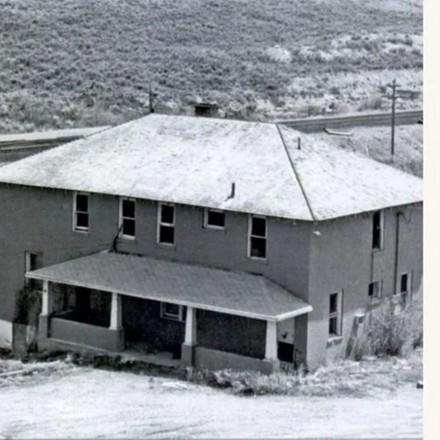
    <summary type="html"><![CDATA[<p><strong><em>Kemmerer, Wyoming emerged in the late nineteenth century when Patrick J. Quealy founded a coal company and a town to go with it. Kemmerer was popular among immigrant business owners who set up shops seeking financial and personal freedom. Their diverse cultures contributed to Kemmerer becoming a bootlegger’s haven when Prohibition began a few decades later.</em></strong></p><img src="https://www.intermountainhistories.org/files/fullsize/bc57fb9731bf760db28ae4ec4796ab05.jpg" alt="The original Southern Hotel building" /><br/><p>In 1897, Patrick J. Quealy founded a town and coal company, naming them “Kemmerer” after his financial backer, Mahlon S. Kemmerer of Pennsylvania. Quealy made Kemmerer an “independent town,” meaning that the coal company sold land to businesses and residents. This attracted immigrant miners and business owners, including those from southern and eastern Europe. Drinking was integral to many of the immigrants’ cultures, which included Italian, Polish, Slovak, and Scottish. This influenced Kemmerer’s freedom-focused Prohibition culture. In 1919, Wyoming passed laws banning alcohol. Kemmerer and its neighboring communities of Diamondville and Frontier formed a triangle network for illegal bootlegging and drinking.
During Prohibition, many Kemmerer residents made little effort to hide their drinking, as it was a southern and eastern European cultural norm and popular with the white men who worked the area’s mines. Isabel Burns migrated to Kemmerer in the 1880s and later established the brothel she named the Southern Hotel, which catered to illegal activities like prostitution and drinking. Burns and her successors operated the Southern Hotel for seven decades, throughout all of Prohibition, and continuously offered drinking and prostitution, regardless of legality. For its size, Kemmerer hosted a disproportionately large number of saloons and brothels like the Southern Hotel, which testified to local positive sentiment toward alcohol and cultural autonomy.
In addition to establishments like the Southern Hotel, well-documented arrests for alcohol possession and public intoxication highlight the prominence of drinking in Kemmerer during Prohibition. While police were generally tolerant of illegal alcohol consumption—acknowledging the town’s large immigrant population—the widespread nature of drinking still led to arrests, often for disrupting the peace. The <em>Kemmerer Gazette</em> reports indicate that authorities arrested people on alcohol-related charges, typically for public intoxication, operating stills, or alcohol distribution.
For example, the 20 April 1927 issue of the paper reported two separate intoxication cases from earlier that month. Both men paid $25 in fines (around $450 today). According to the paper, the first man, E. L. Mitchell, “made his rounds, proceeding to hit the high spots,” and caused a “rucus” at the Kemmerer hotel, thanks to “the potency of Kemmerer’s supply of moonshine, which will give a jackrabbit enough nerve to defy a bulldog.” The second man, a railroad worker from Mexico, “got all corned up on moonshine [then] ran a muck on the streets of Kemmerer.” Authorities incarcerated both men not merely for drinking, but for disorderly public conduct.
Kemmerer’s Prohibition history tells not a story of law, but a tale of western mining culture. As immigrants arrived for railroad and mining jobs, they brought customs wherein drinking was a way of life. When Prohibition criminalized that lifestyle, the law did not erase people’s culture. Places like the Southern Hotel thrived not because people wanted to rebel, but because they wanted to keep living as they always had. Kemmerer’s Prohibition history is one of colliding international and mining cultures withstanding the force of national reform.</p><p><em><strong><a href="https://www.intermountainhistories.org/items/show/895">For more (including 3 images) view the original article</a></strong></em></p>]]></summary>
    <published>2025-09-23T15:34:47+00:00</published>
    <updated>2026-04-17T19:32:20+00:00</updated>
    <link rel="alternate" type="text/html" href="https://www.intermountainhistories.org/items/show/895"/>
    <id>https://www.intermountainhistories.org/items/show/895</id>
    <author>
      <name>Scarlett Kluge, Northern Arizona University </name>
    </author>
  </entry>
  <entry>
    <title type="html"><![CDATA[Frontier No. 1 Mine and the Explosion that Rocked Kemmerer, Wyoming]]></title>
    <summary type="html"><![CDATA[<p><strong><em>Kemmerer, Wyoming has been a mining town for over a century. In 1923, an explosion from the Frontier No.1 mine rocked the town and killed 99 men. Not only did this event leave many fatherless and widowed, but it also represented the dangers of industrialism in the early 20th century. </em></strong></p><img src="https://www.intermountainhistories.org/files/fullsize/d5a639434211920e5755e69130230de8.jpg" alt="A Brick of the Mine" /><br/><p><span style="font-weight:400;">The Kemmerer mine explosion is memorialized in a mural in the neighboring community of Diamondville. The mural is separated into several different sections and tells the history of mining in Lincoln County, Wyoming, ending with the tragic explosion in 1923. The city of Kemmerer decorates the miners’ graves every Memorial Day with  commemorative flowers. At the local museum, exhibits tell the stories of the many mines in the area, including Frontier No. 1.  </span>
<span style="font-weight:400;">John Kemmerer and Patrick J. Quealy formed a partnership that grew into four companies, including the mine. The mine opened in 1887, a mile outside of Kemmerer. For nearly a decade, the mine had no name until 1897, when Kemmerer dubbed the mine Frontier,  the same name as their supply company. At the time of the explosion, the mine produced up to 700 tons of coal a day. It also contained 30 workable areas. </span>
<span style="font-weight:400;">On August 14, 1923, Frontier No. 1 exploded and killed 99 men, the second-worst mining disaster in Wyoming history. A fire boss had tried to relight the flame of a safety lamp and accidentally ignited some nearby gas. It exploded and trapped the workers as the exits filled with rock and other debris. If the miners didn’t die from the initial explosion, then smoke or suffocating gasses, known as black damp, soon overtook them. It took 48 hours for rescuers to find the first survivors. The explosion made newspapers all over the state and became a symbol of the dangers of industrialism. Most of the men that died in the accident were immigrants from places such as South America, Italy, Japan, Australia, and Mexico. The </span><i><span style="font-weight:400;">Rock Springs Rocket</span></i><span style="font-weight:400;"> newspaper called the miners, "Martyrs to Industrialism."  The mine started back up after six months only to be shut down three or four years later. Today, the mine is buried to keep the public safe, but evidence of the explosion and the existence of the mine remains.</span></p><p><em><strong><a href="https://www.intermountainhistories.org/items/show/738">For more (including 4 images) view the original article</a></strong></em></p>]]></summary>
    <published>2023-04-07T17:30:44+00:00</published>
    <updated>2026-04-17T19:32:16+00:00</updated>
    <link rel="alternate" type="text/html" href="https://www.intermountainhistories.org/items/show/738"/>
    <id>https://www.intermountainhistories.org/items/show/738</id>
    <author>
      <name>Madison D. King, Brigham Young University</name>
    </author>
  </entry>
</feed>
