<?xml version="1.0" encoding="UTF-8"?>
<feed xmlns="http://www.w3.org/2005/Atom">
  <title type="text">Intermountain Histories</title>
  <updated>2026-04-17T19:32:16+00:00</updated>
  <generator uri="http://framework.zend.com" version="1.12.20">Zend_Feed_Writer</generator>
  <link rel="alternate" type="text/html" href="https://www.intermountainhistories.org/"/>
  <link rel="self" type="application/atom+xml" href="https://www.intermountainhistories.org/items/browse?output=rss2"/>
  <id>https://www.intermountainhistories.org/</id>
  <author>
    <name>Intermountain Histories</name>
    <uri>https://www.intermountainhistories.org</uri>
  </author>
  <link rel="hub" href="https://pubsubhubbub.appspot.com/"/>
  <entry>
    <title type="html"><![CDATA[Jewish Contribution to the Manhattan Project ]]></title>
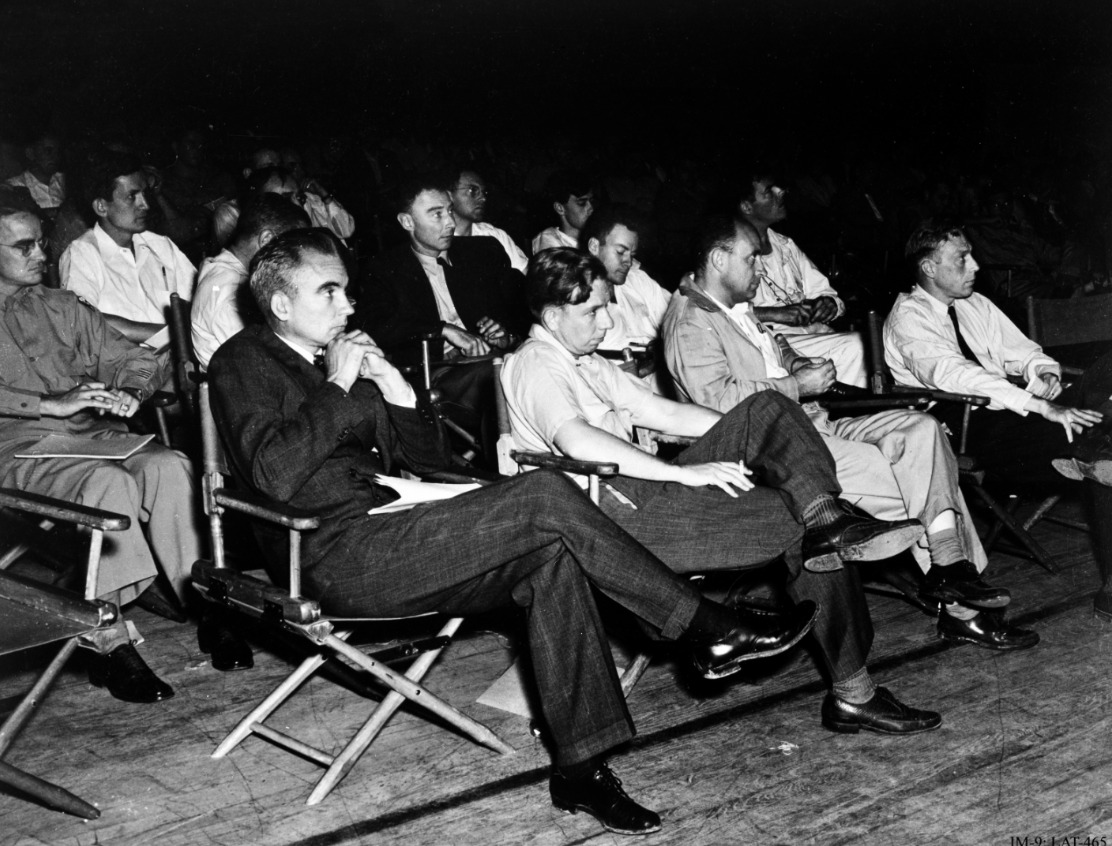
    <summary type="html"><![CDATA[<p><strong><em>Jewish participation in the Manhattan Project, particularly in Los Alamos, was an essential part of the operation's success. They continued to support their country despite local discrimination and the tragedy of World War II occurring abroad. </em></strong></p><img src="https://www.intermountainhistories.org/files/fullsize/89d79d7a997cf1681e9e7681568b097e.jpg" alt="Manhattan Project Scientists" /><br/><p>The United States’ development of the first atomic bomb would not have been possible without the contribution of Jewish Americans and Jewish refugees who fled Nazi Germany and war-torn Europe throughout the Manhattan Project. In August of 1939, Albert Einstein, Leo Szilard, and Enrico Fermi drafted and sent a letter to President Roosevelt via Alexander Sachs, warning the President of the potential use of atomic power in weaponry. This, in addition to another letter sent by British-Jewish scientists, led Roosevelt to form an advisory committee on uranium and, eventually, create the Manhattan Project.</p><p>Significantly, every person involved in the drafting and deliverance of this letter were Jewish or had close Jewish family members. Of the four involved, three were European refugees. Einstein was from a family of German Ashkenazi Jews and fled to the United States in 1933. Szilard was from a Hungarian Jewish family and fled to England in 1933 and then the United States in 1938. Fermi, while himself not Jewish nor German, was married to a Jewish woman which required him and his family to flee his home of Italy in 1938. Sachs was American-Jewish and an important advisor to President Roosevelt. All were impacted by the anti-Semitism of Germany and were respected and prominent enough to sway the President of the United States into forming a committee. Subsequent letters and information, much of which was provided by Jewish scientists, followed and increased the breadth of the project. </p><p>Jewish involvement in the Manhattan Project burgeoned as the war continued. J. Robert Oppenheimer, a young American Jew, was placed as the head of the Los Alamos branch of the Manhattan Project. He created four divisions in the Los Alamos lab, with the T-division, the theoretical division, being the most important. Of the 86 members in this division, 18 were Jewish—almost 21%. Even more impressive, of the eight groups in 1945, five were led by Jewish scientists such as Richard Feynman, Hans Bethe, and John von Neumann. Although Jews only constituted around .05% of the US population at the time, they made up a significant portion of the scientists at Los Alamos National Laboratory. </p><p>Jewish involvement in the Manhattan Project, as well as the project itself, were not known by the American public, and antisemitic prejudice was commonplace. In the 1920s, before J. Robert Oppenheimer attended, the president of Harvard, A. Lawrence Lowell, called for a quota of Jews to keep their presence sparse in the university. Even in Los Alamos, where Jewish scientists were important pioneers of the Manhattan Project, General Leslie Groves, the project’s military leader, stated, “I don’t like certain Jews, and I don’t like certain well-known characteristics of theirs.” Some Jewish scientists, such as Leo Szilard, were tailed by the FBI and noted for their “Jewish extraction” and “foreign tongue.”</p><p>At the same time, Los Alamos was a relative haven for these Jews. They were allowed in the upper echelons of decision-making and they were not stripped of titles or rewards because of their background. Ellen Bradbury Reid, an Anglo child in Los Alamos recalled, “I would not say [it was] a utopian situation, but. . . now I realize there were a lot of Jewish people, the European Jewish community who were there. I had no idea. . . [we] were all sort of in the same soup.” Despite prejudice, Jewish scientists were largely able to find footing in Los Alamos and thrive in the project. Jewish scientists in the Manhattan Project made a substantial and powerful impact in crafting the bombs which would end the war that, in total, killed over six million Jews. </p><p><em><strong><a href="https://www.intermountainhistories.org/items/show/753">For more (including 7 images) view the original article</a></strong></em></p>]]></summary>
    <published>2023-09-13T00:46:14+00:00</published>
    <updated>2026-04-17T19:32:16+00:00</updated>
    <link rel="alternate" type="text/html" href="https://www.intermountainhistories.org/items/show/753"/>
    <id>https://www.intermountainhistories.org/items/show/753</id>
    <author>
      <name>Abigail Beus, Brigham Young University</name>
    </author>
  </entry>
  <entry>
    <title type="html"><![CDATA[Temple Emanu-El in Helena Montana]]></title>
    <summary type="html"><![CDATA[<p><strong><em>Recently reclaimed by the Jewish community, Temple Emanu-El (Hebrew for “God be with us”) was the first synagogue constructed between St. Paul and Portland and the oldest Jewish house of worship in Montana. </em></strong></p><img src="https://www.intermountainhistories.org/files/fullsize/9701bba588f6e7d1077e0d6bdeb71978.jpg" alt="Temple Emanu-El" /><br/><p><p style="font-weight:400;">Montana’s Jewish community was flourishing by the 1870s. In 1867, Helena directories reported that out of twenty dry goods stores, Jews owned seventeen. By 1877, a quarter of the Board of Trade was Jewish. The Jewish community also helped the city recover from fire damage, a frequent hassle. Many Jewish migrants came to Montana for the gold rushes from places like Germany and Poland. In 1866, they organized the United Hebrew Benevolent Society, the forerunner to Congregation Emanu-El. As the railroad brought more migrants in the 1880s, they hired a rabbi and made plans for a synagogue. In 1890, the governor J.K. Toole laid the cornerstone of Temple Emanu-El, highlighting the already prominent status of the Jewish community.
<p style="font-weight:400;">Helena architects Heinlein and Mathias worked with the congregation to design Temple Emanu-El, which they built close to Christian churches and not far from the state capitol. Moorish Revival is in the distinctive architecture of the building, reflected in the pointed arch entry, keyhole windows, and copper onion-shaped domes studded with golden Stars of David. Romanesque features can also be identified in arched windows and heavy stonework. Both styles were popular in synagogues of late nineteenth century America. The builders used locally quarried granite as well as gray and red sandstone for the base and sides. The interior originally contained a thirty-foot ceiling sanctuary that sat 300 people. Distinguished and founding members held a dedication ceremony in 1891, where the local papers touted it as helping Helena to become “Queen City of the Rockies.”
<p style="font-weight:400;">The building is also notable as an example of adaptive reuse. The Jewish population dwindled by the 1930s, partly due to the Great Depression. Congregation Emanu-El looked to sell, and after unsuccessful attempts, the state of Montana bought it in 1937 for a token price of $1.00. The state promised to use it for a “social purpose” and fulfilled this aim by installing in it the Department of Public Welfare, which distributed relief during the Great Depression. The state renovated the temple by sand-blasting religious inscriptions and symbols off the building, as well as removing the onion-shaped domes. It then repurposed these materials elsewhere. It also added a second floor, but left the keyhole windows and front facade otherwise undisturbed. After the department was abolished in the 1970s, the building again fell into disuse. The small Jewish population feared that it would be demolished until the Catholic Diocese of Helena bought it in 1981.
<p style="font-weight:400;">Jerry Klinger, founding president of the Jewish American Society for Historic Preservation, brought renewed interest to the synagogue when he organized a ceremony recognizing its 110th anniversary in 2001. Historians placed it on the National Register of Historic Places soon after in 2002.
<p style="font-weight:400;">Recently, in August 2022, Temple Emanu-El returned to the Jewish community when the Montana Jewish Project purchased it from the Catholic Diocese. Prior to the reacquisition, Helena was one of only four state capitals without a synagogue. It will now become a statewide center for Jewish life in Montana.</p><p><em><strong><a href="https://www.intermountainhistories.org/items/show/722">For more (including 5 images) view the original article</a></strong></em></p>]]></summary>
    <published>2023-03-03T17:39:25+00:00</published>
    <updated>2026-04-17T19:32:15+00:00</updated>
    <link rel="alternate" type="text/html" href="https://www.intermountainhistories.org/items/show/722"/>
    <id>https://www.intermountainhistories.org/items/show/722</id>
    <author>
      <name>Katie Scholler, Northern Arizona University </name>
    </author>
  </entry>
  <entry>
    <title type="html"><![CDATA[Mt. Sinai in Cheyenne, Wyoming]]></title>
    <summary type="html"><![CDATA[<p><strong><em>Mt. Sinai is the oldest synagogue in Wyoming, representing the Jewish community whose beginnings in Cheyenne trace back to the founding of the city. </em></strong></p><img src="https://www.intermountainhistories.org/files/fullsize/b22791ea4f6ea36d53b16e3e4483d9cd.jpg" alt="The Mt. Sinai Synagogue" /><br/><p><p style="font-weight:400;">The Union Pacific Railroad established Cheyenne in 1867. Jewish migrants were some of the first to arrive, many of whom emigrated from Germany. Early attempts to build a synagogue failed. However, as more Jewish immigrants, encouraged by the Homestead Act, arrived in the early twentieth century plans for a synagogue began to be made.  In 1915, two congregations unified to build Mt. Sinai synagogue in the heart of Cheyenne. Immigration increased again in the 1940s following the Holocaust. Soon, the congregation reach 600 members, more than the initial synagogue could hold. Plans to build a new synagogue commenced. 
<p style="font-weight:400;">The congregation established a building committee to head the project. The committee decided upon a residential area, down the road from the first Mt. Sinai, to build the synagogue. This was convenient as Jews traditionally avoid driving on sacred holidays. In 1949, Denver architect Earl Morris designed it and prolific Cheyenne builder Carl Christensen began construction. Finished in 1951, the synagogue is built in a Mid-Century Modern style. The style is seen in the building’s large, undecorated walls with a flat roof and little overhang and its concrete and steel frame base with vertical windows. There is little ornamentation; only a Star of David embellishes the building. The exterior is brick and red granite, a contrast with the large wooden doors of the entrance. The choice in style reflects its popularity at that time and is contrasted by Cheyenne’s predominantly Victorian-style buildings surrounding it. The synagogue boasts a large main sanctuary, a small chapel, a kosher kitchen, classrooms, a rabbi study, and, uniquely, a mikvah, or ritual bath, added when construction unearthed an underground river. Mikvahs require living water to cleanse and purify, which this river allows. This is a rare feature for a synagogue in the West, and Jews from nearby states travel to use it.
<p style="font-weight:400;">The Jewish community in Cheyenne is comprised of several distinguished residents. Bertha Myers, who was behind original efforts to build a synagogue in 1915, helped to establish a Jewish religious school and taught at Cheyenne High School. Henry Altman was a pioneer merchant in Cheyenne who served on the city council and was dubbed, “Father of Cheyenne’s Parks” for his role in the city’s park system. Two later members developed a project to install twelve stained glass windows in the main sanctuary. This culminated with the 1972 dedication of a fifteen-panel menorah. The congregation paid for all the windows, which Watkins Stained Glass Studios of Denver designed and installed. </p><p>Other than the windows, the building has changed little since its dedication. It was placed on the National Register of Historic Places in 2017. Although its membership has decreased as members have moved, it continues as one of only two Jewish houses of worship in Wyoming today.</p><p><em><strong><a href="https://www.intermountainhistories.org/items/show/721">For more (including 8 images) view the original article</a></strong></em></p>]]></summary>
    <published>2023-03-02T20:27:31+00:00</published>
    <updated>2026-04-17T19:32:15+00:00</updated>
    <link rel="alternate" type="text/html" href="https://www.intermountainhistories.org/items/show/721"/>
    <id>https://www.intermountainhistories.org/items/show/721</id>
    <author>
      <name>Katie Scholler, Northern Arizona University </name>
    </author>
  </entry>
  <entry>
    <title type="html"><![CDATA[B&#039;Nai Israel Temple in Salt Lake City, Utah]]></title>
    <summary type="html"><![CDATA[<p><strong><em>The historic 1891 B’nai Israel Temple (Hebrew for “children of Israel”) is a testament to the “Gentile” Jewish community in Utah. It is the oldest synagogue in the state, and while it is no longer used for religious purposes, it symbolizes over 150 years of flourishing Jewish life. </em></strong></p><img src="https://www.intermountainhistories.org/files/fullsize/c4e28a3c867db607ead3b75663091086.jpg" alt="B&#039;Nai Israel Temple" /><br/><p><p style="font-weight:400;">The first Jews to migrate to Utah arrived in small numbers due to confict with the United States government which lasted until 1857. This precipitated more movement, and many Jewish pioneers came to Salt Lake City as entrepreneurs and craftsmen. Many of these migrants were from Germany. Until the 1880s, the Jewish population practiced their faith in rented Masonic halls or Mormon Churches. They incorporated the B’nai Israel congregation and built a small synagogue in 1883; however, infighting over religious doctrine split the group in two, a fairly commonplace occurence for American Jews at the time. Meanwhile, the social status of Utah’s Jews increased overall, and Congregation B’nai Israel looked to create a more distinguished synagogue. In 1889, they purchased land formerly belonging to Brigham Young for B’Nai Israel Temple.
<p style="font-weight:400;">Utah magnate, Frederick Auerbach, brought his nephew Philip Meyer from Germany to design the synagogue and work with local architect Henry Monheim. They modeled it after a famous synagogue in Berlin, called Fasanenstrasse. Its architectural style reflects Romanesque and Moorish Revival, both popular in the mid to late nineteenth century and is most notablie in the temple's arched windows, intricate stonework, and hallmark dome. Workers constructed the building with local Kyune stone, and its design includes a brick dome and two stained-glass windows in front. The architects built it to seat 500 people, including two stories and a choir gallery. It was dedicated in 1891; the Salt Lake Tribune remarked that it had “an air of quiet elegance.” Later, in 1929, a concrete block addition added classrooms, a social area, and a kitchen to the temple.
<p style="font-weight:400;">The ornate synagogue represents the active and successful community. Early settlers Julius and Fanny Brooks were merchants in early years of white settlement. The Auerbach brothers became prominent businessmen and dominated mercantile industries before Zion’s Cooperative Mercantile Institution was formed. Simon Bamberger, who was involved in silver mining and railroads in Salt Lake, became the first non-Mormon, and the only Jewish, governor in state history in 1916. The Jewish community also developed a unique relationship to Utah’s Mormon population, occupying a position of “favored Gentiles." The Mormon settlers were largely supportive of Jewish migrants as they also claimed spiritual ties to Israel. Relations grew tense at times due to economic competition, but mostly remained amicable. The Jewish community grew as refugees increased after World War II. Tragically, architect Philip Meyer, who had designed the synagogue, died in a Nazi death camp in 1943.
<p style="font-weight:400;">In 1972, the divided Jewish congregations of Salt Lake moved to reunite, but the historic B’Nai Israel Temple could not accommodate its new group, now known as Kol Ami. They soon constructed their present synagogue and sold B’Nai Israel, which is now used commercially. In 1978, the community successfully nominated the temple to the National Register of Historic Places. Even though it is no longer used for religious practice, the historic building stands as a monument to the Jewish community of Utah.</p><p><em><strong><a href="https://www.intermountainhistories.org/items/show/720">For more (including 4 images) view the original article</a></strong></em></p>]]></summary>
    <published>2023-03-02T04:59:29+00:00</published>
    <updated>2026-04-17T19:32:15+00:00</updated>
    <link rel="alternate" type="text/html" href="https://www.intermountainhistories.org/items/show/720"/>
    <id>https://www.intermountainhistories.org/items/show/720</id>
    <author>
      <name>Katie Scholler, Northern Arizona University </name>
    </author>
  </entry>
  <entry>
    <title type="html"><![CDATA[Temple Emanuel in Pueblo, Colorado]]></title>
    <summary type="html"><![CDATA[<p><strong><em>Temple Emanuel (Hebrew for “God be with us”) in Pueblo, Colorado is the one of the oldest synagogues still routinely used in the state. Its structure has not been altered since its dedication, and it represents the Jewish people of Pueblo who have been present since 1864. </em></strong></p><img src="https://www.intermountainhistories.org/files/fullsize/e6d0daf477f14dfc4ecb029409235d84.jpg" alt="Temple Emanuel" /><br/><p><p style="font-weight:400;">Pueblo’s 1870 census listed twelve Jewish families in its population of 700 people. They came largely from Germany at first, then Poland, Czechoslovakia, and Russia with the gold rush in Denver and later in part due to Colorado’s recognition as “The World’s Sanatorium,” supposedly healthier because of its dry, sunny climate. The small congregation held services in an upstairs of a furniture business until they reached 40 to 50 families. These groups united and organized the building of a synagogue. Instrumental in the synagogue’s creation was the Ladies Temple Association, which later became known as the Temple Emanuel Congregation.
<p style="font-weight:400;">Local Pueblo architect Jacob Gile designed Temple Emanuel using Queen Anne and Richardsonian Romanesque elements. The choice of Queen Anne was unique for ecclesiastical architecture, but it was a popular style elsewhere at the time in Colorado. The Queen Anne style is evident in the various materials used to avoid a smooth-walled appearance, such as the tan sand-stone, red brick, and wood shingles, as well as the polygonal towers and raised entry. The Richardsonian Romanesque style is largely seen in the Syrian arch above the entrance— an elongated one opposed to horseshoe or narrow, and the rough stone base. The synagogue is not a massive structure like other religious buildings in Colorado, but designers made it to seat about 200, and its opera chairs and stained glass windows were new for a house of worship in Pueblo.
<p style="font-weight:400;">The Ladies Temple Association bought the land and held a bazaar to raise money to build the synagogue. Another important figure who helped found the temple was Abraham Goldsmith and his family, founding members of the Pueblo Jewish community. Workers completed the temple in 1900, and a well-known Chicago rabbi joined a former governor of Colorado, Alva Adams, to conduct the dedication ceremony. The local papers referred to Temple Emanuel as “the little Jewel box.”
<p style="font-weight:400;">The congregation lost members during the Great Depression when many Jews left the city, but they still continued operation. The small congregation later gained public attention in 1986 when they made history as one of the first locations to have their High Holy Days services (the most widely observed Jewish holidays of Rosh Hashanah/Jewish New Year and Yom Kippur/Day of Atonement) led by a woman rabbi. The congregation successfully petitioned to have Temple Emanuel placed on the National Register of Historic Places in 1996. In 2019, Temple Emanuel experienced a bomb threat made by an extremist, which was thwarted by the FBI, but caused a national stir. While the threat exposed the level of antisemitism that Jewish communities still face today, it also demonstrated the firm support of the wider community, who vocally denounced the violence. At the Shabbat service (day of observance in Judaism) following the exposed plot, 400 members of the Pueblo community, many non-Jews, attended in solidarity, forming a human chain around the temple to honor the Jewish community and their place in Pueblo life.</p><p><em><strong><a href="https://www.intermountainhistories.org/items/show/719">For more (including 3 images) view the original article</a></strong></em></p>]]></summary>
    <published>2023-03-01T21:19:00+00:00</published>
    <updated>2026-04-17T19:32:15+00:00</updated>
    <link rel="alternate" type="text/html" href="https://www.intermountainhistories.org/items/show/719"/>
    <id>https://www.intermountainhistories.org/items/show/719</id>
    <author>
      <name>Katie Scholler, Northern Arizona University</name>
    </author>
  </entry>
  <entry>
    <title type="html"><![CDATA[Ahavath Beth Israel in Boise, Idaho]]></title>
    <summary type="html"><![CDATA[<p><strong><em>Ahavath Beth Israel (Hebrew for "Love of the House of Israel") is the oldest synagogue in continuous use west of the Mississippi River. Founded in part by the first Jewish governor in United States history, it represents over 125 years of Jewish life in Idaho. </em></strong></p><img src="https://www.intermountainhistories.org/files/fullsize/47a512e31e6ea673617a2392d1569f9c.jpg" alt="Temple Beth Israel" /><br/><p><span style="font-weight:400;">Among the first immigrants to Idaho were Jews who came from Germany and Central Europe beginning in the 1860s. They arrived soon after Congress declared Idaho a territory and primarily worked in mercantile or farming operations. They worshipped in private homes and rented halls until they amassed the resources for a synagogue. In 1895, five years after statehood, community leaders organized an official congregation and elected successful Boise merchants Moses Alexander and David Falk as leaders. They led the congregation to purchase three lots a few blocks from the state capitol and hired an architectural firm to begin construction on the Temple Beth Israel. Records later surfaced that nationally known companies such as Marshall Field and Levi Strauss contributed to its construction. </span>
<span style="font-weight:400;">Local architects Chestney and Schroeder completed the synagogue in 1896, and its architecture reflects Rundbogenstil and Moorish Revival styles. Rundbogenstil was popular in Germany and its diaspora, reflecting the recent waves of German immigration. It incorporates Byzantine, Romanesque, and Renaissance styles commonly used in synagogue architecture of this period. It can be seen in the tall, arched window framing the synagogue, and the arched windows along the sides. Such windows, intricate detailing, and interior vaulted arches also reflect Moorish Revival style, a mainstay of nineteenth-century synagogues due to its association with Judaism’s Middle Eastern origins. The architects designed Temple Beth Israel with a white and reddish pink Boise sandstone base and cedar-shingled exterior that imitates stonework. They used Cathedral glass to make stained glass windows and adorned the building with a handmade Star of David. Its crowning feature is a large, circular rose window. Ornate yet small, the Boise congregation constructed it to hold only 150 people. </span>
<span style="font-weight:400;">The synagogue founders were major figures in Boise life. David Falk, the congregation president, owned dry goods stores and assisted in establishing the Boise-Winnemucca Railroad. Moses Alexander, vice president, became a prominent statesman. His fellow citizens elected him mayor of Boise in 1897 and 1901, and then governor of Idaho in 1914, becoming the first practicing Jewish governor in the United States. The community remained small throughout the twentieth century. In 1972, the Jewish citizenry successfully petitioned to have the synagogue placed on the National Register of Historic Places. A federal grant and other raised monies then facilitated a building renovation in 1981, which restored the windows, siding, and handmade Star of David—which they delayed placement of until an Aryan Nations Conference had left the area. Soon after, a new congregation of Jews who had moved from Poland after World War II merged with Temple Beth Israel, formally becoming Congregation Ahavath Beth Israel in 1986.</span>
<span style="font-weight:400;">The new congregation continued to grow, and, in 1994, added Daniel Fink as Idaho’s first full-time rabbi. They also needed more space, so they hired Cole & Associates to relocate the building in October of 2003. Of the additions, they added an education building. Today, the synagogue continues to support Boise’s Jewish population from its location on Latah Street. </span></p><p><em><strong><a href="https://www.intermountainhistories.org/items/show/718">For more (including 5 images) view the original article</a></strong></em></p>]]></summary>
    <published>2023-03-01T19:42:44+00:00</published>
    <updated>2026-04-17T19:32:15+00:00</updated>
    <link rel="alternate" type="text/html" href="https://www.intermountainhistories.org/items/show/718"/>
    <id>https://www.intermountainhistories.org/items/show/718</id>
    <author>
      <name>Katie Scholler, Northern Arizona University </name>
    </author>
  </entry>
</feed>
