<?xml version="1.0" encoding="UTF-8"?>
<feed xmlns="http://www.w3.org/2005/Atom">
  <title type="text">Intermountain Histories</title>
  <updated>2026-04-17T19:32:17+00:00</updated>
  <generator uri="http://framework.zend.com" version="1.12.20">Zend_Feed_Writer</generator>
  <link rel="alternate" type="text/html" href="https://www.intermountainhistories.org/"/>
  <link rel="self" type="application/atom+xml" href="https://www.intermountainhistories.org/items/browse?output=rss2"/>
  <id>https://www.intermountainhistories.org/</id>
  <author>
    <name>Intermountain Histories</name>
    <uri>https://www.intermountainhistories.org</uri>
  </author>
  <link rel="hub" href="https://pubsubhubbub.appspot.com/"/>
  <entry>
    <title type="html"><![CDATA[The B’nai Israel Cemetery]]></title>
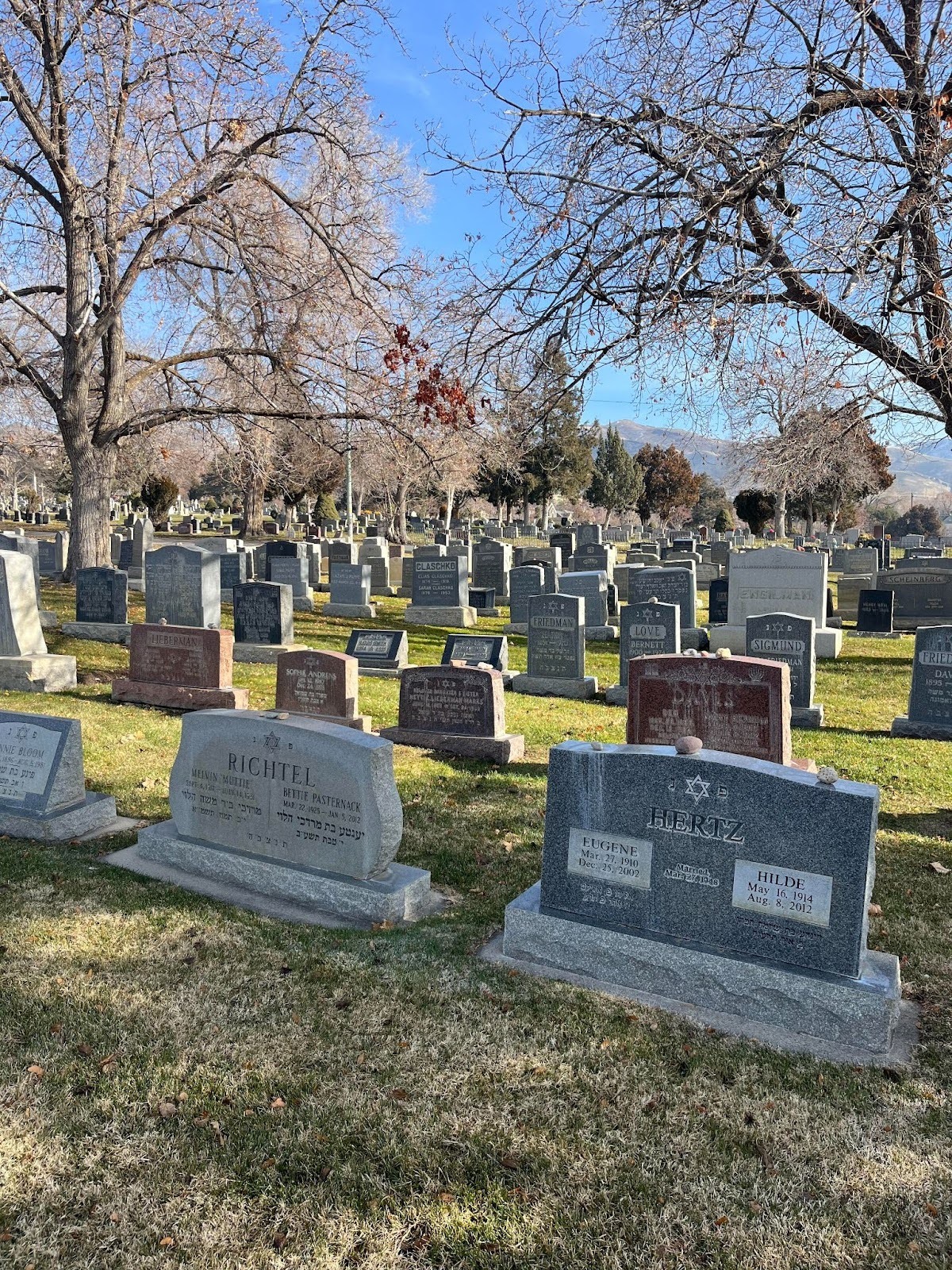
    <summary type="html"><![CDATA[<p><strong><em><span style="font-weight:400;">Cemetery B’nai Israel is a burial ground dedicated to followers of the Reform branch of Judaism. Located in the sloping Avenues of Salt Lake City, this space is a beautiful resting place for some of Utah’s most famous Jewish residents.</span></em></strong></p><img src="https://www.intermountainhistories.org/files/fullsize/fdf6c8848584d2a8d6f2dee9d815a3ee.jpg" alt="B&#039;nai Israel Cemetery" /><br/><p><span style="font-weight:400;">The B’nai Israel Cemetery is one of Salt Lake City’s three Jewish cemeteries. The other cemeteries connected with the Kol Ami Cemetery Association are Montefiore (Conservative) and Shaare Tzedek (Orthodox). Located at 1021 East and 4th Avenue, it serves adherents of Reform Judaism. The tenets of Reform Judaism include an emphasis on the growing, changing nature of Judaism, a focus on its ethical implications rather than its ceremonial ones, a constant search for knowledge and truth, and a focus on human reason. It is a more liberal branch of Judaism, with less focus on ritual observance and more focus on the autonomy of the individual and progressive values. </span>
<span style="font-weight:400;">The land for Salt Lake’s Jewish cemeteries was originally donated to the Jewish community by Brigham Young around 1866. These were the first Jewish cemeteries in the Intermountain West. The cemeteries are exclusively maintained by the Kol Ami Cemetery Association. This association is composed of members of Salt Lake’s synagogue, Congregation Kol Ami. Members of the board serve as volunteers. Although any Jewish person can be buried in one of the three cemeteries, each has slightly different requirements. Those wanting to be buried with non-Jewish spouses can only do so in the Reform cemetery. Orthodox and Conservative cemeteries require a ceremonial washing of the body before burial, but Reform cemeteries make that ritual optional. </span>
<span style="font-weight:400;">Cemetery B’nai Israel is located on the south side of Salt Lake City Cemetery. Unlike the Montefiore and Shaare Tzedek cemeteries, B’nai Israel permits the burial of non-Jewish spouses and minor Children with the Jewish family member. The guiding principles of the Kol Ami Cemetery Association are </span><i><span style="font-weight:400;">Kavod Ha Meit: </span></i><span style="font-weight:400;">showing honor and respect for the dead; </span><i><span style="font-weight:400;">Nichum Aveilim: </span></i><span style="font-weight:400;">comforting those who are mourning a loss; and simplicity: all are equal in death.</span>
<span style="font-weight:400;">Several prominent figures in Utah history were laid to rest in this peaceful graveyard, including Simon Bamberger, the first Jewish governor of Utah whose term ran from 1917 to 1921, and brothers Samuel and Frederick Auerbach, who established the People’s Store– a long-time Salt Lake City landmark. </span>
<span style="font-weight:400;">The tranquil B’nai Israel Cemetery has served practitioners of Reform Judaism for well over one hundred years, and continues to do so today. Under the governance of the Kol Ami Cemetery Association, these burial grounds are maintained with a tangible sanctity and respect.</span></p><p><em><strong><a href="https://www.intermountainhistories.org/items/show/765">For more (including 4 images) view the original article</a></strong></em></p>]]></summary>
    <published>2024-01-12T22:29:43+00:00</published>
    <updated>2026-04-17T19:32:17+00:00</updated>
    <link rel="alternate" type="text/html" href="https://www.intermountainhistories.org/items/show/765"/>
    <id>https://www.intermountainhistories.org/items/show/765</id>
    <author>
      <name>Isabella Holt, Brigham Young University</name>
    </author>
  </entry>
  <entry>
    <title type="html"><![CDATA[Shaare Tzedek Cemetery]]></title>
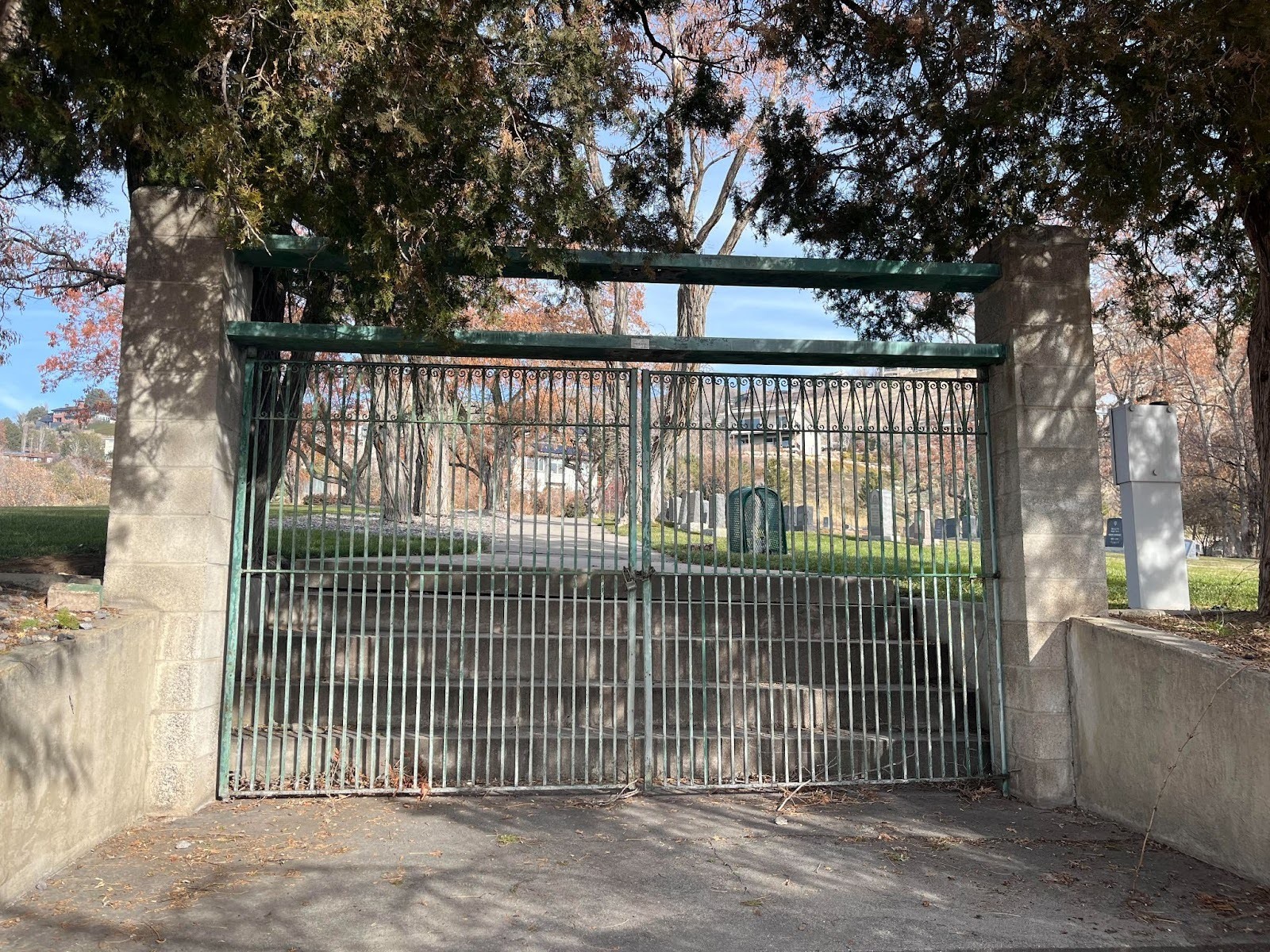
    <summary type="html"><![CDATA[<p><strong><em>The Shaare Tzedek Cemetery is a dedicated gravesite for practicing Orthodox Jews in the Salt Lake City area. Though smaller than its sister cemeteries, B’nai Israel and Montefiore, the recently rededicated Shaare Tzedek is nonetheless a quiet and peaceful site for remembrance and service.</em></strong></p><img src="https://www.intermountainhistories.org/files/fullsize/70156a3e7c4070953a3aad3742f17530.jpg" alt="Cemetery Gate" /><br/><p><span style="font-weight:400;">Cemetery Shaare Tzedek has stood for over a century and is one of the three Jewish cemeteries in the Salt Lake City metro. It can be found at 915 East 11th Avenue. Shaare Tzedek is designated for Orthodox adherents of Judaism, whereas its sister cemeteries, Montefiore and B’nai Israel, serve Conservative and Reform Jews, respectively. Orthodox Jews believe that the Torah (both the written word and oral traditions) were divinely revealed to Moses on Mount Sinai and have been faithfully maintained throughout the centuries. Being Orthodox entails a strict adherence to Jewish law (</span><i><span style="font-weight:400;">halakha</span></i><span style="font-weight:400;">). Practices include Sabbath-day observance, following Kosher dietary restrictions, and regular study of the Torah. To be buried in an Orthodox Jewish cemetery, one must be an Orthodox Jew, undergo rituals of washing and dressing, and generally be buried in a plain wooden casket without internal or external adornment. </span>
<span style="font-weight:400;">These lands in the larger Salt Lake City Cemetery were set aside for the use of the Jewish community by Brigham Young in 1866. The care and upkeep of these three cemeteries is entrusted to the Kol Ami Cemetery Association. This association is run on a volunteer basis by members of Salt Lake’s synagogue, Congregation Kol Ami. Members of the board serve as volunteers. The guiding principles of the Kol Ami Cemetery Association are </span><i><span style="font-weight:400;">Kavod Ha Meit: </span></i><span style="font-weight:400;">showing honor and respect for the dead; </span><i><span style="font-weight:400;">Nichum Aveilim: </span></i><span style="font-weight:400;">comforting those who are mourning a loss; and simplicity: all are equal in death. While any member of the Jewish community may be buried in one of the three cemeteries, each graveyard has slightly different requirements. Those wanting to be buried with non-Jewish spouses are only permitted to do so in the Reform cemetery. Both Conservative and Orthodox cemeteries require a ceremonial washing of the body before burial, but that practice is mandatory in Reform cemeteries. </span>
<span style="font-weight:400;">The Shaare Tzedek Cemetery is located just above the sprawling expanse of the Salt Lake City Cemetery, a few blocks north of the B’nai Israel and Montefiore cemeteries. It is the smallest of the three Jewish cemeteries. Salt Lake’s Orthodox Jewish community and synagogue faded around 1930, largely due to financial reasons and fewer Orthodox Jews as opposed to Conservative and Reform Jews in the city. The Shaare Tzedek Cemetery was recently rededicated– a very rare circumstance, but necessary because the western part of the burial ground, though original to the cemetery, had never been dedicated. That issue was resolved in 2023. Shortly after the rededication, the Kol Ami Cemetery Board held a tree-planting ceremony to further protect and beautify the space. </span></p><p><em><strong><a href="https://www.intermountainhistories.org/items/show/763">For more (including 4 images) view the original article</a></strong></em></p>]]></summary>
    <published>2024-01-12T20:29:15+00:00</published>
    <updated>2026-04-17T19:32:17+00:00</updated>
    <link rel="alternate" type="text/html" href="https://www.intermountainhistories.org/items/show/763"/>
    <id>https://www.intermountainhistories.org/items/show/763</id>
    <author>
      <name>Isabella Holt, Brigham Young University</name>
    </author>
  </entry>
  <entry>
    <title type="html"><![CDATA[Montefiore Cemetery ]]></title>
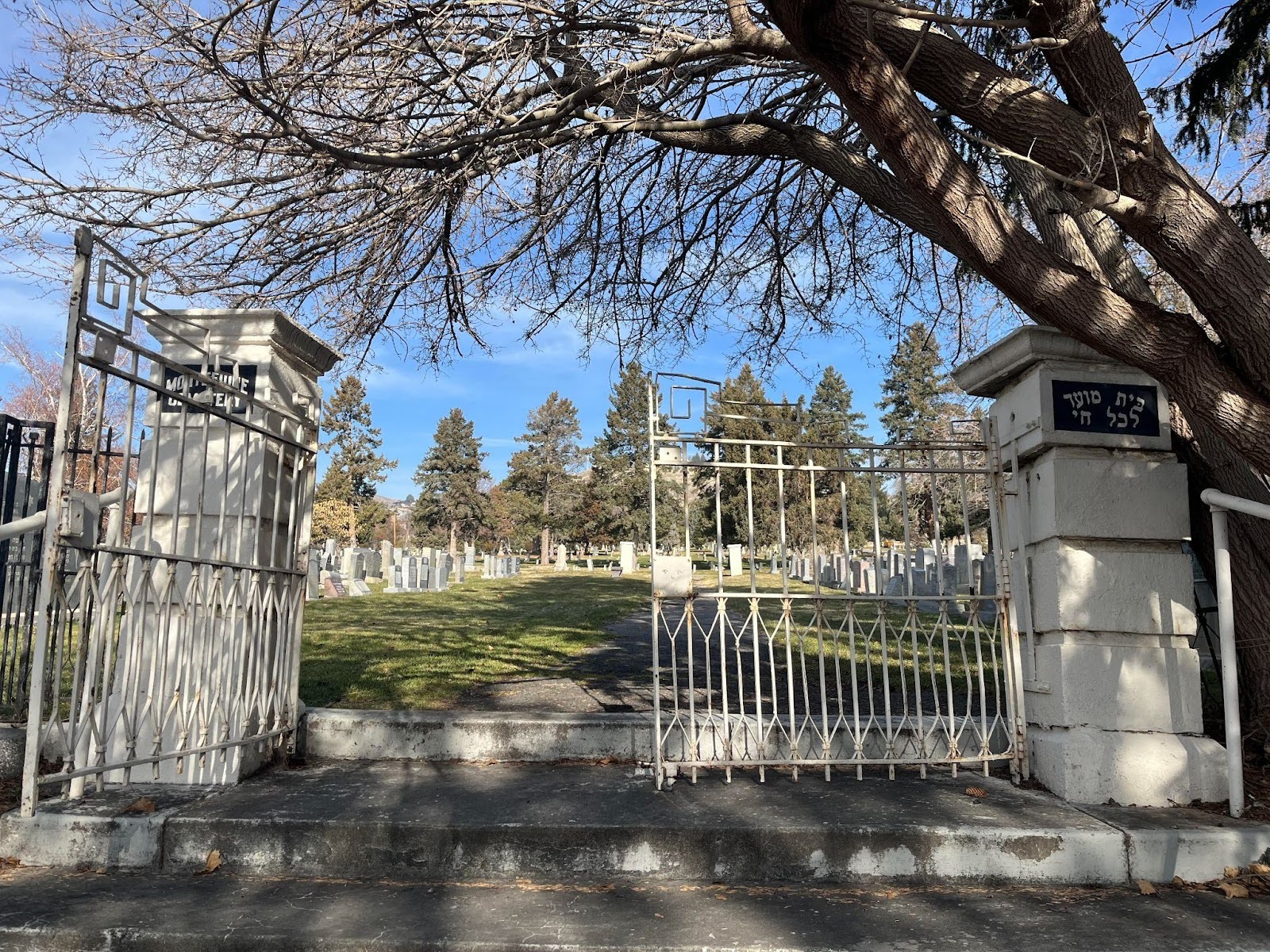
    <summary type="html"><![CDATA[<p><strong><em>Serving Conservative Jews in the Salt Lake area, the Montefiore Cemetery can be found amidst the city’s historic Avenues. Dedicated to preserving the memories of Utah’s Jewish community, the Montefiore Cemetery contains a personal memorial to those who lost their lives in the Holocaust. </em></strong></p><img src="https://www.intermountainhistories.org/files/fullsize/50818c535c735867b8f5aed3ca63fe44.jpg" alt="Cemetery Gates" /><br/><p><span style="font-weight:400;">Cemetery Montefiore is one of three Jewish cemeteries in Salt Lake City. It is affiliated with cemeteries B’nai Israel, serving Reform Jews, and Shaare Tzedek, which is specifically for Orthodox Jews. Located at 1081 East 4th Avenue, Montefiore is dedicated to followers of the Conservative branch of Judaism. Conservative Judaism is a movement that focuses on the authority of Jewish law and tradition, but with an emphasis on obtaining assent from the people. For Conservative Jews, Jewish law (</span><i><span style="font-weight:400;">Halakha</span></i><span style="font-weight:400;">) is simultaneously binding and subject to historical development. It allows for greater pluralism than Orthodox Judaism, but is more traditional than Reform Judaism. There is room for the traditional, received forms, but Conservative Jews hold space for various ways to interpret and apply these past traditions. </span>
<span style="font-weight:400;">Brigham Young donated the land for this and Salt Lake’s other Jewish cemeteries to the Jewish community in 1866. The cemeteries are operated by the Kol Ami Cemetery Association: Salt Lake City does not allocate resources to maintain them. Those serving on the board of this association are volunteers from Salt Lake’s synagogue, Congregation Kol Ami. The guiding principles of the Kol Ami Cemetery Association are </span><i><span style="font-weight:400;">Kavod Ha Meit: </span></i><span style="font-weight:400;">showing honor and respect for the dead; </span><i><span style="font-weight:400;">Nichum Aveilim: </span></i><span style="font-weight:400;">comforting those who are mourning a loss; and simplicity: all are equal in death. A Jew can be in any one of the three cemeteries, but each has slightly different requirements. Those who wish to be buried with their non-Jewish spouses can only do so in the Reform cemetery. Orthodox and Conservative cemeteries require a ceremonial washing of the body before burial, but Reform cemeteries do not require the washing. </span>
<span style="font-weight:400;">The Montefiore Cemetery can be found on the southern end of the larger Salt Lake City Cemetery, just a few streets east of the Reform B’nai Israel Cemetery. As it is Conservative, those wishing to be buried in this cemetery are to be ritually washed before burial and cannot be buried with non-Jewish family members. </span>
<span style="font-weight:400;">One of the most moving sites at the Montefiore Cemetery is very discrete– it does not immediately catch one’s eye amidst the rows of marble. Toward the eastern edge of the cemetery stands the headstone of Josef and Ruth Teustch Schwager, whose son, Pete Schwager, is on the Kol Ami Cemetery Board. The Schwagers fled Nazi Germany in 1939, arriving in New York that same year, then making their way west to Utah. Ruth Schwager’s parents, Dr. Arthur Teutsch and Clara Holzinger Teutsch, were unable to escape the Nazi regime and perished in the Theresienstadt and Auschwitz concentration camps. Ruth Schwager was determined that her parents be remembered, and thus included their names on her gravemarker. </span>
<span style="font-weight:400;">Cemetery Montefiore is a calm and peaceful spot amidst the bustle of Salt Lake City. Dedicated to adherents of Conservative Judaism, it has stood for over a century. The Kol Ami Cemetery Association preserves this and other Jewish cemeteries with evident care and approbation. </span></p><p><em><strong><a href="https://www.intermountainhistories.org/items/show/762">For more (including 5 images) view the original article</a></strong></em></p>]]></summary>
    <published>2024-01-12T20:03:55+00:00</published>
    <updated>2026-04-17T19:32:17+00:00</updated>
    <link rel="alternate" type="text/html" href="https://www.intermountainhistories.org/items/show/762"/>
    <id>https://www.intermountainhistories.org/items/show/762</id>
    <author>
      <name>Isabella Holt, Brigham Young University</name>
    </author>
  </entry>
  <entry>
    <title type="html"><![CDATA[Congregation Kol Ami ]]></title>
    <summary type="html"><![CDATA[<p><strong><em>Nestled in the foothills of Salt Lake City, Congregation Kol Ami recently celebrated its 50th anniversary. Born of a merger between two branches of Judaism, this synagogue now serves about a quarter of Utah’s Jewish population. </em></strong></p><img src="https://www.intermountainhistories.org/files/fullsize/0875c2459ce79a9c26983139436db612.jpg" alt="Exterior of Kol Ami, taken between the 1970s-1980s.
" /><br/><p><span style="font-weight:400;">Salt Lake City’s Jewish community traces its roots back to 1854, with the arrival of both European immigrants and east-coast transplants. Several prominent figures in Utah history belonged to this community, including brothers Samuel and Frederick Auerbach (founders of the People’s Store: F. Auerbach and Brothers) and Simon Bamberger, who was elected governor of Utah in 1916. The city’s first synagogues were Congregation B’nai Israel and Congregation Montefiore. Congregation B’nai Israel was founded in 1891 and served those following Reform practices, while Congregation Montefiore was established in 1899 and served Conservative adherents to the faith. </span>
<span style="font-weight:400;">Congregation Kol Ami was established in 1972 as a result of a merger between these two historic communities. The merger occurred for several reasons. Financially, it was more viable to have Salt Lake’s Jewish community gather in one place. It also strengthened ties between adherents of Reform and Conservative Judaism. The synagogue’s name, </span><i><span style="font-weight:400;">Kol Ami </span></i><span style="font-weight:400;">roughly translates to “all of my people” in Hebrew.  Because it is a joint Conservative and Reform Congregation, Congregation Kol Ami holds Reform worship services on Fridays and Conservative on Saturdays. Now into its fiftieth year, Congregation Kol Ami serves about 400 families and has experienced 35% growth since Rabbi Samuel Spector’s tenure began in 2018. </span>
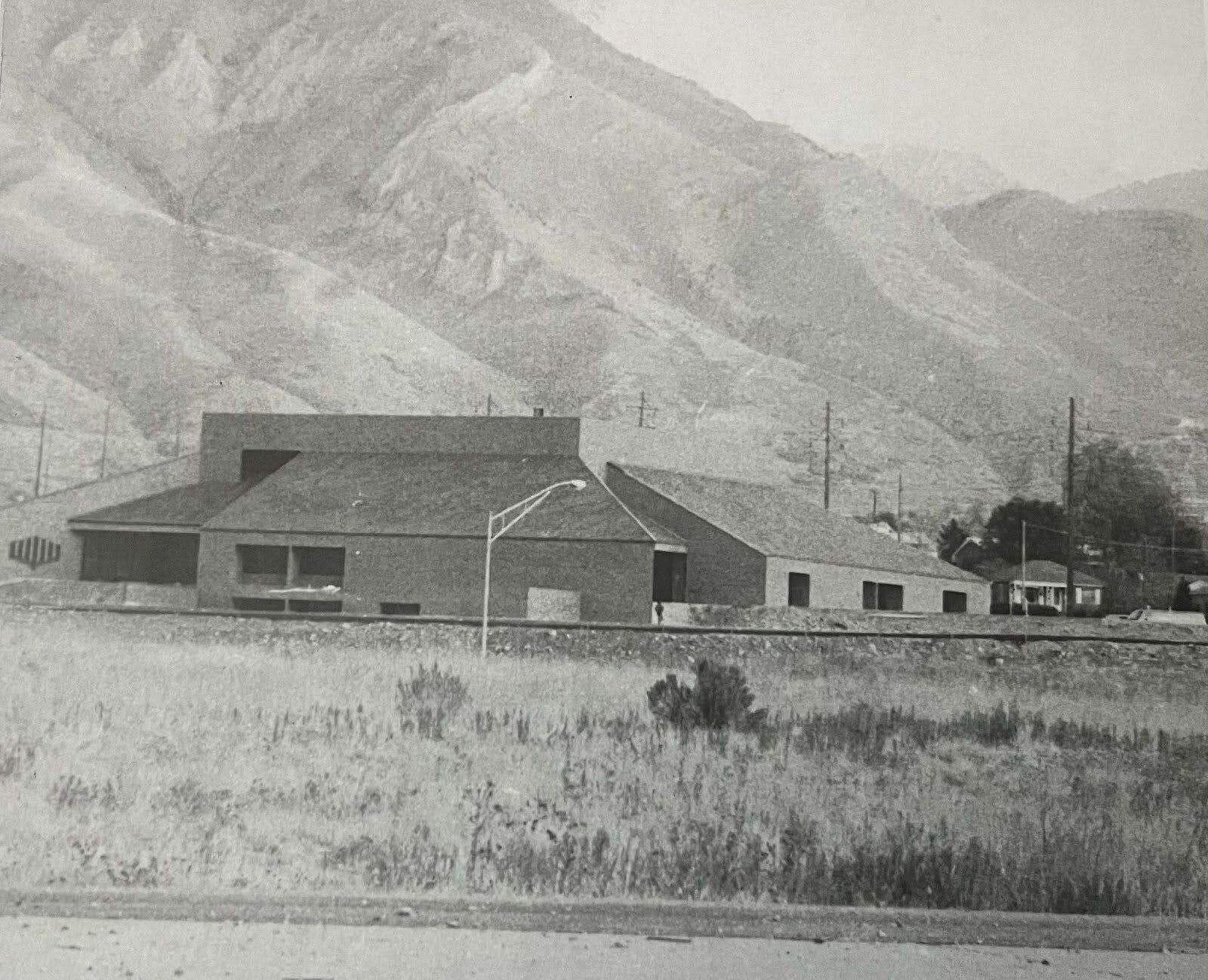
<span style="font-weight:400;">Construction of the synagogue was completed in the early 1970s. It is a multi-purpose space, holding classrooms, offices, a central worship space, and a kitchen. In addition to Shabbat services, the synagogue hosts daily classes at the Rafi Schwartz Religious School. The mission of the Religious School is “to create students who are active participants in the intellectual, religious, and cultural traditions of Judaism.” The school serves students of various backgrounds and traditions from preschool through 12th grade. </span>
<span style="font-weight:400;">Congregation Kol Ami hosts a number of community events, including a class called “Introduction to Jewish Life.” Members of the congregation or interested residents of the greater Salt Lake area are invited to come learn more about Jewish beliefs, practices, history, holidays, and basic Hebrew. There are also Sunday study sessions hosted by Rabbi Fred Wenger. Topics vary week by week, but typically address themes connected to the Jewish diaspora. With their emphasis on education, community, and worship, Kol Ami’s congregants are wonderful contributors to Salt Lake City’s diversity and development.</span></p><p><em><strong><a href="https://www.intermountainhistories.org/items/show/759">For more (including 4 images) view the original article</a></strong></em></p>]]></summary>
    <published>2024-01-11T21:53:01+00:00</published>
    <updated>2026-04-17T19:32:16+00:00</updated>
    <link rel="alternate" type="text/html" href="https://www.intermountainhistories.org/items/show/759"/>
    <id>https://www.intermountainhistories.org/items/show/759</id>
    <author>
      <name>Isabella Holt, Brigham Young University</name>
    </author>
  </entry>
  <entry>
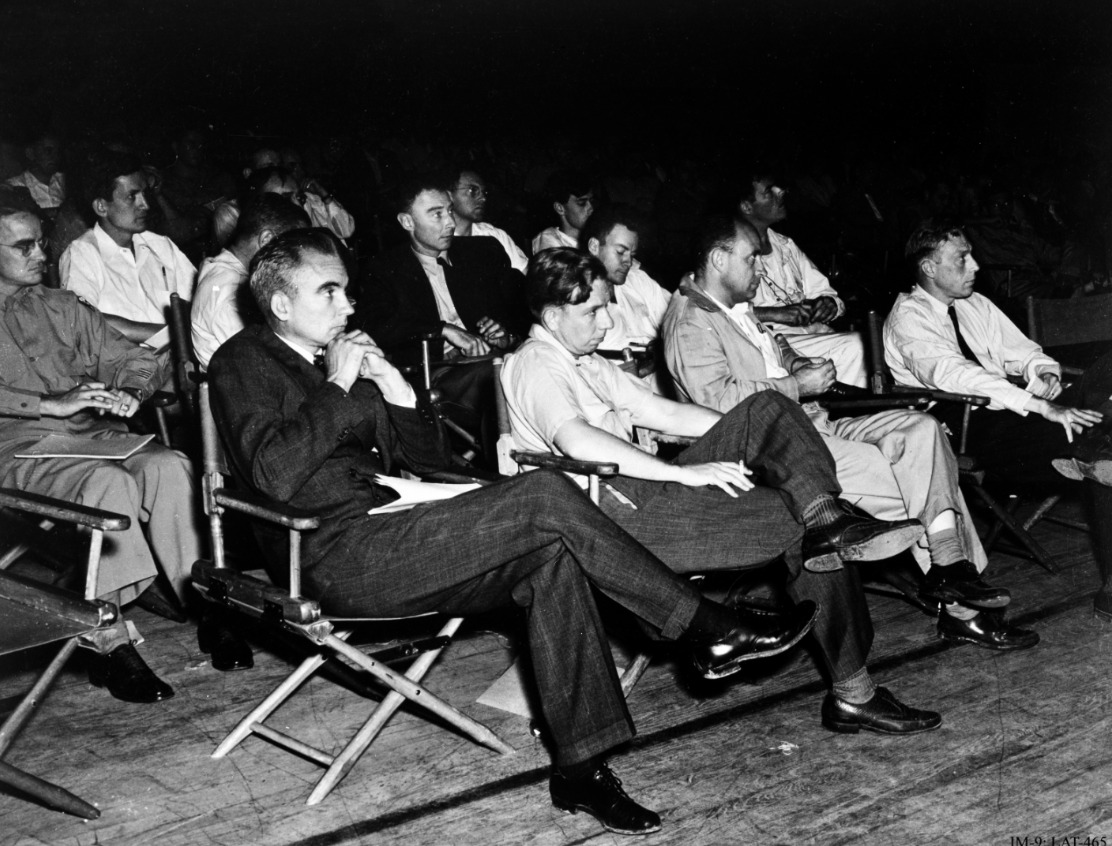
    <title type="html"><![CDATA[Jewish Contribution to the Manhattan Project ]]></title>
    <summary type="html"><![CDATA[<p><strong><em>Jewish participation in the Manhattan Project, particularly in Los Alamos, was an essential part of the operation's success. They continued to support their country despite local discrimination and the tragedy of World War II occurring abroad. </em></strong></p><img src="https://www.intermountainhistories.org/files/fullsize/89d79d7a997cf1681e9e7681568b097e.jpg" alt="Manhattan Project Scientists" /><br/><p>The United States’ development of the first atomic bomb would not have been possible without the contribution of Jewish Americans and Jewish refugees who fled Nazi Germany and war-torn Europe throughout the Manhattan Project. In August of 1939, Albert Einstein, Leo Szilard, and Enrico Fermi drafted and sent a letter to President Roosevelt via Alexander Sachs, warning the President of the potential use of atomic power in weaponry. This, in addition to another letter sent by British-Jewish scientists, led Roosevelt to form an advisory committee on uranium and, eventually, create the Manhattan Project.</p><p>Significantly, every person involved in the drafting and deliverance of this letter were Jewish or had close Jewish family members. Of the four involved, three were European refugees. Einstein was from a family of German Ashkenazi Jews and fled to the United States in 1933. Szilard was from a Hungarian Jewish family and fled to England in 1933 and then the United States in 1938. Fermi, while himself not Jewish nor German, was married to a Jewish woman which required him and his family to flee his home of Italy in 1938. Sachs was American-Jewish and an important advisor to President Roosevelt. All were impacted by the anti-Semitism of Germany and were respected and prominent enough to sway the President of the United States into forming a committee. Subsequent letters and information, much of which was provided by Jewish scientists, followed and increased the breadth of the project. </p><p>Jewish involvement in the Manhattan Project burgeoned as the war continued. J. Robert Oppenheimer, a young American Jew, was placed as the head of the Los Alamos branch of the Manhattan Project. He created four divisions in the Los Alamos lab, with the T-division, the theoretical division, being the most important. Of the 86 members in this division, 18 were Jewish—almost 21%. Even more impressive, of the eight groups in 1945, five were led by Jewish scientists such as Richard Feynman, Hans Bethe, and John von Neumann. Although Jews only constituted around .05% of the US population at the time, they made up a significant portion of the scientists at Los Alamos National Laboratory. </p><p>Jewish involvement in the Manhattan Project, as well as the project itself, were not known by the American public, and antisemitic prejudice was commonplace. In the 1920s, before J. Robert Oppenheimer attended, the president of Harvard, A. Lawrence Lowell, called for a quota of Jews to keep their presence sparse in the university. Even in Los Alamos, where Jewish scientists were important pioneers of the Manhattan Project, General Leslie Groves, the project’s military leader, stated, “I don’t like certain Jews, and I don’t like certain well-known characteristics of theirs.” Some Jewish scientists, such as Leo Szilard, were tailed by the FBI and noted for their “Jewish extraction” and “foreign tongue.”</p><p>At the same time, Los Alamos was a relative haven for these Jews. They were allowed in the upper echelons of decision-making and they were not stripped of titles or rewards because of their background. Ellen Bradbury Reid, an Anglo child in Los Alamos recalled, “I would not say [it was] a utopian situation, but. . . now I realize there were a lot of Jewish people, the European Jewish community who were there. I had no idea. . . [we] were all sort of in the same soup.” Despite prejudice, Jewish scientists were largely able to find footing in Los Alamos and thrive in the project. Jewish scientists in the Manhattan Project made a substantial and powerful impact in crafting the bombs which would end the war that, in total, killed over six million Jews. </p><p><em><strong><a href="https://www.intermountainhistories.org/items/show/753">For more (including 7 images) view the original article</a></strong></em></p>]]></summary>
    <published>2023-09-13T00:46:14+00:00</published>
    <updated>2026-04-17T19:32:16+00:00</updated>
    <link rel="alternate" type="text/html" href="https://www.intermountainhistories.org/items/show/753"/>
    <id>https://www.intermountainhistories.org/items/show/753</id>
    <author>
      <name>Abigail Beus, Brigham Young University</name>
    </author>
  </entry>
  <entry>
    <title type="html"><![CDATA[Congregation B&#039;rith Sholem]]></title>
    <summary type="html"><![CDATA[<p><strong><em>Built and dedicated in 1921, Congregation B’rith Sholem has served as the focus for religious observances and other activities in Ogden.</p></strong></p><img src="https://www.intermountainhistories.org/files/fullsize/99daec9c8f40bb7aa10368216e6ba694.jpg" alt="The front of the B&#039;rith Sholem Synagogue" /><br/><p><span style="font-weight:400;">Even before the installation of railroad tracks, Ogden attracted the attention of a series of Jewish merchants who established stores in the town. As Ogden became a railroad hub, the Jewish community grew, prospered, and put down roots. In 1889, Frederick J. Keisel, a prominent Jewish business owner, became the first non-Mormon mayor of the city. </span>
<span style="font-weight:400;">During the 1870s, some traveled to Salt Lake City to celebrate Rosh Hashanah and Yom Kippur with the Jewish Congregation meeting at the Liberal Institute on Third South. However, in 1890, a group of local orthodox Jews organized a small congregation of their own called Ohab Sholem. It met yearly to celebrate the high holy days in the clothing shop owned by Benjamin Oppman and Samuel Rosenbluth at 352 24</span><span style="font-weight:400;">th</span><span style="font-weight:400;"> Street. Samuel Rosenbluth was the congregation’s first president. </span>
<span style="font-weight:400;">In 1917, the congregation was reorganized as B’rith Sholem and acquired a Rabbi. At first, meetings were held in various locations rented by the congregation, but, in 1921, the present Synagogue was built and dedicated on August 21</span><span style="font-weight:400;">st</span><span style="font-weight:400;">. Since its dedication the building has served as the focus for local religious observances, benevolent activities, social gatherings, congregational newsletters, educational outreach, and Boy Scout Troops. </span>
<span style="font-weight:400;">The building is a single-story brick building with gable ends facing east and west. On the west side there are three steps to the front doors which are recessed in an elaborate surround. The door is flanked by two Byzantine columns which support a wide frieze and a projecting semi-circular pediment. There is a Jewish Star from which rays burst forth like spokes from a wheel carved in the Tympanum. ‘Congregation B'rith Sholem’ is engraved into the stone frieze. Immediately above the doors is carved the inscription “May the doors of this synagogue be wide enough for all to enter.” The east side bulges out in a semi-circle to accommodate the ark which holds the Torah. The building was placed on the National Register of Historic Places in 1985. </span>
<span style="font-weight:400;">In 1989, someone broke into the building and set several fires that badly damaged and blackened the interior. The necessary repairs and restoration were estimated to cost as much as $90,000 dollars. The surrounding community rallied in support of Congregation B’rith Sholem and money was quickly raised from both Jewish and non-Jewish sources. Over $70,000 was collected from members of the Church of Jesus Christ of Latter-day Saints living across northern Utah. New stained-glass windows were designed and installed. The damaged original wood paneling was removed and replaced with wallpaper. Today, the building serves as the center for some forty households who gather and worship together.</span></p><p><em><strong><a href="https://www.intermountainhistories.org/items/show/692">For more (including 3 images) view the original article</a></strong></em></p>]]></summary>
    <published>2022-11-03T15:54:27+00:00</published>
    <updated>2026-04-17T19:32:15+00:00</updated>
    <link rel="alternate" type="text/html" href="https://www.intermountainhistories.org/items/show/692"/>
    <id>https://www.intermountainhistories.org/items/show/692</id>
    <author>
      <name>Jonathon Shreeve, Weber State University</name>
    </author>
  </entry>
  <entry>
    <title type="html"><![CDATA[Fremont Theatre]]></title>
    <summary type="html"><![CDATA[<p><strong><em>From hosting the premiere of the 1960 American classic <em>Ocean’s Eleven</em>, to standing against racial discrimination, the history of the Fremont Theatre is a lost treasure in the Las Vegas desert.</em></strong></p><img src="https://www.intermountainhistories.org/files/fullsize/faf1a3d4f220e9826b159120efba04fc.jpg" alt="Marquee" /><br/><p>The Fremont Theatre was located inside a hotel of the same name in Las Vegas, Nevada in the 1930s. It was one of the only theaters in town, but visitor attendance was not high enough to keep the Fremont active during the Great Depression period, so it soon fell into disrepair. Irene Dunne, an old film actress, purchased the Fremont, Huntridge, and Guild Theatres and leased them to Gertrude Sperling in 1951. Sperling acquired the theaters as a business endeavor following her divorce, but she quickly found herself out of her depth. For help, she reached out to her daughter and son-in-law, Edythe and Lloyd Katz.
Lloyd had a background in the film industry, having worked for several motion picture companies throughout California and Arizona as a film distributor and was well respected in the business. When his mother-in-law signed a twenty-seven-year lease on the Vegas theaters, Lloyd was head of the Eagle-Lion motion picture company in San Francisco. The Katzes agreed to take over the running the theaters, and they relocated from San Fransisco to Las Vegas in 1951. Upon taking over the theaters, he consulted designers from the Bay Area to renovate the Fremont and began hosting artist releases and premieres to increase visitor attendance. Some of the films that had their first screenings at the Fremont later became classics in American cinema, such as <em>Las Vegas Story </em>and <em>Ocean’s Eleven</em>. Lloyd quickly became known as the “P.T. Barnum of Las Vegas”, bringing a vibrant and often star-studded presence to Fremont Street.
Beyond hosting high-profile events, the Fremont Theatre was also the first Las Vegas theater to desegregate. Growing up in Vegas during the 1960s, Arne Rosencrantz has fond memories of going out with friends to the Saturday matinee showings at the Fremont. It was one of the only theaters where he, as a Black teenager, did not have to worry about segregation. Lloyd and Edythe Katz were dedicated to the Civil Rights movement and set an example by integrating all three movie theaters under their ownership. Lloyd frequently defended his African American patrons and instructed his workers to let guests sit wherever they pleased, regardless of race. When confronted by disgruntled white patrons, Lloyd refused to change his integration policy. Instead, he continued to provide his African American guests with the same service as their white counterparts. Because of this, the Fremont became a favorite entertainment spot for generations of African Americans in Las Vegas. The Katzes operated the Fremont until 1978 when their twenty-seven-year lease expired. The Fremont closed and was demolished in 1981, but its legacy as one of Las Vegas’ first integrated theater lives on in the hearts of many residents.</p><p><em><strong><a href="https://www.intermountainhistories.org/items/show/550">For more (including 3 images) view the original article</a></strong></em></p>]]></summary>
    <published>2021-12-17T05:05:04+00:00</published>
    <updated>2026-04-17T19:32:11+00:00</updated>
    <link rel="alternate" type="text/html" href="https://www.intermountainhistories.org/items/show/550"/>
    <id>https://www.intermountainhistories.org/items/show/550</id>
    <author>
      <name>Melissa Valenzuela, Northern Arizona University</name>
    </author>
  </entry>
  <entry>
    <title type="html"><![CDATA[The United States v. Udall Cases and the St. Johns Ring]]></title>
    <summary type="html"><![CDATA[<p><strong><em>In the 1880s, David Udall—bishop of the St. Johns Ward of The Church of Jesus Christ of Latter-day Saints—found himself and his community increasingly at odds with the St. Johns Ring, a group of sheriffs, court officers, and town leaders who brought the power of public opinion and the authority of the courts to bear in their crusade against Mormon polygamy.</em></strong></p><img src="https://www.intermountainhistories.org/files/fullsize/6957fe46c0ddc29d6012b614f16e12bc.jpg" alt="Courthouse in Prescott" /><br/><p><span style="font-weight:400;">When authorities arrested Latter-day Saint bishop David King Udall on perjury charge in May 1884, his second wife Ida Hunt Udall called it a “trumped-up charge, simply got through malice on the part of the ‘ring.’” Though Ida dismissed the case as spiteful and unfounded, within the year David was in court both this perjury charge and two more trials, including a polygamy charge and second perjury case. Ida saw the “St. Johns Ring” operating behind each charge—an anti-polygamy group in St. Johns, Arizona who thoroughly controlled the town.</span>
<span style="font-weight:400;">Solomon Barth, a German Jew who founded St. Johns with Mexican farmers, led the Ring. As the town’s founder, Barth became its de facto leader, and his marriage to Refugio Landavazo y Sanchez, a prominent Spanish-American, extended his influence to the local Hispanic community. Barth regularly served as a grand jury foreman, and his employees often filled grand jury seats. With his intersecting business and political influence, Barth could influence his employees’ votes as grand jurors.</span>
<span style="font-weight:400;">Others in positions of civic authority joined Barth in the St. Johns Ring. Ebenezer S. Stover, Tomas Perez, and John Lorenzo Hubbell all served as sheriff; Charles L. Gutterson was the local United States District Attorney, Alfred Ruiz was district clerk, and George A. McCarter was the local United States Court Commissioner. McCarter’s position was particularly powerful. He determined the priority for pressing charges and often chose cases prosecuting Latter-day Saints.McCarter was also editor of the </span><i><span style="font-weight:400;">Apache Chief</span></i><span style="font-weight:400;"> (renamed </span><i><span style="font-weight:400;">St. Johns Herald</span></i><span style="font-weight:400;"> in 1884), a newspaper regarded as heavily anti-polygamy and anti-Mormon. In an 1884 journal entry, Ida reported the newspaper wrote about her “frequently,” describing her in “glowing colors” as a “prostitute, mistress, etc.” Even after McCarter sold the paper in 1885, it still declared itself “the only exclusively anti-Mormon paper in Arizona.”</span>
<span style="font-weight:400;">Although the St. Johns Ring justified their actions as the duties of elected public office, St. Johns’ Mormons accused Ring members of holding their offices through voter fraud. For example, David reported being barred from voting in November 1882. The election official simply told him, “We have decided that no polygamist should vote today.” David recalled, “There was no redress; I turned and walked away.” With the sheriffs in the Ring, investigations into the voter suppression did not materialize.</span>
<span style="font-weight:400;">By 1882, Mormons faced frequent “nuisance suits,” including larceny, unlawful assembly, and perjury. With Barth serving as grand jury foreman, indictments were frequent.</span>
<span style="font-weight:400;">Under these difficult circumstances, David testified before a grand jury for the perjury complaint filed against him. In David’s June 1884 grand jury, however, an independent St. Johns local named David Campbell served as jury foreman, not Barth. After hearing David’s testimony about the supposed perjury—an error caused by a misunderstanding on district clerk Ruiz’s part—Campbell convinced the grand jury to dismiss the case.</span>
<span style="font-weight:400;">The dismissal was only a temporary respite. By August, David was charged and arrested for unlawful cohabitation, despite his second wife Ida going into hiding two months earlier. All but one of the witnesses signing the indictment were members of the St. Johns Ring, whom Ida in her journal insisted, “knew nothing whatever of our family affairs, except from hearsay.”</span>
<span style="font-weight:400;">In November, David stood trial in Prescott, Arizona. However, the prosecution failed to subpoena Ida and compel her testimony, and without further evidence the court found David not guilty. David was fortunate; three Latter-day Saint neighbors were convicted in the same timespan. By January 1885, Church prophet-president John Taylor was advising members to flee Arizona and migrate to Mexico, beyond the reach of the U.S. government. David stayed in St. Johns, but some forty other families packed up and left town.</span>
<span style="font-weight:400;">David, perhaps, should have also left. In the summer of 1885, a grand jury convened to attempt a second indictment for the previously dismissed perjury charge, and this time the court did not inform David. Without his testimony, the grand jury indicted David for perjury.</span>
<span style="font-weight:400;">At the trial itself, Judge Howard Sumner presided. Sumner was a respected jurist and frequent speaker on the evils of polygamy. In David’s trial, Sumner sustained the prosecution’s objections to defense testimony and evidence, effectively excluding all possible proof that might have exonerated David. The jury returned a guilty verdict after 30 minutes. In response, David wrote this prayer: “Oh God, please deliver me… If I am to suffer imprisonment, let it be for my religion and not for the heinous crime that will be a disgrace to me and my family throughout life.” By September 1885, David was serving his prison sentence in Detroit, Michigan.</span>
<span style="font-weight:400;">This was the St. Johns Ring’s last anti-Mormon victory. Some unknown disagreement between Barth and the others caused him to split from the Ring. Meanwhile, former sheriff Hubbell had begun forming business relationships with Mormons, and district clerk Ruiz had actually tried to testify on David’s behalf before Sumner ruled against the defense. The two of them left the Ring, and they even signed on to a letter to President Grover Cleveland asking him to pardon David. Cleveland did, freeing David in December 1885.</span>
<span style="font-weight:400;">By 1887, the Ring fell apart. McCarter was dismissed as court commissioner due to alcoholism, and Barth went to prison for two years as the territorial court turned against him and found him guilty of destroying county records. Meanwhile, by 1888 David moved to Round Valley, Arizona, where he lived for several years before eventually moving back to St. Johns with his family and going on to <a href="https://www.intermountainhistories.org/items/show/504?tour=39&index=7">build a home there</a> and become a stake president for the Church. After his prison sentence, Barth also returned to St. Johns. Having apparently mellowed out toward Mormons by the time he died in 1928, Barth requested his funeral be held in a Latter-day Saint chapel. Levi Udall, David’s son, conducted the service.</span></p><p><em><strong><a href="https://www.intermountainhistories.org/items/show/500">For more (including 8 images) view the original article</a></strong></em></p>]]></summary>
    <published>2021-09-23T10:37:53+00:00</published>
    <updated>2026-04-17T19:32:10+00:00</updated>
    <link rel="alternate" type="text/html" href="https://www.intermountainhistories.org/items/show/500"/>
    <id>https://www.intermountainhistories.org/items/show/500</id>
    <author>
      <name>Makoto Hunter, Brigham Young University</name>
    </author>
  </entry>
  <entry>
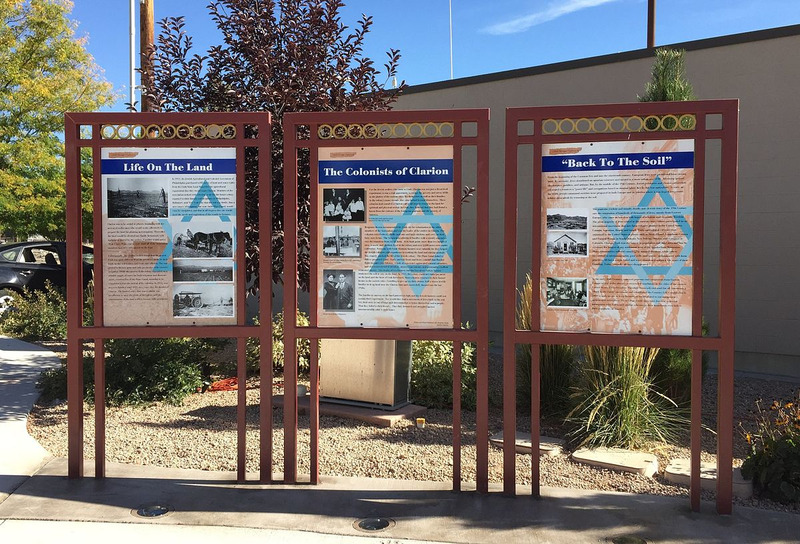
    <title type="html"><![CDATA[Clarion’s Jewish Utopian Colony ]]></title>
    <summary type="html"><![CDATA[<p><strong><em>In 1911, 12 Jewish immigrants all under the age of 30 started a colony in Utah. Three miles west of Centerfield and 135 miles south of Salt Lake City, the Clarion Jewish Colony was built on dreams and a lack of water. Although the colony lasted a meager 5 years, the ideas on which it was built still inspire many Jews today. </p></strong></p><img src="https://www.intermountainhistories.org/files/fullsize/40a37f08293220976a3f8bac306f5eab.jpg" alt="Kiosk in Gunnison, Utah describing the Clarion Colony." /><br/><p>The group moving west consisted of Russian Jews, all under 30, who had lived in the United States for less than five years. Poor, but not poor in spirit, these immigrants wanted to leave their economic situation behind and build a life that would bring them stability and also inspire other Jews. Led by Benjamin Brown, Clarion, Utah was part of the Jewish “Back to the Soil Movement” that founded over 40 agricultural settlements in America, Argentina, Canada, and Israel. </p><p>The “Back to the Soil Movement” was created in an effort to convince the world to move away from anti-Semitic views, build Jew’s confidence in themselves, and facilitate acceptance between Jews and Christians by establishing themselves as an agrarian society. Because of these visionary beliefs and the overt call to action for Jewish people, Utah’s settlement was named “Clarion.” </p><p>After 12 men went early to begin work on their 6,000 acre piece of land, the rest of the colony came over in waves of about fifty people. Peak population for Clarion reached about 155 residents within the first few years. But, despite the rising population, the colony faced years of continually failing crops.. Lack of water, bad weather, and no previous farming experience combined to create fruitless growing seasons and failed crops. Ultimately, only 1,500 of the 6,000 purchased acres were developed. Even today, much of the soil near Clarion is undependable and unused because of the lack of access to water. Despite these challenges, the Jewish colony’s vision pushed them on. It wasn’t until 1916 that the Clarion Colony finally fell apart. The Salt Lake City Jewish community helped stranded Jews from the colony by purchasing train tickets for those who wanted to return to the East Coast. </p><p>Clarion today is a ghost town. All that remains of Jewish utopia are some crumbling foundation stones and the headstone of Aaron Binder on whose tomb both Hebrew and English is inscribed. Benjamin Brown, the leader of the migrant party, was one of the few people that stayed in Clarion even after it’s collapse. He continued to farm and later organized the Utah Poultry Association. Although the colony failed, many of the descendants of colony members look back to those memories, journals, and stories with respect and reverence. The sacrifice of the Clarion colony members proved to many Jews that getting closer to soil helped them get closer to God. </p><p>The Clarion colony was just a small part of the Jewish history of Utah. Utah is now home to over 3,500 Jews. The Jewish legacy in Utah is over 200 years old and is widely varied. A Jewish daguerreotypist traveled with John C. Fremont in 1820 and was one of the first recorded explorers to enter Utah. Later, Simon Bamberger became the fourth governor of Utah in 1917. Clarion, despite its short life compared to the stable history of Jews in Utah, deserves to have it’s story told and it’s people celebrated for their sacrifice, faith, and vision. </p><p><em><strong><a href="https://www.intermountainhistories.org/items/show/449">For more (including 4 images) view the original article</a></strong></em></p>]]></summary>
    <published>2020-10-31T09:14:25+00:00</published>
    <updated>2026-04-17T19:32:09+00:00</updated>
    <link rel="alternate" type="text/html" href="https://www.intermountainhistories.org/items/show/449"/>
    <id>https://www.intermountainhistories.org/items/show/449</id>
    <author>
      <name>Josie Manwill, Brigham Young University</name>
    </author>
  </entry>
</feed>