<?xml version="1.0" encoding="UTF-8"?>
<feed xmlns="http://www.w3.org/2005/Atom">
  <title type="text">Intermountain Histories</title>
  <updated>2026-08-18T15:52:41+00:00</updated>
  <generator uri="http://framework.zend.com" version="1.12.20">Zend_Feed_Writer</generator>
  <link rel="alternate" type="text/html" href="https://www.intermountainhistories.org/"/>
  <link rel="self" type="application/atom+xml" href="https://www.intermountainhistories.org/items/browse?output=rss2"/>
  <id>https://www.intermountainhistories.org/</id>
  <author>
    <name>Intermountain Histories</name>
    <uri>https://www.intermountainhistories.org</uri>
  </author>
  <link rel="hub" href="https://pubsubhubbub.appspot.com/"/>
  <entry>
    <title type="html"><![CDATA[The Boone and Crockett Club&#039;s Connection with Theodore Roosevelt: Story 8 of 8 of the President Theodore Roosevelt in the West Tour]]></title>
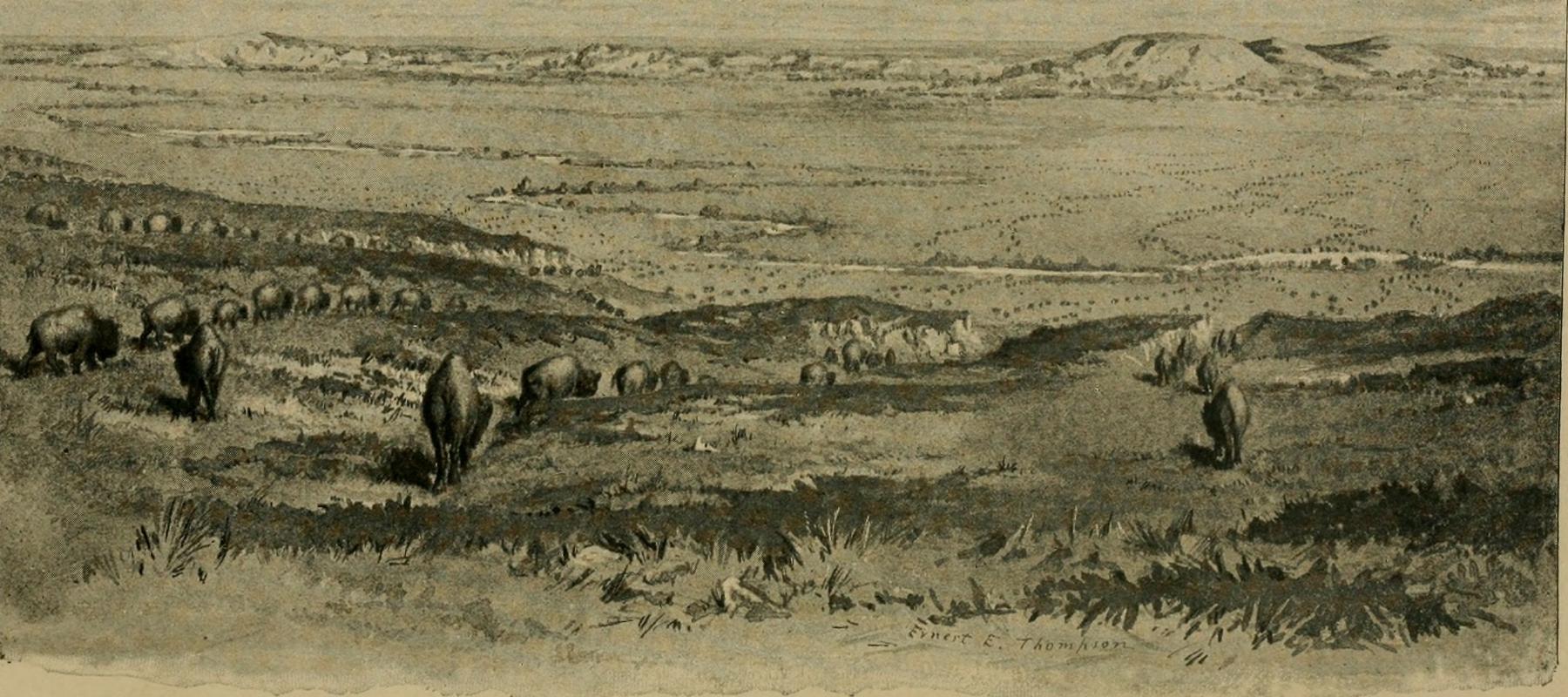
    <summary type="html"><![CDATA[<p><strong><em>By the late 1800s, Western sportsmen and settlers were hunting wildlife at such a rapid pace that many species risked extinction. Theodore Roosevelt recognized this and founded a club dedicated to conserving the land, resources, and wildlife for future generations.  </em></strong></p><img src="https://www.intermountainhistories.org/files/fullsize/31a977bb0a49566874be31d932edb7f7.jpg" alt="Artist’s depiction of big game in the American West in the late 19th century" /><br/><p>At the end of the 19th century, big game hunting became so popular that many wildlife populations faced extinction. Western railways increased access to previously remote regions, accelerating settlement. This Westward expansion also created a surge of irresponsible hunting for food, trophies, and improper land use. In 1883, on a trip to Little Cannonball Creek in Montana, Roosevelt enthusiastically hunted his first buffalo. Amid the thrill of this first-time accomplishment, he also reflected on the animal’s scarcity in his journal, “I watched the great beasts as they grazed...mixed with the eager excitement of the hunter was a certain half-melancholy feeling as I gazed on these bison, themselves part of the last remnant of a doomed and nearly vanished race.”
Like Roosevelt, many other sportsmen noticed how quickly wildlife in the West was disappearing. Determined to preserve his hobby and the land he loved, Roosevelt gathered fellow hunters to form the Boone and Crockett Club. Named after Daniel Boone and Davy Crockett, two famous frontiersmen and heroes of American expansion, the club advocated for the conservation and management of wildlife and habitat in the nation’s newest territories.
Founded on December 7, 1887, with the help of visionaries like George Bird Grinnell, Madison Grant, Gifford Pinchot, and 20 others, the club helped enact many legislative acts to protect and manage public lands. With their great influence, they initiated management regulations in the nation's first National Parks like Yellowstone, Glacier, and the Grand Canyon. They lobbied for federal laws that passed, including the 1891 General Revision Act (also known as the Forest Reserve Act), which enabled the President to withdraw forested lands from the public domain and offer them protections not guaranteed under previous legislation like the 1873 Timber Culture Act. This led to millions of acres being designated as “forest reserves” in the following two decades.
Roosevelt continued his efforts and spoke out about conservation when he was president with his annual address to Congress in 1907, saying, "Optimism is a good characteristic, but if carried to an excess, it becomes foolishness. We are prone to speak of the resources of this country as inexhaustible; this is not so." Educating the public, one of the club's biggest successes was the “Fair Chase” hunting ethic. This philosophy influenced game laws in the United States and created a system of data collection to monitor North American habitat health and big game populations today. Dedicated hunters and naturalists in the Boone and Crockett Club continually play a key role in balancing the well-being of the wild and the enjoyment of future generations. Roosevelt emphasized the importance in his book, My Life as a Naturalist, in 1918, “While my interest in natural history has added very little to my sum of achievement, it has added immeasurably to my sum of enjoyment of life.” He speaks for the wildlife as it cannot speak for itself.</p><p><em><strong><a href="https://www.intermountainhistories.org/items/show/925">For more (including 3 images) view the original article</a></strong></em></p>]]></summary>
    <published>2025-10-24T15:03:20+00:00</published>
    <updated>2026-08-18T15:52:41+00:00</updated>
    <link rel="alternate" type="text/html" href="https://www.intermountainhistories.org/items/show/925"/>
    <id>https://www.intermountainhistories.org/items/show/925</id>
    <author>
      <name>Jessika Cole, Brigham Young University</name>
    </author>
  </entry>
  <entry>
    <title type="html"><![CDATA[Hardware Ranch ]]></title>
    <summary type="html"><![CDATA[<p><strong><em>Hardware Ranch in Hyrum, Utah was created to keep elk away from the lower valley and its inhabitants. Today, the ranch is a popular spot for visitors to get a closer look at elk and other wildlife. </p></strong></p><img src="https://www.intermountainhistories.org/files/fullsize/f81afce9790f5a0a5591caf762da95b5.jpg" alt="An Elk in Hardware Ranch" /><br/><p><span style="font-weight:400;">In the 1940s, complaints from people in the valley of the Blacksmith Fork Canyon about elk eating their stores of hay began to be more frequent. This prompted the state of Utah to purchase the Hardware Ranch to prevent elk from entering the lower parts of the Blacksmith Fork Canyon and interfering with the settlers in the valley of inner Hyrum. The state then created the winter feeding program to keep elk out of the valley. </span>
<span style="font-weight:400;">Before the ranch was a place for Elk to receive food and refuge during the winter, it was a sawmill during the 1870s, then later home to Utah’s largest Cheese company during the 1890s. Lehi Curtis, who homesteaded the ranch during the late 1860s, was part of the 16th Company of pioneers who emigrated to Utah. The company was led by Lehi’s father Uriah Curtis and had a total of 266 members; it traveled from Kanesville, Iowa in 1852 to Cache County, Utah. Upon arriving at Cache Valley, Lehi helped plan out a road that lead to Blacksmith Canyon. Soon, farmers began to further settle the area. </span>
<span style="font-weight:400;">Hardware Ranch was purchased 8 years after the Pittman-Robertson Act was passed. The act, also known as the Wildlife Restoration Act, allowed for revenue from the sporting arms tax to be used as for restoring and managing wildlife. In 1945, the revenue was used to purchase the Ranch from the family estate of Ernst Lorentz Petersen. The original size of the ranch was 7,560 acres but acquisitions by the state enlarged it to about 19,000 acres.During the first year, 120 Rocky Mountain Elk were fed through the winter. Within a few years the number of elk rose to above 500. </span>
<span style="font-weight:400;">In 1971, The state built an education center with two outside viewing areas to observe the elk. Sleigh rides were also provided to further enjoy the ranch and the local elk. In 1988, the Utah Legislature cut funding support for the sleigh rides. Outrage led the state to approve a fee structure and the sleigh rides resumed.</span>
<span style="font-weight:400;">Although the purpose of the ranch was initially to prevent the Elk from eating the hay from the settlers and to keep the elk out of the lower valley, the ranch has become a popular site in Utah and has had thousands of visitors since its opening. People can bring their children to have very close interactions with the Elk and learn about the history of the Ranch. The ranch also provides researchers with vital information in the preservation of wildlife. </span>
<span style="font-weight:400;">The elk is the state animal of Utah. Once winter forage grasses are covered in snow, Division of Wildlife Resources stadd begin feeding the elk. The feed is grown by the ranch. Soon, between 400 and 700 animals migrate to the ranch for the winter. </span></p><p><em><strong><a href="https://www.intermountainhistories.org/items/show/691">For more (including 5 images) view the original article</a></strong></em></p>]]></summary>
    <published>2022-11-03T15:08:01+00:00</published>
    <updated>2026-04-17T19:32:15+00:00</updated>
    <link rel="alternate" type="text/html" href="https://www.intermountainhistories.org/items/show/691"/>
    <id>https://www.intermountainhistories.org/items/show/691</id>
    <author>
      <name>Rosa Rodriguez, Weber State University</name>
    </author>
  </entry>
  <entry>
    <title type="html"><![CDATA[Grand Old Man of the Mountains: Dave Lewis <br />
]]></title>
    <summary type="html"><![CDATA[<p><strong><em>David Lewis had a propensity for hunting predatory animals, especially cougars, and amassed himself a reputation amongst hunters traveling through Idaho for his skills, affable personality, and hospitality. </em></strong></p><img src="https://www.intermountainhistories.org/files/fullsize/ffc8838450af1319b498822a417d999b.jpg" alt="Dave Lewis with dog and black bear" /><br/><p>David Lewis was a renowned hunter in his time (1844/1855-1936) who other hunters across the West knew as “Uncle Dave,” but today he is regularly referred to as “Cougar Dave” in honor of his cougar and other animal hunting prowess. </p><p>Not much is known about Lewis’s early life due to being a private man. Even his exact age is unclear, as Lewis periodically lied about it depending on who was asking, but most accounts put his birth year as 1844 in New Orleans, Louisiana. However, there is compelling evidence to indicate that he was actually born in 1855 in Yoncalla, Oregon.  Lewis’s parents travelled to Willamette Valley along the Oregon Trail in the 1850s. Lewis claimed to have been at the Siege of Vicksburg for the Union Army with James “Wild Bill” Hickok, but he would have been 7 at the time. Later, he served at the Battle of Little Bighorn as a scout under Captain Frederick Benteen. During the Sheepeater Campaign of 1879, Lewis was the packer in charge of the two-mule ammunition train and the brief war was his first experience in the area. </p><p>Lewis had a particular hatred for cougars, and he began his long career of cougar hunting soon after the Sheepeater Campaign, and by 1888 he had earned himself the reputation of “Cougar Dave” for his talents. The Forest Service hired Lewis as a “Forest Guard (Hunter)” on April 1, 1910, for “the destruction of the animals on the Forest” for what should have been a two-month stint became his job for several years. </p><p>Forest management practices and beliefs of the time treated predatory animals, such as wolves, coyotes, foxes, bears, and cougars, as threatening to game in the forest. Dominant policy of the time meant that exterminating predatory animals would protect the wildlife that humans valued, including mule deer, elk, bighorn sheep, and mountain goats. His reputation for hating and killing cougars was reflected in local tall-tales, where in one legend it is claimed that Lewis treed a cougar, dropped his rifle to climb after the cat, and wrestled it out of the tree where it fell to his dogs waiting below. While Lewis never wrestled a cougar out of a tree, he reportedly went on to kill over 1,000 cougars in his lifetime.</p><p>Lewis fell in love with the region known today as the Frank Church-River of No Return Wilderness, but in his lifetime would eventually become known as the Idaho Primitive Area. In 1924, Lewis would later claim a 65-acre homestead along Big Creek seven miles upstream from the Middle Fork of the Salmon River, a land he first experienced during the Sheepeater Campaign. After catching pneumonia Lewis travelled 33 miles from his homestead to his nearest friend. He was then taken to the Boise’s Veteran’s Hospital over 100 miles away. He passed away the next day. The Idaho Statesmen had this to say about Lewis’s death, “Old age closed Friday morning the career of Dave “Cougar Dave” Lewis, nationally famous cougar killer and Idaho’s grand old man of the mountains.”</p><p><em><strong><a href="https://www.intermountainhistories.org/items/show/301">For more (including 4 images) view the original article</a></strong></em></p>]]></summary>
    <published>2019-02-13T11:12:08+00:00</published>
    <updated>2026-04-17T19:32:05+00:00</updated>
    <link rel="alternate" type="text/html" href="https://www.intermountainhistories.org/items/show/301"/>
    <id>https://www.intermountainhistories.org/items/show/301</id>
    <author>
      <name>Burgundy Johnson, University of Wisconsin Oshkosh</name>
    </author>
  </entry>
</feed>
