<?xml version="1.0" encoding="UTF-8"?>
<feed xmlns="http://www.w3.org/2005/Atom">
  <title type="text">Intermountain Histories</title>
  <updated>2026-04-17T19:32:20+00:00</updated>
  <generator uri="http://framework.zend.com" version="1.12.20">Zend_Feed_Writer</generator>
  <link rel="alternate" type="text/html" href="https://www.intermountainhistories.org/"/>
  <link rel="self" type="application/atom+xml" href="https://www.intermountainhistories.org/items/browse?output=rss2"/>
  <id>https://www.intermountainhistories.org/</id>
  <author>
    <name>Intermountain Histories</name>
    <uri>https://www.intermountainhistories.org</uri>
  </author>
  <link rel="hub" href="https://pubsubhubbub.appspot.com/"/>
  <entry>
    <title type="html"><![CDATA[MEDL, Flagstaff, AZ: The People Want Trails]]></title>
    <summary type="html"><![CDATA[<p><strong><em>The Mount Elden Dry Lake Hills trail system north of Flagstaff, AZ, traces its legacy of use closely with the history of the city. Dedicated in 1987, the network has steadily grown through community initiatives in cooperation with the Forest Service in Coconino National Forest to over 100 miles of trail. The proximity to town and rugged terrain give the illusion of a backcountry experience in an accessible frontcountry setting while the repurposing of game trails, sheepherding trails, fire breaks, and transportation lines maintains a connection to Flagstaff’s past.</em></strong></p><img src="https://www.intermountainhistories.org/files/fullsize/48b5ffa5c2b75a1821ff98ce917ee2a7.jpg" alt="Sunset Trail No. 23, Mount Elden" /><br/><p>As mountain biking developed around Marin County, CA, from the outfitting of WWII era “balloon tire” bikes with knobby tires and better brakes to more specialized equipment, two-wheeled recreation also began to take hold in the mountains and forests near Flagstaff, AZ. A local motorcycle club, the Coconino Motorcycle Trail Riders, connected remnants of the original Schultz Pass Road into a unified trail running up Schultz Creek in the 1970’s. When bicycle manufacturers began bringing bespoke mountain bikes to the market in the early 1980’s, Flagstaff’s existing cycling culture made for a quick uptake of the new machines. Mechanic Steve Garro of local shop Cosmic Cycles and the counterculture mountain bike racing team The Mutants joined other hobbyists to set about exploring the higher elevations accessible by Schultz Pass and Elden Lookout roads.
A series of disused wagon routes from the early 1900’s, old communications lines servicing the first lookout towers, fire breaks from the 1977 Radio Fire, and the plethora of livestock and game trails on the slopes were connected to unify the upper elevations of Mount Elden with the lower Dry Lake Hills to the west. As the trail network grew and diversified, so did the user base and rate of conflict. Many trails were closed to mountain bike access after unfavorable interactions with hikers and equestrians. After the forest service officially dedicated the Mount Elden Dry Lake Hills trail system in 1987, local advocacy groups successfully lobbied to restore mountain bike access and employed a code of conduct wherein cyclists were to yield to hikers or equestrians. 
As mountain bikes modernized into the 2000’s and usage expanded, MEDL supervisors recognized that mitigation of environmental damage induced by increased traffic was necessary. In 2006, the Flagstaff Bicycle Organization began advocating for directional downhill trails in the MEDL network to minimize hiker-biker interactions. Following the Schultz Fire in 2010, the forest service advanced a comprehensive trail planning scheme accounting for fire risk, endangered species protection, reduced user conflict, and local quality of life improvement. The proposed MEDL trail plan specifically focused on environmental protection and improved recreational access for residents over tourism.
Though delayed by thoughtful debate with groups like the Sierra Club, and the Museum Fire in 2019 that burned existing paths and planned expansion, the realignment of several traverses on erosive slopes in 2020 proved the venture worthwhile. The subsequent effort between the forest service and volunteer mountain bike, trail running, and motorcycle groups to professionally mark and build sustainable routes across the MEDL network garnered community support. The ongoing project has improved or created over twenty-five miles of trail since 2022 including the first sanctioned, directional mountain bike trails in Flagstaff – called Meteoride and Full Sail. The city’s assets in the sciences and passionate volunteer advocacy groups have allowed for thorough planning in current and future trail building that is as mindful of the protection of the mountain’s fragile ecology as it is of the improved quality of life that outdoor recreation can bring the community.  </p><p><em><strong><a href="https://www.intermountainhistories.org/items/show/906">For more (including 4 images) view the original article</a></strong></em></p>]]></summary>
    <published>2025-09-23T15:36:55+00:00</published>
    <updated>2026-04-17T19:32:20+00:00</updated>
    <link rel="alternate" type="text/html" href="https://www.intermountainhistories.org/items/show/906"/>
    <id>https://www.intermountainhistories.org/items/show/906</id>
    <author>
      <name>Nicholas Nation, Northern Arizona University </name>
    </author>
  </entry>
  <entry>
    <title type="html"><![CDATA[Americana Motor Hotel, Flagstaff, AZ]]></title>
    <summary type="html"><![CDATA[<p><strong><em>The Americana Motor Hotels is a cheerful example of retro-futurism alive in the present day. Flagstaff’s Americana Motor Hotel was built in 1962 and has since been refurbished in a way that elevates its original googie style.</em></strong></p><img src="https://www.intermountainhistories.org/files/fullsize/699dd2f0b3b197001f35f600c1c499cb.jpg" alt="The sign of the Americana Motor Hotel is the embodiment of the googie aesthetic" /><br/><p>The Americana Motor Hotel in Flagstaff, Arizona is a brightly colored testament to the survivability of the Googie aesthetic in the modern day. The Americana Motor Hotel was built on the outskirts of in 1962. Located at 2650 East Route 66, the Americana has provided accommodations for tired motorists for the past sixty-three years. Its technicolor colors and avante garde shapes are a textbook example of the googie aesthetic.
     The colors, starbursts, aesthetics and origin of the American Motor Hotel situate firmly as an example of Googie architecture. The first thing a traveler to the Americana Motel Hotel sees is its striking sign that exemplifies the googie look. Vibrant pinks, greens, tangerine orange, and banana yellow come together in the sign’s neon starbursts and a stylized outline of the mountains that ensconce the city. The porte-cochère at the lobby of the motel is emblazoned with neon yellow and orange stripes that wrap around the dark blue paint of the roof. Oranges, blues, and nearly every other color of the rainbow collide in a cacophony of geometric shapes and lines on the walls and carpet of the lobby. Outside of the lobby on the far side of the porte-cochère there is an installation of aluminum wind art sculptures that whirl happily in the Arizona breeze. The two levels of hotel rooms that stretch out behind are similarly adorned in the vibrant colors that make up the themes of the hotel and all eighty-eight suites face towards a central recreation area with a large pool with the logo of the motel painted at the bottom.
     Googie architecture rose to prominence in the mid-century and is characterized by a commitment to futuristic designs, geometric shapes, neon and bright colors. This style of architecture is most commonly found in the Southwestern United States and often coincides with the arterial mother road of Route 66. Googie designs often feature the same bright colors, futuristic starbursts, and aluminum details that decorate the Americana and the hotel leans heavily into its mid-century themes.
     The Americana Motor Hotel was once Flagstaff’s largest motel and had provided a respite to the stars who passed through on Route 66 in the mid-century. The motel originally had a large dining room and 24 hour coffee bar during its heyday, but as the years wore on the facade of the hotel began to exhibit wear and tear. In 2021 the property was bought by Americana Hotel Ventures for $7.37 million dollars. After extensive renovation efforts the motel re-opened with a fresh redesign that honored the original design and spirit of the motel. Since its re-opening the Americana has become a well loved traveler’s retreat on Route 66 once again. Bright colors, atomic starbursts, and neon details all hearken back to the motel’s beginning while drawing in a new generation of travelers. The motor hotel connects visitors with a nostalgic space-age future and helps to keep googie and mid-century architecture from belonging to an ephemeral past.</p><p><em><strong><a href="https://www.intermountainhistories.org/items/show/903">For more (including 5 images) view the original article</a></strong></em></p>]]></summary>
    <published>2025-09-23T15:36:02+00:00</published>
    <updated>2026-04-17T19:32:20+00:00</updated>
    <link rel="alternate" type="text/html" href="https://www.intermountainhistories.org/items/show/903"/>
    <id>https://www.intermountainhistories.org/items/show/903</id>
    <author>
      <name>Emily MacDonell, Northern Arizona University</name>
    </author>
  </entry>
  <entry>
    <title type="html"><![CDATA[Dookó’oslííd: San Francisco Peaks]]></title>
    <summary type="html"><![CDATA[<p><strong><em>The San Francisco Mountains have been sacred to many Indigenous peoples for centuries. Competing land-use approaches have resulted in conflict and court battles.</em></strong></p><img src="https://www.intermountainhistories.org/files/fullsize/2d0a9632ef2c9302b5c371c74f1cca0d.jpg" alt="Ski Lift at the Arizona Snowbowl. " /><br/><p>The San Francisco Mountains are located ten miles north of present-day Flagstaff, Arizona and include Humphreys Peak, the tallest in the state. Formed as a stratovolcano from 2.8 million to 200,000 years ago, erosion eventually carved the eastern side of the rim away, leaving a semi-circular ridge line of peaks that rise above the timberline. The range includes the San Francisco Volcanic Field, which covers about 1,800 square miles in northern Arizona. </p><p>The mountain peaks hold sacred significance for thirteen Indigenous nations in the Southwest, including the Diné (Navajo), Hualapai, Hopi, Southern Paiute, Havasupai, Yavapai, Zuni, Acoma, and several Apache tribes. The Diné regard the San Francisco peaks (Dookó’oslííd in Diné) as the western boundary of Dinetah, or Navajo homeland. For the Diné, the sacred peaks connect cosmology to the physical world and spiritual power to their people. In traditional Diné culture, the peaks were created by First Man and imbued with an inner spiritual form known as bii’istiin. Each of the sacred boundary mountains has an associated color full of history and significance, such as yellow for the San Francisco mountains.</p><p>The peaks not only occupy a central place in cosmological narratives, they also play a vital role in medicinal and ceremonial practices in daily life. The mountains’ spiritual nature requires that they can only be ascended in a respectful way that includes prayer and song. Healers visit the mountains to collect soil and materials for medicine bundles, and to renew spiritual powers. Diné spiritual leaders regularly invoke the powers of the mountains in ceremonies across Dinetah.</p><p>The spiritual significance that the San Francisco mountains have for the Diné and other Indigenous peoples collide with Euro-American approaches to the land. In the 1800s American settlers began grazing livestock on the mountains’ slopes, including the Mormon-run cattle company at Fort Moroni. In 1908, Theodore Roosevelt designated the peaks as National Forest land and, in 1920, a Flagstaff entrepreneur began building a road to the top of the peaks for tourists. In 1938, the Forest Service leased land to entrepreneurs who created a ski resort called the Arizona Snowbowl, which has been in operation ever since. </p><p>An ongoing controversy began in 2002 when the Snowbowl announced plans to expand the resort and create artificial snow using reclaimed wastewater. After years of pushback, a 2007 court of appeals ruled in favor of the Diné who sued the Forest Service over using reclaimed water. The court reversed their religious rights decision a year later. In 2012, an appeals court ruled in favor of the resort against the wishes of the Hopis, and artificial snowmaking commenced. In 2022, after years of snowmaking, a proposed 60 millionaire dollar expansion led to increased tribal resistance that is presently ongoing. </p><p><em><strong><a href="https://www.intermountainhistories.org/items/show/847">For more (including 2 images) view the original article</a></strong></em></p>]]></summary>
    <published>2024-09-21T06:01:37+00:00</published>
    <updated>2026-04-17T19:32:19+00:00</updated>
    <link rel="alternate" type="text/html" href="https://www.intermountainhistories.org/items/show/847"/>
    <id>https://www.intermountainhistories.org/items/show/847</id>
    <author>
      <name>George Smith, Brigham Young University</name>
    </author>
  </entry>
  <entry>
    <title type="html"><![CDATA[Sabotage at the Arizona Snow Bowl, 1987]]></title>
    <summary type="html"><![CDATA[<p><strong><em><span style="font-weight:400;">After an eco terrorist fringe organization orchestrated attacks on an Arizona ski resort and power plants throughout the Southwest, FBI undercover agents spent years infiltrating the group.</span></em></strong></p><img src="https://www.intermountainhistories.org/files/fullsize/69a4f22b3aed687abecaee3f9b6eceb4.jpg" alt="Fall Color Scenic Skyride at the Arizona Snowbowl" /><br/><p><span style="font-weight:400;">On the morning of November 7, 1987, members of the eco terrorist group EMETIC carried out an attack on the Fairfield Snow Bowl Ski Resort north of Flagstaff, Arizona. Using propane torches, they cut through cables that supported the main ski lift. The resort was closed in preparation for its winter opening, and the sabotage resulted in no casualties. Snow Bowl officials estimated damages at $26,0000 with an additional $30,000 spent on added security measures. Employees at the Snow Bowl received a computer-generated letter from EMETIC taking credit for the attack. The letter warned to either discontinue ski operations and allow trees to grow back or suffer another sabotage, also referencing that development encroached on sacred indigenous land. On October 25, 1988, a similar attempt occurred. An EMETIC member used a torch to cut through a main support for the cable lift, then called into a local radio station claiming responsibility.</span>
<span style="font-weight:400;">EMETIC (Evan Mecham Eco Terrorist International Conspiracy) was a group comprised of individuals from Prescott, Arizona associated with the </span><span style="font-weight:400;">Earth First!</span><span style="font-weight:400;"> environmental group. The group's name served as a sarcastic reference to right-wing then-governor of Arizona Evan Mecham. Although they had participated in </span><span style="font-weight:400;">EF</span><span style="font-weight:400;">! activities, members of EMETIC believed much more radical direct action was necessary to protect the planet. In 1989, the group plotted to cut electrical transmission lines to nuclear power stations in Arizona, Colorado, and California. On the night of May 30, the FBI arrested three members of EMETIC while they were doing a test run of cutting down a power line tower of the Central Arizona Project canal. Early the next morning, agents arrested </span><span style="font-weight:400;">EF</span><span style="font-weight:400;">! co-founder Dave Foreman in connection to the conspiracy. The FBI indicted a fourth EMETIC member six months later. In 1991, federal courts convicted the ecoterrorists of the attack on the Snow Bowl and planned attacks on the nuclear power plants. Foreman’s charges were separated and later dropped to a misdemeanor, as it was apparent that he was not connected to the ecoterrorist activities.</span>
<span style="font-weight:400;">After the 1987 Snow Bowl incident, the Federal Bureau of Investigation launched THERMCON, an operation to investigate </span><span style="font-weight:400;">Earth First</span><span style="font-weight:400;">! in Arizona. Between 1987 and 1989, undercover agents infiltrated EMETIC and monitored ecoterrorist activity. Ron Fraizer, a friend of the group, worked as a paid informant for the FBI in that time. Agents secretly recorded hundreds of hours of conversations with activists. Following the arrests, </span><span style="font-weight:400;">Earth First</span><span style="font-weight:400;">! members accused the FBI of attempting to undermine their organization by connecting their leaders to extremist activity. </span><span style="font-weight:400;">EF</span><span style="font-weight:400;">! leader Judi Bari alleged that the FBI undercover agents entrapped the members of EMETIC and unsuccessfully tried to convince them to use explosives in sabotage, which agents repeatedly offered to supply. Michael Fain, the undercover agent who infiltrated the group, was allegedly caught on tape saying they needed to bust Dave Foreman to send a message. However, the federal government continued to emphasize the danger of eco terrorist groups and the necessity of operations like THERMCON for national safety.</span></p><p><em><strong><a href="https://www.intermountainhistories.org/items/show/836">For more (including 3 images) view the original article</a></strong></em></p>]]></summary>
    <published>2024-05-27T15:58:41+00:00</published>
    <updated>2026-04-17T19:32:18+00:00</updated>
    <link rel="alternate" type="text/html" href="https://www.intermountainhistories.org/items/show/836"/>
    <id>https://www.intermountainhistories.org/items/show/836</id>
    <author>
      <name>Emily Roth, Northern Arizona University</name>
    </author>
  </entry>
  <entry>
    <title type="html"><![CDATA[Everett Ruess at Veit Springs near Flagstaff, Arizona]]></title>
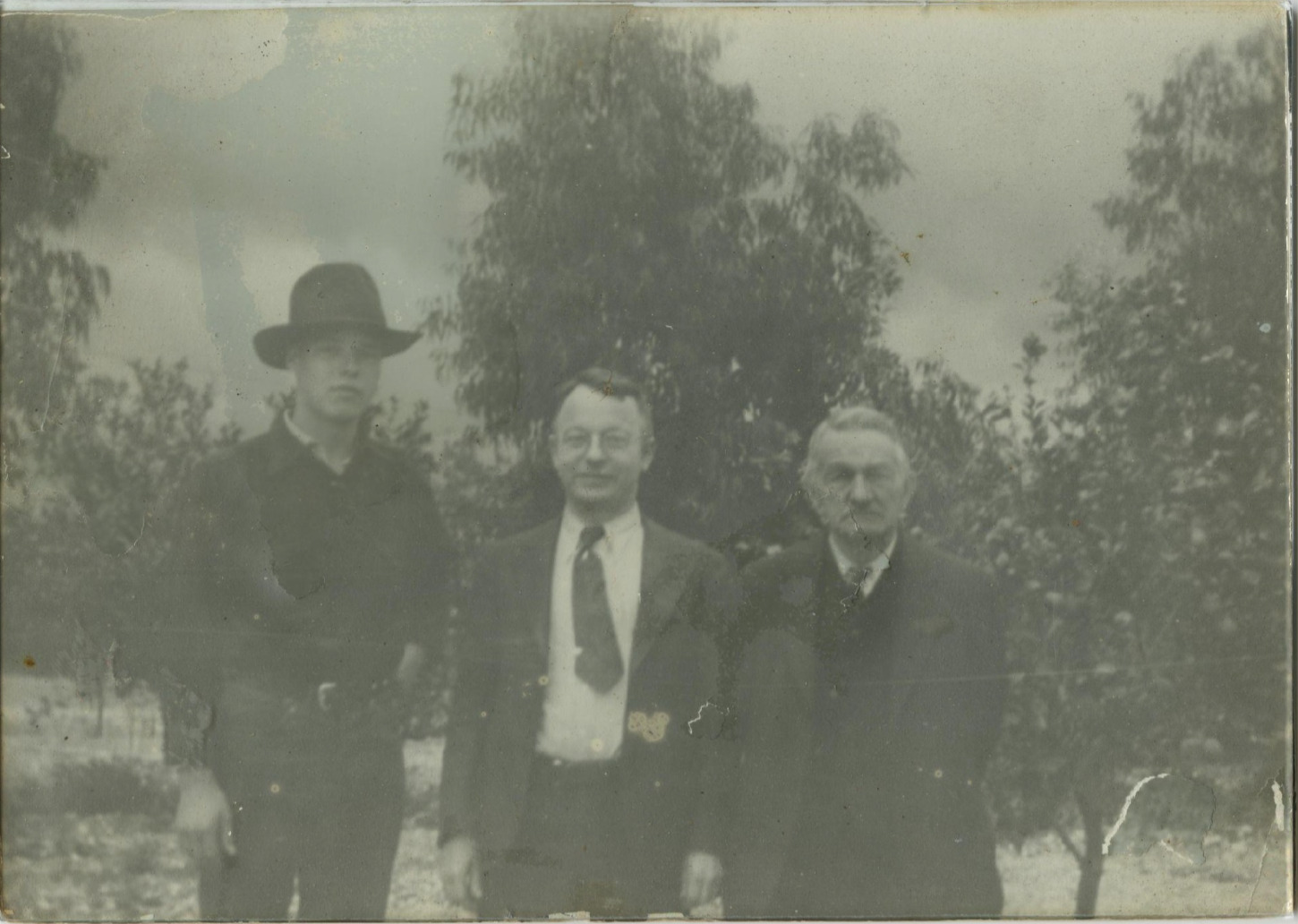
    <summary type="html"><![CDATA[<p><strong><em>Serving as a homestead and a later rest stop for Everett Ruess' introduction to the Intermountain West as a solo traveler, Veit Springs rests on the side of Arizona's highest mountain, the San Francisco Peaks.</em></strong></p><img src="https://www.intermountainhistories.org/files/fullsize/010f42c0309f906e6329d5c5d348784e.jpg" alt="Everett Ruess with his father and grandfather" /><br/><p>Just north of Flagstaff, Arizona sits in the San Francisco Peaks, or "Dook'o'oosłííd," <em>The Summit that Never Melts</em>, to the Navajo Nationa. In the year 1891, German immigrant Ludwig Veit received a patent for a 160-acre homestead where he and his family constructed a cabin and other structures at what came to be called Veit Springs. Randolph (Pat) Jenks, a student at the Evans Ranch School, a boys preparatory school in Mesa, Arizona, purchased the property from Veit’s relatives in 1930. Jenks, and his classmate Tad Nichols, enjoyed their summers in Flagstaff when the school summered up North. In 1931 the two boys encountered Everett Ruess on his journey through northern Arizona, inviting him to join them back on the homestead. </p><p>Everett Ruess was seventeen when he was picked up near Cameron, Arizona, by Jenks and Nichols. Everett was in bad shape, suffering from his history of anemia and other physical degradation from the desert environment. Tad Nichols, famous photographer of the Colorado Plateau, snapped a photo of Everett and Pat loading his gear, his dog Curly, and Burro Pegasus, into Jenks’ truck before they all set on their way to Jenks’ Deerwater Ranch on the San Francisco Peaks. While Everett was at Veit Springs, he bonded with Jenks over his love for ornithology, the study of birds, and their mutual love for art and the Southwest. Everett created a block print painting and described Jenks’ fascination with his art in a letter home. In fact, Jenks was intrigued enough to purchase one of Everett’s block prints of some native Cliff Dwellings. He enjoyed his new friends and wrote a letter about his “idyllic days” at Deerwater Ranch. Here, Everett escaped the traditional aridness of the Intermountain West and described the environment of the ranch as “cool and bracing” in a letter to his family on June 8th, 1931. Among Everett’s belongings in Davis Gulch was an unsent letter that expressed his “true spirit of delight, exaltation, [and] sense of being more than a man” that he experienced at Veit Springs. </p><p>Everett later traversed the Grand Canyon and resided throughout northeast Arizona, returning home later that year. He set off again to the region in 1932, one of the only years his journey was successfully documented. </p><p>In the 1970s, The United States Forest Service aimed to demolish the cabin Veit hand-built, but the Flagstaff community successfully advocated for its relocation just west of the city's downtown. The Veit Cabin relocation by the Arizona National Guard moved the cabin to its current position within Thorpe Park in Flagstaff, Arizona, just South of Francis Short Pond. Since 1988, the new cabin location has facilitated educational events regarding natural and cultural studies of the landscape. Meanwhile, the cabin’s former site at Veit Springs remains a beautiful spot among the tall aspens on the Veit Springs Hiking Trail where tourists can experience the bracing environment that Everett described, as well as Indigenous petroglyphs and abandoned pumphouses from its early days in history.</p><p><em><strong><a href="https://www.intermountainhistories.org/items/show/829">For more (including 5 images) view the original article</a></strong></em></p>]]></summary>
    <published>2024-05-24T22:33:19+00:00</published>
    <updated>2026-04-17T19:32:18+00:00</updated>
    <link rel="alternate" type="text/html" href="https://www.intermountainhistories.org/items/show/829"/>
    <id>https://www.intermountainhistories.org/items/show/829</id>
    <author>
      <name>Matthew T. Lankton, Northern Arizona University</name>
    </author>
  </entry>
  <entry>
    <title type="html"><![CDATA[Suffrage at the Coconino County Courthouse in Flagstaff, Arizona]]></title>
    <summary type="html"><![CDATA[<p><strong><em>In 1912, the Arizona Territory became a state, and the Arizona Equal Suffrage Association invited prominent suffragette Anna Howard Shaw to visit the Coconino County Courthouse in Flagstaff to speak about women’s rights. Shaw, from Massachusetts, was a doctor, minister, and president of the National Women’s Suffrage League.</em></strong></p><img src="https://www.intermountainhistories.org/files/fullsize/6a7936a403c1c0c6baed9163ac721c1f.jpg" alt="Coconino Courthouse" /><br/><p>The United States created Arizona Territory by splitting New Mexico Territory in half in February 1863. Unlike some other western territories, Arizona forestalled legally granting women the right to vote or hold office, despite efforts by suffragists in 1881, 1883, and 1885. In 1891, after President Benjamin Harrison denied Arizona statehood and included equal suffrage law included in its proposed state constitution territorial suffragettes founded the Arizona Equal Suffrage Association, combining the fight for women’s rights with the continued fight for statehood. In February 1912, Arizona finally became a state under President William Taft; though the new state constituion did not immediately afford women the right to vote, the women of the Arizona Equal Suffrage Association saw the constitution’s initiative laws as an opportunity to continue the fight for women’s votes.
On October 18, 1912, the Arizona Equal Suffrage Association invited Dr. Anna Howard Shaw, president of the National Women’s Suffrage League, to visit Arizona and speak on the steps of the Coconino County Courthouse in Flagstaff. A month later, the initiative to introduce women’s suffrage to the ballot passed the legislature. On November 5, 1912, the state’s voters cast their ballots on the initiative, and the women’s suffrage initiative passed with a seventy percent majority victory, even with all of Arizona’s voters being men. This made the Arizona the tenth state to allow women to vote.
In April 2021, Coconino County unveiled a marker at the Flagstaff County Courthouse with the National Collaborative for Women’s History Site and Pomeroy Foundation to commemorate the centennial of women’s voting rights, marking the courthouse as a significant place for the history of women’s suffrage. Speakers that day included County Supervisors Matt Ryan and Patrice Hortsman as well as County Recorder Patty Hansen.</p><p><em><strong><a href="https://www.intermountainhistories.org/items/show/618">For more (including 3 images) view the original article</a></strong></em></p>]]></summary>
    <published>2022-06-23T08:45:45+00:00</published>
    <updated>2026-04-17T19:32:13+00:00</updated>
    <link rel="alternate" type="text/html" href="https://www.intermountainhistories.org/items/show/618"/>
    <id>https://www.intermountainhistories.org/items/show/618</id>
    <author>
      <name>Megan Salinas, Northern Arizona University</name>
    </author>
  </entry>
  <entry>
    <title type="html"><![CDATA[Dark Sky over Flagstaff]]></title>
    <summary type="html"><![CDATA[<p><strong><em>In 2001, Flagstaff, Arizona, became the first International Dark Sky City because of its long-term commitment to reducing outdoor light pollution without compromising safety.  The Colorado Plateau’s clear, dry air, cloudless nights, and distance from major cities has made Flagstaff a significant location for astronomy.</em></strong></p><img src="https://www.intermountainhistories.org/files/fullsize/ac2b6faa24e41544e57d8b18d3228661.jpg" alt="Night sky in Flagstaff" /><br/><p>Flagstaff’s history of dark sky conservation began even before the International Dark Sky City designation in 2001 when it issued the world’s first outdoor lighting ordinance in 1958. Lowell Observatory, founded in 1894 by Percival Lowell to study the surface of Mars, was concerned about how light pollution would limit the capacity of a reflecting telescope transferred from the Ohio Perkins Observatory. To protect astronomy, the Anti-Searchlight Law of 1958 passed to forbid the use of searchlights, common in advertising, within city limits.
However, light pollution levels kept rising in Flagstaff, even with the passing of a second lighting ordinance in 1972 requiring all outdoor lights be properly shielded and pointed downwards.  A shielded outdoor light has a surface or hood built in to prevent any light from escaping upwards or horizontally so the beam is directed at the ground. Fourteen years later, Tucson and Pima County updated their ordinances from 1973, and Lowell Observatory partnered with Flagstaff city planners to maintain Flagstaff’s status as an important site for astronomy.  In conjunction with the Arizona Public Service in 1987, Dr. Arthur Hoag from Lowell Observatory tested low-pressure sodium lights on Santa Fe Avenue in downtown Flagstaff as a method to reduce light pollution. With 90% approval from the public and evidence proving the new lights reduced the city’s light pollution, Flagstaff updated its lighting codes to mandate low-pressure sodium lights and ban mercury vapor light common in old streetlamps.  The amber hue of low-pressure sodium lights causes the least amount of sky glow, uses the least amount of energy to operate, and has the least impact on the natural rhythms of humans and nocturnal animals.  For astronomy, Christian Luginbuhl of the U.S. Naval Observatory documented that low-pressure sodium lights take up only two bands of the visible light spectrum, allowing astronomers to research within every other area of the light spectrum.
But in 1988, pressure from the Yellow Freight Company to allow higher levels of light pollution for a trucking yard near Lowell Observatory and the U.S. Naval Observatory Flagstaff Station split Flagstaff’s residents with arguments over economic and scientific interests.  The conflict ended in favor of continuing to reduce light pollution, and on September 26, 1989, the Flagstaff City Council enacted strict lighting codes for protecting Flagstaff’s unique natural. Yellow Freight withdrew from the city three years later.
The <em>Daily Sun</em> newspaper framed the clash over light pollution in Flagstaff as pitting money and jobs against scientific innovation and potential in the <em>Daily Sun</em> newspaper, but as time passed, the light ordinances did not harm Flagstaff’s economy.  In fact, the exceptional environmental conditions in Flagstaff grew the astronomical community with organizations such as the U.S. Naval Observatory and the U.S. Geological Survey contributing to a major tourism draw.  Residents and tourists alike interact with Flagstaff’s dark skies in different ways.  For example, the Flagstaff Star Party organizes every year with the help of astronomers Christian Luginbuhl and Jeff Hall from Lowell Observatory and helps residents and tourists learn how to observe the city’s dark skies  Another organization, the Flagstaff Dark Skies Coalition under Christian Luginbuhl, promotes music, art, and theater about Flagstaff’s skies in partnership with the Coconino Center for the Arts.
Flagstaff’s popular culture has grown to include the dark sky it is deeply proud of. In 2001, Flagstaff received an International Dark Sky City designation thanks to its conservation efforts and appreciation for a rare natural resource in the age of urban expansion.</p><p><em><strong><a href="https://www.intermountainhistories.org/items/show/540">For more (including 4 images) view the original article</a></strong></em></p>]]></summary>
    <published>2021-11-14T01:29:49+00:00</published>
    <updated>2026-04-17T19:32:11+00:00</updated>
    <link rel="alternate" type="text/html" href="https://www.intermountainhistories.org/items/show/540"/>
    <id>https://www.intermountainhistories.org/items/show/540</id>
    <author>
      <name>Emma Svenson, Northern Arizona University</name>
    </author>
  </entry>
  <entry>
    <title type="html"><![CDATA[The Weatherford Hotel]]></title>
    <summary type="html"><![CDATA[<p><strong><em>The Weatherford Hotel, found in the mountain city of Flagstaff, Arizona, served as a stop along the Atlantic and Pacific Railroad in the late-nineteenth century. Boosters realized that increased traffic was an opportunity to sell supplies and entertainment.  </em></strong></p><img src="https://www.intermountainhistories.org/files/fullsize/d6af7fc7b3f6d6e0e3d883e099ce293d.jpg" alt="The Weatherford" /><br/><p>Originally from Weatherford, Texas, John Weatherford traveled to Flagstaff in 1882 as a merchant hoping to sell goods to those who came through the town. By 1887, Weatherford became Justice of the Peace and a prominent member of local society. His brother, P.R. Weatherford, was also an entrepreneur who worked as a clerk for the Babbitts, a prominent ranching and merchant family. The Weatherford brothers’ first idea was to build a general store, but after the Babbitt family bought them out, they discovered a different way to contribute to the growing town: opening a hotel. The Weatherford Hotel had its grand opening on January 1, 1900.
The Weatherford Hotel’s architecture has gone through some physical transformations since its opening day. The hotel is made of brick and faced with local red sandstone due to a city ordinance passed in 1897 after a series of bad fires. The building’s original roof line was modeled after the Greek revival style with a denticulated cornice (the detailed molding along the exterior) and two pediments (an area supported by columns) that were fashionable in the early to late nineteenth century. In its earliest days, the ground floor contained a general store and storage room. The second floor had a parlor and eight bedrooms and one shared bath. The Weatherfords built an additional section to the southwest side of the building in 1899 and a sidewalk in 1915, and these renovations helped keep the hotel appealing to guests. The owners continued building guest rooms to accommodate more visitors as the population of travelers grew. 
Between the 1920s and the 1970s, the hotel declined after multiple fires damaged the facility. For a time, Henry Taylor and Sam leased the hotel from the Babbitt family to house and rehabilitate state psychiatric patients, and they bought the building in 1975. In the 1980s, the hotel was used as a youth hostel. Taylor said he “bought the hotel with the vision that downtown would come back.” What he meant was similar to the Weatherfords’ original vision to help the town grow. Taylor saved the building from demolition and restored the building to restore it as a hotel.
Today, the hotel’s structure is the result of the owners’ ambitions to revitalize Flagstaff’s historic district. However, the purpose of the hotel is not only to embody a piece of the past, but also to serve the present, as the hotel still functions as a social setting. On New Year’s Eve, the town of Flagstaff comes out to witness the hotel’s giant pinecone, lit with LED lights, drop once the clock strikes twelve. Even without a holiday, locals and visitors can go to any of the three pubs inside the building (Charly’s, the Zane Grey Ballroom, and the Gopher Hole).</p><p><em><strong><a href="https://www.intermountainhistories.org/items/show/530">For more (including 5 images) view the original article</a></strong></em></p>]]></summary>
    <published>2021-10-22T23:11:44+00:00</published>
    <updated>2026-04-17T19:32:11+00:00</updated>
    <link rel="alternate" type="text/html" href="https://www.intermountainhistories.org/items/show/530"/>
    <id>https://www.intermountainhistories.org/items/show/530</id>
    <author>
      <name>Nova Jesswein, Northern Arizona University</name>
    </author>
  </entry>
  <entry>
    <title type="html"><![CDATA[Coconino County Hospital for the Indigent]]></title>
    <summary type="html"><![CDATA[<p><strong><em>Before the introduction of federal social welfare programs, Americans disagreed over who exactly should take care of the sick and poor members of their communities. Coconino County’s solution to this issue became known as the “poor farm.”</em></strong></p><img src="https://www.intermountainhistories.org/files/fullsize/e26264d01f0b00fec0a829a37095287f.jpg" alt="[Untitled]" /><br/><p>        In 1891, residents of Flagstaff, Arizona, began asking the newly formed Coconino County for help treating the poor members of their community. Without a hospital, care for the indigent sick fell to the citizens. On June 19, , John R. Tabor, a boarding house owner, asked the County Board of Supervisors to take over the care of a man boarding with him. He had asked several times for help, with no response. He ended his plea saying, “When will you take care of your indigent sick?”  This display led to the establishment of the Coconino County Hospital for the Indigent.</p><p>J.F. Hawks made the successful bid to run the hospital, placing it in the back of his hotel. Dr. Thomas Brannon was the attending surgeon at the hospital and oversaw most of the patients during its operation. The types of cases varied for the doctor. There were instances of mountain fever, gunshot wounds, and consumption. Because the hospital was meant for the poor, often the patients were homeless. Several men were brought in with frozen limbs in the harsh northern Arizona winters. There were also gruesome reports in the Arizona Daily Sun of patients who were injured jumping from moving trains. Dr. Brannon helped in each of these cases, earning him a sterling reputation in the community.</p><p>Several residents complained about the hospital's placement in the back of Hawks’ busy hotel, and in February 1907, the Board of Supervisors approved the building of a hospital on Fort Valley Road. The county built the hospital on tillable ground, meaning patients could use the surrounding property to grow crops. This gave the hospital the federal designation of “poor farm,” a name which caught on amongst Flagstaff residents. By adding farmland, the county hospital staff not only treated the sick, but gave them means to provide for themselves.</p><p>The Coconino County Hospital for the Indigent operated at that new site until 1938. The County Board of Supervisors closed the institution because state and federal governments began taking over health care from local governments. There was also less need for an indigent hospital with the creation of federal welfare programs. Although the hospital operated less than fifty years, it provided important medical care and led to the development of other hospitals in the area. While the county hospital was meant for the poor, Flagstaff residents saw the benefit of having designated health facilities.</p><p>Today, the hospital building is operated by the Arizona Historical Society as The Pioneer Museum. While the museum is not interpreted as a hospital, there are still artifacts on display that illustrate the building's past, including a nurse’s uniform, surgical equipment, and an iron lung. The Coconino County Hospital for the Indigent served the community of Flagstaff by taking the burden of care away from its citizens and giving it to healthcare professionals.  </p><p><em><strong><a href="https://www.intermountainhistories.org/items/show/334">For more (including 3 images) view the original article</a></strong></em></p>]]></summary>
    <published>2019-09-15T00:44:45+00:00</published>
    <updated>2026-04-17T19:32:06+00:00</updated>
    <link rel="alternate" type="text/html" href="https://www.intermountainhistories.org/items/show/334"/>
    <id>https://www.intermountainhistories.org/items/show/334</id>
    <author>
      <name>Jodie Grief, Northern Arizona University</name>
    </author>
  </entry>
  <entry>
    <title type="html"><![CDATA[The Riordan Mansion State Historic Park]]></title>
    <summary type="html"><![CDATA[<p><strong><em>Located just minutes away from Northern Arizona University, Riordan Mansion State Historic Park is tucked away behind towering Ponderosa Pine trees. As the home of two lumber barons, the mansion provides insight into the history of Flagstaff and the people who built the town.</em></strong></p><img src="https://www.intermountainhistories.org/files/fullsize/db10a9b07601bba1ccde5e5fce5f7961.jpg" alt="The Front of Riordan Mansion circa 1911
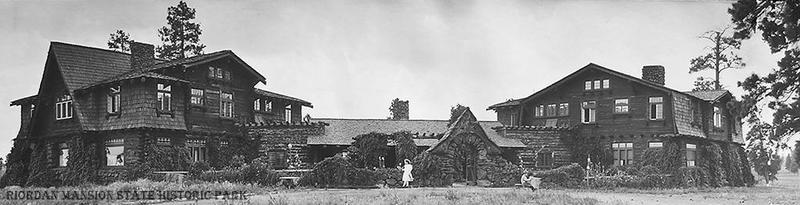
" /><br/><p>Starting off as middle-class, second-generation Irish immigrants, the Riordans amassed a fortune in the lumber industry in Flagstaff, Arizona. The eldest brother, Denis “Matthew” Riordan, became the foreman of the Ayer Lumber Mill in 1884. In 1887, Matthew bought the mill, then invited his brothers Timothy and Michael to work alongside him. Matthew sold the renamed Arizona Lumber and Timber Company to his brothers in 1897. By 1903, Timothy and Michael earned enough money to build the Riordan Mansion. Tim married Caroline Metz in 1889, and Michael married her sister Elizabeth in 1892. Timothy and Michael moved into the mansion with their wives and kids in 1904, but descendants of the family lived in the home until the 1980s. The Riordan family contributed to the Flagstaff community in education, banking, business, water development, and conservation. </p><p>Riordan Mansion is a 13,000-square-foot duplex-style mansion. Construction only took nine months. Timothy and his family lived in the east side, and Michael and his family lived in the west. The floor plans of both sides are near perfect mirror images of each other, though there are a few stylistic differences. The center room is shared by both sides of the family. Charles Whittlesey designed the mansion in the Arts & Crafts architectural style – promoting local materials, built-in furniture, and the celebration of nature. The walls are lathe and plaster with slab siding to give the appearance of a log cabin. The wood is local Ponderosa Pine, while volcanic rock makes up the base. Whittlesey designed built-in ice boxes, closets, window seating, countertops, and other surfaces throughout the house. The duplex contains one of the largest public collections of Stickley furniture, including some from Harvey Ellis.</p><p>Arizona State Parks and Trails (ASPT) owns Riordan Mansion. Bob Chambers, the son-in-law of Timothy, donated the east half of the home in 1981. Blanche, the oldest daughter of Michael, donated the west half of the home in 1985. After the 2008 recession, ASPT nearly closed the mansion. Due to the efforts of volunteers and a partnership with the Arizona Historical Society, Riordan Mansion remained open. </p><p>Staff and volunteers offer hour-long tours throughout the day year-round, though they are closed Tuesdays and Wednesdays during the winter. Guided tours take visitors room by room through Tim’s side of the home, giving the history of the family and of Flagstaff and showing much of the original furniture. Michael’s side is open as a museum with interpretive displays for guests to explore at their leisure. Tours cost $10 per person, though visitors can take complimentary walks around the grounds and look at exhibits in the Visitor Center. With five acres of land, Riordan Mansion can provide the perfect spot for a wedding or a picnic. </p><p><em><strong><a href="https://www.intermountainhistories.org/items/show/234">For more (including 6 images) view the original article</a></strong></em></p>]]></summary>
    <published>2018-06-19T21:05:23+00:00</published>
    <updated>2026-04-17T19:32:03+00:00</updated>
    <link rel="alternate" type="text/html" href="https://www.intermountainhistories.org/items/show/234"/>
    <id>https://www.intermountainhistories.org/items/show/234</id>
    <author>
      <name>Megan Nolan, Northern Arizona University</name>
    </author>
  </entry>
  <entry>
    <title type="html"><![CDATA[World War II Navy Education at Flagstaff&#039;s Arizona State Teachers College]]></title>
    <summary type="html"><![CDATA[<p><strong><em>During World War II, many colleges became training centers for the expanding American military. Northern Arizona University in Flagstaff, then known as Arizona State Teachers College, was one such school.</em></strong></p><img src="https://www.intermountainhistories.org/files/fullsize/f3847859071276dfb9a409f1dfad01ac.jpg" alt="The V12 Program" /><br/><p>World War II affected many aspects of American life. The enlistment and drafting of so many young men after America’s entry into the war caused the college-enrolled population to rapidly decrease. Almost every institution of higher learning in the United States saw its student body shrink, though smaller state institutions, with their significantly lower funding and already small student bodies, were particularly affected. One such institution hard hit by the loss of so many young men to the military was Arizona State Teacher’s College (ASTC) in Flagstaff, now Northern Arizona University. The school lost so many students to the war effort that by the 1943-44 school year, the institution had shrunk to a student body of eighty-four, compared to a 1940 enrollment of 535 students. This reduction led many of the educators at the school, including President Thomas J. Tormey, to fear that the Arizona Board of Regents would shut the college down.</p><p>However, while the civilian educational institutes faced a dwindling population, the armed forces faced an opposite problem. The pre-war Army and Navy of the United States had been a small, underfunded force. With the declaration of war, the size of the United States Navy increased by seventy percent compared to its pre-war strength. This massive influx of new recruits overwhelmed the armed services pre-war training institutions. To address both of these problems, President Franklin Roosevelt encouraged the Departments of War and Navy to conduct the necessary training on the nation’s college campuses. </p><p>In 1942 the Navy selected ASTC as a site for the Navy College Training Program, designated the V-12 program. The Department of the Navy designed this program to train the swelling officer corps that would command the new two–ocean navy. The Navy chose enlisted men who had some college education for officer training. While ASTC effectively became a Navy base, the Navy allowed civilian students and teachers to remain on campus and to enroll in V-12 classes. </p><p>The institution became a strange intermediary between a naval base and a college. A geography class offered to sailors and regular students organized a Grand Canyon trip. When the program ended in October of 1945, 1,025 marines and sailors had passed through Flagstaff, 400 at a time. The influx of men and government funds kept the college afloat, with the Navy rental of dorm rooms bringing in an estimated $24,848 in profit, about $800,000 in current currency. Beyond the financial aspects, the influx of so many young servicemen changed life on the campus, turning it into a military institution. Many of the female students welcomed the influx of so many young and eligible men into the institution, with the local sororities often holding dances. After the war, many of the veterans returned to colleges on the G.I. Bill. In 1966, ASTC became Northern Arizona University. </p><p><em><strong><a href="https://www.intermountainhistories.org/items/show/55">For more (including 4 images) view the original article</a></strong></em></p>]]></summary>
    <published>2017-06-03T15:41:56+00:00</published>
    <updated>2026-04-17T19:31:58+00:00</updated>
    <link rel="alternate" type="text/html" href="https://www.intermountainhistories.org/items/show/55"/>
    <id>https://www.intermountainhistories.org/items/show/55</id>
    <author>
      <name>Christian Flanders, Northern Arizona University</name>
    </author>
  </entry>
</feed>