<?xml version="1.0" encoding="UTF-8"?>
<feed xmlns="http://www.w3.org/2005/Atom">
  <title type="text">Intermountain Histories</title>
  <updated>2026-08-18T15:51:59+00:00</updated>
  <generator uri="http://framework.zend.com" version="1.12.20">Zend_Feed_Writer</generator>
  <link rel="alternate" type="text/html" href="https://www.intermountainhistories.org/"/>
  <link rel="self" type="application/atom+xml" href="https://www.intermountainhistories.org/items/browse?output=rss2"/>
  <id>https://www.intermountainhistories.org/</id>
  <author>
    <name>Intermountain Histories</name>
    <uri>https://www.intermountainhistories.org</uri>
  </author>
  <link rel="hub" href="https://pubsubhubbub.appspot.com/"/>
  <entry>
    <title type="html"><![CDATA[The Big Stick: Teddy Roosevelt Speaks at Idaho University: Story 7 of 8 of the President Theodore Roosevelt in the West Tour]]></title>
    <summary type="html"><![CDATA[<p><strong><em>“Ex-President Theodore Roosevelt visits the University of Idaho to give a speech and plant a tree,” read an article from Moscow, Idaho’s Daily Argonaut in anticipation of his April 9, 1911, visit to town.</em></strong></p><img src="https://www.intermountainhistories.org/files/fullsize/c5ffffacc9410315cdef74f37b166af9.jpg" alt="Theodore Roosevelt address Idaho citizens atop a stack of wheat sacks. This is a nod to his time as a Rough Rider and agricultural advancements in Idaho" /><br/><p>Even though he had visited Idaho twice before, President Theodore Roosevelt’s spring 1911 visit to the state was no less elaborate and momentous. His escort through Moscow, Idaho, could barely get to his hotel as the streets were so packed full of excited spectators. After arriving at his hotel and indulging in an informal Sunday dinner with “a small party of political officials,” Roosevelt appeared grandly at the University of Idaho the following morning, April 9, 1911. From breakfast in Ridenbaugh Hall with about 80 of the school’s finest, “university faculty, several prominent citizens and government officials, and the presidents and secretaries of the various classes of the university” Roosevelt was “escorted by the Grand Army Corps, carrying the American flag, and by a company of the University cadets” and saluted by the students until he arrived in front of the administrative building. A crowd Roosevelt estimated to be about 20,000 gathered to hear his address.
The setup for Roosevelt’s speech was unusual. The Administration building’s front doors were stacked with what seemed to be sandbags but were in fact sacks of wheat. This was a nod to northern Idaho’s agricultural industry. It made for a striking image as the adventurous former president climbed and spoke from the top of the pile. His 45-minute speech urged Idaho to “follow the rest of the West in progressive legislation.” Roosevelt was preparing to run for his 3rd term as the Progressive Party (also nicknamed the Bull Moose Party) candidate. He continued that, “true government by the people once obtained and improperly used, would work out for us, not salvation, but damnation.” After concluding, the crowd witnessed Roosevelt planting a tree on the university’s lawn. Still standing today, with a placard label, Roosevelt’s Colorado Blue Spruce is a reminder of Roosevelt’s 1911 visit and his views on forestry, the outdoors, and conservation. Speech and tree-planting concluded, Roosevelt made his way to the train station and departed Moscow by 10:30 AM.
This particular visit to the University of Idaho made a special impact through symbolism and memorabilia. Reflecting on the University’s motto, “For the training of Idaho's future citizens to their highest usefulness in private life and public service” Roosevelt said he admired the ideals that were expressed and that “the pioneer spirit is still the proper spirit, but with it we must prepare to meet new conditions.” His tree planting stunt helped those present remember the importance of the conservation of natural resources. With its presence standing tall on campus today, it serves as a reminder for the current generations to be good farmers and good citizens.
 </p><p><em><strong><a href="https://www.intermountainhistories.org/items/show/920">For more (including 3 images) view the original article</a></strong></em></p>]]></summary>
    <published>2025-10-24T15:03:17+00:00</published>
    <updated>2026-08-18T15:51:59+00:00</updated>
    <link rel="alternate" type="text/html" href="https://www.intermountainhistories.org/items/show/920"/>
    <id>https://www.intermountainhistories.org/items/show/920</id>
    <author>
      <name>Jessika Cole, Brigham Young University</name>
    </author>
  </entry>
  <entry>
    <title type="html"><![CDATA[United States Air Force Academy Chapel, Colorado Springs, CO]]></title>
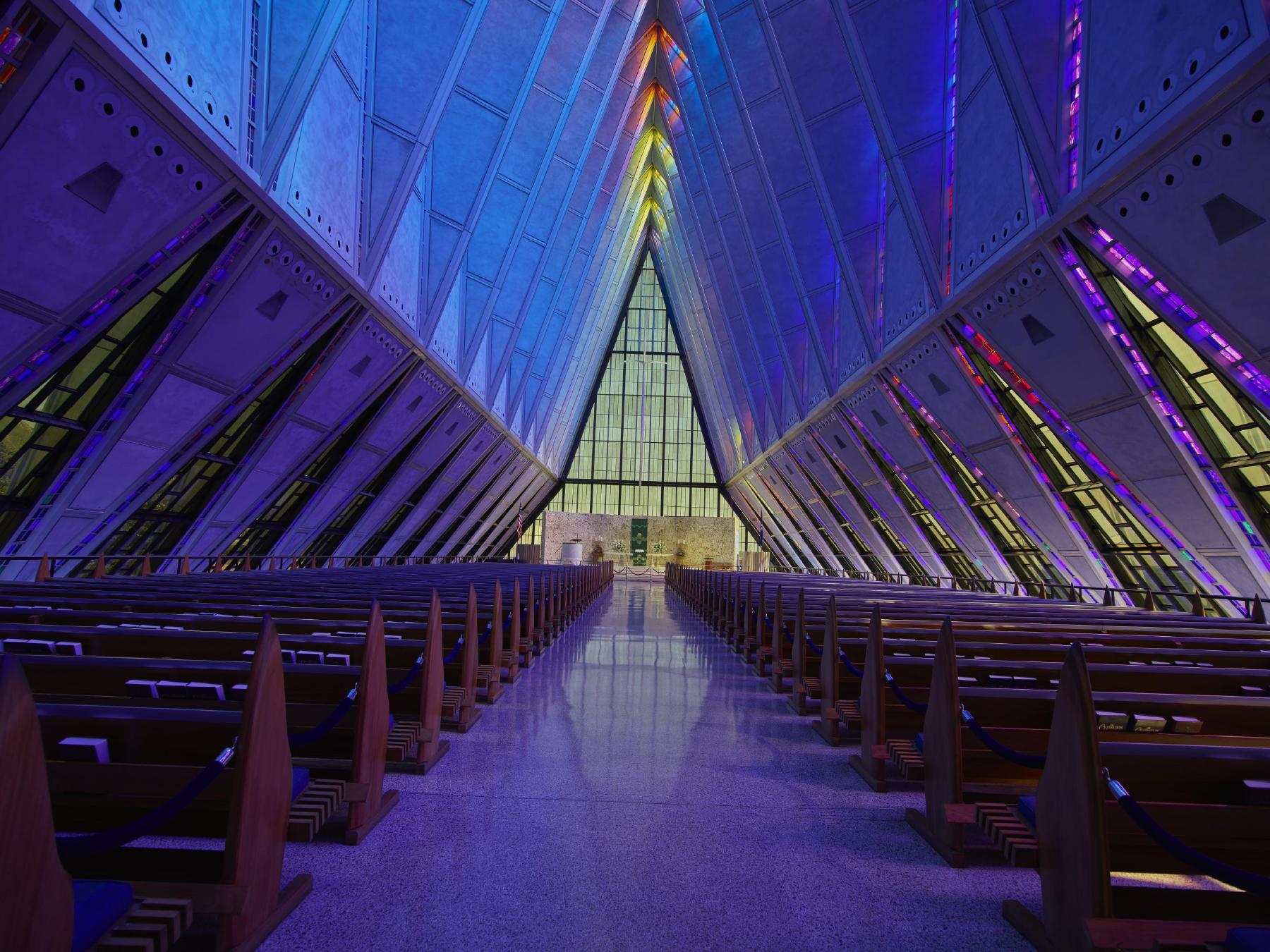
    <summary type="html"><![CDATA[<p><strong><em>An architectural triumph, the United States Air Force Academy Chapel in Colorado Springs is a futuristic vision of spirituality and light.</em></strong></p><img src="https://www.intermountainhistories.org/files/fullsize/6fa877fa8a8572d3d403698d65fbe97e.jpg" alt="Interior of the main atrium in the Cadet Chapel" /><br/><p>     Outside of Colorado Springs on the front Rampart Range of the Rocky Mountains the soaring spires of the United States Air Force Academy Chapel stand as a shining example of modernist architecture. Composed of seventeen spires that rise 150 feet into the air, the profile of the chapel mimics the mountains behind it. Each individual spire is is made up of 100 polygon shapes with the crisp edges giving the chapel a strikingly futuristic feel. The main floor houses the nine-hundred seat Protestant service area directly underneath the striking spires. Between the spires are one-foot-wide panels of colored glass, arrayed with cubes of every color of the rainbow. The panels bounce light off the faceted interior of the chapel during the day as the sun streams in. At night, interior illumination sends their color pouring over the outside of the aluminum spires, highlighting the materials reflective qualities. Underneath the main level is the area devoted to holding Catholic services. This level is demarcated by low sweeping stonework and large mosaic of stone angels behind the altar. Also on the terrace level is the Jewish service section. A circular screen of Israeli cypress panels ensconces the prayer area and the floor is made of Jerusalem Brownstone tiling donated by the Israeli Defense force in 1960.
     It was these three faiths that architect Walter Netsch was tasked with designing the building around in 1954 when the firm Skidmore Owings & Merrill received the contract to design the Air Force Academy Campus. The rest of the campus is made up of lower profile, modernist structures that seem to hover above the earth. The Cadet Chapel has remained the crown gem of the campus since its completion in 1962.
     The sub-genre of googie architecture experienced peak popularity in the mid-century and left its largest marks upon commercial structures in the West. Diners and motels are the most common manifestations of this style. However, while many googie structures are commercial that is not a requirement for the classification. Perhaps the most important aspect of googie architecture is that the structures appear to exist out of time. Materials like aluminum, neon, and concrete are utilized to give the buildings a futuristic and industrial touch, as if they were designed in the 22<sup>nd</sup> century instead of the 21<sup>st.</sup>. The Cadet Chapel epitomizes the idealistic futurism of the googie genre, brought out of the realm of the commercial and into the spiritual.
     In 2019 renovations began with the initial goal of fixing water leakage problems that had been persistent since the building was completed. Restoration has been ongoing due to the delicate nature of the historic structure and is projected to be completed in 2027. In 2012, fifty years after the completion of the Cadet Chapel, SOM returned to the campus to create a new event center called Polaris Hall. The glass prism tower of Polaris Hall is a testament to the lasting appeal of strikingly modernist architecture like that of the Cadet Chapel that inspired it.</p><p><em><strong><a href="https://www.intermountainhistories.org/items/show/901">For more (including 3 images) view the original article</a></strong></em></p>]]></summary>
    <published>2025-09-23T15:36:00+00:00</published>
    <updated>2026-04-17T19:32:20+00:00</updated>
    <link rel="alternate" type="text/html" href="https://www.intermountainhistories.org/items/show/901"/>
    <id>https://www.intermountainhistories.org/items/show/901</id>
    <author>
      <name>Emily MacDonell, Northern Arizona University</name>
    </author>
  </entry>
  <entry>
    <title type="html"><![CDATA[Mignon Richmond: First Black Woman College Graduate in Utah]]></title>
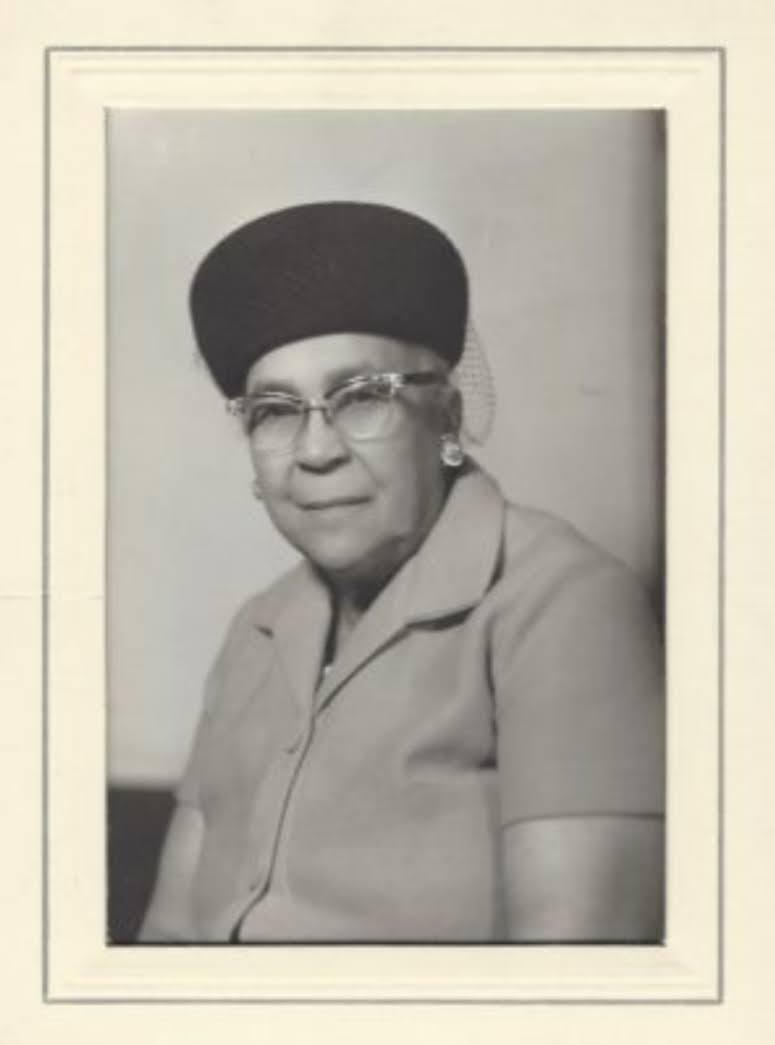
    <summary type="html"><![CDATA[<p><strong><em><span style="font-weight:400;">In 1921 Mignon Barker Richmond became the first African American woman to graduate from college in Utah and went on to become a community organizer and civil rights activist.</span></em></strong></p><img src="https://www.intermountainhistories.org/files/fullsize/8b40389c2ee054bc94fe17722f9e1b3b.jpg" alt="Mignon Barker Richmond" /><br/><p><span style="font-weight:400;">Mignon Barker Richmond was born on April 1, 1897 in Salt Lake City to William Barker and Mary Alice Reagan Barker. She attended Utah Agricultural College, now known as Utah State University, in Logan, Utah, graduating in 1921 with a degree in home economics. She persisted in spite of gross racism from her professors and peers, and participated in the Empyrean Club, a group of women that discussed contemporary problems and events, becoming its secretary-treasurer in her senior year. Following graduation, she faced difficulties finding a job in her field of study due to racial discrimination, and only after 27 years was she able to obtain work in her field of study, working first as a laboratory technician, and later as a school lunch supervisor at the University of Utah Stewart School from 1948 to 1953, and was afterwards hired to start home-living classes for the Utah State Industrial School. </span>
<span style="font-weight:400;">During this period she was active in the National Association for the Advancement of Colored People (NAACP) and the Young Women’s Christian Association (YWCA), and in 1957 she became the YWCA Food Services Director in Salt Lake City, where she stayed until her retirement in 1962 at the age of 65. Later, during president Lyndon Johnson’s administration, she became the head of the Women’s Job Corps and chairwoman of Project Medicare Alert. During her work with the Salt Lake chapter of the NAACP, she co founded the Nettie Gregory Center, a venue for minority youth to be involved in recreation in Salt Lake City, as well as on boards for the Utah Community Service Council and the Women’s Legislative Council, where she helped create legislation to fight poverty. After receiving several awards for her community service and commitment to education and civil rights, she died at the age of 86 on March 10, 1984. Many organizations including the Salt Lake Branch NAACP, Trinity AME Church, and Calvary Baptist Church came together to dedicate Richmond Park in Salt Lake City in 1984, and commissioned a plaque describing Mignon Barker Richmond as an educator, civil leader, and humanitarian.</span></p><p><em><strong><a href="https://www.intermountainhistories.org/items/show/874">For more (including 3 images) view the original article</a></strong></em></p>]]></summary>
    <published>2024-11-02T22:24:37+00:00</published>
    <updated>2026-04-17T19:32:20+00:00</updated>
    <link rel="alternate" type="text/html" href="https://www.intermountainhistories.org/items/show/874"/>
    <id>https://www.intermountainhistories.org/items/show/874</id>
    <author>
      <name>Morgon George, Utah State University</name>
    </author>
  </entry>
  <entry>
    <title type="html"><![CDATA[Title IX and Women’s Athletics at Utah State University]]></title>
    <summary type="html"><![CDATA[<p><strong><em>Women’s athletics at Utah State University have come a long way since the passing of Title IX in 1972. Athletic Director Marilyn Weiss worked hard to gain more resources for female athletes. During her time at Utah State, three women’s athletic teams won national championship titles. She helped to lay the foundation for the long-term success of women’s athletics at USU.</em></strong></p><img src="https://www.intermountainhistories.org/files/fullsize/db7904d3f034ebce2d2e9c00c65de8d7.jpg" alt="1978 Women&#039;s Volleyball Team at Utah State University" /><br/><p><span style="font-weight:400;">Women have been involved in athletics since the early days of Utah State University. As early as 1901, USU boasted an organized softball team and hosted basketball tournaments. Due to a lack of funding, however, women’s athletics stayed local and small. This began to change after Title IX became law on June 23, 1972. The law prohibited sex-based discrimination in any institution that receives federal funding. Initially created to encourage more women to pursue higher education, today the law is mostly associated with college and high school athletics and promoting equality between men’s and women's sports. </span></p><p><span style="font-weight:400;">Title IX changed the college landscape, in the classroom and on the court. Schools were required to give women more support and resources. Before Title IX, women’s athletics didn’t offer athletic scholarships. As of 2021, there are 74,173 athletic scholarships available to women compared to 77,784 available to men.</span>
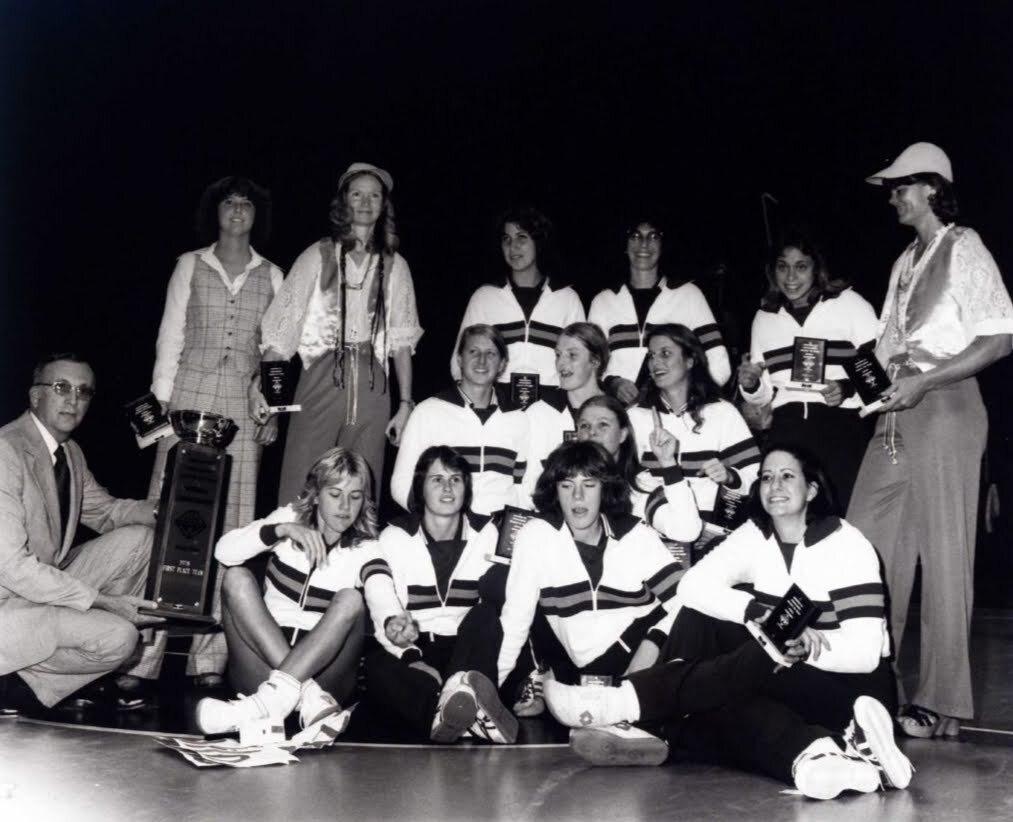
<span style="font-weight:400;">Marilyn Weiss was the USU Athletics Director for Women’s sports from 1975 to 1981. Under her leadership, Utah State formed its first volleyball team in 1976. Weiss served as the USU’s women’s basketball coach, volleyball coach, and track coach during her tenure with the university, and knew that not much had changed at USU after the passage of Title IX. She was determined to change that. In 1976, Weiss hired Mary Jo Peppler and Marilyn McReavy, both former Olympians, as co-head coaches of the volleyball team. They recruited strongly from across the country to bring great talent to USU. </span>
<span style="font-weight:400;">Weiss knew that the women’s programs would have to operate under a very tight budget, but she was determined to succeed. If the Aggies wanted to compete against the top teams in the country, they had to get to the West Coast. In the off-season, the team traveled in a fifth-wheel trailer to southern California to challenge powerhouse teams like USC and UCLA. Although the budget was small, the coaches and athletic director made it work and their efforts paid off. The USU Volleyball team became National Champions in 1978, winning the Association for Intercollegiate Athletics for Women (AIAW) volleyball championship. They were runner-up the following season. During Weiss’s time at USU, the softball team also won two national titles in 1980 and 1981. </span>
<span style="font-weight:400;">Weiss filed a Title IX complaint against the university a few years before she left. Although USU saw success while she was here, she knew womens’ athletics were still being underfunded. Marilyn Weiss and the coaches and players laid a foundation to move women’s athletics forward at Utah State University. As of 2024, USU has 8 women's varsity teams and over 180 women rostered. USU offered $3,106,721.54 in scholarships to female athletes in 2024, among 149 athletes.</span></p><p><em><strong><a href="https://www.intermountainhistories.org/items/show/873">For more (including 5 images) view the original article</a></strong></em></p>]]></summary>
    <published>2024-11-02T17:31:25+00:00</published>
    <updated>2026-04-17T19:32:19+00:00</updated>
    <link rel="alternate" type="text/html" href="https://www.intermountainhistories.org/items/show/873"/>
    <id>https://www.intermountainhistories.org/items/show/873</id>
    <author>
      <name>Hadli Lords, Utah State University</name>
    </author>
  </entry>
  <entry>
    <title type="html"><![CDATA[Intermountain Indian School: Native Civil Rights in Boarding Schools]]></title>
    <summary type="html"><![CDATA[<p><strong><em>Intermountain Indian boarding school was a Native American off-reservation boarding school that aimed to assimilate Navajo children by giving them education in English, and job skills. It has a complicated history within the Tribes it served, with a list of controversies during and after its operation.  </em></strong></p><img src="https://www.intermountainhistories.org/files/fullsize/be30be9fe2d5d7aaf475052384f4d0a2.jpg" alt="Girl operating a &#039;Tac X&#039; word flasher" /><br/><p><span style="font-weight:400;">Intermountain Indian School hosted children from The Navajo Tribes, with 212 students in its first year before opening to host students from a variety of tribes in the 1970s. It operated until 1984, finally closing due to the high costs of operation, as well as the dwindling number of Native American boarding schools in the country. Native American off-reservation boarding schools started in the 1800s, with the main purpose of forced assimilation and removal of native culture. Children enrolled in such schools suffered much cruelty such as forbidding native language and culture, being forced to shave their heads, and experiencing abuse and mistreatment in the name of “civilizing” them. In the 1950s the government enacted its termination policy, trying to “end the native problem” by limiting funding to reservations to force natives into cities, and thus boarding schools followed the same ideals. Boarding schools began to focus on preparing Native children to participate in jobs in their new cities, without governmental support. This new policy was in effect during the creation of the Intermountain and thus existed to fit the new policy changes of the termination policy. </span>
<span style="font-weight:400;">The concept of Native American boarding schools in general is proof of the intense violations and pressure put upon the native communities by the US government to in attempts erase their culture, and history. While Intermountain did not restrict cultural expression through clothing or activities, Intermountain was not an exception to other infringements on civil rights. In 1971, a spokesperson from the  American Indian Movement (AIM) an organization created to fight for native civil rights, listed the following concerns; horrible food, unfair grading process, overcrowded and dirty living conditions, forcing students to choose a Christian religion, few native teachers, and Harsh unfair punishments. Another concern with the school was that their education set them up exclusively for jobs lacking upward mobility or chance of improvement, leaving a disparity in job opportunities for Native peoples. As the school continued to run it became increasingly aware and supportive of the needs of the native people, and took steps to rectify some of its social problems, such as making efforts to include more native teachers, and support cultural representation. </span>
<span style="font-weight:400;">The history of the Intermountain is complicated, with mixed reviews from its graduated students. Where some of its students still feeling deeply connected to the school and their time there, others remain deeply traumatized from their experience and have nothing positive to say. In its 34 years of operation, the school was rife with controversy, from both inside and outside the school, and ultimately its history is still complicated and important to the story of the previous students and native communities it interacted with. </span></p><p><em><strong><a href="https://www.intermountainhistories.org/items/show/858">For more (including 5 images) view the original article</a></strong></em></p>]]></summary>
    <published>2024-10-16T01:02:08+00:00</published>
    <updated>2026-04-17T19:32:19+00:00</updated>
    <link rel="alternate" type="text/html" href="https://www.intermountainhistories.org/items/show/858"/>
    <id>https://www.intermountainhistories.org/items/show/858</id>
    <author>
      <name>Thomas Harley, Utah State University</name>
    </author>
  </entry>
  <entry>
    <title type="html"><![CDATA[The S. L. Welsh Herbarium]]></title>
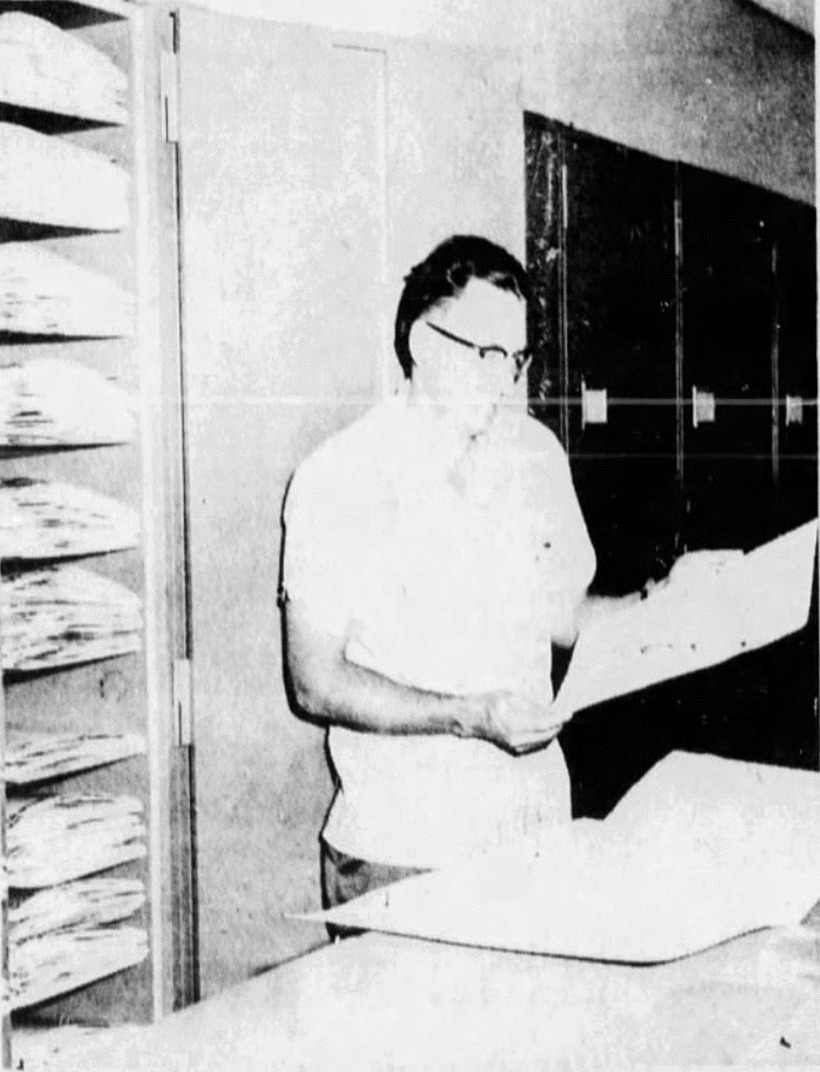
    <summary type="html"><![CDATA[<p><strong><em>Walter P. Cottam, one of the first to receive a master's degree from Brigham Young University, established the S.L. Welsh in 1923. In 1980, the school named the herbarium after Stanley L. Welsh, who served as a curator in the 1960s. The S.L. Welsh Herbarium's collection size is ranked 20th out of 646 nationwide and 65th out of 3,001 herbariums worldwide.</em></strong></p><img src="https://www.intermountainhistories.org/files/fullsize/21fcf6beb8d44646e2e2c531332bf08d.jpg" alt="Dr. Stanley L. Welsh, in the archives of the Stanley L. Welsh herbarium" /><br/><p><span style="font-weight:400;">The S.L. Welsh Herbarium is at Brigham Young University (BYU) in Provo, Utah. The story of its establishment begins in 1874 when  Orson W. Howard created the first herbarium in Utah. Then, in 1923, the university hired Walter P. Cottam, a former master's student and one of the first two individuals to receive a master's degree from BYU, as a botany professor. Upon joining the staff, Cottam received a portion of Howard's herbarium collection to form the Brigham Young University herbarium. However, before adding additional specimens, Cottam had to register the existing collection to choose a permanent acronym, and he selected BRY for Brigham Young. He served as the curator for seven years before passing the role to Dr. Bertrand Harrison in 1930, another BYU former student and Professor of Botany, who held the curator position for the next thirty years. During Harrison's tenure, the herbarium collection grew to 26,000 samples.</p><span style="font-weight:400;">In 1960, Harrison passed the job down to Dr. Stanley L. Welsh. Welsh taught biology at the school and became a well-known curator due to his work developing a program to exchange specimens with numerous universities. By 1971, the herbarium had established connections with Iowa State, North Carolina, Alaska, and international university herbariums. That same year, the collection reached a milestone of 96,000 specimens sourced from Western America, Northern Europe, and the Middle East. The oldest specimen in the archives dates to 1850 and came from Europe, while the oldest native Utah specimen collected was a gift from the University of Utah that dates to the 1880s. Over forty years, Welsh added 150 sheets of pressed and preserved specimens annually, expanding the collection from 25,000 to 450,000. In 1980, the university renamed the herbarium to honor Welsh's contributions. As the collection grew, the herbarium changed locations, moving from the university's Brimhall Building to the Grant Building, then to the Biolab, and finally to its current location under the Bean Museum when it opened in 1978. The school named the museum after Monte Lafayette Bean, a naturalist who funded its construction. The herbarium collection continues to sit under the Bean Museum and currently holds specimens collected globally but emphasizing the Great Basin and Intermountain West.</span></p><p><em><strong><a href="https://www.intermountainhistories.org/items/show/825">For more (including 3 images) view the original article</a></strong></em></p>]]></summary>
    <published>2024-05-22T20:16:59+00:00</published>
    <updated>2026-04-17T19:32:18+00:00</updated>
    <link rel="alternate" type="text/html" href="https://www.intermountainhistories.org/items/show/825"/>
    <id>https://www.intermountainhistories.org/items/show/825</id>
    <author>
      <name>Cristal A. DeSantiago, Northern Arizona University</name>
    </author>
  </entry>
  <entry>
    <title type="html"><![CDATA[MONTU Herbarium]]></title>
    <summary type="html"><![CDATA[<p><strong><em>        The University of Montana Herbarium has faced challenges since Dr. Morton Elrod created it in 1897. They confronted the consequences of the draining effects of World War II and fought to maintain their space. It overcame these problems and became the largest collection in Montana, with over 136,000 vegetation samples.</em></strong></p><img src="https://www.intermountainhistories.org/files/fullsize/5c40edf93fd8d4344ab1b4458e671ca5.jpg" alt="Dr. Morton Elrod in 1911 on a trip to Wildhorse Island State Park in Kalispell, Montan" /><br/><p><span style="font-weight:400;">The University of Montana Herbarium (MONTU) in Missoula, Montana, traces its origins back to 1897 when the university hired its first Professor of Biology, Dr. Morton Elrod. His employment marked the establishment of the herbarium, as Dr. Elrod brought a personal collection of local plants, providing precise details for each sample discovery. This collection laid the foundation for the first University of Montana Herbarium collection. Upon Dr. Elrod's retirement in 1928, the herbarium experienced a series of curator changes over the next sixty years. The first of these curators was Charles Leo Hitchcock, who gained the responsibility in 1932. Under Hitchcock's leadership, the herbarium underwent significant developments. He relocated the collection to the second floor of the Natural Science building and initiated a program to create multiple copies of all plant specimens for exchange with other universities. By the mid-1930s, Hitchcock's efforts had expanded the herbarium to tens of thousands of specimens.</p>In 1937, Hitchcock left, and Dr. Fred Barkley succeeded him as the curator and became the botany instructor. During his first three years, Barkley acquired 4,000 sheets of pressed plant specimens for the herbarium and sent out 6,000 specimens to exchange with other herbariums. He resigned in 1945, leading to the selection of Dr. LeRoy Harvey as a Professor of Botany and the herbarium curator in 1946. World War II disturbed the early years of Harvey's tenure due to the university’s resources and time going towards the war, which temporarily slowed the herbarium's growth. With limited resources for research, Harvey focused on maintaining the herbarium space. Over his thirty-year tenure, Harvey made notable advancements, including replacing old wooden cabinets with steel storage to protect samples from insects better. He also discarded specimens that had  incomplete labeling and added 10,000 to 12,000 new specimens, many of which were from Glacier National Park. </p><p><span style="font-weight:400;">Following Harvey's resignation in 1977, the herbarium underwent various short-term caretakers until 1981, when Dr. Kathleen Peterson assumed the role of a long-term curator. During her seven-year leadership, the herbarium reached a milestone by gaining its 100,000th specimen.</span> <span style="font-weight:400;">After Peterson left in 1988, the university merged the herbarium with the Division of Biological Sciences in 1990, and collection managers took on curatorial responsibilities. Then, in 1994, a group of scientists received a grant and sought to use the herbarium space for their research, but there was limited faculty support in saving it. A group of individuals outside of the herbarium recognized its value and led a campaign to protect it. They wrote to the university's president in support and raised $10,000 to purchase additional cabinets, ultimately saving the herbarium from being displaced. The gathering of individuals led to the formation of the Friends of the UM Herbarium group in 1996. They played a vital role in maintaining the herbarium's attraction and supporting its growth. Since its founding, the herbarium has transformed Elrod's original collection into an archive housing over 136,000 plant specimens.</span></p><p><em><strong><a href="https://www.intermountainhistories.org/items/show/822">For more (including 4 images) view the original article</a></strong></em></p>]]></summary>
    <published>2024-05-22T18:17:32+00:00</published>
    <updated>2026-04-17T19:32:18+00:00</updated>
    <link rel="alternate" type="text/html" href="https://www.intermountainhistories.org/items/show/822"/>
    <id>https://www.intermountainhistories.org/items/show/822</id>
    <author>
      <name>Cristal A. DeSantiago, Northern Arizona University</name>
    </author>
  </entry>
  <entry>
    <title type="html"><![CDATA[Rocky Mountain Herbarium]]></title>
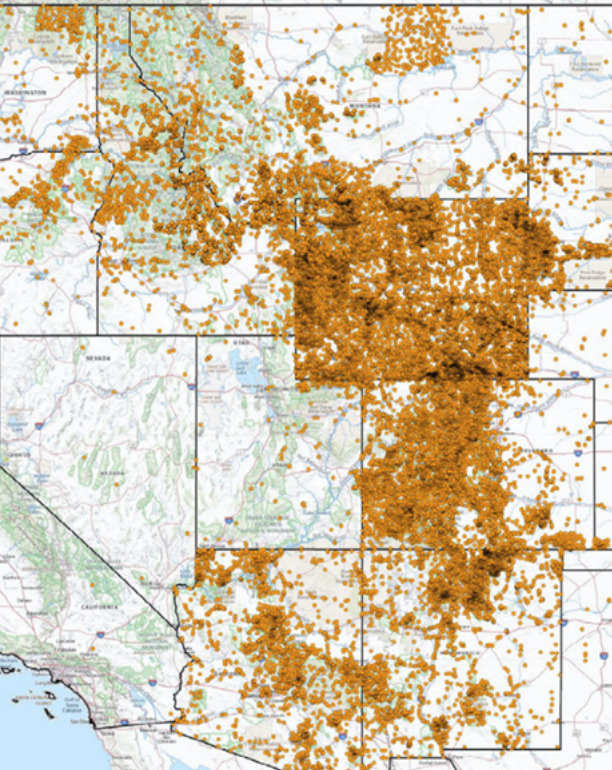
    <summary type="html"><![CDATA[<p><strong><em>Aven Nelson was originally an English professor but was unexpectedly thrust into the world of botany after being hired at the University of Wyoming in 1893. He discovered a passion for the subject, eventually leading to the creation of the Rocky Mountain Herbarium. Over the years, the herbarium has assembled a collection of 1.3 million specimens through extensive collection efforts and collaborations.</em></strong></p><img src="https://www.intermountainhistories.org/files/fullsize/a9b0acfa38d3d30d1c75600955782178.jpg" alt="Rocky Mountain Herbarium collection sites" /><br/><p><span style="font-weight:400;">The Rocky Mountain Herbarium is at the University of Wyoming in Laramie, Wyoming. Aven Nelson, one of the original faculty members,  established the herbarium in 1893. The university initially hired Nelson as an English professor, but the board of directors made him the biology professor when the school mistakenly employed two English professors. This position led to Nelson discovering his passion for botany. His interest in botany grew as he assisted the university's resident plant expert, Burt Buffum, in identifying plant samples for the Chicago World's Fair in 1893. Nelson's journey in botany continued with his exploration into the Yellowstone National Park in 1899. His journey gained him respect within the botany field, leading to the official establishment of the herbarium as part of the University of Wyoming, with Nelson as its curator. He named it </span><i><span style="font-weight:400;">The Rocky Mountain Herbarium.</span></i><span style="font-weight:400;"> Nelson later became the president of the American Society of Plant Taxonomists and Botanical Society of America and the president of the University of Wyoming from 1918 to 1922.</span></p><p><span style="font-weight:400;">       Following Nelson's resignation in 1930, the herbarium experienced additional growth with the installation of the W. G. Solheim Mycological Herbarium. Added to the herbarium by the head of the university botany department, Dr. Wilhelm G. Solheim, it was Solheim's personal collection of fungi. With 48,000 fungi specimens, it is the largest collection of fungi globally. In 1960, the herbarium collection, comprising around 265,000 samples, moved to the Aven Nelson Memorial Building. Initially constructed as the university's first library in 1923, the building provided a new home for the expanding herbarium. The herbarium collection further grew in 1982 when the US Forest Service National Herbarium (USFS), founded in Washington, D.C., granted an indefinite loan of 120,000 plant specimens. Between the Rocky Mountain Herbarium's personal collection, W. G. Solheim Mycological Herbarium, and the collaboration with the USFS, the herbarium archives now contain over 1.3 million plant samples. This collection has earned the reputation of being one of the largest herbariums between St. Louis and the West Coast.</span></p><p><em><strong><a href="https://www.intermountainhistories.org/items/show/821">For more (including 4 images) view the original article</a></strong></em></p>]]></summary>
    <published>2024-05-21T21:49:59+00:00</published>
    <updated>2026-04-17T19:32:18+00:00</updated>
    <link rel="alternate" type="text/html" href="https://www.intermountainhistories.org/items/show/821"/>
    <id>https://www.intermountainhistories.org/items/show/821</id>
    <author>
      <name>Cristal A. DeSantiago, Northern Arizona University</name>
    </author>
  </entry>
  <entry>
    <title type="html"><![CDATA[Museum of Mormon Mexican History]]></title>
    <summary type="html"><![CDATA[<p><strong><em><span style="font-weight:400;">Tucked away on a Provo side street, the Museum of Mormon Mexican History is a hidden gem. This museum walks through a private collection of historical memorabilia relating to the history of the LDS church in Mexico. </span></em></strong></p><img src="https://www.intermountainhistories.org/files/fullsize/970d37f08694dd900a094665061039b2.jpg" alt="[Untitled]" /><br/><p><span style="font-weight:400;">Provo, Utah is home to an incredible variety of museums, historic sights, and other thrilling experiences. Most students attending either Brigham Young University or Utah Valley University have visited a museum or two, whether for church sponsored outings, a date night, or just looking for something fun to do with friends. However, one of Provo’s museums remains quiet. Established in 2011, the Museum of Mormon Mexican History sits between Brigham Young University campus and west campus housing. Many students pass this small museum daily on their walk to campus, but few have set foot inside its walls. </span>
<span style="font-weight:400;">The Museum of Mormon Mexican History houses the private collection of unique artifacts left by the founder’s paternal grandmother. Many of these come from the 19th and early 20th centuries, providing insight into the beginnings of the Church of Jesus Christ of Latter-Day Saints in Mexico and Latin America. </span>
<span style="font-weight:400;">The founder, Fernando R. Gomez explains that “The idea of establishing a museum of Mexican Mormon History came from a humble but unique collection left by my paternal grandmother's daughter, Consuelo. My cousin Raymond had been the keeper of such memorabilia. With his help and that of Sergio Pagaza Castillo, we founded a museum in Mexico City in 1991, and an extension was opened in Provo, Utah in 2011. The Mexico City museum closed in 2014; however, this endeavor has been a labor of love. We four, Raymundo, Sergio, my wife Enriqueta, and I have made a dream come true. We, with limited resources, have brought to life a forgotten history - a legacy for the future."</span>
<span style="font-weight:400;">The collection comprises items like traditional clothing, early sacrament trays, and original publications. There are also life size mannequins depicting certain scenes, such as the translating of the Book of Mormon into Spanish. There is a full exhibit dedicated to the people in El Paso, Texas, where the Mexican saints found refuge while fleeing persecution. The display placards in the museum are in both English and Spanish, providing a uniquely accessible experience for visitors. </span>
<span style="font-weight:400;">The museum is free for anyone to visit, but donations are appreciated. Museum operators advertise tours for Family Home Evening groups and other student events. While the museum appears small, there is an incredible wealth of information and artifacts within it. </span></p><p><em><strong><a href="https://www.intermountainhistories.org/items/show/786">For more (including 7 images) view the original article</a></strong></em></p>]]></summary>
    <published>2024-03-01T23:17:13+00:00</published>
    <updated>2026-04-17T19:32:17+00:00</updated>
    <link rel="alternate" type="text/html" href="https://www.intermountainhistories.org/items/show/786"/>
    <id>https://www.intermountainhistories.org/items/show/786</id>
    <author>
      <name>Mia Delli Gatti, Brigham Young University</name>
    </author>
  </entry>
  <entry>
    <title type="html"><![CDATA[Ashley Pond]]></title>
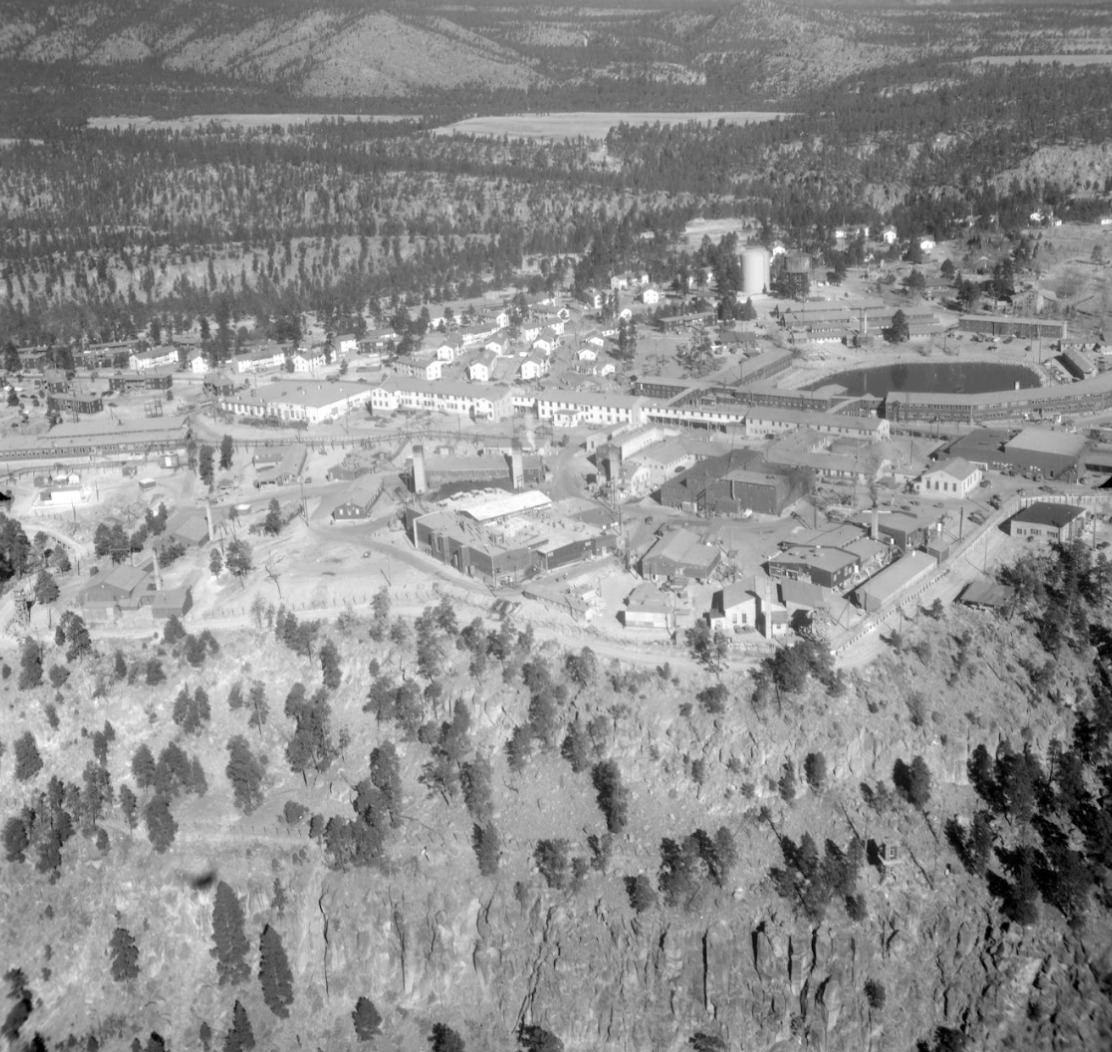
    <summary type="html"><![CDATA[<p><strong><em>From a soggy bog to a beloved community gathering place, the change and continuity of Ashley Pond illustrates the many eras of Los Alamos from homestead to Ranch School to government laboratory to the vibrant community of today.</em></strong></p><img src="https://www.intermountainhistories.org/files/fullsize/474ae326a19e2d428271b8e7a2ab5485.jpg" alt="1946 Aerial View of Los Alamos" /><br/><p><span style="font-weight:400;">Although Ashley Pond is now a prominent green space in the center of Los Alamos, it had a less majestic beginning. In 1908, it was a soggy depression used by homesteader H. H. Brook for watering his stock. Later, the Los Alamos Ranch School used it for the same purpose. Its applicable, albeit unimaginative, first name was the Stock Watering Tank. This was later switched to the Duck Pond in honor of its most popular visitors. The waterhole continued to remain a relatively unimpressive morass until the Ranch School built a dam in Los Alamos Canyon in 1923. This created a small reservoir which fed a pipeline to provide the school with water. The overflow from the pipeline was then dispersed into a puddle which progressively grew into a pond and then a small lake. </p>
<span style="font-weight:400;">The all-boys Los Alamos Ranch School was founded in 1917 by Detroit native, Ashley Pond Jr., who created it to generate tough, intelligent, well-rounded, and experienced outdoorsmen. As such, the students were encouraged to utilize the beautiful landscape for recreation and exercise. The pond provided an ideal place to put their learning into practice. Although never deep enough for true diving, the pond was perfect for canoeing and an excellent place to practice swimming. In the winter, the boys skated across its frozen surface playing hockey and harvesting the ice for the coming year. Ice blocks were stored in a nearby stone ice house and they were known to have collected enough ice to sustain them for up to two years. Once sufficiently filled, school faculty member—and notorious lover of puns—William Mills, provided the name of Ashley Pond in honor of the founder. The official title for the pond is Ashley Pond, not Ashley Pond Pond, but today Los Alamos natives enjoy the humorous anecdote. </p>
<span style="font-weight:400;">When the United States government acquired the land for the Manhattan Project, they allowed the school two months to make other arrangements. The boys went through a hurried graduation and left their beloved mountains, mesas, and pond in the hands of scientists. Manhattan Project staff built the Technical Area, also called TA 1, around the south side of Ashley Pond as a safeguard against fire. They repurposed the ice house as well, using it in 1945 to assemble nuclear components of the “gadget” which would be tested at Trinity. As such, Ashley Pond became restricted under laboratory security and very few outsiders were able to enjoy it. </p>
<span style="font-weight:400;">Today, Ashley Pond is a pleasant downtown landmark of Los Alamos. Situated near the center of town, it is used for picnics, walks, and outdoor concerts in the summer. Los Alamos natives attentively watch the ducks and geese who live at the pond, especially during chick season. During the winter, surrounding trees are decorated with colorful Christmas lights. The local winter parade currently ends at the pond, the same place where the Ranch School boys canoed and harvested ice nearly a century ago. </span>


</p><p><em><strong><a href="https://www.intermountainhistories.org/items/show/750">For more (including 6 images) view the original article</a></strong></em></p>]]></summary>
    <published>2023-09-07T23:39:58+00:00</published>
    <updated>2026-04-17T19:32:16+00:00</updated>
    <link rel="alternate" type="text/html" href="https://www.intermountainhistories.org/items/show/750"/>
    <id>https://www.intermountainhistories.org/items/show/750</id>
    <author>
      <name>Abigail Beus, Brigham Young University</name>
    </author>
  </entry>
  <entry>
    <title type="html"><![CDATA[LDS Motion Picture Studio]]></title>
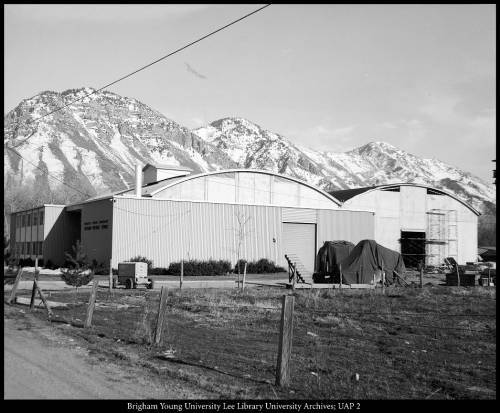
    <summary type="html"><![CDATA[<p><strong><em>The LDS Motion Picture Studio, once the BYU Motion Picture Studio, was opened in 1953 and served as the studio where BYU, its students, and The Church of Jesus Christ of Latter-day Saints filmed numerous movies and short films. </em></strong></p><img src="https://www.intermountainhistories.org/files/fullsize/a078011b5f66d28934a907c38221cfb6.jpg" alt="The Motion Picture Studio" /><br/><p><span style="font-weight:400;">Opened in 1953, the LDS Motion Picture Studio (MPS), previously known as the BYU Motion Picture Studio, has been the primary setting of films for BYU and The Church of Jesus Christ of Latter-day Saints for decades. The formal separation of the studio from Brigham Young University happened in 1991 when the studio came under the operation of The Church of Jesus Christ of Latter-day Saints. The films produced by the studio were for “missionary work, education purposes, home and family use, and other Church related purposes.” </span>
<span style="font-weight:400;">When the studio opened, Ernest L. Wilkinson was the president of BYU and Wetzel Whitaker was appointed as the studio’s first director. While some of the films created were privately funded, most were funded by the Church and the university. Some films created included a 10-minute film in 1957 named “On Your Honor” and depicted the honor code in an effort to explain it better to students. In 1976, a film was created on the gospel of Jesus Christ throughout time. The BYU Motion Picture Studio has even produced some award-winning films. In 1973, in the 21st Annual Columbus International Film Festival held in Ohio, “Run Dick, Run Jan,” a film about health and physical fitness made by the BYU Motion Picture Studio, won the Chris Plaque in the health and medicine category. It was the second award that BYU had won at the festival, with the previous one being in 1967 for “Love is for the Birds.” In 1989, “A More Perfect Union: American Becomes a Nation” was created in the studio about the US Constitution. The film experienced great popularity and won an Emmy for the best cultural docu-drama. The studio also held writing workshops for future screenwriters and other events for the public. For example, the studio hosted “Christmas Hour” which became roaringly popular for community members. In 1962, the Three D’s—a popular Church music band—were featured in the program. Additionally, the studio frequently advertised in the student newspapers for actors.</span>
<span style="font-weight:400;">The Motion Picture Studio has also experienced numerous damages through the years. In 1964, a fire—said to be the worst in Utah County history—damaged equipment and a section of the studio, costing the school $500,000. Later, in 1969, a falling truss created considerable damage to the building. In 2014, another fire began, fifty years after the first, caused by the explosion of an electrical box on the top of the studio. The studio has nevertheless persisted and is now in its 70th year. In 1975, one BYU student wrote an article in the </span><i><span style="font-weight:400;">Daily Universe, </span></i><span style="font-weight:400;">where they cited the BYU Motion Picture Studio as proof of the potential of the university. While BYU is no longer over the MPS, the sentiment continues to ring clear as the studio expands and progresses. </span></p><p><em><strong><a href="https://www.intermountainhistories.org/items/show/749">For more (including 3 images) view the original article</a></strong></em></p>]]></summary>
    <published>2023-04-27T01:22:11+00:00</published>
    <updated>2026-04-17T19:32:16+00:00</updated>
    <link rel="alternate" type="text/html" href="https://www.intermountainhistories.org/items/show/749"/>
    <id>https://www.intermountainhistories.org/items/show/749</id>
    <author>
      <name>Lindsey Meza, Brigham Young University </name>
    </author>
  </entry>
  <entry>
    <title type="html"><![CDATA[Stephen L. Richards Building]]></title>
    <summary type="html"><![CDATA[<p><strong><em>In 1965, amidst a rising student population and an increased interest in recreation, Brigham Young University opened the Stephen L. Richards Building. The "RB" provides courts and pools and has been host to a plethora of activities through the decades. </em></strong></p><img src="https://www.intermountainhistories.org/files/fullsize/87e1320830f03e17d39f23941a31b5e6.jpg" alt="Stephen L. Richards Physical Education Building" /><br/><p><span style="font-weight:400;">As the population of Brigham Young University increased in the latter-half of the 20th century, new facilities were being announced and constructed to accommodate growing numbers as part of BYU's "building boom." In 1965, as part of this boom, the Stephen L. Richards Building was opened. The “RB” is an athletic facility that houses multiple courts and olympic-sized pools. Recreational activities are held in the building, which at the time of its opening, seemed to be an ever-increasing necessity for students. Since its opening, it has become vital to the experience of many students. As one article read, “Students interested in exercise and intramural sports should become familiar with the Stephan [sic] L. Richards Building.” </span>
<span style="font-weight:400;">In the RB, a wide range of classes and activities have been offered to keep students busy. In 1970, classes included slimnastics, personal safety for women, senior life saving, and physical education for men. Around that same time, an outdoor camping workshop with intermittent adventures in the Uintas was offered. Additionally, many clubs met at the Richards Building. One club, the Orson Hyde club, met at the RB for an “Israeli folk dancing” activity. There was also a fencing club, Polynesian club, ski club, skydiving club, and Swedish club which utililized the building's facilities. </span>
<span style="font-weight:400;">In 1988, the RB hosted a special olympics, where students were able to volunteer. Discussions on health were also held in the RB on topics such as mental health, cardiovascular health and exercise, and physical education in public schools. Interestingly, in 1996, the RB was host to a juice booth in an effort to “promote the health benefits of drinking Florida orange juice.” Just a few years later in 2000, the RB put on a turkey trot in celebration of Thanksgiving. However, despite the range of activities offered through the decades, one of students’ favorite activities is the annual Midnight Madness, put on by BYU Student Wellness, where students come to watch and participate in an array of activities. In 2022, these activities included Zumba, Spin, High Fitness, basketball, volleyball, and a cannon-ball contest. To further entice students, Chip cookies and a soda bar were served. Student activity continues through the rest of the year, as well. The Richards Building is often packed during nights, especially Monday nights, when free play is available. True to its purpose, students continue to participate in recreational classes such as pickleball, basketball, and volleyball. </span></p><p><em><strong><a href="https://www.intermountainhistories.org/items/show/731">For more (including 7 images) view the original article</a></strong></em></p>]]></summary>
    <published>2023-03-09T16:08:38+00:00</published>
    <updated>2026-04-17T19:32:16+00:00</updated>
    <link rel="alternate" type="text/html" href="https://www.intermountainhistories.org/items/show/731"/>
    <id>https://www.intermountainhistories.org/items/show/731</id>
    <author>
      <name>Lindsey Meza, Brigham Young University</name>
    </author>
  </entry>
  <entry>
    <title type="html"><![CDATA[Marriott Center Annex]]></title>
    <summary type="html"><![CDATA[<p><strong><em>Nicknamed the “Y” MCA by a Wikipedian, the Marriott Center Annex is a “a second home for [BYU’s] men’s and women’s basketball programs.”</em></strong></p><img src="https://www.intermountainhistories.org/files/fullsize/4dcf8802b8be4576d074f8781a953d7c.jpg" alt="The Marriott Center Annex" /><br/><p><span style="font-weight:400;">In 2015, BYU officials announced the construction of several improvements to the Marriott Center, including a new annex to be built right next to the arena. This wave of improvements was sponsored solely by private donors. The new Marriott Center Annex was completed in December 2016 and had its open house on February 21, 2017. </span>
<span style="font-weight:400;">The 30,000 square-foot annex was meant to give players full access to practice and training areas. The Marriott Center is used for devotionals and other concerts weekly, which limits players’ ability to access the court. Therefore, the annex was highly anticipated by the men’s and women’s teams. The coach of the men's basketball team at the time, Dave Rose, worked tirelessly with donors to enable the annex. This, he earnestly hoped, would help the players in all aspects of their experience at BYU. After years of preparatory work on the annex, construction took only thirteen months. The annex opened in time for players to utilize the facility for the 2016-2017 season. </span>
<span style="font-weight:400;">The annex, which has now become a “second home” for basketball players, contains a full-size replica of the Marriott Center basketball court, a strength and conditioning center, a training room, study spots, offices and meeting rooms, a theater, and a hall of honor showcasing the history of BYU basketball. The hall of honor also serves as an interactive museum display, granting visitors, including potential team members, a look at the rosters, stats, and tradition of BYU basketball. The museum, located in the front entrance, also includes TV monitors which continually play highlights from previous games. Other features of the annex include a hydrotherapy machine, which reaches negative 270 degrees fahrenheit. This, along with the other amenities of the annex, point to the increasing hope of coaches and fans to implement their “player-driven program,” aimed at helping players reach their full potential at BYU.</span></p><p><em><strong><a href="https://www.intermountainhistories.org/items/show/701">For more (including 8 images) view the original article</a></strong></em></p>]]></summary>
    <published>2023-02-09T16:26:48+00:00</published>
    <updated>2026-04-17T19:32:15+00:00</updated>
    <link rel="alternate" type="text/html" href="https://www.intermountainhistories.org/items/show/701"/>
    <id>https://www.intermountainhistories.org/items/show/701</id>
    <author>
      <name>Lindsey Meza, Brigham Young University&amp;#32;&amp;amp;&amp;#32;Makoto Hunter, Brigham Young University</name>
    </author>
  </entry>
  <entry>
    <title type="html"><![CDATA[Museum of Peoples and Cultures (MPC)]]></title>
    <summary type="html"><![CDATA[<p><strong><em>The Museum of Peoples and Cultures serves as BYU's anthropological museum, displaying research and artifacts collected by staff, faculty, and students. Throughout its existence, the MPC has been actively involved in the community of Provo and the field of anthropology. </em></strong></p><img src="https://www.intermountainhistories.org/files/fullsize/383a583dacdc79204699da675ee3e736.jpg" alt="The Museum of Peoples and Cultures" /><br/><p><span style="font-weight:400;">The Museum of Peoples and Cultures (MPC) makes up one of several museums at Brigham Young University. The MPC features the archaeological and anthropological findings and work of both staff, university faculty, and students. Since its original inception in the late 1940s, the museum has served as both entertaining and educational. </span>
<span style="font-weight:400;">In 1946, BYU’s archaeological department was formed. The resulting research and artifacts called for a showcase, which was housed on the lower floor of the <a href="https://www.intermountainhistories.org/items/show/384">Eyring Science Center</a>. Soon, in 1961, the museum moved to the basement of the <a href="https://www.intermountainhistories.org/items/show/136">Maeser Building</a>. Twenty years later, the museum settled into <a href="https://www.intermountainhistories.org/items/show/568">Allen Hall</a> and received its name, the Museum of Peoples and Cultures. Here, the MPC featured a plethora of exhibits, including some curated and crafted by students through the anthropology department. In 1985, the museum was cited as having more than 500,000 artifacts from various parts of the world including the Middle East and Afrcia. Currently, the exhibits focus on Mesoamerican, Ute, Freemont, and early settler history. </span>
<span style="font-weight:400;">In 1985, the Museum hosted an exhibit on Tell Qarqur, a major archaeological site in Western Syria. One artifact was a ceramic “Mother Goddess” figurine symbolizing fertility. That same year, the school began fundraising efforts to expand current facilities housing the collections. Additionally, they announced a $10 million project for a complex of museums including a new building for the Museum of Peoples and Cultures, a fine arts museum, an earth sciences museum, an exhibit hall, and a language pavilion. However, the Museum of Peoples and Cultures did not get a new building until 2015, when it moved to its current location. </span>
<span style="font-weight:400;">The MPC was also widely involved in the community of Provo and the field of archaeology. In 1986, the museum hosted a dig for students and community members in Southern Utah of an Anasazi village ruin. The Anasazi people were dated to live in the area between 1150 and 1250 A.D.  The museum also sponsored a dig in Salt Lake City when, while excavating for new condominiums, construction workers came upon a pioneer cemetery and two pit houses over 800 years old. </p><p>The museum became a popular destination for field trips. Also for kids, the museum hosted “Stories from Around the Globe.” This was an interactive storytelling experience for toddler and preschool-age children. Storytellers narrated folk tales from different cultures. Then the children participated in an activity inspired by the story. For older patrons, the museum held block parties and date nights. Also, in an effort to draw in crowds during the priesthood session held by The Church of Jesus Christ of Latter-day Saints, which only male members of the church attended, the museum held a “Girl’s Night Out” event.</span>
<span style="font-weight:400;">The Museum of Peoples and Cultures' contribution to Provo and to the archaeological community has been recognized numerous times. In 2011, the museum won the “Leadership in History” award from the American Association for State and Local History for their exhibit, “Beneath Your Feet: Discovering the Archeology of Utah Valley.” Additionally, in 2017-2018, the museum was ranked one of the 50 Most Impressive College Museums. The museum continues to house artifacts and exhibits and is open to the public Monday through Friday from 9-5. </span></p><p><em><strong><a href="https://www.intermountainhistories.org/items/show/700">For more (including 7 images) view the original article</a></strong></em></p>]]></summary>
    <published>2023-02-06T19:17:17+00:00</published>
    <updated>2026-04-17T19:32:15+00:00</updated>
    <link rel="alternate" type="text/html" href="https://www.intermountainhistories.org/items/show/700"/>
    <id>https://www.intermountainhistories.org/items/show/700</id>
    <author>
      <name>Lindsey Meza, Brigham Young University&amp;#32;&amp;amp;&amp;#32;Makoto Hunter, Brigham Young University </name>
    </author>
  </entry>
  <entry>
    <title type="html"><![CDATA[George Albert Smith Fieldhouse (SFH)]]></title>
    <summary type="html"><![CDATA[<p><strong><em>The George Albert Smith Fieldhouse, built in 1951, has been busy ever since its opening. Students were constantly filling the space for dances, devotionals, sports games, and concerts. </p></strong></p><img src="https://www.intermountainhistories.org/files/fullsize/6aec470ba5e6ae2faf4d69099e2893b5.jpg" alt="BYU Basketball Game" /><br/><p><span style="font-weight:400;">After years of inadequate sports facilities, BYU fans were very pleased when the university announced construction of the Smith Fieldhouse. The Smith Fieldhouse, named after former apostle George Albert Smith, was opened in 1951. The building was constructed to provide space for the men’s basketball team and their games, which had previously been hosted in off-campus courts. Soon, the building became the backdrop for many of the students’ most cherished memories.</span>
<span style="font-weight:400;">The Smith Fieldhouse hosted a wide range of social activities for BYU students, especially in its first 30 years. In 1958, students were constantly traversing down campus to the Smith Fieldhouse for a wide range of activities and events. The Banyan Ball was held that year, where Shirley Robinson was crowned as Banyan queen. A Fite Nite, where BYU students who pronounced themselves as boxers and wrestlers took part in “intramural sponsored fisticuffs.” Also that year, someone wished to stir up trouble. An unidentified assailant broke into the Smith Fieldhouse and stole the Y Bell held in the facility, causing quite an uproar. In 1959, the Globetrotters played the Baltimore Rockets in the fieldhouse, drawing a roaring crowd. The Smith Fieldhouse also housed debates, including one in 1960 entitled “How Well do Labor Unions Serve the Public Interest?” In one case, the Smith Fieldhouse hosted a trial, albeit not a legal one. In 1956, Officials held a trial against the Gold-bricker social unit, which functioned similarly to a fraternity. Several complaints were lodged against the Gold-brickers which included harmful hazing initiations such as dropping pledges off in the mountains in the middle of winter to find their way home.</p><p>The Smith Fieldhouse also held concerts and other events. Some performances included the Salt Lake Tabernacle Choir, the Chicago Symphony, and the Carpenters. In 1973, BYU had a “French week” where a flea market “with a French accent,” sponsored by the French club and the Married Students, was held in the Smith Fieldhouse. </span><span style="font-weight:400;">In 1987, a Pow Wow was held in the Smith Fieldhouse as part of the university’s “Lamanite Week” celebrations. In 1989, when the floor was replaced in the fieldhouse, framed pieces of the old playing floor were being sold as a keepsake for students, a testament to the love many held for the building.</p><p>It wasn’t until 1990 that volleyball was first played in the Smith Fieldhouse. As time continued, general use of the Smith Fieldhouse became less varied and more focused on volleyball and other sports rather than events and devotionals. For visiting athletic teams, the Smith Fieldhouse presents a formidable atmosphere due to the fans' cheering and the subsequent noise on the court. This only encourages fans and students, alike, and the Smith Fieldhouse continues to see crowds flock to the building to cheer on BYU. </span></p><p><em><strong><a href="https://www.intermountainhistories.org/items/show/699">For more (including 8 images) view the original article</a></strong></em></p>]]></summary>
    <published>2023-01-25T18:42:44+00:00</published>
    <updated>2026-04-17T19:32:15+00:00</updated>
    <link rel="alternate" type="text/html" href="https://www.intermountainhistories.org/items/show/699"/>
    <id>https://www.intermountainhistories.org/items/show/699</id>
    <author>
      <name>Lindsey Meza, Brigham Young University</name>
    </author>
  </entry>
  <entry>
    <title type="html"><![CDATA[George Q. Morris Center (MORC)]]></title>
    <summary type="html"><![CDATA[<p><strong><em>The George Q. Morris Center held events, meals, and classes which helped to shape the experience of thousands of BYU students. </em></strong></p><img src="https://www.intermountainhistories.org/files/fullsize/1c2cb875f972aaac31823e72c1043311.jpg" alt="The Morris Center in the 21st century" /><br/><p><span style="font-weight:400;">As part of new development to accommodate for the swell of incoming students, Deseret Towers was constructed in 1964 as additional housing. Shortly thereafter in 1965, the George Q. Morris Center, named after an apostle of The Church of Jesus Christ of Latter-day Saints, was opened to provide dining services and a common area to students living in the Towers. </span>
<span style="font-weight:400;">The Center served as an epicenter of social life for students. In 1973, a cultural experience of France and Germany, which featured a yodeling performance, was held. In 1974, events held at the Morris Center included a winter formal, college bowl, and the play, “You’re a Good Man, Charlie Brown.” In 1976, a charity dance was one of the main events at the center. Voting booths were placed in the Morris Center for student presidential elections. Elections were taken seriously by students and the university had strict regulations regarding campaigns. In 1983, Tom and Don Mullen were penalized when they violated campaign rules by handing out flyers at the Morris Center. Their punishment was one less day of campaigning. Students played pool, had religion classes, and ate their meals at the Morris Center. It was a place where “friendships were formed, [and] romances blossomed.” And, in 1986, when a fire started by an appliance short circuited closed the center, the center quickly opened five months later to resume activities and services.</span>
<span style="font-weight:400;">By 2007, structural concerns with Deseret Towers resulted in its demolition. Since no students were to be staying in the Deseret Towers, the Morris Center’s purpose shifted to accommodate the university’s other needs.  The building’s kitchens were used to assist on-campus catering services. Other parts of the building were used to house BYU’s Independent Study. However, in 2018, to the heartache of those who had enjoyed the Morris Center’s plentiful offerings, the building was closed and demolished. Today, Heritage Halls building 13 occupies the space where the Morris Center once stood.</span></p><p><em><strong><a href="https://www.intermountainhistories.org/items/show/698">For more (including 3 images) view the original article</a></strong></em></p>]]></summary>
    <published>2023-01-17T16:36:06+00:00</published>
    <updated>2026-04-17T19:32:15+00:00</updated>
    <link rel="alternate" type="text/html" href="https://www.intermountainhistories.org/items/show/698"/>
    <id>https://www.intermountainhistories.org/items/show/698</id>
    <author>
      <name>Lindsey Meza, Brigham Young University&amp;#32;&amp;amp;&amp;#32;Makoto Hunter, Brigham Young University</name>
    </author>
  </entry>
  <entry>
    <title type="html"><![CDATA[Madison Elementary School]]></title>
    <summary type="html"><![CDATA[<p><strong><em>Madison Elementary School is the oldest school building in Ogden. Elements of the Romanesque Revival Style marks this school as one of a very limited number of buildings statewide that were designed in that style.</em></strong></p><img src="https://www.intermountainhistories.org/files/fullsize/77e03c7657d199d1274cb5a81994a54f.jpg" alt="Madison Elementary School" /><br/><p><span style="font-weight:400;">The original Madison Elementary School is the oldest standing school building in Ogden, Utah. It was designed by Francis C. Wood, a notable architect designed several schools, churches and hotels in Ogden including St. Joseph's Catholic Church, Sacred Heart Academy, First Presbyterian Church, and Madison School. </span>
<span style="font-weight:400;">The Madison Elementary School was built in 1892 and replaced the Fifth Ward School. It was built by Mr. R. B. Shepherd with the original construction bid of $26,323.00. The building was originally built with eight classrooms to teach children from kindergarten through eighth grade. Construction was completed on November 21, 1892.</p>In 1914, the building underwent remodeling under the direction of architect Leslie Hodgson. The remodel enlarged the building, adding 12 classrooms and a boiler room. Then in 1931, Madison underwent another remodel which added 4 more classrooms and an auditorium. 
<span style="font-weight:400;">This building provided free public education to students who lived in Ogden’s East Bench during the late 19</span><span style="font-weight:400;">th</span><span style="font-weight:400;"> and 20</span><span style="font-weight:400;">th</span><span style="font-weight:400;"> centuries. The school came just two years after the law was </span><span style="font-weight:400;">passed that established free public schools. With the passage of this legislation, the school system in Ogden had a dramatically increased attendance of students and the need for new schools was  apparent. Thus, Madison School was one of several meant to fulfill this role. The School remained in use by Ogden Schools until 1979 when it was sold to a Margret Hunter who intended to convert it to office space. The building is currently known as Madison Manor Apartments.</span></p><p><em><strong><a href="https://www.intermountainhistories.org/items/show/666">For more (including 3 images) view the original article</a></strong></em></p>]]></summary>
    <published>2022-10-13T17:59:15+00:00</published>
    <updated>2026-04-17T19:32:14+00:00</updated>
    <link rel="alternate" type="text/html" href="https://www.intermountainhistories.org/items/show/666"/>
    <id>https://www.intermountainhistories.org/items/show/666</id>
    <author>
      <name>Brock Bergquist, Weber State University</name>
    </author>
  </entry>
  <entry>
    <title type="html"><![CDATA[Weber Stake Academy]]></title>
    <summary type="html"><![CDATA[<p><strong><em>The Weber Stake Academy is the foundational school for Weber State University. The Academy served thousands of students before transitioning to a University. </em></strong></p><img src="https://www.intermountainhistories.org/files/fullsize/a3f7e7f89f90a27f206a22893920b599.jpg" alt="Basketball State Champions" /><br/><p><span style="font-weight:400;">The Weber Stake Academy was founded in 1889 by the Church of Jesus Christ of Latter-Day Saints.  On the first day of classes, Jan. 7, 1889, approximately 100 students crowded into the red-brick church meetinghouse on the southwest corner of Grant Avenue and 26th Street, Ogden. The academy offered elementary and high school classes with a focus on training future teachers. Louis F. Moench was the first president.</span>
<span style="font-weight:400;">In 1890, Weber Stake Academy moved to the Ogden Tabernacle to accommodate a growing number of students, but this was short-lived for fear the government might confiscate the building if it was used for nonreligious purposes. The academy closed for 18 months while new buildings were constructed in downtown Ogden at 2447 Jefferson Avenue. Only the Gymnasium Building remains today.</span>
<span style="font-weight:400;">In 1901, it became Weber Academy and was divided into three departments: Primary, Intermediate, and Academic. According to a program published in 1909, the school's focus was to promote moral, intellectual, and physical development. The Academy included laboratories, a library, a carpenter shop, and a commercial school. The school was open to men, women, all nationalities, and all religious affiliations. The main requirement was that the person applying had to be of good moral character. </span>
<span style="font-weight:400;">The school changed its name to Weber Normal College in 1918, reflecting the school’s emphasis on teacher education. The name changed again in 1922, this time to Weber College. It was reorganized into two distinct departments – three years of senior high school work and two years of college work. The high school division was dropped the next year.</span>
<span style="font-weight:400;"> In 1928, football player Wallace Morris was nicknamed “Wildcat” Morris. As the team continued to refer to Morris as “Wildcat,” a local sportswriter referred to the team as “scrappy as a bunch of wildcats.” The name stuck, and the team became the Wildcats.</span>
<span style="font-weight:400;">In the 1931–1932 school year, during the Great Depression, Weber College President Aaron Tracy allowed tuition to be paid with produce and meat instead of money. In 1933, Weber College was transferred from the LDS Church to the State of Utah. At this time, Weber became a state-supported two-year college.</span>
<span style="font-weight:400;">In 1947, Weber College purchased 175 acres near Harrison Boulevard, between 37th and 40th Street, in Ogden (the site of today’s campus) for approximately $100,000. A 1953 public referendum deciding whether to return Weber College to the LDS Church or not after the Utah Legislature withdrew its support for the college resulted in 80,000 “yes” votes and 120,000 “no” votes. The outpouring of public support reversed the legislative decision.</span>
<span style="font-weight:400;">Classes begin at the new Upper Campus on Harrison Boulevard on Sept. 22, 1954, with the Lower Campus still in operation in downtown Ogden. The Ogden Bus Company transported students between the two campuses for 7 cents each way.</p><p>Today, Weber State University continues to provide an education to thousands of students each year. </span></p><p><em><strong><a href="https://www.intermountainhistories.org/items/show/663">For more (including 4 images) view the original article</a></strong></em></p>]]></summary>
    <published>2022-10-11T16:40:30+00:00</published>
    <updated>2026-04-17T19:32:14+00:00</updated>
    <link rel="alternate" type="text/html" href="https://www.intermountainhistories.org/items/show/663"/>
    <id>https://www.intermountainhistories.org/items/show/663</id>
    <author>
      <name>Deonno Avila, Weber State University</name>
    </author>
  </entry>
  <entry>
    <title type="html"><![CDATA[The Unresolved Legacy of Intermountain Indian Boarding School]]></title>
    <summary type="html"><![CDATA[<p><strong><em><span style="font-weight:400;"> Indian boarding schools throughout the United States and Canada have reputations of  discrimination and immorality. Intermountain Indian Boarding School in Utah had a history of  scandal and struggle yet its student body largely remained positive concerning its influence, thus  separating it from traditional Indian boarding schools.  </span></em></strong></p><img src="https://www.intermountainhistories.org/files/fullsize/cb821297eb0d9723572cbb6fd67c0423.jpg" alt="Students in English Class at Intermountain" /><br/><p><span style="font-weight:400;">In January 1950, Intermountain Indian Boarding School in Brigham City, Utah was established. In its first year, the school welcomed around 500 Navajo students. Twenty-four years later, in 1974, Intermountain opened its doors to students from nations outside of the Navajo and remained inter-tribal until it closed in 1984. In comparison with other Indian boarding schools in the United States and Canada, the Intermountain Indian Boarding School has a fairly tame reputation; however, many public controversies and struggles throughout the school’s history leave its legacy complex and unresolved.  </span>
<span style="font-weight:400;">Yearbooks from Intermountain paint student experiences in a positive, culturally enriching light. Pages are rife with statements such as “at Intermountain, students retain their proud heritage and also find delight in new events - blending both elements into a rich and an unforgettable year.” Interviews with students ring with similar sentiments such as: “I really enjoyed the situation because it brought me away from a home where we had to haul water and no running water and all that stuff and everything was furnished.”  </span>
<span style="font-weight:400;">Nevertheless, even though the student body projected love for their school, some instances in the school’s history indicate an alternative view. In early 1972, a student from Intermountain committed suicide while being held in Brigham City Jail. This was the second suicide of an Intermountain student, the first of which occurred four years previous in November 1968. Regarding the second suicide, Intermountain officials released a statement stating that they had “nothing to hide.” Additionally, between these two suicides, in April 1971, a group of students filed a lawsuit against the school and its administrators on the grounds of segregation, discrimination, and the use of tranquilizers, among other things. Ultimately the court ruled in favor of the school. </span>
W<span style="font-weight:400;">hen discussions of the school's closing began, students made public demonstrations against imminent closure by running on foot for over 20 miles.</span> Without success, Intermountain Indian Boarding school closed in 1984, to the devastation of some. The legacy of the school remains complicated as its history combines tragedy and opposition in the midst of tolerance and benevolence. </p><p><em><strong><a href="https://www.intermountainhistories.org/items/show/645">For more (including 5 images) view the original article</a></strong></em></p>]]></summary>
    <published>2022-09-12T16:36:08+00:00</published>
    <updated>2026-04-17T19:32:14+00:00</updated>
    <link rel="alternate" type="text/html" href="https://www.intermountainhistories.org/items/show/645"/>
    <id>https://www.intermountainhistories.org/items/show/645</id>
    <author>
      <name>Emma Barlow, Brigham Young University</name>
    </author>
  </entry>
  <entry>
    <title type="html"><![CDATA[The &quot;Most Important Event on Campus&quot;: 1974 Chicano Conference at BYU]]></title>
    <summary type="html"><![CDATA[<p><strong><em>In 1974, Brigham Young University hosted a symposium on Chicanos. From coast to coast, law enforcement, social and government workers, educators, healthcare workers, and others interested in the Spanish-American population attended in order to understand and address the problems facing Spanish-speaking Americans. </em></strong></p><img src="https://www.intermountainhistories.org/files/fullsize/01fd33b1d3bd410bfc117f5ed59fa188.jpg" alt="Armando Morales at the Chicano Conference" /><br/><p>In 1974, the United States was home to over 11 million Spanish-speaking people. The Chicano Conference was organized in order to “understand and confront the challenges facing Spanish-speaking people in their struggle for education and for finding their proper place in American society.” These problems varied, but included an unemployment rate that was two to three times the national level, disease, and cultural barriers. </p><p>The basis of the conference included workshops, speakers, and lessons. Leaders of this conference included a wide array of professors and leaders of the Chicano movement, as well as leaders in The Church of Jesus Christ of Latter-day Saints. Organizers highlighted non-stereotypical problems and people of the Spanish-speaking community in order to bring awareness to the disservice that such stereotypes were causing Spanish-speaking people. </p><p>One of these “non-stereotypical” scenarios was originally told by Dr. Clark Knowlton and was included in the opening statement. In a neighborhood in El Paso, Texas, gang members rallied together to raise enough money to give a college scholarship to one of their own. When that member failed his first quarter, fellow gang members woke him up at four in the morning to study, escorted him to and from class, and made sure that he completed his homework. That member passed his second quarter and went on to complete a law degree. Such a story emphasized one of the overarching messages of the conference: Spanish-speaking Americans were fighting battles that were important to the whole country and were not exclusively their own. </p><p>The symposium’s keynote speaker, Utah Governor Calvin Rampton, ended the conference by expressing his desire for greater action and initiative on behalf of Spanish-speakers within the state. He mentioned the involvement of the Spanish Speaking Organization for Community, Integrity, and Opportunity in creating government councils, as well as a 20-hour training on the culture of Spanish-speakers for law enforcement.</p><p>The Chicano Conference of 1974 was a part of the larger Chicano Movement which began in the 1960s. The movement itself was multifaceted and evolved overtime, but it originated in Mexican Americans rejecting previous efforts to assimilate into white American identity and instead embracing their heritage. The Chicano Conference—the “most important event on campus” at the time—followed previous conferences in Utah, such as the Chicano Conference in 1971 sponsored by Chicanas Unidas and the Chicano Conference in 1973 sponsored by La Raza; both groups were coalitions of Chicanos in the state. The Conference of 1974 joined previous efforts to alleviate pressure of assimilation as well as increase understanding of the needs of Hispanics in Utah.</p><p><em><strong><a href="https://www.intermountainhistories.org/items/show/641">For more (including 2 images) view the original article</a></strong></em></p>]]></summary>
    <published>2022-09-09T00:37:20+00:00</published>
    <updated>2026-04-17T19:32:14+00:00</updated>
    <link rel="alternate" type="text/html" href="https://www.intermountainhistories.org/items/show/641"/>
    <id>https://www.intermountainhistories.org/items/show/641</id>
    <author>
      <name>Lindsey Meza, Brigham Young University </name>
    </author>
  </entry>
  <entry>
    <title type="html"><![CDATA[Iona House]]></title>
    <summary type="html"><![CDATA[<p><strong><em>Named after the philanthropic Knights’ youngest daughter, Iona House had a colorful half-century life as a dormitory, missionary training home, therapy clinic, and Spanish laboratory.</em></strong></p><img src="https://www.intermountainhistories.org/files/fullsize/0ed394d7efbad5e4dd4dc97203bc7632.jpg" alt="Addie Iona Knight Jordan" /><br/><p><span style="font-weight:400;">Born December 18, 1891 in Provo, Addie Iona Knight was the youngest daughter of Latter-day Saint philanthropists </span><a href="https://www.intermountainhistories.org/items/show/569"><span style="font-weight:400;">Amanda McEwan Knight</span></a><span style="font-weight:400;"> and </span><a href="https://www.intermountainhistories.org/items/show/140"><span style="font-weight:400;">Jesse Knight</span></a><span style="font-weight:400;">. Her older brother, J. William, recalled that Iona had “a keen intellect, a generous heart, and an unusually intelligent sense of humor.” Always eager to learn, Iona enjoyed discovering the world beyond Utah, and in 1907 she traveled throughout Europe (with a BYU professor chaperone).</span>
<span style="font-weight:400;">Iona was well-educated; she studied first at Brigham Young University, then West Lake School for Girls in Los Angeles, and finally Stanford University in Palo Alto. While at Stanford, Iona befriended Professor David Starr Jordan—a renowned ichthyologist whose controversial legacy includes both democratizing education and propounding racist eugenics—and his wife Jessie Knight.</span>
<span style="font-weight:400;">Iona moved back and forth between Provo and California, and she had a brief stint teaching in BYU’s English Department. She remained close to David and Jessie throughout her life and even moved back to Palo Alto to live with them during David’s final, ailing years. Iona remained in California, and she also died there after a long illness on May 7, 1937. She was buried with the rest of the Knight family in Provo.</span>
<span style="font-weight:400;">The building’s story has its roots in 1942, when World War II defense workers flooded Provo, creating a housing shortage for students. To alleviate this, 1940s BYU bought houses and turned them into “co-op” student residences. </span><a href="https://www.intermountainhistories.org/items/show/619"><span style="font-weight:400;">Warnick House</span></a><span style="font-weight:400;"> was the first, bought in 1942, and BYU considered it such a success they purchased and renovated a second in 1943, which they named Iona House, after the late English teacher.</span>
<span style="font-weight:400;">Like Warnick, Iona was a “co-op.” Student residents shared bedrooms, restrooms, a kitchen, and communal spaces, and they bore responsibility for working together to manage the home. Cooperative living had its pluses; residents always had a group to hold activities with, whether potlucks or sled parties, and they knew how to work together. For example, in a 1945 Women’s Athletic Association softball tournament with several other dormitories plus PEMM (the Physical Education Majors club), Iona’s residents lost only one game and overall tied with PEMM. Three years later, the 1948 residents won the Homecoming parade’s best humor award for their float, which “portrayed college life in the dormitories and completed the task so well.”</span>
<span style="font-weight:400;">In 1959, the need for men’s housing increased such that Iona House switched from a women’s residence to a male graduate student residence. For the next three decades, Iona served numerous purposes. In the 1960s or 1970s, Church missionaries learning to speak Navajo lived in Iona, and from sometime in the 1970s until 1976, sister missionaries learning Italian lived there. From 1976 to at least 1979, BYU Marriage and Family Counseling held its clinic in Iona. Finally, in the 1980s, Iona was the “Spanish House” for students in the intensive Spanish language program.</span>
<span style="font-weight:400;">In the early 1990s, BYU decided Iona had run its course. It demolished the building and apparently sold the lot; today, townhouses fill the property.</span></p><p><em><strong><a href="https://www.intermountainhistories.org/items/show/634">For more (including 12 images) view the original article</a></strong></em></p>]]></summary>
    <published>2022-07-01T16:44:38+00:00</published>
    <updated>2026-04-17T19:32:14+00:00</updated>
    <link rel="alternate" type="text/html" href="https://www.intermountainhistories.org/items/show/634"/>
    <id>https://www.intermountainhistories.org/items/show/634</id>
    <author>
      <name>Makoto Hunter, Brigham Young University</name>
    </author>
  </entry>
  <entry>
    <title type="html"><![CDATA[Fruita Schoolhouse: Learning and Community]]></title>
    <summary type="html"><![CDATA[<p><strong><em>Capitol Reef National Park is one of the greatest hidden gems of Central Utah, home to fossils, beautiful hikes, and several historical sites. Of these historical sites, one of the most popular is the Fruita Schoolhouse, a physical memory of what life was like in humble, nineteenth-century Fruita.</em></strong></p><img src="https://www.intermountainhistories.org/files/fullsize/fdf1c72a53ae4ee8430fc91744c589cd.jpg" alt="Step into the past" /><br/><p>In 1893, historian Frederick Jackson Turner famously claimed the year 1890, three years prior, marked the closing of the American Frontier. It seemed in the 1890s that America’s expansionist spirit was shifting from the continental Wild West to locations abroad such as Cuba and the Philippines, pivoting away from consolidating a land empire and toward questing for a sea empire. Pioneers in Fruita, Utah, however, were still preoccupied in the 1890s with frontier processes. Although they had secured their isolated, red rock land, even in 1890 their community lacked important infrastructure such as education, a postal service, and a building for worship.
As they settled in and secured the land, the pioneers were able to gather sufficient time and organization to put together more of a society, beginning with an education system. Nettie Behunin, a young girl 12 years of age, became one of the first teachers.  Nettie might not have been a truly qualified teacher by twenty-first-century standards—or perhaps even by her own—but her endeavors marked the beginning of the first community project in the area: the schoolhouse.
In a collection of childhood memories of Fruita, Clay M. Robinson reflects on his experience as a young boy in the newly built Fruita schoolhouse as his mother was the teacher at the school during his childhood. He writes, “Most vivid of all in those memories, are Mama and the little one-room sawed-log Fruita school where she taught all eight grades in the years 1925–1927.” He also mentioned that the schoolhouse was used for Sunday church services and Sunday School—most of Fruita were members of The Church of Jesus Christ of Latter-day Saints, or Mormons—because there was no dedicated chapel in Fruita. Since residents could rearrange the in the schoolhouse, the small building served as a community center that could host different events like dances, box socials, knitting group meetings, and gatherings for men and young boys who enjoyed baseball. The Fruita schoolhouse evidently served as a center of the community, where the small number of settlers could gather to enjoy each other’s company.
The Fruita schoolhouse still stands today. Tourists can easily see it as they drive through the park since it is located just to the side of the highway. At times the Park Service offers tours in the old schoolhouse that allow small children to briefly roleplay pioneer school life. This schoolhouse represents the first community building of the Fruita settlement, as well as a reminder of what life was like for the small community of Latter-day Saint settlers.</p><p><em><strong><a href="https://www.intermountainhistories.org/items/show/632">For more (including 4 images) view the original article</a></strong></em></p>]]></summary>
    <published>2022-07-01T01:26:07+00:00</published>
    <updated>2026-04-17T19:32:13+00:00</updated>
    <link rel="alternate" type="text/html" href="https://www.intermountainhistories.org/items/show/632"/>
    <id>https://www.intermountainhistories.org/items/show/632</id>
    <author>
      <name>Rachelle E. Robins, Brigham Young University</name>
    </author>
  </entry>
  <entry>
    <title type="html"><![CDATA[Lucy Mack Smith Hall (HR14): Israel A. Smith (Almost) Goes to Provo]]></title>
    <summary type="html"><![CDATA[<p><strong><em>In his zeal to make a mass-dedication of new buildings a “fine chapter” of BYU history, Ernest L. Wilkinson unwittingly created a missed encounter between two Smith family cousins who were on difficult terms despite both loving the “Grandmother Smith” Lucy Mack Smith Hall was named after.</em></strong></p><img src="https://www.intermountainhistories.org/files/fullsize/f80cd674044820befb2f0f883585dd9d.jpg" alt="Smith Hall" /><br/><p><span style="font-weight:400;">BYU president Ernest L. Wilkinson planned for May 26, 1954 to be, in his words, “a very fine chapter to be added to the history of the Institution.” For years BYU had been growing, and there were twenty-two undedicated buildings. To celebrate, BYU hosted a special dedication on May 26. Speakers gave remarks for each building, and David McKay—president of BYU’s sponsor, The Church of Jesus Christ of Latter-day Saints (LDS)—offered a prayer dedicating all twenty-two.</span>
<span style="font-weight:400;">Two days later, Wilkinson received an unexpected letter from Israel A. Smith, president of the Reorganized Church of Jesus Christ of Latter Day Saints (RLDS). In the twentieth century, both the LDS and RLDS Churches claimed to be the sole successor to the nineteenth-century church founded by Joseph Smith. The churches’ relationship vacillated between warmly sharing heritage and icily distrusting one another because they differently interpreted that heritage.</span>
<span style="font-weight:400;">Israel wrote that it was “an honor to be invited” to the dedication of one of BYU’s </span><a href="https://www.intermountainhistories.org/items/show/148"><span style="font-weight:400;">Heritage Halls</span></a><span style="font-weight:400;"> dormitories: Lucy Mack Smith Hall, named after Joseph Smith’s mother, also great-grandmother of Israel. Wilkinson had asked his secretary to “send invitations to all known relatives of the women… having Heritage Halls named after them” but apparently had not expected her to invite Israel even though he was, after all, Lucy’s descendant.</span>
<span style="font-weight:400;">Israel did not attend, though. He offered “good wishes for [Wilkinson’s] personal success” but also brought up the LDS Church’s unfortunate history with Lucy. Nearly a century prior, LDS president Brigham Young excoriated a family history Lucy wrote about Joseph. Israel still felt stung by that undeserved rebuke against his ancestor. Still, while the letter seemed intended to ruffle Wilkinson’s feathers, Israel was otherwise polite.</span>
<span style="font-weight:400;">Given Israel’s relatively mild message, Wilkinson’s response may have been an overreaction. On June 14, he forwarded Israel’s letter to the Joseph Fielding Smith, an LDS apostle who was also a great-grandson of Lucy, and asked for Joseph Fielding’s “approval” of a reply to Israel in which he tried to defend Young’s objections to Lucy’s history. Strangely, Joseph Fielding apparently read “bitterness,” as he wrote, into Israel’s letter and claimed Israel “could not answer a letter like a gentleman” even though Israel’s letter was polite. Perhaps Joseph Fielding felt galled by Israel’s implication that he disrespected their common ancestor, whom Joseph Fielding affectionately called “Grandmother Smith.”</span>
<span style="font-weight:400;">Israel and Joseph did not write directly to each other, and since Israel did not attend, the missed encounter became a kind of muddled tragedy. The Smiths were cousins, after all—family—and both had good reason to celebrate a tribute to their ancestor. Rivalry, unfortunately, kept them from understanding one another and coming together. Warmer feelings had to wait for a future generation.</span>
<span style="font-weight:400;">Lucy Mack Smith Hall went on to be a rather ordinary dormitory, though the hall’s residents did win the 1962–1963 year’s homecoming housing sweepstakes. Like the other Heritage Halls, it was demolished in 2015 to make way for a new Heritage Halls complex with building numbers instead of names.</span></p><p><em><strong><a href="https://www.intermountainhistories.org/items/show/620">For more (including 18 images) view the original article</a></strong></em></p>]]></summary>
    <published>2022-06-24T05:45:27+00:00</published>
    <updated>2026-04-17T19:32:13+00:00</updated>
    <link rel="alternate" type="text/html" href="https://www.intermountainhistories.org/items/show/620"/>
    <id>https://www.intermountainhistories.org/items/show/620</id>
    <author>
      <name>Makoto Hunter, Brigham Young University</name>
    </author>
  </entry>
  <entry>
    <title type="html"><![CDATA[Warnick House]]></title>
    <summary type="html"><![CDATA[<p><strong><em>Named for a pioneering home economics professor at BYU, the Warnick House provided modest cooperative housing for BYU women when housing was short in Provo.</em></strong></p><img src="https://www.intermountainhistories.org/files/fullsize/e25d5bef5741f5ee6008cbd6e0ed1658.jpg" alt="Warnick House" /><br/><p><span style="font-weight:400;">Born April 8, 1883 in Pleasant Grove, Utah, approximately ten miles away from Brigham Young Academy (BYA), Effie Warnick enrolled in BYA’s Normal School when she was seventeen-years-old. After finishing the two-year teaching program, she taught for about ten years before enrolling at Utah State Agricultural College in Logan, where by 1914 she graduated with a Bachelor of Science in food and nutrition. After several years spent teaching first in Cedar City and then in Lehi, in 1922 Warnick returned to her alma mater, the rechristened Brigham Young University, to continue her career as a home economics instructor.</span>
<span style="font-weight:400;">For the next thirty-one years, Warnick was a beloved leader on campus and a pioneer in home economics. She served as president of the Utah State Home Economics Association from 1924 to 1925, and by 1927 she was an assistant professor at BYU; in 1935, she became a full professor. During this time, Warnick continued her own lifelong learning and obtained a Masters degree in Home Management from Iowa State College in 1937. And when BYU built its </span><a href="https://www.intermountainhistories.org/items/show/569"><span style="font-weight:400;">first women’s dorm</span></a><span style="font-weight:400;"> in 1939, Warnick stepped up to serve as matron.</span>
<span style="font-weight:400;">Warnick chaired the Home Economics Department for twenty-five years, from 1923 to 1948, and she broadened BYU’s vision of what studying home and family could mean. In a posthumous tribute, Virginia Poulson and Angelyn Wadley reported that under Warnick’s direction, “the focus changed from separate homemaking skills to a focus on the family with increased emphasis on management problems and relationships of family members. Effie was years ahead of her time.” To Warnick, home economics was more than discrete skills; understanding the home meant understanding people, and that meant studying social sciences and more. Warnick’s expansive Home Economics Department became the forerunner to BYU’s modern College of Family, Home, and Social Sciences.</span>
<span style="font-weight:400;">In 1942, defense workers supporting America’s World War II effort flooded Provo, creating a housing shortage for students. To alleviate the situation, BYU purchased a home near campus to use as student housing, and Warnick directed its conversion into a “co-op house” where student housemates worked together to manage the home. BYU dubbed the building “Warnick House,” fittingly naming it after the pioneering professor who dedicated her life to scholarly study of the home. Warnick House hosted its first cohort of students, whom </span><i><span style="font-weight:400;">Y News</span></i><span style="font-weight:400;"> called the “sweet sixteen,” in 1943, and the </span><i><span style="font-weight:400;">Banyan</span></i><span style="font-weight:400;"> yearbook reported that in their arrangement, “girls who live in one room cook together, and all cooperate on the general upkeep of the home.”</span>
<span style="font-weight:400;">Warnick achieved emeritus status in 1953. In 1963, she suffered a head injury from a serious fall, and she died on January 16, 1965, in Pleasant Grove.</p>
<span style="font-weight:400;">Warnick housed women students at least until 1952 but changed to male student housing by 1956, perhaps because BYU built the larger <a href="https://www.intermountainhistories.org/items/show/148">Heritage Halls</a> to house women students. How long BYU maintained Warnick as student housing after that is not completely clear. Sometime before and until 1976, The Church of Jesus Christ of Latter-day Saints, BYU’s sponsor, used Warnick as housing for sister missionaries.  In 1992, BYU sold Warnick House, and it became a privately-owned single-family dwelling. Warnick House still stands today. Passersby can see the exterior, but it is not open to the public.</span></p><p><em><strong><a href="https://www.intermountainhistories.org/items/show/619">For more (including 17 images) view the original article</a></strong></em></p>]]></summary>
    <published>2022-06-24T00:58:16+00:00</published>
    <updated>2026-04-17T19:32:13+00:00</updated>
    <link rel="alternate" type="text/html" href="https://www.intermountainhistories.org/items/show/619"/>
    <id>https://www.intermountainhistories.org/items/show/619</id>
    <author>
      <name>Makoto Hunter, Brigham Young University</name>
    </author>
  </entry>
</feed>