<?xml version="1.0" encoding="UTF-8"?>
<feed xmlns="http://www.w3.org/2005/Atom">
  <title type="text">Intermountain Histories</title>
  <updated>2026-04-17T19:32:02+00:00</updated>
  <generator uri="http://framework.zend.com" version="1.12.20">Zend_Feed_Writer</generator>
  <link rel="alternate" type="text/html" href="https://www.intermountainhistories.org/"/>
  <link rel="self" type="application/atom+xml" href="https://www.intermountainhistories.org/items/browse?output=rss2"/>
  <id>https://www.intermountainhistories.org/</id>
  <author>
    <name>Intermountain Histories</name>
    <uri>https://www.intermountainhistories.org</uri>
  </author>
  <link rel="hub" href="https://pubsubhubbub.appspot.com/"/>
  <entry>
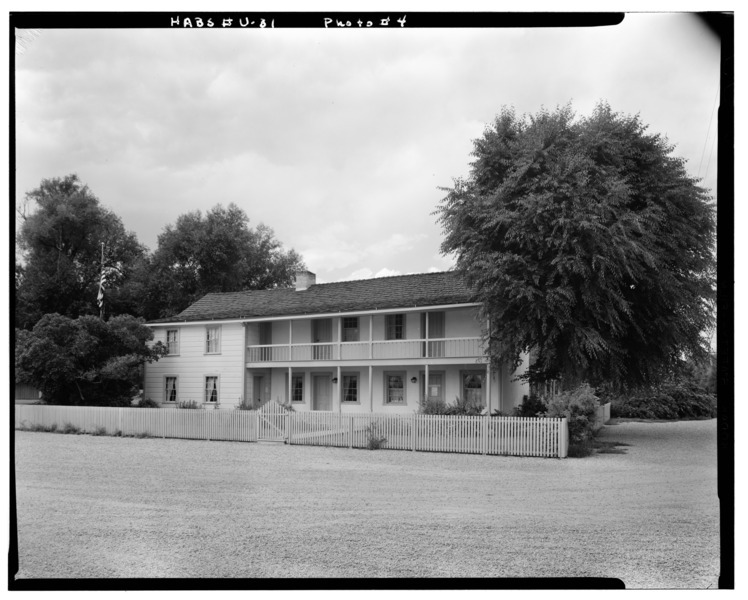
    <title type="html"><![CDATA[ Simpson Springs Pony Express Station]]></title>
    <summary type="html"><![CDATA[<p><strong><em>Simpson Springs provided the only freshwater to a barren part of the Pony Express. Riders and horses quenched their thirst there before continuing their long journey.</em></strong></p><img src="https://www.intermountainhistories.org/files/fullsize/d4b7991eb5b328b9f4874236122f35ac.jpg" alt="Pony Express Station" /><br/><p>In 1851, George Chorpenning and Absolom Woodward were awarded the first overland mail contract between Sacramento and Salt Lake City. Absolom was killed by Indians later that year, and George began running the mail by himself. Simpson Springs was a promising site along the route because it was the only good source of water for miles in the barren desert. In 1859, George set up a ring of stones as a foundation for his Sibley tent. </p><p>By 1860, a stone house was built, and the firm of Russell, Majors, and Waddell bought the site for the Pony Express. They eventually bought the entire Chorpenning mail and stage line. George Dewees managed the Simpson Springs Station, which was located between Government Creek Station to the northeast and River Bed Station to the southwest. Simpson Springs Station, like many of the stations along the Pony Express, went by many names. Richard F. Burton wrote that Simpson Springs was, “the station which Mormons call Egan’s Springs, anti-Mormons Simpson Springs, and Gentiles Lost Springs.” </p><p>The name Simpson Springs came from the Camp Floyd topographical engineer J. H. Simpson. In 1859, Simpson was commissioned to lay out an acceptable route from Salt Lake City to Carson Valley. On that expedition, he passed through what would be named Simpson Springs. After the Pony Express ended, the station was decreasingly used by mail and shipping companies until it was abandoned in 1869.</p><p>Richard Burton passed through the area in 1860 and described the landscape in this way. “All was desert: the bottom could no longer be called basin or valley: it was a thin fine silt, thirsty dust in the dry season, and putty-like mud in the springs and autumnal rains.” In 1965, a monument was placed to mark the station site, and, in 1975, the Bureau of Land Management and Future Farmers of America finished reconstructing the station.</p><p><em><strong><a href="https://www.intermountainhistories.org/items/show/197">For more (including 3 images) view the original article</a></strong></em></p>]]></summary>
    <published>2018-06-06T23:13:37+00:00</published>
    <updated>2026-04-17T19:32:02+00:00</updated>
    <link rel="alternate" type="text/html" href="https://www.intermountainhistories.org/items/show/197"/>
    <id>https://www.intermountainhistories.org/items/show/197</id>
    <author>
      <name>Samuel Hauber, Brigham Young University</name>
    </author>
  </entry>
  <entry>
    <title type="html"><![CDATA[Camp Floyd Pony Express Station<br />
]]></title>
    <summary type="html"><![CDATA[<p><strong><em>The interval of time that this Pony Express station operated coincided with an economic boom in the late 1850s. The fast-paced town was a stopover for Pony Express riders and celebrities. </em></strong></p><img src="https://www.intermountainhistories.org/files/fullsize/ff43ca28da08ed83d18a38c4a318af77.jpg" alt="John Carson House, Main Street, Fairfield, Utah County, UT" /><br/><p>Camp Floyd, also called Fairfield Station, was located between Joe’s Dugout Station and East Rush Valley Station. Since it was in the town of Fairfield, Floyd Station was one of the more comfortable and safe layovers for pony express riders. Many stations were small shacks in the middle of the desert, but the Camp Floyd station was an adobe inn that John Carson built.</p><p>John Carson, John Williams, and a few others established the Fairfield settlement in 1858 when they built homes and moved their families to the area. The settlement grew into a town when the U.S. Army arrived later that year. On July 8, 1858, the army arrived at the place where they would build Camp Floyd.   The army ordered 16 million pounds of freight to be brought to Camp Floyd by the Russell, Majors, and Waddell firm. This contract forced the firm to expand their resources and capital. Russell, Majors, and Waddell would eventually create and operate the Pony Express. The construction of the camp was completed November 9, 1858, and it was named after Secretary of War John B. Floyd.</p><p>With the construction of Camp Floyd came an influx of soldiers. This raised the population of Fairfield to a booming 7,000. In its heyday, there were seventeen saloons to keep the residents entertained, and the town became quite rowdy. John Carson applied the strict precepts of his Mormon faith to the inn that he ran. Because of these standards, his inn became the designated place for famous and important visitors to stay. Mark Twain, Horace Greeley, Porter Rockwell, and Sir Richard Burton were among the celebrities who stopped at the inn. These big names shared a roof with the rugged riders of the Pony Express.</p><p>When the Civil War broke out in 1861, things began to change. John B. Floyd joined the Confederacy and so the fort was renamed Fort Crittenden. The soldiers were called eastward and, on July 27, 1861, the last remnants of the army departed. On their way out, the army burned down their buildings and detonated their unused ammunition. By September 2, 1861, there were only eighteen families in Fairfield. One month later, the Pony Express was shut down and Fairfield’s boom period ended.</p><p><em><strong><a href="https://www.intermountainhistories.org/items/show/196">For more (including 3 images) view the original article</a></strong></em></p>]]></summary>
    <published>2018-06-06T22:39:53+00:00</published>
    <updated>2026-04-17T19:32:02+00:00</updated>
    <link rel="alternate" type="text/html" href="https://www.intermountainhistories.org/items/show/196"/>
    <id>https://www.intermountainhistories.org/items/show/196</id>
    <author>
      <name>Samuel Hauber, Brigham Young University</name>
    </author>
  </entry>
  <entry>
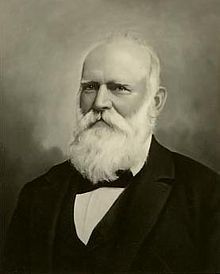
    <title type="html"><![CDATA[Ephraim K. Hanks, Expert Courier]]></title>
    <summary type="html"><![CDATA[<p><strong><em>As the Latter-day Saint settlements in Utah became more established in the late 1840s, a need for a good line of communication between their territory and the rest of the country became increasingly important. The federal government established a Post Office in Salt Lake City in the winter of 1849, but it took some time to get a bi-monthly schedule to start running. In 1850, a twice a month service was established between Kanesville, Iowa, and Salt Lake City. In the years to follow, Ephraim K. Hanks would play an important role in this endeavor.</em></strong></p><img src="https://www.intermountainhistories.org/files/fullsize/9b92542e532b43d6389abe1d34909758.jpg" alt="Ephraim D. Hanks" /><br/><p>Ephraim K. Hanks'  involvement in the transportation of mail across the plains began in 1851. In August of that year, Samuel H. Woodson subcontracted the delivery of mail between Fort Laramie and Salt Lake City to Hanks and another man named Feramorz Little. Contracted for $8,000 a year, the pair arrived at Fort Laramie on the fifteenth of every month to drop off outgoing mail, pick up incoming mail, and escorted any emigrants traveling to Salt Lake City.  The trek required skill, resourcefulness, and hard work - all of which Hanks had gained through his many years of experience crossing the plains. The dangers of these trips was not lost on Hanks’ wife, Thisbee Read, who feared for her husband’s safety during his travels. Hanks, too, recognized the dangers, but also felt a sense of duty to accomplish the task that Brigham Young had entrusted to him.  </p><p>During a seven-year period, Hanks made the 2,400-mile round trip more than fifty times. He once made the journey from Salt Lake to Independence in less than 23 days--the fastest recorded time during that era.  </p><p>He frequently interacted with American Indians during his travels. Hanks’ quick thinking and friendliness enabled him to survive several potentially perilous encounters with Native Americans. The New York Herald praised Hanks for being the “most daring and intrepid of all Mormon mail carriers” for his ability to get the mail across the route safely and on time even though the “Indians on the route had refused to let others pass freely.” </p><p>His wife Thisbee spoke of his dedication and commitment to the job of getting the mail to its destination safely. His trips in the winter occasionally left him stranded in impassable snow. One on of these journeys, Hanks “lived in a cave on one of these trips with the mail, eating nothing but dried beef rolled in flour, until the winter snows melted enough for him to be on his way again.”   Hanks set up a ranch near Emigration Canyon, which served as a Pony Express station and a way station for travelers passing through the area. Although no longer there, the approximate location of the Pony Express station is remembered by a historical land marker.</p><p><em><strong><a href="https://www.intermountainhistories.org/items/show/21">For more (including 3 images) view the original article</a></strong></em></p>]]></summary>
    <published>2017-02-15T17:13:00+00:00</published>
    <updated>2026-04-17T19:31:58+00:00</updated>
    <link rel="alternate" type="text/html" href="https://www.intermountainhistories.org/items/show/21"/>
    <id>https://www.intermountainhistories.org/items/show/21</id>
    <author>
      <name>Daniel Dunford, Brigham Young University </name>
    </author>
  </entry>
</feed>