<?xml version="1.0" encoding="UTF-8"?>
<feed xmlns="http://www.w3.org/2005/Atom">
  <title type="text">Intermountain Histories</title>
  <updated>2026-04-17T19:32:20+00:00</updated>
  <generator uri="http://framework.zend.com" version="1.12.20">Zend_Feed_Writer</generator>
  <link rel="alternate" type="text/html" href="https://www.intermountainhistories.org/"/>
  <link rel="self" type="application/atom+xml" href="https://www.intermountainhistories.org/items/browse?output=rss2"/>
  <id>https://www.intermountainhistories.org/</id>
  <author>
    <name>Intermountain Histories</name>
    <uri>https://www.intermountainhistories.org</uri>
  </author>
  <link rel="hub" href="https://pubsubhubbub.appspot.com/"/>
  <entry>
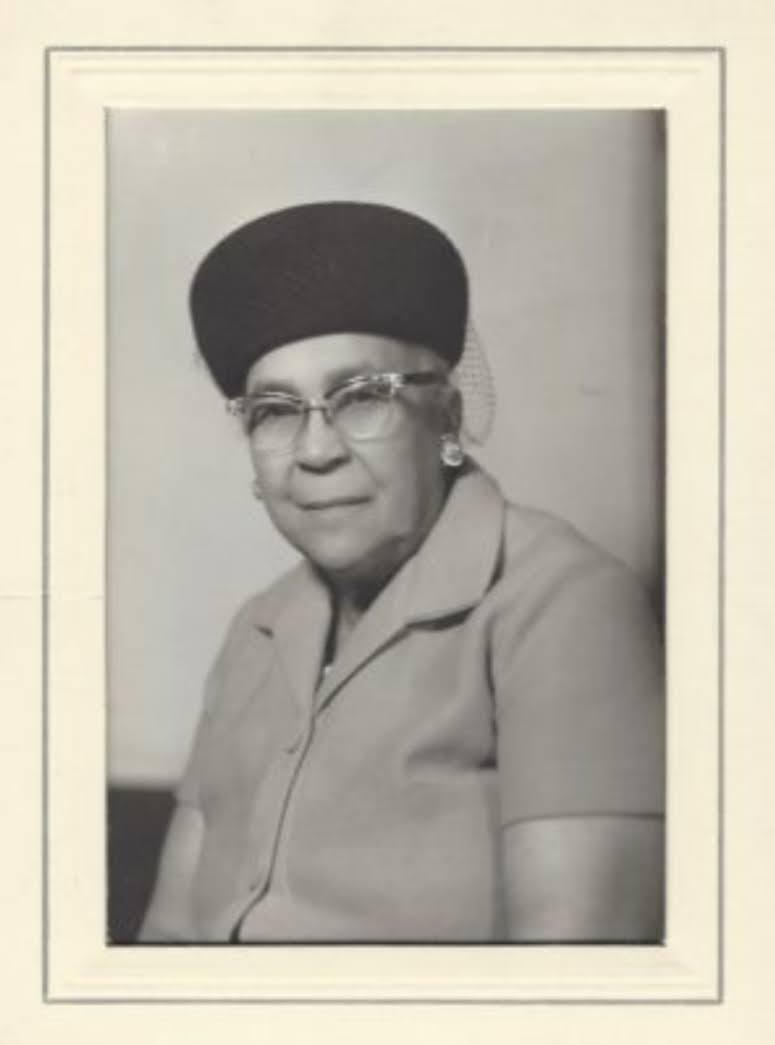
    <title type="html"><![CDATA[Mignon Richmond: First Black Woman College Graduate in Utah]]></title>
    <summary type="html"><![CDATA[<p><strong><em><span style="font-weight:400;">In 1921 Mignon Barker Richmond became the first African American woman to graduate from college in Utah and went on to become a community organizer and civil rights activist.</span></em></strong></p><img src="https://www.intermountainhistories.org/files/fullsize/8b40389c2ee054bc94fe17722f9e1b3b.jpg" alt="Mignon Barker Richmond" /><br/><p><span style="font-weight:400;">Mignon Barker Richmond was born on April 1, 1897 in Salt Lake City to William Barker and Mary Alice Reagan Barker. She attended Utah Agricultural College, now known as Utah State University, in Logan, Utah, graduating in 1921 with a degree in home economics. She persisted in spite of gross racism from her professors and peers, and participated in the Empyrean Club, a group of women that discussed contemporary problems and events, becoming its secretary-treasurer in her senior year. Following graduation, she faced difficulties finding a job in her field of study due to racial discrimination, and only after 27 years was she able to obtain work in her field of study, working first as a laboratory technician, and later as a school lunch supervisor at the University of Utah Stewart School from 1948 to 1953, and was afterwards hired to start home-living classes for the Utah State Industrial School. </span>
<span style="font-weight:400;">During this period she was active in the National Association for the Advancement of Colored People (NAACP) and the Young Women’s Christian Association (YWCA), and in 1957 she became the YWCA Food Services Director in Salt Lake City, where she stayed until her retirement in 1962 at the age of 65. Later, during president Lyndon Johnson’s administration, she became the head of the Women’s Job Corps and chairwoman of Project Medicare Alert. During her work with the Salt Lake chapter of the NAACP, she co founded the Nettie Gregory Center, a venue for minority youth to be involved in recreation in Salt Lake City, as well as on boards for the Utah Community Service Council and the Women’s Legislative Council, where she helped create legislation to fight poverty. After receiving several awards for her community service and commitment to education and civil rights, she died at the age of 86 on March 10, 1984. Many organizations including the Salt Lake Branch NAACP, Trinity AME Church, and Calvary Baptist Church came together to dedicate Richmond Park in Salt Lake City in 1984, and commissioned a plaque describing Mignon Barker Richmond as an educator, civil leader, and humanitarian.</span></p><p><em><strong><a href="https://www.intermountainhistories.org/items/show/874">For more (including 3 images) view the original article</a></strong></em></p>]]></summary>
    <published>2024-11-02T22:24:37+00:00</published>
    <updated>2026-04-17T19:32:20+00:00</updated>
    <link rel="alternate" type="text/html" href="https://www.intermountainhistories.org/items/show/874"/>
    <id>https://www.intermountainhistories.org/items/show/874</id>
    <author>
      <name>Morgon George, Utah State University</name>
    </author>
  </entry>
  <entry>
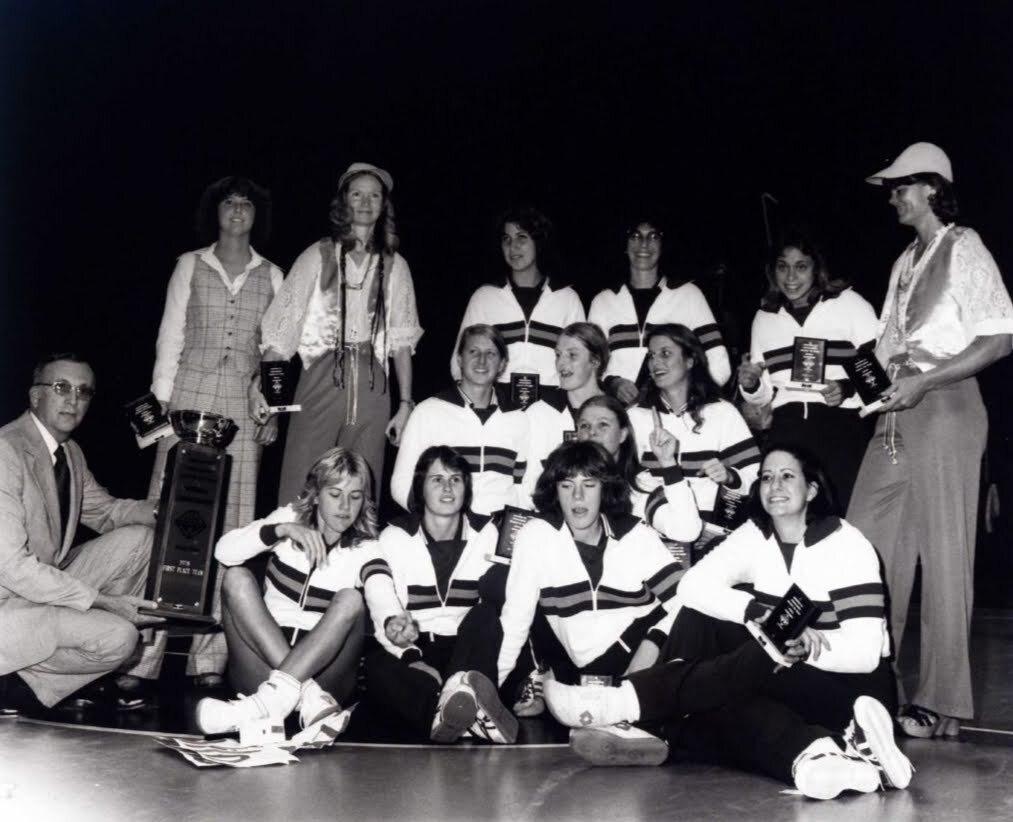
    <title type="html"><![CDATA[Title IX and Women’s Athletics at Utah State University]]></title>
    <summary type="html"><![CDATA[<p><strong><em>Women’s athletics at Utah State University have come a long way since the passing of Title IX in 1972. Athletic Director Marilyn Weiss worked hard to gain more resources for female athletes. During her time at Utah State, three women’s athletic teams won national championship titles. She helped to lay the foundation for the long-term success of women’s athletics at USU.</em></strong></p><img src="https://www.intermountainhistories.org/files/fullsize/db7904d3f034ebce2d2e9c00c65de8d7.jpg" alt="1978 Women&#039;s Volleyball Team at Utah State University" /><br/><p><span style="font-weight:400;">Women have been involved in athletics since the early days of Utah State University. As early as 1901, USU boasted an organized softball team and hosted basketball tournaments. Due to a lack of funding, however, women’s athletics stayed local and small. This began to change after Title IX became law on June 23, 1972. The law prohibited sex-based discrimination in any institution that receives federal funding. Initially created to encourage more women to pursue higher education, today the law is mostly associated with college and high school athletics and promoting equality between men’s and women's sports. </span></p><p><span style="font-weight:400;">Title IX changed the college landscape, in the classroom and on the court. Schools were required to give women more support and resources. Before Title IX, women’s athletics didn’t offer athletic scholarships. As of 2021, there are 74,173 athletic scholarships available to women compared to 77,784 available to men.</span>
<span style="font-weight:400;">Marilyn Weiss was the USU Athletics Director for Women’s sports from 1975 to 1981. Under her leadership, Utah State formed its first volleyball team in 1976. Weiss served as the USU’s women’s basketball coach, volleyball coach, and track coach during her tenure with the university, and knew that not much had changed at USU after the passage of Title IX. She was determined to change that. In 1976, Weiss hired Mary Jo Peppler and Marilyn McReavy, both former Olympians, as co-head coaches of the volleyball team. They recruited strongly from across the country to bring great talent to USU. </span>
<span style="font-weight:400;">Weiss knew that the women’s programs would have to operate under a very tight budget, but she was determined to succeed. If the Aggies wanted to compete against the top teams in the country, they had to get to the West Coast. In the off-season, the team traveled in a fifth-wheel trailer to southern California to challenge powerhouse teams like USC and UCLA. Although the budget was small, the coaches and athletic director made it work and their efforts paid off. The USU Volleyball team became National Champions in 1978, winning the Association for Intercollegiate Athletics for Women (AIAW) volleyball championship. They were runner-up the following season. During Weiss’s time at USU, the softball team also won two national titles in 1980 and 1981. </span>
<span style="font-weight:400;">Weiss filed a Title IX complaint against the university a few years before she left. Although USU saw success while she was here, she knew womens’ athletics were still being underfunded. Marilyn Weiss and the coaches and players laid a foundation to move women’s athletics forward at Utah State University. As of 2024, USU has 8 women's varsity teams and over 180 women rostered. USU offered $3,106,721.54 in scholarships to female athletes in 2024, among 149 athletes.</span></p><p><em><strong><a href="https://www.intermountainhistories.org/items/show/873">For more (including 5 images) view the original article</a></strong></em></p>]]></summary>
    <published>2024-11-02T17:31:25+00:00</published>
    <updated>2026-04-17T19:32:19+00:00</updated>
    <link rel="alternate" type="text/html" href="https://www.intermountainhistories.org/items/show/873"/>
    <id>https://www.intermountainhistories.org/items/show/873</id>
    <author>
      <name>Hadli Lords, Utah State University</name>
    </author>
  </entry>
  <entry>
    <title type="html"><![CDATA[Joe Hill: The Singing Voice of Labor]]></title>
    <summary type="html"><![CDATA[<p><strong><em>This monument was raised in 2013, 108 years after Joe Hill’s execution and built on the very spot where the IWW songwriter was executed, based on circumstantial evidence. </em></strong></p><img src="https://www.intermountainhistories.org/files/fullsize/16274c8b51b488d753e1d34265c74b56.jpg" alt="Joe Hill Memorial Plaque" /><br/><p>Joe Hill was born in Gavle, Sweden in 1879, and immigrated to the USA in 1902 for want of work. After years of itinerant labor, he joined the Industrial Workers of the World (IWW,) commonly known as the "Wobblies," in 1908. The IWW was a radical labor union, which represented not just skilled workers, but any worker, in any job, regardless of age, race, or gender. The union was also not just focused on obtaining improvements in wages, hours, or conditions, but a total overthrow of the capitalist system. </p><p>Hill hid in boxcars and "rode the rails" to where he could find work, and after a couple years he became an organizer in the IWW, writing songs to mobilize the workers during times of strikes. His "Little Red Songbook" spread throughout the IWW and therefore throughout the country, whenever Wobblies went on strike, they would sing his songs, and usually he would be there too. And in 1914, the strikes were in Utah, involving the workers of Utah Construction Company, represented by IWW local 69, cheered on by Joe Hill in person. There had been repeated clashes between the IWW and the Salt Lake City Police that created an atmosphere of tension in the city. </p><p>On January 10, 1914. Hill was shot in the chest and went to visit a doctor friend to have it treated, the same night John and Arling Morrison were killed in a robbery at the grocery store at which they worked. Hill's doctor reported him to the police, and Hill was promptly arrested. Hill, and many others in the IWW or otherwise sympathetic to his cause, believed the arrest and trial would simply be harassment, as it so often had been before. But Hill, after meeting his state-appointed lawyers, felt strongly that his lawyers had been bribed to 'throw' the case, despite the lack of evidence, and he chose to represent himself. He argued that his songs were free and protected speech, and that the work of the IWW in Utah was protected under the right to associate, and that their actions were chiefly against economic inequality. </p><p>Hill's trial lasted less than one month, during which time the state failed to provide any motive, a single piece of evidence, or indeed any possible indication that any of the bandits had been Joe Hill. The only piece of evidence the prosecution submitted was Joe Hill's IWW red card. The IWW were known for being violent and inhumane, claimed the prosecution, and Hill was a member of it. Hill wanted to overthrow capitalism, civilization itself they claimed, and through his songwriting and performances, even if he hadn't done the murders himself, he was equally responsible. Hill's demands that he had been mistried and appeals for a retrial fell upon deaf ears, and against nationwide beliefs that there had been an abrogation of due process, he was found guilty by jury on June 27 and sentenced to death on July 8th. </p><p>Hill appealed the sentence, and a massive letter-writing campaign began, with letters pouring into the office of Utah Governor Spry, both demanding Spry pardon Hill or to permit the execution. President Woodrow Wilson asked Spry to pardon, stating that Hill's trial had not been fair, as had the Swedish ambassador. In the end, Hill was executed by firing squad on November 19, 1915. Many felt then and feel to this day that Hill had been tried for his speech and for his affiliations rather than any possibility of being among the murderers.</p><p><em><strong><a href="https://www.intermountainhistories.org/items/show/872">For more (including 3 images) view the original article</a></strong></em></p>]]></summary>
    <published>2024-10-31T21:23:23+00:00</published>
    <updated>2026-04-17T19:32:19+00:00</updated>
    <link rel="alternate" type="text/html" href="https://www.intermountainhistories.org/items/show/872"/>
    <id>https://www.intermountainhistories.org/items/show/872</id>
    <author>
      <name>Joseph R. McKellar, Utah State University</name>
    </author>
  </entry>
  <entry>
    <title type="html"><![CDATA[The Legacy of Helena’s Montana Plaindealer Newspaper ]]></title>
    <summary type="html"><![CDATA[<p><strong><em>Published from March 1906 to September 1911, Helena's M<em>ontana Plaindealer</em> was one of the most popular African American newspapers in the state. This newspaper represented a small but vibrant African American community in early Montana.</em></strong></p><img src="https://www.intermountainhistories.org/files/fullsize/82c4822381690566ee87726d08b9622d.jpg" alt="The April 20th, 1906 edition of the Montana Plaindealer" /><br/><p>In the early 1900’s, Helena was the home of Montana’s largest African American population with over 400 individuals, which was about 3% of the city’s population. In the entire state of Montana there were about 2,000 African American residents. Joseph B. Bass, founder and editor of the Montana Plaindealer, was an active member of the African Methodist Episcopal Church and a strong believer in the “hard work and self-improvement" doctrine of Booker T. Washington. He was previously employed at the Topeka Plaindealer in Kansas. He worked on the paper with the help of Joseph Tucker, an African American man who had lived in Helena for over a decade and worked as a printer. </p><p>Four pages long and printed weekly, The Montana Plaindealer was a trusted news source in the community. The newspaper was strongly Republican and one of their taglines stated, “We unhesitatingly subscribe to the principles of Republicanism.” It preached the goal of “racial uplift” through entrepreneurship and civic work and supported Progressive political reform. The inaugural edition stated, “This enterprise shall at all times strive for a greater Helena, and for mutual progress of all people in the community, and for a greater activity of our people in the business world.” These sentiments were expressed in the stories, editorials, and information conveyed in the newspaper. </p><p>Additionally, Bass wrote about community news, such as church information, and other national interest stories. An example of a national story was the 1907 Brownsville Incident. An important column in every edition was the “Race News” column that published stories about racial discrimination, economic opportunities, and Civil Rights news. The newspaper also included results of political battles. An example of these battles is seen in local primaries and elections on the state and national levels. Additionally, the newspaper also protested discriminatory legislative action. This is illustrated in their protest of an anti-miscegenation bill passed in Montana in 1909. </p><p>The newspaper’s impact and reach are difficult to explain with statistics, but Bass stated that over 3⁄4 of all African Americans in Helena subscribed to the paper. The paper also had a number of white subscribers as well, a number that tripled the amount of African American subscribers. The paper was partially funded by fundraising social events, like dinners, that were thrown by White Republicans. Unfortunately, these fundraising events were not enough as The Montana Plaindealer underwent financial difficulties and had to suspend publication due to a lack of money in September 1911.</p><p><em><strong><a href="https://www.intermountainhistories.org/items/show/863">For more (including 6 images) view the original article</a></strong></em></p>]]></summary>
    <published>2024-10-18T13:32:50+00:00</published>
    <updated>2026-04-17T19:32:19+00:00</updated>
    <link rel="alternate" type="text/html" href="https://www.intermountainhistories.org/items/show/863"/>
    <id>https://www.intermountainhistories.org/items/show/863</id>
    <author>
      <name>Morgan Baird, Rocky Mountain College  </name>
    </author>
  </entry>
  <entry>
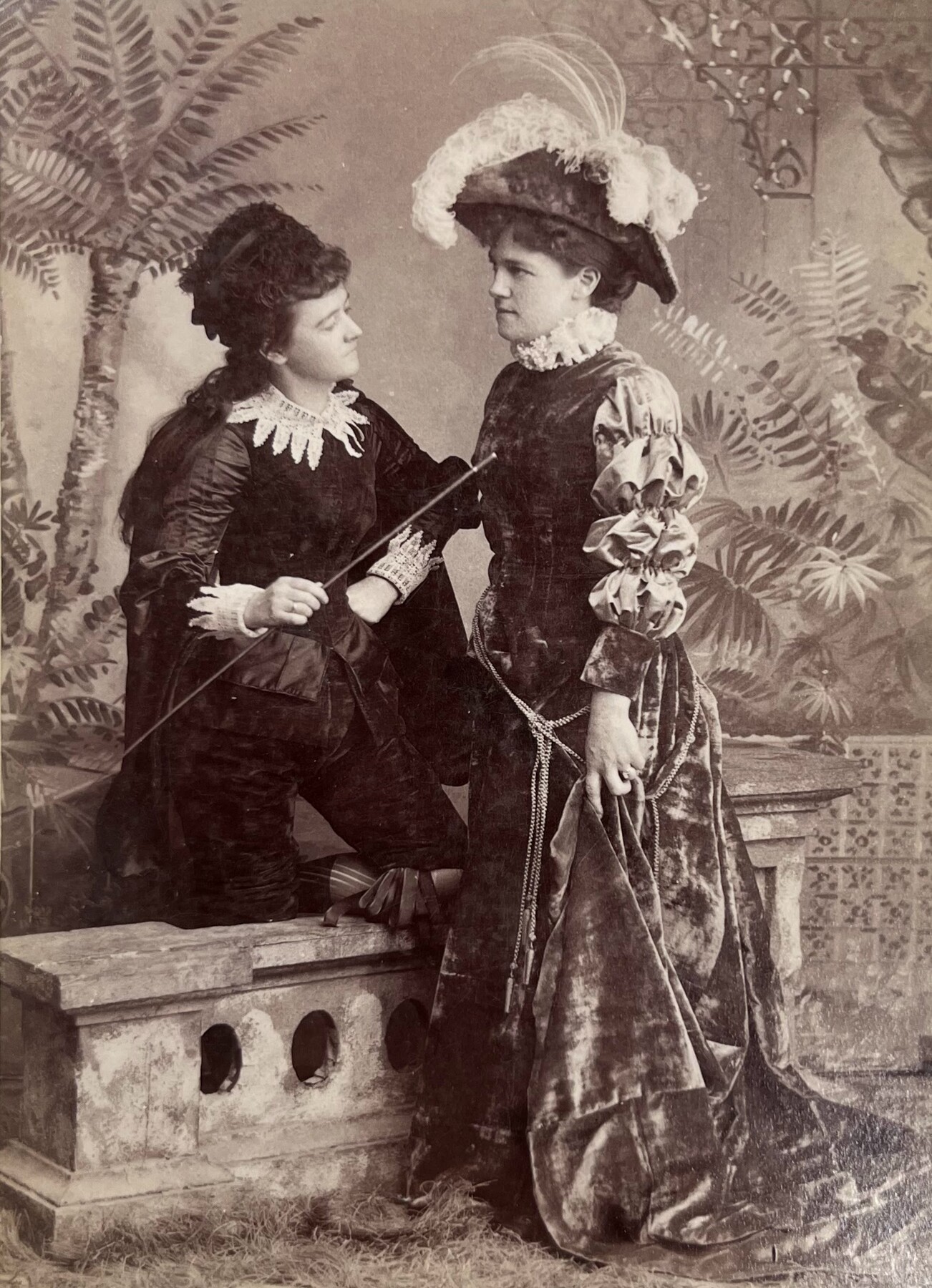
    <title type="html"><![CDATA[Bessie Morehead: The Fight for a Spot ]]></title>
    <summary type="html"><![CDATA[<p><strong><em>Bessie Morehead, a well-known singer in Cache Valley, defeated her opponent Charles Hyde to become the first female County Recorder in Cache County, Utah.</em></strong></p><img src="https://www.intermountainhistories.org/files/fullsize/a689c8c32b896bc5645f616e6b0df0a9.jpg" alt="Actresses Bessie Morehead and Maggie Sloan in theatrical costume for &quot;The Three Mantles&quot;" /><br/><p>In 1896 Utah became a state and women were allowed to run for public office. In that year 14 women won public office in Utah: one to the U.S. Senate, two to the state House of Representatives, and eleven to county offices, including Bessie Morehead. Morehead was born in Smithfield, Utah in 1867 and became a well known Logan citizen. She was a talented singer and performed in the Logan Opera Company. She was seen as one of Utah’s “best and favorite vocalists.” </p><p>She decided to run for the Cache County Recorder in 1896. This was a highly respected and honorable position to hold. Democrats nominated Morehead instead of the incumbent Charles Hyde. Many Democrats at the time were excited for women to participate in public office and wanted to give Morehead a chance. Hyde decided to switch to the Republican party to run against her. When Hyde came to the Democratic Convention, Morehead kicked him out. He then came at her with a knife but luckily nothing happened. </p><p>The fight didn’t stop there. Her LDS stake president casted doubt on Morehead as a candidate. He implied that Charles Hyde was a more religious member than she was. One editor for the Logan Journal defended her and said she was just as faithful. Amongst all this opposition. Morehead still won the election. She received 3,174 votes and Hyde received 1,840. After the election Hyde said the “Democratic party of Cache County is corrupt”. Only to receive backlash from the newspaper asking why he sought the Democratic nomination for recorder in the first place if it was corrupt. </p><p>Bessie Morehead served two terms from 1897-98 and 1899-1900. Morehead and 13 other Women in Utah made history. Bessie Morehead became the first woman in Cache County to hold public office. </p><p><em><strong><a href="https://www.intermountainhistories.org/items/show/861">For more (including 4 images) view the original article</a></strong></em></p>]]></summary>
    <published>2024-10-18T05:49:35+00:00</published>
    <updated>2026-04-17T19:32:19+00:00</updated>
    <link rel="alternate" type="text/html" href="https://www.intermountainhistories.org/items/show/861"/>
    <id>https://www.intermountainhistories.org/items/show/861</id>
    <author>
      <name> Samantha H. Crockett, Utah State University</name>
    </author>
  </entry>
  <entry>
    <title type="html"><![CDATA[Founding of Cache Valley Woman Suffrage Association]]></title>
    <summary type="html"><![CDATA[<img src="https://www.intermountainhistories.org/files/fullsize/c97e35b6b620861cc49ef8a031fb1953.jpg" alt="The Logan Tabernacle" /><br/><p>The Cache Valley Woman Suffrage Association (CVWSA) was established in the Logan Tabernacle on December 10, 1889. The CVWSA was a local division of the Utah Woman Suffrage Association and the National Woman Suffrage Association. Many other counties in Utah were also forming Woman Suffrage Associations at this time. The CVWSA was established to regain the voting rights Utah women had been stripped of in 1887. Utah women felt strongly about their right to vote, as can be seen in the Logan Journal article about the CVWSA founding meeting. The writer of the article even went so far as to call those that succeeded in stripping women’s right to vote in 1887 “Utah Carpet Bag Liberals.” Carpet Baggers was a term most commonly used in the Reconstruction South to describe someone perceived as politically disruptive or taking advantage of a situation for political or financial gain. In this context, “Utah Carpet Bag Liberals” is clearly an insult toward those who helped remove women’s suffrage. The women of Cache Valley, just like many women in Utah, were determined to regain the right to vote.</p><p>On December 10, 1889, at 10 am, the founding meeting was held for the CVWSA. Many prominent women in the community and in politics were there. Adeline Barber and Jane Hyde Molen, two local Relief Society Presidents, the women's organization in the Church of Jesus Christ of Latter-Day Saints, were officers of the association. Jane Hyde Molen, a prominent leader of the Democratic Party of Cache County and a member of the Cache County School Board, was named secretary. Women such as Adeline Barber and Jane Hyde Molen who had both political and religious leadership could easily spread information about the association. All officers elected to the CVWSA were women, though men were also in attendance in the meeting. Seventy-eight women joined the association that founding day. Over the years, the Logan Tabernacle was used to house many CVWSA meetings.</p><p>The 1895 Constitutional Convention of Utah was very concerned with the issue of women’s suffrage. Delegates from Cache County presented eight petitions on April 18th, signed by men and women, in favor of equal suffrage in the Utah Constitution. As a result of the hard work of men and women in Cache County and throughout the state, women’s right to vote was reinstated. A banquet was held in the Logan Tabernacle in January 1896 to celebrate the reinstatement of Utah women’s right to vote.</p><p><em><strong><a href="https://www.intermountainhistories.org/items/show/860">For more (including 3 images) view the original article</a></strong></em></p>]]></summary>
    <published>2024-10-17T23:24:35+00:00</published>
    <updated>2026-04-17T19:32:19+00:00</updated>
    <link rel="alternate" type="text/html" href="https://www.intermountainhistories.org/items/show/860"/>
    <id>https://www.intermountainhistories.org/items/show/860</id>
    <author>
      <name>Madison Harris, Utah State University</name>
    </author>
  </entry>
  <entry>
    <title type="html"><![CDATA[Intermountain Indian School: Native Civil Rights in Boarding Schools]]></title>
    <summary type="html"><![CDATA[<p><strong><em>Intermountain Indian boarding school was a Native American off-reservation boarding school that aimed to assimilate Navajo children by giving them education in English, and job skills. It has a complicated history within the Tribes it served, with a list of controversies during and after its operation.  </em></strong></p><img src="https://www.intermountainhistories.org/files/fullsize/be30be9fe2d5d7aaf475052384f4d0a2.jpg" alt="Girl operating a &#039;Tac X&#039; word flasher" /><br/><p><span style="font-weight:400;">Intermountain Indian School hosted children from The Navajo Tribes, with 212 students in its first year before opening to host students from a variety of tribes in the 1970s. It operated until 1984, finally closing due to the high costs of operation, as well as the dwindling number of Native American boarding schools in the country. Native American off-reservation boarding schools started in the 1800s, with the main purpose of forced assimilation and removal of native culture. Children enrolled in such schools suffered much cruelty such as forbidding native language and culture, being forced to shave their heads, and experiencing abuse and mistreatment in the name of “civilizing” them. In the 1950s the government enacted its termination policy, trying to “end the native problem” by limiting funding to reservations to force natives into cities, and thus boarding schools followed the same ideals. Boarding schools began to focus on preparing Native children to participate in jobs in their new cities, without governmental support. This new policy was in effect during the creation of the Intermountain and thus existed to fit the new policy changes of the termination policy. </span>
<span style="font-weight:400;">The concept of Native American boarding schools in general is proof of the intense violations and pressure put upon the native communities by the US government to in attempts erase their culture, and history. While Intermountain did not restrict cultural expression through clothing or activities, Intermountain was not an exception to other infringements on civil rights. In 1971, a spokesperson from the  American Indian Movement (AIM) an organization created to fight for native civil rights, listed the following concerns; horrible food, unfair grading process, overcrowded and dirty living conditions, forcing students to choose a Christian religion, few native teachers, and Harsh unfair punishments. Another concern with the school was that their education set them up exclusively for jobs lacking upward mobility or chance of improvement, leaving a disparity in job opportunities for Native peoples. As the school continued to run it became increasingly aware and supportive of the needs of the native people, and took steps to rectify some of its social problems, such as making efforts to include more native teachers, and support cultural representation. </span>
<span style="font-weight:400;">The history of the Intermountain is complicated, with mixed reviews from its graduated students. Where some of its students still feeling deeply connected to the school and their time there, others remain deeply traumatized from their experience and have nothing positive to say. In its 34 years of operation, the school was rife with controversy, from both inside and outside the school, and ultimately its history is still complicated and important to the story of the previous students and native communities it interacted with. </span></p><p><em><strong><a href="https://www.intermountainhistories.org/items/show/858">For more (including 5 images) view the original article</a></strong></em></p>]]></summary>
    <published>2024-10-16T01:02:08+00:00</published>
    <updated>2026-04-17T19:32:19+00:00</updated>
    <link rel="alternate" type="text/html" href="https://www.intermountainhistories.org/items/show/858"/>
    <id>https://www.intermountainhistories.org/items/show/858</id>
    <author>
      <name>Thomas Harley, Utah State University</name>
    </author>
  </entry>
  <entry>
    <title type="html"><![CDATA[SOCIO: Advocating for Hispanics in Utah ]]></title>
    <summary type="html"><![CDATA[<p><strong><em>As the Hispanic population in Utah continued to develop during the course of the 20th century, so did the growing community’s efforts to secure equal opportunities for education, representation, and economic welfare. The Spanish-speaking Organization for Community, Integrity, and Opportunity (SOCIO) was a grassroots organization which for over 20 years helped develop reforms aimed at improving educational, economic, social, and political circumstances for the Hispanic population of Utah. </em></strong></p><img src="https://www.intermountainhistories.org/files/fullsize/e9b161375213b85f06121b5fc9b4c60c.jpg" alt="Float for SOCIO in Utah Parade" /><br/><p>At a December 1967 meeting held in the Guadalupe Center, over 150 people—including Father Jerald H. Merrill from the “Our Lady of Guadalupe” Mission and Bishop Orlando Rivera from the Lucero Spanish Ward of the Church of Jesus Christ of Latter-day Saints (LDS, or Mormon)—came together to discuss the possibility of forming a grassroots organization aimed at advocating for the welfare of Hispanics in Utah. The name of this operation would be the Spanish-speaking Organization for Community, Integrity, and Opportunity (SOCIO). On March 21, 1968 SOCIO formally began operations on behalf of the over 50,000 Hispanics residing in Utah. </p><p>SOCIO started as a grassroots organization seeking to ensure the civil rights of Hispanics in Utah. For decades, Hispanics had faced varying levels of racism and discrimination. In the mid-1960s, many struggled to thrive in Utah’s growing economy. Discrimination was persistent in new private-sector job markets, and many lacked the skills and training for the new jobs and industries. These issues were at the forefront of SOCIO concerns. </p><p>Several other organizations shared SOCIO’s goals and concerns and focused on helping Hispanics, mainly Mexicans, navigate financial and social problems in Utah. However, SOCIO differed from other Chicano Civil Rights efforts in the Southwest in its approach to protecting and edifying the Spanish-speaking population. They made it a point to avoid confrontational methods of protest and activism and instead worked with the systems already in place in order to include Hispanics in leadership and fix the rules and regulations that were negatively affecting them. In this sense, they focused on rectifying the causes of challenges rather than alleviating negative outcomes as previous Hispanic rights organizations in Utah had. </p><p>SOCIO focused its attention on creating representation in both governmental and professional markets. They created several skill training programs aimed at increasing Hispanic self-sufficiency and included clerical skills, math and grammar skills, construction training, and even the Minority Women Employment Program which worked to train Hispanic women for occupations such as plumbing. Furthermore, SOCIO helped implement permanent offices in the Utah government such as the Governor's Advisory Council on Hispanic Affairs whose specific aim was to serve as the voice of Utah’s Spanish-speaking population at a bureaucratic level. They also proposed the formation of a Utah Migrant Council, whose task would be to care for migrants who came each year for agricultural labor. Efforts such as these helped to create an expectation within the Hispanic community of representation on the bureaucratic level. </p><p>However, by 1981, funding became a growing problem for SOCIO with no plausible solution. Previous efforts to rally funding from church organizations, businesses, and the government—along with a membership fee—proved insufficient. By 1990, SOCIO stopped operating, but not without making a lasting impact on both the educational, social, and economic systems in Utah as seen through the continuation of changes such as the Office of Hispanic Affairs.</p><p><em><strong><a href="https://www.intermountainhistories.org/items/show/638">For more (including 3 images) view the original article</a></strong></em></p>]]></summary>
    <published>2022-09-07T18:31:34+00:00</published>
    <updated>2026-04-17T19:32:14+00:00</updated>
    <link rel="alternate" type="text/html" href="https://www.intermountainhistories.org/items/show/638"/>
    <id>https://www.intermountainhistories.org/items/show/638</id>
    <author>
      <name>Lindsey Meza, Brigham Young University</name>
    </author>
  </entry>
  <entry>
    <title type="html"><![CDATA[Aryan Nations in Coeur d’Alene, Idaho: Is the state “Too Great for Hate?”]]></title>
    <summary type="html"><![CDATA[<p><strong><em>Coeur d’Alene is the largest city in Northern Idaho, nestled among the Rocky Mountains and a picturesque lake. It was also home to a major compound of the Aryan Nations.</em></strong></p><img src="https://www.intermountainhistories.org/files/fullsize/2da7685c12ed5a2ea90e86e36e9487ae.jpg" alt="Founder of the Aryan Nations" /><br/><p>From the early-1970s arrival of Aryan Nations leader Richard Butler, to the March 2020 Idaho House’s failed vote for a “Too Great for Hate” specialty license plate, the state of Idaho has in recent years struggled over both the presence and meaning of modern white supremacy within its borders. Shortly after moving to Idaho, Butler established an Aryan Nations headquarters in rural Kootenai County on a twenty-acre site just north of Coeur d’Alene. Butler used funding he had saved and donations from fellow worshippers to begin holding services for his own congregation of the Church of Jesus Christ-Christian, a group founded in the 1940s that promulgated white supremacy and antisemitism. Butler’s compound included an adjoined print shop for publishing books, fliers, posters, and pamphlets filled with racist propaganda and antisemitic caricatures. The group led parades that gathered large crowds of youths in downtown Coeur d’Alene alongside annual summits at the compound. In the mid-1990s, the Aryan Nations began running its own website, one of the first dedicated sites for recruiting white supremacists. The religious tenor of Butler’s compound was a major draw for many who saw him as a prophetic individual, and he claimed a religious freedom right to spread his message of hate. From this headquarters, Butler preached white supremacy and exclusion to his followers, making the area synonymous with white supremacy.
However, many residents of Coeur d’Alene felt distressed at Butler’s growing presence. In 1981, Butler’s followers and rivals engaged in violent conflict, and someone defaced a local Jewish restaurant with antisemitic grafitti. This brought the compound and the town to the attention of the Kootenai County Task Force on Human Relations. The brainchild of local activists Tony Stewart, Norman Gissel, and Marshall Mend, the task force rallied locals to advocate against hate by using community outreach programs to speak against white supremacy and by intervening in disputes involving Butler and his supporters.
The advocacy group finally made headway when they won a $6.3 million lawsuit against Butler’s group for violating local codes. Stewart, Gissel, and others involved in that campaign were loath to offer their strategy as a solution for other cities, but they say their approach might be one way to address white supremacy in the US and around the world. Bankrupted by the suit, the Aryan Nations lost possession of their local property. Idaho firefighters used the compound buildings for arson investigation training, eventually burning down every structure.
The Carr Foundation later purchased the land and gifted it to the North Idaho College Foundation on the condition that they redevelop it into a “peace park.” However, in 2019 NICF obtained the Carr foundation’s permission to instead sell the land in a favorable market to fund an endowment for human rights education.
The task force’s victory over the Aryan Nations does not mean the struggle against white supremacy has concluded. Coeur d’Alene remains a town of mixed emotions between those who allow racism to flourish and those who believe Idaho can be “too great for hate.”</p><p><em><strong><a href="https://www.intermountainhistories.org/items/show/622">For more (including 3 images) view the original article</a></strong></em></p>]]></summary>
    <published>2022-06-25T05:20:37+00:00</published>
    <updated>2026-04-17T19:32:13+00:00</updated>
    <link rel="alternate" type="text/html" href="https://www.intermountainhistories.org/items/show/622"/>
    <id>https://www.intermountainhistories.org/items/show/622</id>
    <author>
      <name>Omotayo Akingba, College of Idaho</name>
    </author>
  </entry>
  <entry>
    <title type="html"><![CDATA[Suffrage at the Coconino County Courthouse in Flagstaff, Arizona]]></title>
    <summary type="html"><![CDATA[<p><strong><em>In 1912, the Arizona Territory became a state, and the Arizona Equal Suffrage Association invited prominent suffragette Anna Howard Shaw to visit the Coconino County Courthouse in Flagstaff to speak about women’s rights. Shaw, from Massachusetts, was a doctor, minister, and president of the National Women’s Suffrage League.</em></strong></p><img src="https://www.intermountainhistories.org/files/fullsize/6a7936a403c1c0c6baed9163ac721c1f.jpg" alt="Coconino Courthouse" /><br/><p>The United States created Arizona Territory by splitting New Mexico Territory in half in February 1863. Unlike some other western territories, Arizona forestalled legally granting women the right to vote or hold office, despite efforts by suffragists in 1881, 1883, and 1885. In 1891, after President Benjamin Harrison denied Arizona statehood and included equal suffrage law included in its proposed state constitution territorial suffragettes founded the Arizona Equal Suffrage Association, combining the fight for women’s rights with the continued fight for statehood. In February 1912, Arizona finally became a state under President William Taft; though the new state constituion did not immediately afford women the right to vote, the women of the Arizona Equal Suffrage Association saw the constitution’s initiative laws as an opportunity to continue the fight for women’s votes.
On October 18, 1912, the Arizona Equal Suffrage Association invited Dr. Anna Howard Shaw, president of the National Women’s Suffrage League, to visit Arizona and speak on the steps of the Coconino County Courthouse in Flagstaff. A month later, the initiative to introduce women’s suffrage to the ballot passed the legislature. On November 5, 1912, the state’s voters cast their ballots on the initiative, and the women’s suffrage initiative passed with a seventy percent majority victory, even with all of Arizona’s voters being men. This made the Arizona the tenth state to allow women to vote.
In April 2021, Coconino County unveiled a marker at the Flagstaff County Courthouse with the National Collaborative for Women’s History Site and Pomeroy Foundation to commemorate the centennial of women’s voting rights, marking the courthouse as a significant place for the history of women’s suffrage. Speakers that day included County Supervisors Matt Ryan and Patrice Hortsman as well as County Recorder Patty Hansen.</p><p><em><strong><a href="https://www.intermountainhistories.org/items/show/618">For more (including 3 images) view the original article</a></strong></em></p>]]></summary>
    <published>2022-06-23T08:45:45+00:00</published>
    <updated>2026-04-17T19:32:13+00:00</updated>
    <link rel="alternate" type="text/html" href="https://www.intermountainhistories.org/items/show/618"/>
    <id>https://www.intermountainhistories.org/items/show/618</id>
    <author>
      <name>Megan Salinas, Northern Arizona University</name>
    </author>
  </entry>
  <entry>
    <title type="html"><![CDATA[Suffrage at the City and Council Building in Salt Lake City]]></title>
    <summary type="html"><![CDATA[<p><strong><em>Utah’s Constitutional Convention and the Rocky Mountain Suffrage Convention, both major events in the story of women’s suffrage in Utah, were held here in 1895. Dr. Martha Hughes Cannon also served in office here after she became the country’s first female U. S. state senator.</em></strong></p><img src="https://www.intermountainhistories.org/files/fullsize/521903b93ed013636ed82163ece66a80.jpg" alt="Sisters in suffrage" /><br/><p>Although Utah was one of the earliest territories to codify women’s right to vote, it was not always easy for women to maintain this right. In 1887, the United States Congress passed the Edmunds–Tucker Anti-Polygamy Act; in addition to enhancing criminal penalties for polygamy and “unlawful cohabitation,” Edmunds–Tucker also revoked the voting rights of women in Utah Territory, a right which women had been exercising since 1870. This unequal state of affairs persisted until Utah’s Constitutional Convention met at the then-Capitol Building, today’s City and County Building, in 1895.
That March, delegates came together in Salt Lake City to pursue statehood and write a constitution. For Utah’s women, this was an opportunity to restore suffrage, and they campaigned to include gender equal suffrage as a clause in the constitution so that when Utah received statehood, they would also reobtain the right to vote and hold political office. Although the convention did not allow women to vote for delegates, Utah’s women—led by state suffrage leaders such as Sarah M. Kimball, Emmeline B. Wells, and Dr. Martha Hughes Cannon—still advocated for themselves. An assembled group of women marched into the building to hear their petition read, and Utah women also testified in a committee hearing about the benefits of allowing women to vote.
In this same year, Utah women also hosted the Rocky Mountain Suffrage Convention in the same building; prominent suffragist women like Susan B. Anthony and Anna Howard Shaw, among others, attended and gave speeches. In November 1895, the constitutional convention voted to approve the new state constitution, including an equal suffrage provision. When Utah officially achieved statehood in January 1896, women also reobtained the right to vote and hold public office.
Dr. Martha Hughes Cannon soon exercised that right when she ran for public office. Originally from the United Kingdom, Cannon immigrated to Utah to join the Latter-day Saints with her family in 1861. She later graduated with a medical degree in pharmaceuticals from the University of Pennsylvania; she was the only woman in her graduating class. In addition to running a private practice while also working as the resident physician at Deseret Hospital in Salt Lake City, in 1896 Cannon ran against her own husband for a state senate seat and won, making her the United States’ first female state senator.
Because the City and County Building also served as the first state capitol, Cannon took office and served there until 1900. In 1916, Utah completed a new state Capitol Building on a hill to the north. Today, the City and County Building is still in use for public purposes, and it also serves as a monument for women’s suffrage in the United States.</p><p><em><strong><a href="https://www.intermountainhistories.org/items/show/617">For more (including 4 images) view the original article</a></strong></em></p>]]></summary>
    <published>2022-06-23T08:02:09+00:00</published>
    <updated>2026-04-17T19:32:13+00:00</updated>
    <link rel="alternate" type="text/html" href="https://www.intermountainhistories.org/items/show/617"/>
    <id>https://www.intermountainhistories.org/items/show/617</id>
    <author>
      <name>Megan Salinas, Northern Arizona University</name>
    </author>
  </entry>
  <entry>
    <title type="html"><![CDATA[Suffrage at the Salt Lake Tabernacle]]></title>
    <summary type="html"><![CDATA[<p><strong><em>In 1871, national women’s suffrage leaders met at Temple Square in Salt Lake City, Utah, a year after Seraph Young cast the nation’s first vote by a woman under an equal suffrage law. Both Susan B. Anthony and Elizabeth Cady Stanton were present and spoke to the crowd that gathered. </em></strong></p><img src="https://www.intermountainhistories.org/files/fullsize/09accb9bcc5e5a535558ca686a74dbf4.jpg" alt="Tabernacle at Temple Square" /><br/><p>The Church of Jesus Christ of Latter-day Saints (sometimes nicknamed “Mormons”) built the Salt Lake Tabernacle as a space where members could gather in large groups. Its design was such that the acoustics carry a speaker’s voice a long distance, allowing many people to hear. This made the Salt Lake Tabernacle the perfect location for a historic gathering of women’s suffragists, including Susan B. Anthony and Elizabeth Cady Stanton. Susan B. Anthony and Elizabeth Cady Stanton were incredibly prominent suffragists in the nineteenth century. Anthony is the most widely known suffragist of her time and has become a historical icon, having traveled the country to help organize women’s rights organizations, circulate petitions, and give speeches that inspired women, and men as well, to join the movement. Stanton, another leader in the movement, also toured the United States speaking to women about suffrage. In 1871, both Anthony and Stanton visited Utah Territory. For both Anthony and Stanton, traveling to Utah to watch women exercise their right to vote was incredibly significant. They each bore speeches to women assembled at the Salt Lake Tabernacle in Temple Square, expressing the magnanimity of the privilege that they had received, their opposition to young marriages taking place in Utah, and their support for other women’s rights initiatives such as family planning. While in Salt Lake City, Anthony and Stanton also establish the Women’s Suffrage Association of Utah, an affiliate of Susan B. Anthony’s National American Woman Suffrage Association. Today, the Salt Lake Tabernacle is a National Register Historic Landmark District, both because of its significance as a religious site and as a site of women’s suffrage.</p><p><em><strong><a href="https://www.intermountainhistories.org/items/show/616">For more (including 4 images) view the original article</a></strong></em></p>]]></summary>
    <published>2022-06-23T07:30:55+00:00</published>
    <updated>2026-04-17T19:32:13+00:00</updated>
    <link rel="alternate" type="text/html" href="https://www.intermountainhistories.org/items/show/616"/>
    <id>https://www.intermountainhistories.org/items/show/616</id>
    <author>
      <name>Megan Salinas, Northern Arizona University</name>
    </author>
  </entry>
  <entry>
    <title type="html"><![CDATA[Suffrage at Council Hall in Salt Lake City]]></title>
    <summary type="html"><![CDATA[<p><strong><em>In 1869, Utah became the second territory to codify women’s right to vote, and in 1870 a young woman named Seraph Young became the first woman in the United States to cast a vote under an equal suffrage law.</em></strong></p><img src="https://www.intermountainhistories.org/files/fullsize/ec17009c35844913ef31aefc7de55ea3.jpg" alt="The first vote under equal suffrage" /><br/><p>Wyoming became the first United States territory to extend women the right to vote with the passage of an equality act in 1869. A few months later, Utah Territorial Secretary S. A. Mann signed a similar act, extending voting rights to women who were at least twenty-one-years old and were U. S. citizens or the wife, daughter, or widow of a U. S. citizen. Utah then beat Wyoming to the punch when a woman named Seraph Young—a young schoolteacher and grandniece of Brigham Young, former territorial governor and then-president of The Church of Jesus Christ of Latter-day Saints (nicknamed “Mormons”), the majority faith in Utah—made history on February 14, 1870, when she walked up the steps to Utah’s Council Hall in Salt Lake City and became the first woman to legally cast a vote, only a few days after Utah passed the equal suffrage act.
The seeming irony of women first voting in Utah was not lost to history. In the nineteenth century, Utah was nationally famous—or infamous—for the Latter-day Saints’ practice of religious polygamy, something many Americans at the time and later on as well considered irreconcilable with women suffragists’ vision of political rights and social equality. Latter-day Saints plural marriage primarily took the form of polygyny, meaning one man could have multiple wives, and many people believed this practice could only be oppressive to women. However, polygamy was not a hindrance to making Utah one of the earliest sites of women's suffrage. To anti-polygamists, Utah was the perfect place to experiment with women’s voting rights, as they hoped enfranchised women would rise up and end the practice through their votes. Inside Utah, however, it was this exact attitude that drove Utahns to adopt women’s suffrage, hoping that endorsing women’s voting rights would dispel the idea that their society oppressed women.
Although only a few women voted in this first special election in 1870, thousands more joined in by voting in Utah’s general election a few months later. A few years after her momentous vote, Seraph Young married veteran Seth L. Ford, and they later moved to New York City in the late 1870s to be close to his family. Even though Young was a part of such a momentous occasion, she was all but forgotten in popular memory until Utah women and Young’s descendants resurrected her story in the twenty-first century. In February 2020, Utah women gathered to march from City Creek Park to Council Hall, honoring Young and the other women who were so important to Utah’s history. A mural displayed at Council Hall also commemorates Young’s historic vote.</p><p><em><strong><a href="https://www.intermountainhistories.org/items/show/615">For more (including 4 images) view the original article</a></strong></em></p>]]></summary>
    <published>2022-06-23T06:04:16+00:00</published>
    <updated>2026-04-17T19:32:13+00:00</updated>
    <link rel="alternate" type="text/html" href="https://www.intermountainhistories.org/items/show/615"/>
    <id>https://www.intermountainhistories.org/items/show/615</id>
    <author>
      <name>Megan Salinas, Northern Arizona University</name>
    </author>
  </entry>
  <entry>
    <title type="html"><![CDATA[Suffrage in South Pass City]]></title>
    <summary type="html"><![CDATA[<p><strong><em>South Pass City, Wyoming, has long been considered “the birthplace of the women’s suffrage movement” in the West. It is here that women first secured a codified right to vote, and it was also home to the first woman Justice of the Peace. </em></strong></p><img src="https://www.intermountainhistories.org/files/fullsize/b97ab37a1b561f9bed835ce7511cda5a.jpg" alt="City of suffrage" /><br/><p>South Pass City, Wyoming, was the site of Wyoming’s first gold boom. In 1867, prospectors discovered gold, and soon a thousand people rushed to the area, hoping to strike it rich. Like most other gold strike towns, South Pass City boomed and then busted, and most of the newcomers abandoned the community by 1872. However, during the rush, South Pass City became one of the major sites of women’s suffrage in the United States, and is known by some as the birthplace of the women’s suffrage movement.
In 1869, during Wyoming’s first territorial legislation, a saloon keeper named William Bright presented a bill to recognize and affirm women’s right to vote in the territory. The governor at that time, Otis Campbell, passed this bill in December of the same year. This, for the first time, gave women not only the right to vote in Wyoming but to also hold office. In February of 1870, only a few months after the passing of the bill, residents elected South Pass City resident Esther Hobart Morris as Justice of the Peace. She was the first woman in the United States to hold judicial office.
Because of South Pass City’s role in women’s suffrage, the National Park Service designated it a National Historic Landmark in 1961, and the Wyoming 75th Anniversary Commission purchased the town for the state citizens as a “birthday present” in 1966. Four year later, the town was added to the National Register of Historic Places and still operates today as a state park. In 2019, the Wyoming legislature passed a joint resolution recognizing December 10, 2019, as Wyoming Women’s Suffrage Day, commemorating the 150th anniversary of the passage of the bill formally enabling women to vote. </p><p><em><strong><a href="https://www.intermountainhistories.org/items/show/614">For more (including 4 images) view the original article</a></strong></em></p>]]></summary>
    <published>2022-06-23T04:53:03+00:00</published>
    <updated>2026-04-17T19:32:13+00:00</updated>
    <link rel="alternate" type="text/html" href="https://www.intermountainhistories.org/items/show/614"/>
    <id>https://www.intermountainhistories.org/items/show/614</id>
    <author>
      <name>Megan Salinas, Northern Arizona University</name>
    </author>
  </entry>
  <entry>
    <title type="html"><![CDATA[“A Path Forward”: Celebrating Women&#039;s Suffrage in Utah]]></title>
    <summary type="html"><![CDATA[<p><strong><em>“A Path Forward” was built in 2020 in Salt Lake City, Utah, to celebrate 150 years since women first voted in Utah, and 100 years since the 19th Amendment gave women throughout the United States the right to vote. The memorial, located near the Utah State Capitol, highlights women’s suffrage leaders and movements for women’s rights in Utah, in the United States, and for women of color. </em></strong></p><img src="https://www.intermountainhistories.org/files/fullsize/1854c046bfba836fd7f45e298b4376f2.jpg" alt="Archways" /><br/><p>On February 14, 1870, Seraph Young voted in Utah two days after Utah’s territorial legislature granted women the right to vote. She was, in the words of <i>Better Days 2020</i>, the "first woman to vote under a women’s equal suffrage law" in the United States. Six months later, women in Utah had the opportunity to vote in the general election that took place. The hope for equality for women in Utah and the United States was on the horizon.
However, seventeen years later, the United States federal government revoked the voting rights of Utah women as part of the anti-polygamy Edmunds–Tucker Act of 1878, which disfranchised all women in Utah, including whether or not they Latter-day Saints. However, Utah’s women continued to campaign for their voting rights. In 1894, just four years after the practice of polygamy officially ended in the Church of Jesus Christ of Latter-Day Saints, the United States passed the Enabling Act, which invited Utah to apply for statehood. Utah became a state in 1896, and the constitutional convention included Article Four in the state constitution, which granted women the right to vote and hold office. Twenty-four years later, in 1920, Congress finally granted women across the United States the right to vote with the ratification of the 19th Amendment.
The fight for women’s rights in America did not end here. Other acts were passed through the years that protected and enforced voting rights for women of color. For example, the Voting Rights Act of 1965 secured African Americans’ right to.
The memorial “A Path Forward” takes visitors through a timeline of these milestones of women’s suffrage in Utah and the United States. Tourists first follow footsteps engraved on the ground of the monument honoring Seraph Young as the first woman to vote in a United States election. Next to the footsteps is a sculpted table displaying the Enabling Act. Article 4 of the Utah Constitution is etched on the ground next to the table. A series of arches, each one progressively wider than the previous, represents the expansion of women’s suffrage rights. The first arch includes quotes from suffragists who played a significant role in the women’s suffrage movement including Sojourner Truth, Emmeline B. Wells, Martha Hughes Cannon, Susan B. Anthony, and many more. Emmeline B. Wells wrote in her journal, “I desire to do all in my power to help elevate the condition of my own people, especially women.” The “A Path Forward” monument honors courageous suffragists who, like Wells, fought for women’s right to vote. Today, we have the opportunity to honor them and their valiant efforts.</p><p><em><strong><a href="https://www.intermountainhistories.org/items/show/561">For more (including 3 images) view the original article</a></strong></em></p>]]></summary>
    <published>2021-12-18T06:45:38+00:00</published>
    <updated>2026-04-17T19:32:12+00:00</updated>
    <link rel="alternate" type="text/html" href="https://www.intermountainhistories.org/items/show/561"/>
    <id>https://www.intermountainhistories.org/items/show/561</id>
    <author>
      <name>Kate Hill, Brigham Young University</name>
    </author>
  </entry>
  <entry>
    <title type="html"><![CDATA[Fremont Theatre]]></title>
    <summary type="html"><![CDATA[<p><strong><em>From hosting the premiere of the 1960 American classic <em>Ocean’s Eleven</em>, to standing against racial discrimination, the history of the Fremont Theatre is a lost treasure in the Las Vegas desert.</em></strong></p><img src="https://www.intermountainhistories.org/files/fullsize/faf1a3d4f220e9826b159120efba04fc.jpg" alt="Marquee" /><br/><p>The Fremont Theatre was located inside a hotel of the same name in Las Vegas, Nevada in the 1930s. It was one of the only theaters in town, but visitor attendance was not high enough to keep the Fremont active during the Great Depression period, so it soon fell into disrepair. Irene Dunne, an old film actress, purchased the Fremont, Huntridge, and Guild Theatres and leased them to Gertrude Sperling in 1951. Sperling acquired the theaters as a business endeavor following her divorce, but she quickly found herself out of her depth. For help, she reached out to her daughter and son-in-law, Edythe and Lloyd Katz.
Lloyd had a background in the film industry, having worked for several motion picture companies throughout California and Arizona as a film distributor and was well respected in the business. When his mother-in-law signed a twenty-seven-year lease on the Vegas theaters, Lloyd was head of the Eagle-Lion motion picture company in San Francisco. The Katzes agreed to take over the running the theaters, and they relocated from San Fransisco to Las Vegas in 1951. Upon taking over the theaters, he consulted designers from the Bay Area to renovate the Fremont and began hosting artist releases and premieres to increase visitor attendance. Some of the films that had their first screenings at the Fremont later became classics in American cinema, such as <em>Las Vegas Story </em>and <em>Ocean’s Eleven</em>. Lloyd quickly became known as the “P.T. Barnum of Las Vegas”, bringing a vibrant and often star-studded presence to Fremont Street.
Beyond hosting high-profile events, the Fremont Theatre was also the first Las Vegas theater to desegregate. Growing up in Vegas during the 1960s, Arne Rosencrantz has fond memories of going out with friends to the Saturday matinee showings at the Fremont. It was one of the only theaters where he, as a Black teenager, did not have to worry about segregation. Lloyd and Edythe Katz were dedicated to the Civil Rights movement and set an example by integrating all three movie theaters under their ownership. Lloyd frequently defended his African American patrons and instructed his workers to let guests sit wherever they pleased, regardless of race. When confronted by disgruntled white patrons, Lloyd refused to change his integration policy. Instead, he continued to provide his African American guests with the same service as their white counterparts. Because of this, the Fremont became a favorite entertainment spot for generations of African Americans in Las Vegas. The Katzes operated the Fremont until 1978 when their twenty-seven-year lease expired. The Fremont closed and was demolished in 1981, but its legacy as one of Las Vegas’ first integrated theater lives on in the hearts of many residents.</p><p><em><strong><a href="https://www.intermountainhistories.org/items/show/550">For more (including 3 images) view the original article</a></strong></em></p>]]></summary>
    <published>2021-12-17T05:05:04+00:00</published>
    <updated>2026-04-17T19:32:11+00:00</updated>
    <link rel="alternate" type="text/html" href="https://www.intermountainhistories.org/items/show/550"/>
    <id>https://www.intermountainhistories.org/items/show/550</id>
    <author>
      <name>Melissa Valenzuela, Northern Arizona University</name>
    </author>
  </entry>
  <entry>
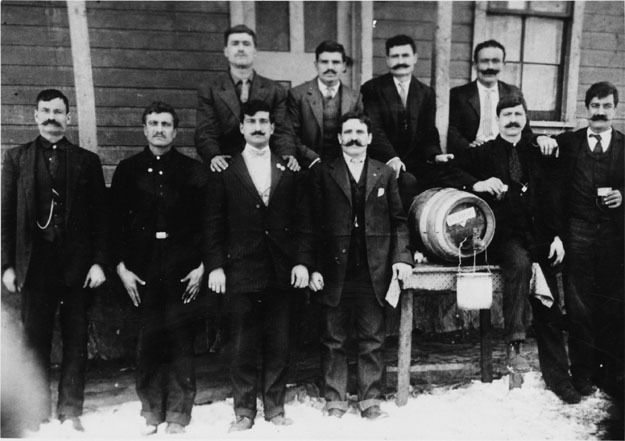
    <title type="html"><![CDATA[Conditions at the CFI Mines of the Colorado Coalfields<br />
]]></title>
    <summary type="html"><![CDATA[<p><strong><em>Hundreds of feet below ground in the dirty and dangerous mines of southern Colorado, many miners did not expect their lives above ground to be much better. Mostly immigrants, they were at the mercy of the Colorado Fuel and Iron Company. In the company towns and nearby communities, corruption and discrimination ran rampant as conditions deteriorated for the miners and their families.  </em></strong></p><img src="https://www.intermountainhistories.org/files/fullsize/e11b9f0a938a00cd5b3ec03e023ad8f0.jpg" alt="Cretan Creek Coal Mine " /><br/><p>In 1913, the Colorado Fuel and Iron Company (CFI) tightly controlled the coalfields of southern Colorado and the miners who worked there. The early 1900s were a dangerous time to be employed by the CFI—their miners had the highest mortality rate in the country. Yet most miners remained at the coalfields because their professional options were so limited: approximately 70 percent of the miners were foreign-born and non-English speaking. Though most were Greek, there were also many Mexicans, Czechs, Russian, Poles, Scotch, English, and Italians. Their diverse linguistic and cultural backgrounds made it difficult for miners to communicate with each other, distinctions often exploited by the company. The atmosphere created by that jumble of language and cultural expectation was ripe for abuses.</p><p>The official report of the U.S. Commission on Industrial Relations described the situation in the mines, prior to the strike, as an “insult to American values and constitutional law.” The report denounced the way in which miners had “been stripped of their liberties, robbed of portions of their earnings, subjected to ruthless persecution and abuse, and reduced to a state of economic and political serfdom.” Most miners were required to live in company towns and were paid in company scrip that could only be used at the company stores, where prices were significantly inflated. Sometimes, the company allowed miners to convert their scrip into U.S. currency, but the miners only received a maximum of 90 cents to the dollar. Also, because miners were paid based on the tonnage of coal they produced, the company would tamper with the scales in order to pay them even less. Miners often were forced into debt to CFI because they were unable to afford basic goods.</p><p>A 1908 Colorado law sought to reduce work hours by imposing an eight-hour workday for men who worked underground and also prohibited payment by scrip. Still, CFI regularly flouted state law while maintaining the appearance of innocence. Daily, conditions became more desperate for the hungry, impoverished miners. Yet, the miners of the southern Colorado coalfields had never been unionized. Attempts by the United Mine Workers of America (UMWA) were squelched by an efficient co-effort between the CFI management, local law enforcement, and the presence of anti-union Baldwin Felts detectives, who were essentially hired as mercenaries to keep order in the camps. UMWA organizer Mike Livoda recalled being followed, beaten, shot at, and threatened by deputies of Huerfano County Sheriff Jeff Farr. Livoda and his recruits constantly risked their lives as they struggled to demand fair and legal treatment for themselves and their families. The last recourse of the hopeless miners was to strike. </p><p><em><strong><a href="https://www.intermountainhistories.org/items/show/218">For more (including 4 images&#32;&amp;&#32;1 audio file) view the original article</a></strong></em></p>]]></summary>
    <published>2018-06-12T16:01:35+00:00</published>
    <updated>2026-04-17T19:32:03+00:00</updated>
    <link rel="alternate" type="text/html" href="https://www.intermountainhistories.org/items/show/218"/>
    <id>https://www.intermountainhistories.org/items/show/218</id>
    <author>
      <name>Natalie Larsen, Brigham Young University</name>
    </author>
  </entry>
  <entry>
    <title type="html"><![CDATA[Lagoon’s Desegregation]]></title>
    <summary type="html"><![CDATA[<p><strong><em>Lagoon was a place of tradition turned trailblazer when its owner, Robert E. Freed, was one of the first venue owners to invite racial integration.</em></strong></p><img src="https://www.intermountainhistories.org/files/fullsize/86424cbc29d3496eff31b25048b983a3.jpg" alt="Colossus Roller Coaster" /><br/><p>Originally situated on the shores of the Great Salt Lake and later relocating to Farmington, UT, Lagoon was (and still is) a constantly evolving business. It began as Lake Park, offering a mule-drawn carousel, roller skating, and bowling, and today is a large amusement park with record-breaking multi-million-dollar steel roller coasters and over a million visitors every year. While Lagoon has evolved economically, perhaps even more significant is its demonstration of social progress. Lagoon set the stage when it officially desegregated in the 1940s, and many other public venues followed. </p><p>Unlike some of the states where the Civil Rights movement of the mid-20th century was intensely focused, Utah never had Jim Crow laws or other legislation explicitly forcing white and black people to stay separated. However, racial minorities in Utah were victim to de facto segregation (which was often due indirectly to legislation, whether intentional or not). Though Utah wasn’t on the forefront of national civil rights news, the issues were pertinent and pressing in Utah cities as well. Between 1940 and 1950, the Black population in Utah more than doubled, and tensions between the white majority and marginalized minorities continued to rise.</p><p>Without official segregation laws and few cities with more than one school, it was up to business owners to change the public’s mind about who was allowed where. After World War II, some businesses began to desegregate. One of the first was Lagoon. Lagoon had been closed during the war, and was reopened and revamped in 1946-1947. Then, Robert E. Freed, one of the owners, made the attractions at Lagoon, as well as his Rainbow Rendezvous Ballroom in Salt Lake City, available to all races. After this bold move, it didn’t take long for other businesses and city pools to open their doors to minorities as well. </p><p>Appropriately-named Robert Freed made a pivotal move when he integrated his park in the 1940s, and Utah has been working for racial equality ever since.</p><p><em><strong><a href="https://www.intermountainhistories.org/items/show/85">For more (including 5 images) view the original article</a></strong></em></p>]]></summary>
    <published>2017-08-16T21:20:56+00:00</published>
    <updated>2026-04-17T19:31:59+00:00</updated>
    <link rel="alternate" type="text/html" href="https://www.intermountainhistories.org/items/show/85"/>
    <id>https://www.intermountainhistories.org/items/show/85</id>
    <author>
      <name>Aubrey Glazier, Brigham Young University</name>
    </author>
  </entry>
  <entry>
    <title type="html"><![CDATA[The Moulin Rouge: A Symbol of Las Vegas&#039; Civil Rights Struggle<br />
]]></title>
    <summary type="html"><![CDATA[<p><strong><em>The Moulin Rouge was the first racially-integrated hotel and casino in Las Vegas. It was located three miles from the Las Vegas Strip in the city’s Westside district. Although the casino was open for only six months, to this day it continues to represent the promise of racial integration in Las Vegas.</em></strong></p><img src="https://www.intermountainhistories.org/files/fullsize/e1f09cbbef1338d8bd5213a747141349.jpg" alt="Facade " /><br/><p>The Moulin Rouge was opened in 1955 amidst a civil rights battle in Las Vegas. The city’s black residents insisted that Las Vegas officials pass a civil rights ordinance which would allow African Americans to dine, gamble, and stay at Strip hotels. The city’s practice of segregation, which began in the 1930s, had earned it the moniker “The Mississippi of the West.”  While Las Vegas hotels and casinos employed black employees in behind-the-scenes jobs, the workers who dealt with the public, like dealers and servers, were all white. The most visible African Americans employed by the hotels were entertainers like Sammy Davis Jr., Nat King Cole, and Ella Fitzgerald. Even though their names appeared on hotel marquees, black performers were not permitted in the front door and were required to stay in boarding houses in city’s Westside, the neighborhood where Las Vegas’s black population was restricted. A group of white investors led by Will Max Schwartz saw the business potential of an integrated hotel and casino in Las Vegas. Former heavyweight boxing champion Joe Louis was recruited to serve as the Moulin Rouge’s spokesman and purported co-owner.</p><p>From its opening night on May 24, 1955, the Moulin Rouge attracted a mixed clientele of black and white patrons. Celebrities such as Ella Fitzgerald, Frank Sinatra, Harry Belafonte, Bob Hope, Dean Martin, Milton Berle, Dorothy Lamour, Judy Garland, and Marlene Dietrich all made their way to the Moulin Rouge during its short period of operation. The reason why the Moulin Rouge was such a magnet for performers was because it was the only hotel where black and white entertainers could socialize with one another in Las Vegas. Strip hotels attempted to ban its headliners from visiting the Moulin Rouge. White performers such as Tallulah Bankhead were issued ultimatums, but most refused to comply.  Black entertainers who graced the Moulin Rouge’s showroom include Lionel Hampton, Dinah Washington, Gregory Hines, and the Platters. The Moulin Rouge also offered employment opportunities for residents of the Westside. Black Las Vegans found employment as dealers, cocktail waitresses, bartenders, security guards, and managers.</p><p>The Moulin Rouge, named after the famed Parisian cabaret, had 110 rooms, a swimming pool, a 60-foot-high neon Eiffel Tower and a neon sign designed by Betty Willis in the googie style emblematic of the 1950s. The most popular attraction at the Moulin Rouge was its marquee number, a colorful African-themed late night show called The Tropi Can Can which featured Las Vegas’s only all-black chorus line. In June 1955, showgirls from the Moulin Rouge even made the cover of Life magazine.</p><p>In November 1955, financial mismanagement forced the Moulin Rouge’s closure.  By December, the hotel had filed for bankruptcy. Although it was only open for six months, the Moulin Rouge offered its guests a brief glimpse of what a racially-integrated Las Vegas resort looked like.</p><p>In 1960, black Las Vegans, inspired by the wave of civil rights activism sweeping across the country, threatened to march on the Las Vegas Strip unless the city took action to end segregation. A march would not only block access to the Strip, but also embarrass the city and damage its tourism industry.  In March 1960, days before the planned march, the still-shuttered Moulin Rouge served as the venue for a meeting which included NAACP branch president Dr. James McMillan, Nevada Governor Grant Sawyer, and the city’s powerful gaming executives. At the meeting, mediated by Las Vegas Sun editor Hank Greenspun, casino bosses agreed to end their discriminatory policies and allow African Americans to patronize their establishments. </p><p>In the decades since the Moulin Rouge’s initial closure, a number of different owners have attempted to re-open it and restore the hotel to its former glory. The building fell victim to an arsonist in 2003. In 2010 city officials declared the hotel’s decorative tower a risk to public safety and had it torn down. Despite its long period of dormancy, the Moulin Rouge remains an enduring symbol of racial integration and Las Vegas’s civil rights struggle. </p><p><em><strong><a href="https://www.intermountainhistories.org/items/show/26">For more (including 6 images) view the original article</a></strong></em></p>]]></summary>
    <published>2017-02-17T18:29:57+00:00</published>
    <updated>2026-04-17T19:31:58+00:00</updated>
    <link rel="alternate" type="text/html" href="https://www.intermountainhistories.org/items/show/26"/>
    <id>https://www.intermountainhistories.org/items/show/26</id>
    <author>
      <name>Alan Mattay, University of Nevada, Las Vegas </name>
    </author>
  </entry>
</feed>