<?xml version="1.0" encoding="UTF-8"?>
<feed xmlns="http://www.w3.org/2005/Atom">
  <title type="text">Intermountain Histories</title>
  <updated>2026-08-18T15:52:16+00:00</updated>
  <generator uri="http://framework.zend.com" version="1.12.20">Zend_Feed_Writer</generator>
  <link rel="alternate" type="text/html" href="https://www.intermountainhistories.org/"/>
  <link rel="self" type="application/atom+xml" href="https://www.intermountainhistories.org/items/browse?output=rss2"/>
  <id>https://www.intermountainhistories.org/</id>
  <author>
    <name>Intermountain Histories</name>
    <uri>https://www.intermountainhistories.org</uri>
  </author>
  <link rel="hub" href="https://pubsubhubbub.appspot.com/"/>
  <entry>
    <title type="html"><![CDATA[Theodore Roosevelt&#039;s Ride Through the Cowboy State: Story 5 of 8 of the President Theodore Roosevelt in the West Tour]]></title>
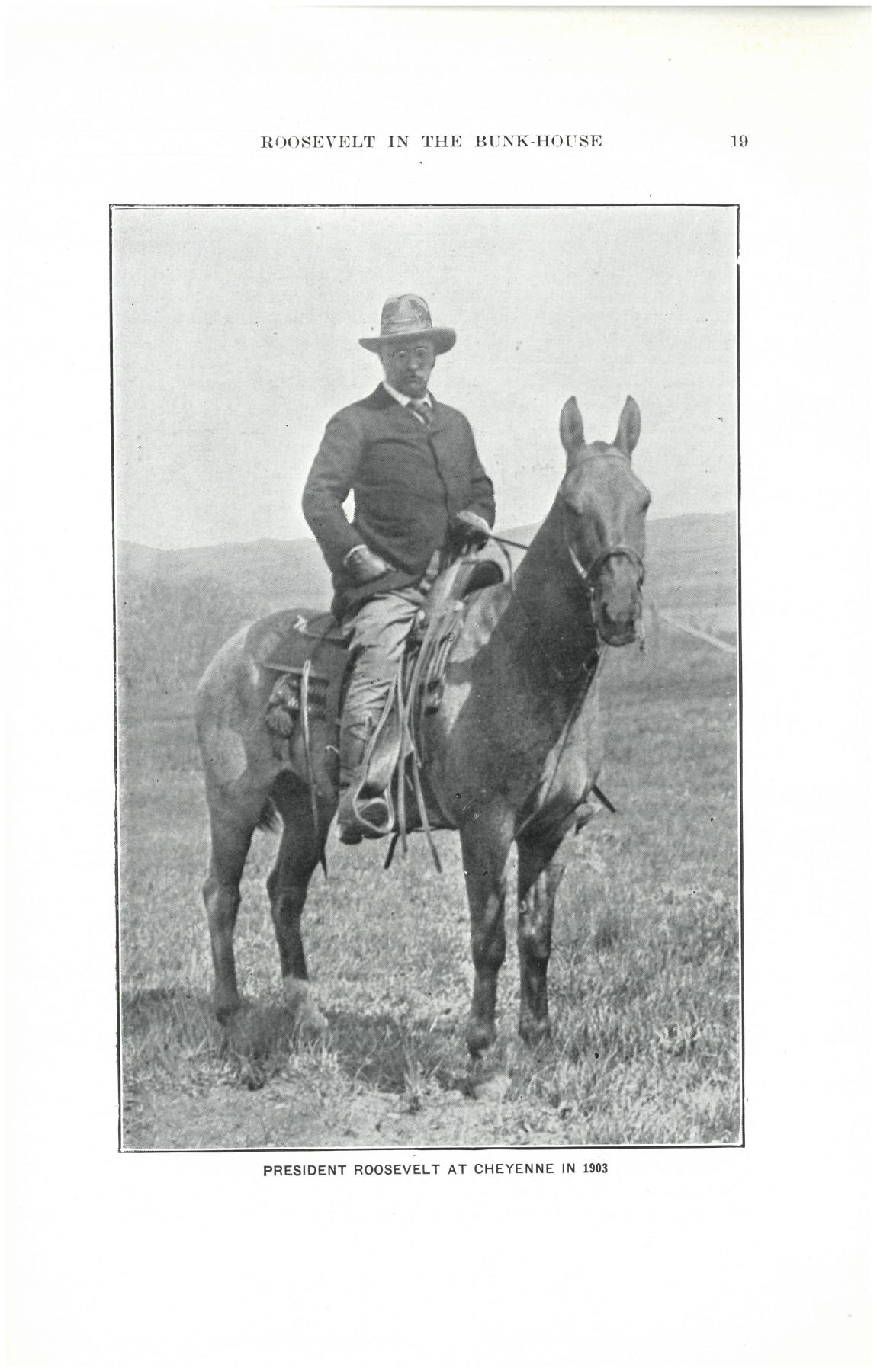
    <summary type="html"><![CDATA[<p><strong><em>President Theodore Roosevelt's iconic horseback ride from Laramie to Cheyenne to greet the veterans and citizens of Wyoming.</em></strong></p><img src="https://www.intermountainhistories.org/files/fullsize/60adc8f5c3838543347d6d16506e64cc.jpg" alt="President Roosevelt mounted on Ragalon, a horse who could count, bow, roll over, and distinguish colors. It was a “fine galloper and a speedy trotter.” " /><br/><p>President Theodore Roosevelt had a penchant for the dramatic in his public persona. His 1903 visit to Wyoming and May 31 speech commemorating Decoration Day (Memorial Day) was no exception.
Upon arrival in Evanston, Wyoming, via train from the west, President Theodore Roosevelt was greeted by a crowd of 7,000 peoplegathered from Wyoming and surrounding states to see the Commander in Chief. After a short visit, he continued east to Laramie, Wyoming. From there, he rode the remaining 65 miles to Cheyenne, Wyoming, on horseback. Along the way, he changed horses four times with prominent citizens like Senator Francis E. Warren and famous lawman and Black Hills Forest Reserve Supervisor Seth Bullock.Senator Warren, in a telegram, said it would be a “long, hard ride,”and indeed it was. Familiar with risk and discomfort, and always eager to make a dramatic scene, Roosevelt’s party emerged from a mountain valley near Telephone Canyon and was greeted by a crowd in Cheyenne. The Cheyenne Daily Leader later wrote, "The West was written in every line of his frame," alluding to Roosevelt’s strong connection with the land and spirit of the West. The stunt exemplified his well-known advocacy for the “strenuous life” and love of the West. Having “waved all possible objections” to overcome the difficulties he might have encountered, Roosevelt felt the West as a very restorative place. At the lowest point in his life, when his mother and wife died the same day, he had “lost the light” in his life but found it again in the American West.
Nearly 20,000 citizens gathered in Cheyenne to hear the President speak on May 31, 1903. Reflecting on his horseback arrival, he stated his desire “not to strive to find out the things that are easiest to do, but the things that are best worth doing.” The crowd included Civil War veterans in both Confederate gray and Union blue uniforms. With them in view, he emphasised the importance of national unity. Referring to the their wartime service, he declared “You don’t care where that man’s birthplace has been; you don't care a snap of your fingers how he worshiped his Maker; you don't care whether he was a banker, bricklayer, lawyer, mechanic, or farmer” Perhaps hoping to point to bridging divides between former enemies, he continued, “It is the same thing now in civil life.”His message was well-received, and the citizens reflected that sense of community with a frontier twist. A handsome cowpony, Ragalon, was gifted to Roosevelt with a specially made saddle, bridle, and blanket. Roosevelt was also entertained with an impromptu frontier show and many barbecues during his stay. 
This time in Wyoming marked the value Roosevelt had for veterans and small towns in America. His personability with common Americans, honored veterans included, helped boost his popularity in the subsequent 1904 election. Roosevelt loved the West, and the West loved him back.</p><p><em><strong><a href="https://www.intermountainhistories.org/items/show/922">For more (including 4 images) view the original article</a></strong></em></p>]]></summary>
    <published>2025-10-24T15:03:18+00:00</published>
    <updated>2026-08-18T15:52:16+00:00</updated>
    <link rel="alternate" type="text/html" href="https://www.intermountainhistories.org/items/show/922"/>
    <id>https://www.intermountainhistories.org/items/show/922</id>
    <author>
      <name>Jessika Cole, Brigham Young University</name>
    </author>
  </entry>
  <entry>
    <title type="html"><![CDATA[Outside Invaders and the Johnson County Cattle War]]></title>
    <summary type="html"><![CDATA[<p><strong><em><span style="font-weight:400;">With violence and vigilantism on the rise in the late 1800s cattle industry, Wyoming had been booming with the success of both large thousand-head outfits and smaller family or individual-owned outfits. Within years the competition for both grazing land and the heads of cattle sparked cattle rustling and vigilante violence from both kinds of operators. To end this, the wealthy Stockgrowers made a hit list of rustlers and associates in Johnson County and hired over twenty Texas gunmen to kill or coerce the people of Johnson County.</span></em></strong></p><img src="https://www.intermountainhistories.org/files/fullsize/99d595cea52803cc73bd2e751eb8dd24.jpg" alt="Invaders on horseback in Casper before departing to the K.C. Ranch in Johnson County." /><br/><p><span style="font-weight:400;">In 1892, after years of economic and political competition between smaller ranches and the larger mostly foreign-owned cattle companies, a series of vigilante lynchings took place across Wyoming, particularly in the Northeastern portion of the state where Johnson County is located. The Wyoming Stock Growers Association (WSGA), representing the large cattle companies, accused many smaller cattle operations of stock theft, but local juries refused to convict because of lack of evidence or sympathy for the smaller operators. With seemingly no quick legal action able to stop any alleged rustlers, the WSGA devised a plan for an expedition to northeastern Wyoming to capture, coerce, or kill the rustlers and their associates.</span>
<span style="font-weight:400;">The network of stock growers and their associates was deeply entrenched in both state politics and economics. Judges, politicians, and bankers worked with ranchers to plan this expedition into rustler territory to root out the suspected rustlers. The scale of the operation was astonishing with the amount of sourcing of supplies, transportation, weapons & ammunition, and number of men involved. The crew of the expedition to Johnson County included multiple WSGA members, stock inspectors, and around twenty gunslingers brought by train from Texas. Using Cheyenne as their base of operations and calling themselves the Invaders, this 50-man group confidently had their photograph taken before at Fort D.A. Russell in Cheyenne before they left for Johnson County.</span>
<span style="font-weight:400;">Meanwhile in Cheyenne, the inner circles of the stock growers worked to establish their legal justifications for their violent actions against the suspected rustlers and their associates. Dozens of the expedition members, including the Texas gunmen, partied throughout both the day and night at many of the wealthier association members’ estates. When the Invaders regrouped in the morning, they boarded a privately booked train to Casper further north. While riding the train, some stops included a photo shoot of the train passing through Platte Canyon on its way to Casper. The expedition rode onward to the K.C. Ranch where they planned to kill one of their primary rustler targets, Nate Champion. Once again taking the opportunity to document their actions, the Invaders had the mounted expedition photographed before leaving to kill Nate Champion and move on to the town of Buffalo.</span></p><p><em><strong><a href="https://www.intermountainhistories.org/items/show/867">For more (including 3 images) view the original article</a></strong></em></p>]]></summary>
    <published>2024-10-21T18:53:43+00:00</published>
    <updated>2026-04-17T19:32:19+00:00</updated>
    <link rel="alternate" type="text/html" href="https://www.intermountainhistories.org/items/show/867"/>
    <id>https://www.intermountainhistories.org/items/show/867</id>
    <author>
      <name>Cooper Smith, Rocky Mountain College</name>
    </author>
  </entry>
  <entry>
    <title type="html"><![CDATA[Mt. Sinai in Cheyenne, Wyoming]]></title>
    <summary type="html"><![CDATA[<p><strong><em>Mt. Sinai is the oldest synagogue in Wyoming, representing the Jewish community whose beginnings in Cheyenne trace back to the founding of the city. </em></strong></p><img src="https://www.intermountainhistories.org/files/fullsize/b22791ea4f6ea36d53b16e3e4483d9cd.jpg" alt="The Mt. Sinai Synagogue" /><br/><p><p style="font-weight:400;">The Union Pacific Railroad established Cheyenne in 1867. Jewish migrants were some of the first to arrive, many of whom emigrated from Germany. Early attempts to build a synagogue failed. However, as more Jewish immigrants, encouraged by the Homestead Act, arrived in the early twentieth century plans for a synagogue began to be made.  In 1915, two congregations unified to build Mt. Sinai synagogue in the heart of Cheyenne. Immigration increased again in the 1940s following the Holocaust. Soon, the congregation reach 600 members, more than the initial synagogue could hold. Plans to build a new synagogue commenced. 
<p style="font-weight:400;">The congregation established a building committee to head the project. The committee decided upon a residential area, down the road from the first Mt. Sinai, to build the synagogue. This was convenient as Jews traditionally avoid driving on sacred holidays. In 1949, Denver architect Earl Morris designed it and prolific Cheyenne builder Carl Christensen began construction. Finished in 1951, the synagogue is built in a Mid-Century Modern style. The style is seen in the building’s large, undecorated walls with a flat roof and little overhang and its concrete and steel frame base with vertical windows. There is little ornamentation; only a Star of David embellishes the building. The exterior is brick and red granite, a contrast with the large wooden doors of the entrance. The choice in style reflects its popularity at that time and is contrasted by Cheyenne’s predominantly Victorian-style buildings surrounding it. The synagogue boasts a large main sanctuary, a small chapel, a kosher kitchen, classrooms, a rabbi study, and, uniquely, a mikvah, or ritual bath, added when construction unearthed an underground river. Mikvahs require living water to cleanse and purify, which this river allows. This is a rare feature for a synagogue in the West, and Jews from nearby states travel to use it.
<p style="font-weight:400;">The Jewish community in Cheyenne is comprised of several distinguished residents. Bertha Myers, who was behind original efforts to build a synagogue in 1915, helped to establish a Jewish religious school and taught at Cheyenne High School. Henry Altman was a pioneer merchant in Cheyenne who served on the city council and was dubbed, “Father of Cheyenne’s Parks” for his role in the city’s park system. Two later members developed a project to install twelve stained glass windows in the main sanctuary. This culminated with the 1972 dedication of a fifteen-panel menorah. The congregation paid for all the windows, which Watkins Stained Glass Studios of Denver designed and installed. </p><p>Other than the windows, the building has changed little since its dedication. It was placed on the National Register of Historic Places in 2017. Although its membership has decreased as members have moved, it continues as one of only two Jewish houses of worship in Wyoming today.</p><p><em><strong><a href="https://www.intermountainhistories.org/items/show/721">For more (including 8 images) view the original article</a></strong></em></p>]]></summary>
    <published>2023-03-02T20:27:31+00:00</published>
    <updated>2026-04-17T19:32:15+00:00</updated>
    <link rel="alternate" type="text/html" href="https://www.intermountainhistories.org/items/show/721"/>
    <id>https://www.intermountainhistories.org/items/show/721</id>
    <author>
      <name>Katie Scholler, Northern Arizona University </name>
    </author>
  </entry>
  <entry>
    <title type="html"><![CDATA[Wyoming State Capitol in Cheyenne]]></title>
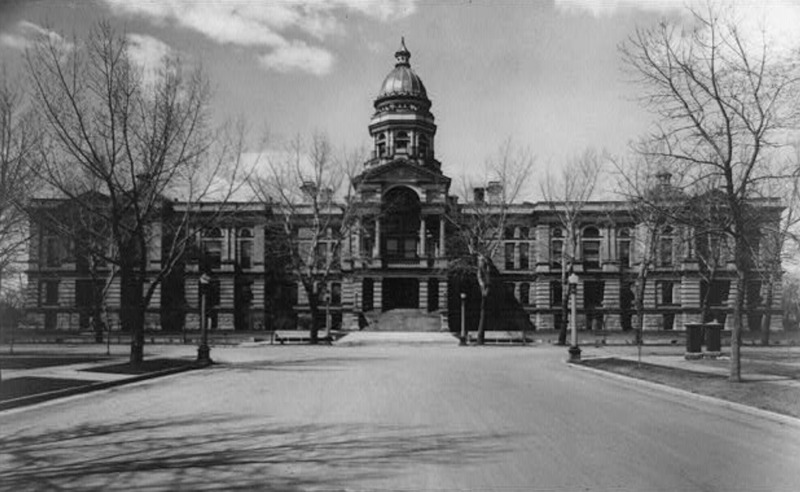
    <summary type="html"><![CDATA[<p><strong><em>The Wyoming State Capitol building is the seat of the Wyoming State Legislature and the Governor’s Office. This modest and comparatively inexpensive Capitol of the smallest U.S. state by population is a working government building and symbol of Wyoming and its past.</em></strong></p><img src="https://www.intermountainhistories.org/files/fullsize/8ecc0a262ac751f87a33d08199fb94e9.jpg" alt="Wyoming Capitol" /><br/><p>The land that became Wyoming was originally the territory of Native peoples. Wyoming’s modern Native tribes include the Ute, Arapaho, Cheyenne, Shoshone, and Crow. The California Trail, Oregon Trail, and Mormon Trail all passed through Wyoming and brought droves of white settlers through the area on their way to the West Coast and Utah the mid-nineteenth century, though few took up residence in the Wyoming area itself. The U.S. Government negotiated the Treaty of Fort Laramie in an effort to protect settlers moving through the area by compensating tribes and building forts. The U.S. Government soon reneged on these treaty obligations and on those of a second Fort Laramie Treaty, causing an escalating cycle of violence. The U.S. Government eventually forced the remaining Native peoples of Wyoming into the reservation system.
Cheyenne began as a stop along the Union Pacific Railroad line in 1867 and quickly surpassed other population centers to become the Territorial Capitol and then State Capitol, as well as Wyoming’s largest city. Ranching, mining, and agriculture continued to draw a trickle of settlers, but the harsh environment, scarce arable land, and temperature extremes restricted the population. Wyoming became its own territory on July 25, 1868 under Andrew Johnson’s presidency and inaugurated its first government May 19, 1869. It achieved statehood July 10, 1890 despite disputes over whether it had achieved the minimum population threshold at that time. In 1886, the Territorial Legislature created a Capitol Commission to organize construction of a capitol building. It chose David W. Gibbs & Co. to design the Capitol and Adam Feick & Bros. to construct it at a bid of only $150,000, worth a little over $4,000,000 in 2020. The Territorial Legislature used the building even before its completion in 1890. By 1915, the State Legislature had outgrown the building and voted to add the House and Senate chambers to the structure, which were completed in 1917.
The Capitol is a Renaissance Revival structure made of both native and Colorado sandstone with a copper dome, which was later gilded in 1900. The interior is finished in marble with a beautiful cherrywood staircase with murals decorating many of the walls. An enormous stuffed bison stands in part of the rotunda, and a bronze bison sculpture stands outside. The bison was a critical part of the diet and culture of the Native people of Wyoming and the intentional near extinction of the animal by white hunters was a severe blow to them. Now, the bison is a symbol of the state and adorns its flag.
In 2016 the Capitol underwent a major renovation which restored decorative elements, added more accessibility with additional elevators and restrooms, and upgraded technology resources. These improvements, completed in 2019, will ensure that the State Capitol building can continue to function as the working seat of government for the people of Wyoming for many years to come.</p><p><em><strong><a href="https://www.intermountainhistories.org/items/show/509">For more (including 4 images) view the original article</a></strong></em></p>]]></summary>
    <published>2021-10-10T09:05:30+00:00</published>
    <updated>2026-04-17T19:32:10+00:00</updated>
    <link rel="alternate" type="text/html" href="https://www.intermountainhistories.org/items/show/509"/>
    <id>https://www.intermountainhistories.org/items/show/509</id>
    <author>
      <name>David Cady, Northern Arizona University</name>
    </author>
  </entry>
</feed>