<?xml version="1.0" encoding="UTF-8"?>
<feed xmlns="http://www.w3.org/2005/Atom">
  <title type="text">Intermountain Histories</title>
  <updated>2026-04-17T19:32:21+00:00</updated>
  <generator uri="http://framework.zend.com" version="1.12.20">Zend_Feed_Writer</generator>
  <link rel="alternate" type="text/html" href="https://www.intermountainhistories.org/"/>
  <link rel="self" type="application/atom+xml" href="https://www.intermountainhistories.org/items/browse?output=rss2"/>
  <id>https://www.intermountainhistories.org/</id>
  <author>
    <name>Intermountain Histories</name>
    <uri>https://www.intermountainhistories.org</uri>
  </author>
  <link rel="hub" href="https://pubsubhubbub.appspot.com/"/>
  <entry>
    <title type="html"><![CDATA[Queen of Heaven Orphanage]]></title>
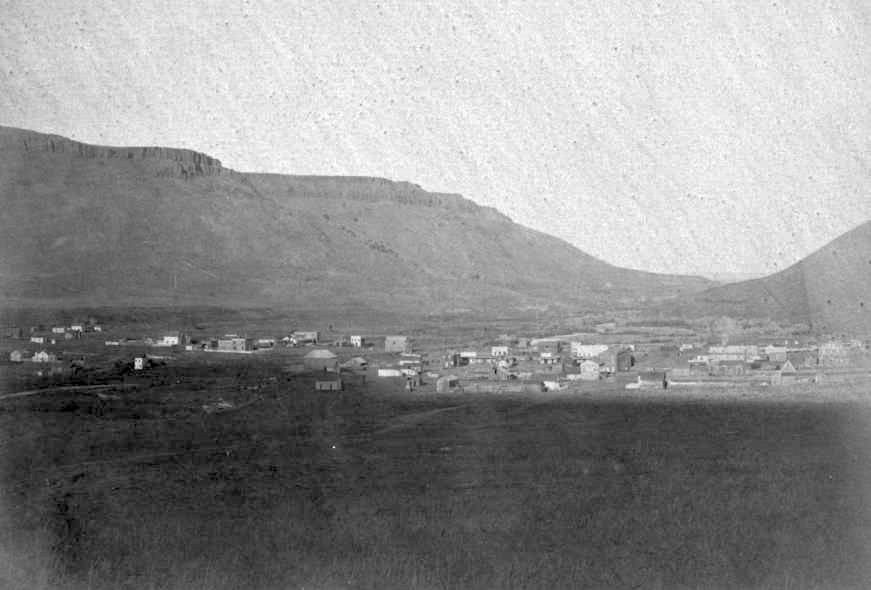
    <summary type="html"><![CDATA[<p><strong><em>In the aftermath of her traumatic childhood, Mother Cabrini devoted her life to bettering the lives of young girls and orphans, especially in immigrant communities. Golden, Colorado is home to an orphanage and summer camp she built entirely from local donations and volunteer work. </em></strong></p><img src="https://www.intermountainhistories.org/files/fullsize/a7c79f026746a5cd893f7140b702d5fd.jpg" alt="Golden, Colorado 1868" /><br/><p><span style="font-weight:400;">In the aftermath of the Mexican American War, the Southern Rocky mountains became a new frontier of U.S. westward expansion. The region gained lots of traction during the Pike’s Peak gold rush, beginning in 1859. By 1861 Colorado was organized as an official U.S. territory. In the following decade the first Italian immigrants arrived in the territory. </span>
<span style="font-weight:400;"></span><span style="font-weight:400;">Living for the hope of a better life, immigrants who arrived in Colorado were subject to dangerous and unfair work conditions, discrimination, and little opportunity to rise above their station. As adults worked tirelessly up until their premature deaths either in the mines or railroad construction, their children were often left orphaned and utterly alone. With a language barrier and lack of education opportunities, the future did not look bright for the children of immigrants.</span>
<span style="font-weight:400;"></span><span style="font-weight:400;">Maria Francesca Cabrini, born just outside of Milan, Italy in 1850, would spend the latter part of her life in America where she came to be known as the patron saint of immigration. Her childhood was fraught with illness and a near death experience, giving her the conviction that she had been preserved by God for a special purpose. After graduating with cum laude for her religious education, Mother Cabrini devoted her life to serving underprivileged communities and children. Her first major project was the revitalization of a run-down orphanage in Northern Italy. In 1889 she came to America where she founded several orphanages that pushed the boundaries for a typical institution of the era. Mother Cabrini was renowned for her compassion. While other orphanages kicked children out onto the streets as young as fourteen, she extended the age of asylum by several years. </span>
<span style="font-weight:400;"></span><span style="font-weight:400;">In 1904 Mother Cabrini, who had taken on the name Frances Xavier Cabrini, established the Queen of Heaven Orphanage in Golden, Colorado. The project was funded from bits of spare change donated from children and adults throughout the state. After purchasing the land, Mother Cabrini recruited sisters from the Missionary Sisters of the Sacred Heart of Jesus to help both in constructing the buildings and caring for the children. The Queen of Heaven Orphanage served as a temporary home to primarily immigrants and first-generation children, who had been orphaned or abandoned due to the gruelling conditions of life on the frontier. </span>
<span style="font-weight:400;"></span><span style="font-weight:400;">In the summer months the orphanage doubled as a camp for all of the children in the community. The small dairy farm on the property, run by both the nuns and the children, provided an abundance of ice cream for their consumption. The orphanage and summer camp were closed down in the late 1960s. In 2000 the Queen of Heaven Orphanage was added to the National Register of Historic Places. </span>
<span style="font-weight:400;"></span><span style="font-weight:400;">Mother Cabrini continued her mission in devotion until her death in 1917. She was canonized as a saint by Pope Pius XII. Her legacy is well reflected in her statement, “What we as women cannot do on a large scale to help solve grave social ills is being done in our small sphere of influence in every state and city where we have opened houses. In them we shelter and care for orphans, the sick and the poor.”</span></p><p><em><strong><a href="https://www.intermountainhistories.org/items/show/930">For more (including 4 images) view the original article</a></strong></em></p>]]></summary>
    <published>2025-12-09T17:24:33+00:00</published>
    <updated>2026-04-17T19:32:21+00:00</updated>
    <link rel="alternate" type="text/html" href="https://www.intermountainhistories.org/items/show/930"/>
    <id>https://www.intermountainhistories.org/items/show/930</id>
    <author>
      <name>Megan Bailey, Brigham Young University</name>
    </author>
  </entry>
  <entry>
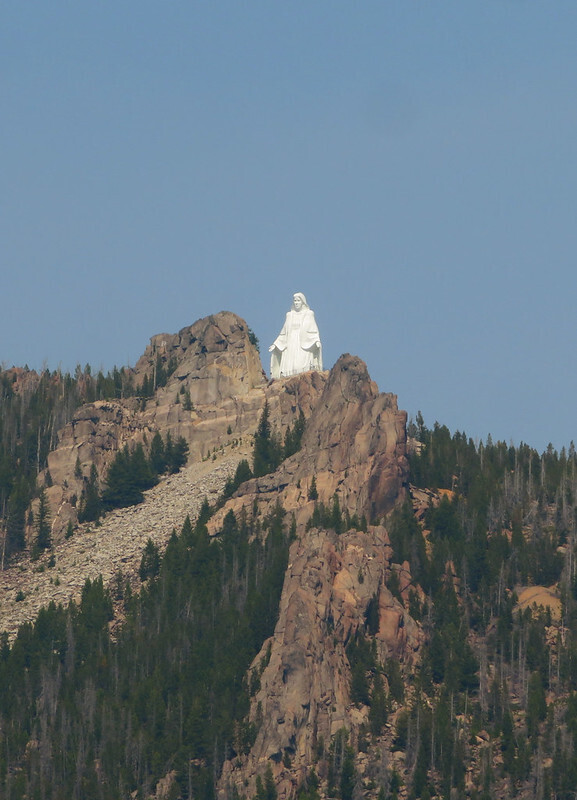
    <title type="html"><![CDATA[Our Lady of the Rockies]]></title>
    <summary type="html"><![CDATA[<p><strong><em><em>Our Lady of the Rockies </em>looks out across the city of Butte, Montana with arms stretched wide from a vantage of some 3,500 feet above the city, and weighing over 50 tons.</em></strong></p><img src="https://www.intermountainhistories.org/files/fullsize/c4ae7467ddb2ea3d296e2b06e342e9ae.jpg" alt="Our Lady of the Rockies. " /><br/><p>The statue project began with Bob O’Bill, who, in 1979 made a plea with God in hopes that his bed-ridden wife Joyce would make a full recovery. When she did, O’Bill began to discuss with his peers the logistics of building the statue. As word spread about the building project, an overwhelming amount of support arose, making the statue a community project. The initial plan for the six-foot statue with community support soon grew to a project that would be over 90 feet tall. Though some thought that the project was strictly Catholic, project sponsors took care to present it as a community effort which symbolized “the dignity of motherhood and the sacrificial love a mother has for her child.” Community pride has always been strong in Butte, extending back in Butte's mining history in the 19th century. Whenever the future was uncertain, the community of Butte banded together and cared for each other. This bond and the meaning behind the statue are both driving factors in what makes Butte’s community so special. </p><p>Supplies including paint, food for workers, and enough iron and steel to build the statue, were all gifted to the project by donors. A major contributor to the project, Joe Roberts, was connected to O’Bill through Ann Nettles, who knew Joe to be a guy whot took up outlandish projects. Once he familiarized himself with the project and got over how crazy he thought it to be, Robert’s Rocky Mountain Equipment Co. discussed a plan to put up the statue, ensuring that it was done safely with high stability. Roberts grew to have a major role in the project, raising funds, donating the use of his equipment, and even providing one thousand dollars to start off the construction fund. From there the community took care of the rest. </p><p>After six years of trouble-shooting technical difficulties, the statue was finally ready to assemble on the mountain top. On December 17, 1985, the statue was lifted in four sections by the Nevada Air National Guard Team and assisted by the Army Reserve stationed in Butte, as well as the Montana National Guard. Today Our Lady of the Rockies continues to show civic generosity through the volunteers that keep the statue up and running so that it may be able to show hope and optimism to inspire generations to come.</p><p><em><strong><a href="https://www.intermountainhistories.org/items/show/862">For more (including 4 images) view the original article</a></strong></em></p>]]></summary>
    <published>2024-10-18T13:00:52+00:00</published>
    <updated>2026-04-17T19:32:19+00:00</updated>
    <link rel="alternate" type="text/html" href="https://www.intermountainhistories.org/items/show/862"/>
    <id>https://www.intermountainhistories.org/items/show/862</id>
    <author>
      <name>Logyn J. Klebe, Rocky Mountain College</name>
    </author>
  </entry>
  <entry>
    <title type="html"><![CDATA[The Women of the Ku Klux Klan in Denver]]></title>
    <summary type="html"><![CDATA[<p><strong><em><span style="font-weight:400;"> In 1926, the Women of the Ku Klux Klan (WKKK), along with their male counterparts, marched down Larimer Street in downtown Denver. The WKKK was an appealing way for Protestant women to display comradery, exist in a historically male space, and spew anti-Catholic and Jewish rhetoric.</span></em></strong></p><img src="https://www.intermountainhistories.org/files/fullsize/5d9244d4ded11646b84fd3324a59938c.jpg" alt="“Ku Klux Klan members march down Larimer Street in Denver.” 1926." /><br/><p><span style="font-weight:400;">A notable difference between the KKK of the 19</span><span style="font-weight:400;">th</span><span style="font-weight:400;"> century and the Klan of the 20</span><span style="font-weight:400;">th</span><span style="font-weight:400;"> century was the latter’s inclusion of women—a sub-organization called the Women of the Ku Klux Klan (WKKK). Like their male counterparts, the WKKK promoted a skewed version of “Americanism” and believed that the United States needed saving from minorities and non-Protestant religions. However, they filtered their bigotry and xenophobia through a uniquely feminine manner. They sought to present themselves as good, charitable, white Protestant American women and believed that they needed to uphold KKK ideals to do so. Furthermore, they had their own leaders, rules, and initiations. </span></p><p><span style="font-weight:400;">Colorado’s Klan chapters and activities were perhaps the most potent of anywhere in the Intermountain West during the 1920s, and the Klanswomen activities in this period reflected that. In 1926, the Klan held a large parade and marched down Larimer Street in Denver, Colorado. The women, like the men, marched in full regalia, although they were notably unhooded. It seems like they felt a great deal of pride and wanted their actions recognized. </span>
<span style="font-weight:400;">An important figure of Colorado’s WKKK was influential leader Laurena Senter. Senter was very active in the public sphere and acted as president of organizations such as the Colorado Federation of Women’s Clubs and the Women’s Club of Denver. Her husband was a very high-ranking member of the Klan and together they were very dedicated to the Klan. </span>
<span style="font-weight:400;">In 1925, Senter traveled around the state and performed rituals and initiations. Historian Betty Jo Brenner notes that women were eager to join the WKKK for reasons such as the allure of mystery and ritual. However, rather notably it also appealed to women seeking more agency. Women often joined independently from their husbands and were able to obtain leadership positions. Joining the WKKK also allowed women to foster comradery with other women and participate in secret organizations, a space historically dominated by men. Because of these reasons, their actions can be seen as a form of feminism. </span>
<span style="font-weight:400;">Klanswomen in Denver believed that charitable actions and benevolence defined their role. They delivered Thanksgiving baskets to less fortunate families in Denver and even adopted an orphaned child called Richard—who they dressed up in Klan regalia. They also attempted to deter people from patronizing businesses that were “run by Jews,” and raised money to keep orphans out of Catholic-supported orphanages.</span>
<span style="font-weight:400;">The WKKK of Colorado eventually split from the national WKKK. Senter described in her diary her frustration with the Klan’s leadership in Colorado. It seems that although she still believed in its mission of white Protestant supremacy, she believed that the Colorado Klan had lost sight of its purpose and criticized members for joining in hopes of personal gain and glory. </span>
<span style="font-weight:400;">The national WKKK determined that the Colorado chapter could no longer call themselves the WKKK and thus Senter reorganized her group as the “Colorado Cycle Club.” Although some members defected, many remained loyal to Senter’s group. Under the “Colorado Cycle Club,” the organization lasted until 1945. </span></p><p><em><strong><a href="https://www.intermountainhistories.org/items/show/815">For more (including 3 images) view the original article</a></strong></em></p>]]></summary>
    <published>2024-05-21T01:24:52+00:00</published>
    <updated>2026-04-17T19:32:18+00:00</updated>
    <link rel="alternate" type="text/html" href="https://www.intermountainhistories.org/items/show/815"/>
    <id>https://www.intermountainhistories.org/items/show/815</id>
    <author>
      <name>Aidan Capristo, Northern Arizona University</name>
    </author>
  </entry>
  <entry>
    <title type="html"><![CDATA[The KKK in Butte, Montana]]></title>
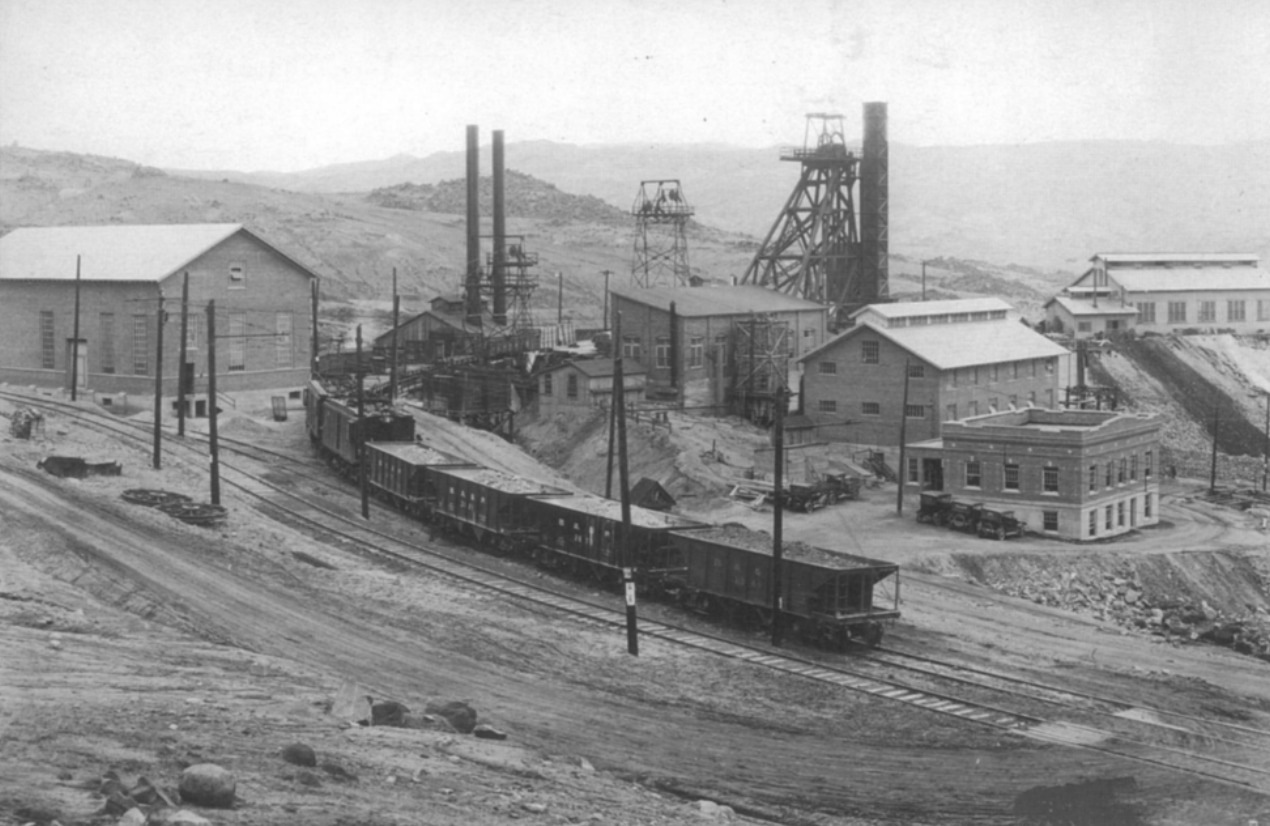
    <summary type="html"><![CDATA[<p><strong><em><span style="font-weight:400;">Taking advantage of existing tensions between Protestants and Irish Catholics in Butte, Montana, the Ku Klux Klan sought to penetrate the community and hoped to stoke discourse.</span></em></strong></p><img src="https://www.intermountainhistories.org/files/fullsize/23f3a64865731d1aad110432024680ba.jpg" alt="Undated photograph of Elm Orlu mine" /><br/><p><span style="font-weight:400;">Before the arrival of the Ku Klux Klan in 1923, tension between Protestants and Catholics existed in the mining communities of Butte, Montana. The so-called “War of the Copper Kings” was a feud between mine owners Marcus Daly and William A. Clark during an 1888 campaign for territorial representation of the companies. Although both were Irish, Clark was a Protestant while Daly was a fervent Catholic. Many of the miners were migrant Irish-Catholics and Daly won the election. Clark never forgot the loss and battled for control until he died in 1900. It was also during this period that a group known as The American Protective Association (APA) gained popularity in Butte. The APA was an organization that was extremely anti-Catholic and members frequently got into violent altercations with Catholics at local bars.   </span></p><p><span style="font-weight:400;">Furthermore, due to issues such as decreased copper demand following the end of the First World War, many in Montana felt economically unstable and wary of foreigners. When the Ku Klux Klan arrived in Butte in the 1920s, it hoped to exacerbate the existing religious tensions and economic fears by using Irish Catholic workers as scapegoats. </span>
<span style="font-weight:400;">Originally gaining popularity in Billings, the Klan sought to move into Butte. However, as Butte historian Christine Erikson notes, “Catholic Immigrants cared little for an organization that referred to the Pope as an ‘impatient, meddling individual controlled by a Jesuitical lot of assaassainous villains.’” The Klan notably chose to act in an especially clandestine manner while conducting operations in Butte. Local Klansmen moved from town to town and conducted meetings under various aliases such as the “Protestant Men’s Welfare Council” and “Butte Men’s Literary Club.” Klan officers also urged other chapters in Montana to avoid exposing Butte Klansmen by ensuring that any mail to members in Butte didn’t indicate anything that suggested a Klan association. It is estimated that at least 181 residents of Butte joined the organization during 1923-1929, including 39 who worked as miners and on rail lines for Clark. </span>
<span style="font-weight:400;">The reasons for their especially secretive nature are not completely clear. The Butte Klan could have been worried about backlash from other Protestant organizations that operated in the area such as Masonic groups. It is also possible that other Butte clandestine organizations were not eager to associate with a group that was gaining a national reputation for terrorism. Another reason could be that in a town with a sizable Irish-Catholic population, the Klan worried about community backlash. Butte’s </span><i><span style="font-weight:400;">Labor Bulletin </span></i><span style="font-weight:400;">heavily criticized the Klan in Butte and proclaimed, “Their Invisible Empire Should Have No Place in These United States.”</span>
<span style="font-weight:400;">The Klan's larger efforts in Butte eventually proved to be fruitless—the membership and public activity essentially became dormant by the 1930s. Instead, the Klansmen opted to do smaller acts such as “guarding” voting booths and writing opinion pieces in editorials about unfavorable politicians. However, most of their Butte activities seemed to be brooding in their meeting places and discussing inter-Klan politics. </span></p><p><em><strong><a href="https://www.intermountainhistories.org/items/show/811">For more (including 3 images) view the original article</a></strong></em></p>]]></summary>
    <published>2024-05-21T00:10:52+00:00</published>
    <updated>2026-04-17T19:32:18+00:00</updated>
    <link rel="alternate" type="text/html" href="https://www.intermountainhistories.org/items/show/811"/>
    <id>https://www.intermountainhistories.org/items/show/811</id>
    <author>
      <name>Aidan Capristo, Northern Arizona University</name>
    </author>
  </entry>
  <entry>
    <title type="html"><![CDATA[The Cathedral of the Madeleine ]]></title>
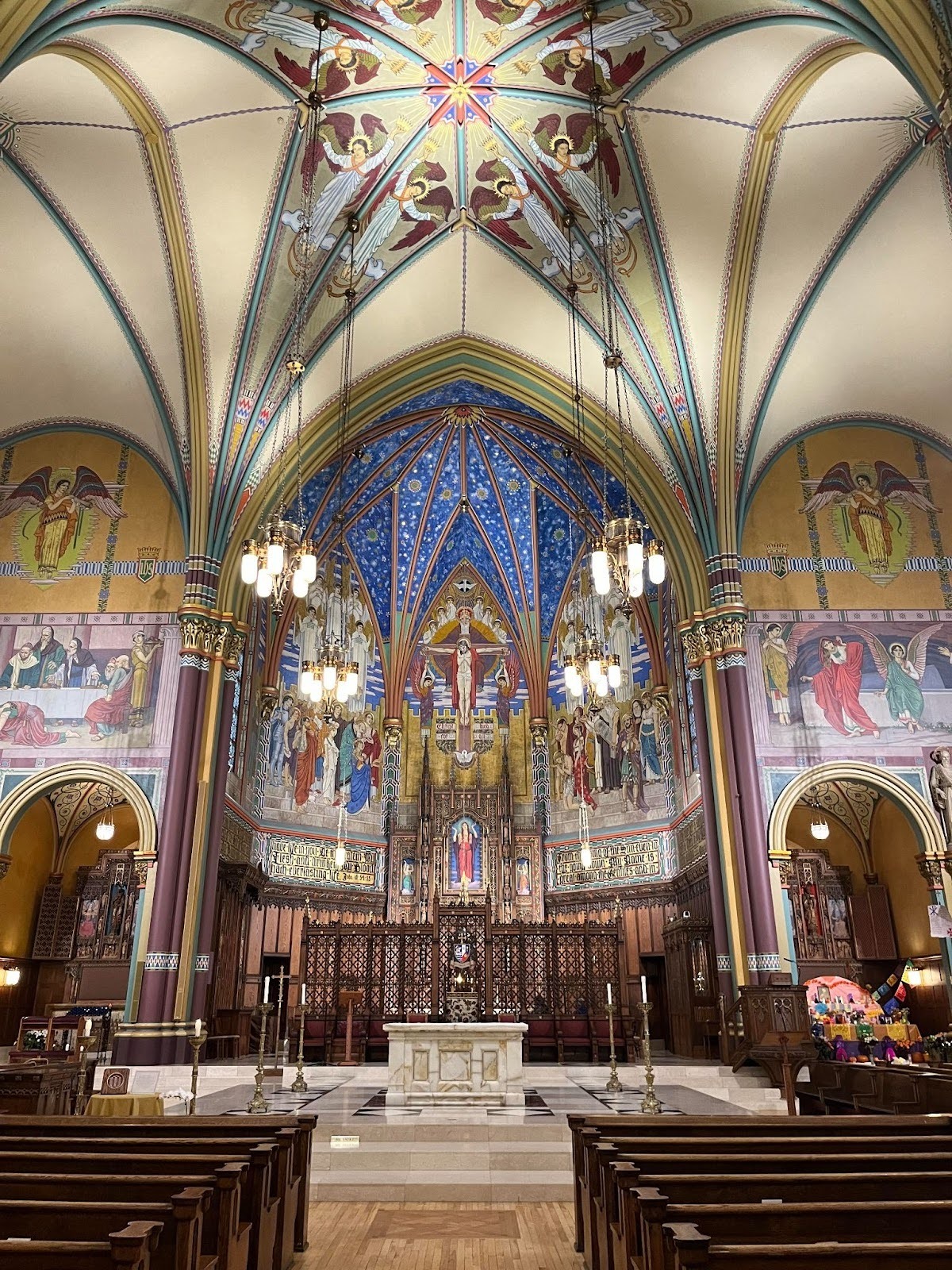
    <summary type="html"><![CDATA[<p><strong><em><span style="font-weight:400;">The Cathedral of the Madeleine, constructed in the late 19th and early 20th centuries, stands at the head of the Diocese of Salt Lake City. Featuring neo-Gothic architecture and glorious stained glass windows, the cathedral is a beautiful place to visit and worship. </span></em></strong></p><img src="https://www.intermountainhistories.org/files/fullsize/f7791fe20b0648355edb90452c3b4370.jpg" alt="Church Interior" /><br/><p><span style="font-weight:400;">The Cathedral of the Madeleine, located in downtown Salt Lake City, is the only cathedral in the United States under the patronage of Saint Mary Magdalene. Construction on this venerable building began in 1899 and was completed in 1909. It was dedicated under the name Saint Mary’s Cathedral on August 15, 1909, but was given its present name under the leadership of Bishop Joseph Glass, the second bishop of Salt Lake City.</span>
<span style="font-weight:400;">The stained glass windows are original to the Cathedral and were commissioned by Lawrence J. Scanlan, the first Catholic bishop of Salt Lake City. Designed by F.X. Zettler of the Royal Bavarian Institute in Munich, Germany, these windows tell the story of Christ’s life through what Catholics call the “Mysteries of the Rosary.” Scenes included are the annunciation with Gabriel and Mary, Mary visiting Elizabeth, Christ’s birth, Christ’s presentation at the temple to Simeon and Anna, the Resurrection, Christ’s ascension into heaven, the Assumption of Mary, and Mary being crowned Queen of Heaven. </span>
<span style="font-weight:400;">In addition to these scenes from the “Mysteries of the Rosary, moments  from Christ’s life between His presentation at the temple and His Resurrection are commemorated with stunning murals. These murals were completed in 1918 by artist Felix Lieftuchter. Combining Byzantine, Spanish Gothic, and modern art styles, the murals depict Christ teaching at the temple, a woman (portrayed here as Mary Magdalene) washing Christ’s feet, and Christ’s suffering in the Garden of Gethsemane. A mural of Christ’s sacrifice on the cross stands above the Blessed Sacrament Chapel and the Tabernacle. It is the focal point of the chapel. Christ is shown on the cross in a red robe, with God the Father and the Holy Spirit watching from above. Below Christ’s pierced feet are a pelican and her chicks. In Catholic iconography, the pelican symbolizes Christ’s sacrifice. Biblical figures and Catholic saints stand on either side of the crucified Christ, worshiping and praising the Lord. </span>
<span style="font-weight:400;">The Stations of the Cross were painted by Utah native Roger ‘Sam’ Wilson between 1992-1993. The Stations of the Cross commemorate Christ’s suffering and death. There are fourteen stations in all, each depicting a moment on His journey to Calvary. The Stations at the Cathedral of the Madeleine follow the revisions of the second Vatican Council, which took place between 1962-1965. This council helped to bridge the gap between Catholic tradition and the modern world. It made many changes to Catholic practices– one of the most dramatic of these was holding Mass in languages other than Latin. The updated Stations of the Cross are more in keeping with Biblical descriptions rather than oral tradition. Wilson’s rendition of the Stations blends Catholic iconography with an American Southwestern style. Flowers, animals, and other symbols are included to lend to the significance and power of each scene. </span>
<span style="font-weight:400;">The cathedral underwent heavy restoration projects between 1991-1993. The stained glass was carefully preserved. The altar and the baptismal font were re-positioned in accordance with the established traditions of the Vatican II Council. The organ was replaced, as were the Stations of the Cross. The floor of the Cathedral of the Madeleine is currently being restored. There are about four hundred regularly attending constituents, with about half of that number speaking Spanish as their first language. On weekdays, masses are held at 8:00 AM and 5:15 PM. Saturday masses are at 8:00 AM, 5:00 PM, and 7:00 PM, with the latter exclusively in Spanish. Sunday worship times are at 8:30 AM, 11:00 AM, 3:00 PM (Spanish), and 6:00 PM. The Cathedral was added to the National Register of Historic Places on March 11, 1971, and serves thousands of people annually. From practicing Catholics to those interested in theology or the Cathedral’s architecture, all are welcome. </span></p><p><em><strong><a href="https://www.intermountainhistories.org/items/show/764">For more (including 7 images) view the original article</a></strong></em></p>]]></summary>
    <published>2024-01-12T22:03:33+00:00</published>
    <updated>2026-04-17T19:32:17+00:00</updated>
    <link rel="alternate" type="text/html" href="https://www.intermountainhistories.org/items/show/764"/>
    <id>https://www.intermountainhistories.org/items/show/764</id>
    <author>
      <name>Isabella Holt, Brigham Young University</name>
    </author>
  </entry>
  <entry>
    <title type="html"><![CDATA[Cathedral Church of Saint Mark]]></title>
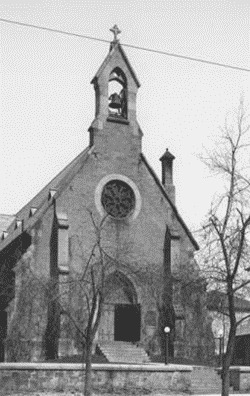
    <summary type="html"><![CDATA[<p><strong><em>St. Mark’s Cathedral began its life as the headquarters of the Salt Lake Missionary Diocese, later becoming the base for the Diocese of Utah. Serving parishioners for over 150 years, this Gothic Revival Cathedral was added to the National Register of Historic Places in 1970.</em></strong></p><img src="https://www.intermountainhistories.org/files/fullsize/e7e58cf77fd4e76efacbeb4cf870ec8d.jpg" alt="Photograph of St. Mark&#039;s Cathedral " /><br/><p><span style="font-weight:400;">The story of St. Mark’s Cathedral begins with Bishop Daniel S. Tuttle, who took his post presiding over the missionary district of Montana in 1867. This district included jurisdiction over Idaho and Utah. After the completion of the Transcontinental Railroad in 1869, Bishop Tuttle decided to make Salt Lake City the headquarters of the district. From 1867-1871, Utah’s earliest Episcopalian parishioners met in Independence Hall, an adobe building on Third South and East Temple (now Main Street). The land for St. Mark’s Cathedral was purchased on April 20, 1870. The cornerstone was laid on July 30, 1870. Opening on September 3, 1871, St. Mark’s Cathedral was designed in the Gothic Revival style by Richard Upjohn – one of his only two identified works west of the Mississippi River. </span>
<span style="font-weight:400;">The Cathedral was officially consecrated on May 14, 1874. In April 1902, money was raised for the addition of the west transept, the Chancel, and a room to house the organ pipes. When the chancel was added in 1903, this room became the Chapel of the Resurrection. Extensive renovations took place after the Cathedral was damaged by a fire in 1935. Fire damage can still be observed today from the exterior and along the ceiling of the Chapel of the Resurrection. A number of the Cathedral’s windows were destroyed in the fire, but the May Lillian Bishop Thompson Window (a scene depicting the women at Christ’s tomb speaking with an angel), was reassembled. When the fire melted the lead holding the window together, a parishioner was able to collect the glass pieces and take them to Tiffany Studios in New York, where the window was repaired. However, some pieces were lost, and thus the previously brunette angel became a blonde. </span>
<span style="font-weight:400;">St. Mark’s Cathedral has hosted a number of noteworthy visitors over the years. Episcopalian Archbishop Demond Tutu came to Salt Lake City for the opening ceremonies of the 2002 Olympics, calling on the Cathedral on February 10, 2002. St. Mark’s hosted the North American Dean’s Conference from April 23-25, 2009. Over the week of June 25-July 3, 2015, the Diocese of Utah and St. Mark’s Cathedral welcomed delegates to the 78th Convention of the Episcopal Church. On June 27, 2015, St. Mark’s made headlines when Michael Bruce Curry became the first African American to be elected presiding bishop of the Episcopalian Church. </span>
<span style="font-weight:400;">To conclude, St. Mark’s Cathedral has been part of the Salt Lake City skyline since 1871. Its bell was the first church bell to ring in Salt Lake City and continues to call Episocpalians and visitors for worship today. </span></p><p><em><strong><a href="https://www.intermountainhistories.org/items/show/761">For more (including 12 images) view the original article</a></strong></em></p>]]></summary>
    <published>2024-01-11T23:36:49+00:00</published>
    <updated>2026-04-17T19:32:16+00:00</updated>
    <link rel="alternate" type="text/html" href="https://www.intermountainhistories.org/items/show/761"/>
    <id>https://www.intermountainhistories.org/items/show/761</id>
    <author>
      <name>Isabella Holt, Brigham Young University</name>
    </author>
  </entry>
  <entry>
    <title type="html"><![CDATA[Abbey of Our Lady of the Holy Trinity: Trappist Cistercian Monastery]]></title>
    <summary type="html"><![CDATA[<p><strong><em>The Our Lady of the Holy Trinity Abbey was a monastery in Huntsville was one of the oldest monasteries in the Western United  States. At its peak, the monastery produced honey, bread, and grandfather clocks. Due to the decreasing number of monks, the monastery closed in 2017.  </em></strong></p><img src="https://www.intermountainhistories.org/files/fullsize/ca47ab2d2a54662a1f03fa4e327b3caa.jpg" alt="Abbey of Our Lady of the Holy Trinity" /><br/><p><span style="font-weight:400;">The Our Lady of the Holy Trinity of Abbey was a Trappist Monastery in Huntsville, Utah. The abbey was founded in 1947, just two years after the end of the Second World War. After the war, monasteries around the country were filling up. The Monastery of the Gethsemani Abbey in Kentucky opened five monasteries around the country, one of which was in Huntsville. </span>
<span style="font-weight:400;">When the Monastery of Huntsville was first founded in 1947, it had 32 monks living in military Quonset huts until the abbey could be built. However, the grand abbey was never built and the monks continued to live on the land for the next six decades in a smaller building. By 1956, over 80 monks had been added to the monastery's ranks.  The Monastery in Huntsville was one of the biggest properties in the Weber County area, totaling up to 1,860 acres of land. Father Patrick Boyle said of his time at the abbey, “We had 84 monks and we would pick up fifty-thousand bales of hay by hand … we had more energy than sense.” </span>
<span style="font-weight:400;">Until the mid-1990s, the monks built a life and a business, selling the farm’s beef, hay, honey, peanut butter, cereal, bread, and crafted items including clocks that were hand built by Brother Nicholas. While farming the land, the monks established a tradition of leaving one alfalfa field to bloom in order for the bees to have a plentiful food source. They credited the alfalfa with making particularly delicious honey.</span>
<span style="font-weight:400;">However, decreasing price of goods affected their bottom line. The two tons of milk and 450 dozen eggs they sold daily was not enough to sustain the community. Even the sale of calves, steer, bales of alfalfa and barley, wheat and pastuage was insufficient to reach their needed profit margin. Soon, monks began to leave the monastery. The bakery, known for its wheat and raisin bread, shut down in 1996 because there were no longer enough monks to run it. The heavy work of running the farm was outsourced and performed by college students.</span>
<span style="font-weight:400;">The lack of new recruits meant that only a handful of aging monks were present for their daily prayer in the near empty chapel. As Father Brendan Freeman explained, “You’re supposed to have elderly Monks, then the middle age monks, and then juniors, but if no one comes then it’s just all elderly monks.” </span>
<span style="font-weight:400;">In the 2000s, the monastery had only 10 monks. In 2013, Father Brendan Freeman came to the monastery with an assignment of trying to sell and conserve the property. The monks voted “yes” to the sale. On August 27, 2017 the final mass was celebrated and ended the 70 years of the monastery’s service. Reverend Patrick Boyle left the Abbey of Our Lady of the Holy Trinity in Huntsville to join his brethren at St. Joseph Villa Catholic nursing home in Salt Lake City. Boyle, 89, who had served in the abbey for 67 years, was the last of the remaining monks to leave the compound.</span>
<span style="font-weight:400;">The land was purchased by Huntsville local, Bill White, to save the land as open space. </span><span style="font-weight:400;">The current owners, Bill White and Wynstonn Wangsgard, continue agricultural production, particularly alfalfa, barley, and cattle grazing. Honeybees are also still kept on the property. </span><span style="font-weight:400;">The Summit Land Conservancy, Park City’s local accredited land trust, and Ogden Valley Land Trust came together to help protect the property.</span> <span style="font-weight:400;">The farm serves as a wildlife corridor and provides potential habitat for two endangered species, the Canada lynx and yellow-billed cuckoo, and ten migratory avian species. The property is also used as rangeland and wintering ground for elk and deer. Owls, hawks, and wild turkeys thrive in the wooded areas at the edge of the farm’s pastures. </span></p><p><em><strong><a href="https://www.intermountainhistories.org/items/show/694">For more (including 5 images) view the original article</a></strong></em></p>]]></summary>
    <published>2022-11-04T02:59:12+00:00</published>
    <updated>2026-04-17T19:32:15+00:00</updated>
    <link rel="alternate" type="text/html" href="https://www.intermountainhistories.org/items/show/694"/>
    <id>https://www.intermountainhistories.org/items/show/694</id>
    <author>
      <name>Stephen Sokol and Caeser Mayren, Weber State University</name>
    </author>
  </entry>
  <entry>
    <title type="html"><![CDATA[Latina Legacies in Carbon County: Latinas in Carbon County]]></title>
    <summary type="html"><![CDATA[<p><strong><em>Despite the difficulties Latinas faced as they settled in coal mining camps, their sacrifices, efforts, and love for their families helped them create culturally welcoming spaces that transformed Carbon County and Notre Dame De Lourdes Church.</em></strong></p><img src="https://www.intermountainhistories.org/files/fullsize/39750120fdd4c704d1a40815308e4861.jpg" alt="Notre Dame de Lourdes Catholic Church" /><br/><p><span style="font-weight:400;">Although Carbon County is known for its cultural diversity, Latinas who resided there often faced discrimination from other groups of immigrants. Angelina Gutierrez recalled “there was so much prejudice against the Spanish people. We could not go anywhere. There [were] about six couples of us [who] went to a bar over here. And they threw us out ‘no Mexicans allowed.’” Rosa Sandoval also remembers the discrimination she faced as a fifth grader by an Italian girl. In addition to facing discrimination, Latinas faced the constant threat of becoming widows and single mothers due to the hazardous working conditions in the mines. When Leticia Ramos’ husband died, she had to assume new responsibilities for the care of her family. She remembers, “[It was] scary because…I didn’t know how to do nothing…I didn’t do nothing but have kids and take care of them.” In situations where their husbands were laid off or passed away because of mine conditions, Latinas became not only caretakers, but breadwinners. They worked in “local hospitals, salons, as secretaries, house cleaners, and cooks.” Even though they were extremely busy, Latinas found refuge in the Catholic Church. </span>
<span style="font-weight:400;">However, Latinas faced challenges even within the refuge of the church. Irish and Italians dominated the Catholic church and as a result Latinas often faced “discrimination and exclusion” there. Latinas did not seclude themselves, but instead claimed their dignity. Patricia Sanchez stated, “we are going to show them that we are people, that we are human. We’re not a little rodent that just goes and hides.” Latinas’ strong stance brought changes to Notre Dame Catholic church. For example, mass started to be held in Spanish. Latinas also formed a church choir where they sang “Alabanzas” in important ceremonies like weddings. Even more revolutionary was the ethnic celebrations incorporated into the church, such as quinceaneras and the Virgin of Guadalupe day. Passing on such traditions was important to Latinas. One of the ways they preserved their culture was by creating fond memories with their children. For instance, Rose remembered spoiling her grandkids with tortillas. In addition, Latinas carved out spaces for their children to learn about their traditions; the Notre Dame Catholic School was such a space. It wasn’t easy paying tuition, but Latinas valued education and they wanted to reinforce their traditional religious values in their kids. As a result of their parents’ sacrifices, Latin children in private school did not face the same type of discrimination they would have faced in public schools. Like the Notre Dame Catholic church, the Notre Dame Catholic school became a place of inclusion and safety for all nationalities thanks to the efforts of Latinas.</span></p><p><em><strong><a href="https://www.intermountainhistories.org/items/show/659">For more (including 3 images) view the original article</a></strong></em></p>]]></summary>
    <published>2022-09-19T20:42:53+00:00</published>
    <updated>2026-04-17T19:32:14+00:00</updated>
    <link rel="alternate" type="text/html" href="https://www.intermountainhistories.org/items/show/659"/>
    <id>https://www.intermountainhistories.org/items/show/659</id>
    <author>
      <name>Sarai Silva, Brigham Young University</name>
    </author>
  </entry>
  <entry>
    <title type="html"><![CDATA[The Guadalupe Center: A Haven for Hispanics]]></title>
    <summary type="html"><![CDATA[<p><strong><em>In 1966, on 346 West 100 South in Salt Lake City, UT, the Guadalupe Center opened its doors to the public. Started by Father Jerald H. Merrill, this center was a haven for the Hispanic population of Salt Lake.</em></strong></p><img src="https://www.intermountainhistories.org/files/fullsize/2c2175e6d7758e3defd53960ca070a96.jpg" alt="The Guadalupe Center" /><br/><p><span style="font-weight:400;">In 1961, Father Jerald Merrill, a Catholic priest, was assigned to the “Our Lady of Guadalupe” Mission on the West side of Salt Lake City, Utah. With the mission having recently received a new building, all adults of the parish were invited to monthly meetings of the Guadalupana Society—a group which met to discuss problems pertaining to their mission. A few months after his arrival, Father Merrill created a branch of the Guadalupana Society that focused on social programs meant to solve the Hispanic community’s problems. In a rented room underneath the Rio Grande Hotel, Merrill and other members founded the precursor to the Guadalupe Center. Later, in 1966 and under the direction of Manuel G. Martinez and Oliver Ulibarri, volunteers helped to open a larger version of the center on 346 West 100 South with faith that the center would become a focal point for local Hispanics. </span>
<span style="font-weight:400;">After its opening, the center focused on projects for the economic and professional development and well-being of the Hispanic community. The Westside Catholic Credit Union focused on helping local members of the community to build capital. The Voluntary Improvement Program taught English and other valuable skills. A cooperative store was opened to serve poorer families in the area. Additionally, the Utah Nonprofit Housing Corporation collaborated with multiple churches and cooperative associations in the area to rehabilitate houses in the inner city region. The Guadalupe Center served as a clearinghouse for information on these and other services and coordinated support for the city’s Hispanic population. The center was also the birthplace for Hispanic activist group SOCIO, which helped pave the way for Latino civil rights throughout Utah. </span>
<span style="font-weight:400;">To create capital that could be reinvested into these programs, leaders decided to open La Morena Café as part of the center. Started just six months after the opening of the Guadalupe Center, La Morena proved immensely valuable. In addition to the profit it eventually generated, enough to support many of the Center’s programs, it also unified a diverse set of people—both hispanic and non-hispanic—in the community through its warm atmosphere and authentic Mexican cuisine. La Morena became a welcoming place for all and encapsulated the vision of  Father Merrill through its ability to unify the community. </span>
<span style="font-weight:400;">In 1986, after their rented lot was bought to build the Triad center, the original Guadalupe Center closed its doors. However, the center’s aims extended into the Guadalupe School which continues to operate today. The school provides personalized education for children with a focus on those in the Latinx community. For Latinx adults the center provides English classes, citizenship classes, and career planning. Since its inception, the spirit of the Guadalupe Center and those who founded it continue to better the lives and welfare of members of the Utah Latinx community. </span></p><p><em><strong><a href="https://www.intermountainhistories.org/items/show/642">For more (including 2 images) view the original article</a></strong></em></p>]]></summary>
    <published>2022-09-09T16:01:16+00:00</published>
    <updated>2026-04-17T19:32:14+00:00</updated>
    <link rel="alternate" type="text/html" href="https://www.intermountainhistories.org/items/show/642"/>
    <id>https://www.intermountainhistories.org/items/show/642</id>
    <author>
      <name>Lindsey Meza, Brigham Young University </name>
    </author>
  </entry>
  <entry>
    <title type="html"><![CDATA[Our Lady of Guadalupe Mission: Catholicism and Hispanics in Utah]]></title>
    <summary type="html"><![CDATA[<p><strong><em>As the Spanish-speaking population of Salt Lake exploded in the beginning of the twentieth century, the need for a Catholic mission to better minister to members and protect them from other missionary efforts resulted in the Our Lady of Guadalupe mission. </em></strong></p><img src="https://www.intermountainhistories.org/files/fullsize/7496cac3a9eb22aee98d622cb4485883.jpg" alt="Sisters of Perpetual Adoration" /><br/><p>In the first half of the twentieth century, religious diversity within Salt Lake was growing along with ethnic diversity. Saint Patrick’s Catholic Parish dedicated itself to ministering to Italian Catholics. However, Father Francis Alva noticed a distinctive lack of accommodation for Spanish-speaking patrons, many of whom hailed from New Mexico. Beginning in 1920, Father Alva held mass in Spanish. Concurrently, he wrote to the Catholic Diocese asking for a separate school and church to be formed in the “mission style” to adjust to the city’s demographics. He recommended that this mission be called Our Lady of Guadalupe—a clear reference to Mexico’s patron saint. </p><p>The need for Spanish-speaking priests was not fulfilled until 1927, when Father Perfecto Arrellano joined Saint Patrick’s parish. For the next three years, the mission experienced a quick turnover of four Spanish-speaking priests until 1930. While the mission went through a revolving door of priests, Mexican nuns—refugees from tension between the Catholic church and the Mexican government—kept the mission afloat. Called Las Madres (The Mothers), were sent to Salt Lake to start and maintain school programs for the mission’s children. They became so busy with these new duties that their superiors reprimanded them for not keeping a twenty-four-hour vigil of the Holy Eucharist, as was required by their order. </p><p>In 1930, Father Collins came to Guadalupe. Despite not knowing Spanish, Father Collins immediately began his ministry over the predominantly Spanish-speaking congregation. His commitment to learning Spanish and the congregants’ culture endeared him to those in the mission. As the Great Depression continued, the mission’s budget was extremely limited, but the mission still provided space to hold activities and celebrations, as well as sponsor a Boy Scout troop. It was also in meetings held by the mission that members of the mission envisaged community outreach programs such as Spanish Speaking Organization for Community, Integrity, and Opportunity—an organization that advocated for the welfare of Hispanics in Utah during the latter half of the twentieth century. In 1944, as the mission grew to accumulate more than 1800 members, the Church officially raised the mission to become Our Lady of Guadalupe parish from West Temple and 500 West to 100 and 600 South.</p><p><em><strong><a href="https://www.intermountainhistories.org/items/show/637">For more (including 3 images) view the original article</a></strong></em></p>]]></summary>
    <published>2022-09-07T16:44:21+00:00</published>
    <updated>2026-04-17T19:32:14+00:00</updated>
    <link rel="alternate" type="text/html" href="https://www.intermountainhistories.org/items/show/637"/>
    <id>https://www.intermountainhistories.org/items/show/637</id>
    <author>
      <name>Lindsey Meza, Brigham Young University</name>
    </author>
  </entry>
  <entry>
    <title type="html"><![CDATA[“This Gathering”: Hispanics in Monticello 1900-1950 ]]></title>
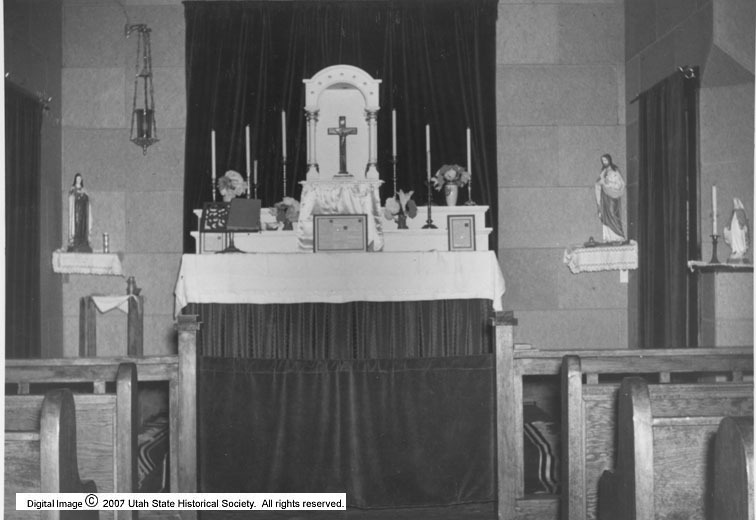
    <summary type="html"><![CDATA[<p><strong><em>Due to external pressures and free land, several Hispanic families moved to Monticello and the surrounding San Juan County. The rural landscape allowed Hispanic families to keep more of their culture than those in more urban spaces which manifested in the construction of the first Hispanic Catholic Church in the state. </em></strong></p><img src="https://www.intermountainhistories.org/files/fullsize/548a81439a5af7bab727f49d8255c5d3.jpg" alt="St. Joseph&#039;s Cathedral Altar" /><br/><p>Compared to the rest of the American Southwest, Utah did not have as strong a Hispanic population until the twentieth century. Previously, Hispanic men had often moved to southern Utah to herd sheep and cattle for three quarters of the year before moving back home to their families. Beginning in the early 1900s, men started to bring their families to Monticello,​​ Utah. Many of the Hispanic families who moved to Monticello were citizens from small New Mexican villages or Colorado. Governments and policies in these states took away Hispanics’ land, water, and right to be involved in the government. This, along with the promise of “free” land in Monticello, spurred Hispanics to move. Groups of families began homesteading in the community with men being employed as sheep herders, ranch hands, and cowboys. </p><p>William Herman Gonzalez’s father was of the first family to move to the community in the early twentieth century. Born and raised in Monticello, Gonzalez remembers that “there was always deer meat and potatoes and plenty of tortillas.” Their small group of Hispanics attracted others to move to the community, “this gathering.” In times of need, the families of Hispanics would rally around one another, although they were mostly independent due to the layout of Monticello. As a consequence of the rural landscape, the Hispanics who moved to Monticello were able to keep more of their traditional culture in comparison to Hispanics who moved to urban landscapes. Many were strongly Catholic and raised money to build the first Hispanic Catholic church in Utah, St. Joseph’s. </p><p>The relations between Hispanics and Anglos in the community were complex because of the cultural barriers between Catholic and Mormon and Anglo and Hispanic. The two communities did not intermarry until the late 1940s. When World War II began, about 125 Hispanic men enlisted in the war. Upon their return, some were able to advance economically. One of them was Robert Nieves who opened the Highland Café in 1947. However, World War II and the Korean War created new dynamics in this southern part of the state and led many Hispanics in and around Monticello to move north for better paying jobs, bringing with them their strong sense of culture.</p><p><em><strong><a href="https://www.intermountainhistories.org/items/show/636">For more (including 4 images) view the original article</a></strong></em></p>]]></summary>
    <published>2022-09-07T16:29:42+00:00</published>
    <updated>2026-04-17T19:32:14+00:00</updated>
    <link rel="alternate" type="text/html" href="https://www.intermountainhistories.org/items/show/636"/>
    <id>https://www.intermountainhistories.org/items/show/636</id>
    <author>
      <name>Lindsey Meza, Brigham Young University</name>
    </author>
  </entry>
</feed>