<?xml version="1.0" encoding="UTF-8"?>
<feed xmlns="http://www.w3.org/2005/Atom">
  <title type="text">Intermountain Histories</title>
  <updated>2026-04-17T19:32:18+00:00</updated>
  <generator uri="http://framework.zend.com" version="1.12.20">Zend_Feed_Writer</generator>
  <link rel="alternate" type="text/html" href="https://www.intermountainhistories.org/"/>
  <link rel="self" type="application/atom+xml" href="https://www.intermountainhistories.org/items/browse?output=rss2"/>
  <id>https://www.intermountainhistories.org/</id>
  <author>
    <name>Intermountain Histories</name>
    <uri>https://www.intermountainhistories.org</uri>
  </author>
  <link rel="hub" href="https://pubsubhubbub.appspot.com/"/>
  <entry>
    <title type="html"><![CDATA[Everett Ruess: Lost in the Labyrinth of Davis Gulch, Utah ]]></title>
    <summary type="html"><![CDATA[<p><strong><em>Everett Ruess left Escalante Utah on November 12th, 1934 in a light red shirt “as thin as smoking paper” and headed towards Davis Gulch with the confidence of an experienced explorer, which he very much was, but to never be seen again.</em></strong></p><img src="https://www.intermountainhistories.org/files/fullsize/a5b2261c72639e672eacb5c47cb06fbe.jpg" alt="Bement Arch in Davis Gulch" /><br/><p><span style="font-weight:400;">Davis Gulch is located about forty-five miles southeast of Escalante, Utah, down the Escalante River before it meets with the Colorado River. Before leaving Escalante, Everett was warned about the winters of southern Utah and the dangerous trek across Escalante Canyon. However, Everett planned to be home for Christmas, so these worries were behind him. He wrote and sent two letters before arriving at Davis Gulch, to his parents, Stella and Christopher, and another to his brother, Waldo. To his parents, he wrote that he would be unreachable for a couple of months, and would return before the end of the year, but to Waldo, he said that he would not revisit civilization soon, foreshadowing the uncertainty of his disappearance. When Everett did not return to Los Angeles by late December, Stella immediately sent him a Christmas card. However, one month later the card came back to Stella, and the heartfelt message now read “Unkown” and “Return to sender.” </span>
<span style="font-weight:400;">Stella and Christopher’s first objective was to call up Escalante Postmistress Mildred Allen and ask if there was any information on Everett’s whereabouts. Unfortunately, Mildred had not heard from Everett, and neither had anyone else. Next, the Ruess family contacted every Postmaster across the Southwest in search of any sign of Everett but were met with no hope. Their third step was to contact all newspapers and radio stations in the region and ask them to spread awareness of Everett’s disappearance. The first newspaper account of his disappearance was on Valentine's Day, February 14th, 1935, by the </span><i><span style="font-weight:400;">Los Angeles Evening Herald,</span></i><span style="font-weight:400;"> just over three months after he left Escalante. Everett Ruess was now officially missing. </span>
<span style="font-weight:400;">In March of 1935, a man named Gail Bailey spotted two burros deep in Escalante Canyon at Davis Gulch. The trail to Davis was hard to access, meaning that Everett must have scaled the labyrinth of the carved desert to get to the bottom of the canyon safely with two burros, which posed challenges before when he lost a burro in 1932 while climbing out of Canyon del Muerto. </span>
<span style="font-weight:400;">Searches for Everett began soon after Bailey’s report, one led by the Postmistress's husband, Jennings Allen. Found among his burros were some of his belongings, but not a diary, watercolors, or other supplies. After searches ended, the most significant marking left behind was a carving, “NEMO 1934” at the top of a Moqui trail–hand and foot holds carved into rock–next to a large pictograph deep in Davis Gulch. In 1963, The Bureau of Reclamation constructed Glen Canyon Dam, which quickly flooded the canyon, making it harder to search Davis Gulch for Everett Ruess.</span>
<span style="font-weight:400;">To this day there have been many rumors about Everett’s disappearance including a debunked case of his potential remains found in 2008. A quote from one of Everett’s letters summarized his final journey, “I’ll never stop wandering. And when the time comes to die, I’ll find the wildest, loneliest, most desolate spot there is.” Everett’s life ended in solitude, as he always wanted.</span></p><p><em><strong><a href="https://www.intermountainhistories.org/items/show/833">For more (including 4 images) view the original article</a></strong></em></p>]]></summary>
    <published>2024-05-25T04:40:54+00:00</published>
    <updated>2026-04-17T19:32:18+00:00</updated>
    <link rel="alternate" type="text/html" href="https://www.intermountainhistories.org/items/show/833"/>
    <id>https://www.intermountainhistories.org/items/show/833</id>
    <author>
      <name>Matthew T. Lankton, Northern Arizona University</name>
    </author>
  </entry>
  <entry>
    <title type="html"><![CDATA[The Beginning of the End: Kayenta, Arizona and Everett Ruess]]></title>
    <summary type="html"><![CDATA[<p><strong><em>On April 12th, 1934 Everett and his brother Waldo Ruess made the journey from southern California through the night. They stopped in Flagstaff for supplies, then headed north to Kayenta, Arizona, where Waldo dropped Everett off. It was the last time he was seen by anyone in his family.</em></strong></p><img src="https://www.intermountainhistories.org/files/fullsize/5132afc33e165a712d7a4a3391423c75.jpg" alt="New York Times, 1934" /><br/><p><span style="font-weight:400;">Known as the gateway to Monument Valley Navajo Tribal Park, Kayenta, Arizona lies in the Navajo Nation just south of the Arizona-Utah border. Kayenta was founded in 1909 by John Wetherill first as a trading post and eventually was established as a township by the Navajo Nation in 1962.</span>
<span style="font-weight:400;">After spending a semester at the University of California Los Angeles (UCLA) Everett traversed the Sierras in 1933. He made it clear to his brother, Waldo, that this journey in 1934 would be his last. After Waldo dropped him off, Everett spent the next two months exploring the region surrounding Kayenta. In a letter to Waldo, he wrote about his journey consisting of “Chin Lee [</span><i><span style="font-weight:400;">sic</span></i><span style="font-weight:400;">], Canyon de Chelly, the Luckachukais, and the Carrizos.” During this time Everett enjoyed the wilderness country, and experienced solitude, which he eventually achieved. During his third time in Canyon de Chelly, Everett foreshadowed his own fate when he wrote “I have been flirting pretty heavily with death” in a letter to a friend. Everett also stayed with Navajo families during this time, where he ate and hunted, making an impression that lasted generations.</span>
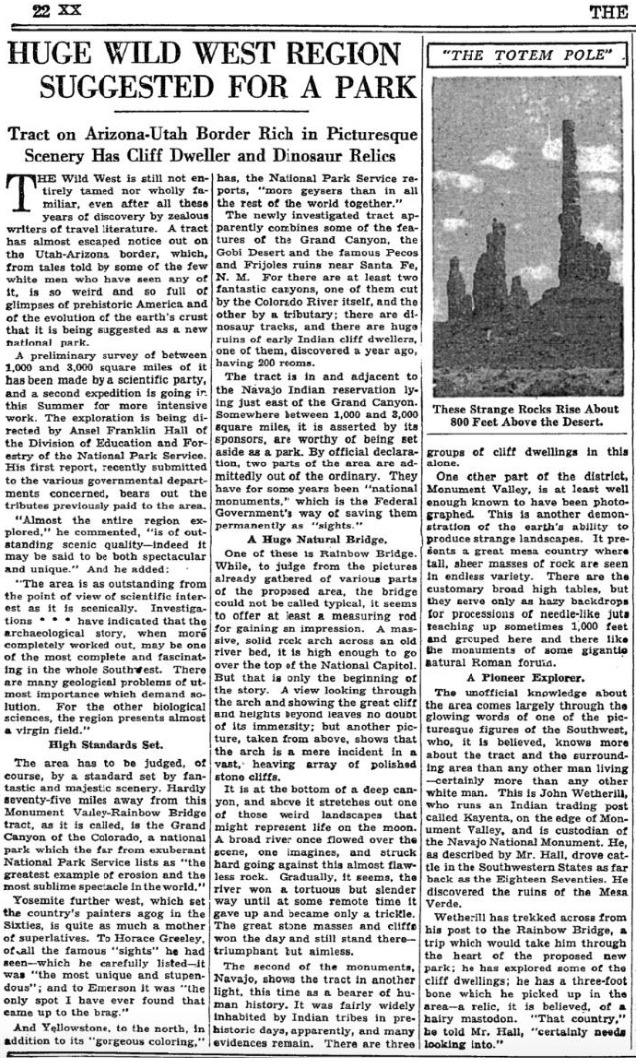
<span style="font-weight:400;">As the summer months approached, Everett recalled the crew of the Rainbow Bridge – Monument Valley archeological expedition near Kayenta. The expedition, funded by Ford Motor Company, aimed to provide field experience for explorers and survey the land for an attempted national park. He headed to the expedition’s camp near Skeleton Mesa, just west of Kayenta, and was hired by expedition leader Lyndon Hargrave of the Museum of Northern Arizona (MNA) in Flagstaff. He began working in exchange for meals, rather than the $3.50 a day that the other explorers received. He thoroughly enjoyed this experience because he could work alongside intelligent individuals, discuss the Navajo culture, draw and paint, climb any rock desired, and enjoy the wonders of nature with a sense of companionship for the first time.</span>
<span style="font-weight:400;">Hargrave recalled Everett’s skill from when they met briefly in 1931 at Mesa Ranch Schools’ summer camp. He assigned Everett to work under the crew of Clay Lockett, Flagstaff resident and ethnologist at MNA. The crew spent their time excavating Skeleton Mesa, specifically Woodchuck Cave, which contained archeological remains and objects from as far back as 200 C.E. During the expedition, Everett and  Lockett bonded over their love for art and nature. After his disappearance, Lockett later wrote, “I had an excellent chance to really know Everett,” demonstrating Everetts's lasting impression. It seemed that Everett made an impression on everyone he met, especially on this expedition.</span>
<span style="font-weight:400;">Everett displayed his love for adventure again when a storm approached the canyon, which encouraged him to capture the rolling clouds in watercolor as they encroached. The young vagabond displayed his risky personality while perched at the edge of the slick cliff, hunched over to protect the precious watercolor of Mother Nature in action. Everett soon finished the expedition, paused in Kayenta, and headed south to attend the Hopi snake dance one last time.</span></p><p><em><strong><a href="https://www.intermountainhistories.org/items/show/831">For more (including 4 images) view the original article</a></strong></em></p>]]></summary>
    <published>2024-05-25T04:12:43+00:00</published>
    <updated>2026-04-17T19:32:18+00:00</updated>
    <link rel="alternate" type="text/html" href="https://www.intermountainhistories.org/items/show/831"/>
    <id>https://www.intermountainhistories.org/items/show/831</id>
    <author>
      <name>Matthew T. Lankton, Northern Arizona University</name>
    </author>
  </entry>
  <entry>
    <title type="html"><![CDATA[Everett Ruess at Veit Springs near Flagstaff, Arizona]]></title>
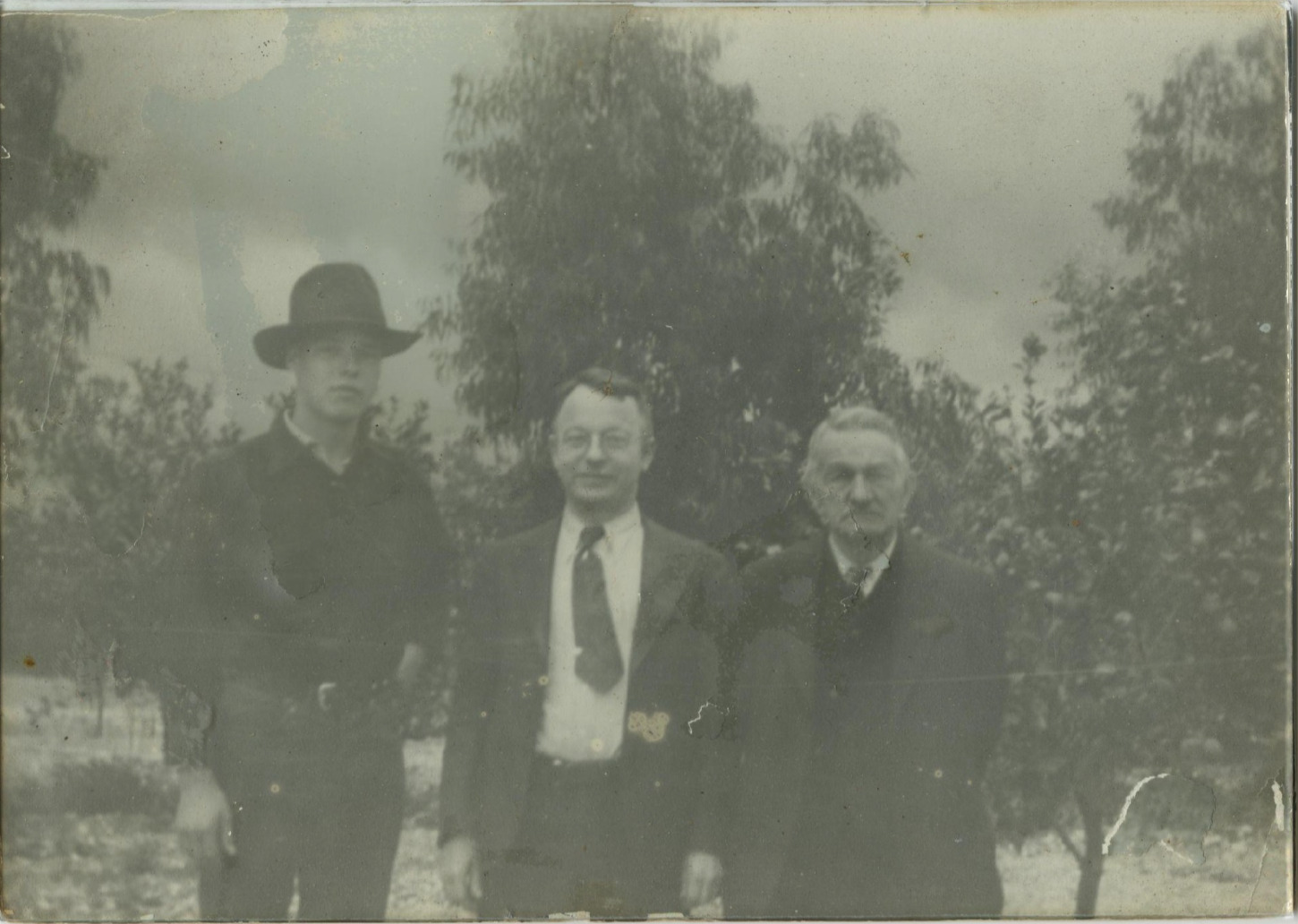
    <summary type="html"><![CDATA[<p><strong><em>Serving as a homestead and a later rest stop for Everett Ruess' introduction to the Intermountain West as a solo traveler, Veit Springs rests on the side of Arizona's highest mountain, the San Francisco Peaks.</em></strong></p><img src="https://www.intermountainhistories.org/files/fullsize/010f42c0309f906e6329d5c5d348784e.jpg" alt="Everett Ruess with his father and grandfather" /><br/><p>Just north of Flagstaff, Arizona sits in the San Francisco Peaks, or "Dook'o'oosłííd," <em>The Summit that Never Melts</em>, to the Navajo Nationa. In the year 1891, German immigrant Ludwig Veit received a patent for a 160-acre homestead where he and his family constructed a cabin and other structures at what came to be called Veit Springs. Randolph (Pat) Jenks, a student at the Evans Ranch School, a boys preparatory school in Mesa, Arizona, purchased the property from Veit’s relatives in 1930. Jenks, and his classmate Tad Nichols, enjoyed their summers in Flagstaff when the school summered up North. In 1931 the two boys encountered Everett Ruess on his journey through northern Arizona, inviting him to join them back on the homestead. </p><p>Everett Ruess was seventeen when he was picked up near Cameron, Arizona, by Jenks and Nichols. Everett was in bad shape, suffering from his history of anemia and other physical degradation from the desert environment. Tad Nichols, famous photographer of the Colorado Plateau, snapped a photo of Everett and Pat loading his gear, his dog Curly, and Burro Pegasus, into Jenks’ truck before they all set on their way to Jenks’ Deerwater Ranch on the San Francisco Peaks. While Everett was at Veit Springs, he bonded with Jenks over his love for ornithology, the study of birds, and their mutual love for art and the Southwest. Everett created a block print painting and described Jenks’ fascination with his art in a letter home. In fact, Jenks was intrigued enough to purchase one of Everett’s block prints of some native Cliff Dwellings. He enjoyed his new friends and wrote a letter about his “idyllic days” at Deerwater Ranch. Here, Everett escaped the traditional aridness of the Intermountain West and described the environment of the ranch as “cool and bracing” in a letter to his family on June 8th, 1931. Among Everett’s belongings in Davis Gulch was an unsent letter that expressed his “true spirit of delight, exaltation, [and] sense of being more than a man” that he experienced at Veit Springs. </p><p>Everett later traversed the Grand Canyon and resided throughout northeast Arizona, returning home later that year. He set off again to the region in 1932, one of the only years his journey was successfully documented. </p><p>In the 1970s, The United States Forest Service aimed to demolish the cabin Veit hand-built, but the Flagstaff community successfully advocated for its relocation just west of the city's downtown. The Veit Cabin relocation by the Arizona National Guard moved the cabin to its current position within Thorpe Park in Flagstaff, Arizona, just South of Francis Short Pond. Since 1988, the new cabin location has facilitated educational events regarding natural and cultural studies of the landscape. Meanwhile, the cabin’s former site at Veit Springs remains a beautiful spot among the tall aspens on the Veit Springs Hiking Trail where tourists can experience the bracing environment that Everett described, as well as Indigenous petroglyphs and abandoned pumphouses from its early days in history.</p><p><em><strong><a href="https://www.intermountainhistories.org/items/show/829">For more (including 5 images) view the original article</a></strong></em></p>]]></summary>
    <published>2024-05-24T22:33:19+00:00</published>
    <updated>2026-04-17T19:32:18+00:00</updated>
    <link rel="alternate" type="text/html" href="https://www.intermountainhistories.org/items/show/829"/>
    <id>https://www.intermountainhistories.org/items/show/829</id>
    <author>
      <name>Matthew T. Lankton, Northern Arizona University</name>
    </author>
  </entry>
  <entry>
    <title type="html"><![CDATA[John Jarvie’s Historic Ranch]]></title>
    <summary type="html"><![CDATA[<p><strong><em>Not all hospitality is returned in kind. In the case of John Jarvie, the outlaws to whom he was so obliging went on to rob and murder both him and his son. </p></strong></p><img src="https://www.intermountainhistories.org/files/fullsize/fa571c3f7ee8336879f9a9d505c7f737.jpg" alt="John Jarvie" /><br/><p><span style="font-weight:400;">In 1880 John Jarvie and his wife Nellie Barr moved from Rock Springs, Wyoming to the burgeoning settlement of Brown’s Park. Jarvie set up a general store, post office, and ran a river ferry that crossed the nearby Green River. Jarvie became well known for his sagacity and kindness to all those who lived in the region, even the Wild Bunch outlaws. Such associations did not serve him well in the long run, but his kindness did, and his legacy has continued to today in Uintah and Daggett County.</span>
<span style="font-weight:400;">John Jarvie was born in Scotland in 1844. As a young man after being beaten soundly by a mine supervisor, Jarvie elected to immigrate to the United States as a stowaway. He arrived in America in 1870 and settled in Rock Springs, Wyoming.  After several years as a businessman in Rock Springs, working as a Saloon Owner, Jarvie met residency requirements and became a citizen on October 8</span><span style="font-weight:400;">th</span><span style="font-weight:400;">, 1875. In 1880 at the age of 36, Jarvie married Nellie Barr, 22, and the couple moved to Brown’s Park, the present location of John Jarvie’s Historic Ranch.  Jarvie opened a general store, moved the local post office to his property, and ran a ferry that crossed the Green River.</span>
<span style="font-weight:400;">Jarvie sold to everyone in the region, even notorious outlaws. One location on the historic ranch in particular, a storage cellar, was thought to have housed criminals like Butch Cassidy when they were on the run from the law. One notable event on the Ranch in 1895 termed the “Outlaws’ Thanksgiving Dinner” saw a dinner of gratitude  between several notorious outlaws including Billie Bender, Les Megs, Butch Cassidy, Elza Lay, Isom Dart, and the Sundance Kid. The meeting was jovial and in celebration of Jarvie and other residents in Brown’s Park tolerance of the outlaw’s activities. In light of their warm relationship, it is tragic that Jarvie and one of his sons eventually lost their lives to outlaws.</span>
<span style="font-weight:400;">William King and George Hood, hearing false rumors about Jarvie’s great wealth, came to the ranch on July 6</span><span style="font-weight:400;">th</span><span style="font-weight:400;">, 1909. Jarvie was alone, his sons having taken jobs on other farms, and his wife having died of Tuberculosis in 1895. Jarvie was known for his generosity and tendency to feed visitors so he set the table for three. The outlaws did not return his kindness. They forced Jarvie to open his store safe and took the contents, a $100 bill and a pearl handled revolver. Jarvie fled the store and was shot in the back and head. The outlaws placed his body on a boat and sent it down the river. Details of the murder slowly tricked out. When reports circulated of two men trying to change a $100 bill in Rock Springs, Jarvie’s son Jimmy pursued the outlaws voraciously. Jimmy was on their trail at an Inn in Idaho when he was pushed from a second-floor balcony and fell to his death. The criminals were never apprehended.</span>
<span style="font-weight:400;">Jarvie left a powerful legacy which was seen in the obituary written for him in the Vernal Express. There he was praised as a “the sage of the Uintahs, the Genius of Brown’s Park, and the Wizzard [sic] of the hills and rivers. He was not only a man among men but he was a friend among men… He was as broad and generous and far reaching in his good deeds as the stream which he knew and loved[.]”</span></p><p><em><strong><a href="https://www.intermountainhistories.org/items/show/770">For more (including 3 images) view the original article</a></strong></em></p>]]></summary>
    <published>2024-01-20T08:08:00+00:00</published>
    <updated>2026-04-17T19:32:17+00:00</updated>
    <link rel="alternate" type="text/html" href="https://www.intermountainhistories.org/items/show/770"/>
    <id>https://www.intermountainhistories.org/items/show/770</id>
    <author>
      <name>Samuel Pulsipher, Brigham Young University</name>
    </author>
  </entry>
  <entry>
    <title type="html"><![CDATA[Dorothy McKibbins: The Gatekeeper of Los Alamos ]]></title>
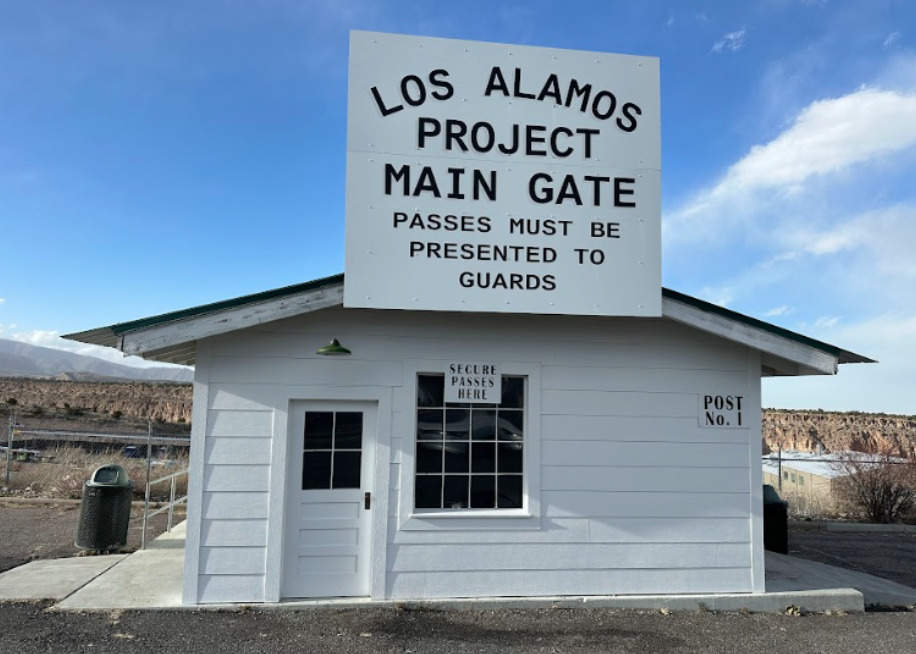
    <summary type="html"><![CDATA[<p><strong><em>The Manhattan Project would not have been possible without the efforts of Dorothy McKibbin, the Gatekeeper of Los Alamos. From attaining marriage licenses to transferring phone calls, Dorothy McKibbin was an integral and diversely skilled cog in the large machine of building the first nuclear weapons. </p></strong></p><img src="https://www.intermountainhistories.org/files/fullsize/5c401996b7cfdc416ba17d96a788fbec.jpg" alt="Los Alamos Project Main Gate Replica" /><br/><p><span style="font-weight:400;">Once General Leslie Groves and Dr. J. Robert Oppenheimer chose Los Alamos, New Mexico as the place to build the atomic bomb; hundreds of bewildered employees streamed into the nearby town of Santa Fe. Due to the confidentiality of the Manhattan Project, recruitment was difficult and details provided to the new hires were vague because of the classified nature of their work. They were told that their work would helpe war effort and be located in the scenic mesas of New Mexico, but little else. After a long train ride to the nearby town of Lamy, scientists and their families hauled their luggage through the winding streets of Santa Fe, looking for 109 East Palace Avenue—the only address they had been given. There, they were met by a simple red and blue sign reading “United States Engineer Office No. 3” and the welcoming presence of Dorothy McKibbin. </p>
<span style="font-weight:400;">In 1932, recently-widowed Dorothy McKibbin moved to Santa Fe from Kansas with her son, hoping for a new life. When she met Dr. J. Robert Oppenheimer in 1943, she found one. Oppenheimer recognized her comforting, calming, and competent presence and asked her to be a War Department secretary with unspecified duties. Like the other personnel, she only knew that her job concerned an essential war project. As she discovered after accepting the position, duties encompassed everything from disciplining Nobel laureates, receiving classified mail, enforcing security, helping lost families find the way to their new homes, and more. She was there for some of the most important moments of the project, even observing the Trinity Test from a car parked near Albuquerque. To Dorothy McKibbin, “Working at 109 was more than just a job. It was an exciting experience. Our office served as the entrance to one of the most significant undertakings of the war or, indeed, of the twentieth century.” </p>
<span style="font-weight:400;">For the entirety of the Manhattan Project she was the point of contact between the secret city and the rest of the world, earning herself the nickname of  the “Gatekeeper of Los Alamos.” After the Manhattan Project concluded, the site was renamed the Los Alamos National Laboratory, and McKibbin continued to work there until her retirement in 1963. She spent her retirement organizing community programs in Los Alamos and Santa Fe until her death in 1985. Today, a room in the Los Alamos History Museum is named in her honor, and although her office at 109 East Palace currently houses a gift shop, its original iron gate which once welcomed thousands to the secret city is on display at the Los Alamos History Museum. </span>
</p><p><em><strong><a href="https://www.intermountainhistories.org/items/show/752">For more (including 4 images) view the original article</a></strong></em></p>]]></summary>
    <published>2023-09-08T01:24:19+00:00</published>
    <updated>2026-04-17T19:32:16+00:00</updated>
    <link rel="alternate" type="text/html" href="https://www.intermountainhistories.org/items/show/752"/>
    <id>https://www.intermountainhistories.org/items/show/752</id>
    <author>
      <name>Abigail Beus, Brigham Young University</name>
    </author>
  </entry>
  <entry>
    <title type="html"><![CDATA[Tarlton Lewis, “Grand Old Man”]]></title>
    <summary type="html"><![CDATA[<p><strong><em>Tarlton Lewis, a survivor of the Hawn’s Mills Massacre in Missouri, went on to live an energetic life as he explored the West and settled new towns such as Parowan and Minersville in Iron and Beaver Counties in Utah. He lived his life helping other Latter-day Saints, farming and building on the land, and raising a family in the desert.</em></strong></p><img src="https://www.intermountainhistories.org/files/fullsize/04d4a6e7d1c614593ab9129186616d5d.jpg" alt="Tarlton Lewis" /><br/><p>Tarlton Lewis was the fourth of twelve children born to Neriah Lewis and Mary Moss on May 18, 1805 in South Carolina. Tarlton married Malinda Gimlin on March 27, 1828; over the course of their marriage, they had eight children together. While living in Illinois, Tarlton and Malinda joined The Church of Jesus Christ of Latter-day Saints (sometimes nicknamed “Mormons”) and were baptized July 25, 1836 by Tarlton’s older brother Benjamin Lewis. The brothers joined moved to Missouri to live among other Latter-day Saints, and on October 30, 1838, while living near Hawn's Mill, they were attacked by a violent mob agitating for the expulsion of all Mormons from Missouri. The mob murdered Tarlton’s older brother Benjamin, and Tarlton suffered an injury to his shoulder; their younger brother David, however, was uninjured.
After surviving this tragedy, the brothers moved with other Latter-day Saints to Nauvoo, Illinois. There, Joseph Smith, president of the Church, and his brother Hyrum set apart Tarlton as bishop of the Nauvoo Fourth Ward. Also in Tarlton and Malinda received the endowment and sealing ordinances—the Church’s highest sacraments—before joining the mass exodus of Latter-day Saints from Nauvoo, leaving behind the temple they had spent years helping build.
The Lewis family left as part of the second wave of Saints, fleeing westward across the Mississippi Rive, but Tarlton himself stayed behind to continue his service as a bishop and help the Church members under his care prepare to go West. After many weeks crossing Iowa, they settled temporarily at Council Bluffs in Pottawattamie, Iowa, 1846.
After the Latter-day Saints regrouped in Iowa, Tarlton joined the first company of pioneers departing in 1847. As part of the Vanguard Company led by Brigham Young—Smith’s successor to the Church presidency—Tarlton was captain of 50 wagons and entered the Salt Lake Valley on July 21, 1847. There, Young called Tarlton as the first bishop in Salt Lake Valley, and Tarlton remained in the valley to build cabins and plant crops for the Saints who would arrive next. After an almost two-year separation, Tarlton reunited with his family when they arrived at the Salt Lake Valley on September 21, 1848.
Two years later, in December 1850, the Church called Tarlton to travel with apostle George A. Smith and one hundred others to explore southern Utah. Tarlton again captained 50 wagons, and on January 17, 1851, the explorers officially organized Iron County. In their first election, the young county elected Tarlton Lewis as a magistrate. George Smith organized the settlement into four wards, and Tarlton became bishop of the Second Ward in Parowan. The Lewis family helped build roads, log cabins, and furniture.
After Tarlton’s brother David died in September 1855, Tarlton married two of his brother’s widows as polygamous wives. Tarlton explored the mountains of Beaver Valley for lead ore, finding a mine and becoming a director of it. They also helped found Minersville, and Tarlton was active in the community and donated a portion of his lot to finance a Relief Society building. Life in Minersville was a struggle as farming was difficult with little water from Beaver Creek.
The family managed a humble living for fourteen years until the Church assigned Tarlton to establish a United Order in Joseph, Sevier County. The most pressing issue that settlers faced was the difficulty of irrigating water for farmlands; their hard work was paid off with “diverse crops as apples, apricots, peaches, pears, grapes, and black walnuts,” but there was not enough to make Joseph prosper. The Lewises lived there a few years before moving northeast to the larger town of Richfield, and the United Order in Sevier County dissolved in November 1877. Apostle Erastus Snow then set Tarlton apart as bishop of the Richfield Second Ward on July 16, 1877. As an active citizen of Richfield, Tarlton and a hundred other citizens petitioned the Utah Territorial House to incorporate the town, and the provision passed.
Tarlton’s time as a bishop in Richfield was brief, as health complications warranted his resignation a year later, but he recovered his strength enough to serve as a stake patriarch, as listed in the Sevier Stake Conference for August 27, 1887.
Tarlton Lewis died on November 22, 1890 at Teasdale, Utah Territory, at the home of his son, Beason Lewis. He was buried in the Teasdale Cemetery. In 1987, Mount View Camp, the Daughters of Utah Pioneers, and the Lewis Family sponsored and built a marker and plaque at his burial site in 1987.</p><p><em><strong><a href="https://www.intermountainhistories.org/items/show/633">For more (including 3 images) view the original article</a></strong></em></p>]]></summary>
    <published>2022-07-01T03:06:04+00:00</published>
    <updated>2026-04-17T19:32:13+00:00</updated>
    <link rel="alternate" type="text/html" href="https://www.intermountainhistories.org/items/show/633"/>
    <id>https://www.intermountainhistories.org/items/show/633</id>
    <author>
      <name>Debra Tangren, Brigham Young University</name>
    </author>
  </entry>
  <entry>
    <title type="html"><![CDATA[Knight Mangum Building (KMB)]]></title>
    <summary type="html"><![CDATA[<p><strong><em>Eventually named for two sisters-in-law, over the course of its life the Knight Mangum Building hosted a New Deal program, women students of BYU, missionaries-in-training, Latter-day Saint historians, and campus faculty. BYU demolished the building in 2008.</em></strong></p><img src="https://www.intermountainhistories.org/files/fullsize/41d67f3a15de61dde8cac3faf4ab080c.jpg" alt="Knight Mangum Hall" /><br/><p><span style="font-weight:400;">In the mid-twentieth century, Brigham Young University’s student population continued to grow as more students from further afield sought enrollment at the flagship university of The Church of Jesus Christ of Latter-day Saints. In its ongoing efforts to grow the campus, BYU purchased the building which eventually became Knight Mangum Hall in 1943 from the National Youth Administration (NYA), a New Deal program designed to maintain education and employment among young adult men and women.</span>
<span style="font-weight:400;">NYA built the edifice in the mid-1930s as a shop building to teach auto maintenance skills, and BYU initially planned to use the facility for similar purposes in its Industrial Arts program. However, university administrators changed their plans and decided to use the building as a women’s dormitory, renaming it Campus Dormitory. The decision to use the building as housing was so abrupt that few renovations were made to make it suitable for living. The university filled the hall with bunk-beds, and coeds hung sheets from the ceiling to cordon off sleeping spaces and create a semblance of privacy.</span>
<span style="font-weight:400;">BYU began renovating the hall to make it more suitable as a dormitory in 1946 and added a kitchen, dining room, and laundry over eight years. When renovations were completed in 1954, administrators renamed the building Knight Mangum Hall, after Jennie Pearl Knight Mangum and Lucy Jane “Jennie” Brimhall Knight, respectively a daughter and daughter-in-law of </span><a href="https://www.intermountainhistories.org/items/show/140"><span style="font-weight:400;">Jesse Knight</span></a><span style="font-weight:400;"> and Amanda McEwan Knight, a philanthropist couple who supported BYU in the early-twentieth century. Jennie Pearl was active in her religious and civic communities and established a scholarship at Provo High School. Lucy Jennie was the daughter of </span><a href="https://www.intermountainhistories.org/items/show/138"><span style="font-weight:400;">George H. Brimhall</span></a><span style="font-weight:400;">, a former BYU president, and in 1898 she had been one of the first two single women to serve as missionaries for The Church of Jesus Christ of Latter-day Saints, serving alongside </span><a href="https://www.intermountainhistories.org/items/show/568"><span style="font-weight:400;">Inez Knight</span></a><span style="font-weight:400;">, another daughter of the Knights. Both were considered lifelong friends of the university.</span>
<span style="font-weight:400;">By the 1950s, Knight Mangum Hall housed between 280 340 coeds at a time. In the early 1960s, however, huge dormitory complexes like </span><a href="https://www.intermountainhistories.org/items/show/148"><span style="font-weight:400;">Heritage Halls</span></a><span style="font-weight:400;"> and </span><a href="https://www.intermountainhistories.org/items/show/149"><span style="font-weight:400;">Helaman Halls</span></a><span style="font-weight:400;"> took over the heavy lifting in housing BYU students, perhaps diminishing Knight Mangum’s necessity. In June 1963, the Church took over Knight Mangum to use as a headquarters for its Language Training Mission, which taught missionaries foreign languages for ecclesiastical missions abroad.</span>
<span style="font-weight:400;">In 1976, the Language Training Mission moved into a new headquarters, leaving Knight Mangum Hall back in BYU’s hands. Rather than restore it to housing use, BYU maintained it as an office space for faculty.</span>
<span style="font-weight:400;">Since it was no longer used as a dormitory, at some point the campus began calling it the Knight Mangum Building. Eventually, every department of the College of Family, Home, and Social Sciences spent some time in Knight Mangum, as did the Joseph Fielding Smith Institute for Latter-day Saint History.</span>
<span style="font-weight:400;">With the building aging and falling behind modern standards for safety, university administration decided to demolish the building. BYU tore down Knight Mangum in the summer of 2008.</span></p><p><em><strong><a href="https://www.intermountainhistories.org/items/show/570">For more (including 11 images) view the original article</a></strong></em></p>]]></summary>
    <published>2022-02-27T08:54:09+00:00</published>
    <updated>2026-04-17T19:32:12+00:00</updated>
    <link rel="alternate" type="text/html" href="https://www.intermountainhistories.org/items/show/570"/>
    <id>https://www.intermountainhistories.org/items/show/570</id>
    <author>
      <name>Makoto Hunter, Brigham Young University</name>
    </author>
  </entry>
  <entry>
    <title type="html"><![CDATA[Amanda Knight Hall (AKH)]]></title>
    <summary type="html"><![CDATA[<p><strong><em>Named for a notable pioneer woman, Amanda Knight Hall was part of BYU’s pioneering effort to house its growing student body.</em></strong></p><img src="https://www.intermountainhistories.org/files/fullsize/1841604c3b9fe7bc52381484b6101a06.jpg" alt="Amanda Knight’s legacy" /><br/><p><span style="font-weight:400;">In 1938, after Brigham Young University’s new <a href="https://www.intermountainhistories.org/items/show/568">Allen Hall</a> dormitory for men successfully addressed student housing needs, BYU administrators resolved to build a companion hall for women. BYU rehired Allen Hall’s architect, Joseph Nelson, to design the second building. Nelson innovated upon the Jacobethan Revival style he used for Allen Hall by seamlessly blending it with the English Tudor Revival, such as in the steep main gable, making the building simultaneously regal yet domestic.</span>
<span style="font-weight:400;">BYU Administrators named the building after Amanda Knight. Known as a philanthropist to BYU alongside her husband </span><a href="https://www.intermountainhistories.org/items/show/140"><span style="font-weight:400;">Jesse Knight</span></a><span style="font-weight:400;">, Amanda Knight also exemplified positive attributes worth emulating. Knight was thrifty, unselfish, devout, and feisty. A nephew’s journal noted her home industry, as she made and sold butter and cheese while raising her children. A friend, Mary Hammond, called Knight “absolute[ly] devot[ed]… to all that is better and purer and truer.”</span>
<span style="font-weight:400;">Construction crews finished building Amanda Knight Hall in 1939, and nine women lived there as early as April 1940. Only two were from Utah, while one was from Canada, two from Hawai’i, and three from Mexico. Over the years, many students, from around the world, followed these initial nine. Amanda Knight Hall was BYU’s first all-women dormitory, and before World War II it was BYU’s only institutional housing for female students. In 1954, the hall housed 130 students.</span>
<span style="font-weight:400;">Amanda Knight Hall was designed for student use. For “those interested in the books,” as a 1954 dedicatory program described, the hall had a study room with nighttime quiet hours. There was also had a sewing room so students could practice applied home economics. Student government was another feature, and residents elected a hall president and council to serve, represent, and manage the hall.</span>
<span style="font-weight:400;">Students lived in Amanda Knight Hall until 1964, when BYU stopped using the building as a dormitory. The university occasionally used Knight Hall as extra office space, and the Church’s Language Training Mission also used the building as overflow housing for missionaries until 1976, when the Church completed new housing and headquarters for the Training Mission. Thereafter, BYU also used the building for language training, and its English Language Center held classes in Amanda Knight Hall through the 1980s. The offices of the Foundation for Ancient Research and Mormon Studies even had a stint in Amanda Knight Hall into the 1990s.</span>
<span style="font-weight:400;">By the twenty-first century, however, BYU began seriously considering demolishing the building, deeming it unsafe. Amanda Knight Hall lacked modern earthquake-proofing, and its lead paint was a health hazard. However, Preservation Utah—a historic preservation nonprofit—urged BYU to instead conserve the building, especially after BYU demolished Allen Hall in 2018, making Amanda Knight Hall the last “visual tie between the original (lower) campus and the current (upper) campus of Brigham Young University,” in Korral Broschinsky’s words.</span>
<span style="font-weight:400;">Administrators had reservations about Amanda Knight Hall’s usefulness, but under university president Kevin Worthen’s leadership, BYU forestalled demolition and placed the building on sale. In 2019, Mountain Classic Real Estate—a firm with historic renovation experience—purchased Amanda Knight Hall and announced it would restore the building for its original purpose: student housing. During the process, the firm’s managers, brothers Chris and Davis Phipps, serendipitously learned they had a personal connection to the building: their grandmother, Patricia Leone Taylor, lived in Amanda Knight Hall in its early years.</span>
<span style="font-weight:400;">After two years of renovation, Mountain Classic held an open house for the restored building in August 2021, and it opened its doors for up to fifty-seven women as BYU contracted women’s housing. More than eighty years old, Amanda Knight Hall could once again be home to pioneering women scholars in honor of its pioneer woman namesake.</span></p><p><em><strong><a href="https://www.intermountainhistories.org/items/show/569">For more (including 13 images) view the original article</a></strong></em></p>]]></summary>
    <published>2022-02-27T07:29:08+00:00</published>
    <updated>2026-04-17T19:32:12+00:00</updated>
    <link rel="alternate" type="text/html" href="https://www.intermountainhistories.org/items/show/569"/>
    <id>https://www.intermountainhistories.org/items/show/569</id>
    <author>
      <name>Makoto Hunter, Brigham Young University</name>
    </author>
  </entry>
  <entry>
    <title type="html"><![CDATA[Allen Hall (ALLN)]]></title>
    <summary type="html"><![CDATA[<p><strong><em>Named for philanthropic couple R. Eugene Allen and Inez Knight Allen, Allen Hall was established to accommodate growing numbers of students from beyond Utah Valley matriculating at Brigham Young University. BYU demolished the eighty-year-old building in 2018.</em></strong></p><img src="https://www.intermountainhistories.org/files/fullsize/e76dcda921fabedf4001fd384ec9cd90.jpg" alt="Allen Hall" /><br/><p><span style="font-weight:400;">To accommodate the growing student body, in 1937 BYU began constructing its first building meant specifically for use as a student dormitory. Utahn architect Joseph Nelson designed the building in the style of Jacobethan Revival, including gabled parapets and striated brick, and BYU students donated time and labor as construction workers to help building contractor Louis De Young turn Nelson’s vision into reality.</span>
<span style="font-weight:400;">Completed in 1938, the dormitory accommodated up to seventy residents, which BYU set aside for specifically male students. BYU named the building Allen Hall, after Inez Knight Allen and R. Eugene “Gene” Allen. The Allens were the daughter and son-in-law of </span><a href="https://www.intermountainhistories.org/items/show/140"><span style="font-weight:400;">Jesse Knight</span></a><span style="font-weight:400;">, a Latter-day Saint philanthropist who had financially supported BYU (a loan from the Knight Endowment Fund financed Allen Hall itself), and they were accomplished Latter-day Saints in their own right. Inez had been a student at BYU’s predecessor, Brigham Young Academy’s Normal Training School, from 1892 to 1896, where she studied pedagogy and philosophy. Two years after that, Knight became one of the first single sister missionaries for The Church of Jesus Christ of Latter-day Saints, serving for twenty-six months in Great Britain from 1898 to 1900. Gene was also a Brigham Young Academy alumnus; he also studied at Rochester Business College. As an officer of Knight Trust and Savings Bank, Gene managed the Knight Fund. Gene and Inez married in 1902, and they became philanthropists in their communities, following Jesse Knight’s example.</span>
<span style="font-weight:400;">BYU considered Allen Hall such a success as a housing unit that it immediately drew up plans to build another dormitory building, this time for women, which it named <a href="https://www.intermountainhistories.org/items/show/569">Amanda Knight Hall</a> and completed in 1939. BYU Students lived in Allen Hall for the next twenty-four years. Though originally intended only for men, when an influx of female students strained available housing during the mid-1940s, BYU temporarily used Allen Hall to house both men and women, renting first-floor rooms to men and second- and third-floor rooms to women. Eventually, the first floor was converted to women’s housing as well, and men did not fully occupy Allen Hall again until 1953. </span>
<span style="font-weight:400;">In the 1950s, BYU built new dorms to house its increasingly numerous students, perhaps making Allen Hall less significant to BYU’s overall housing needs. Students stopped living in Allen Hall in 1962, and the Church’s Language Training Mission took over the building to house missionaries-in-training. In 1980, BYU took over the building again and used it to host its Museum of Peoples and Cultures for over thirty years. After the museum moved to its present location on Canyon Road in 2014, BYU occasionally used Allen Hall to accommodate university employees when construction created a shortage of office space.</span>
<span style="font-weight:400;">Four years later, in June 2018, BYU announced plans to demolish Allen Hall on the grounds that its age made it unusable for university purposes. Preservation Utah, a historical preservation nonprofit, objected to the planned demolition, arguing that losing Allen Hall would “erase a key part of the university’s story of historical growth and expansion.”</span>
<span style="font-weight:400;">Despite Preservation Utah’s passion, however, its intervention came too late. BYU demolished Allen Hall in August 2018. As of January 2022, BYU maintains the empty lot as a grass field.</span></p><p><em><strong><a href="https://www.intermountainhistories.org/items/show/568">For more (including 13 images&#32;&amp;&#32;1 video) view the original article</a></strong></em></p>]]></summary>
    <published>2022-02-24T12:57:32+00:00</published>
    <updated>2026-04-17T19:32:12+00:00</updated>
    <link rel="alternate" type="text/html" href="https://www.intermountainhistories.org/items/show/568"/>
    <id>https://www.intermountainhistories.org/items/show/568</id>
    <author>
      <name>Makoto Hunter, Brigham Young University</name>
    </author>
  </entry>
  <entry>
    <title type="html"><![CDATA[The Rockwell-Dibble Gunfight : A would-be killer puts Orrin Porter Rockwell, &quot;Samson of Utah,&quot; and his supposed invincibility to the test in Lehi, Utah]]></title>
    <summary type="html"><![CDATA[<p><strong><em>Of the many famous lawmen of the American West, many were controversial figures. Mormon convert and former bodyguard to church founder, prophet, and martyr Joseph Smith, Orrin Porter Rockwell was no exception. Learn of his background and a gunfight when Loren Dibble tried to put the legend of his invincibility to an end.</em></strong></p><img src="https://www.intermountainhistories.org/files/fullsize/4118e5734da42c4c69e0e3fa48692ab0.jpg" alt="Rockwell Portrait " /><br/><p>Porter, as he was called, has been credited with killing more outlaws than Wyatt Earp, Bat Masterson, Doc Holliday, and Tom Horn combined - a reputation which earned him the rather menacing nickname, “Destroying Angel.” Having been one of the very first converts to, and members of the burgeoning Mormon Church in New York State in 1830, he became a bodyguard to the church founder and Prophet Joseph Smith. In this role he faced continued anti-Mormon persecution and violence, leading him to hone his skills of marksmanship and fighting. At one point, his family’s home was attacked and burned to the ground, as they watched. Thereafter, he vowed to never be helpless again. While Rockwell was in his service, Joseph Smith promised him that as long as he stayed faithful ito the Church, and did not cut his hair, he too, like the Biblical figure Samson, could not be killed by any man. Smith said that “no bullet or blade can harm thee.” This promise would make Rockwell known as a miraculous modern-day Samson type of figure, and created a great deal of fame, and mythology surrounding him. After Smith’s martyrdom, Porter Rockwell made the trek out west with the rest of the Mormon Church to what would become Utah Territory.</p><p>In Utah, Rockwell quickly resumed his duties as a bodyguard to the new head of the Mormon Church, Brigham Young. He became a Deputy US Marshal and local territorial lawman, working all throughout the territories of the American West. He was known as an expert marksman who carried multiple weapons with him - most notably, two large black-powder revolvers which he could shoot simultaneously. He gained enormous notoriety, through his many successes in law enforcement. Despite his numerous violent confrontation, he was never struck by a bullet. This prompted gunslingers to come to Utah to see if they could shoot down the “Destroying Angel,”  gain some notoriety of their own, and put to rest the legend of Rockwell’s Samson-like invincibility.</p><p>At this featured location, on the Main Street of Lehi, Utah, one such outlaw tried his hand at defeating Rockwell and his myth. Lehi City court documents recorded the events of June 25, 1873 as an "affray," or the “the fighting of two or more persons in a public place, and to the terror of others.” This affray began as a young outlaw named Loren Dibble approached Porter Rockwell in broad daylight, drew two guns, and emptied them at him. According to onlookers, Rockwell simply stood still, staring directly back at Dibble, without even having his composure ruffled. When Dibble had fired all of twelve shots, Rockwell drew his own two revolvers and shot at Dibble’s feet, making the young outlaw "dance" to avoid being hit by each bullet. When Rockwell had emptied both of his own guns, he walked directly up to Dibble, grabbed him by his collar, and shook him like a rag doll. Rockwell yelled into Loren Dibble’s face “If it wasn’t for the fact that I know who your father really was, I’d have killed you!” Rockwell threw him to the ground, and walked away. This comment about Dibble’s father was not understood at the time, by those present, but has more recently come to be understood through genealogy and DNA tracing that Dibble was the son of Joseph Smith, through one of Smith’s polygamous wives. Few other outlaws were given the benefit of having their lives spared by Porter Rockwell. Rockwell was known to kill too soon, sometimes without sufficient justification for taking a life. </p><p><em><strong><a href="https://www.intermountainhistories.org/items/show/15">For more (including 7 images) view the original article</a></strong></em></p>]]></summary>
    <published>2017-02-13T17:48:53+00:00</published>
    <updated>2026-04-17T19:31:58+00:00</updated>
    <link rel="alternate" type="text/html" href="https://www.intermountainhistories.org/items/show/15"/>
    <id>https://www.intermountainhistories.org/items/show/15</id>
    <author>
      <name>Jeremy Stiborek, Brigham Young University </name>
    </author>
  </entry>
</feed>