<?xml version="1.0" encoding="UTF-8"?>
<feed xmlns="http://www.w3.org/2005/Atom">
  <title type="text">Intermountain Histories</title>
  <updated>2026-04-17T19:32:09+00:00</updated>
  <generator uri="http://framework.zend.com" version="1.12.20">Zend_Feed_Writer</generator>
  <link rel="alternate" type="text/html" href="https://www.intermountainhistories.org/"/>
  <link rel="self" type="application/atom+xml" href="https://www.intermountainhistories.org/items/browse?output=rss2"/>
  <id>https://www.intermountainhistories.org/</id>
  <author>
    <name>Intermountain Histories</name>
    <uri>https://www.intermountainhistories.org</uri>
  </author>
  <link rel="hub" href="https://pubsubhubbub.appspot.com/"/>
  <entry>
    <title type="html"><![CDATA[Utah Territorial Statehouse<br />
]]></title>
    <summary type="html"><![CDATA[<p><strong><em>The Utah Territorial Statehouse stands as a reminder that the small city of Fillmore, Utah was once the capital of a vast US territory.</em></strong></p><img src="https://www.intermountainhistories.org/files/fullsize/3f34bfb2ba935f48f6ae0ba6c87e50e5.jpg" alt="[Untitled]" /><br/><p>The oldest government building in Utah is now a museum full of pioneer relics such as ox yokes and a grain cradle and other important artifacts and documents. After the organization of the Utah Territory on September 9, 1850, the legislature had to charge to decide where their official capital would be located. Although Salt Lake City was the original chosen location, the city of Fillmore, located 150 miles from Salt Lake and situated in a sparsely populated secluded desert area, was named the site of the capital. LDS Church leaders, including the President of the Church, Brigham Young, had hopes for Mormons to settle throughout the Intermountain West. The Federal Government gave the territorial legislature $20,000 and the new territory and Utah legislature used it to construct a statehouse. </p><p>Orson Pratt, Albert Canington, Jesse W. Fox, and William C. Staines were chosen by President Young along with other leaders to head to Fillmore the fall of 1851 to find identify the exact location where the statehouse would be built. Along with the chosen four, Young delegated Anson Call to take members to settle the area while the construction was underway. Truman 0. Angel, architect of the Salt Lake Temple, was given the charge to make the plans for the statehouse. His original plans called for large, imposing, domed building with four radiating wings in the form of a cross. There was a slow start after the location was chosen because of the denial of requested funds from Washington and the lack of skilled workers. As a result, only one wing was constructed which was eventually completed by winter of 1855. After the location was chosen and the community slowly grew, some of the government officials that had been assisting began to return to Salt Lake City by October 30, 1851. The statehouse was comprised of two floors and a basement. The first floor contained 6 rooms, the second floor contained a large legislative chamber, and lastly the basement contained 8 rooms. The Fillmore statehouse only served one legislature and two one-day sessions. Because of the slow development of southern Utah and inadequate accommodations in Fillmore, on December 18, 1856 during second legislature session the legislature chose to move to Salt Lake City. </p><p>The very short life of the Fillmore statehouse was followed by its service as a jail house, a school, and a site for religious gatherings. While it was eventually abandoned, the building was saved by The Daughters of Utah Pioneers in 1930 who turned it into a museum. The museum is opened to the public all year long, except for a few holidays. The museum opens its doors to about about 22,000 tourists each year.  </p><p><em><strong><a href="https://www.intermountainhistories.org/items/show/441">For more (including 3 images) view the original article</a></strong></em></p>]]></summary>
    <published>2020-10-27T07:56:49+00:00</published>
    <updated>2026-04-17T19:32:09+00:00</updated>
    <link rel="alternate" type="text/html" href="https://www.intermountainhistories.org/items/show/441"/>
    <id>https://www.intermountainhistories.org/items/show/441</id>
    <author>
      <name>Christian Hernandez, Brigham Young University </name>
    </author>
  </entry>
  <entry>
    <title type="html"><![CDATA[The Grave of Levi Ward Hancock<br />
]]></title>
    <summary type="html"><![CDATA[<p><strong><em>Levi Ward Hancock was an early leader of the Church of Jesus Christ of Latter-day Saints. </em></strong></p><img src="https://www.intermountainhistories.org/files/fullsize/78aff85a9d03ca37cdaf8f93572330de.jpg" alt="Levi W. Hancock&#039;s gravestone. " /><br/><p>The grave of Levi Ward Hancock is located at the Washington City Cemetery, Washington, Washington County. Levi Ward Hancock was born on 7 April 1803 and died on 10 June 1882. His parents were Thomas Hancock III and Amy Ward. He married Clarissa Reed on the 20th of March 1830. He became a member of The Church of Jesus Christ of Latter-day Saints on 16 November 1830 in Kirtland, Ohio. In the summer of 1831, he served a mission in Missouri. In January of 1832,  he returned to Missouri for a mission, including Ohio and Virginia.</p><p>Levi Ward Hancock was a member of the School of Prophets in which he attended 22—23 January 1833 in Kirtland, Ohio. He was set apart as a Seventy in the LDS faith on 28 February 1835. He was soon  appointed to become president of the Seventy for the Church. This forced Hancock to move to Missouri in 1838. A year later he led a group of members of the Church of Jesus Christ of Latter-day Saints to Hancock County, Illinois. Levi Ward Hancock made it to the Salt Lake Valley in 1847. He was constantly moving to different locations in his life. In 1851, he moved to Payson, Utah. During the 1860’s, Levi Ward Hancock settled in Southern Utah following his son Mosiah.  Hancock died at the age of 79 in 1882 in Washington, Washington County, Utah, where he is buried.</p><p><em><strong><a href="https://www.intermountainhistories.org/items/show/440">For more (including 3 images) view the original article</a></strong></em></p>]]></summary>
    <published>2020-10-24T08:20:39+00:00</published>
    <updated>2026-04-17T19:32:09+00:00</updated>
    <link rel="alternate" type="text/html" href="https://www.intermountainhistories.org/items/show/440"/>
    <id>https://www.intermountainhistories.org/items/show/440</id>
    <author>
      <name>Nicole Wechsler, Brigham Young University </name>
    </author>
  </entry>
  <entry>
    <title type="html"><![CDATA[Kennecott Copper Mine]]></title>
    <summary type="html"><![CDATA[<p><strong><em>By adopting groundbreaking methods and by championing "safe mining" practices, the Kennecott Copper Mine has been a pioneer in the industry.</em></strong></p><img src="https://www.intermountainhistories.org/files/fullsize/f71bd5b34bbaaef853e163d1bf048039.jpg" alt="Satellite Image of the Mine." /><br/><p>Kennecott Copper Mine, located in Bingham Canyon, is the largest open-pit mine in North America. It is known as the “Biggest Pit in the World,” because it is the largest man-made excavation in the world. It covers about twenty-seven thousand acres, is half a mile deep, and two and a half miles wide. It runs twenty-four hours a day, three hundred sixty-five days a year. The mine produces gold, silver, molybdenum, and most predominantly, copper. Kennecott is the second largest copper producer in the United States and one of the largest copper mines in the world. </p><p>In 1848, two Mormon brothers, Sanford and Thomas Bingham, first discovered copper while grazing their cattle in the canyon. Mining did not begin there, however, until 1863. By the end of the 1800s, operations escalated with the development of open-pit mining. Kennecott mines were widely known for the scientific methods it used to unearth minerals (open-pit mining, steam shoveling, and the railroad). The mine became a model for “railroad-pit operations,” and became known as the largest mining complex in the world by 1912. Kennecott was one of the few mines to survive World War II. While most mines were shut down during the war, Kennecott continued to operate. Then, in 1966, it was deemed a National Historic Landmark.</p><p>Today, Kennecott Copper Mine has produced more than nineteen million tons of copper. It is owned and operated by the Rio Tinto Group, which is an international mining company. Kennecott makes efforts to educate the public about its “safe mining” practices. In 2013, the mine experienced one of the largest human caused landslides in history. Over fifty-two million cubic meters of rock plummeted down the mine. Because of the mine’s “safe mining” practices, engineers predicted the slide weeks in advance. Workers and local residents were warned of the anticipated slide and no one was hurt. However, the landslide had a great affect on mining operations. Efforts turned to safety, preventing another landslide, and removing the large amount of debris. At the same time, Kennecott was still expected to produce minerals. The mine continues to experience the consequences of the landslide today.</p><p>Kennecott Copper Mine has a public visitor’s center, where guests can see the mine, watch it operate, and learn about Utah’s mining history. Since opening, it has been a popular tourist spot in Utah. The visitor’s center was closed as a result of the landslide, but is expected to reopen again.</p><p><em><strong><a href="https://www.intermountainhistories.org/items/show/436">For more (including 3 images) view the original article</a></strong></em></p>]]></summary>
    <published>2020-10-24T07:29:28+00:00</published>
    <updated>2026-04-17T19:32:09+00:00</updated>
    <link rel="alternate" type="text/html" href="https://www.intermountainhistories.org/items/show/436"/>
    <id>https://www.intermountainhistories.org/items/show/436</id>
    <author>
      <name>Tia Tuione, Brigham Young University </name>
    </author>
  </entry>
  <entry>
    <title type="html"><![CDATA[The Bigelow Hotel and Historic 25th Street<br />
]]></title>
    <summary type="html"><![CDATA[<p><strong><em>The Bigelow Hotel has graced Ogden's historic 25th Street since 1891. It is one of old three "grand" hotels in Utah </em></strong></p><img src="https://www.intermountainhistories.org/files/fullsize/2e59ff9e864ab71274edda7cac593bb8.jpg" alt="Union Station in Ogden, Utah " /><br/><p>In 1889, Ogden history changed forever with the opening of the Union Station. The arrival of the railroad brought new life to the town of Ogden as people from all over the nation now stopped in and became acquainted with the previously little-known town. With the increase of visitors, Ogden quickly needed to provide better accommodations for incoming guests. The answer came in the summer of 1889 with the approval of a new 5-story hotel to be built on the corner of Washington and 25th street. The hotel was to be built by E.A. Reed Esquire at the cost of $75,000. Initially the hotel had several struggles and delays in development but it finally opened its doors for business on July 4th 1891. The hotel opened with 130 rooms and had elegant interior furnishings including velvet carpet. The hotel struggled financially early on, even closing briefly in 1893, but it quickly reopened and continued to serve guests to the city.</p><p>With the boom in the economy at the heels of World War I, the hotel was completely remodeled in the 1920’s to become a more modern facility. M.S. Eccles and A.P. Bigelow took on the reconstruction project, adding eleven stories to the hotel. With much anticipation, the hotel officially reopened under the new name of The Bigelow Hotel, on March 3rd, 1927. The remodeling was praised for its elegance and quickly became known as a first class hostelry as it was considered one of only 3 grand hotels in Utah. In 1933, the hotel was again renamed as it took on the new title of the Ben Lomond Hotel, named after the local mountain in Weber County.</p><p>The hotel is part of the intriguing history of 25th street in Ogden. With the arrival of the railroad on the west end of 25th, many new and interesting personalities descended on Ogden and more specifically on this famous street. Soon after the railroad arrived, brothels infiltrated many of the establishments on this road. With these came much gambling and crime, including many murders. In the 1920’s, the street became known for its many moonshiners selling alcohol illegally during the prohibition. Many of these establishments would hide the alcohol under floorboards, or would have someone posing as a guest to conceal the alcohol under a coat. When a guest came asking for a drink, the bartender would give a signal to the individual who would then secretly come forward with the illegal drink. These are just a few examples of the crime and corruption that permeated this street.</p><p>Today, the Bigelow Hotel and 25th street have held onto their compelling history and is true to their historic roots. As one explores the hotel and wanders down 25th they truly feel that they have stepped back almost 100 years into 1920’s Ogden.</p><p><em><strong><a href="https://www.intermountainhistories.org/items/show/435">For more (including 6 images) view the original article</a></strong></em></p>]]></summary>
    <published>2020-10-24T03:49:51+00:00</published>
    <updated>2026-04-17T19:32:08+00:00</updated>
    <link rel="alternate" type="text/html" href="https://www.intermountainhistories.org/items/show/435"/>
    <id>https://www.intermountainhistories.org/items/show/435</id>
    <author>
      <name>Josh Camp, Brigham Young University </name>
    </author>
  </entry>
  <entry>
    <title type="html"><![CDATA[Emmeline B. Wells: Leader and Activist]]></title>
    <summary type="html"><![CDATA[<p><strong><em>Despite a difficult early life, Emmeline B. Wells overcame them to become an important figure to Utah and LDS history.  She was a teacher, a writer, a proponent for Utah statehood, a leader of women's suffrage, and a leader in the LDS church.</em></strong></p><img src="https://www.intermountainhistories.org/files/fullsize/de3465fe270c235a70e64a04ab505f61.jpg" alt="Emmeline B. Wells Gravestone" /><br/><p>Emmeline B. Wells was born in 1828 in Petersham, Massachusetts, the seventh of nine children. She became an important leader in the LDS church, and as a women activist in Utah and nationally. While attending New Salem Private High School in Massachusetts, Well's was introduced to the LDS church and was baptized at age fourteen. Two years later she married James Harvey Harris and moved to Nauvoo, Illinois with his family. Soon after arriving in Nauvoo, her son of 6 weeks old died, her husband disappeared while away searching for work, and her parents-in-law cut their associations with Wells and the LDS Church (PBS, 1996). She wrote of her heartbreak in her diary saying, "O my God, how long will thou suffer this? Once I could have filled this book with expression of happiness, but alas sorrow is my portion". "My Heart is wrung with sorrow and I cannot retaliate. Teach me O Lord the wisest course to take. Though I suffer let it be for good." (Diary of Emmeline B. Wells, 24 Feb. 1845 and 6 June 1845).</p><p>She later became a plural wife to Newel K. Whitney, a man thirty-three years her senior. After Whitney's death Wells found work as a teacher to provide for herself and their two daughters. She crossed the plains to Salt Lake City, Utah and in 1852 became a plural wife once more to Daniel H. Wells. With him she had three more daughters (Johnson, 24-25). 	</p><p>In Utah she became a powerful leader of women's rights in and outside of the church. She began writing for the "Woman's Exponent", a newspaper created in 1872 to uplift and involve women of the church. She became acquainted with national women's activist leaders and involved with many of their organizations because of her association with the paper. The headquarters for the paper moved to many locations in Salt Lake through the years. It began in Lorenzo D. Young's parlor, and then moved to the Herald Building from and from there to the Salt Lake Council House. Between 1872 and 1909 the Women's Exponent office moved eight times, but by 1909 ended in the Bishop's building on 40 N. Main Street in Salt Lake City.</p><p>Wells' influence outside the church continued to grow. In 1879 she was invited to attend the National Women's Suffrage Association meeting in Washington, D.C. At the end of the 19th century, when Utah was in the process of becoming a state, Wells helped organize a women's suffrage organization to insure the Utah Constitution included a provision for women's suffrage rights. In 1893, she was invited to Chicago, Illinois, to speak and conduct a plenary council at the World's Columbian Exposition. In 1899, she was invited to London, England, to the International Council of Women where she spoke at one of the sessions. She became associates and friends with national women activist leaders, such as, Susan B. Anthony, Elizabeth Cady Stanton, and Carrie Chapman Catt. Wells created an important link between Mormon and non-Mormon activists. After a career of leadership and service in the public sphere, Wells was called to serve as the General Relief Society President for the LDS church at age 82. She died at age 93.</p><p><em><strong><a href="https://www.intermountainhistories.org/items/show/146">For more (including 3 images) view the original article</a></strong></em></p>]]></summary>
    <published>2018-03-14T18:33:16+00:00</published>
    <updated>2026-04-17T19:32:01+00:00</updated>
    <link rel="alternate" type="text/html" href="https://www.intermountainhistories.org/items/show/146"/>
    <id>https://www.intermountainhistories.org/items/show/146</id>
    <author>
      <name>Taylor Wade Wirthlin, Brigham Young University</name>
    </author>
  </entry>
  <entry>
    <title type="html"><![CDATA[Japanese Internment Experiences in Utah vs. Arkansas]]></title>
    <summary type="html"><![CDATA[<p><strong><em>Japanese internment is an unfortunately an event in America’s history, too often glossed over. Many people are unaware of the unjust imprisonment of many Japanese families in the U.S. during World War II. No matter the location, Japanese families and individuals experienced hardships in internment camps; hardships that differed depending on the location of the camp.</em></strong></p><img src="https://www.intermountainhistories.org/files/fullsize/7bfcd00402922a18478d86d32b05232c.jpg" alt="Mother Knitting" /><br/><p>Following Japan’s attack on Pearl Harbor in December of 1941, President Roosevelt issued executive order 9066, calling for the relocation of Japanese Americans living within the U.S.  Following this order, ten relocation camps were created within the United States; eight located in the western region, two in the south. The differences in conditions of camps in the west versus the south can be effectively illustrate by comparing the Topaz Internment Camp near Delta, Utah, to the the Jerome and Rohwer camps, located in the southern Arkansas delta region. </p><p>Residents of both Topaz and the Arkansas camps experienced great hardship when faced with climates drastically different from the temperate California environment. The extreme desert temperatures at Topaz frequently fluctuated between below freezing at night to over 90 degrees in midday, which inflicted great hardship upon its residents who were exposed to the elements in partially completed barracks. In central Utah desert, internees were required to perform labor essential to cultivate agriculture in their barren, dusty environment. One resident described this when he stated, “They made cowboys out of the Japanese.” </p><p>While Utah internees faced hardships in the form of weather extremities, the plight of Arkansas internees was attributed primarily to their miserable swampy environment; one that was unfamiliar to California natives. The locations of the Jerome and Rohwer camps were outliers to the western location of the other eight camps. These camps were built due to the availability of land that had been abandoned by landowners who were overwhelmed at the prospect and draining and clearing the unrelenting swampland. This feat was left to Japanese internees, who were tasked with the responsibility of draining and clearing the land (Ward). </p><p>Japanese internees in Utah and Arkansas also experienced drastically different experiences concerning interactions with those outside the camps. The presence of internees in Arkansas presented a unique problem to the racially stratified Jim Crow South. The sudden appearance of a new ethnic minority in a society previously separated into primarily black and white races, was the source of confusion and objection among many native residents. Fierce prejudice arose among many Arkansas natives, including Governor Homer Adkins. </p><p>Despite the compliance of states housing the other camps, Adkins staunchly refused to allow Japanese students to enroll in Arkansas universities, and in many cases refused to allow internees to work on projects outside of the camp (Ward). When referring to the prospect of Japanese working outside the camp Adkins once stated, “I don't mind them leaving to work in other states, but as a matter of policy I am not going to recommend that Japanese work in any capacity in this state." Adkins’s commitment to confine internees in their camps  was a prejudiced policy not replicated at Topaz, where students were allowed to attend outside universities, and many workers were granted release to work in areas surrounding the camp in areas as far away as Provo. </p><p><em><strong><a href="https://www.intermountainhistories.org/items/show/145">For more (including 5 images) view the original article</a></strong></em></p>]]></summary>
    <published>2018-03-14T18:23:41+00:00</published>
    <updated>2026-04-17T19:32:01+00:00</updated>
    <link rel="alternate" type="text/html" href="https://www.intermountainhistories.org/items/show/145"/>
    <id>https://www.intermountainhistories.org/items/show/145</id>
    <author>
      <name>Stephanie King, Brigham Young University</name>
    </author>
  </entry>
  <entry>
    <title type="html"><![CDATA[The Production and Legacy of The Conqueror (1956)]]></title>
    <summary type="html"><![CDATA[<p><strong><em>Considered to be one of the worst films ever made, the film, The Conqueror, was filmed in St. George, Utah.  Many years later, after many of the stars of the film died of cancer, the connection between the film and fallout from atomic bomb testing in nearby Nevada was made.</em></strong></p><img src="https://www.intermountainhistories.org/files/fullsize/9de8bc33ea9c69ffadd3f275856b6ac4.jpg" alt="John Wayne and Susan Hayward" /><br/><p>The 1956 film The Conqueror has an interesting connection to the state of Utah. Produced by Howard Hughes and distributed by RKO Radio pictures, the residents of St. George knew their town was in for something big when the idea of filming a “religious extravaganza” in the area was proposed in a City Council meeting in spring 1954. The southern Utah not foreign to Hollywood productions as many films had been made in Kanab and elsewhere. However, this would be the first time a major movie would be filmed in St. George. Filming began in the summer of 1954, and cost a total of six million dollars - making it one of the most expensive films ever made up to that point. </p><p>The picture was directed by Dick Powell and star legendary Western actor John Wayne as Mongolian leader Genghis Khan. Susan Hayward starred as a beautiful Tartar princess who is captured by Khan. Location scouts believed Snow Canyon State Park, Escalante Desert, and a few smaller towns near St. George would be perfect landscapes for recreating the Gobi Desert. Seven-hundred locals were employed to work on the film, and an estimated $750,000 dollars was brought into the town’s economy. Hotels were booked, buses were rented, catering was provided from local restaurants and the Boy Scouts of America provided the crew with hundreds of chairs and tables. Many locals were even hired to be extras. Notably, a group of 300 Native Americans were used in a scene depicting a Mongol village. Summer tourists remember seeing large staged battles between costumed actors riding on horses.</p><p>Though the film performed quite well at the box office, it was largely forgotten by the American public until 1979 when it was purchased from the Howard Hughes estate by television stations. In 1980 more attention was brought to the film through an article published by People magazine. The article explained that 91 out of the 220 cast and crew members involved with The Conqueror, had contracted cancer. Up to that point, 46 of those individuals including Dick Powell, John Wayne, Susan Hayward, and Agnes Moorehead had died from the disease. Some believe the cast and crew got cancer either due to happenstance or living a lifestyle consisting of smoking and drinking. However, many have theorized that radioactive fallout produced by atomic bomb testing on nearby Nevada test sites had caused St. George residents and people who were on the set of The Conqueror to have cancer. In 1980, Dr. Robert Pendleton a radiologist at the University of Utah, stated, “With 91 cancer cases, I think the tie-in to their exposure on the set of The Conqueror would hold up in a court of law." Because of the film’s poor Shakespearean-style dialogue, strange romantic plot and miscasting of actors, The Conqueror is regarded as one of the worst films of all time. Throw in the theory on cancer and the film is viewed as one of the most famous “cursed films” ever made. </p><p><em><strong><a href="https://www.intermountainhistories.org/items/show/144">For more (including 6 images) view the original article</a></strong></em></p>]]></summary>
    <published>2018-03-14T18:09:43+00:00</published>
    <updated>2026-04-17T19:32:01+00:00</updated>
    <link rel="alternate" type="text/html" href="https://www.intermountainhistories.org/items/show/144"/>
    <id>https://www.intermountainhistories.org/items/show/144</id>
    <author>
      <name>Paige Stringham, Brigham Young University</name>
    </author>
  </entry>
  <entry>
    <title type="html"><![CDATA[The Bigelow Hotel and Historic 25th Street]]></title>
    <summary type="html"><![CDATA[<p><strong><em>With the arrival of the railroad in Ogden, new people flooded in.  The Bigelow Hotel on Historic 25th Street opened as a way to accommodate the influx of people.</em></strong></p><img src="https://www.intermountainhistories.org/files/fullsize/6954848369cd20dc77e7dc48fb0fac33.jpg" alt="Bigelow Now" /><br/><p>In 1889, Ogden history changed forever with the opening of the Union Station. The arrival of the railroad brought new life to the town of Ogden as people from all over the nation now stopped in and became acquainted with the previously little-known town. With the increase of visitors, Ogden quickly needed to provide better accommodations for incoming guests. The answer came in the summer of 1889 with the approval of a new 5-story hotel to be built on the corner of Washington and 25th street. The hotel was to be built by E.A. Reed Esquire at the cost of $75,000. Initially the hotel had several struggles and delays in development but it finally opened its doors for business on July 4th 1891. The hotel opened with 130 rooms and had elegant interior furnishings and velvet carpet. The hotel struggled financially early on, even closing briefly in 1893, but it quickly reopened and continued to serve guests to the city.</p><p>With the boom in the environment at the heels of World War I, the hotel was completely remodeled in the 1920’s to become a more modern facility. M.S. Eccles and A.P. Bigelow took on the reconstruction project, adding eleven stories to the hotel. With much anticipation, the hotel officially reopened under the new name of The Bigelow Hotel, on March 3rd 1927. The remodeling was praised for its elegance and quickly became known as a first class hostelry as it was considered one of only 3 grand hotels in Utah. In 1933, the hotel was again renamed as it took on the new title of The Ben Lomond Hotel, named after the local mountain in Weber County.</p><p>The hotel is part of the intriguing history of 25th street in Ogden. With the arrival of the railroad on the West end of 25th, many new and interesting personalities descended on Ogden and more specifically on this famous street. Soon after the railroad arrived, brothels infiltrated many of the establishments on this road. With these came much gambling and crime, including many murders. In the 1920’s, the street became known for its many moonshiners selling alcohol illegally during the prohibition. Many of these establishments would hide the alcohol under floorboards, or would have someone posing as a guest to conceal the alcohol under a coat. When a guest came asking for a drink, the bartender would give a signal to the individual who would then secretly come forward with the illegal drink. These are just a few examples of the crime and corrupt acts that permeated this street.</p><p>Today, The Bigelow Hotel and 25th street have held onto their compelling history as they still hold true to their historic roots. As one explores the hotel and wanders down 25th they truly feel that they have stepped back almost 100 years into 1920’s Ogden.</p><p><em><strong><a href="https://www.intermountainhistories.org/items/show/143">For more (including 6 images) view the original article</a></strong></em></p>]]></summary>
    <published>2018-03-09T21:21:03+00:00</published>
    <updated>2026-04-17T19:32:01+00:00</updated>
    <link rel="alternate" type="text/html" href="https://www.intermountainhistories.org/items/show/143"/>
    <id>https://www.intermountainhistories.org/items/show/143</id>
    <author>
      <name>Josh Camp, Brigham Young University</name>
    </author>
  </entry>
  <entry>
    <title type="html"><![CDATA[The Knudsen Pioneer Cabin]]></title>
    <summary type="html"><![CDATA[<img src="https://www.intermountainhistories.org/files/fullsize/50c3662ba039719c21d11c2e1e9fbccd.jpg" alt="The Knudsen Pioneer Cabin" /><br/><p>Wilhelm and Laura Knudsen immigrated to America in the 1850’s. Wilhelm was born in Copenhagen, Denmark and he joined the LDS Church in 1851 at the age of seventeen. In 1852 he traveled to America and crossed the plains with the Eli B. Kelsey Company, arriving in Salt Lake City on October 16, 1852. He and eight other people in the company were the first Scandinavian Saints to immigrate to the Utah Territory. This was the beginning of a great wave of Scandinavian saints in which “Denmark supplied more immigrants to Utah in the nineteenth century than any other country except Great Britain”. Laura Amelia Nielsdatter Christensen was born in Rabjerg, Hjorring, Denmark. She immigrated to America in 1853 and crossed the plains with the John E. Forsgren Company, arriving in Salt Lake City on September 30, 1853. They were married in Salt Lake City on March 20, 1854, and moved to the old fort in the Box Elder settlement. Wilhelm became a farmer and traded his fruit and produce with workers in the railroad town of Corinne. Laura helped the family’s finances as a skilled seamstress. In 1855 the settlement was named Brigham City and Wilhelm and Laura had this log cabin built to move their family into. Six of their thirteen children were born in this cabin. </p><p>Wilhelm and Laura contracted with Charles Porter Squires to build this family cabin in 1855. Squires was born in Newbury, Ohio on March 22, 1827. He joined the LDS Church as a teenager and would eventually travel west in the Brigham Young Company of 1848. His older sister Charlotte was married to Lorenzo Snow. Sadly, Charlotte died on September 25, 1850. She was survived by her baby girl, Roxy Armantha, who was less than one year old. After her death Charles and Lorenzo remained lifelong friends. In a letter dated December 21, 1856, Lorenzo told Charles that “language fails to express the feelings and sincere gratitude of my heart for the interest you have manifested in the many kind and important services you have discharged in my interest since you came in my family…I have decreed in my heart that some day I shall pay you fourfold and with interest”. Charles would follow Lorenzo Snow to Brigham City when Lorenzo was called to lead the community. Charles married Sarah Peters on September 1, 1856. Charles was a skilled carpenter and was active in the Brigham City community.</p><p>The Daughters of Utah Pioneers played a major role in the preservation of the cabin. It has been moved twice with the first move occurring on April 16, 1929, when it was relocated to Rees Pioneer Park. Later the Knudsen cabin was moved to Brigham Young Park. During this move the cabin required extensive preservation repair. The Daughters of Utah Pioneers raised funds to complete this work and the cabin was dedicated on June 1, 2001.</p><p><em><strong><a href="https://www.intermountainhistories.org/items/show/50">For more (including 6 images) view the original article</a></strong></em></p>]]></summary>
    <published>2017-05-30T18:37:36+00:00</published>
    <updated>2026-04-17T19:31:58+00:00</updated>
    <link rel="alternate" type="text/html" href="https://www.intermountainhistories.org/items/show/50"/>
    <id>https://www.intermountainhistories.org/items/show/50</id>
    <author>
      <name>Bruce Daley, Brigham Young University</name>
    </author>
  </entry>
  <entry>
    <title type="html"><![CDATA[Creation and Development of Zion National Park]]></title>
    <summary type="html"><![CDATA[<img src="https://www.intermountainhistories.org/files/fullsize/19b24361da3b311b6deffb13f0fe58af.jpg" alt="Stephen Mather" /><br/><p>Zion National Park has its origins in the Progressive Era, when when President Taft declared the area where Zion is now (near Springdale, UT) as Mukuntuweap National Monument to preserve Zion’s main canyon. The National Parks Service, which was created by Congress in 1916, changed the name to Zion in 1918 as the original Pauite name, meaning “straight canyon,” was unpopular. Zion, the Hebrew word for sanctuary and one that resontated with surrounding Mormon (LDS) communities, was thought a much better name to capture its beauty. Only one year later Congress changed this monument into Utah’s first national park: Zion National Park.</p><p>The first director of the National Parks Service, Stephen Mather, recognized that Zion’s isolated location made it hard for people to visit, so he promoted road construction through the park. One road had already been built in 1917, which went from the present day visitor’s center to the Grotto area. This, along with the very first visitor’s center, Camp Wylie, offered visitors places to plan their day in the park. One of the first projects after Zion was made a national park was the Mt. Carmel Highway and tunnels. Construction began in 1927 and was completed and open for the public a little under three years later in 1930. The 1.1 mile long Mr. Carmel tunnel stood firm until one of the sandstone pillars collapsed in 1958 and had to be closed a few weeks for construction. The tunnel is now electronically monitored around the clock in order to give warning of any recurrence or weaknesses.</p><p>In 2012, Zion National Park was the 6th most visited national park with 2,973,607 visitors. These numbers kept growing, and in 2016 the park had 4,317,028 visitors. These visitors enjoy driving, hiking, and rappelling through Zion’s magnificent canyons. </p><p><em><strong><a href="https://www.intermountainhistories.org/items/show/49">For more (including 4 images) view the original article</a></strong></em></p>]]></summary>
    <published>2017-05-27T15:47:16+00:00</published>
    <updated>2026-04-17T19:31:58+00:00</updated>
    <link rel="alternate" type="text/html" href="https://www.intermountainhistories.org/items/show/49"/>
    <id>https://www.intermountainhistories.org/items/show/49</id>
    <author>
      <name>Rachel Nyfeler, Brigham Young University</name>
    </author>
  </entry>
  <entry>
    <title type="html"><![CDATA[Japanese Internment at Topaz]]></title>
    <summary type="html"><![CDATA[<p><strong><em>The histories told of World War II are often told in tones of patriotism, justice, and progress.  However, popularized narratives often leave out some of the more complicated and messy events of the time. The history of Japanese Internment at Topaz, Utah is one such story.</em></strong></p><img src="https://www.intermountainhistories.org/files/fullsize/70574f207d4f033313c4f992706cf358.jpg" alt="Topaz, Utah. A panorama view of the Central Utah Relocation Center, taken from the water tower" /><br/><p>The broad narratives of American involvement in World War II include often feature the United States as the hero of the Allied powers, men old and young fighting in Pacific and European theaters of war, and the American home-front experiencing an increase in manufacturing, women in the work force, and rations to support the cause of war. America's involvement led to the Axis powers fall and saved the world from Nazis, fascists, villainous Adolf Hitler, and expanding militarized Japanese empire. This simplified plot, however, leaves out much. What great stories have we missed in our past in the name of perpetuating an overwhelmingly positive American narrative? What lessons about humanity have been sacrificed?</p><p>Topaz, Utah is the site of one such lesson. It is here that 11,212 Japanese-Americans were interned over the course of World War II, with a peak population between 8,100 and 8,300. Executive Order 9066 was signed into action by President Franklin D. Roosevelt on February 19, 1942, ten weeks after the Pearl Harbor attack, and was supported by Congress through Public Law 503 and deemed constitutional by the Supreme Court in the context of war. Such actions sanctioned the voluntary evacuation, then the forced removal, of West Coast residents of Japanese ancestry by the U.S. Army to assembly centers and isolated relocation centers—regardless of citizenship. This decision followed a filing of the Munson report, an investigation of Japanese Americans living on the West Coast, on November 7, 1941 which included such conclusions as “[when] interview after interview piled up…the story was all the same. There was no Japanese ‘problem’ on the Coast. There will be no armed uprising of the Japanese.”</p><p>Moving to internment camps required the sacrifice of careers, properties, and constitutionally-protected rights. Those in the camps made efforts to return to some sense of normalcy; children attended school, adults were employed by the War Relocation Authorities inside camps, and some internees were even able to leave the camp for school or work. At Topaz specifically, the headquarters of the Buddhist Church of America was established, the Boy Scout bugle corps met regularly, and baseball leagues developed and grew to occupy two of the forty-two camp blocks. Not to acknowledge the irony of a love for baseball within the camps, a true American sport, in the midst of a whole-scale questioning of American-ness would be a mistake.</p><p>Most historians point to a trifecta of factors allowing the internment of an entire population in “the land of the free”—namely, racial prejudices, wartime hysteria, and ineffective government leadership. Using the sources below, reflect on the federal actions taken against Japanese-Americans. Was internment necessary? How does an event like this can uncover our own human nature? Asking such questions is not simply an attempt to poke holes in treasured American histories, but to more fully understand human experience in American history. The history of Japanese Internment at Topaz and elsewhere invites us to build empathy and understand with past and present human experience.</p><p><em><strong><a href="https://www.intermountainhistories.org/items/show/17">For more (including 8 images) view the original article</a></strong></em></p>]]></summary>
    <published>2017-02-13T18:23:17+00:00</published>
    <updated>2026-04-17T19:31:58+00:00</updated>
    <link rel="alternate" type="text/html" href="https://www.intermountainhistories.org/items/show/17"/>
    <id>https://www.intermountainhistories.org/items/show/17</id>
    <author>
      <name>Carina Whitesides, Brigham Young University </name>
    </author>
  </entry>
  <entry>
    <title type="html"><![CDATA[The Rockwell-Dibble Gunfight : A would-be killer puts Orrin Porter Rockwell, &quot;Samson of Utah,&quot; and his supposed invincibility to the test in Lehi, Utah]]></title>
    <summary type="html"><![CDATA[<p><strong><em>Of the many famous lawmen of the American West, many were controversial figures. Mormon convert and former bodyguard to church founder, prophet, and martyr Joseph Smith, Orrin Porter Rockwell was no exception. Learn of his background and a gunfight when Loren Dibble tried to put the legend of his invincibility to an end.</em></strong></p><img src="https://www.intermountainhistories.org/files/fullsize/4118e5734da42c4c69e0e3fa48692ab0.jpg" alt="Rockwell Portrait " /><br/><p>Porter, as he was called, has been credited with killing more outlaws than Wyatt Earp, Bat Masterson, Doc Holliday, and Tom Horn combined - a reputation which earned him the rather menacing nickname, “Destroying Angel.” Having been one of the very first converts to, and members of the burgeoning Mormon Church in New York State in 1830, he became a bodyguard to the church founder and Prophet Joseph Smith. In this role he faced continued anti-Mormon persecution and violence, leading him to hone his skills of marksmanship and fighting. At one point, his family’s home was attacked and burned to the ground, as they watched. Thereafter, he vowed to never be helpless again. While Rockwell was in his service, Joseph Smith promised him that as long as he stayed faithful ito the Church, and did not cut his hair, he too, like the Biblical figure Samson, could not be killed by any man. Smith said that “no bullet or blade can harm thee.” This promise would make Rockwell known as a miraculous modern-day Samson type of figure, and created a great deal of fame, and mythology surrounding him. After Smith’s martyrdom, Porter Rockwell made the trek out west with the rest of the Mormon Church to what would become Utah Territory.</p><p>In Utah, Rockwell quickly resumed his duties as a bodyguard to the new head of the Mormon Church, Brigham Young. He became a Deputy US Marshal and local territorial lawman, working all throughout the territories of the American West. He was known as an expert marksman who carried multiple weapons with him - most notably, two large black-powder revolvers which he could shoot simultaneously. He gained enormous notoriety, through his many successes in law enforcement. Despite his numerous violent confrontation, he was never struck by a bullet. This prompted gunslingers to come to Utah to see if they could shoot down the “Destroying Angel,”  gain some notoriety of their own, and put to rest the legend of Rockwell’s Samson-like invincibility.</p><p>At this featured location, on the Main Street of Lehi, Utah, one such outlaw tried his hand at defeating Rockwell and his myth. Lehi City court documents recorded the events of June 25, 1873 as an "affray," or the “the fighting of two or more persons in a public place, and to the terror of others.” This affray began as a young outlaw named Loren Dibble approached Porter Rockwell in broad daylight, drew two guns, and emptied them at him. According to onlookers, Rockwell simply stood still, staring directly back at Dibble, without even having his composure ruffled. When Dibble had fired all of twelve shots, Rockwell drew his own two revolvers and shot at Dibble’s feet, making the young outlaw "dance" to avoid being hit by each bullet. When Rockwell had emptied both of his own guns, he walked directly up to Dibble, grabbed him by his collar, and shook him like a rag doll. Rockwell yelled into Loren Dibble’s face “If it wasn’t for the fact that I know who your father really was, I’d have killed you!” Rockwell threw him to the ground, and walked away. This comment about Dibble’s father was not understood at the time, by those present, but has more recently come to be understood through genealogy and DNA tracing that Dibble was the son of Joseph Smith, through one of Smith’s polygamous wives. Few other outlaws were given the benefit of having their lives spared by Porter Rockwell. Rockwell was known to kill too soon, sometimes without sufficient justification for taking a life. </p><p><em><strong><a href="https://www.intermountainhistories.org/items/show/15">For more (including 7 images) view the original article</a></strong></em></p>]]></summary>
    <published>2017-02-13T17:48:53+00:00</published>
    <updated>2026-04-17T19:31:58+00:00</updated>
    <link rel="alternate" type="text/html" href="https://www.intermountainhistories.org/items/show/15"/>
    <id>https://www.intermountainhistories.org/items/show/15</id>
    <author>
      <name>Jeremy Stiborek, Brigham Young University </name>
    </author>
  </entry>
  <entry>
    <title type="html"><![CDATA[The Herriman Chapels]]></title>
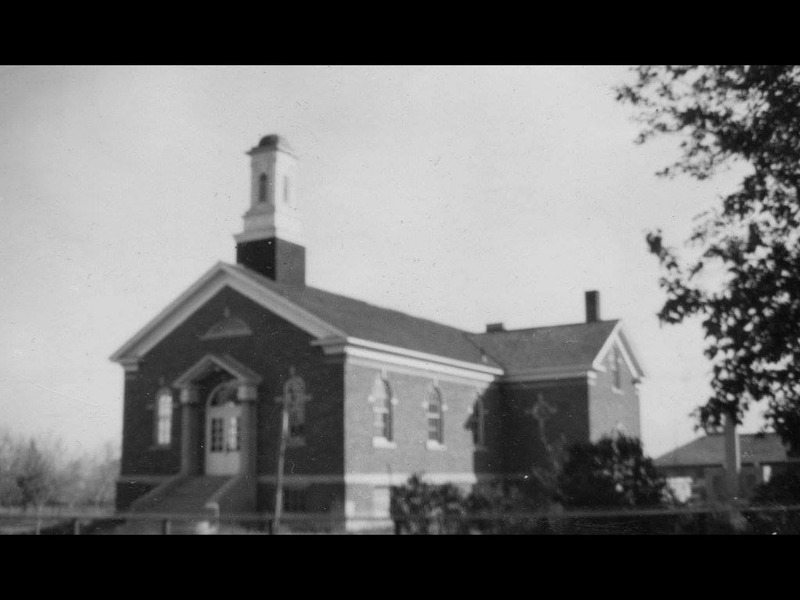
    <summary type="html"><![CDATA[<p><strong><em>Not long ago, Herriman, Utah was a small unheard of farm town.  However, its incredible recent growth has brought attention to the city.  The Deseret News in 2010 reported, “Herriman's population nearly quintupled from 3,246 in 2000 to 18,378 in 2009."  The growth has brought a new look to the city.  There is less farmland, and instead there are more homes, grocery stores, schools, and gas stations.  At the center of this town, lies an old chapel on Pioneer Street. However, it is not the original chapel that members of the Church of Jesus Christ of Latter-day Saints built in the town.</em></strong></p><img src="https://www.intermountainhistories.org/files/fullsize/4f3ba1e1f3801f135330214c0bdb1b0f.jpg" alt="Herriman Chapel, constructed 1925 on the site of the 1879 Rock Church, pictured here before later additions. " /><br/><p>Many believe the LDS church building there today is the original chapel of Herriman. The original chapel, often referred to as the old "Rock Church" was built in 1879 and located approximately where Herriman City Hall stands today - adjacent to the current church building, built in 1925.  The original chapel was only one room and eventually collapsed. The church, had a bishop's office at the very top of the south side of the building.  Below the office was stairs that allowed access to the office, chapel, and basement.  The chapel was on the north end of the building, and was known for its portraits of modern day prophets lining the walls. Downstairs had a simple baptismal font, classrooms, and a single restroom.  Many of the original structures still exist, but the original chapel and baptismal font are no longer in the church.    </p><p>The 1980’s brought a new time in church history for Herriman.  Previously, there was only one LDS congregation (ward), but the town's growth necessitated a second ward. Arvid Bowles became the first bishop of the Herriman First Ward, and Leland Lewis became the first bishop of the Herriman Second Ward. Bowles remembers additions were done to the church at different times throughout his life.  Over the course of time, the church received a new chapel, a cultural hall, classrooms, a Relief Society room, restrooms, and a library.  Bowles took an active part in raising money for the additions and for the church budget in Herriman.  His wife, Joyce, recalls, “They took chickens.  They planted potatoes.  We had to do all that for a lot of years to raise money.” </p><p>Unfortunately, the building has received a lot of wear and tear over the years, especially in the original areas of the building.  Bowles’ daughter, Debra, comments that there is consideration of knocking the church down.  For some though, the building is a reminder of Herriman’s smaller, simpler days and sacrifice.  As Joyce Bowles remembers what her family gave up for the church, she remembers more importantly that her family was blessed.  Joyce stated, “Do you know what’s funny? We never missed it at all…. We got along just fine.” </p><p><em><strong><a href="https://www.intermountainhistories.org/items/show/14">For more (including 7 images&#32;&amp;&#32;1 audio file) view the original article</a></strong></em></p>]]></summary>
    <published>2017-01-30T16:56:55+00:00</published>
    <updated>2026-04-17T19:31:58+00:00</updated>
    <link rel="alternate" type="text/html" href="https://www.intermountainhistories.org/items/show/14"/>
    <id>https://www.intermountainhistories.org/items/show/14</id>
    <author>
      <name>Kaili Sparks, Brigham Young University</name>
    </author>
  </entry>
  <entry>
    <title type="html"><![CDATA[The Startup Building]]></title>
    <summary type="html"><![CDATA[<img src="https://www.intermountainhistories.org/files/fullsize/d3a2613e9767678a7c88f8a99e06b6d4.jpg" alt="Startup Candy Company" /><br/><p>The “Startup Building” located in Provo, Utah was built by William Startup in 1895. The structure housed the Startup Candy Company, one of the earliest candy and ice cream manufacturers in the state. William Startup (Sr.), the founder, began his company in Manchester, England in the 1830’s. William developed a delicious hard candy and named it “American Cough Candy” because of his desire to move to America. Unfortunately, William (Sr.) died in March 1862 before he could come to America, but his son William Daw Startup joined the Church of Jesus Christ of Latter-day Saints (LDS or Mormon) and established the Startup Candy Company in America. In 1938, great grandson Walter Startup Sr. (Walt) was forced to sell the factory due to the Great Depression that swept through the United States. Walt Startup was later able to build up enough funds to buy back the north half of the factory and the box plant. </p><p>Currently, the southern portion houses a number of small startup companies including DevMountain, a coding campus, while the Startup Candy store sits in what used to be the boxing plant. The building has two stories and a basement. Overall the outside design is a mix between commercial and warehouse style. The building has never been demolished and rebuilt, but has had renovation work done to it over the years. One such renovation was made to connect the box plant and factory together to give the Startup building the look we see today. </p><p>Remarkably, the Startup Candy Store is still being run by the Startup’s. Jon Startup (5th-generation) and his wife Stacey continue the tradition of creating and selling candies for the public to enjoy. The Startup Candy factory was designated to the Provo City Historic Landmarks registry on March 21st, 1996.</p><p><em><strong><a href="https://www.intermountainhistories.org/items/show/13">For more (including 4 images&#32;&amp;&#32;1 video) view the original article</a></strong></em></p>]]></summary>
    <published>2017-01-27T16:35:59+00:00</published>
    <updated>2026-04-17T19:31:58+00:00</updated>
    <link rel="alternate" type="text/html" href="https://www.intermountainhistories.org/items/show/13"/>
    <id>https://www.intermountainhistories.org/items/show/13</id>
    <author>
      <name>Marcus Russell, Brigham Young University</name>
    </author>
  </entry>
  <entry>
    <title type="html"><![CDATA[Early Pioneers of the Deuel Settlement (Centerville, Utah)]]></title>
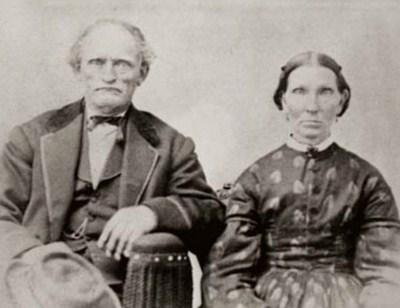
    <summary type="html"><![CDATA[<p><strong><em>After Latter-day Saint (Mormon) pioneers settled in the Salt Lake Valley in the Summer of 1847, Brigham Young, the church's Prophet, began encouraging parties to spread out and colonize new sites in the Great Basin. In the fall of 1847, Thomas Grover began the settlement that would be known as the Deuel Settlement. He was followed by the city’s renown Deuel brothers, Osmyn and William, and other families. The Deuel Settlement, or "City In-Between" was renamed “Centerville” in 1950 as it was situated precisely between the growing communities of Farmington and Bountiful.</em></strong></p><img src="https://www.intermountainhistories.org/files/fullsize/427758a1076e1029c3bff905b768e857.jpg" alt="William Henry  and Eliza Avery Whiting Deuel" /><br/><p>The Deuel Brothers, Osmyn Merrit and William Henry, were central to the early development of this settlement. They were born in Greenfield, New York, on January 1, 1802 and 1812 respectively. They married the daughters of the Nathaniel Whiting family (Eliza Avery and Mary). They were also well-trained blacksmiths and farmers, which in the future proved to be valuable in their pioneer experiences. However, the trait that bonded these two most was their faith, which would lead them to follow the first Mormon prophet Joseph Smith, and eventually join the Brigham Young and the main body of The Church of Jesus Christ of Latter-day Saints to Utah.</p><p>When Joseph Smith was martyred, Brigham Young, the new religious leader, asked the faithful to leave Nauvoo, Illinois and head west. The Deuel brothers and their wives joined 1,500 others in Charles C. Rich company, led by Charles C. Rich, John Taylor, and Parley P. Pratt. They landed in the Salt Lake Valley on October 2, 1847, anxious to build homes before winter. Osmyn and William built a home of roughly hewn logs and clay mortar and stone to shelter their families. The log cabin would prove to not only beat the cold, but also time as it currently stands today, preserved and under the protection of the LDS church. </p><p>In the Spring of 1848, the brothers headed north to become the first families to settle behind Thomas Grover in a community that would be known as the “Deuel Settlement.” They dragged logs down steep mountains to build homes. Due to the lack of metal nails, they used wooden pegs and rawhide thongs to hold the structures together. They built their own furniture, carded their own wool, and knitted their own clothing. The first blacksmith shop was owned and operated by William Deuel. He would not stay in the city though, after Brigham Young sent him on a mission to Southern Utah where he and his family would help settle Panguitch. Osymn, a farmer, however, remained for the remainder of his life as a prominent member of the civic, religious, and commercial community. Remnants of their life can be found today: the Deuel Creek in Centerville Canyon -  named after the brothers; Osymn’s beautiful rock home - one of the first stone homes in the city; and Osmyn’s tombstone in the Centerville City Cemetery.  </p><p><em><strong><a href="https://www.intermountainhistories.org/items/show/12">For more (including 6 images&#32;&amp;&#32;1 video) view the original article</a></strong></em></p>]]></summary>
    <published>2017-01-27T15:51:18+00:00</published>
    <updated>2026-04-17T19:31:58+00:00</updated>
    <link rel="alternate" type="text/html" href="https://www.intermountainhistories.org/items/show/12"/>
    <id>https://www.intermountainhistories.org/items/show/12</id>
    <author>
      <name>Kyle Lemperle, Brigham Young University</name>
    </author>
  </entry>
</feed>