<?xml version="1.0" encoding="UTF-8"?>
<feed xmlns="http://www.w3.org/2005/Atom">
  <title type="text">Intermountain Histories</title>
  <updated>2026-04-17T19:32:20+00:00</updated>
  <generator uri="http://framework.zend.com" version="1.12.20">Zend_Feed_Writer</generator>
  <link rel="alternate" type="text/html" href="https://www.intermountainhistories.org/"/>
  <link rel="self" type="application/atom+xml" href="https://www.intermountainhistories.org/items/browse?output=rss2"/>
  <id>https://www.intermountainhistories.org/</id>
  <author>
    <name>Intermountain Histories</name>
    <uri>https://www.intermountainhistories.org</uri>
  </author>
  <link rel="hub" href="https://pubsubhubbub.appspot.com/"/>
  <entry>
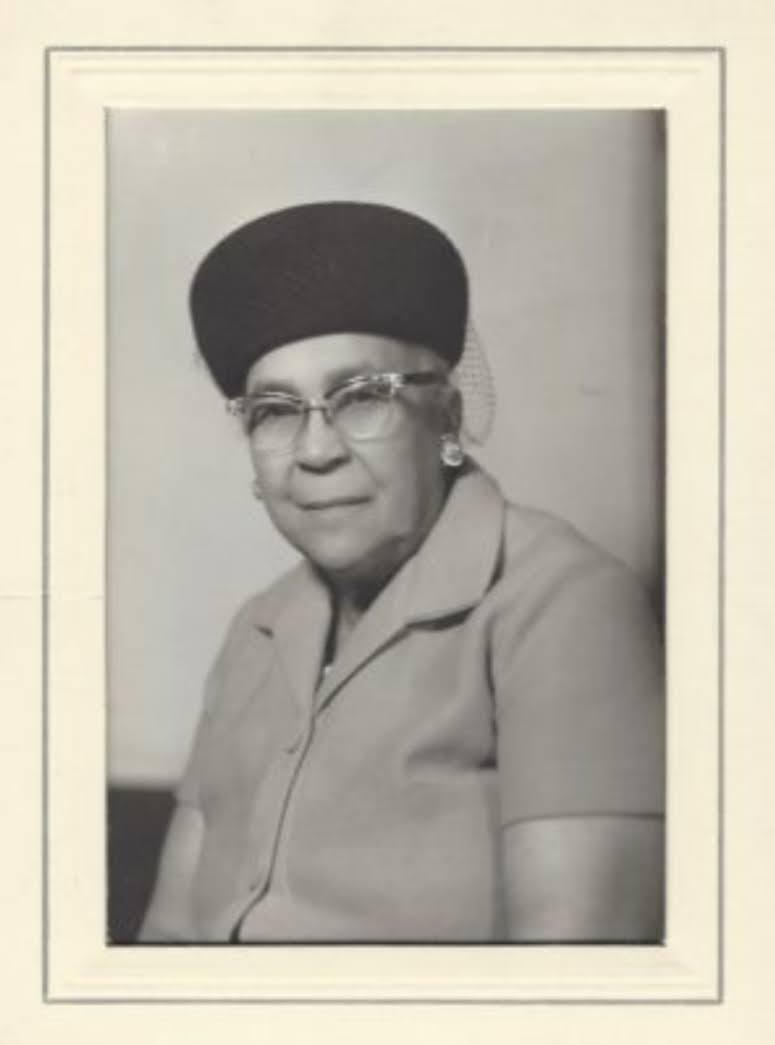
    <title type="html"><![CDATA[Mignon Richmond: First Black Woman College Graduate in Utah]]></title>
    <summary type="html"><![CDATA[<p><strong><em><span style="font-weight:400;">In 1921 Mignon Barker Richmond became the first African American woman to graduate from college in Utah and went on to become a community organizer and civil rights activist.</span></em></strong></p><img src="https://www.intermountainhistories.org/files/fullsize/8b40389c2ee054bc94fe17722f9e1b3b.jpg" alt="Mignon Barker Richmond" /><br/><p><span style="font-weight:400;">Mignon Barker Richmond was born on April 1, 1897 in Salt Lake City to William Barker and Mary Alice Reagan Barker. She attended Utah Agricultural College, now known as Utah State University, in Logan, Utah, graduating in 1921 with a degree in home economics. She persisted in spite of gross racism from her professors and peers, and participated in the Empyrean Club, a group of women that discussed contemporary problems and events, becoming its secretary-treasurer in her senior year. Following graduation, she faced difficulties finding a job in her field of study due to racial discrimination, and only after 27 years was she able to obtain work in her field of study, working first as a laboratory technician, and later as a school lunch supervisor at the University of Utah Stewart School from 1948 to 1953, and was afterwards hired to start home-living classes for the Utah State Industrial School. </span>
<span style="font-weight:400;">During this period she was active in the National Association for the Advancement of Colored People (NAACP) and the Young Women’s Christian Association (YWCA), and in 1957 she became the YWCA Food Services Director in Salt Lake City, where she stayed until her retirement in 1962 at the age of 65. Later, during president Lyndon Johnson’s administration, she became the head of the Women’s Job Corps and chairwoman of Project Medicare Alert. During her work with the Salt Lake chapter of the NAACP, she co founded the Nettie Gregory Center, a venue for minority youth to be involved in recreation in Salt Lake City, as well as on boards for the Utah Community Service Council and the Women’s Legislative Council, where she helped create legislation to fight poverty. After receiving several awards for her community service and commitment to education and civil rights, she died at the age of 86 on March 10, 1984. Many organizations including the Salt Lake Branch NAACP, Trinity AME Church, and Calvary Baptist Church came together to dedicate Richmond Park in Salt Lake City in 1984, and commissioned a plaque describing Mignon Barker Richmond as an educator, civil leader, and humanitarian.</span></p><p><em><strong><a href="https://www.intermountainhistories.org/items/show/874">For more (including 3 images) view the original article</a></strong></em></p>]]></summary>
    <published>2024-11-02T22:24:37+00:00</published>
    <updated>2026-04-17T19:32:20+00:00</updated>
    <link rel="alternate" type="text/html" href="https://www.intermountainhistories.org/items/show/874"/>
    <id>https://www.intermountainhistories.org/items/show/874</id>
    <author>
      <name>Morgon George, Utah State University</name>
    </author>
  </entry>
  <entry>
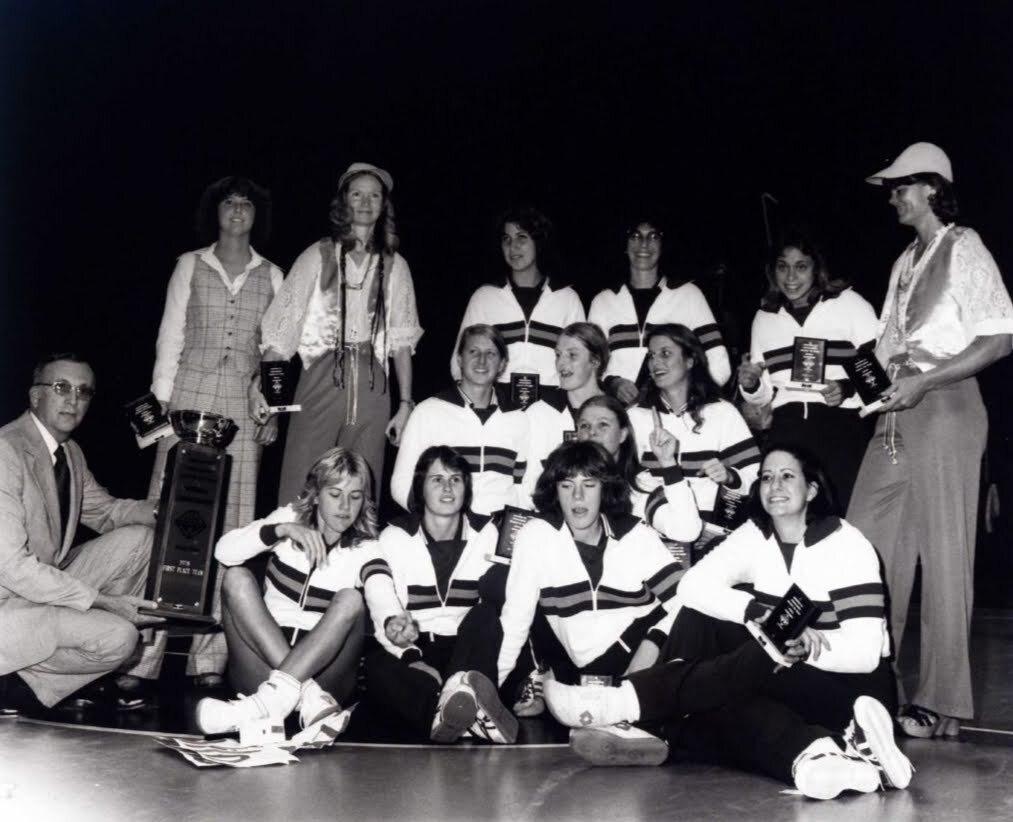
    <title type="html"><![CDATA[Title IX and Women’s Athletics at Utah State University]]></title>
    <summary type="html"><![CDATA[<p><strong><em>Women’s athletics at Utah State University have come a long way since the passing of Title IX in 1972. Athletic Director Marilyn Weiss worked hard to gain more resources for female athletes. During her time at Utah State, three women’s athletic teams won national championship titles. She helped to lay the foundation for the long-term success of women’s athletics at USU.</em></strong></p><img src="https://www.intermountainhistories.org/files/fullsize/db7904d3f034ebce2d2e9c00c65de8d7.jpg" alt="1978 Women&#039;s Volleyball Team at Utah State University" /><br/><p><span style="font-weight:400;">Women have been involved in athletics since the early days of Utah State University. As early as 1901, USU boasted an organized softball team and hosted basketball tournaments. Due to a lack of funding, however, women’s athletics stayed local and small. This began to change after Title IX became law on June 23, 1972. The law prohibited sex-based discrimination in any institution that receives federal funding. Initially created to encourage more women to pursue higher education, today the law is mostly associated with college and high school athletics and promoting equality between men’s and women's sports. </span></p><p><span style="font-weight:400;">Title IX changed the college landscape, in the classroom and on the court. Schools were required to give women more support and resources. Before Title IX, women’s athletics didn’t offer athletic scholarships. As of 2021, there are 74,173 athletic scholarships available to women compared to 77,784 available to men.</span>
<span style="font-weight:400;">Marilyn Weiss was the USU Athletics Director for Women’s sports from 1975 to 1981. Under her leadership, Utah State formed its first volleyball team in 1976. Weiss served as the USU’s women’s basketball coach, volleyball coach, and track coach during her tenure with the university, and knew that not much had changed at USU after the passage of Title IX. She was determined to change that. In 1976, Weiss hired Mary Jo Peppler and Marilyn McReavy, both former Olympians, as co-head coaches of the volleyball team. They recruited strongly from across the country to bring great talent to USU. </span>
<span style="font-weight:400;">Weiss knew that the women’s programs would have to operate under a very tight budget, but she was determined to succeed. If the Aggies wanted to compete against the top teams in the country, they had to get to the West Coast. In the off-season, the team traveled in a fifth-wheel trailer to southern California to challenge powerhouse teams like USC and UCLA. Although the budget was small, the coaches and athletic director made it work and their efforts paid off. The USU Volleyball team became National Champions in 1978, winning the Association for Intercollegiate Athletics for Women (AIAW) volleyball championship. They were runner-up the following season. During Weiss’s time at USU, the softball team also won two national titles in 1980 and 1981. </span>
<span style="font-weight:400;">Weiss filed a Title IX complaint against the university a few years before she left. Although USU saw success while she was here, she knew womens’ athletics were still being underfunded. Marilyn Weiss and the coaches and players laid a foundation to move women’s athletics forward at Utah State University. As of 2024, USU has 8 women's varsity teams and over 180 women rostered. USU offered $3,106,721.54 in scholarships to female athletes in 2024, among 149 athletes.</span></p><p><em><strong><a href="https://www.intermountainhistories.org/items/show/873">For more (including 5 images) view the original article</a></strong></em></p>]]></summary>
    <published>2024-11-02T17:31:25+00:00</published>
    <updated>2026-04-17T19:32:19+00:00</updated>
    <link rel="alternate" type="text/html" href="https://www.intermountainhistories.org/items/show/873"/>
    <id>https://www.intermountainhistories.org/items/show/873</id>
    <author>
      <name>Hadli Lords, Utah State University</name>
    </author>
  </entry>
  <entry>
    <title type="html"><![CDATA[Joe Hill: The Singing Voice of Labor]]></title>
    <summary type="html"><![CDATA[<p><strong><em>This monument was raised in 2013, 108 years after Joe Hill’s execution and built on the very spot where the IWW songwriter was executed, based on circumstantial evidence. </em></strong></p><img src="https://www.intermountainhistories.org/files/fullsize/16274c8b51b488d753e1d34265c74b56.jpg" alt="Joe Hill Memorial Plaque" /><br/><p>Joe Hill was born in Gavle, Sweden in 1879, and immigrated to the USA in 1902 for want of work. After years of itinerant labor, he joined the Industrial Workers of the World (IWW,) commonly known as the "Wobblies," in 1908. The IWW was a radical labor union, which represented not just skilled workers, but any worker, in any job, regardless of age, race, or gender. The union was also not just focused on obtaining improvements in wages, hours, or conditions, but a total overthrow of the capitalist system. </p><p>Hill hid in boxcars and "rode the rails" to where he could find work, and after a couple years he became an organizer in the IWW, writing songs to mobilize the workers during times of strikes. His "Little Red Songbook" spread throughout the IWW and therefore throughout the country, whenever Wobblies went on strike, they would sing his songs, and usually he would be there too. And in 1914, the strikes were in Utah, involving the workers of Utah Construction Company, represented by IWW local 69, cheered on by Joe Hill in person. There had been repeated clashes between the IWW and the Salt Lake City Police that created an atmosphere of tension in the city. </p><p>On January 10, 1914. Hill was shot in the chest and went to visit a doctor friend to have it treated, the same night John and Arling Morrison were killed in a robbery at the grocery store at which they worked. Hill's doctor reported him to the police, and Hill was promptly arrested. Hill, and many others in the IWW or otherwise sympathetic to his cause, believed the arrest and trial would simply be harassment, as it so often had been before. But Hill, after meeting his state-appointed lawyers, felt strongly that his lawyers had been bribed to 'throw' the case, despite the lack of evidence, and he chose to represent himself. He argued that his songs were free and protected speech, and that the work of the IWW in Utah was protected under the right to associate, and that their actions were chiefly against economic inequality. </p><p>Hill's trial lasted less than one month, during which time the state failed to provide any motive, a single piece of evidence, or indeed any possible indication that any of the bandits had been Joe Hill. The only piece of evidence the prosecution submitted was Joe Hill's IWW red card. The IWW were known for being violent and inhumane, claimed the prosecution, and Hill was a member of it. Hill wanted to overthrow capitalism, civilization itself they claimed, and through his songwriting and performances, even if he hadn't done the murders himself, he was equally responsible. Hill's demands that he had been mistried and appeals for a retrial fell upon deaf ears, and against nationwide beliefs that there had been an abrogation of due process, he was found guilty by jury on June 27 and sentenced to death on July 8th. </p><p>Hill appealed the sentence, and a massive letter-writing campaign began, with letters pouring into the office of Utah Governor Spry, both demanding Spry pardon Hill or to permit the execution. President Woodrow Wilson asked Spry to pardon, stating that Hill's trial had not been fair, as had the Swedish ambassador. In the end, Hill was executed by firing squad on November 19, 1915. Many felt then and feel to this day that Hill had been tried for his speech and for his affiliations rather than any possibility of being among the murderers.</p><p><em><strong><a href="https://www.intermountainhistories.org/items/show/872">For more (including 3 images) view the original article</a></strong></em></p>]]></summary>
    <published>2024-10-31T21:23:23+00:00</published>
    <updated>2026-04-17T19:32:19+00:00</updated>
    <link rel="alternate" type="text/html" href="https://www.intermountainhistories.org/items/show/872"/>
    <id>https://www.intermountainhistories.org/items/show/872</id>
    <author>
      <name>Joseph R. McKellar, Utah State University</name>
    </author>
  </entry>
  <entry>
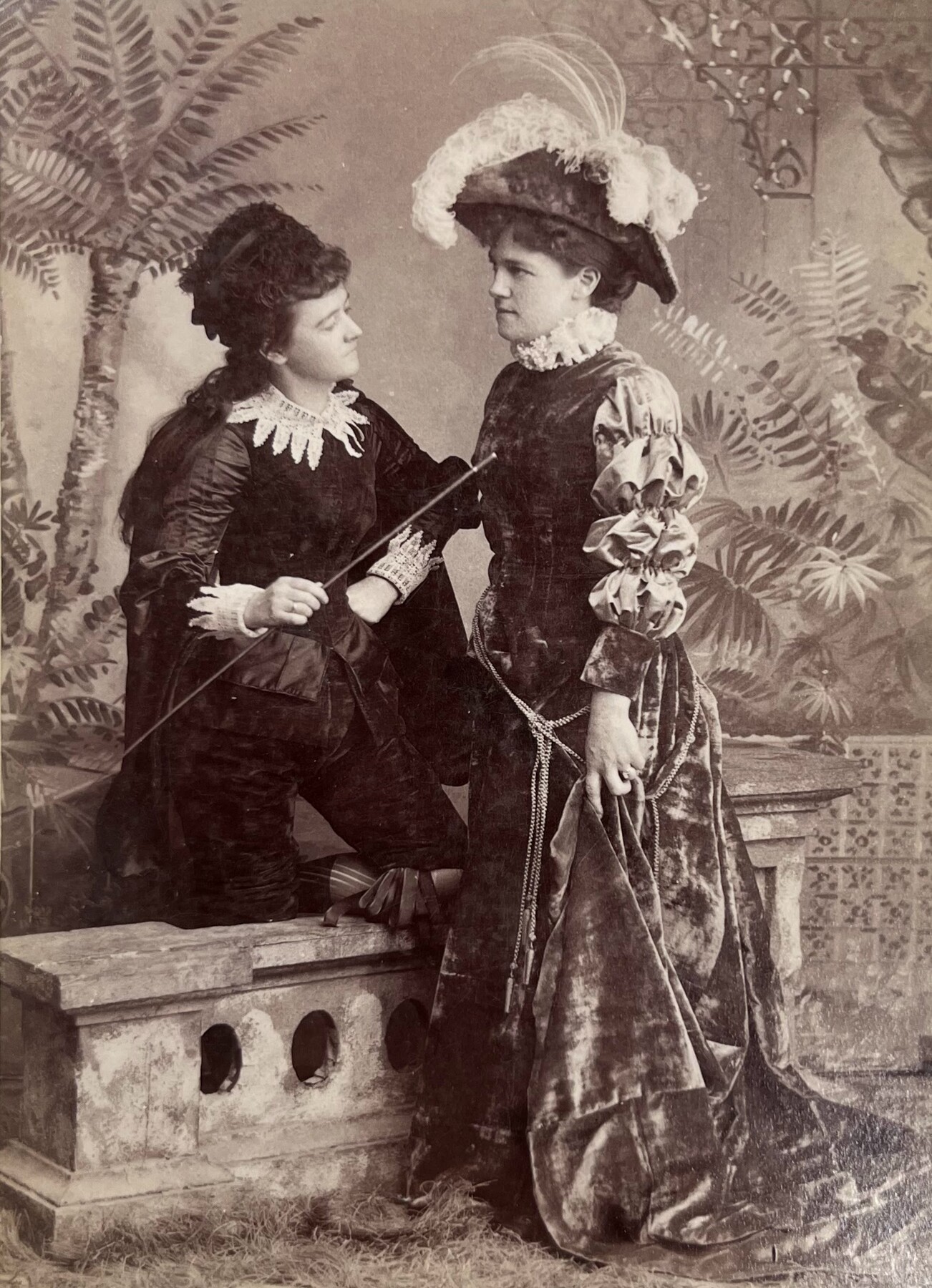
    <title type="html"><![CDATA[Bessie Morehead: The Fight for a Spot ]]></title>
    <summary type="html"><![CDATA[<p><strong><em>Bessie Morehead, a well-known singer in Cache Valley, defeated her opponent Charles Hyde to become the first female County Recorder in Cache County, Utah.</em></strong></p><img src="https://www.intermountainhistories.org/files/fullsize/a689c8c32b896bc5645f616e6b0df0a9.jpg" alt="Actresses Bessie Morehead and Maggie Sloan in theatrical costume for &quot;The Three Mantles&quot;" /><br/><p>In 1896 Utah became a state and women were allowed to run for public office. In that year 14 women won public office in Utah: one to the U.S. Senate, two to the state House of Representatives, and eleven to county offices, including Bessie Morehead. Morehead was born in Smithfield, Utah in 1867 and became a well known Logan citizen. She was a talented singer and performed in the Logan Opera Company. She was seen as one of Utah’s “best and favorite vocalists.” </p><p>She decided to run for the Cache County Recorder in 1896. This was a highly respected and honorable position to hold. Democrats nominated Morehead instead of the incumbent Charles Hyde. Many Democrats at the time were excited for women to participate in public office and wanted to give Morehead a chance. Hyde decided to switch to the Republican party to run against her. When Hyde came to the Democratic Convention, Morehead kicked him out. He then came at her with a knife but luckily nothing happened. </p><p>The fight didn’t stop there. Her LDS stake president casted doubt on Morehead as a candidate. He implied that Charles Hyde was a more religious member than she was. One editor for the Logan Journal defended her and said she was just as faithful. Amongst all this opposition. Morehead still won the election. She received 3,174 votes and Hyde received 1,840. After the election Hyde said the “Democratic party of Cache County is corrupt”. Only to receive backlash from the newspaper asking why he sought the Democratic nomination for recorder in the first place if it was corrupt. </p><p>Bessie Morehead served two terms from 1897-98 and 1899-1900. Morehead and 13 other Women in Utah made history. Bessie Morehead became the first woman in Cache County to hold public office. </p><p><em><strong><a href="https://www.intermountainhistories.org/items/show/861">For more (including 4 images) view the original article</a></strong></em></p>]]></summary>
    <published>2024-10-18T05:49:35+00:00</published>
    <updated>2026-04-17T19:32:19+00:00</updated>
    <link rel="alternate" type="text/html" href="https://www.intermountainhistories.org/items/show/861"/>
    <id>https://www.intermountainhistories.org/items/show/861</id>
    <author>
      <name> Samantha H. Crockett, Utah State University</name>
    </author>
  </entry>
  <entry>
    <title type="html"><![CDATA[Founding of Cache Valley Woman Suffrage Association]]></title>
    <summary type="html"><![CDATA[<img src="https://www.intermountainhistories.org/files/fullsize/c97e35b6b620861cc49ef8a031fb1953.jpg" alt="The Logan Tabernacle" /><br/><p>The Cache Valley Woman Suffrage Association (CVWSA) was established in the Logan Tabernacle on December 10, 1889. The CVWSA was a local division of the Utah Woman Suffrage Association and the National Woman Suffrage Association. Many other counties in Utah were also forming Woman Suffrage Associations at this time. The CVWSA was established to regain the voting rights Utah women had been stripped of in 1887. Utah women felt strongly about their right to vote, as can be seen in the Logan Journal article about the CVWSA founding meeting. The writer of the article even went so far as to call those that succeeded in stripping women’s right to vote in 1887 “Utah Carpet Bag Liberals.” Carpet Baggers was a term most commonly used in the Reconstruction South to describe someone perceived as politically disruptive or taking advantage of a situation for political or financial gain. In this context, “Utah Carpet Bag Liberals” is clearly an insult toward those who helped remove women’s suffrage. The women of Cache Valley, just like many women in Utah, were determined to regain the right to vote.</p><p>On December 10, 1889, at 10 am, the founding meeting was held for the CVWSA. Many prominent women in the community and in politics were there. Adeline Barber and Jane Hyde Molen, two local Relief Society Presidents, the women's organization in the Church of Jesus Christ of Latter-Day Saints, were officers of the association. Jane Hyde Molen, a prominent leader of the Democratic Party of Cache County and a member of the Cache County School Board, was named secretary. Women such as Adeline Barber and Jane Hyde Molen who had both political and religious leadership could easily spread information about the association. All officers elected to the CVWSA were women, though men were also in attendance in the meeting. Seventy-eight women joined the association that founding day. Over the years, the Logan Tabernacle was used to house many CVWSA meetings.</p><p>The 1895 Constitutional Convention of Utah was very concerned with the issue of women’s suffrage. Delegates from Cache County presented eight petitions on April 18th, signed by men and women, in favor of equal suffrage in the Utah Constitution. As a result of the hard work of men and women in Cache County and throughout the state, women’s right to vote was reinstated. A banquet was held in the Logan Tabernacle in January 1896 to celebrate the reinstatement of Utah women’s right to vote.</p><p><em><strong><a href="https://www.intermountainhistories.org/items/show/860">For more (including 3 images) view the original article</a></strong></em></p>]]></summary>
    <published>2024-10-17T23:24:35+00:00</published>
    <updated>2026-04-17T19:32:19+00:00</updated>
    <link rel="alternate" type="text/html" href="https://www.intermountainhistories.org/items/show/860"/>
    <id>https://www.intermountainhistories.org/items/show/860</id>
    <author>
      <name>Madison Harris, Utah State University</name>
    </author>
  </entry>
  <entry>
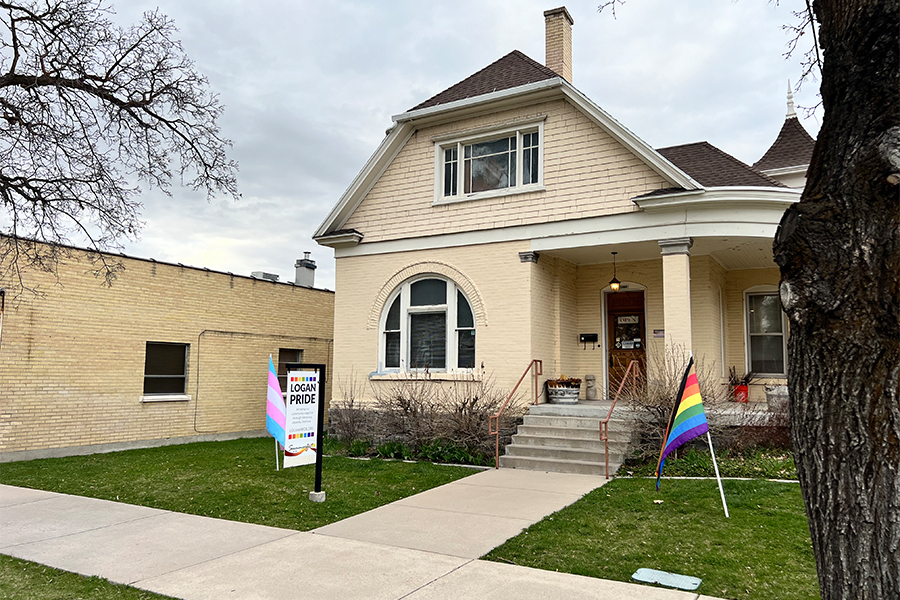
    <title type="html"><![CDATA[The Logan Pride House]]></title>
    <summary type="html"><![CDATA[<p><strong><em>Logan Pride serves as a resource and safe space for LGBTQ+ individuals in Cache, Box Elder, and Rich counties. Logan Pride operates out of a pride house in Downtown Logan, UT.</em></strong></p><img src="https://www.intermountainhistories.org/files/fullsize/5ca0800f25493c527cc973cb2f94eb22.jpg" alt="The Logan Pride House" /><br/><p><span style="font-weight:400;">The Logan Pride House is the home of Logan Pride–a foundation focused on serving adults in Cache, Box Elder, and Rich counties. Logan Pride is a safe space for LGBTQ+ individuals and allies located in downtown Logan, UT.</span>
<span style="font-weight:400;">Logan Pride operates off a board of volunteers who are passionate about fostering a safe, queer space in Cache Valley. The organization holds events almost every day. These events range from coffee and cocoa to support groups for various sexuality and gender identities. Logan Pride strives to serve as a safe space for queer people and allies to gather and become friends. Logan Pride also has shelves upon shelves of queer literature, both fiction and non-fiction that is available for community members to borrow and read.</span>
<span style="font-weight:400;">Not only does Logan Pride do activities several nights a week, they also host the annual Logan Pride Festival. The event has been running since 2016 and has grown bigger and bigger each year. In 2023, the pride festival had over 3,000 attendees and more than 85 vendors. It started as a way to show community and raise awareness that there is a space for queer people in Cache Valley. The Logan Pride festival is only possible because of the donations and volunteer hours given to Logan Pride. </span>
<span style="font-weight:400;">President of the Logan Pride Foundation, Mel Payne, stated “Whenever I hear these sad stories in the house, majority of the time it is because they haven’t had anybody show up for them… They haven’t had anybody reach out a hand when they’re feeling a certain way.” Logan Pride stands to be a support system for these individuals the most. Individuals who need friends that have similar experiences. Logan Pride serves as a safe space for people to be their authentic selves. </span>
<span style="font-weight:400;">For more information about Logan Pride, and a schedule of their events – visit their website: </span><a href="https://www.loganpride.org/"><span style="font-weight:400;">https://www.loganpride.org/</span></a><span style="font-weight:400;">. </span></p><p><em><strong><a href="https://www.intermountainhistories.org/items/show/859">For more (including 3 images) view the original article</a></strong></em></p>]]></summary>
    <published>2024-10-16T20:50:54+00:00</published>
    <updated>2026-04-17T19:32:19+00:00</updated>
    <link rel="alternate" type="text/html" href="https://www.intermountainhistories.org/items/show/859"/>
    <id>https://www.intermountainhistories.org/items/show/859</id>
    <author>
      <name>Cooper Sanders, Utah State University</name>
    </author>
  </entry>
  <entry>
    <title type="html"><![CDATA[Intermountain Indian School: Native Civil Rights in Boarding Schools]]></title>
    <summary type="html"><![CDATA[<p><strong><em>Intermountain Indian boarding school was a Native American off-reservation boarding school that aimed to assimilate Navajo children by giving them education in English, and job skills. It has a complicated history within the Tribes it served, with a list of controversies during and after its operation.  </em></strong></p><img src="https://www.intermountainhistories.org/files/fullsize/be30be9fe2d5d7aaf475052384f4d0a2.jpg" alt="Girl operating a &#039;Tac X&#039; word flasher" /><br/><p><span style="font-weight:400;">Intermountain Indian School hosted children from The Navajo Tribes, with 212 students in its first year before opening to host students from a variety of tribes in the 1970s. It operated until 1984, finally closing due to the high costs of operation, as well as the dwindling number of Native American boarding schools in the country. Native American off-reservation boarding schools started in the 1800s, with the main purpose of forced assimilation and removal of native culture. Children enrolled in such schools suffered much cruelty such as forbidding native language and culture, being forced to shave their heads, and experiencing abuse and mistreatment in the name of “civilizing” them. In the 1950s the government enacted its termination policy, trying to “end the native problem” by limiting funding to reservations to force natives into cities, and thus boarding schools followed the same ideals. Boarding schools began to focus on preparing Native children to participate in jobs in their new cities, without governmental support. This new policy was in effect during the creation of the Intermountain and thus existed to fit the new policy changes of the termination policy. </span>
<span style="font-weight:400;">The concept of Native American boarding schools in general is proof of the intense violations and pressure put upon the native communities by the US government to in attempts erase their culture, and history. While Intermountain did not restrict cultural expression through clothing or activities, Intermountain was not an exception to other infringements on civil rights. In 1971, a spokesperson from the  American Indian Movement (AIM) an organization created to fight for native civil rights, listed the following concerns; horrible food, unfair grading process, overcrowded and dirty living conditions, forcing students to choose a Christian religion, few native teachers, and Harsh unfair punishments. Another concern with the school was that their education set them up exclusively for jobs lacking upward mobility or chance of improvement, leaving a disparity in job opportunities for Native peoples. As the school continued to run it became increasingly aware and supportive of the needs of the native people, and took steps to rectify some of its social problems, such as making efforts to include more native teachers, and support cultural representation. </span>
<span style="font-weight:400;">The history of the Intermountain is complicated, with mixed reviews from its graduated students. Where some of its students still feeling deeply connected to the school and their time there, others remain deeply traumatized from their experience and have nothing positive to say. In its 34 years of operation, the school was rife with controversy, from both inside and outside the school, and ultimately its history is still complicated and important to the story of the previous students and native communities it interacted with. </span></p><p><em><strong><a href="https://www.intermountainhistories.org/items/show/858">For more (including 5 images) view the original article</a></strong></em></p>]]></summary>
    <published>2024-10-16T01:02:08+00:00</published>
    <updated>2026-04-17T19:32:19+00:00</updated>
    <link rel="alternate" type="text/html" href="https://www.intermountainhistories.org/items/show/858"/>
    <id>https://www.intermountainhistories.org/items/show/858</id>
    <author>
      <name>Thomas Harley, Utah State University</name>
    </author>
  </entry>
</feed>