<?xml version="1.0" encoding="UTF-8"?>
<feed xmlns="http://www.w3.org/2005/Atom">
  <title type="text">Intermountain Histories</title>
  <updated>2026-04-17T19:32:19+00:00</updated>
  <generator uri="http://framework.zend.com" version="1.12.20">Zend_Feed_Writer</generator>
  <link rel="alternate" type="text/html" href="https://www.intermountainhistories.org/"/>
  <link rel="self" type="application/atom+xml" href="https://www.intermountainhistories.org/items/browse?output=rss2"/>
  <id>https://www.intermountainhistories.org/</id>
  <author>
    <name>Intermountain Histories</name>
    <uri>https://www.intermountainhistories.org</uri>
  </author>
  <link rel="hub" href="https://pubsubhubbub.appspot.com/"/>
  <entry>
    <title type="html"><![CDATA[Our Lady of the Rockies]]></title>
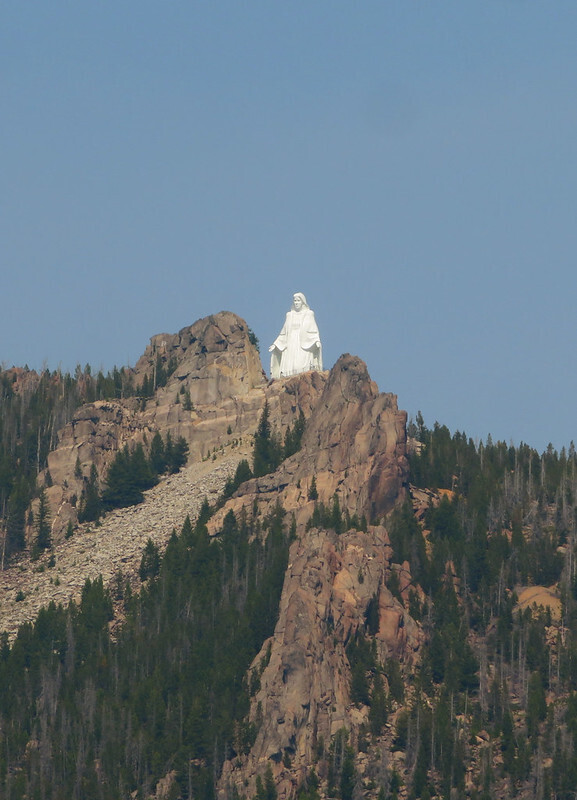
    <summary type="html"><![CDATA[<p><strong><em><em>Our Lady of the Rockies </em>looks out across the city of Butte, Montana with arms stretched wide from a vantage of some 3,500 feet above the city, and weighing over 50 tons.</em></strong></p><img src="https://www.intermountainhistories.org/files/fullsize/c4ae7467ddb2ea3d296e2b06e342e9ae.jpg" alt="Our Lady of the Rockies. " /><br/><p>The statue project began with Bob O’Bill, who, in 1979 made a plea with God in hopes that his bed-ridden wife Joyce would make a full recovery. When she did, O’Bill began to discuss with his peers the logistics of building the statue. As word spread about the building project, an overwhelming amount of support arose, making the statue a community project. The initial plan for the six-foot statue with community support soon grew to a project that would be over 90 feet tall. Though some thought that the project was strictly Catholic, project sponsors took care to present it as a community effort which symbolized “the dignity of motherhood and the sacrificial love a mother has for her child.” Community pride has always been strong in Butte, extending back in Butte's mining history in the 19th century. Whenever the future was uncertain, the community of Butte banded together and cared for each other. This bond and the meaning behind the statue are both driving factors in what makes Butte’s community so special. </p><p>Supplies including paint, food for workers, and enough iron and steel to build the statue, were all gifted to the project by donors. A major contributor to the project, Joe Roberts, was connected to O’Bill through Ann Nettles, who knew Joe to be a guy whot took up outlandish projects. Once he familiarized himself with the project and got over how crazy he thought it to be, Robert’s Rocky Mountain Equipment Co. discussed a plan to put up the statue, ensuring that it was done safely with high stability. Roberts grew to have a major role in the project, raising funds, donating the use of his equipment, and even providing one thousand dollars to start off the construction fund. From there the community took care of the rest. </p><p>After six years of trouble-shooting technical difficulties, the statue was finally ready to assemble on the mountain top. On December 17, 1985, the statue was lifted in four sections by the Nevada Air National Guard Team and assisted by the Army Reserve stationed in Butte, as well as the Montana National Guard. Today Our Lady of the Rockies continues to show civic generosity through the volunteers that keep the statue up and running so that it may be able to show hope and optimism to inspire generations to come.</p><p><em><strong><a href="https://www.intermountainhistories.org/items/show/862">For more (including 4 images) view the original article</a></strong></em></p>]]></summary>
    <published>2024-10-18T13:00:52+00:00</published>
    <updated>2026-04-17T19:32:19+00:00</updated>
    <link rel="alternate" type="text/html" href="https://www.intermountainhistories.org/items/show/862"/>
    <id>https://www.intermountainhistories.org/items/show/862</id>
    <author>
      <name>Logyn J. Klebe, Rocky Mountain College</name>
    </author>
  </entry>
  <entry>
    <title type="html"><![CDATA[The Legacy of Helena’s Montana Plaindealer Newspaper ]]></title>
    <summary type="html"><![CDATA[<p><strong><em>Published from March 1906 to September 1911, Helena's M<em>ontana Plaindealer</em> was one of the most popular African American newspapers in the state. This newspaper represented a small but vibrant African American community in early Montana.</em></strong></p><img src="https://www.intermountainhistories.org/files/fullsize/82c4822381690566ee87726d08b9622d.jpg" alt="The April 20th, 1906 edition of the Montana Plaindealer" /><br/><p>In the early 1900’s, Helena was the home of Montana’s largest African American population with over 400 individuals, which was about 3% of the city’s population. In the entire state of Montana there were about 2,000 African American residents. Joseph B. Bass, founder and editor of the Montana Plaindealer, was an active member of the African Methodist Episcopal Church and a strong believer in the “hard work and self-improvement" doctrine of Booker T. Washington. He was previously employed at the Topeka Plaindealer in Kansas. He worked on the paper with the help of Joseph Tucker, an African American man who had lived in Helena for over a decade and worked as a printer. </p><p>Four pages long and printed weekly, The Montana Plaindealer was a trusted news source in the community. The newspaper was strongly Republican and one of their taglines stated, “We unhesitatingly subscribe to the principles of Republicanism.” It preached the goal of “racial uplift” through entrepreneurship and civic work and supported Progressive political reform. The inaugural edition stated, “This enterprise shall at all times strive for a greater Helena, and for mutual progress of all people in the community, and for a greater activity of our people in the business world.” These sentiments were expressed in the stories, editorials, and information conveyed in the newspaper. </p><p>Additionally, Bass wrote about community news, such as church information, and other national interest stories. An example of a national story was the 1907 Brownsville Incident. An important column in every edition was the “Race News” column that published stories about racial discrimination, economic opportunities, and Civil Rights news. The newspaper also included results of political battles. An example of these battles is seen in local primaries and elections on the state and national levels. Additionally, the newspaper also protested discriminatory legislative action. This is illustrated in their protest of an anti-miscegenation bill passed in Montana in 1909. </p><p>The newspaper’s impact and reach are difficult to explain with statistics, but Bass stated that over 3⁄4 of all African Americans in Helena subscribed to the paper. The paper also had a number of white subscribers as well, a number that tripled the amount of African American subscribers. The paper was partially funded by fundraising social events, like dinners, that were thrown by White Republicans. Unfortunately, these fundraising events were not enough as The Montana Plaindealer underwent financial difficulties and had to suspend publication due to a lack of money in September 1911.</p><p><em><strong><a href="https://www.intermountainhistories.org/items/show/863">For more (including 6 images) view the original article</a></strong></em></p>]]></summary>
    <published>2024-10-18T13:32:50+00:00</published>
    <updated>2026-04-17T19:32:19+00:00</updated>
    <link rel="alternate" type="text/html" href="https://www.intermountainhistories.org/items/show/863"/>
    <id>https://www.intermountainhistories.org/items/show/863</id>
    <author>
      <name>Morgan Baird, Rocky Mountain College  </name>
    </author>
  </entry>
  <entry>
    <title type="html"><![CDATA[Molly Brown: The &quot;Unsinkable” Suffragist and Workers’ Rights Activist]]></title>
    <summary type="html"><![CDATA[<p><strong><em>Famously called the “Unsinkable Molly Brown” for surviving the Titanic, the suffragist had a remarkable life before and after the tragedy.</em></strong></p><img src="https://www.intermountainhistories.org/files/fullsize/8513fb5a82d7726a5750959d63e83e46.jpg" alt="Portrait of Margaret “Molly” Brown" /><br/><p><span style="font-weight:400;">Margret Tobin Brown was born in Hannibal, Missouri in 1867 to Irish immigrants. Life in Hannibal greatly influenced her outlook, as she was surrounded by diversity and saw the struggles of the working class. Her parents valued education, so Margaret was able to attend school until she was 13 when she had to drop out to work in a factory. Like her father and countless others, she experienced low wages, instability, and dangers at work. </span>
<span style="font-weight:400;">Margaret dreamed of going West, and at age 18, she followed one of her older brothers, Daniel, who had moved to Leadville, Colorado, to strike rich in the mines. Women were not allowed to work in the mines, so they had to find jobs in the mining towns, as cooks, nurses, saloon girls, or store workers. Margret worked in a store, and while she did not have much, she participated in causes she believed in, like volunteering in soup kitchens.</span>
<span style="font-weight:400;">It was in Leadville that she met her husband James Joseph Brown, a mining engineer. They got married in 1886 and soon had two children. Surprisingly, in 1893, they became millionaires when the Little Jonny Mine that J.J. invested in struck gold. Now wealthy, they moved their family and built their home in Denver, Colorado which can be visited today. </span>
<span style="font-weight:400;">They became prominent figures in Denver, Margaret in the political realm and J.J. in the business sphere. Denver was rampant with various social issues—poverty, homelessness, and workers’ rights issues—and now Brown held a position where she could promote political action. She advocated for labor reform and became an involved member of the National American Women’s Suffrage Association (NAWSA). </span>
<span style="font-weight:400;">Margaret’s situation was unique because she separated from her husband in 1909 to live independently. In 1912, she embarked on the Titanic. When tragedy struck, she was pushed onto a lifeboat, even though she was still trying to help others. After the lifeboat was deployed, she protested, saying they needed to save more people, but the sailor refused. Although not allowed to testify in court because she was a woman, she became one of the most famous survivors. </span>
<span style="font-weight:400;">With her newfound fame after the Titanic, Brown used her position to raise awareness of the Ludlow Massacre of Colorado miners, who were striking for more rights. She understood the challenges workers and families faced, so she not only helped the affected families but also advocated for workers' rights and spoke about how women having the right to vote could help pass necessary reforms across the country. </span>
<span style="font-weight:400;">Brown did important work for Colorado and people began encouraging her to run for Congress in 1914. However, with growing tensions with World War, she decided not to run and shifted her focus to war relief programs. She became the self-sufficient woman of the 1920s, continuing to advocate for women’s and laborer’s rights until her death on October 26, 1932. </span></p><p><em><strong><a href="https://www.intermountainhistories.org/items/show/864">For more (including 4 images) view the original article</a></strong></em></p>]]></summary>
    <published>2024-10-18T23:42:20+00:00</published>
    <updated>2026-04-17T19:32:19+00:00</updated>
    <link rel="alternate" type="text/html" href="https://www.intermountainhistories.org/items/show/864"/>
    <id>https://www.intermountainhistories.org/items/show/864</id>
    <author>
      <name>Rosalyn Visser, Rocky Mountain College</name>
    </author>
  </entry>
  <entry>
    <title type="html"><![CDATA[The Founding of Luccock Park Camp]]></title>
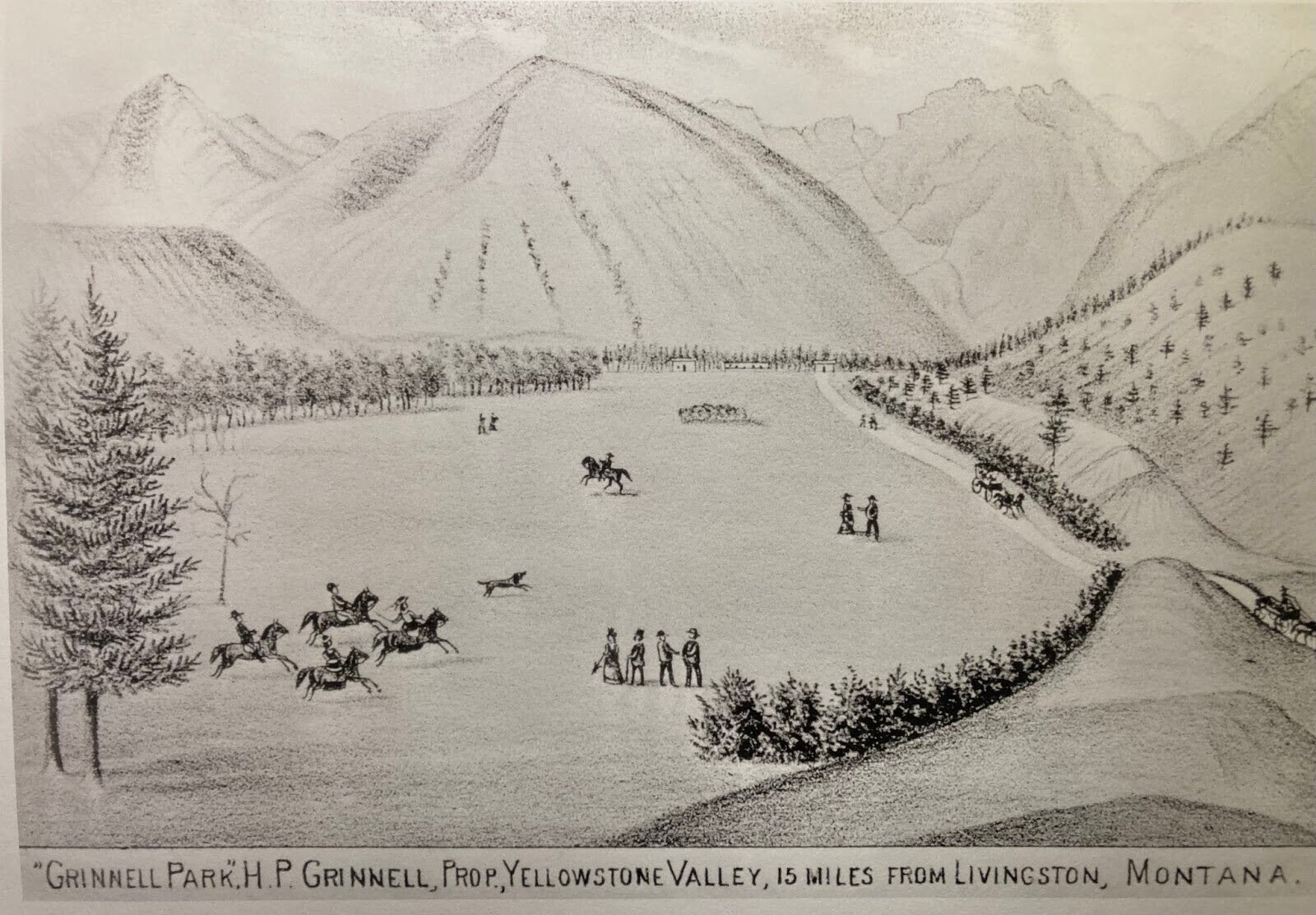
    <summary type="html"><![CDATA[<p><strong><em>After World War 1, a group of Methodists in Livingston, Montana planned to build a summer camp near Yellowstone Park. They travelled 15 miles outside Livingston in buckboard wagons through 2-3 feet of snow to a potential location for this camp, Grinnell Park. Arriving at Grinnell Park, the Methodists knew that they had found the perfect place for a summer camp.</em></strong></p><img src="https://www.intermountainhistories.org/files/fullsize/3cf3158003ddbe0be98bbbc2cb654fab.jpg" alt="Sketch of Grinnell Park" /><br/><p>In the summer of 1919, the Methodist Epworth League in Montana wanted to join the growing trend of church camps that started after World War I. At a conference in Billings, they decided to create a camp about 30 miles north of Helena at Wolf Creek. The Wolf Creek camp was a hit, so the Epworth League decided to build more camps in Montana. Four years later on, a district missionary conference convened in Livingston to build a camp near Yellowstone Park. They decided to investigate Grinnell Park, a glacially-formed valley about 15 miles south of Livingston near Pine Creek as a potential site for this camp. </p><p>On March 11, 1923, a group consisting of Epworth League members, conference members, and Albert Alan, the owner of the land, traveled to Grinnell Park in 3-seated buckboard wagons, fighting against 2-3 feet of snow. The Methodists fell in love with the area and swiftly authorized the Livingston conference to “proceed with all necessary arrangements” to use Grinnell Park as the location for a church camp. Alan sold the land, which was about 25 acres “more or less” for $2,500. Pastor Otto G. Ponath of the local Pine Creek Church helped to build a road up to the camp that was determined to be about a $6,000 job by the highway department. With this road, a Model-T Ford was “driven, pushed, and pulled up to the camp” and both guests and staff were able to travel to the camp. Using old Ringling Circus tents from Billings, members of the state convention were able to make important decisions while being protected from an oncoming storm. One of these decisions was naming the camp “Luccock Park” after the first resident Bishop of Helena, Naphtali Luccock. They also decided to name the mountains that surround the camp from left to right, Faith, Hope, and Charity. </p><p>One hundred years later, Luccock Park still stands as a place for people to gather. It has survived extreme weather, a wildfire that almost burned down the camp, and a global pandemic. There are now permanent buildings on site: the main lodge, an old ranger’s station, a chapel, multiple bathhouses, and dozens of cabins. The camp is open from mid-May to mid-September, hosting a number of Methodist camps, weddings, group getaways, and so much more. In the summer of 2023, a celebration was held to celebrate the last 100 years of Luccock Park. People from all over the country came together at Luccock Park to celebrate and talk about the past and their hopes for the future of the camp.</p><p><em><strong><a href="https://www.intermountainhistories.org/items/show/865">For more (including 4 images) view the original article</a></strong></em></p>]]></summary>
    <published>2024-10-19T00:58:26+00:00</published>
    <updated>2026-04-17T19:32:19+00:00</updated>
    <link rel="alternate" type="text/html" href="https://www.intermountainhistories.org/items/show/865"/>
    <id>https://www.intermountainhistories.org/items/show/865</id>
    <author>
      <name>Alyssa Ulrickson, Rocky Mountain College</name>
    </author>
  </entry>
  <entry>
    <title type="html"><![CDATA[Hazel Hunkins-Hallinan: Silent Sentinel Suffragist ]]></title>
    <summary type="html"><![CDATA[<p><strong><em>Billings native Hazel Hunkins-Hallinan, alongside other members of the National Women’s Party, peacefully picketed the White House fence from 1917-1919 to advocate for a federal amendment for women’s right to vote. Known as the “Silent Sentinels,” they proved to be a continual reminder to President Woodrow Wilson of the issue of suffrage.</em></strong></p><img src="https://www.intermountainhistories.org/files/fullsize/bffa4510a4cca3ac68232b815d975d58.jpg" alt="[Untitled]" /><br/><p><span style="font-weight:400;">Hazel Hunkins grew up in Billings, Montana, and as a young girl, she was seen as “different” because she wanted to do what boys could do from climbing trees to becoming a doctor. After graduating valedictorian from Billings High School, Hunkins obtained her chemistry degree from Vassar College. However, when she applied to chemistry labs across the country they all replied that although she was qualified, they “don’t hire women.” </span>
<span style="font-weight:400;">This response sparked a fire in her, and when she met Anne Louise Rowe of the National Women’s Party (NWP), Hunkins realized that she “was one of millions who had been shoved aside because of my sex” and she had to do something about the exclusion of women. Within six months of joining the NWP, she became the Montana State Chairman. When the NWP began their constant picketing of the White House in 1917, Hunkins participated in the demonstrations. The pickets were peaceful—holding purple, gold, and white suffrage banners and signs like “Mr. President, how long must women wait for liberty?” </span>
<span style="font-weight:400;">Hunkins led a protest at Lafayette Square, carrying the American flag and leading the way to the Park. Once at the statue, she made the simple statement: “Here, at the statue of Lafayette, who fought for the liberty of this country, and under the American flag, I am asking for the enfranchisement of American Women.” She was immediately arrested. Other women followed Hunkins’ lead, each suffragist making her own statement until 47 women were arrested.</span>
<span style="font-weight:400;">Lafayette Square confirmed the NWP efforts were unpopular; however, once World War started, they were scrutinized even more, as people thought the women needed to support the war effort rather than picket a wartime president. The NWP, instead of wavering in their resolve, started new demonstrations like the watchfires of freedom—where President Wilson’s speeches about democracy in Europe were read aloud and burned because American women did not have democracy at home.</span>
<span style="font-weight:400;">The arrests of NWP women continued, often being charged with newly fabricated crimes like “obstruction of a public sidewalk.” Rather than paying fines, they chose jail because as Hunkins stated, “Women cannot be law-breakers until they are law-makers.” The prison conditions were awful—cold, damp areas, without proper clothing, blankets, and food—so the suffragists would often go on hunger strikes to protest these conditions, and in some cases, they would be force-fed. After one such hunger strike, Hunkins left the prison hardly able to walk. </span>
<span style="font-weight:400;">Despite all of the challenges they faced fighting public opinion and police officers’ efforts to stop their protests, in 1920 the 19th Amendment was finally ratified, giving American women the right to vote. After this triumph, Hazel Hunkins continued to push for women’s rights. When she moved to London with her husband, Charles Thomas Hallinan, she joined the British feminist Six Point Group. At age 87, Hunkins-Hallinan returned to America to participate in the March for Equal Rights. There she stated what she fought her whole life for, “Equal Rights is so clear cut; it’s fundamental—a basic change… For half a cent I would stay here and campaign.” </span></p><p><em><strong><a href="https://www.intermountainhistories.org/items/show/866">For more (including 4 images) view the original article</a></strong></em></p>]]></summary>
    <published>2024-10-21T17:33:32+00:00</published>
    <updated>2026-04-17T19:32:19+00:00</updated>
    <link rel="alternate" type="text/html" href="https://www.intermountainhistories.org/items/show/866"/>
    <id>https://www.intermountainhistories.org/items/show/866</id>
    <author>
      <name>Rosalyn Visser, Rocky Mountain College</name>
    </author>
  </entry>
  <entry>
    <title type="html"><![CDATA[Outside Invaders and the Johnson County Cattle War]]></title>
    <summary type="html"><![CDATA[<p><strong><em><span style="font-weight:400;">With violence and vigilantism on the rise in the late 1800s cattle industry, Wyoming had been booming with the success of both large thousand-head outfits and smaller family or individual-owned outfits. Within years the competition for both grazing land and the heads of cattle sparked cattle rustling and vigilante violence from both kinds of operators. To end this, the wealthy Stockgrowers made a hit list of rustlers and associates in Johnson County and hired over twenty Texas gunmen to kill or coerce the people of Johnson County.</span></em></strong></p><img src="https://www.intermountainhistories.org/files/fullsize/99d595cea52803cc73bd2e751eb8dd24.jpg" alt="Invaders on horseback in Casper before departing to the K.C. Ranch in Johnson County." /><br/><p><span style="font-weight:400;">In 1892, after years of economic and political competition between smaller ranches and the larger mostly foreign-owned cattle companies, a series of vigilante lynchings took place across Wyoming, particularly in the Northeastern portion of the state where Johnson County is located. The Wyoming Stock Growers Association (WSGA), representing the large cattle companies, accused many smaller cattle operations of stock theft, but local juries refused to convict because of lack of evidence or sympathy for the smaller operators. With seemingly no quick legal action able to stop any alleged rustlers, the WSGA devised a plan for an expedition to northeastern Wyoming to capture, coerce, or kill the rustlers and their associates.</span>
<span style="font-weight:400;">The network of stock growers and their associates was deeply entrenched in both state politics and economics. Judges, politicians, and bankers worked with ranchers to plan this expedition into rustler territory to root out the suspected rustlers. The scale of the operation was astonishing with the amount of sourcing of supplies, transportation, weapons & ammunition, and number of men involved. The crew of the expedition to Johnson County included multiple WSGA members, stock inspectors, and around twenty gunslingers brought by train from Texas. Using Cheyenne as their base of operations and calling themselves the Invaders, this 50-man group confidently had their photograph taken before at Fort D.A. Russell in Cheyenne before they left for Johnson County.</span>
<span style="font-weight:400;">Meanwhile in Cheyenne, the inner circles of the stock growers worked to establish their legal justifications for their violent actions against the suspected rustlers and their associates. Dozens of the expedition members, including the Texas gunmen, partied throughout both the day and night at many of the wealthier association members’ estates. When the Invaders regrouped in the morning, they boarded a privately booked train to Casper further north. While riding the train, some stops included a photo shoot of the train passing through Platte Canyon on its way to Casper. The expedition rode onward to the K.C. Ranch where they planned to kill one of their primary rustler targets, Nate Champion. Once again taking the opportunity to document their actions, the Invaders had the mounted expedition photographed before leaving to kill Nate Champion and move on to the town of Buffalo.</span></p><p><em><strong><a href="https://www.intermountainhistories.org/items/show/867">For more (including 3 images) view the original article</a></strong></em></p>]]></summary>
    <published>2024-10-21T18:53:43+00:00</published>
    <updated>2026-04-17T19:32:19+00:00</updated>
    <link rel="alternate" type="text/html" href="https://www.intermountainhistories.org/items/show/867"/>
    <id>https://www.intermountainhistories.org/items/show/867</id>
    <author>
      <name>Cooper Smith, Rocky Mountain College</name>
    </author>
  </entry>
  <entry>
    <title type="html"><![CDATA[The Johnson County Cattle War]]></title>
    <summary type="html"><![CDATA[<p><strong><em><span style="font-weight:400;">After assembling an armed expedition of wealthy cattlemen and hired Texas gunmen, members of the Wyoming Stock Growers Association rode on horseback to the small ranch of their first suspected cattle rustling target, Nate Champion. After gunning both Champion and his brother Nick Ray down at the K.C. Ranch, the Invaders continued North where they became involved in yet another hours-long standoff with a posse consisting of around two hundred Johnson County residents who had been warned of the invasion.</span></em></strong></p><img src="https://www.intermountainhistories.org/files/fullsize/2b084641e34d158b100ac1b672c9b922.jpg" alt="The T.A. Ranch barn where the invaders took cover from the gunfire of the Johnson County posse for hours before being taken into custody by the U.S. Army." /><br/><p><span style="font-weight:400;">Following the organization of an armed expedition by the Wyoming Stock Growers Association, the “Invaders” rode for 68 miles to K.C., the home of small-time rancher Nate Champion. Reaching the ranch, the Invaders planned to capture Champion and get a confession of rustling out of him before hanging him. It wasn’t until after the cabin was surrounded that the Invaders discovered that two trappers and Champion’s brother Nick Ray were also at the cabin. Taking the two trappers captive, the Invaders shot down Ray when he stepped out of the cabin. </span>
<span style="font-weight:400;">While the shooting between Champion and the Invaders continued from noon to 3 o’clock, two people passing by witnessed the shootout and fled while being fired upon by some of the Invaders. In their escape, the people left their hay-filled wagon behind which the Invaders then used to burn down the cabin with Champion inside. Knowing his flaming fate was at hand, Champion chose his own way out and ran out of the cabin with a rifle in one hand and revolver in the other, firing on the Invaders as he was shot down beside the burning cabin. After disposing of Champion’s body, the Invaders found that their plan for assassinating the officials of Johnson County was spoiled by people alerting Sheriff Red Angus of Buffalo. Hearing that armed Johnson County citizens were attempting to head them off, the Invaders decided to reach the T.A. Ranch where they fortified against the posse.</span>
<span style="font-weight:400;">After reaching the T.A. Ranch, the Invaders took apart many of the wagons they brought with them and reinforced the barn and other structures to protect them against gunfire. As Sherriff Red Angus organized his deputies to confront the Invaders, he deputized any able-bodied men who they came across on their way to the T.A. ranch. With his posse now totaling over 200 men, Angus surrounded the T.A. ranch and the two sides hunkered down for a two day standoff with near constant gunfire from both sides.</span>
<span style="font-weight:400;">During those two days the posse built a mobile bunker to approach the Invader’s defenses and burn them down while being protected from gunfire. While the posse was constructing the “go-devil” from the Invader’s salvaged wagons, allies of the Invaders in Cheyenne alerted the acting governor of Wyoming Amos Barber of their besiegement by the residents of Johnson County. Governor Barber, being associated with the WSGA, immediately telegraphed a request for the federal troops stationed near Buffalo in Fort McKinney to put a peaceful end to the insurrection and put the Invaders safely into their custody. When the troops arrived, the shootout ended with no fatalities. The Invaders were apprehended by federal troops and returned to Cheyenne, where they faced a series of inconclusive trials.</span></p><p><em><strong><a href="https://www.intermountainhistories.org/items/show/868">For more (including 3 images) view the original article</a></strong></em></p>]]></summary>
    <published>2024-10-21T20:57:49+00:00</published>
    <updated>2026-04-17T19:32:19+00:00</updated>
    <link rel="alternate" type="text/html" href="https://www.intermountainhistories.org/items/show/868"/>
    <id>https://www.intermountainhistories.org/items/show/868</id>
    <author>
      <name>Cooper Smith, Rocky Mountain College</name>
    </author>
  </entry>
  <entry>
    <title type="html"><![CDATA[The Atomic Legacy of Hanford]]></title>
    <summary type="html"><![CDATA[<p><strong><em>Rural farming towns in Eastern Washington were transformed into the backbone of the Manhattan Project. Hanford and Richland were bought by the government to aid in the project. The Hanford site, while being talked about the least, was crucial for the successes of the Manhattan Project, and changed the trajectory of the area.</em></strong></p><img src="https://www.intermountainhistories.org/files/fullsize/d3448cee385cf3b26312497fc10886dc.jpg" alt="The Hanford Construction Camp in Richland" /><br/><p>Hanford, a rural area in the Columbia Basin and Benton County in Washington, was once a farming town before the involvement of the United States Government and the Manhattan Project during World War II. Hanford and the neighboring towns were chosen by Brigadier General Leslie R. Groves to be the area that would produce plutonium for the Manhattan Project to build an atomic bomb. Hanford Engineer Works (later known as the Hanford site) was born in March 1943 with the government contracting the DuPont Corporation along with the U.S. Army Corps of Engineers. Before construction could begin the government had to relocate the local residents, evicting 1,500 people from their homes, taking sacred fishing grounds of the local Native tribe Wanapum, disinterring 177 bodies from the White Bluffs cemetery, and relocating the bodies to Prosser. The displaced residents either moved away or stayed to work on the project. The residents, mostly farmers, were given 30 days to evacuate and were compensated for their homes and businesses. The government also bought the neighboring towns of Richland to house the white workers and the town of Pasco to house the black and ethnic workers.</p><p>The Hanford Construction Camp provided temporary housing to house the builders and their families while building the facility and new Richland that would house the site’s employees. The government contracted Gustav Albin Pehrson, a Swedish-born architect from Spokane to see that Richland was made into a town for the arriving 16,000 employees and their families. Construction took 18 months, assisted by Pehrson’s assembly line style of prefabrication techniques. The cookie cutter houses he had created were called “letter houses,” “ABC houses,” or “alphabet houses” due to Pehrson assigning each style of house a letter of the alphabet. Many of these houses are still standing to this day.</p><p>Once construction was completed in 1944, Hanford began creating the plutonium. Due to the secrecy of the project the workers had no idea what they were making until they learned of the nuclear bombs that were dropped on Japan. They soon realized what they had helped create at Hanford and embraced their contribution, with their new city slogan, "Richland: The Atom-Bustin' Village of the West." After the war, the military turned over control of the site to General Electric and the nuclear program to the Atomic Energy Commission (AEC). The town of Richland was bought back by the residents from the government on July 15, 1958, becoming the eleventh largest town in the state. During the Cold War, Hanford was again producing weapons-grade plutonium, and the AEC was commissioned to research, develop, produce, and regulate nuclear power, which has led to a multitude of health and environmental consequences that are still being dealt with today.</p><p><em><strong><a href="https://www.intermountainhistories.org/items/show/869">For more (including 5 images) view the original article</a></strong></em></p>]]></summary>
    <published>2024-10-22T03:35:21+00:00</published>
    <updated>2026-04-17T19:32:19+00:00</updated>
    <link rel="alternate" type="text/html" href="https://www.intermountainhistories.org/items/show/869"/>
    <id>https://www.intermountainhistories.org/items/show/869</id>
    <author>
      <name>Mason Williamson, Rocky Mountain College</name>
    </author>
  </entry>
  <entry>
    <title type="html"><![CDATA[The Plane of the People]]></title>
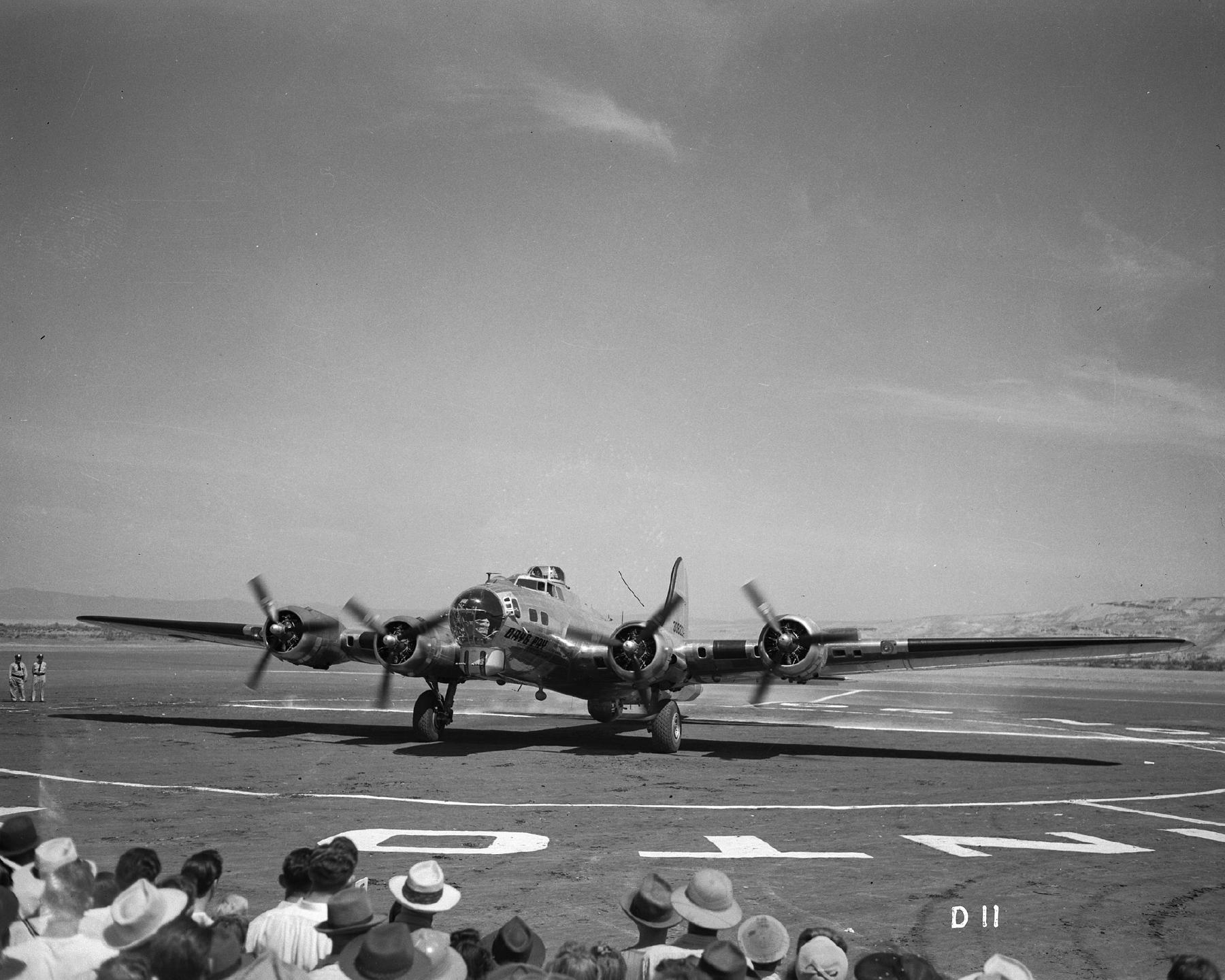
    <summary type="html"><![CDATA[<p><strong><em>During World War II the people of the Hanford Site came together to buy a bomber to support the war effort. The “Give a Bomber” campaign created a legacy that continues to bind a town together.</em></strong></p><img src="https://www.intermountainhistories.org/files/fullsize/5cc1c2fd94c0b5b7485b37b7f3d037e9.jpg" alt="The Day’s Pay B-17 Bomber at the celebration" /><br/><p><span style="font-weight:400;">Would you give up a day's pay to help your country? The workers of Hanford, Washington, where the plutonium was made for the Manhattan Project, decided to contribute their wages to buy a bomber to send overseas. Demonstrating their enthusiasm, 51,000 employees gave up a day’s pay for a certificate acknowledging their “share” of the bomber. The campaign’s slogan “Give a day’s pay and send a bomber on its way,” influenced the name of the plane as “Days Pay” was the overwhelming winner when the “Give a Bomber” committee held a contest to pick a name for th</span><span style="font-weight:400;">e plane. The workers asked the Army Air Force what type of plane it needed. The answer came back asking for the B-17 Flying Fortress, with the cost of the bomber being approximately $300,000 in 1944 (costing $5,257,107.95 in 2024).</span>
<span style="font-weight:400;">On July 23, 1944, workers christened the new plane and dedicated it to Colonel David Wade, along with Mrs. Katie Belle Harris, whose son had been lost in action. The Day’s Pay then became a part of the 8th Army Air Force in England, where it flew more than 60 missions in Germany. The plane was hit to the point of critical condition multiple times, but, what was very rare for the time was that every man on that bomber returned home safely and unharmed, which made the Day’s Pay a lucky plane.</span>
<span style="font-weight:400;">The employees who bought Day’s Pay continued to keep track of it as it flew missions, with the employee newspaper, the </span><i><span style="font-weight:400;">Sage Sentinel,</span></i><span style="font-weight:400;"> reporting on its mission progress. The paper also published a list of the plane’s crew, which allowed the employees to send Christmas cards and care packages to “their” boys overseas as well as check in on “our” plane. Unfortunately after the war, on December 4, 1947, it was taken to Kingman Field, Arizona, and reduced to scrap. </span>
<span style="font-weight:400;">But the legacy of the Day’s Pay lives on in the Richland police department’s badge, the name of a local microbrewery, and other businesses. The largest showing of the Day’s Pay comes from Richland High School, where a mural of the Day’s Pay covers one side of the gymnasium and the football team wears a simplified B-17 bomber sticker on the backs of their helmets. The Richland High School class of 2021 raised money to have a B-17 bomber fly over for graduation, demonstrating that the Day’s Pay is alive and instills community pride to this day.</span></p><p><em><strong><a href="https://www.intermountainhistories.org/items/show/870">For more (including 5 images) view the original article</a></strong></em></p>]]></summary>
    <published>2024-10-22T21:07:24+00:00</published>
    <updated>2026-04-17T19:32:19+00:00</updated>
    <link rel="alternate" type="text/html" href="https://www.intermountainhistories.org/items/show/870"/>
    <id>https://www.intermountainhistories.org/items/show/870</id>
    <author>
      <name>Mason Williamson, Rocky Mountain College</name>
    </author>
  </entry>
  <entry>
    <title type="html"><![CDATA[The Short and Storied History of The Colored Citizen]]></title>
    <summary type="html"><![CDATA[<p><strong><em>In 1884, the <em>Colored Citizen</em> became the first African American newspaper to be published in Montana. This newspaper is credited with helping Helena become the capital city of Montana. Additionally, while this newspaper was short-lived, it set the foundations for the other African American newspapers that followed.</em></strong></p><img src="https://www.intermountainhistories.org/files/fullsize/768f6a0faac6043afd8ad289535d1d70.jpg" alt="[Untitled]" /><br/><p><span style="font-weight:400;">In the early 1880s, a fight erupted in Montana over the location of the state capital. William Andrews Clark and Marcus Daly, the biggest names in the Montana copper industry, each wanted their local city to become the capital. While Daly preferred his beloved Anaconda, Clark fought to make the upstart mining city of Helena the capital. As part of the campaign to persuade voters to select Helena, he created and funded </span><i><span style="font-weight:400;">The</span></i> <i><span style="font-weight:400;">Colored Citizen</span></i><span style="font-weight:400;">. Clark was known as a famous entrepreneur, the “Copper King of Montana,” and as one of the wealthiest men in the United States during the late nineteenth century. He spent over $200,000 supporting the newspaper during its short run from September-November 1894, which was during the campaign season. James Presley Ball Jr. was named editor of the newspaper. Ball Jr. was also a photographer, and he represented a variety of African Americans who migrated to Helena in the 1880s in search of better treatment. He published the newspaper at 137 N. Main St, which is in the downtown area of the city. </span>
<span style="font-weight:400;">The </span><i><span style="font-weight:400;">Colored Citizen</span></i><span style="font-weight:400;">’s opening issue discussed the purpose of the paper. According to the Library of Congress, “Its reason for being was the intense interest among the city’s 279 ‘Colored’ Citizens in the upcoming election to decide the site of the state capital: Helena or Anaconda.” This issue also stated that Montana should be immensely proud of all of its “Colored Citizens.” During 1884, African Americans represented around 1% of the total state population with about 1,500 citizens. Additionally, the </span><i><span style="font-weight:400;">Colored Citizen </span></i><span style="font-weight:400;">had stories and articles about news on the local and state level. The newspaper was four pages long, with six columns. </span>
<span style="font-weight:400;">In the final issue of the newspaper on November 5th, 1894, a full-page endorsement filled the front page. It stated, “The Anaconda Mining Company Does Not Employ a solitary Colored man. Dagoes and Foreigners are preferred to Native Colored Americans. Helena has 500 Prosperous Colored Citizens. They own Thousands of Dollars of Real Estate and are Engaged in every kind of Business. Colored Men of Montana stand by your Helena Brethren. Vote for HELENA for the CAPITAL.” Unfortunately, the newspaper was shut down shortly before the vote, which ended up coming down to the wire. With a narrow gap of less than 2,000 votes out of the 50,00 votes cast, Helana won. The </span><i><span style="font-weight:400;">Colored Citizen</span></i><span style="font-weight:400;">’s influence on the vote is immeasurable, and its work to make Helena the capital has impacted Montana to this day. The newspaper also laid the groundwork and foundation for the African American newspapers that followed. </span><span style="font-weight:400;"> </span></p><p><em><strong><a href="https://www.intermountainhistories.org/items/show/871">For more (including 4 images) view the original article</a></strong></em></p>]]></summary>
    <published>2024-10-22T21:23:11+00:00</published>
    <updated>2026-04-17T19:32:19+00:00</updated>
    <link rel="alternate" type="text/html" href="https://www.intermountainhistories.org/items/show/871"/>
    <id>https://www.intermountainhistories.org/items/show/871</id>
    <author>
      <name>Morgan Baird, Rocky Mountain College  </name>
    </author>
  </entry>
</feed>