<?xml version="1.0" encoding="UTF-8"?>
<feed xmlns="http://www.w3.org/2005/Atom">
  <title type="text">Intermountain Histories</title>
  <updated>2026-04-17T19:32:20+00:00</updated>
  <generator uri="http://framework.zend.com" version="1.12.20">Zend_Feed_Writer</generator>
  <link rel="alternate" type="text/html" href="https://www.intermountainhistories.org/"/>
  <link rel="self" type="application/atom+xml" href="https://www.intermountainhistories.org/items/browse?output=rss2"/>
  <id>https://www.intermountainhistories.org/</id>
  <author>
    <name>Intermountain Histories</name>
    <uri>https://www.intermountainhistories.org</uri>
  </author>
  <link rel="hub" href="https://pubsubhubbub.appspot.com/"/>
  <entry>
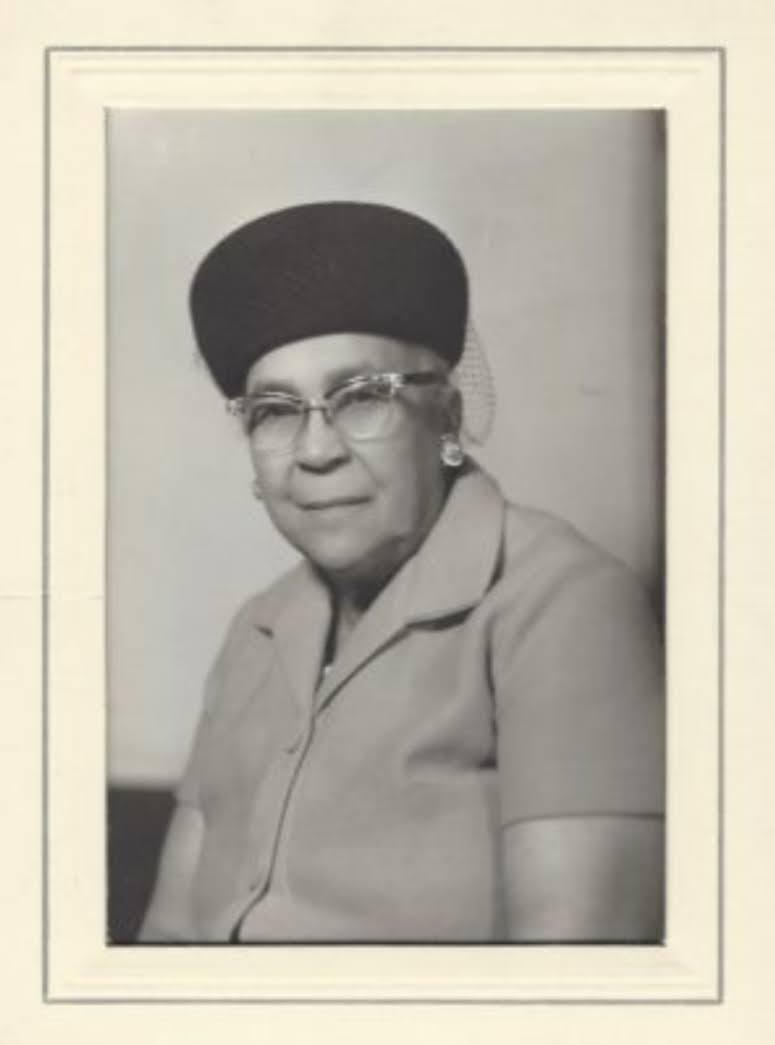
    <title type="html"><![CDATA[Mignon Richmond: First Black Woman College Graduate in Utah]]></title>
    <summary type="html"><![CDATA[<p><strong><em><span style="font-weight:400;">In 1921 Mignon Barker Richmond became the first African American woman to graduate from college in Utah and went on to become a community organizer and civil rights activist.</span></em></strong></p><img src="https://www.intermountainhistories.org/files/fullsize/8b40389c2ee054bc94fe17722f9e1b3b.jpg" alt="Mignon Barker Richmond" /><br/><p><span style="font-weight:400;">Mignon Barker Richmond was born on April 1, 1897 in Salt Lake City to William Barker and Mary Alice Reagan Barker. She attended Utah Agricultural College, now known as Utah State University, in Logan, Utah, graduating in 1921 with a degree in home economics. She persisted in spite of gross racism from her professors and peers, and participated in the Empyrean Club, a group of women that discussed contemporary problems and events, becoming its secretary-treasurer in her senior year. Following graduation, she faced difficulties finding a job in her field of study due to racial discrimination, and only after 27 years was she able to obtain work in her field of study, working first as a laboratory technician, and later as a school lunch supervisor at the University of Utah Stewart School from 1948 to 1953, and was afterwards hired to start home-living classes for the Utah State Industrial School. </span>
<span style="font-weight:400;">During this period she was active in the National Association for the Advancement of Colored People (NAACP) and the Young Women’s Christian Association (YWCA), and in 1957 she became the YWCA Food Services Director in Salt Lake City, where she stayed until her retirement in 1962 at the age of 65. Later, during president Lyndon Johnson’s administration, she became the head of the Women’s Job Corps and chairwoman of Project Medicare Alert. During her work with the Salt Lake chapter of the NAACP, she co founded the Nettie Gregory Center, a venue for minority youth to be involved in recreation in Salt Lake City, as well as on boards for the Utah Community Service Council and the Women’s Legislative Council, where she helped create legislation to fight poverty. After receiving several awards for her community service and commitment to education and civil rights, she died at the age of 86 on March 10, 1984. Many organizations including the Salt Lake Branch NAACP, Trinity AME Church, and Calvary Baptist Church came together to dedicate Richmond Park in Salt Lake City in 1984, and commissioned a plaque describing Mignon Barker Richmond as an educator, civil leader, and humanitarian.</span></p><p><em><strong><a href="https://www.intermountainhistories.org/items/show/874">For more (including 3 images) view the original article</a></strong></em></p>]]></summary>
    <published>2024-11-02T22:24:37+00:00</published>
    <updated>2026-04-17T19:32:20+00:00</updated>
    <link rel="alternate" type="text/html" href="https://www.intermountainhistories.org/items/show/874"/>
    <id>https://www.intermountainhistories.org/items/show/874</id>
    <author>
      <name>Morgon George, Utah State University</name>
    </author>
  </entry>
  <entry>
    <title type="html"><![CDATA[The Women of the Ku Klux Klan in Denver]]></title>
    <summary type="html"><![CDATA[<p><strong><em><span style="font-weight:400;"> In 1926, the Women of the Ku Klux Klan (WKKK), along with their male counterparts, marched down Larimer Street in downtown Denver. The WKKK was an appealing way for Protestant women to display comradery, exist in a historically male space, and spew anti-Catholic and Jewish rhetoric.</span></em></strong></p><img src="https://www.intermountainhistories.org/files/fullsize/5d9244d4ded11646b84fd3324a59938c.jpg" alt="“Ku Klux Klan members march down Larimer Street in Denver.” 1926." /><br/><p><span style="font-weight:400;">A notable difference between the KKK of the 19</span><span style="font-weight:400;">th</span><span style="font-weight:400;"> century and the Klan of the 20</span><span style="font-weight:400;">th</span><span style="font-weight:400;"> century was the latter’s inclusion of women—a sub-organization called the Women of the Ku Klux Klan (WKKK). Like their male counterparts, the WKKK promoted a skewed version of “Americanism” and believed that the United States needed saving from minorities and non-Protestant religions. However, they filtered their bigotry and xenophobia through a uniquely feminine manner. They sought to present themselves as good, charitable, white Protestant American women and believed that they needed to uphold KKK ideals to do so. Furthermore, they had their own leaders, rules, and initiations. </span></p><p><span style="font-weight:400;">Colorado’s Klan chapters and activities were perhaps the most potent of anywhere in the Intermountain West during the 1920s, and the Klanswomen activities in this period reflected that. In 1926, the Klan held a large parade and marched down Larimer Street in Denver, Colorado. The women, like the men, marched in full regalia, although they were notably unhooded. It seems like they felt a great deal of pride and wanted their actions recognized. </span>
<span style="font-weight:400;">An important figure of Colorado’s WKKK was influential leader Laurena Senter. Senter was very active in the public sphere and acted as president of organizations such as the Colorado Federation of Women’s Clubs and the Women’s Club of Denver. Her husband was a very high-ranking member of the Klan and together they were very dedicated to the Klan. </span>
<span style="font-weight:400;">In 1925, Senter traveled around the state and performed rituals and initiations. Historian Betty Jo Brenner notes that women were eager to join the WKKK for reasons such as the allure of mystery and ritual. However, rather notably it also appealed to women seeking more agency. Women often joined independently from their husbands and were able to obtain leadership positions. Joining the WKKK also allowed women to foster comradery with other women and participate in secret organizations, a space historically dominated by men. Because of these reasons, their actions can be seen as a form of feminism. </span>
<span style="font-weight:400;">Klanswomen in Denver believed that charitable actions and benevolence defined their role. They delivered Thanksgiving baskets to less fortunate families in Denver and even adopted an orphaned child called Richard—who they dressed up in Klan regalia. They also attempted to deter people from patronizing businesses that were “run by Jews,” and raised money to keep orphans out of Catholic-supported orphanages.</span>
<span style="font-weight:400;">The WKKK of Colorado eventually split from the national WKKK. Senter described in her diary her frustration with the Klan’s leadership in Colorado. It seems that although she still believed in its mission of white Protestant supremacy, she believed that the Colorado Klan had lost sight of its purpose and criticized members for joining in hopes of personal gain and glory. </span>
<span style="font-weight:400;">The national WKKK determined that the Colorado chapter could no longer call themselves the WKKK and thus Senter reorganized her group as the “Colorado Cycle Club.” Although some members defected, many remained loyal to Senter’s group. Under the “Colorado Cycle Club,” the organization lasted until 1945. </span></p><p><em><strong><a href="https://www.intermountainhistories.org/items/show/815">For more (including 3 images) view the original article</a></strong></em></p>]]></summary>
    <published>2024-05-21T01:24:52+00:00</published>
    <updated>2026-04-17T19:32:18+00:00</updated>
    <link rel="alternate" type="text/html" href="https://www.intermountainhistories.org/items/show/815"/>
    <id>https://www.intermountainhistories.org/items/show/815</id>
    <author>
      <name>Aidan Capristo, Northern Arizona University</name>
    </author>
  </entry>
  <entry>
    <title type="html"><![CDATA[ Women in Los Alamos during the Manhattan Project <br />
]]></title>
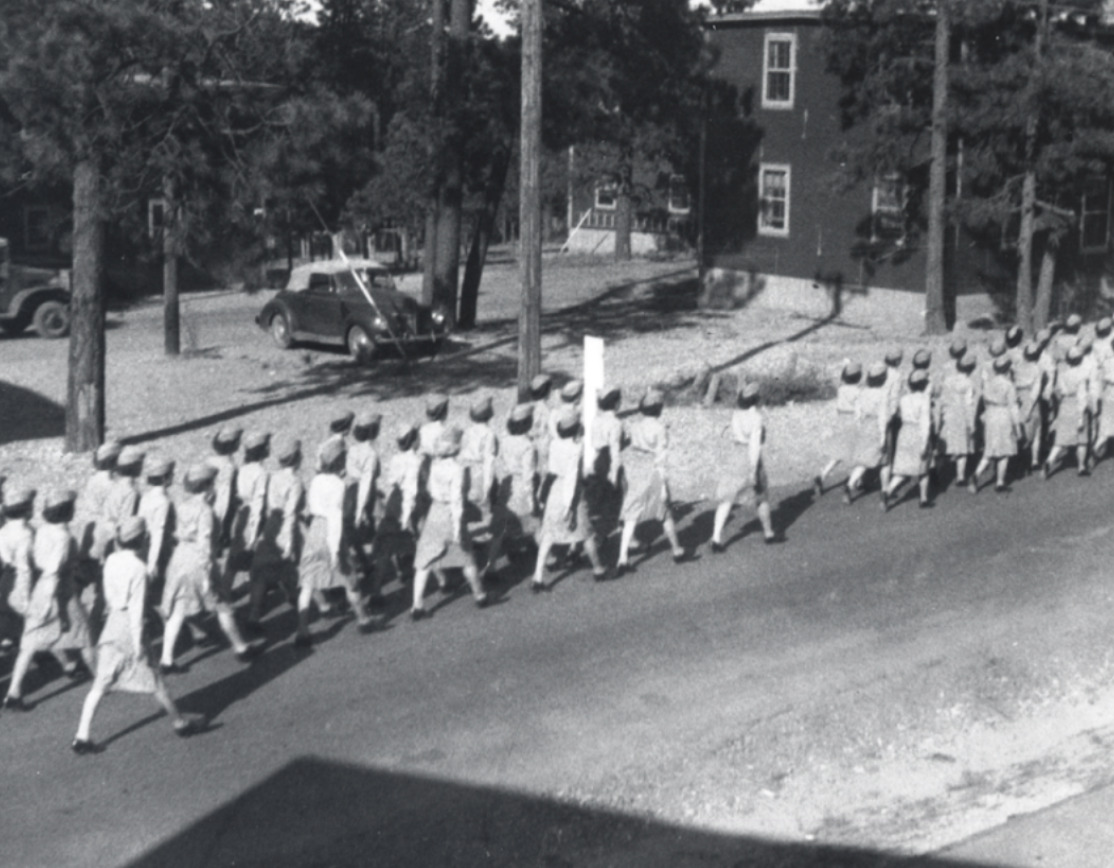
    <summary type="html"><![CDATA[<p><strong><em>With the war effort withdrawing men from the domestic labor force, women became an increasingly important part of the Manhattan Project in Los Alamos. </p></strong></p><img src="https://www.intermountainhistories.org/files/fullsize/c8f195c81db8f6804378056bc75c3f0b.jpg" alt="WAC March in Los Alamos" /><br/><p><span style="font-weight:400;">Wartime labor shortages were a constant struggle for the United States during World War II. They needed to send troops overseas, develop weaponry, spy on their enemies, strategically plan, and mobilize the entire nation as quickly as possible. By 1943, the United States Army was 200,000 men short for their invasion on D-Day, they were in need of 315 more physicists for their defense projects, and the Manhattan Project was desperately in search of all kinds of labor from scientists and engineers to machinists and pipefitters. In response, President Franklin D. Roosevelt signed into existence the Women’s Army Auxiliary Corps established “for the purpose of making available to the national defense the knowledge, skill, and special training of women of the nation” on May 15, 1942. Still facing discrimination, unequal pay, and fewer opportunities than their male counterparts, women played an essential role in World War II, especially in Los Alamos. </p>
<span style="font-weight:400;">Because Los Alamos was such a restricted town and the directors wanted to limit the number of outsiders, General Leslie Groves encouraged wives of scientists to work on the project in whatever capacity they could. As an incentive, they provided nursery schools for their young children to aid with childcare. Despite the government’s encouragement, some women were still hesitant to work on the project over concerns for their family’s well-being. Many had not expected to work at all, and quite a few were dissatisfied with the living conditions in which they now were expected to raise their children. Charlotte Serber, the only female group leader at the laboratory, wrote, “For the potential working wife, there was one chief worry. Could she manage her home here on the mesa and work too?” These were fair concerns. The conditions under which they were expected to work were difficult. They were isolated from extended family, were allowed only one day off of work per month for shopping in Santa Fe, were expected to work forty-eight hours in a week, and had almost no bargaining power to shift their rules or salary. They were also far less likely to gain security clearance than their male counterparts, so it was unlikely that they knew what they were helping create. </p>
<span style="font-weight:400;">Despite these stringent circumstances, many women in Los Alamos did work on the secretive atomic gadget. By October 1944, women constituted about 30% of the labor force in the Tech Area, hospital, and schools. It is also notable that although they did employ some women in clerical positions, the vast majority were scientists or technicians. They were metallurgists, engineers, physicists, chemists, and teachers, involved in every aspect of the atomic effort until the very end. The exception for this participation was in Project Alberta. This was the very last phase of the project; the physical delivery of the bomb to the Pacific island Tinian where the nuclear components were assembled before being dropped on Japan. Women who had spent years contributing to this moment were left behind in the United States to learn about the bombingsfrom the same newspapers as everyone else. However, the atomic bomb could not have been built as quickly or efficiently as it was without the contribution of women. They faced gender discrimination, suboptimal conditions, and unfair pay to contribute to the atomic effort in Los Alamos. </span>

</p><p><em><strong><a href="https://www.intermountainhistories.org/items/show/756">For more (including 3 images) view the original article</a></strong></em></p>]]></summary>
    <published>2023-09-24T18:36:48+00:00</published>
    <updated>2026-04-17T19:32:16+00:00</updated>
    <link rel="alternate" type="text/html" href="https://www.intermountainhistories.org/items/show/756"/>
    <id>https://www.intermountainhistories.org/items/show/756</id>
    <author>
      <name>Abigail Beus, Brigham Young University</name>
    </author>
  </entry>
  <entry>
    <title type="html"><![CDATA[Dorothy McKibbins: The Gatekeeper of Los Alamos ]]></title>
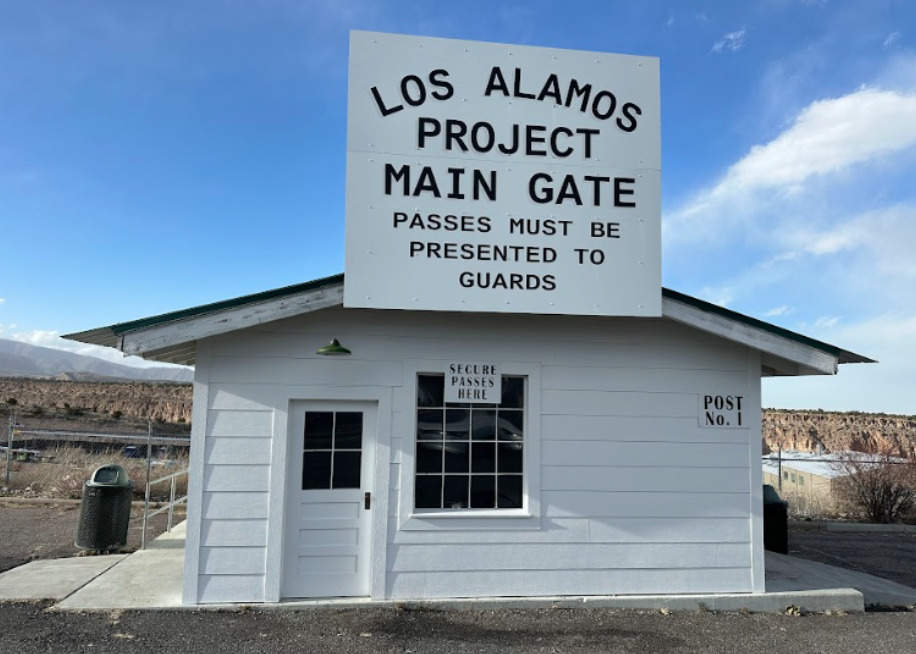
    <summary type="html"><![CDATA[<p><strong><em>The Manhattan Project would not have been possible without the efforts of Dorothy McKibbin, the Gatekeeper of Los Alamos. From attaining marriage licenses to transferring phone calls, Dorothy McKibbin was an integral and diversely skilled cog in the large machine of building the first nuclear weapons. </p></strong></p><img src="https://www.intermountainhistories.org/files/fullsize/5c401996b7cfdc416ba17d96a788fbec.jpg" alt="Los Alamos Project Main Gate Replica" /><br/><p><span style="font-weight:400;">Once General Leslie Groves and Dr. J. Robert Oppenheimer chose Los Alamos, New Mexico as the place to build the atomic bomb; hundreds of bewildered employees streamed into the nearby town of Santa Fe. Due to the confidentiality of the Manhattan Project, recruitment was difficult and details provided to the new hires were vague because of the classified nature of their work. They were told that their work would helpe war effort and be located in the scenic mesas of New Mexico, but little else. After a long train ride to the nearby town of Lamy, scientists and their families hauled their luggage through the winding streets of Santa Fe, looking for 109 East Palace Avenue—the only address they had been given. There, they were met by a simple red and blue sign reading “United States Engineer Office No. 3” and the welcoming presence of Dorothy McKibbin. </p>
<span style="font-weight:400;">In 1932, recently-widowed Dorothy McKibbin moved to Santa Fe from Kansas with her son, hoping for a new life. When she met Dr. J. Robert Oppenheimer in 1943, she found one. Oppenheimer recognized her comforting, calming, and competent presence and asked her to be a War Department secretary with unspecified duties. Like the other personnel, she only knew that her job concerned an essential war project. As she discovered after accepting the position, duties encompassed everything from disciplining Nobel laureates, receiving classified mail, enforcing security, helping lost families find the way to their new homes, and more. She was there for some of the most important moments of the project, even observing the Trinity Test from a car parked near Albuquerque. To Dorothy McKibbin, “Working at 109 was more than just a job. It was an exciting experience. Our office served as the entrance to one of the most significant undertakings of the war or, indeed, of the twentieth century.” </p>
<span style="font-weight:400;">For the entirety of the Manhattan Project she was the point of contact between the secret city and the rest of the world, earning herself the nickname of  the “Gatekeeper of Los Alamos.” After the Manhattan Project concluded, the site was renamed the Los Alamos National Laboratory, and McKibbin continued to work there until her retirement in 1963. She spent her retirement organizing community programs in Los Alamos and Santa Fe until her death in 1985. Today, a room in the Los Alamos History Museum is named in her honor, and although her office at 109 East Palace currently houses a gift shop, its original iron gate which once welcomed thousands to the secret city is on display at the Los Alamos History Museum. </span>
</p><p><em><strong><a href="https://www.intermountainhistories.org/items/show/752">For more (including 4 images) view the original article</a></strong></em></p>]]></summary>
    <published>2023-09-08T01:24:19+00:00</published>
    <updated>2026-04-17T19:32:16+00:00</updated>
    <link rel="alternate" type="text/html" href="https://www.intermountainhistories.org/items/show/752"/>
    <id>https://www.intermountainhistories.org/items/show/752</id>
    <author>
      <name>Abigail Beus, Brigham Young University</name>
    </author>
  </entry>
  <entry>
    <title type="html"><![CDATA[Phoenix Indian School: Spirits Unbroken by Colonization]]></title>
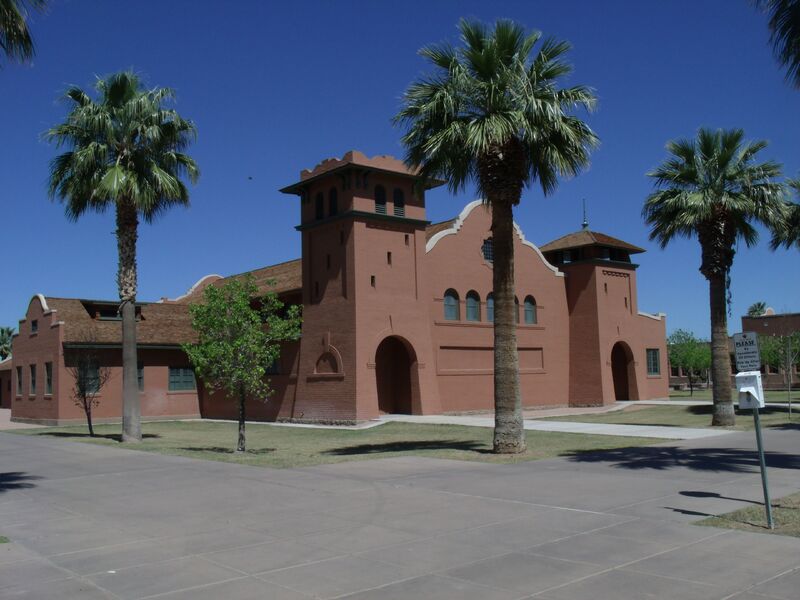
    <summary type="html"><![CDATA[<p><strong><em>In March 1819, Congress passed the Indian Civilization Act, which placed native children into boarding schools in order to "civilize" and Christianize them.</em></strong></p><img src="https://www.intermountainhistories.org/files/fullsize/ceffbfbdee1b3db5775e82f665578827.jpg" alt="Phoenix Indian Boarding School" /><br/><p>In March 1819, Congress passed the Indian Civilization Act with the purpose of civilizing and Christianizing Native peoples in an effort to, in the words of Captain Richard Pratt, “kill the Indian and save the man.” Administrators established Indian boarding schools across the United States, designing them to assimilate Native American youth to Western culture and ideals. The National Native American Boarding School Healing Coalition explains that indigenous children at Indian boarding schools were “banned from acting in a way that might be seen to represent traditional or cultural practices, stripped of traditional clothing, long hair, personal belongings, and behaviors reflective of their Native culture. They suffered physical, sexual, cultural, spiritual abuse, neglect, and experienced treatment that in many cases constituted torture for speaking their Native languages.” These acts were covered up though, creating a false pretense of helping others due to misunderstood prejudices.
Students from these boarding schools harbored a deep resentment towards the forced assimilation. Euro-American administrators and designers hoped the education could make indigenous students give up their own cultures and think like "white" Americans, thereby "becoming" "white." However, students realized they controlled whether or not the schools could truly indoctrinate them with white culture. Many student actions and behaviors sent a message that they could not, and would not, participate in the genocide of their culture. The success of their resistance is primarily attributed to their ability and desire to band together to preserve cultural identity, which was a common practice in most native tribes; the freedom of community was placed above freedom of the individual.
Dodésbaáh was one of many thousands of young children who endured trauma at the Phoenix Indian Boarding School, fought the system, and survived. She endured physical, mental, and emotional abuse at the hands at teachers and administrators. She determinedly retained her Navajo language and name, refusing to accept the name of "Sadie" the school attempted to force on her. She frequently ran away from the boarding school, and her overall defiance landed her in constant trouble with school authorities. When she had children of her own, she refused to send them to experience the same pain and suffering she did as a young girl. Dodésbaáh passed away in 2001 at the age of 100, surrounded by four generations of descendants. Her strong spirit and the importance of family, religion, tradition, and culture were in the room with her as she looked into the eyes of her posterity.
The attempted cultural genocide of indigenous peoples and the mission of federal boarding school systems failed. The strength of Native peoples who resisted forced assimilation continues today as they fight for land rights, water rights, and the right to retain their culture, identity, and history. The spirit of Native communities is laced with a distinctive beauty that encourages those who hold a deep sense of pride in their Native heritage to maintain a legacy of embracing their heritage and unified strength.</p><p><em><strong><a href="https://www.intermountainhistories.org/items/show/484">For more (including 4 images) view the original article</a></strong></em></p>]]></summary>
    <published>2021-09-15T07:10:13+00:00</published>
    <updated>2026-04-17T19:32:10+00:00</updated>
    <link rel="alternate" type="text/html" href="https://www.intermountainhistories.org/items/show/484"/>
    <id>https://www.intermountainhistories.org/items/show/484</id>
    <author>
      <name>Kirsten Larcade, Brigham Young University</name>
    </author>
  </entry>
  <entry>
    <title type="html"><![CDATA[Mae Timbimbo Parry]]></title>
    <summary type="html"><![CDATA[<p><strong><em>Mae Timbimboo Parry was the tribal historian for the Northwestern Shoshone Tribe and preserved her tribe’s history by recording the oral histories she heard throughout her childhood. She was a gifted storyteller, a talented beadwork crafter, and an influential leader in her community.</em></strong></p><img src="https://www.intermountainhistories.org/files/fullsize/2686ac8c0f81d7cbfc73a6ac298c8e12.jpg" alt="Utah Indian Cooperative Council" /><br/><p>Mae Timbimboo Parry was born May 15, 1919, in Washakie, Utah. Established in the 1880s, Washakie was a homestead for members of the Northwestern Shoshone Tribe, many of whom were descendants of survivors of the Bear River Massacre.
During her childhood, Mae attended several schools including the Sherman Institute in Riverside, California as well as the Washakie Day School, both of which were Indian boarding schools designed to assimilate Indian children into American culture. With the motto of “Kill the Indian, and Save the Man,” the schools attempted to strip Native American students of their indigenous cultures and languages in the hopes they would assimilate into mainstream American society. While attending the Washakie Day School, one of Mae’s teachers had her stand in front of class, proceeding to tell her “Mae, you are going to turn out to be just like these other children, sitting in the dirt and being useless for the rest of your life.” Contrary to her teacher’s beliefs, Mae excelled in school. She went to Bear River High School where she began to write all of the oral stories she heard growing up from her tribal leaders as well as her grandfather Da-boo-zee, or Yeager Timbimboo, who was present at the Bear River Massacre. She continued her education at LDS Business College (now called Ensign College), where she earned a degree in English.
Throughout her life, Mae continued to share the history of her tribe and was well-known for being a wonderful storyteller. She became the tribal historian and was passionate about passing the stories on to younger generations. Through her meticulous records of oral traditions, Mae was able to shift the dialogue surrounding the Bear River Massacre. Originally, the massacre was remembered as the “Battle of Bear Creek,” and her people were viewed as troublesome Indians that fought against the local militia. Mae corrected the story, showing her people were massacred despite attempts to surrender and make peace, bringing justice to her tribe.
During her time as tribal historian, Mae worked with local and federal governments to help all Native Americans. She was a representative on the White House Council for Indian Tribal Affairs where she worked with Native leaders to create and implement programs for Native Americans and distribute resources. She also served on Utah’s Indian Cooperative Council where she helped create the Native American Graves Protections and Repatriation Act, which returned Native American artifacts and human remains to their tribes. Her efforts to serve Native Americans were incredibly valuable. In 1986 she was named “Utah’s Honorary Mother of the Year” and in 1996 she received the Utah Women’s Achievement Award.
In addition to preserving her tribal history through words, Mae also carried on family tradition through her beautiful beadwork. Her grandson Darren Parry remembered her constantly working on buckskin gloves, moccasins, or other objects, carefully placing the beads to create beautiful designs.
Mae passed away on May 20, 2007 in Clearfield, Utah. Her role as teacher, storyteller, and historian preserved the history of the Northwestern Shoshone Tribe, and her legacy is continued by her grandson Darren, the current tribal historian, who continues to share her stories with the world.</p><p><em><strong><a href="https://www.intermountainhistories.org/items/show/478">For more (including 3 images) view the original article</a></strong></em></p>]]></summary>
    <published>2021-09-11T08:10:52+00:00</published>
    <updated>2026-04-17T19:32:10+00:00</updated>
    <link rel="alternate" type="text/html" href="https://www.intermountainhistories.org/items/show/478"/>
    <id>https://www.intermountainhistories.org/items/show/478</id>
    <author>
      <name>Bethany Erickson, Brigham Young University</name>
    </author>
  </entry>
  <entry>
    <title type="html"><![CDATA[Cecelia Weiss, Female Homesteader<br />
]]></title>
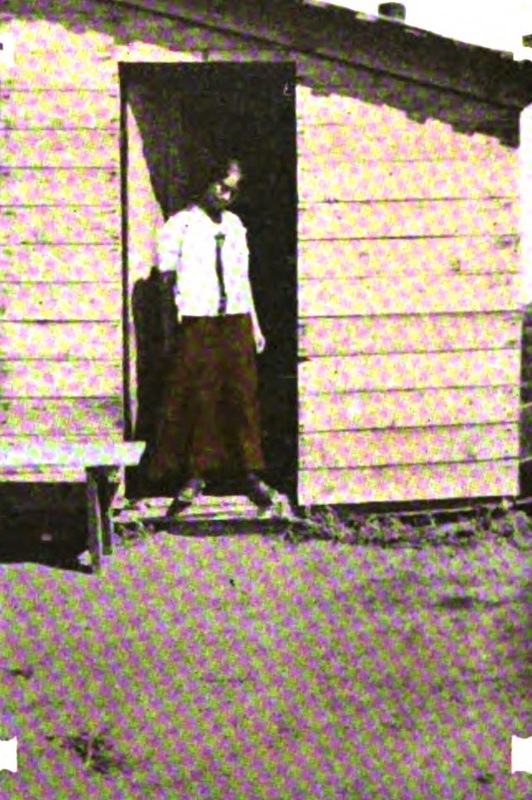
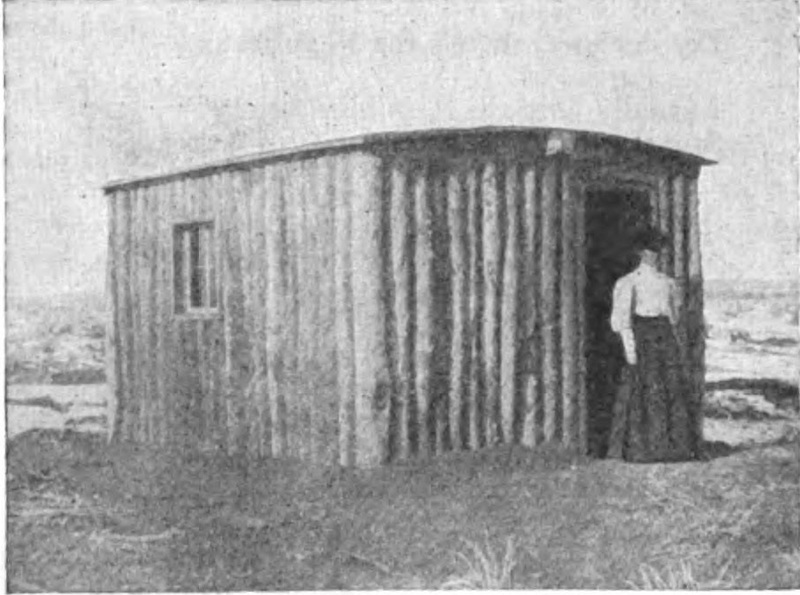
    <summary type="html"><![CDATA[<p><strong><em>“Disregarding whatever pecuniary gain there may be, it is a real inspiration to be part of a modern pioneer colony conquering the wilderness. At least it is an inspiration in the retrospect.” Cecelia Weiss recognized and exhibited the determination and grit required of a homesteader in the desert mountains of southern Utah.</p></strong></p><img src="https://www.intermountainhistories.org/files/fullsize/ae6547733ba3c480b60048add163e233.jpg" alt="Cecelia and the Piano Box
" /><br/><p>With the introduction and improvement of dry farming in the late nineteenth century, land previously considered worthless could suddenly be used. Land fever took hold of many prospective homesteaders, including Cecelia Weiss. Following the lead of her sister, in 1912 Cecelia filed for 320 acres of sagebrush in Iron County of southwestern Utah. With neighboring claims and most others in the region filed by men (only two of whom had wives), they quickly became known as “The Girls.” The two depended on one another and Cecelia recalled, “Without my sister’s companionship I think I would have deserted before the first season was half over.”</p><p>Upon acquiring her land, Cecelia hired out the building of a simple home. It was “not entirely weather-proof, but as it rarely rained in summer it afforded sufficient protection.” Cecelia was spared the “privilege of naming [her] residence.” It had scarcely been completed when a homesteader passed by, remarking that the “piano box” was finished and the “nickname clung to it ever since.”</p><p>In her accounts, Cecelia wrote, “my 320 acres do not support me — yet. I support them.” Establishing a home and a farm was no simple, or cheap, task. Cecelia returned to the city every winter, during the five month furlough allowed under homestead law, to earn the necessary funds to continue work in the summer. A Russian immigrant, she quipped that, unlike in her home country, “there are no relief commissions for girl homesteaders, and the Red Cross pays no attention to them.”</p><p>Together, the sisters worked on improvements for their land. There was no running water for miles, so they were dependent on a neighbor who could afford the expense of digging and establishing a well. Cecelia wrote, “Until I had to walk a mile and a half and carry every drop I had no conception of the value of water.” Out of necessity, “water conservation became a religion.” Putting up fences was “always one of the worst jobs of a homesteader.” When Cecelia and her sister first began digging post holes and setting the posts, they could only manage one in the morning and one in the evening, with their best effort and leaving them exhausted. Before long though, they increased to ten in the morning and ten more at night. Together, they set 600 posts and saved $75 that it would have cost to hire the work out. </p><p>To meet ownership requirements for the land, Cecelia needed to cultivate 40 acres. She paid cash for the heavy labor of clearing, plowing, seeding, and hauling. It was a helpful arrangement, but, worse than increasing her costs, it added to her “hours of leisure.” She despised the abundant spare time, writing, “I never knew how much time there is in the world, how it refuses to be prodded and hurried in its snaily crawl, until I contracted with Uncle Sam to spend seven consecutive months in the sagebrush, with the nearest neighbor almost out of sight and not sufficient work to make me forget the heat.”</p><p>Her garden became a “source of great delight.” The arid soil was not in great condition for growing, and she had to compete with rabbits and gophers, but what she was able to raise was a help. Food became less of an issue when a store was established in the nearby town, Beryl.</p><p>Even with her sister nearby, homesteading could be lonely. “In the sagebrush,” Cecelia commented, “It is not sufficient that [a young woman] should avoid evil itself; she must avoid the appearance of evil.” She records having to be careful that if a young man came to call, they would sit outside on “a hard wooden bench in the broiling sun” because it was not proper to invite him inside her one bedroom home alone. Cecelia felt “handicapped by the fear of gossip and scandal” that would “spring up overnight without provocation” in a place “where folks have nothing to do for recreation but scan the empty miles and sit and think about their neighbor.” A young girl like Cecelia, without the protection of a chaperon, made “the best material for such stories.” </p><p>Life was “not all thirst, desolation and dreariness” and, “in spite of everybody,” they made time to enjoy themselves. Cecelia found “many congenial friends” among the other settlers. Trips to call on neighbors, when managed, were all day affairs because “distances between homes [were] too great to be taken lightly” and to be travelled during midday heat. Parties “in the land of hope and thirst” were just as exciting and enjoyable as those in the city. They also often served additional practical purposes. When a big job or task was at hand, one might send for friends and neighbors to make light work of it. Food and festivities would take place after its completion. </p><p>In 1916, Cecelia received the title to her land. If she chose to sell, she could have made a neat profit of $2,200, but that was not what Cecelia wished for. She “would rather make a real farm out of the sagebrush tract.” While others saw the patent as an end goal, to her it only marked the beginning, a continuation of a dream. She wrote, “It has taken pluck to stick to the venture and see it through. There have been times when it has been very hard to stay, but I have never thought of quitting.” To develop a farm from raw land took “money, grit, perseverance, and self-denial,” but “in spite of drouth and loneliness, this plucky girl ‘won through.’”</p><p><em><strong><a href="https://www.intermountainhistories.org/items/show/458">For more (including 3 images) view the original article</a></strong></em></p>]]></summary>
    <published>2021-02-07T06:05:00+00:00</published>
    <updated>2026-04-17T19:32:09+00:00</updated>
    <link rel="alternate" type="text/html" href="https://www.intermountainhistories.org/items/show/458"/>
    <id>https://www.intermountainhistories.org/items/show/458</id>
    <author>
      <name>Anna Bailey, Brigham Young University </name>
    </author>
  </entry>
  <entry>
    <title type="html"><![CDATA[Elinore Pruitt Stewart, Female Homesteader<br />
]]></title>
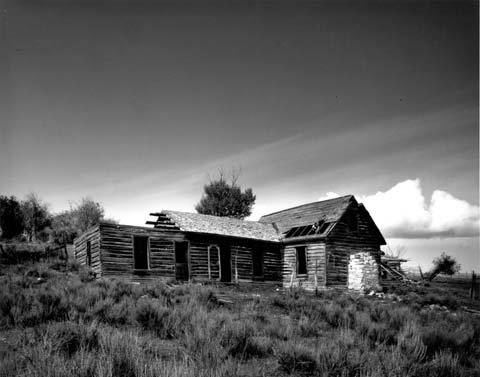
    <summary type="html"><![CDATA[<p><strong><em>“I just love to experiment, to work, and to prove out things,” wrote Elinore Pruitt Stewart in 1913. “Ranch life and ‘roughing it’ just suit me.” Elinore was not born into homesteading, but it suited her and she sought it out in her search for independence.</em></strong></p><img src="https://www.intermountainhistories.org/files/fullsize/8531e6b6c25202a7b1390570da791f74.jpg" alt="Front of the Stewart Cabin
" /><br/><p>Orphaned in her teenage years, Elinore Pruitt Stewart was accustomed to independence. She found employment as a housekeeper for Mrs. Juliet Coney in Colorado after leaving a failed marriage in Oklahoma. In 1909, Elinore decided to seek a more permanent and reliable life for herself and her daughter, Jerrine. Following the advice of her employer and her priest, Elinore began looking for a position as a housekeeper for a homesteader. She accepted a position from Clyde Stewart and moved west to his property in Burntfork, Wyoming.</p><p>That May, she filed for a 160 acre homestead under the Homestead Act on a lot adjacent to Clyde’s. The two married shortly after. She recalled that first summer of work as “the busiest, happiest” she could remember. While the work was hard, it was labor she could “really enjoy.” Over the years, Elinore detailed her life and experiences in Wyoming in letters sent to her friend and previous employer, Mrs. Coney. This collection of letters was later published as a book. It heralded the merits of homesteading as a means for women to provide for themselves. Of women considering the possibility, Elinore wrote, “I feel like urging them every one to get out and file on land… It really requires less strength and labor to raise plenty to satisfy a large family than it does to go out to wash, with the added satisfaction of knowing that their job will not be lost to them if they care to keep it.” She was “very enthusiastic about women homesteading” as a source of autonomy and solution to poverty. In her eagerness for independence and ownership of land, Elinore delayed revealing her new husband to Mrs. Coney until nearly a year after the marriage took place. </p><p>Homestead law required that married women file jointly with their husbands or live separately. Elinore had to relinquish her claim to her mother-in-law in 1912 to avoid losing it completely. She and Clyde later bought the property back once the deed had been acquired. Together they had five children, three of whom survived to adulthood. The family wintered in Boulder, Colorado so their children could attend school there. The remaining months were spent on the ranch, gardening, haying, and caring for livestock. </p><p>In addition to the hard labor, Elinore’s letters described trips with her children or into the mountains. On one such occasion, “after working so hard and so steadily,” she got away by dawn and had a “glorious day” riding in the hills with Jerrine. The publication of her letters brought some notoriety and time was also spent entertaining visitors who came to meet the confident and optimistic woman homesteader.</p><p>Elinore spent her life working and improving the Stewart homestead until her death in 1933. She died of a blood clot to the brain after a surgery following several bouts of serious illness in the years leading to her death. She was buried in Burntfork Pioneer Cemetery, leaving both a historic and a literary legacy that preserves her memory as a successful female homesteader in the American West. </p><p>The ranch continued to be operated by Clyde and their sons until it was leased in 1940 and then sold. The site is now included on the National Register of Historic Places. The homestead building still remains at its original site, although in a much dilapidated condition. There are no current plans to preserve or restore it.</p><p><em><strong><a href="https://www.intermountainhistories.org/items/show/457">For more (including 4 images) view the original article</a></strong></em></p>]]></summary>
    <published>2021-02-07T05:41:39+00:00</published>
    <updated>2026-04-17T19:32:09+00:00</updated>
    <link rel="alternate" type="text/html" href="https://www.intermountainhistories.org/items/show/457"/>
    <id>https://www.intermountainhistories.org/items/show/457</id>
    <author>
      <name>Anna Bailey, Brigham Young University</name>
    </author>
  </entry>
  <entry>
    <title type="html"><![CDATA[Geraldine Lucas, Female Homesteader<br />
]]></title>
    <summary type="html"><![CDATA[<p><strong><em>“They’ll never get me off my land,” vowed Geraldine Lucas. Drawn to Jackson Hole as a beautiful location to retire and by the presence of several siblings, Geraldine became a legendary character of the locale both for her eccentricity and her refusal to sell her land to the National Parks Association. </p></strong></p><img src="https://www.intermountainhistories.org/files/fullsize/59bed290014649aa28d35288cc8edfc5.jpg" alt="Geraldine with other locals during winter
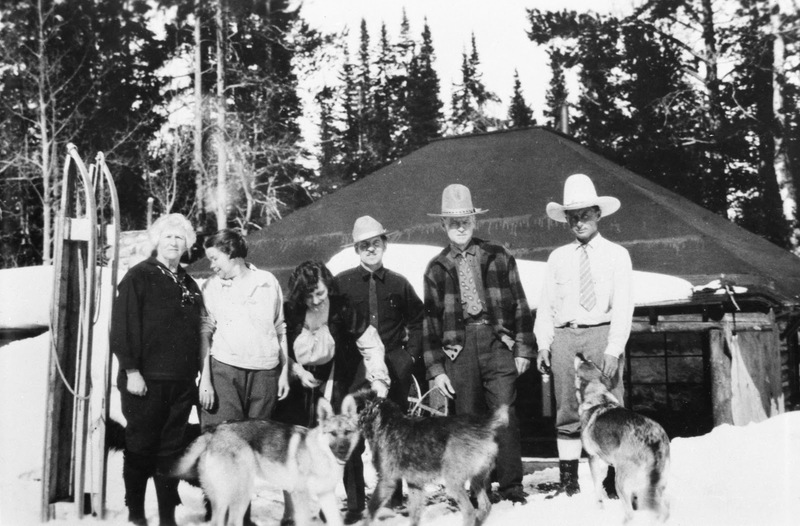
" /><br/><p>Geraldine Lucas was not one to simply comply with traditional norms. At 21, she left a brief but rocky marriage, bringing her son, Russell with her. She then chose to attend school at Oberlin College, becoming both a “returning student” and “single parent” before either term was common. Both Geraldine and Russell had strong personalities, and they clashed over Russell’s educational future spurring him to run away to the Navy. When he returned, they made up, and Geraldine successfully convinced him to join the Coast Guard.</p><p>After she retired in 1913 from teaching public school in New York, Geraldine joined several of her siblings in Jackson Hole, Wyoming where she filed for a 160-acre homestead. Geraldine chose her property as much for the grandeur of the Tetons as for its agricultural potential. She cultivated what was required by law to obtain the property, but then abandoned those efforts and grew only what she needed.</p><p>Geraldine built a cabin and made other improvements, including a second cabin, log storeroom, granary, rabbit hatch, fencing, and over two miles of ditches, all valued at over $7,000. In 1914, she also applied for a timber and stone claim along Phelps Lake, intending to enlarge her landholdings. Geraldine was at odds early on with the federal government due to various errors and complexities associated with her claim. In 1918, when she planned to prove up (colloquial phrase for the legal process of securing title to homestead lands after meeting certain government requirements) on the land, there were complications with the new land office survey and records of intention to file. Geraldine was finally issued her certificate nine years after initiating the process. Then in 1922, Geraldine filed for a desert land entry, but encountered more difficulties with the land office and, ultimately, had to revise the claim from 100 to 70 acres. These frustrations and delays antagonized her against government interference and regulation. Like many Westerners, Geraldine “believed the agency loved technicalities that bordered on harassment.”</p><p>Around 1918, Geraldine persuaded Naomi Colwell to take up an adjacent homestead. At the final proof, Geraldine witnessed that Naomi had no intention to sell her land, a legal requirement, but a short two months later bought 80 acres from her for $500. There were few qualms on the frontier about evading laws or restrictions in the pursuit of additional property. </p><p>In many ways “a loner, ”Geraldine garnered a reputation in Jackson Hole as a man hater. This was reinforced by her efforts to undermine an emerging relationship between Naomi and Russell, as well as run off other potential suitors of the young woman. </p><p>Geraldine spent her summers visiting various family members for weeks at a time, but, come fall and winter, she returned alone to her homestead until spring. She would gather the necessary groceries and wood supply then settle into her books and sewing. A talented seamstress, according to her nephew, she “would sew until hell wouldn’t have it.” Geraldine only ever wore knickers, so it is a mystery what or whom she sewed for. Her personal library consisted of over 1,350 carefully cataloged and numbered books. She also owned a piano, and her home was decorated with gifts from Russell's travels, including a walrus skull and tusks, Kodiak bear head, Eskimo pipe, and reindeer antlers. He also sent a sled and dog team to serve as transport during winter months.</p><p>A mountain climbing craze hit in the 1920s, and Geraldine suddenly had more on her mind than land. In August 1924, age 58, she joined Paul Petzoldt on his climb and became the second woman to summit the crest of the Grand. Instead of warrant accolades, her actions only tended to convince family and neighbors of her eccentricity. As they reached the summit, Petzoldt pushed Geraldine ahead of him so she would be the first on top. He said of her, “I don’t think she often broke through her protected personality, but in that moment when she threw her arms around me with a soft sob, I sensed the real Geraldine Lucas, an intelligent, loving woman who had elected for some reason to leave most of society behind.” Blunt, opinionated, and perhaps unconventional, Geraldine was certainly a character of Jackson Hole. She “simply lived life on her own terms... Yet, much of what set her apart as ‘eccentric’ in her own day, has become commonplace for today’s western women.”</p><p>In the late 1920s, John D. Rockefeller and allies formed a front organization, the Snake River Land Company, to buy property that could be added to the Grand Teton National Park. Many affected by the Great Depression were ready and willing to sell for the fair market prices being offered, but Geraldine was not one of these. Harold Fabian, tasked with buying parcels of land, said of her, “She came out from the east and homesteaded under the Tetons because she wanted to spend the rest of her life within sight of these mountains. She is a lover of beauty and nature.” When offered $50,000 for her homestead, Geraldine responded, “You stack up those silver dollars as high as the Grand Teton and I might talk to you!” She did not share the vision for a national park and had “no use for those who wanted to transform her private playground into a public one.”</p><p>Even amidst the tension of the park property disputes, Geraldine had very pleasant final years on her beloved homestead. She considered making a gift of her land to Oberlin College, but died of heart failure without a will and before any plans were official, so the homestead and property went to Russell. He sold it to a neighbor who sold to Rockefeller who in turn gave it to Jackson Hole Preserve. While Russell never shared his mother’s love for her homestead, he did appreciate it. He placed her cremated remains under a large boulder on her property with a plaque bearing her name and commemorating her memory.</p><p><em><strong><a href="https://www.intermountainhistories.org/items/show/456">For more (including 11 images) view the original article</a></strong></em></p>]]></summary>
    <published>2021-02-06T09:19:15+00:00</published>
    <updated>2026-04-17T19:32:09+00:00</updated>
    <link rel="alternate" type="text/html" href="https://www.intermountainhistories.org/items/show/456"/>
    <id>https://www.intermountainhistories.org/items/show/456</id>
    <author>
      <name>Anna Bailey, Brigham Young University</name>
    </author>
  </entry>
  <entry>
    <title type="html"><![CDATA[Kate Heizer, Female Homesteader<br />
]]></title>
    <summary type="html"><![CDATA[<p><strong><em>Of homesteading, Kate Heizer wrote, “One inquirer has an exaggerated idea of the difficulties and hardships. Another has a mistaken notion of taking a pleasant vacation while waiting till he receives title to a piece of property that will place him above financial anxiety for the rest of his life.” As for herself, Kate recognized the truth lay somewhere in the middle. </p></strong></p><img src="https://www.intermountainhistories.org/files/fullsize/5dff0bee6f413282d2b91a59c25175a3.jpg" alt="First Cabin on Heizer Claim" /><br/><p>The Dawes Severalty Act of 1887 authorized and began a process of subdividing reservation lands among Native families, breaking up and diminishing Native landholdings, including the Uintah Indian Reservation. In August 1905, “surplus” land was opened to homesteading and mineral claims. Kate Heizer was only one of thousands who applied for property in these areas. Preference for pieces of property was decided by drawing lots and Kate picked #247, low when compared to other higher possible picks. Time for potential homesteaders to look over the available land was short. Wasatch Land Company and other professional “locators” promised to identify prime lots for a price, but, with high stakes, there was a general mistrust of anyone claiming to know anything. </p><p>Potential for success rested all on the decision of what piece of land was selected. Prospective owners frantically learned all they could of sagebrush and other indicators of soil quality. Kate was skeptical of her ability to choose, writing, “I was as little capable of judging [the land] as I am of discussing the canals on Mars.” She questioned and listened to everyone who could give her any information, carefully judging “which men really understood conditions and were giving honest advice, and which either mistakenly thought they knew or had interested motives.” Her biggest concern was how the property would be irrigated, so she decided largely based on where others gathered, hoping that community would increase value and ensure a greater effort and feasibility for irrigation schemes. Kate’s study and planning paid off and she “secured a better claim than many a one who had had an earlier choice.”</p><p>The filing took place in early fall and, once settled, Kate returned to her teaching job to finish out the school year. To fulfill settlement requirements, she “resided” on her homestead for several days during the Christmas break. It was common for individuals to leave for periods to save money to fund work done in the spring. There were lonely spells as people moved in and out. Contests were raised, occasionally, against abandoned claims and Kate had one filed against herself in her absence. Fortunately, empathetic neighbors “with unmistakable western emphasis” advised the man to drop it—and he did. The incident spurred Kate to move out permanently and begin her required 14 months of continuous residence. The first summer was a difficult season. Many homesteaders needed ditches that didn’t yet exist to access water. Kate was fortunate in that her property was within a gully that retained water into midsummer and provided shade that grew trees for lumber. Once it was completed, she paid $1.25 per acre to the Indian Fund and, in exchange, received her patent. </p><p>Supplies had to be freighted in and were expensive to acquire. When funds ran dry, Kate had to sell 50 acres to continue improvements to the rest of her land. She was tormented by rabbits and prairie dogs that ate her crops and gardens, making “scarecrows, guns, and poison... futile.” Despite its difficulties, she persevered, seeing homesteading as an opportunity to learn and a cause for hope. Kate planted 90 acres of alfalfa and studied agriculture so she could take over management of her ranch entirely. </p><p>Regarding success, Kate explained that “the man who is alert and ready to seize opportunities, who holds to a purpose until it is accomplished, is the man most likely to succeed in any undertaking, and homesteading is no exception.” She certainly followed her own advice. While Kate took pride in becoming successful and competent, she found something even more gratifying—“the realization of being an important factor in the community, one whose voice has weight, a person to be consulted about matters of public interest.” Through her hard work and determination, Kate found success, independence, and political influence as a single woman in the American West.</p><p><em><strong><a href="https://www.intermountainhistories.org/items/show/455">For more (including 4 images) view the original article</a></strong></em></p>]]></summary>
    <published>2021-02-06T08:54:57+00:00</published>
    <updated>2026-04-17T19:32:09+00:00</updated>
    <link rel="alternate" type="text/html" href="https://www.intermountainhistories.org/items/show/455"/>
    <id>https://www.intermountainhistories.org/items/show/455</id>
    <author>
      <name>Anna Bailey, Brigham Young University</name>
    </author>
  </entry>
  <entry>
    <title type="html"><![CDATA[The Polysophical Society]]></title>
    <summary type="html"><![CDATA[<p><strong><em>The Polysophical Society was an intellectual and cultural society held in the home of Lorenzo Snow from 1854-1856. </p></strong></p><img src="https://www.intermountainhistories.org/files/fullsize/83495cfadd7d9042ba0f89d135a943e8.jpg" alt=" Lorenzo Snow Brigham Street Home" /><br/><p>On December 20, 1854, siblings Lorenzo Snow and Eliza R Snow formed the Polysophical Society, where plays, poetry, music, orations, and other spectacles were performed. Eliza described that it was a “gathering for social, literary, and a general cultivation for mind and manners” and a “magnificent moral, intellectual, and spiritual picnic.” The group meet weekly in the home of Lorenzo Snow on the Southeast corner of South Temple and Third East in Salt Lake City. One of its members, Henry Naisbitt, described the society as “the first nucleus of a varied intellectual character in the Church and its speedily drew toward itself the lion’s share of that latent talent which through the gathering, gravitated to Salt Lake City.”</p><p>For a typical Polysophical Society meeting, Lorenzo’s home was “decorated in a manner to correspond to the occasion” according to Eliza. Each member was allowed no more than fifteen minutes for their performance. The acts were typically all planned and arranged beforehand. Many different types of instruments were played such as the guitar, organ, piano, violin, bagpipe, flute, and clarinet. Dramatic productions were often performed in French, Italian, or English. Many of the members also wrote poetry for the meetings. Eliza, as well as other poets such as Martha S. Heywood, penned several poems discussing a range of spiritual, social, and economic issues that they read for the society.</p><p>Eliza described, that “throughout the city quite a sensation was created...many came to my brother and with persistent earnestness begged admittance.” Soon the meetings were too large to be held in Lorenzo’s home and were often held in the Seventies Hall and the Social Hall. Prominent Church members such as Wilford Woodruff, Orson Pratt, and Brigham Young were members of the society. This original group inspired other polysophical groups to be formed within different wards in the Church.</p><p>However, in the fall of 1856, the Polysophical Society was shut down after only two years of existence. This was not the choice of its members, but the decision of Mormon Church leaders Jedediah Grant and Heber C. Kimball, who said the group had an “adulterous spirit” and was “a stink in [the] nostrils.” Despite the original society’s demise however, by the 1880s many ward and city polysophical societies spring up again and continued to inspire its members with intellectual, cultural, and spiritual refinement.</p><p><em><strong><a href="https://www.intermountainhistories.org/items/show/310">For more (including 3 images) view the original article</a></strong></em></p>]]></summary>
    <published>2019-02-22T11:19:34+00:00</published>
    <updated>2026-04-17T19:32:05+00:00</updated>
    <link rel="alternate" type="text/html" href="https://www.intermountainhistories.org/items/show/310"/>
    <id>https://www.intermountainhistories.org/items/show/310</id>
    <author>
      <name>McKenzi Christensen, Brigham Young University</name>
    </author>
  </entry>
  <entry>
    <title type="html"><![CDATA[Elizabeth P. Ensley: Suffragette and African American Women’s Club Leader<br />
]]></title>
    <summary type="html"><![CDATA[<p><strong><em>An active leader in African American women’s clubs and the women’s suffrage movement in Colorado, Elizabeth Piper Ensley worked to improve the rights of women and African Americans.</p></strong></p><img src="https://www.intermountainhistories.org/files/fullsize/e66a347e1047100dbbab4985d3bfcf57.jpg" alt="Banner with the National Association of Colored Women’s Clubs’ Motto
" /><br/><p>Elizabeth Piper Ensley came to Colorado in the 1890s. Born in Massachusetts in 1847, she studied abroad in Europe, taught school in Boston, and established a circulating library. In the 1880s, she and her husband, Howell N. Ensley, moved to Washington, D.C. and taught at Howard University, one of the top African American universities in the country. In the 1890s, the Ensleys moved to Denver, which had the largest African American population in the state. Elizabeth immediately became involved in activism, social work, the women’s suffrage movement, and local women’s clubs.</p><p>Elizabeth P. Ensley was one of the key members of the Non-Partisan Equal Suffrage Association of Colorado. She was one of the twenty-eight original members when the association was created in 1893 in the face of the campaign for the popular referendum. Ensley was elected treasurer of the Association, which had only $25.00 at its inception. As treasurer, she would have handled and overseen things like fundraising, management of funds, donations from national suffrage organizations, and funding for leaders who spoke around the state such as Carrie Chapman Catt. Under Ensley’s guidance, the Non-Partisan Equal Suffrage Association of Colorado became financially secure and carried out a successful statewide campaign, even in the midst of an economic depression in Colorado. Ensley was also instrumental in mobilizing African American women to join the suffrage campaign and persuading African American men to vote for women’s suffrage. When the popular referendum came in November of 1893, male voters passed women’s suffrage by a margin of six thousand votes, giving both black and white women the right to vote in Colorado.</p><p>Along with her leadership in the campaign for women’s suffrage in Colorado, Elizabeth Ensley was an active leader of African American women’s clubs. In 1894, the first year women could vote in Colorado, Ensley helped found both the Colored Women’s Republican Club and the Woman’s League of Denver, which worked to mobilize African American women to vote. That year, Elizabeth Ensley and the African American women of Denver voted to elect Joseph Henry Stuart to the Colorado Assembly, where he became one of Colorado’s first African American legislators and passed an important civil rights bill. Ensley noted the power of the African American women voters and their clubs in Colorado in an article she wrote entitled “Election Day” in December 1894 for The Woman’s Era, the official publication of the National Association of Colored Women’s Clubs and the first national newspaper written by and for African American women. She wrote, “The readers of the ERA will be interested to know what special part the colored women have taken in the election. Most of them have done admirable work in the interest of the Republican party. They also formed clubs of their own and heroically helped their brothers to elect a representative to the legislature.” Elizabeth Ensley continued to be an active member of women’s clubs in Colorado. In 1904, she called for the African American women’s clubs of the state to organize, and founded the Colorado Association of Colored Women’s Clubs, of which she was later vice president. The association's song, written by Eva Carter Buckner, well encapsulates Elizabeth Ensley’s lifelong mission to fight for the rights of women and African Americans:</p><p>“We’re Colorado’s colored women struggling for a place;</p><p>We’re loyal to our country and we’re loyal to our race;</p><p>We’re holding high the banner, in the dust it must not trail,</p><p>As we go marching on.</p><p>Onward, upward to the summit,</p><p>Onward, upward to the summit,</p><p>Onward, upward to the summit,</p><p>We’re advancing step by step.”</p><p><em><strong><a href="https://www.intermountainhistories.org/items/show/257">For more (including 2 images) view the original article</a></strong></em></p>]]></summary>
    <published>2019-01-18T07:58:47+00:00</published>
    <updated>2026-04-17T19:32:04+00:00</updated>
    <link rel="alternate" type="text/html" href="https://www.intermountainhistories.org/items/show/257"/>
    <id>https://www.intermountainhistories.org/items/show/257</id>
    <author>
      <name>Sarah Rounsville, Brigham Young University</name>
    </author>
  </entry>
  <entry>
    <title type="html"><![CDATA[First to Vote: Women’s Suffrage in Wyoming<br />
]]></title>
    <summary type="html"><![CDATA[<p><strong><em>In 1869, Wyoming’s territorial legislature passed a bill approving women’s suffrage, making the women in Wyoming the first in the United States to have the right to vote. Although debates continue over who should receive the credit, Wyoming’s status as the first territory and state to grant full suffrage for women remains a source of state pride.</p></strong></p><img src="https://www.intermountainhistories.org/files/fullsize/b0dddb555e0c94f563b54b4e12cd2918.jpg" alt="Esther Morris
" /><br/><p>Wyoming was organized as a territory of the United States in 1868. When the first territorial legislature met in the capital of Cheyenne in the late 1869, William H. Bright introduced a bill to give women the right to vote in Wyoming. Passed by both chambers of the territorial legislature, the bill proposed: “That every woman of the age of twenty-one years, residing in this territory, may, at every election to be holden under the laws thereof, cast her vote. And her rights to the elective franchise and to hold office shall be the same under the election laws of the territory, as those of electors.” Approved on December 10, 1869, the bill became a law and women in Wyoming became the first in the country to legally have the full right to vote.</p><p>When women in Wyoming gained the right to vote in 1869, they did so without an official campaign. Unlike most states, Wyoming did not have a suffrage association or organization prior to the passage of women’s suffrage. Still, the people of Wyoming knew about the idea of women’s suffrage. Female circuit lecturers, such as the nationally acclaimed orator Anna Dickinson, came to Wyoming and spoke on women’s rights and suffrage. Newspapers throughout the territory included news and information about the women’s suffrage movement across the country. Even without an organized women’s suffrage movement in Wyoming, supporters of women’s suffrage helped push the territorial legislature to take action.</p><p>It is unsure who was most responsible for the passage of women’s suffrage in Wyoming. Some argue that the legislators like William H. Bright who introduced and passed the bill should be given credit, while others claim that the Wyoming women who supported women’s suffrage had an instrumental role in influencing the legislators. Popular Wyoming history credits Esther Hobart Morris, who became the first woman elected to judicial office in the United States with her appointment as a justice of the peace in 1870, as the “mother of woman suffrage,” but historians debate the extent of her influence. A compromise between these two ideas about who was responsible for the passage of women’s suffrage in Wyoming can be seen in the women’s suffrage commemorative statue in front of the state Capitol Building in Cheyenne, Wyoming. The statue depicts Esther Hobart Morris and the inscription reads: “Esther Hobart Morris: Proponent of the legislative act which in 1869 gave distinction to the territory of Wyoming as the 1st government in the world to grant women equal rights.” Thus, the statue highlights the importance of women like Morris in pushing for women’s suffrage while also acknowledging the role of the territorial legislature both in the inscription and in the placement of the statue in front of the Capitol Building.</p><p>Women’s suffrage is an important part of Wyoming’s history and identity. During the process of applying for statehood, Wyoming women successfully demanded that female enfranchisement be officially included in the state constitution. When the United States Congress threatened to withhold statehood from Wyoming because of that clause in the state constitution, the territorial legislators sent a telegram stating that Wyoming would rather remain out of the Union for one hundred years rather than join without women’s suffrage. When Wyoming did gain statehood in 1890, it became the first state where women had the full right to vote. Wyoming’s support of women’s suffrage led to its nicknames as “The Suffrage State” and “The Equality State.” The state’s history of equal suffrage led Wyoming to send a copy of the Esther Morris statue to Washington, D.C., where it is displayed in the National Statuary Hall at the United States Capital. Even though debates continue over which historical individuals deserve credit, Wyoming’s status as the first territory and state in the United States where women had the right to vote remains a source of state pride.</p><p><em><strong><a href="https://www.intermountainhistories.org/items/show/256">For more (including 3 images) view the original article</a></strong></em></p>]]></summary>
    <published>2019-01-18T07:45:55+00:00</published>
    <updated>2026-04-17T19:32:04+00:00</updated>
    <link rel="alternate" type="text/html" href="https://www.intermountainhistories.org/items/show/256"/>
    <id>https://www.intermountainhistories.org/items/show/256</id>
    <author>
      <name>Sarah Rounsville, Brigham Young University</name>
    </author>
  </entry>
  <entry>
    <title type="html"><![CDATA[Frances Munds and Pauline O’Neill: Suffrage Leaders in Arizona<br />
]]></title>
    <summary type="html"><![CDATA[<p><strong><em>Meeting through their mutual involvement in women’s clubs and the Women’s Christian Temperance Union, Frances Willard Munds and Pauline O’Neill worked together to lead the campaign for women’s suffrage in Arizona and served as some of the first women in Arizona’s state legislature.</p></strong></p><img src="https://www.intermountainhistories.org/files/fullsize/30656bae9c68ffb9fbdf91562d44ce2e.jpg" alt="Frances W. Munds
" /><br/><p>In the late nineteenth century, Frances Willard Munds and Pauline Schindler O’Neill both moved to Prescott, Arizona, where they began a lifelong friendship and partnership in fighting for women’s suffrage and political rights. Munds and O’Neill met through their mutual participation in women’s clubs and Arizona’s branch of the Women’s Christian Temperance Union. The WCTU, which advocated for the prohibition of alcohol as well as for social issues like public health and prostitution, provided an avenue for women to get involved with social reform initiatives outside of the home. This led many women, including Munds and O’Neill, to join the women’s suffrage movement. </p><p>Pauline O’Neill and Frances Munds were influential leaders of the women’s suffrage movement in Arizona. O’Neill became the second president of the Arizona Equal Suffrage Association in 1899, succeeding Josephine Brawley Hughes, who had also been the president of the WCTU in Arizona. Munds acted as the association’s secretary, and the two women spent many long hours strategizing in the parlor of O’Neill’s home in Prescott along with other suffrage leaders. When O’Neill moved to Phoenix in 1901, she sold her house to Munds. The Victorian-style house, now known as the Sewall House, still stands in Prescott and is listed on the National Register of Historic Places. Both women continued their suffrage work and political lobbying from different cities. Pauline O’Neill took advantage of her husband’s position as state representative to serve as the suffrage movement’s legislative liaison. Frances Munds took over as president of the Arizona Equal Suffrage Association, and  led the suffrage campaign until its successful end in 1912.</p><p>Although the women of Arizona had campaigned for the right to vote for decades, it wasn’t until 1912 that they were successful. Arizona became a state in 1912, but without a provision for women’s suffrage in the new constitution. Under the leadership of Frances Munds and Pauline O’Neill, the Arizona Equal Suffrage Association lobbied the new state legislature to pass a bill allowing the men in Arizona to vote on women’s suffrage, but when the bill failed by one vote, the women took the issue into their own hands. In the intense heat of an Arizona summer, Munds and O’Neill led the suffragettes in a statewide effort to collect over 3,000 signatures on a women’s suffrage petition, which allowed for the issue to be placed before the voters as a constitutional amendment in the next election. For four months, Munds, O’Neill, and the rest of the Arizona Equal Suffrage Association waged a campaign to raise support for women’s suffrage, drawing on support from Mormons, newspapers, labor unions, Populists, and Progressive reformers. They carried out rallies, parades, and speaking events across the state, while local suffrage groups campaigned door-to-door. Munds and O’Neill also led the Arizona Equal Suffrage Association in political lobbying and maneuvering, obtaining endorsements from the different political parties by leveraging the potential power of the female vote in future elections. When the election came in November of 1912, women’s suffrage in Arizona passed by a margin of 13,452 votes to 6,202.</p><p>Thanks to the leadership and political efforts of Frances Munds and Pauline O’Neill, women’s suffrage passed in Arizona in 1912. However, this was not the end of their political involvement. Pauline O’Neill served two terms in the Arizona House of Representatives, where she supported legislation to help women and children, and worked in women’s clubs and social reform movements for the rest of her life. Frances Munds went to Budapest, Hungary in 1913 to represent Arizona at the International Woman Suffrage Alliance, served as a member of the Arizona Senate, and continued in to work in politics. Munds and O’Neill demonstrated that women’s role in politics extended beyond just voting to holding political office. In their work for women’s suffrage and their political leadership, Frances Willard Munds and Pauline O’Neill helped expand the possibilities for political participation for women in Arizona.</p><p><em><strong><a href="https://www.intermountainhistories.org/items/show/255">For more (including 3 images) view the original article</a></strong></em></p>]]></summary>
    <published>2019-01-18T07:32:52+00:00</published>
    <updated>2026-04-17T19:32:04+00:00</updated>
    <link rel="alternate" type="text/html" href="https://www.intermountainhistories.org/items/show/255"/>
    <id>https://www.intermountainhistories.org/items/show/255</id>
    <author>
      <name>Sarah Rounsville, Brigham Young University</name>
    </author>
  </entry>
  <entry>
    <title type="html"><![CDATA[Jeannette Rankin: Suffragette, Pacifist, and First US Congresswoman <br />
]]></title>
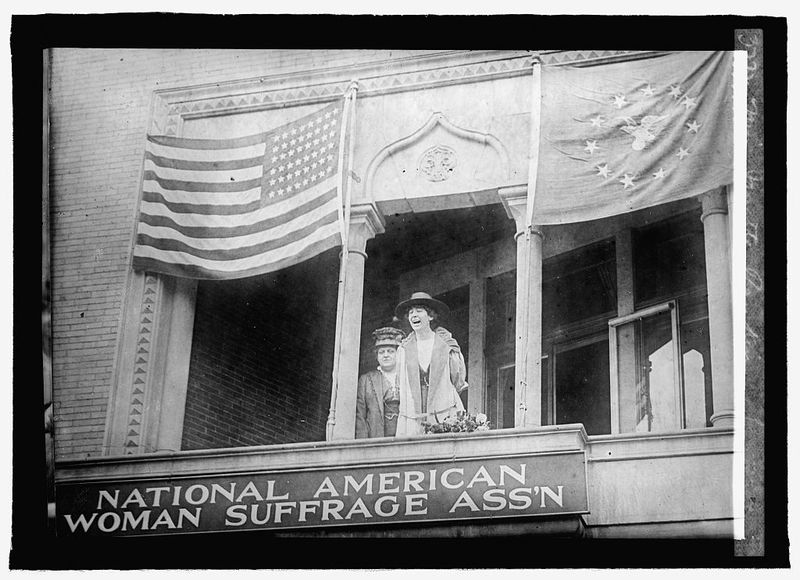
    <summary type="html"><![CDATA[<p><strong><em>A leader of the women’s suffrage movement on the national and state level, Jeannette Rankin helped lead her home state of Montana to enact women’s suffrage in 1914. She became the first woman elected to the US Congress when Montana elected her to the House of Representatives first in 1916 and again in 1940. Championing women’s suffrage, social welfare, and pacifism during her time as a Congresswoman, Jeannette Rankin remains the only member of Congress to vote against entering both World Wars, and continued her dedication to peace throughout the rest of her life.</em></strong></p><img src="https://www.intermountainhistories.org/files/fullsize/3e25e1f547dcdc63eb0bc72f82c20e65.jpg" alt="Jeannette Rankin speaking from the balcony of the National American Woman’s Suffrage Association " /><br/><p>Jeannette Pickering Rankin was born in 1880 in Missoula, Montana. She graduated from the University of Montana with a degree in biology and attended the New York School of Philanthropy to study social work. Her interest in social welfare and policy change convinced her of the necessity of women’s enfranchisement in order to implement social reform through political action. Rankin played an instrumental role as a skilled organizer and speaker in women’s suffrage campaigns in New York and Washington. She worked for the National American Women’s Suffrage Association as a national organizer, lobbyist, and field secretary. Even with all her work on women’s suffrage nationwide and in several states, Jeannette Rankin never forgot her home state.</p><p>Jeannette Rankin, with her experience working for the National American Women’s Suffrage Association and other state suffrage movements, became an important leader of the movement in Montana. Her organizational skills and renowned speaking ability proved instrumental in rallying people to the cause of women’s suffrage. In 1911, Rankin spoke to the state legislature in support of women’s suffrage, using the argument that “taxation without representation is tyranny” to argue that women, taxed like men, deserved the right to vote and represent themselves in government. In 1913, Jeannette Rankin became chair of the state suffrage organization. She obtained endorsements in support of women’s suffrage from the Democratic, Republican, and Progressive parties and personally interviewed each of Montana’s legislators. When the suffrage referendum passed in the state legislature in 1913, Rankin and the other Montana suffragettes such as Mary O’Neill and Belle Fligelman traveled over 9000 miles across the state to reach the far-flung communities of Montana and raise support for women’s right to vote. Through their efforts, Jeannette Rankin and the women of Montana succeeded in the passage of a popular referendum that granted them the right to vote in 1914.</p><p>For Jeannette Rankin, women’s involvement in politics did not end with the ballot box. In 1916, she ran for one of Montana’s at-large seats in the US House of Representatives and became the first woman in the United States elected to Congress, four years before the passage of the Nineteenth Amendment. Soon after, in April, 1917, Congress was called to an emergency session to vote on declaring war on Germany and entering World War I. Jeannette Rankin became one of fifty members in the House who voted against the war, declaring “I wish to stand for my country, but I cannot vote for war.” Speaking later in life about her decision, she declared “I felt the first time the first woman had a chance to say no to war, she should say it." Her vote gained both criticism and praise, including from within the women’s suffrage movement.</p><p>In addition to her important vote on World War I, Rankin used her time in Congress to continue to fight for women’s suffrage. As part of the U.S. House of Representatives, she had the unique opportunity to be the only woman to argue for national women’s suffrage as a member of Congress. Jeannette Rankin advocated for the creation of the Committee of Woman Suffrage and became a founding member. In 1918, she opened the debate in Congress over a national women’s suffrage amendment, asking, “How shall we answer their challenge, gentlemen? How shall we explain to them the meaning of democracy if the same Congress that voted for war to make the world safe for democracy refuses to give this small measure of democracy to the women of our country?” </p><p>After her first congressional term, Jeannette Rankin continued to be an ardent pacifist and advocate of social reform. Throughout the 1920s and 1930s, she participated in international peace organizations and lobbied for the passage of social welfare programs like the Sheppard-Towner Act. Rankin won a second term in Congress in 1940, and was the only member of Congress to vote against declaring war on Japan. This decision made her the only person in U.S. history to vote against entering both world wars. Widely reviled by members of Congress and across the country, Rankin nevertheless stood by her decision and her pacifist ideals. After her second term, she traveled the world advocating for peace. In the 1960s and 1970s, she mobilized once again to protest the Vietnam War. In 1968, she led an anti-war march in Washington, D.C. with a coalition of women’s peace groups named the Jeannette Rankin Brigade. Jeannette Rankin’s activism did not end with women’s suffrage or her Congressional terms, but continued throughout her life.</p><p><em><strong><a href="https://www.intermountainhistories.org/items/show/254">For more (including 6 images) view the original article</a></strong></em></p>]]></summary>
    <published>2019-01-18T07:15:35+00:00</published>
    <updated>2026-04-17T19:32:04+00:00</updated>
    <link rel="alternate" type="text/html" href="https://www.intermountainhistories.org/items/show/254"/>
    <id>https://www.intermountainhistories.org/items/show/254</id>
    <author>
      <name>Sarah Rounsville, Brigham Young University</name>
    </author>
  </entry>
  <entry>
    <title type="html"><![CDATA[The Non-Partisan Equal Suffrage Association of Colorado<br />
]]></title>
    <summary type="html"><![CDATA[<p><strong><em>In 1893, the Non-Partisan Equal Suffrage Association of Colorado led a campaign for women’s suffrage that mobilized women across the state. The suffragettes worked with multiple organizations and political parties to pass a popular referendum granting women the right to vote over two decades before the Nineteenth Amendment.</em></strong></p><img src="https://www.intermountainhistories.org/files/fullsize/2683405ec4c589036758d4feccad8860.jpg" alt="Ellis Meredith" /><br/><p>As in many states and territories, women in Colorado worked for years to achieve women’s suffrage. Attempts to secure the right to vote for women in Colorado began in the 1870s, soon after Wyoming and Utah enfranchised women. Although several bills on women’s suffrage came before the legislature, none passed until 1877, but the men of Colorado voted against it in a popular referendum. In 1893, the issue of women’s suffrage came before the state legislature once again. With support from the Populist party, a bill was passed in April through both Houses and the legislature authorized another popular referendum. By this time, Colorado activists and suffragettes had organized again and formed the Non-Partisan Equal Suffrage Association of Colorado. </p><p>The Non-Partisan Equal Suffrage Association of Colorado had only a few months to organize and conduct their campaign to convince the male voters of the state to vote in favor of women’s suffrage in November of 1893. Prominent leaders of the Association included journalists Ellis Meredith and Minnie Reynolds, teacher Martha Pease, physician Mary B. Bates, African American club leader Elizabeth P. Ensley, and American Woman Suffrage Association organizer Louise Tyler. With few funds, the Non-Partisan Equal Suffrage Association of Colorado met at first in the houses of members, but relocated its headquarters to rooms in Denver’s Tabor Grand Opera House after Elizabeth B. “Baby Doe” Tabor, wife of mining millionaire Horace Tabor, donated the use of the rooms. The Association also appealed to national suffrage leaders for assistance, sending Vice President Ellis Meredith to the annual National American Woman Suffrage Association convention in Chicago in June. She convinced NAWSA’s best organizer, Carrie Chapman Catt, to come assist in the Colorado campaign by arguing, “If Colorado goes for woman suffrage, you may count on a landslide in that direction throughout the West.”</p><p>In the campaign for women’s suffrage, the Non-Partisan Equal Suffrage Association of Colorado utilized a number of tactics. The Association worked together with multiple organizations, such as the Woman’s Christian Temperance Union, the Young Women’s League, the City League of Denver, and several women’s clubs, and also auxiliary suffrage organizations throughout the state to manage the campaign on a local level. The Association sent speakers to raise support, particularly Carrie Chapman Catt, who toured the state speaking at small meetings and large public rallies. Colorado suffragettes also utilized the press: Minnie Reynolds, as Chairwoman of Presswork, convinced the majority of Colorado’s newspapers to commit to the cause and reserve space in their papers for articles about the women’s suffrage campaign, which she and her fellow suffragette journalists like Ellis Meredith and Caroline Churchill wrote. The Association also worked across political and economic lines to appeal to the greatest number of male voters. The suffrage referendum was widely supported by the Populist party--but the Republican and Prohibitionist parties also endorsed the campaign for women’s suffrage. In addition, the Association appealed to men and women of all classes by working with trade unions and labor organizations, tying women’s suffrage to the cause of “free silver” as a way to enact economic reform, and presenting suffrage as social welfare measure that would help the working-class. Indeed, while middle and upper-class women made up the majority of the Association’s top leadership, working-class women did the work of canvassing home to home, distributing suffrage literature, and participating in local suffrage organizations.</p><p>By the time the popular referendum came in November 1893, the women of Colorado had worked to raise support for female enfranchisement by speaking across the state, organizing rallies, distributing suffrage literature, creating local suffrage organizations, getting political endorsements from various political parties, partnering with trade unions and women’s clubs, and writing newspaper articles. The Non-Partisan Equal Suffrage Association of Colorado acted as a central organization and headquarters for the movement throughout the state. On the day of the vote, the Association’s headquarters at the Grand Tabor Opera House in Denver remained open all day and organized groups of women to go to the polls, where they handed out suffrage literature and personally appealed to male voters. Early results were published the next morning, showing that the referendum for woman suffrage had passed by a margin of 35,798 to 29,451. Women across the state rejoiced, and the Non-Partisan Equal Suffrage Association of Colorado held an informal reception at their headquarters in the Grand Opera House, celebrating a success over twenty years in the making that resulted in Colorado becoming the first state to pass woman suffrage by popular referendum.</p><p><em><strong><a href="https://www.intermountainhistories.org/items/show/253">For more (including 3 images) view the original article</a></strong></em></p>]]></summary>
    <published>2019-01-18T07:01:55+00:00</published>
    <updated>2026-04-17T19:32:04+00:00</updated>
    <link rel="alternate" type="text/html" href="https://www.intermountainhistories.org/items/show/253"/>
    <id>https://www.intermountainhistories.org/items/show/253</id>
    <author>
      <name>Sarah Rounsville, Brigham Young University</name>
    </author>
  </entry>
  <entry>
    <title type="html"><![CDATA[The Woman’s Exponent<br />
]]></title>
    <summary type="html"><![CDATA[<p><strong><em>Published in Salt Lake City from 1872 to 1914, the Woman’s Exponent, which acted as the unofficial newspaper of the Relief Society of the Church of Jesus Christ of Latter Day Saints, was an important advocate for women’s suffrage in Utah and one of the longest-running suffrage publications in the country.</p></strong></p><img src="https://www.intermountainhistories.org/files/fullsize/46e58cd8e9c52abdd7db00f69e643de3.jpg" alt="Front page of the December 1, 1893 issue of the Woman’s Exponent
" /><br/><p>Women’s suffrage has an interesting history in Utah. Women in Utah gained the right to vote, had it taken away, and regained it again years before the passage of the Nineteenth Amendment. The question of female enfranchisement was closely tied to the issue of polygamy. Before Utah became a state, the territorial legislature granted women the right to vote in 1870. However, in 1887, the federal government revoked this right in the Edmunds-Tucker Act because of the dispute with the LDS church over polygamy. Utah women organized on the local and territorial level to protest for the reinstatement of their right to vote. When the LDS church issued the 1890 Manifesto ending the practice of polygamy, the path both to statehood and women’s suffrage opened once again. The women of Utah mobilized in great numbers and successfully fought to have female enfranchisement written into the new constitution when Utah became a state in 1896.</p><p>The Woman’s Exponent was founded in 1872 and published bimonthly in Salt Lake City, Utah until 1914. Fully managed, written, and edited by women, the newspaper amplified women’s voices in Utah and helped communicate information between the women scattered in settlements across the territory. The newspaper printed news from across Utah and the United States, articles on topics ranging from domestic life to theology, stories and poetry, reports from LDS women’s organizations like the Relief Society, and information about women’s suffrage. Published in Salt Lake City, the Exponent occupied a number of different offices over the course of its forty-two years of existence. In the early years of its publication, the headquarters of the Exponent were located in the Council House until its destruction by a fire in 1883. Later, the Exponent had offices in the Constitution building on East Temple Street. Eventually, the offices of the Woman’s Exponent moved to the Bishop’s Building on 40 North Main Street. Unfortunately, all of these building were either destroyed in accidents or demolished to make room for new buildings and the expansion of Temple Square. The old location of the Bishop’s Building is closest to the current Relief Society Building on Temple Square.</p><p>The Woman’s Exponent was a major proponent of women's right to vote. Emmeline B. Wells, the main editor of the paper from 1877 until it ceased publication in 1914, was an active suffragette. She often acted as a liaison between Utah suffragettes and national suffrage leaders like Susan B. Anthony and Elizabeth Cady Stanton. Wells attended national suffrage conventions, met with Congressional committees and the President of the United States, served as the president of Utah’s suffrage association, and helped lobby Utah congressmen to support women’s suffrage. Her activism carried over to the Exponent, where, as editor, she helped publish articles, write editorials, and include news about women’s suffrage. </p><p>During the back-and-forth over women’s suffrage in Utah, the Woman’s Exponent played an important role in covering the issue and mobilizing the women of Utah to fight for their right to vote, especially after the Edmund-Tuckers Act of 1887. The Exponent often contained a Woman Suffrage column, which published news about women’s suffrage in Utah, the United States, and the world. An issue published on December 1, 1893, for example, contained news about women in New Zealand voting in their first election under new suffrage laws. The column included articles about the importance of winning the vote for women and also published information about local and state suffrage association meetings, rallies, speeches, and other events tied to the campaign for women’s suffrage. In 1889, the Exponent included a call for the women of Salt Lake City to meet and organize a Territorial Suffrage Association. Throughout 1895, the paper detailed the efforts of Utah suffragettes to lobby the territorial congress for the inclusion of women’s suffrage in the new state constitution. After the women of Utah regained the right to vote in 1896, the Woman’s Exponent continued as an important advocate for women’s rights and suffrage across the United States.</p><p><em><strong><a href="https://www.intermountainhistories.org/items/show/252">For more (including 3 images) view the original article</a></strong></em></p>]]></summary>
    <published>2019-01-18T06:49:08+00:00</published>
    <updated>2026-04-17T19:32:04+00:00</updated>
    <link rel="alternate" type="text/html" href="https://www.intermountainhistories.org/items/show/252"/>
    <id>https://www.intermountainhistories.org/items/show/252</id>
    <author>
      <name>Sarah Rounsville, Brigham Young University</name>
    </author>
  </entry>
  <entry>
    <title type="html"><![CDATA[Trujillo v. Garley: The Struggle for Native American Voting Rights<br />
]]></title>
    <summary type="html"><![CDATA[<p><strong><em>Although the Nineteenth Amendment gave women the right to vote in the United States, many minority women and men, remained disenfranchised for decades. In the long struggle for Native American civil and voting rights, the court case Trujillo v. Garley acted as a vital step by removing the constitutional provision that blocked Native Americans in New Mexico from voting.</p></strong></p><img src="https://www.intermountainhistories.org/files/fullsize/528d84d54e98a75f00e1331833fab0cb.jpg" alt="President Calvin Coolidge and several Native American representatives celebrating the signing of the 1924 Indian Citizenship Act
" /><br/><p>Even after the passage of the Nineteenth Amendment to the Constitution in 1920, not all women gained the right to vote. Native American women, along with men, remained disenfranchised for decades. The process of ensuring Native American civil and voting rights has stretched out over many years and pieces of legislation. In 1868, the Fourteenth Amendment, which declared “all persons born or naturalized in the United States, and subject to the jurisdiction thereof, are citizens of the United States and of the state wherein they reside,” gave African Americans citizenship and technically granted the right to vote to all male citizens, even though multiple states disenfranchised African Americans for decades. Native Americans were excluded from this amendment and from citizenship based on arguments that they did not pay taxes and that they existed under the jurisdiction of their native tribes and not the federal government. After the passage of the Nineteenth Amendment in 1920, the US Constitution read “The right of citizens of the United States to vote shall not be denied or abridged by the United States or by any State on account of sex,” but the same arguments about taxation and tribal jurisdiction meant that it did not extend to Native American women. It wasn’t until the passage of the Indian Citizenship Act in 1924 that all Native Americans born in the United States were granted citizenship, but this act did not ensure full citizenship rights, such as the right to vote. </p><p>Many western states, such as Arizona and New Mexico, contained large populations of Native Americans and a great amount of tribal land. However, these states did not allow Native Americans to vote or limited their voting rights. Some arguments that Western states used to disenfranchise Native Americans included that Native Americans who lived on reservations did not pay state taxes, or that this made them wards of the government who were therefore ineligible to vote. Both states and the federal government used the argument about the ward status of Native Americans as expressed in the Supreme Court case Cherokee v. Georgia: "Their relation to the United States resembles that of a ward to his guardian.They look to our government for protection, rely upon its kindness and its power; appeal to it for relief to their wants; and address the President as their great father." It wasn’t until the 1940s that significant strides were made to extend voting rights to Native Americans.</p><p>A high percentage of the Native American population served in World War II, but when they returned, they confronted the reality that they were not allowed to vote in the country they had served. This was the experience of Miguel Trujillo, a Marine in WWII, schoolteacher, and member of the Isleta Pueblo in New Mexico. In 1948, Trujillo felt he had the right to vote as a citizen and veteran, but the county registrar Eloy Garley refused to allow him to register. Trujillo took Garley to court and sued for the right to vote. Like several other states, New Mexico held that “Indians not taxed” could not vote. Trujillo challenged this by pointing out that although he did not pay property taxes since he lived on pueblo lands, he still paid other forms of taxes like federal income tax, gasoline taxes, and sales tax. The three-judge panel in Albuquerque, NM ruled in Trujillo’s favor and found that the provisions in the New Mexico constitution violated both the Fourteenth and Fifteenth Amendments. Judge Orie Phillips, speaking for the three-judge panel, stated: “[The constitution of New Mexico] says that “Indians not taxed” may not vote, although they possess every other qualification. We are unable to escape the conclusion that, under the Fourteenth and Fifteenth Amendments, that constitutes a discrimination on the ground of race. Any other citizen, regardless of race, in the State of New Mexico who has not paid one cent of tax of any kind or character, if he possesses the other qualification, may vote. An Indian, and only an Indian, in order to meet the qualifications to vote must have paid a tax. How you can escape the conclusion that makes a requirement with respect to an Indian as a qualification to exercise the elective franchise and does not make that requirement with respect to the member of any race is beyond me.” Thanks to this court case, Native Americans living in New Mexico legally had the right to vote, regardless of whether they lived on tribal lands.</p><p>Trujillo v. Garley removed the legal and constitutional barriers that prevented Native Americans living on tribal lands in New Mexico from voting. However, this wasn’t the end of the struggle for Native American voting rights. Also in 1948 in Arizona, the case of Harrison v. Laveen decided that “the term "persons under guardianship" has no application to the plaintiffs or to the Federal status of Indians in Arizona,” which removed the legal barrier preventing Native Americans in Arizona from voting. Utah was the last Western state, in 1957, to remove state statutes preventing Native Americans from voting. However, many state officials created other barriers to Native American suffrage, such as printing ballots only in English and not in native languages, putting ballot boxes and voting places far from reservations and native lands, gerrymandering districts in such a way to break up Native American communities, or requiring certain forms of ID that many Native Americans do not possess. While the 1965 Voting Rights Act helped, some of these barriers still exist today.. Native American women and men continue to work to encourage their people to vote and exercise their political influence, as recently demonstrated by the 2018 election of the first two Native American women to Congress, including Debra Haaland from New Mexico.</p><p><em><strong><a href="https://www.intermountainhistories.org/items/show/251">For more (including 2 images) view the original article</a></strong></em></p>]]></summary>
    <published>2019-01-18T06:26:13+00:00</published>
    <updated>2026-04-17T19:32:04+00:00</updated>
    <link rel="alternate" type="text/html" href="https://www.intermountainhistories.org/items/show/251"/>
    <id>https://www.intermountainhistories.org/items/show/251</id>
    <author>
      <name>Sarah Rounsville, Brigham Young University</name>
    </author>
  </entry>
  <entry>
    <title type="html"><![CDATA[Women’s Suffrage and Temperance in Idaho]]></title>
    <summary type="html"><![CDATA[<p><strong><em>The fight for women’s suffrage was closely tied to the temperance movement. Many women in Idaho supported both temperance and women’s suffrage, and although some suffragettes like Abigail Scott Duniway worried that the association between the two would prompt greater opposition from men, the WCTU helped win the right to vote for women in Idaho in 1896.</p></strong></p><img src="https://www.intermountainhistories.org/files/fullsize/3430039af5cc919129c52b625dbb981f.jpg" alt="Abigail Scott Duniway
" /><br/><p>In Idaho, like most states in the West, the Women’s Christian Temperance Union played an important role in the women’s suffrage movement. The WCTU advocated a variety of social reforms, such as prohibition of alcohol, for the purpose of creating a moral and clean society. Many Idaho women first became involved in the public sphere through participation in the WCTU, and later became suffragettes. The President of the Idaho Women’s Christian Temperance Union, Henrietta Skelton, encouraged local WCTU chapters in Idaho to incorporate women’s suffrage into their cause. The Idaho WCTU also helped push the territorial government to consider women’s suffrage. During Idaho’s Constitutional Convention in 1889, Henrietta Skelton gave a speech to the legislature requesting the following two clauses in the new state constitution: “No discrimination on account of sex shall be made; but citizens of both sexes, possessing the necessary qualifications, shall be equally eligible as electors;’ and “that manufacture, sale, or keeping of intoxicating liquors for use as a beverage is hereby prohibited.” For temperance activists in Idaho, women’s suffrage and prohibition were inseparable.</p><p>However, the connection of women’s suffrage to prohibition of alcohol by the WCTU created some problems. Due to this connection, liquor companies became some of the main opponents of female enfranchisement and some men viewed women’s suffrage in a negative light. When Henrietta Skelton argued for both suffrage and prohibition amendments in Idaho’s new state constitution, some suffragettes feared this would endanger the cause of women’s suffrage. One such suffragette was Abigail Scott Duniway. Abigail Scott Duniway had spent decades working for women’s suffrage in Washington, Oregon, and Idaho as a speaker and newspaperwoman, and previously spoke before Idaho’s legislature in 1887 in favor of women’s right to vote. In her autobiography, she recalled her reaction to the WCTU’s speech to the legislature: “I received a message from my Equal Suffrage co-workers in Boise, urging me to come to them at once. “The Woman’s Christian Temperance Union is spoiling everything,” the letter said. “They have arranged for a hearing before the convention, in advance of ours, asking for a clause in the new Constitution to prohibit the liquor traffic. They won’t get it, of course, but they will prohibit us from getting a Woman Suffrage plank, if you don’t come!” Duniway gave a speech to the legislature right after Skelton in which she attacked the idea that women’s suffrage and prohibition were connected and instead argued for the adoption of an independent women’s suffrage clause. Idaho did not give women the right to vote in the new state constitution, but Skelton and Duniway’s speeches reveal some of the tension in the relationship between women’s suffrage and temperance.</p><p>Despite the misgivings of Abigail Scott Duniway and other suffragettes, the Woman’s Christian Temperance Union remained an active part of the women’s suffrage movement in Idaho. The next president of the WCTU in Idaho, Rebecca Mitchell, convinced Lewis E. Workman, a Republican member of the state’s House of Representatives, to introduce another women’s suffrage bill to the legislature in 1893. Although that bill was not successful, the WCTU kept working with Idaho’s Equal Suffrage Association until women’s suffrage was successfully passed in 1896. The WCTU continued its social reform efforts with continued strength after women in Idaho won the right to vote. As public services and symbols of prohibition, they erected temperance water fountains, one of which still stands outside of Boise City Hall. In 1916, the WCTU achieved one of its main goals in Idaho when Governor Moses Alexander approved statewide prohibition.</p><p><em><strong><a href="https://www.intermountainhistories.org/items/show/250">For more (including 4 images) view the original article</a></strong></em></p>]]></summary>
    <published>2019-01-18T03:43:46+00:00</published>
    <updated>2026-04-17T19:32:04+00:00</updated>
    <link rel="alternate" type="text/html" href="https://www.intermountainhistories.org/items/show/250"/>
    <id>https://www.intermountainhistories.org/items/show/250</id>
    <author>
      <name>Sarah Rounsville, Brigham Young University</name>
    </author>
  </entry>
  <entry>
    <title type="html"><![CDATA[Women in Virginia City<br />
]]></title>
    <summary type="html"><![CDATA[<p><strong><em> Contrary to popular belief, soiled doves did not rule the nest in Virginia City. Further historical analysis shows that the majority of women in Virginia City and other mining communities came from diverse backgrounds and participated in number of reputable professions, such as homemaking, teaching, housekeeping, and the liberal arts. </p></strong></p><img src="https://www.intermountainhistories.org/files/fullsize/643a68ceb2b8c350ad27841787d5ccfc.jpg" alt="Daughters of Charity" /><br/><p>Historically, prostitution and other unsavory occupations have been connected to the reputations of women in the Wild West. The reputation of women living in Virginia City was no exception. Several sources reported that “there was always a large class of poor, misguided, prostitutes” living throughout the city. In modern-day Virginia City, a museum commemorates the famous soiled dove, Julia Bulette, and the red light district. However, the historical narrative too often focuses on the fallen feminine denizens of the West and neglects to tell the story of the other women who lived during the period. While prostitution was a practice that did exist in many towns, it was not the major practice during the early days of Virginia City, nor was it the most popular profession for women in the later years.   </p><p>During the founding years of Virginia City, the population was heavily male dominated. The 1860 census recorded that there were 111 women living in the Virginia City and Gold Hill area.  However, of the one hundred and eleven, eighty-three were recorded as married women, and forty-three households recorded children in the home. This shows that the majority of women were married, not single. Those who were single found occupations in households and boarding houses, working as maids and laundresses. According to recent historians, prostitution did not come into effect “until a mining district demonstrated that it would last.” It seemed that many prostitutes did not want to establish roots in a community unless they felt it was worth investing in. </p><p>The women of Virginia City occupied themselves in various professions. As mentioned before, housekeeping and laundry work were popular professions. Some women chose to be teachers, seeking to educate the children in the city. Other women chose to start their own businesses, such as opening boarding houses and dress shops. While Virginia City was considered uncouth to eastern standards, the women of the Comstock sought to bring sophistication and refinement from the East. Needlework became the third most popular profession among women on the Comstock. By 1870, reports showed that there were 71 businesses of needlework, accounting for seamstresses, dressmakers, milliners, and sewing women. They served the women of the upper class in Virginia City like Marie Louis Mackay, the wife of bonanza king John Mackay, who could afford such luxuries. Along with bringing eastern couturier to the city, women also formed social societies and clubs that were popular in the west. They organized charities, orphanages, and temperance societies. Many of these societies were backed by the local congregations, such as the Catholic Church. Their charity, the Daughters of Charity of Virginia City, sought to serve the men working in the mines. They provided care for injured miners and their families. They were determined to “carry to [the miners’] poor ‘shanties’ little delicacies, and words of consolation,” hoping to ease the harsh realities that every miner faced living on the Comstock. </p><p>The women of Virginia City also came from diverse backgrounds. While a majority came from an Anglo-American background, women of Chinese, African American, and Native American descent also occupied the city. While many claimed that those from foreign descent participated in immoral practices, such as prostitution and opium dens, many continued to work in similar occupations that white American women enjoyed. Chinese women mostly occupied themselves with housekeeping, working in boarding houses throughout the city. Women of the Comstock involved themselves in a number of professions, and through them they built a strong and lively community. </p><p><em><strong><a href="https://www.intermountainhistories.org/items/show/248">For more (including 4 images) view the original article</a></strong></em></p>]]></summary>
    <published>2019-01-17T23:51:13+00:00</published>
    <updated>2026-04-17T19:32:04+00:00</updated>
    <link rel="alternate" type="text/html" href="https://www.intermountainhistories.org/items/show/248"/>
    <id>https://www.intermountainhistories.org/items/show/248</id>
    <author>
      <name>Rachel Hendrickson, Brigham Young University</name>
    </author>
  </entry>
</feed>